Title: Everest, Inc.The Renegades and Rogues who Built an Industry at the Top of the World
Author:Will Cockrell
Publisher: Gallery Books/ Simon & Schuster India
This book delves into a unique topic with a unique approach. Will Cockrell’s Everest Inc.The Renegades and Rogues who Built an Industry at the Top of the World explores the intersection of democratisation and commercialisation in the realm of high adventure. Through meticulous research, Cockrell presents a dynamic narrative of the evolution of guided climbing on Mount Everest. The narrative captures the shift of the mountain from a challenging climb to a lucrative business venture. From the pioneering expedition of Hillary and Norgay in 1953, Cockrell traces the journey of various individuals who played a role in making the summit more accessible and profitable.
Cockrell, an award-winning writer and journalist, skillfully delves into the captivating world of mountain climbing. With meticulous research and interviews with guides, sherpas, amateur climbers, and even Hollywood figures, he unveils the fascinating story that led to the rise of this industry. These entrepreneurial adventurers, who once catered to affluent clients, have now become an indispensable part of the lucrative adventure economy, revolutionising our perception of mountain climbing and the majestic peaks themselves. Despite the unfortunate tragedies and the excessive commercialisation that have plagued the mountain in recent years, Cockrell’s narrative remains an inspiring and uplifting tale.
This comprehensive adventure history delves into the world of guided climbing on Mount Everest, featuring exclusive interviews with renowned mountain guides and climbers such as Jimmy Chin and Conrad Anker. It serves as a cautionary tale about the risks of overexposure while also celebrating the enduring allure of this ultimate terrestrial adventure.
Says the blurb: “Anyone who has read Jon Krakauer’s Into Thin Air or has seen a recent photo of climbers standing in line to get to the top of Everest may think they have the mountain pretty well figured out. It’s an extreme landscape where bad weather and incredible altitude can occasionally kill, but more so an overcrowded, trashed-out recreation destination where rich clients pad their egos—and social media feeds—while exploiting local Sherpas.”
“There’s some truth to these clichés, but they’re a sliver of the story. Unlike any book to date, Everest, Inc. gets to the heart of the mountain through the definitive story of its greatest invention: the Himalayan guiding industry. It all began in the 1980s with a few boot-strapping entrepreneurs who paired raw courage and naked ambition with a new style of expedition planning. Many of them are still living and climbing today, and as a result of their astonishing success, ninety percent of the people now on Everest are clients or employees of guided expeditions.”
The book glances at the lives of early guides, victories and setbacks experienced during the industry’s growth, and diverse opinions on the evolution of the guiding industry on Everest. Cockrell interviews prominent figures in the Everest guiding community — ranging from Conrad Anker to the late David Breashears, as well as climbing legends like filmmaker, Jimmy Chin, and outdoor industry leader, Yvonne Chouinard.
Filled with firsthand accounts from over a hundred western and sherpas, clients, writers, filmmakers, and even a Hollywood actor, Everest, Inc. places emphasis on the perspectives of those who have shaped the mountain’s current state. While it delves into the gripping tales of triumph and tragedy spanning the past four decades, it goes beyond clichés and presents an inspiring alternate narrative about the dedicated individuals who have fulfilled the aspirations of others, as well as the Nepalis who are propelling the industry forward.
Despite the constant media exposure on Mount Everest, there has been a lack of comprehensive documentation regarding its recent turbulent existence. Will Cockrell discusses this gap exhaustively with research and interviews to by present a multifaceted perspective that pays tribute to various viewpoints, particularly those of the sherpas who consider the Himalayas their homeland.
Everest, Inc. is essential read for anyone considering attempting the world’s highest peak or for those interested in understanding the intricate workings of the contemporary Everest industry.
.
Bhaskar Parichha is a journalist and author of Unbiased, No Strings Attached: Writings on Odisha and Biju Patnaik – A Political Biography. He lives in Bhubaneswar and writes bilingually. Besides writing for newspapers, he also reviews books on various media platforms.
.
PLEASE NOTE: ARTICLES CAN ONLY BE REPRODUCED IN OTHER SITES WITH DUE ACKNOWLEDGEMENT TO BORDERLESS JOURNAL
The title plunges us into the sacrality of resonant words, the Nadistuti sukta being a hymn in the Rigveda in praise of rivers. Poet, novelist and translator Lakshmi-Kaaveri equates the flow of the waters with ‘the flow of poetry’, the quiet mingling of streams of remembrance and phrases that shape into lines of verse. Her book is dedicated to Jayanta Mahapatra ‘who lives on’ and an exordium titled ‘Naman’ offers gentle tribute to H.K. Kaul, who was among the founders of the Poetry Society of India and passed away during the recent pandemic. Nadistuti is a brilliant and thought-provoking collection of poems that charts the timeless continuums while being aware of the fragility of human existence.
The book begins with a prayer to the River Narmada (meaning ‘the giver of pleasure’), which divides the north from the south of India. Yet the rippling waters have no boundary—a philosophical observation that I find marks much of this remarkable volume. Remembering Ganga, Yamuna, Godavari, Saraswati, Narmada, Sindhu, Kaaveri, devotees recite the shloka[1] at their morning bath seeking the blessings of the rivers. Though such rituals are mostly forgotten in modern times, the climate crisis should remind us of the consequences of such amnesia. The invisible Saraswati is possibly a metaphor for such “forgetting” simply because of her partial invisibility. Lakshmi Kannan’s vibrant lines recall the disappearance of the river as also of Saraswati’s appearance in another form as a revered Goddess invoked by “students, writers, musicians, dancers, painters”. From the Nadistuti I learned the word— ‘potomologist’—the study of rivers, but the book is far greater than an academic enquiry—it’s a recognition of the civilisational bloodline that is linked to the ancient rivers which were the earliest cradles of humankind.
Some extraordinary and innovative aspects Lakshmi’s book deserve special mention. First, the remarkable prose- poem called ‘Ponni Looks Back’ which stretches the boundaries of imagination in a charming manner. Ponni is the name of the river Kaaveri in classical Tamil Literature. It flows through Tamil Nadu and Karnataka and is always perceived as a woman. Lakshmi tracks Ponni’s autobiography as though writing a Bildungsroman, the education and growing up of an innocent girl and her experiences along the way. Therefore, Ponni is born as a small unobtrusive stream on the Mysore-Coorg border. Then she becomes prominent and significant, and a vital witness to history—the Hoysala kingdom, the classical arts of Belur, Halibid, Somnathpur, then carrying on further to wrap around the islands of Srirangapatnam and Srirangam and so on. I enjoyed the autobiographical voice of Ponni reveling in her centuries of testimony to all the changes she has observed and imbibed—till we come to the new politics that is destroying rivers and society today. Ponni says, “One day I heard different voices floating over my waters…they sit around tables, shout at each other and refer to me dryly as the Kaaveri dispute, wrenching my waters apart”. Like yet another goddess, Sita, she chooses to end her journey. Ponni merges with her mother, the Bay of Bengal —her love and amity having completed what tasks she could undertake towards humanitarian goals. The world of manmade disasters is a chapter River Kaaveri would rather not participate in.
My question here is: “Do poetry and politics merge?… Can poets continue to be as Shelley called them ‘the unacknowledged legislators of the world’?” This brings me to another significant aspect of Nadistuti: Lakshmi’s brand of subtle feminism. Predictably, I am drawn to the poems that argue against son-preference, challenge gender stereotypes, and poke gentle barbs at unenlightened men.
Second, I cite a longish poem called “Snake Woman” from the section titled Chamundi, because it combines rituals, dream imagery, gender prejudice and the paradox of son preference. The ritual is called Nagapuja and has strict rules of abstinence from certain foods like snake gourd, and it entails hours of prayer—the chant being:
Please grant me a male child
Oh, King of Cobras
I will name him Nagaraja
In your honour.
Something strange started happening that the pregnant woman could never dare reveal to the world. She dreamt every night of a female baby cobra wearing jhumkies (long earrings) and a jeweled girdle and sporting a red dot on her forehead. Well, the baby born was female—and the happy mother, though a little fearful, called her Nagalakshmi. The mother-in-law showed acute displeasure: “She can have any name. Who cares!”
Another pregnancy, again the rituals of Nagapuja—more stringent than before. No dreams this time. And an eagerly welcomed boy-child is born, enthusiastically named Nagaraja. And guess what? As he grows up, he ‘hissed at is mother’, ‘bared his fangs at his father’ and ‘spewed venom on his sister’. These are poet Lakshmi Kannan’s vivid vocabulary for the revered son! And the snake woman sister, what happened to her? She sloughed off her skin seasonally, grew strong, capable and emerged as a “lustrous one”.
I selected this poem for more than just Lakshmi’s clever reversal of gender prejudice. Snakes have a central place in the folktales and folklore of India. The word used, “theriomorphic”, denotes situations, where animals and human beings interchange bodies and identities. Snakes are not evil—they are often the progenitors of good deeds and the shapeshifting happens for many commendable reasons. The figuration of the snake as exclusively evil does not derive from Indian mythology. Lakshmi’s poem, this one and several others, tread this beautiful territory of humans and non-humans sharing a common abode, the Earth, and there is an implied lament that we have ignored this vital connectivity.
And finally, I am delving into the emotive, personal poems that end the collection. Called ‘Fireside’, it invites memories of WB Yeats’ classic lines:
When you are old and grey and full of sleep,
And nodding by the fire, take down this book…
Lakshmi addresses many members of her family; they are named, thanked and remembered for their acts of love and compassion. Because Lakshmi believes in history and continuities, as we have seen in ‘Ponni Looks Back’, and the Nagalakshmi reference, these too are poems about lineage, heritage, respect and love—the attributes that make life worthwhile. Lakshmi’s mother (addressed in the poems as Amma) was Sharada Devi, an acclaimed painter in Mysore and Bangalore whom the daughter remembers with her easel-mounted canvas gently acquiring colours, the landscapes emerging from the contours of her imagination. Today, Lakshmi Kannan, the poet of Nadistuti, looks at a blank sheet of paper and compares that to her Amma’s canvas—the words will surely incarnate. Another poem has a redolent title ‘In Search of Father’s Gardens’, upturning African American writer Alice Walker’s book In Search Of Our Mothers’ Gardens, but for me it’s a tale reminiscent of Lakshmi’s early novel Going Home that I had reviewed decades ago. It was a book about ancestral homes and families breaking up. In the reconfigurations over time, Nadistuti’s final section presents poems to members of Lakshmi’s immediate family, named, but not too personalised, making this an exemplary template for those who hesitate to present the private in public poetry. With beauty, grace, gratitude, humour, irony—each person emerges as a tributary in the flow of the poet and writer we know and love as Lakshmi- Kaaveri. The last poem ‘If You Want to Visit’ is deeply poignant. It’s not a farewell poem—instead it’s an invitation to an eternal companionship:
Come
Visit me now
I’ll not have a word of complaint
I’ll gather all of these and leave with you.
Here is the confluence of all that Nadistuti says: the day’s prayer in the morning, the Ponni River encapsulating history, the rituals that pass through many generations, and the legacy of a poet’s words embedded in the annals of time. An exquisite and meaningful collection of poems, Lakshmi has introduced concepts of poetic writing that are evocative of the ancient Rigveda and equally provide the guiding lamps for modern choices.
Malashri Lal, Former Professor in the English Department, University of Delhi, has published twenty one books of which Mandalas of Time: Poems, and Treasures of Lakshmi: The Goddess Who Gives are the most recent. Lal has received several research and writing fellowships. She is currently Convener, English Advisory Board of the Sahitya Akademi.
.
PLEASE NOTE: ARTICLES CAN ONLY BE REPRODUCED IN OTHER SITES WITH DUE ACKNOWLEDGEMENT TO BORDERLESS JOURNAL
Bitan Chakraborty’s TheBlight and Seven Short Stories, translated by Malati Mukherjee from Bengali, heralds the arrival of a major talent in the sphere of short fiction, characterised as it is by an evolved narrative technique that raises the art of storytelling to a new pitch of intensity and subtlety.
The image of blight in the first and titular story is a metaphor that pervades the entire collection. Blight, as one knows, is an agricultural phenomenon, a term for a type of disease that affects crops and ruins harvests. In Bitan Chakraborty’s superb collection of stories, it symbolises the rot that has set in everywhere, the moral corruption that is eating away at the innards of society.
Characters such as Asesh, Neeladri, Karmakar and others are shown to have no conscience or scruples. They have little faith in the system and, therefore, have taken the law into their own hands, forging unholy alliances, negotiating shortcuts and demonstrating scant respect for traditional decencies. They are men in a hurry, eager to get rich quickly. Part of the local land-grabbing mafia and real estate “syndicate”, they are members of what Partha Chatterjee has described in his writings as a “political society.”
An evocative use of symbol and irony imparts a rhetorical depth to the conflicts enumerated. In the titular story, ‘The Blight’, for instance, the all-devouring, predatory and carnivorous instincts of Asesh are set against his father Moni’s ethics of integrity. Moni’s investigative methods intensify in the course of the story as he compulsively enquires about the prices of potato and potato products in a bid to assess the extent of Asesh’s deceitful dealings, his acts eventually spiralling into the surreal tableau at the end when father and son are locked in a physical struggle. Asesh’s relishing of his mutton just prior to this incident is an analogical and allegorical master stroke pointing to his material gluttony, insatiable appetite and ruthless self-gratification.
In the story. ‘The Site’, Neeladri, the son and Nalinaksh, the father are counterparts of Asesh and Moni, undergoing the same conflicts and revealing similar differences of opinion and values. Nalinaksh, however, is not untainted like Moni, neither is he impervious to the good life. It’s just that he cannot brook the scale of corruption indulged in by Neeladri. Is his end foreshadowed and pre-planned as seems to be suggested by the funeral card dropped surreptitiously in Hari’s bag?
In the short story ‘Reflection’, Ahan the Bengali protagonist, who is a vocal protester against habitual acts of indiscipline and injustice on trains, unwittingly indulges in the same, displaying disproportionate anger at an errant co-passenger for a minor infringement. The figure he is confronted by at the end of the story points to the ambiguity of his very being. Is this figure a self-reflection, an alter ego, or a doppelganger?
In ‘A Day’s Work’ and ‘The Mask’, it is Mahadeb, the debt-ridden and exploited daily wager, and Puntu, the suburban mask-seller who are manipulated by Karmakar, the jeweller-turned-moneylender and Shubho, the stage manager turned middleman respectively. In the latter story, the mask becomes a potent symbol of disguise used by perpetrators to conceal their wrongdoings. Shubho hides his questionable dealings in props as a theatre manager even as Neel conceals his affair with his office secretary.
In the story ‘Landmark’, Tapan goes to Delhi for work and decides to visit his friend Jashar in Ghaziabad. He sets out on the journey but fails to reach his destination because the landmark known to him has disappeared. His aborted journey becomes a symbol of the frustrated quest of modern man who fails to progress despite registering movement. One is reminded of the hapless souls trapped in the different circles of hell in Dante’s Inferno, even as shades of Joyce’s Dubliners are evident in the circling of Lenehan within the city of Dublin in the short story ‘Two Gallants’.
The landmark in question, namely two adjacent butcher’s shops at the mouth of a lane, had fallen prey to fundamentalist ire over the meat-eating habits of certain communities. The story has not so much a climax as an anticlimax in the revelation of the convenience store owner who enlightened Tapan about the fate of the owners of all such establishments in the area — they had been chopped into mincemeat and fed to unsuspecting patty consumers. This is gallows humour of the most effective kind and is directed at Tapan whose mouth is filled with the particular savoury at that moment.
In ‘Spectacles’, Siddharth has been wearing the wrong pair of spectacles and consequently not seeing things clearly. The trope of a skewed perspective is evident in his youthful misjudgment of Sameerda to have been a man of ideals. In ‘The Site’, Nalinaksh cannot understand what the beggar down below on the street is telling him so urgently just moments before his fall from the balcony and subsequent death, symbolizing a lack of communication.
Historically, ‘blight’ was a sociological term applied to urban decay in the first half of the twentieth century. Usually associated with overcrowded, dilapidated and ill-maintained areas affecting built structures and civic spaces, the term has this palpable air of dereliction which, translates into a pall of moral disrepair that dooms the situations in the mentioned stories with an inevitability, reinforcing the significance of the title in its varied connotations.
In an epical sense, the conflict in the stories is between the forces of good and evil. It is also between social classes, and Moni comes across as the tired torchbearer of a jaded idealism whose dedication to his cause is regarded by some as whimsicality, so ingrained and ubiquitous is the sense of blight. The moral protesters in Moni, Nalinaksh, Ahan, Subal and others, for all their integrity, are shown to be largely ineffectual in their opposition to venality. Nevertheless, they are entirely credible within the ambit of their operations.
Immoral and illegal activities, found in almost every story in the collection, yield a cumulative effect in the final story, ‘Land’, where an entire village, having fallen prey to unscrupulous land appropriation, lies desolate and ghostly. The poignant reality of dispossession is brought home most vividly in the isolation of the young bride-turned-widow, Manasa, who, by the end of the story, spends her days gazing at her husband’s burial site from her window.
Real estate is not only a veritable canker but almost a narrative device in its variations and applications in this clairvoyant cluster of stories. It is one’s native soil and eventual resting place (‘Land’); dream or fantasy (Mukto’s in ‘The Blight’); make-believe space of the theatre in ‘The Mask’ and the rough and tumble of property dealings in ‘The Site’, ‘Spectacles’ and of course, the titular story.
The modernistic slant of the collection is expressed with objectivity without authorial interventions and, consequently, the lack of any judgemental attitude. Yet, Chakraborty successfully suggests there is no law and order, justice or tolerance in contemporary society, only a wide chasm between the haves and the have-nots which is aggravated with every passing day as he repeatedly portrays ordinary people as having no rights, voice or means to fight the corrupt.
He does this with postmodern techniques of flux, erasure and revision. Nothing is permanent, and the provisional truth of the moment is glimpsed through opposites, overlaps, continuities and breaks. A case in point would be the friction between different kinds of betrayal as in ‘Spectacles’ — Sameer-da’s wife had discovered an indifferent and unhelpful side to Siddharth’s nature even as the latter believed Sameer-da to have been what he was actually not.
In ‘The Blight’, the space between the contesting narratives of deliverance and deviance, the first pertaining to Monì and the second to Asesh holds the developing interest of the story within its escalating spiral. Between realism and surrealism, in the same story lies the flitting apprehension of the truth of Asesh’s character as he tears into the flesh of an animal while enjoying his Sunday lunch of mutton and rice.
The meanings of Chakraborty’s stories cohere in the consequences of both commission and omission. In ‘Land’, for instance, momentous developments such as the death of Subal are scarcely mentioned, modernistically enacting the crisis through structure and style. The piece seems to be caught in a curious aesthetic apathy in which gaps and ellipses in the mode of narration express the emptiness at the heart of Manasa’s life and those of others like her.
The translation helps through the fluid grace with which it transliterates, transcribes and transcreates the stories from one language to another, all the while trying to retain the nuances of the root culture. This same culture is sought to be portrayed through two languages with very different socio-cultural associations, the first being the original Bengali in which it was composed and the second a colonial legacy notably indigenised. Malati Mukherjee has a keen ear for voice, accent and dialect, which aids her in effecting an authentic idiomatic equivalence, at once elucidating and engaging.
Two passages stand out for the haunting beauty of their description. One is the spectacular reference to the world’s oceans and forests contained in the aquarium and the balcony garden in ‘The Blight’, and the other is the luminous lambency of the moon in ‘Land’ as it broods over the melancholy landscape. Bitan Chakraborty’s stories in this collection are rare blooms depicting a moral topography in torpor where character, setting and style intersect to create points of extraordinary insight.
Dr Ajanta Paul is a poet, short story writer and literary critic. She is currently the Principal at Women’s Christian College, Kolkata. Her publications include a book of poetic plays — The Journey Eternal; a collection of short stories — The Elixir Maker and Other Stories; a book of literary criticism — American Poetry: Colonial to Contemporary; three books of poems — From the Singing Bowl of the Soul: Fifty Poems, Beached Driftwood and Earth Elegies.
.
PLEASE NOTE: ARTICLES CAN ONLY BE REPRODUCED IN OTHER SITES WITH DUE ACKNOWLEDGEMENT TO BORDERLESS JOURNAL
Mahashweta Devi (1916-2016) was a renowned and much awarded writer-activist-translator who was reputed for her close observation and documentation of tribal life and its marginalisation and willed forgetting by dominant power systems. Among the many awards received by her were the Padma Vibhushan, the Ramon Magsaysay, the Jnanpith and the Sahitya Akademi Award. The stated aim of the present volume — in keeping with the overall objectives of the Writer in Context Series — is to present a more rounded, multidimensional image of Mahasweta Devi. This has been admirably accomplished by Prof Radha Chakravarty who is an eminent translator and academic herself.
In the ‘Introduction’, she unpacks the partial truths that underlie the stereotypical image of Mahasweta Devi as an activist. Highlighting the fact that Mahashweta’s representations of different forms of marginality bring together “the aesthetic and the political in ways that demand a more nuanced reading”, she reinforces the need to read Devi’s oeuvre as literature, and not only as “forms of social documentation or ‘witnessing’”. She interrogates the stereotype of the activist-writer and opens up the possibility of re-reading Mahasweta Devi’s life and work in “newer, more unsettling ways”. Further, Chakravarty highlights how her (Devi’s) creative writings in particular emerge as “ambivalent texts, simultaneously imbued with radical potential and a continued reliance on traditional forms of signification”.
Mahasweta Devi’s writings often demonstrate a tenuous divide between fiction and non-fiction. As a matter of fact, she emphasises on “the historical basis for her creative writings”, which is evident in many of her novels like Mother of 1084 (Hazaar Churashir Maa, 1974), and stories like ‘Draupadi’ and many others, which are based on the Naxalite movement. Simultaneously however, her literary works display a measure of social realism which, Chakravarty contends, is “offset by a visionary quality that enables the imagining of transformative possibilities.” The contents of this volume testify to the varied, diverse and sometimes “contradictory dimensions of her multifaceted genius”.
The book under consideration aims to set the record straight for readers outside Bengal whose views are based on the “tiny fraction of her Mahashweta Devi’s work available in English translation”. She was an extraordinarily prolific and versatile writer who wrote in multiple genres, including fiction, biography, drama, children’s literature, memoirs, travel writing, and literary criticism. She also occasionally translated her own work into English.
Chakravarty’s introduction and compilations in this volume foregrounds the aspect of Mahashweta’s political activism and how her writing itself becomes a form of resistance. Her early induction into Marxism was also partially attributable to her family background. Her family included Ritwik Ghatak (her father’s brother was a famed film maker) on her father’s side and on her mother’s, Sankha Choudhuri and Sachin Choudhuri, one a well-known sculptor and the other, the founder/editor of India’s foremost social science journal, Economic and Political Weekly, respectively.
Her early contact with Tagore and education at Santiniketan sensitised her to values of “inclusiveness, self-reliance, freedom of thought and expression, social responsibility, and environmental issues”. There, she also imbibed some of the spirit of the freedom struggle. Through her marriage to Bijon Bhattacharya, she grew familiar with IPTA[1] and the left ideologies. Later, she was associated with different radical movements in Bengal, Manipur, Jharkhand, Bihar, and Rajasthan, which find expression in many of her writings (Mother of 1084, ‘Draupadi’).
Her political commitment to these movements is evident in her use of language. Local vocabularies become central to the style and subject of Mahasweta’s writings. She wrote in 1983: “Since I remain immersed in indigenous myths, oral legends, local beliefs and religious convictions, I find purely indigenous words very potent and expressive.”
She was critical of writers in the Bangla literary establishment whose experiments with modernist aesthetics led to disengagement with the socio-political context. All the same, her writings evince special “linguistic, textual, and aesthetic strategies that can be compared to the practices of other writers who were experimenting with new approaches”, using non-linear time. Oral traditions fascinated her and she worked closely with Prof G.N.Devy in her later years, to campaign for the recognition of tribal languages.
She also translated and edited volumes on Indian folklore. In her own writings, she includes elements from the oral traditions, as in the snatches of local lore in Jhansir Rani (The Queen of Jhansi) or the lines from an untranslated Santhal song in ‘Draupadi’. As Chakravarty points out, “Heteroglossia, the use of language as an indicator of social hierarchies in multivocal, polyphonic texts, functions as a potent literary feature in her writings.” Alongside, many of her texts incorporate multilingual elements, as if to indicate the heterogeneities in South Asian societies and cultures.
The book is an comprehensive introduction to and reappraisal of Mahasweta Devi’s life and work. It is imaginatively conceptualised and organised into different sections, each highlighting diverse aspects of her work and the criticism thereon. Section 1 of the book called ‘Spectrum: The Writer’s Oeuvre’, offers the reader in English an overview of the full range of her oeuvre through brief samples of her literary writings across diverse genres to highlight her versatility. These include Jhansir Rani (1956), a fictionalised biography of Rani Lakshmibai, Queen of Jhansi, which amalgamates historical sources, folklore, and creative characterisation, to show up the contradictions in different versions of the Rani’s life and Hajar Churashir Ma (The Mother of 1084), her powerful novel about the political awakening of a mother after her son is killed by the police during the Naxalite movement of the 1970s, altered the trajectory of the Bengali novel. The extract from the final pages captures, in a style resembling stream-of-consciousness, the dramatic political power struggles in the outer world and the inner drama of the mother’s psyche.
The short story ‘Giribala’ narrates the plight of a girl married off at 14 to a man who sells their own daughters into the flesh trade to pay for the construction of his dream house. The play Bayen uses modern experimental techniques to present the story of a woman from the caste of Doms (cremation attendants), who becomes the victim of collective superstition and scapegoating and yet, in a final act of heroic self-sacrifice, saves the very community that has ostracised her. In a complete change of tone and style,’Nyadosh the Incredible Cow’, a delightful piece of writing for children, offers a witty anecdotal account of the devastating exploits of a cow in the author’s home. The extract from Tarasankar Bandyopadhyay, Mahasweta Devi’s English monograph on the iconic Bengali writer, reveals her incisiveness as a literary historian and critic and also provides a window to her own literary values.
As Chakravarty clarifies, given the vast body of critical readings on Mahasweta’s writings, a comprehensive compilation is beyond the scope of this book. Instead, the selected essays in Section 2 (‘Kaleidoscope: Critical Reception’) offer the reader (in translation) a sense of the paradigm shifts that mark Devi’s critical reception in Bengal, the rest of India, and in the international domain. Tensions, debates, and contradictions are highlighted, and overview of her critical reception over four decades –1957 to 1997 in Bengal is discussed by Arup Kumar Das. An essay by Dipendu Chakrabarti analyses the debates and controversies around her work. Dilip K. Basu’s account of Hajar Churashir Ma views itas a pathbreaking text that transformed the course of the Bengali novel in the 1970s.
The essays in English by other Indian critics include Sujit Mukherjee’s classic piece on Mahasweta and Spivak, Jaidev’s account of national allegory in Douloti, Arunabh Konwar’s comparative analysis of the creative use of fictionalised biography by Mahasweta and Indira Goswami, Shreya Chakravorty’s study of the politics of translation in the work of Spivak and Samik Bandyopadhyay, Anjum Katyal’s account of Mahasweta as a dramatist, and Benil Biswas’ reading of the transmutations of Mahasweta’s texts via stage and screen adaptations.
International contributions include an important new essay on Pterodactyl by Gayatri Chakravorty Spivak, who interprets the rhetorical pointers in the text to speak of it as an activist mediation for the reader to learn about earning the right to intervene. Shreerekha Subramanian’s essay offers a comparative study of the discourse on motherhood in novels by three women writers across different languages, locations, and literary traditions: Mahasweta Devi, Toni Morrison, and Amrita Pritam.
Section 3 (‘Ablaze With Rage: The Writer as Activist’) includes some of Mahasweta’s activist writings, such as ‘Tribal Language and Literature: The Need for Recognition’, a passionate demand for the inclusion of tribal languages in official discourse; ‘Palamau is a Mirror of India’, where she critiques what she perceives the failures of the state to address the plight of the oppressed people in post-Independence India; and ‘Eucalyptus: Why?’, a scathing critique of the nexus between local powers and global market forces that have led to the replacement of natural forests in Bengal with eucalyptus plantations that have destroyed the local ecology that sustained human and animal life there. Alongside, in ‘The Adivasi Mahasweta’, Ganesh N. Devy reminiscences about his first encounter with Mahasweta Devi and their subsequent collaborations in activist campaigns and projects. ‘Haunted Landscapes: Mahasweta Devi and the Anthropocene’, by Mary Louisa Cappelli, connects Mahasweta’s activist writings and fiction on the subject of the Anthropocene to indicate the need to take a composite view of her writing and activism as twin manifestations of the same vision.
Section 4, ‘Personal Glimpses: A Life in Words’, includes extracts from Mahasweta’s memoir Our Santiniketan (2022), along with interviews (with Naveen Kishore and Radha Chakravarty) and reminiscences by her family members (Nabarun Bhattacharya, Soma Mukhopadhyay, Sari Lahiri, Ina Puri), friends (writers ‘Anand’ and Anita Agnihotri), and associates (Ranjit Kumar Das ‘Lodha’, Dakxin Bajrange), which highlight different facets of Mahasweta’s life and personality, bringing to life the woman behind the public image.
The book offers a comprehensive overview of Mahashweta Devi’s writing and will be of immense use to students, researchers and to general readers. As Chakravarty reiterates , “New trends in Mahasweta studies continue to evolve, including emphasis on her environmental concerns, ethics, planetarity and the Anthropocene, intersectionality, the use of incommensurate realities and registers of writing, comparative readings, and an emerging focus on her life”.
This is an ambitious attempt to give us an idea of the immense range of her work. While a full biography and a full bibliography of Mahasweta’s oeuvre is yet to be published, (encompassing the entire corpus of her work, including letters and other unpublished material) this volume is a vital step in that direction. In her excellent Introduction, Chakravarty charts the long-term impact of Devi’s work which continues to resonate in contemporary forms of activism and theatre. Through the actions of the many groups of people she inspired – the women of Manipur whose public protest imitated her fiction, to the performances of the Budhan theatre, and the rise to fame of the Dalit Bengali writer, Manoranjan Byapari— “Mahasweta’s impact and influence can be felt in many ways. She survives through the people she struggled to support all her life,”
It is an ironical reflection on our times that a prolific and much awarded Indian writer-perhaps deserving of the Nobel prize, should be excised from the university syllabus of a central university. This move has, perhaps paradoxically, elicited even more interest in Mahasweta Devi’s work and has also consolidated her reputation as a mascot, a symbol of resistance to state violence. A timely intervention, this volume proves yet again that a great writer, in responding to local , regional, environmental ethical concerns sensitively, transcends his/her immediate context to acquire global and universal significance.
[1] Indian People’s Theatre Association founded in 1943
.
Dr Meenakshi Malhotra is Associate Professor of English Literature at Hansraj College, University of Delhi, and has been involved in teaching and curriculum development in several universities. She has edited books on Women and Lifewriting, Representing the Self and Claiming the I, in addition to numerous published articles on gender, literature and feminist theory. Recently, she co-edited The Gendered Body: Negotiation, Resistance, Struggle.
.
PLEASE NOTE: ARTICLES CAN ONLY BE REPRODUCED IN OTHER SITES WITH DUE ACKNOWLEDGEMENT TO BORDERLESS JOURNAL
Title: Out of Sri Lanka: Tamil, Sinhala and English Poetry from Sri Lanka and its Diasporas
Editors: Vidyan Ravinthiran, Seni Seneviratne, Shash Trevett
Publisher: PenguinIndia (Vintage)
What makes poems in a collection belong to each other? Their shared spirit, one believes, would be the foremost — the way they thematically and stylistically accentuate each other, enter into conversation, deliberate, disturb, demand, and defend. Another significant consideration would be the commitment with which they collectively lay bare a social concern — unpacking it for public attention and discussion, and offering myriad points of entry into its dense complexity. Good poetry, by nature, offers a kind of prescience that is based on empathy, understanding, and the possibility of communication. A good anthology, by its sound aesthetic and social vision, effectively multiplies these virtues by the number of poems it showcases and ensures that the sum is always greater than its parts.
At a time when anthologies of poetry, worldwide, are mushrooming and often questionable in their inarticulate raison d’etre, it is rejuvenating to come across an anthology that exactly knows what it is up to and proceeds to execute its vision with ideological clarity and ineluctable grace. Out of Sri Lanka: Tamil, Sinhala and English Poetry from Sri Lanka and its Diasporas edited by Vidyan Ravinthiran, Seni Seneviratne, and Shash Trevett is the most comprehensive and perhaps, one of the most representative anthology of post-independence poetry in English to emerge from Sri Lanka. Bringing together almost a hundred and forty poets and more than four hundred poems written originally in English or translated into English from Tamil and Sinhala, both from within the country and its scattered diaspora, the book articulates the rich and scarred multicultural heritage of Sri Lanka, what it means to claim belonging to this contested land, and the spirit of belonging itself.
The tiny waterdrop-shaped island of Sri Lanka located on the southern tip of India has always been historically significant. Colonized first by the Portuguese, then by the Dutch and finally by the British, it became an independent nation-state in 1948, the transfer of power there being peaceful and orderly, unlike the gory turbulence witnessed in the mainland of the Indian subcontinent. Ceylon, as it was known then and until 1972, showed every promise of securing a more stable statehood and better standards of socioeconomic development among the many new decolonized states across Asia and Africa. But the trajectory of Sri Lanka’s post-independence history, its fatal walk toward ethnic democracy and the violent consequences of such deep antagonisms are well-known.
The twenty-six-year civil war in the island between the Sinhalese-dominated government (mostly Buddhist) and the Liberation Tigers of Tamil Eelam (mostly Hindu) has been one of the most intense, brutal, and protracted ethnonational conflicts in global politics, the economic and human costs of which have been enormous. Acts of violence and ethnic cleansing by the LTTE against Muslims, Sri Lanka’s third-largest ethnic community have also occupied a significant place in its history. Added to these pogroms have been the ravages of nature in the tsunami of December 2004 which left the island totally uprooted and its severe economic crisis in recent times.
Waves of migration from the island, both voluntary and forced, have led to the creation of a group of expatriates and refugees who refuse to acknowledge their identity as Sri Lankans. How do a people find themselves under such circumstances? How do they lay claim to belonging and community? How do they resurrect for themselves a sense of tradition out of the debris? Out of Sri Lanka attempts a searching answer to all these questions and more as it brings to us, from all sections of its diverse society, voices that have, over the years, negotiated with all these crises in order to craft a narrative of resilience which, as the editors hope, will enable it to “take control of its destiny”.
The extremely articulate and well-researched introduction to the book is, in many ways, an intellectual treasure as it places poetry from the country and its diaspora within its seasoned and sensitive political and linguistic contexts, and offers an entry through it, into the fluid and dynamic nature of postcolonial poetry as a whole. The editors’ decision to not compartmentalise the poets in the collection on the basis of the languages they choose to write in but to showcase them in alphabetical order has been, by far, one of the most pertinent editorial decisions in keeping with the vision of this anthology. Given the linguistic grounds on which the political history of the island has been repeatedly fractured, the representation of poets as a cohesive group of witness-bearers regardless of their language and the ethno-ideological affiliations that a language is likely to connote, is a major step toward the envisioning of a more equitable and egalitarian society.
Again, as the editors observe, the traditions of Tamil, Sinhala, and English poetry on the island have rarely rubbed shoulders with one another with the result that their growth, development, and stylistic manifestations have remained rather insular. This book is an attempt to break that insularity by bringing poems from various linguistic heritages and frameworks in dialogue with one another and the results, as any conscientious reader will affirm, are spectacular. One confronts, here, a canvas of multiple arcs of intimacy, fear, insecurity, estrangement, acceptance, accusation, longing, loss, but above all, belonging. Resplendent throughout the book is the idea of identity – gender, territorial, ethnic, linguistic, national, transnational and human.
The editors tell us: “The explosiveness of Sri Lankan history, its cavalcade of events seeming to demand a response, produces a situation where deeply felt and meaningfully shaped poems are often not written by ‘poets’ as we understand that role as a profession supported by publishers, festivals and academic institutions. Instead, we find poems written by photographers, government workers, novelists, journalists – people for whom the luxury of considering themselves one of Shelley’s unacknowledged legislators of the world was never available, but who were pressed by extraordinary circumstances toward a lyric recognition of complexities otherwise beyond understanding.”
Here, in other words, is an urgent poetics, a rupturing into poetry by the incision of circumstance. For the editors, this anthology represents “a human rights intervention.” It is an act of commemoration, a historical acknowledgement of its tumultuous past, “a matter of putting things on record”. In ‘My Land [1981]’ by Cheran (translated from Tamil by Lakshmi Holmstrom) the pre-Civil War Sri Lanka is conjured with heartwarming admiration: “I stand on a hundred thousand shoulders/ and proclaim aloud: This is my land./ Across the seven seas,/ overcoming the rising waves,/ the wind shouts it everywhere:/ My land/ My land.” And yet, as the decades advance, pain bitterly takes over. “Like an unwritten poem/ you itch/ inside my head” goes the poem ‘No. 16’ by Mahagama Sekera (translated from Sinhala by Ranjini Obeyesekere) and the figurative density of the poem, as one would notice, travels from the personal to the political. In ‘Loose Change’, Ru Freeman writes: “…keep it keep/ the change keep the change keep/ all the noise-making metal Give us the rest/ whatever that is in this every man an island/ country of deceit We are far from home”
“…the time is right – the moment is now – for the world to know Sri Lanka better: its beauty and its pain” assert the editors of Out of Sri Lanka and one cannot but agree with them. A monumental work of literary activism, rigorous and laborious archival, and passionate commitment, this is more than a collection of poems. It is an act of rehabilitation, an attempt toward community-building, an unforgiving appraisal of the past, and a clear-eyed gaze into the future. Every nation must, at some time, stop to listen to itself and to speak of itself. One is glad that for Sri Lanka that time is here.
Basudhara Roy teaches English at Karim City College affiliated to Kolhan University, Chaibasa. Author of three collections of poems, her latest work has been featured in EPW, The Pine Cone Review, Live Wire, Lucy Writers Platform, Setu and The Aleph Review among others.
.
PLEASE NOTE: ARTICLES CAN ONLY BE REPRODUCED IN OTHER SITES WITH DUE ACKNOWLEDGEMENT TO BORDERLESS JOURNAL
Title: Bhang Journeys: Stories, Histories, Trips and Travels
Author: Akshaya Bahibala
Publisher: Speaking Tiger Books
Akshaya Bahibala is a poet, bookseller, publisher, and library advocate. He is the co-founder of Walking Book Fairs, an independent bookstore and publishing company, as well as one of the most beloved bookmobiles in India, having journeyed over 35,000 kilometres through 20 states to promote a love of literature. Bahibala has authored four books in Odia. This book marks his debut in English. This captivating book is full of unexpected twists and turns, offering a unique blend of memories, adventures, and intriguing facts about a well-known substance. It serves both as an exploration and a cautionary tale.
Bhang Journeys: Stories, Histories, Trips and Travels by Akshaya Bahibala is an eye-witness account of the cannabis in one part of India – Odisha. Quite a bit of research and ideation seems to have gone into the book. This book is truly captivating due to its exploration of a controversial subject — bhang or cannabis..
Reads the blurb: “For ten years, from 1998 to 2008, Akshaya Bahibala was in the grip of bhang, of ganja—drinking it, smoking it, experiencing the highs and lows of an addict on Puri’s beaches with hippies, backpackers and drop-outs from France and Japan, Italy and Norway. Then he drew back from the edge and tried to make a life, working as a waiter, a salesman, a bookseller. He starts this journal-cum-travel book with startling, fragmented memories of his lost decade. From these, he moves to stories about people across Odisha whose lives revolve around ganja-bhang-opium.”
Bahibala commences the book by recounting his experiences of indulging in bhang and ganja on the shores of Puri. He also spends time with a considerable number of foreigners — Caucasian men and women who appear to visit Puri for the purpose of getting high. The author mingles with Japanese, German, French, Italian, and Israeli tourists, sharing meals, borrowing money, exchanging bhang-infused biscuits, occasionally engaging in fights, all while listening to Bob Marley’s soulful rendition of “No Woman, No Cry” in a state of intoxication.
The book has some interesting details like how the owner of a government-approved bhang shop prides himself on selling the purest bhang available, claiming it can make people as forgiving and non-violent as Jesus. Another story is about how an opium cutter, learnt how to massage a lump of opium with mustard oil and carve it into tablets as a boy. There is a heart wrenching narrative of a girl who survived cholera by licking opium and became a lifelong addict. Yet another, is about the yearnings of a goldsmith with an opium de-addiction card for 20 grams a month, but he longs for more — atleast 25 grams. There is also the story of the ganja farmer who flies to Puri from Punjab in a helicopter.
The hallucinations induced by the drug are reflected in the case study of a young man, suffering from ganja-and-bhang-fuelled paranoia, convinced that Indian and American spies are after him makes for an interesting yet concerning read. Descriptions are given of angry villagers indulging in violence against excise department officials who try to destroy ganja plantations.
Alongside these narratives, are official data on opium production, seizures, and destruction; UN reports on the medicinal benefits of cannabis and a veteran’s recipes for bhang laddoos and sherbets. The author delves into the process of creating bhang, highlighting its complete legality in India (unlike charas and ganja, which are prohibited under the country’s 1985 Narcotic Drugs and Psychotropic Substances Act). Additionally, there is a subtly humorous account of a Brahmin bhang shop owner who offers intriguing insights into the procurement and sale of bhang. Bahibala also discusses opium (referred to as afeem locally) cutters and government-operated facilities where opium is manufactured. He sheds light on opium addicts, for whom the government provides a de-addiction program.
The author concludes the book on a rather melancholic tone, discussing the current state of affairs in Puri and the significant changes that have occurred over the past two decades. The absence of foreign tourists on Beach Road, the police cracking down on public marijuana use, the proliferation of hotels and restaurants, and the eagerness of owners to expand and construct more establishments are all highlighted. Additionally, the author reflects on the individuals he once knew during his youth, noting that some have relocated to other countries while others remain in the area.
This book offers a comprehensive perspective on the bhang/charas/ganja culture in India, covering aspects such as production, sale, purchase, and consumption under peer pressure. The author’s personal experiences and lessons learnt add depth to the narrative, making it a captivating read. It is a liberating and unfiltered account, unconcerned with conforming to political correctness and yet, there is his own story, where he feels he ‘lost’ a decade of his life to addiction.
Bhaskar Parichha is a journalist and author of Unbiased, No Strings Attached: Writings on Odisha and Biju Patnaik – A Political Biography. He lives in Bhubaneswar and writes bilingually. Besides writing for newspapers, he also reviews books on various media platforms.
.
PLEASE NOTE: ARTICLES CAN ONLY BE REPRODUCED IN OTHER SITES WITH DUE ACKNOWLEDGEMENT TO BORDERLESS JOURNAL
Poetry which goes beyond the boundaries of words and speaks for a greater cause calls for a captivating read. The lines become more significant when the verses address multiple socio-politico-cultural issues, aesthetically and without didacticism. Poet and academician Sanjukta Dasgupta’s latest book of poems Ekalavya Speaks is not merely a gathering of words, they rather, “[…] spread out their wings untiring/ And never rest in their flight” (Yeats) and attempt to hark at deaf ears and represent unheard voices. She is a strong voice for the otherized, marginalised sections raising issues from multiple spheres of life. Caste, gender, myth, history, pre-history, and technology all find space in her chosen selection of poems. The very last lines of the first poem, ‘Accident of Birth’ says,
“No accident could be
More catastrophic than
The accident of birth, alas.”
This sets the tone of the whole collection, bringing out the angst of not one voice or one poet but an entire nation. The poet is a strong voice, at times ironic as she says in her titular poem ‘Ekalavya Speaks’-
“The Sun also Rises for us
 I may claim your thumb some day.”
These lines are from Dronacharya, the tutor of the royal princes who asks his disciple to gift him his thumb after lopping it off as a fee to maintain his allegiance to the throne. Ekalavya, the tribal prince could not question the ‘guru’ in the Mahabharata, whereas the poet in the surreal space gives him the voice to speak for the treachery of the great guru. The guru reappears in the poem ‘Dronacharya: The Teacher of Princes’ where questions are thrown at the intentions of a biased guru who was “The glamourised bonded labour/ Leashed to the regal court.”
Her poem, ‘Kurukshetra-The Killing Field’, goes beyond the boundaries of territories and is akin to any war where lives are lost. At once Kurukshetra becomes the battleground of Ukraine or Gaza where humanity is killed every day. The crying mothers and wailing children are the same everywhere and they are representatives of the universal sorrow of pain and loss and how peace is a mere myth as “Peace was restored at the price/ of rivers of blood […]”. In fact, ‘In the Holy Land’, she talks of dying children and the toxic air of war-trodden Gaza; of the grief-ridden Bethlehem and Jerusalem.
In her greater narrative, Ekalavya and Karna unite to quest for justice, for a space in the mainstream, and for a better liberated world. In Dasgupta’s poetry, Ekalavya, Shambuka or Shikhandi are not figures from the great epics, they represent the backwards sections of society who perhaps after eons of silence they have now found the time to come out of death, saying– “ I rise from my ashes/ Resurrected!”
With Shikhandi, Draupadi’s brother in the Mahabharata, who was born a female and exchanged gender with a yaksha (nature spirit) for that of a male, Dasgupta brings in the suffering caused by gender identity. She sensitively writes about Oscar Wilde’s homosexuality in her poem ‘The Poet In Reading Gaol’. One’s sexual orientation can ironically be treated as a heinous crime. Heterogeny is also a kind of capitalism as the poet strongly urges and questions progressiveness and maligning of human rights.
In her earlier books Lakshmi Unbound, Sita’s Sisters, and Indomitable Draupadi. Dasgupta has primarily addressed the feminist question. Her latest includes poems like ‘Bapu’ and ’Manipur’. In ‘Bapu’, she talks about the rape of a 12-year-old child in the name of religion in India with sensitivity.
‘The Coffee Shop’ is an interesting and ironic poem. Dead leaders meet in a surreal space where neither murderer nor violence can touch them. They are ‘immortals’ and ‘martyrs’ and, now, are even invincible. It is utopian when Gandhi, Jesus, Martin Luther, and Julius Caesar meet each other. Religion and politics, peacemakers and warriors, all blend in a higher realm of understanding. The flavour of this poem is unique and different from the rest of the poems in the collection and yet thematically it stands out as a statement against violence and death. Death cannot bring an end to the ones whose deeds and ideals are immortal. The same can be said about another visionary poem, ‘Shakespeare and Kalidasa’.
In all the poems, the poet comes across as a strong, sensitive voice whose pen cuts across dogmas, blind faiths, violence and otherization. At the same time, she speaks for the cause of humanity. There are personal poems, like ‘I can’t breathe’; a brilliant poem describing psychological claustrophobia in a world where no peace or no prayers can end the suffering of souls. ‘The Exit’ or ‘Loss’ add richer gravity .
As a poet Dasgupta’s language is lucid and she draws her allusions and examples from the myths, from the past and the projected the future. She strongly voices her opinion. As an educator and as a responsible human being she becomes the voice of the many. Each poem unfolds a story to guides our way through obstructions, which are not physical but mental barriers from which one must liberate oneself. As I read her, I am reminded of a few lines by the great Urdu poet, Faiz Ahmad Faiz, who wrote:
Speak, your lips are free.
Speak, it is your own tongue.
Speak, it is your own body.
Speak, your life is still yours.
Swagata Chatterjee is an Assistant Professor of English at a state-aided college under Vidyasagar University. She is an academician and a keen reader.
.
PLEASE NOTE: ARTICLES CAN ONLY BE REPRODUCED IN OTHER SITES WITH DUE ACKNOWLEDGEMENT TO BORDERLESS JOURNAL
In conversation with Radha Chakravarty about her debut poetry collection, Subliminal, published by Hawakal Publishers
Radha Chakravarty
Words cross porous walls
In the house of translation—
Leaf cells breathe new air.
We all know of her as a translator par excellence. But did you know that Radha Chakravarty has another aspect to her creative self? She writes poetry. Chakravarty’s poetry delves into the minute, the small objects of life and integrates them into a larger whole for she writes introspectively. She writes of the kantha — a coverlet made for a baby out of soft old sarees, of her grandmother’s saree, a box to store betel leaves… Her poetry translates the culture with which she grew up to weave in the smaller things into the larger framework of life:
Fleet fingers, fashioning
silent fables, designed to swaddle
innocent infant dreams, shielding
silk-soft folds of newborn skin
from reality’s needle-pricks,
abrasive touch of life in the raw.

--'Designs in Kantha’
She has poignant poems about what she observes her in daily life:
At the traffic light she appears
holding jasmine garlands
selling at your car window for the price
of bare survival, the promise
of a love she never had, her eyes
emptied of the fragrance
of a spring that, for her, never came.

--‘Flower Seller’
Some of her strongest poems focus on women from Indian mythology. She invokes the persona of Sita and Ahalya — and even the ancient legendary Bengali woman astrologer and poet, Khona. It is a collection which while exploring the poet’s own inner being, the subliminal mind, takes us into a traditional Bengali household to create a feeling of Bengaliness in English. At no point should one assume this Bengaliness is provincial — it is the same flavour that explores Bosphorus and Mount Everest from a universal perspective and comments independently on the riots that reft Delhi in 2020… where she concludes on the aftermath— “after love left us and hate filled the air.”
The poems talk to each other to create a loose structure that gives a glimpse into the mind of the poetic persona — all the thoughts that populate the unseen crevices of her being.
In Subliminal, her debut poetry book, Radha Chakravarty has brought to us glimpses of her times and travels from her own perspective where the deep set tones of heritage weave a nostalgic beam of poetic cadences. Chakravarty’s poems also appear in numerous journals and anthologies. She has published over 20 books, including translations of major Bengali writers such as Rabindranath Tagore, Bankim Chandra Chatterjee, Mahasweta Devi and Kazi Nazrul Islam, anthologies of South Asian writing, and several critical monographs. She has co-edited The Essential Tagore (Harvard and Visva-Bharati), named ‘Book of the Year’ 2011 by Martha Nussbaum.
In this conversation, Radha Chakravarty delves deeper into her poetry and her debut poetry book, Subliminal.
Your titular poem ‘Subliminal’ is around advertisements on TV. Tell us why you opted to name your collection after this poem.
Most of the poems in Subliminal are independent compositions, not planned for a pre-conceived anthology. But when I drew them together for this book, the title of the poem about TV advertisements appeared just right for the whole collection, because my poetry actually delves beneath surfaces to tease out the hidden stories and submerged realities that drive our lives. And very often, those concealed truths are startlingly different from outward appearances. I think much of my poetry derives its energy from the tensions between our illusory outer lives and the realities that lurk within. In ‘Memories of Loss’, for example, I speak of beautiful things that conceal painful stories:
In a seashell held to the ear
the murmur of a distant ocean

In the veins of a fallen leaf
the hint of a lost green spring

In the hiss of logs in the fire,
the sighing of wind in vanished trees

In the butterfly’s bold, bright wings,
The trace of silken cocoon dreams
So, when and why did you start writing poetry?
I can’t remember when I started. I think I was always scribbling lines and fragments of verse, without taking them seriously. Poetry for me was the mode for saying the unsayable, expressing what one was not officially expected to put down in words. In a way, I was talking to myself, or to an invisible audience. Years later, going public with my poems demanded an act of courage. The confidence to actually publish my poems came at the urging of friends who were poets. Somehow, they assumed, or seemed to know from reading my published work in other forms, that I wrote poetry too.
Did being a translator of great writers have an impact on your poetry? How?
Yes, definitely. In particular, translating Tagore’s Shesher Kabita(as Farewell Song), his verses for children, the lush, lyrical prose of Bankimchandra Chatterjee (Kapalkundala) and the stylistic experiments of contemporary Bengali writers from India and Bangladesh (in my books Crossings: Stories from India and Bangladesh, Writing Feminism: South Asian Voices, Writing Freedom: South Asian Voices and Vermillion Clouds) sensitised me to the way poetic language works, and how the idiom, rhythm and resonances change when you translate from one language to another. Translating poetry has its challenges, but it also refined my own work as a poet. Let me share a few lines of poetry from Farewell Song, my translation of Tagore’s novel Shesher Kabita:
Sometime, when you are at ease,
When from the shores of the past,
      The night-wind sighs, in the spring breeze,
	The sky steeped in tears of fallen bakul flowers,
Seek me then, in the corners of your heart,
    For traces left behind. In the twilight of forgetting,
	Perhaps a glimmer of light will be seen,
The nameless image of a dream.
	And yet it is no dream,
For my love, to me, is the truest thing …
What writers, artists or musicians have impacted your poetry?
For me, writing is closely associated with the love for reading. Intimacy with beloved texts, and interactions with poets from diverse cultures during my extensive travels, has proved inspirational.
Poetry is also about the art of listening. As a child I loved the sound, rhythm and vivacity of Bengali children’s rhymes in the voice of my great-grandmother Renuka Chakrabarti. She has always been a figure of inspiration for me, a literary foremother who dared to aspire to the world of words at a time when women of her circle were not allowed to read and write. A child bride married into a family of erudite men, and consumed by curiosity about the forbidden act of reading, she took to hiding under her father-in-law’s four-poster bed and trying to decipher the alphabet from newspapers. One day he caught her in the act. Terrified, she crept out from her hiding place, and confessed to the ‘crime’ of trying to read. Things could have gone badly for her, but her father-in-law was an enlightened individual. He understood her craving to learn, and promised that he would teach her to read and write. Under his tutelage, and through her own passion for learning, she became an erudite woman, equally proficient in English and Bengali, an accomplished but unpublished poet whose legacy I feel I have inherited. Subliminal is dedicated to her.
As a child I absorbed both Bengali and English poetry through my pores because in our home, poetry, and music were all around me. I was inspired by Tagore and Nazrul, but also by modern Bengali poets such as Jibanananda Das, Sankho Ghosh and Shamsur Rahman. In my college days, as a student of English Literature, I loved the poetry of Shakespeare, Donne, Yeats, T. S. Eliot and the Romantics.
Later, I discovered the power of women’s poetry: Emily Dickinson, Sylvia Plath and Adrienne Rich, to name a few. I am fascinated by the figure of Chandrabati, the medieval Bengali woman poet who composed her own powerful version of the Ramayana. Art and music provide a wellspring of inspiration too, for poetry can have strong visual and aural dimensions.
You translate from Bengali into English. How is the process of writing poetry different from the process of translation, especially as some of your poetry is steeped in Bengaliness, almost as if you are translating your experiences for all of us?
Translation involves interpreting and communicating another author’s words for readers in another language. Writing poetry is about communicating my own thoughts, emotions and intuitions in my own words. Translation requires adherence to a pre-existing source text. When writing poetry, there is no prior text to respond to, only the text that emerges from one’s own act of imagination. That brings greater freedom, but also a different kind of challenge. Both literary translation and the composition of poetry are creative processes, though. Mere linguistic proficiency is not enough to bring a literary work or a translated text to life.
English is not our mother tongue. And yet you write in it. Can you explain why?
Having grown up outside Bengal, I have no formal training in Bengali. I was taught advanced Bengali at home by my grandfather and acquired my deep love for the language through my wide exposure to books, music, and performances in Bengali, from a very early age. I was educated in an English medium school. At University too, I studied English Literature. Hence, like many others who have grown up in Indian cities, I am habituated to writing in English. I translate from Bengali, but write and publish in English, the language of my education and professional experience. Bengali belongs more to my personal, more intimate domain, less to my field of public interactions.
Both Bengali and English are integral to my consciousness, and I guess this bilingual sensibility often surfaces in my poetry. In many poems, such as ‘The Casket of Secret Stories,’ ‘The Homecoming’ or ‘In Search of Shantiniketan’, Bengali words come in naturally because of the cultural matrix in which such poems are embedded. ‘The Casket of Secret Stories’ is inspired by vivid childhood memories of my great-grandmother’s daily ritual of rolling paan, betel leaves stuffed with fragrant spices, and arranging them in the metal box, her paaner bata[1]. When she took her afternoon nap, my cousins and I would steal and eat the forbidden paan from the box, and pretend innocence when she woke up and found all her paan gone. Of course, from our red-stained teeth and lips, she understood very well who the culprits were. But she never let on that she knew. It was only later, after I grew up, that I realised what the paan ritual signified for the housebound women of her time:
In the delicious telling,
bright red juice trickling
from the mouth, staining
tongue and teeth, savouring
the covert knowledge
of what life felt like in dark corners
of the home’s secluded inner quarters,
what the world on the outside looked like
from behind veils, screens,
barred windows and closed courtyards
where women’s days began and ended,
leaving for posterity
this precious closed kaansha* casket,
redolent with the aroma of lost stories

*Bronze
But I don’t agree that all my poetry is steeped in Bengali. In fact, in most of my poems, Bengali expressions don’t feature at all, because the subjects have a much wider range of reference. As a globe trotter, I have written about different places and journeys between places.
Take ‘Still’, which is about Mount Everest seen from Nagarkot in Nepal. Or ‘Continental Drift’, about the Bosphorus ferry that connects Asia with Europe. Such poems reflect a global sensibility. My poems on the Pandemic are not coloured by specific Bengali experiences. They have a universal resonance. I contributed to Pandemic: A Worldwide Community Poem (Muse Pie Press, USA), a collaborative effort to which poets from many different countries contributed their lines. It was a unique composition that connected my personal experience of the Pandemic with the diverse experiences of poets from other parts of the world. The poem was nominated for the Pushcart Prize. I guess my poems explore the tensions between rootedness and a global consciousness.
What are the themes and issues that move you?
I tend to write about things that carry a strong personal charge, but also connect with general human experience. My poems are driven by basic human emotions, memory, desire, associations, relationships, and also by social themes and issues. Specific events, private or public, often trigger poems that widen out to ask bigger questions arising from the immediate situation.
Sometimes, poetry can also become for me what T. S. Eliot calls an “escape from personality,” where one adopts a voice that is not one’s own and assume a different identity. ‘The Wishing Tree’ and the sequence titled ‘Seductions’ work as “mask” poems, using voices other than my own. This offers immense creative potential, similar to creating imaginary characters in works of fiction.
There are a lot of women-centred poems in Subliminal. Consider, for example, ‘Designs in Kantha’, ‘Alien’, ‘River/Woman’, ‘That Girl’, ‘The Severed Tongue’ and ‘Walking Through the Flames’. These poems deal with questions of voice and freedom, the body and desire, and the legacy of our foremothers. Some of them are drawn from myth and legend, highlighting the way women tend to be represented in patriarchal discourses.
The natural world and our endangered planet form another thematic strand. I am fascinated by the hidden layers of the psyche, and the unexpected things we discover when we probe beneath the surface veneer of our exterior selves. My poems are also driven by a longing for greater connectivity across the borders that separate us, distress at the growing hatred and violence in our world, and an awareness of the powerful role that words can play in the way we relate to the universe. ‘Peace Process’, ‘After the Riot’ and ‘Borderlines’ express this angst.
How do you use the craft of poetry to address these themes?
Poetry is the art of compression, of saying a lot in very few words. Central to poetry is the image. A single image can carry a welter of associations and resonances, creating layers of meaning that would require many words of explanation in prose. Poems are not about elaborations and explanations. They compel the reader to participate actively in the process of constructing meaning. Reading poetry can become a creative activity too. Poems are also about sound, rhythm and form. I often write “in form” because the challenge of working within the contours of a poetic genre or form actually stretches one’s creative resources. In Subliminal, I have experimented with some difficult short forms, such as the Fibonacci poem, the Skinny, and the sonnet. Take, for instance, the Skinny poem called ‘Jasmine’:
Remember the scent of jasmine in the breeze?
                   Awakening
                    tender
                   memories
                  bittersweet,
                   awakening
                    buried
                    dormant
                    desires,
                   awakening,
in the breeze, the forgotten promise of first love. Remember?
The last two lines of the poem use the same words as the beginning, but to tell a different story. The form demands great economy.
I pay attention to the sound, and even when writing free verse, I care about the rhythm. Endings are important. Many of my poems carry a twist in the final lines. I mix languages. Bengali words keep cropping up in my English poems.
Are your poems spontaneous or pre-meditated?
The first attempt is usually spontaneous, but then comes the process of rewriting and polishing, which can be very demanding. Some poems come fully formed and require no revision, but generally, I tend to let the first draft hibernate for some time, before looking at it afresh with a critical eye. Often, the final product is unrecognisable.
Which is your favourite poem in this collection and why? Tell us the story around it.
It is hard to choose just one poem. But let us consider ‘Designs in Kantha’, one of my favourites. Maybe the poem is important to me because of the old, old associations of the embroidered kantha with childhood memories of the affection of all the motherly women who enveloped us with their loving care and tenderness. Then came the gradual realisation, as I grew into a woman, of all the intense emotions, the hidden lives that lay concealed between those seemingly innocent layers of fabric. The kantha is a traditional cultural object, but it can also be considered a fabrication, a product of the creative imagination, a story that hides the real, untold story of women’s lives in those times. Behind the dainty stitches lie the secret tales of these women from a bygone era. My poem tries to bring those buried emotions to life.
As a critic, how would you rate your own work?
I think I must be my own harshest critic. Given my academic training, it is very hard to silence that little voice in your head that is constantly analysing your creative work even as you write. To publish one’s poetry is an act of courage. For once your words enter the public domain, they are out of your hands. The final verdict rests with the readers.
Are you planning to bring out more books of poems/ translations? What can we expect from you next?
More poems, I guess. And more translations. Perhaps some poems in translation. My journey has taken so many unpredictable twists and turns, I can never be quite sure of what lies ahead. That is the fascinating thing about writing.
Title: The Kidnapping of Mark Twain: A Bombay Mystery
Author: Anuradha Kumar
Publisher: Speaking Tiger Books
At the turn of the nineteenth century, Bombay was a city bustling with economic activity. A city that stood on the verge of modernisation and rivalled cities like Paris, London and New York. A city that had much to offer to those coming in to make a living or to simply visit it for sightseeing. A city that offered home and work opportunities to people from different countries across the world. It was also during the years 1896-97 that Samuel L. Clemens, or Mark Twain as he was better known as, travelled to Bombay with his family and wrote about his experience in his travelogue, Following the Equator.
In The Kidnapping of Mark Twain, Anuradha Kumar weaves the historic facts from Twain’s book with some intriguing and riveting detective fiction and makes it a fascinating read, especially for the mystery readers. Anuradha Kumar has published more than thirty books, has won the Commonwealth awards for short stories a couple of times, written under the pseudonym of Aditi Kay, worked in the Economic and Political Weekly for almost 9 years and writes from USA now.
The book starts with Henry Baker, an American trade consul, waiting impatiently for the arrival of Mark Twain and his family to Bombay. His arrival is shadowed by the news of murder of a young girl named Casi which has also left Henry’s friend Maya Barton disturbed. Within a day of his reaching Bombay, Mark Twain suddenly vanishes from his hotel room. What follows then is a series of trailing and mystery solving that keeps the reader in thrall.
Henry, with the help of Maya and his loyal aide Abdul, takes upon himself to find the writer. With much that is happening in the city, including murder, a labour unrest, a threat of strike, Henry finds the authorities a little too preoccupied or uninterested to follow Mark’s case. Since he cannot further risk any diplomatic disagreement between the United States and Britain, he follows through even though his position offers no legal authority. What he encounters at each step leads him to more confusing scenarios but he manages to pull through despite the shocking and bizarre revelations coming in.
Kumar skilfully crafts characters who carry the most unusual of acts which keep the readers on an edge – a ‘Waghare’ thief, a stilt walking magician, a fanatic preacher and a sad Serbian musician. Along with Maya Barton who excels in impersonating appearances. All this and much more. With the help of Maya and Abdul, Henry succeeds in unravelling the mystery of Mark Twain’s disappearance. The mystery that is solved, however, is just not of Mark’s disappearance but also of Casi’s murder and truth behind fanatic Arthur Pease’s de-addiction centre.
Anuradha Kumar’s research that has gone in writing this novel shines through her depiction of the city of erstwhile Bombay – its sights and sounds as well as all the places which stand out in the making of this city. The novel hustles with everything quintessentially Victorian Bombay. Action happens in places like the Victoria Terminus, the Bombay Police Headquarters, Colaba Causeway, Elephanta Caves and the Bombay Cotton Mills. Mark Twain takes rooms at the famous Watson’s Hotel where he finds it difficult to sleep because of all the noise made by crows. Henry Baker lives at Byculla club and Maya Barton at a Colaba bungalow. Tukaram, Casi’s husband and a suspect, is the labour supervisor at the Bombay Cotton Mills. The day Mark Twain lands, he attends a party hosted by a rich Parsi businessmen where the famous nautch girls present a dance. The reader gets a grasp on the city that once was. On the other hand, the novel also stirs with the city’s underbelly where crime, opium addiction, poverty and class dynamics are at play.
It is fascinating to note that the author would make use of Mark Twain’s disappearance as mentioned in his travelogue and spin it to make a thrilling mystery. The portrayal of events is so vivid that sometimes the reading seems akin to watching an Agatha Christie in a TV series. Then there are historic events mentioned in the backdrop which gives an idea about the world politics at large. The narrative refers to Oscar Wilde’s trial and his subsequent imprisonment in England and the first protest of women’s right to vote. It brings forth the discriminatory policies that British persisted in India like labelling certain ethnic groups as criminals and makes use of the social reforms like women education underway in the Indian society. All of these, combined with the adventure that the book offers, make for a gripping tale that could have been only set in the Bombay of 1896.
Rakhi Dalal is an educator by profession. When not working, she can usually be found reading books or writing about reading them. She writes at https://rakhidalal.blogspot.com/ .
.
PLEASE NOTE: ARTICLES CAN ONLY BE REPRODUCED IN OTHER SITES WITH DUE ACKNOWLEDGEMENT TO BORDERLESS JOURNAL
Title: Mafia Raj: The Rule of Bosses in South Asia
Authors: Lucia Michelutti , Ashraf Hoque , Nicolas Martin, David Picherit, Paul Rollier, Clarinda Still
Publisher: Speaking Tiger Books
In criminal law, mafia raj refers to an organised crime regime enforced by criminal elements. Throughout history, such syndicates have had significant influence over various aspects of society, including politics, business, and even law enforcement.
Mafia Raj: The Rule of Bosses in South Asia is authored by multiple academics. It is a fascinating book as it delves deep into the subject. Among the writers, Lucia Michelutti is a Professor of Anthropology at University College London. Ashraf Hoque is an Associate Professor in the Department of Anthropology there. Nicolas Martin is an Assistant Professor in Indian/South Asian Studies at the AsienOrientInstitut of the University of Zurich. David Picherit is Research Fellow at the French National Centre for Scientific Research. Paul Rollier is Assistant Professor in South Asian Studies at the University of St. Gallen. Arild E. Ruud is Professor of South Asia Studies at the University of Oslo. Clarinda Still is Research Associate at the University College London.
The book tells us number of criminal organisations emerged within the country during the British rule, primarily in urban areas. Drug trafficking, extortion, and murder are some of the ways in which these concerns gained power and influence. These developed into the mafia in post-colonial times.
The presence of mafia raj has within any society has far-reaching consequences. It undermines the rule of law and democratic institutions, creating a climate of fear, intimidation, and corruption. The activities of mafia raj often involve violence, extortion, and illegal activities that threaten the stability and security of communities. Addressing the issue of mafia raj requires a multi-faceted approach. One of the key challenges is to combat the vast network of criminal organisations that operate with impunity. This requires strengthening law enforcement agencies, conducting targeted investigations, and implementing effective anti-crime strategies.
The book expounds it is important to improve the socioeconomic conditions that contribute to organised crime in addition to law enforcement efforts. There is a need to bolster economic development, reduce poverty, and provide opportunities for marginalised communities. Mafia raj is a significant threat to society, undermining the rule of law and democratic institutions. A comprehensive approach that combines law enforcement efforts with socioeconomic development initiatives is required to combat it. Only through collective action and international cooperation can we hope to put an end to this dark chapter in history.
Says the blurb: “‘Mafia’ has become an indigenous term on the Indian subcontinent. Like Italian mobsters, South Asian ‘gangster politicians’ and violent entrepreneurs are known for inflicting brutal violence while simultaneously upholding vigilante justice-inspired fear and fantasy. But the term also refers to the diffuse spheres of crime, business and politics operating within a shadow world that is popularly referred to as the rule of the mafia, or ‘Mafia Raj’.”
Through intimate stories of the lives of powerful and aspiring bosses in India, Pakistan and Bangladesh—a rookie neta from Dhaka, a self-styled leader of the poor in Punjab, a henchman from Chittoor, small-time brokers in Lahore, a female don in western UP, a political bigshot in Nawabganj, and a legendary figure in the blood-ridden politics of South India—this book illustrates their personal struggles for sovereignty during their climb up the ladder of success.
A rich ethnographic study of the distinctive cultural milieu within the sub-continent from which such stories emerge, the authors offer a global perspective on crimes, corruption, and the lure of the strongman that flourish within the geographical constraint of South Asia.
Bhaskar Parichha is a journalist and author of Unbiased, No Strings Attached: Writings on Odisha and Biju Patnaik – A Political Biography. He lives in Bhubaneswar and writes bilingually. Besides writing for newspapers, he also reviews books on various media platforms.
.
PLEASE NOTE: ARTICLES CAN ONLY BE REPRODUCED IN OTHER SITES WITH DUE ACKNOWLEDGEMENT TO BORDERLESS JOURNAL


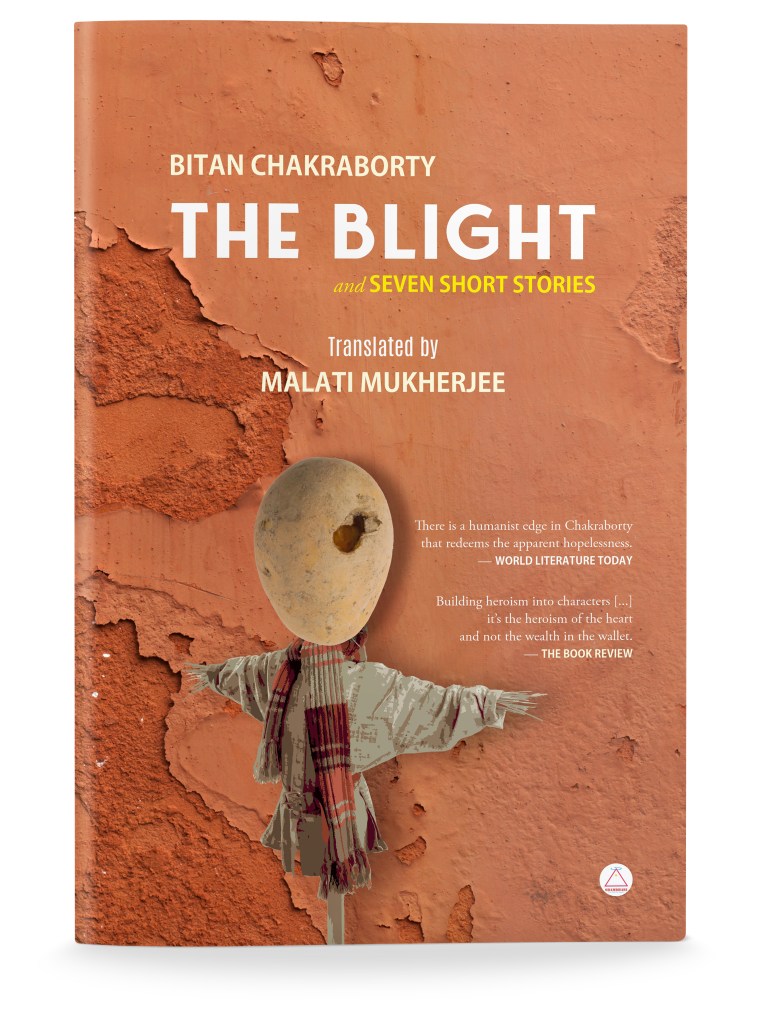


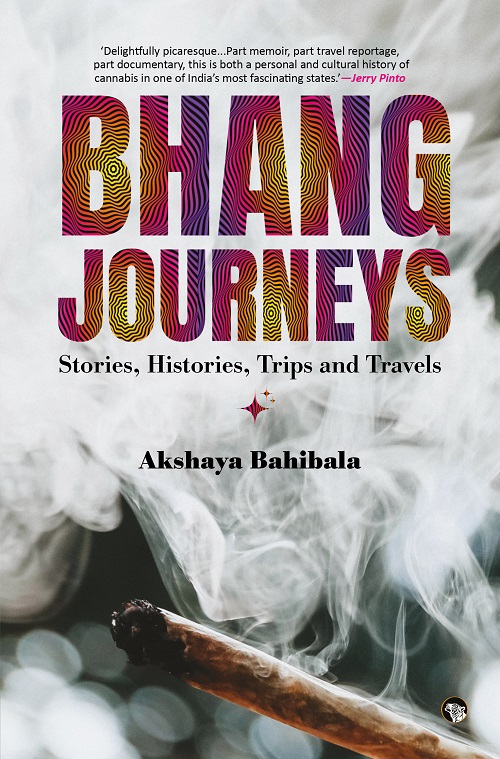
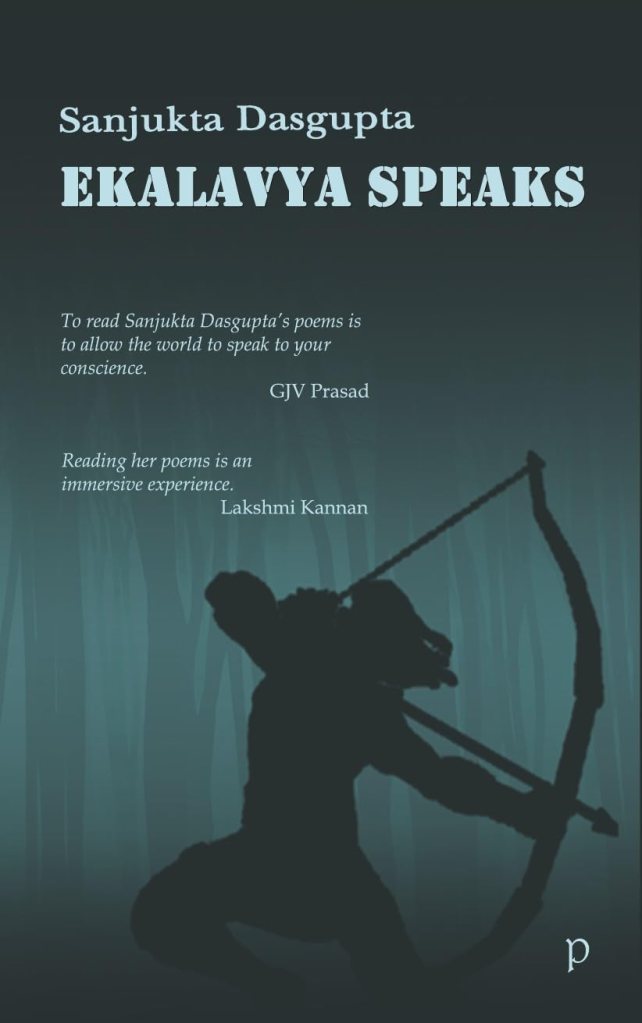

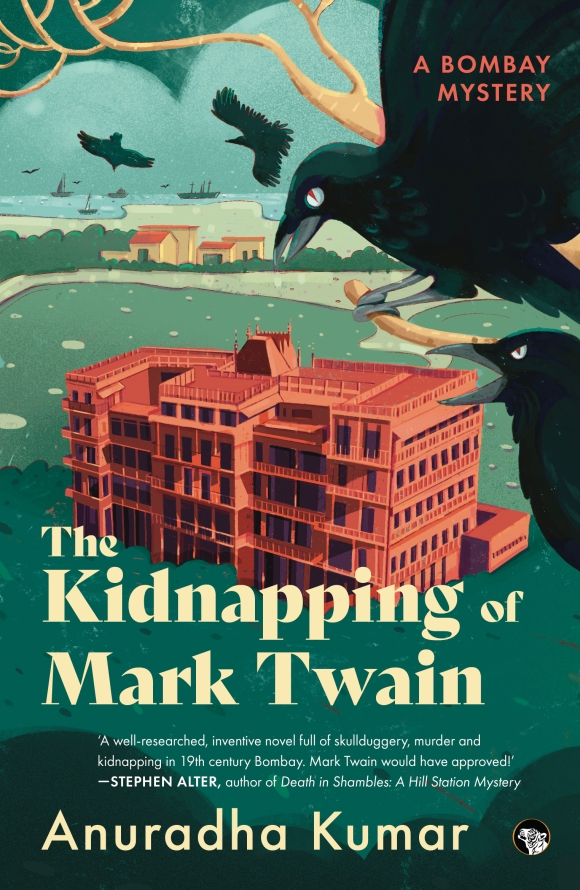

 Borderless