Whose story are we recounting when we attempt to narrate history? An unexamined acceptance of anthropocentric biases have placed man at the centre of historical narratives and historical accounts. The time has come when this assumption of man’s centrality is being challenged and overturned. Both posthumanism, a concept that directly challenges man’s centrality and planetarism[1], which sees the interconnectedness of the natural, animal and human, have displaced the human entity from its position of unquestioned and unquestionable centrality.
Amitav Ghosh’s latest novel, Ghost Eye(2025), made one go back to the earlier novels in the series with a similar cast of characters, Gun Island (2029) and The Hungry Tide (2004). Like many of his other novels, these works also encapsulate the themes that Ghosh communicates with increasing urgency in successive novels-climate change and man’s hubris which has catapulted mankind into an increasing tailspin hurtling towards ecological disaster.
In Gun Island, Ghosh asks a whole series of questions which make us look at history differently. What if history is understood through the lens of migrations and mass movement or natural disasters, through unexpected bird migrations, beaching of dolphins and the shifting movement of oceanic boundaries? Is there a pattern to extraordinary events, coincidences or are they a matter of pure chance? Is time always linear? What if temporality works in loops? What happens when we are faced by recurrences and presentiments?
What if we review and revisualise history not as bounded by national boundaries but a more fluid and flowing substance — water, sea and water bodies? Some contemporary books like Oceanic Histories (2017)offers the first comprehensive account of world history focused not on the land but viewed through the seventy per cent of the Earth’s surface covered by water. Tracing the histories and the historiographies of the various oceanic regions, the book highlights the links between human and non-human history and the connections and comparisons between parts of the World Ocean. If history is a set of geo-political narratives centred around land and its acquisition, why can’t we have histories of waterways? As a life-giving but also potentially destructive substance, water occupies a prominent place in the imagination. At the same time, water issues are among the most troubling ecological and social concerns of our time.
Water is often studied only as a “resource,” a quantifiable and instrumentalised substance. Thinking with Water instead invites readers to consider how water — with its potent symbolic power, its familiarity, and its unique physical and chemical properties — is a lively collaborator in our ways of knowing and acting. What emerges is both a rich opportunity to encourage more thoughtful environmental engagement and a challenge to common oppositions between nature and culture.
Thinking about history brings me to women’s history and the issue of international women’s day, which falls on March 8th. While the question of women’s day maybe a matter of individual opinion, the question maybe rephrased as “do we need a woman’s day” or “why do we need a woman’s day”at all?
Do we need it as a kind of affirmative action? Given the historic lack of a level playing field, it is perhaps a reparative action? Or is it a needed inclusive action, that reflects changes in social policy? Much as we would like to think along positive lines about women’s development and empowerment, the picture across the world is a grim one.
For those who feel that everyday is women’s day, we could perhaps recall the broader historical context. The IWD originated from early 20th-century labour and suffrage movements in North America and Europe, demanding better pay, shorter working hours and better working conditions.
Ideally , women and girls should have equal rights under the law, rendering them safe from violence, with rights to access education, livelihoods, resources, and justice on equal terms. When these rights are realised, the impact extends far beyond individual women and girls to their families, communities, and society as a whole. Research shows that gender equality delivers better outcomes across economies, health systems, peace processes, and democratic resilience. In this context, 8th March provides an occasion to recall how far we have come. It is also a necessary reminder of how far we still have to travel in order to ensure that women and other oppressed minorities get their fair share on earth, rather than direct their eyes to heaven.
It may seem a form of tokenism to earmark one day out of 365 days in the calendar as women’s day, but at least it’s a beginning where we could begin to reassess how much we take women’s roles as caregivers and nurturers for granted. Many descriptions of women are couched in a familiar vocabulary which views women as daughters ,wives and mothers, who are the backbone of the family, pillars of society, the glue that binds communities to each other and models of resilience and endurance. Yet this idioms of approbation do not protect women from harassment , abuse and gendered violence of many kinds; in Catherine McKinnon’s words , they are rendered less than human. When we begin to recognise women as human beings with agency, legitimate claimants of human rights and deserving gender parity and justice, we will probably not need International Women’s Day.
In 1906…Current day Afghanistan From Public Domain
[1] A new subject that deals with the health of the planet
Meenakshi Malhotra is Professor of English Literature at Hansraj College, University of Delhi, and has been involved in teaching and curriculum development in several universities. She has edited two books on Women and Lifewriting, Representing the Self and Claiming the I, in addition to numerous published articles on gender, literature and feminist theory. Her most recent publication is The Gendered Body: Negotiation, Resistance, Struggle.
.
PLEASE NOTE: ARTICLES CAN ONLY BE REPRODUCED IN OTHER SITES WITH DUE ACKNOWLEDGEMENT TO BORDERLESS JOURNAL
Last month the Doomsday Clock had moved closer to midnight than at any point since it was created in 1947. Maintained by the Bulletin of the Atomic Scientists, the clock is meant to signal how close humanity stands to destroying itself, whether through nuclear conflict, climate breakdown or new technologies. Its latest shift suggests that we are living through a particularly dangerous moment.
That is one way to look at the year ahead.
Another comes from a friend of mine who follows astrology. “2026 will be intense,” she told me after we had worked out the time difference to talk. “There are major planetary shifts happening. But that also means there is potential for growth.”
Between scientific warning and planetary symbolism sits a familiar question. Are we heading towards catastrophe, or simply moving through another period of change?
It is difficult to judge the scale of events while we are inside them. Perspective usually comes later. At the time, everything feels amplified. The media leans towards urgency. Our own thoughts do the same. The expectation of upheaval can sometimes be more overwhelming than the experience itself.
In recent weeks there have been many reminders of transition: the turning of the calendar year; the Lunar New Year observed across China, parts of Southeast Asia, Korea and the Himalayan region; the beginning of Ramadan for Muslims around the world. These moments draw people together in ritual and reflection. They offer continuity, even when the wider world feels unstable.
At the same time, global leaders speak in stark terms. The Secretary-General of the United Nations recently described a world marked by conflict, inequality and unpredictability. Climate scientists warn that we have entered uncharted territory. Heat records continue to fall. Rain arrives in sudden deluges. Winters in some places are no longer as cold as they once were.
For centuries, seasonal rhythms have provided reassurance. Spring follows winter. Festivals return at roughly the same time each year. Even the Gregorian calendar, introduced in 1582, was an attempt to bring order to time.
The Greek philosopher, Heraclitus, wrote that no person steps into the same river twice. The water flows on, and so do we. It is a simple image, but it captures something steady and true about human life.
What feels different now is the speed. Changes that once unfolded across generations now seem compressed into years. Climate patterns shift within decades. Technology reshapes industries almost overnight. Artificial intelligence systems are altering the nature of work, leaving some people optimistic and others uncertain. I know people who are struggling to find employment, both those nearing the end of long careers and those only just starting out.
My friend attributes the turbulence to a conjunction of Saturn and Neptune. She links economic instability and political upheaval to movements in the sky. When she mentioned the recent increase in visible auroras, I thought of astronomers pointing out that the Sun is nearing the peak of its eleven-year solar cycle. Different explanations, same phenomena.
Whether we turn to science, philosophy or astrology, the underlying experience is similar. Things feel unsettled. Time feels faster. The future feels closer than it used to.
It is tempting either to tune out the warnings or to become consumed by them. Neither response changes what is happening. Ignoring risk does not reduce it. Constant alarm does not resolve it either.
We cannot return to a previous version of stability. The seasons will continue to shift, though perhaps less predictably. Technologies will continue to develop. Political arrangements will evolve. Some changes are small and gradual. Others are abrupt and disorienting.
The real question is how we live through them.
After our conversation, my friend sent a message: “Changes aren’t endings, but thresholds.” It is a hopeful way to think about uncertainty. Crossing a threshold suggests movement rather than collapse.
Perhaps this year calls for small, steady practices. Paying attention to what we consume, digitally and otherwise. Slowing down our thinking when everything pushes us to react. Staying connected to the people around us. These are modest responses, but they are within reach.
We step into the river again. The water is different. So are we.
.
Keith Lyons (keithlyons.net) is an award-winning writer and creative writing mentor originally from New Zealand who has spent a quarter of his existence living and working in Asia including southwest China, Myanmar and Bali. His Venn diagram of happiness features the aroma of freshly-roasted coffee, the negative ions of the natural world including moving water, and connecting with others in meaningful ways. A Contributing Editor on Borderless journal’sEditorial Board, his work has appeared in Borderless since its early days, and his writing featured in the anthology Monalisa No Longer Smiles.
.
PLEASE NOTE: ARTICLES CAN ONLY BE REPRODUCED IN OTHER SITES WITH DUE ACKNOWLEDGEMENT TO BORDERLESS JOURNAL.
Let me begin by saying that like most readers enamoured by her works, I really enjoyed reading Arundhati Roy’s first work of memoir Mother Mary Comes to Me published in 2025. It is a soaring account, both intimate and inspiring, of how the author became the person and the writer she is, shaped by circumstance, but above all by her complex relationship to the extraordinary, singular mother she describes as a gangster, as ‘my shelter and my storm’. In the meantime, many reviews of the book have already been published, some full of praise and some quite critical, but it can be undoubtedly said that the book created a literary storm that one hadn’t experienced for quite a long time. And to add to that, social media is now flooded with her interviews, readings etc., some very recent and some as old as fifteen years. This essay delves into several issues pertaining to it that have struck me as unique.
Born out of the onrush of memories and feelings provoked by her mother Mary’s death in 2022, this is the astonishing, often disturbing and surprisingly funny memoir of the Arundhati Roy’s life, from childhood to the present, from her movement from Kerala to Delhi. There are forty-two chapters in this book, not numbered, but the titles themselves are self-explanatory. By following their interesting nomenclature, one can get an inkling of how Roy has laid out her narrative strategy, by talking not only about her own life but how it has been intertwined with her mother in a peculiar love-hate relationship. In the very first chapter titled ‘Gangster’, (which Roy has been reading in many gatherings till now), she tells us about her peculiar relationship with her mother. In her excellent and unique narrative style, she says:
“As a child I loved her irrationally, helplessly, fearfully, completely, as children do. As an adult I tried to love her cooly, rationally, and from a safe distance. I often failed. Sometimes miserably. I wrote versions of her in my books, but I never wrote her.”
She then advices her reader: “Most of us are a living, breathing soup of memory and imagination – and that we may not be the best arbiters of which is which. So read this book as you would a novel. It makes no larger claim.”
The narration of the incidents always does not follow a strict chronological order. Some of the stories are already quite well-known. This tells us how the young Syrian Christian Mary Roy married a Bengali tea planter in Assam and had to soon leave her husband because of his drunkenness and lack of responsibility towards his family. Having no support except for a bachelor’s degree in Education, she takes the bold decision of walking out of the marriage and lands in Ooty along with her two young children to live in her father’s cottage. A few months into her fugitive life, her estranged mother and elder brother arrived from Kerala to evict her. They told her that under the Travancore Christian Succession Act, daughter had no right to their father’s property and that they were to leave the house immediately. Years later Mary would challenge the act in the Supreme Court and demand an equal share of her father’s property, and luckily by winning the case in 1986 she became a sort of celebrity overnight.
The story then moves on to Kottayam and then to Ayemenem in Kerala (some of the details of which are beautifully narrated in The God of Small Things too) where Mary Roy struggles to find a foothold for herself and the children and open a school. That story of how that school began in a rudimentary form and how it gradually grew into the well-known residential institution called Pallikoodam designed by the famous architect Laurie Baker, how it remained a top priority in Mary Roy’s life ( the school children prioritised over her own) along with her own eccentricities, her uncompromising nature and peculiar behaviour ( her refusal to be accepted as the mother of the famous writer Arundhati Roy, being one of them), till her death remains one major strand of the narrative.
The other major narrative strand pertains to Roy’s own life. Arundhati’s version of the story tells us how in the summer of 1976 she finished her high school at sixteen and leaving Kottayam (and of course her mother whom she wanted to dissociate forever), arrived alone without any contact in a completely alien territory in Delhi to take the entrance exam for the School of Architecture. Not having any contact with her mother for several years, she led a bohemian life, lived together with different people, saw partly the underbelly of life and did odd jobs to sustain herself. In the architectural school, she met Pradip Kishen and eventually married him (who was then the husband of the boss under whom she was working for a while). She scripted a screenplay for a movie called In Which Annie Gives ItThose Ones about the college life and though it was once telecast in Doordarshan decades ago, it had been lost till recently the footage has been recovered, restored and set as an official entry in the Berlin Film festival this year but one which Roy refused to attend citing the cause of Palestine.
She was involved in another movie script Electric Moon and acted in minor roles in some off beat films like Massey Sahib till she changed her mission of life. After the publication of The God of Small Things, Roy stopped writing novels and got involved in political and social causes and got involved with social activists like Medha Patkar and the Maoists in the Chhattisgarh region and even faced jail for a day for her protests. The writing she produced for a couple of decades were all powerful political manifestos supporting leftist politics (“The Algebra of Infinite Justice” being one of the well- known texts and My Seditious Heart, published in 2019, is a collection of her non-fiction) till she came up with her second novel The Ministry of Utmost Happiness.
In the meantime, the handsome royalty she received from her first novel changed her living style and for the first time Arundhati Roy managed to eke out a comfortable lifestyle and even buy a house of her own. Her narration is interspersed with several interesting anecdotes, relating to her relationship with her brother whom she mentions throughout as LKC, and their chance meeting with Micky Roy, their father in pathetic condition in Delhi. The chapter titled ‘Mama Bear, Papa Bear’ is very interesting to read. It begins with the following lines: “Seven years had gone by since I’d last seen Mrs Roy. The strangest thing is that I cannot remember how she and I came to be in contact with each other again”. Then the joy of seeing her brother after so many years was exacerbated with their meeting of their father Micky Roy, who had totally disappeared from their lives when they were kids. The pathetic state of the man almost dying out of liquor addiction, we are told about how he was “as frail as a small bird, lame and hunched over …he was severely malnourished, like people in UN pamphlets.” This is how Roy narrates the incident:
‘You would never have believed I was your father. You look so much more like me than your mother. Doesn’t she, Kapil Dev? Same nose. Same eyes…sorry eye.’(Giggle.) ‘I say Orundhuti, do you hit the bottle?’
He pronounced my name the Bengali way.
‘Me? No.’
‘Oh, go on. Tell the truth. All good Roys hit the bottle. Whaddyou say, Kapil Dev?’
(Giggle. Slap.)
After going through all the ups and downs of life, especially in relation to her mother (too many to be narrated here), the story end in the last chapter aptly titled ‘A Declaration of Love’ when in January 2022 she got a message from her mother saying that she loved her. Despite everything that had happened between them, somehow, she knew that to be true. “My lifelong refusal to stop loving her, no matter what, had finally breached her barriers.” The story ends with her death, the details of her cremating process, the performance of the Kottayam Police Band, the 21-gun salute she received and ultimately the memorial they built for her in the bamboo grove where the headstone mentioned Mary Roy as ‘Dreamer Warrior Teacher’ and ‘Founder Pallikoodam.’ The strange love-hate relationship that persisted between Arundhati and her mother comes out beautifully in the end when she writes:
“The first night in a Mrs Roy-less world, I spun unanchored in space with no coordinates. I had constructed myself around her. I had grown into the peculiar shape that I am to accommodate her. I had never wanted to defeat her, never wanted to win. I had always wanted her to go out like a queen. And now that she had, I didn’t make sense to myself any more.”
Another interesting piece of information is revealed in this concluding chapter is about how Arundhati casually decided to get divorced from Pradip Kishen with the same lack of seriousness with which she had got married, so that he and the girls (and their property) had no legal connection to her. The order granting them the divorce had been delivered to her the previous morning, at the very moment Mrs Roy died. ‘So, I, free woman, free falling, was heir to nothing at all. But I was curious about our great will-making mother’s will.’ Later she gets to know that her brother had marked off Mrs Roy’s house and its compound from the rest of the school and had it registered in her name. So, she decided to renovate the house and build the Grove simultaneously in it.
The Cover Design
Before concluding, I want to draw the reader’s attention to the special care that has been taken to make and market this book. The cover design is a highly skilled piece of production. On the stark red cover of the book with the title embossed artistically, we have half a dust jacket in white with two different pictures of Roy on the front and the back cover– one a current photograph of the author with her head full of pepper and salt curls and with a discreet smile on her face. The other photograph is of a much younger and radical Arundhati with a distinct far-away look in her eyes and with a burning cigarette on her lips. Though the publisher gives the statutory warning that cigarette smoking is injurious to health and it does not support it in any way, a very stark visual statement about the unnatural bohemian nature of the author gets revealed through this photograph.
Incidentally, this selling of a book through its stark and attractive cover reminded me of a similar strategy undertaken in 1997 when Roy’s debut novel The God of Small Things won the Booker Prize and took the literary world by storm. The book came out in what was essentially the pre-internet and social media era and the maximum number of reviews and essays that came out during that time were in print. In an essay which I had authored then, calling it “The Making and Marketing of Arundhati Roy” I had shown that the contents of the dust jacket of the book differed radically from region to region and it was done through a deliberate and effectively thought-out strategy. So, in the Indian edition we had a different story outline giving us a gist of what to expect inside, especially the love of a paravan, an untouchable man with an upper-caste woman, along with the local setting in Kerala, Ayenemem to be exact.
In the Random House edition published from New York, the story outline was completely different, not only telling us about untouchability and the love between Radha and Krishna that would lure the western reader to pick up the book about a unique place in India defined as ‘God’s Own Country’ in tourist brochures. Also, the photographs of Roy (both taken by her then husband Pradip Kishen) differed radically. With this new book, of course, such strategies didn’t work anymore. With innumerable book launches, readings by the author everywhere (a search on Youtube will even land you with interviews that are more than a decade old) we now come upon other ways and means through which the book has been popularised. But all said and done, I must conclude by saying that whether you agree or disagree with the extreme left wing political views that Arundhati Roy professes, those who still haven’t read this memoir have really missed reading a wonderfully written book with its 372 pages that is really unputdownable, with its lyrical as well as down to earth style of narration, full of new metaphors, new word coinages that are the USP of Arundhati Roy.
Somdatta Mandal, critic and translator, is former Professor of English at Visva-Bharati University, Santiniketan, India.
.
PLEASE NOTE: ARTICLES CAN ONLY BE REPRODUCED IN OTHER SITES WITH DUE ACKNOWLEDGEMENT TO BORDERLESS JOURNAL
Pongal Pot. Photo Courtesy: Ravi Varmman K Kanniappan
On the 15th of January 2026, while much of the modern world was busy checking notifications, updating calendars, and worrying about quarterly outcomes, traditional Tamil households across the globe were doing something far more radical, watching milk boil. “Pongal”, the harvest festival, is one of those ancient cultural practices that stubbornly refuses to modernise. It does not arrive as an app update, cannot be streamed, and has no subscription model.
Milk is poured into a pot, heated patiently, and allowed, indeed encouraged, to overflow. This overflow is not considered inefficiency or waste, but it is the very point. It signifies abundance, wellbeing, and prosperity not merely for humans but for the entire ecosystem that made the meal possible, the sun, the rain, the soil, the cow, and the quiet, unseen labour of nature itself. Rice, lentils, jaggery, nuts, legumes, and raisins follow, and the resulting sweet dish is shared freely among family and friends, because prosperity that is not shared is considered incomplete.
This is an economy based not on accumulation but on circulation, not on profit but on participation. Something I believe is deeply unsettling to modern sensibilities.
Into this defiantly non-consumerist ritual wandered a chickpea with an extraordinarily well travelled past. This was no humble backyard legume, nor had it been picked up at the nearest market. It had sprouted in Mexico, been packed in Lebanon, purchased in Sierra Leone, and generously gifted by my wife Greeja’s friend, Saras, and her husband Pieter, a Belgian whose kindness, like the chickpea itself, clearly knows no borders. The chickpea’s journey to Malaysia, where, after crossing more continents than most humans manage in a lifetime, it finally fulfilled its destiny, being cooked into a traditional Tamil Pongal.
By then this chickpea had crossed more borders than most people ever will, navigated more currencies than a multinational executive, and yet arrived without a single stamp of self-importance. If globalization were ever to seek a spokesperson, it would do well to choose this chickpea, which achieved in silence what conferences and treaties have struggled to explain. The chickpea does not attend Davos, does not publish white papers, does not tweet about resilience or sustainability, and yet it embodies globalisation with a calm confidence that makes economists look unnecessarily stressed.
We often speak of globalisation as though it were invented sometime in the late twentieth century by economists with impressive haircuts and Power Point skills. But the chickpea, unimpressed by timelines, has been global for at least nine thousand years. Its origins lie in the “Fertile Crescent”, that much abused cradle of early civilisations covering modern day Turkey and Syria, where early cultivation was recorded between 7500 and 6800 BCE. The wild ancestor, “cicer reticulatum”, still grows in southeastern Turkey, quietly ignoring the fact that humans have spent millennia fighting over the land around it. From this region, chickpeas spread naturally to the Middle East, the Mediterranean basin, and India by around 3000 to 2000 BCE, becoming a staple across cultures, religions, and cuisines. This was globalisation without shipping containers, trade sanctions, or consultants, just humans carrying seeds because hunger is wonderfully non-ideological.
India, once it encountered the chickpea, embraced it with characteristic enthusiasm and then proceeded to dominate its production. Today, India accounts for more than 70 percent of global chickpea output, a statistic that has made the chickpea an unlikely participant in modern trade wars. Protectionist policies, tariffs, reciprocal duties, and import bans imposed by major players such as India, the United States, and Mexico have transformed this humble legume into a politically sensitive commodity. It turns out that even the simplest food becomes controversial once spreadsheets get involved.
Thiruvalluvar (an ancient philosopher), writing two thousand years ago, anticipated this uncomfortable truth with brutal clarity:
“Only those who live by agriculture truly live; all others merely follow and feed upon them.” - Kural 1033
The verse throws stylish shade at modern life, while we sip lattes under perfect air conditioning and call it “work”, farmers are out there negotiating with the sun, rain, and stubborn soil to keep humanity fed. Our sleek jobs, fancy titles, and glowing screens? Well, they are merely luxury addons. Strip away agriculture and civilisation collapses into a very well-dressed famine. Turns out, all our progress still runs on dirt, with attitude.
The chickpea’s journey to South America, especially Mexico, is a reminder that globalisation has often travelled under less noble banners. Portuguese and Spanish explorers introduced chickpeas to the New World in the sixteenth century, carrying them across oceans as reliable, non-perishable protein sources. From these initial points of contact, chickpeas spread across Central and South America, embedding themselves into local agriculture and diets. In modern times, Mexico has emerged as a significant exporter, specialising in the Kabuli variety prized for its size and quality, with major production zones in Sonora and Sinaloa. Argentina and Chile also joined the club. Thus, a crop born in ancient Anatolia, nurtured in India, and sanctified by ritual, found itself repackaged for global markets, complete with branding, logistics, and regulatory oversight. The chickpea, once again, remained silent.
Silence, however, does not mean insignificance. Homer knew this. In TheIliad (Book 13) he famously compares arrows ricocheting off Menelaus’s armour to chickpeas and dark-fleshed beans flying off a threshing floor in the wind. The metaphor works only because the audience knew exactly how dried chickpeas behave, hard, resilient, and oddly bouncy. By likening lethal weapons to pulses, Homer not only emphasises the strength of the armour but also performs a subtle act of cultural grounding. The epic world of gods and heroes is momentarily tethered to the everyday agricultural reality of farmers winnowing grain. War, Homer seems to say, may be glorious, but it is ultimately sustained by food. Chickpeas, by 800 BCE, were so deeply embedded in Greek life that their sound and movement were universally recognisable. Even epic poetry depended on legumes.
Indian tradition offers an equally revealing, if more logistical, narrative. In South Indian tale associated with the Mahabharata, an Udupi King is said to have managed catering for the massive armies at Kurukshetra. Legend holds that he could predict daily casualties by observing leftover food. In some versions, the king visits Krishna at night, who eats a handful of roasted chickpeas, the number consumed corresponding mysteriously to the thousands who would fall the next day. This allowed precise meal planning and zero waste on an industrial scale of destruction. These divine data analytics allowed the king to cook exactly the right amount of food, avoiding waste on a genocidal scale. It is perhaps the earliest example of just-in-time inventory management, achieved without software, powered entirely by chickpeas and divine omniscience.
If you have ever wondered why Udupi cuisine is famous for efficiency and planning, this story offers a clue. Here, chickpeas function not just as food but as instruments of cosmic accounting.
Interestingly, while early Vedic texts sometimes viewed certain pulses as unsuitable for sacrifice, the Mahabharata period saw chickpeas elevated into sraddha rites (funeral rituals) and daily offerings. They transitioned from questionable to sacred, a promotion many humans would envy.
Thiruvalluvar’s ethical framework accommodates this evolution effortlessly:
“Sharing food and caring for all life is the highest of virtues.”-- Kural 322
A noble idea, until chickpeas quietly steal the spotlight. Modest, beige, and absurdly cooperative, they divide endlessly without complaint and nourish everyone from monks to gym bros. While humans argue ethics in panels and podcasts, chickpeas get on with the job, feeding the masses without ego. In the moral economy of virtue, they don’t preach but they simply multiply and sustain, humbling us one hummus bowl at a time.
Across civilisations, chickpeas became the dependable fuel of endurance. Roman soldiers consumed them as part of their standard rations, boiling them into thick porridge known as “puls” when meat was scarce. Gladiators relied on pulses for strength, earning nicknames that emphasised grain and legume consumption rather than heroism. Spanish and Portuguese sailors trusted chickpeas on long sea voyages because they did not rot, sulk, or demand refrigeration. During World War II, Allied researchers turned again to pulses to address vitamin deficiencies among troops, while the modern Indian Army continues to include chickpea flour and whole chickpeas in field rations due to their high caloric density and reliability. Empires rise and fall, but soldiers keep eating chickpeas.
Modern science, arriving fashionably late as usual, now confirms what ancient armies, monks, and farmers already knew. Chickpeas are celebrated as “brain food,” dense with nutrients that support cognitive function, mood regulation, and neurological health. Nutritional psychiatry highlights their role in reducing inflammation and stabilising the gut brain axis, making them valuable in alleviating anxiety and depression. Unlike the sugar-fuelled spikes and crashes of contemporary diets, chickpeas offer slow-release energy, the kind required for sustained thought, emotional regulation, empathy, and decision making. In a world addicted to instant gratification, caffeine dependence, and burnout worn as a badge of honour, the chickpea is almost offensively patient. That patience makes it profoundly incompatible with modern lifestyles, and incompatibility, in our times, is the surest mark of subversion.
If this sounds like ancient wisdom romanticised through hindsight, it is worth noting that modern civilisation has recently spent billions of dollars rediscovering precisely the same conclusion, often during lunch breaks. Sometime in the post-Covid era, somewhere between a glass walled co-working space and an overbranded café serving ethically sourced air, a young startup founder sat staring at his laptop, attempting to optimise a problem modern life seems uniquely skilled at inventing, how to eat “mindfully” without actually having time to eat. His company was building an AI-driven wellness platform designed to “personalise nutrition using real time biometric feedback.” Investors liked it. The pitch deck had the correct fonts. The valuation was impressive for something that had not yet solved hunger, distraction, or exhaustion.
Lunch arrived in recyclable packaging engineered to survive a nuclear winter. Inside was a bowl labelled Ancient Protein Medley. It contained quinoa flown in from the Andes, kale grown in a vertical farm two kilometres away, avocado sourced from somewhere geopolitically awkward, and, almost as an afterthought, roasted chickpeas. The chickpeas were rebranded as “plant-based protein spheres,” presumably because “chickpea” did not sound sufficiently disruptive, scalable, or fundable.
As the founder ate mechanically between Slack notifications, his smartwatch vibrated with updates. Blood sugar stable. Cortisol marginally elevated. Cognitive focus acceptable. The AI recommended breathing exercises and fewer screens. The founder ignored both and continued eating. The irony was complete. A system powered by cloud computing, global capital, and predictive algorithms had concluded, after millions in funding, that roasted chickpeas were ideal for sustained energy and mental clarity.
This was not new knowledge. Roman soldiers had marched on it. Tamil farmers had lived on it. Sailors had crossed oceans with it. But now it had a dashboard, a graph, and a subscription model.
Later that evening, the same founder attended a panel discussion on sustainability. Someone in the audience asked about regenerative agriculture. The panellists responded confidently, invoking carbon credits, blockchain traceability, lab-grown proteins, and the future of food. No one mentioned legumes fixing nitrogen. No one mentioned soil. No one mentioned that the chickpeas quietly sitting in the founder’s lunch bowl had already done more for planetary health than the entire panel combined. The chickpeas, true to form, offered no comment, no keynote, and no thought leadership, only nourishment.
The chickpea’s journey eastward is no less intriguing. It reached China via the Silk Road, settling primarily in Xinjiang, where evidence of cultivation dates back around two thousand years. There, it became part of Uighur medicinal traditions, prescribed for ailments ranging from hypertension to itchy skin. During the Tang and Yuan dynasties, chickpeas gained prominence as a “cosmopolitan” food, sometimes referred to as the “Muslim bean”. Yet in central China, the chickpea struggled for a distinct identity, often conflated with the common pea even by Li Shizhen[1], the famed Ming dynasty herbalist. Not all travellers are recognised for who they are, some spend centuries being mistaken for someone else.
And yet, through all this travel, confusion, commodification, and conflict, the chickpea remained quietly regenerative. Unlike extractive crops, it forms a symbiotic relationship with Rhizobium bacteria in its roots, fixing nitrogen from the air and enriching the soil. It takes and gives simultaneously, leaving the land better than it found it. This is perhaps the most radical aspect of the chickpea’s philosophy, one that stands in stark contrast to modern economic models based on extraction and exhaustion.
Thiruvalluvar warns us gently but firmly:
“Harm done to others inevitably returns to oneself.” – Kural 319
A warning humans hear, nod at, and immediately ignore. The chickpea takes a cooler approach. It survives by being outrageously generous, throwing itself into curries, salads, and hummus without a trace of resentment. No revenge arc, no ego. Just pure edible goodwill. While we stress over karma and consequences, the chickpea lives its truth, give everything away, become indispensable, and achieve immortality in every lunch bowl.
Humanity today resembles the ancient chickpea, hard, resilient, perpetually defensive. We pride ourselves on toughness, bouncing off crises with admirable persistence, yet rarely ask what we leave behind. Climate change, trade wars, and political upheavals are the shrill winds of Homer’s winnowing floor, tossing us about. The question is not whether we survive the tossing, but whether we enrich the soil when we land. Progress, the chickpea suggests, is not about becoming larger, louder, or more profitable. It is about being regenerative, ordinary, and useful.
In an age obsessed with luxury, consumption, and curated lifestyles, the chickpea offers a quietly subversive model. It is not elite food, but it is the food of soldiers, monks, labourers, and families. It does not advertise, rebrand, or reinvent itself. It simply nourishes.
Thiruvalluvar captures this understated wisdom perfectly:
“From seeds come harvests, and from giving comes abundance.” -- Kural 1030
A line politicians quote solemnly before approving tax breaks for themselves. The chickpea, deeply unimpressed, just does the math. One seed becomes many, then redistributes itself aggressively into every cuisine on earth. No gatekeeping, no merit tests, no ‘personal responsibility’ lecture. While humans weaponise scarcity and call it policy, the chickpea runs a ruthless experiment in abundance and wins, by being cheap, shared, and impossible to cancel. The chickpea has lived this truth for millennia.
So perhaps the real lesson of globalisation does not lie in trade agreements or consumer choices but in a small legume that has travelled from ancient Turkey to modern Mexico, survived Roman marches and mythic wars, endured misnaming and trade barriers, and still ends up quietly nourishing someone’s meal.
Even now, after dashboards have glowed, algorithms have pontificated, and every opinion has been optimised into a performance, the answer remains stubbornly ancient, from Roman roads to Tamil fields. The chickpea does not care about your ideology, your portfolio, or your meticulously curated identity. It will grow, fix nitrogen, feed someone, and move on without a press release.
In a world addicted to spectacle, branding, and moral pontification, this calm, beige indifference feels almost obscene. Quiet competence and unfashionable, the chick pea, turns out to be the rarest, and most outrageously extravagant, luxury left.
The travelled chickpea. Photo Courtesy: Ravi Varmman K Kanniappan
[1] Li Shizen(1518-1593), Ming acupuncturist, herbalist, naturalist, pharmacologist, physician.
Ravi Varmman explores leadership, culture, and self-inquiry through a philosophical lens, weaving management insight with human experience to illuminate resilience, ethical living, and reflective growth in an ever shifting world today.
PLEASE NOTE: ARTICLES CAN ONLY BE REPRODUCED IN OTHER SITES WITH DUE ACKNOWLEDGEMENT TO BORDERLESS JOURNAL
Bibliography
Pongal festival, milk boiling ritual, symbolism of abundance and ecology
Ramaswamy, N. (2004). Festivals of Tamil Nadu. New Delhi: Sterling Publishers.
Origins of chickpea domestication in the Fertile Crescent; dates (7500–6800 BCE); wild ancestor Cicer reticulatum
Zohary, D., Hopf, M., & Weiss, E. (2012). Domestication of Plants in the Old World (4th ed.). Oxford: Oxford University Press.
Spread of chickpeas to India by 3000–2000 BCE
Fuller, D. Q. (2006). Agricultural origins and frontiers in South Asia. Journal of World Prehistory, 20(1), 1–86.
India producing ~70% of global chickpeas; modern trade disputes
FAO. (2023). FAOSTAT Statistical Database: Pulses Production and Trade. Rome: Food and Agriculture Organization of the United Nations.
Thiruvalluvar quotations, dating (~2nd century BCE–2nd century CE), agrarian ethics
Pope, G. U. (1886). The Tirukkural. London: Oxford University Press.
Introduction of chickpeas to the Americas by Spanish and Portuguese explorers
Smith, B. D. (2011). General patterns of niche construction and the management of ‘wild’ plant and animal resources. Philosophical Transactions of the Royal Society B, 366(1566), 836–848.
Modern chickpea cultivation in Mexico (Sonora, Sinaloa), Kabuli variety exports
Gaur, P. M., et al. (2012). Chickpea breeding and production. Plant Breeding Reviews, 36, 1–87.
Homer’s Iliad Book 13 chickpea/threshing-floor simile
Homer. (c. 8th century BCE). The Iliad, Book XIII. Trans. E. V. Rieu. London: Penguin Classics.
Udupi King / Mahabharata legends involving chickpeas and casualty prediction
Hiltebeitel, A. (2001). Rethinking the Mahābhārata: A Reader’s Guide to the Education of the Dharma King. Chicago: University of Chicago Press.
Chickpeas in sraddha rites and post-Vedic ritual elevation
Olivelle, P. (1993). The Āśrama System: The History and Hermeneutics of a Religious Institution. Oxford: Oxford University Press.
Roman soldiers, gladiators, and chickpea-based diets (“puls”)
Garnsey, P. (1999). Food and Society in Classical Antiquity. Cambridge: Cambridge University Press.
Chickpeas in maritime rations and early modern naval diets
Braudel, F. (1981). The Structures of Everyday Life: Civilization and Capitalism, Vol. 1. New York: Harper & Row.
Use of pulses in World War II nutrition and modern military rations
Nestle, M. (2002). Food Politics: How the Food Industry Influences Nutrition and Health. Berkeley: University of California Press.
Nutritional psychiatry: chickpeas, gut–brain axis, slow-release energy
Jacka, F. N. et al. (2017). Nutritional psychiatry: The present state of the evidence. The Lancet Psychiatry, 4(3), 271–282.
Modern “wellness tech,” quantified nutrition, and startup food culture
Lupton, D. (2016). The Quantified Self. Cambridge: Polity Press.
Nitrogen fixation via Rhizobium in chickpeas; regenerative agriculture
Peoples, M. B., et al. (2009). The contributions of legumes to reducing the environmental risk of agricultural production. Agriculture, Ecosystems & Environment, 133(3–4), 223–234.
Chickpeas in China via Silk Road; Xinjiang cultivation; “Muslim bean”
Hansen, V. (2012). The Silk Road: A New History. Oxford: Oxford University Press.
Li Shizhen and historical misclassification of chickpeas
Unschuld, P. U. (1986). Medicine in China: A History of Ideas. Berkeley: University of California Press.
The scent of ozone and damp earth, the particular weight of afternoon light filtering through old venetian blinds—these small phenomena often announce memory long before language does. A man sits in a borrowed room, tracing with his thumb the grain of a worn wooden desk. He is not summoning a triumphant episode from his past; he is grasping at a faint, persistent echo: his grandfather’s rough hands, smelling of linseed oil, guiding him to adjust the focus on a heavy, obsolete microscope. This tactile ghost, a pressure without a narrative, is memory in its most primordial register—somatic, unspoken, resistant to articulation. Yet across the same room sits a framed, slightly faded photograph of a military regiment from a war the man never witnessed. If the desk grain belongs to the biology of remembrance, the photograph belongs to its cultural architecture. The former is of the body; the latter is of the nation.
Between these two points—molecular trace and cultural inscription—memory unfolds as a dual phenomenon. One register writes itself into the nervous system or even into the regulatory architecture of DNA; the other composes itself through stories, monuments, rituals, and shared forms of collective identity. Human remembering, therefore, is never a single mechanism. It is a negotiation between biological predisposition and symbolic world‑making. While Maurice Halbwachs argued that memory exists only within social frameworks—familial, religious, national—the new sciences of epigenetics complicate this picture by suggesting that experience may inscribe itself directly onto the genome, altering stress responses and emotional baselines (Halbwachs 1994). Jan Assmann placed cultural memory within the realm of external media—texts, rituals, archives—through which civilizations secure continuity. But what if continuity also occurs beneath culture, silently, in the biological preconditions of feeling, reactivity, and vulnerability?
The humanities have traditionally claimed memory as their domain. For scholars of culture, memory is built, curated, stabilized, even dramatised. The frameworks of collective identity depend on ritual performances, anniversaries, museums, and the symbolic politics of commemoration. Pierre Nora’s notion of lieux de mémoire—sites of memory—emphasises the necessity of external anchors when living memory fades (Nora 1989, 18). Paul Connerton underscores how societies remember through bodily habits: the manner of sitting, mourning, greeting, celebrating (Connerton 1989). Paul Ricoeur goes even further, proposing that identity itself is narrative; one becomes a self through the stories one tells and those narrated about the person (Ricoeur 2004). In this tradition, memory is a fundamentally symbolic undertaking. It requires a community, a language, a form.
Yet parallel to this symbolic tradition runs a different kind of memory science—one that refuses narrative and instead concerns itself with molecular inscription. Michael Meaney’s research on maternal care in rats revolutionised the field by showing how early‑life nurturing modulates the expression of genes associated with stress regulation (Meaney 2001). In Meaney’s experiments, pups that received high levels of licking and grooming developed healthier stress responses as adults due to reduced DNA methylation at specific sites in the hippocampus. This was not metaphorical memory but biological history. Szyf (2007) argues that the epigenome serves as an interface between the dynamic environment and the inherited static genome, responsive to chemicals and social behaviors like maternal care, shaping phenotypic diversity and disease susceptibility. Under certain extreme conditions—famine, war, prolonged deprivation—some studies even suggest intergenerational effects, whereby descendants inherit altered physiological responses shaped by ancestral trauma (Zhang and Meaney 2010).
Here arises a philosophical friction: cultural memory is fluid, socially negotiated, and open to reinterpretation; biological memory is involuntary, material, and often silent. If one is authored by discourse, the other is authored by experience itself. If one requires narration, the other bypasses language entirely. And yet, human memory—actual lived memory—always seems to emerge in the space between these two registers.
Bruno Latour would likely say this duality is not a conflict but an illusion. Modernity, he argues, falsely separated nature and culture into distinct domains (Latour 1993). Epigenetic memory and cultural memory demonstrate that the separation was never real to begin with. Biological predispositions shape how cultural narratives are received, processed, and embodied. Cultural narratives, in turn, modulate biological baselines—stress responses, temperament, even the perceived meaning of vulnerability. The subject is always hybrid: part symbolic construct, part molecular history.
Tim Ingold’s idea that human beings do not “store” memory but rather live along unfolding lines—lines of descent, perception, and movement—allows a different perspective (Ingold 2007). In this view, memory is neither an archive nor a code but an ongoing negotiation between the environment and the self. Early experiences lay down tendencies, grooves, or vulnerabilities, while cultural forms offer scripts, languages, and interpretive structures. The resulting life is neither determined biologically nor invented culturally; it is braided, entwined, perpetually unfolding.
Consider inherited trauma—a conceptual laboratory for observing this entanglement. A child of survivors may inherit an altered cortisol response, a nervous system calibrated toward vigilance. That same child is simultaneously raised within a narrative tradition of survival, persecution, resilience, or victimhood. The cultural story does not cause the biological predisposition, and the biological predisposition does not dictate the cultural story. Rather, each shapes how the other is lived. The narrative frames the physiological feeling; the physiology lends weight and urgency to the narrative. Memory occurs where the body trembles at the threshold of meaning.
Even the politics of memory shifts when viewed through this dual lens. Nikolas Rose’s “politics of life itself” points to how biological knowledge—molecular, epigenetic, neurochemical—reshapes governance and identity (Rose 2007). Cultural memory stabilises collective meaning, while biological memory renders life legible in new ways: as risk profiles, predispositions, susceptibilities. One is mobilised for identity, the other for prediction.
What emerges from these entanglements is a model of memory as dual‑register: one symbolic, one material. The symbolic register is flexible, contextual, and discursive. It legitimises, interprets, and projects meaning. The material register affects moods, is pre-linguistic, and enduring. It inscribes, tunes, and predisposes. The two registers do not mirror each other; they modulate each other. Without the symbolic, the material remains mute. Without the material, the symbolic remains disembodied.
Human memory exists in the shimmer between the registers. It is neither pure biology nor pure discourse; it is the embodied narrative of a life being lived in time. The man at the desk, staring at the old regiment photograph, is not merely recalling. His body, shaped by ancestral stress and nurtured by familial narratives, meets an artifact shaped by national history. His interpretation of the photograph is guided by cultural frameworks, but the emotional charge with which he confronts it may come from deeper, older inscriptions—those written, silently, in the folds of his biology.
To remember, then, is to stand at the crossroads of matter and meaning. It is to inherit stories and methylation patterns, monuments and cortisol rhythms, photographs and tremors. It is to live as a site where culture meets biology, where the past becomes present through both symbol and cell. Memory is not a story we tell, nor a gene we carry, but the meeting point where the body’s predispositions encounter the world’s demands for meaning. In that meeting—fleeting, trembling, always becoming—the human appears.
Amir Zadnemat is an Iranian writer and essayist with a master’s degree in literature from the University of Guilan. His work focuses on modern literature, cinema, and cultural criticism.
PLEASE NOTE: ARTICLES CAN ONLY BE REPRODUCED IN OTHER SITES WITH DUE ACKNOWLEDGEMENT TO BORDERLESS JOURNAL
Bibliography
Assmann, Jan. 2011. Cultural Memory and Early Civilization: Writing, Remembrance, and Political Imagination. Cambridge: Cambridge University Press.
Connerton, Paul. 1989. How Societies Remember. Cambridge: Cambridge University Press.
Halbwachs, Maurice. 1994. On Collective Memory. Edited and translated by Lewis A. Coser. Chicago: University of Chicago Press.
Ingold, Tim. 2007. Lines: A Brief History. London: Routledge.
Latour, Bruno. 1993. We Have Never Been Modern. Cambridge, MA: Harvard University Press.
Meaney, Michael J. 2001. “Maternal Care, Gene Expression, and the Transmission of Individual Differences in Stress Reactivity across Generations.” Annual Review of Neuroscience 24 (1): 1161–92.
Nora, Pierre. 1989. “Between Memory and History: Les Lieux de Mémoire.” Representations 26 (Spring): 7–24.
Ricoeur, Paul. 2004. Memory, History, Forgetting. Translated by Kathleen Blamey and David Pellauer. Chicago: University of Chicago Press.
Rose, Nikolas. 2007. The Politics of Life Itself: Biomedicine, Power, and Subjectivity in the Twenty‑First Century. Princeton, NJ: Princeton University Press.
Szyf, Moshe. 2007. The dynamic epigenome and its implications in toxicology. Toxicological Sciences 100, 7–23.
Zhang, Tie-Yuan, and Michael J. Meaney. 2010. “Epigenetics and the Environmental Regulation of the Genome and Its Function.” Annual Review of Psychology 61: 439–66.
The phrase “irony of fate” is usually illustrated with the image of a sailor dying of thirst in the desert. Neat. Canonical. But as a mental exercise, one might try to find others, less obvious, less obedient. For instance, history has no grave for Herodotus, the very man whom Cicero, with the confidence of a Roman who knew how to assign paternity, called the father of history.
No tomb. No urn. No reliably identified city where he saw his last sunrise, or survived (or failed to survive) upto his final day. No one knows now. No one knew three hundred years ago. And judging by the silence, no one was particularly eager to know then either.
What remains are versions. Hypotheses. And the thick, practiced silence of old Hellas.
Thurii[1] gave him his second name, his last one, acquired while still alive. Yet, Thurii never returned the favour. No monument. No plaque. No modest column leaning into oblivion. Athens, meanwhile, built him something closer to a pedagogical complex. It was recommended for students who expected from the Lyceum not only rhetorical muscle but moral posture. Almost a museum. Almost a cult.
This asymmetry conveniently feeds the supporters of the so-called Periclean Scraper theory. According to them, Herodotus died not in some conveniently barbarian elsewhere, but in radiant Athens itself. Symbolic. Elegant. As the theory goes, he was removed along with other initiates into Pericles’ grand ideas by men who had begun to feel less like assets and more like liabilities. Or worse, witnesses.
We are not inclined to dignify such conjectures by reinforcing their place in history. Still less to supplement them with later interpolations produced by interested hands. These surface periodically in northern Aegean archives as lists or tables.
Yet one fact remains stubbornly intact. Herodotus was involved in the founding of Thurii.
A “common” colony, raised almost at the site of ancient Sybaris. Almost. Instead of theatrically restoring the legendary city of pleasures and refined excess (the Sybaris that gave its name to an entire philosophy of living), Thurii was assembled in haste, shoulder to shoulder with the ruins.
It was populated by Athenian volunteers, new settlers, descendants of Sybarites by blood or coincidence. Every day they walked through the ruins of yesterday. Every evening they returned to today. Dour, makeshift Thurii, assembled without taste or patience, it was like a punishment for former luxury.
The only unresolved detail was the addressee of that punishment.
Herodotus’ role in the final phase of Athenian democracy remains opaque. So opaque that one is tempted to suspect the opacity was the point. Too many moments in his biography coincide neatly with zones where documents stop leaving footprints. From fragments, partial transcripts, unsigned notes, and a couple of discreetly scraped tablets, the following version has been reconstructed. Its coherence is provisional. Responsibility for interpretation rests with the reader.
Pericles ( 495BCE–429BCE), Ancient Greek statesman and general.Herodotus (484 BCE – 425 BCE), Ancient Greek historian and geographerFrom Public Domain
Pericles acted with the confidence of a mature servant of democracy. His concept of an external threat (Persia) was remarkably versatile. It justified emergencies, softened expansion, and wrapped ambition in collective security. The threat itself worked better than any actual invasion. While others clung to the marathon, Pericles spoke of the future. A unified alliance of poleis, decisions made swiftly, centrally, and preferably in his office.
In practice, matters were simpler. The democratic faction wanted more. Territory, tribute, votes in foreign councils. Everything else was rhetorical upholstery. Their opponents could read subtext too, so Pericles began by clearing the flanks at home. The Areopagus was “reformed,” officially. Thucydides and his circle were removed next, with minimal explanation and maximum finality.
In the end Pericles remained one of the ten Strategoi[2], exactly as the constitution prescribed. But he alone decided. The others attended meetings, signed when prompted, nodded often. Formally, it was a democracy. In reality, a political singularity noticed by everyone and addressed by no one, because addressing it would have required rewriting the rules.
Only then could the Idea of a greater Hellas[3] be carried beyond the sacred city.
Herodotus arrived in Athens the way one arrives when one’s biography has already begun to resemble the synopsis of a tragedy. Still negotiable, but increasingly reluctant to change genre. There had been an attempted coup in Halicarnassus. It failed, but failure in Athens was judged alongside the elegance of the leap itself. Exile followed. He sailed with the Athenian fleet. More excursion than service, but the checkbox mattered. What he brought back was not heroism so much as stories, trimmed, calibrated, arranged with care. Athens was perpetually hungry for narratives, especially those that began as personal experience and ended as matter of state.
Pericles learned of him long before shaking his hand. By their first meeting, Herodotus had already been tested in conversation, whetted at banquets, evaluated through third parties of both sexes and varying loyalties. When Pericles finally invited him, first informally, then into his office, Herodotus was already half-installed. They spoke like men who had been reading the same books for years and drawing incompatible conclusions. Herodotus offered careful directness, still marketable. Pericles listened, then made the small, economical gesture Athenians read fluently. This man would be allowed closer.
From that moment on, Herodotus ceased to be merely a gifted interlocutor and became part of the infrastructure. His notes were quietly reclassified as “auxiliary material for decision-making.” He began to appear at discussions of issues that officially did not exist, meetings without agendas, where unrecorded questions were discussed and ideas could not to be seen walking alone in daylight.
It was elegant. Herodotus believed he was being heard. Pericles ensured he was being used. Athens congratulated itself on the illusion of mutual benefit. In conversations with Pericles and those nearest to him, Herodotus eventually let slip two places that unsettled him by their scale, precision, and absolute dissimilarity to anything he had encountered among any monuments created by human.
It was an even octagonal platform, a night’s march east of Tyre, made of marble cracked by age, yet laid so carefully, and on such a foundation, that no one, however motivated, managed to pry out blocks or grind it down into reusable rubble. The vacant expanse, roughly the size of four Athenian quarters, stubbornly refused conversion into cheap building material. And also a pyramid sunk deep into sand, referred to as Shaytep by locals. Later it was imitated with scholarly enthusiasm by Egyptians who inherited the territory above it. Its accessible chambers suggested the scale of a ten-story palace, if such a structure could ever make sense as habitation. Immense, curiously pointless, poorly translated allegories, it had the same heavy geometry, the same sensation that it was not built for people.
The locals knew nothing. Those who called them tombs did not argue with those who believed them to be stations of the gods. But one detail struck Herodotus as well as Egyptians, Persians, border tribes – all speaking different tongues had the same conviction – structures like these existed elsewhere.
No one had seen them. No one had mapped them. Yet everyone “knew” they must be there. Drunken sailors’ tales from the inhospitable north. Evening stories about distant shores of the Pontus. No names. No coordinates. Only background noise, the shadow of something once called knowledge.
Then there was Lampon, a seer, a priest, an interpreter of higher meanings knew how to speak with the gods or at least how to simulate the effect convincingly. In Athens he was respected not as a person but as a function. He had a lifelong right to dine in the Prytaneion, where the Council of Five Hundred formalised the will of the people. Lampon had access without election as he was said to have authority delegated directly from the sky. His task was to ensure no decision passed that might anger Olympus. A dizzying appointment for a supervisor overseeing assemblies theoretically designed to lack any single supervisor.
Lampon stayed close to Pericles, intimately close. Either Pericles believed in signs, or he understood the value of myth and knew how to deploy it. The two are not mutually exclusive. On the square, the people saw a priest and heard a voice as to who stood behind that voice remained speculation.
It was almost certainly Lampon who conceived the idea, layered like honeyed pastry. He compiled all reports of megalithic structures, convened a council of moderately learned men to interpret them, dispatched colourfully dressed priests with sombre escorts to the empire’s edges. And made the big announcement.
Athens, the statement would go, had recovered forgotten pre-literate knowledge. The knowledge of how to turn piles of stone into defensive infrastructure. Or, with fewer syllables, a wonder-weapon. Against it, Persian arrows and anonymous triremes would amount to little more than wind in a vineyard.
Domestically, it was signal geometry. Parallelograms of fact intersecting triangles of legend, with the Athenian party standing at the centre beneath the slogan. We read stone better than anyone. Anyone asking unnecessary questions simply would not be invited to the next symposium.
Externally, it was never about hoisting a catapult atop a pyramid. It was about saturating every diplomatic front with a myth. Athenian hegemony was not merely foreign policy. It was access to ancient knowledge, to a power beyond imagination.
Beneath the ornamentation lay the real goal – to ensure recalcitrant polies[4] would arrive voluntarily, bread and butter in hand, at a confederation where Athens controlled the bread, the butter, and the ledger.
Pericles did not merely approve Lampon’s hypothesis. He sealed it with an official nod and an unofficial proceed until it smoked. Marketability mattered more than the truth. If more than three neighbouring poleis believed it, it would cease to be a local myth and begin to function.
Herodotus received two sets of instructions. The written one was to collect and systematise material on the Greco-Persian Wars. Paperwork for the Academy and the gullible. The oral one was simpler – to locate traces of the “ancients” across the edges of the oikoumene[5], and try not to damage them too badly while taking measurements.
What would be done with the material was not explained, not out of mistrust, but pragmatism. Knowledge without leverage becomes ballast. And Herodotus already carried enough weight — nobility. faith in democracy coupled with dependence on his own authorial voice. Throughout the expedition, whose geography we know in exhausting detail, he sent Lampon encrypted reports with exemplary regularity about the locations of structures of titanic scale and improbable forms.
The earliest reports were meticulous, almost embarrassingly enthusiastic. As if he were seeking revelation in massive forms. He analyzed slab placement, light behavior, hypothetical priestly processions, even the dietary preferences of imagined builders. But by the eighth object the style thinned. By the tenth it collapsed into two lines, as if the text itself had grown embarrassed.
Geodesy and geometry remained precise. His team continued to perform duties in full compliance with instructions and payroll. But metaphors vanished. Comparisons evaporated. The rhetoric crumbled. The stones remained. The words did not.
Lampon followed the change with mounting concern. Some blamed fatigue, barbarian cuisine, women insufficiently trained in Hellenic desire. But Lampon was not convinced.
Herodotus’ second arrival in Athens was calm, without excessive praise. His report to Lampon was scheduled without urgency, for the evening. The time when architecture becomes philosophy and political maneuvering turns into liturgy. This meeting has been reconstructed below as per the authors’ assumptions.
“We’ll pour the wine ourselves,” Lampon smiled. “So, did you bring us an oracle from the barbarians?”
“I did,” Herodotus said. “The oracle, and the barbarians.”
He did not elaborate.
Lampon pressed gently. Herodotus replied, almost apologetically. “I’m avoiding language. When you try to describe what was created outside description, you don’t move closer to understanding. You build a private labyrinth of words and find a sign reading Museum Closed.”
“At first there were words,” he admitted. “Epithets. Analogies. Cyclopean observatories. Celestial surgery. Shafts draining souls to Sirius. But these similarities are projection phantoms. My culture reflected onto something without a reflective surface.”
Lampon asked what changed.
“We see a monument like an unsolved equation and immediately insert familiar context,” Herodotus said. “Circle means cult. Twelve means zodiac. Stone means ancestors lacked better materials. And we’re satisfied because we’ve obtained an answer that stops thought. That isn’t research. It’s mental self-fertilization.”
“So you went looking for a different answer?”
“No. A different question.”
A pause, then. “If you want to understand a shadow, you don’t stare at the object. You examine the source of light. I looked at the invisible craftsmen. At the light they emitted so we could amuse ourselves by drafting plans in the shade of their buildings.”
“How do you encode emptiness?” he added. “The impulse faded. I accepted the emptiness as it was. And I began to write accordingly. As a witness, not an apologist.”
Then, unexpectedly clear, as though rehearsed to the point of premiere. “They caught the wind not for movement, but for taste.”
“That’s all?”
“I found not an explanation,” Herodotus said, “but an understanding. That if among the ancestors there was one whose mischief outweighed his fear, he said: let’s place the stones like this. By the stars. Or the other way around.”
“And others followed,” he continued. “Not because they understood, but because it felt exciting. Amusing. New. And it spread, like a fire no one meant to light, but everyone enjoyed feeding.”
Lampon pressed. “You reduce the work of titans to a game?”
“A game,” Herodotus shrugged. “Or play. Or fashion. Rituals without gods. I searched for depth where there was only the width of a moment. Sometimes a dolmen is just a dolmen. The imprint of laughter that has gone silent.”
Lampon looked inward, auditing the contents of his guest’s soul. He found no deceit. Herodotus had tried earnestly to assign cult and function to chaos. Each new structure replied: “No. Nothing. Calm down.”
By the tenth, the traveler had calmed down.
In practice, however, Thurii happened.
The initiative came from the democrats, formally from Pericles’ associates, informally perhaps from Pericles himself. Here the fog thickens. Was this merely bureaucratic arrhythmia, or the final phase of a longer operation? The sponsor colony’s paradox remained. It did not eclipse Sybaris. It multiplied despair by forcing a daily view of its ruins.
It was there that Herodotus acquired his enduring epithet, the Thurian. It was there, tradition says, that he unified his Histories, at least in the “recommended” reading. The sequence gently guides an inexperienced reader toward the conclusion that the author prioritised events that glorified Hellas. Everything before appears as clay, material to be kneaded into anonymous coating for tablets meant to record the “truly significant” milestones.
Later editors, we now know, divided the work into nine books. Another irony. A life devoted to weaving disparate accounts into a chain. Successors dismantled it into links, then displayed them in whichever sequence proved momentarily convenient.
For a time Athens mentioned Thurii only occasionally, as one recalls a long dinner with dull relatives. Then something occurred to pull Herodotus back into the field of managerial imagination.The answer is disarmingly prosaic.
The old man decided it was time. Not to die. To speak.
Publicly. Before an audience. With scrolls and a lectern, and that expression professional speakers wear just before and do you know what else? Publication was discussed. Workshops began calculating margins.
Word of this reached Lampon not as a fresh wind but as a warm exhalation of antique panic. Ready for readings was enough. He knew how easily Herodotus could forget the boundary between narration and confession when listened to attentively. The danger was not a direct accusation. Herodotus was no enemy. Far worse, he was a witness. In the vortex of his diegesis[6], scraps of geography, personal reflections, unapproved versions could be swept together. Everything Pericles had ordered to be formulated, but not pronounced.
The decision was swift. Herodotus was summoned to Athens. The pretext was patronage. A chair. An audience. A laurel wreath and a lifetime bust. Perfect timing. If there were readings, let them occur at the center of the world.
And on the way back, a stone, rain, a robber, a horse — the classic, well, age after all. In modern terms, something we would call prevention. The Greek lexicon offered a more refined word. Hygiene. If nothing else, the Hellenes knew how to keep a narrative clean. Thus, according to proponents of the Scraper theory, the true story of Herodotus ends. Pericles methodically erases associates from the commemorative board.
His work survived, though not without excisions, and the factual foundation thinned accordingly. Speculation about conjecture and truth continues to feed professional unmaskers.
Pericles never obtained his diplomatic wonder-weapon. No column trembled under an egregore’s vibration. Instead, two blocs of poleis emerged, welded by paranoia and ambition, and the Peloponnesian War followed. An internal conflict of unprecedented scale, like a culinary dispute between the two heads of a single serpent.
As if that were insufficient, a plague disembarked in the Piraeus — classical symptoms with a metaphysical aftertaste. Pericles himself exited through an emergency door politely opened by the Queen of Epidemics.
Lampon, however, seems to have drawn a different conclusion — divine retribution for attempting unauthorised access to the gods’ toy chest. He dissolved his name into topical comedies and administrative archives.
Time, as is well known, is not the enemy of knowledge, but its only victor.
The pyramids sink deeper each year, as if the earth were ashamed of their nakedness. Island statues once mistaken for fallen heroes increasingly resemble quirks of terrain. The blurrier the outline, the freer the hypothesis. The fewer the features, the louder the voices eager to explain.
Perhaps this is how history repaid Herodotus. Monuments built in the style of titans (?) simply fade just as the meaning of their existence once faded, just as Herodotus of Thurii himself faded, leaving behind only a controversial image.
Andriy Nivchuk is a Ukrainian-born author with a background in IT engineering. He spent fifteen years working as an artistic photographer in Paris and now lives in Ukraine.
PLEASE NOTE: ARTICLES CAN ONLY BE REPRODUCED IN OTHER SITES WITH DUE ACKNOWLEDGEMENT TO BORDERLESS JOURNAL
Bibliography
Herodotus (life, association with Thurii, traditional framing of the Histories)
Charles Dickens was flying high by 1842. His books, Pickwick Papers and Oliver Twist, and periodicals were selling like hot cakes on both sides of the Atlantic. With so many fans over in America, he decided to pay them a visit. What he saw in the second-largest fan base upset him for two reasons. Firstly, there was the issue of royalty. Publishers in America were printing his work left, right and centre. He received none of the returns due to him. Secondly, he was upset with the level of racism and their cavalier attitude towards slavery, even amongst the northern states.
Dickens could not stomach the dehumanisation of the black Americans. The vocal and expressive writer, who drew his readers to his craft in the first place, wrote in one of his later articles about his trip to America. He did not twist his words when he wrote verbatim in his American travelogues of slaveowners’ advertisements about their runaway slaves. In one of these advertisements, it read, “Ran away, a negro woman and two children; a few days before she went off, I burnt her with a hot iron, on the left side of her face. I tried to make the letter M.”
A few years earlier, Britain had outlawed slavery, so the British felt a bit of moral superiority over the Americans.
The Americans did not take to this kindly. Dickens’ following few publications fared poorly.
Meanwhile, Britain was also changing.
It was industrialising as its Empire ventured far and wide to exotic lands. With that came the increasing gap between the poor and the rich. The poor remained short of money and short of education opportunities. With the development of science, religious belief took a back seat. Catholicism lost its favour. The Puritans were disillusioned with the material world.
The idea of Christmas and family togetherness was losing out. Work took up most of the time. There were no documented Christmas holidays. The ancient midwinter culture of Europeans had lost its lustre. Many of the Christmas iconographies were viewed as pagan in the UK and the US. The Puritans viewed life as hard, and having joy and fun was scorned. A small proportion of people still wanted to revive the spirit of Christmas.
Against this background, Dickens returned home. His following two books received a poor reception from readers. He resumed his social work, helping the marginalised. At that time, the prevailing view in the UK was that poverty was self-inflicted. The society felt that providing aid to the poor was counterproductive; it made them lazy. People deserved to go hungry for producing so many children, and the Malthusian theory that food demand would outstrip supply seemed to be coming true. The 1840s were known as the “hungry 40s.” Famine was looming.
Yet another layer of population, the reformists, took it upon themselves to help the downtrodden. Dickens was one of those souls. In Manchester, after giving an emotional lecture at a fundraiser to feed and educate poor children, he went for one of his famous long walks.
As he walked the streets, an idea struck him. He visualised a man who had lost all his compassion and had to be jolted back into a complete sense of his humanity. The story helped rebuild Christmas and the compassion that had been lost over the years. The rest, as they say, is history. A Christmas Carol reformed Victorian Britain.
Photo provided by Farouk Gulsara
Reference:
From Journey Through Time: 59. A Christmas Carol: The Book That Brought Back Christmas (Ep 1), 25 Dec 2025. Podcast
Farouk Gulsara is a daytime healer and a writer by night. After developing his left side of his brain almost half his lifetime, this johnny-come-lately decided to stimulate the non-dominant part of his remaining half. An author of two non-fiction books, Inside the twisted mind of Rifle Range Boy and Real Lessons from Reel Life, he writes regularly in his blog, Rifle Range Boy.
PLEASE NOTE: ARTICLES CAN ONLY BE REPRODUCED IN OTHER SITES WITH DUE ACKNOWLEDGEMENT TO BORDERLESS JOURNAL
On the first day of college in today’s China, train stations and campuses unfold like a modern spectacle. Students step off high-speed trains, wheeling sleek polycarbonate suitcases or expandable fabric cases, an impressive display of China’s transformation and prosperity—worlds apart from the scene when I started college in the 1980s. Back then, students from the countryside, like me, arrived weighed down by clumsy, hand-built wooden suitcases—boxy, awkward, sometimes nailed shut or painted over in dull brown or red. Despite their lack of style and ease, these suitcases held far more than just clothes and books. They carried the weight of individual and family expectations, sacrifices, and the deep conviction that education was the key to a better life.
I was admitted to college in 1983, just six years after China resumed its national college entrance exam, which was halted during the Cultural Revolution from 1966 to 1976. For an entire decade, higher education had vanished like a dream interrupted. When it returned, it did so with urgency and hope. Admission rates hovered in the single digits, and every name on the list felt like someone hitting the million-dollar jackpot.
In my village of 150, tucked between dry hills and narrow paths, I was the first to make it to college. The news spread like wildfire down the dusty lanes, from the threshing fields to the courtyard kitchens. Old friends came by to shake my father’s hand. My mother quietly wiped her eyes with the corner of her apron. For families who had known only toil, harvests, and ration coupons, the word college opened the door of paradise.
For years, we had lived under the gaze of quiet scorn of certain snobbish and well-off villagers. Our poverty was visible in our patched clothes, our sunburnt skin, and our empty grain jars. Other villagers had watched us with indifference or pity. Now my college admission lifted my family’s status in a way nothing else could. I was no longer just a poor farmer’s son; I was a future cadre, or ganbu, with a guaranteed salary, a ration book, and an iron rice bowl that would never crack. No one else in the village had ever crossed that threshold.
For more than a decade, my family had invested everything—hope, sacrifice, and a few Yuan they could scrounge into my education. On days when the journey felt too long or the hunger too loud, they were the ones who kept me going. I remember one winter during high school when I was short of just one dollar of my tuition. My homeroom teacher, stern and unmoved, made me walk five miles home and warned me not to return without the full sum. My parents went from house to house in the village, humbly pleading for a small loan just for a week or two. Most turned them away, murmuring about their own hardships, but a few, out of pity or quiet admiration, handed over a Yuan or two. By late afternoon, the small offerings had added up. I returned to school at dusk, the cold wind at my back and the full tuition folded carefully in my coat pocket. This incident, instead of shaming and destroying me, further strengthened my conviction that no matter what price my family and I had to pay, I would go to college.
To prepare for my departure to college, my father did something he had never done before. He hired a carpenter from a neighboring village to build a wooden suitcase. It was a costly decision, one that must have weighed heavily on him. We were truly poor. There were days when even salt felt like a luxury, when my siblings and I wore the same mended clothes year-round, and when my mother bartered eggs for school supplies. When unused, our tattered clothes were wrapped in a faded cloth, stored in the corner of the kang, our raised earthen bed connected with the earthen stove.
To have a suitcase made, father first had to find wood for the suitcase. The lumber did not come from a store, nor from a tidy stack delivered by truck, but from the raw ribs of the mountains five miles away, remote, rugged, and indifferent to human need. It was hewn not with ease, but through toil born of necessity, from a land where poverty pressed against every doorstep like a hungry wolf.
In the villages near the foot of those mountains, the stooped peasants in worn jackets would venture up the steep trails in search of timber, not for craft, not for trade, but for survival. When harvests failed or granaries stood bare, they turned to the forest as their last resort. Trees were cut and sold in the black market for bread. A good haul of wood might mean a sack of corn to keep a family fed for another week.
But obtaining the wood was no simple act. The journey was long and unforgiving. They would rise before dawn, axes slung over their shoulders, climbing through thickets and boulder-strewn paths, deep into the mountain’s silence. There amid the mist and the call of unseen birds, they would fell the chosen trees, their sweat mingling with sap and soil. Because it was illegal to cut down the trees, the peasants had to keep alert not to be spotted by the forestry workers who, though sparse in number, might show up on the roadside, so they often chose dark evenings to carry the lumber home.
The return was even harder. The logs, heavy with sap and sorrow, pressed into their backs. When the burden became too great for one person, they’d cut the timber into several smaller chunks, but even then, each required the strength of two men to carry. They would strap it to a thick bamboo pole pressured on their shoulders like a yoke of hardship.
Then the carpenter had to be hired.
In the last century, craftsmen were highly revered, especially in rural areas. A person with a particular skill was often treated as an honoured guest. As a result, there were many craftsmen at the time, covering every trade such as stonemasons, carpenters, roof tilers, lathe workers, scale makers, locksmiths, blacksmiths, and so on.
Most rural carpenters didn’t have a permanent workshop. Instead they traveled from home to home, carrying a heavy tool chest on a shoulder pole, often walking long distances between villages. A carpenter might spend days or weeks at a client’s home, eating and sleeping there, crafting everything from furniture to roof beams.
Electricity was rare in villages, so all labour was done by hand. Precision was essential; there was no room for error, and the quality of joints, mortises, and finishes distinguished a true master even though the tools they used were heavy and primitive such as chisels, hand planes, ink markers, hand saws, clamps, files, oiling pads, and so on.
The carpenter my father hired was an elderly man clad in a worn-out black shirt. He exuded the quiet dignity of a lifetime spent in manual labor. His silver hair was cropped neatly, and his glasses rested securely on his nose, an emblem of careful, measured craftsmanship. Every detail of his posture spoke of experience: His back slightly hunched in concentration, his grip firm yet practiced, and his face calm but focused as he drove a wooden peg into place with a mallet. His labour, a simple wooden suitcase for college, was held together by mortise and tenon joints. Tools lay scattered around him, not as clutter, but as trusted companions making rhythmic movements guided by repetition, trial, and intuition.
It took him a few days to prepare the timber and to complete the suitcase. It was crafted from elm with a thick lid and slightly raised base. It was built to survive train rides, jostling, and years of storage in dormitories or small rented rooms. He used metal corners and hinges, often made of blackened or rust-resistant steel, to reinforce its solidity. He fixed a metal lock plate to the front where I would attach a small padlock. The box rested on a slightly elevated base, not decorative but practical, to prevent moisture from seeping up through concrete or earthen floors. The inside was unlined, raw wood, rough to touch. It was rectangular and boxy, about 70 cm long, 40 cm wide, 40 cm high, and weighed over 10 kilograms when empty.
When the suitcase was completed, my father carried it on his shoulder to a village a few miles away to have it painted by a painter. Being a painter in rural China in the 1980s was a life marked by ingenuity, hardship, and quiet artistry. While cities were beginning to modernise and reform under Deng Xiaoping’s opening-up policies, the countryside remained largely poor and traditional. In that setting, rural painters were admired for their skill, often called mister, xiansheng, or master, shifu, yet they were rarely paid well. Their payment might be in kind—a few eggs, a meal, or a bag of grain. Many painters did manual labor or farming to survive.
These rural painters, to be sure, are not professional artists painting landscapes or portraits for galleries. They were locally recognised for their talent in New Year prints, nianhua, paper cuttings, or village murals. They painted gods, animals, good luck symbols, or local mythologies on temple walls or household altars; they also painted shop names, price boards, wedding banners, walls, furniture, doors, and coffins.
As bleak and barren as the region often felt, the village painters still found ways to infuse life with colour and meaning. With brushes dipped in leftover paint and hope, they adorned rough wooden furniture with scenes that reached beyond hardship. Floral patterns bloomed across cabinet doors. On headboards and chests, magpies took flight, dragons curled in motion, and phoenixes danced in pairs, each stroke a whisper of good fortune, power, or harmony.
The painter who adorned my suitcase turned a rough wooden box into something radiant, almost otherworldly. He coated it in a deep, lacquered red, and on its front panel, he conjured a scene of quiet enchantment: A still pond cradled by green reeds, golden fish drifting in lazy arcs beneath the surface, and birds poised on willow branches, their beaks open in mid-song as if singing to the silence. It was a landscape none of us had ever truly seen, except in schoolbooks or village tales whispered under oil lamps.
When my father brought the suitcase home days later, the sun hit its polished surface and sent a soft glow across the dusty courtyard. The red shimmered like embers, the painted water seemed to ripple in the light, and for a brief moment, the box did not look like something made for travel, but for reverence. It felt as though something sacred had entered our home, something beautiful and too delicate for hands weathered by fieldwork and ash. For most peasant families in the 1980s, such a thing was unthinkable, a luxury far beyond reach.
The day I left for college arrived under a weeping sky. Rain had fallen for weeks without pause soaking the hills and fields. The autumn wheat sowing, so crucial to the coming year’s harvest, had been delayed again and again, the absorbed fields swallowing the farmers’ footsteps as if resenting their labor. The dirt roads had turned into narrow canals of mud, where every step threatened to pull a shoe clean off your foot and suck it into the earth, but that morning there was no time to think of planting. I was to leave for college, six miles from the train station. We had no way to get there but on foot.
Everything I would need for the new life: My quilt and bedding, summer shirts and padded winter coat, two pairs of shoes, a few notebooks, and my admission documents, were packed neatly into the lacquered wooden suitcase, now wrapped tightly in sheets of plastic sliced from emptied fertilizer bags. The suitcase was too large and heavy to carry alone. No buses ran from our village to town; no donkey cart would dare the mire. My elder brother and I did what necessity demanded: We slid a bamboo pole through the knots tying the box, hoisted it between us, and prepared to carry it to the station in the rain.
Father rose early that morning, long before the faintest hint of light broke through the slate sky. He cut two makeshift raincoats for us from the same plastic sheeting, covering them loosely around our shoulders. They rustled with every movement, thin as cellophane, barely enough to keep the water out. For himself, he wore nothing. There was no extra plastic, and we had never owned an umbrella. He insisted on walking part of the way with us.
His cloth jacket was already damp before we reached the edge of the village, his cotton shoes dark with moisture, but he showed no sign of discomfort. He walked beside us quietly, his eyes fixed not on the muddy road but on the box, on the sum of so many sacrifices, so much hope, now swaying with each step as we bore it forward. Eventually, he stopped and said he would go no farther. “It’s your journey now,” he said simply.
It took close to three hours for my brother and me to carry the suitcase to the train station. It rode with me for seven hours to my college. It was indeed a prized possession handcrafted with care, a costly item that had occupied an honoured place in our home, but within days of arriving on campus, my affection for the suitcase began to falter. What once felt like a treasure now felt like a burden, heavy not just in weight, but in meaning. It stood there beside the dormitory beds, squat and old-fashioned, its lacquered wood and painted pond strangely out of place among the glossy synthetic trunks or sleek leather cases of my classmates who came from cities. Its sturdy bulk, once a symbol of care and craftsmanship, now seemed to shout my difference in the echoing corridors.
I had already felt the sting of dislocation—my homemade shirts hung too loosely, my accent turned heads for the wrong reasons, and my soles were so thin I could feel the gravel beneath them. The suitcase, with its rural weight and painted dreams, added another layer to my growing unease.
I dreaded the glances and the unspoken judgments. Would they smirk at the rough wood, the iron clasps, and the makeshift lock? Would the women in our class notice it when they visited our dorm? I imagined whispers, sideways glances, and quiet laughter. The suitcase suddenly seemed not like a carrier of dreams but of shame. It was a marker of poverty, of distance, and of the village accent still in my voice and the callouses still on my palms.
I tried to silence that shame by reminding myself what the suitcase had cost my family not just in money, but in care, pride, and hope. And yet despite my best efforts, a quiet sense of isolation would creep in, uninvited. I told myself to be grateful. Still, beneath gratitude lived an ache: The fear that no matter how far I had come, I would never truly belong.
In graduate school, my relationship with the old wooden suitcase quietly shifted. By then, I was no longer the anxious, self-conscious undergraduate who feared that the worn, bulky trunk might betray my rural background. I was now one of four graduate students sharing a cleaner and bigger dormitory room, markedly better than the ones assigned to undergraduates. The simple fact that I had made it to graduate school granted me a certain dignity and status, something visible in the way others addressed me and in the quiet respect I began to feel in myself. With that change came a subtle emotional distance from the suitcase that had once embarrassed me. It no longer defined me.
I began to see the suitcase not as a social burden but merely as a functional storage box. Its outdatedness did not offend me. I no longer examined it with self-doubt or compared it with others’ modern luggage. It just sat in a corner, silent and sturdy, holding things I didn’t need every day. I had more important things to think about: coursework, research, passion in literature, and my future beyond campus. The emotional weight the suitcase had once carried of family expectations, inferiority, and identity began to loosen its grip. I stopped resenting it. I told myself it was old-fashioned and coming from a different era, but I was now moving beyond it. I believed, with growing confidence, that better things lay ahead: lighter luggage, freer choices, and a life not weighed down by symbols of poverty but propelled by the quiet strength and sacrifice that wooden box had always represented.
By the time I became a university faculty member, my relationship with the old wooden suitcase had become almost purely practical, stripped of the emotional charge it once held. I shared a dorm room with only one colleague, a considerable upgrade from the four-person graduate setup, and my financial situation had improved dramatically. I could now buy what I wanted like new clothes, books, even a suitcase in any style or color. If I had wanted to replace the wooden trunk with a sleek, fashionable one, I could have done it without a second thought. But I didn’t. I had reached a point in life where I no longer needed to prove anything through objects. I had become what I once dreamed of becoming: A university professor.
After I got married in 1992, my relationship with the old wooden suitcase entered its final, quiet stage. As my wife and I began setting up our new home, one of our first major purchases was a large modular furniture set made up of three sections. The middle part held our television and decorative items, while the tall cabinets on either side were designed for hanging clothes and storing household essentials. It was modern, elegant, and capacious, a clear symbol of how far I had come. The suitcase, once essential, now served no practical function. I placed it in the deep corner of the closet. Its role in my life had come to a quiet close.
Though the suitcase now rests on a shelf, its meaning and the stories it carries remain alive. Remembering it brings back the life my father and his generation endured. My father was born in 1938. When I entered college in 1983, he was 45, supporting a wife and five children, the youngest only seven. By the time I finished graduate school in 1990, he was 52, still living a hard life. I could send home a few hundred to a few thousand Yuan for seeds, fertiliser, or wedding gifts—small relief for him, though never enough. From 1990 to 1997, as a university faculty member in China, I sent as much as I could; life was still tough for him, but at least the family had enough to eat.
When I left for the United States in 1997 to pursue further studies, I lived on assistantships and could send nothing home. I knew they had food but still struggled to afford the most basic supplies. In 2004, when I secured a full-time, tenure-track professorship in an American college, I began sending money regularly. Three years later, in 2007, my father died at 69. I could not return for his funeral, but I sent enough to cover all expenses. I wanted him to be buried with dignity, for without him, there would be no educated professor named me.
Remembering the suitcase, I cannot help but think of my father and the sacrifices he made so I could become educated. He remains an unending source of inspiration. His stance toward life, his defiance in the face of hunger and humiliation, and his resilience against the weight of helplessness guide me every day. The hardships I have endured—four years of boarding school sustained by meagre food brought from home, the inability to pay even a few dollars of tuition, the shame of wearing threadbare clothes in public, and over a decade of isolation from my family while living in a foreign land—are nothing compared to what he faced. Because of him, I have always found the strength to forge ahead no matter the obstacles, carrying in my mind the unwavering gaze of my father as if to say, “If I could do it, so can you.”
Now, at sixty, I have reached an age when I can slow my pace and begin to savour life. How different my days are from those of my father! As a professor at an American institution of higher learning, I can say without hesitation that I have lived my American dream. I am well-fed, well-clothed, and surrounded by all I need. When I buy food, it is not merely to stave off hunger; I choose wholesome meats, fresh vegetables, and ripe fruits—luxuries compared to the corn, potatoes, and sweet potatoes on which my father and his family relied for more than a decade. For him, the simple gift of wheat bread once a day would have been a source of deep contentment. My clothing, too, tells the story of this contrast: Nike shoes, Ralph Lauren shirts, Banana Republic trousers, each item costing enough to feed my father’s household for half a year or more.
In addition, I have the luxury of traveling internationally. Between the ages of fifty-four and sixty, I have visited France, Italy, Germany, Switzerland, Austria, Hungary, Monaco, the Czech Republic, the United Kingdom, Spain, Portugal, and Turkey. I can say, without boasting, that I have walked the streets of distant lands, savoured their foods, immersed myself in their cultures, and broadened both my horizons and my perspective.
The contrast with my father’s life could not be starker. For most of his years, his movements were limited to the fields near home. Occasionally, he traveled three miles to the rural market to sell produce or buy supplies, and only rarely journeyed twelve miles to the county township to exchange goods for cash. Never did he have the luxury of dining out, attending a show, or taking a day off from the relentless toil of farm life. Seen in this light, that simple wooden suitcase of his era captures the noble, heroic, and sacrificial spirit of my father and of an entire generation.
Unless someone has lived through such hardships, it is hard to grasp how unforgiving life can be for some. I tell the stories of my school years to my son constantly, and I never fail to mention the wooden suitcase, a thing he has never seen. We brought him to the United States when he was close to five. He never experienced the life of my father’s generation, or even mine. Growing up in one of the richest and most powerful countries in the world, he naturally takes much for granted, and I do not blame him.
Our purpose in coming here was to create a better life for him and for us. On the first day of college in the fall of 2014, my wife and I packed all his necessities into our Honda CR-V and drove him to Northwestern University. He needed no suitcase, certainly not a cumbersome wooden one, yet he never forgot the stories I had told him about my wooden suitcase or the depth of its significance for my family and my generation.
He made the most of his college years, graduating in 2018 with a double major in statistics and economics, fully prepared for the career he now has at a Fortune 500 company. In this way, hardships and difficult journeys become wells that nourish the mind and soul of the next generation. And the stories of the suitcase, like a quiet legacy, will continue to inspire his children and his children’s children.
The wooden suitcase that traveled with me from 1983 to 1992 is far more than a piece of luggage; it is a vessel of hope, a keeper of dreams, and a silent witness to the shifting tides of my family’s life. Built and painted by calloused hands in lean years, it carries not only my possessions but also the love, expectations, and unspoken sacrifices of my family, especially my father. For those of us from villages along dusty roads, such a suitcase embodies the weight of our origins and the transformations we endured. Over time, its meaning deepens. It comes to represent not only my personal journey but also the shared story of a generation of rural college students who, rising from poverty, saw their futures irrevocably changed by the power of education. It also stands as a tribute to the previous generation, who gave everything so their children might leave the parched soil behind and begin anew in the cities. Even now, the worn corners of these wooden suitcases seem to murmur stories of struggle, resilience, transformation, and gratitude—tales not only of my own life, but also of a family, a village, and a nation in motion.
.
Larry S. Su has been a professor of literature and writing for the past thirty years. He has also been a passionate reader and ardent writer since college. He writes both in Chinese and English, and his writings have appeared extensively in the Chinese and English publications, mostly in the form of articles and essays.
.
PLEASE NOTE: ARTICLES CAN ONLY BE REPRODUCED IN OTHER SITES WITH DUE ACKNOWLEDGEMENT TO BORDERLESS JOURNAL
It all began in the cold, uncertain days of early January 2025. I was in Tokyo, at Odaiba Beach with one of my closest friends, the icy water soaking our feet. It was bitterly cold, the wind merciless, but our love for the ocean pulled us in. We agreed to dip our feet into the sea, just for a few fleeting seconds. The water stung like needles, yet nothing stopped us from laughing, from enjoying the moment, from playing in the waves like children.
New Year had passed only a few days earlier. We were exhausted from celebrations, worn down by sleepless nights, just as we had been throughout last December. Still, that day felt different. It was the first time my best friend and I had reunited together in the Land of the Rising Sun. Back in Madagascar ten years earlier, we used to dream endlessly about Japan, whispering plans and wishes into the air as if they might someday carry us across the sea. And now here we were together in the country we once imagined only from afar.
I call her ‘Tsu Nami’, not her real name but the one she chose for herself. Her true name means waves in English, yet everyone calls her by her alias. We had known each other for years, but I never asked why she chose that name. Sometimes she said it held both serenity and ruin, as if calm and chaos lived inside her simultaneously. I never truly understood it then.
We spoke for hours that day, about life in Japan, the challenges, the bright moments, the ups and downs of living far from home. We were alike in many ways: two souls far from family and homeland yet living in a country we dearly loved. Life alone in a foreign place is thrilling, but also painfully heavy. She confessed the struggles that had pulled her toward depression, and I encouraged her as much as I could, reminding her of her strength, telling her that not everything deserved her energy.
We filmed silly videos, screamed with laughter, and let the waves numb our feet. Deep in the heart of winter, frozen to the bone, she suddenly asked if I knew how to swim. I said maybe, maybe yes, maybe no. I used to swim as a child, but I no longer knew if I still could. I told her I dreamed of surfing someday. She smiled and said it would be incredible if we could surf together in summer. We come from a warm island paradise where surfing is possible, yet neither of us had ever tried it.
Time slipped through my fingers like sand, and I only realised when spring whispered its gentle arrival. Somewhere along the way, I crossed paths with someone extraordinary, a girl from India, whom I will call A. We would see each other occasionally around the campus, studying in the same university, though in different fields. We first met in the early autumn, when the air was neither hot nor cold during a cultural exchange event.
A. seemed cold and distant; when I politely asked for her SNS contact, she answered in a sharp tone. By nature, I am sociable yet quietly reserved, someone who loves meeting new people and treasures cultural exchange, but my introverted side pulls me back, holding me at a distance like an invisible thread. However, A. is the opposite of me. She is entirely extroverted. And yet, something about her fascinated me, an aura of maturity, strength, reliability. Slowly our conversations grew, and the more time I spent with her, the more I cherished her presence. I never would have imagined she would become one of my dearest friends.
A. was warm, kind, and endlessly sociable, the type of person who knows almost everyone in the neighborhood. She understood my introversion, but she never stopped inviting me into her world. She took me along to events, introduced me to people, pushed me gently outside my comfort zone. She wanted me to live, not merely breathe.
Soon winter was coming to an end, and our friends organised a farewell party for A, who had completed her studies and was returning to India. The atmosphere was warm and lively, with music, laughter, and bittersweet goodbyes. It was there that I met J, a friendly and curious soul from Sri Lanka. He became the first person who ever asked so many thoughtful questions about my country, so many that sometimes I did not know how to answer. As we talked, I learned he loved water sports, especially surfing. And when he whispered the word surf, something inside me ignited. I felt the warmth of summer already, I imagined myself riding waves for the first time.
That day, I told Tsu Nami to visit me during summer break, that I had found someone who could teach us how to surf. She was thrilled. Together, we counted the days impatiently. And then July arrived, our university classes ended, and at last we were free. We went to the beach with J.
J. had lived in Japan for years and knew every hidden corner of our prefecture from quiet paths to secret places untouched by crowds. We asked him where the most beautiful beach was. He laughed and said there was not a perfect one here, not the kind you see in postcards, but there were places where the waves were strong and alive, perfect for learning to surf. So, we followed him, nervous and excited, ready to feel the ocean breathe through us.
It was our first surfing lesson, both for me and for Tsu Nami. The evening sun melted the sky into gold, the air warm but soft. Because of a physical issue, I could not surf that day, so Tsu Nami began first. She could not even swim, yet she stepped forward with fearless determination. J. taught her patiently, movement by movement. And in a surprisingly short time, she stood on the board, shaky, unsteady, but still, standing. Minutes later, she balanced perfectly, rising like a wave itself. I recorded it all, my heart glowing with pride. Even though I could not surf that day, I found joy at the shoreline, soaking my feet, screaming with laughter, recording moments I wanted to keep forever.
A few weeks later, I returned with J, but this time without Tsu Nami. She had returned to Madagascar, and her absence echoed through the sound of the waves. I missed her deeply. Yet something inside me trembled with excitement, my turn had finally come.
J. guided me gently, step by step. After a few minutes, I managed to stand on the board, unstable, but still balancing. I fell countless times, swallowed by the waves, but each fall made me rise stronger. The ocean roared like encouragement, whispering: ‘Again. Don’t stop’. I felt alive, truly alive.
A few days later, we went back to the beach again. The sky stretched above us, and the sea sparkled under the sun. Sometimes the waves were too calm to surf, so we simply floated on our boards, talking and laughing.
J. reminded me of a kind uncle, joyful, supportive, and gentle. He told stories about his country that made me laugh until my stomach hurt. J even told me, laughing, that some Japanese people go surfing eveninwinter, when the water is freezing and the wind feels like knives. I stared at him in disbelief, wondering how anyone could survive that kind of cold. He just smiled and said, ‘That’s the real surfing spirit!’ I could not help but burst into laughter, imagining myself turning into an ice statue somewhere in the middle of the ocean.
The ocean has long felt like the place where I truly belong. Every vacation in my homeland, I choose destinations where the beach is close enough to hear the waves. The sea clears my head, softens the storms inside me, and gently repairs the pieces of my heart. Standing at the shoreline, I can breathe again. It is more than just water and waves; it is where I find restoration.
Whenever I walk along the coast or step onto a surfboard, something inside me wakes up, the weight in my chest lifts, and my thoughts begin to move freely. Ideas return, like the tide rolling in, and I remember why I want to write, create, and keep moving forward. There were days when depression felt like weather that would never clear, but the sea gave me solace. It held me together when I thought I was coming apart. Its steady murmur softened the noise in my head, and each wave seemed to lift a little of the heaviness I could not carry by myself.
I cherished every moment of that summer, every surfing lesson, every fall, every laugh. That summer became another precious memory in the Land of the Rising Sun. The beach gave me peace, and a place where my soul felt at home. Now December is here, winter tightens its grip, and the warmth of that summer feels like a distant echo. But the ocean remains, waiting. The beach will always be a place to remember.
.
Randriamamonjisoa Sylvie Valencia is from Madagascar and is currently studying in Japan as a trainee student. She enjoys reading, writing, listening to music, and traveling to explore new cultures.
.
PLEASE NOTE: ARTICLES CAN ONLY BE REPRODUCED IN OTHER SITES WITH DUE ACKNOWLEDGEMENT TO BORDERLESS JOURNAL
If language were a haircut, “saloon” got a buzz cut and a blow-dry and came out as “salon.” That change in spelling is the visible tip of a larger style transformation: one rough, male-only ritual space has been trimmed, straightened, scented and repackaged into a gleaming, multi-service, mostly woman-centred retail experience. Along the way, the loud, fragrant, argument-heavy mini-parliaments of small-town India — the saloons — have been politely ushered into warranties, playlists and polite small talk.
Barbers in India are almost as old as conversation itself. The profession of the barber — the nai or hajam — is embedded in pre-colonial life: scalp massage (champi), shaves, tonsure at rites of passage, and quick fixes between chores. These services were usually delivered in open-fronted shops or under trees, with tools that were portable and livelihoods that were local.
The “saloon” as a distinctive, Western-flavoured, male gathering place began to consolidate during the 19th and early 20th centuries. Port cities and colonial cantonments — Bombay (Mumbai), Calcutta (Kolkata), Madras (Chennai) — saw the rise of dedicated shops selling not only shaves and haircuts but also imported tonics, straight razors and a distinctly public atmosphere shaped by newspaper reading, debate and gossip. Over time, that form blended with older local practices and spread inland. By the mid-20th century, the saloon — a recognisable, chair-lined, mirror-fronted social stage — existed in towns from Kashmir to Kanyakumari and from Gujarat’s chawls to Assam’s market roads.
So ancient barbering traditions fed into a colonial-era intensification of the barbershop as public forum; by the 1950s–70s, the saloon as we remember it was firmly a part of India’s social furniture. The precise start date is a quilt of custom and commerce rather than a single founding ceremony — and that is part of the saloon’s charm.
Walk into a saloon in Nagpur, Nellore, Shillong or Surat and you’ll notice an uncanny resemblance. The reasons are simple and human:
Low price point: Saloons survive on quick volumes and walk-ins. That encourages many chairs, fast turnover, and layouts that invite waiting men to talk rather than sit quietly.
Ritual services: Shave, cut, champi. These are short encounters that thread customers through the same communal space repeatedly — ideal for gossip to collect and ferment.
Social role: The barber doubles as ear, counsellor, news-disseminator and crossword referee. That role is culturally consistent across regions: a saloon’s psychic geography is the same whether the tea is masala or lemon.
The result is that a saloon in Kutch and a saloon in Kerala will differ in language, politics and local jokes — but both will produce that same satisfying racket of opinion, repartee and advice. They are India’s unofficial, peripatetic fora for public life.
Enter the salon: padded seats, curated playlists, appointment-booking and a menu so long it reads like a restaurant wine list (colour, rebonding, keratin, facials, pedicures, threading, and sometimes a minor festival of LED lights). A couple of business realities did most of the heavy lifting:
Women’s services earn more and recur more often. Regular facials, hair treatments and beauty routines translate into steadier, higher bills. The money follows the customer, and the space follows the money.
Franchising and professional training created standardized staff who follow brand scripts — which tighten conversation and reduce the barber-confessor vibe.
Unisex salons consolidated footfall, but that consolidation shrank male-only territory. Men who once had a semi-public living room now sit in chic, quieter spaces that discourage loud, extended debate.
The practical upshot: the saloon’s boisterous mini-parliaments were replaced by stylists with laminated menus, muted background music and an etiquette that favours privacy over political salvoes.
What we miss (and what we gained)
We miss the moralisers, the wisecracks, the boisterous consultancy of unpaid experts who knew which councillor was friendly with which shopkeeper and which wedding was scandalous; the loud education in rhetoric and local affairs; the bench-seat apprenticeship in how to perform masculinity in public.
We gain in expanded choices for women, more professional hygiene and techniques, new livelihoods for trained stylists (especially women), and spaces where people can pursue personalised care without the social cost that used to attend public rituals.
It’s not a zero-sum game — but it does reorder who feels proprietorial about public grooming spaces. The new economics say: she who pays more — and pays more often — gets the say.
Not all saloons are extinct. In smaller towns they still hum. In cities, they’ve evolved into hybrid forms:
Old-school saloons persist where price sensitivity and cultural habit remain strong: walk-ins, communal benches, loud conversation and a barber who’ll recommend both a haircut and the correct candidate for local office.
Nostalgic barbershops in urban pockets lean into the past with “vintage” decor, whiskey-bar vibes and sports on TV — except now they charge a premium and call the barber a “grooming specialist.”
Some entrepreneurs stage “men’s nights” or open-mic gossip hours in neighbourhood shops, trying to recapture the civic pulse while keeping the modern business model.
If you want the old saloon spark, look for places without appointment apps, with too many phones in sight but none in use, and with a tea flask on the counter.
What’s lost isn’t only a loud, male-only gossip pit; it’s a training ground for public argument and a place where local memory was kept live and messy. The saloon taught people how to spar without a referee; the salon teaches how to look good while being politely neutral. If you mourn for the saloon’s barbed banter, you can grieve — but also take action: host a “Salon for Men” in your local café, revive a community noticeboard at the barber, or convince your neighbourhood salon to schedule a weekly “open-chair” hour for community talk (and maybe offer tea).
And until then, if you miss the salty, pungent chorus of small-town democracy, go to any saloon that still has a kettle on the stove and a barber who knows the mayor’s schedule by heart. Sit down, get a shave, and watch a mini-parliament assemble around you. You’ll leave clean-faced, better informed, and maybe a little animated — exactly how democracy used to feel.
From Public Domain
.
Charudutta Panigrahi is a writer. He can be contacted at Charudutta403@gmail.com.
.
PLEASE NOTE: ARTICLES CAN ONLY BE REPRODUCED IN OTHER SITES WITH DUE ACKNOWLEDGEMENT TO BORDERLESS JOURNAL
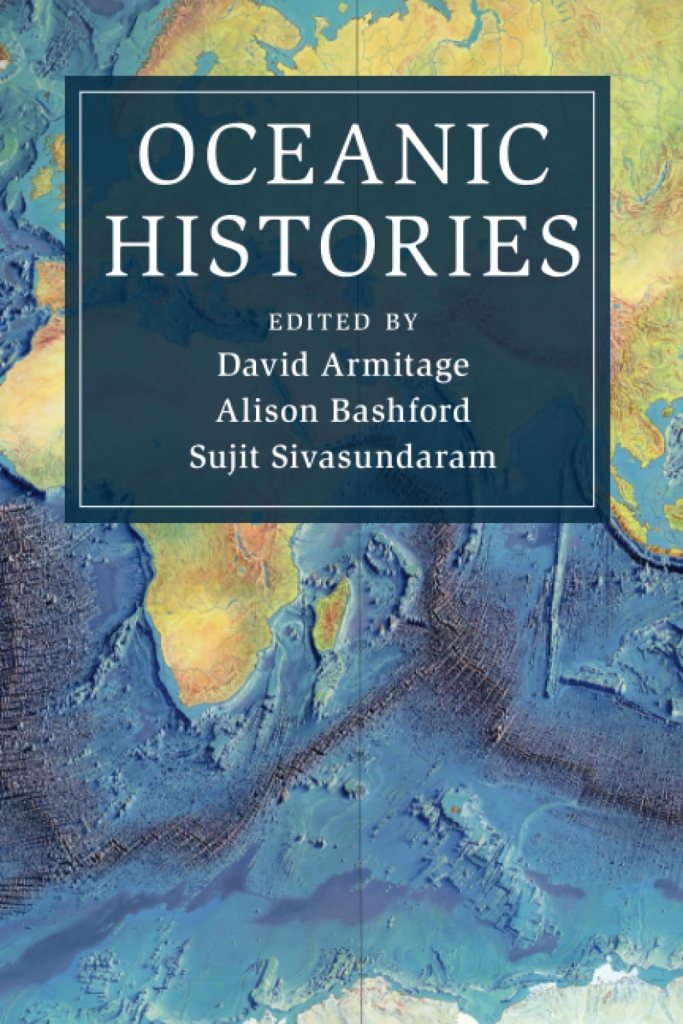
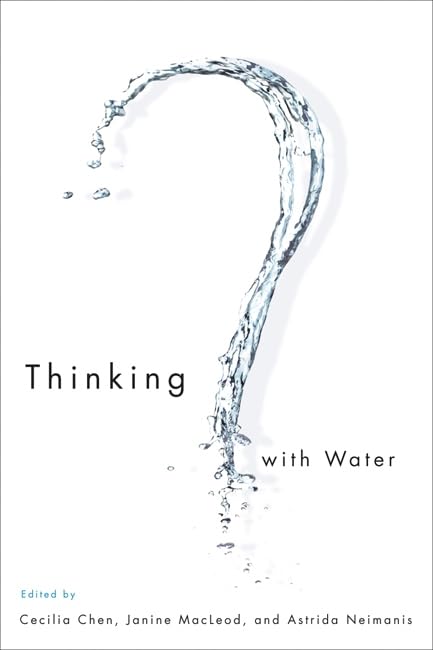


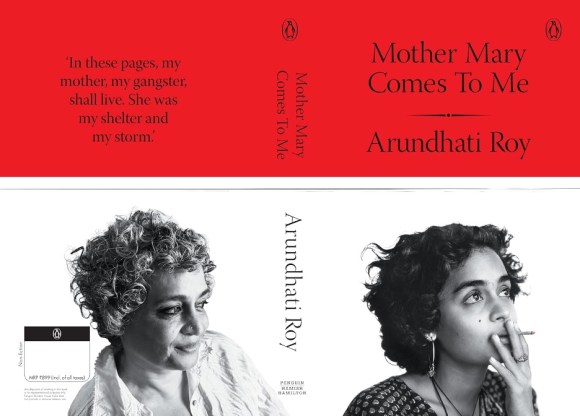
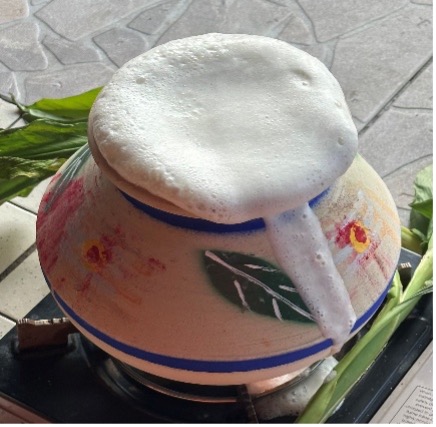
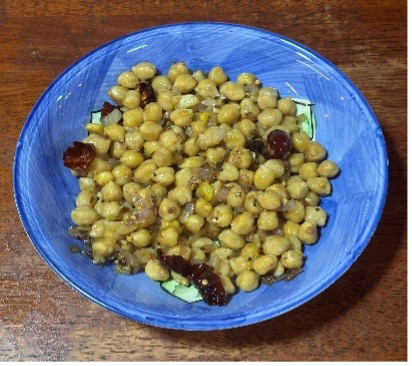

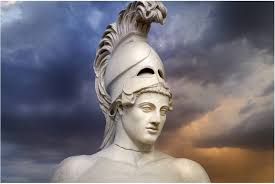
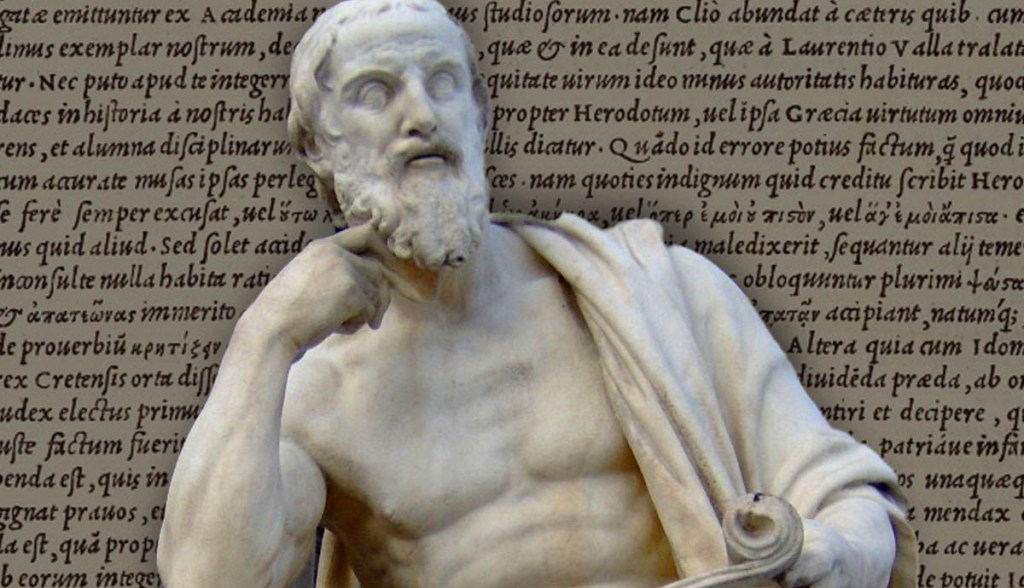

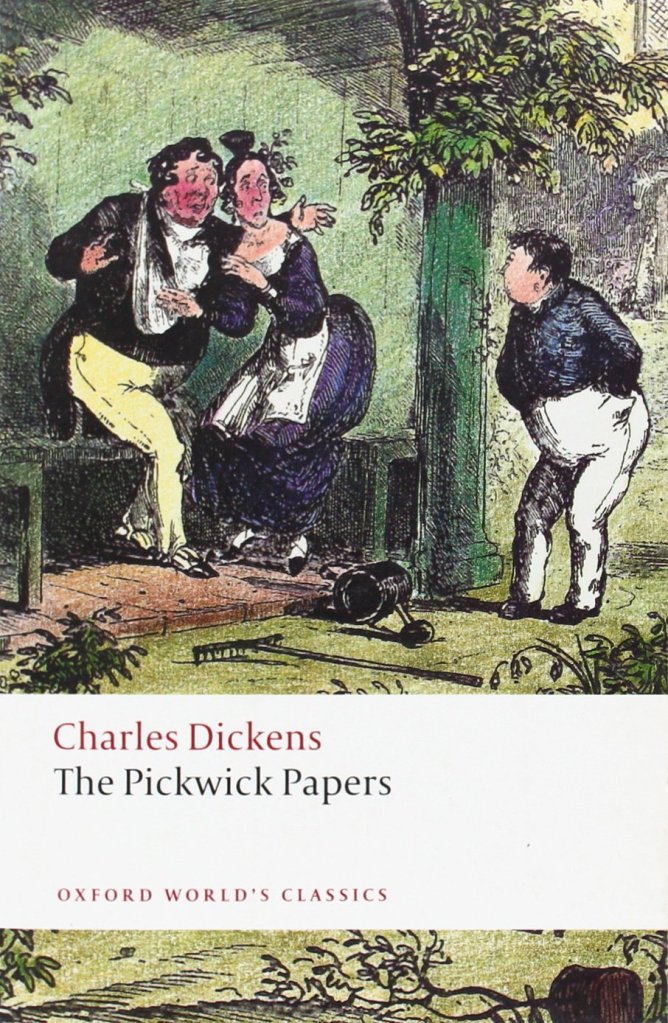

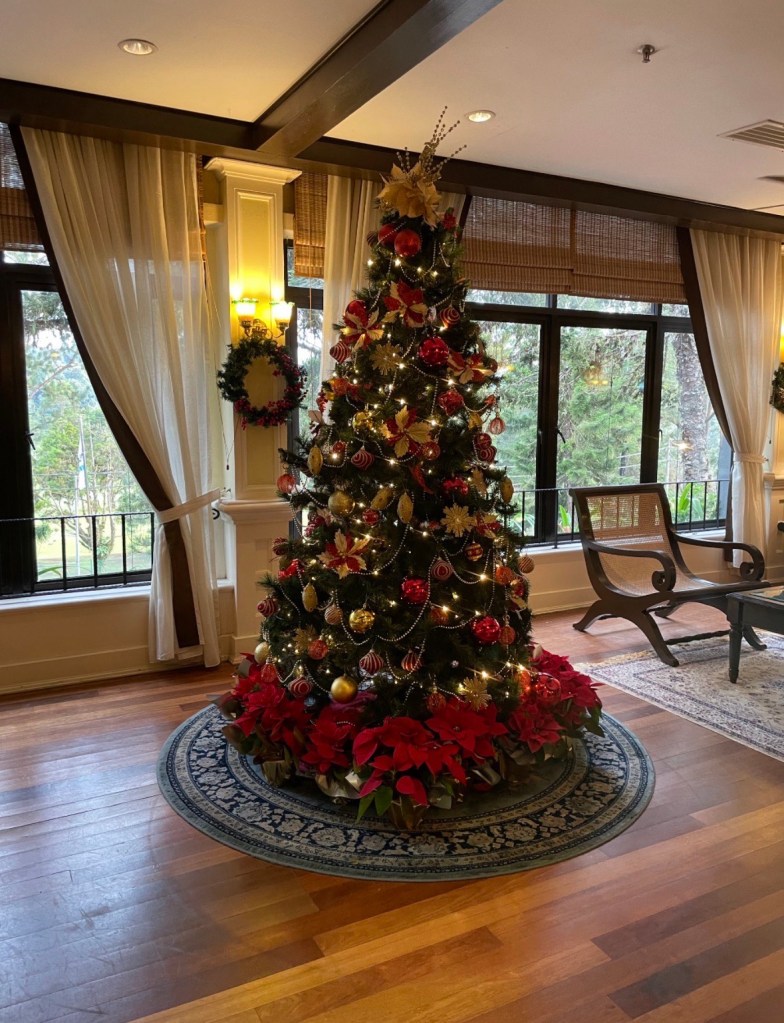

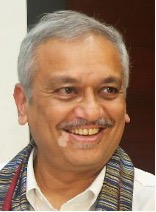
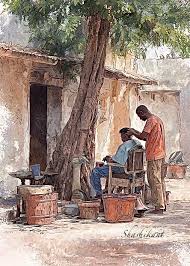
 Borderless