Categories
Musings

Beyond Horizons: A Love Story

Narrative and Photographs by Sai Abhinay Penna

 As the first rays of the morning sun arose from beyond the distant hills, their gentle touch painted the sky with hues of warm gold, igniting a symphony of colours that kissed the vast canvas of the mist-laden valleys of Chikmagalur.

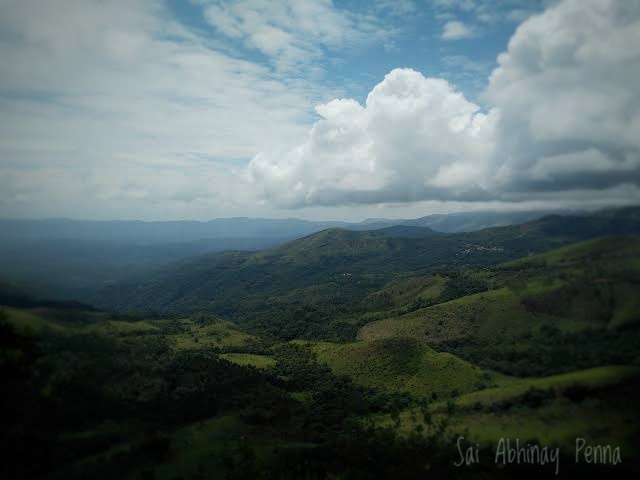
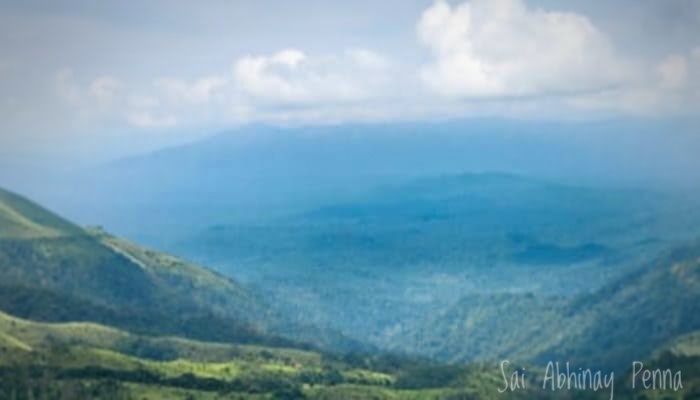
Mist laden valleys of Shishila

Veiled within the ever-shifting embrace of the drifting clouds, the resolute peaks of the Kudremukh Mountains played a tantalising game of hide-and-seek with the heavens. Each passing moment held the promise of a fleeting revelation as I embraced nature’s games.

Shishila Valley

All at once, like an artist’s brushstroke on nature’s canvas, the Shishila Valley appeared from its shroud — a spectacle sending a shiver of awe through my being.

As I walked through the winding paths lined with coffee plantations, the rich aroma of the beans seemed to be woven into the very fabric of the place and filled the air to the brim. The scent, as I stepped through the intricate trails of the estate, thrilled the heart of a coffee maven like me.

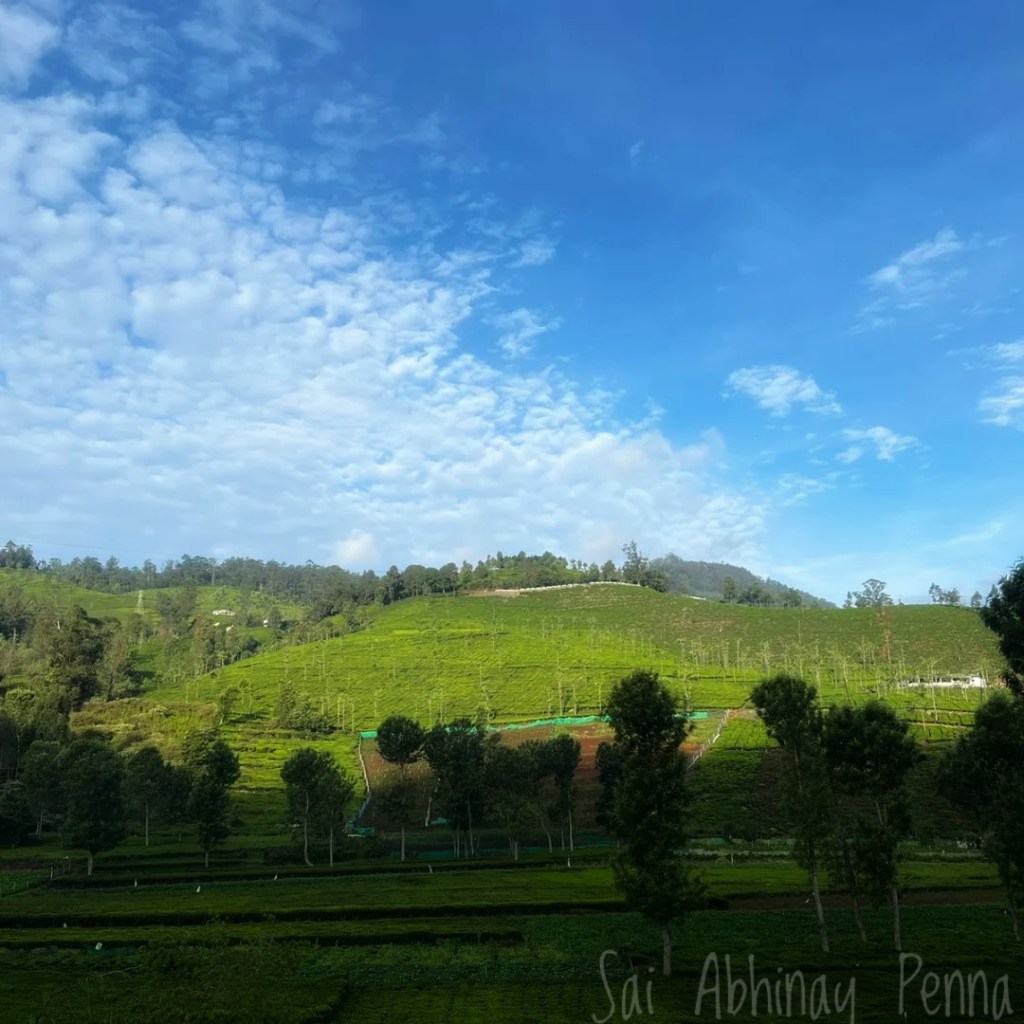
Coffee plantations with varied shades of green

The emerald leaves of the coffee plants glistened with dewdrops that captured the sun’s rays, resembling precious gemstones. Each step was an immersion into a world where nature’s palette had painted every hue imaginable.

From the coffee plantations, I trekked through the unexplored trails of the long-lost Ballalarayana Fort built in the twelfth century. In the heart of the wilderness — I found myself surrounded by the rhythmic symphony of the forest.

Ballalarayana Fort trail

The dense vegetation enveloped me like a shroud of mystery, and the air carried the earthy scent of history as if the very soil held the secrets of generations. The crumbling stones and weathered walls of the fort emerged from the undergrowth, standing as silent witnesses to the passage of time. Here history seemed to come alive, the stones carrying the burden of stories now carved into every crack and crevice.

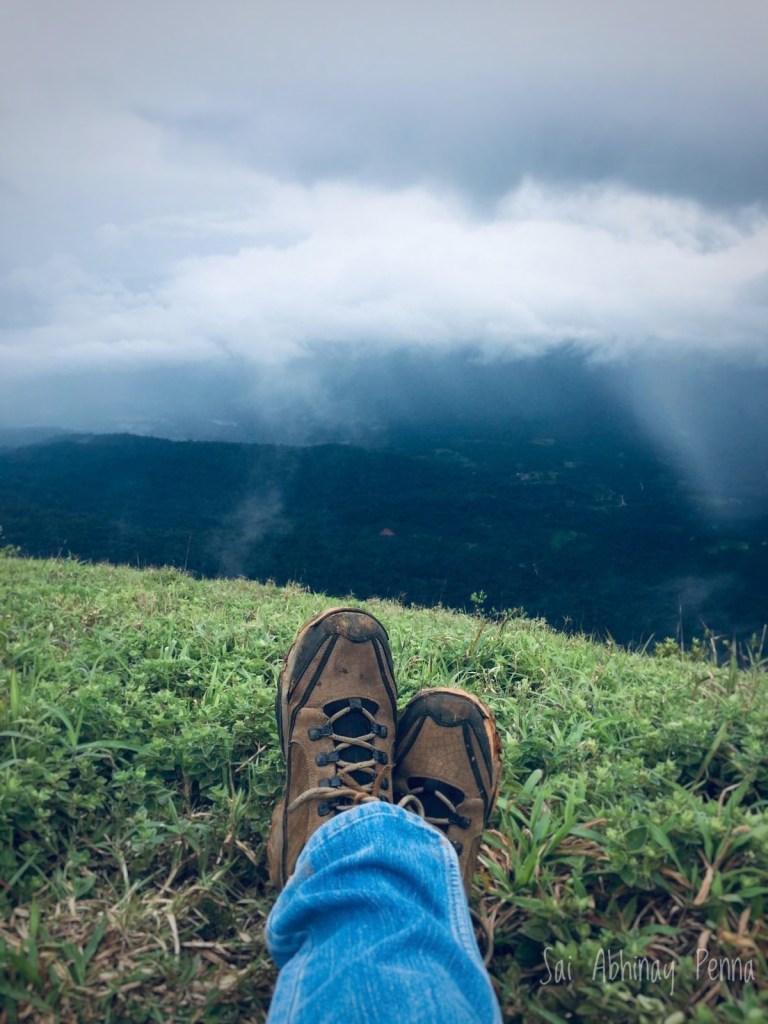
As I ascended the rugged trail, the panorama that unfolded in front of my eyes was breath-taking. Rolling hills, verdant valleys, and mist-shrouded peaks stretched out in every direction — the lines between earth and sky were thin. I felt like I was one among the clouds.

The feeling of being suspended in this vast expanse was humbling and revitalizing.

Descending from the highest peak of Karnataka, I ventured into Baba Budangiri, the sacred mountain with its mystical aura that captivated me to surrender myself to its embrace.

The shrine of Dattagiri, nestled atop the hills, stood as the tangible proof of the spiritual sanctity of the place. A small conversation with the priest from the Dattagiri shrine opened my eyes to the history behind this place. The shrine has been made to resemble a meeting place between Sufism and the Hindu Avudutha tradition.

As I humbly paid my respects, the echoes of devotees’ chants intertwined with the tranquil symphony of nature, weaving an ambience of enlightenment that seemed to touch the very soul of the surroundings.

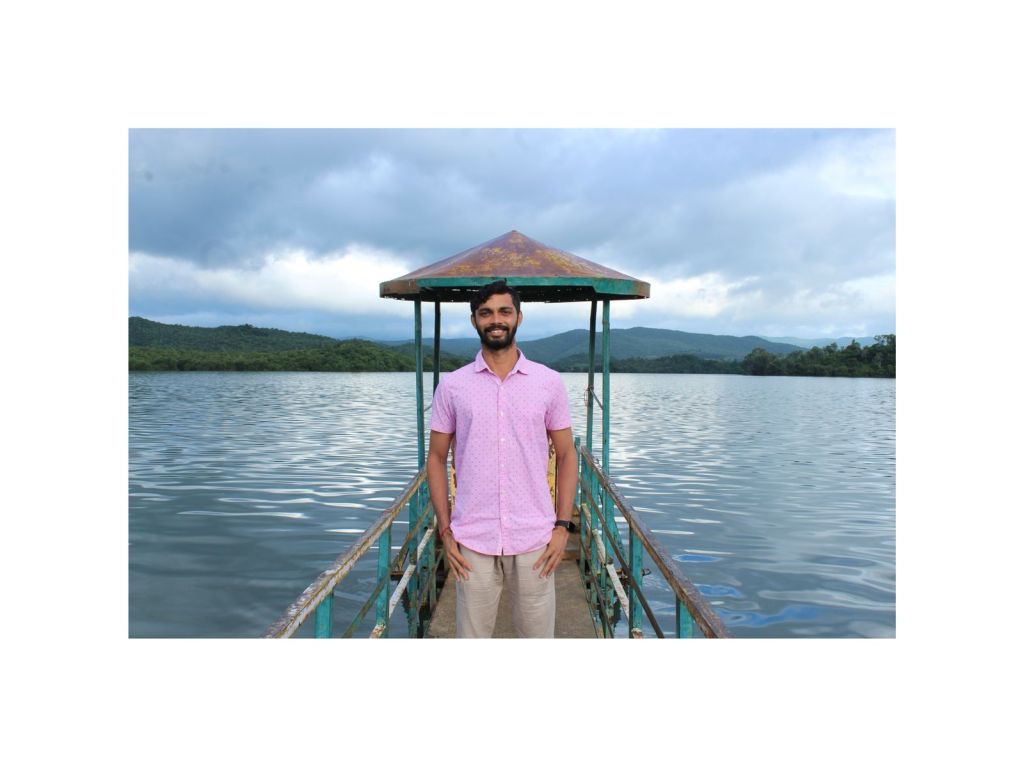
The lake’s surface transformed into a canvas of reflection, capturing the heavens above as if they had found their home in its depths. Hirekole Lake in the evenings was a sanctuary of tranquility, a haven; where the world seemed to hold its breath, inviting me to step away from the rush of life and savour the sheer magic of the present moment.

The author at the lake. Photo provided by the author

The ambience was one of unhurried contentment as if time had chosen this place to slow its pace, allowing all the on-goers to submerge into that beautiful moment.

As I navigated the winding pathways through the dense woods, my anticipation grew with every passing curve. The whispering leaves and dappling sunlight seemed to guide me toward the elusive waterfall, the Hebbe Falls.

As I walked towards the waterfall, the distant murmur of cascading water gradually intensified, and it felt like a symphony of nature’s melody in my journey. Nature’s music, I must say.

Finally, as the foliage parted, I beheld the spectacle: a magnificent cascade of glistening white that descended like a celestial curtain. The mist kissed my skin, carrying the essence of the falls, and I couldn’t help but marvel at the timeless masterpiece sculpted by nature’s patient hand.

Hebbe Falls

In a final blaze of glory, the sun slips beneath the edge of the Shishila Valley, leaving behind a trail of stars, a full moon, and a sky that glows with the memory of its fiery embrace.

 As the star-studded canopy, a symphony of crickets and the soft murmur of rustling leaves painted the air with an orchestration of nature’s melodies. It was as if the very fabric of the night had come alive, crafting a captivating masterpiece for my senses.

A myriad of stars shimmered like diamonds carelessly strewn across the inky canvas. The mountains stood as solemn sentinels, their peaks silhouetted against the night sky, seemingly whispering secrets to the heavens. A gentle breeze carried whispers of pine and earth, infusing the air with an invigorating freshness, and the faint fragrance of wildflowers lingered, an exquisite freshness that filled my lungs.

In the embrace of Chikmagalur’s undulating hills, veiled valleys, calming lakes, and tranquil panoramas, I uncovered a profound truth: the odyssey that stretches beyond familiar vistas is not merely a voyage of the body but a stirring expedition of the soul.

.

Sai Abhinay Penna is a professional cricketeer and writer based in Chennai.

.

PLEASE NOTE: ARTICLES CAN ONLY BE REPRODUCED IN OTHER SITES WITH DUE ACKNOWLEDGEMENT TO BORDERLESS JOURNAL

Click here to access the Borderless anthology, Monalisa No Longer Smiles

Click here to access Monalisa No Longer Smiles on Kindle Amazon International
Categories
Poetry

Before the Chill …

Poetry by George Freek

Squirrel hiding nuts in autumn
OCTOBER EVENING

Squirrels frantically rush
to gather nuts
before the November chill,
but crows stand in their way
like schoolyard bullies,
as leaves sway to their death,
making no sound
when they fall to the ground.
Orange cones of moonlight
drip through the trees,
like the sand falls
from an hourglass
with a timeless ease.
The distant stars
are cold and forbidding.
This is nature, and 
it’s unconcerned with me.


AND THE SKY ABOVE 

White clouds stretch
like sheets on a hospital bed.
Two crows in naked branches
look desolate and unfed.
There’s no sun.
There’s no moon.
The day topples 
where it finds room.
Geese fly south,
not by reason or passion.
It’s an instinctive action.
As clouds darken in that sky,
they speak of a coming storm,
and autumn’s leaves,
one by one,
return to earth,
to finally die.

George Freek’s poetry has recently appeared in The Ottawa Arts Review, Acumen, The Lake, The Whimsical Poet, Triggerfish and Torrid Literature.

PLEASE NOTE: ARTICLES CAN ONLY BE REPRODUCED IN OTHER SITES WITH DUE ACKNOWLEDGEMENT TO BORDERLESS JOURNAL

Click here to access the Borderless anthology, Monalisa No Longer Smiles

Click here to access Monalisa No Longer Smiles on Kindle Amazon International
Categories
Poetry

In Conversation with the Streets

By Ahana Bhattacharjee

(This poem is a response to a procession of peasants and workers)

I asked the streets I was passing by,
"Who left those marks upon your chests?"
"A rugged pack," they heaved a sigh
With fire in their eyes and storms in their breasts.

"Those same feet that had toiled dusk and dawn,
Ferried the cargo and reaped the corn.
And the scars those feet left on the way,
Were blood and dust and sweat," said they.

"What's that smell that fills the air?"
- "The heady stench of grit and dare."
"And the cries that can still be heard?"
- "The heart songs of that unruly herd!"

Hand in hand they walked, brave and tall,
Men, women, children and all!
They walked in the sun, and in the rain,
The very heavens echoed their claim!

I asked in awe, "Who WERE they?"
"The Real People - who pave your way,
Who build you houses and serve you rice!
Why?! The Gods themselves heard their cries!"

"Were people hurt?"- I anxiously asked.
- "Many fell down, many profusely bled!"
"But did that stop them in any way?"
"They became stronger - is all we can say!"

"What did they want? What were their claims?
To live in luxury? Or to fly in planes?
Did they want dresses, and riches, and food?"
"They wanted humans to treat them as humans should!"

Ahana Bhattacharjee is currently an undergraduate at the department of Comparative Literature, Jadavpur University.

.

PLEASE NOTE: ARTICLES CAN ONLY BE REPRODUCED IN OTHER SITES WITH DUE ACKNOWLEDGEMENT TO BORDERLESS JOURNAL

Click here to access the Borderless anthology, Monalisa No Longer Smiles

Click here to access Monalisa No Longer Smiles on Kindle Amazon International
Categories
Stories

The Tender Butcher

By Devraj Singh Kalsi

The butcher had written many poems without any dream of compiling those for a book. His shop assistant, a college-student, did a part-time job to fund his education. Being a reluctant bachelor, the butcher nurtured his romantic side through poetry and managed to convey a fairly youthful visage of his personality rarely found in men following his métier. 

Mohsin independently handled the job of dealing with pesky customers haggling over price and quantity without displeasing them while Yunus sat in a corner, propped against a cushion, lost in the universe of verses, oblivious of what transpired around him unless he was called out to tender the change to any customer. Whether Yunus managed to create something valuable when Mohsin did the chopping and grinding mincemeat hovered in the realm of doubt. His trance-like state seemed to suggest he was engrossed in a creative exercise that ordinary mortals would never associate with a meat-seller.

“Sahib, your poems stab the heart. Honestly saying so – what will I get by flattering you…” Mohsin repeated this sentence like mantra at least twice every day. Though Yunus did not accept it with a smile, Mohsin knew his quick rise as an employee was on account of the litany of praises sung in favour of the blossoming poet well past his prime. With years of experience and loyalty piling up in favour of Mohsin, he was given further responsibilities to shoulder. Managing cash and transactions empowered him and delivered greater freedom to Yunus to pursue his art with singular focus and minimum distractions.

Whenever Yunus was mired in doubt regarding the finesse of what he had written, he sought feedback from Mohsin. Before he could complete the couplet, Mohsin broke into applause that made Yunus suspect a ring of fake appreciation.

Deewar ki kya haisiyat, dooriyaan toh pehle se thi [1],” Yunus began with promise.

As the din of wah-wah[2]rent the air, Yunus looked disgruntled with the premature reaction of Mohsin, and repeated his two cents on suitable behaviour of admirers, “A sincere listener should have the patience to hear the whole thing first.”

Being an educated youth, Mohsin qualified as the ideal audience who measured the impact of words flowing from Yunus’s pen. It was tested on young listeners to find emotional connection. Unfortunately, the growing disenchantment with Mohsin disheartened Yunus who sometimes felt he was not getting what he was expecting from Mohsin even though he had been generous to give him more than what he deserved. On the other hand, Mohsin hesitated to be candid and did not speak his mind as he was scared of earning his boss’s displeasure. This part-time job was crucial for his education and he had do idea whether he would be kept employed if he did not eulogise the poetic renditions of his employer.  

Sensing a losing battle, Mohsin pumped up his self-confidence with a meaty response, “You felt offended for no reason, Sahib. I wanted you to have full faith in your words. Too much modesty is never good for talent,” Mohsin rallied forth as a rabid admirer who stuck to his assertion that he never doled out fake acclaim.

Mohsin sounded firm and decisive. Yunus specified non-existence of spite in what he explained. As a conciliatory move to validate the observations made by Mohsin, Yunus said wholeheartedly, without rising from his seat, “Okay then, let us hold a small gathering at my residence – where I read out some recent works. You can bring in some of your friends to comment on my work.”

Mohsin accepted the invitation with an enthusiastic, ingratiating smile, confident that his friends would happily tag along for an evening of poetic ambrosia.

Leading a group of friends with literary taste, Mohsin arrived before time to make the necessary arrangements. When Yunus opened the hall door, he was delighted to see a beautiful college girl in the group. Perhaps they were expecting a younger poet without the protruding belly and shades of pepper in the beard. Yunus ordered Mohsin to arrange snacks and serve drinks to the guests. Mohsin rose from his seat and tapped the shoulder of the girl next to him, without hesitation, asking her to assist him in the kitchen chore. 

Despite knowing that his friends already knew what he did, Yunus explained he was a butcher by profession and dabbled in poetry for solace.  Arriving with a tray full of munchies, Mohsin did the rest of the introduction in front of Yunus, raising a thundering applause from his friends who valued the existence of contrast in his personality. 

The befitting introductions were soon over. Yunus also praised Mohsin in front of his friends. Then he took a seat on the diwan covered with a satin sheet and began to select verses from his diary. Mohsin urged him to recite love-related couplets on separation and heartbreak. Just once Yunus had briefly disclosed how he lost his beloved partner to another man who showed promise of a better future than what a butcher could provide. The positive outcome of this setback was that he did not turn into an alcoholic but channelised his frustrations into poetic outbursts.

After listening to some of his couplets, the young group celebrated in collective euphoria, as if they had discovered a remarkable poet in the most unlikely place. When a friend of Mohsin egged him to quit the profession and embrace poetry full-time, Mohsin shot back in defence of Yunus: “A job is a job after all. Nothing is less dignified. He is not a terrorist killing innocent people in the name of faith. I also work in the same place, and I am your friend. How does it matter or change our relationship?”  

“What you are saying is true, but don’t you think if he has to read out in a mushaira or a large, diverse gathering of poets from all over India, he will find it difficult to explain he is a butcher? No introduction would ensure better reception of his work as the snob poets, who associate creativity as the preserve of the privileged few, would baulk at such a background,” his friend added, looking straight into the eyes of Yunus who mustered the courage to ask for her name.

“You are Madam…,” Yunus managed these words hoping quick completion of the sentence from her.

Ji[3], Saira, final year literature student.”

Choosing to defend Saira, Yunus confronted Mohsin, “I think Saira ji is right. She has a valid point regard the background factor. I have been through this experience for years and I fully agree with her. I should avoid any introduction that shocks them.”

Mohsin had silenced most of his friends before the humble submission of Yunus came forth. The brief exchange enabled emotional investment in Saira and Yunus. When he resumed his recitation, his eyes focused on Saira with whom he had established some familiarity. Holding forth like a seasoned poet who had been through many renditions, Yunus read out his works on love and angst, on conflict and subtle violence in relationships.

When Mohsin disclosed that Yunus would like to bring out a collection of poems some day, though he had never expressed the desire in all these years, he was generalising the trend and did not expect Saira would be the first to react. Her response surpassed what others in the group came up with later. This put pressure on Yunus who felt he had to get the stuff published by leading publishers or face ridicule for grand declarations that never saw the light of the day. A believer that art should spread its own fragrance was now exploring ways to push his art through, to reach out to audiences. This made him somewhat uncomfortable with himself – a self-loving poet craving for recognition. 

Mohsin was entrusted the job of sifting the best poems and he outsourced the task to Saira who had a very good ear.  When Yunus handed over the diaries to Mohsin, he expected Saira to come forward and receive it as a custodian of his creative wealth.  

Saira suggested the name of some leading publications. Before Yunus could frame a reply, Mohsin said, “Yunus bhai[4] is ready to invest in getting his poems published. These have potential and must reach out to young readers. What do you say, Saira?”

Saira looked blank for a while and then gathered herself to utter a few words of encouragement. “Yes, it should not be allowed to rot because of the lack of publishers who are money driven these days.”

“Once he reaches out with his work globally – nowadays it is easy to be heard, seen and read via digital platform. We can make an online push on various platforms and see him through,” Mohsin chipped in with his strategy.

“You are suggesting pay and publish. I would never do that,” Yunus said firmly in front of the group. 

Friends disappeared after hearing the stern refusal. Mohsin and Saira were disappointed that he would not cave in with ease. A good amount of persuasion would do the trick. After a month of peace, Yunus delivered a surprise by agreeing to the proposal and asked Mohsin to rope in Saira to manage his launch.

Mohsin quickly agreed to whatever Yunus had said – before he underwent another change of heart that would disappoint. There was a growing circle of young, local admirers who heard from Mohsin that Yunus was an entertaining poet. 

Mohsin got back with another offer. Saira knew a publisher who launched talented poets and did everything for them, for a nominal fee of one lakh rupees. Saira would work in tandem with the team to ensure a successful break for Yunus. Without asking for details, Yunus agreed to shell out the full amount within a week. He asked Mohsin to withdraw cash from his account and pay the publisher and get the book released before his next birthday.

“Actually, Saira’s friend’s father runs the printing press, and I would personally request for an upfront discount,” Mohsin proposed.

The mere mention of Saira gave Yunus assurance that he was in safe hands. 

“Make sure everything happens on time, without delays,” Yunus stressed, resisting the urge to suggest him to take Saira’s help in the execution of the project.

For a quirky launch, the approved idea was to launch it in the meat shop as it would gather attention and stir curiosity. Meat and books – unusual companions though they have a lot to do with flesh.

Some 20-odd people turned up for the launch, mostly Mohsin’s friends. The space could accommodate around fifty people like any small bookshop. The smell of meat was hanging in the air even though rose perfume spray was used a lot. The gritty reality of the setting was something they could not let go of.

The poet was dressed in traditional casuals. Mohsin updated him that one hundred copies had been ordered online, and some free copies were also given to friends to write positive reviews. The entire print run of 500 copies would get sold out within a month was what Saira’s friend had promised.

Yunus was hoping the launch would be covered by leading newspapers, but he was not aware he was expected to pay for that as well. On the dais to launch the book were Saira and Yunus. The poet held a small portion of the book with his chubby fingertips while Saira clutched the rest of it firmly.

Mohsin clicked pictures of the poet alone, and left Saira, looking gorgeous in sequined turquoise, out of the frame except the solo snap. In that, she had uncovered the wrapped book and showed it to the cheering crowd that included some old friends of Yunus, who were expecting nice announcements to follow, some declaration that the two would marry. It was disappointing when nothing of that sort happened on stage, and they had to leave with a packet of sweets for the launch along with a complimentary copy of the book. 

Yunus displayed some copies of his poetry book inside his meat shop, on a tall, wooden rack that was visible to meat buyers. Within a month of answering queries regarding the book, Mohsin stopped reporting for work. For some days, Yunus waited for him to come back. But when he did not turn up or receive his phone calls, he suspected something fishy.

Now Yunus had to serve customers, pack meat and do everything that Mohsin used to do. Poetry took a backseat as the whole day he was busy with this job. He understood how valuable the guy was to him after he left. Late one evening, a message popped in from Mohsin, saying he was quitting the job on health grounds, and he should look for a replacement. It was a confirmation that he was never going to turn up. 

Yunus messaged him with the promise of a salary hike, but the bait did not work. He hoped to get a chance to allure him with some perks. Since poor health was not a convincing reason to leave the job, Yunus thought he had secured better opportunities. But this abrupt end to their five-year relationship was not the proper way to wrap it up. He did deserve some better explanation of this sudden disappearance – given the fact that he had been quite good to Mohsin all these years, treating him like a brother instead of an employee.

Hoping he would build a loyal base of readers, Yunus distributed the copies he had in stock, absolutely free, to those who showed interest in reading his work or those who bought a kilo of mutton. His strategy did not achieve the goal as nobody came back to give reviews. Some of them stopped patronising his meat shop altogether.

Yunus pondered why he lost loyal meat buyers when he tried to convert them into lovers of poetry. Perhaps they felt guilty that the state of art had been reduced to such a pitiable state or they felt bad that a poet of his worth had to sell meat to survive. He had inflated the hope that his tender poetry would win praise like his tender meat. The only good outcome was that the stock of books came to an end.

The departure of Mohsin intrigued him at times. He wondered what had happened was beyond the realm of his imagination. It was perhaps the handiwork of Saira or maybe Mohsin sensed his growing attraction for Saira had to be curtailed as he could soon try to get closer to her. Negative thoughts exploded within, and he wished to unravel the truth although there was no way for him to trace the fellow or seek answers from his band of friends.

Six months passed. One or two customers who had stopped coming now reappeared with praise for his work, urging him to read more classics and write more about society and relationships. He received their feedback with humility and disclosed his career as a poet was short-lived as the book did not get traction or positive response from critics. The middle-aged gentleman was direct in advice and urged him to write about the plight of Muslims. Yunus kept quiet as he was not a radical fellow. Fearing misinterpretation of his silence, he answered in a roundabout way without mentioning the names of the countries, “We are better off as a community here. I thank my forefathers for not going there.” 

The customer was persistent. “Many did not go because they didn’t want to, but many were not allowed in there as they could not feed them all. Also, there was no meaning in creating a poor homeland.”

This was a critical observation. Yunus preferred to conclude the conversation without a rejoinder. The meat was packed and handed over. While making the payment, he repeated the advice of writing politically charged poems, to awaken the masses. The incendiary content could foment trouble between the communities. He was cautious of his words inflaming passions on either side. As a sensitive poet who operated in the orbit of love and heartbreak, this dangerous territory could prove counter productive.

A few weeks later, when a mob lynching episode was reported in the media, he felt like pouring forth his emotional turmoil on humanitarian grounds. He imagined he was a potential candidate to be delivered similar treatment by fanatics. Out of sensitivity for the lynched person, he wrote a few lines but did not muster the strength to put it out in the public domain. The growing trend of persecution made him an advocate of peace on both sides.

Yunus felt charged by the power of his own voice and somehow managed to overpower the urge he felt to vent it out and reach out to the masses. He was drawn to the idea of making a transition to the political fray through poetry of rebellion, making it a point to give an outlet to his hurt sentiments.

The desire to showcase his new poems to Mohsin and Saira bothered him. He imagined they would summarily disapprove of the switch from romance to politics. The mass media overdid it so there were not going to be takers for his poetic take. Mohsin was not there to speak his mind and his absence meant a deep personal loss. Unable to recover from it, Yunus was ready to mount a full-fledged attack through his feisty, no-holds barred pen.

His tendency to be sensitive was challenged as he suffered twin blows. Even though Saira had not been a part of his life, he felt her absence deeply, no less than how much he missed Mohsin. The bitterness within was in some way inextricably linked to their cold disposition. When the sight of bloodshed fails to rouse people, poetry cannot be expected to perform miracles. Youth have a deep, intense connection with romance in literature. As they keep falling in love, they need new voices and expressions to relate to and communicate their feelings instead of recycling the treasures of the past with waning impact.  

One afternoon, Yunus received an invitation to attend a mushaira in front of a strong crowd of five thousand people. The nominal fee of Rs 1000 did not matter as he had spent many times more in the past without any gains. The temptation of a sizeable crowd was high, and it was a formal invite. The names of the organisers were listed but he did not know any of them personally, so he believed it was the result of his hard work put into his previous collection that had finally got noticed and he was being given the chance to read in front of a large gathering based on his literary worth alone.

Yunus loved this idea more than anything else and he started rehearsing for it. He bought a microphone to practice in front of it – to hold it and know how much distance was ideal so he wouldn’t fumble during the reading session. He got a Sherwani[5] with special zari[6] stitched from the tailor for the event as he wanted to flaunt a royal look where nobody would identify him as a butcher. He did riyaaz[7] to make sure he did not forget the lines and shortlisted some of his best works. From love to separation to intimacy to politics to culture, the potpourri was nothing less than a heady cocktail.

On the day of performance, Yunus reached the stage and was surprised to find Mohsin and Saira seated in the front row. As he established eye contact with Saira first, he smiled, but she looked the other way, leaning heavily on Mohsin’s shoulder. As he read out a new one on betrayal, Mohsin was the first to clap and soon there was a climax of resounding claps, including Saira putting her hennaed hands together to applaud Yunus the poet. 

For a while Yunus was lost in the maze of questions related to their disappearance but he composed himself thinking this was the best opportunity to perform well before the large crowd who could breathe life into his lifeless career that was close to the last stage. Having been a failed lover all his life, he resorted to his pet theme with the fond hope of impressing the crowd. Despite the mehndi in his hair and beard, he managed to set young hearts ablaze with his bass voice and choice of words.

As the cheering rose and reached a crescendo, Yunus was encouraged to recite his political poems. After fifteen minutes of holding the audience spellbound, there was a sudden outbreak of violence inside the hall, with a stampede-like situation developing fast. People of another community had barged in with lathis to stop the mushaira that was streamed live on social media channels.

Mohsin rushed to the stage to save Yunus from the angry crowd. The mixing of unruly elements to create mischief had vitiated the atmosphere. Yunus embraced Mohsin and had a volley of questions that Mohsin promised to answer later after managing a safe exit from the troubled spot. Saira also escorted him out from the backstage, through the VIP exit gate and made Yunus sit in their tinted car. 

“Why did you read out political poems here? It earned you the wrath of the other community. Yunus, you have gambled everything for fifteen minutes of fame. See how thirsty they are to butcher you now. The mob, I mean. Your session has gone viral, and they are baying for your blood. Lakhs have already seen it and it has fomented trouble for the administration. Why do poets need to be politically vocal? Stay restricted to the tender subjects,” Mohsin went hammer and tongs like never before. 

“Why should I be afraid of the mob? I am a poet applauded by listeners here. Invited to read out,” Yunus justified his right to express his political views with full freedom.

You mean thousands of admirers? Let me correct you – thousands of enemies you have created. And yes, let me clear your confusion. Saira insisted we should invite you through a friend. Her father organised the mushaira this time after returning from abroad. Anyway, we are dropping you by car to the railway station and from there you board a train. We are not responsible for your safety during the journey and thereafter,” Mohsin said with final authority.   

“Why are you doing so much for me? Let me die here – throw me in front of the crowds baying for my blood. Let them butcher me, lynch me right here.”

“You helped me when I was in need. When I was courting Saira and waiting for her yes to my offer of a relationship. Then she agreed and we got married. She belongs to a rich family and wanted me to look after her family business. So I had to leave your job. There is nothing bad in progress and selfishness. But Saira did not want you to know this –she felt you were beginning to have a soft corner for her, and this news would break your heart.”

“Lucky fellow indeed – succeeded in love in the first attempt and made it big, unlike me who always failed in love,” Yunus sulked in the back seat of the car while the couple in the front glanced at his expression in the mirror.  

“You have spoken a lot, just tell me one more thing. Why did you want me to be a poet? I was happy as a butcher, writing for myself, why you wanted to bring my works to the world? Did you really think my voice matters?” Yunus asked without much hope of a satisfactory reply in the presence of Saira. 

Before he could say a word, Saira answered on his behalf in a firm voice. “NO – let me break this illusion. What you write is entertainment and not poetry in the league of great poets. You do not have anything immortal to offer. But it is a good hobby for a person who does a ruthless, brutal job, to nurture the sensitive side. That is why I liked your efforts and praised it. That’s it. For the youth, anything with a touch of romance sparks interest. The same applies to poetry.”

It was heartbreaking for Yunus to hear these words from a lady who had launched his only book, the lady he liked to treat as his muse. The clapping audience, he was told, had been tutored to do so, since most of them were employees of the company owned by Saira’s family.

At the railway station they looked around to see whether there was any person following them. Yunus was safe from the irate mob. He boarded the train to his hometown and was seen off by the couple from the over bridge. Yunus waved through the window as the train inched out of the platform, but they had already left. He felt he was leading a meaningless life, and he should cut it short by jumping off the moving train.  

When he reached his destination early morning, he took an auto-rickshaw to his meat shop. He was greeted by the sight of ruin. There was no tender meat shop as everything was gutted. The house behind his shop was also torched. It was punishment meted out for being a political poet who needed to be silenced in this fashion.

An old neighbour walked up to him, to console him and rested his frail hand on the shoulder. He played on his smartphone the poetry Yunus had read out yesterday and waited for its completion before praising him: “You said it very well, Yunus. Speaking the truth makes one pay a heavy price. May Allah grant you the strength to rebuild your life.”

Yunus controlled his tears and moved inside the shop where half-burnt pages of his poems lay scattered on the dismantled Yunus Meat Shop signboard. Observing all this wreckage worsened his grief as he could not avoid thinking of Mohsin and Saira and their savage words. How they had teamed up and flourished while he touched the lowest ebb, chasing a dream that was a mirage for a man of modest talent. His copious tears were apparently flowing to regret the loss of property, but nobody here would ever know the other big loss he had suffered that left him heartbroken.  


[1] What can walls do, the distances were there earlier itself

[2] Praise

[3] A respectful way of addressing an elder

[4] Brother, a friendly address

[5] Long coat

[6] Gold or silver lace

[7] Practice

.

Devraj Singh Kalsi works as a senior copywriter in Kolkata. His short stories and essays have been published in Deccan Herald, Tehelka, Kitaab, Earthen Lamp Journal, Assam Tribune, and The Statesman. Pal Motors is his first novel.  


PLEASE NOTE: ARTICLES CAN ONLY BE REPRODUCED IN OTHER SITES WITH DUE ACKNOWLEDGEMENT TO BORDERLESS JOURNAL

Click here to access the Borderless anthology, Monalisa No Longer Smiles

Click here to access Monalisa No Longer Smiles on Kindle Amazon International
Categories
Essay

Coffee, Lima and Legends…

Narratives and photographs by Ravi Shankar

The Pacific coast

The city of Lima, Peru was founded by the Spanish conquistador, Francisco Pizzaro in 1535. Spanish scouts sent out by him reported the place had ample water, fertile lands, sea access, and fair weather influencing the decision to settle there. Now, the city is in the agricultural region known by the locals as Limaq. It was once the most important city in the Viceroyalty of Peru that ruled over a large part of South America. Today over one-third of Peru’s population resides in the greater Lima area. The moisture-laden winds from the ocean result in fog throughout most of the year. The cold Humboldt current keeps the Pacific Ocean temperatures low. The coastal region of Peru known as the Costa is a dry desert and rainfall is scarce. The combination of very little rain with a thick fog fascinates both residents and visitors. Most mornings were foggy during my stay in Lima.   

Lima serves as the entry point to Peru and during your trips around the country, you can enter and leave Lima multiple times like I did. During one of my visits, I stayed with Cesar, a pharmacist with the Ministry of Health, on the 15th floor of a modern apartment complex overlooking the Pacific Ocean, in Magdalena del Mar, with a beautiful view of the Pacific.

Magdalena del Mar is fast becoming a trendy neighbourhood has an immaculate Heart of Mary Church, an ornate beautifully designed church in pink stone. Roman Catholicism with its emphasis on ceremonies, ornamentation, and ostentatious displays shares many similarities with the religions of the East. One afternoon after lunch, I visited the long stretch of beach which I admired from the fifteenth-floor window. I had to cross the Circuito de Playas, the six-lane highway that links several spots along the coast in Lima.

The city of Lima is famous for its museums. The Museum of Art in Lima is wonderful. Located in downtown Peru at the Parque de la Exposicion (Park of the Exposition), the museum houses one of the best collections of Peruvian art from pre-Columbian times to the modern day. The artworks are mostly grouped according to the period of their creation. Different cultures like the Moche, Nazca, Chimu, Chancay, Ica, and the Incas are represented. After the Spanish conquest, local artists and artisans concentrated on religious Catholic art. Modern Peruvian secular art began in the nineteenth century. I read with great interest the struggle between two schools/visions on how this art should grow and develop. One school wanted a cosmopolitan art like that developing in Europe while the other school wanted Peruvian artists to concentrate on traditional Peruvian topics like Inca buildings, town planning, Peruvian plateaus and mountains, and the Peruvian Indian.

Holiday makers in Plaza de Armas.

The Plaza de San Martin is one of the most representative public spaces in the capital. It was declared a UNESCO World Heritage site in 1988 and is connected to the Plaza de Armas by the Jiron de la Union. The plaza pays homage to the liberator of Peru, Jose San Martin (1778-1850). The plaza was built in 1921 in honor of the 100th anniversary of Peruvian independence. The buildings lining the plaza date from 1910 to the 1940s.

Exhibits of Gold

In the 1960s, Miguel Mujica Gallo used his private collection, gathered throughout his life, to open the “Gold Museum of Peru and Weapons of the World”. The museum has over 7000 gold, silver, and copper objects. Gold and silver had a religious importance in pre-Columbian Peru. Gold represented the Sun while silver represented the Moon. The collection is valued at over 10 million US dollars. The other major section represents the weapons of the world. I found it ironic that humanity expended so much effort and resources on devising better and better ways of killing each other. There is a Japanese room at the museum highlighting the close ties between Japan and Peru. Many Peruvians of Japanese and Chinese descent are still able to read in their native languages while at the same time being fluent in Spanish.

On my last day in Peru, I decided to use the public bus to visit the ruins of Pachacamac which is located outside the capital in the city of Lurin. Pachacamac was a major religious site for the different cultures of Peru. As new cultures became dominant, they added their constructions to the holy site. The site was first settled in 200 AD and is named after the earth-maker God, Pacha Kamac. some museums in Peru there are concessions for teachers which I feel is a very good idea. School children visit museums accompanied by their teachers and museum guides to develop a good understanding of their culture.

Unfortunately, Pachacamac was too near the capital Lima to escape the attention of the rapacious Spaniards. The conquistadores were mainly driven by their limitless appetite for gold and a narrow bigoted religious view which regarded Roman Catholicism as the only true religion and other religions as heretic practices to be destroyed. They caused much damage to Pachacamac.

Pachacamac

The wind started blowing and a flurry of dust pervaded the air. The Sun Temple is the major building. There were separate locations for religious buildings, administrative buildings, and residential buildings and there were also granaries.

View from the Sun Temple

The Incas and the pre-Inca cultures practiced human sacrifice. Enemies were ritually sacrificed but young virgin girls were also sacrificed. These mamacuna (Virgins for the Sun), had important status. They wove textiles for priests, and brewed corn beer which was used in Inca festivals. The women were sacrificed in the highest ritual; they were strangled with cotton garrote. They were wrapped in fine cloth and buried in stone tombs. Each was surrounded by offerings from the highlands of Peru, such as coca, quinoa, and cayenne peppers.

Peruvian coffee like Peruvian food turned out to be a hidden treasure. Smooth without bitterness or harshness, the coffee can be drunk black without milk. Peru is also home to ‘poop coffee’. Dung coffee is made by having an animal (usually a civet) eat coffee cherries. The natural digestion process reduces bitterness. When they poop out the beans, they’re gathered, thoroughly washed, and typically take on flavors of the animal’s diet. Peruvians use the uber-adorable coatis, which are like tiny raccoons. They are fed the best-of-the-best Arabica beans and nature takes over from there!

Twined with the flavour of Peru is a beautiful legend which needs to be told to highlight their colours. In the good old days, a widowed mother, Pacha, worked day and night to feed her three sons. The sons were lazy and survived on the food provided by their mother. One evening while returning home the mother tripped on a stone and was injured. She was bedridden and became dependent on her sons. The sons were too lazy to work their farm and stole from the villagers and eventually started selling their farm part by part. They lied to their mother about their plentiful harvests. One day, the mother went to the farm to see the harvest but was beaten by the villagers who mistook her for a thief. Learning about this, the sons got angry and turned themselves into hail, frost, and furious wind devastating the villagers’ farms and houses. Since that day when the elders gather at night to tell stories, they talk about the hail, the frost, the wind, and how they ruin the fields from time to time, and they continue to blame the men of the village for having mistreated the mother (mother earth / Pachamama)!

I enjoyed my days in the city of kings. The weather was good, the accommodation was great, the food was excellent, great architecture and art greeted one everywhere, getting around was not too difficult and the cost was reasonable. What more can a man want? I plan to return one day in the near future.  

Peruvian camelids

Dr. P Ravi Shankar is a faculty member at the IMU Centre for Education (ICE), International Medical University, Kuala Lumpur, Malaysia. He enjoys traveling and is a creative writer and photographer.

.

PLEASE NOTE: ARTICLES CAN ONLY BE REPRODUCED IN OTHER SITES WITH DUE ACKNOWLEDGEMENT TO BORDERLESS JOURNAL

Click here to access the Borderless anthology, Monalisa No Longer Smiles

Click here to access Monalisa No Longer Smiles on Kindle Amazon International
Categories
Poetry

Eurydice

By Aineesh Dutt


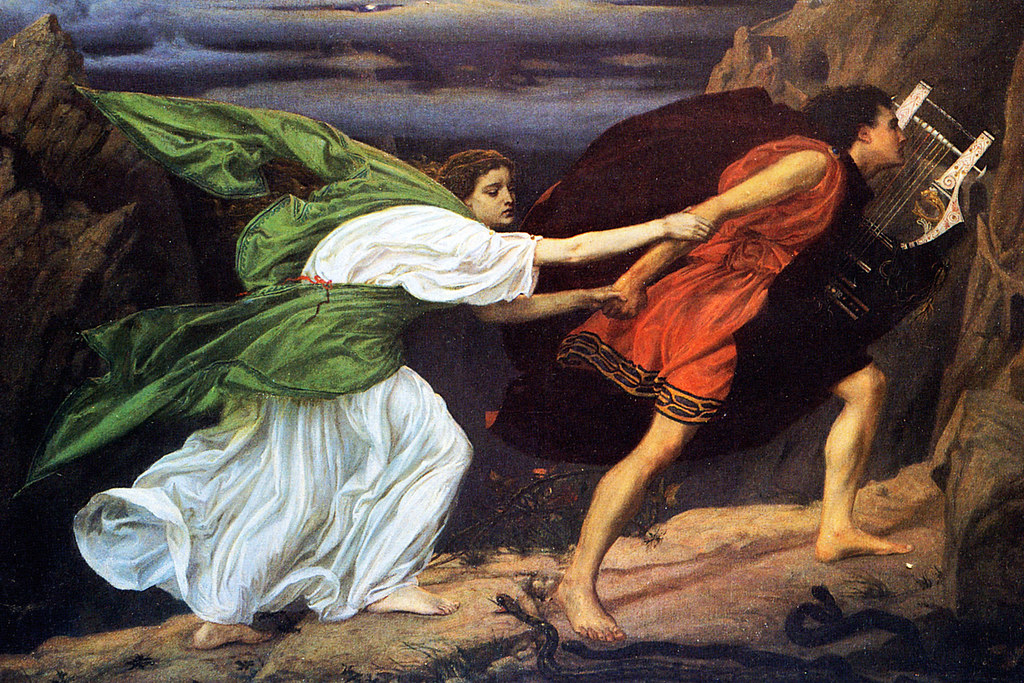
Orpheus and Eurydice (1862) by Edward Poynter (1836-1919). In Greek mythology, when the musician Orpheus’s wife, Eurydice, died of a snakebite, he tried to bring her back from the dead. Courtesy: Creative Commons
EURYDICE
i feel your breath on my back, i keep walking,
singing
my throat breaking
my fingers aching
your presence is my Muse
my feet burn in putrid lakes
my feet bleed on jagged rocks
yet, in hell i found paradise
i found you, Eurydice

i surface, and i break
as premonition overcomes me
and i turn around to see cruel fate dragging you away

Aineesh Dutt is a college student. When he’s not too busy daydreaming or thinking about humanity, he butchers your favourite songs on his guitar or plays with dogs.

.

PLEASE NOTE: ARTICLES CAN ONLY BE REPRODUCED IN OTHER SITES WITH DUE ACKNOWLEDGEMENT TO BORDERLESS JOURNAL. 

Click here to access the Borderless anthology, Monalisa No Longer Smiles

Click here to access Monalisa No Longer Smiles on Kindle Amazon International

Categories
Essay

Peeking at Beijing: The Wall

How can anybody comprehend one of the largest and most ancient cities in the world? Keith Lyons goes up high, underground, underwater and down some dead-end alleyways as he tries to understand in just three days what took 3,000 years of history to create.

Day One*

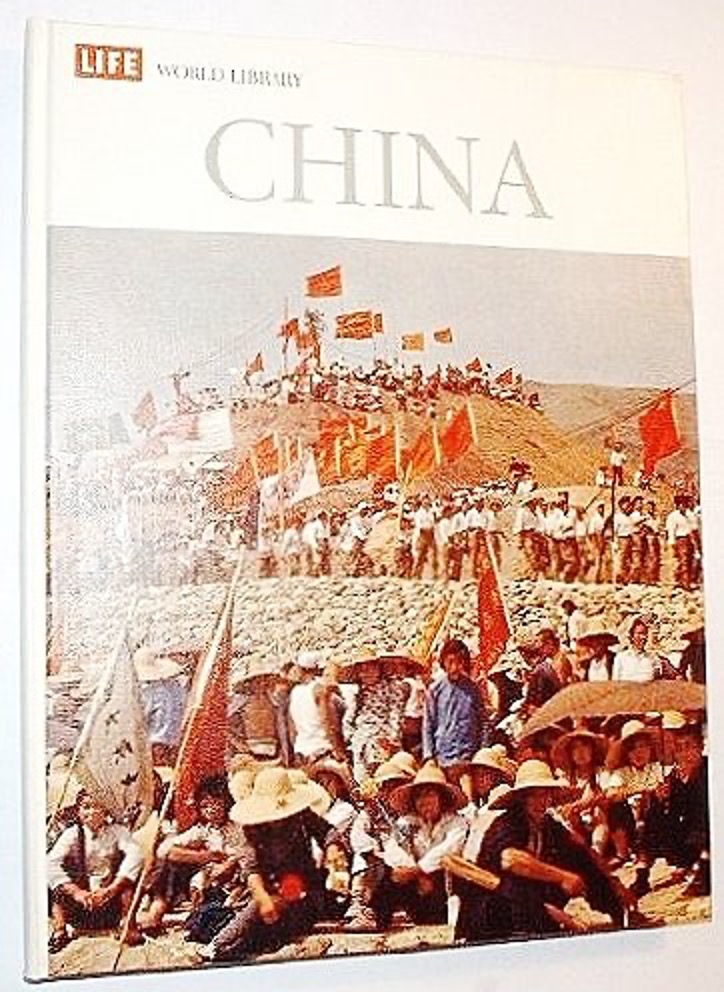
My fascination with China started at an early age. I remember as a child leaving through the Time-Life World Library series volume for China (1965); its photographs grainy black and white, and tinted colour, only serving to increase the mystique about the nation then isolated behind the Bamboo Curtain at the height of Mao’s Cultural Revolution. Back then, to be able to stand on the Great Wall of China, or to see the vastness Tiananmen Square seemed as probable as going on a school trip to the Moon.

I was in my late 20s when I first visited the Middle Kingdom, and through a series of events, choices, and decisions, later found myself living and working in the ethnic borderlands of southwest China for more than a dozen years from the mid-2000s. During that time in-country, as well as before and after during my various travels throughout China, how many times do you think I visited the capital, Beijing? Half-a-dozen times? Or at least 10 times? Sorry. I have to confess, even though I ‘knew’ Beijing through books and documentaries — and creating travel itineraries for tour groups — I never once visited in person the Chinese capital. 

Yes, that’s right. I crafted detailed, tailor-made itineraries for first-time visitors to Beijing, to give them an insider’s experience of the capital, without getting within a thousand kilometres of the great city. My excuses include:

1 – China is vast, and almost the same size as Europe;

2 – It would take 3 days by train from my courtyard house in Yunnan’s Lijiang to the Forbidden City, and I wasn’t up for such a long journey

3 – To be honest, I wasn’t as enthralled about Beijing after hearing mixed reports from other travellers, so I decided I could live (and/or die) without casting my eyes upon the sights and wonders of Beijing. 

A small window of opportunity opened to me recently when the stars aligned between jobs and other responsibilities. I had turned down the invitation to speak at a national tourism conference about the future of China’s tourism development post-pandemic, but I got to visit China for the first time since 2019, making an extended stopover in the capital. A visa-exemption initiative recently re-instated to encourage tourism without the need for pre-approved visas meant I could theoretically apply for a 144-hour transit stamp. 

So, I touched down at Beijing’s Capital International Airport (IATA code PEK) early one morning after an overnight flight from the southern hemisphere. This being my first time without a pre-approved (and expensive) visa I was a little nervous, and my fears were not allayed when no one was staffing the 144-hour visa desk. Was this the first great wall I had to overcome? I got sent from one immigration queue to another, a couple of times having to go against the flow of newly-arriving passengers and slip upstream through security. When eventually an official arrived to process the paperwork and issue the transit stamp, I had to show all my flight and accommodation bookings; not an easy task when you can’t connect to the airport wi-fi. 

I was sweating, not just because of the late summer heat, but also because I had booked a bus tour to the Great Wall that was leaving at 8 a.m. from central Beijing, a train and subway ride away. “Dear Sir, our assembly point is at Exit C of Dengshikou Subway Station on Line 5,” read my instructions. “You can see the guide wearing a blue vest. Please arrived at the assembly point 10 minutes early.”

Having a Chinese bank card, a map preloaded onto my phone, and some decent residual Mandarin skills, along with no reservations about queue-jumping as payback for being delayed, I found an ATM, and headed to the exit of the massive airport. There were only a few seconds to admire the impressive roof arching over Terminal 3, designed by Sir Norman Foster for the 2008 Beijing Olympics as I marched across the marble floors towards the Capital Airport Express. It was just after 7 a.m. but already I could see how Beijing Capital Airport is — or was — the second busiest airport in the world. 

Transferring from the airport line train downtown to the metro, the time on my phone was counting down towards the departure time. I worried that if I missed my bus, my whole trip would be ruined; and that such an inauspicious start to my Beijing exploration would cause a chain reaction of delays, missed opportunities and regret. Maybe I’d never make it to the Wall. Then I thought: take it easy, it’s not the destination, it’s the journey. I studied the Chinese characters for Dengshikou, recognising the first Sinogram as meaning light or lantern.

Arriving at the subway station, I quickened my pace up the stairs and escalators to emerge into sunlight at Exit C. It was 7:59. Fortunately, a blue-vested person was standing in the middle of the carpark. “Do I have time to grab something to eat or drink?” I asked the ZANbus guide in my slightly rusty Mandarin. “No. We’re leaving right now,” she said, ushering me onto the bus.

“But we have bottles of water on sale onboard.”

My online booked tour, a bare basics budget-friendly US$25 including admission ticket, offered three advantages: visiting a less-visited section of the Great Wall a mere 70km from Beijing, arriving before the ‘other tourists’, and being a strictly ‘no shopping’ experience (many tours visit several stores where guides and drivers make huge commissions). As the only non-Chinese person on the coach, the guide (who was supposed to speak some English) gave me a special briefing (in Mandarin), explaining the options for going up and coming down from the Mutianyu section of the wall, as we sped out of the metropolis heading towards the green rolling hills in the hazy distance. 

As we passed orchards, with growers selling freshly-picked fruits and nuts, I secretly wished we could stop for some shopping, not just to support the locals, but to ease my rumbling empty stomach. A nearby passenger, a man in his 20s visiting from a central province, whom I later dubbed ‘Running Man’, live-streamed the succession of farmer’s markets we zoomed past, in between video-chatting to his girlfriend. “There’s apples, pears, apricots, plums, grapes, persimmon, walnuts and huge peaches,” I heard him say. Since the bus driver didn’t once slow down, I justified to myself that, even though probably quite delicious, that produce would probably be exorbitantly over-priced for day-tripping Great Wallers like myself. 

By 9.30am I was striding along an arcade of mainly unopened shops past the visitor centre, stopping to buy more water, and some snacks. “How about an ice cream?”one vendor asked me after I looked into his glass-top freezer. “Later, OK?” A cafe offered a latte coffee, but the US$8.25 price tag reminded me that China gives too much status to the beverage, which is sometimes just instant coffee and creamer. A Chinese family, long-resident in the UK, gave me a fuller rundown on the logistics for sightseeing, where to meet the guide for the trip back to Beijing (the waiting hall just near Burger King), and most importantly, when the bus driver would be leaving (4pm sharp). “Also, if you tell them you are with this bus company, there’s a discount at Subway,” the teenage son chimed in as we boarded an electric vehicle for a short ride to the base station for the ascent of the crestline high above us. Looking along the line of the hills, I could just make out the crenellated up-and-down patterns of the walls, stretching off into the far distance. 

Now you’ve probably heard it many times, but let’s dispel the myth: the Great Wall of China is not visible from space. It is not visible from the Moon. It isn’t even visible to the naked eye from the low-orbit International Space Station. The popular myth goes back centuries, and more recently has been part of the propaganda of modern China to state that the wall was the only human-made structure that could be seen from space. The myth was challenged when Apollo 12 lunar module pilot Alan Bean said, “The only thing you can see from the Moon is a beautiful sphere, mostly white, some blue and patches of yellow, and every once in a while, some green vegetation. . . No man-made object is visible at this scale.”

Some artificial structures such as cities, highways and dams are visible from space, but the Great Wall is only visible from low Earth orbit with magnification or high-powered camera lenses. This was confirmed by China’s own first astronaut who went around planet Earth 14 times in 2003 on Shenzhou 5. “The Earth looked very beautiful from space, but I did not see our Great Wall.”

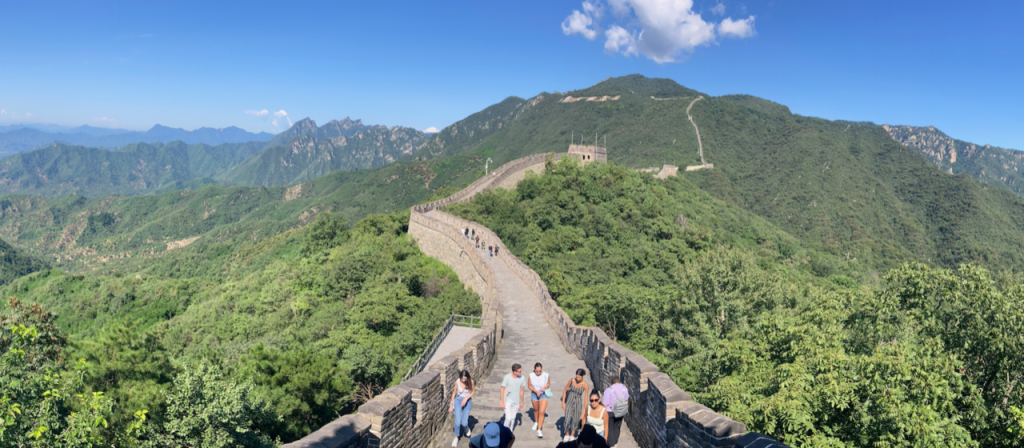
Photographs provided by Keith Lyons

To get personal and up-close with the Great Wall, other passengers decided to get a chairlift up and traipse further along between watchtowers and then take a toboggan (“speed slide”) down for 5 minutes of excitement. Rather than hike up (crazy in the heat), I opted to take the same cable car up and down (less than US$20 return).

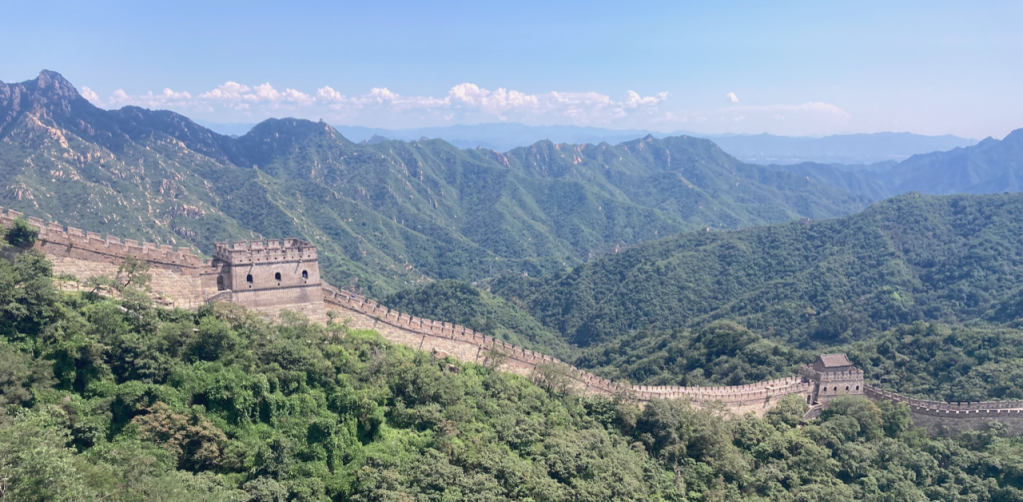
Within minutes we could look down on the graceful, curved line of each section of the wall as it gently arched from one watchtower to the next. Wow! As the cable car reached its terminus near watchtower 14, the extent of the Great Wall to the north was revealed, fading to the horizon as vegetation and battlement became indistinguishable. 

The Mutianyu section extends some 5.4km, and though work began in the 6th century, much of it was rebuilt or renovated in the 15th and 16th centuries. In the 1980s about 2.3 km of that section was restored, so over the last three decades, more and more people have been able to visit the less crowded and commercialised alternative to the more famous, most-restored, scenically magnificent Badaling section. 

At Mutianyu, constructed of granite blocks, the wall has been made pedestrian-friendly and smooth, though there were steps, some steep in parts as they climb to the series of watchtowers. My fellow passenger Running Man darted around taking selfies and videos, as if he had only 24-hours left to live. Couples set off to the best spots to take photos, while a group of three university students set their sights on the highest watchtower, No.20, which could take one or two hours return depending on speed, stops and stamina. The path climbs from the low of watchtower 17, with the steepest leg between 19 and 20. 

Being something of a mountain goat myself, you might expect me to join them purposefully climbing towards the much-talked-about ’20’, but this goat was tired, jet-lagged, and hungry. Instead, I wandered along to the next abutments and decided to just sit in the shade admiring the view. This is just what I had envisioned, I wrote in my journal. And it was. Just like in the photos. Actually, I had expected the Great Wall might be more crowded with jostling visitors, but less than half those getting off the cable car ventured beyond watchtower 16 — and it wasn’t a weekend or holiday. 

At watchtower 17, it was so quiet and still that I could hear cicadas in the pine and chestnut trees flanking the wall. A pair of sparrows darted around, a plane flew overhead, and I watched the slow progress of a centipede across the path from the inner parapet to the invader-facing crenelation, a distance of four or five metres. Surely, the centipede hadn’t climbed all the way up the seven or eight metres of the Wall’s walls, five times the height of an adult? During its construction, which went until the mid-1600s, parts of the wall were made with bricks, held together by a durable glutinous rice mortar — arsenic was used to prevent insects from eroding away the wall. 

An old man, who has been sitting nearby in the shade while his adult son and grandchildren went on further, finishes drinking from a plastic water bottle and discards it over the side. I feel like saying something, but stop myself, realising that some attitudes and behaviours are slow to change. He probably thinks the Great Wall was visible from space, I confide to myself. 

The Wall’s modest width, no bigger than a road, was probably why it couldn’t be easily spotted from above. However, it did provide a fast means of travel and transportation for troops. Officially, the Great Wall was some 21,198 km long – that’s equivalent to half the equator – but up to a third of the structure has disappeared over time. It’s not just one continuous wall either, with sidewalls, parallel walls, enclosing walls, and even sections where there are no walls, just high mountain ridges, rivers, ditches or moats as the barriers. The Wall can lay claim to being the longest man-made structure as well as the largest building construction project ever undertaken. On a blank page I start a rough sketch of the section in front of me, trying to get my head around how this is just a tiny fraction of the longer, greater wall.

As well as being for border defence, the Great Wall also served to transmit messages, using watchtowers and beacon towers. From the next watchtower, the grandson of the bottle-litter-man waves but failing to catch the attention of the old man, he runs back along the wall path yelling, “Yéye – Granddad! Did you see me waving to you at the next castle?”

There is a certain irony about this extensive bulwark constructed across northern China and southern Mongolia up to two millennia ago to keep out invaders which now every day is climbed over by tourists from Mongolia, Russia, Eurasia and beyond. This is supposed to keep us out. But here we are, on the top of the wall and fortifications, having invaded, not from beyond, but from the downtown of the capital of the nation. So much for the upright projections, resembling teeth bared at the enemies. 

Other travel experts and expats living in Beijing tell me if I visited Mutianyu a month later, I would see the surrounding maple, oak and chestnut trees in their autumn splendour. In winter, snow transforms the scene. But on this day, I am just happy to be present, to take on the literal meaning of Mutianyu — Admire Fields Valley — as I take the cable car down to the bountiful valley, snack on a corn cob sprinkled with chilli, and some fresh walnuts. As the clouds turn to a sudden rainstorm, in the comfort of the waiting hall, after savouring an ice cream, I let the day catch up on me.

Photo provided by Keith Lyons

Back on the bus at 4pm, Running Man is sunburnt red and sweaty — but still grinning as he sorts through his photos and videos. The mother hen guide gives us all a small memento of the day, a fridge magnet of the Great Wall, as a reward for all making it back on time. 

The next thing I recall is being woken by the guide. I must have drifted off to sleep. “We’ve arrived,” she says, pointing towards an entrance to the Beijing metro which seems different from the starting point. For a moment, I wonder if I have been dreaming it all: the Great Wall, the perfect day, how everything worked out in the end. Then I realised it was all true: I’ve just seen and been on the Great Wall. And I have the fridge magnet in my pocket to prove it. I turn to say goodbye to Running Man, but he’s already exited the bus, and is making for the escalator down.

*Read the Day two of Keith Lyon’s China trip by clicking here

Keith Lyons (keithlyons.net) is an award-winning writer and creative writing mentor originally from New Zealand who has spent a quarter of his existence living and working in Asia including southwest China, Myanmar and Bali. His Venn diagram of happiness features the aroma of freshly-roasted coffee, the negative ions of the natural world including moving water, and connecting with others in meaningful ways. A Contributing Editor on Borderless journal’s Editorial Board, his work has appeared in Borderless since its early days, and his writing featured in the anthology Monalisa No Longer Smiles.

.

PLEASE NOTE: ARTICLES CAN ONLY BE REPRODUCED IN OTHER SITES WITH DUE ACKNOWLEDGEMENT TO BORDERLESS JOURNAL. 

Click here to access the Borderless anthology, Monalisa No Longer Smiles

Click here to access Monalisa No Longer Smiles on Kindle Amazon International

Categories
Excerpt

Poetry by Mamang Dai

Title: The White Shirts of Summer: New and Selected Poems

Author: Mamang Dai

Publisher: Speaking Tiger Books

Hello, Mountain

Every morning when the forest wakes
The canopy goes for a walk
Hailing the sun, courting the wind
Discussing fruit and weather

The idle moss turns into velvet
Branches make signs.
Who says there is no time?
The only thing we are given is Time.

Chattering life high above,
Babel of tree dwellers.
For a seed falling so far down
To rise again, time is a given.
A foothold for the hunger of a weed,
Colour, scent, camouflage
And the grass that never sleeps

Shooting up to meet the gaze of the mountain.
How are you, mountain?
Is everything all right?
Is the earth growing old,
Birds flying away, trees falling?


After Gabo

No one can say it like you said it,
about love and magic,
solitude and growing old.

Here it’s white butterflies
whirling around in the garden
and the scent of bitter almond
is the scent of orange blossom.

You know, love is a virus too,
jumping ship,
landing up in ports and cities
so eager, enchanted
by the banks of another river
in the time of quarantine.

There are lines and lines
of communication
jostling through a virtual pandemic,
a sadness named, unnamed.

Fermina Daza, is it true:
Everything is in our hands?

Outside my window
red hibiscus, red.
If the aim is to survive,
it’s time to weigh anchor again.

For how long? Who knows.

Our old life is gone.
It’s another summer
and the pages are turning
in a chronicle of things foretold.

One battered flag in a time of lockdown.
Despite contrary winds
a battered flag is fluttering,
you’ll see it here and there
pointing in the direction of the future.
Salt water, caresses,
buoyant as the hearts of old lovers
young enough to believe
in forever.

(Extracted from The White Shirts of Summer: New and Selected Poems by Mamang Dai. Published by Speaking Tiger Books, 2023.)

About the Book:

 ‘A major voice in Indian English literature, and literature from North East India…[Her] poems are like a race of butterflies bargaining with the night.’

Keki Daruwalla

‘Dai’s poetic world is one of river, forest and mountain, a limpid and lyrical reflection of the terrain of her home state. Nature here is mysterious, verdant with myth, dense with sacred memory. There is magic to be found everywhere…But as you read closer, you [also] sense a more sinister undertow: this paradisiacal landscape is also one of “guns and gulls”, punctuated by “the footfall of soldiers”. You also realize that the simplicity of Dai’s verse is not without guile. It possesses a gentle persuasive riverine tug that can lead you to moments of heart-stopping surprise.

‘For all its simplicity, Dai’s poetry does not arrive at easy conclusions. There is no dishonest sense of anchor here, no blissful pastoral idyll. The poet describes her people as “foragers for a destiny” and her work is pervaded by a deep unease about erased histories and an uncertain future. And yet, implicit in her poetics is the refusal to divorce protest from love. This seems to translate into a commitment to a poetry of quiet surges and eddies rather than gritty textures and edges…[and] a tone that is hushed, wondering, thoughtful, reflective. The strength of this poetry is its unforced beauty and clarity, its ability to steer clear of easy flamboyance.’

Arundhathi Subramaniam

About the Author

 Mamang Dai, poet and novelist, was born in Pasighat, Arunachal Pradesh. A former journalist and a Padma Shri awardee, Dai is the author of a short story collection, The Legends of Pensam, and the novels Stupid Cupid, The Black Hill (winner of the Sahitya Akademi Award) and Escaping the Land (longlisted for the JCB Prize). Dai lives in Itanagar, Arunachal Pradesh.

.

PLEASE NOTE: ARTICLES CAN ONLY BE REPRODUCED IN OTHER SITES WITH DUE ACKNOWLEDGEMENT TO BORDERLESS JOURNAL

Categories
Festive Special

Lighting Lamps of Love

Light of mine, O light, the universe is filled with your effulgence, 
My heart is yours; my eyes drown in your refulgence. 
…. 
The sky awakens, the breeze flits, the Earth laughs. 
As luminous currents surge, thousands of butterflies take flight. 

— Aalo Amar Aalo (Light, My Light), Bichitra, 1911, Rabindranath Tagore 

There was a time when lights were a part of joy and celebrations as in Tagore’s poem above. Lighting lamps, people welcomed home their beloved prince Rama on Deepavali, who returned after a fourteen year exile, and during his banishment, killed the demonic Ravana. On the same day in Bengal, lamps were lit to ward off evil and celebrate the victory of Kali, (the dark woman goddess wooed by Tantrics) over the rakshasa, Raktabeeja. In the Southern part of India, lamps were lit to celebrate the victory of Krishna over Narakasura. The reasons could be many but lights and fireworks were lit to celebrate the victory of good over evil during the festival of lights.

In the current world with lines blurred between good and evil, while climate crises seeks smoke free, coal free energy, flames of fire or fireworks are often frowned upon. In these times, we can only hope to light the lamp of love — so that differences can be settled amicably without killing the helpless and innocent, infact without violence, greed, peacefully and with kindness, keeping in mind the safety of our species and our home, the Earth. We invite you to partake of our content, writings that light the lamp of love — 

Poetry

I Gather Words by Shareefa Beegam P P. Click here to read.

The Language of Dreams by Sister Lou Ella Hickman: Click here to read.

Dreams are like Stars by Mitra Samal: Click here to read.

At Teotihuacan by Jonathan Chan: Click here to read.

Love Poetry by Gayatri Majumdar: Click here to read.

Today’s Child by Atta Shad, translated from Balochi by Fazal Baloch: Click here to read.

Endless Love, Ananto Prem (Endless Love) by Tagore, translated from Bengali by Professor Fakrul Alam. Click here to read.

Prose

Hena: a short story about love and war by Nazrul, has been translated from Bengali by Sohana Manzoor. Click here to read.

Annapurna Bhavan: Lakshmi Kannan closes class divides in Chennai over a meal. Click here to read.

Rituals in the Garden: Marcelo Medone discusses motherhood, aging and loss in this poignant flash fiction from Argentina. Click here to read.

The Tree of Life: An unusual flash fiction by Parnil Yodha about a Tibetan monk. Click here to read.

Adoption: A poignant real life story by Jeanie Kortum on adopting a child. Click here to read.

The Potato Prince: A funny but poignant love story by Sohana Manzoor. Click here to read.

A Taste of Bibimbap & More: G Venkatesh revisits the kindness he that laced his travels within Korea. Click here to read. 

Therese Schumacher and Nagayoshi Nagai: A Love Story: Suzanne Kamata introduces us to one of the first German women married to a Japanese scientist and their love story. Click here to read.

Categories
The Halloween Spookbook

Witches, Ghosts and Pirates?

Can horror be fun?

While the horror generated by wars deeply saddens with its ultimate disregard for all kinds of flora and fauna, including humans, the horrific as we savour in festivals can cease to be terrifying. It can even be cathartic in the midst of the terror of destruction and violence. Halloween is a festival that brings to mind a time when kids go trick or treating as houses and gardens assume a ‘haunted look’. This year, in the spirit of fun, we bring to you a collection of the spooky and the gooky — poems and prose — from across multiple countries and cultures. These hope to provide a moment of respite and unalloyed fun for all of you, despite their darker notes. Perhaps, as an afterthought, these will also unite with the commonality of human needs to connect… even if it’s with a plethora of spooks from across all kinds of human borders…

Poetry

Poems for Halloween by Michael Burch. Click here to read.

Pirate Poems: Jay Nicholls brings us fun-filled ‘spooky-gooky’ adventures across the Lemon Sea. Click here to read.

Prose

Ghosts, Witches and My New Homeland : Tulip Chowdhury muses on ghosts and spooks in Bangladesh and US. Click here to read.

Three Ghosts in a Boat: Rhys Hughes explores the paranormal. Promise not to laugh or smile as you shiver… Click here to read.

Red Moss at the Abbey of Saint Pons: Paul Mirabile takes us to St Pons Abbey in France in the fifteenth century. Click here to read.

The Browless DollsS.Ramakrishnan’s story about two supernatural dolls, has been translated from Tamil by B. Chandramouli. Click here to read.