Categories
Musings of a Copywriter

Berth of a Politician

By Devraj Singh Kalsi

During long-distance train travel, I stay anxious about my fellow passengers in the neighbouring seats. Like any other optimist, I am hopeful of finding beautiful, exciting people to make the hours fly like minutes, to ensure I do not have to pull the curtains and switch on the reading lamp. When the attraction of the window seat offering a panoramic view of the green world fades after a few hours, having engaging people occupying the opposite seats to converse with on a wide range of issues ranging from politics to films is a boon. The presence of yawning bores makes it soporific as their loud, unending phone conversations detailing domestic drudgery start getting on the nerves after a while. Unfortunately, most of my train journeys have nothing refreshing to offer. So, the sight of a young smart lady walking in with her ticket to locate the seat was a huge visual relief. But the joy was short-lived when an elderly lady with a bawling baby in her arms followed her.

Understandably, they were related and perhaps shared a mother-daughter relationship. The young lady understood they were allotted the upper berths. She requested a swap. But the greed of the window seat prevailed. I declined the switch. This bland refusal left her shocked. The elderly lady also did not pitch in with her personalised appeal as she understood that if I could say no to a beautiful young lady, my response would remain the same in her case.

Before they could climb up, a gentleman wearing a hat walked in and seeing their predicament, offered his lower berth to the young lady. Delighted that the young lady would be seated opposite, I took it as some kind of relief but sadly the young lady climbed up while the elderly lady with the child sat in front and started changing diapers. The beautiful lady and the hatted gentleman went up. The gentleman spread himself above my seat while the lady occupied the upper berth on the opposite side. I thought this would provide some opportunity to catch a glimpse of the beauty, but she was so grateful that she enjoyed conversing with the hatted gentleman regarding her difficult journey to the national capital for medical treatment. The gentleman continued to guide her even though she did not seem interested in his advice.

He showed his sensitive side by asking the railway staff to control the air-conditioning temperature as it was quite chilling at night. He made it appear he was doing it for the small child and the lady out of concern even though they had not asked for it. The elderly lady thanked him by saying her arthritic knees needed this relief. As the AC turned warmer with his intervention, the women were assured they were in the presence of a genuinely caring person whereas I was a villain who declined to help women in need and now stayed wide awake to overhear their conversation. When the young lady found my furtive glances too hot to handle, she pulled half the curtain to block my sight. Perhaps this was well-deserved for being from her perspective, uncaring.  

During the night, the hat belonging to the gentleman toppled onto my berth and awakened me. I sat up and threw it near the corner gently, hoping not to disturb his snores. In the wee hours of the morning, the hat fell again but this time his legs also dangled in front of me. Perhaps, he was getting up from his berth to probably visit the loo. He suddenly jumped down and took the hat from me, with a barely audible thank-you, and searched for his slippers underneath the seat. When he returned to the cabin, he picked up his phone and gave a wake-up call to his family and reminded them that his parcel would arrive via courier that morning, much before he reached home. They would have to receive it in his absence.

When the railway catering staff came for taking breakfast orders, the hatted gentleman was accorded great respect. They seemed to be familiar with him. During their conversation, it emerged he was a former parliamentarian who still travelled quite frequently by the same train to the national capital. When the elderly lady on the opposite sought to know his name, he revealed his full identity. I searched online. The first page gave the image of the gentleman wearing a hat, with a short biodata revealing his long, illustrious political journey spread over the decades doing social service. In a way switching the berth for the lady showcased his sensitive side and also hinted at the comfort and ease with which he could switched sides during his political innings. Had the lady and her family been a resident of his constituency, he would have definitely got their votes.

He got a grand salute for the tip he gave to the staff member after breakfast, and it reminded him of how common such genuflection had been during his heydays. I felt I should have started a conversation with him to know the state of politics today, but since he appeared to relive the past glory, it did not appear he had any connection with the present dispensation. It was not likely he was positive of a grand comeback, as he remained wedded to the glorious past, with his worn-out hat representing the outdated courteousness and etiquette long associated with the past. When the elderly lady thanked him profusely for his kindness, he folded his hands like an astute politician does in front of the public during election time and stayed modest about his generosity with a smile spread wide on his puckered face.

When it was time to disembark, he sat on one side of my berth and shuffled his dossiers, and called up an associate, asking him to fix an appointment in the second half of the day. That a former member of the House slept on my upper berth was a privilege indeed. Now I could boast about it and for that, I needed to have a selfie with him or his autograph at least.  I was sceptical since he knew I had declined to help the women he might refuse to entertain my request. My hesitation prevailed as I could not countenance a rejection in front of the ladies. So, I resisted my urge for an introduction.

When he stood up clutching his files and dragged the wheeled trolley with the other hand, I maintained a safe distance from him, scared of dashing my luggage against his legs. I was expecting there would be a few acolytes waiting with marigold garlands to receive him at the station, but I was surprised to see there was not a single person waiting for the former leader. He was a lone man pulling his burden and finding his way among the crowd. He kept walking the length of the platform with his hat almost toppling in the wind, firmly holding his set of files and the trolley with the other hand.

Devraj Singh Kalsi works as a senior copywriter in Kolkata. His short stories and essays have been published in Deccan Herald, Tehelka, Kitaab, Earthen Lamp Journal, Assam Tribune, and The Statesman. Pal Motors is his first novel.  


PLEASE NOTE: ARTICLES CAN ONLY BE REPRODUCED IN OTHER SITES WITH DUE ACKNOWLEDGEMENT TO BORDERLESS JOURNAL

Click here to access the Borderless anthology, Monalisa No Longer Smiles

Click here to access Monalisa No Longer Smiles on Kindle Amazon International

Categories
Excerpt

These Many Cold Winters of the Heart by Ryan Quinn Flanagan

Cover art by Shona Flanagan

Title: These Many Cold Winters of the Heart

Author: Ryan Quinn Flanagan

Book Publisher: Roadside Press

50 Little Angels  

She died last week and the family convened
to box up all her things:
a few jewelry box keepsakes,
the new-fangled salad spinner from eight birthdays ago
that she could never work and refused to use,
that blazon of 50 little angels on the mantle,
hands clasped and eyes ascended in silent
porcelain deference; a small army thrown into boxes,
taped up and sent to storage, so the landlord
could list the place in the papers the following Tuesday,
champion an eat-in kitchen and proximity
to public transit.

(First appeared in Rusty Truck)

A Giant Bear Jumps Up the Rockface Outside Sudbury, Ontario

You never realize how helpless you would actually be
if the cards came calling.

A giant bear jumps up the rockface outside Sudbury, Ontario.
A single leap up over twenty feet after sprinting
in front of my truck.

Across three lanes of traffic.
Those powerful hind legs digging claws
deep into billions of years of solid Canadian Shield.

Power windows don’t seem so great after that.
We have a long way to go.

It was just a moment,
but it was everything to me.

Why anyone would count carbs after that
seemed completely farcical to me.

I was in control of nothing.
And all the power steering in the world
could not help me with that.


(First appeared in Setu)

Foreclosure Town


What the level of hand soap was at
when your brother died.

I would never forget that.
How many rings were failing the shower curtain.

How many tubes of toothpaste were left in the pantry,
were all the labels facing out?

That is the difference.
I remember everything.

How the air felt against the side of my nose
as the wind picked up.

Peeling railings on my fingers.

Those careless brown flecks with the orange underside.
How nothing seems to get everywhere.


(First appeared in Rusty Truck)

About the Book:

Ryan Quinn Flanagan’s These Many Cold Winters of the Heart begins with an epigraph from Emily Dickinson “I am out with lanterns looking for myself,” a perfect depiction of this collection. You will be riveted from the opening poem, “I Grew Up in a Brewery Town,” where the Molson plant closes down but “people survived, they usually do” although “everyone had to pay for their beer now/and they were drinking more than ever” to the powerful “wonderful bloody magic” in “The Butterfly Hunter” near the end. Flanagan has no shortage of acute observations on everything from a humorous pair of crows and the homelessness of tents in winter, to Bob Dylan and Lawrence of Arabia. A plentiful array of humorous, everyday usually irreverent pieces, also stunning moments of awe, and sometimes addressing tough subjects without flinching, from unexpected violence and death, to family mental illness, the loss of a brother, and the suicide of a childhood friend and an uncle and its after-effects. These latter poems will sneak up on you and take your breath away….I highly recommend These Many Cold Winters of the Heart and look forward to having the book in hand. Susan Ward Mickelberry, author of And Blackberries Grew Wild.” (From Susan Ward Mickelberry Reviews).

“Ryan Quinn Flanagan walks us through daily life in These Many Cold Winters of the Heart. ‘This is no simple dirty ditty[.]’ The moments he captures come running off the page like a giant bear ‘A single leap up over twenty feet after sprinting/in front of my truck.’ He explores death, work, and all the minutiae of life somehow knowing how all the pieces fit together…” Karen Cline-Tardiff, Gnashing Teeth Publishing.

About the Author:

Ryan Quinn Flanagan is a Canadian-born author who lives in Elliot Lake, Ontario, Canada with his wife and many bears that rifle through his garbage.  His work has been published both in print and online in such places as: The New York Quarterly, Rusty Truck, Borderless Journal, Evergreen Review, Red Fez, Horror Sleaze Trash and The Blue Collar Review.  He enjoys listening to the blues and cruising down the TransCanada in his big blacked out truck.

PLEASE NOTE: ARTICLES CAN ONLY BE REPRODUCED IN OTHER SITES WITH DUE ACKNOWLEDGEMENT TO BORDERLESS JOURNAL

Click here to access the Borderless anthology, Monalisa No Longer Smiles

Click here to access Monalisa No Longer Smiles on Amazon International

Categories
Stories

Rani Pink

By Swatee Miittal

Hustling through the dirty streets, she pulls the dupatta over her head to save herself from the scorching sun.

It is her fifth visit to the market that week. The exhaustion has begun to set in. But this is her only son’s wedding and she wants everything to be perfect.

“Here, this one it is!” Her son exclaims in relief pointing his phone towards the garment shop.

Thanks to GPS, they could finally reach the big old shop nestled in the bustling streets. As she steps inside, she asks him to join, but he promptly refuses. He has no interest in all this garment shopping, “What a waste of time!” he thinks to himself.

“You shortlist some stuff and give me a call, I’ll come and try them. And Mamma, please hurry up!”

“You have no clue how much time goes in the wedding shopping beta[1]. I want you to look your best in every single function! I really recommend you come help me select your garments for the main events at least. You know it is your wedding after all, your choice is really important.”

“You know na, I have zero interest in clothes, besides I will come to make the final choice once you shortlist a few. I don’t have the time and patience to sort through hundreds of options. As it is, everyone is going to look at the bride only, it hardly matters what I wear.”

She enters the shop, while he sits on a chair at the entrance, flips out his phone and starts scrolling.

After almost 40 minutes, he receives a call from her to come in for trials. She has finally managed to find a couple of good options for him, and he seems pleasantly satisfied with them.

As they walk towards the cash counter, she excitedly shows him a saree she found for herself.

“I loved the colour! What do you think? I think this would look perfect for the engagement ceremony!” She chirps. Her eyes lit up as she puts the saree on her shoulder to show him.

He gives a look at the sari. Rani pink with a yellow and gold border. He nods in disapproval and remarks, “Mamma, at least think about your age. You are fifty plus, the groom’s mother. Does this colour suit you?”

He turns to the sales guy and asks him directly, “Bhaiya[2], do you have something for the groom’s mother? Something age appropriate?”

He nods with a sly smile “I told the same thing to aunty ji, but she insisted on the Rani Pink one. We have multiple options for the groom’s mother. bhaiya ji, cream, beige, navy blue, light green. She didn’t like a single one.”

“Mamma, what will people say?” He whispers in her ears.

“Yeah, you are right. Let us look for something more age appropriate for me. She gently lets go of the rani pink and proceeds to pay for his clothes.

[1] son

[2] brother

Dr. Swatee Miittal, an artist, writer, and storyteller is committed to shedding light on societal issues through deconstructing old narratives. With a Ph.D. in audience behaviour with respect to theatre and storytelling, she has crafted stories addressing gender equality, relationships and mental health.

Categories
Poetry

Poems for Dylan Thomas

By Michael Burch

Dylan Thomas (1914-1953)
DOWNDRAFT 

for Dylan Thomas

We feel rather than understand what he meant
as he reveals a shattered firmament
which before him never existed.

Here, there are no images gnarled and twisted
out of too many words,
but only flocks of white birds

wheeling and flying.

Here, as the sun spins, reeling and dying,
the voice of a last gull
or perhaps some spirit no longer whole,

echoes its lonely madrigal
and we feel its strange pull
on the astonished soul.

O My Prodigal!

The vents of the sky, ripped asunder,
echo this wild, primal thunder—
now dying into undulations of vanishing wings . . .

and this voice which in haggard bleak rapture still somehow downward sings.

ELEMENTAL

for and after Dylan Thomas

The poet delves earth’s detritus—hard toil—
for raw-edged nouns, barbed verbs, vowels’ lush bouquet;
each syllable his pen excretes—dense soil,
dark images impacted, rooted clay.

The poet sees the sea but feels its meaning—
the teeming brine, the mirrored oval flame
that leashes and excites its turgid surface ...
then squanders years imagining love’s the same.

Belatedly, he turns to what lies broken—
the scarred and furrowed plot he fiercely sifts,
among death’s sicksweet dungs and composts seeking
one element that scorches and uplifts.

Michael R. Burch’s poems have been published by hundreds of literary journals, taught in high schools and colleges, translated into fourteen languages, incorporated into three plays and two operas, and set to music by seventeen composers.

PLEASE NOTE: ARTICLES CAN ONLY BE REPRODUCED IN OTHER SITES WITH DUE ACKNOWLEDGEMENT TO BORDERLESS JOURNAL

Click here to access the Borderless anthology, Monalisa No Longer Smiles

Click here to access Monalisa No Longer Smiles on Kindle Amazon International

Categories
Celebration

Welcome to Nazrul’s World

I’m a cyclone, a whirlwind,
I pommel all that lie in my path,
I am a dance-driven swing,
I dance to my own beat, I’m a free spirit, high on life...

-- Kazi Nazrul Islam, Rebel or Bidrohi, translated by Prof Fakrul Alam.
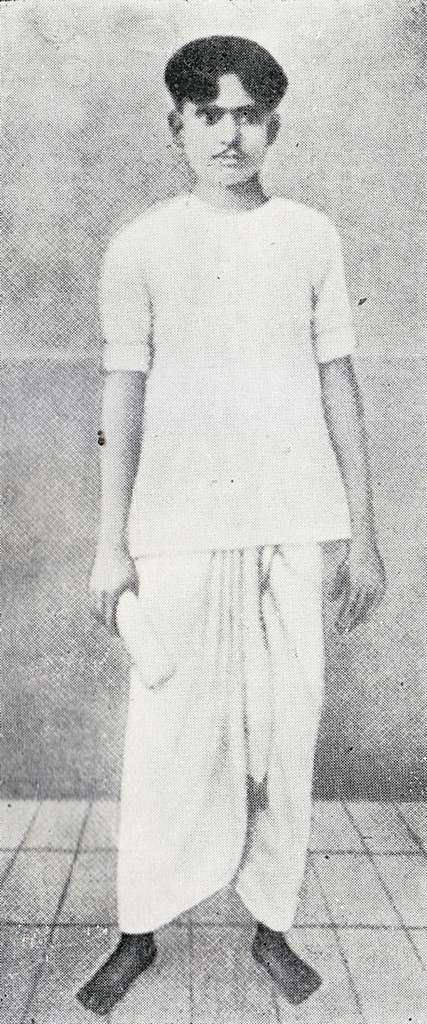
Young Nazrul

Nazrul’s writing has the power of whirlwind or a tornado — it can break with its force and make with love. His songs are a law unto themselves and called Nazrul geeti. And all this remains popular and still relevant more than a century after he was born.

Kazi Nazrul Islam (1899-1976) was born in Burdwan, a part of the Bengal Presidency that stretched from Bengal to Singapore during colonial times. Nazrul lived through the colonial rule, the independence of the subcontinent, the Partition and the creation of Bangladesh. He was multifaceted — he had tried his hand at soldiering and then settled for being a poet, writer, journalist, and musician. He is now regarded as the national poet of Bangladesh, the Bidrohi Kobi or the rebel poet. 

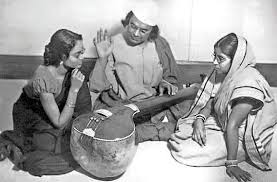
Nazrul teaching Nazrul Geeti

Here, we have tried to gather flavours of his writing and life. We start with the translation of his lyrics (a Nazrul geeti) on butterflies, translated by Fakrul Alam performed by the legendary Feroza Begum, move on to his response to Tagore’s poetry — they had a vibrant relationship as Somdatta Mandal has reflected in her discussion on Radha Chakravarty’s recent translation of his Selected Essays. It’s followed by more translations of three of his poems by Niaz Zaman, who has also written about Nazrul’s support for women. A searing essay on religious divides and socio economic gaps, translated by Sohana Manzoor, also brings to focus the plight of a beggar woman torn by poverty. A short story , showcasing him as a fiction writer, is borne of his experiences as a soldier. Last but not the least, we have a fiery speech by Nazrul from Chakravarty’s translation.

On Nazrul’s 125th birth anniversary, we welcome you to muse on him and his world…

Poetry

Projapoti (Butterfly) by Nazrul has been translated by Fakrul Alam from Bengali. Click here to read.

Nazrul’s rejoinder to Tagore’s 1400 Saal has been translated by Professor Fakrul Alam. Click here to read.

Three poems by Nazrul have been translated by Niaz Zaman. Click here to read.

Prose

 Deposition of a Political Prisoner: A Speech by Nazrul

A fiery speech by Nazrul from the Selected Essays: Kazi Nazrul Islam, translated by Radha Chakravarty from Bengali. Click here to read.

Temples and Mosques

Kazi Nazrul Islam’s fiery essay translated by Sohana Manzoor. Click here to read.

Hena

A story that grew out of Nazrul’s experiences as a soldier translated by Sohana Manzoor. Click here to read. 

Discussions

Nazrul and His World View

Somdatta Mandal writes about Radha Chakravarty’s translation of Selected Essays: Kazi Nazrul Islam and in the process explores his life and times. Click here to read.

When the Feminist and the Revolutionary Met

Niaz Zaman writes of the feminist leanings of Nazrul’s poetry in context of Madam Roquiah, a contemporary of the poet. Click here to read.

Categories
Celebration

Happy Ninetieth Ruskin Bond 

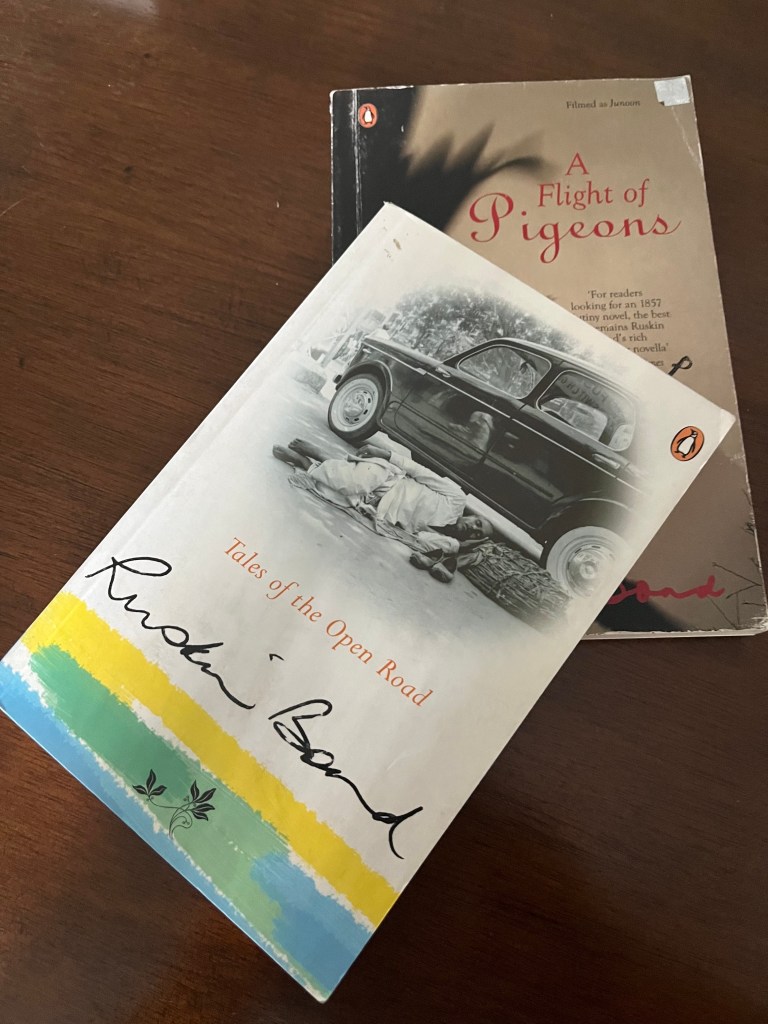
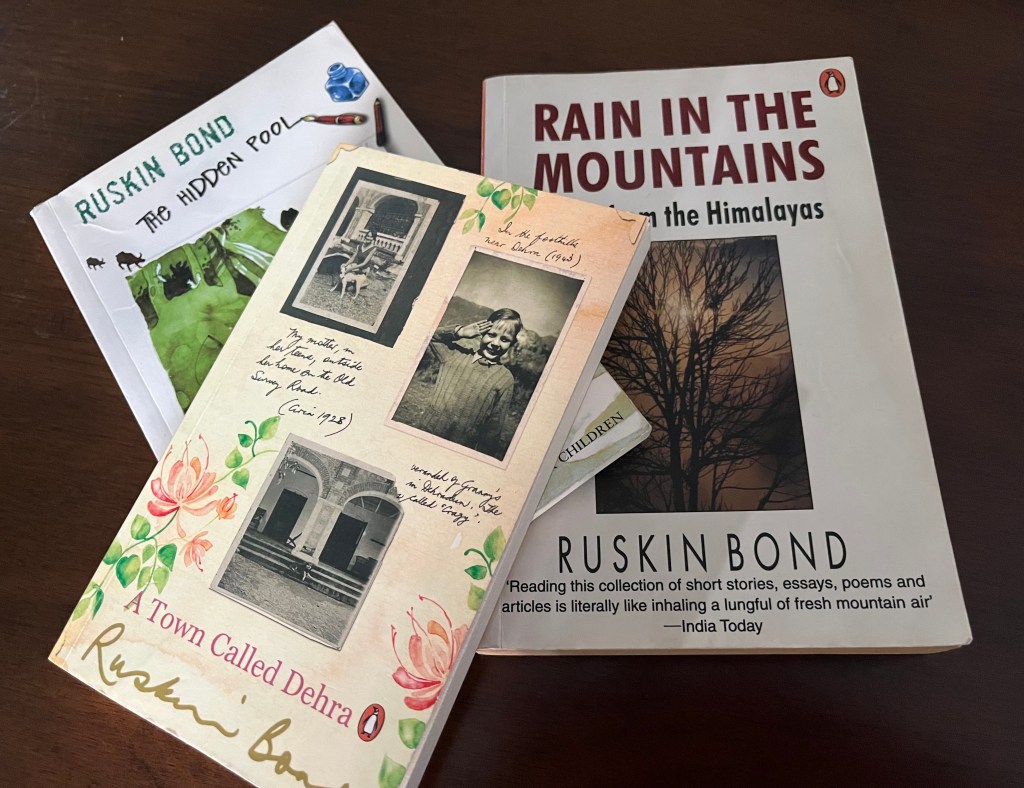
Ruskin Bond turns ninety today — a grand storyteller, one of the grandest of the twentieth century. His stories make one laugh and cry. They touch our hearts with compassion and amusement. He writes of people who he encounters in the hills where he stays — common people, people who you meet everyday on the road. He relates tales of making omelettes without eggs and makes us laugh at him and with him. It is rare to find this quality in a writer, or even in a common human. His fabulous stories around Mr Olivier and his parrot, his essays, poems, novels … one made into a film (A Flight of Pigeons) — though I dare say I enjoyed the book more than the film — all give a respite from the mundaneness and stresses of daily existence. They have the same effect as a holiday resort, except you do not need to spend as much. His writing transcends all time and boundaries of all kinds with his love for humanity seeping out of books. 

We celebrate him with a poetic tribute from a fan and two pieces of his writing that we found in our treasury! Happy Birthday Ruskin Bond! 

The Room on the Roof: Kisholoy Roy pays a tribute to Ruskin Bond’s writing. Click here to read. 

Ruskin Bond, excerpted from Between Heaven and Earth: Writings on the Indian Hillsedited by Ruskin Bond and Bulbul Sharma. Click hereto read.

An excerpt from Friends in Wild Places: Birds, Beasts and Other Companions by Ruskin Bond. Click here to read.

Categories
Contents

Borderless, May 2024

Painting by Sohana Manzoor

Editorial

Though I Sang in my Chains like the Sea… Click here to read

Translations

Three poems by Nazrul have been translated by Niaz Zaman from Bengali. Click here to read.

Projapoti (Butterfly) by Nazrul has been translated by Fakrul Alam from Bengali. Click here to read.

Human by Manzur Bismil has been translated by Fazal Baloch from Balochi. Click here to read.

Now, What I Can Do by Ihlwha Choi has been translated from Korean by the poet himself. Click here to read.

Chhora or Rhymes by Tagore has been translated from Bengali by Mitali Chakravarty. Click here to read.

Poetry

Click on the names to read the poems

Michael Burch, Kirpal Singh, Ryan Quinn Flanagan, Shamik Banerjee, Stuart McFarlane, Mary Tina Shamli Pillay, George Freek, Radhika Soni, Craig Kirchner, Tapas Sarkar, Stephen Philip Druce, Anjali Chauhan, Michael Lee Johnson, Milan Mondal, Rhys Hughes

Poets, Poetry & Rhys Hughes

In Dylan on Worm’s Head, Rhys Hughes describes a misadventure that the Welsh poet had while hiking as a tribute to him on Dylan Thomas Day. Click here to read.

Musings/Slices from Life

Hooked for Life and Beyond…

Ravi Shankar looks at the computer revolution in a light vein. Click here to read.

Sundays are Only for Some…

Snigdha Agrawal introduces us to the perspectives of a child of parents who iron clothes for the middle class in India. Click here to read.

Eternalising the Beauty of Balochistan

Munaj Gul gives an in memoriam for a photographer from Balochistan. Click here to read.

Musings of a Copywriter

In Is this a Dagger I See…?, Devraj Singh Kalsi gives a tongue-in-cheek account of a writer’s dilemma. Click here to read.

Notes from Japan

In A Golden Memory of Green Day in Japan, Suzanne Kamata tells us of a festival where she planted a tree in the presence of the Japanese royalty. Click here to read.

Essays

When the Feminist and the Revolutionary Met

Niaz Zaman writes of the feminist leanings of Nazrul’s poetry in context of Madam Roquiah, a contemporary of the poet. Click here to read.

Metaphorical Maladies

Satyarth Pandita looks into literature around maladies. Click here to read.

The Storied Past of Khiva

Gita Viswanath takes us to the heritage city in Uzbekistan. Click here to read.

Akbar Barakzai: A Timeless Poet

Hazaran Rahim Dad explores the universal poetry of Akbar Barakzai. Click here to read.

Stories

Don Quixote’s Paradise

Farouk Gulsara takes us through a dystopian adventure. Click here to read.

The Buyback

Devraj Singh Kalsi gives a tale of reconnecting with the past. Click here to read.

Pier Paolo’s Idyll

Paul Mirabile traces a story of a young boy in the outskirts of Rome. Click here to read.

Conversations

Ratnottama Sengupta in conversation with Sohini Roychowdhury, who tries to bridge cultures with dance. Click here to read.

A brief overview of Rajat Chaudhuri’s Spellcasters and a discussion with the author on his book. Click here to read.

Book Excerpts

An excerpt from Selected Essays: Kazi Nazrul Islam, translated by Radha Chakravarty from Bengali. Click here to read.

An excerpt from Aruna Chakravarti’s Jorsanko. Click here to read.

Book Reviews

Somdatta Mandal reviews Radha Chakravarty’s translation of Selected Essays: Kazi Nazrul Islam. Click here to read.

Malashri Lal reviews Lakshmi Kannan’s Nadistuti: Poems. Click here to read.

Ajanta Paul reviews Bitan Chakraborty’s The Blight and Seven Short Stories. Click here to read.

Bhaskar Parichha reviews Will Cockrell’s Everest, Inc. The Renegades and Rogues who Built an Industry at the Top of the World. Click here to read.

.

Click here to access the Borderless anthology, Monalisa No Longer Smiles

Click here to access Monalisa No Longer Smiles on Amazon International

Categories
Editorial

Though I Sang in my Chains like the Sea…

      Time held me green and dying
Though I sang in my chains like the sea.

Fern Hill by Dylan Thomas (1914-1953)

Perhaps when Dylan Thomas wrote these lines, he did not know how relevant they would sound in context of the world as it is with so many young dying in wars, more than seven decades after he passed on. No poet does. Neither did he. As the world observes Dylan Thomas Day today — the day his play, Under the Milkwood, was read on stage in New York a few months before he died in 1953 — we have a part humorous poem as tribute to the poet and his play by Stuart McFarlane and a tribute from our own Welsh poet, Rhys Hughes, describing a fey incident around Thomas in prose leading up to a poem.

May seems to be a month when we celebrate birthdays of many writers, Tagore, Nazrul and Ruskin Bond. Tagore’s birthday was in the early part of May in 1861 and we celebrated with a special edition on him. Bond, who turns a grand ninety this year, continues to dazzle his readers with fantastic writings from the hills, narratives which reflect the joie de vivre of existence, of compassion and of love for humanity and most importantly his own world view. His books have the rare quality of being infused with an incredible sense of humour and his unique ability to make fun of himself and laugh with all of us. 

Nazrul, on the other hand, dreamt, hoped and wrote for an ideal world in the last century. The commonality among all these writers, seemingly so diverse in their outlooks and styles, is the affection they express for humanity. Celebrating the writings of Nazrul, we have one of his fiery speeches translated from Bengali by Radha Chakravarty and a review of her Selected Essays: Kazi Nazrul Islam by Somdatta Mandal. An essay from Niaz Zaman dwells on the feminist side of Nazrul while bringing in Begum Roquiah. Zaman has also shared translations of his poetry. Professor Fakrul Alam, who had earlier translated Nazrul’s iconic ‘Bidrohi or Rebel‘, has given us a beautiful rendition of his song ‘Projapoti or Butterfly’ in English.  Also in translation, is a poem by Tagore on the process of writing poetry. Balochi poetry by Manzur Bismil on human nature has been rendered into English by Fazal Baloch and yet another poem from Korean to English by Ilwha Choi.

Reflecting on the concept of a paradise is poetry from Michael Burch. Issues like climate, women, humanity, mourning, aging and more have been addressed in poetry by Shamik Banerjee, Ryan Quinn Flanagan, Milan Mondal, Kirpal Singh, Craig Kirchner, George Freek, Michael Lee Johnson and many more. Hughes brings in a dollop of humour with his response to a signpost in verse. Irony is woven into our non-fiction section by Devraj Singh Kalsi’s musing on writers and assailants. Ravi Shankar explores his passion for computers in a light vein. Snigdha Agrawal gives us a poignant story about a young child from the less privileged classes in India. Suzanne Kamata writes to tell us about the environment friendly Green Day in Japan.

Ratnottama Sengupta this month converses with a dancer who tries to build bridges with the tinkling of her bells, Sohini Roychowdhury. Gita Viswanthan travels to Khiva in Uzbekistan, historically located on the Silk Route, with words and camera.  An essay on Akbar Barakzai by Hazran Rahim Dad and another looking into literature around maladies by Satyarth Pandita add zest to our non-fiction section. Though these seem to be a heterogeneous collection of themes, they are all tied together with the underlying idea of creating links to build towards a better future.

Our stories travel from Malaysia to France and India. Farouk Gulsara sets his in futuristic Malaysia, again exploring the theme of utopia as did his earlier musing. Paul Mirabile creates a story where a child tries to create his own idyllic paradise while Kalsi writes of fiction centring around a property tussle. The book reviews feature a couple of non-fiction. Other than Kazi Nazrul Islam’s essays, Bhaskar Parichha reviews Will Cockrell’s Everest, Inc. The Renegades and Rogues Who Built an Industry at the Top of the World. Ajanta Paul discusses Bitan Chakraborty’s The Blight and Seven Short Stories, translated from Bengali by Malati Mukherjee. Malashri Lal has written on Lakshmi Kannan’s Nadistuti: Poems, poems dedicated to Jayanta Mahapatra who the poet reflects lives on with his verses. And that is so true, considering this issue is full of poets who continue in our lives eternally because of their words. That is why perhaps, we recreate their lives as has Aruna Chakravarti in Jorasanko.

In focus this time is a writer whose prose is almost akin to poetry, Rajat Chaudhuri. A proponent of solarpunk, his novel, Spellcasters, takes us to fictitious cities modelled on Delhi and Kolkata. In his interview, Chaudhuri tells us: “The path to utopia is not necessarily through dystopia. We can start hoping and acting today before things get really bad. Which is the locus of the whole solarpunk movement with which I am closely associated as an editor and creator…”

On that note, I would like to end with a couple of lines from Nazrul, who reiterates how the old gives way to new in Proloyullash (The Frenzy of Destruction, translated by Alam): “Why fear destruction? / It’s the gateway to creation!” Will destruction be the turning point for creation of a new world? And should the destruction be of human constructs that hurt humanity (like wars and weapons) or of humanity and the planet Earth? As the solarpunk movement emphasises, we need to act to move towards a better world. And how would one act? Perhaps, by getting in touch with the best in themselves and using it to act for the betterment of humankind? These are all points to ponder… if you have any ideas that need a forum on such themes, do share with us.

We have more content which has not been woven into this piece for the sheer variety of themes they encompass. Do pause by our content’s page and browse on all our pieces.

With warm thanks to our wonderful team at Borderless — especially Sohana Manzoor for her fabulous art — I would like to express gratitude to all our contributors, without who we could not create this journal. We would also like to thank our readers for making it worth our while to write — for all of our words look to be read, savoured and mulled, and maybe, some will evolve into treasured wines.

Thank you all.

Mitali Chakravarty

borderlessjournal.com

Click here to access the content’s page for the May, 2024 Issue

.

READ THE LATEST UPDATES ON THE FIRST BORDERLESS ANTHOLOGY, MONALISA NO LONGER SMILES, BY CLICKING ON THIS LINK.

Categories
Poets, Poetry & Rhys Hughes

Dylan on Worm’s Head

Worm’s Head. Photo Courtesy: Rhys Hughes

When I learned that the poet Dylan Thomas had spent an uncomfortable night stranded on a headland called Worm’s Head I wondered what thoughts, if any, had gone through his mind at the time. The headland in question is the furthest westerly point of the Gower Peninsula.

I know Gower well. I have often hiked the coastal path that winds around this spectacular wedge of land that juts into the sea. I have climbed on Worm’s Head, though I have never been marooned on it. The headland consists of three small islands connected by causeways.

The main causeway linking the formation with the mainland is covered when the tide comes in. In fact, it is only accessible on foot for two and a half hours either side of low tide. This means it is very easy to become stranded on the headland, to be alone on the Worm.

It is perilous to attempt to swim back to shore. Many people have come to grief in the endeavour. Official advice is to remain on the Worm until the tide turns. That is what Dylan did. He described the headland afterwards as “the very promontory of depression” but before his unsettling experience as a temporary castaway, he was fascinated by its contours, the air of mystery surrounding it, a feeling almost of some ancient magic.

The headland has a distinctive shape, rearing out of the sea like the dragon it is named after, for ‘Worm’ originally was ‘Wurm’, a Viking word for dragon, and has nothing to do with wriggly soil-dwelling terrestrial invertebrates. It is a fossilised monster, a petrified myth, an undulating geological feature that seems poised to dive down into the depths.

Dylan scrambled over the rocks with a book and a bag of food, and when he reached the ultimate point of the Worm, the head itself, he made the classic mistake of falling asleep in the sun. When he was awakened by chills, he saw that it was sunset, the tide had come on, he was cut off. And so, he huddled on the coarse grass, frightened of “the things I am ashamed to be frightened of,” and waiting for the tide to go back out.

What things scared him on that little adventure? The ghosts of his fraught imagination? I know from experience how our senses can deceive us when we are in similar situations. I have bivouacked on enough beaches and islands to understand that the slap of the sea on reefs, the rolling of submerged pebbles, the cries of nightbirds, the breath of the breeze, can sound like the footsteps of goblins, demons, imps, the whisperings of phantoms, the groanings of ghouls. And so I wrote a poem for Dylan and the Worm, a poem in the form of three islands, each linked by narrow causeways…

Dylan

on the tiny hill

at the end of the causeway,

stranded by high tide and waiting

for it to recede again so he might escape

back to normality. But there’s no

normality in the whole land,

only the devilish

night

&

those

gusts of icy wind

that bite the exposed flesh

of wrists and throat that poke out

of cardigan warmth. Next time he’ll check

the tide times and plan a crossing

with more care, he’ll boast

appropriately and

laugh

a

brisk

laugh that’s more

like a dragon’s bite in the

way it sounds, a legendary snarl,

but now his knees are drawn up and fears

gnaw gently on his spirit’s bones,

a man alone, far from home,

musing on a stone

skull.

Worm. Photo Courtesy: Rhys Hughes

Rhys Hughes has lived in many countries. He graduated as an engineer but currently works as a tutor of mathematics. Since his first book was published in 1995 he has had fifty other books published and his work has been translated into ten languages.

.

PLEASE NOTE: ARTICLES CAN ONLY BE REPRODUCED IN OTHER SITES WITH DUE ACKNOWLEDGEMENT TO BORDERLESS JOURNAL

Click here to access the Borderless anthology, Monalisa No Longer Smiles

Click here to access Monalisa No Longer Smiles on Amazon International

Categories
Poetry

Dylan Thomas in Ardmillan Terrace?

Poetry by Stuart McFarlane

Dylan Thomas (1914-1953);Portrait by Augustus Edwin John (1878–1961) from Amgueddfa Cymru – National Museum Wales
ENCOUNTER

I met the ghost of Dylan Thomas
late at night in Ardmillan Terrace.
His face, as white as alabaster,
he shouted out, 'Hey, you're plastered'!
Well, true, I'd imbibed some alcohol,
but did not take to his tone at all.
I conveyed my protests as best I could
but he just quoted from Under Milk Wood*.
I expressed my liking for his verse.
'The best', he said 'is by far the worst'.
I tried to guess this statement's meaning
yet could derive no glint or gleaning,
nor corpuscle of comprehension,
so I thought I could just as well mention
why he was out late on the street tonight,
in view of his tenuous links to life.
'To find a drink, just like always,
like I used to spend the old days'.
'I've the key to life, you can have the key,
if you can point me to a hostelry'.
'None', did I retort, 'twixt Earth and Heaven,
for they don't serve spirits beyond eleven'.


*Radio drama by Dylan Thomas published in 1954 and read first on stage on May 14th, 1953.

Stuart McFarlane is now semi-retired. He taught English for many years to asylum seekers in London. He has had poems published in a few online journals.                                                                                                                    

.

PLEASE NOTE: ARTICLES CAN ONLY BE REPRODUCED IN OTHER SITES WITH DUE ACKNOWLEDGEMENT TO BORDERLESS JOURNAL

Click here to access the Borderless anthology, Monalisa No Longer Smiles

Click here to access Monalisa No Longer Smiles on Kindle Amazon International