
Categories
Stories

I Am Not My Mother

By Gigi Gosnell

My name is Amina Salvador, 13 years old. I was born in the rural community of Santa Maria, Philippines. I want to share with you the events that prompted me to give testimony to the police. That day was the hardest day in my life. After it was done, two long months went by until my mother received the decision of the Prosecutor’s office, stating:

A person here left unnamed raped me, while I was still a virgin. The charges against the perpetrator were two counts of rape of a minor by sexual assault and three counts of lascivious conduct.”

The course of my life changed abruptly when my mother Selina decided to leave for Dubai in search of work as a domestic worker. Before she left, she spoke to me with tears in her eyes, promising to give me a good future and proper home where I could have access to all the comforts of life, good internet access, and would be able to pursue my studies. She would also buy me new clothes and provide for adequate food so I would not starve.

My mother left me under the care of my father. He was 43 years old, a muscular and strong man. He worked as a painter for newly built church buildings. Initially, he started pampering me with fancy items, like trendy watches and expensive clothes. This might seem like he was an ideal father.

My mother is an attractive woman, rather plump, with a pleasant face. She had a difficult life. Her parents were poor and not able to give her an education. Now, she is 40 years old.

It was by accident that I found out that my mother ran away from my “father”, the man she had married. After daily beatings in the hands of her alcoholic and abusive husband, she had no choice than to go south where her parents lived.

With a small bag of clothes and photographs of the five young children she had left behind with her abusive husband, she returned to her hometown to start afresh. At the time when all this drama was unfolding, I was still not born.

I heard that I was conceived when my mother fell in love again with another man who promised her to love and protect her. I suppose that I came into life as the sweet fruit of that promise. It didn’t take long, however, for her to discover the true character of this man whom she saw as a savior from her former abusive husband. It turned out that her boyfriend was a womaniser and a very jealous person. He too was another wife-beater.

As a result, my mother ran away a second time, with a three-month-old baby growing inside her. Feeling she had nobody to turn to, she returned to the cruel husband she had left some months ago. In this way, my mother continued her old subservient life.

I was born in a dilapidated clinic in our town, and three months later I was baptized as Amina Salvador. I took my mother’s husband family name. Anselmo Salvador was the father I got to know while growing up, until my mother, black and blue from physical abuse and humiliation, fled once more. Sad to say she ran away once more to her previous lover boy, the jealous and cheater one.  Are you confused by now?

I am too young to understand what was going on inside my mother’s head. All this time I just kept quiet and did not ask questions about adult matters. As a young girl, I just wanted to play with my friends, go to school, and be myself. I still considered myself a normal kid.

Dark clouds started to form a few days after my mother flew out to Dubai. As I told you before, my mother entrusted me to her live-in partner. As you remember, previously my mother had left her lover already pregnant with me. It turns out that Solomon, yes him, is my real father. That is what my mother thinks and I have no right to refute her own truth. I was only 7 years old when she and I took a long bus ride back to her old lover boy. She held my left hand tight when we reached Solomon’s house.

The fights between her and Anselmo, and her and Solomon left a lasting impression in my young mind, yet I could not understand the causes of all of this. I suppose I was just caught in the middle of some nasty adult fights, whether I liked it or not.

I remember exactly after I said goodbye to my mom at the airport, my papa started abusing me. I woke up once in the middle of the night feeling his hands sitting on me. I was crying almost every night. I didn’t tell anyone what was going on. I was too ashamed to talk to anyone. I felt dirty. I lost weight and became more reserved.

I tried to reach out to my mother, but my monster papa was controlling my cellphone and my Facebook account he had created himself. He interfered with the messages I tried to send out. I have no idea how on earth he did this.

My harrowing experience went on and on for several months until I finally got a chance to message my mother. I did not know what to say. I simply wrote, “Is it right for may papa to kiss me on my lips?”

Instinctively, my mother felt there was something completely wrong happening to me. She asked her sister, my aunt Lenny, to take me away from my papa’s house. Aunt Lenny took me to her house and stayed with me until my mother’s immediate return from Dubai.

I am in safe hands now, under the protection of my mom and aunty. My dad was arrested and is now in prison, currently applying for bail. Prior to his arrest, he posted sexually explicit materials about me and my mom on social media, exposing me and my mom to shame in front of our extended families and friends. He also tried to kidnap me at school before my mother could return from Dubai.  He orchestrated a smear campaign against me to make me appear as a flirt and a lose girl. It was terrible.

I am relieved that he is in prison right now, although he is begging my mother to withdraw the charges against him in exchange for money, and all kinds of tricks to make us back down and settle out of court.

While I am happy to see the monster in prison, my mother has a different idea. She wants to protect me from the prying incursions of the court. She knows that my case may take a year or more to conclude. She keeps telling me that she just wants to me to move on with my life. She also plans to go back to Dubai to make some money so she can support me and the rest of my siblings from my other father. I tell her, “It’s up to you, mama.”

You see, I am traumatised like my mother, but I am trying to convince myself that what happened to me should not define who I am. I can’t be in a similar situation like my mother is. It is sad to say that while we are still busy with my legal case, she has met another man. At first, he appeared gentle and kind, but lately, I overheard him cursing my mother over money squabbles. So, what can I say. It’s her life.

I choose not to be broken by my story. I will fight the demons in my head. I know it won’t be easy. I will show my mother that there is another way to live, and it is to love myself.

.

Gigi Baldovino Gosnell has degrees in Psychology and Education. She lectures in Psychology, worked in various NGOs, and the public service in the fields of women empowerment, land reform, social development and local government.

.

PLEASE NOTE: ARTICLES CAN ONLY BE REPRODUCED IN OTHER SITES WITH DUE ACKNOWLEDGEMENT TO BORDERLESS JOURNAL

Click here to access the Borderless anthology, Monalisa No Longer Smiles

Click here to access Monalisa No Longer Smiles on Amazon International

Categories
Poetry

My Cat Purrs

By Laila Brahmbhatt

From Public Domain
MY CAT PURRS  

At home, I was thinking about what it would be like to travel without a suitcase.
When I reached my destination, I would lie still,
let the water from the hotel faucet run between my fingers,
washing off the stains of the journey.
I would still carry in my wallet, like forgotten coins,
my cat's footsteps on a spiral staircase,
unfinished chores, buried secrets,
clothes that no longer fit,
a dying plant,
many conversations pressed between lips like lettuce in sandwiches.
My luggage is heavy, like a hangover from cheap wine.

Laila Brahmbhatt, a Kashmiri/Jharkhand-rooted writer and Senior Immigration Consultant in New York, has published haiku and haibun in several international journals, including Cold Moon Journal and Failed Haiku.

.

PLEASE NOTE: ARTICLES CAN ONLY BE REPRODUCED IN OTHER SITES WITH DUE ACKNOWLEDGEMENT TO BORDERLESS JOURNAL

Click here to access the Borderless anthology, Monalisa No Longer Smiles

Click here to access Monalisa No Longer Smiles on Kindle Amazon International

Categories
Bhaskar's Corner Tribute

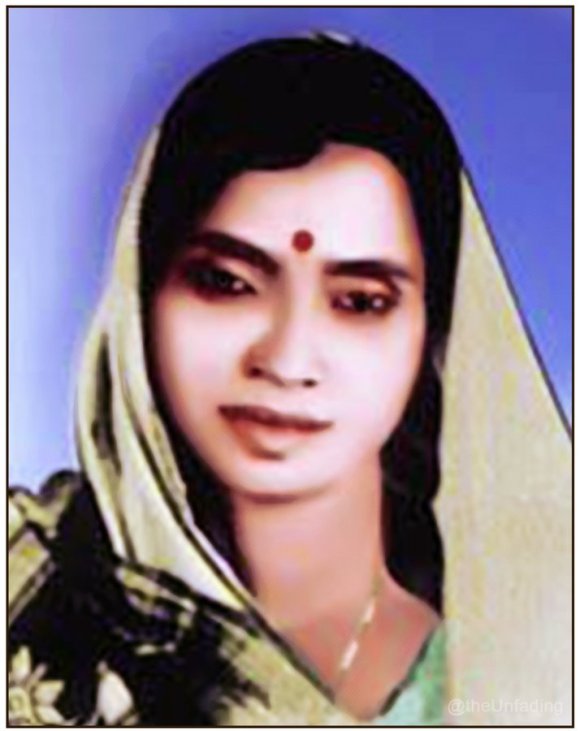
Bidyut Prabha Devi – The First Feminist Odia Poet

By Bhaskar Parichha

Bidyut Prabha Devi

Bidyut Prabha Devi (1926 – 1977) is celebrated as one of the most prominent female poets in Odia literature. Hailing from Natara village in the Kendrapara district, she was the second daughter of the esteemed writer, Nimai Charan Das, and Rekha Devi.

Raised in a traditional family in Bamphisahi, Cuttack, she received most of her education independently, attending Ravenshaw Girls’ School until the ninth grade. Inspired by her father and notable Odia poets like Nanda Kishore Bal and Kunja Bihari Das, she began her journey into poetry in 1940.

Her first collection, released in 1944 when she was merely 18 years old, featured patriotic poems that celebrated the cultural and natural heritage of Odisha. It highlighted her early ability to create vivid imagery and convey emotional depth, drawing from her rural background and the literary traditions of Odia.

Her 1950 collection, Utkal Saraswata[1], was recognised as a significant contribution to education, being included as a poetry textbook at Utkal University. In addition to poetry, she also wrote for children, for which she was awarded by the Government of India in 1955, acknowledging her impactful contributions to children’s literature.

Bidyut Prabha’s poetry explores the challenges faced by women, societal limitations, and the theme of empowerment, weaving together both personal and universal experiences. It embodies her feminist viewpoint, tackling matters such as gender inequality within a conservative framework, all while preserving a lyrical and approachable style.

She authored numerous plays, although specific titles are not extensively recorded. Her theatrical pieces frequently conveyed social messages, resonating with her socialist and feminist principles. Her writings were recognized for their clarity and moral depth, rendering literature accessible to younger audiences. Some of these later works are less documented but showcase her reflective and philosophical nature.

Influenced by socialist principles, her poetry examined social disparities and advocated for the marginalised. Her self-taught approach was characterised by clear and evocative language, rendering her work both relatable and profound.

Bidyut Prabha’s writings were revolutionary for their era, especially in their focus on women’s issues within Odia literature. Her son, Sachidananda Mohanty, a distinguished educationist and litterateur, has translated her works, thereby preserving her legacy.

Writes Sachidananda Mohanty[2]: “In recent decades, feminist historiography in eastern India has paid welcome attention to issues of education, creativity, and sisterhood across linguistic barriers. It has recognised women’s pivotal role in shaping the public space at the intersection between feminist history and literary creativity. Scholars like Judith Walsh, Tanika Sarkar, Malavika Karlekar, and others have brought to our attention forgotten life-narratives of literary women of the region who have created a tradition of their own.  Bidyut Prabha Devi, recognised as a major female voice in pre-modern Odia poetry, belongs to a poetic tradition represented by an illustrious sisterhood, comprising Reba Ray, Kuntala Kumari Sabat, Haripriya Devi, Debahuti Devi, Nirmala Devi, Tulasi Das, and Brahmotri Mohanty, among others. 

“While Bidyut Prabha may be known in Odisha, her feminist poems, based on her deep understanding of domesticity and patriarchy, have not been sufficiently read outside the state. Even in Odisha, her ‘romantic poems’ are widely anthologised at the cost of the more powerful compositions that address the woman’s position and identity in terms of the entrenched power structures in society.”

According to Mohanty, Bidyut Prabha’s feminist poetry stands out distinctly from the prevalent ‘Advice-for-Women’ genre in the region. She bases her work on her own life experiences and resonates with the growing feminist consciousness in Odisha, which is championed by literary feminists and social reformers like Sarala Devi[3], who played a pivotal role as a mentor to Bidyut Prabha. This journey was marked by its transnational influences. Sarala Devi had a strong connection with poet Annada Shankar Ray, a key figure in the Odia Romantic movement.

Her impact on Odia literature is significant, particularly as one of the earliest notable female poets in a predominantly male literary environment. Her contributions are rooted in her capacity to merge lyrical elegance with social critique, enhancing the inclusivity, reflection, and cultural relevance of Odia literature. Her work continues to serve as a foundational element for feminist and regional narratives in Odisha.

She was married to Panchanan Mohanty. Following health challenges in 1966, her literary output took on a spiritual dimension, shaped by her connection to the Sri Aurobindo Ashram, Pondicherry. Unfortunately, she took her own life.

Bidyut Prabha Devi’s poetry, deeply rooted in feminist and socialist ideals, continues to motivate and inspire, with her centenary of birth being commemorated in 2025 as a representation of women’s empowerment in Odisha.

[1] Odia Literature

[2] A literary sisterhood, Vol. 65, No. 6 (326) (November-December 2021), Published By: Sahitya Akademi

[3] Sarala Devi (1904-1986) – Odisha’s first Satyagrahi, first female legislator and first feminist writer.

.

Bhaskar Parichha is a journalist and author of Cyclones in Odisha: Landfall, Wreckage and ResilienceUnbiasedNo Strings Attached: Writings on Odisha and Biju Patnaik – A Political Biography. He lives in Bhubaneswar and writes bilingually. Besides writing for newspapers, he also reviews books on various media platforms.

PLEASE NOTE: ARTICLES CAN ONLY BE REPRODUCED IN OTHER SITES WITH DUE ACKNOWLEDGEMENT TO BORDERLESS JOURNAL

Click here to access the Borderless anthology, Monalisa No Longer Smiles

Click here to access Monalisa No Longer Smiles on Amazon International
Categories
Poetry

Found in Translation: Aparna Mohanty’s Poetry

Five poems by Aparna Mohanty have been translated from Odia by Snehaprava Das

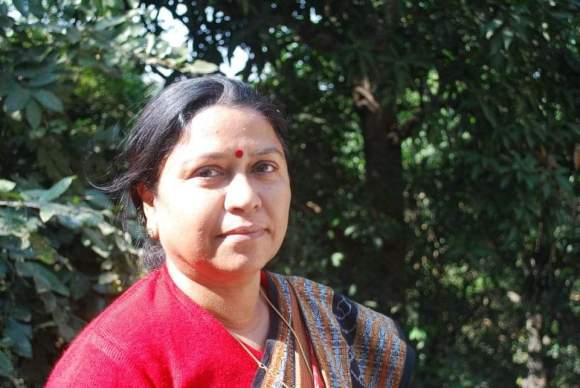
Aparna Mohanty
STAR

A tiny star watched me
As I groped my way in a blinding darkness
Nudged to tears.
It sparkled white
Exactly the way my mother’s face did.
The tiny star was about to climb down
When I saw it and waved, stopping it.
I knew it could easily understand
My unvoiced pleading.
So, I closed my eyes and beseeched,
“Go back! This is no place
For a star that holds such
Pure whiteness in its soul.
See, how pride and ego here
Hiss and howl
Cloaked in a guise of false modesty.
‘Selfishness’ is brokering deals
In the trade-fair of power
Pretending redressal and help.
Truth is ineffectual here,
So is love!
Go back, dear
My little lodestar
Because I can’t bear to see them
Smudge your serene whiteness,
Defile you and seat you
On a dazzling platform of deceit,
And announce
‘Here is one of our bright ancestors
We borrow our light from!’”

IN JUST AN INSTANT

Do not hold her
in your devouring desire.
Hold her in your soul
Let the woman be safe.

Do not take her as a prize won,
Treasure her with love.
Let the woman be happy.

Make her not a commodity.
Treat her as a virtue.
Let the woman feel elevated.

Just as much—
Assure her of
Security, happiness
And elevation,
A vast world of love and compassion.
Free from terror and savagery, she
Thrives on just that much assurance!
Wombs await great souls
And there is a promise of
A healthy, wholesome future
That carries pictures of a million hearts
Steeped in love.

Just for once,
Unfetter a woman’s body
From the scaffold of lust
And put it on the altar of worship.
You will then see
How in more than half of the world,
Shrines of love will come up in
just an instant.

FEAR

Too many restraints,
Numerous forbiddances.
“Do not sit here
Do not laugh like this
Don’t ever dare enter the forest
To taste the mangos,
There the tiger sits stalking,
Fear the tiger!”

I wonder if ever my movements
Were easy and unrestricted
Like nature.
I wonder if the constraints
Were ever chosen by
An individual autonomy.
I am a soul deprived, and
Defined in obedience.
I drag myself on by your will
Slouching under the load of your
Approval and disapproval.
I lie burning on an untimely pyre
At every intersection of the streets,
At every city center,
Where animal-howls echo
day and night.
Who knows better than you
The trick of championing self-interest
Through a pretense of love?
You lock me in your embrace
To mould me in a pliable shape,
Render me spineless,
Leaving no strength in
My arms to protest.
You gift me a heart that wallows
In fear and defeat every moment.
Why do you hold my
Easy growth in check?
What are you afraid of?
Do you fear that the arms of
All the Dusshasanas*
will be attracted
once I let my hair loose?
Do you fear that the spear will pierce
the chest of many a Mahishasura*
once I let my clothing drop?
Do you fear that many a ‘Lanka’ of gold
will burn to cinders
once I step beyond the
‘Lakshaman Rekha’?

*Dusshasana was Kaurava from Mahabharata who disrobed Draupadi, the wife of the Pandavas.
*Mahisasura is an Asura or demon who was killed by Durga
*Lakshman Rekha(line) in Ramayan was the circular border drawn by Lakshmana to keep Sita safe. Once she stepped beyond the border, she was kidnapped by Ravana.


THE WOMAN IN THE LAST ROW

The woman sits in the last row
lost in some strange
unhoped for possibilities.
Light and shadow
play hide and seek on her face
like scenes shifting alternately between
a verdant paddy field of Bhadrav*
and a gloomy Ashwina* sky.

The lines of mirrors in her front
never catch her reflection
inside their gilded frames.

Neither has she the time nor the wish
to adjust her image in varying postures
at every little maneuvering of her body,
She just sits there lowering her face,
her eyes downcast,
speaking to herself,
playing with herself,
contented in her own company.
The woman
who sits at the extreme back row
could hold anyone’s hand and
pull that person to
the delicate loneliness of her playhouse.

And, when the meeting disperses
amidst accolades and applauses,
the great ones stand up
weaved in blandishments
like mountains tangled in the
creepers of Malati*
raising their proud heads.
Not a single glance is flicked
at the last row.
No one would know when
the woman in the last row
had disappeared,
stealing the silence from there.
No one might believe
a river flowed there
just a while before.

*Bhadrav—August-September
*Ashwina – September -October
*Malati – a creeper with pink and white flowers


A SONG FOR THE LITTLE GIRL

The day my little girl
Climbed the steps to her green age
And reached out to pluck
The loveliest flower of Phalguna*
And the sweetest berry of Chaitra*,
I cried out “Don’t” from below,
Stopping her.
She heard me and came down
To where I stood.
Since that day, questions
Like the swelling waves
Of an unseasonal flood
Crash at the edges of her eyes --
Why such prohibitions, why?
And I thought, why indeed…
My movements would be
Held in check.
Why must always pain and forbearance
Come in my lot?

I am a mother, after all
Like all mothers,
The spells of Sravana*-showers
In her eyes
Swept me away in its current…
But, will it do if I let myself be tossed away
In the rushing flow
Of her questions?

I am not a little girl like her.
I am rather trapped perpetually
In the role of a culinarian
That cooks on a holy hearth to
Feed the custodians of morals.
So now,
It is the time to cut and dress my little girl,
Cook her to a savoury dish
Of her father and her husband’s choice
And serve them on a gold plate!

*Phalguna – February-March
*Chaitra – March-April
*Sravana – July August

Aparna Mohanty(1952) is a conspicuous voice in modern Odia poetry. Her poetry, with its feminist overtone, boldly asserts the significance a woman’s role in the family as well as in the society. They strongly defend the woman against the derogations perpetrated on her by a male-dominated society and defy the societal restraints imposed on her that curb her freedom. Aparna Mohanty has received several accolades for her contribution to Odia literature including the prestigious Odisha Sahitya Akademi Award.

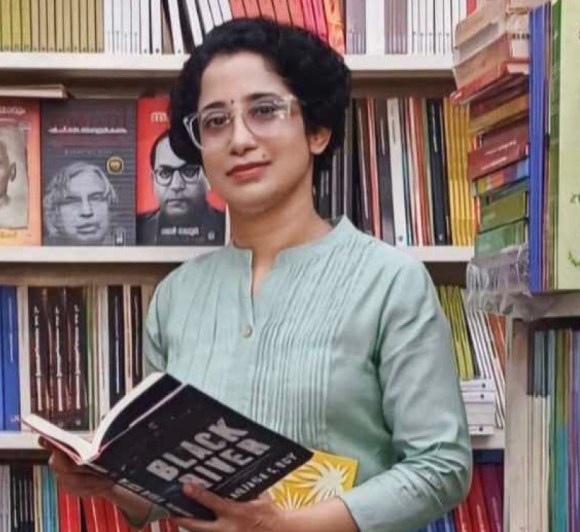
Dr.Snehaprava Das, is a noted writer and a translator from Bhubaneswar, Odisha. She has five books of poems, three of stories and thirteen collections of translated texts (from Odia to English), to her credit. 

PLEASE NOTE: ARTICLES CAN ONLY BE REPRODUCED IN OTHER SITES WITH DUE ACKNOWLEDGEMENT TO BORDERLESS JOURNAL

Click here to access the Borderless anthology, Monalisa No Longer Smiles

Categories
Stories

The Archiver of Shadows

By Hema R

She restores textiles at the museum in Central Chennai. Her fingers work over ancient threads as if decoding messages from the dead. This is a job that requires patience, belief in the value of preservation and a certain kind of loneliness.

Every day she lets the early morning sunlight into her apartment, 308, which has walls the colour of abandoned hope.

Her grandmother named her Yazhini. “It originates from the name of a stringed instrument in Tamil,” she had explained to the young girl. A stringed instrument, a hollow vessel, designed to resonate with whatever touches it. To amplify what might otherwise go unheard. Yazhini has spent thirty-two years resisting resonance. She has built her life in measures: the precise fold of conservation tissue; the exact temperature of her morning filter coffee; the calculated distance she maintains from her neighbours and from herself.

She first noticed her shadow move on a Wednesday. It lingered on the wall after she had stepped away, like an afterthought or a question. Yazhini noticed and catalogued the anomaly in her mind under “phenomena: unexplained” and continued washing dishes.

But the shadows continue to persist in their small rebellions. They stretch toward one another when she isn’t looking directly at them. They pulse slightly, as if breathing. Waiting.

She watches her grandmother’s lacquered trunk, brought from their ancestral house after the funeral. For three years it has served as an oversized paperweight, holding down memories she has no interest in excavating. The trunk is red-black, the colour of dried blood, with brass fittings gone green at the edges. Sometimes, in the thin light between sleeping and waking, Yazhini imagines it breathes in time with the shadows.

On the night of the new moon, Yazhini returns home damp with rain. The power is out. She lights a candle, and in its uncertain illumination, the shadow cast by her hand seems to drift away from her fingertips.

Without thinking she reaches toward the disloyal shadow and brushes against it. Immediately it feels cool like silk underwater, substantial as regret. Her shadow peels away, a layer of herself she didn’t know could be removed.

She holds it cupped in her palms. It doesn’t weigh anything, but it carries something. Memory, perhaps.

The trunk seems the logical place for it. When she lifts the heavy lid, the interior smells of camphor, cloves, and memories. Her shadow slides from her hands to the bottom of the trunk, spreading and settling as if it has found its home.

This doesn’t frighten her. Instead, she feels the first vibration of a string, long silent inside her. An unheard note being played.

The trunk closes with a sound like satisfaction.

In the days that follow, Yazhini discovers what it is to be a collector of absences. Other shadows reach for her now. The barista’s shadow stretches across the counter, elongating itself unnaturally. The museum director’s shadow pools at her feet during budget meetings.

The shadows know. They have been waiting for someone hollow like her who’s sensitive enough to hold them.

She learns that permission matters. A shadow freely given slides easily into her hands, cool and weightless. A shadow taken leaves a residue like ash on her fingertips.

Mr. Renganathan from apartment 110, a man, eighty-seven years old, who feeds pigeons on the rooftop with the devotion of the religious, is the first to offer his shadow directly to Yazhini. “Take it,” he says, not looking at her but at the sky beyond the building’s edge. “It’s tired of following me.” His shadow has worn thin in places, gossamer with age, and the edges fraying like old silk. When it detaches from his feet, there is a sound like a sigh of relief.

That night, with Mr. Renganathan’s shadow nestled among the others in the trunk, Yazhini dreams of the flood. Not the sanitized version from newspaper archives, but the visceral experience of it: the roar of rising waters, the weight of sodden belongings hastily gathered, the sight of familiar streets transformed into rushing rivers. She wakes tasting salt, uncertain if the tears are hers or that of the memories’ from the shadow. The trunk is open a crack. A thin seam of darkness spills onto her bedroom floor.

Inside, the shadows are not still. They dance, or perhaps they struggle. Yazhini watches until dawn.

In the morning, she examines herself in the mirror. There is no visible difference. Her body casts a shadow. Weaker, perhaps, diluted like the tea she makes some evenings; steeped too briefly, but present nonetheless.

She has not become a vampire or a ghost, those staples of stories where the self is compromised. Yet something has changed. The stringed instrument of her name now plays notes she cannot control. She feels the absence of her original shadow like an amputee might sense a phantom limb, present in its nonexistence.

At the museum, she works on a fragment of brocade retrieved from a shipwreck. Three hundred years underwater, and still some threads hold their colour. Preservation is an act of defiance against time. Or perhaps an accommodation with it or a negotiation. As she works, she becomes aware of the shadows cast by ancient fabrics, the negative spaces between threads that have outlived their creators. These shadows too seem to recognize her. They lean toward her hands as she passes over them with her tools. She learns that history casts its own kind of shadow. She wonders what these textile shadows would feel like if she were to collect them. What medieval fingers might have left behind, what Renaissance whispers might still cling to the weave? She restrains herself. There are boundaries, even in the unprecedented.

That evening, she visits Mr. Renganathan on the rooftop. He sits with the pigeons arranged around him like attendants. His frail body is wrapped in a cardigan despite the Chennai heat. Without his shadow, he seems more substantial. Unburdened.

“You saw?” he asks, not specifying what. Yazhini nods.

“Madurai, 1993,” he continues. “When the floods came. I was 55 then, with my clockmaker’s shop well-established for over two decades. The waters rose so quickly.” His voice softens. “I carried my mother on my back through waist-deep water. My wife Lakshmi held our daughter’s hand, clutching our family documents in a waterproof pouch around her neck. We lost the shop, all my precision tools, everything we’d built. But we survived.” He tells her about rebuilding the clockmaker’s shop where he worked for the next fifteen years, the precision of gears and springs, the satisfaction of fixing what is broken; his wife Lakshmi, who died remembering the garden of her childhood home that she never saw again. As he speaks, Yazhini notices that a new shadow has begun to form beneath him, faint as a watermark. Shadows regenerate, apparently. The body forgives.

The shadows in her trunk multiply. Each night, they perform for her, or perhaps for themselves. Shadow theatre without the puppeteer. They blend and separate, forming patterns that remind her of the textiles she restores: mandalas, paisleys, intricate borders that tell stories in a language she almost understands. Sometimes she sees faces in the patterns, sometimes entire scenes: a child running through monsoon puddles; lovers meeting beneath a banyan tree; an old woman teaching a girl to play the Yazh, an instrument that resembles the harp. Their fingers move in unison across phantom strings. Yazhini begins to understand that she is not collecting shadows but stories, not capturing darkness but light impressed upon it. Memory, it turns out, has texture and weight, density and dimension. It can be archived like fabric, preserved against the ravages of forgetfulness.

As weeks pass, Yazhini decides to take only what is freely offered, and even then, she is selective. Some burdens are not hers to carry.

Mr. Renganathan’s health deteriorates. His visits to the rooftop become less frequent, then cease altogether. Yazhini visits him in apartment 110. His new shadow, still forming, has a different quality than the one she keeps. Cleaner somehow. Unburdened by memories, his body has learned to grow only what it can bear.

“I have a daughter,” he tells her on a Thursday morning when his breath catches between words.

“In Toronto. We haven’t spoken in eleven years.” He doesn’t explain why.

That evening, Yazhini brings a portion of his original shadow to him, the part that holds his daughter at age seven, spinning in a light blue dress. He cups it in papery hands, and for a moment his eyes focus on something beyond the walls of apartment 110.

She helps him record messages. Not the formal apologies of deathbed reconciliations, but everyday words: descriptions of pigeons on the rooftop, complaints about the building manager’s music, recipe of his wife’s biryani. The shadows know what needs to be said when words alone are insufficient.

One morning, “Twilight Towers” absorbs another absence, the way buildings do.

After the funeral, Yazhini finds Mudra, the daughter from Toronto, standing in the hallway outside apartment 110. She wears her grief awkwardly, like borrowed clothing.

“He left me a key,” she says, “and instructions to meet someone named Yazhini.” The resemblance to her father is not in her features but in the quality of her shadow, which stretches toward Yazhini of its own accord.

Back in apartment 308, the trunk waits. When Yazhini opens it, the shadows perform not their usual abstract patterns but a specific scene: a man teaching a little girl to repair a clock. Precise and tender movements. Mudra watches without speaking, her hand at her throat where a locket might hang if she were the type of woman who wore her memories visibly.

“What is this?” she finally asks.

“A type of conservation,” Yazhini answers.

That night, after Mudra returns to her hotel with a promise to visit again tomorrow, Yazhini sits with the open trunk. The shadows have settled into a new configuration. Among them, she notices something unexpected: a small patch of darkness the size of a thumbprint, containing no memory but rather the impression of potential. Not a shadow of what was, but of what might be. A beginning rather than an archive.

The seasons shift. Mudra extends her stay. She finds an apartment in Chennai city, ostensibly to settle her father’s affairs but really to settle something within herself. She visits Yazhini often. They drink coffee. They feed pigeons. Occasionally, they examine shadows together.

The trunk accommodates its growing collection, expanding inward in defiance of spatial logic. The shadows develop rhythms, preferences. Some cling to each other, forming composite memories that never existed but feel true nonetheless. Others maintain their integrity, reluctant to blend. All of them, Yazhini notices, seem to pulse in time with her heartbeat.

One morning Yazhini arrives at the museum to find her supervisor agitated. A rare textile has arrived. A fragment of silk believed to belong to an unnamed Tamil musician from the colonial era. “It needs your touch,” he says, which is as close to praise. The fabric, when Yazhini, unwraps it, carries a pattern she recognises instantly. It had the same configuration the shadows formed in her trunk the previous night.

She works with careful precision. As she does, she becomes aware of her own shadow on the workbench. She wonders how it has changed in these months of keeping others’ darkness. It carries subtle patterns now, impressions from all the shadows she’s collected. The outlines of her fingers contain multitudes: Mr. Renganathan’s clockmaker precision, the barista’s musical rhythm, the museum director’s careful assessment, and countless others.

In her apartment that evening, Yazhini sits before her grandmother’s trunk. “Is this what you meant me to find?” she asks the empty room. No answer comes, but she doesn’t expect one. The dead cast no shadows. They become them.

She opens the trunk and watches the shadows dance. In certain slants of light, she can see them extending beyond the trunk’s confines, threading invisibly throughout the building and beyond, connecting residents who may never speak to one another directly. Mr. Renganathan’s clockmaker hands. Mudra’s cautious smile. The barista’s fluid movements. The child who skips instead of walking.

Yazhini remembers her grandmother’s words about her name. That it meant not just any stringed instrument, but specifically one that requires both hands to play: one to create the note, one to shape it. One to preserve, one to transform. One to hold the past, one to invite the future.

She has become a keeper of shadows, yes, but more importantly, a keeper of the light that made them possible.

Hema R is a novelist, children’s author, and poet. Her short story is featured in Ruskin Bond’s “Writing for Love” anthology. 

.

PLEASE NOTE: ARTICLES CAN ONLY BE REPRODUCED IN OTHER SITES WITH DUE ACKNOWLEDGEMENT TO BORDERLESS JOURNAL

Click here to access the Borderless anthology, Monalisa No Longer Smiles

Click here to access Monalisa No Longer Smiles on Amazon International
Categories
Poetry

Rosencranz and Guildenstern

By William Miller

Rosencranz and Guildenstern are characters from Shakespeare’s Hamlet (1599-1601), also revived in 1966 in an absurdist play by Tom Stoppard (Rosencranz and Guildenstern are Dead). From Public Domain.
The world is filled with them.
They file through the streets and into
our courtyards. Well-dressed, respectful,
they ask leading questions, smile politely
and walk away.
Who are they and why do we
suffer them? Hardly princes,
mad or not, we give up our secrets
or lie outright, send them
on their way.
Someone is collecting a file on us,
grist for a data bank, an all-knowing
intelligence in the blue ether.
They can only plot our demise,
total destruction. Their questions
are simple tools in a mad
King’s hands. Something is rotten
in the state of everywhere
and all of us will stand for judgement.
in front of a review board,
our files opened and reviewed
with bureaucratic heartlessness,
a final assessment typed and filed away.
Paranoids, even paranoids,
have real enemies.

William Miller’s ninth collection of poetry, Under Cheaha, is forthcoming from Shanti Arts Press in 2025.  His poems have appeared in many journals, including The Penn Review, Shenandoah, Prairie Schooner and West Branch.  He lives and writes in the French Quarter of New Orleans.

.

PLEASE NOTE: ARTICLES CAN ONLY BE REPRODUCED IN OTHER SITES WITH DUE ACKNOWLEDGEMENT TO BORDERLESS JOURNAL

Click here to access the Borderless anthology, Monalisa No Longer Smiles

Click here to access Monalisa No Longer Smiles on Amazon International
Categories
Excerpt

From Rasa to Lhasa

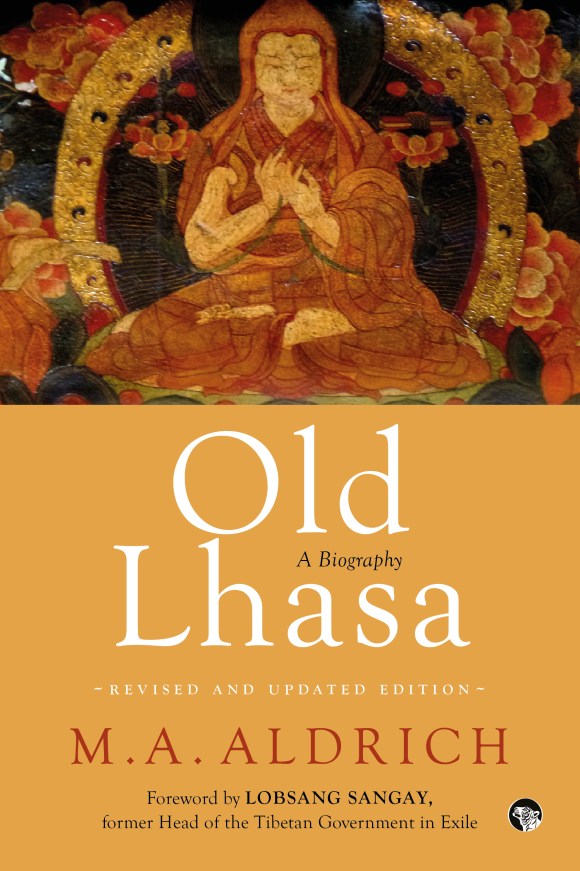
Title: From Rasa to Lhasa: The Sacred Center of the Mandala

Author: M.A.Aldrich

Publisher: Speaking Tiger Books

In 1904 at the behest of a suspicious imperial government in India, a British expeditionary force under Colonel Francis Younghusband occupied Lhasa in a fruitless search for evidence of Russian meddling in Tibetan politics. Prior to this bellicose assignment Younghusband had spent years exploring the remote, blank spaces of late nineteenth century Central Asian maps and acquiring an unusually sensitive insight into Asian religion for someone in his position. After visiting the Jokhang Temple, Tibet’s most sacred shrine, he penned a description that still resonates today.

Here it was that I found the true inner spirit of the people. The Tibetans from their mountain homes seemed here to draw on some hidden source of power. And when from the far recesses of the temple came the profound booming of great drums, the chanting of the monks in deep reverential rhythm, the blare of trumpets, the crash of cymbals, and the long rolling of lighter drums, I seemed to catch a glimpse of the source from which they drew. Music is a proverbially fitter means than speech for expressing the eternal realities; and in the deep rhythmic droning of the chants, the muffled rumbling of the drums, the loud clang and blaring of cymbals and trumpets, I realized this sombre people touching their inherent spirit, and in the way most fitted to them, giving vent to its mighty surgings panting for expression.

For Tibetans, the Jokhang Temple is at the heart of a mandala, a circular geometric design that serves as a symbol of the universe as well as a visual guide to complex and esoteric Buddhist principles. The devotional ritual of circumambulation around the temple reinforces its status as the sacred center or a “life-pole.” It is the geometric center of Lhasa’s three imaginary concentric circuits: the three korlam that are pathways for pilgrims to practice the dharma by circumambulating the Jokhang.

Eight protective shrines were built around the Jokhang. There are other nearby sites tied to the legendary account of the construction of the temple in the seventh century. Some of these sites are still used for worship, while others have become shops or residences; sadly, some have disappeared into the ether over time. The sacred and the secular were not separated in the streets of Lhasa, just as the normal and supernormal were entwined indivisibly. To expect otherwise would have come as a shock to the residents of old Lhasa and sounded downright silly to them.

For nearly all of its existence, the Jokhang Temple was Lhasa in the minds of Tibetans. Ninth-century Tang dynasty chronicles suggest Lhasa might have consisted of nothing more than mobile encampments for nobles, soldiers, and nomads, with only two permanent buildings constructed in stone (the Jokhang and its sister temple, Ramoche); but Chinese chroniclers did not always examine the ways of barbarians with much care. Lhasa did not come into being as a modest-sized city until the seventeenth century. Nevertheless, the Jokhang was felt to be synonymous with Lhasa, the “Place of the Gods.” Even in recent times the city’s bus drivers cried out “Lhasa” to their passengers to announce arrival at stops near the Jokhang Temple.

Tibetans reaffirm their view of religion as permeating all elements of the phenomenal world by perceiving them in the form of a mandala. Indeed, the mandala model applies equally to the universe as a whole, to the country, … to each city, to each temple and shrine, and, tantrically, to the worshipper’s own body. The realization of one’s own identity with these larger designs is the attainment of salvation.

ABOUT THE BOOK

A sweeping, magnificent biography—which combines historical research, travel-writing and discussion of religion and everyday culture—Old Lhasa is the most comprehensive account of the fabled city ever written in English. It is a portrait not only of a city but also an entire people—both those who still live in occupied Tibet, and those who are in exile.

‘[This book] brings you closer to the real spirit of Lhasa.’—Lobsang Sangay, former head of the Tibetan Government in Exile

‘This remarkable history should be compulsory reading for travellers, academics and armchair historians. Experts will find that Aldrich has shaken the kaleidoscope of the history and geography of Lhasa and Tibet into new and illuminating patterns. Immersing himself in the place and its past, he unravels the colourful threads that make Lhasa and Tibet so fascinating… This splendid book is a compendium of knowledge about the city and its place in Tibetan history and culture—including, of course, religion.’—Alan Babington-Smith, President of the Royal Asiatic Society, Beijing

‘Aldrich has provided in these pages a whole simulacrum of a country and its wonders. What shines in the book and gives it life is not only his amazing knowledge and understanding of Lhasa and Tibet but also his passion, enormous humour and, above all, love for its people.’—Adam Williams, author of The Palace of Heavenly Pleasure

‘Aldrich has produced an outstanding narrative focused on one of the most interesting cultural capitals in Asia… [A] fascinating history that will continue to attract readers for a long time to come.’—Jonathan S. Addleton, author of The Dust of Kandahar

ABOUT THE AUTHOR

M.A. Aldrich is a lawyer and author who has lived and worked in Asia since the 1990s. Besides Old Lhasa: A Biography, he is the author of The Search for a Vanishing Beijing: A Guide to China’s Capital Through the Ages,The Perfumed Palace: Islam’s Journey from Mecca to Peking and Ulaanbaatar—Beyond Water and Grass: A Guide to the Capital of Mongolia.

.

PLEASE NOTE: ARTICLES CAN ONLY BE REPRODUCED IN OTHER SITES WITH DUE ACKNOWLEDGEMENT TO BORDERLESS JOURNAL

Categories
Poetry

Reflections on Mortality

By George Freek


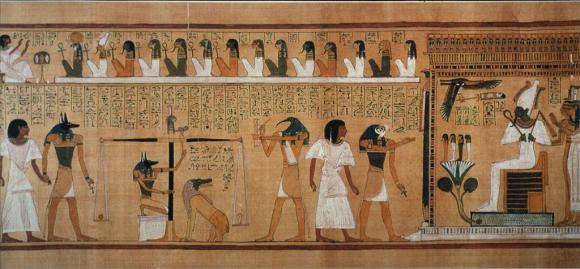
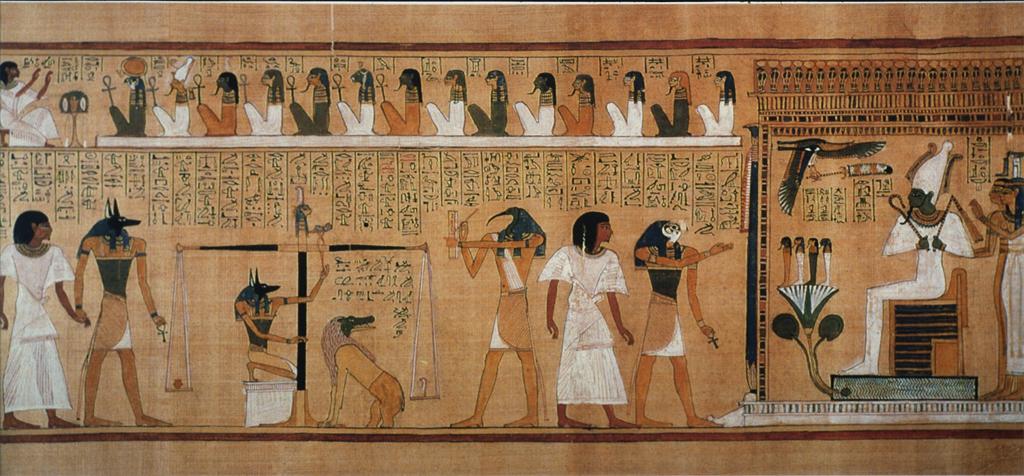
Book of the Dead (c. 1317-1285 BCE). From Public Domain
AS THE HOURS SPEED BY

Time is as definite as death,
but life is more mysterious
than the depths of the sea.
When I look in a mirror,
I know I’m looking at me,
but I don’t recognise what I see.
I see a symbolic elegy.
Is my sleepy cat resting serenely?
I doubt it, but I can’t tell you
what his thoughts are.
Animals are often comfortable
avoiding humanity.
About time we’d likely disagree.
Embedded in nature,
while my cat sleeps peacefully,
time urges me to hurry
to get somewhere,
but I don’t know where,
and when I look for a reason,
sadly, one isn’t there.
Is it me or my cat,
or just life, that isn’t being fair?


MOURNING SONG

I sleep in my comfortable bed,
and dream I’m a cloud,
drifting over spring flowers,
then pain overwhelms me.
Last night, I saw things
as if I were looking at a distorted mirror.
Today my vision is clearer.
Daffodils sway in a calm breeze.
Are they beautiful or ugly?
They mean nothing to me.
I drink my coffee
with an aching head.
My tongue is in shreds.
I stare at this new day,
and want to return to my bed.
I don’t know where you are.
I only know you’re dead,
and you are very far away.

George Freek’s poetry has recently appeared in The Ottawa Arts Review, Acumen, The Lake, The Whimsical Poet, Triggerfish and Torrid Literature.

PLEASE NOTE: ARTICLES CAN ONLY BE REPRODUCED IN OTHER SITES WITH DUE ACKNOWLEDGEMENT TO BORDERLESS JOURNAL

Click here to access the Borderless anthology, Monalisa No Longer Smiles

Click here to access Monalisa No Longer Smiles on Amazon International

Categories
Slices from Life

To Bid or Not to Bid… the Final Goodbye?

That is the question Ratnottama Sengupta is asking with so many grey heads since London’s Westminster voted in favour of Assisted Dying

From Public Domain

“She was in so much pain these last four months that we are not mourning her final exit. We are celebrating her liberation.”

Speaking with Bhabhi’s[1] nephew last week forced me to readjust my emotions regarding the final goodbye. Condolences are in order, worldwide, when a dear one departs the mortal world. But of late I have been noticing that people “celebrate the life’ of the departed soul rather than mourn the death. Yes, every departure is a loss, taking an emotional toll of those left behind. And still I am not shocked nor angry that on June 20, a day after Bhabhi breathed her last in Singapore, the British Parliament voted in favour of a bill to legalise Assisted Dying for terminally ill people.

This has paved the way for a long debated social change that has, for as long as I can remember, been held in abeyance. Because? It has always been argued that, since we cannot bring the dead to life, we do not have the right to take away life. Indeed, the UK parliamentarians voted on the subject 10 years after it was first proposed, I learn from the news reports. And even as the Wise Men of London debated the issue, demonstrators outside were crying out, “Kill the Bill, Not the Ill.”

Once the Bill is passed by the House of Lords, the Terminally Ill Adults (End of Life) Law will give “mentally competent, terminally ill adults in England and Wales with six months or less life to live, the right to choose to end their life with medical assistance. Those who would want the procedure would have to gain the compassionate “Aye!” of two doctors and a panel of experts.

While the scrutiny by the Upper House might take months, it is unlikely to be blocked now that it has gone past the Commons and secured a nod from the PM.

*

My first acquaintance with the concept was garbed in the words, ‘Mercy Killing’. I was a school-going teenager when I read a Bengali courtroom drama, Parashuramer Kuthar (1989, Parashuram’s Axe) where the son was in the dock, fighting the charge of murdering his mother with morphine. “Night after night she would cry out of acute pain. Night after night I sat by her bed, watching her inch towards death. The doctor had prescribed the morphine that let her sleep at night. But when that failed, I gave her a repeat dose so she could go to sleep…”

Half a century ago that sounded ominous. Now, having seen — and digested — the ‘Assisted Suicide’ of celluloid icon Jean Luc Godard [2] in the autumn of 2022, I have been weighing my responses to the concept. 

Godard, born on July 7, 1930, had lived in France from where he had revolutionised cinema across the globe. At the age of 91, with “multiple disabling pathologies” — to quote his doctors — he went to Switzerland because that was the only country to have legalised euthanasia as long back as 1941. Albeit they have specifications, the overriding one being this: the person assisting the suicide must not have any selfish — read, monetary — motive to provide the seeker the means to exit. 

*

“Euthanasia is death with dignity,” my Jyotish Pishamoshai had said three decades ago. At 90 something, the man who went around all his life in trams and buses, to look up his younger cousins, simply hated to be bed bound. Besides, he had seen his youngest brother Dinesh “hang till death” at age 20, without a trace of remorse for having bombed the Writers Building in the Capital of the Raj. So why would the elder brother, his memory intact, want to “be a burden” to even his only son? Mercifully, Sudhir Da did not have to go the way of Parashuram. The almighty in heaven voted for the nonagerian’s exit.

*

My response to the issue peaked when I read this poem, ‘Antim Akanksha’ (The Last Wish) , by Purnendu Ghosh of Jaipur. This IIT-ian from Kanpur, a diehard cinema aficionado, has penned the same thoughts in Bengali and English too. But I had already translated his anguish in Hindi before I spoke with him. “I had written these lines when I was sitting by my mother-in-law, then languishing in the hospital. When I had first seen her, she was 46. Over the next 46 years, I was witness to the transformation age had forced upon her  I could only watch, helpless, because the final exit is in the hands of only the Almighty.”

I am still weighing my responses. Yes, I believe in the Existence of a Superior Force. Still, when a person has to lie waiting to bid goodbye to pain, would he or she wait for His mercy, or that of the medics?

[1] Sister-in-law

[2] https://www.onmanorama.com/entertainment/entertainment-news/2022/09/16/filmmaker-film-critic-jean-luc-godard-suicide-debates-switzerland.html

Ratnottama Sengupta, formerly Arts Editor of  The Times of India, teaches mass communication and film appreciation, curates film festivals and art exhibitions, and translates and writes books. She has been a member of CBFC, served on the National Film Awards jury and has herself won a National Award. 

.

PLEASE NOTE: ARTICLES CAN ONLY BE REPRODUCED IN OTHER SITES WITH DUE ACKNOWLEDGEMENT TO BORDERLESS JOURNAL

Click here to access the Borderless anthology, Monalisa No Longer Smiles

Click here to access Monalisa No Longer Smiles on Amazon International
Categories
Contents

Borderless, July 2025

Art by Sohana Manzoor

Editorial

‘…I write from my heart of the raging tempest…’.Click here to read.

Translations

Jibanananda Das’s poem, Given the Boon of Eternity, has been translated from Bengali by Professor Fakrul Alam. Click here to read.

Karim Dashti’s short poems have been translated from Balochi by Fazal Baloch. Click here to read.

Five poems by Sangram Jena have been translated from Odia by Snehprava Das. Click here to read.

Surya Dhananjay’s story, Mastan Anna, has been translated from Telugu by Rahimanuddin Shaik. Click here to read.

The Last Letter, a poem by Ihlwha Choi  has been translated from Korean by the poet himself. Click here to read.

Tagore’s Probhatey (In the Morning) has been translated from Bengali by Mitali Chakravarty. Click here to read.

Poetry

Click on the names to read the poems

Luis Cuauhtémoc Berriozábal, Snehaprava Das, David R Mellor, Snigdha Agrawal, George Freek, Laila Brahmbhatt, Tracy Lee Duffy, John Swain, Amarthya Chandar, Craig Kirchner, Shamim Akhtar, Jason Ryberg, Momina Raza, Ryan Quinn Flanagan, Shahriyer Hossain Shetu, Rhys Hughes

Musings/ Slices from Life

What is Great Anyway?

Farouk Gulsara explores the idea of ‘greatness’ as reflected in history. Click here to read.

From Cape Canaveral to Carnarvon

Merdith Stephens writes of her museum experiences with photographs from Alan Nobel. Click here to read.

A Journey through Pages

Odbayar Dorj writes of library culture in Japan and during her childhood, in Mongolia. Click here to read.

By the Banks of the Beautiful Gomti

Prithvijeet Sinha strolls through the park by the riverfront and muses. Click here to read.

Dhruba Esh & Amiyashankar

Ratnottama Sengupta muses on her encounter with the writings of eminent artist and writer, Dhruba Esh, and translates one his many stories, Amiyashankar Go Back Home from Bengali. Click here to read.

Musings of a Copywriter

In Gastronomy & Inspiration? Sherbets and More…, Devraj Singh Kalsi looks at vintage flavours. Click here to read.

Notes from Japan

In Summer Vacation in Japan: Beetle Keeping and Idea Banks, Suzanne Kamata narrates her experience of school holidays in Japan. Click here to read.

Essays


It doesn’t Rain in Phnom Penh

Mohul Bhowmick writes of his trip to Phnom Penh and Siem Reap. Click here to read.

Haunted by Resemblances: Hunted by Chance

Aparajita De introspects with focus on serendipity. Click here to read.

Stories

Blue Futures, Drowned Pasts

Md Mujib Ullah writes a short cli-fi based on real life events. Click here to read.

Unspoken

Spandan Upadhyay gives a story around relationships. Click here to read.

Misjudged

Vidya Hariharan gives a glimpse of life. Click here to read.

Nico Returns to Burgaz

Paul Mirabile writes about growing up and reclaiming from heritage. Click here to read.

Feature

A review of Anuradha Kumar’s Wanderers, Adventurers, Missionaries: Early Americans in India and an interview with the author. Click here to read.

Book Excerpts

An excerpt from Rhys Hughes’ The Eleventh Commandment And Other Very Short Fictions. Click here to read.

An excerpt from Snehprava Das’s Keep It Secret. Click here to read.

Book Reviews

Somdatta Mandal reviews Dilip K Das’s Epidemic Narratives: The Cultural Construction of Infectious Disease Outbreaks in India. Click here to read.

Rakhi Dalal reviews Rajat Chjaudhuri’s Wonder Tales for a Warming Planet. Click here to read.

Gower Bhat has reviewed Neha Bansal’s Six of Cups. Click here to read.

Bhaskar Parichha reviews Jagadish Shukla’s A Billion Butterflies: A Life in Climate and Chaos Theory. Click here to read.

.

Click here to access the Borderless anthology, Monalisa No Longer Smiles

Click here to access Monalisa No Longer Smiles on Amazon International