Categories
Contents

Borderless July 2023

Painting by Sohana Manzoor

Editorial

As Imagination Bodies Forth Click here to read.

Translations

Bankim Chandra Chattopadhyay’s Bangalar Nobbyo Lekhokdiger Proti Nibedon (a request to new writers of Bengali), has been translated from Bengali and introduced by Abdullah-Al-Musayeb. Click here to read.

Poetry on Rain by Masud Khan has been translated from Bengali by Professor Fakrul Alam. Click here to read.

Dancer by Bashir Baidar, has been translated from Balochi by Fazal Baloch. Click here to read.

Motherhood: A Tiny Life inside Me, a poem by Sangita Swechcha, has been translated from Nepali by Hem Bishwakarma. Click here to read.

The Wind and the Door, has been written and translated from Korean by Ihlwha Choi. Click here to read.

Megh or Cloud by Tagore has been translated from Bengali by Mitali Chakravarty. Click here to read.

Conversation

In conversation with Afsar Mohammad, a poet, a Sufi and an academic teaching in University of Pennsylvania. Click here to read.

Poetry

Click on the names to read the poems

Afsar Mohammad, Rhys Hughes, Kirpal Singh, Don Webb, Masha Hassan, Vernon Daim, George Freek, Arya KS, Robert Nisbet, Dr Kanwalpreet, John Grey, Nivedita N, Samantha Underhill, Vikas Sehra, Ryan Quinn Falangan, Saranyan BV, Heath Brougher, Carol D’Souza, Michael Burch

Poets, Poetry & Rhys Hughes

In Productivity, Rhys Hughes muses tongue-in-cheek on laziness and its contribution in making a nation more productive. Click here to read.

Musings/ Slices from Life

Should I stay or should I go?

Keith Lyons muses on our attitude towards changes. Click here to read.

Bangal-Ghoti-Bati-Paati or What Anglophilia did to My Palate

Ramona Sen journeys in a lighter vein through her taste buds to uncover part of her identity. Click here to read.

Awesome Arches and Acrophobia

Meredith Stephens takes us for a fabulous treat of Sierra Nevada mountains with her camera and narrative. Click here to read.

Musings of a Copywriter

In The Lost Garden, Devraj Singh Kalsi writes of how his sense of wellbeing mingles with plants. Click here to read.

Notes from Japan

In Better Relations Through Weed-pulling, Suzanne Kamata introduces us to an annual custom in Japan. Click here to read.

Essays

The Story of a Land at War with Itself

Ratnottama Sengupta presents the first hand account of the war in Bosnia-Herzegovina (1992-1995) from a letter from her brother, who was posted there as part of the peace-keeping troops. Click here to read.

‘Wormholes to other Worlds’

Ravi Shankar explores museums in Kuala Lumpur. Click here to read.

Stories

A Troubled Soul

Mahim Hussain explores mental illness. Click here to read.

The Llama Story

Shourjo shares a short fun piece written from a llama’s perspective. Click here to read.

Mister Wilkens

Paul Mirabile gives a strange tale set in Europe of the 1970s. Click here to read.

Book Excerpts

An excerpt from Red Sky Over Kabul: A Memoir of a Father and Son in Afghanistan by Baryalai Popalzai and Kevin McLean. Click here to read.

An excerpt from The Blue Dragonfly – healing through poetry by Veronica Eley. Click here to read.

Book Reviews

Somdatta Mandal reviews The Past is Never Dead: A Novel by Ujjal Dosanjh. Click here to read.

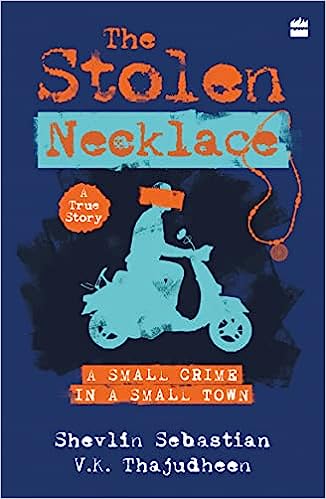
KPP Nambiar reviews The Stolen Necklace: A Small Crime in a Small Town by Shevlin Sebastian and VK Thajudheen. Click here to read.

Rakhi Dalal reviews Drop of the Last Cloud by Sangeetha G. Click here to read.

Bhaskar Parichha reviews Burning Pyres, Mass Graves and A State That Failed Its People : India’s Covid Tragedy by Harsh Mander. Click here to read.

.

Click here to access the Borderless anthology, Monalisa No Longer Smiles

Click here to access Monalisa No Longer Smiles on Kindle Amazon International

Categories
Editorial

As Imagination Bodies Forth…

Painting by Sybil Pretious
And as imagination bodies forth
The forms of things unknown, the poet's pen
Turns them to shapes and gives to airy nothing
A local habitation and a name

 A Midsummer Night's Dream (1595) by William Shakespeare

Famous lines by Shakespeare that reflect on one of the most unique qualities in not only poets — as he states — but also in all humans, imagination, which helps us create our own constructs, build walls, draw boundaries as well as create wonderful paintings, invent planes, fly to the moon and write beautiful poetry. I wonder if animals or plants have the same ability? Then, there are some who, react to the impact of imagined constructs that hurt humanity. They write fabulous poetry or lyrics protesting war as well as dream of a world without war. Could we in times such as these imagine a world at peace, and — even more unusually — filled with consideration, kindness, love and brotherhood as suggested by Lennon’s lyrics in ‘Imagine’ – “Imagine all the people/ Livin’ life in peace…”. These are ideas that have been wafting in the world since times immemorial. And yet, they seem to be drifting in a breeze that caresses but continues to elude our grasp.

Under such circumstances, what can be more alluring than reflective Sufi poetry by an empathetic soul. Featuring an interview and poetry by such a poet, Afsar Mohammad, we bring to you his journey from a “small rural setting” in Telangana to University of Pennsylvania, where he teaches South Asian Studies. He is bilingual and has brought out many books, including one with his translated poetry. Translations this time start with Bankim Chandra Chattopadhyay’s advice to new writers in Bengali, introduced and brought to us by Abdullah-Al-Musayeb. Tagore’s seasonal poem, ‘Megh or Cloud’, has been transcreated to harmonise with the onset of monsoons. However, this year with the El Nino and as the impact of climate change sets in, the monsoons have turned awry and are flooding the world. At a spiritual plane, the maestro’s lines in this poem do reflect on the transience of nature (and life). Professor Fakrul Alam’s translation of Masud Khan’s heartfelt poetry on rain brings to the fore the discontent of the age while conveying the migrant’s dilemma of being divided between two lands. Fazal Baloch has brought us a powerful Balochi poet from the 1960s in translation, Bashir Baidar. His poetry cries out with compassion yet overpowers with its brutality. Sangita Swechcha’s Nepali poem celebrating a girl child has been translated by Hem Bishwakarma while Ihlwha Choi has brought his own Korean poem to readers in English.

An imagined but divided world has been explored by Michael Burch with his powerful poetry. Heath Brougher has shared with us lines that discomfit, convey with vehemence and is deeply reflective of the world we live in. Masha Hassan is a voice that dwells on such an imagined divide that ripped many parts of the world — division that history dubs as the Partition. Don Webb upends Heraclitus’s wisdom: “War is the Father of All, / War is the King of All.” War, as we all know, is entirely a human-made construct and destroys humanity and one cannot but agree with Webb’s conclusion.  We have more from Kirpal Singh, Ryan Quinn Flanagan, Nivedita N, John Grey, Carol D’Souza, Vernon Daim, George Freek, Saranyan BV, Samantha Underhill and among the many others, of course Rhys Hughes, who has given us poetry with a unique alphabetical rhyme scheme invented by him and it’s funny too… much like his perceptions on ‘Productivity’, where laziness accounts for an increase in output!

Keith Lyons has mused on attitudes too, though with a more candid outlook as has Devraj Singh Kalsi with a touch of nostalgia. Ramona Sen has brought in humour to the non-fiction section with her tasteful palate. Meredith Stephens takes us on a picturesque adventure to Sierra Nevada Mountains with her camera and narrative while Ravi Shankar journeys through museums in Kuala Lumpur. We travel to Japan with Suzanne Kamata and, through fiction, to different parts of the Earth as the narratives hail from Bangladesh, France and Singapore.

Ratnottama Sengupta takes us back to how imagined differences can rip humanity by sharing a letter from her brother stationed in Bosnia during the war that broke Yugoslavia (1992-1995). He writes: “It is hard to be surrounded by so much tragedy and not be repulsed by war and the people who lead nations into them.” This tone flows into our book excerpts section with Red Sky Over Kabul: A Memoir of a Father and Son in Afghanistan by Baryalai Popalzai and Kevin McLean. Popalzai was affected by the Russian invasion of Afghanistan in 1980 and had to flee. A different kind of battle can be found in the other excerpt from The Blue Dragonfly – healing through poetry by Veronica Eley – a spiritual battle to heal from experiences that break.

In our reviews section, KPP Nambiar reviews The Stolen Necklace: A Small Crime in a Small Town by Shevlin Sebastian and VK Thajudheen, a book that retells a true story. Sangeetha G’s novel, Drop of the Last Cloud, we are told by Rakhi Dalal, explores the matrilineal heritage of Kerala, that changed to patriarchal over time. Bhaskar Parichha reviews Burning Pyres, Mass Graves and A State That Failed Its People: India’s Covid Tragedy by Harsh Mander. Parichha emphasises the need never to forget the past: “It is a powerful book and sometimes it is even shattering. The narrative is a live remembrance of a national tragedy that too many of us wish to forget when we should, instead, etch it in our minds so that we can prevent another national tragedy like this one from recurring in the future.”  While we need to learn from the past as Parichha suggests, Somdatta Mandal has given a review that makes us want to read Ujjal Dosanjh’s book, The Past is Never Dead: A Novel. She concludes that it “pays tribute to the courage and tenacity of the human spirit and its capacity for hope despite all odds.”

We have more content than mentioned here… all of it enhances the texture of our journal. Do pause by our July issue to savour all the writings. Huge thanks to all our contributors, artists, all our readers and our wonderful team. Without each one of you, this edition would not have been what it is.

Thank you all.

Have a wonderful month!

Mitali Chakravarty

borderlessjournal.com

.

Visit the July edition’s content page by clicking here

READ THE LATEST UPDATES ON THE FIRST BORDERLESS ANTHOLOGY, MONALISA NO LONGER SMILES, BY CLICKING ON THIS LINK.

Categories
Review

The Stolen Necklace: A Victim’s Saga

Book Review by KPP Nambiar

Title: The Stolen Necklace: A Small Crime in a Small Town

Authors: Shevlin Sebastian and VK Thajudheen

Publisher: HarperCollins India

With an enigmatic cover, reflecting the nature of the content, this is the true story of a small-town crime. A gripping narrative, it is the poignant saga of an innocent citizen, forced to suffer incarceration due to the mishandling of a theft case by the police.

Veteran journalist Shevlin Sebastian, and businessman, VK Thajudheen, are the authors. Thajudheen is the kingpin of this book, and also the victim. The incident took place a few years ago in the historic town of Thalassery in north Kerala.

Shevlin is based in Kochi, which is hundreds of kilometres away, in the south. Shevlin and Thajudheen came together following the media hype. With his impressive credentials, and long-standing in the journalistic field, Shevlin has proven his mettle by publishing more than 4500 feature articles in reputed periodicals. He has authored four children’s novels also.

Thajudheen, around whom the thriller revolves, has his home in Kadirur, a suburb of Thalassery. A middle-class businessman in Qatar, he had left his family of wife and three children at Kadirur. A God-fearing upright man, he is middle-aged and balding. His courage led him to an adventurous love marriage with his teenage sweetheart. Nasreena, being from a financially backward family, the alliance was considered of low status for his wealthy family.

Nevertheless, he had the temerity to ignore and disobey even his patriarchal father, in carrying on his long affair. However, before his secret wedding, his father passed away. Even then Nasreena had to wait for three years to be accepted in his home. That was after the birth of their second child – a son. The arrival of a boy child in his family after a long gap, mellowed his mother and two sisters who changed their hostile attitude against Nasreena.

All this happened years ago. Meanwhile, Thajudheen had a checkered  career spread over different locations, which ended up with a business in Doha. That was when he fulfilled his dream of marrying his daughter to an eligible young man, Shiraz Abdulla.

The tragic turns of events, entangling Thajudheen in the stolen necklace fiasco, commenced a couple of days after the celebration of Thazleena’s wedding. The family was returning from his sister’s home after a sumptuous dinner hosted for the newly-wedded couple.

It was a rainy night. Suddenly, they spotted two police jeeps with eight occupants waiting near their Kadirur home. Three of the men were in uniform. The rest were also from the same genus, it was revealed.  They were from a station outside Kadirur police control called Chakkarakkal. Stopping their car, their leader, approached the family with an expression of “You are all prey. I am a lion looking for a meal”.

Biju, having already earned a name as being reckless in controlling crime, was a known terror. He and his team had arrived armed with a phone evidence showing that Thajudheen was the culprit in a necklace-snatching crime. The incident was reported in his station a few days back. The CCTV camera that showed the purported thief cannot lie, they thought. It showed someone exactly resembling Thajudheen! But was it Thajudheen?

Thus started the ordeal of an innocent family man in the presence of his loving wife, and children. After a heart-breaking scene, near his home, Thajudheen was offered a compromise — pay the price of the stolen necklace and avoid litigation.

The offer was with a friendly ‘advice’: “I heard your daughter has just got married. The reputation of your family is at stake. We will inform the media that you are the thief.”

Anyone with a chicken heart would have yielded, but not Thajudheen, who always admired his late father for standing up to injustice. That was how Thajudheen had to languish in Thalassery sub jail till the story led to the final proverbial ‘happy ending’, nearly seven weeks later.

As a remand prisoner Thajudheen had the most undesirable company of robbers, underworld gang members, sex offenders, political workers, and so forth. At the same time, outside, his shattered family and Abdulla, the father of Shiraz, Thajudheen’s son-in-law, did not leaving any stone unturned to unravel the mysterious crime. They were making all-out efforts to obtain bail as well.

But Sub Inspector Biju was not to give up the big catch that easily. The police were even trying to trap Thajudheen in some other unsolved cases as a possible culprit.

This included even a murder case where the perpetrator was missing.  

Ultimately, when the higher court decided to let him free, the readers, along with Thajudheen himself, are left to wonder about the dispensation of justice by the police in a democracy. It is true that the politicians, the legislature, and even the Chief Minister had to interfere in ensuring proper investigation in this case. But still the question remains: what can one do to enforce timely change in the method of handling of criminal cases by the police?

Imprisonment of innocents and their vindication in the end is nothing new in the annals of ‘crime and punishment’. Fiction being a reflection of fact, such cases are not uncommon in world literature. Inspector Javert of Victor Hugo’s ‘Les Miserables’ (1862) can very well match up with the modern-day Biju, the sub inspector.

Likewise, in Leo Tolstoy’s short story, ‘God Sees the Truth but Waits’ (1872), a young merchant named Ivan Dmitrich Aksionov was accused of a crime he did not commit. One can see the forerunner of Thajudheen! After all, human nature is basically the same whether in France, Tsar’s Russia or India.

Undoubtedly, Shevlin and Thajudheen have succeeded in bringing out the darker side of the police force. However, though the narrative is touching, one wonders at the intent of the book.  Have the authors succeeded in openly projecting the atrocities of the police force to draw the attention of the establishment to prevent such incidents in future? Apart from presenting the insensitive and sadistic attitude of Sub Inspector Biju, little effort seems to be expended to indict the system to which he is linked. The fact that Biju is ‘punished’ for his ‘crime’ by just a transfer and withholding a few increments is an eloquent testimony to the laissez-faire attitude of our society at large.

Dr. KPP Nambiar, formerly a Consultant/Technocrat at the UN Food and Agriculture Organisation, is the author of many scientific papers and books, including a 1500-page Japanese-Malayalam dictionary.

PLEASE NOTE: ARTICLES CAN ONLY BE REPRODUCED IN OTHER SITES WITH DUE ACKNOWLEDGEMENT TO BORDERLESS JOURNAL. 

Click here to access the Borderless anthology, Monalisa No Longer Smiles

Click here to access Monalisa No Longer Smiles on Kindle Amazon International