Categories
Editorial

Imagine… All the People…

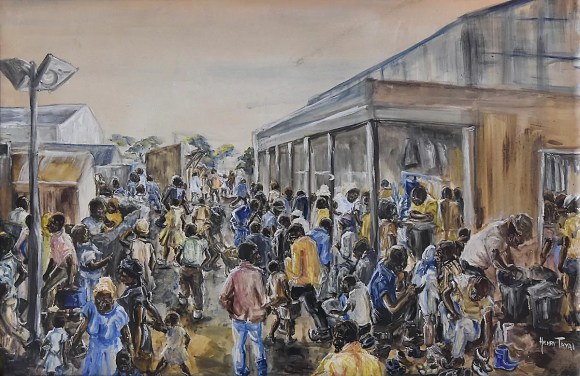
Art by Henry Tayali(1943-1987). From Public Domain

Let us imagine a world where wars have been outlawed and there is only peace. Is that even possible outside of John Lennon’s song? While John Gray, a modern-day thinker, propounds human nature cannot change despite technological advancements, one has to only imagine how a cave dweller would have told his family flying to the moon was an impossibility. And yet, it has been proven a reality and now, we are thinking living in outer space, though currently it is only the forte of a few elitists and astronomers. Maybe, it will become an accessible reality as shown in books by Isaac Asimov, Arthur C Clarke or shows like Star Trek and Star Wars. Perhaps, it’s only dreamers or ideators pursuing unreal hopes and urges who often become the change makers, the people that make humanity move forward. In Borderless, we merely gather your dreams and present them to the world. That is why we love to celebrate writers from across all languages and cultures with translations and writings that turn current norms topsy turvy. We feature a number of such ideators in this issue.

Nazrul in his times, would have been one such ideator, which is why we carry a song by him translated by Professor Fakrul Alam. And yet before him was Tagore — this time we carry a translation of an unusual poem about happiness. From current times, we present to you a poet — perhaps the greatest Malay writer in Singapore — Isa Kamari. He has translated his longing for changes into his poems. His novels and stories express the same longing as he shares in The Lost Mantras, his self-translated poems that explore adapting old to new. We will be bringing these out over a period of time. We also have poems by Hrushikesh Mallick translated from Odia by Snehprava Das and a poignant story by Sharaf Shad translated from Balochi by Fazal Baloch.

We have an evocative short play by Rhys Hughes, where gender roles are inverted in a most humorous way. It almost brings to mind Begum Rokeya’s Sultana’s Dream. Tongue-in-cheek humour in non-fiction is brought in by Devraj Singh Kalsi and Chetan Dutta Poduri. Farouk Gulsara and Meredith Stephens write in a light-hearted vein about their interactions with animal friends. G. Venkatesh brings in serious strains with his musings on sustainability. Jun A. Alindogan slips into profundities while talking of “progress” in Philippines. Young Randriamamonjisoa Sylvie Valencia gives a heartfelt account of her journey from Madagascar to Japan. Ratnottama Sengupta travels across space and time to recount her experiences in a festival recognised by UNESCO as an Intangible Cultural Heritage of Humanity. Suzanne Kamata brings a light touch again when she writes about robots serving in restaurants in Japan, a change that would be only fiction even in Asimov’s times, less than a hundred years ago!

Pijus Ash — are we to believe or not believe his strange, spooky encounter in Holland? And we definitely don’t have to believe what skeletons do in Hughes’ limericks, even if their antics make us laugh! Poetry brings on more spooks from Saranyan BV and frightening environmental focus on the aftermath of flooding by Snehaprava Das. We have colours of poetry from all over the world with John Valentine, John Swain, Ahmad Al-Khatat, Stephen Druce, Jyotish Chalil Gopinath, Jenny Middleton, Maria Alam, Ron Pickett, Tanjila Ontu, Jim Bellamy, Pramod Rastogi, John Grey, Laila Brahmbhatt, John Zedolik and Joseph K.Wells.

Fiction yields a fable from Naramsetti Umamaheswararao. Devraj Singh Kalsi takes us into the world of advertising and glamour and Paul Mirabile writes of a sleeper who likes to sleep on benches in parks out of choice! We also have an excerpt from Mohammed Khadeer Babu’s stories, That’s A Fire Ant Right There! Tales from Kavali , translated from Telugu by D.V. Subhashri. The other excerpt is from Swati Pal’s poetry collection, Forever Yours. Pal has in an online interview discussed bereavement and healing through poetry for her stunning poems pretty much do that.

Book reviews homes an indepth introduction by Somdatta Mandal to Banu Mushtaq’s Heart Lamp: Selected Stories, translated from Kannada by Deepa Bhasthi. We have a discussion by Meenakshi Malhotra on Contours of Him: Poems, edited and introduced by Malaysian academic, Malachi Edwin Vethamani, in which she concludes, “that if femininity is a construct, so is masculinity.” Overriding human constructs are journeys made by migrants. Rupak Shreshta has introduced us to immigrant Sangita Swechcha’s Rose’s Odyssey: Tales of Love and Loss, translated from Nepali by Jayant Sharma. Bhaskar Parichha winds up this section with his exploration of Kalpana Karunakaran’s A Woman of No Consequence: Memory, Letters and Resistance in Madras. He tells us: “A Woman of No Consequence restores dignity to what is often dismissed as ordinary. It chronicles the spiritual and intellectual evolution of a woman who sought transcendence within the rhythms of domestic life, turning the everyday into a site of resistance and renewal.” Again, by the sound of it a book that redefines the idea that housework is mundane and gives dignity to women and the task at hand.

We wind up the October issue hoping for changes that will lead to a happier existence, helping us all connect with the commonality of emotions, overriding borders that hurt humanity, other species and the Earth.

Huge thanks to our fabulous team, especially Sohana Manzoor for her inimitable artwork. We would all love to congratulate Hughes for his plays that ran houseful in Swansea. And heartfelt thanks to all our wonderful contributors, without who this issue would not have been possible, and to our readers, who make it worth our while, to write and publish.

Have a wonderful month!

Mitali Chakravarty

borderlessjournal.com

CLICK HERE TO ACCESS THE CONTENTS FOR THE OCTOBER 2025 ISSUE

.

READ THE LATEST UPDATES ON THE FIRST BORDERLESS ANTHOLOGY, MONALISA NO LONGER SMILES, BY CLICKING ON THIS LINK.
Categories
Poetry

Poems by Vern Fein

Vern Fein

BOSOM BUDDY

My seven-year-old grandson
is his own best friend.
Has many school buddies
but plays for hours
with his creative self—
art work, Star Wars structures,
films movies on his IPad,
imitates Michael Jackson dances—
never afraid to be alone.

In my childhood, I rode imaginary horses.
Smoky, my invisible steed,
wherever he would gallop.
Then, my green and white Schwinn—
named Los Cappacaros from a Western
about some cool bandits—
took me into my teens.

Imagination
as a childhood playmate,
such a fine gift.


CONVALESCENCE

My dog leaps into
a mellowing life.
Her leg buckles to surgery.
Too young to put down,
she breaks my heart,
a helpless creature,
beautiful big black
eyes, a forlorn quiz.

In my old age, I come alive
to pet and whisper
into her perked ears
why she now lives in a cage
unable to chase
her squirrel foes,
attack the garbage truck
at the back fence,
protect me from the neighbour dog.

In her convalescence
that will never make sense to her
she fills my limited lifetime
as if it will go on forever.

PINOCCHIO

Pinocchio’s nose began to grow.
The cat and the fox whiskered him over.
“What’cha got boy?”
He doesn’t know his nose has grown.
He thinks they want the pennies in his pocket,
the hat Gepetto made him.
Fox says: “What a great nose. How’d you do that?”
He touches his nose and scares his hand.
“I don’t know,” he stammers.
Cat says: “Tell the truth!”

From Public Domain

Vern Fein has published over 300 poems and short prose pieces in over 100 different sites. His second poetry boo, Reflection on Dots, was released late last year. 

.

PLEASE NOTE: ARTICLES CAN ONLY BE REPRODUCED IN OTHER SITES WITH DUE ACKNOWLEDGEMENT TO BORDERLESS JOURNAL

Click here to access the Borderless anthology, Monalisa No Longer Smiles

Click here to access Monalisa No Longer Smiles on Kindle Amazon International

Categories
Interview Review

Can Climate Change Lead to More Cyclones?

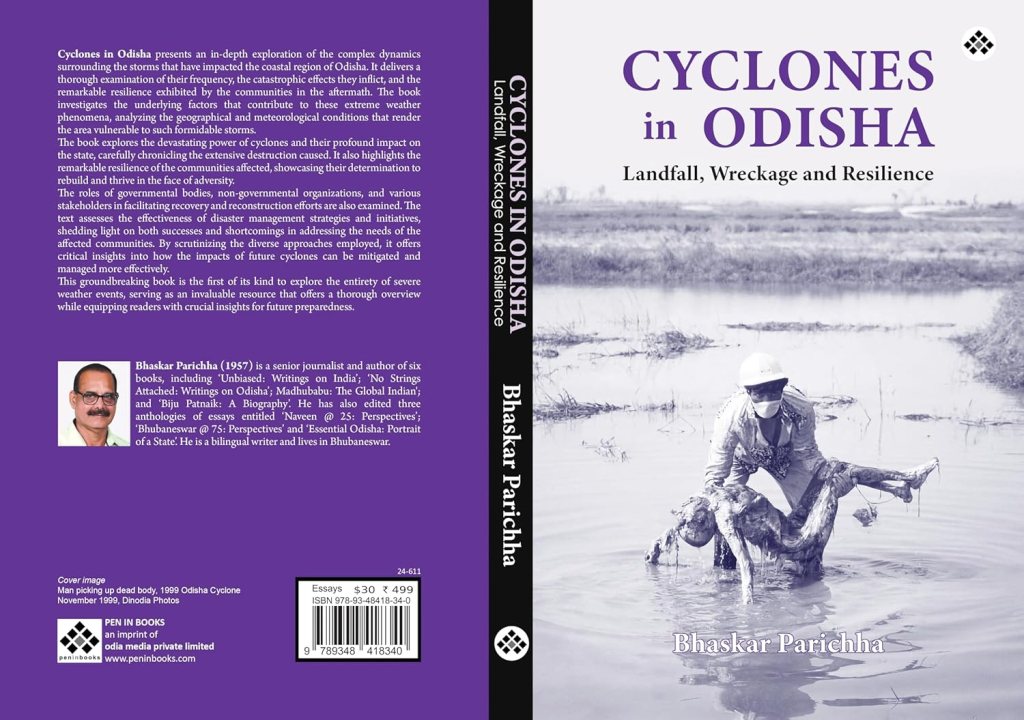
A discussion with Bhaksar Parichha, author of Cyclones in Odisha, Landfall, Wreckage and Resilience, published by Pen in Books.

While wars respect manmade borders, cyclones do not. They rip across countries, borders, seas and land — destroying not just trees, forests and fields but also human constructs, countries, economies and homes. They ravage and rage bringing floods, landslides and contamination in their wake. Discussing these, Bhaskar Parichha, a senior journalist, has written a book called Cyclones in Odisha, Landfall, Wreckage and Resilience. He has concluded interestingly that climate change will increase the frequency of such weather events, and the recovery has to be dealt by with regional support from NGOs.

Perhaps, this conclusion has been borne of the experience in Odisha, one of the most vulnerable, disaster prone states of India, where he stays and a place which he feels passionately about. Centring his narrative initially around the Super Cyclone of 1999, he has shown how as a region, Odisha arranged its own recovery process. During the Super Cyclone, the central government allocated only Rs 8 crore where Rs 500 crore had been requested and set up a task force to help. They distributed vaccines and necessary relief but solving the problem at a national level seemed a far cry. Parichha writes: “As a result, the relief efforts were temporarily limited. To accommodate the displaced individuals, schools that remained intact after the cyclone were repurposed as temporary shelters.

 “The aftermath of the cyclone also led to a significant number of animal carcasses, prompting the Government of India to offer a compensation of 250 rupees for each carcass burned, which was higher than the minimum wage. However, this decision faced criticism, leading the government to fly in 200 castaways from New Delhi and 500 from Odisha to carry out the removal of the carcasses.”

He goes on to tell us: “The international community came together to provide much-needed support to the recovery efforts in India following the devastating cyclone. The Canadian International Development Agency, European Commission, British Department for International Development, Swiss Humanitarian Aid Unit, and Australian Government all made significant contributions to various relief organisations on the ground. These donations helped to provide essential aid such as food, shelter, and medical assistance to those affected by the disaster. The generosity and solidarity shown by these countries underscored the importance of global cooperation in times of crisis.” They had to take aid from organisations like Oxfam, Indian Red Cross and more organisations based out of US and other countries. Concerted international effort was necessary to heal back.

He gives us the details of the subsequent cyclones, the statistics and the action taken. He tells us while the Bay of Bengal has always been prone to cyclones, from 1773 to 1999, over more than two centuries, ten cyclones were listed. Whereas from 1999 to 2021, a little over two decades, there have been nine cyclones. Have the frequency of cyclones gone up due to climate change? A question that has been repeatedly discussed with ongoing research mentioned in this book. Given the scenario that the whole world is impacted by climate disasters — including forest fires that continue to rage through the LA region in USA — Parichha’s suggestion we build resilience comes at a very timely juncture. He has spoken of resilience eloquently:

“Resilience refers to the ability to recover and bounce back from challenging situations. It encompasses the capacity of individuals, communities, or systems to withstand, adapt, and overcome adversity, trauma, or significant obstacles. Resilience involves not only psychological and emotional strength but also physical resilience to navigate through hardships, setbacks, or crises.

“Resilience is the remarkable capacity of individuals to recover, adapt and thrive in the face of adversity, challenges, or significant life changes. It is the ability to bounce back from setbacks, disappointments, or failures, and to maintain a positive outlook and sense of well-being despite difficult circumstances.

“Resilience is not about avoiding or denying the existence of hardships, but rather about facing them head-on and finding ways to overcome them. It involves developing a set of skills, attitudes, and strategies that enable individuals to navigate through difficult times and emerge stronger and more capable.”

He has hit the nail on the head with his accurate description of where we need to be if we want our progeny to have a good life hundred years from now. We need this effort and the ability to find ways to solve and survive major events like climate change. Parichha argues Odisha has built its resilience at a regional level, then why can’t we? This conversation focusses on Parichha’s book in context of the current climate scenario.

Bhaskar Parichha

What prompted you to write this book?

Odisha possesses an unfavorable history of cyclones with some of the most catastrophic storms. People suffered. My motivation stemmed from documenting this history, emphasising previous occurrences and their effects on communities, infrastructure, and the environment.

What kind of research went into this book? How long did it take you to have the book ready?

The idea for the book originated more than a year ago. It was intended for release to commemorate the twenty-fifth anniversary of the 1999 Super Cyclone and the cyclones that followed. Having witnessed the disaster first-hand and having been involved in the audio-visual documentation of the relief and rehabilitation initiatives in and around Paradip Port after the Super Cyclone, I gained a comprehensive understanding of the topic. The research was largely based on a thorough examination of the available literature, which included numerous documents and reports.

Promptly after you launched your book, we had Cyclone Dana in October 2024. Can you tell us how it was tackled in Odisha? Did you need help from the central government or other countries?

Cyclone Dana made landfall on the eastern coast on the morning of October 25, unleashing heavy rainfall and strong winds that uprooted trees and power poles, resulting in considerable damage to infrastructure and agriculture across 14 districts in Odisha. Approximately 4.5 million individuals were affected. West Bengal also experienced the effects of Cyclone Dana. After effectively addressing the cyclone’s impact with a goal of zero casualties, the Odisha government shifted its focus to restoration efforts, addressing the extensive damage to crops, thatched homes, and public infrastructure. The government managed the aftermath of the cyclone utilizing its financial resources.

Tell us how climate change impacts such weather events.

Climate change significantly influences weather events in a variety of ways, leading to more frequent and intense occurrences of extreme weather phenomena. As global temperatures rise due to increased greenhouse gas emissions, the atmosphere can hold more moisture, which can result in heavier rainfall and more severe storms. This can lead to flooding in some regions while causing droughts in others, as altered precipitation patterns disrupt the natural balance of ecosystems.

What made people in Odisha think of starting their own NGOs and state-level groups to work with cyclones?

The impetus for establishing non-governmental organisations and state-level entities in Odisha is fundamentally linked to the region’s historical encounters with cyclones, which have highlighted the necessity for improved community readiness. Through the promotion of cooperation between governmental agencies and civil society organisations, Odisha has developed a robust framework that is adept at responding to natural disasters while simultaneously empowering local communities.

What are the steps you take to build this resilience to withstand the destruction caused by cyclones? Where should other regions start? And would they get support from Odisha to help build their resilience?

Building resilience to withstand the destruction caused by cyclones involves a multi-faceted approach that encompasses infrastructure development, community engagement, and effective disaster management systems. Odisha has established a robust model that other regions can learn from. Odisha’s experience positions it as a potential leader in sharing knowledge and best practices with other regions. The state has demonstrated its commitment to enhancing disaster resilience through partnerships with international organisations and by sharing its model of disaster preparedness with other states facing similar challenges. Odisha can offer training programs and workshops based on its successful strategies, guide in implementing early warning systems, building resilient infrastructure and also collaborating with NGOs and international agencies to secure funding for resilience-building initiatives in vulnerable regions.

You have shown that these cyclones rage across states, countries and borders in the region, impacting even Bangladesh and Myanmar. They do not really respect borders drawn by politics, religion or even nature. If your state is prepared, do the other regions impacted by the storm continue to suffer…? Or does your support extend to the whole region?

Odisha is diligently assisting its impacted regions through comprehensive evacuation and relief initiatives, while adjacent areas such as West Bengal are also feeling the effects of the cyclone. The collaborative response seeks to reduce damage and safeguard the well-being of residents in both states. Odisha’s approach to cyclone response has garnered international acclaim.

Can we have complete immunity from such weather events by building our resilience? I remember in Star Wars — of course this is a stretch — in Kamino they had a fortress against bad weather which seemed to rage endlessly and in Asimov’s novels, humanity moved underground, abandoning the surface. Would you think humanity would ever have to resort to such extreme measures?

The idea of humanity seeking refuge underground, as illustrated in the writings of Isaac Asimov, alongside the perpetual storms on Kamino from the Star Wars franchise, provokes thought-provoking inquiries regarding the future of human settlement in light of environmental adversities. Although these scenarios may appear to be exaggerated, they underscore an increasing awareness of the necessity for adaptability when confronted with ecological challenges. The stories from both Kamino and Asimov’s literature act as cautionary narratives, encouraging reflection on potential strategies for human resilience in the future.

With the world torn by political battles, and human-made divisions of various kinds, how do you think we can get their attention to focus on issues like climate change, which could threaten our very survival?

A comprehensive strategy is crucial for effectively highlighting climate change in the context of persistent political conflicts and societal rifts. Various methods can be utilised to enhance public awareness, galvanise grassroots initiatives, promote political advocacy, emphasise economic prospects, frame climate change as a security concern, and encourage international collaboration.

Can the victims of weather events go back to their annihilated homes?  If not, how would you suggest we deal with climate refugees? Has Odisha found ways to relocate the people affected by the storms?

Individuals affected by severe weather events frequently encounter considerable difficulties in returning to their residences, particularly when those residences have been destroyed or made uninhabitable. In numerous instances, entire communities may require relocation due to the devastation inflicted by natural disasters, especially in areas susceptible to extreme weather conditions. Odisha’s proactive stance on disaster management and community involvement has greatly improved its ability to address challenges related to cyclones. The state’s initiatives not only prioritise immediate evacuation but also emphasize long-term resettlement plans to safeguard its inhabitants against future cyclonic events. For instance, residents from regions such as Satabhaya in Kendrapara district are being moved to safer locations like Bagapatia, where they are provided with land and support to construct new homes. This programme seeks to reduce future risks linked to coastal erosion and flooding.

Thanks for your book and your time.

(This review and online interview is by Mitali Chakravarty.)

Click here to read an excerpt from the book.

PLEASE NOTE: ARTICLES CAN ONLY BE REPRODUCED IN OTHER SITES WITH DUE ACKNOWLEDGEMENT TO BORDERLESS JOURNAL. 

Click here to access the Borderless anthology, Monalisa No Longer Smiles

Click here to access Monalisa No Longer Smiles on Kindle Amazon International

Categories
Stories

No Man’s Land

By Sohana Manzoor

“How long do we walk?” The boy asked.

The old woman with disheveled hair squinted her eyes while surveying the barren plain that lay around them. Finally, she looked at the sulking boy and said, “It hardly matters. We’ll just walk till we get there.”

The girl in her late teens looked warily at the singed-brown landscape. She could not spot a single tree or a blade of grass, let alone any other living creature. Finally, she said, “This place looks worse than the Sahara Desert. It’s like we can just die here and nobody would know.”

The woman giggled. “Die? You mean, disappear? You think it will happen anytime soon? That would be such a relief!”

The siblings looked at her with uncertainly.

As they walked, the boy said, “Did mom ever tell you about this place, Rumu Apu[1]? Why… this …” he looked about with distaste and finished the sentence with vehemence, ‘Ditch! Yes, that’s what it is – a ditch!”

His elder sister shook her head, “No, Pappu. I don’t think I ever heard of this area.” She wondered where their parents had disappeared. And where was their elder brother? Why would they just leave them at this God forsaken place in the middle of nowhere?

“We didn’t do anything bad, did we?” Pappu asked. Yes, he and his sister Rumu were having a bit of bickering in the car, but that was nothing new between the two of them.

The old woman walked ahead of them unperturbed.

Rumu said, “So, where are we headed again? Why don’t you just take us to Tilkati Lake? We can find our way from there.”

The woman stopped and looked at them with a big grin. The siblings realised with a shock that she did not have a single tooth in the cave of her mouth. Earlier, they had thought that like other village women, her teeth were plain black from chewing betel leaf with zarda[2]and tobacco leaf. For the first time, they also noticed her strange attire. Instead of a saree, she wore a greyish sack. The two shuffled uneasily and finally Pappu puffed up his chest and asked, “You know Tilkati Lake, right?”

The woman merely stared at them.

“It can’t be far from here,” Pappu persisted. “Our dad was saying that we were only a kilometer away from Tilkati Lake.”

Rumu added, “It’s very close to our grandparents’ house. You know the Chowdhuries? Hisham Chowdhury is our maternal grandfather.”

The woman finally said, “Once you’re here, you can’t go back. I will take you to the Old Man.” She turned around and said, “Follow me.”

Pappu cried, “What are you talking about? And what old man?”

Rumu clasped her brother’s hand and said, “I think she is a bit crazy. But let’s follow her— we need to get out of here.”

Rumu and Pappu trudged along with the strange woman through the parched wildernesses.

Then Pappu yelped, “What’s that?”

“Where?” Rumu looked around perplexedly.

“There, near that large rock on the left,” Pappu pointed to a boulder about twenty yards away from them.

At first, Rumu did not see anything. But as she looked carefully, she thought she saw something bright floating in the air. There was a pair of them, white and shimmering, and suddenly they flickered and disappeared.

Their companion held out her palms in a strange gesture and muttered something under her breath.

“Yes, you’ll see them sometimes,” she said.

“But what the hell are those?” Pappu was on the verge of tears.

The woman looked at them mournfully and said, “Eyes.”

Suddenly, Pappu started to bawl. He was only ten years old after all. He was also the darling of his family, born as a “sweet mistake” on his parents’ part. Used to having his wishes fulfilled all the time, the situation drove him crazy. He wanted his mother. Rumu vaguely recalled that they were driving to their grandparents’ place on the outskirts of Kumilla. Something happened when they were half a mile away from Tilkati Lake, but she could not remember exactly what.

When she woke up, she was sitting on a dirt road and the familiar green fields were replaced by a barren landscape. Pappu was lying near her on the ground and there was no sign of her parents, elder brother, or their car. She never wore a watch herself, and her mobile phone was in her purse, which was probably in the car. She tried the watch on Pappu’s hand, but it was smashed. Rumu looked up at the sky—what kind of a lurid color was that? And where was the sun?

Pappu’s incessant sobs brought her back to the present and she held him close. “There, there, don’t cry, Pappu. We’ll make it, I promise.” She looked at the woman and said sternly, “If you can’t say anything helpful, just keep quiet. Don’t scare my little brother.”

The woman shrugged and said, “But I was trying to help.”

Somewhere in the distance something howled. It was eerie and inhuman. It sounded like the lamentation of many people. Pappu sprang up and Rumu froze. They stood still hugging each other until the sound died down.  Then they gritted their teeth and kept on walking.

Finally, however, they were brought to an abrupt halt in front of a tall building with an open door. Rumu looked up and realised it was not a building, but the facade of a mountain. She recalled the story of the Pied Piper of Hamlin who took the children of the town to such a mountain and disappeared through a door. She shivered, but slowly followed the woman and dragged Pappu after her. At least, they would be able to rest. Rest? She realised with a jolt that she was not actually tired. Nor was she thirsty. Yet they had walked for hours without any food or water. She bent down to look at Pappu. Unlike her, he seemed exhausted.

Rumu whispered to the woman, “Can we have some water? Pappu is tired. He needs water. And food too.”

For the first time, the woman was ruffled out of complacency. Her eyes widened as she bent down to examine Pappu. Muttering something to herself she bade them in. On entering the place, Rumu saw a long tunnel diving endlessly into some dark interior. There were small oval shaped openings on both sides of the tunnel. She ushered Rumu and Pappu into one of those holes and hurried off.

The small room was roundish in shape and the floor was smooth. There was, however, no bed or chair. Rumu sat on the floor and put Pappu’s head on her lap. After a while, the woman returned with an earthen jug. She was followed by an old man. He was small and thin and carried a staff in hand. For some reason, he reminded Rumu of Yoda from The Star Wars. The woman sat before them and poured water between Pappu’s lips, Rumu noted detachedly that there was no glass.

As Pappu slowly woke up, the woman brought out a small bowl with some fruits in it. Rumu did not recognise any of the fruits. As Pappu munched on his food, Rumu stared at their hosts who were speaking in low voices.

“Where did you find them?”

“The usual place.”

“Hmm, but the boy is not supposed to be here…”

After that Rumu could not hear anything clearly.

By then Pappu was done with eating, and he wanted to sleep. They brought out some ancient looking bedding and tried to make him comfortable. Then the old man asked Rumu to go with him. Rumu was reluctant to leave Pappu, but the old man said with a smile, “He will be safe here. Don’t worry.”

Unlike the woman, the old man seemed kind and concerned. Rumu turned to look at her brother who had already fallen asleep on the makeshift bed. She felt an acute pain in her chest as she was convinced that she would never see him again. But she had no will to protest. She felt she was living in a dream and she surrendered herself to the inevitable.

Rumu and the old man walked through the endless tunnel which looked dark. However, after a few steps, things seemed tolerably clear. The ground probably was an uneven black surface smoothed by years of usage. The walls emitted a greyish light, and they could see in the dark. But the girl suspected that her companion knew the path well and probably did not even need the light.

After a long, long walk, without any warning they reached an opening.  Turning right Rumu found herself out in the open. Her feet touched something soft and she saw that she was standing on a bed of pale blue grass. Rumu realised that though the sky was still lurid, the garish landscape had softened into pastel shades here. Not too far away, there were clusters of people.

For some reason, she felt a strong urge to remember what had happened before she and her brother arrived here, but everything seemed hazy. She shook her head and went closer to the old man. She could see the people more clearly now– one woman was crying for her jewelry, another weeping over a lost child. Suddenly, a young man appeared before them and said, “Hey oldie, can’t you send me back? I just got married. I can hear my wife crying everyday.”

The old man replied, “No going back. Even if you go back, she won’t recognise you.”

The man covered his ears with both hands and howled. Then he sat down on the ground and started to sob. Rumi slowly stepped forward and asked the old man, “Can you please tell me where we are?” Her voice sounded hoarse even to her own ears.

The old man remained silent.

“Am… am I dead?”

The old man turned to look at the girl and said, “We have to wander around till we forget everything about the world we come from. No hunger or thirst. No need to rest or sleep. Here it’s all about waiting.” He raised his staff and pointed to something in the air. As Rumu squinted her eyes to see better, she noticed those strange bright things again. They shone for one last time before vanishing into the air.

“Those are the last remnants of what you call human. Once the eyes disappear, the owner of the eyes will enter the realm of the dead.”

She stared at the bright things mesmerized. “How long does it take?” she whispered.

The old man shrugged. “There’s no way to count time. No watch. No sun. But the sooner you forget the world you left the better.”

“How long have you been here?” the girl asked. “And what’s your name?”

“Time does not matter. Names neither. All those belong to the other world.”

She remembered Pappu. “Pappu…? He’s not dead, is he?”

The old man smiled. “You’re sharp. No, he’ll go back. He’s gone to sleep, and he’ll soon wake up somewhere in the old world with his family.

In the distance, she saw some people who were very small in size, and yet they were not children. Her companion said quietly, “They are closer to getting to the other side. Very soon, their bodies will disappear and only the eyes will remain. Once the eyes are gone, their journey here is over.”

“How long…” then she remembered there was no way to measure time here.

The old man said, “All you can do is wait. That’s why it’s also difficult to forget the world you left behind. But forget you must. Or you will be swirling around in this no man’s land forever.”

“No Man’s Land!” The words sounded like some kind of enchantment.

“What’s on the other side?” she asked softly.

“I don’t know. Nobody does.”

[1] Elder sister

[2] Dried and boiled tobacco leaves, limes, arecca nut, additives, spices, and tannins – used to flavour paans or betel leaves.

Sohana Manzoor is an Associate Professor at the Department of English and Humanities at ULAB, a short story writer, a translator, an essayist and an artist. 

PLEASE NOTE: ARTICLES CAN ONLY BE REPRODUCED IN OTHER SITES WITH DUE ACKNOWLEDGEMENT TO BORDERLESS JOURNAL

Click here to access the Borderless anthology, Monalisa No Longer Smiles

Click here to access Monalisa No Longer Smiles on Kindle Amazon International