Categories
Review

Connecting Diverse Cultures and Generations

Book review by Bhaskar Parichha


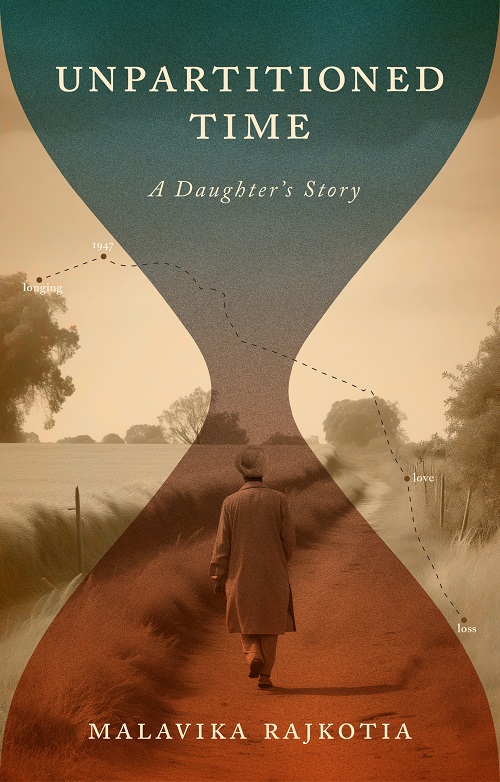
Title: Unpartioned Time: A Daughter’s Story 

Author: Malvika Rajkotia

Publisher: Speaking Tiger Books

Malavika Rajkotia is a prominent divorce attorney based in Delhi. She has collaborated with numerous non-governmental organisations addressing civil liberties and human rights concerns. Additionally, she has a strong background in theatre, participating in approximately thirty productions in both Hindi and English. She has also served as the host of Shakti, the inaugural television talk show in India dedicated to women’s rights.

Her memoir, Unpartitioned Time: A Daughter’s Story, is a complex tale that intertwines the history and current experiences of a family following the Partition. Jindo, Malavika Rajkotia’s father, arrives in India amidst the chaos of the Partition riots. He is allocated a piece of desolate land in the small town of Karnal, where he must clear and cultivate the land to reclaim his role as landlord and patriarch. However, devoid of his past and confronted with an uncertain future in a place where the language is foreign to him, he undergoes a significant transformation. Rajkotia intricately weaves a narrative around this generous, humorous, loving, and increasingly despondent figure, delving into her family’s history and present.

The story explores themes of yearning and belonging, the nature of privilege and its loss, while reflecting on the resilience of a people stripped of their autonomy. Through her evocative and lyrical writing, she leads readers through the challenges faced by a large family—comprising uncles, aunts, siblings, cousins, and esteemed figures—who are all in pursuit of recognition, identity, and stability.

Rajkotia fearlessly confronts her milieu, whether navigating the radical Khalistan movement, the tensions between the Sikh faith and Hindu nationalism, or the pervasive cynicism of Indian politics. Her vivid, meditative, finely detailed portraits of a rich family life are filled with moments of tears, laughter, and music, and a diverse array of characters who are immensely relatable. Ultimately, this brave and moving book is about the enduring quest for meaning and fulfilment that transcends cultural boundaries.

Narrates Rajkotia: “The diffused light of dawn lit a dull, flat landscape cut by the highway, gleaming under randomly spaced streetlights. Until about thirty years ago, this single carriageway witnessed an almost daily carnage that left heavy and light motor vehicles, bicyclists, and bullock carts in confused mangles. Everyone had a personal story of loss on this road. Three of my family was killed in two separate accidents. A splintered windshield glass lodged in a young girl’s throat. An aunt and cousin died when their car rammed into a truck to avoid a cyclist.”

She has a detailed account of the road in Karnal town thus: “For over 2,500 years, this road has streamed with traders from Central Asia, scholars from China, adventurers from Europe, sadhus from the Himalayas, and armies coveting Hindustan. This portion of the road was the battlefield of the story of the eighteen-day Mahabharata war, marking the cusp of the end of the Dwapar Yuga and the rise of the Kali Yuga. Eighteen days of soldiers’ cries and trumpeting elephants and neighing horses, each ending with sunsets blackened by smoke from the funeral pyres hanging heavy until impelled by the sounds of wailing women.

“From myth, we come to somewhat recorded history in 300 BCE, when Chandragupta Maurya built this road to connect his fast-growing kingdom, spanning the north of the subcontinent from the source of the Ganga to its northwestern limits. The road was developed by Sher Shah Suri. My father remembered the time when it was called ‘Jarnailly Sadak’ under the British, and then GT Road, its official name, The Grand Trunk Road. The government of independent India called it Sher Shah Suri Marg, the Sanskrit ‘marg’ guillotining the English ‘road’ and the Urdu ‘sadak’.”

The memoir stands as a testament to the power of storytelling in bridging gaps between cultures and generations, ensuring that the voices of those who experienced Partition are heard and remembered. As part of the growing body of literature on this subject, it encourages further exploration and discussion, ultimately contributing to a more nuanced understanding of the complexities surrounding Partition and its enduring legacy.

.

Bhaskar Parichha is a journalist and author of UnbiasedNo Strings Attached: Writings on Odisha and Biju Patnaik – A Political Biography. He lives in Bhubaneswar and writes bilingually. Besides writing for newspapers, he also reviews books on various media platforms.

.

PLEASE NOTE: ARTICLES CAN ONLY BE REPRODUCED IN OTHER SITES WITH DUE ACKNOWLEDGEMENT TO BORDERLESS JOURNAL

Click here to access the Borderless anthology, Monalisa No Longer Smiles

Click here to access Monalisa No Longer Smiles on Amazon International

Categories
Review

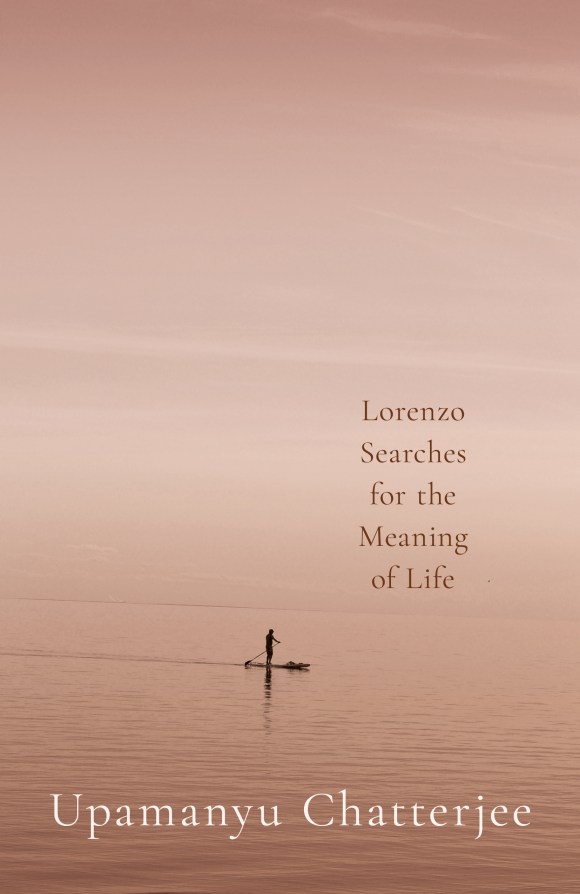
Lorenzo Searches for the Meaning of Life

Book Review by Somdatta Mandal

Title: Lorenzo Searches for the Meaning of Life

Author: Upamanyu Chatterjee

Publisher: Speaking Tiger Books

Several years ago, probably around the 1990s, the critic Nilanjana S Roy had defined the current crop of Indian Writing in English novelists as a ‘Doon School-St. Stephens’ conspiracy’. It was an interesting but true observation since the writers who were popular at that time were all products of these elite institutions and were quite adept at imitating western culture and simultaneously wrote in a style that was quite polished and urban. Upamanyu Chatterjee, belonging to this category, and at present a retired Indian civil servant, had shot into fame way back in 1988 by writing a definitive urban Indian coming-of-age story with his first novel, English August: An Indian Story. Several years later in 2000, he won the Sahitya Akademi Award for Mammaries of a Welfare State. His seventh novel Villany focused on a new class of post-liberalisation, westernised urban Indians who were hitherto ignored in the regional as well as the English fiction of India. This meticulously crafted literary thriller, a riveting story of crime and retribution, now stands at the other end of the spectrum when we read Chatterjee’s latest novel Lorenzo Searches for the Meaning of Life (2024). Narrating the life-story of an Italian Benedictine monk Lorenzo Senesi, who is on a spiritual quest to find the meaning in life, this meticulously detailed story is based on the life of Italian Fabrizio Senesi, an acquaintance of Chatterjee in Sri Lanka for the last few years, who turned out to be “a good friend” of his and who is now a European bureaucrat and a Development expert residing in Phnom Penh leading a successful professional as well as a blissful family life. As Chatterjee states in his foreword, “It is a true story, that is to say, like many true stories, it is a work of fiction.”

Divided into nine chapters, the locale of his story moves from Italy to London and then to Bangladesh. This is how things begin. One summer morning in 1977, nineteen-year-old Lorenzo Senesi of Aquilina, Italy, drives his Vespa motor-scooter into a Fiat and breaks his forearm. It keeps him in bed for a month, and his boggled mind thinks of unfamiliar things: where he has come from, where he is going, and how to find out more about where he ought to go. When he recovers, he enrolls for a course in physiotherapy. He also joins a prayer group, and visits Praglia Abbey, a Benedictine monastery in the foothills outside Padua. Detailing this part of his life we are told how this monastery will become his home for ten years, its isolation and discipline the anchors of his life. The first three chapters are full of quotes from the teachings of Saint Benedictine, the different vocations that Lorenzo follows, and give us details of monastic life as led in different Catholic institutions spread throughout Italy.

In the fourth chapter titled ‘The Visitor at the Abbey’, Lorenzo listens to a talk by one Luca Rossini, a Benedictine monk native of Bergamo, who since 1976 has been staying a little over seven thousand kilometers to the east in a place called Phulbari Para near the town of Khulna in Bangladesh where he runs an ashram as a dependent of the Praglia monastery. So, after eight long years of the introspective silence of a monastery, Lorenzo decides to go to Khulna. But before that he must spend eight months in England attending English-to-Speakers of-Other-Languages courses at an Academy there, till Luca would come to pick him up and take him to Bangladesh.

Upon arriving in Dhaka, the cacophony and different aspects of an alien culture that Lorenzo faces is described very beautifully by Chatterjee in great details. He starts wearing a lungi, eating with the fingers of his right hand, washing his clothes in a public tank along with female strangers, studying Bengali in the library with Luca, and tries to acclimatise with the place, the weather, and the people as quickly as possible. Apart from praying seven times a day, he also spends a lot of time decorating the walls of the chapel with different tempura paintings.

After some time, he visits another ashram called Rishilpi run by Enzo and Laura, an Italian missionary couple in Satkhira, some sixty kilometers away. Seeing the multifarious social upliftment activities that are being undertaken at their place, Lorenzo is intrigued by the idea of worming one’s way into a community and working for its betterment from within. Though remaining a Benedictine at heart, he decides to quit the Order and continue his search for some purpose to his life.

At Rishilpi he joins as Deputy Director, Health Services, and opens a sorely needed physiotherapy clinic that would attempt to instill a little meaning in the lives of the disabled and would educate the rest in matters of hygiene, sanitation, medical care and physical well-being. After surviving quite comfortably without money for the past eleven years and living a strict, disciplined monastic life, Lorenzo gradually undergoes a change when he starts interacting with people from all strata of society. Concealing his religion within his heart, he goes on working with a missionary zeal and after some time realises that even working with women felt marvellous.

In due course, he even falls in love and proposes to Dipti, the Headmistress of the same institution, and thus an ex-priest goes on to marry an ex-nun, both remaining devout Catholics forever. They spend the six happiest years of their lives at Rishilpi, till Lorenzo realises it is also life that is holding him back. With children, his responsibilities increase, he cannot go his own way. He needs money to survive and is called upon more and more often to lecture trainees in Dhaka at the Centre for the Rehabilitation of the Paralysed. In this manner, he slowly broadens his acquaintance with the developing world, and becomes the ideal person to build a bridge between the first world donors and third world recipients.

In the brief concluding chapter of the book, Chatterjee tells us that if one ended Lorenzo’s story here, it is because, even though twenty-nine years have passed since his marriage and he and Dipti are alive and well in Phnom-Penh, he has not in essential changed and he is still in spirit, Benedictine. But what is most interesting is the fact that “he still continues, though, to live his life anti-clockwise, as it were, for (as we have seen) after passing his youth in search of direction for his spirit, he turned outward to the community – and to the joys and responsibilities of the domestic life – only in his mid-thirties; and it was not till his early forties that he properly set about addressing the matter of money. It is – broadly – the trajectory of the typical human life but lived in reverse.”

Chatterjee’s tour-de-force is his storytelling and imaginative prose combined with his trademark wit and attention to detail. In the acknowledgement section he thanks his friend Fabrizio Senesi for providing him innumerable clarifications about life in Italy and in Bangladesh. The long list of books that Chatterjee read and mentioned in the end provides ample proof that he undertook his research rather seriously and this is clearly reflected in the intricate details that he provides of places and people throughout the novel. The book is not a page-turner, and one must read it rather seriously to savour the meticulous effort that Chatterjee made to provide us a fascinating tale about an ordinary human being who finds that a life of service to God is enough, and that it is not enough.

Click here to read the excerpt from Lorenzo Searches for the Meaning of Life

Somdatta Mandal, critic and translator, is a former Professor of English at Visva-Bharati, Santiniketan, India.

.

PLEASE NOTE: ARTICLES CAN ONLY BE REPRODUCED IN OTHER SITES WITH DUE ACKNOWLEDGEMENT TO BORDERLESS JOURNAL

Click here to access the Borderless anthology, Monalisa No Longer Smiles

Click here to access Monalisa No Longer Smiles on Kindle Amazon International
Categories
Review

British Exploration of Tibet and Central Asia by Pundits

Book Review by Bhaskar Parichha

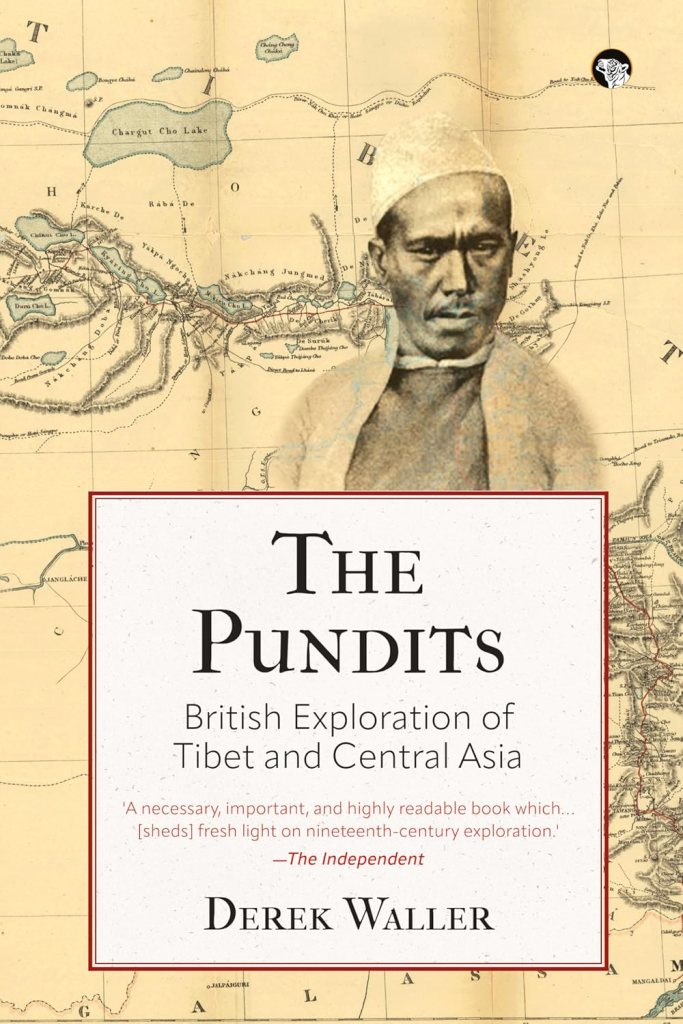
Title: The Pundits: British Exploration of Tibet and Central Asia

Author: Derek Waller

Publisher: Speaking Tiger Books

The British exploration of Tibet and Central Asia began in the 19th century as part of the Great Game, a geopolitical rivalry between the British Empire and the Russian Empire. These British explorers, known as “pundits“, were tasked with gathering intelligence on the region’s geography, culture, and politics to inform British strategic interests in the area. The pundits traveled undercover, disguised as locals, and used their linguistic and navigational skills to map out uncharted territories and report back to British authorities. Their expeditions were instrumental in shaping British policy towards Tibet and Central Asia, and their findings laid the groundwork for future British involvement in the region.

The Pundits: British Exploration of Tibet and Central Asia by Derek Waller is a fascinating book for its rich details and shedding light on the frontier policies of the British Empire. Derek J. Waller served as professor emeritus of political science at Vanderbilt University, where he taught from 1969 until his passing in 2009. He was instrumental in establishing the examination system for the Chinese government at Vanderbilt and played a key role in founding the university’s International Studies Programme in London. Additionally, he held the position of director of Vanderbilt-in-England. Waller is best known for his publication, The Government and Politics of the People’s Republic of China, which was released in 1981.

Says the blurb: “On a September day in 1863, Abdul Hamid entered the Central Asian city of Yarkand. Disguised as a merchant, Hamid was in fact an employee of the Survey of India, carrying concealed instruments to enable him to map the geography of the area. Hamid did not live to provide a first-hand account of his travels. But he was the advance guard of an elite group of Indian trans-Himalayan explorers—recruited, trained, and directed by the officers of the Great Trigonometrical Survey of India—who were to traverse much of Tibet and Central Asia during the next thirty years.”

Waller presents the history of these intrepid explorers—Nain, Mani, Kalian and Kishen Singh, Mirza Shuja, Hyder Shah, Ata Mahomed, Abdul Subhan, Mukhtar Shah, Hari Ram, Rinzing Namgyal, Ugyen Gyatso, Nem Singh, Lala and Kintup—who came to be called ‘native explorers’ or ‘pundits’ in the public documents of the Survey of India. In the closed files of the government of British India, however, they were given their true designation as spies. As they moved northward within the Indian subcontinent, the British demanded precise frontiers and sought orderly political and economic relationships with their neighbours. They were also becoming increasingly aware of and concerned with their ignorance of the geographical, political, and military complexion of the territories beyond the mountain frontiers of the Indian empire. This was particularly true of Tibet.

Despite the fact that the use of pundits was discontinued in the 1890s in favour of exclusively British expeditions, they amassed a vast amount of information on the topography of the region, the customs of its inhabitants, and the nature of its government and military resources. They were able to journey to places where hardly any European could go and did so under conditions of extreme deprivation and great danger. They are credited with documenting an area of over one million square miles, most of which was completely unknown territory to the West.

The Pundits, one of the earliest books to be written about them, is an exceptional piece of scholarly work.

.

Bhaskar Parichha is a journalist and author of UnbiasedNo Strings Attached: Writings on Odisha and Biju Patnaik – A Political Biography. He lives in Bhubaneswar and writes bilingually. Besides writing for newspapers, he also reviews books on various media platforms.

.

PLEASE NOTE: ARTICLES CAN ONLY BE REPRODUCED IN OTHER SITES WITH DUE ACKNOWLEDGEMENT TO BORDERLESS JOURNAL

Click here to access the Borderless anthology, Monalisa No Longer Smiles

Click here to access Monalisa No Longer Smiles on Amazon International

Categories
Review

The Dilemma of an Indian Liberal

Book Review by Bhaskar Parichha

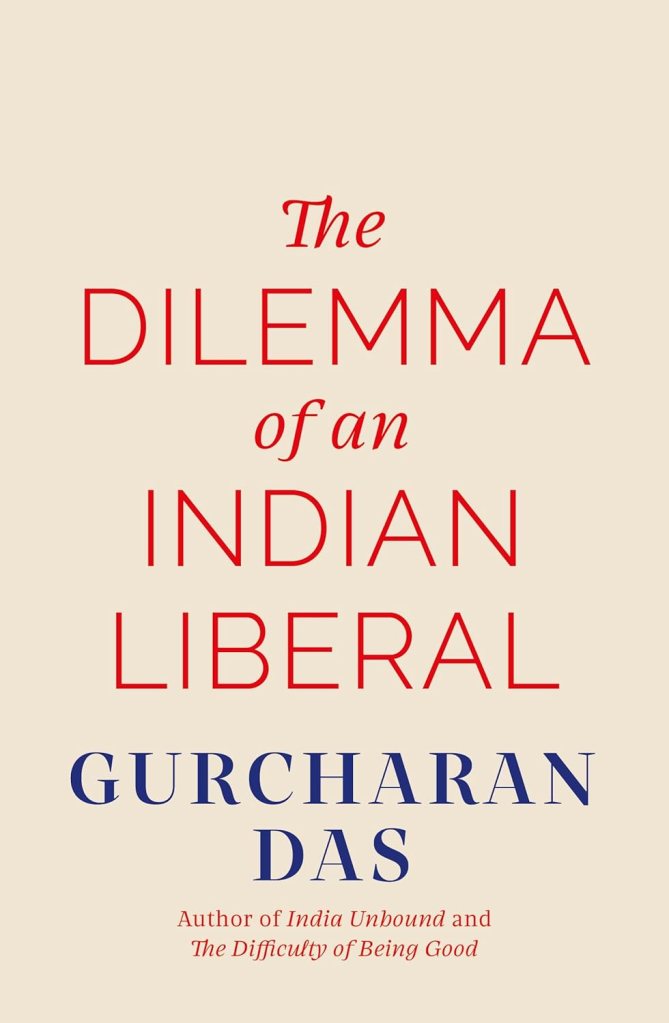
Title: The Dilemma of an Indian Liberal 

Author: Gurcharan Das 

Publisher: Speaking Tiger Books

One predicament faced by a liberal individual from India is the challenge of navigating a society deeply rooted in traditional values and conservative ideologies. India, with its diverse cultural and religious landscape, often presents a clash between progressive ideas and age-old customs.

In The Dilemma of an Indian Liberal, the author, Gurcharan Das, recounts his own professional and intellectual journey: how and why he became a liberal. While telling his story, he also narrates the story of a nation struggling—still— to become a successful liberal democracy—the late promise and its seeming betrayal, but also the possibility of course correction.

Das has dedicated his entire life to advocating for economic and political freedom. In his writings, he emphasises that liberal democracies and free markets have become the most logical and effective way to organise public life over the past two centuries. Having witnessed India’s transition from a stifling “license raj” to a liberal order in the 1990s, Das celebrated the country’s progress as market reforms and a maturing democratic process brought prosperity and dignity to millions who had been deprived of both for many years. He documented this remarkable transformation in his renowned book, India Unbound (2012) However, after three decades, it appears that the once bright light of progress is dimming.

The foremost pickle for liberals is the resistance and backlash they face while advocating for social change. Traditional norms and beliefs, deeply ingrained in Indian society, can be resistant to progressive ideas such as gender equality, LGBTQ+ rights, and freedom of expression. Liberals often battle continuously to challenge these norms and push for a more inclusive and tolerant society.

Another quandary faced by open-minded individuals in India is the threat to their personal safety and freedom of expression. Speaking out against societal injustices, criticising the government, or advocating for marginalised communities can often lead to harassment, threats, or even violence. The rise of online trolling and hate speech further exacerbates this predicament, making it difficult for liberals to express their opinions without fear of reprisal.

Furthermore, it is a challenge to find like-minded communities and support networks. In a society where conservative ideologies dominate, liberals can find themselves isolated when looking for shared values and beliefs. This lack of support can make it challenging to sustain their activism and maintain their motivation in the face of adversity.

Then there is the dilemma of balancing their personal beliefs with the need to respect and understand the cultural and religious diversity of the country. While advocating for progressive ideas, they must also navigate the delicate balance of not offending or disrespecting deeply held beliefs and traditions. This predicament requires a nuanced approach to ensure that their advocacy is effective without alienating the very communities they seek to empower.

In recent years, liberalism in India has been experiencing a decline, reflecting a broader global trend. The society has become increasingly polarised, with different factions holding divergent views on various social, economic, and political issues. This growing division has created fertile ground for the rise of populism, which has gained significant momentum in the country. One of the key debates that currently dominates the Indian discourse revolves around the perceived conflict between economic freedom and political freedom.

There are differing opinions on the matter, with some asserting that giving priority to economic freedom, such as advocating for free markets and deregulation, is crucial for a nation’s growth and success. They maintain that a thriving economy will ultimately result in political stability and individual liberties. Conversely, advocates for political freedom argue that without strong democratic institutions and safeguards, economic advancement can be superficial and unfair. They stress the significance of safeguarding civil rights, promoting social justice, and empowering marginalized groups. They firmly believe that political freedom is a fundamental requirement for a fair and inclusive society.

In the current polarised climate, the liberal perspective is often marginalised or dismissed as being indecisive or weak. Liberal individuals may find it difficult to navigate the political landscape, as they strive to uphold their principles while also engaging with the diverse viewpoints prevalent in society.

This book covers it all from resistance to personal safety concerns, finding support networks, navigating cultural sensitivities and  also navigating a complex landscape to bring about the desired transformation from within the cultural milieu. Addressing urgent needs, this enlightening narrative is written with strong conviction, deep insight, and scholarly expertise, all presented with remarkable clarity. It is a must-read for every person who is concerned about the future of democracy.

.

Bhaskar Parichha is a journalist and author of UnbiasedNo Strings Attached: Writings on Odisha and Biju Patnaik – A Political Biography. He lives in Bhubaneswar and writes bilingually. Besides writing for newspapers, he also reviews books on various media platforms.

.

PLEASE NOTE: ARTICLES CAN ONLY BE REPRODUCED IN OTHER SITES WITH DUE ACKNOWLEDGEMENT TO BORDERLESS JOURNAL

Click here to access the Borderless anthology, Monalisa No Longer Smiles

Click here to access Monalisa No Longer Smiles on Amazon Internation

Categories
Review

An Immersive Translation

Book Review by Rakhi Dalal

Title: Boy, Unloved

Author: Damodar Mauzo

Translated by: Jerry Pinto

Publisher: Speaking Tiger Books

The Jnanpith and Sahitya Akademi Award winning Konkani novelist Domodar Mauzo’s Jeev Divum Kai Chya Marum is translated into English as Boy, Unloved by the acclaimed writer, Jerry Pinto. The translation succeeds in offering an immersive experience to the reader, especially of the life, sights and cuisine redolent of a Goan village in the backdrop. Although a reader, in the absence of knowledge of Konkani and hence the original work, may not be able to gather the nuances often difficult to translate.

This novel is a bildungsroman which follows the life of its protagonist, Vipin Parob, born into a loveless marriage in a serene village in Goa. It navigates his lonely formative years and explores his friendships in teenage years. While the exploration of his growing up years as a kid wrenches the heart of a reader, those of his later pre-adult years leaves one with an unsettling feeling. And that makes a reader wonder at what went amiss…

At the outset, the harrowing circumstances within the family of five-year-old Vipin are revealed. His house, with its closed windows and doors, restricts his body and mind. He becomes lonesome, finds solace in books and has difficulty making friends at school. In an environment which stifles him both physically and emotionally, he adheres to reclusiveness to cope with his ruthless father and careless mother. An unloved child of a bitter and broken wedlock, Vipin’s plight, as stunningly portrayed by the author, wrings the reader’s core. Mauzo’s incisive insight into the complexities around childhood trauma emerges in his portrayal of Vipin’s manners. His submissiveness in front of his parents, because of the treatment meted out to him perhaps, indicates how distress during childhood years may affect a person’s sense of self-worth. In fact, when his brilliance in academics makes his father’s relation with him transactional, where he is favoured because his father believes he can become a doctor, Vipin lets go off his own desire to study the subject he likes.

During his time in junior college, Vipin comes across people he befriends. Martin Sir, his English teacher from school, is the first person who understands and mentors him. Subsequently, although reluctantly at first, he manages to forge meaningful connections with Chitra and Fatima from his college. Krishna (initially a house help), and Amanda (the nurse caring for his mother later) also become people he can relate to. However, a narrative inconsistency appears in the depiction of the dynamics among teenagers, Vipin, Chitra and Fatima who despite becoming very close to each other, grapple with unnecessary confusions. Where Vipin’s character appears reliable, the characters of both Chitra and Fatima come off as unreliable. Perhaps because they are not fully explored and much appears unsaid in terms of their backgrounds and their mannerisms.   

Regardless of the lack of love and care in his familial relationships, when it falls upon Vipin to take care of his ailing parents during their respective illnesses, he does it with a sense of responsibility and concern, if not love. It is something that also comes forth in his relationships with others, whether it is helping Krishna to study further, helping him financially or protecting Amanda from his cousin.

Mauzo, very strikingly captures the quagmire which makes a vulnerable, unloved child grow up to become a young adult who fiercely feels protective towards people close to him. However, Vipin’s journey of exploration of his self and subsequently of his aim in life, wrestle with disparities thrown at him by circumstances. The loneliness of his heart swells to consume the ties he forged in hope of love, leaving an emptiness he finds difficult to conquer. For the invested reader, it renders a disconcerting mark.

Rakhi Dalal is an educator by profession. When not working, she can usually be found reading books or writing about reading them. She writes at https://rakhidalal.blogspot.com/ .

.

PLEASE NOTE: ARTICLES CAN ONLY BE REPRODUCED IN OTHER SITES WITH DUE ACKNOWLEDGEMENT TO BORDERLESS JOURNAL

Click here to access the Borderless anthology, Monalisa No Longer Smiles

Click here to access Monalisa No Longer Smiles on Kindle Amazon International
Categories
Review

Maya Nagari: Stories of Bombay-Mumbai

Book Review by Somdatta Mandal

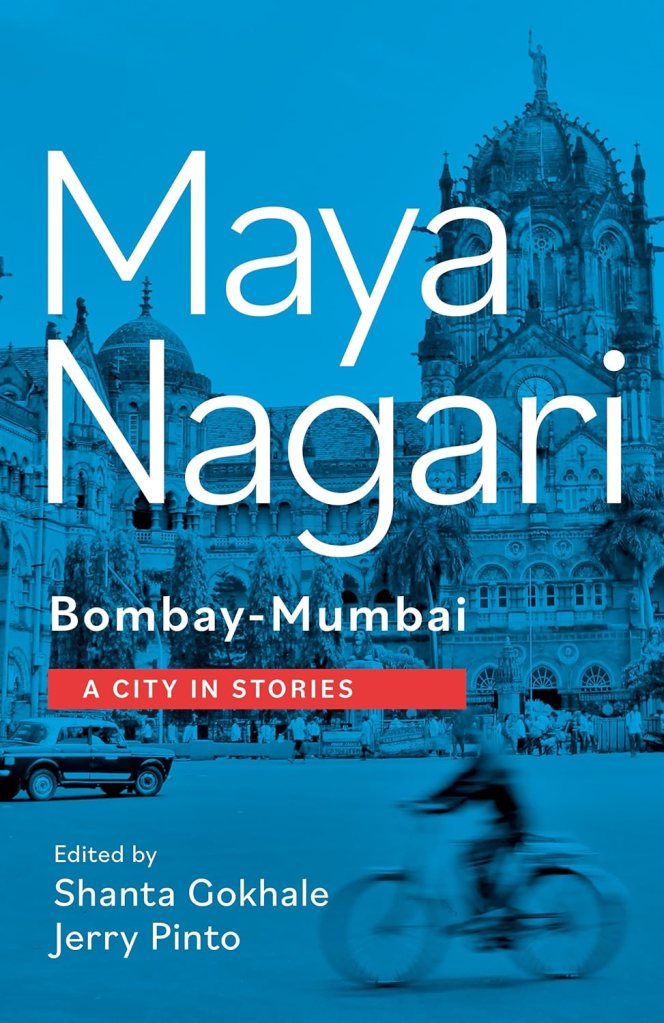
 Title: Maya Nagari: Bombay-Mumbai A City in Stories

Editors: Shanta Gokhale, Jerry Pinto

Publisher: Speaking Tiger Books

The very mention of the name Mumbai (or Bombay) brings to our minds a great city in India where the thriving metropolis grows at a rapid speed because people not only flock here from different parts of the country to make quick bucks and survive against all odds, but also because the film industry of Bollywood has also established it as a city of dreams, one that never sleeps and instead creates a mirage-of-sorts — an illusion, rightly labelled by the editors of this anthology as ‘Maya Nagari’. Edited by Shanta Gokhale and Jerry Pinto, this book, comprising twenty-one short stories about Mumbai takes the road less taken to create a non-uniform image of the metropolis. In tune with its multicultural and multilingual nature, we have stories about the city that is a sea of people and speaks at least a dozen languages. There are stories translated from Marathi, Urdu, Gujarati, Tamil, Hindi, Kannada, Malayalam, and stories written originally in English. Among the writers are legends and new voices—Baburao Bagul, Ismat Chughtai, Pu La Deshpande, Ambai,Urmila Pawar, Mohan Rakesh, Saadat Hasan Manto, Ambai, Jayant Kaikini, Bhupen Khakhar, Shripad Narayan Pendse, Manasi, Krishan Chander, Udayan Thakker, Cyrus Mistry, Vilas Sarang, Jayant Pawar, Tejaswini Apte-Rahm and Anuradha Kumar.

As Jerry Pinto clearly states in the introduction, the stories can be read as we like, we can begin with the first story or the last, or any story in between. The observant reader might notice that he and the other editor Shanta Gokhale have deliberately chosen not to organise the material according to chronology, or geography. This is partly because they believe that the city lives in several time zones and spaces at once, as does India, but also because there is something essentially chaotic about its nature. So, he says, “the stories echo and bounce off each other, they do not collide, but there is a Brownian motion to these patterns” and he hopes to let the readers find it. Here, Mumbai is stripped of its twinkle; it is deglamourised to reveal how it’s the quotidian that lends the city its character—warmth and hostility alike and as inhabitants of the city the editors call ‘home,’ they hope a narrative will emerge.

In the twenty-one stories of this collection, there is the city that labours in the mills and streets, and the city that sips and nibbles in five-star lounges, the city of Ganapati, Haji Malang and the Virgin Mary. What binds the stories together is ‘human muscle’ – the desperate attempts of men and women of all classes and castes to survive in this heartless city amid all odds.

The stories are of different lengths and written in different narrative styles. Of the five or six stories translated by Shanta Gokhale herself from Marathi, one is struck by the excessive length of the so called ‘short’ stories. The very first one “Oh! The Joy of Devotion” by Jayant Pawar, forty-five pages in length, narrates in detail about the Ganapati festival and how it is related to the fate of the local people. Pu La Deshpande’s story “A Cultural Moment is Born”, set in the 1940s, tells stories of people living in chawls [slums] and how they spend their cultural days. Another very long story translated by Gokhale called “The Ramsharan Story” tells us about the rise and fall of a bus conductor by the name of Ramsharan who turns out to become a union leader. Baburao Bagul’s “Woman of the Street”, written originally in Marathi and translated by Gokhale again, tells the story of Girija, a sex-worker trying to collect money to cure her son in the village. The story ends on a disturbing note, as it reaffirms the relativity of success.

Once again, Krishan Chander’s story “The Children of Dadar Bridge” translated from Hindustani by Jerry Pinto is so long that it qualifies to be called a sort of novella. In this powerful story God comes to earth to a chawl and offers food to the first-person narrator. Then, impersonating as a small and innocent child, and along with the child narrator, he moves around different places in the city to witness its activities firsthand — we get to know about behind the scene affairs that take place in the film studios, about satta[1] dens, about bribery, local dons who arm-twist every new hawker to carry on their business after receiving their weekly cut money and more. In “Civic Duty and Physics Practicals”, Malayalam writer Manasi reveals the different experiences one comes across living in a society defined by power equations. Issues of hooliganism, superstition, illegal colonies, corruption, intimidation and violence are explored in a single story where the narrator is struggling, for days, with blaring speakers at a wedding nearby, even as her son tries hard to prepare for his upcoming exams. The story soon takes a dark turn where power trumps over consideration for fellow human beings.

A very powerful story written by Ambai in Tamil called “Kala Ghora Chowk” deals with issues of Marxist ideology, trade unions and the fate of a raped woman called Rosa. Anuradha Kumar’s “Neera Joshi’s Unfinished Book” tells us the life story of one woman who “made the city” and the perennial problems of displaced mill workers when the closed mills give way to high-rise buildings. Some of the stories are of course written in a lighter vein, though they also depict different problems related to city life. As the title of Vilas Sarang’s story “An Afternoon Among the Rocks” suggests, it narrates the plight of a couple trying to make love in the deserted seashore and how they get hijacked by a smuggler! In “The Flat on the Fifth Floor”, Mohan Rakesh writes about two sisters who meet the narrator after one failed love affair. A moving picture of the closing down of cinema halls in Mumbai comes out very beautifully in the Kannada story “Opera House” by Jayant Kaikini, especially narrating the plight of one of the sweepers working there when the declaration of permanent closure is pasted everywhere. Tejaswini Apte-Rahm’s “Mili” tells the story of a man who meets his ex-girlfriend after five years.

Though it is not possible to give the details of each and every story included in this anthology in this review, one must mention some of the stories that were originally written in English. Cyrus Mistry’s “Percy” about a young and lonely Parsi boy is so compelling that it was even made into a Gujarati motion-picture. “House Cleaning” by Jerry Pinto tells the story of a woman cleaner and his son, who talks about the reality of street dwellers. Eunice de Souza’s “Rina of Queen’s Diamonds” is not a straightforward narration at all but offers a collage of different vignettes of life in Bombay.

Though most of the stories portray the seamier side of life and in some ways de-glamourise Mumbai, at the same time they also portray how human resilience can combat all sorts of odds, and the city can be revealed only through shared experiences. Thus, each of the twenty-one stories in this collection tells a different tale of Mumbai, Bombay, Momoi, Bambai, Manbai and many others. As the editors have rightly pointed out at the beginning of their introduction, “You cannot catch a city in words. You cannot catch a city at all.”  They felt that “it is not meant to be caught…this city resists even more because it was not designed at all; it just happened and it keeps on happening.” Thus, the four-hundred plus pages of this anthology Maya-Nagari remains a book to be treasured and read now at leisure and also at any time in the future.

.

[1] Betting or gambling dens

Somdatta Mandal, critic and translator, is a former Professor of English at Visva-Bharati, Santiniketan, India.

.

PLEASE NOTE: ARTICLES CAN ONLY BE REPRODUCED IN OTHER SITES WITH DUE ACKNOWLEDGEMENT TO BORDERLESS JOURNAL

Click here to access the Borderless anthology, Monalisa No Longer Smiles

Click here to access Monalisa No Longer Smiles on Kindle Amazon International
Categories
Review

Bhang Journeys: Stories, Histories, Trips and Travels

Book Review by Bhaskar Parichha

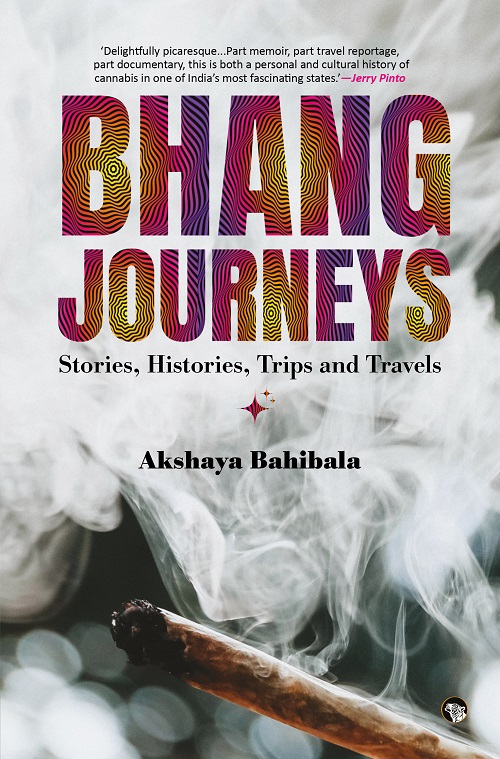
Title: Bhang Journeys: Stories, Histories, Trips and Travels

Author: Akshaya Bahibala

Publisher: Speaking Tiger Books

Akshaya Bahibala is a poet, bookseller, publisher, and library advocate. He is the co-founder of Walking Book Fairs, an independent bookstore and publishing company, as well as one of the most beloved bookmobiles in India, having journeyed over 35,000 kilometres through 20 states to promote a love of literature. Bahibala has authored four books in Odia. This book marks his debut in English. This captivating book is full of unexpected twists and turns, offering a unique blend of memories, adventures, and intriguing facts about a well-known substance. It serves both as an exploration and a cautionary tale.

Bhang Journeys: Stories, Histories, Trips and Travels by Akshaya Bahibala is an eye-witness account of the cannabis in one part of India – Odisha. Quite a bit of research and ideation seems to have gone into the book. This book is truly captivating due to its exploration of a controversial subject — bhang or cannabis..

Reads the blurb: “For ten years, from 1998 to 2008, Akshaya Bahibala was in the grip of bhang, of ganja—drinking it, smoking it, experiencing the highs and lows of an addict on Puri’s beaches with hippies, backpackers and drop-outs from France and Japan, Italy and Norway. Then he drew back from the edge and tried to make a life, working as a waiter, a salesman, a bookseller. He starts this journal-cum-travel book with startling, fragmented memories of his lost decade. From these, he moves to stories about people across Odisha whose lives revolve around ganja-bhang-opium.”

Bahibala commences the book by recounting his experiences of indulging in bhang and ganja on the shores of Puri. He also spends time with a considerable number of foreigners — Caucasian men and women who appear to visit Puri for the purpose of getting high. The author mingles with Japanese, German, French, Italian, and Israeli tourists, sharing meals, borrowing money, exchanging bhang-infused biscuits, occasionally engaging in fights, all while listening to Bob Marley’s soulful rendition of “No Woman, No Cry” in a state of intoxication.

The book has some interesting details like how the owner of a government-approved bhang shop prides himself on selling the purest bhang available, claiming it can make people as forgiving and non-violent as Jesus. Another story is about how an opium cutter, learnt how to massage a lump of opium with mustard oil and carve it into tablets as a boy. There is a heart wrenching narrative of a girl who survived cholera by licking opium and became a lifelong addict. Yet another, is about the yearnings of a goldsmith with an opium de-addiction card for 20 grams a month, but he longs for more — atleast 25 grams. There is also the story of the ganja farmer who flies to Puri from Punjab in a helicopter.

The hallucinations induced by the drug are reflected in the case study of a young man, suffering from ganja-and-bhang-fuelled paranoia, convinced that Indian and American spies are after him makes for an interesting yet concerning read. Descriptions are given of angry villagers indulging in violence against excise department officials who try to destroy ganja plantations.

Alongside these narratives, are official data on opium production, seizures, and destruction; UN reports on the medicinal benefits of cannabis and a veteran’s recipes for bhang laddoos and sherbets. The author delves into the process of creating bhang, highlighting its complete legality in India (unlike charas and ganja, which are prohibited under the country’s 1985 Narcotic Drugs and Psychotropic Substances Act). Additionally, there is a subtly humorous account of a Brahmin bhang shop owner who offers intriguing insights into the procurement and sale of bhang. Bahibala also discusses opium (referred to as afeem locally) cutters and government-operated facilities where opium is manufactured. He sheds light on opium addicts, for whom the government provides a de-addiction program.

The author concludes the book on a rather melancholic tone, discussing the current state of affairs in Puri and the significant changes that have occurred over the past two decades. The absence of foreign tourists on Beach Road, the police cracking down on public marijuana use, the proliferation of hotels and restaurants, and the eagerness of owners to expand and construct more establishments are all highlighted. Additionally, the author reflects on the individuals he once knew during his youth, noting that some have relocated to other countries while others remain in the area.

This book offers a comprehensive perspective on the bhang/charas/ganja culture in India, covering aspects such as production, sale, purchase, and consumption under peer pressure. The author’s personal experiences and lessons learnt add depth to the narrative, making it a captivating read. It is a liberating and unfiltered account, unconcerned with conforming to political correctness and yet, there is his own story, where he feels he ‘lost’ a decade of his life to addiction.

Bhaskar Parichha is a journalist and author of UnbiasedNo Strings Attached: Writings on Odisha and Biju Patnaik – A Political Biography. He lives in Bhubaneswar and writes bilingually. Besides writing for newspapers, he also reviews books on various media platforms.

.

PLEASE NOTE: ARTICLES CAN ONLY BE REPRODUCED IN OTHER SITES WITH DUE ACKNOWLEDGEMENT TO BORDERLESS JOURNAL

Click here to access the Borderless anthology, Monalisa No Longer Smiles

Click here to access Monalisa No Longer Smiles on Amazon International

Categories
Review

A Tale as Good as an Agatha Christie Mystery?

Book Review by Rakhi Dalal

Title: The Kidnapping of Mark Twain: A Bombay Mystery

Author: Anuradha Kumar

Publisher: Speaking Tiger Books

At the turn of the nineteenth century, Bombay was a city bustling with economic activity. A city that stood on the verge of modernisation and rivalled cities like Paris, London and New York. A city that had much to offer to those coming in to make a living or to simply visit it for sightseeing. A city that offered home and work opportunities to people from different countries across the world. It was also during the years 1896-97 that Samuel L. Clemens, or Mark Twain as he was better known as, travelled to Bombay with his family and wrote about his experience in his travelogue, Following the Equator.

In The Kidnapping of Mark Twain, Anuradha Kumar weaves the historic facts from Twain’s book with some intriguing and riveting detective fiction and makes it a fascinating read, especially for the mystery readers.  Anuradha Kumar has published more than thirty books, has won the Commonwealth awards for short stories a couple of times, written under the pseudonym of Aditi Kay, worked in the Economic and Political Weekly for almost 9 years and writes from USA now.

The book starts with Henry Baker, an American trade consul, waiting impatiently for the arrival of Mark Twain and his family to Bombay. His arrival is shadowed by the news of murder of a young girl named Casi which has also left Henry’s friend Maya Barton disturbed. Within a day of his reaching Bombay, Mark Twain suddenly vanishes from his hotel room. What follows then is a series of trailing and mystery solving that keeps the reader in thrall.

Henry, with the help of Maya and his loyal aide Abdul, takes upon himself to find the writer. With much that is happening in the city, including murder, a labour unrest, a threat of strike, Henry finds the authorities a little too preoccupied or uninterested to follow Mark’s case. Since he cannot further risk any diplomatic disagreement between the United States and Britain, he follows through even though his position offers no legal authority. What he encounters at each step leads him to more confusing scenarios but he manages to pull through despite the shocking and bizarre revelations coming in.

Kumar skilfully crafts characters who carry the most unusual of acts which keep the readers on an edge – a ‘Waghare’ thief, a stilt walking magician, a fanatic preacher and a sad Serbian musician. Along with Maya Barton who excels in impersonating appearances. All this and much more. With the help of Maya and Abdul, Henry succeeds in unravelling the mystery of Mark Twain’s disappearance. The mystery that is solved, however, is just not of Mark’s disappearance but also of Casi’s murder and truth behind fanatic Arthur Pease’s de-addiction centre.

Anuradha Kumar’s research that has gone in writing this novel shines through her depiction of the city of erstwhile Bombay – its sights and sounds as well as all the places which stand out in the making of this city. The novel hustles with everything quintessentially Victorian Bombay. Action happens in places like the Victoria Terminus, the Bombay Police Headquarters, Colaba Causeway, Elephanta Caves and the Bombay Cotton Mills. Mark Twain takes rooms at the famous Watson’s Hotel where he finds it difficult to sleep because of all the noise made by crows. Henry Baker lives at Byculla club and Maya Barton at a Colaba bungalow. Tukaram, Casi’s husband and a suspect, is the labour supervisor at the Bombay Cotton Mills. The day Mark Twain lands, he attends a party hosted by a rich Parsi businessmen where the famous nautch girls present a dance. The reader gets a grasp on the city that once was. On the other hand, the novel also stirs with the city’s underbelly where crime, opium addiction, poverty and class dynamics are at play.

It is fascinating to note that the author would make use of Mark Twain’s disappearance as mentioned in his travelogue and spin it to make a thrilling mystery. The portrayal of events is so vivid that sometimes the reading seems akin to watching an Agatha Christie in a TV series. Then there are historic events mentioned in the backdrop which gives an idea about the world politics at large. The narrative refers to Oscar Wilde’s trial and his subsequent imprisonment in England and the first protest of women’s right to vote. It brings forth the discriminatory policies that British persisted in India like labelling certain ethnic groups as criminals and makes use of the social reforms like women education underway in the Indian society. All of these, combined with the adventure that the book offers, make for a gripping tale that could have been only set in the Bombay of 1896.

Rakhi Dalal is an educator by profession. When not working, she can usually be found reading books or writing about reading them. She writes at https://rakhidalal.blogspot.com/ .

.

PLEASE NOTE: ARTICLES CAN ONLY BE REPRODUCED IN OTHER SITES WITH DUE ACKNOWLEDGEMENT TO BORDERLESS JOURNAL

Click here to access the Borderless anthology, Monalisa No Longer Smiles

Click here to access Monalisa No Longer Smiles on Kindle Amazon International
Categories
Review

Mafia Raj: The Rule of Bosses

Book Review by Bhaksar Parichha

Title: Mafia Raj: The Rule of Bosses in South Asia 

Authors:  Lucia Michelutti , Ashraf Hoque , Nicolas Martin, David Picherit, Paul Rollier, Clarinda Still

Publisher: Speaking Tiger Books

In criminal law, mafia raj refers to an organised crime regime enforced by criminal elements. Throughout history, such syndicates have had significant influence over various aspects of society, including politics, business, and even law enforcement.

Mafia Raj: The Rule of Bosses in South Asia is authored by multiple academics. It is a fascinating book as it delves deep into the subject. Among the writers, Lucia Michelutti is a Professor of Anthropology at University College London. Ashraf Hoque is an Associate Professor in the Department of Anthropology there. Nicolas Martin is an Assistant Professor in Indian/South Asian Studies at the AsienOrientInstitut of the University of Zurich. David Picherit is Research Fellow at the French National Centre for Scientific Research. Paul Rollier is Assistant Professor in South Asian Studies at the University of St. Gallen. Arild E. Ruud is Professor of South Asia Studies at the University of Oslo. Clarinda Still is Research Associate at the University College London.

The book tells us number of criminal organisations emerged within the country during the British rule, primarily in urban areas. Drug trafficking, extortion, and murder are some of the ways in which these concerns gained power and influence. These developed into the mafia in post-colonial times.

The presence of mafia raj has within any society has far-reaching consequences. It undermines the rule of law and democratic institutions, creating a climate of fear, intimidation, and corruption. The activities of mafia raj often involve violence, extortion, and illegal activities that threaten the stability and security of communities. Addressing the issue of mafia raj requires a multi-faceted approach. One of the key challenges is to combat the vast network of criminal organisations that operate with impunity. This requires strengthening law enforcement agencies, conducting targeted investigations, and implementing effective anti-crime strategies.

The book expounds it is important to improve the socioeconomic conditions that contribute to organised crime in addition to law enforcement efforts. There is a need to bolster economic development, reduce poverty, and provide opportunities for marginalised communities. Mafia raj is a significant threat to society, undermining the rule of law and democratic institutions. A comprehensive approach that combines law enforcement efforts with socioeconomic development initiatives is required to combat it. Only through collective action and international cooperation can we hope to put an end to this dark chapter in history.

Says the blurb: “‘Mafia’ has become an indigenous term on the Indian subcontinent. Like Italian mobsters, South Asian ‘gangster politicians’ and violent entrepreneurs are known for inflicting brutal violence while simultaneously upholding vigilante justice-inspired fear and fantasy. But the term also refers to the diffuse spheres of crime, business and politics operating within a shadow world that is popularly referred to as the rule of the mafia, or ‘Mafia Raj’.”

Through intimate stories of the lives of powerful and aspiring bosses in India, Pakistan and Bangladesh—a rookie neta from Dhaka, a self-styled leader of the poor in Punjab, a henchman from Chittoor, small-time brokers in Lahore, a female don in western UP, a political bigshot in Nawabganj, and a legendary figure in the blood-ridden politics of South India—this book illustrates their personal struggles for sovereignty during their climb up the ladder of success.

A rich ethnographic study of the distinctive cultural milieu within the sub-continent from which such stories emerge, the authors offer a global perspective on crimes, corruption, and the lure of the strongman that flourish within the geographical constraint of South Asia.

Bhaskar Parichha is a journalist and author of UnbiasedNo Strings Attached: Writings on Odisha and Biju Patnaik – A Political Biography. He lives in Bhubaneswar and writes bilingually. Besides writing for newspapers, he also reviews books on various media platforms.

.

PLEASE NOTE: ARTICLES CAN ONLY BE REPRODUCED IN OTHER SITES WITH DUE ACKNOWLEDGEMENT TO BORDERLESS JOURNAL

Click here to access the Borderless anthology, Monalisa No Longer Smiles

Click here to access Monalisa No Longer Smiles on Amazon International

Categories
Review

Camel Karma

Book Review by Somdatta Mandal

Title: Camel Karma: Twenty Years Among India’s Camel Nomads

Author: Ilse Kohler-Rollefson

Publisher: Speaking Tiger Books

Whenever we read about travel narratives by foreigners in India, especially Westerners, we assume it to be primarily superficial, skin-deep, and without much contact with ground reality. This non-fiction book, that can also be read as a sort of travelogue, busts that myth. It begins with a German veterinarian, Ilse Kohler-Rollefson’s arrival in Rajasthan in 1991 and almost twenty-five years of association with the same. On a field trip to Jordan in 1979, she first became fascinated by the relationship between pastoral peoples and the camels they shared their lives with. After a brief stint of camel field research in Sudan’s eastern desert, her choice to continue her research on camel husbandry led her naturally to India, the country with the third-largest camel population in the world, and she arrived at the National Research Centre on Camel (NRCC) in Bikaner, Rajasthan. Wanting to know more about the practical aspects of camel-keeping or its cultural foundation, she encountered the Rebaris, also called Raikas in Marwar, who are proper breeders of camels and whose whole lifestyle centred around it. She writes, “To me it seemed that the Raikas’ relationship with their animals was equally worthy of conservation as a uniquely human heritage.”

Historically, the Raika of Rajasthan have had a unique and enduring relationship with camels. They offer a compassionate alternative by keeping farm animals as part of nature, allowing them to move and do so in herds. Farm animals can thus extend their potential as humanity’s greatest asset. Their entire existence revolves around looking after the needs of these animals which, in turn, provide them with sustenance, wealth and companionship. Ilse is immediately enthralled by Raika’s intimate relationship with their animals, but she is also confronted with their existential problems.

For her, her research among them gave her not just a glimpse of the history and culture of Rajasthan, but also a way forward in her personal journey. Denying all kinds of creature comforts, the hope of saving both the camel and the Raika way of life took her and her spirited ally, Hanwant Singh Rathore, from vet labs in the city, to Raika settlements in the remotest corners of the Thar Desert, and everywhere in between. The intractable dilemmas— both bureaucratic and cultural—they were often confronted with required creative solutions. As they adapted to their circumstances, they found their orthodox Raika friends adapting with them. Kohler-Rollefson’s is a journey that is often exasperating, sometimes funny, but keeps revealing unexpected layers of rural Rajasthani mores and diverse cultures that make it such a fascinating place.

Spending her own research grants on a shoe-string budget, Kohler-Rollefson set up a base office in Sadri, close to the Kumbhalgarh Wildlife Sanctuary at the foothills of the Aravalli mountains, where she employs several Indians as research assistants (none of whom stay for long), veterinarians who help in administering the teeka, the vaccines to eradicate common camel diseases. With her trusted driver cum translator, her ally, she interacts with several nomadic tribes who rear camels, but whose caste and culture are radically different from one another as chalk and cheese. The narrative also gives details about her interactions with the local people — some of whom had earlier eyed her with suspicion of being an outsider, but later accepted her whole-heartedly.

She describes the sign-language with which she interacts with the womenfolk in the Raika households, her regular visits to the annual animal fair at Puskar, where she even bought a young female camel and named her Mira, leaving her to grow up and breed with the other camels of the Raika. Kohler-Rollefson learned that the Raika did not sell camel milk or eat camel meat. They used other camel by-products, but clearly the economic returns from a camel did not seem optimal. Mostly, they bred female camels to give birth to male camels that could be sold to other caste for work. She was surprised to find that “these camels resembled family members and were treated almost as intimately; nobody was afraid of them.”

Despite repeated setbacks, both from government apathy as well as social taboos, Kohler-Rollefson’s dedication to the cause was so sincere that she was able to found many organisations like the Lokhit Pashu-Palak Sansthan (LPPS), including the Camel Husbandry Improvement Project (CHIP), promote the study and documentation of ethno-veterinarian practices (the melding of traditional and modern approaches to treating camel diseases), highlighting the Raika’s grazing needs at the World Parks Conference (2003), and along with Rathore and a Raika team, even embarking on an arduous 800 km long yatra  on camelback throughout Rajasthan to raise awareness and draw attention to the dwindling camel numbers.

She successfully organised a meeting where apart from the traditional Raika constituency, she could include members from a range of castes spanning the whole social spectrum of Rajasthan – Rajputs from Jaisalmer, Bishnois from Barmer, Jats from Bikaner, Gujjars from Nagaur and Sindhi Muslims from deep in the Thar. She even escorted a group of Raika, including a colourful Bhopa (a wandering minstrel who sings and narrates the story of various episodes of the mythical Pabuji’s life through unfolding of cloth scrolls) to Germany and then to Interlaken, Switzerland for an FAO (Food and Agriculture Organisation of the United Nations) conference. She set up the League for Pastoral Peoples and Endogeneous Livestock Development (LPP) in Germany. In other words, Kohler-Rollefson has been successful in drawing attention to the problems of camels rearing at an international level.

The first edition of this book came out in 2014. Since then, they have had a daunting roller-coaster ride, shuttling back and forth between the depths of despair where they thought all was lost to exhilarating heights from which they fleetingly espied camel nirvana: a scenario where camels, people, and the environment live together in harmony and mutually support each other. Interestingly, the second revised edition of Camel Karma was published in 2023 and the other good news is that 2024 has been declared the International Year of Camelids by the United Nations General Assembly, with the stated goal of raising awareness of the contribution of camelids to livelihoods, food security and nutrition. It also aims at encouraging all stakeholders, including national governments, to work towards recognising and valuing the economic, social, and cultural importance of camelids in the lives of communities, especially those that are highly vulnerable to extreme poverty.

In combination with the India government’s recent discovery and appreciation of the country’s pastoralist cultures, this may be just the constellation that successfully revives India’s camel sector. In a scenario where companies and countries are competing for shares in the globalised market, the unique selling point of Rajasthan’s camel milk is the Raika’s heritage of producing milk humanely and with compassion. The biodiverse diet of the state’s camels is composed of ayurvedic plants that add another unique quality.

Thus, it seems appropriate that we all read Camel Karma now and let the world know about the unique Raika heritage and to serve as a baseline to look back on ten or twenty years from now. Despite the rapid technological development in all spheres of life, the author sees a future, and even an urgent need, for both the camel and for the Raika and other nomadic livestock keepers. She is optimistic for several reasons as everything in India is cyclical. The camel is a versatile and multipurpose animal that can fulfil many basic needs of humans. Its role as transport and farm animal is certainly on the retreat, so long as oil is available and affordable. Yet its potential as a dairy animal remains huge. Apart from that, there is a range of other eco-friendly products that can be made from happy living camels and that may just satisfy that budding urge of urbanites – in India and abroad – to re-connect with nature.

Apart from wholeheartedly praising the endeavour of Kohler-Rollefson in spending twenty years of her life among India’s camel nomads, in sacrificing her personal and family life for the welfare of the camels, and in drawing the attention to their problems in various fora in the international context, Camel Karma is a must read for everyone who is interested in learning about the socio-economic lifestyle of several castes and tribes of rural people in Rajasthan. We are looking forward to reading the sequel to this book which the author is planning to write, and which she tentatively calls “Camel Dharma” – a book about finding the right way of living with camels!

.

Somdatta Mandal, critic, and translator, is former Professor of English at Visva-Bharati, Santiniketan, India

.

PLEASE NOTE: ARTICLES CAN ONLY BE REPRODUCED IN OTHER SITES WITH DUE ACKNOWLEDGEMENT TO BORDERLESS JOURNAL

Click here to access the Borderless anthology, Monalisa No Longer Smiles

Click here to access Monalisa No Longer Smiles on Kindle Amazon International