Categories
Essay

Peddling Progress?

By Jun A. Alindogan

I grew up in a town where fish, shellfish, and seafood are abundant, so the specialty dishes are related to its topography. The location is humble, yet it boasts special delicacies such as noodles, porridge, tofu, duck eggs, and rice cakes. Many stores line the town’s main street, serving these types of morning and afternoon snacks that I was quite fond of. I particularly remember a store famous for its huge burgers with generous slices of cucumber, tomatoes, and onions on a tangy mayo-ketchup dressing — also popular for its all-day breakfast meals. Despite its marine resources, my hometown has no particular brand associated with it.

A Philippine-based fast-food chain was recently established in the area, and residents claim that development has now been put in place. Consumption is erroneously classified as development. A former English language student mistakenly believed that the Philippines was a wealthy nation because of the abundance of malls, only to realise later that poverty is widespread behind these malls. Consumption is peddled as a sign of progress.

This also happened during my university years when I had to take the elevated rail system to go to school. At the north end point of the train system stood a central grade school on a sprawling campus, which has now been transferred to a much smaller space but is still referred to as a central school. All central schools in our country are located on large campuses. Its original location is now part of a nationwide mall chain. Is going to the mall productive?

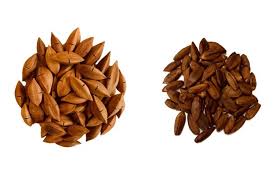
Years ago, my younger brother moved to the southernmost province of Luzon Island, which was our father’s hometown. In the past, I would spend holidays at my brother’s residence with some very close friends. The roads are well-paved, and in the city half an hour away, there are small commercial shops and a local fast-food chain unique to the area. The province is well-known for its “pili” nuts and handicrafts.

According to my brother, the city’s landscape has drastically changed with the addition of a big mall chain and a Roman-inspired colosseum. My nephew recently informed me that the provincial projects mainly consist of community-based gymnasiums. “Progress” seems to be selective and does not necessarily foster a strong culture of creativity and productivity in each household.

In my current municipality, the main issue is the lack of social infrastructure to support entrepreneurship. The prevailing norm is consumption, whether physical or digital. Bureaucratic red tape makes business mechanisms inaccessible, discouraging newcomers from starting any kind of enterprise.

Perhaps another reason for this lack of visitors is the municipality’s location. Being the last town in the province, only residents and haulers typically come to the area. It is isolated from the main arterial road that traverses the entire province.

The town does not have a specific product to boast of, unlike other cities and municipalities known for their specialties like shoemaking, salted and duck eggs, fish sauce, specialty noodle dishes, and slippers made from water lilies.

The town’s main products are concrete and sand, extracted through continuous quarrying activities that are detrimental to both human health and the environment. Agricultural produce — such as bananas, mangoes, tomatoes, okra, and eggplants — is limited due to the town’s rocky terrain. During a visit to an upland village, I met a caretaker of a small property that was supposed to be organic, but I discovered during our conversation that it was merely a facade by a large mobile phone provider for its social enterprise project.  Additionally, the population of native tilapia[1] is low due to murky waters caused by silt and mud. Despite having numerous hiking sites that also cater to consumerist interests, the municipality lacks a distinct specialty dish for people to enjoy and remember as part of its commercial offerings.

According to my sister-in-law’s brother, the main source of income for their island-province is remittances from Overseas Filipino Workers (OFWs) [2] .He also claims that the province is an ideal place to retire and spend money, boasting beaches, volcanic hot springs, coconut plantations, rice farms, nature resorts, and rivers. Despite having a root-crop based delicacy and an abundance of dried fish, the province lacks production or manufacturing facilities, with the exception of mining, which unfortunately led to one of the worst environmental disasters in the country’s history. As a result, consumption is the prevailing norm on the island. Isn’t it ironic that the ex-girlfriend of a close friend pursued a degree in BS Entrepreneurship but currently works as a Customer Engagement Manager at a global fast-food chain?  She should have considered starting her own business, no matter how small. She is actually promoting a perpetual cycle of consumerism, rather than entrepreneurship.

Based on online sources[3], there are only ten small manufacturing firms in my current area, Montalban (Rodriguez), which covers a total land area of   172.65 km 2 (66.66 sq mi) [4]. This implies that a culture of production is not the town’s priority when it should have been the first step to economic and social progress, alongside environmental protection and sustainability.

In hindsight, society generally encourages individuals to consume the latest gadgets, trends, food, technology, shoes, fashion, apps, make-up, and hairstyles. We are therefore told to consume and discard in a never-ending cycle of consumption and waste. Creativity in building enterprise is relegated in favor of a consumerist culture. To move forward, communities must do the reverse, so wealth is neutralized. Not everyone has the business acumen to succeed. However, production must still exceed consumption.

One main reason for the failure of production to establish a strong foothold in our communities could be attributed to the lack of practical and relevant entrepreneurial courses that are accessible to everyone in terms of fees, range, and distance. These courses are not tailored to the specific needs of each locality, as businesses tend to be similar in one area, causing most enterprises to struggle to take off without offering anything unique to attract patrons. Creativity and productivity go hand in hand.

To create a more sustainable society, we need to move away from consumerism and focus on increasing production through manual, mechanical, automated, or digital means. A thriving community relies on its ability to expand and improve production capabilities.

[1] Fish

[2] https://psa.gov.ph/statistics/survey/labor-and-employment/survey-overseas-filipinos/node/1684600

[3] https://www.dnb.com/business-directory/company-information.manufacturing.ph.rizal.rodriguez_%28montalban%29.html

[4] https://www.philatlas.com/luzon/r04a/rizal/rodriguez.html

Manuel A. Alindogan, Jr. or Jun A. Alindogan is the Academic Director of the Expanded Alternative Learning Program of Empowered East, a Rizal-province based NGO in the Philippines and is also the founder of Speechsmart Online that specialises in English test preparation courses. He is a freelance writer and a member of the Freelance Writers’ Guild of the Philippines (FWGP).

.

PLEASE NOTE: ARTICLES CAN ONLY BE REPRODUCED IN OTHER SITES WITH DUE ACKNOWLEDGEMENT TO BORDERLESS JOURNAL

Click here to access the Borderless anthology, Monalisa No Longer Smiles

Click here to access Monalisa No Longer Smiles on Kindle Amazon International

Categories
Essay

Deconstructing Happiness

By Abdullah Rayhan

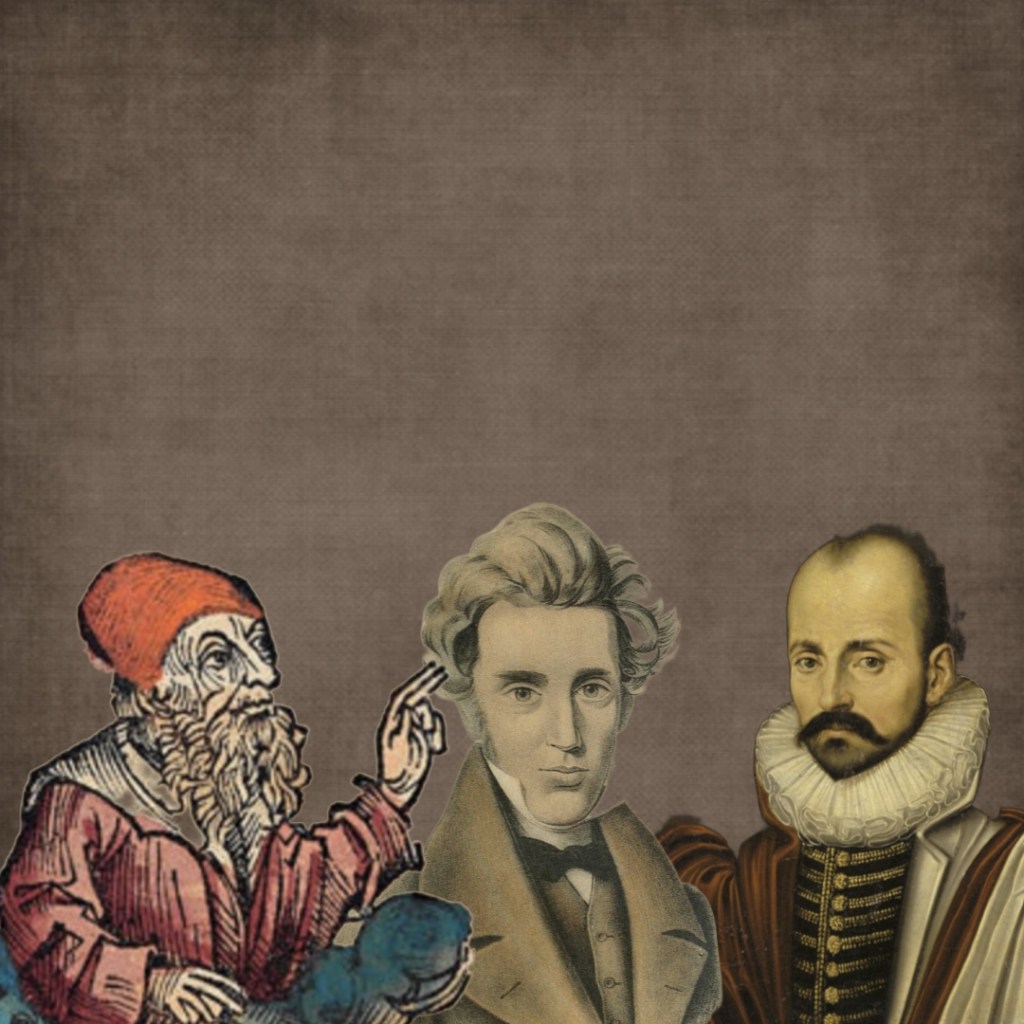
From Left to Right: Boethius, Keirkegaard and Montaigne. Courtesy: Abdullah Rayhan
“Do you hear the whisper of the shadows?
This happiness feels foreign to me.
I am accustomed to despair.”

-Forough Farrokhzad (1934-1967), Iranian Poet and Filmmaker

We seek psychotherapy to deal with the distress, sadness, depression, and psychological dimensions that are beyond our reach. Even after going through the medical procedure, we are seldom left with the satisfying sensation we deeply crave. This is where philosophy comes in.

To Socrates, philosophy was basically the way to live a life. He mainly observed how life functions and examined the influences that allocate life with certain affects. Other philosophical ideas too somewhat try to interpret the nature of existence in a similar manner. There are tons of such schools: from absurdism, to existentialism, nihilism, Hegelian, Kantian, and whatnot. But, apart from offering ideas and perspectives on existence, what else do they contribute? It can be a bit vague to trace the purpose of such philosophical ideas where the basic understanding, instead of leading toward fulfillment, can plunge us into the deepest pit of darkest despair. Existential philosophy will constantly remind you of life’s futility, ethical philosophies will keep painting idealistic portraits all to no avail. Finally, you are left with novel knowledge that does not necessarily help you deal with the struggles drowning your heart within a blurry tumult.

Fortunately, practical application of philosophy exists. Last year, when I was particularly at my lowest, estranged from everything I adored, all prospects of happiness ruined, abandoned to face monstrous adversities with a heavy bleeding heart, I found Boethius[1] comforting.

Camus, Sartre, and Nietzsche will comfort you with the assurance that you can construct optimism with your own effort. They tell your life has no inherent meaning, thus you are allowed to come up with your own sense of existence and give it any meaning you can conjure up at will. Bentham will tell you how to establish collective contentment. Kant will give you formulas to maintain peace. But none of them essentially gives a clear picture of what happiness really is. This makes Boethius unique. He doesn’t adhere to any false hopes, he rejects all things that are constructed, yet, through a transparent honesty, he shows a path that can lead toward organic satisfaction, not laced with any promises of universal fulfillment, just simple reasoning advocating for individual contentment.

Boethius basically inspires us to contemplate on our happiness. He directly questions the idea of happiness we so intimately endorse. Boethius asks you,

“Do you really hold dear that kind of happiness which is destined to pass away? Do you really value the presence of Fortune when you cannot trust her [Fortune] to stay and when her departure will plunge you in sorrow? And if it is impossible to keep her at will and if her flight exposes men to ruin, what else is such a fleeting thing except a warning of coming disaster?”

We consider ourselves lucky when we get our desired happiness. But, being lucky or ‘fortunate’ cannot be the standard that constructs happiness. In Boethius’ words, “happiness can’t consist in things governed by chance” mainly because there’s no guarantee it will last. He argues anything that is ephemeral, transient, and temporary cannot be of any value in terms of happiness as when that happiness evaporates, it is replaced by sorrow that is sometimes too much to bear. In this way, state of happiness is “a warning of coming disaster”. Happiness should not be the reason for despair and discontent. Thus, happiness brought by luck is not what it appears to be. 

He further asks if something that is temporary can really be claimed as one’s own. Boethius’s voice renders one mute when he states, “I can say with confidence that if the things whose loss you are bemoaning were really yours, you could never have lost them.”

A significant portion of Boethius’s argument is surrounding the transience of happiness. If happiness lies in what’s temporary, then isn’t misery temporary as well? Boethius puts it with much clarity. He comforts you, saying: “If you do not consider that you have been lucky because your onetime reasons for rejoicing have passed away, you cannot now think of yourself as in misery, because the very things that seem miserable are also passing away.”

Boethius inspires you to wonder about the nature of misery. We are miserable, sad, melancholic usually because we had a taste of happiness sometimes in the past, which is missing at the moment. We were happy once. But happiness is no longer part of our lives, and this absence is what’s causing our misery. Had we not had that happiness before, we wouldn’t have the misery that chokes our heart with a suffocating grip. This is the reason Boethius called happiness “a warning of coming disaster”.

Think about it. Someone who is currently living the same life as you may not be in similar misery as you because, as they haven’t had the happiness you had, they are not burdened to deal with the absence that you are compelled to plummet in. Thus, neither happiness nor misery operate based on any strict blueprint, rather it is something formed by one’s own experience and are inter-dependent. Boethius puts it very eloquently saying, “There is something in the case of each of us that escapes the notice of the man who has not experienced it, but causes horror to the man who has […] Nothing is miserable except when you think it so, and vice versa, all luck is good luck to the man who bears it with equanimity”. We lose our ability to “bear it (despair) with equanimity” because of our past interactions with pleasant experiences.

Perhaps you would relate to Boethius in terms of misery though not in an entirely literal sense. Boethius had everything. A beautiful wife, two affectionate children, popularity, respect, novelty, an amazing home, and enough money to live without any worrying. Yet, because of some false accusation, he was suddenly deprived of it all and was imprisoned. His happy life suddenly became a dark den overpouring with impenetrable despair. Many of our misery too is born because of its contrast to the time when we were happy. Now think about it for a moment. Boethius was devastated in the cell because he previously had a satisfying life. Had he lived like a homeless person with nothing of his own, the confined space of that very cell would appear satisfactory because of the roof over the head and chunks of food on the plate no matter how dim and damp the dark roof or how stale the smelly food. It shows how subjective the texture of happiness is.  

Boethius deconstructs the common perception of happiness, breaking it down to a rather ‘mundane’ prospect of life on the contrary to our belief of it being a significant one. He believes our idea of happiness itself is laced with misery. He proclaims, “how miserable the happiness of human life is; it does not remain long with those who are patient and doesn’t satisfy those who are troubled.”

So, if happiness indeed is of the nature that compulsorily leaves one unsatisfied, then does happiness deserves to be attributed with divine epithet? Boethius disagrees. He presents a compelling argument for this, saying, “[H]appiness is the highest good of rational nature and anything that can be taken away is not the highest good – since it is surpassed by what can’t be taken away …” It is the unreliability of our perceived idea of happiness that makes it a futile one with little or no value.

So, if happiness is something that is transient, unreliable, and can never offer the contentment it promises, then is happiness really something to chase after? “Happiness which depends on chance comes to an end with the death of the body,” propounds Boethius. Thus, to cling on to happiness is to cling on to a slippery rope dangling on top of a void filled to the brim with invisible abyss. You cannot do anything to make this notion of happiness fruitful in the sense you believe it to be. Boethius thinks it’s foolish to attempt to make this ineffective happiness endure and persist. He words it differently saying, “what an obvious mistake to make – to think that anything can be enhanced by decoration that does not belong to it.” Thus, again, the problem lies with the way we shape the notion of happiness.

As our immediate cognition tells us, the most apparent formula of happiness is a combination of romantic love and successful career. But is it really true? If you have understood Boethius, you probably realise that these temporary agents (romantic partner and career) cannot make you content for long. Something that is not entirely yours own cannot get you that contentment you crave. Kierkegaard too agrees how things that are not inherently one’s own are subject to loss, thus misery. Kierkegaard delivers the idea with a touch of subtle humour,

“Marry, and you will regret it; don’t marry, you will also regret it; marry or don’t marry, you will regret it either way. Laugh at the world’s foolishness, you will regret it; weep over it, you will regret that too; laugh at the world’s foolishness or weep over it, you will regret both. Believe a woman, you will regret it; believe her not, you will also regret it… Hang yourself, you will regret it; do not hang yourself, and you will regret that too; hang yourself or don’t hang yourself, you’ll regret it either way; whether you hang yourself or do not hang yourself, you will regret both.”

Kierkegaard and Boethius clearly intersect at certain points. Having happiness too, with its transience and all, is always the cause of a constant despair. Boethius very wittily points out that when we don’t have happiness, we strive and struggle to attain it. Once we have attained it, we become anxious to preserve it because no matter how much we enjoy happiness, at the back of our mind, we are aware of its temporary and fragile nature. This is why Kierkegaard says all our prospects of happiness are ultimately fated to end up in regret. Michel de Montaigne words this human tendency more concisely saying, “he who fears he shall suffer, already suffers what he fears”. In other words, as being in happiness always contains the risk of losing the happiness, this fear actually prevents one from ever fully attaining that state of mind.

Kierkegaard reaches such a conclusion because he too believed happiness as we know it is transient and fragile. The reason, as he locates, is its inorganic essence. Happiness modified with external force will never be permanent or make one content. He imagined happiness as an inswing door. He says, “the door of happiness opens inward, one should keep aside a little to open it: if one pushes, they close it more and more”. This is to say that one should not put any external force to influence happiness. That way, it’ll only cause more damage than good, or as Kierkegaard words it, the door of happiness will “close more and more”.

This overall means, our understanding of happiness, which is generally tied to external factors, can never bring within our reach the happiness we idealise with transcended romanticism. Thus, we are putting so much value in that idea of happiness in futile attempts, not knowing what it has in store for us while in reality it does not deserve to be the glorified item that sits at the epitome of human desire.

Interestingly, Boethius, Kierkegaard, and Montaigne have similar ideas on obtaining true contentment. They all agree that it’s not attainable with external properties and should be dug up from ones within. They commonly emphasise internal resources over external acquisitions.

Montaigne, for example, closely focuses on the nuanced foundation where the true happiness lies. Yes, material and metaphysical attainments can make us happy, he agrees, but not genuinely as we want it to be. He suggests, “[W]e should have wife, children, goods, and above all health, if we can, but we must not bind ourselves to them so strongly that our happiness depends on them. We must reserve a backshop wholly our own.” Similar to Boethius, Montaigne too recommends not relying our happiness on subjects that are subject to transience. Rather he advices to “reserve a backshop”. This “backshop” is the inner sanctum, a profound part of ourselves that remains untouched by the outer world, free from all kinds of external force. He designs this backshop as a space “wherein to settle our true liberty, our principal solitude and retreat”.

Kierkegaard too advocates for contentment that arises from within rather than from external influences whose essential nature is transient. In Kierkegaard’s perception, similar to Montaigne’s, it is silence, solitude, and introspection within us that can get us the contentment we idealise as happiness. He perceived all kinds of temporal gains as a reason for eventual dissatisfaction and advocated for things that remain untainted for eternity like intellect and truth.

Similar to Kierkegaard and Montaigne, Boethius agrees it is internal stability that overpowers the temporary shower of ecstatic sense of euphoria external fortune brings. Boethius advocates for this internal stability with better wording,

“If you are in possession of yourself you will possess something you would never wish to lose and something Fortune could never take away.”

This internal stability, according to Boethius, comes from one’s power of reasoning. Similar to Kierkegaard, Boethius prioritises intellectual resources because it has the ability to make one indifferent to their own fate. Intellect can make one recognise that there cannot be any prospect of contentment in things that are unstable, and everything that fortune brings is laced with this vicious instability. By fortune, Boethius does not mean a sudden stroke of good luck that potentiates all of our solvencies, but rather it’s everything good that happens to us without our own effort whether it’s a small gift from a loved one, or the smile of a baby. These make us happy, yet these are external forces. Fate intervenes in our life, leaving us with little to no control over our own selves. We can’t control a baby from smiling, and we won’t get out of our way and prevent a loved one from offering us a flower which they have invested so much thought in, but when babies do not smile at us, or when no one is left to offer even a stem of flower to us, that is when we experience a suffocation that could break our already shattered heart. Boethius asks us to realise all these with a clear conscience and allow our intellect and power of reasoning to locate what’s unstable and help us grip onto only what’s inherently ours.   

All these perspectives boil down to the fact that the reason we are not happy isn’t because we are constantly chasing it, but rather we have a wrong perception of what happiness is. Happiness is not the greatest good, nor is it anything to die for. It is, as clichéd as it may sound, something present within all of us with a very apparent eminence, and all one has to do to access it is have an open mind and reach ones within with honesty. Through this lens one doesn’t have to ‘imagine’ Sisyphus happy, rather Sisyphus is ‘happy’ for real and for eternity.

Works Cited:

On the Consolation of Philosophy by Anicius Manlius Severinus Boethius

Either/Or by Søren Kierkegaard

[1] Anicius Manlius Severinus Boethius (480-524), Roman statesman, historian and polymath

Essais by Michel de Montaigne

Abdullah Rayhan studies Literature and Cultural Studies at Jahangirnagar University.

.

PLEASE NOTE: ARTICLES CAN ONLY BE REPRODUCED IN OTHER SITES WITH DUE ACKNOWLEDGEMENT TO BORDERLESS JOURNAL

Click here to access the Borderless anthology, Monalisa No Longer Smiles

Click here to access Monalisa No Longer Smiles on Kindle Amazon International

Categories
Excerpt

Shabnam: A Novel by Syed Mujtaba Ali

Title: Shabnam

Author: Syed Mujtaba Ali

Translated from Bengali by Nazes Afroz

Publisher: Speaking Tiger Books

Badshah Amanullah was surely off his rocker. Or else why would he hold a ball-dance in an ultra-conservative country like Afghanistan? On the occasion of Independence Day, Afghanistan’s first ball-dance would be held.

We, the foreigners, were not that bothered. But there was a buzz of restlessness among the mullahs and their followers—the water carriers, tailors, grocers, and the servants. My servant, Abdur Rahman, while serving the morning tea, muttered, ‘Nothing is left of religious decency.’

I did not pay much heed to Abdur Rahman. I was no messiah like Krishna. The task of saving ‘religious decency’ had not been bestowed upon me.

‘Those hulking men will prance around the dance floor holding on to shameless women.’

I asked, ‘Where? In films?’

After that there was no stopping Abdur Rahman. The ancient Roman wild orgies would have sounded like child’s play compared to the juicy imageries of the upcoming dance event that he described. Finally, he concluded, ‘Then they switch off the lights at midnight. I don’t know what happens after that.’

I said, ‘What’s that to you, you mindless babbler?’

Abdur Rahman went mum. Whenever I called him a blathering prattler, he understood that his master was in a bad mood. I would use the Bengali slang word for it and being a seasoned man, though Abdur Rahman did not know the language, he would be able to read my mood.

I was out in the mild evening. Electric lamps lit up the bushes of Pagman. The tarmacked road was spotlessly clean. I was meandering absentmindedly, thinking it was the month of Bhadra and Sri Krishna’s birthday had been celebrated the previous day. My birthday too, according to Ma. It must be raining heavily in Sylhet, my home. Ma was possibly sitting in the north veranda. Her adoptive daughter Champa was massaging her feet and asking her, ‘When will young brother come home?’

The monsoon season is the most difficult one for me in this foreign land. There is no monsoon in Kabul, Kandahar, Jerusalem or Berlin. Meanwhile in Sylhet, Ma is flustered with the nonstop rain. Her wet sari refuses to dry; she is in a tizzy from the smoke of the wet wood of the oven. Even from here I can see the sudden pouring of rain and the sun that comes out after a while. There are glitters of happiness on the rose plants in the courtyard, the night jasmine at the corner of the kitchen, and on the leaves of the palm tree in the backyard.

There was no such verdant beauty here.

Look at that! I had lost my way. Nine at night. Not a soul on the street. Who could I ask for directions?

A band was playing dance numbers in the big mansion to the right.

Oh! This was the dance-hall as described by Abdur Rahman. The waiters and bearers of the building would surely be able to direct me to my hotel. I needed to go to the service doors at the back of the building.

I approached.

Right at that moment, a young woman marched out.

I first saw her forehead. It was like the three-day-old young moon. The only difference was the moon would be off-white—cream coloured—but her forehead was as white as the snow peaks of the Pagman mountains. You have not seen it? Then I would say it was like undiluted milk. You have not seen that either. Then I can say it was like the petals of the wild jasmine. No adulteration of it is possible as yet.

Her nose was like a tiny flute. How was it possible to have two holes in such a small flute? The tip of the nose was quivering. Her cheeks were as red as the ripe apples of Kabul; yet they were of a shade that made it abundantly clear it was not the work of any rouge. I could not figure out if her eyes were blue or green. She was adorned in a well-tailored gown and was wearing high-heeled shoes.

Like a princess she ordered, ‘Call Sardar Aurangzeb Khan’s motor.’

Attempting to say something, I fumbled.

She, by then, looked properly at me and figured out that I was not a servant of the hotel. She also understood that I was a foreigner. First, she spoke in French, ‘Je veux demand pardon, monsieur—forgive me—’ Then she said it in Farsi.

In my broken Farsi I said, ‘Let me look for the driver.’

She said, ‘Let’s go.’

Smart girl. She would be hardly eighteen or nineteen.

Before reaching the parking lot, she said, ‘No, our car isn’t here.’

‘Let me see if I can arrange another one,’ I said.

Raising her nose an inch or so, in rustic Farsi she said, ‘Everyone is peeping to see what debauchery is taking place inside. Where will you find a driver?’

I involuntarily exclaimed, ‘What debauchery?’

Turning around in a flash, the girl faced me and took my measure from head to toe. Then she said, ‘If you’re not in a hurry, walk me to my house.’

‘Sure, sure,’ I joined her.

The girl was sharp.

Soon she asked, ‘For how long have you been living in this country? Pardon—my French teacher has said one shouldn’t put such questions to a stranger.’

‘Mine too, but I don’t listen.’

Whirling around she faced me again and said, ‘Exactment—rightly said. If anyone asks, say I’m going with you, or say Daddy introduced me to you. And don’t you ask me any question like I’m a nobody. And I will not ask anything as if you have no country or no home. In our land not asking prying questions is akin to the height of rudeness.’

I replied, ‘Same in my land too.’

She quipped, ‘Which country?’

I said, ‘Isn’t it apparent that I’m an Indian?’

‘How come? Indians can’t speak French.’

I said, ‘As if the Kabulis can!’

She burst out laughing. It seemed in the fit of laughter she suddenly twisted her ankle. ‘Can’t walk any longer. I’m not used to walking in such high heels. Let’s go to the tennis court; there are benches there.’

Dense darkness. The electric lamps were glowing far away. We needed to reach the tennis court through a narrow path. I said, ‘Pardon,’ as I touched her arm inadvertently.

Her laughter had no limits. She said, ‘Your French is strange, so is your Farsi.’

My young ego was hurt. ‘Mademoiselle!’

‘My name is Shabnam.’

(Extracted from Shabnam by Syed Mujtaba Ali, translated by Nazes Afroz. Published by Speaking Tiger Books, 2024)

About the Book

Afghanistan in the 1920s. A country on the cusp of change. And somewhere in it, a young man and woman meet and fall in love.

Shabnam is an Afghan woman, as beautiful as she is intelligent. Majnun is an Indian man, working in the country as a teacher. Theirs is an unlikely love story, but it flowers nonetheless. Breaking the barriers of culture and language, the two souls meet. Shabnam is poetry personified—she knows the literary works of Farsi poets of different eras. Majnun is steeped in the language and thoughts of Bengal. Together, they find love in immortal words and in the wisdom of the ages.

As the country hurtles towards yet another cataclysmic change, and the ruling king flees into exile, Shabnam is in danger from those who covet her for her famous beauty. Can she save herself and her Indian lover and husband from them?

Shabnam has been hailed as one of the most beautiful love stories written in Bengali. Lyrical and tragic, this pathbreaking novel appears in English for the first time in an elegant translation by the translator of Syed Mujtaba Ali’s famous travelogue Deshe Bideshe (In a Land Far from Home).

About the Author

Born in 1904, Syed Mujtaba Ali was a prominent literary figure in Bengali literature. A polyglot, a scholar of Islamic studies and a traveller, Mujtaba Ali taught in Baroda and at Visva-Bharati University in Shantiniketan. Deshe Bideshe was his first published book (1948). By the time he died in 1974, he had more than two dozen books—fiction and non-fiction—to his credit.

About the Translator

A journalist for over four decades, Nazes Afroz has worked in both print and broadcasting in Kolkata and in London. He joined the BBC in London in 1998 and spent close to fifteen years with the organization. He has visited Afghanistan, Central Asia and West Asia regularly for over a decade. He currently writes in English and Bengali for various newspapers and magazines and is working on a number of photography projects.

PLEASE NOTE: ARTICLES CAN ONLY BE REPRODUCED IN OTHER SITES WITH DUE ACKNOWLEDGEMENT TO BORDERLESS JOURNAL

Categories
Essay

To Be or Not to Be or the Benefits of Borders

By Wendy Jones Nakanishi

Art by Sohana Manzoor

It may seem perverse to submit an article advocating the benefits of borders to a journal entitled Borderless. I hasten to explain that I agree with the guiding principle of this publication – that the human spirit should be encouraged to soar, transcending cultural limitations and national boundaries. But I’m also reminded of the observation made by the American poet Robert Frost that high fences make good neighbours.

Borders! It’s one of those words that has developed an almost completely negative connotation in recent years, having taken on the emotive sense of exclusion and unfairness. A second example of this phenomenon is the term patriotism, which now is denigrated for similar reasons. Borders and patriotism refer to values and beliefs valorized in the past that are currently under vigorous attack. Their stock has plunged dramatically in this modern globalised society.

It’s no wonder. We inhabit the age of EDI – equality, diversity, and inclusion. Few voices are raised to question its tenets. Most people seem, for example, unreservedly to believe in multiculturalism as an undisputed good, and love of one’s own country has become a questionable – often dismissed as a deplorable – sentiment.

The present disdain for borders and patriotism is unsurprising. We are witnessing the mass migration of people from one part of the world to others on a scale unseen since the post-1945 refugee crisis, when an estimated 175 million people were on the move, in part because of the defeat of the Axis powers but also because of new civil wars. Nowadays, the US, the UK and Europe are proving particularly attractive destinations for individuals fleeing countries troubled by violence, corruption, poverty, religious persecution, and social discrimination. I would like here to explain why I believe in the benefits of borders while acknowledging their potential demerits.

I think the propensity to erect borders is an essentially human trait, coexistent with human existence. The world’s first walls originated with its first cities – places like Jericho in the Bible, constructed twelve thousand years ago – where Joshua waged his famous battle to bring them down. The ancient cities had walls for defensive purposes. Walls intended to divide countries came much later, with the first instance originating in Mesopotamia in 2000 BC.

David Frye observes in his book Walls: A History of Civilization in Blood and Brick that the idea of constructing barriers to keep people out is as ancient as human civilisation. It is only the people excluded that has changed. In the past, it was invading hordes of armed warriors. Now barriers are erected to control immigration, to keep out terrorists, and to halt the flow of illegal drugs.

In Frye’s opinion, borders originated as a means of creating a safe space where civilization could develop and flourish. Walls gave people the security to sit and think.  Frye links the building of the Great Wall of China in the late third century B.C. with the creation of the ancient Chinese state. In Britain, Hadrian’s Wall was constructed around 112 A.D. by the Romans to keep out the ‘barbaric’ tribes in the north while they ‘civilized’ the inhabitants further south.

Borders seem to be coming back into vogue. Donald Trump’s vow to expand and reinforce the Mexico-United States barrier was a crucial component of his successful 2016 presidential campaign platform. But in January 2021, the newly elected president Joe Biden halted construction of what had become known as ‘Trump’s Wall’. Since that date, the southern border of the States has been swamped with illegal migrants, and in July 2022 Biden backtracked, announcing a plan to fill in four gaps in the barrier in Arizona that had seen some of the busiest illegal crossings. Some might argue it’s too little too late. In July 2022, there were reports of four thousand Mexican family encounters at the border; a year later, that number had quadrupled. And that’s only Mexican immigrants. Economic and political turmoil in such countries as Venezuela, Haiti, Ecuador, and Columbia has seen large numbers of people trying to escape to the States: their near neighbor where they seek not only safety but a place where they can aspire and thrive.  

Similarly, the EU is in the process of having to reconsider what it once identified as one of its guiding principles: the unrestricted movement of people (in particular, workers) within its twenty-eight EU member states. Countries such as Austria and Denmark have significant percentages of their populations who are opposed to this policy. It has been argued that citizens in richer member states are more likely to have negative views. Until the 2000s, only one percent of EU citizens lived in a country other than the country of their birth. That situation has changed dramatically in recent years with the EU’s enlargement to central and eastern Europe. Now intra-EU migration involves millions of EU nationals who are, in general, their countries’ best and brightest – their most highly educated or highly skilled workers – moving from poorer to richer EU member states. What some EU nationals see as an opportunity, others regard as a threat.

Borders not only keep people out but also keep people in. That is one of their least attractive features. The barbed wire that was the first manifestation of the structure that came to be known as the Berlin Wall appeared almost overnight in August 1961. But this wall had an unusual purpose. It was erected to prevent immigration from East Germany to West Germany when the economy of the former was on the verge of collapse because of the many people fleeing to the west. The Berlin Wall staunched that flow of emigration, leading President Kennedy to observe that ‘A wall is a hell of a lot better than a war’.

Arguably the Korean Demilitarized Zone constructed after 1953, which is 250 kilometers long and five kilometers wide, separating the north and south of what was once a single country, has similarly acted as a deterrent to armed conflict. It has been described as a ‘comfortable wall’ that ensures an ‘uncomfortable peace’. For the North Korean government, it acts as a barrier to invasion from the far more prosperous and less repressive government of South Korea. But it has also trapped millions of people in a state that increasingly resembles a huge prison camp. North Koreans are among the poorest people in the world as well as the least economically free. It is estimated that a tenth of the population died during a famine that lasted from 1995 to 1998. While a thousand escape the country every year, many are imprisoned, tortured, and even killed while making the attempt. But they are willing to brave the danger, reluctant to remain in a country where they are systematically denied any civil, religious, or political rights.

Borders are not limited to the demarcation of cities and countries. Physical structures indicating property limits are a fact of everyday life for people throughout the world. In my native America, fences are a prominent feature, indicating boundaries for houses and fields. In Japan, where I lived for many years, the traditional family compound – including farmhouse and storehouse and courtyard – is enclosed within clay walls. In the corner of northwest England where I am currently residing, the countryside of rolling green hills is crisscrossed by dry stone walls and hedges. Hedges in Britain have their origins in the Bronze Age (2500-700 BC), when they were used to manage cattle and to keep them separate from crops. There is speculation that some hedges of sufficient age, density and size may even have once served as military defenses. But while their first function was to act as barriers, they now serve an important role in the environment, as the preserve of insects and wildlife, including sixty species of nesting birds.

A house itself represents a kind of delimitation: a declaration of private space as opposed even to the yard or garden, which are semi-public. Americans tend to be house-proud, their dwellings often boasting large picture windows that afford a view to passers-by of the carefully decorated front room. Japanese, on the other hand, are sometimes ashamed of inhabiting a cramped small house sometimes separated only by a matter of inches from their neighbours’ homes on either side, and they tend to use opaque rather than clear windows to preserve their privacy. Even the big traditional Japanese farmhouse is somehow secretive – bearded in heavy shrubbery, stooping under the weight of a heavy tiled roof. Of course, there are many types of houses in Britain, but I happen to live in one of the most common – a terraced house with a tiny garden out front and a cement yard at the back. My bay window looking out onto the street has its lower half shrouded in a thin net curtain. When I stand nearby, I can look out at my domain – my little plot of earth densely planted with bushes, flowers, and shrubs.

Living in the UK, I’m often reminded of the saying ‘An Englishman’s house is his castle’. The typical British home has an emphasis on the cozy and comfortable, and while few still have coal fires, many retain the old fireplaces as a decorative feature. Alas, nowadays, many British people pave over their little front gardens to use the space for parking. But traveling by train affords wonderful views of long strips of narrow gardens backing on to the tracks, and I sometimes think their owners are like public benefactors, entertaining us with the sight of their patios and pergolas, their beds of flowers and rose trellises as we speed to our destinations.

The observant reader may have noticed that I have begun this short essay on borders by examining those surrounding countries and cities, and then continuing with an ever-narrowing perspective. I would like to conclude by looking at the barriers we put up between ourselves and others.

As I noted at the beginning of this piece, the American poet Robert Frost wrote a poem eulogising high fences for ensuring good relations with our neighbors. Because the States is a relatively new country – and one of considerable size – many Americans can enjoy the luxury of living in houses surrounded by a good deal of land. Driving through any suburb you can see large expanses of grassy lawn separating the house, often a ranch-style dwelling, from the road. In that sense, Frost’s high fences aren’t needed. Unlike the Japanese, crammed into close quarters with each other, or Europeans, fond of renting flats, Americans are used to having their own space. The pioneer spirit lingers on with a focus on rugged individualism.

This can be a curse as well as a blessing. There have been shocking instances in recent years of abducted American women and children spending years as captives in houses so remote or so barricaded against the outside world that their kidnappers could act with near impunity.

Such a situation is unimaginable in Japan. Many Japanese, and especially those in Japan’s cities, live in what they call ‘mansions’ – huge buildings with apartments the inhabitants own rather than rent. Few secrets can be kept in such an environment. In towns and rural areas, the strong emphasis on community activities means that there is constant interaction between households.

While many Americans like to preserve a physical distance from others, the Japanese have developed ways to preserve their privacy in public places as a sort of psychic skill. During my long residence in Japan, I often marveled at how the Japanese can make a virtue of necessity, and this is a case in point. On packed trains, the Japanese self-isolate by reading or dozing or using their phones. In dense crowds in cities, they manage to retain personal space by skillfully skirting each other, scarcely touching, as they walk. Whenever I find myself in one of the huge subway stations in Tokyo or Osaka, I occasionally pause to marvel at what looks like a carefully choreographed dance. Throngs of well-dressed people silently rush past me. They are dignified, intent on their own business, and no confusion or chaos is perceptible. Despite the closest proximity imaginable to each other, they somehow manage to preserve their own personal borders.  

The situation in the UK is between those two extremes. Despite inhabiting one of the most densely populated countries in Europe, the British can enjoy incomparable scenery preserved as so-called ‘green belt’ areas around cities as well as landscapes protected by their designation as national parks or as areas of outstanding natural beauty. Unsurprisingly, the British are great walkers. As an American, I’ve had to learn that when a friend suggests a stroll, it can easily mean a four or five-mile hike. The British can escape to the great outdoors when they feel a need to be alone.

There are those who dismiss national stereotypes as nonsense, but I’m inclined to credit them with at least a grain of truth. I think, for example, there are affinities between the Japanese and the British that are perhaps attributable to their both inhabiting island nations and being, as a result, insular. They are bad at learning other languages. They are traditionally characterised by a certain reserve – lacking, for example, the American fondness for confessing details of their private lives to complete strangers.

Borders. Patriotism. The two are connected. It is often said that those who do not learn from the mistakes of the past are doomed to repeat them. The lesson we might be tempted to draw from the bloody history of the twentieth century is that nationalism is reprehensible and that borders can lead to wars.

But I prefer to draw another moral. It can be argued that the world was plunged into two world wars because evil, opportunistic leaders like Hitler chose not to respect national borders while also twisting patriotism felt by Germans and Austrians into a perverted version of what is a normal human impulse to love one’s own country. As I write this piece, I can’t help but think of how topical it is, with the tragedy unfolding in the Middle East which concerns borders and contested land. I pray a just settlement can be reached and peace achieved as soon as possible.    

Finally, I believe we all resort to a variety of measures to define ourselves. We are individuals; we are residents of a certain neighborhood; we are citizens of a particular country. I believe that it is by respecting each other’s borders – personal and public – that we can achieve the ideal of living together on this crowded globe in harmony. Public borders – such as the political boundaries of our own country – can inspire altruism by leading us to identify with an entity greater than ourselves. Private borders – those parameters for conduct and behavior we draw for ourselves, in our daily lives – can confer peace and a sense of individual self.

Wendy Jones Nakanishi has published widely on English and Japanese literature and, under her pen name of Lea O’Harra, has written four crime fiction novels available on Amazon.

PLEASE NOTE: ARTICLES CAN ONLY BE REPRODUCED IN OTHER SITES WITH DUE ACKNOWLEDGEMENT TO BORDERLESS JOURNAL

Click here to access the Borderless anthology, Monalisa No Longer Smiles

Click here to access Monalisa No Longer Smiles on Amazon International

Categories
The Observant Immigrant

Can We Create a Better World by Just Wishing for it?

By Candice Louisa Daquin

The wish to laugh and shrug off differences that create unhappiness and wars is a universal one. The majority of us want to avoid unhappiness at any cost. There is however, a downside to trying to avoid unhappiness by being too open about unhappiness. When we begin to pathologize everything as a disorder, we may inadvertently neglect our ability to generate better mental health.

Before mental illness was discussed en mass, it was private and considered shameful. This had obvious detrimental effects on those suffering, but one could also argue there was a benefit to not making everything so extremely public. Like with any argument, there are pros and cons to how far we publicize mental health. The extreme of ignoring it, didn’t work. But does the extreme of talking about it to death, really help people as much as we think?

In the second half of the 20th century, owing in part to a neglect of, and a need for; improved mental health care, societies began to shift from encouraging suppression of emotion to a recognition of psychological distress and its impact. Institutes and then the de-institutionalisation movement, became ways of coping with people who struggled to function in society. But these people didn’t choose to be unhappy. Whilst it’s obvious this shift to publishing mental health instead of hiding it, has been highly beneficial in some regards; we should also consider its far reaching ramifications.

“(Historically) Many cultures have viewed mental illness as a form of religious punishment or demonic possession. In ancient Egyptian, Indian, Greek, and Roman writings, mental illness was categorised as a religious or personal problem. In the 5th century B.C., Hippocrates was a pioneer in treating mentally ill people with techniques not rooted in religion or superstition; instead, he focused on changing a mentally ill patient’s environment or occupation or administering certain substances as medications. During the Middle Ages, the mentally ill were believed to be possessed or in need of religion. Negative attitudes towards mental illness persisted into the 18th century in the United States, leading to stigmatisation of mental illness, and unhygienic (and often degrading) confinement of mentally ill individuals,” states an article on this issue.

By publicising everything, in reaction to the days when mental health was viewed with more stigma, we have not improved suicide statistics or mental illness numbers like we’d logically assume. When something is freed of stigma and shame, more people admit to suffering from mental illness than ever before, which will make it seem like more people have mental illness, when it could simply be that they are more willing to admit to having it. On the other hand, there is an observed phenomena of things becoming socially contagious.

How can we be sure we’re not increasing mental health numbers by making it so acceptable to be mentally ill? By over-emphasising it on social media? Publicising the struggle to avoid stigma, is positive, but the degree to which we discuss mental illness may be so open, as to increase numbers or over-diagnose people. For example, everyone gets sad sometimes, that doesn’t mean everyone suffers from clinical depression. Everyone gets anxious sometimes but that doesn’t mean everyone suffers from anxiety. The distinction is: Is it a disorder or a feeling? Do clinicians spend enough time considering this when they give patients a life-long diagnosis? And what is the effect of such a diagnosis?

When psychiatrists diagnose mass numbers of people, especially easily influenced teenagers, with serious life-changing mental illnesses, that immediately means the reported numbers swell. Who is to say they would be that large if diagnosis weren’t so open ended? Nebulous? Open to outside influence? Or even, the pressure of pharmaceutical companies and desperate doctors wanting quick fixes? What of parents who don’t know how to handle their rebellious teen? Is that mental illness or just life? If they demand treatment and the teen is labeled mentally ill, do they fulfil that prophecy? And if they hadn’t been diagnosed, would their reaction and outcome be different?

Our innate ability to laugh and shrug things off, comes from the challenges in life that were so terrible we had no choice if we wanted to go forward. If we remove those challenges, are we teaching our kids how to cope with hard things or wrapping them in cotton wool and medicating them? When a family of ten children ended up with eight routinely dying, how else could families cope with such tragedy but to have that coping mechanism of laughter and the ability to shrug off despair and horror? It did not mean anyone was less caring, or feeling, but that sensitivity had to be weighed against our ability to endure. We could argue we endure less pain now than ever before, as we are less likely to lose a great number of people we know, die due to disease and famine and other historical reasons for early death. Many will never even see the body of a dead relative, so how can they process that loss?

The modern world brings with it, its own attendant risks and stressors. People growing up in 1850 may not have had to worry in the same way, about looking young to keep a job, or trying to ‘do it all.’ On the other hand, they might have had to worry about not having a society that helped them if they lost a job, or how to stop their families from starving or their village from being raided. They had fewer social cushions in that sense and more of a risky day-to-day. This was starkly true when we compare the recent pandemic outbreak with say the plagues of earlier centuries. People died in the street and were left to rot, whereas now, even as we struggled and many died, we had a modicum of order. For all our terrors with Covid 19, it could have been far, far worse and has been. I say this from a position of privilege where I lived in a society that had access to medical care, and I’m fully aware many still do not, but nevertheless if we directly compare the experience of the Black Death with Covid-19, we can see tangible improvement in what those suffering, could access.

This means whether we believe it or not, appreciate it or not, we have over-all an improved quality of life than even 50 years ago. At the same time, we may have swapped some deficits for others. It may seem a minor consolation for the myriad of modern-day woes, but we are better off than our grandparents who were called ‘The Silent Generation’. They grew up learning to not speak of their struggles but cope with them silently. These days we have outlets. And in other ways, we are more alone, it is a strange mixture of progress and back-tracking. Some would argue our grandparents had a simpler, healthier life. But if average life expectancy is anything to go by, we are growing older because for the majority, our access to medical care and over-all nutrition, are improved. On the other hand, more grow old but sick-old, which is not perhaps, something to aspire to.

When we consider how badly many eat, and in truth, we do ourselves no favour when so many of us are obese and suffering from diseases of modern living such as lack of exercise, heavy drinking, lack of sleep and eating fast-food. It might be most accurate to say we have swapped some deficits such as dying due to curable diseases, and dying from malnutrition or lack of access to care and antibiotics, with modern deficits like increasing cancer rates and increasing auto immune disorders, all of which are increasing with the swell of the modern world and its life-style.

What it comes down to is this; through the wars of the past, people stood next to each other in trenches whilst their friends were blown to pieces or died in agony. They had PTSD[1] then, they suffered from depression and anxiety, but they also had no choice but to carry on. For some, the only way out was suicide or AWOL[2], while for many, they stuffed their feelings down and didn’t speak of it. Clinicians thought this way of coping caused illness and it led along with other reasons, to an improved mental health system.

But, now, in 2022, you might be forgiven for thinking EVERYTHING was a disease, and EVERYONE suffered from something, and you might find yourself wondering if some of this perceived increase was the direct result of going from one extreme to the other. Initially, nobody was mentally ill. Nowadays, who isn’t? Is this a better model?

Having worked with mentally ill people for years as a psychotherapist, I can attest that mental illness is a reality for many. I knew it was before I ever worked in the field, and it was one reason I chose that field. I wanted to help others because I saw viscerally what happened to those who did not receive help. Despite this I came to see the value of sometimes putting aside all the labels and diagnosis and medications and treatments and trying to just get on with the process of living. If we tell someone they are mentally ill and medicate them and coddle them and tell them they don’t need to try because they are so sick, then it doesn’t give them much motivation to see what else they can do.

True, for many, they are too sick to do anything but survive and that in of itself is a big achievement. So, when we talk about the need to motivate ourselves beyond labels, we’re talking about those who we’d call high functioning. People who may suffer from depression, or anxiety, but are very able to do a lot of things despite that. Does medication and therapy and labeling them, really help them make the most of their lives? Is putting them on disability for years without reviewing if things could or have changed, help? Can they learn something from our ancestors who had to just laugh and get on with it, no matter how tough things got?

It may seem a very old-fashioned approach to consider ‘toughing it out’ and having come to America and seen how much onus they put on toughing it out, I have mixed feelings about the value of doing so. The idea of being tough enough means there is always the reverse (not being tough enough) and that feels judgmental. Being judgmental, I think, has no place in recovery.

What does have a place in recovery, is doing the best you can and not letting labels define or defeat you. In this sense, I see a lot of commonalities with those struggling today and those who struggled 150 years ago. Maybe we can all learn from them and combine that with some modern prescriptivism that give us more chance to laugh and thrive, rather than fall under the yoke of a diagnosis and its self-fulfilling prophecy?

I have had many clients who felt their diagnosis disincentivized them from any other course of action than being a patient. The medication route alone is fraught with ignorance. For so long SSRIs[3] and other anti-depressants were heralded as lifesavers for depressed people, but what proof existed for this aside the hope a cure had been found? Years later studies showed only 30% of people seemed to respond to anti-depressants versus placebo.

Then second and third generation drugs were created, all the while charging exorbitant prices, and patients routinely took 2/3/4 medications for one ‘illness.’ Aside the expense and physical toll taking that much medication can do, there was a mental cost. Patients felt over-medicated, but not happier, not ‘better.’ By tputing their faith in drugs, they lost their faith in other ways of getting ‘better’ and some spiraled downward. The reality is we are all different and we process life differently. Some of us are more forward-focused, others, through imitation, genes or experience, may not be. It isn’t a deficit or illness, it’s a personality, that can change somewhat but should also be understood as the diversity of how humans cope.

Treatment Resistant Depression became the new diagnosis when modern medication failed, and new drugs were considered in tangent with current drugs, but this led to people taking more drugs, for longer periods of time, often with little improvement. How much of this is due to a negligent approach to treatment that only saw drugs as the answer? Meanwhile therapy was cut-back or became prohibitively expensive, cutting off other options for treatment. It’s logical that therapy can help avoid feeling isolated, but when the system prefers to medicate than provide therapy, there are so many taking medicines for years, that were only meant as stopgaps.

Should the media or your general physician, be the one telling you what drugs you should be taking, if at all? Preying on the desperation families  by the introduction of for-profit medication, muddies the waters further.  The disparity of information means no one source can be trusted, especially as information is ever-changing. More recently a study showed that anti-depressants may not work at all it was commonly held clinical depression was caused by a chemical imbalance and studies show correcting that imbalance does not improve depression as was once thought.

This shows us that psychiatry still has a long way to go, and when they claim things as facts, they rarely are. It contends we should not blindly trust what has become a profit led industry, where many of its practitioners see patients for a short time but somehow still diagnose them with serious mental disorders. Surely, we should consider equally, the importance of conservative diagnoses and recognise that normal variants are not necessarily disorders. In many cases, it may be that under diagnosing rather than over-diagnosing could work better.

For example, I know of many (too many) patients who told me they were diagnosed with bipolar disorder, before the age of 21 by a regular non-mental health doctor, or by a psychiatrist. Their subsequent mistrust of the system is understandable with that experience. How can someone tell you that you have bipolar disorder at 17 years of age, from a 20-minute conversation?

Even the diagnostic criteria for bipolar 1 or 2 in the DSM (Psychiatric Diagnostic and Statistical Manual), is flawed, because it’s too generalised and only highly trained professionals would be able to understand the nuance. Most are not that trained and therefore take at face value, when a diagnostic tool says someone has bipolar if they experience an episode of mania. But firstly, are they defining mania correctly? Is the patient describing mania correctly or being led? Were there mitigating factors?

If you diagnose a child with a serious mental disorder and medicate them, how can you be sure their brains aren’t affected by taking that strong medication before they have reached full development? How can you be sure they are not becoming what they are told they are? Too often, people spend years under the cloud of medication, only to emerge and realize that what was a discrete episode of depression, was medicated for decades, robbing them of the ability to recover? Doesn’t a label make it likely that some will feel helpless?

Moreover, how much power does a label have on our sub-conscious? If we are told, we are (will not be able to do something, why would we even try? If we believe we are depressed, are we less or more likely to fight against it? Isn’t some fighting a good thing? Likewise, diagnosing older people with a disease like Bipolar (a disease that occurs after puberty), shows the mistakes of the psychiatric world. How can a 70-year-old man ‘suddenly’ be Bipolar unless he has a brain-tumour or otherwise? Dementia is often misdiagnosed as Bipolar because badly trained doctors seek answers for aberrant behavior, without considering the whole story, such as how can someone of 70 develop a disease that affects those around the age of 18? Sure, some can slip through the gaps, but often, it’s the frustration of the family or doctor colouring the diagnosis. Such life-long labels should not be given lightly.

What if we treat mental illness depending upon its severity, in a different way? Consider the value of improving real-world ways of copying despite it, instead of relying on medications that were only ever meant as a stop gap and not developed to be taken for years on end? Nor over-medicating without due cause. Nor medicating young people based on very loose diagnostic expectations. Or assuming everyone who says they feel depressed or anxious, is clinically depressed or anxious, or that medication is their only solution?

Organisations that take vulnerable teens who often have co-morbid diagnosis of drug-or-alcohol abuse alongside mental illness, into the wilds, seem to be a real-world way of encouraging those young people to find coping mechanisms outside of addiction and reliance upon medication. Equally, when a young person (or anyone really) is productively employed in something they feel has meaning, this is one way anxiety and depression can improve.

We’ve seen this with Covid-19 and the necessary isolation of so many school children. Whilst it was unavoidable, the rates of depression spiked, in part because studies show people need interaction with each other. This is why online learning has a poorer outcome than classroom learning, this is why older people are less at risk of dementia if they socialise. We are social animals, we feed off each other and we empower each other. Finding your place in the world is always in relation to others to some extent.

We may never avoid war completely or our human tendency for strife, but we also have a powerful other side that urges people to do good, to help each other, to laugh and shrug off the differences that divide us. What good does’ division ever do? Unhappiness is unavoidable at times, but sometimes it’s a choice. We can choose to recognise something is hard and actively pursue ways of improving it. We can struggle through and feel good about the struggle and the effort we put in. if we take that all away and don’t encourage people to try, we give them no way out. Sometimes there is no way out of suffering or mental illness, but often we cannot know that unless we have tried.

Many years ago, people valued older people because they were considered wise and able to impart valuable life lessons to impetuous youth. Nowadays, the elderly are not respected and are often siphoned off into homes before their time, because people find them an inconvenience. There is a theory that humans became grandparents because grandparents were an intrinsic part of the family make-up. This explained why humans were among the only mammals to live long after menopause. Most animals die shortly after menopause, nature believing once your reproductive years are behind you, you have no value. But humans were distinct because they live long after menopause. The grandparent theory supports this by demonstrating the value of grandparents, and we can learn a lot from what nature already knows. It is never too late to have value, it is never too late to learn and grow, and it is never too late to laugh and come together, setting differences aside.

Those who achieve that, may well be happier and live healthier lives, as laughter is shown to be a great anti-ager as well as an improvement on our overall mental and physical health. Of course, what we can learn from the extremism found in the cult of positivity, illustrates there must be balance and we cannot expect to be happy all the time or unaffected by tragedy when it occurs. But staying there, and not attempting to move beyond it, to reclaim ourselves and our futures, seems to be a way to avoid going down that dark tunnel of no return.

Experience shows, we are what we think. We don’t have to be positive 24/7. To some extent any extreme sets us up for burnout and puts too much pressure on us to be ‘up’ all the time, when it’s natural to have down times. But striving for happiness, or contentment, or just finding ways to shrug off the smaller things and come together, those are things most of us wish for. So, it does no harm to direct our energies accordingly and prioritise our ability to cope. Perhaps our differences are less important sometimes, than what we have in common, and what we can do to make this world a more livable place.


[1] Post-traumatic Stress Disorder

[2] Absent without Official Leave

[3] Selective Serotonin Reuptake Inhibitors

Candice Louisa Daquin is a Psychotherapist and Editor, having worked in Europe, Canada and the USA. Daquins own work is also published widely, she has written five books of poetry, the last published by Finishing Line Press called Pinch the Lock. Her website is www thefeatheredsleep.com

.

PLEASE NOTE: ARTICLES CAN ONLY BE REPRODUCED IN OTHER SITES WITH DUE ACKNOWLEDGEMENT TO BORDERLESS JOURNAL.