Painting by Claud Monet (1840-1926). From Public Domain
Acknowledging our past achievements sends a message of hope and responsibility, encouraging us to make even greater efforts in the future. Given our twentieth-century accomplishments, if people continue to suffer from famine, plague and war, we cannot blame it on nature or on God.
–Homo Deus (2015),Yuval Noah Harari
Another year drumrolls its way to a war-torn end. Yes, we have found a way to deal with Covid by the looks of it, but famine, hunger… have these drawn to a close? In another world, in 2019, Abhijit Banerjee had won a Nobel Prize for “a new approach to obtaining reliable answers about the best ways to fight global poverty”. Even before that in 2015, Yuval Noah Harari had discussed a world beyond conflicts where Homo Sapien would evolve to become Homo Deus, that is man would evolve to deus or god. As Harari contends at the start of Homo Deus, some of the world at least hoped to move towards immortality and eternal happiness. But, given the current events, is that even a remote possibility for the common man?
Harari points out in the sentence quoted above, acknowledging our past achievements gives hope… a hope born of the long journey humankind has made from caves to skyscrapers. If wars destroy those skyscrapers, what happens then? Our December issue highlights not only the world as we knew it but also the world as we know it.
In our essay section, Farouk Gulsara contextualises and discusses William Dalrymple’s latest book, The Golden Road with a focus on past glories while Professor Fakrul Alam dwells on a road in Dhaka , a road rife with history of the past and of toppling the hegemony and pointless atrocities against citizens. Yet, common people continue to weep for the citizens who have lost their homes, happiness and lives in Gaza and Ukraine, innocent victims of political machinations leading to war.
Just as politics divides and destroys, arts build bridges across the world. Ratnottama Sengupta has written of how artists over time have tried their hands at different mediums to bring to us vignettes of common people’s lives, like legendary artist M F Husain went on to make films, with his first black and white film screened in Berlin Film Festival in 1967 winning the coveted Golden Bear, he captured vignettes of Rajasthan and the local people through images and music. And there are many more instances like his…
It's always the common people who pay first. They don’t write the speeches or sign the orders. But when the dust rises, they’re the ones buried under...
Echoing the theme of the state of the common people is a powerful poem by Manish Ghatak translated from Bengali by Indrayudh Sinha, a poem that echoes how some flirt with danger on a daily basis for ‘Fire is their life’. Professor Alam has brought to us a Bengali poem by Jibanananda Das that reflects the issues we are all facing in today’s world, a poem that remains relevant even in the next century, Andhar Dekhecche, Tobu Ache (I have seen the dark and yet there is another). Fazal Baloch has translated contemporary poet Manzur Bismil’s poem from Balochi on the suffering caused by decisions made by those in power. Ihlwha Choi on the other hand has shared his own lines in English from his Korean poem about his journey back from Santiniketan, in which he claims to pack “all my lingering regrets carefully into my backpack”. And yet from the founder of Santiniketan, we have a translated poem that is not only relevant but also disturbing in its description of the current reality: “…Conflicts are born of self-interest./ Wars are fought to satiate greed…”. Tagore’s Shotabdir Surjo (The Century’s Sun, 1901) recounts the horrors of history…The poem brings to mind Edvard Munch’s disturbing painting of “The Scream” (1893). Does what was true more than hundred years ago, still hold?
Reflecting on eternal human foibles, Naramsetti Umamaheswararao creates a contemporary fable in fiction while Snigdha Agrawal reflects on attitudes towards aging. Paul Mirabile weaves an interesting story around guilt and crime. Sengupta takes us back to her theme of artistes moving away from the genre, when she interviews award winning actress, Divya Dutta, for not her acting but her literary endeavours — two memoirs — Me and Ma and Stars in the Sky. The other interviewee Lara Gelya from Ukraine, also discusses her memoir, Camels from Kyzylkum, a book that traces her journey from the desert of Kyzylkum to USA through various countries. In our book excerpts, we have one that resonates with immigrant lores as writer VS Naipual’s sister, Savi Naipaul Akal, discusses how their family emigrated to Trinidad in The Naipauls of Nepaul Street. The other excerpt from Thomas Bell’s Human Nature: A Walking History of the Himalayan Landscape seeks “to understand the relationship between communities and their environment.” He moves through the landscapes of Nepal to connect readers to people in Himalayan villages.
The reviews in this issue travel through cultures and time with Somdatta Mandal’s discussion of Kusum Khemani’s Lavanyadevi, translated from Hindi by Banibrata Mahanta. Aditi Yadav travels to Japan with Nanako Hanada’s The Bookshop Woman, translated from Japanese by Cat Anderson. Jagari Mukherjee writes on the poems of Kiriti Sengupta in Onenessand Bhaskar Parichha reviews a book steeped in history and the life of a brave and daring woman, a memoir by Noor Jahan Bose, Daughter of The Agunmukha: A Bangla Life, translated from Bengali by Rebecca Whittington.
We have more content than mentioned here. Please do pause by our content’s page to savour our December Issue. We are eternally grateful to you, dear readers, for making our journey worthwhile.
Huge thanks to all our contributors for making this issue come alive with their vibrant work. Huge thanks to the team at Borderless for their unflinching support and to Sohana Manzoor for sharing her iconic paintings that give our journal a distinctive flavour.
With the hope of healing with love and compassion, let us dream of a world in peace.
Title: Human Nature: A Walking History of the Himalayan Landscape
Author: Thomas Bell
Publisher: Penguin Random House
On the plane from Kathmandu I could see the thunderheads building over the eastern hills, after a month of drought. At the bus park, when I claimed my place in the front of the jeep, the soldier who’d already taken his said, ‘This is going to be awkward.’ He spent the first part of the journey asleep on my shoulder.
The road climbed through the clouds and tea gardens of Ilam. The neat little tea hedges were whorled around the round hills like the ridges on a fingerprint. The air was opaque with condensation, like every time I’ve been there. I was once told that this continually cloudy weather—‘the sun never shines, it’s so depressing!’—accounts for the fact that Ilam has the highest suicide rate in the country. But a woman from here, whom I met in Kathmandu, said, ‘No, it’s because the kids’ parents won’t let them be with whom they want to be; they’re lovesick, then their exams come, they come under even greater pressure, feeling their whole lives are at stake, and they drink poison or jump in a river.’
The music in the jeep was loud, and there wasn’t much conversation until we began descending into Phidim in declining light. Beyond the steamed-up glass we saw a blur of rain, cloud and forest, the lights of the town below, and white flashes of lightning. ‘Mother!’ squealed the young woman in the back, and the passengers began talking about deaths by lightning. In his home district they’re quite common, Rajendra said. ‘The victims are burnt black-black!’ The jeep dropped people off at various places, lastly me and Rajendra at a hotel. He carried most of the bags and fishing rods upstairs.
That evening in the hotel restaurant I was joined by an engineer, who was living there while he worked on a hydropower project. It was stormy outside. We drank whisky and talked about fishing, which he was interested in, and about walking routes. After we’d been talking for a while, and it seemed I knew enough to get around, he asked why I needed a guide, referring to Rajendra, who he’d seen carrying the rods upstairs.
‘I need someone to help me with my stuff,’ I said.
I was planning to walk down the Tamar River, do some fishing, and make our way back through the hills to Kathmandu in two or three weeks. ‘Start your walk from the village of Majhitar,’ the engineer said. ‘It’s on your way, and the fishing will be good where a stream flows into the Tamar.’
—
In the morning a car from the engineer’s project took me and Rajendra and dropped us a few kilometres away, which was as far as the road stretched then. The map I had was only ten years old, but very out of date, because in a short time the hills have filled with roads. The footpath leading from Phidim towards the Tamar was in the process of becoming the Mid-Hill Highway, a major project that will coil over ridge after ridge across the whole country. We began tramping along the unfinished surface towards Majhitar.
Except for last night’s squalls, the weather had been dry throughout the hills. Forest fires were in the news. Here, the villagers were ploughing in preparation for more rain, whereupon they’d plant maize. Where the immense red slopes were too steep to farm they were thinly forested with sal trees, which had shed their leaves to endure the arid spring. The braided streams of the Tamar came into view beneath us. After last night the water was a dirty, concrete grey. The road descended to Majhitar.
The name of this village means that members of the fishermen’s caste—Majhi—are living on a flat piece of alluvial land called a tar. The first people we reached were rethatching their house ahead of the monsoon. Their nets were hanging in the rafters. Rajendra stopped to talk, and they fried some minnows for us. ‘There are fish in this river as big as ourselves,’ the Majhis said, ‘but there’s no chance of catching them in this black water.’ They showed us the thick lines and 2-inch hooks they use, baited with minnows, to catch the big ones. ‘Fish eat fish?’ Rajendra asked.
For the rest of the day we crossed the slopes high above the black waters of the Tamar. We climbed steeply through a burnt forest, the path levelled out among fragrant pines, then we walked all afternoon in grinding sunshine, through leafless jungle with little to drink. The brightness, heat and thirst, last night’s whisky, the weight of my bag, and the awkward load of fishing rods swinging around my body made the world contract. By the end of the day I’d withdrawn into determination only to reach the village where we’d stay. When we got there the villagers asked us, for some reason, ‘Are you from the land registry department?’ They were also Majhis.
Archaeologists have speculated that fishing villages were the first permanent settlements, because even before agriculture they had a source of food in one place. It seems plausible that a similar principle is relevant here. This village, which only consisted of half a dozen stone huts, was built on a naturally formed terrace about 20 yards above the river. Each hut was a single windowless room, with a wall-less sleeping platform above it under a pitched thatch roof. Drunks were asleep on steps and benches at the end of the afternoon. We put our stuff down and were shown which house would take us. Rajendra and I asked them to prepare daal and rice for us, but they said they had no daal.
‘Vegetables then?’ They had no vegetables.
‘Can I have a cup of tea?’ There was no tea.
‘Then give me a cigarette.’ There were no cigarettes. They rolled the tobacco they grew in strips of fibre from their maize cobs.
About the Book
n Human Nature, Thomas Bell embarks on four walks through the Himalaya, each in a different season, to explore the interplay between the land and the people who call it home. This evocative history entwines travelogue with folklore, literature, art and anthropology, offering a nuanced portrait of life over the centuries in one of the world’s most enigmatic regions.
Bell’s decades of living in Nepal give him an unusual perspective that bridges the gap between insider and outsider. The stories told to him touch on themes from religion to ecology and political economy, and from pre-history to the present day. He also deftly examines the impact of British imperialism and the growing external pressures on the environment.
Accompanied by striking photographs, Human Nature is a magnificently written account that spans big ideas and real lives. Erudite, intimate and evocative, this is essential reading for anyone seeking to understand the relationship between communities and their environment.
About the Author
Thomas Bell was born in the north of England. After university, he moved to Nepal to cover the civil war there for the Daily Telegraph, The Economist and other publications. He was the Southeast Asia correspondent of the Daily Telegraph, before returning to Kathmandu where he was a political officer for the United Nations during the peace process. His earlier book, Kathmandu, is a history of Nepal’s capital.
.
PLEASE NOTE: ARTICLES CAN ONLY BE REPRODUCED IN OTHER SITES WITH DUE ACKNOWLEDGEMENT TO BORDERLESS JOURNAL
Salma A. Shafi writes from ground level at Noakhali
From Public Domain
The Greater Noakhali region of Bangladesh is experiencing one of the most severe flood and water-logging crises in recent memory, driven by persistent heavy rainfall since mid-August 2024. The flood affected more than 5 million people, submerging houses, roads, and marketplaces, and leaving large portions of the region inundated. A total of 71 people, including women and children, lost their lives in the flood affected areas. With water levels reaching alarming heights, the disaster has raised significant concerns about vulnerability of the region for future flooding.
Almost every year floods occur in Bangladesh, but the intensity and magnitude vary from year to year. Their nature causes and extent of destruction gives them various definitions such as river flood, rainfall flood, flash flood, tidal flood, storm surge flood. The term manmade flood is a recent phenomenon attributed to encroachment on vital water channels, such as canals and wetlands sometimes for construction of roads and bridges and frequently for fish cultivation, hatcheries and shrimp farming.
Context of recent flood in Bangladesh
Since August 20, 2024, Bangladesh has been facing severe flooding triggered by continuous heavy rainfall and, according to the Bangladesh Ministry of External Affairs, water releases from Dumbur Dam, upstream in Tripura, India[1], a claim that is denied by the Indian government. Tripura also suffered severe floods and landslides[2] from this August. The flood impacted several districts in Bangladesh, including Feni, Noakhali, Comilla, Lakshmipur, Brahmanbaria, Cox’s Bazar, Khagrachhari, Chattogram, Habiganj, and Moulvibazar. By August 23, 2024, the Ministry of Disaster Management and Relief reported that floods had affected 4.5 million people across 77 upazilas in 11 districts. Nearly 194,000 people, along with over 17,800 livestock sought refuge in 3,170 shelters as the crisis continued.
In addition to widespread displacement, the floods led to tragic fatalities, with deaths reported across multiple districts. Communication with key river stations, such as Muhuri[3] and Halda[4], were completely severed, hampering collection of vital data necessary for relief and rescue operations. The extensive flooding has caused significant damage to property, crops, and infrastructure, displacing thousands of families. The disruption to transportation and agriculture deepened the humanitarian crisis, demanding immediate action to mitigate long-term impacts of disaster on the affected communities.
The flood situation in Noakhali District worsened due to continuous heavy rainfall and rising water levels of the Muhuri River. The district Weather Office recorded 71 mm of rainfall within 24 hours, exacerbating the flooding. Approximately 2 million people were stranded as floodwaters submerged roads, agricultural fields, and fish ponds. Seven municipalities in the district went underwater, with widespread waterlogging affecting both rural and urban settlements.
Map provided by Salma A Shafi
On September 1, 2024, the Noakhali Meteorological Office reported a staggering 174 mm of rainfall within a 12-hour period, causing widespread flooding and waterlogging across low-lying areas. The worst-affected upazilas include Noakhali, Senbagh, Sonaimuri, Chatkhil, Begumganj, Kabirhat, Companiganj, and Subarnachar, where over 2.1 million people were stranded. Additionally, more than 264,000 individuals sought refuge in emergency shelters and school buildings. The prolonged water-logging devastated local economy, particularly the agricultural sector, where vast areas of farmland, including Aman rice seedbeds and vegetable fields, were submerged, jeopardizing livelihoods of farmers and disrupting essential food production for a prolonged period.
With 90% of Noakhali district’s population impacted by this flash flood, the region faced critical humanitarian and environmental emergency. An analysis of the causes and consequences of flood and waterlogging in Greater Noakhali reveals an interplay of meteorological, infrastructural, and environmental factors coupled with geographic location of Bangladesh and the geo morphology of the river systems of the region. Bangladesh and India share 54 rivers of which the Teesta, Ganges, Brahmaputra, Meghna forming the GBM basin are the most important. This river basin is one of the largest hydrological regions in the world and stretches across five countries Bangladesh, Bhutan, China, India and Nepal. This basin area is home to 47 percent of the Indian population and 80 percent of the Bangladeshi population. Food security, water supply, energy and environment of both countries are dependent on the water resource of the rivers.
Uncertainty and Challenges in Flood situation
During the monsoon periods development of a low-pressure system over northern Bangladesh can bring very heavy to extremely heavy rainfall in Assam, Meghalaya, and Tripura posing great threat to flood-prone areas in Bangladesh. These overlapping weather patterns and regional dynamics create highly uncertain and dangerous situation, making it difficult to coordinate an effective response and leave millions of people vulnerable to worsening flood conditions.
Map provided by Salma A Shafi
Flooding in Noakhali region resulted from heavy rainfall and floods in western Tripura in August and as per MEA[5] news broadcast that the Dumbur Dam, a hydro power project had been, “auto releasing”, water as a consequence of the rainfall. The Dumbur Dam in Tripura is located far from the border about 120km upstream of Bangladesh. It is a low height dam (30m) that generates power and feeds into a grid from which Bangladesh also draws 40MW power. There are three water level observation sites along the 120km river course. As per news from the monitoring agencies excess water from the Gumti reservoir was automatically released through the spillway once it crossed the 94m mark which is the reservoirs full capacity. It is a known fact there is no comprehensive regional mechanism for transboundary water governance or multilateral forum involving the five Asian nations. The lower riparian nations particularly India and Bangladesh are therefore the worst sufferers.
Key Impact Areas in Bangladesh:
The flood in the Noakhali region was caused by overflow of water from the large catchment areas downstream of the Dumbur Dam. While river channels were not deep enough to accommodate the excess water, unplanned constructions on rivers and canals caused the water to spill into settlement areas causing humanitarian crisis unseen in decades. Kompaniganj and Hatiya upazilas (sub-districts) were completely inundated by floodwaters, while Subarna Char, Sonaimuri, Noakhali Sadar, Kabir Hat, and Senbag upazilas were partially affected. The flooding submerged homes, roads, and marketplaces, with water levels reaching roof levels in the high flood zones, waist-deep in some areas and knee-deep inside most homes. The rising floodwaters devastated farmlands, particularly Aman paddy seedbeds and vegetable fields, swept away, a large number of the cattle, poultry including the sheds which sheltered them.
Current Challenges
The ongoing flood crisis in Bangladesh faces several critical challenges. One of the most immediate issues is the submersion of roads and the disruption of communication networks, which has significantly hindered relief efforts. The situation is fluid, with new districts continuously being affected, complicating the delivery of aid and emergency services to those in need. This has also resulted in delays in evacuations, leaving many communities stranded without access to basic necessities.
Another key challenge is the conflicting information from different meteorological agencies. The Bangladesh Meteorological Department and the Flood Forecasting and Warning Center (FFWC) have issued varying reports regarding upcoming weather conditions. This uncertainty is affecting the preparedness of the affected populations, making it difficult for them to take timely and appropriate measures to protect themselves and their property.
Geo-political Tension in River Management in Bangladesh
Bangladesh, known as one of the most climate-vulnerable nations globally is facing increasing geopolitical challenges due to its strategic location on the Ganges-Brahmaputra Delta. Besides, annual monsoon floods, flash flood, particularly in northeastern districts of Sylhet, Feni and Cumilla, Noakhali are exacerbated by water releases from upstream dams, such as the Dumbur Dam. These actions have intensified tensions between Bangladesh and India, highlighting the complex dynamics of transboundary river management.
Despite legal recognition of rivers as living entities, both nations continue to exploit these water resources through infrastructure projects that disrupt natural river flows. Extensive dam and hydropower projects on shared rivers have caused significant environmental and social injustices downstream, impacting both ecosystems and livelihoods. This situation reflects a broader pattern of unilateral control and inadequate cooperation in water management, which contradicts international agreements and hinders equitable water sharing.
The Bangladesh-India Joint River Commission, established in 1972, is yet to resolve these critical issues. The recent floods have further underscored the need for more effective communication and cooperation between the two nations to prevent future disasters. As calls for water justice grow louder, there is increasing pressure on both countries to remove barriers and ensure the free flow of rivers across borders, upholding the principles of transboundary water governance and protecting the rights of those affected downstream.
Flood Map of Noakhali District, 2024. Map provided by Salma A Shafi
[5] Ministry of External Affairs, in this case Bangladesh.
Salma A. Shafi is an architect and urban planner. She did her MSc. in Urban Planning from AIT, Bangkok, Thailand and has a Bachelor of Architecture (B. Arch.) degree from BUET, Dhaka. Salma Shafi has extensive experience in urban research and consultancy, specialising in urban land use and infrastructure planning, housing and tenure issues. She is a well-known researcher in the field of urbanisation and urban planning. Urban Crime and Violence in Dhaka published by the University Press Limited (2010), Housing Development Program for Dhaka City, Centre for Urban Studies, Dhaka (2008) and Feroza, a biography of her mother published by Journeyman (2021).
.
PLEASE NOTE: ARTICLES CAN ONLY BE REPRODUCED IN OTHER SITES WITH DUE ACKNOWLEDGEMENT TO BORDERLESS JOURNAL
We live on a huge planet, a watery world, which is a small cosmos in itself.Keith Lyons discovers humanity in his local swimming pool.
In recent years, I’ve increasingly sought an elixir of life. Even though I know this magical potion won’t grant me eternal life — not even eternal youth. The elixir doesn’t even promise to cure all diseases, though it seems a lot of other people are taking this tonic as treatment for every kind of ailment.
My pursuit of this higher realm means that most days, if I am able, I take a break from work, life and the busy-ness of it all to replenish, relax, and rejuvenate. My woo-woo astrological friend reckons that because my star sign is Cancer (one of the three water signs along with Pisces and Scorpio), I am drawn to water. But then, we all need water. Water is Life. It keeps all life going – for without water, life cannot exist. As the saying goes, “No Blue – No Green.” We need water to survive, to thrive, for our hygiene, for our wellbeing, and for the ice cubes in our virgin piña colada cocktails.
When I heard about the prospect of a new swimming pool opening up nearby my home, in the dark days of the Covid-pandemic, I was doubly happy and expectant. I even turned up to the new venue before it had actually opened, when they were still finishing the build and checking all the systems worked. The local government funded facility offered not only a swimming pool, but also a point of contact for interactions with the council, and the pool was twinned with a modern library. In my mind, I imagined that it might be possible to go swimming, then to glide over to a cafe or bar to get a drink, and then to select a book to read while reclining on an in-water lounger. Could it possible? I know I had stayed at a fancy hotel with a wet bar in Macau, where the bartender served cocktails to me and a photographer as we lived our best lives — until the next morning when we didn’t feel so flash.
Water, as you may know, makes up over 70% of the Earth’s surface. Up to 60% of the human body is actually water — depending on how much fluids you’ve drunk. A cucumber is made up of around 96% water. I recall these facts from a high school science project as I push the button of the water dispenser and a half circle of cool water arcs up for me to catch as much as I can in my mouth. I’m thirsty and know I need to drink lots of fluids, as I’ve just spent the last 80 minutes exercising and soaking in warm water. And I feel like I’m dehydrated from all the exertion.
Ever since a new indoor swimming pool opened in my neighbourhood, I’ve been making the effort to go as often as I can, to move and stretch in the warm hydrotherapy pool and then relax in the even-hotter spa. It has become something of a pilgrimage for me, even on the coldest, rainy days of winter. My route there from my house goes along a new cycleway, through a park (where a dog recently tried to attack me on my bike) cuts through a local ‘secret shortcut’ beside offices and a new church, then tracks along an industrial area of factories, warehouses, and commercial premises. After 6pm, the road to the pool has little traffic, just the occasional truck and security vehicle. If road conditions, traffic and winds are favourable, I can be door-to-door in under 10 minutes. But once I enter the new complex, change into my swimming gear, and walk down the ramp of the hydrotherapy pool, time becomes less important. I change from the demands of a busy world to more me-time.
But there’s more than devoting an hour to honour and exercise one’s physical body. Moving in water offers benefits beyond the physical realm, whether one’s aim is to help the heart, the waistline or the body’s strength. Because water is a lot denser than air, water provides more resistance — around 12-14% — compared to doing the same exercises on land. That resistance assists cardio and strength training. There’s another factor for water-based activities: buoyancy. The feeling of being lighter or weightless when submerged in water means you take the pressure off bones, joints and muscles. It is the closest thing you or I might get to being in space. You don’t even need one of those NASA t-shirts with the iconic blue, red and white logo of the National Aeronautics and Space Administration.
The 1.4-metre-deep hydrotherapy pool, which is kept at 33-36C, sits alongside the traditional 25-metre swimming pool, which is kept at 26-28C. The therapeutic pool’s inclusion in the new community complex was the result of lobbying by locals, who previously had to drive across to the opposite side of the city to access a suitably warm pool.
Photo Courtesy: Keith Lyons
It has only been a few months since the pool opened, but already many come to the waters, from when it opens at 5.30am each weekday (7am weekends) to when the last are forced to leave at 9.30pm (8pm in weekends). I’m more of an afternoon and evening swimmer, preferring to go to the pool after work or at the end of the day. Some attend the twice-a-week gentle exercise class, where the average age is 65+. Others visit almost every day at nearly the same time.
Some arrive in wheelchairs, pushing walking frames, or hobbling on crutches. Others walk from the changing rooms to the water smiling expectantly as they pace towards the transformative pool. At mid-morning, with the light from the wall-to-ceiling windows slanting across the pool, it could easily be a scene from the 1985 movie, Cocoon, where the retirement home pool helped them rediscover their youth (it was full of aliens). If you had to paint the scene, there would be a lot of blue hues, along with off-white and grey tones, with silvery reflections off the water.
While some exercise by themselves, focusing on their routines, the set prescribed by their physiotherapist, or whatever takes their fancy, for many it is also a social time, as they aqua jog up and down the lengths, or stand at the sides doing calisthenics. If you listen carefully over the music soundtrack of upbeat, positive songs playing over the public speakers, you can hear the water gushing and flowing. It bubbles up from the floor of the pool. Jets roll in from the sides of the hydrotherapy pool. In the spa pool, there’s a force field strategically placed around the pool. Modern water treatment means there’s no smell of chlorine.
The pool is a very tactile, sensual in-body experience. It is also somewhat humbling. Patrons must change into suitable bathing costumes, which can be as skimpy and revealing as bikinis and togs, though some prefer full body covering for modesty or self-perceptions. The water in the hydrotherapy pool is so warm that there’s never any hesitation on entering. People are only limited by the speed at which they can move from the air environment to the watery world of buoyancy and drag.
My local swimming pool is a microcosm of the wider community, and the big wide world. As where I live has experienced significant migration in recent decades, it is certainly a diverse multi-national cross-section of the community. Chinese are the largest group, with a swim school, coached sometimes in Mandarin, operating most weeknights. There are also families from the Philippines, a group of learn-to-swimmers from Nepal, and occasionally a non-swimmer from India who needs to be rescued from the deep end of the main pool by lifeguards. On one afternoon and evening, the whole pool becomes ‘women-only’, with the blinds drawn so women can use the pools without the glare of men. With more refugees from other countries now making up our neighbourhood, there are often people from Afghanistan, Eritrea, Kurdistan, Ethiopia, Somalia and Bhutan venturing into the pools for the first time.
Is the swimming pool I go to special? Can such a multi-sensory, multi-cultural, relaxing-yet-reviving experience only be found in my swimming pool? Nope. Seek out a public swimming pool in your area and discover another world.
Photo Courtesy: Keith Lyons
.
Keith Lyons (keithlyons.net) is an award-winning writer and creative writing mentor originally from New Zealand who has spent a quarter of his existence living and working in Asia including southwest China, Myanmar and Bali. His Venn diagram of happiness features the aroma of freshly-roasted coffee, the negative ions of the natural world including moving water, and connecting with others in meaningful ways. A Contributing Editor on Borderless journal’sEditorial Board, his work has appeared in Borderless since its early days, and his writing featured in the anthology Monalisa No Longer Smiles.
.
PLEASE NOTE: ARTICLES CAN ONLY BE REPRODUCED IN OTHER SITES WITH DUE ACKNOWLEDGEMENT TO BORDERLESS JOURNAL.
The van suddenly went quiet. Night had fallen and our driver was negotiating the bends and turns in the road carefully. The yellow fog lights cut through the mists lighting up the dense forests on both sides. We were in Idukki district in the western ghats of the southern Indian state of Kerala. This region is called the high ranges. Areas above 600 m in height from the mean sea level in the central Travancore region of Kerala have rich biodiversity and a cooler climate. The weather was beginning to get colder.
We were ill prepared for the cold as we were students from Thrissur in the plains, where it was always hot and sticky. The road continued over the top of a dam. The security officer wanted to talk to us in person before letting us through. We boldly rushed out in our slippers and lungis[1] only to return at double the speed to the warmth of the van. It was freezing outside. The short but intense exposure to the cold may have frozen many vital organs. During winter, the temperatures here can dip to around 4 degrees Celsius once the sun goes down.
We were on a college trip to Idukki while studying for our undergraduate medical (MBBS) course. We had visited Thekkady and Peeramede and planned to spend the night in the hill station of Munnar. The trip was long and tiring as we drove through the mist along winding roads. The night in the hotel was freezing but we managed with the clothes we had, and the blankets provided by the hotel. The steaming tea with cardamom was the highlight of the morning. We hungrily gulped down several cups to chase away the cold.
I eventually completed my MBBS and got an offer to work at a hospital in the high ranges. The place was Ellakkal at a height of about 1100 to 1200 m. The road diverted from the main highway to Munnar at a place called Pallivasal, the site of one of the earliest hydropower stations in Kerala. The village is also known as the gateway to Munnar. The area had a mix of Malyali and Tamil culture. Many poor families from Travancore had migrated to Idukki in search of land and better prospects. Tamil families had migrated too. The nearest village to Ellakkal was Kunchithanny (little water in Tamil). I had seen a similar system of naming places after water in Nepal. There was Kalopani (black water), Ratopani (red water), Ghorepani (where horses are watered) and Tadapani (far water) among others.
St Xavier’s hospital where I was working was situated up an incline from the main road. The location was spectacular. The hospital was established in the 1960s and was once the only source of medical care for a large region but now several clinics and hospitals had been established in towns and villages. The view across the valley was breathtaking. In the evening the mist slowly moved down the valley eventually reaching the river far below. The thickly forested green hills draped in thick white mist that slowly cleared as the Sun gained in strength was the highlight of my mornings! The hospital was run by the Medical Sisters of St Joseph and owned several acres of land on the hill. They grew coffee and cardamom and other spices. My quarters were a newly constructed annexe to an old house situated halfway up the hill. The view from the veranda was spectacular. I used to spend my afternoons and evenings drinking in the magnificent views and reading my books and magazines. The hospital still exists and provides affordable health care to the people.
Dr Rodney Sebastian, the other doctor at the hospital had graduated from Kottayam Medical College. He was from the high ranges and a devout Christian. Many evenings there were prayer meetings at the hospital and people from the neighbourhood participated. The convent for the nuns was nearby. There was an old nun who was fond of gardening. Flowers grew well in the rich soil and the cool, moist climate. Multi-coloured roses were the highlight of the garden. There was a priest (Father) who lived on the other side of the hill next to the church. The deep phut-phut of his Enfield Bullet as he rode to the hospital was distinct. This heavy motorbike has a solid presence and is stable to drive on rough roads and undulating terrain. My cousin brother used to also ride one.
In the mid-1990s there was no internet and no mobile phones. The hospital had a landline. We lived more in the moment. Letters were still an important means of communication. My mother used to say that the arrival of a letter was as good as the arrival of a person. I have not posted a letter for a long time now choosing to go with email, voice chat, Skype and WhatsApp. During those days these were, however, all in the future. I never imagined the changes that would happen during the next two decades when I began working at Ellakkal.
Iduppi townEllakkal WaterfallFrom Public domain
We mostly had outpatients though we did admit people. Most of the admissions were for fever. Leptospirosis[2] was common. We also had X-ray facilities, and we sutured many wounds mostly caused by farm injuries. We did not handle surgeries and deliveries. We did not have any intensive care units and our lab investigations were basic.
We used to occasionally drop in to meet a doctor couple, Dr Verghese at Kunchithanny. His clinic was named John’s clinic, and he was called Dr Johnson by the locals. We knew some quacks, that is unqualified self-styled doctors, also practised in this area. The nearest big town was Adimali Adimali had a movie theatre, and a huge rock dominated the town. There were tribal settlements on top of the rock. The tribals were a deprived community. Long distance buses as local transport was something peculiar to the high ranges. The buses started from the town of Ernakulam over a hundred kilometres away and reached the high ranges through Kothamangalam. The buses had glass windows and were comfortable. Ellakkal was on the route to Rajakkad (literally the King’s Forest). There were many places named after rocks (para in Malayalam). Poopara (Flower rock), Santhanpara, Chaturangapara viewpoint were the most prominent.
Munnar was famous for heavy, dense white fogs that were almost opaque. The place was covered by a heavy mist most afternoons and evenings. The mist began a few kilometres from the town. Drinking cups of cardamom flavoured tea in the cold mist was a highlight of my visits to the place. The restaurant also served crisp dosas. We went on a trip to the Eravikulam National Park which took a lot of planning as both of us (Rodney and I) would be away from the hospital for over eight hours. Some of our local friends accompanied us. The route was through rolling Kanan Devan hills and expansive tea gardens.
Nilgiri Tahr. From Public Domain
The hills are owned by Tata Tea, and they grow the famous Kanan Devan brand of tea. I used to remember their advertisements starring the megastar, Mohan Lal. The park is famous for the Nilgiri Tahr. I remember it also for the leeches. We were badly set upon by them and the bites bled for over twelve hours. Once I also took a bus ride with my cousin to Maraiyur near the Tamil Nadu border. The route was through spawling tea estates. Maraiyur was an end of the Road Town those days. The place was famous for sandalwood. The security checks were strict to ensure people did not decamp with a few thousands of rupees worth of sandalwood in their pockets.
I visited Ellakkal once more after I left toward the end of the last century. The ensuing three decades must have brought about a lot of change to this spice garden. Tourism has boomed and Idukki district is a prime tourist destination. Internet has made steady advances and cable TV is now common. Several resorts have opened, and the roads have improved. They have opened a hospital called Morningstar. The pace of life has quickened with all the city folks coming to escape from their hectic city lives. Someone once said about Munnar and I quote, “In Munnar, time slows down, allowing us to savour every moment, appreciate the present, and find joy in
[2] A blood infection caused by contaminated water and soil
.
Dr. P Ravi Shankar is a faculty member at the IMU Centre for Education (ICE), International Medical University, Kuala Lumpur, Malaysia. He enjoys traveling and is a creative writer and photographer.
.
PLEASE NOTE: ARTICLES CAN ONLY BE REPRODUCED IN OTHER SITES WITH DUE ACKNOWLEDGEMENT TO BORDERLESS JOURNAL
The last two years have been especially sad ones for printed books and magazines. Toward the end of 2023, the iconic magazine, National Geographic stopped selling its print issues. And in April 2024, Reader’s Digest stopped publishing. Many other print magazines have also downed their shutters though the online version continues.
I grew up with the Reader’s Digest. My father subscribed to the magazine and each month a copy wrapped in a brown envelope arrived at our door. The envelope partially covered the magazine inside, and you could see the top and bottom of the magazine. The size was small, and this made for easy handling. Reader’s Digest was a magazine you could read comfortably in bed. During the festival of Diwali, there was a special wrapping for the magazine. We had several magazines in our house when I was growing up. My mother used to read many magazines in Malayalam (our mother tongue).
Reader’s Digest provided shortened versions of stories and articles that had been published elsewhere. Their skill was in condensing the material while still retaining the interest. There was a rich collection of reading material. There were also advertisements for other books published by Reader’s Digest. Unfortunately, these were beyond our family budget. I wanted to purchase these when I grew up and became financially stronger. My neighbour who was a scientist had some of these books that I occasionally borrowed.
Another favourite of mine was the National Geographic. My father was a faculty member at a banker’s training college in Mumbai and their library subscribed to National Geographic. He often brought the magazine home. I was mesmerised by the articles and the photos in the magazine. The artistic quality of the photos was superb. The magazine had only three or four articles in an issue but addressed these at great depth. I travelled to faraway places, to the bottom of the ocean, to within the human body and to outer space with the magazine. Later, National Geographic started a television channel, and I would watch the documentaries in the nineties.
We also subscribed to the Illustrated Weekly of India. This was in a large format and again had very good photographs. I still remember the column by the journalist Khushwant Singh titled ‘With malice towards one and all’. I was also a fan of the comics section of the magazine. I had a huge collection of comics and my father purchased both Amar Chitra Katha and Indrajal Comics. Amar Chitra Katha introduced me to the rich history of India. Indrajal comics had superheroes like Phantom, Mandrake, and Flash Gordon. I used to eagerly await new issues. Most of my comics were lost when we shifted houses.
When the news magazine, India today, made an appearance, we subscribed to it and to Outlook and The week (Indian news magazines). During my school days in May, I used to eagerly await the new textbooks and notebooks for the next class following the results. I used to go with my mother to purchase these from a stationery store near the railway station. The smell of the new paper and the fresh ink was mesmerising. I loved to read some of the easier chapters in these books. Covering the notebooks with brown paper was another major activity. Our school year started with the rains in June.
My good friend, Sanjay Mhatre had a good library and loved to collect books. I loved to borrow from his vast collection. His collection on physics and cosmology were extensive. In those days, the erstwhile Soviet Union used to have cheap books of high quality for Indian readers. I remember the publishers Mir and Progress and I had several of their collections on science. The Soviet publishers used to hold exhibitions in our college. For twenty or thirty rupees, you could purchase high quality hard bound books. My introduction to quantum mechanics and to chemistry was through one such book.
At Thrissur in Kerala most of our medical textbooks were western and predominantly from the United Kingdom. There used to be an English Language Book Society (ELBS) that published cheaper versions of textbooks for developing countries. With our limited resources purchasing textbooks was a challenge. The two major textbooks published from the United States were those of Anatomy and Pathology. Those days we did not have online textbooks and online sources and were limited to the printed word.
I used to write for our medical college magazine and eagerly waited for the annual issue to be published. During my residency days at PGI, Chandigarh I was the literary secretary and was very involved in bringing out the annual magazine, The Resident. We also introduced a newsletter, ARDent Voice, with ARD standing for the Association of Resident Doctors.
At Pokhara, Nepal the college library had a good collection of general books and novels in addition to medical books. I used to read a lot of novels and the author, Frederick Forsyth was one of my favourites. His meticulous research blurred the lines between fact and fiction. Sidney Sheldon was another bestselling author. Novels enabled me to travel vicariously to different places and through varied situations.
Today reading has become less common among the younger generation. Reading strengthens creativity and the imagination as you must imagine in your mind’s eye the situation the author is creating. Is it not magical that the author can communicate with you, the reader through squiggles on a page across the boundaries of space and time?
I started writing during my MBBS days. I still remember the versification competition I took part in and won the first prize. I used to participate in different literary events at my college. In Nepal, I combined my triple loves of writing, photography and hiking with articles for the newly started newspaper, The Himalayan Times. I met my writing guru, Don through the magazine, ECS Nepal. Don was the editor of the magazine and a powerful writer with a deep knowledge of Nepal. I learned a lot from his comments and suggestions and the workshops he conducted. I also used to write a medical column for ECS Nepal. ECS Nepal was a beautifully produced magazine with great photographs. Unfortunately, it stopped publishing around the beginning of the pandemic.
Other travel and lifestyle magazines were also published from Nepal but could not sustain themselves. In the Caribbean Island of Aruba, I used to write off and on for a daily newspaper published in English. Again, the newspaper ceased publishing. During the last two decades several print magazines have ceased to exist. I feel it is a great loss.
I do not read much on paper these days. Most of my reading is done online on computers, laptops and tablets. I also have a Kindle reader. Kindle screen mimics the appearance of paper closely, but it is not the same as reading a printed page. You can no longer feel the smoothness of glazed paper, the smell of fresh ink and the vivid colours of photographs. With the closure of the print version of Reader’s Digest, an era in print publishing has ended. The demise was sadly expected. Without printed books, our (my) world may never be the same again!
.
Dr. P Ravi Shankar is a faculty member at the IMU Centre for Education (ICE), International Medical University, Kuala Lumpur, Malaysia. He enjoys traveling and is a creative writer and photographer.
.
PLEASE NOTE: ARTICLES CAN ONLY BE REPRODUCED IN OTHER SITES WITH DUE ACKNOWLEDGEMENT TO BORDERLESS JOURNAL
I was hooked! It was my first exposure to a computer though I had read about these in the newspapers and seen them on television. I think it was a Spectrum personal computer popular in the 1980s. My friend, Sanjay and I did a few simple tasks and played a few games on the computer. The games of the 80’s were slow and clunky by today’s standards. In those days however they were interesting and enticing. BASIC was the most popular computer language then. We also had COBOL and a few others. My good friend, Sanjay Mhatre was a bibliophile and a free thinker, and I often used to visit his place and borrow from his vast book collection. However, even in the 1980s there was uneasiness and opposition to computers and the fear that it would replace people and lead to mass unemployment was often mentioned.
The rise of information technology (IT) and the important role to be played by Indian companies was still in the future. I expect artificial intelligence (AI) will also open new jobs in the future. At my medical college in Thrissur, Kerala, India computers were still rare. Communist Kerala had a love-hate relationship with computers and technology. Maharashtra (a western Indian state) was an early adopter of computers, and my tenth- and twelfth-mark sheets were computerised while my MBBS ones were handwritten. During my postgraduation at Chandigarh, computers gained prominence in our conversations. Our head of the department was gracious enough to offer the services of his secretary for typing our research manuscripts when she was free. The only other option was to pay for the service from outside providers. In those days WordStar and WordPerfect dominated word processing.
Creating slides for presentations was a challenge. LCD projectors were not available, and we had to create physical slides with cardboard mounting. The slides were created on early versions of PowerPoint and photographed using a camera to create the physical ones. My co-guide, Dr Anil Grover (then a cardiologist) at Postgraduate Institute (PGI), Chandigarh mentioned how computers will become increasingly common and encouraged me to learn the Microsoft package of Word, PowerPoint, and Excel. PGI also started offering email facility on a limited basis. You had to write down the details of your email and take it to the IT section who will send your message. We had modems then, which took a while to connect and made a series of sounds with flashing lights while connecting to the internet.
In Pokhara, Nepal at the beginning of the twenty-first century, internet was still a luxury. Manipal College of Medical Sciences used to charge 10 Nepalese rupees to send a message. Faculty could type their message in Outlook and twice a day, the IT person would send and receive messages. In those days, a floppy disk was the most common external storage device, and I soon had a large and colourful collection of floppies. Floppies were not always reliable and sometimes the data on them could not be read. CD-ROMs were another storage device, but CD writers never became commonplace. At Mahendra Pul in the heart of Pokhara, a new cybercafé came up in the early 2000s offering internet browsing at 150 Nepalese rupees per hour. Compared to what we were previously paying, this was a steal!
The college also had an LCD projector though it was not commonly used by faculty members for teaching-learning. This was a large and clunky device. Earlier versions often had compatibility issues. You create your slides and hope for the best. These may or may not open on the laptop and may or may not be projected. One had to have a backup of the lecture on overhead projector (OHP) transparencies, just in case. We did not yet have easy access to computers or laptops. This came only later when the United States Pharmacopeia (USP) set up a drug information and pharmacovigilance centre at the teaching hospital. We got two excellent Dell computers, and the hospital provided us with internet.
The early computers were slow with a big, bulky, and heavy cathode ray screen. They had a blinking cursor and words appeared slowly after typing. The Hollywood movie, You’ve Got Mail (1998), follows the romance between Meg Ryan and Tom Hanks developed through email. The movie is a good introduction to the early days of the internet.
We had purchased a home desktop computer in 2001 or 2002. This purchase was a financial disaster. The computer required frequent repairs and drained our finances. Google launched its beta version of email, Gmail in 2004, and I was one of the early adapters. I became a fan of Gmail right from the start. It offered significant advantages over the then dominant Hotmail, Yahoo mail and Rediff mail. The storage was larger and there was no need to delete your old emails. Kist Medical College in Lalitpur, Nepal had purchased Dell desktop computers, and these were among the best ones I had used. Fast and responsive with good memory and speed. These had LCD monitors and looked sleek and modern.
Computer technology has made significant advances. I read that if cars had made similar advances to computers we could drive to the moon and back on a litre of gasoline. Chips started getting smaller and more powerful and are today fought over by the global technology superpowers. A variety of online applications started making their appearance with the spread of the internet. Some of these eventually became the internet giants of today. In India, internet became widely available, and the costs dropped significantly. Mobile technology also made dramatic advances. In India most people access the internet and carry out online tasks using their mobile phones. For around 12000 Indian rupees today you can get a decent mid-range phone. Today mobiles in the palm of your hands have greater processing power than the giants of the 1950s and 1960s. I remember reading a comic strip where a visitor from the future time travels to the present. He laughs on seeing the supercomputer, the most powerful one on earth. When asked why he shows a small ball and introduces it as a computer from his time with much greater processing power than the humungous supercomputer.
One of the major advances has been cloud computing and cloud services. We have Chromebooks that work on web-based applications and needs the internet to do things. Both Google and Microsoft offer a range of services including storage, meetings, messaging, and applications for text, presentations, and calculations. AI is now an integral part of applications. PowerPoint offers the designer option for slides and creates stunning backgrounds. I recently attended a workshop on Copilot, the AI support software from Microsoft that is fully integrated into all their applications. I like the transcribing option for interviews and focus groups offered by Teams and later by Zoom and this makes my life as a researcher easier.
Star Trek, Futuristic computing
When I was growing up, I had no clue about what would soon become commonplace. The world wide web, the ability to browse libraries and art collections, video conferencing, online work processes, applying for government and other services online, online fund transfer and remittance are now at our fingertips. The COVID pandemic shifted a lot of learning and even assessment online. Presently we mainly interact with computers using a keyboard. I am a fan of the sci-fi series, Star Trek, where people interact with computers mainly using their voice. Voice commands are already available and steadily improving.
I was slow getting into social media. Their judicious use is to be recommended. Facebook keeps me updated on what my friends, acquaintances and former students are doing. LinkedIn is the professional face I present to the world, Twitter (now X) is a concise way to stay connected and YouTube is a major source of entertainment. Computers have changed our life for ever. At a basic level these are based on the flow of electrons through circuits and on the pioneering work in atomic physics done at the start of the twentieth century.
The last three decades have seen developments and changes at unimaginable speed. Who knows what the next three will bring? Will progress continue at an ever-accelerating pace or will we eventually hit a roadblock? We may have to wait for Father Time to provide the answers!
Dr. P Ravi Shankar is a faculty member at the IMU Centre for Education (ICE), International Medical University, Kuala Lumpur, Malaysia. He enjoys traveling and is a creative writer and photographer.
.
PLEASE NOTE: ARTICLES CAN ONLY BE REPRODUCED IN OTHER SITES WITH DUE ACKNOWLEDGEMENT TO BORDERLESS JOURNAL
The studio room was ill ventilated. The bright lights were making things hotter! We were at a photo studio in Bhandup, Mumbai, trying to take a family photograph. The photographer was trying his best to arrange us in a pleasing and photogenic composition. The process was however, taking longer than expected and my youngest brother was getting scared. He was beginning to cry and soon was bawling his head off. My mother has a knack of soothing and calming crying children, but this time even her efforts were not successful.
I was reminiscing on this episode recently and was thinking on how easy it has now become to capture photographs and video. For a long time, you had to use film to capture photographs. Photography was an expensive proposition then. Initially, you only had black and white films. Later colour films became widely available. The cost of films, of processing and printing photographs all added up.
Films were also only invented in only 1889, but they were highly flammable. ‘Safety films’ were introduces only in the last century in 1908. Before 1889, photographers had to lug around heavy glass photographic plates. The process of capturing images on film also took a long time. When taking portraits people had to stay still for minutes at a time. The older generation of cameras were bulky and heavy and difficult to carry around. Photography was a significant advance in human history. Before 1802, we had to depend on painters and portraitures to depict everyday scenes and special occasions.
The Eastman Kodak company invented flexible film to capture photographs and for several decades the company was a world leader in photography. Unfortunately, they were not able to fully adapt to the change to a digital format and after filing for bankruptcy the company is now back with commercial printing, film stills and movie production. The Japanese were the world leaders in cameras for several decades. Yashica, Minolta, Nikon, Canon, Pentax, Olympus are legendary names. For a long time during my student days and early medical career photography was an expensive hobby to indulge in. My first purchase was an Olympus. A small and compact camera that captured great images. The camera came with a remote and a timer. Olympus made great cameras and usually the lens was integrated into the body and could not be removed and changed.
My good friend, Sanjay Mhatre in Mumbai, is an architect with wide-ranging interests. He was the one who informed me about large format cameras and the Hasselblad series. Large format is especially important in architecture. Another major German brand was Leica. These were very expensive. Dr Unnikrishnan PS was my batch mate and hostel mate during the MBBS course. He had a keen interest in painting and has now switched to photography. Recently he has opened a museum dedicated to photography, Photomuse (https://photomuse.in/) in Thrissur district in Kerala. This is India’s first museum dedicated to photography.
My first single lens reflex (SLR) camera was a Pentax. I had purchased this from New Road in Kathmandu in 2000. A SLR is a camera that has a mirror in front of the film and when the shutter is clicked the mirror moves up and the film is exposed. The mirror otherwise helps photographers see what they are about to click through the view finder. The view finder was very important as you did not have screens that showed you what you were about to click. These came much later. With the advent of screens showing the scene in front of you, view finders began becoming less common.
Himalayas — shot using the Pentax, Photo courtesy: Ravi Shankar
Kathmandu is a very photogenic city with ancient monuments and temples, and I tested out my new buy under a variety of conditions. I had to wait to get the film developed before I could see how my photos turned out. One had to be creative and resourceful as immediate feedback was lacking. I also invested in a polarizing filter, and this was very useful in highlighting the contrast between the snow-clad mountains and the deep blue sky.
The camera was heavy and weighed around 1.2 kg but came with its own bag making it easier to carry. The camera accompanied me on most of my treks in Nepal. I was able to capture great images of the spectacular country. While hiking the hills, you had to stop, take the camera out of the bag, focus it, adjust the polarizer, compose the scene, and then click. Someone said that photography provided the sahibs with an excuse to rest and catch their breath during steep hikes. Karna Shakya is a famous Nepalese traveller and photographer who later he founded the Kathmandu Guest House in Thamel, Kathmandu. He has written about photography during his treks (in his books and articles) and the difficulty he faced while looking for colour films and developing the same in the 1970s in Kathmandu.
The cameras on mobile phones started becoming better from 2010 onwards. I had a Samsung mobile phone with me in Aruba that took good pictures. Aruba is a picturesque place with nice beaches and turquoise blue waters.
Aruba Coastline — shot using a Samsung Mobile. Photo courtesy: Ravi Shankar
I eventually graduated to an Oppo smart phone with a better camera. This smart phone accompanied me on my travels in Peru. In late 2019, Realme introduced a new smart phone with a 64 Megapixel sensor.
Cusco Peru – Shot using an Oppo. Photo courtesy: Ravi Shankar
Mobile phone manufacturers are constantly upgrading their cameras. The mobile camera war is hotting up. The image sensors started getting larger and cheaper. Samsung and Sony started investing in sensor research and development. Some mobile manufacturers collaborated with camera makers like Hasselblad and Leica to bring these cameras to mobiles. Around late 2023, I was looking to upgrade my smart phone and wanted a more powerful camera. There was a wide choice available. 200 MP sensors were available on some phones while others had 120 and 100 MP cameras. I did some research and found that most phones only shoot images of around 32 MP at the maximum. Usual photos are taken at a much lower resolution.
I eventually purchased an Honor phone with a 100 MP camera. I have used this widely during my travels and gives excellent results especially in good lighting conditions. Mobile phones are lighter and less obtrusive compared to a SLR. Most SLRs have also now shifted to digital sensors rather than film. With a mobile phone it may be easier to capture people in their natural situations. The trend today is to have one device that can do it all. Play videos, check emails, make online bookings, call, chat, capture images and video.
Capturing video has also become easier and many phones have image stabilisation and allow you to shoot in HD and 4K formats. There are a variety of software that integrate images from different sources and can edit and polish a video. Taking a photograph is no longer regarded as something special. Taking a video and posting it on social media is also very common. Many people earn their livelihoods through creating and posting videos on platforms like YouTube and TikTok. We have come a long way from dressing up in our best formals and going to a studio to get our photographs taken to capturing images, selfies and videos using our mobile phones. Only a very brave person can predict what the next hundred years will bring!
Dr. P Ravi Shankar is a faculty member at the IMU Centre for Education (ICE), International Medical University, Kuala Lumpur, Malaysia. He enjoys traveling and is a creative writer and photographer.
.
PLEASE NOTE: ARTICLES CAN ONLY BE REPRODUCED IN OTHER SITES WITH DUE ACKNOWLEDGEMENT TO BORDERLESS JOURNAL
In conversation with Radha Chakravarty about her debut poetry collection, Subliminal, published by Hawakal Publishers
Radha Chakravarty
Words cross porous walls
In the house of translation—
Leaf cells breathe new air.
We all know of her as a translator par excellence. But did you know that Radha Chakravarty has another aspect to her creative self? She writes poetry. Chakravarty’s poetry delves into the minute, the small objects of life and integrates them into a larger whole for she writes introspectively. She writes of the kantha — a coverlet made for a baby out of soft old sarees, of her grandmother’s saree, a box to store betel leaves… Her poetry translates the culture with which she grew up to weave in the smaller things into the larger framework of life:
Fleet fingers, fashioning
silent fables, designed to swaddle
innocent infant dreams, shielding
silk-soft folds of newborn skin
from reality’s needle-pricks,
abrasive touch of life in the raw.

--'Designs in Kantha’
She has poignant poems about what she observes her in daily life:
At the traffic light she appears
holding jasmine garlands
selling at your car window for the price
of bare survival, the promise
of a love she never had, her eyes
emptied of the fragrance
of a spring that, for her, never came.

--‘Flower Seller’
Some of her strongest poems focus on women from Indian mythology. She invokes the persona of Sita and Ahalya — and even the ancient legendary Bengali woman astrologer and poet, Khona. It is a collection which while exploring the poet’s own inner being, the subliminal mind, takes us into a traditional Bengali household to create a feeling of Bengaliness in English. At no point should one assume this Bengaliness is provincial — it is the same flavour that explores Bosphorus and Mount Everest from a universal perspective and comments independently on the riots that reft Delhi in 2020… where she concludes on the aftermath— “after love left us and hate filled the air.”
The poems talk to each other to create a loose structure that gives a glimpse into the mind of the poetic persona — all the thoughts that populate the unseen crevices of her being.
In Subliminal, her debut poetry book, Radha Chakravarty has brought to us glimpses of her times and travels from her own perspective where the deep set tones of heritage weave a nostalgic beam of poetic cadences. Chakravarty’s poems also appear in numerous journals and anthologies. She has published over 20 books, including translations of major Bengali writers such as Rabindranath Tagore, Bankim Chandra Chatterjee, Mahasweta Devi and Kazi Nazrul Islam, anthologies of South Asian writing, and several critical monographs. She has co-edited The Essential Tagore (Harvard and Visva-Bharati), named ‘Book of the Year’ 2011 by Martha Nussbaum.
In this conversation, Radha Chakravarty delves deeper into her poetry and her debut poetry book, Subliminal.
Your titular poem ‘Subliminal’ is around advertisements on TV. Tell us why you opted to name your collection after this poem.
Most of the poems in Subliminal are independent compositions, not planned for a pre-conceived anthology. But when I drew them together for this book, the title of the poem about TV advertisements appeared just right for the whole collection, because my poetry actually delves beneath surfaces to tease out the hidden stories and submerged realities that drive our lives. And very often, those concealed truths are startlingly different from outward appearances. I think much of my poetry derives its energy from the tensions between our illusory outer lives and the realities that lurk within. In ‘Memories of Loss’, for example, I speak of beautiful things that conceal painful stories:
In a seashell held to the ear
the murmur of a distant ocean

In the veins of a fallen leaf
the hint of a lost green spring

In the hiss of logs in the fire,
the sighing of wind in vanished trees

In the butterfly’s bold, bright wings,
The trace of silken cocoon dreams
So, when and why did you start writing poetry?
I can’t remember when I started. I think I was always scribbling lines and fragments of verse, without taking them seriously. Poetry for me was the mode for saying the unsayable, expressing what one was not officially expected to put down in words. In a way, I was talking to myself, or to an invisible audience. Years later, going public with my poems demanded an act of courage. The confidence to actually publish my poems came at the urging of friends who were poets. Somehow, they assumed, or seemed to know from reading my published work in other forms, that I wrote poetry too.
Did being a translator of great writers have an impact on your poetry? How?
Yes, definitely. In particular, translating Tagore’s Shesher Kabita(as Farewell Song), his verses for children, the lush, lyrical prose of Bankimchandra Chatterjee (Kapalkundala) and the stylistic experiments of contemporary Bengali writers from India and Bangladesh (in my books Crossings: Stories from India and Bangladesh, Writing Feminism: South Asian Voices, Writing Freedom: South Asian Voices and Vermillion Clouds) sensitised me to the way poetic language works, and how the idiom, rhythm and resonances change when you translate from one language to another. Translating poetry has its challenges, but it also refined my own work as a poet. Let me share a few lines of poetry from Farewell Song, my translation of Tagore’s novel Shesher Kabita:
Sometime, when you are at ease,
When from the shores of the past,
      The night-wind sighs, in the spring breeze,
	The sky steeped in tears of fallen bakul flowers,
Seek me then, in the corners of your heart,
    For traces left behind. In the twilight of forgetting,
	Perhaps a glimmer of light will be seen,
The nameless image of a dream.
	And yet it is no dream,
For my love, to me, is the truest thing …
What writers, artists or musicians have impacted your poetry?
For me, writing is closely associated with the love for reading. Intimacy with beloved texts, and interactions with poets from diverse cultures during my extensive travels, has proved inspirational.
Poetry is also about the art of listening. As a child I loved the sound, rhythm and vivacity of Bengali children’s rhymes in the voice of my great-grandmother Renuka Chakrabarti. She has always been a figure of inspiration for me, a literary foremother who dared to aspire to the world of words at a time when women of her circle were not allowed to read and write. A child bride married into a family of erudite men, and consumed by curiosity about the forbidden act of reading, she took to hiding under her father-in-law’s four-poster bed and trying to decipher the alphabet from newspapers. One day he caught her in the act. Terrified, she crept out from her hiding place, and confessed to the ‘crime’ of trying to read. Things could have gone badly for her, but her father-in-law was an enlightened individual. He understood her craving to learn, and promised that he would teach her to read and write. Under his tutelage, and through her own passion for learning, she became an erudite woman, equally proficient in English and Bengali, an accomplished but unpublished poet whose legacy I feel I have inherited. Subliminal is dedicated to her.
As a child I absorbed both Bengali and English poetry through my pores because in our home, poetry, and music were all around me. I was inspired by Tagore and Nazrul, but also by modern Bengali poets such as Jibanananda Das, Sankho Ghosh and Shamsur Rahman. In my college days, as a student of English Literature, I loved the poetry of Shakespeare, Donne, Yeats, T. S. Eliot and the Romantics.
Later, I discovered the power of women’s poetry: Emily Dickinson, Sylvia Plath and Adrienne Rich, to name a few. I am fascinated by the figure of Chandrabati, the medieval Bengali woman poet who composed her own powerful version of the Ramayana. Art and music provide a wellspring of inspiration too, for poetry can have strong visual and aural dimensions.
You translate from Bengali into English. How is the process of writing poetry different from the process of translation, especially as some of your poetry is steeped in Bengaliness, almost as if you are translating your experiences for all of us?
Translation involves interpreting and communicating another author’s words for readers in another language. Writing poetry is about communicating my own thoughts, emotions and intuitions in my own words. Translation requires adherence to a pre-existing source text. When writing poetry, there is no prior text to respond to, only the text that emerges from one’s own act of imagination. That brings greater freedom, but also a different kind of challenge. Both literary translation and the composition of poetry are creative processes, though. Mere linguistic proficiency is not enough to bring a literary work or a translated text to life.
English is not our mother tongue. And yet you write in it. Can you explain why?
Having grown up outside Bengal, I have no formal training in Bengali. I was taught advanced Bengali at home by my grandfather and acquired my deep love for the language through my wide exposure to books, music, and performances in Bengali, from a very early age. I was educated in an English medium school. At University too, I studied English Literature. Hence, like many others who have grown up in Indian cities, I am habituated to writing in English. I translate from Bengali, but write and publish in English, the language of my education and professional experience. Bengali belongs more to my personal, more intimate domain, less to my field of public interactions.
Both Bengali and English are integral to my consciousness, and I guess this bilingual sensibility often surfaces in my poetry. In many poems, such as ‘The Casket of Secret Stories,’ ‘The Homecoming’ or ‘In Search of Shantiniketan’, Bengali words come in naturally because of the cultural matrix in which such poems are embedded. ‘The Casket of Secret Stories’ is inspired by vivid childhood memories of my great-grandmother’s daily ritual of rolling paan, betel leaves stuffed with fragrant spices, and arranging them in the metal box, her paaner bata[1]. When she took her afternoon nap, my cousins and I would steal and eat the forbidden paan from the box, and pretend innocence when she woke up and found all her paan gone. Of course, from our red-stained teeth and lips, she understood very well who the culprits were. But she never let on that she knew. It was only later, after I grew up, that I realised what the paan ritual signified for the housebound women of her time:
In the delicious telling,
bright red juice trickling
from the mouth, staining
tongue and teeth, savouring
the covert knowledge
of what life felt like in dark corners
of the home’s secluded inner quarters,
what the world on the outside looked like
from behind veils, screens,
barred windows and closed courtyards
where women’s days began and ended,
leaving for posterity
this precious closed kaansha* casket,
redolent with the aroma of lost stories

*Bronze
But I don’t agree that all my poetry is steeped in Bengali. In fact, in most of my poems, Bengali expressions don’t feature at all, because the subjects have a much wider range of reference. As a globe trotter, I have written about different places and journeys between places.
Take ‘Still’, which is about Mount Everest seen from Nagarkot in Nepal. Or ‘Continental Drift’, about the Bosphorus ferry that connects Asia with Europe. Such poems reflect a global sensibility. My poems on the Pandemic are not coloured by specific Bengali experiences. They have a universal resonance. I contributed to Pandemic: A Worldwide Community Poem (Muse Pie Press, USA), a collaborative effort to which poets from many different countries contributed their lines. It was a unique composition that connected my personal experience of the Pandemic with the diverse experiences of poets from other parts of the world. The poem was nominated for the Pushcart Prize. I guess my poems explore the tensions between rootedness and a global consciousness.
What are the themes and issues that move you?
I tend to write about things that carry a strong personal charge, but also connect with general human experience. My poems are driven by basic human emotions, memory, desire, associations, relationships, and also by social themes and issues. Specific events, private or public, often trigger poems that widen out to ask bigger questions arising from the immediate situation.
Sometimes, poetry can also become for me what T. S. Eliot calls an “escape from personality,” where one adopts a voice that is not one’s own and assume a different identity. ‘The Wishing Tree’ and the sequence titled ‘Seductions’ work as “mask” poems, using voices other than my own. This offers immense creative potential, similar to creating imaginary characters in works of fiction.
There are a lot of women-centred poems in Subliminal. Consider, for example, ‘Designs in Kantha’, ‘Alien’, ‘River/Woman’, ‘That Girl’, ‘The Severed Tongue’ and ‘Walking Through the Flames’. These poems deal with questions of voice and freedom, the body and desire, and the legacy of our foremothers. Some of them are drawn from myth and legend, highlighting the way women tend to be represented in patriarchal discourses.
The natural world and our endangered planet form another thematic strand. I am fascinated by the hidden layers of the psyche, and the unexpected things we discover when we probe beneath the surface veneer of our exterior selves. My poems are also driven by a longing for greater connectivity across the borders that separate us, distress at the growing hatred and violence in our world, and an awareness of the powerful role that words can play in the way we relate to the universe. ‘Peace Process’, ‘After the Riot’ and ‘Borderlines’ express this angst.
How do you use the craft of poetry to address these themes?
Poetry is the art of compression, of saying a lot in very few words. Central to poetry is the image. A single image can carry a welter of associations and resonances, creating layers of meaning that would require many words of explanation in prose. Poems are not about elaborations and explanations. They compel the reader to participate actively in the process of constructing meaning. Reading poetry can become a creative activity too. Poems are also about sound, rhythm and form. I often write “in form” because the challenge of working within the contours of a poetic genre or form actually stretches one’s creative resources. In Subliminal, I have experimented with some difficult short forms, such as the Fibonacci poem, the Skinny, and the sonnet. Take, for instance, the Skinny poem called ‘Jasmine’:
Remember the scent of jasmine in the breeze?
                   Awakening
                    tender
                   memories
                  bittersweet,
                   awakening
                    buried
                    dormant
                    desires,
                   awakening,
in the breeze, the forgotten promise of first love. Remember?
The last two lines of the poem use the same words as the beginning, but to tell a different story. The form demands great economy.
I pay attention to the sound, and even when writing free verse, I care about the rhythm. Endings are important. Many of my poems carry a twist in the final lines. I mix languages. Bengali words keep cropping up in my English poems.
Are your poems spontaneous or pre-meditated?
The first attempt is usually spontaneous, but then comes the process of rewriting and polishing, which can be very demanding. Some poems come fully formed and require no revision, but generally, I tend to let the first draft hibernate for some time, before looking at it afresh with a critical eye. Often, the final product is unrecognisable.
Which is your favourite poem in this collection and why? Tell us the story around it.
It is hard to choose just one poem. But let us consider ‘Designs in Kantha’, one of my favourites. Maybe the poem is important to me because of the old, old associations of the embroidered kantha with childhood memories of the affection of all the motherly women who enveloped us with their loving care and tenderness. Then came the gradual realisation, as I grew into a woman, of all the intense emotions, the hidden lives that lay concealed between those seemingly innocent layers of fabric. The kantha is a traditional cultural object, but it can also be considered a fabrication, a product of the creative imagination, a story that hides the real, untold story of women’s lives in those times. Behind the dainty stitches lie the secret tales of these women from a bygone era. My poem tries to bring those buried emotions to life.
As a critic, how would you rate your own work?
I think I must be my own harshest critic. Given my academic training, it is very hard to silence that little voice in your head that is constantly analysing your creative work even as you write. To publish one’s poetry is an act of courage. For once your words enter the public domain, they are out of your hands. The final verdict rests with the readers.
Are you planning to bring out more books of poems/ translations? What can we expect from you next?
More poems, I guess. And more translations. Perhaps some poems in translation. My journey has taken so many unpredictable twists and turns, I can never be quite sure of what lies ahead. That is the fascinating thing about writing.
Perceptions paint the world,
Each with their own
Lens of preconceptions.
Only an infant remains unpainted,
Blind to the art of presupposition.

The white clouds in the blue sky,
Perceived as dark,
When viewed through darkened lenses
In the garden, bloom to unravel secrets;
A revelation for the inquisitive,
Putting on the glasses of inquiry.

If you mask with restricted sight,
And the boundless sky shrinks to confinement,
Life mirrors the chosen spectacles,
Determining the hues of the lens
Through which you peer into the eye called life.
Kumar Ghimire is a poet from Nepal. He writes poems in Nepali and English language. His poems have been published in International Times, Ink Pantry, Synchronized Chaos, Grey Thoughts etc.
PLEASE NOTE: ARTICLES CAN ONLY BE REPRODUCED IN OTHER SITES WITH DUE ACKNOWLEDGEMENT TO BORDERLESS JOURNAL

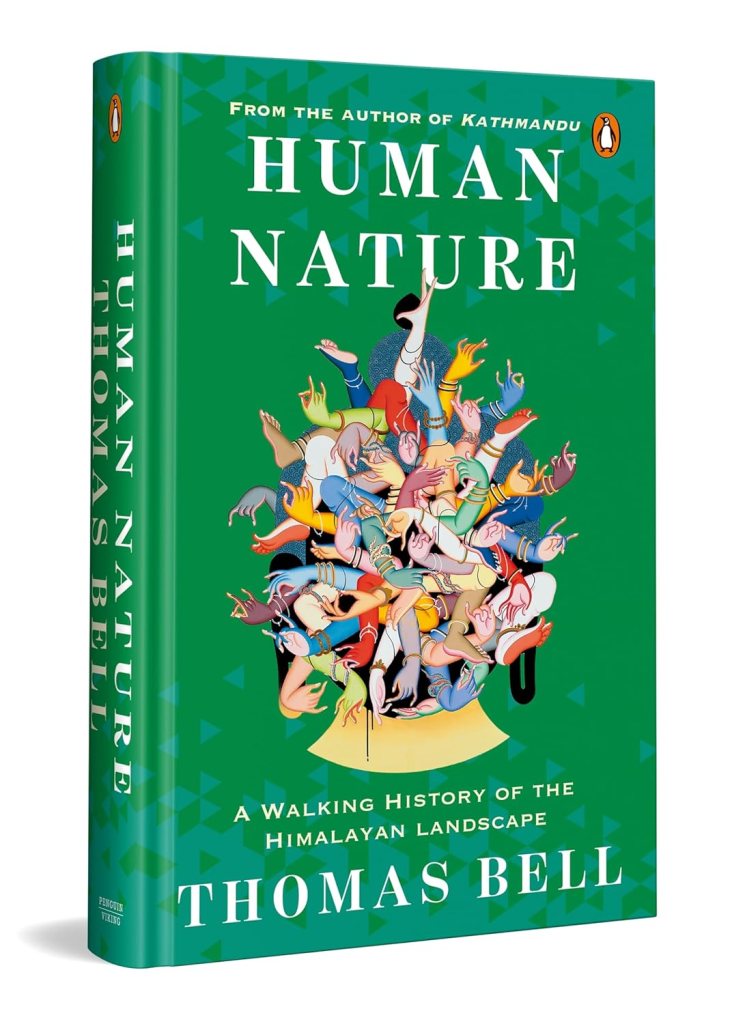
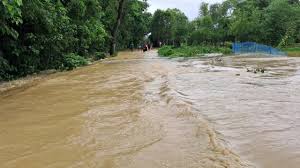
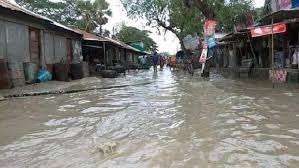
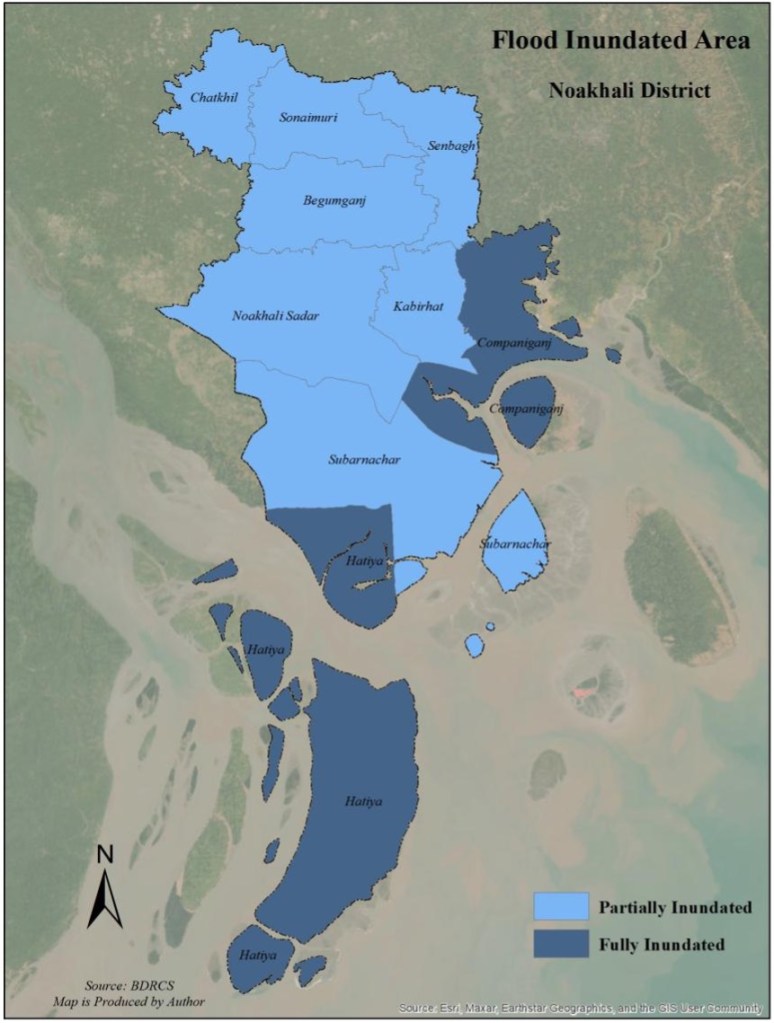
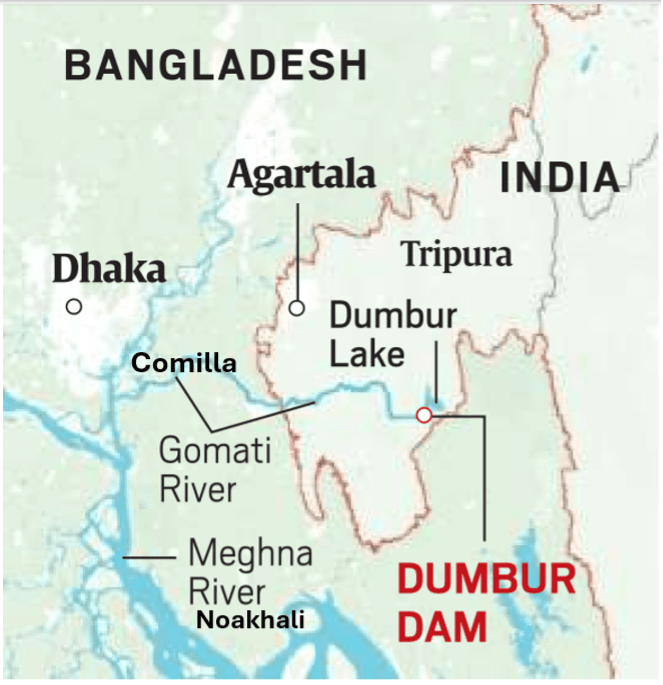
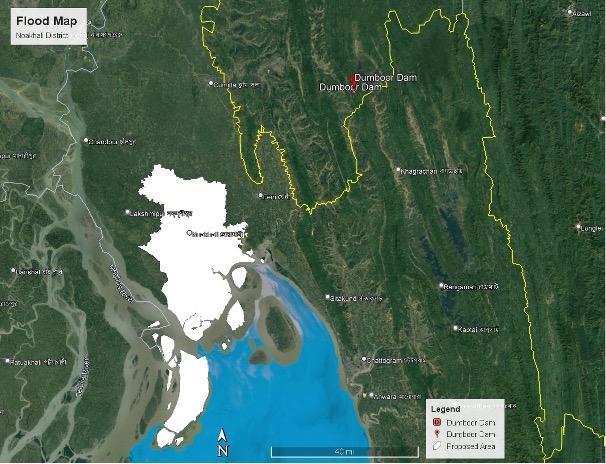
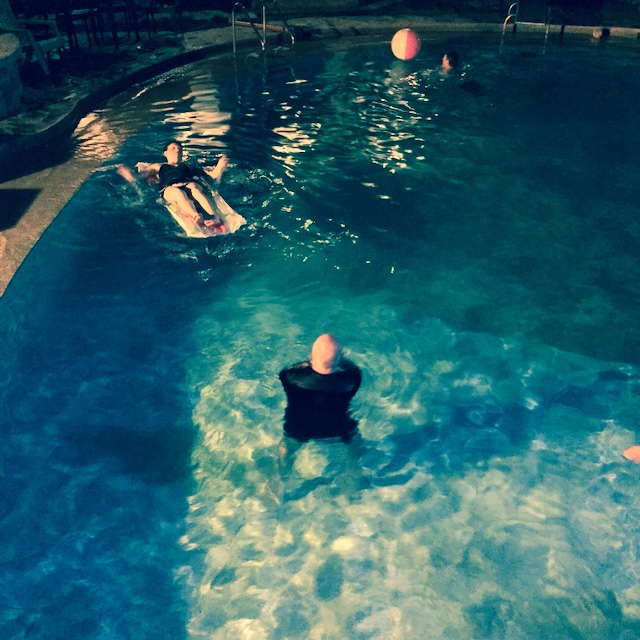
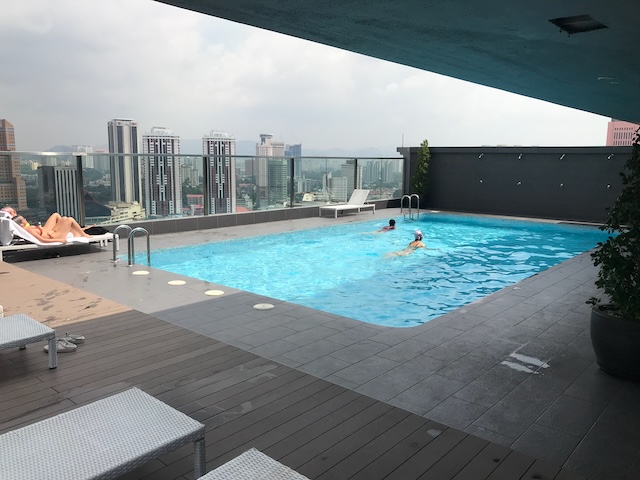
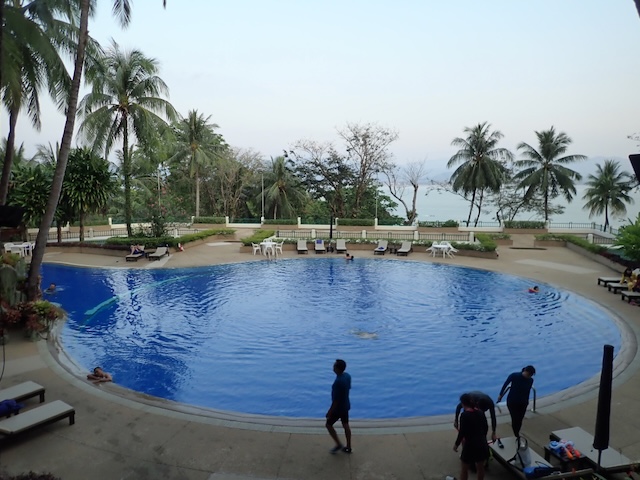
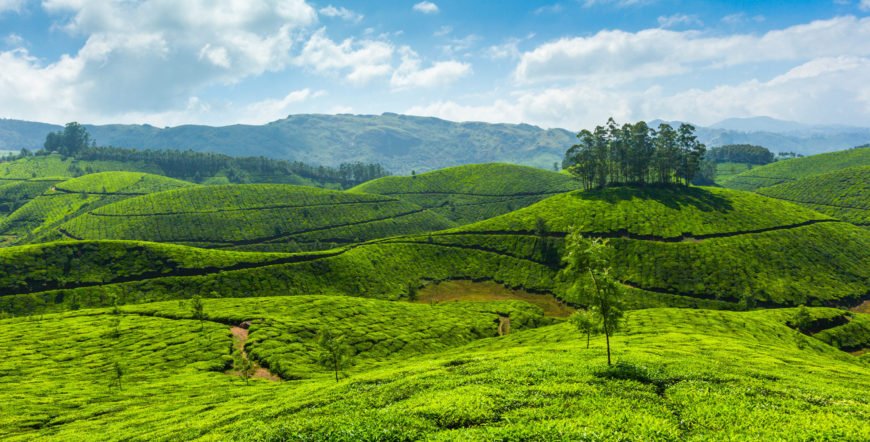
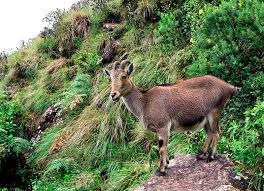

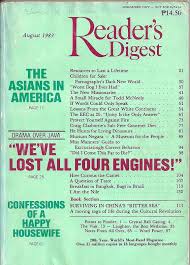




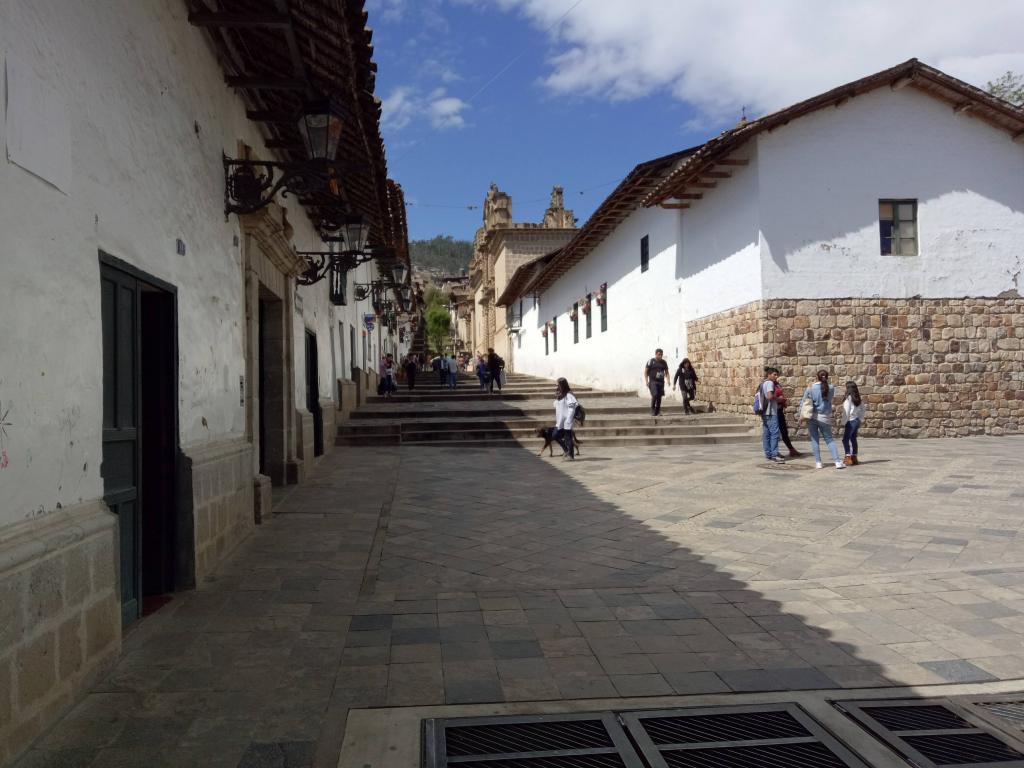


 Borderless