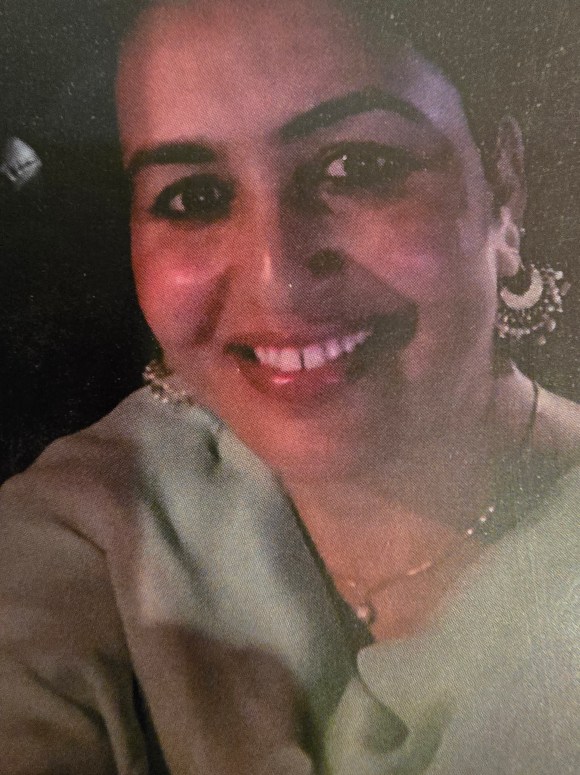
Story by Lakhvinder Virk, translated from Punjabi by C. Christine Fair
Translator’s note
This story comes from Lakhvinder Virk’s first collection of Punjabi-language short stories titled, Colors that Were Not Red (Rang Jo Suuha Nahin Sin), which was published in 2024 by Ojj Parkashan in India. Punjabi literature, despite the presence of important giants such as Amrita Pritam and Ajeet Cour, is still dominated by male voices and male interiorities. Even when male authors ventrilolocute for female characters, it often feels voyeuristic. Upon reading this story, I was immediately struck by its distinctive voice and storyline. This story is distinctive both because of its adventurous female protagonist, who is willing to explore her own sexuality and negotiate the boundaries of marriage, but also its theme of a husband who seeks an open marriage. In India such concepts are even more rare and controversial than they are in the United States. Upon encountering this story, I was awed by Virk’s brave willingness to engage a subject matter that is so verboten in India. While other stories in her collection of short stories flirt with similarly provocative themes, I believed “Open Marriage” was an important story to translate. While the specificities of this story are rooted in upper-class Mumbai, India, the challenges confronted by the young female protagonist are universal. How do women everywhere negotiate unreasonable demands and behavior from a husband who was heretofore presented as loving and caring? When has the Rubicon been crossed? When does a woman leave a marriage that is destroying her? How much is too much to tolerate? This story presents its own answers.
Open Marriage by Lakhvinder Virk
The sound from the phone caught both of their attention. It was likely text message. Indeed, Siddarth got a message on his phone. He did not pick up his phone to look. Tania’s gaze was fixed on the television screen. Because it was Sunday, both were free, and they planned to watch the film Animal on Netflix. They ordered out for food and began watching the movie.
On the TV. screen, there was a scene: the hero, having lied to his wife, formed a physical relationship with another girl. When the wife found out, she was inconsolable. She cried and left the house, taking the children with her.
Siddharth picked up the phone and went to the bathroom. But the sound of the message on his phone kept nagging Tania.
Tania tried to focus on watching the film. “Is it such a big deal if a husband is involved with another woman? He still loved his wife,” she thought to herself. “If what is being depicted is real, then so what?”
*
Siddarth and Tania were married two years ago. Siddarth was the CEO of a multinational company in Mumbai, and Tania was the general manager in a branch of the State Bank of India. They had an arranged marriage through a matchmaking app. After marriage, the husband and wife would clean the kitchen together as well as other household chores. Because Tania shifted from Delhi to Mumbai, she had to work hard to understand the new place and new environment. Siddarth helped her thoroughly in this process.
One day Siddarth asked, “Tania, did you have a boyfriend before marriage?”
“I am not so narrow-minded. Don’t worry. Come on. Tell me.”
“In truth, no.” Tania was collecting herself.
“This isn’t possible, dear. Don’t lie.”
“No Siddarth, it’s the truth.”
“This means that you don’t trust me, Tania. These days, there’s nothing bad about having relationships. Moreover, in our society, if you don’t have a relationship, it means that there is something wrong with you.” Siddarth wanted to know about Tania’s past.
“I never got the free time, Siddarth. I just focused upon my career and studies,” Tania answered, looking away. She was afraid that Siddarth would read her emotions.
“Tell me about yourself,” Tania asked.
“Yes. I had many. I had my first girlfriend when I was in the sixth grade. Before marriage, I had thirteen girlfriends.” Siddarth answered proudly, counting them on his fingers.
“Oh my god! At such a young age,” Tania said in bewilderment.
“Young?” Siddarth looked at Tania as if she had come out of the jungle and knew nothing about the world. “Some of my friends had several physical relationships by the time they were in the tenth grade. I even had a friend who was caught with his girlfriend in the school toilet. Both of them were kicked out of school. In this regard, I was slow. My friends would make fun of me because I was clueless. Then somehow, during my graduation, I mustered the courage with my fourth girlfriend,” Siddarth explained while laughing. Tania was looking at him, astonished.
“Delhi is also an open environment like this. How is it possible that you did not have a boyfriend? Yaar[1], these days one has to do a lot of things due to peer pressure. Among my friends, if someone didn’t have a girlfriend, they would kick him out of the group. I don’t believe you didn’t have a boyfriend. Come on. Tell me,” Siddarth insisted.
“It’s not necessary that every girl has a relationship.”
Tania had two boyfriends. One was in the twelfth grade. When Tania saw him, she fell in love with him. But this was a childhood crush that ended in a few days when he became friends with another girl. The second was when she was doing her MBA. She fell in love with a classmate. She was fairly serious in this relationship. She wanted to marry him, but when she raised this matter with him, he responded in rage. Tania was outdated to him. “I’ve never even thought like this. What does marriage mean?” he had said.
After that, they could never be normal again, and they broke up.
Tania wanted to tell all of this to Siddarth, but she was afraid. She had always heard that a boy could do whatever he wanted, but a boy wouldn’t tolerate hearing this from girls. Her mom said that talking about such things could lead to a divorce. Thinking about all of this, she kept quiet.
Siddharath brought Tania into his embrace and said, “This is normal, Tania. We go out of the house, it’s natural that we’re attracted to members of the opposite sex. If I can, why can’t you? I am not an old school type.”
Even though Tania didn’t want to, she hid the truth. After this, Siddarth did not raise the issue again.
One night after dinner, when all of the work was finished, Tania came into the bedroom. Siddharth was reclining on the bed, reading a magazine.
“Do you know about open marriages?” Siddharth asked, signaling her to come near him.
“Open marriage?” Tania asked out of great curiosity, sitting beside him.
“I am reading some stuff about open marriages and…So be it. I myself am thinking about this,” Siddarth said.
For a moment, silence spread between them.
“What is an open marriage?” Tania stood up and started putting on some lotion. She had put on a nightie in Siddarth’s favourite color, but Siddarth had paid it no attention.
“An open marriage means that within the marriage, there are some commitments, but both partners can form relationships apart from the other,” Siddarth explained. “It’s not cheating but understood as a different aspect of intimacy.” He was looking towards Tania and saying, “In doing this, the couple’s bond can deepen and they never get bored.”
Before responding, Tania was quiet for some time, thinking about this.
“It seems interesting but….is it practical? Moreover, it could bring stress to the couple. And consequently, the marriage will get very complicated.”
Siddarth shook his head, “I know that this isn’t easy, but if one talks openly and honestly with each other, it seems to me that it isn’t so hard.”
For some time, a silence spread between them.
“Tania I don’t want our marriage to become old and conventional, and after some years we fight and become distant. Many of my friends are in open marriages or are into wife swapping. Actually, I didn’t want to get married, but my parents pressured me and I got married.”
“You mean you can have a girlfriend, and I can have a boyfriend. Right?” Tania asked in astonishment.
“Yes. It’s necessary to keep our marriage alive.”
“But how will this work? This seems very awkward to me.” Tania was stuck, conflicted.
“Go back deep into history, there is polygamy in our culture,” he began to explain to Tania. “In our country, there are multiple such examples in which Kings had hundreds of marriages. Apart from this, they had other relations. The queens had relations with the various slaves living in her palace. Were these not open marriages? We boast about that culture. I also want to follow that culture. It’s not impossible.” Siddharth wanted to convince her through whatever means.
Tania, flabbergasted, sat there in silence listening to him speak.
“Then after some time when there are children, nothing can happen anymore. At the very least, until then, we should enjoy our life according to our wishes.”
For some days, this argument went on between them. In the end, after hearing the various arguments, Tania agreed with Siddharth, and they decided to have an open marriage.
Whenever Siddarth had a new girlfriend, he discussed it with Tania. If he went to see a film or went on a date, he definitely told Tania. In the beginning, Tania did not like this. She felt jealous, but this feeling gradually faded. Siddarth kept on asking Tania whether she had a boyfriend. Tania, in those days, was very busy at the office. She didn’t take a liking to any man.
“You are so lazy,” Siddarth teased her, laughing.
“I have made a third girlfriend and tomorrow I am going on a date with her.”
“Well done,” Tania said with great flair. They both began to laugh.
The next day, Tania looked very closely at the men working with her, but none struck her fancy.
For the last few days, Tania had begun taking yoga classes. On that day, she went to her yoga lesson after work, and she saw a new face in the class. He was about 30 years old. He was a tall, attractive young man. Tania’s attention kept floating towards him. As soon as the session finished, people began gathering their mats.
“Hello.” The young man said to Tania, sitting on the same bench where Tania was sitting, and putting on her shoes.
“Oh. Hello, I am Tania.” Tania extended her hand and immediately felt that her hand was the hand that had touched her shoes. She pulled her hand back.
“Gavi.” The young man extended his hand, smiling. “My hands also touched my shoes. It’s no big deal.”
Tania really liked his style. “This is the first time I am seeing you?” Tania asked.
“I have just joined. Actually, I just shifted from Chandigarh a few days ago,” he replied.
“Oh nice. Chandigarh is a happening place. I wonder how people from Chandigarh can live in a congested place like Mumbai,” Tania said as they were heading towards the parking.
“You are right, but this is my first required posting outside of the state. No doubt, Chandigarh is a very beautiful and peaceful city, with zero crime. But you have to leave it for career growth. Chandigarh is a city of retired people. After retirement, I will definitely shift to Chandigarh,” Gavi looked toward Tania while smiling.
“In which department are you?” Tania asked.
“I am an Indian Police Service Officer.”
“Oh Wow!” Tania said happily.
“And you?” Gavi also wanted to learn about her.
“I am a general manager at the State Bank of India.”
“Good post.”
“Thank you. My flat is just here, and where do you live?” Tania asked as she was opening the car door.
“My flat is a five-minute drive from here.”
“Nice to meet you. See you soon.” Saying this, Tania sat in the car.
“Same here.” And as he said this, Gavi closed Tania’s car door.
After some days, Gavi and Tania became good friends. They sat side by side doing yoga. Sometimes, after class, they would stop to drink organic juice, and they would make small talk. Because he was newly arrived in the city, Gavi had no friends, but because of Tania he felt no loneliness. Tania also felt a lot of affection for Gavi. When she was with Gavi, she felt very special herself which she had never felt with anyone else.
On a vacation day, they planned to see a movie.
Tania had a message from Gavi on her phone that they would leave their homes at 10 o’clock. First, they would see the movie, then they would have lunch together. Siddarth read this message.
“You are dating someone?” Siddarth asked over dinner.
“Not exactly dating, but something like that. It’s nothing like this. We are good friends.”
“Hmmm. So you are going?”
“Yes. We made a plan.”
“Listen. I don’t like this,” Siddarth said, twirling his fork on his plate.
“What?” Tania asked with inquisitive eyes.
“This open marriage…Let’s close it.” Siddarth said.
“So…You have been enjoying the open marriage. I am just going to see a movie, and you want to close it?” There was bitterness in Tania’s voice.
“Yes. I want to close it. I cannot now live in an open marriage. You yourself were saying that marriage would get very complicated. Now I think the same.” Siddharth announced his decision.
“OK. No problem.” Tania agreed. “But it should be closed from your side too.”
“Yes. Done.”
Tania messaged Gavi that she was busy and, for this reason, she couldn’t come. After that, on several occasions, Gavi tried to make plans with her, but Tania made some excuse or another. She began to ignore Gavi.
For some days, Siddarth was working from home. One day, Tania finished her work early and returned home quickly so that she could spend some time with Siddarth. She took the duplicate key from her purse, unlocked the door, and went inside.
From inside, she heard a girl’s voice filled with anger. “Bastard. Scumbag. Have you no shame in having relations with me even though you are married? Did you tell me that you are married? I didn’t know anything. Either divorce your wife and marry me, or give me 2 Crore Rupees. Otherwise, I am going to the police station.”
Tania was astonished hearing this.
She went to the bedroom from which this noise was coming. She saw Siddarth begging this girl to forgive him. Tania didn’t know what she should do. She felt pity for Siddarth as well as anger.
Seeing Tania, the girl left quietly.
Siddarth told Tonia that he had been in a relationship with her for the past five months, and now this girl was blackmailing him. “She kept some videos and photos of our private moments, which she is threatening to make viral,” he added.
Tania didn’t know how to help Siddharth.
During this dilemma, she went to her evening yoga class. When the class finished, Gavi asked her why she was so sad, “What happened. Is your health okay? You are absolutely ashen. What happened?”
Tania needed a friend at this time. She went with him to a nearby coffeehouse. While drinking coffee, Tania told Gavi everything. It was like icing on the cake that Gavi was a friend but also a police officer.
Gavi listened to the entire thing and said, “Don’t worry, Tania. These kinds of groups, which ensnare people, are very active these days. They take their photos. Make videos. Then they blackmail them. Sometimes, these people don’t personally meet the victim. They do sexting and then record the phone sex. On this basis, they blackmail them. This is an elaborate net that has been cast. Our entire department is searching for these people. Don’t you worry. I will help you as much as possible.”
“Thank you so much, Gavi. I had no idea what I should do.” Tania felt as if a burden would be lifted.
The next day, Gavi called Tania and Siddarth to the police station. Sitting them in his office, he took the First Information Report and began to take action. It turned out that the girl was a member of such a group. The police wiretapped the entire group and arrested them.
During this, the way Gavi took care of Tania drew her even closer to him. She felt as if she had always needed a wise companion like him. She saw in Gavi’s eyes love and honour for her, something she had always wanted to see in Siddharth’s eyes. But apart from emptiness, there was nothing in his eyes.
*
Siddarth returned from the bathroom and became engrossed again in watching a movie.
Siddarth had taken his phone to the bathroom. She was very bothered by this. For the past few days, she was feeling that Siddarth was hiding something from her, whereas they both had agreed that they would not hide anything from each other.
“Should I ask him straightaway?” Tania thought to herself, but she thought it better to wait a bit. He may tell me himself. Is he still?…”
“Tania, tomorrow I am going to Pune for two days, for a workshop,” Siddarth told Tania while looking at his screen.
“Okay. Alone?” Tania asked.
“Of course. Can I take friends to a workshop?” Siddharth said in irritation.
The film was over, but in Tania’s mind, the phone’s notification kept playing. She could not stop thinking about this.
In the evening, when Tania was in the kitchen working, Siddharth’s phone was on the dining room table when a message came. Tania saw that Siddarth was taking clothes out of the armoire and packing them.
Tania picked up the phone, but it was locked. She was very baffled. Previously, Siddarth did not lock his phone. She tried to unlock it. After some efforts, she managed to unlock the phone. She saw that a message had come on WhatsApp. When she opened the message, she saw a girl in a transparent nightie. The girl wanted to confirm that she should bring this nightie to Lohkhandwala if Siddharth liked it.
Tania, seeing this, was stunned. She messaged Gavi, “Can I stay in your house tonight?”
“Why not. But what happened?” Gavi quickly responded.
“I’ll tell you when I get there.” After messaging Gavi, she went to her armoire and took out clothes and necessary documents and began to pack them in a bag.
Seeing her do this, Siddarth repeatedly asked her where she was going? Why is she packing?
Tania did not answer. When she was leaving the house, she left the key to the flat on the shoe rack, and Siddarth grabbed her arm.
“Where are you going? What happened to you? Why aren’t you talking?” Siddarth didn’t understand what was going on.
“Wherever I may be going, I am definitely not going to Lokhandwala,” she said looking straight into Siddarth’s eyes.
Hearing this, Siddharth knew he was busted. He said nothing, and his grip loosened.
Tania left, closing the door behind her.
[1] Friend
Lakhvinder Virk obtained her PhD from Punjabi University, Patiala in the department of linguistics and lexicography under the supervision of Professor Joga Singh. She lives in Chandigarh and serves as the head of the Punjabi Department in JDSD College in Kheri Gurana, Banur in Punjab. Her first book of short stories, Colors That Were Not Red, (Rang Jo Suuha Nahin sin) was published in 2024. This story was published in that volume.
Christine Fair did her Ph.D. in South Asian Languages and Civilizations at the University of Chicago. She is currently a professor of Security Studies at Georgetown University. Her translations have appeared in LIT Magazine, Muse India, Orientalia Suecana, The Bangalore Review, Borderless, The Punch Magazine, The Bombay Literary Magazine, and The Bombay Review.
PLEASE NOTE: ARTICLES CAN ONLY BE REPRODUCED IN OTHER SITES WITH DUE ACKNOWLEDGEMENT TO BORDERLESS JOURNAL
Click here to access the Borderless anthology, Monalisa No Longer Smiles
Click here to access Monalisa No Longer Smiles on Kindle Amazon International







 Borderless