Jibananada Das’sAndhar Dekhecche, Tobu Ache (I have seen the dark and yet there is another) has been translated from Bengali by Professor Fakrul Alam. Click here to read.
Manish Ghatak’sAagun taader Praan (Fire is their Life) has been translated from Bengali by Indrayudh Sinha. Click hereto read.
Manzur Bismil’s poem,Stories, has been translated from Balochi by Fazal Baloch. Click here to read.
Homecoming, a poem by Ihlwha Choi on his return from Santiniketan, has been translated from Korean by the poet himself. Click here to read.
Tagore’sShotabdir Surjo Aji( The Century’s Sun today) has been translated from Bengali by Mitali Chakravarty. Clickhereto read.
Paul Mirabile wraps his telling like a psychological thriller. Clickhere to read.
Conversations
Ratnottama Sengupta converses with Divya Dutta, an award-winning actress, who has authored two books recently, Stars in my SkyandMe and Ma. Clickhere to read.
Painting by Claud Monet (1840-1926). From Public Domain
Acknowledging our past achievements sends a message of hope and responsibility, encouraging us to make even greater efforts in the future. Given our twentieth-century accomplishments, if people continue to suffer from famine, plague and war, we cannot blame it on nature or on God.
–Homo Deus (2015),Yuval Noah Harari
Another year drumrolls its way to a war-torn end. Yes, we have found a way to deal with Covid by the looks of it, but famine, hunger… have these drawn to a close? In another world, in 2019, Abhijit Banerjee had won a Nobel Prize for “a new approach to obtaining reliable answers about the best ways to fight global poverty”. Even before that in 2015, Yuval Noah Harari had discussed a world beyond conflicts where Homo Sapien would evolve to become Homo Deus, that is man would evolve to deus or god. As Harari contends at the start of Homo Deus, some of the world at least hoped to move towards immortality and eternal happiness. But, given the current events, is that even a remote possibility for the common man?
Harari points out in the sentence quoted above, acknowledging our past achievements gives hope… a hope born of the long journey humankind has made from caves to skyscrapers. If wars destroy those skyscrapers, what happens then? Our December issue highlights not only the world as we knew it but also the world as we know it.
In our essay section, Farouk Gulsara contextualises and discusses William Dalrymple’s latest book, The Golden Road with a focus on past glories while Professor Fakrul Alam dwells on a road in Dhaka , a road rife with history of the past and of toppling the hegemony and pointless atrocities against citizens. Yet, common people continue to weep for the citizens who have lost their homes, happiness and lives in Gaza and Ukraine, innocent victims of political machinations leading to war.
Just as politics divides and destroys, arts build bridges across the world. Ratnottama Sengupta has written of how artists over time have tried their hands at different mediums to bring to us vignettes of common people’s lives, like legendary artist M F Husain went on to make films, with his first black and white film screened in Berlin Film Festival in 1967 winning the coveted Golden Bear, he captured vignettes of Rajasthan and the local people through images and music. And there are many more instances like his…
It's always the common people who pay first. They don’t write the speeches or sign the orders. But when the dust rises, they’re the ones buried under...
Echoing the theme of the state of the common people is a powerful poem by Manish Ghatak translated from Bengali by Indrayudh Sinha, a poem that echoes how some flirt with danger on a daily basis for ‘Fire is their life’. Professor Alam has brought to us a Bengali poem by Jibanananda Das that reflects the issues we are all facing in today’s world, a poem that remains relevant even in the next century, Andhar Dekhecche, Tobu Ache (I have seen the dark and yet there is another). Fazal Baloch has translated contemporary poet Manzur Bismil’s poem from Balochi on the suffering caused by decisions made by those in power. Ihlwha Choi on the other hand has shared his own lines in English from his Korean poem about his journey back from Santiniketan, in which he claims to pack “all my lingering regrets carefully into my backpack”. And yet from the founder of Santiniketan, we have a translated poem that is not only relevant but also disturbing in its description of the current reality: “…Conflicts are born of self-interest./ Wars are fought to satiate greed…”. Tagore’s Shotabdir Surjo (The Century’s Sun, 1901) recounts the horrors of history…The poem brings to mind Edvard Munch’s disturbing painting of “The Scream” (1893). Does what was true more than hundred years ago, still hold?
Reflecting on eternal human foibles, Naramsetti Umamaheswararao creates a contemporary fable in fiction while Snigdha Agrawal reflects on attitudes towards aging. Paul Mirabile weaves an interesting story around guilt and crime. Sengupta takes us back to her theme of artistes moving away from the genre, when she interviews award winning actress, Divya Dutta, for not her acting but her literary endeavours — two memoirs — Me and Ma and Stars in the Sky. The other interviewee Lara Gelya from Ukraine, also discusses her memoir, Camels from Kyzylkum, a book that traces her journey from the desert of Kyzylkum to USA through various countries. In our book excerpts, we have one that resonates with immigrant lores as writer VS Naipual’s sister, Savi Naipaul Akal, discusses how their family emigrated to Trinidad in The Naipauls of Nepaul Street. The other excerpt from Thomas Bell’s Human Nature: A Walking History of the Himalayan Landscape seeks “to understand the relationship between communities and their environment.” He moves through the landscapes of Nepal to connect readers to people in Himalayan villages.
The reviews in this issue travel through cultures and time with Somdatta Mandal’s discussion of Kusum Khemani’s Lavanyadevi, translated from Hindi by Banibrata Mahanta. Aditi Yadav travels to Japan with Nanako Hanada’s The Bookshop Woman, translated from Japanese by Cat Anderson. Jagari Mukherjee writes on the poems of Kiriti Sengupta in Onenessand Bhaskar Parichha reviews a book steeped in history and the life of a brave and daring woman, a memoir by Noor Jahan Bose, Daughter of The Agunmukha: A Bangla Life, translated from Bengali by Rebecca Whittington.
We have more content than mentioned here. Please do pause by our content’s page to savour our December Issue. We are eternally grateful to you, dear readers, for making our journey worthwhile.
Huge thanks to all our contributors for making this issue come alive with their vibrant work. Huge thanks to the team at Borderless for their unflinching support and to Sohana Manzoor for sharing her iconic paintings that give our journal a distinctive flavour.
With the hope of healing with love and compassion, let us dream of a world in peace.
Charminar, an iconic landmark of Hyderabad. Art by Kishore Singh. From Public Domain
Had Paradise survived, the last Hyderabadi[1] would have done as well. Yet what remained of Paradise were shards of its best self-scattered around parts of the country that did not understand what it meant to carry its legacy, of what the endless cups of frothy Irani chai over a pair of lukhmis or nausea-inducing keema-roti[2]meant to the gentry of the city in general. Or, before the advent of the social media, what was the impact of the gentrification of a city better known as a town of small neighbourhoods, harassed yet equally enriched by the countless migrants from the eastern India.
Autumn had finally arrived, and the smell of the tree of sorrow permeated within the crisp, starch-lined shirts of the former politicians of a political party whose hues no one could be certain of anymore. The hijras[3] flocking the bus stop opposite the JBS[4] metro station had no intent in seeking out alms anymore. With the festive season approaching in all its vehemence, life was supposed to get better for them and the countless number of beggars — maimed or otherwise — who made a living out of the charitable pockets of officegoers.
The latter made the famous bus stand their endroit le plus important [5]and fed their starving souls with tidbits of generosity that they could only offer a pregnant prostitute or a vagrant with no feet staring up Akbar Road with a bright barrenness in his eyes. Of course, one could always count upon the Ganesh temple looming in all its gargantuan simplicity through the shards of space between the metro rail pillars and berating simple-minded Hindus for not having enriched its donation box. The last Hyderabadi often thought that this vision — more than ideas of goodwill — dictated the unusual largesse of the usually tight-lipped and parsimonious gentlefolk.
*
What could have been construed as big-heartedness among the lower classes was usually written off with disdain by those who did not have the luxury of being poor. The road that snaked down the Military Engineering Services instalments and evaded the right fork towards Secunderabad Club was sure to have ended up in the dull brown villas of Gunrock; the last Hyderabadi often wished he could spare himself the pain. To think of pain was pain itself. He forced himself off the stool next to Grill 9 where he was smoking a Charminar — a remnant of an era long gone — and joined the serpentining queue of revellers shedding their last moments of joie de vivre[6] from Tivoli, and its apostle up the road that took pride in housing respectable men these days.
Shedding the joie de vivre often took him back to the days when he could have been carefree enough to hop in and out of the multiple breweries that had sprung up like mushrooms on road number 45 in Jubilee Hills, not a million miles away from JBS as the crow flies. Had the last Hyderabadi known how to take the metro rail into the new central business district of the city, he would have reached sooner than he did when hoisting himself upon his trusted Bajaj. The latter frequently needed a pat of encouragement from its owner when it chose to get stuck on clean, wide roads that could only ferry the chief minister and his coterie. Of course, no other road would have had the gall would have had to tidy up as much as the ones here did — the lack of water, sanitation and seepage an accepted norm.
Of what need was there for him to chauffeur his thoughts in a world that had long seemed to dissolve him in a glass filled with water that no longer came from the Musi[7]? Yet, there was the odd occasion when he would find himself seeing the vast encumbrance that the cable bridge over Durgam Cheruvu had become, with the thought of jumping off it never too far from his mind.
Broadway, Prost, Forge, Fat Pigeon, Lord of the Drinks, Forefathers, Daily Rituals — of what use was it that he could reel their names as well as the oldest merlots they had from memory? Had he taken the time to look beyond the sports pages of the Deccan Chronicle, the last Hyderabadi would have found something to relish in times of the infrequent melancholy that knew him by name. Had the drink consumed him, or vice-versa, things may not have changed him for the better, or made the city — once recognisable, and now imperceptible — more hospitable towards him, but he would have known something better to do with his time than count by hand the centuries scored on the numerous pitches at the Parade Ground every Sunday.
*
Oh, how he longed to go back to Shah Ghouse and forget that a world such as the one he was forced to inhabit now existed. A world in which seasons came and went, but autumn — obstinate, stubborn autumn — always hung around far longer than it was welcome. With the lines blurring between right and wrong, it was felt that the city would not live up to its pretentions had the same happened between autumn and winter.
Of course, those settlers from the coastal belts of Andhra who made the northern neighbourhood of Kukatpally their home knew little better than to pull out their jumpers at the first smell of rain or — perish the thought — the temperature dropping below thirty. Yet, the last Hyderabadi plodded along, knowing innately that this season too was bound to leave — like the majority of his dreams — and winter would take over inevitably.
How little he trusted his words these days, delving deep inside his psyche to look for some semblance of sanity that he had held on to during his prime. Chasing another peak, the last Hyderabadi had settled down to accept the inescapable — the city would move on without him — and defy the passage of time that had once held him tightly in its grips. Oh, what he would have given to head back to Paradise, say hello to trusted old Saleem and ask for a cup of tea.
*
There were those moments of immense self-doubt in which the last Hyderabadi felt that his hands would wash away in the sickly Musi underneath Purana Pul[8], leaving him standing on his legs which were clearly giving up. The decisiveness of the issue softened the blow whenever he looked at the paunch he had developed of late — the endless runs up and down Tank Bund on Sundays when the whole world slept, being wrecked by the keema roti for which he would often turn to Garden, bypassing Paradise. (He had sought refuge at the Alfa one morning but was left ruing his choice as hordes of travellers swept past him determined to leave their footprints in the city without quite being welcomed by it.)
Whatever poetry had once risen inside him while tucking into the umpteenth samosa at Lamakaan had been disbursed by the recognition of pain in parts of his mind he seldom acknowledged. The poems were songs in celebration of life, and it was only ironic that he should have to think of these when assailed by the thoughts of an autumn long ago, when Keyes High School had been decked up for the first time, and he had finally realised what he wanted from life.
It was when Hitec City still boasted of barren boulders that one had to hike up to gain a better understanding of the panorama below. He often felt that he could understand the words, but not its meaning. That autumn seems to have flooded Manjeera — the lifeblood of the city — and neglected to pay the last Hyderabadi any tribute worth his while.
When he thought of life, his most recent memories appeared dusted with the coat of nostalgia that one often reserved for emotions felt long ago. His worries had been compounded by his mind’s reluctance to admit that he had become old, that there would not be anyone after him, that he was merely standing upon the shoulders of those who had come before — those who had experienced the greatness of this city and shed an imaginary tear at what it had eventually become.
[8]Purana Pul, along with being a translation of ‘Old Bridge’ in Hindi and Urdu, is also a place of significance in the old city of Hyderabad.
Mohul Bhowmick is a national-level cricketer, poet, sports journalist, essayist and travel writer from Hyderabad, India. He has published four collections of poems and one travelogue so far. More of his work can be discovered on his website: www.mohulbhowmick.com.
PLEASE NOTE: ARTICLES CAN ONLY BE REPRODUCED IN OTHER SITES WITH DUE ACKNOWLEDGEMENT TO BORDERLESS JOURNAL.
The description in ‘Hot Dry Summers’ is not of hell but what is perceived as happening on certain parts of Earth due to global warming or climate change. Forest fires. Nearer the equator, the storms have become harsher with lightning strikes that seem to connect the Earth to the sky. Trees get uprooted as the soil is softened from excessive rain. Sometimes, they fall on passers-by killing or injuring them. There is no rain in some places, forest fires or flooding in others… The highest temperatures touched 55 degrees Celsius this year. Instead of worrying about losing our homes lodged on land masses to the oceans that continue to rise, becoming dark heat absorbers due to loss of white ice cover, we persistently fight wars, egged on by differences highlighting divisive constructs. It feels strange that we are witness to these changes which seem to be apocalyptic to doomsday sayers. Are they right? Our flora, fauna and food will also be impacted by global climate change. How will we survive these? Will we outlive these as a species?
Poetry in our translations’ section travels to Balochistan, from where a Hafeez Rauf translated from Balochi by Fazal Baloch, talks of burning tyres, again conflicts. It takes on a deeper hue as Ihlwha Choi translates his poignant poem from Korean, reflecting on the death of his mother. We have a translation of Tagore’s less popular poem, Mrityu[1], reflecting on the same theme. His reflections on his wife’s death too have been translated by Professor Fakrul Alam who has also shared a song of Nazrul, written and composed on the death of Tagore. Another lesser-known poet but brilliant nonetheless, Nirendranath Chakraborty, has been translated for us by Debali Mookerjea-Leonard. And what a tremendous poem it is when the person called Amalkanti wanted to be sunshine! We have a story too — ‘Speech Matters’ by Naramsetti Umamaheswararao translated by Johny Takkedasila.
Our stories as usual travel around the world — from Holland (by Paul Mirabile) to Hyderabad (by Mohul Bhowmick) and with a quick pause at Bangalore (by Anagha Narasimha). Travels in the real world are part of our non-fiction. Sai Abhinay Penna takes to a the second largest mangrove forest in the world and Ravi Shankar to Colombo. Madhuri Bhattachrya gives us a glimpse of an Indian summer and Snigdha Aggrawal explores the impact of climate change in her part of the world. Farouk Gulsara actually writes his reflections at a traffic junction. And it reads droll…
We have an in memoriam by Keith Lyons on Morgan Spurlock, the documentary maker who ate McDonald fare for a month and then made a film on it. We have two tributes to two legends across time. Wayne F Burke has given a brief piece on the iconic illustrator, Norman Rockwell. And Aruna Chakravarti, the queen of historic fiction who brought the Tagore family alive for us in her two very well researched novels, Jorasanko and Daughters of Jorasanko, has given us a fabulous tribute to Tagore on the not-so common aspects of him.
Suzanne Kamata, the novelist who does a column from Japan for us normally, has spoken to us about her new novel, Cinnamon Beach, which overrides multiple manmade constructs. It’s an interesting read from someone who lives her life across multiple cultures and transcends many boundaries.
This is a bumper issue, and it is difficult to convey the vibrant hues of words that colour this edition. Please do pause by our contents page for a more comprehensive look.
This issue would not have been possible without all our fabulous contributors and a wonderful, dedicated team. We are delighted that Rakhi Dalal — who has done many reviews and shares her poetry with us in this issue — has agreed to be a writer-in-residence with us. A huge thanks to all of you, and especially Sohana Manzoor for her artwork. I am truly grateful to our readers for popularising our efforts to put together an online space with free and vibrant reads.
I would like to end with a few lines that gives me hope despite climate change, wars and doomsday predictions.
There’s more to life, he says to me, than what you choose to see.
Where the mind is without fear … Where the world has not been broken up into fragments … Where the clear stream of reason has not lost its way … Where the mind is led forward by thee Into ever-widening thought and action…
As we complete the fourth year of our virtual existence in the clouds and across borders, the world has undergone many changes around us, and it’s not only climate change (which is a huge challenge) but much more. We started around the time of the pandemic — in March 2020 — as human interactions moved from face-to-face non-virtual interactions to virtual communication. When the pandemic ended, we had thought humanity would enter a new age where new etiquettes redefining our social norms would make human existence as pandemic proof as possible. But before we could define new norms in the global context, takeovers and conflicts seem to have reft countries, regions and communities apart. Perhaps, this is a time when Borderless Journalcan give a voice to all those who want to continue living as part of a single species in this world — where we can rise above our differences to find commonalities that make us human and part of the larger stream of humanity, that has been visualised by visionaries like Tagore or John Lennon — widely different cultural milieus but looking for the same things — humankind living together in harmony and moving towards a world without violence, without hate, without rancour and steeped in goodwill and love.
Talking of positive values does not make sense in a world that seems to be veering towards darkness… Many say that humankind is intrinsically given to feelings of anger, hate, division, lust, shame and violence. But then we are just as much inclined towards happiness, fun, love, being respectful and peaceful. Otherwise, would we be writing about these? These are inherited values that have also come down to us from our forefathers and some have been evolving towards embalming or healing with resilience, with kindness and with an open mind.
If you wake up before sunrise, you will notice the sky is really an unredeemable dark. Then, it turns a soft grey till the vibrant colours of the sun paint the horizon and beyond, dousing with not just lively shades but also with a variety of sounds announcing the start of a new day. The darkest hours give way to light. Light is as much a truth as darkness. Both exist. They come in phases in the natural world, and we cannot choose but live with the choices that have been pre-made for us. But there are things we can choose — we can choose to love or hate. We can choose resilience or weakness. We can choose our friends. We can choose our thoughts, our ideas. In Borderless, we have a forum which invites you to choose to be part of a world that has the courage to dream, to imagine. We hope to ignite the torch to carry on this conversation which is probably as old as humanity. We look forward to finding new voices that are willing to move in quest of an impractical world, a utopia, a vision — from which perhaps will emerge systems that will give way to a better future for our progeny.
In the last four years, we are happy to say we have hosted writers from more than forty different nationalities and our readers stretch across almost the whole map of the world. We had our first anthology published less than one and a half years ago, focussing more on writing from established pens. Discussions are afoot to bring out more anthologies in hardcopy with more variety of writers.
In our fourth anniversary issue, we not only host translations by Professor Fakrul Alam of Nazrul, by Somdatta Mandal of Tagore’s father, Debendranath Tagore, but also our first Mandarin translation of a twelfth century Southern Song Dynasty poet, Ye Shao-weng, by Rex Tan, a journalist and writer from Malaysia. From other parts of Asia, Dr Haneef Sharif’s Balochi writing has been rendered into English by Fazal Baloch and Ihlwha Choi has transcreated his own poetry from Korean to English. Tagore’s Phalgun or Spring, describing the current season in Bengal, adds to the variety in our translated oeuvre.
Devraj Singh Kalsi has explored darker shades of humour in his conversation with God while Suzanne Kamata has ushered in the Japanese spring ritual of gazing at cherry blossoms in her column with photographs and narrative. Keith Lyons takes us to the beautiful Fiordlands of New Zealand, Ravi Shankar to Malaysia and Mohul Bhowmick trapezes from place to place in Sri Lanka. Farouk Gulsara has discussed the elusiveness of utopia — an interesting perspective given that we look upto ideals like these in Borderless. I would urge more of you to join this conversation and tell us what you think. We did have Wendy Jones Nakashini start a discussion along these lines in an earlier issue.
I would want to thank our dedicated team from the bottom of my heart. Without them, we could not have brought out two issues within three weeks for we were late with our February issue. A huge thanks to them for their writing and to Sohana Manzoor for her art too. Thanks to our wonderful reviewers who have been with us for a number of years, to all our mentors and contributors without who this journal could not exist. Huge thanks to all our fabulous loyal readers. Devoid of their patronage these words would dangle meaninglessly and unread. Thank you all.
Wish you a wonderful spring as Borderless Journal starts out on the fifth year of its virtual existence! We hope you will be part of our journey throughout…
Enjoy the reads in this special anniversary issue with more content than highlighted here, and each piece is a wonderful addition to our oeuvre!
Sri Lanka can be savoured best via its street food stalls; the aroma of the spices that emanates from the flurry of dishes left drying in the hot sun is supposed to hold the flavour of the country in its entirety.
Quite appropriately, I step out of the airport in Colombo just as dark clouds assemble overhead for an impromptu November gathering. The path to the bus terminal is waylaid in the melee, and the eventual taxi that comes around is met with immense gratitude for the warmth it emanates from within.
Meanwhile, the clouds have picked up pace and lambasted in full strength upon my flimsy raincoat. As the taxi — a Tata Nano — pulls out of the airport, I read a sign that tells me, rather ominously, ‘Welcome to Sri Lanka!’
.
But have I arrived? The drizzle accompanies me all day even as I try to venture out northwest from my dorm near the Galle Face Green towards Independence Square and Viharamahadevi Park. The park has a tinge of tenderness that makes me long for home barely six hours after I have left.
The soldier who has been entrusted to protect the monument of Gautama in the centre of the park slights me at first by asking me to put my camera away, but something about my nationality sparks enough curiousity and reverence in him to apologise and show me around its premises.
Named after the mother of the great Sri Lankan king Dutugemunu [161-137 BCE], who united the island under his banner after generations of oppression from Indian invaders, the park is tranquil in a manner that only the moneyed can afford to be. To be welcomed here by a member of the Lankan military seems ironic to me. Quite intrinsically, I discover that the affluent neighbourhood of Cinnamon Gardens is merely a stone’s throw away.
.
The sunset at Galle Face Green is where I lay my eyes upon the Indian Ocean for the first time; the gentle disappearance of the disk of fire in its graceful attire with lakhs of denizens of the city in attendance is not an event to be forgotten in a hurry.
It strikes me in the bouts of consciousness I still have with me on the start-stop train to Anuradhapura the next morning, which miraculously manages to reach the ancient capital of the island only moments after its scheduled time of arrival despite having spent about fifteen stoppages in the rough-hewn greenery of north-central Lanka.
The Isurumuni Royal Temple, Anuradhapura.
The Vanni, which separates the north from Anuradhapura, begins here, and I do not think I have gathered enough courage to bypass it just yet.
The Maha Sri Jaya Bodhi — a sapling of the Bodhi Tree under which the ascetic Sakyamuni had sat all night in meditation in the fifth century BCE and attained Enlightenment in Gaya — transposes much of the tranquillity one must have felt had Gautama himself been around; instead, hundreds of his lay followers deify his idol and consecrate his ideals with flowers and oaths of incorruptibility.
The compound where the Maha Bodhi stands allows one the permission to whisk the mind away from its constant whirl of thought and towards action based on feeling; its way, as Gautama’s, holds that offering the grant of ‘self-realisation’ to one’s fellow man is far more sumptuous a gift than an endowment of land or capital can ever accomplish.
Novice monks at the Ruwanwella Dagoba in Anuradhapura.
The Ruwanwella Dagoba, which the great Dutugemunu had painstakingly built, offers the refuge that the Maha Bodhi implores one to seek by going inwards. Two quarts of the Buddha’s relics are enshrined here, and the inflow of visitors ensures that the joyful policemen on duty are hard put to shred their visages of quietude, which one would have moments ago thought to be beyond them.
The next morning, with a German fellow traveller — whom I met at dinner while watching India decimate New Zealand on television in the semifinal of the cricket World Cup — I excavate whatever innards of peace and serenity I could from the Isurumuni Royal Temple.
My new friend from Germany tells me of of his experiences while travelling in Japan. He explains how he had made good use of the public parks (greens) at night as the locals did not use them after dark. He did not have money to sleep in hostels/ hotels and used benches in the public parks instead!
I offer him freshly plucked oranges from the gardens abutting the temple, where princes and princesses of an earlier age used to amble while seeking matches.
I get so drawn into the ethics that Gautama’s teachings must have instilled among the laypeople of the island that I almost forget to notice when my landlord — from whom I had also borrowed a bicycle — casually doubles the rate of his homestay when I check out. I learn — only much later — that he is no believer in the path Sakyamuni trod and speaks Tamil.
The Sigiriya rock fortress from afar.
Sigiriya seems much hotter than Anuradhapura1 was, and I write this even as the sun goes down and I climb up to a hidden rock far from the one which gives the town its name. The sun sets farther still from the Sigiriya Galla, and along with a bunch of British fellow travellers, I enjoy the last beads of light seeping past the horizon.
My evening is considerably brightened when our guide Vasu points me towards a green-looking hillock supposed to be the one Hanuman brought from the Himalayas as he sought for the life restoring ‘sanjeevani’ herb. While descending, a girl from Cornwall shrieks in considerable awe of the girth of the trunk of the first elephant she has ever seen.
The hike up Kasyapa’s fortress2 takes little effort, and the sparse crowd makes it feel worthwhile all the more. My newfound British friends — devoid of the SAARC3 protection of a reduced entry ticket to the top — climb the eastward facing Pidurangala instead. They tell me much later that they found the visage of Sigiriya quite appealing from the top of the latter; in a picture they show me, I cannot help but speculate that the black spot on the top of the rock was my shadow.
A dip in a hidden lake authorised by the owner of the backpacker’s hostel we are in is sprinkled liberally with views of the fortress in the backdrop; even the arrival of a slimy water snake that nibbles at my friend Jackson Price — a former telecommunications manager from Bristol — is not enough to shatter our sense of innate wellbeing.
.
There is just about enough time to catch the temple near the centre of Dambulla town unawares before Rapahel Nuding — a mechanical engineer from Stuttgart — and I take the bus south to Kandy. The carvings on the rocks inspire us both differently; me to poetry and him to decode how it could possibly have been done without the help of modern-age machinery.
Kandy is damp and misty when we arrive; the flecks of raindrops prance around nicely as neither of us wants to close the window shades of the rusty old bus we are travelling in. The lake can be sensed before we can see it; within an hour, we are back in the area to witness the ceremony at the Temple of the Tooth Relic where the dante dhatu, or the tooth relic, is displayed to laypeople.
Temple of the Tooth Relic
I help Raphael tuck into his — and my first this trip — masala dosa in the hordes of Tamil restaurants near the temple; I wonder if he asks for a second helping of the mango lassi to cool his inflamed tongue down or merely because he has liked the sensation the frozen — and possibly preserved — fruit. He stays back for a day, but I sling my bag to get on the morning train to Nuwara Eliya, having had enough of the cultural capital of Lanka already.
.
The bitter cold that greets me in Nuwara Eliya is only slightly lessened by the endless cups of tea that keep rolling through the night at the Laughing Leopards backpackers’ hostel. I struggle to explain to Helen Brinkmann, a post-graduate student from Dortmund, why I shall go to bed in tears having watched Australia demolish India in the final of the World Cup; the memories keep plaguing me a few days later in Ella when I sit down to get a grip upon myself and form an understanding of the ill-fated event.
Of the twin haunts of Nuwara Eliya and Ella, it is the journey that fascinates me the most; the rickety old contraption that passes off as a train is as old as I am in spirit and wanders only slightly off the gorgeous trails that have to perforce be left behind. Quite like the train, I am too enamoured by the countryside to trade it for the capital a week later.
The hills of Uva, as seen from Ella.
The hills that rise from the extensive green wildernesses filled with shrubs of undefinable assortment catch my eye in Ella, and it is some time before I can catch a grip of my sentiments and force myself to sit down. The bats and monkeys that gather in numbers at the Ravana Ella — or Ravana’s cave — scare me out of my wits before I can even put my foot into the mouth of the opening. Outside, the sun shines generously on a creek drifting past the hills in a muted whirr that only the sapient can perceive.
.
It speaks highly of the natural largesse that Sri Lanka possesses. Within hours of leaving the cool climes and peaks of Ella, I arrive at sea level, and the Indian Ocean peeks in patches to the left when the bus turns right from Matara, the southernmost tip of the isle. Indeed, I have breakfast in the hills and lunch on the coast.
Sunset at the beach in Mirissa
Mirissa, where I am headed next, brags of pristine beaches uninjured by the droves of tourists that fill it during the season. On arrival that evening, I find a rock to the west that garnishes a panorama that is stunning. My first encounter with kottu roti is astride a charitable helping of coconut sambal which my tongue finds excitable, and I tell myself that I am finally in the south.
.
Excursions are made to the beaches that litter the southern Lankan coast without rhyme or reason, or even distinction to one’s name or creed. Weligama, Midigama, Ahangama, the air force base at Koggala, Habaraduwa and Unawatuna all become names interchangeable with rapture perpetuated by the lack of inaccessibility. From another country, people struggle to reach me on my cell, and their needs stay blissfully away from my purview.
The sun shines on the coast much like it had done when I was in the west; the north and central parts of the country are barraged by untimely rains and I am glad to have left them behind.
The harbour as seen from Galle Fort.
Galle, where I am to stay for a night before heading back to Colombo, charms me out of my wits and looks askance as I walk away evincing a wry smile from the preposterous shindig that one might as well call a fort. The cricket ground stirs a longing for a home I have no rush to return to; on account of the goodwill and record I enjoy, I am allowed into the members’ stand for a gracious helping of a local under-19 match.
The entrapments that the Portuguese, the Dutch and the British had all in turn instituted — that now passes off as a spectacle of great pleasure — protect the town of Galle from outsiders, and also, it seems to me, from itself. Inward-looking to a fault, the Sinhalese of Galle have been known to open their hearts and hearths to all but those who have boasted of a skin tone less plentiful than white.
Upon being given to understand the intricacies of such delights and lodging in a palatial mansion owned by a Lankan Muslim family, I exult in the first serious gelato I have had in my life; an egg roti earlier in the day had barely served the purpose it was intended for.
.
Return to Colombo. I see the capital with eyes that I had not been endowed with when I first landed on these shores; it seems to be a lifetime ago now. The polished highway outside the President’s House, which abut the Chinese-funded port and end up at the imperial inheritance of the Galle Face Green purport me to a world I thought I had left behind in the countryside.
I put it down to my lack of vision but the night creeps up on me unannounced even as I try to trudge out of the humongous man-eating machine they call the One Galle Face shopping mall. It is not without some discomfort that I take flight, aware that it may not be for the last time.
Built during the reign of King Kasyapa [477-495 CE] ↩︎
South Asian Association for Regional Cooperation ↩︎
Mohul Bhowmick is a national-level cricketer, poet, sports journalist, essayist and travel writer from Hyderabad, India. He has published four collections of poems and one travelogue so far. More of his work can be discovered on his website: www.mohulbhowmick.com.
PLEASE NOTE: ARTICLES CAN ONLY BE REPRODUCED IN OTHER SITES WITH DUE ACKNOWLEDGEMENT TO BORDERLESS JOURNAL.
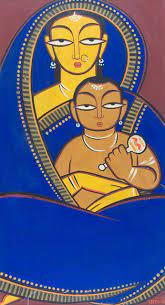
Mother & Child by Jamini Roy (1887-1972)Mother and Child by Picasso (1881-1973)
‘Victory to Man, the newborn, the ever-living.’ They kneel down, the king and the beggar, the saint and the sinner, the wise and the fool, and cry: ‘Victory to Man, the newborn, the ever-living.’
This is the month— the last of a conflict-ridden year— when we celebrate the birth of a messiah who spoke of divine love, kindness, forgiveness and values that make for a better world. The child, Jesus, has even been celebrated by Tagore in one of his rarer poems in English. While we all gather amidst our loved ones to celebrate the joy generated by the divine birth, perhaps, we will pause to shed a tear over the children who lost their lives in wars this year. Reportedly, it’s a larger number than ever before. And the wars don’t end. Nor the killing. Children who survive in war-torn zones lose their homes or families or both. For all the countries at war, refugees escape to look for refuge in lands that are often hostile to foreigners. And yet, this is the season of loving and giving, of helping one’s neighbours, of sharing goodwill, love and peace. On Christmas this year, will the wars cease? Will there be a respite from bombardments and annihilation?
We dedicate this bumper year-end issue to children around the world. We start with special tributes to love and peace with an excerpt from Tagore’s long poem, ‘The Child‘, written originally in English in 1930 and a rendition of the life of the philosopher and change-maker, Vivekananda, by none other than well-known historical fiction writer, Aruna Chakravarti. The poem has been excerpted from Indian Christmas: Essays, Memoirs, Hymns, an anthology edited by Jerry Pinto and Madhulika Liddle, a book that has been reviewed by Somdatta Mandal and praised for its portrayal of the myriad colours and flavours of Christmas in India. Christ suffered for the sins of humankind and then was resurrected, goes the legend. Healing is a part of our humanness. Suffering and healing from trauma has been brought to the fore by Christopher Marks’ perspective on Veronica Eley’s The Blue Dragonfly: healing through poetry. Basudhara Roy has also written about healing in her take of Kuhu Joshi’s My Body Didn’t Come Before Me.Bhaskar Parichha has reviewed a book that talks of healing a larger issue — the crises that humanity is facing now, Permacrisis: A Plan to Fix a Fractured World, by ex-British Prime Minister Gordon Brown, Nobel Laureate Michael Spence, Mohamed El-Erian and Reid Lidow. Parichha tells us that it suggests solutions to resolve the chaos the world is facing — perhaps a book that the world leadership would do well to read. After all, the authors are of their ilk! Our book excerpts from Dr Ratna Magotra’s Whispers of the Heart – Not Just A Surgeon: An Autobiographyand Manjima Misra’s The Ocean is Her Titleare tinged with healing and growth too, though in a different sense.
The theme of the need for acceptance, love and synchronicity flows into our conversations with Afsar Mohammad, who has recently authored Remaking History: 1948 Police Action and the Muslims of Hyderabad. He shows us that Hyderabadi tehzeeb or culture ascends the narrow bounds set by caged concepts of faith and nationalism, reaffirming his premise with voices of common people through extensive interviews. In search of a better world, Meenakshi Malhotra talks to us about how feminism in its recent manifestation includes masculinities and gender studies while discussing The Gendered Body: Negotiation, Resistance, Struggle, edited by her, Krishna Menon and Rachana Johri. Here too, one sees a trend to blend academia with non-academic writers to bring focus on the commonalities of suffering and healing while transcending national boundaries to cover more of South Asia.
That like Hyderabadi tehzeeb, Bengali culture in the times of Tagore and Nazrul dwelled in commonality of lore is brought to the fore when in response to the Nobel laureate’s futuristic ‘1400 Saal’ (‘The year 1993’), his younger friend responds with a poem that bears not only the same title but acknowledges the older man as an “emperor” among versifiers. Professor Fakrul Alam has not only translated Nazrul’s response, named ‘1400Saal’ aswell, but also brought to us the voice of another modern poet, Quazi Johirul Islam. We have a self-translation of a poem by Ihlwha Choi from Korean and a short story by S Ramakrishnan in Tamil translated by T Santhanam.
Our short stories travel with migrant lore by Farouk Gulsara to Malaysia, from UK to Thailand with Paul Mirabile while chasing an errant son into the mysterious reaches of wilderness, with Neeman Sobhan to Rome, UK and Bangladesh, reflecting on the Birangonas (rape victims) of the 1971 Bangladesh Liberation war, an issue that has been taken up in Malhotra’s book too. Sobhan’s story is set against the backdrop of a war which was fought against linguistic hegemony and from which we see victims heal. Sohana Manzoor this time has not only given us fabulous artwork but also a fantasy hovering between light and dark, life and death — an imaginative fiction that makes a compelling read and questions the concept of paradise, a construct that perhaps needs to be found on Earth, rather than after death.
The unusual paradigms of life and choices made by all of us is brought into play in an interesting non-fiction by Nitya Amlean, a young Sri Lankan who lives in UK. We travel to Kyoto with Suzanne Kamata, to Beijing with Keith Lyons, to Wayanad with Mohul Bhowmick and to Langkawi with Ravi Shankar. Wendy Jones Nakanishi argues in favour of borders with benevolent leadership. Tongue-in-cheek humour is exuded by Devraj Singh Kalsi as he writes of his attempts at using visiting cards as it is by Rhys Hughes in his exploration of the truth about the origins of the creature called Humpty Dumpty of nursery rhyme fame.
Poetry again has humour from Hughes. A migrant himself, Jee Leong Koh, brings in migrant stories from Singaporeans in US. We have poems of myriad colours from Ryan Quinn Flanagan, Patricia Walsh, John Grey, Kumar Bhatt, Ron Pickett, Prithvijeet Sinha, Sutputra Radheye, George Freek and many more. Papia Sengupta ends her poem with lines that look for laughter among children and a ‘life without borders’ drawn by human constructs in contrast to Jones Nakanishi’s need for walls with sound leadership. The conversation and dialogues continue as we look for a way forward, perhaps with Gordon Brown’s visionary book or with Tagore’s world view of lighting the inner flame in each human. We can hope that a way will be found. Is it that tough to influence the world using words? We can wish — may there be no need for any more Greta Thunbergs to rise in protest for a world fragmented and destroyed by greed and lack of vision. We hope for peace and love that will create a better world for our children.
As usual, we have more content than mentioned here. All our pieces can be accessed on the contents’ page. Do pause by and take a look. This bumper issue would not have been possible without the contribution of all the writers and our fabulous team from Borderless. Huge thanks to them all and to our wonderful readers who continue to encourage us with their comments and input.
Here’s wishing you all wonderful new adventures in the New Year that will be born as this month ends!
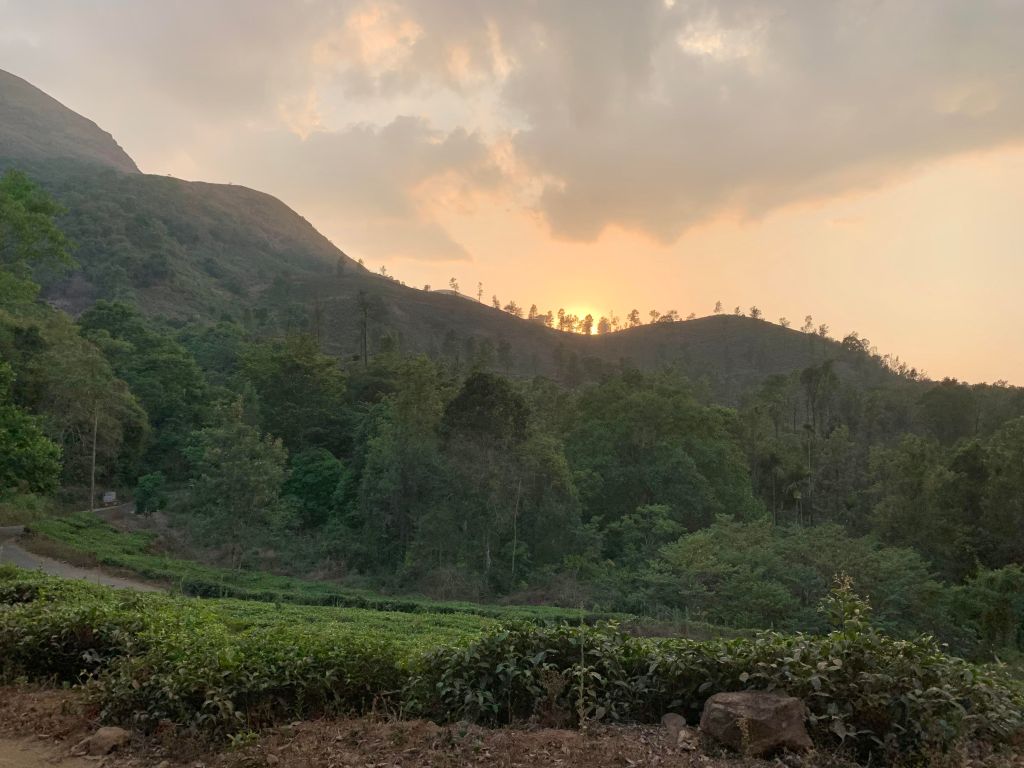
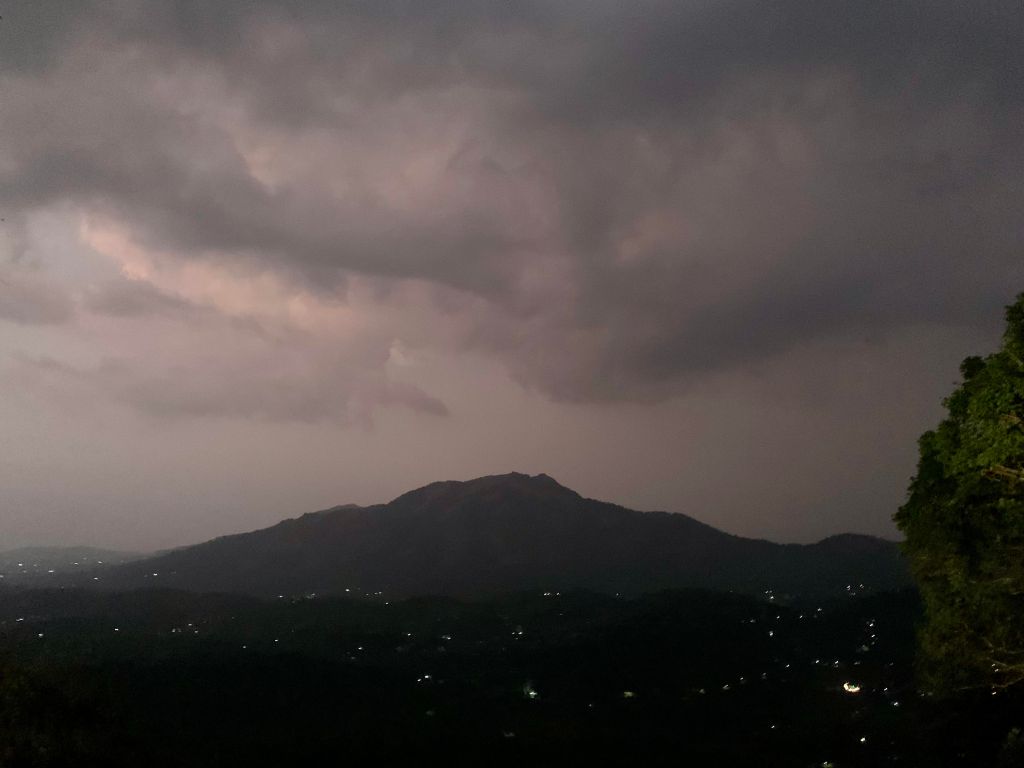
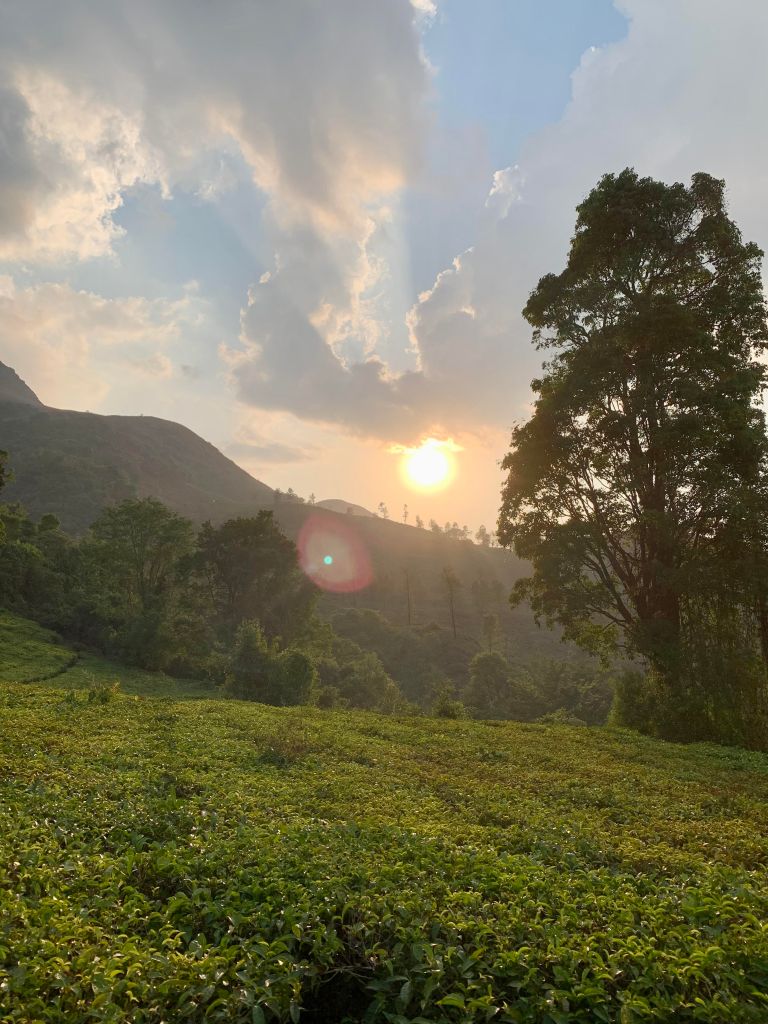
Chembra stands out imperceptibly in the background as the mist descends over its northern side. The driver of the rickety auto-rickshaw in which I make the topsy-turvy trip from Kalpetta settles to drop me at the backpacker’s hostel at Chembra’s foothills for 500 rupees. A vast tea estate stretches out for as far as the eye can see, and it is only when one edges closer to the property’s north-western precipice is any semblance of Wayanad encountered.
Originally a hospital set up by the British in the 1920s, the hostel is a renovated colonial-style structure with a vast corridor that runs parallel to its rooms. I learnt much later that the tea estate that houses the hostel is spread over 700 acres. The fall to the northwest is spectacular, with hills in the lower range of the Western Ghats basking in the late evening sun as it makes its way down to the low-country orbs of Mysore and Chamarajanagar.
It is no surprise that one has to cross Bandipur to reach Wayanad in the first place; any easier and one would have been tempted to think that one was within the anonymity of civilisation.
*
Earlier in the day, the elephants that I spotted from an unobtrusive window on the bus from Mysore seemed triumphant and exultant — for what I did not know. The egret that sat contentedly upon the shoulders of a rather guileless water buffalo winked at me as I struggled to bring my camera out of the mishmash that my backpack had become. I was reminded of an older boy with whom I never got along in school and who often bullied me for the pancakes my mother painstakingly packed.
*
I am forced to snap out of this reverie when my hostess reminds me that elephants were spotted at the southern expanses of the property a few days ago. She asks me to not step out after dark. In the common area boasting of a sit-out on a makeshift tree house, a motley crew from all hues of life rejoice at what appears to be a joint venture launched by a businessman from Bangalore and an engineer from Bombay. I join the pack and am welcomed by a loud cheer.
John, a chartered accountant who rode all the way from Coimbatore on his imported motorcycle, recounts having seen a leopard when turning in one of the several snaking curves when climbing from Kalpetta. He slurs as he articulates and his eyes appear bloodshot; I know only too well to separate the wheat from the chaff. Advait, a veterinarian from Anantapur, rebuffs everything that John says and vociferously advocates for an early dinner. He is, quite promptly, turned down.
*
The trek towards the peak of Chembra is made through the heartland of the eponymous forest range. Langurs peer out inadvertently while a flying squirrel makes an appearance from its cosmic abode. Catching sight of me and my companions’ incongruously sunscreened visages, it jumps shyly onto the double-storied Bo where it has made its home. Murali, the young forest officer who accompanies us jokes with Estelle, the German lady who quite fortuitously chooses to trek in her Birkenstock footwear, about sightings of bears in the vicinity but restrains himself when she turns ashen white.
The heart-shaped lake peeks with unabashed curiosity as we huff and puff our way up to the midway point of the trek. To our great consternation, this is where we have to end our trip as the summit of the peak is sealed off by the government. A few years ago, Murali tells us, a group of nincompoops who made it to the summit lit a couple of cigarettes to celebrate. They did not, however, stub them when they were done. What happened next is well documented — a forest fire of gargantuan scale that wiped out about 60 hectares of forest land and claimed the lives of hundreds of wild animals. The summit has been off-limits to travellers ever since.
The parched outcrops that surround the lake by no means diminish the panorama that lies to the west. A faint countenance of the vast fields of tea and paddy which fortify the district of Wayanad is visible through the mist. It is almost noon, but my companions and I find no reason to shed our coats. Specks of Mohit Chauhan’s Phir Se Ud Chala[1] fill the air; it feels as if Chembra herself has come to life.
It is not exactly wise, but we surrender to the lure of lying down on the grass and bask, cocooned by the benevolent gaze of Chembra. Dark clouds brew overhead but Begum Akhtar reassures us in her palliative voice, and it is not before the first drops fall on my forehead that I alert the others over our predicament. Unsurprisingly, I find that most of my friends had nodded off, obliged by the exercise and the accompanying iridescent breeze.
*
The descent, as always, is trickier than the climb, and we take refuge from the rain under a giant rock midway. The shelter is insubstantial for a group of ten, and we end up getting soaked to the skin anyway. Murali, rather ingeniously, offers his service raincoat to Estelle. Much to his chagrin, she declines, and continues unabated in her soaking t-shirt, Nike track pants and Birkenstocks. Someone mentions a childhood spent in the Bavarian Alps…
Dry leaves fall from the trees — these untimely showers ensure that they are not held on to their material comforts for long — and the fauna we encountered on the way up seemed to have disappeared. The langurs call out occasionally, but the mynahs respond in dulcet tones of their own.
Drenched to the core yet alive beyond measure, the rain loses significance as we meander down the trail. Consciousness makes itself felt in every cell of my body as I lumber past the sludge and try to find a foothold on the wet tracks. Awake to the moment and mindful of not slipping — essentially holding my life in my hands — I experience a pacifying sense of tranquillity that I normally associate with timing a straight drive back past the bowler on a cloudy afternoon at the Gymkhana.
Damp pathways mark our way back to the hostel. On the way, an appetising breakfast of puttu and kadala curry[2] is sought to calm our nerves. A gulp of tea, brewed from the plants of the estate on which our hostel stands, soothes and brings some warmth back into our bodies. After that, we sleep all afternoon. The 1980s restaurant at this point serves as a reputable hotbed for the exchange of accounts as fellow travellers make their way upcountry for further investigation. Krishnagiri, Edakkal, Banasura and even Ooty, among other places, feature on their itinerary. Buses out of Meppadi take the circuitous route towards Sultan Bathery via Kalpetta. A few companions remain as I make the hike back to the hostel.
Last vestiges of the raindrops from earlier in the day cling on with pride on the tea leaves. Seen from a distance as we walk up the bend onto the track that leads to the hostel’s gates, it appears as if the leaves have shed tears of their own.
The sky turns a dull shade of orange, almost as if playing testament to friendships made and attachments uncovered. I am content enough to watch the sunset over the lower Western Ghats as another pre-monsoon drizzle wafts in. Someone mentions a fresh batch of pazham pori[3] being made in the kitchen. I scramble down the tree house to beat the rush.
[1] Song from Bollywood movie, Rockstar. Translates to: He flew again
[2] Local fare. Rice cake and spicy chick pea curry
Mohul Bhowmick is a national-level cricketer, poet, sports journalist, essayist and travel writer from Hyderabad, India. He has published four collections of poems and one travelogue so far. More of his work can be discovered on his website: www.mohulbhowmick.com.
PLEASE NOTE: ARTICLES CAN ONLY BE REPRODUCED IN OTHER SITES WITH DUE ACKNOWLEDGEMENT TO BORDERLESS JOURNAL.
Ujjal Dosanjh, former Minister from Canada and former Premier of British Columbia, discusses his autobiography, Journey After Midnight – A Punjabi Life: From India to Canada, and the need for a world with less borders. Click hereto read.
Professor Fakrul Alam discusses his new book of Tagore translations, Gitabitan: Selected Song-Lyrics of Rabindranath Tagore. Click here to read.
Translations
Tagore’sMusalmanir Galpa(A Muslim Woman’s Story) has been translated from Bengali by Aruna Chakravarti. Clickhere to read.
Masud Khan’s poem,In Another Galaxy, has been translated from Bengali by Professor Fakrul Alam. Click hereto read.
Wakeful Stays the Door, a poem by Munir Momin, has been translated from Balochi by Fazal Baloch. Click here to read.
Songs of Freedom: An Ordinary Taleis a narrative by Nandani based on her own experiences, translated from Hindustani by Janees. These narrations highlight the ongoing struggle against debilitating rigid boundaries drawn by societal norms, with the support from organisations like Shaktishalini and Pandies. Click hereto read.





 Borderless