Signing in the Air, Malashri Lal’s second poetry collection, announces itself as a meditative, non-linear poetic journey from the very outset. A poet, academic and critic, Lal explains in her preface, there is “no linearity in such a theme,” and the poems move instead through cycles of time, memory, myth, and lived experience. The seventy-six poems converse with each other and portray her meticulous craftsmanship.
The collection draws deeply from the Indian concept ofritu — the six seasons — while simultaneously acknowledging the disruptions of climate change and modern dislocation. Nature in Lal’s poetry is neither sentimental nor static; it is capable of both “ravage and rejuvenation,” a duality that becomes central to the collection’s philosophical stance.
The poet’s voice resists fixity. The lyrical “I” is deliberately “timeless, generic author, reader, witness,” allowing the poems to transcend individual autobiography and become collective meditations on human and feminine destinies. This makes the book not merely confessional but contemplative, situating personal memory within wider cultural and ecological continuums.
The five sections of the book do not function as isolated compartments but intricately connected that speak to one another.
‘Whispers of the Earth’ foregrounds the elemental: trees, rain, seasons, and landscapes, yet avoids pastoral nostalgia. Lal speaks to nature rather than about it, creating an intimacy that acknowledges environmental fragility without moralising.
‘Installations’ shift attention to material culture and memory. Objects, such as, old books, domestic utensils, inherited artefacts become repositories of time. Lal’s reflection on ancestral possessions, such as the hamam or the dol[1] for washing clothes, raises radical questions: have women’s destinies changed as technology has advanced, or have only the tools evolved while labour and inequality persist?
‘Echo of Myths’ is one of the most resonant sections, reworking mythological figures like Lakshmi, Sita, and Radha not as static icons but as evolving subjects. Lal’s engagement with myth is neither reverential nor iconoclastic; it is dialogic. Myth becomes a living language through which contemporary women’s struggles, endurance, and resilience are articulated.
‘Meditative Missives’ carries a distinctly philosophical tone. Time dissolves into moments of stillness, and poetry itself becomes an act of contemplation. Lal explicitly frames the volume as possessing “a meditative streak weaving through it,” where mind and body interact to create “kaleidoscopic images” that search for form and vocabulary.
‘Women Who Wander’ brings the collection into the socio-political present. Drawing upon the idea of the flâneuse, Lal reimagines wandering as a gendered act—women moving through cities, histories, and emotional terrains. These poems reclaim mobility as agency and witness.
Lal’s language is marked by clarity rather than excess. Her metaphors are precise, often luminous, and grounded in lived experience. The imagery functions kaleidoscopically: fragments turning to reveal new patterns rather than fixed meanings. Light, shadow, seasons, and movement recur as motifs, reinforcing the book’s concern with impermanence and continuity.
A powerful example of Lal’s ethical and spiritual engagement appears in the opening poem, ‘Invocation: Devi Stuti – The Divine Feminine’. Here, the feminine divine is portrayed as both creator and destroyer, compassionate yet fearsome:
She, the feminine power creates as well as destroys…
Evil seems to flourish and goodness struggles
but She knows whom to vanquish
in the final reckoning.”
The poem moves beyond ritual praise to a contemporary plea, invoking divine protection against “violence, brutality, torture of the everyday woman”. This invocation sets the moral and emotional tone of the entire collection, anchoring the personal within the cosmic.
A recurring concern in Signing in the Air is hybridity of place, language, identity, and time. Lal reflects on her own transitions between Jaipur, Bengal, and Delhi, embracing what critics have described as her ability to be “at home in her multiple worlds, and an outsider looking in”. This tension enriches the poems, allowing them to speak across geographies and generations.
Memory functions not as nostalgia but as ethical inheritance. The poet’s recollection of her grandmother—an early graduate of the University of Calcutta—foregrounds women’s intellectual legacies often erased from public history.
The book cover is understated yet evocative. The image of a silhouetted tree against a luminous sky visually echoes the book’s thematic preoccupations: imprint and erasure, presence and absence, rootedness and transcendence. The title Signing in the Air is aptly suggestive, writing that leaves no permanent mark yet insists on meaning.
In terms of physical quality, the book is finely produced. The paper and layout are reader-friendly, lending dignity to the text without distraction. The careful structuring of sections and the inclusion of preface, acknowledgements, and critical blurbs enhance the book’s scholarly and aesthetic value.
Signing in the Air is a mature, reflective, and deeply humane collection. Malashri Lal writes with quiet authority, weaving together ecology, myth, memory, spirituality, and women’s lived realities. The poems resist closure, inviting readers into an ongoing conversation, one that unfolds across seasons, histories, and inner landscapes.
Ultimately, this is a book that does not shout but resonates. It affirms poetry as an act of witness, meditation, and ethical imagination: truly, as Lal suggests, a way of “scribbling in the empty air where intimations of spirituality and social truth coexist without definable boundaries.”
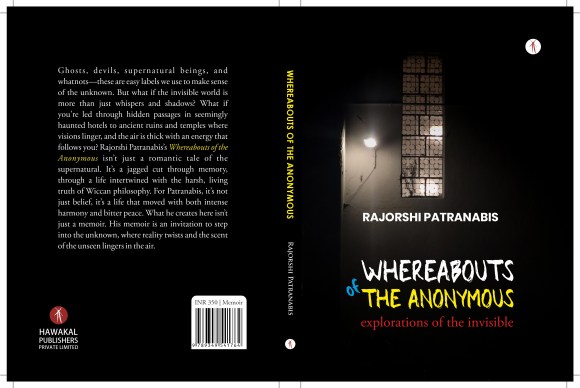
A brief discusion of Whereabouts of the Anonymous: Exploration of the Invisible by Rajorshi Patrnabis, Hawakal Publishers, with an exclusive interview with the author on his supernatural leanings
Whereabouts of the Anonymous: Exploration of the Invisible by Rajorshi Patrnabis could have been a regular book of intense ghost stories, with the oldest ‘presences’ dating back to the regime of Sher Shah Suri (1472 – 1545). ‘Presences’ are basically spirits — visible or barely visible — that cause disturbances in the energy field surrounding us, as per the book.
One of the most coherent of these ‘spirits’ was from 1920, confiding her story on Christmas eve — reminds one of Dickens’ A Christmas Carol and Uncle Scrooge — only this spirit was a British woman from the Raj era, a spirit that lost her beloved who was from a Bengali royal family. Her strict father stepped in and stopped the marriage. No one knew what happened to the groom. And she continued to weep and wait while haunting the premises of the popular and populous Park Street where she was supposed to meet her beloved more than a hundred years ago… Then there’s a ghost that takes you back to his funeral pyre… drawing back the curtain between the two dimensions — one in which we exist and one in which they hover…
These, however, are not your regular ghost stories. There is a difference for Patranabis claims to have met these sad spirits in real life.
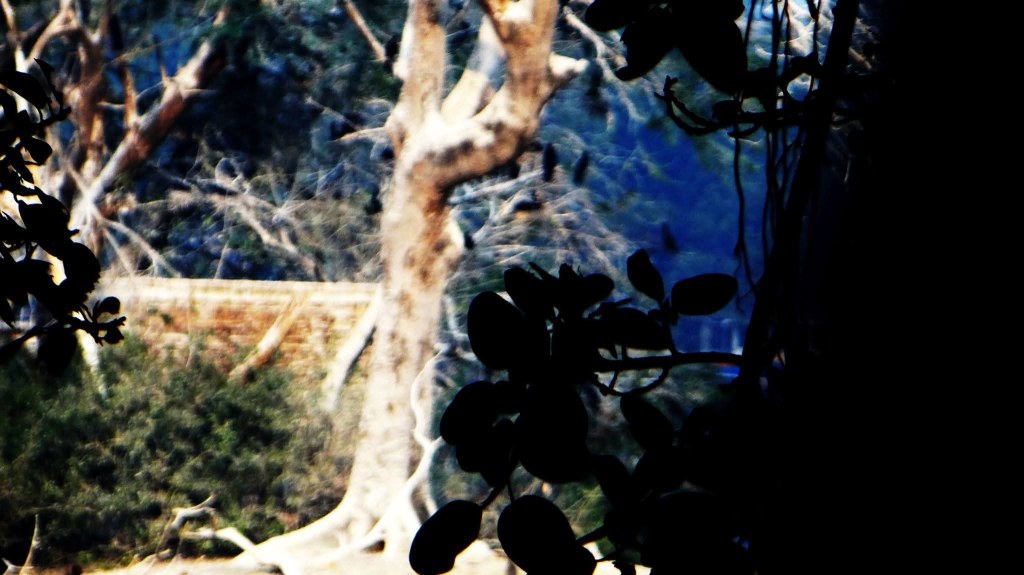
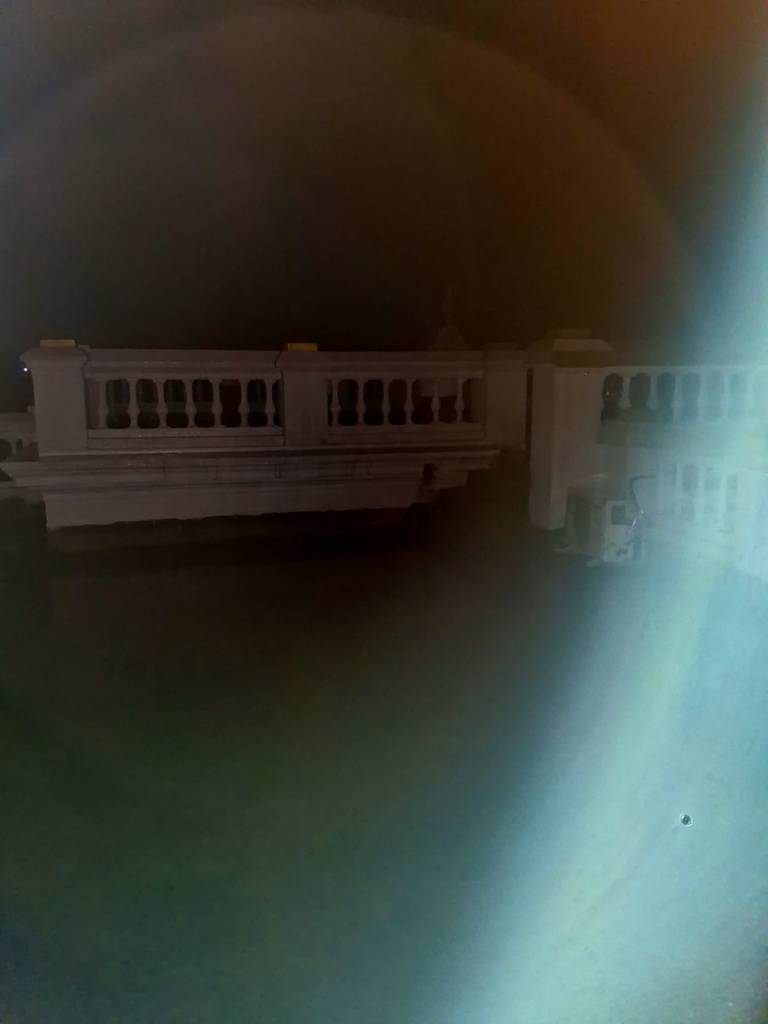
A Wiccan by choice, Patranabis has tried to draw back the curtains to reveal a dimension whose existence is elusive and avoidable for most of us at best and rejected by many. He claims to have a spiritual bent of mind which helps him experience these out-of-the-box scenarios, meet the dearly departed. He has done a number of books of poetry around his beliefs. He has even photographed these spirits!
Photographs of spirits by Rajorshi Patranabis
Though the images are blurry at the first viewing, you have to focus hard to see the ethereal outlines of shadows beyond the realm of the living, I guess.
Whereabouts of the Anonymous is a memoir that spans his interactions with, as the title says — ‘the anonymous’ — or the blurry ‘presences’ and explores the invisible for majority of the spirits are merely depicted as shadowy in his narrative as in his photographs except for a few whose images have not been taken.
Occasionally, the spirits can be malevolent as in the Bhangarh Fort, where a foul-smelling female spirit and some lost souls in the ancient jails wounded Patranabis physically and chased him out. Set in the Aravalli hills of Rajasthan. Bhangarh is the most haunted place in India. There is a story of a princess and her spurned lover associated with it. Evidently, a sage fell in love with the princess and made a special concoction which would make her fall in love with him. When she went to buy a perfume, the smitten lover tried to replace it with his love potion. The princess threw away the bottle of love potion. It fell on a rock, dislodging it. The rock rolled down to kill her admirer, who cursed her with his dying breath!
There is also the narrative about a whole village that accepts and lives in peace with the spirits of their dearly departed, even giving them rickshaw rides and offering them chairs!
Patrnanabis has brought his Wiccan outlook into the discourse. His language flows. The narrative is simple and easy to understand. The descriptions are so graphic that one can almost visualise the disembodied spirits and their interactions. The 150-page book is an enjoyable and easy read and a perfect companion for travel or an evening or two. But the author’s experiences and his interests stretch beyond what the pages can hold. In this interview, we discuss his beliefs and his experiences…and maybe, another book?
How old were you when you had your first supernatural sighting? Were you scared the first time?
When I look back, the first time that I had a feel of the ‘other dimension’ was perhaps at the age of 7 or 8. I remember going to my paternal home at Digboi during our winter vacations. I remember going to my parent’s bedroom at the first floor and my mother used had to send me to her room to fetch something. The room was across a terrace, and I remember running through the terrace from the staircase to the room. But every time, I could feel someone running with me through the terrace. But as and when I would enter the room, it was all perfect. I would run back again again to the stairs. When I would blurt this out to my parents, they would simply ignore me, but somehow, I was never completely convinced. It was much later, sometime around the year 2000 that my father confided with me of a real ‘presence’ there. He told me that there had been many an experience where people had felt the presence of something eerie there. But by then I had had some very deep experience of the supernatural existence.
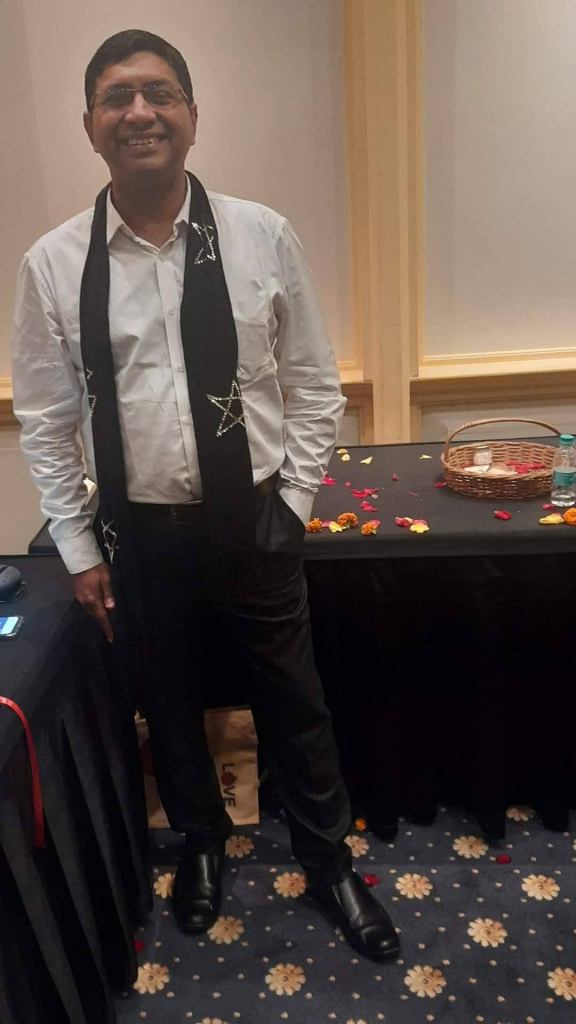
Rajorshi Patranabis in Wiccan wear
When did you become a Wiccan and why?
The answer to this ‘why’ is a wee bit dicey. I am myself not sure of this. It was just a flow that I couldn’t control. Mind you, I had already gone through some extremely remarkable experiences and my stint at the hill top temple and my encounter with that 97 year old person who taught me numerology was way before I joined Wicca. I would call myself pretty insane in those phases of my life. By the time Wicca happened, I had calmed down considerably and joining my teacher was nothing less than an accident. It so happened that my friend, Subhodip, and I were walking down the Southern Avenue in Kolkata when we spotted another school friend ( a senior Wiccan) standing at the door of an otherwise inconsequential book store. He waved at us and asked us to join in, as it was an open session by my teacher. We joined. Subhodip was skeptical, while I followed it up with an email and I was called for an interview with Ma’am. The journey started. I had mentioned about my experience in ‘Whereabouts…’ This was early 2013.
Did becoming a Wiccan help you align to the supernatural better?
Infact, my Wiccan knowledge taught me the nuances of alignment with the forces of nature. Why just the supernatural? The vibrations that the earth emanates, the animal kingdom throws out, to feel and spot across dimensions etc. The most important thing is perhaps the use of sound like the chatter of a rainfall, the melodies of a singing bowl or even drum beats (like in Voodoo) as means of invocation, that, was passed on to me. More than anything, the pleasures of immersing oneself in ancient knowledges can be very ‘intoxicating’. Our school concentrates most on the Egyptian origins. If you ask me now, I worship Goddess Isis as my altar Goddess along with the 64 yoginis. Yes, Wicca has helped align myself to me, if I say this philosophically.
You have called yourself ‘spiritual’ and also spoken of ‘seers’? Can you explain these two terms?
I wouldn’t get into the linguistic trap of English. But a Wiccan would say spiritual comes from ‘spirit’. A very basic tenet of Wicca is to align your body, mind, soul and spirit. As and when the becomes one with nature does your mind uplift itself to being a soul. A soul that gets through the rigours of lust becomes a spirit. We are in the habit of using the word spirituality very lightly, but a true Wiccan would say that a pure spirit sits on the pinnacle of the pyramid. There are many references in our Sanatan scriptures too about such spirits and the recourse they take to leave the body, as and when they cross over.
A seer is a saint who has won over the realms of the physical nuances. He/she is automatically clairvoyant as all their faculties have attained the higher plains in the atmosphere. Please don’t mistake a seer for only a saint. A scientist or a litterateur who had immersed themselves in the claustrophobic depths of knowledge can be a seer too. Many such examples can be sighted to prove this.
How did/does your family respond to your being a Wiccan or interacting with spirits?
My family doesn’t always subscribe to what I do, but in all honesty they had never been a hindrance to my learnings. There are Wiccan ceremonies that I celebrate or spells that I do from time to time for the well being of people, they had all along been very supportive. They stand as a pillar beside me.
When and why did you turn to writing?
I started writing at a very young age. My first poem, if I can recall was at the age of 13. But as time went on, everything slowed down. My next phase was from 2015 and my first published book was in 2018. By this phase I was well and truly into Wicca.
You have used Japanese techniques in poetry to describe your journey as a Wiccan and to interact with spirits. Why? Do these align better to help you describe your experiences?
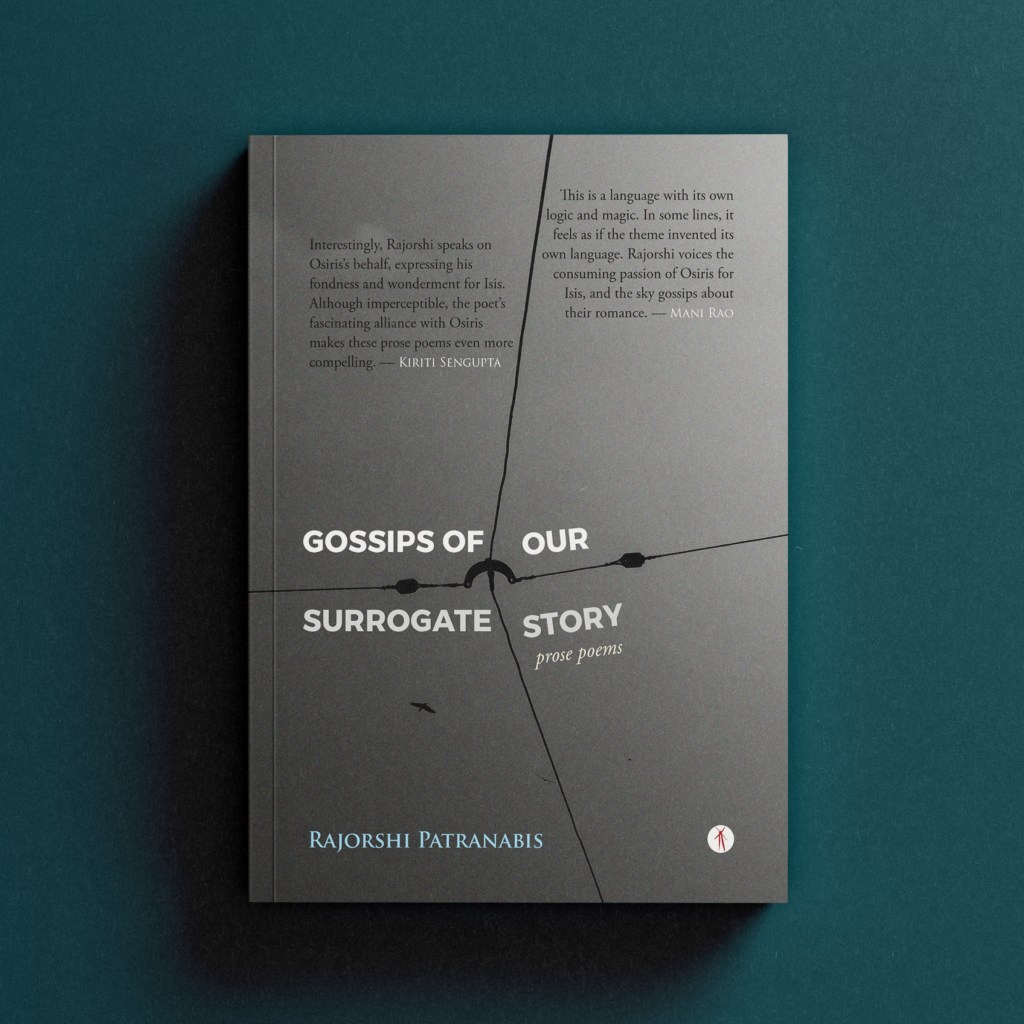
Well, I wouldn’t say I use Japanese poetry forms to interact with any spirit. Though I must accept that I’ve had communications with the other dimension which were very poetic at times. In my book, Gossips of our Surrogate story, I had used quite a bit from my Wiccan Book of Shadows and even you had accepted that they were poems alright, good or bad, notwithstanding. But I would also like to harp on the inherent pertinence of this question. Gogyokha or Gogyoshi are short form poetry in just 5 lines and my forays into the other dimension had just had similar experiences — short, crisp and at most times life altering. In my Gogyoshi collection, Checklist Anomaly, all the poems are either true happenings or near life occurings. My writing (poetry) as a whole, until now, had been with deep metaphysical love. Perhaps my thought process is challenged. But Japanese forms had been a huge compliment to this particularly weird handicap of mine.
What made you think of doing this book — your memoir of supernatural interactions so to speak?
To be very honest, all these experiences that I had shared in Whereabouts of the Anonymous would have stayed with me through out this physical life had it not been for a dear brother and publisher, Bitan Chakraborty. It was on his persistent insistence that I decided to put my ‘stories’ on paper. But that was again a very difficult thing. I really had to scoop things from the nook and crannies of my memory to make for a reasonably good compilation. Even Bitan had certain experiences with me or otherwise ( like his camera giving up on a particular shot etc.) and was most interested on such a memoir seeing the light of the day. I have dedicated this book to Bitan. I had to, it was his brainchild and as a Wiccan would say, the Universe made me write it.
You seem to seek out departed spirits or ghosts. Why? Are you not scared?
I find this word ‘ghosts’ very disrespectful. Departed spirits, well, if you ask me no spirits depart. Remember, the law of conservation of energy — the total energy remains constant, it can neither be created nor be destroyed. The energies ( whether spirits or not) have this affinity to get in touch with other souls who can feel them and with a little effort can hear them. The ectoplasmatic fusions that happen inside the cosmos are mostly not registered by ‘so called science minded sceptics’. There are gadgets to measure such vibes. And afraid? No. You would only be afraid if you stay in denial of the other dimension. If I say that the other dimension is omnipresent, no matter what, you won’t be afraid of it. Remember you are afraid of darkness because you don’t see through it, but as soon as you put on a light, it becomes a part of you. Precisely the unknown is magic or mysticism and the known is science.
Do you only sight spirits or auras around people? Are you into Noetics as a subject?
Auras form the atmosphere, it really doesn’t matter whether you have a body or not. There are ascetics who would ask you not to touch anyone’s feet while paying obeisance. The say, the aura or the protonic energy of a person is as long as that person’s height. They say you put your head on the ground, possibly, to absorb a concoction of the Earth’ s magnetism coupled with the aura of that person. By the bliss of this Universe, I do feel a few energies that are devoid of a body. Noetics or the consciousness levels automatically become part of these. But I am personally not into Noetic sciences or research. But ancient knowledges under the umbrella of Wicca does take you through the subconscious to superconscious levels of the mind with twinings of the nature, supernature and the supernatural. There are very thin lines segregating them.
In you memoir, you keep asking people to leave a glass of water to satiate the spirit. Do you see yourself as a person who appeases ghosts? Do you help people – how do they reach out to you if they feel a ‘presence’?
What does a glass of water do? Think of a situation where you stand in front of everyone, yet you’re being ignored by everyone. You would not realise that you’re actually not visible to them. Just think of the insecurity that you would have to realise that persons whom love so dearly are slowly getting ahead with life and that you have become a fading memory. That glass of water just reinstates the faith that he/she still matters to you.As time goes, like all energies, they would also dissipate. But with pleasantness in them.
I don’t appease anyone. As my teacher says, it’s all about alignment. If I may say so, the Universe makes me do certain things that a psychiatric practitioner would do to people with mental illness. These are very small techniques that I had learnt over the years to put a restless soul to a restful state. As far as the last part of your question is concerned, I don’t do anything for any consideration. I have a promise to keep. If the cosmos so wills that I would be of help to someone, I would definitely land up from nowhere.
Do you plan to do something with this ‘gift’ you have? Can you see spirits where others cannot? Will you be doing more books about your supernatural experiences?
Well, after the book went for print, I realised that I could have included many more of the experiences that I had gone through. So, another book is very much in the offing. And as far as doing something with this ‘gift’ is concerned, I am completely in sync with you that this is a ‘gift’ that the cosmos had bestowed upon me and when you have such an invaluable gift, you keep them. You generally don’t use them. Seeing spirits? I feel them and I see them only when the spirit wants to show them off (like the school Master of Bhanjerpukur – one of my most remarkable experiences).
(This review and online interview by email is by Mitali Chakravarty)
PLEASE NOTE: ARTICLES CAN ONLY BE REPRODUCED IN OTHER SITES WITH DUE ACKNOWLEDGEMENT TO BORDERLESS JOURNAL
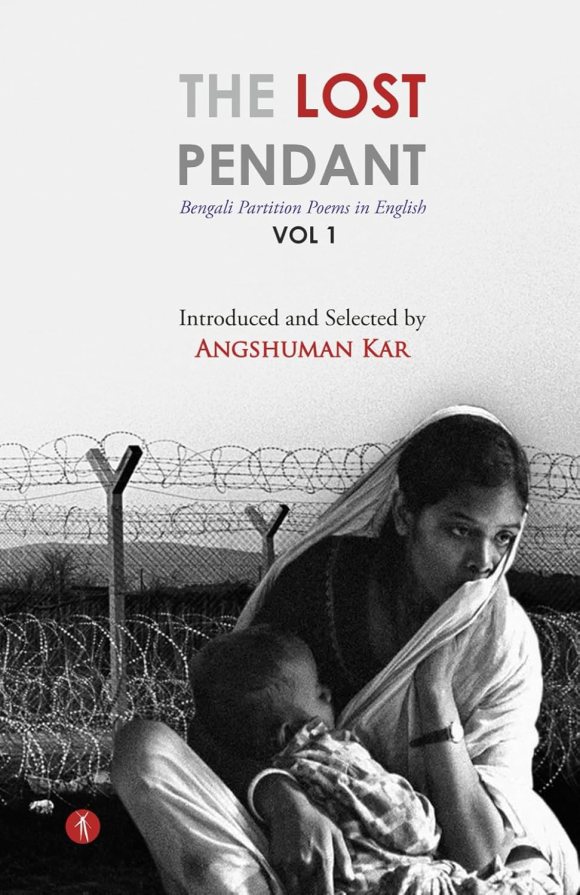
The Lost Pendant brings together poems translated from Bengali by translators such as Himalaya Jana, Mandakranta Sen, Rajorshi Patronobish, Sanjukta Dasgupta, Angshuman Kar, and Souva Chattopadhyay. Through these compelling translations, the volume makes a significant intervention in Partition literature, arriving at a moment when revisiting the lingering spectres of the event has become especially urgent. The Partition of India in 1947, which divided the subcontinent into India and Pakistan, resulted in one of the largest mass migrations in history and left enduring scars of displacement, violence, and fractured identities. As the editor, writer and academic, Angshuman Kar, notes in the book’s introduction how Partition remains a 78-year-old wound that continues to bleed.
The anthology showcases poetry from the eastern parts of the subcontinent, chiefly Bengal, Assam, and Bangladesh, featuring works by 41 poets from India and Bangladesh. Kar does not simply compile these poems but thoughtfully curates them to reveal several critical nuances. He invokes the concept of “buoyant memory,” introduced in his earlier work, Divided: Partition Memoirs from Two Bengals, to depict how “forgetting the past is impossible for the direct victims of Partition.” He also draws attention to the disproportionate representation of upper-caste Hindu Bengali poets, in contrast to the relative invisibility of Muslims and those from marginalised communities. This imbalance extends to gender as well, with a noticeable disparity between male and female poets in the collection.
The book is structured in two parts, respectively featuring poets from India and Bangladesh. The Indian section is notably larger and presents a wide range of emotions, reflecting both the immediate trauma of Partition and its long-lasting reverberations over the years. Many of the poems in this section express a deep nostalgia for a lost homeland. For instance, Alokeranjan Dasgupta’s ‘Exile’ evokes memories of abandoned spaces. Similarly, Ananda Sankar Rai’s ‘The Far Side’ laments the estrangement from what was once familiar. He writes, “Once it was a province, now an alien land / where you must enter passport in hand.” Basudeb Deb’s ‘Picture of My Father’ constructs a powerful portrait of the nation through the figure of the father: “Swadeshi movement war sirens famine flood / Riot and partition written in the wrinkles on his forehead.” After the father’s death, only a walking stick remains. The poem draws a powerful parallel between the futility of the father’s dismissive words, “This country is not a pumpkin that you can cut it in one blow”, and the uselessness of the walking stick after his passing. This object comes to embody the spirit of the deceased father, “just another old toy”, offering a stark commentary on how individuals became pawns in the hands of the state.
Several poets in the anthology focus intensely on the experiences of refugees, capturing both their suffering and the complexities of their identities. In ‘The Refugee Mystery’, Binoy Majumdar laments the loss of linguistic roots, noting how “the Bangals now speak the dialect of Kolkata all the time, having forgotten the dialects of Barishal and Faridpur / The Moslems of Dhaka are heard singing and speaking in the radio with the lilt of Uluberia.” His reflections emphasise the deep connection between language and social identity. This theme finds a resonance in Sunil Gangopadhyay’s poem ‘That Day’, where he writes, “On one side they named the waters Pani / on the other side–Jol.” Through this simple yet evocative contrast, Gangopadhyay underscores how a shared concept can be articulated through divergent linguistic expressions in India and Bangladesh, which become subtle yet potent markers of socio-linguistic divisions. Such poems provoke profound questions: Can the adoption of a new dialect truly redefine one’s identity? How does one navigate the tension between past and present linguistic selves, and is reconciliation even possible?
Viewed through the intertwined lenses of faith and suffering, poetry often functions as a repository of collective memory and a means of resilience. In this regard, Devdas Acharya’s three poems present a poignant exploration of the lived experiences of refugees in post-Partition India. A recurring and haunting image emerges in his work: a grieving father, who has recently lost a child to hunger, standing before a deity symbolically embodied by a swadeshi leader. This image encapsulates both the profound deprivation endured by displaced communities and their simultaneous reliance on unshaken faith. Despite the magnitude of loss, what sustained many refugees was a deeply rooted belief system that imbued their suffering with meaning.
By foregrounding the gendered dimensions of violence, Partition poetry exposes how women’s bodies became contested sites of power and trauma. In “She, on the Platform of a Station”, Krishna Dhar powerfully captures the plight of women during Partition. She writes, “Chased from the other side of the border, escaping fire and the fangs and tongues of wolves, one day she arrived,” evoking the image of a refugee woman doubly marginalised– “devastated by Partition” and simultaneously “dodging the eyes of the hyenas.” Here, the metaphorical wolves and hyenas represent predatory men who treated women’s bodies as extensions of territorial conquest. Kar points out in the introduction that very few women wrote poetry about their Partition experiences, largely because they were already engaged in the broader struggle for gender equality. While women’s memoirs on Partition exist, poetry by women addressing these themes, particularly from the 1970s, is strikingly limited. This absence is significant, as women’s experiences are crucial to understanding how deeply gendered the space of the subcontinent was during and after Partition.
Following independence, conflicts often emerged within the nation, revolving around issues of region, language, religion, and ethnicity. In ‘The Diary of a Refugee’, Shaktipada Brahmachari reflects on his sense of belonging across borders, juxtaposing his memories of a past home in Bengal with his present life in Assam. He writes, “The world is my home now, in Bangla my love I spell–Prafulla and Vrigu are the cousins of my heart,” referencing two leaders of the Asom Gana Parishad. While refugees in Assam experienced a more complex form of marginalisation due to ethno-linguistic differences, Brahmachari portrays a gradual process of acceptance, where both the homeland he left and the land he adopted come to hold emotional significance.
Across the border in Bangladesh, the theme of displacement persists. In “Leaving Home”, Jasimuddin asserts, “this land is for Hindus and Muslims,” calling on educators to return and “build the broken schools once more…we will find out our beloved brother, whom I lost,” a poignant appeal for reconciliation and return of Hindu families displaced by Partition. The motifs of memory and loss recur throughout most of these poems, a trope common between both the nations. This sense of finality is further echoed in Binod Bera’s lament: “Our nation is now three, all three are independent, and love lives an alien existence.” The emotional chasm created by Partition, and the subsequent loss of mutual affection, renders any notion of return futile.
The collection deserves commendation for its ambitious effort to recover voices from Bengali literature and render them accessible to a global readership beyond linguistic boundaries, through gripping translations. It is the first-ever translated collection of Bengali Partition poetry that captures the angst of the original poems with perfect nuance. The very title, The Lost Pendant, merits particular attention, for it resonates with themes of liminality and the fractured sense of identity experienced by the refugee poet Nirmalyo Bhushan Bhattacharya, better known by his pseudonym, Majnu Mostafa. Born in Khulna, Bangladesh, yet spending much of his life in Krishnanagar, India, Bhattacharya embodies the dislocation and dual belonging of Partition’s afterlives. As Kar insightfully observes, the choice of pseudonym can be read as a deliberate act of defiance, “a strategy to cross the boundaries set up by religious politics and fundamentalism–a move much needed in the subcontinent of our times.” In this sense, The Lost Pendant is not merely an anthology but a work of cultural recuperation as it attempts to resurrect poets whose voices risked erasure, while simultaneously protecting their oeuvres from the twin threats of historical amnesia and linguistic inaccessibility.
.
Udita Banerjee is an Assistant Professor of English at VIT-AP University. Her work has previously been published in platforms such as Outlook Weekender, Borderless Journal, Indian Review, and Poems India.
PLEASE NOTE: ARTICLES CAN ONLY BE REPRODUCED IN OTHER SITES WITH DUE ACKNOWLEDGEMENT TO BORDERLESS JOURNAL
A discussion on writing to heal with Swati Pal, author of Forever Young and In Absentia, both brought out by Hawakal Publishers.
Swati Pal Swati Pal’s latest collection of poems
Strength is a badge
Worn by the bereaved.

(The badge of the bereaved)
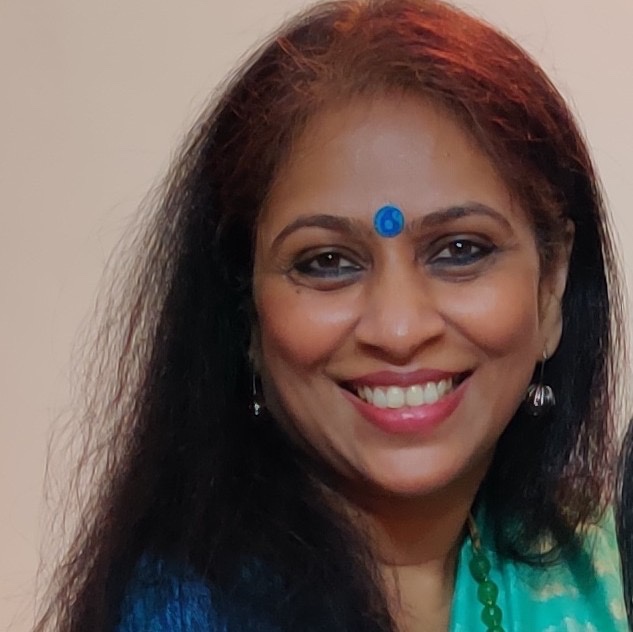
Swati Pal is an accomplished academic, an able administrator, a much-loved teacher. But most of all she is a resilient mother. Her poetry glows with resilience. It’s honest and endearing… perhaps best described by these lines from John Keats’ ‘Ode to a Grecian Urn’: “Beauty is truth, truth beauty — that is all”. She writes poetry for her late son that makes one weep and feel with her.
If you hear a laugh
Wafting in the breeze
And floating around,
Know that it's me,
Your Diva, Mohan.

(Mohan whispered to me)
She finds him everywhere… he lives on for her.
I can still get
The scent
Of you,
Feel your tousled
Silky hair
And see it
Flying in the breeze.

(A Flower Called You)
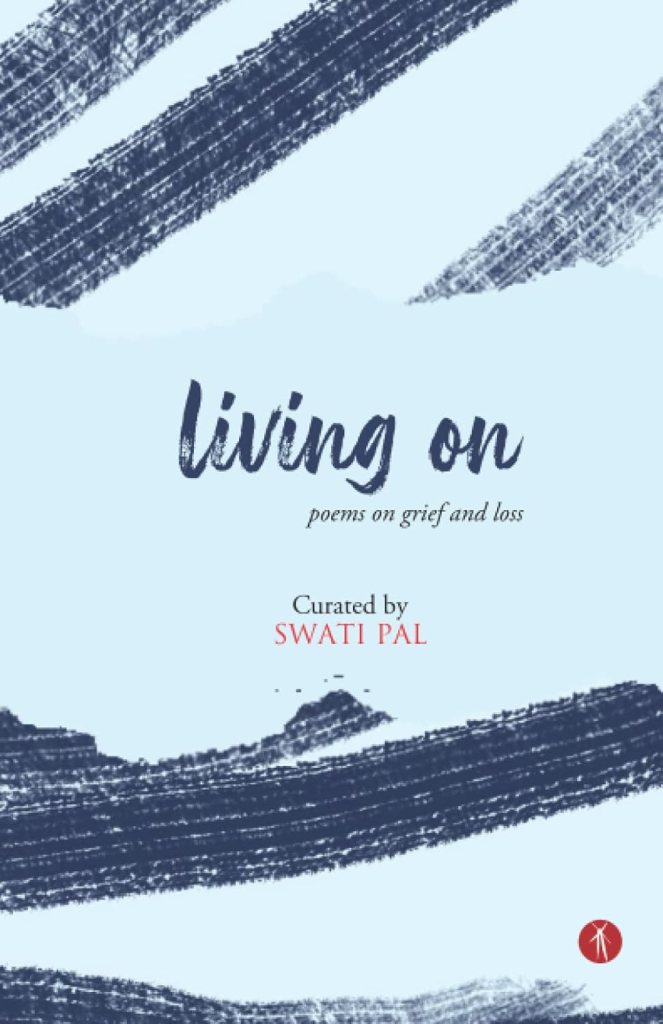
What is amazing is that she responded to her loss with a sisterhood, creating a group of poets from grieving women. She brought out with her sisters an anthology on loss, Living On (2022).
Anthology edited by Swati Pal and brought out by Hawakal Publishers
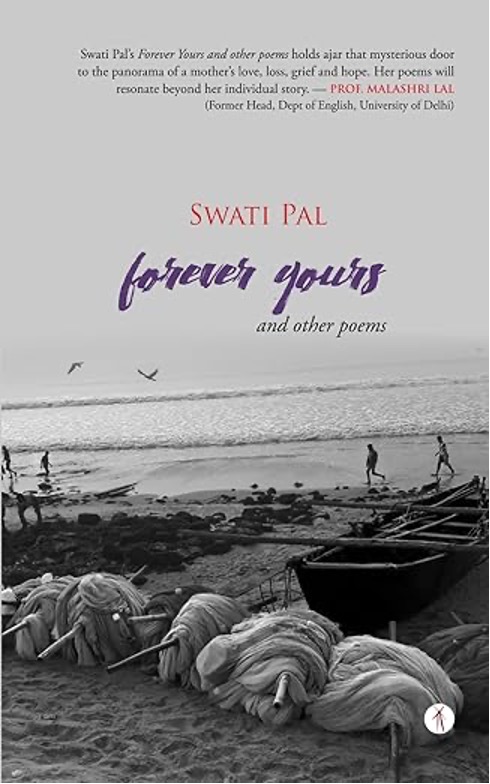
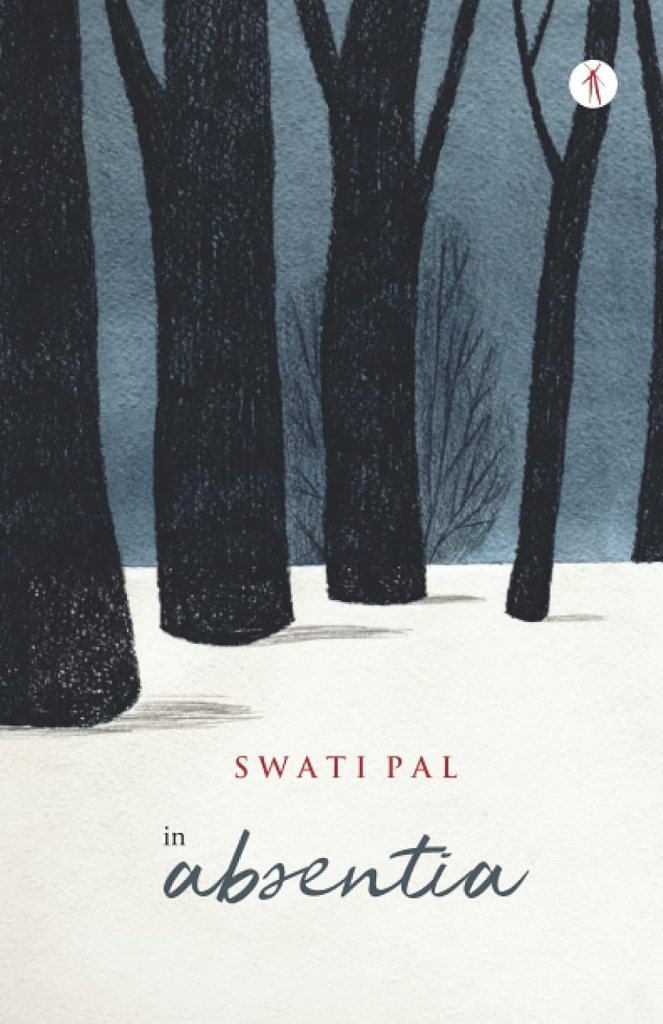
Overriding grief with love and action is tough. But that is something that seems to be woven into her earlier poems in In Absentia (2021) and in her most recent collection, which seems more stark, Forever Yours and Other Poems. As Professor Malashri Lal points out, they “resonate beyond her individual story”. Her poems capture the vastness of the universe with their love and longing. One doesn’t know whether to weep or wonder at the beauty that seems to emerge out of the poems — like a flower that blooms unfolding petal by petal. In this conversation, Swati Pal dwells on her journey of resilience and strength through writing.
When did you start writing poetry? What got/gets your muse going?
I was an oversensitive, expressive kid and teenager and went through the classic angst about life that such humans are prone to, I guess! I was complicated and tended to brood about everything with bouts of melancholia, most really genuine, but some a bit because at that age, it appeared to be most ‘romantic’! So writing was something that I turned to almost naturally and then to poetry by instinct. I used to read a lot of poetry actually and somehow was always captivated by the craft– the rhyme or the rhythm, the play with ideas and images, the words few yet saying so much; it was as if an entire universe existed in the poetic world. And I found the form beautiful, exacting and creative.
It helped too when Jayanta Mahapatra would select poems to be published in the Sunday magazine edition of The Telegraph, and he selected one that I dared to send! My vanity/pride was certainly boosted by what I considered a singular honour and the cheque for a small sum of perhaps 150 rupees (I forget the exact amount) was exciting to say the least– my first earning!
It was then the ideal way to deal with my own inner mess. If my morale was low(‘I am not beautiful’; ‘I can’t do this/ that/ or the other’; ‘So and so is better than me, I can never match up; ‘ Why can’t I have this/that or the other?’) and I was plagued by misery, I would write poetry; sometimes scathing stuff about people and life in scurrilous verse; sometimes light and hopeful like the dappled sunlight playing on the window sill to take my mind away from the negativity and escape into mostly the world of nature.
So poetry, even if it didn’t ever heal me or resolve my doubts and inner conflicts, calmed me. It kept me sane. It kept me rooted. So really, what has always got my Muse going is anything that moves me to tears – not necessarily about myself at all times but even a limping bleeding dog on the road, or a woman in rags and mentally unsound tearing her hair and crying; a leper sitting on the pavement completed dejected with life; pain, grief, loss — whether my own or anyone else’s, keeps my muse going.
Losing loved ones is tough. You dealt with poetry about your losses. How did you channelise your grief into writing?
As I said, I have always done so. Anything I found a hurdle, anything that caused me to be moved, anything that hurt my emotions or disturbed my peace, made me seek a companion — one I could pour my heart to. And seek I did! But misery, as they say has no bedfellows. Those I would vent to would get exhausted if the frequency of my exhortations became excessive (which they might have been). I think my emotional outbursts were fairly overpowering and sometimes the best of my friends and family would evade my searching them out, justifiably! But poetry. She never failed me. She was someone I could turn to in the dead of the night or the wee hours of the morning. She would let me rave and rant hysterically or in a fit of rage and tears and then equally quietly, let me rewrite when I was calmer, without remonstrations.
I lost my father when I was eighteen and it was terribly unfair as I had bided my time (the youngest of four siblings) to finally find my exclusive space in his dominion when poof! he was gone. And I was left feeling unanchored as suddenly everything became topsy turvy. That was the time I took to playing the clown at home, my mask ever in place, speaking ridiculous stuff and acting hilariously hoping that my behaviour could dispel the clouds of gloom that hung low over my home for a good many years after he died. And the more I played the clown, the more I longed to break free and scream out my rage and regret, my hurt at the void left by my father’s passing. In despair I turned to poetry and realised that working on making something beautiful, creating a pattern and a tempo with words, would somehow soothe my raging breast. It would stop me from being unhinged.
Since 2019, I when I lost my son, I lost sleep. And when I lie quietly on one side of the bed so that I don’t disturb my husband with my restlessness, I find myself turning to write poetry (on my mobile phone!) to keep me from holding my breath forever.
How did you form a sisterhood of women while dealing with your losses?
The sisterhood found me! I wanted to run away from everyone! To begin with, my sisters especially the eldest and the third, would come home every single evening those first few excruciating months when the loss made my life seem surreal and my physical self something I wanted to cast off. They would just sit with me; have a cup of tea and a snack they would bring along and chatter gently about the day. If I wept or screamed, they let me, clutching my hand tightly and saying things I shunned but which they spoke anyway. And in this way, through sundry humdrum things, they made the pain, the monumental grief, part of my every day. It is my three elder sisters who first helped me cross the bridge from being a mother with a living son to a mother of an angel with wings. There were others too, some friends since school days, a young sister-in-law, a niece, a young woman who is all but a biological daughter – whose companionship, whose concern in those early days, which soon timed with the Covid isolation, kept me afloat and were a balm to my soul.
And then one day a determined petite young lady was at my doorstep with food and her husband. She had heard about me from a relative, talked to me over the phone and tried to get me to agree to meet her and the support group of grieving mothers which I completely rejected as who on living earth ever wants to join such a group? But she was Radha– and my son is called lovingly, Mohan — and it had to be a Radha who would make me a part of In our hearts forever — a community of sisters and soulmates that are now an integral part of my life.
How can I forget my college students? The young girls with their starry eyes, sometimes brimming with tears when I mention Mohan, hugging me and making me smile with their crazy ways, their unbridled energy, their spontaneous affection — they were step sisters according to Mohan (he always complained that I loved his ‘stepsisters’ more as I spent more time with them!). This was and is a precious sisterhood. A special one.
This is only part of the reality. Lest it not be understood that the world is full of kind people and it is easy to form sisterhoods, I must hasten to add that I actually found, that some of those communities which I thought would form a sisterhood and be my support, turned out to be vicious, toxic and utterly cruel to me — they struck their blows of hatred and malice at a time when I was at my most vulnerable. I now know that I was such a naïve idealistic fool in my expectations! And finally, there were some men too who enabled me, two in particular and it would be so wrong to leave them out of my circle of hand holders.
What led to your anthology, Living On? Tell us a bit about the anthology.
It was Covid time and all my soulmates in the support group as well as myself were feeling desperate trapped withing the confines of our houses with our grief as our only companion. I could feel us all struggling. I suggested we do something to beat the blues and we would meet online with one person taking the lead to share something and make us do something together in a novel way.
I saw the blues being banished, at least for that time when were online. That made me feel I need to do more. That all my sister grief travellers needed to express their grief and shared the same wish as me: to make our child remembered. We were living on without our children, but our heart was nothing save a bleeding wound.
My first collection of poems had been In Absentia and obviously as the name suggests, it was about absence. It was about my Mohan. I knew now that I had to write about how I was living with that absence. I invited the support group members and others outside it who were also suffering from the grief of other losses such as parent/s to write if they wished. I wrote too. And thus, was created Living on — a chance for us to immortalise our loved one, as best as we could. I can only invite all to read it. It has photographs too of the lost ones. It is a truly moving book of recollection, a book of love. Those who wrote said that when they got the books in their hands, they were initially almost unnerved to see the words and pictures jumping out of the page. That they felt a great sense of achievement but also emotionally drained. All this was only to be expected. But it made us stronger, I think.
Has poetry drawn you closer to your sisters in grief?
Yes. They feel I speak for all of us. I know that I do.
How does writing help you cope with your loss?
It stops me from crossing that thin line between sanity and insanity, it gives meaning, at least for a while to my life which seems mostly irrelevant to me now.
You use lot of imagery from nature. It almost feels that you live with the loss all the time. And yet there is a sense of solace in your poems. Would you like to comment on that?
I breathe the pain and loss. It is not forgotten for a single second. Everything in nature reminds me of my son as we spent so much time together, including outdoors. The scent of the flowers in the breeze when we walked at night, the grass on the hockey field where I would time him as he prepped for the 100 meters race which he specialised in, the sound of the birds who Mohan was a bit wary of having been pecked a few times by the eagles and crows.
At first, Nature in fact hurt me as I could not renew myself the way nature does. I would be anguished and did not want to see the flowers blossoming or the squirrels running off the trees for food. But then I learnt that butterflies flitting around the house were a symbol of loved ones who had gone too soon and I began to look out for them. I learnt that feathers, especially pure white ones, were also a sign that our loved ones were hovering around. And that the rain falling on our faces is our loved ones communicating with us, crying with us. Nature does not provide me solace; nothing can and nothing will. But yes, I seek Mohan in nature.
You are a well-known academic and a principal of a college in Delhi University. Does that help in your writerly journey and to build your resilience? Please elaborate.
Well, it certainly makes me more resilient! The experiences I go through even when I battle so many things, do enable resilience, I guess. Writerly journey? I can’t say, I think everything that touches our life shapes the way we think and respond. Including the profession we have. And it is bound to enter into all our communications, including writing.
Would you have turned to poetry if you did not face losses in your life?
Yes, I love it as a form. It stirs me.
Do you plan to experiment with other genres?
Yes, I have already started with short story writing. And within poetry too, I have experimented with modes– trying my hand at Haiku and the tanka.
Do you have any advice for people dealing with loss and looking for resilience?
Clean a cupboard. Seek out people– the more they run away, chase them harder and insist that they cannot leave you alone, that you need them. In other words, do things that bring beauty even through simple acts (writing poetry is just one of the many alternatives; you could equally, scrub the floors!)
People your life. Don’t wait for it to be peopled. Be noisy, without any shame in demanding attention– sometimes people assume you might want to be left alone — let them know that you don’t want the aloneness, that you don’t want to further lose your identity (loss does that you know. When I lost my son, I felt, and still do, that I no longer have any identity). And I have asked myself this question regularly– do I want my son to recognise me for the woman he left on earth? If so, I must keep that woman as alive as possible, even if it kills me. For what would we not do for a great love? I advise young people to tell themselves this when they deal with loss– it will build resilience if nothing else will.
.
(This online interview has been conducted by Mitali Chakravarty)
About the Book: “The deafening silence of a loved one’s absence turns the poet into the eternal Ma enduring separation. Swati Pal’s poetry also straddles the particular to the universal theme of grief and loss and symbolically suggests compassionate ways of healing the pain … Swati Pal’s Forever Yours and Other Poems holds ajar that mysterious door to the panorama of a mother’s love, loss, grief and hope. Her poems will resonate beyond her individual story.” — Prof. Malashri Lal (Former Head, Dept of English, University of Delhi)
About the Author: Swati Pal, Professor and Principal, Janki Devi Memorial College, University of Delhi, is a Fulbright-Nehru fellowship scholar, a Charles Wallace scholar and the first Asian scholar to receive the John McGrath Theatre Studies Scholarship at Edinburgh University. Author of several books on theatre, creative and academic writing, her newspaper articles articulate her views on education. Her areas of research interest include performance studies and cultural history. She translates from Hindi to English and several of her translations have been published. She writes poetry and her poems appear in several anthologies; she also has two collections entitled In Absentia and Forever yours and a curated collection called Living On. She is the Vice Chair of the Indian Association for Commonwealth Literature and Language Studies and has been the recipient of several national and international awards, both as a teacher as well as an administrator.
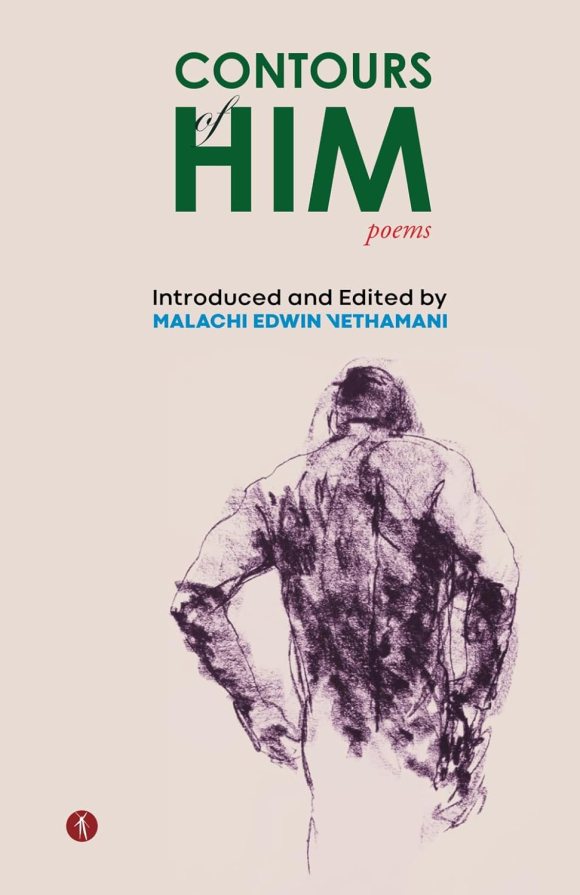
Contours of Him: Poems has been edited and introduced by Malachi Edwin Vethamani, a Malyasian academic of repute. The book has a rich assemblage of poetical voices — from both men and women — representing the contours and nuances of the many aspects and shades of masculinity. The poems explore the male body as a symbol of identity, art, and humanity, delving into themes of masculinity, strength, vulnerability, and beauty. It also examines the male body and psyche as the site of hurt and wounding. The book features poems that scrutinise the male form revealing or concealing it to explore these themes.
The focus on corporeality or the somatic coexists with the psychological in many poems in the anthology. Childhood innocence and curiosity coexist and yield to what could be viewed as growing pains or the challenges of maturation and understanding. There are several poems on the father-son theme, with poems that express homage to the father. Christina Yin’s prose poem ‘To My Father’ and Gopal Lahiri’s ‘My Ideal Man’ are cases in point. Sudeep Sen in the poem, ‘Baba/Father’, captures the enormous vacuum left by the loss of the father as Sen completes the elaborate death rituals as the eldest son of his dead father, performed as per brahminical prescriptions. In a gnomic and nuanced vein, Vethamani , the editor of the anthology, gives his take on father-son intimacies.
This book examines the contours of the male body and psyche at different stages of life and could be viewed as a psycho-somatic exploration of masculinity across diverse cultures. It also explores the strength and fragility of the male physique, occasionally dipping into cultural repertoires of male archetypes, human and divine. At the same time, it acknowledges societal expectations from men and their concomitant cultural insecurities, particularly regarding their identity and the search for acceptance.
A common motif in many of the poems is about the unwitting and unwillingly borne burden and baggage of masculinity. The protagonists/personae of many of these poems seem to be conscious that masculinity is but a performance, involving the display of muscles and embodying a certain swag. Yet this definition of and expectation from men within patriarchies, can be a cage and straitjacket which binds, restricts and confines the human being. If patriarchies bind women, men are not exempt from it either. It is this theme that resonates(among others) in Angshuman Kar’s poem called ‘Tears’: “When mountains cry, rivers are born/From a woman’s tears, pearls have always been born/And when mothers cry, dormant volcanoes awaken…No one in the world knows/why a strong man cries/or why, when he does/he looks so sacred and beautiful.”
The predominant focus, however, is on corporeality that has led to the exploration of its many aspects of the body in the poems. The many facets locates the male body along a spectrum of materiality, vulnerability, relationality and the transcendental possibilities of the body. In recent years, there have been a plethora of poems by women discussing corporeality in multiple registers, exploring female subjectivity, desire and sexuality. Focus on the psychosomatic aspects of the gendered body has led to numerous explorations and analyses of femininity, on being/becoming women, on trans-identities. Many poems have been written on the human-divine aspect of the female body. Kamala Das and others (including Pakistani women poets) have written evocatively about the transgressive desires and the many hungers of the female body .
Voices from the global south recording the voices of men was perhaps the need of the moment. The anthology includes a few poems on masculinity as a construct, especially focusing on the male body through various lenses — vulnerability, performance, shame, violence, and transformation. These poems offer a critical lens rather than idealising masculinity, exposing its social constructions and internal contradictions. They also highlight the relational nature of masculinity which are often traditionally embedded within family structures in South Asia. There are glimpses of guilt in Arthur Neong’s poem, “At this juncture of age, I feel like a teenager again,” where the persona/speaker seems keen to shed and slough off the burdens of masculinity and be in an escapist mode. He writes “At times I go to my wife for a little reprieve/Yet eyes open, think of ways to cheat”. Some of the poems read like love poems, like David C.E. Tneh’s poem, ‘Crossings’, that memorialises his dead friend. Tneh writes: “between the shared spaces and/ private moments come a synergy of collective memories/that I have of you.”
A writer writing on the female body once referred to it as a story discussed by men. Similarly, the anthology at hand discusses the contours of male corporeality and affect. The anxieties of masculinity, of literally not measuring up, pepper these poems and forms one of the vital themes of this anthology. Occasionally, a kind of narcissism creeps in, often giving way to musing or self-introspection. After voicing the common masculine concerns(and anxieties) of corporeal self-consciousness, the poet Kiriti Sengupta declares:
“I don’t look at veiled people anymore.
It is either my age or my hormones.
I now look beyond the flesh, bone and keratin.”
In the last revelatory line, there is a movement towards transcendence: “I have been told /the finer body dwells undressed.”
In a different context but similar vein, Sandeep Kumar Mishra in ‘The Canvas of Form’ writes, “The naked body, stripped of all pretence,/Breathes honesty, raw beauty, fragile strength.” The profundity of the closing lines is inescapable: “The body, bared, is neither shame nor pride/But speaks of histories, of fears ,of love. It tells of burdens carried, joys embraced/And in its stillness, whispers human truth.”
Much canonical poetry, including that of the famed icon of modernist poetry, T.S.Eliot, writing a century ago, display a preoccupation with masculine anxieties in his iconic ‘The Love Song of Alfred J Prufrock’. The effete personae/protagonist , immortalised in the eponymous poem, Felix Cheong writes of ‘Middling Age’ that it’s “So unbecoming to have become so old? You’d sooner wear the ends of your frailty rolled”, lines echoing T.S.Eliot’s The Love Song of Alfred J Prufock, “I will wear the bottoms of my trousers rolled.”
From Justin Baldoni’s Man Enough to Shyam Selvadurai’s Funny Boy, there are many coming of age stories in our cultural landscape-on book lists and bestseller lists. While the sociology of sex and gender has long been a part of sociology and social psychology, the growth and development of a field of knowledge –gender studies– in the last four decades or so, has thrown into relief the fact that if femininity is a construct, so is masculinity.
Meenakshi Malhotra is Professor of English Literature at Hansraj College, University of Delhi, and has been involved in teaching and curriculum development in several universities. She has edited two books on Women and Lifewriting, Representing the Self and Claiming the I, in addition to numerous published articles on gender, literature and feminist theory. Her most recent publication is The Gendered Body: Negotiation, Resistance, Struggle.
.
PLEASE NOTE: ARTICLES CAN ONLY BE REPRODUCED IN OTHER SITES WITH DUE ACKNOWLEDGEMENT TO BORDERLESS JOURNAL
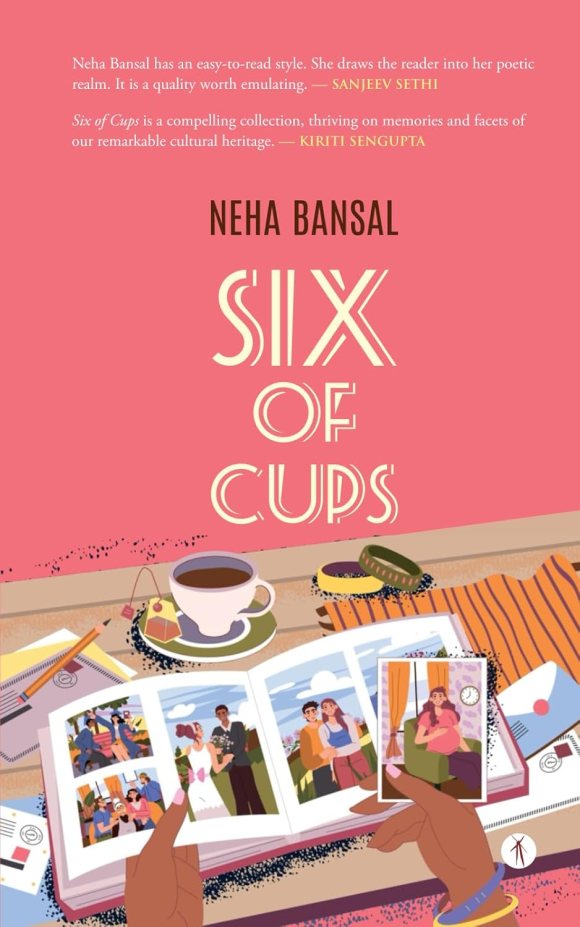
Some books speak in metaphors. Some shout their brilliance. Some want to be dissected, reviewed, analysed like puzzles. But Six of Cups isn’t that kind of book. It doesn’t ask you to do much. It just wants you to sit with it.
Neha Bansal’s poems don’t pretend. They don’t try to be clever. They don’t need you to clap. What they ask for is something quieter — your stillness, maybe. Your memory. They speak softly. Almost like they’re afraid of waking something in you. And maybe that’s exactly what they do.
This is a collection of fifty poems. Simple on the surface. But like most simple things, they carry weight. Not the kind that crushes. The kind you forgot you were holding until you’re reminded.
Reading Six of Cups is like finding an old sweater at the back of your closet. You didn’t even know you were missing it. But the moment you hold it, you’re somewhere else. In another time. Another house. Another life.
The title itself comes from the tarot — a card about childhood, nostalgia, kindness, innocence. The poems live in that space. They revisit things that aren’t just personal, but also collective such as homemade meals, festivals, sibling fights, old TV serials, chalk-smeared hands, and monsoon evenings. There’s a familiarity here that doesn’t feel manufactured. You don’t get the sense that Neha Bansal is trying to be nostalgic. She just is.
There’s a poem about Doordarshan[1]. It doesn’t try to explain the significance. It just takes you there — back to the old wooden cabinet TV, the warm static before the signal settled, the family crowding around the screen. It doesn’t say much and yet it says everything.
‘Sibling Squabbles’ is a small miracle. It captures that strange love we carry for the ones who shared our roof, our food, our secrets. The kind of love that includes shouting, pushing, sulking. But also defending each other, silently. Even now.
‘Paper Boat’ and ‘Mint Chutney’ — two more standouts don’t indulge in poetic imagery. Instead, they lean into the senses. The tartness of raw mango on your tongue. The wet smell of monsoon earth. The steam of evening tea. You read them and you’re not just reading. You’re smelling things. Tasting them. Hearing the old kitchen door creak open.
Neha Bansal is an Indian Administrative Services officer. It’s an unexpected background for a poet, maybe. Bureaucracy is about order. Poetry, one imagines, is about chaos. But in these poems, there’s order in the chaos. There’s discipline, but not rigidity. Every word is chosen carefully. Nothing feels excessive. Nothing is wasted. She writes like someone who listens closely to the world, to people, to memory. Maybe that’s what makes her poetry so honest. Her poems for people who’ve lived. People who remember the smell of their mother’s shawl. People who know the comfort of routine — boiling milk, folding bedsheets, watching Ramlila in the open field. They’re for the ones who’ve carried small hurts for years and never said a word.
There’s a kind of sacred quiet in this collection. That might be its most remarkable trait. In a time when poetry is often loud, performative, and built for clicks, these poems resist the noise. They’re not dramatic. They don’t climax. They settle in. They let silence speak.
In one of the most moving pieces, Neha Bansal writes about an old family tradition — Janmashtami, the celebration of Lord Krishna’s birth. But it’s not about religion. It’s about her grandmother drawing tiny footprints with rice flour. The quiet anticipation of the festival. The waiting. The softness of belief, not its spectacle. It’s in those tiny footprints that the poem finds its magic. You can almost see them fading slowly on the tiled floor.
These poems understand that memory is not a highlighted reel. It’s a soft murmur. A drawer that squeaks when you open it. A spoon stirring something warm. A phrase you haven’t heard in years but still know by heart. Neha Bansal knows that nostalgia isn’t about grandeur. It’s about the details we almost miss.
Her form is mostly free verse. But that doesn’t mean it’s careless. She knows how to pause — where to breathe. The white space around her lines isn’t empty. It holds meaning. A kind of emotional residue. You finish a poem, and it doesn’t end. It lingers. Like the scent of someone who just left the room.
There’s no poetic ambition here and that’s its strength. These poems don’t ask to be poetry. They just are. And that’s why they work. You trust them. You feel at home in them.
I thought of my own home while reading these pages. Kashmir. The long winters. My grandmother in her worn pheran, roasting cornflakes and walnuts on an old iron tawa, her hands, cracked and slow. The hush of mornings. No urgency. Just living.
That’s what Six of Cups reminded me of — the art of simply being. And how much that art is vanishing now.
Some poems mention festivals like Lohri, Janmashtami, Diwali. They present them as they are — domestic, lived-in, full of ordinary magic. For those unfamiliar, there’s a glossary at the end. But the real understanding happens not through translation, but emotion. Neha Bansal doesn’t lean on metaphor much. And when she does, it’s light. A passing breeze, not a storm. She doesn’t build complex imagery. But she does ask you to notice. In a world of scrolling, skimming, glancing — she’s saying, “Stop. Look. Listen.”
Even the titles of her poems have that simplicity: ‘Old Shawls’, ‘Grandmother’s Halwa’, and ‘First Rain’. They sound like diary entries. And in a way, they are. Only they’re not just her diary — they become ours too.
The brilliance of Six of Cups is that it democratises poetry. It makes it accessible again. You don’t need a theory. You need memory. You need feeling. That’s it. If you’ve ever missed someone or some place or even some version of yourself — you’ll get this.
And maybe that’s the beauty of it. It doesn’t want to be studied. It wants to be remembered. Like an old friend. Like a childhood street. Like a scent you can’t name but know in your bones.
The last poem in the collection doesn’t try to wrap everything up. There’s no neat ending. It just… fades out. The way light fades at dusk. Slowly. Gently. Without warning.
You close the book and feel something that isn’t quite sadness. It’s quieter than that. Maybe it’s the feeling of being seen. Or the feeling of remembering something small that meant something big. You sit with it for a while. You let it settle.
Six of Cups is not a loud voice. It’s a warm room. A soft light. A hand reaching back, not to pull you into the past, but to remind you it’s still with you. That you are made of it.
And maybe that’s what poetry should be sometimes — not a performance but a presence.
Gowher Bhat is a published author, columnist, freelance journalist, and educator from Kashmir. He writes about memory, place, and the quiet weight of things we carry. His work often explores themes of longing and belonging, silence and expression. He believes the smallest moments hold the deepest truths.
PLEASE NOTE: ARTICLES CAN ONLY BE REPRODUCED IN OTHER SITES WITH DUE ACKNOWLEDGEMENT TO BORDERLESS JOURNAL
The story of Hawakal Publishers, based on a face-to-face tête-à-tête, and an online conversation with founder Bitan Chakrabortywith his responses in Bengali translated by Kiriti Sengupta. Clickhere to read.
The Great War is over
And yet there is left its vast gloom.
Our skies, light and society’s soul have been overcast…

'The Great War is Over' by Jibanananda Das (1899-1954), translated from Bengali by Professor Fakrul Alam.
Jibanananda Das wrote the above lines in the last century and yet great wars rage even now. As the world struggles to breathe looking for a beam of hope to drag itself out of the darkness induced by natural calamities, accidents, terror attacks and wars that seem to rage endlessly, are we moving towards the dystopian scenario created by George Orwell in 1984, which would be around the same time as Jibanananda Das’s ‘The Great War is Over’?
Describing such a scenario, Ahmed Rayees writes a moving piece from the Kashmiri village of Sheeri, the last refuge of the displaced refugees who were bombarded after peace was declared in their refuge during the clash across Indo-Pak borders. He contends: “People walked back not to homes, but to ruins. Entire communities had been reduced to ash and rubble. Crops were destroyed, livestock gone, schools turned into shelters or craters. How do you rebuild a life when all that remains is dust?”
People could be asking the same questions without finding answers in Gaza or Ukraine, where the cities are reduced to rubble. While we look for a ray of sunshine, amidst the rubble, Farouk Gulsara muses on hope that has its roots in eternity. Vela Noble wanders on nostalgic beaches in Adelaide. And Meredith Stephens travels to the Australian outback. Devraj Singh Kalsi brings in lighter notes writing of driving lessons while Suzanne Kamata creeps back to darker recesses musing on likely ‘criminals’ and crimes in her neighbourhood.
Lopamudra Nayak writes on social media and its impact while Bhaskar Parichha writes of trends that could be brought into Odia literature. What he writes could apply well to all regional literature, where they lose their individual colouring to paint dystopian realities of the present world. Does modernising make us lose our ethnic identity and how important is that? These are questions that sprung to the mind reading his essay. As if in an attempt to hold on to the past ethos, Prithvijeet Sinha wafts around old ruins in Lucknow and sees a cemetery for colonial soldiers and concludes: “Everybody has formidable stakes, and the dead don’t preach the gospel of victory or sombre defeat.”
We have mainly poetry in translation this time. Snehaprava Das has brought to us Soubhagyabanta Maharana’s poems from Odia and Ihlwha Choi has translated his own poem from Korean. Sangita Swechcha’s poem in Nepali has been rendered to English by Saudamini Chalise. From Bengali, other that Jibanananda Das’s poems translated by Professor Fakrul Alam, we have Tagore’s pensive and beautiful poem, Sonar Tori (the golden boat). Yet another Bengali poet, one who died young and yet left his mark, Sukanta Bhattacharya (1926-1947), has been translated by Kiriti Sengupta. Sengupta has also translated the responses of Bitan Chakravarty in a candid conversation about his dream child — the Hawakal Publishers. We also have a feature on this based on a face-to-face conversation, giving the story of how this publishing house grew out of an idea. Now, they publish poetry traditionally, without costs to the poet. Their range of authors are spread across continents.
Our fiction again returns to the darkness of war. Young Leishilembi Terem has given a story set in conflict-ridden Manipur from where she has emerged safely — a story that reiterates the senselessness of violence and politics. While Jeena R. Papaadi writes of modern human relationships that end without commitment, Naramsetti Umamaheswararao relates a value-based story in a small hamlet of southern India.
We have more content. Do pause by our contents page and take a look.
Huge thanks to all our contributors without who this issue would not have materialised. Heartfelt thanks to the team at Borderless for their support, especially Sohana Manzoor for her iconic artwork that has almost become a signature statement for Borderless.
Let’s hope that next month brings better news for the whole world.
The story of Hawakal and a conversation with the founder, Bitan Chakraborty, whose responses have been translated from Bengali by Kiriti Sengupta.
Hawakal Publishers grew out of the compulsive need young Bitan Chakraborty had to express and connect. This was a young man who was willing to labour at pasting film hoardings to fund his dreams. An Information Technology professional by training, Chakraborty realised early he did not want to tread on trodden paths and started his journey as a creative individual. Now, he not only writes and publishes but also designs the most fabulous covers and supports local craftsmen.
Over the last nearly two decades, the brand Hawakal has become synonymous with traditional poetry publication from India. They do not offer buy back deals or ask to be paid like most publishers but pick selectively. No one seems to know what it is they look for. All Chakraborty says is – “We aimed to introduce a fresh wave in publishing.”
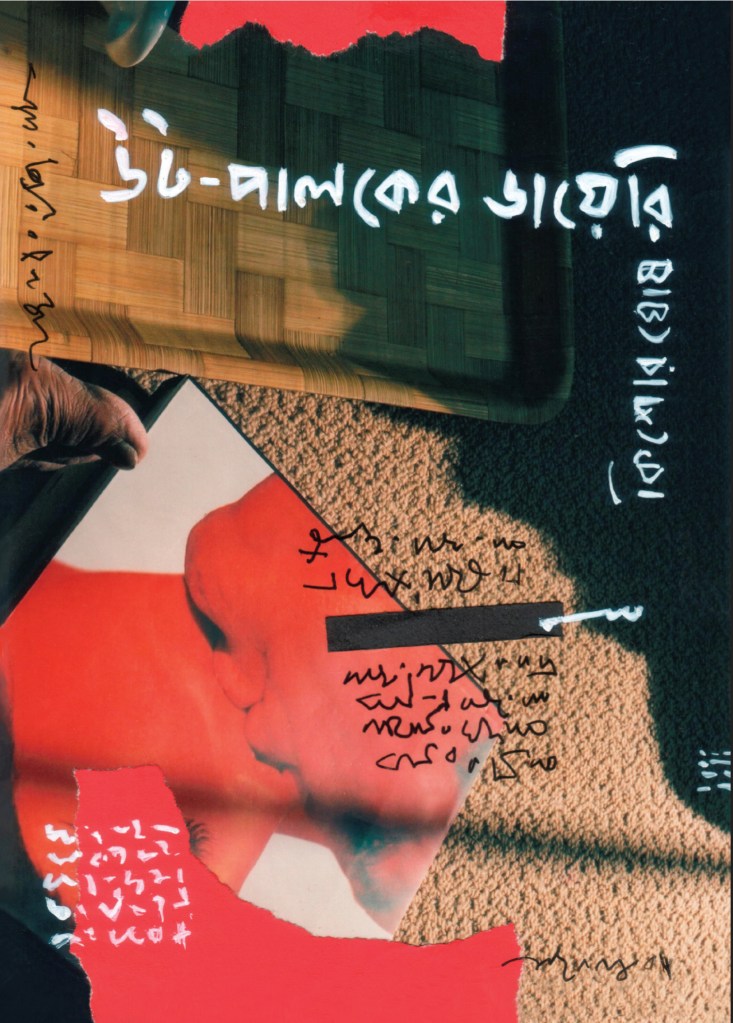
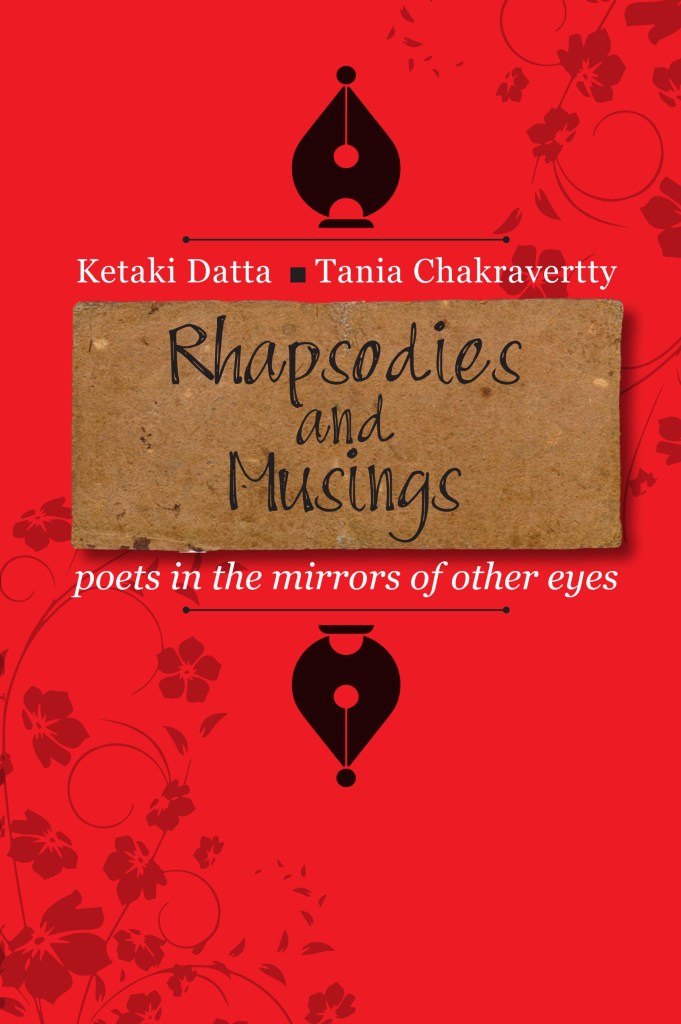
First Bengali book by Hawakal: Ut Palaker Dairy – Diary of a Camel Herder published in 2009First book in English published by Hawakal in 2015
Chakraborty writes fully in Bengali which is why the dentist-turned-writer-turned-publisher, Kiriti Sengupta, had to chip in with the translation of his responses in Bengali. Their friendship matured over the last decade when Sengupta approached Chakraborty to publish a book of critical essays, which along with essays on Sharmila Ray’s poetry homed critical writing on his too. This was the first English publication of Hawakal.
Sengupta had given up dentistry by then and was living in a hostel on a packet of Maggi a day to indulge his creative passions. A skilled poet with a number of books under his belt, he eventually joined Chakraborty to run the English section of Hawakal. He also translates from Bengali to English. We have one of his translations of Chakraborty’s short story, Disappearance. A powerful reminder of social gaps that exist in the Subcontinent, it’s a poignant and frightening narrative, the kind someone writes and imagines out of a passion to reform.
Some of Bitan’s works are available in English. His style — by the translations — seems graphic. The deft strokes make the landscape and the stories almost visual, like films.
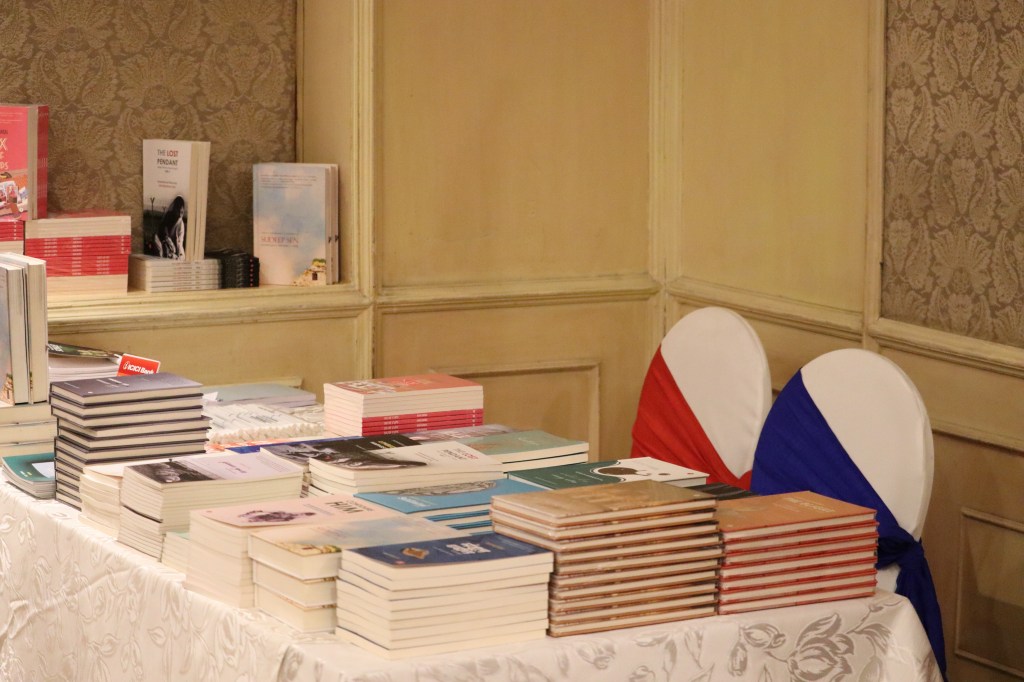
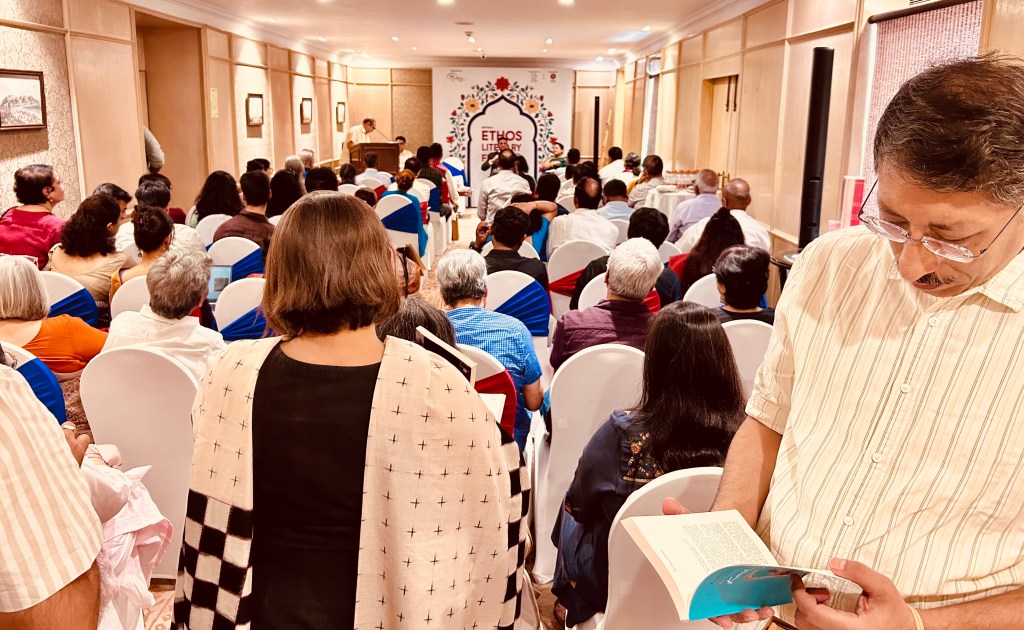
Chakraborty worked with ‘Little Magazines’ for some time. Then he made his way into publishing full time. Though he found it hard to make ends meet, he started his adventure without compromising his beliefs. He wanted to take books to readers and, with that spirit, they started the Ethos Literary Festival, where they host writers published by them. In fact, in the 2025 festival, Hawakal sold more than 400 books in seven hours! Who said poetry doesn’t sell?
Bookstall at Ethos Litfest 2025Packed House at Ethos Litfest 2025Glimpses from Ethos Literary Festival 2025. Photos provided by Hawakal
Chakraborty and Sengupta have yet another hallmark. They wear matching clothes. These are tailored with material sourced from handloom weavers. They resorted to this when they found that commercialisation was killing the traditional homeborn handlooms. In that spirit, they started a clothes venture too, Mrinalika Weaves.
Chakraborty is an unusual person – as the interview will reveal – humble, stubborn with aims like no other publisher or writer in this day and age! He doesn’t talk of money, survival, politics, awards or glamour, but what matters to him. He is direct and straightforward and perhaps, his directness is what makes his outlook appealing. He translates a few to Bengali for his own growth. But these are poets who are known for their terse writing. Maybe, that is what he looks for… Let’s find out!
Conversation
Bitan Chakraborty. Photo Courtesy: Kiriti Sengupta
Bitan, you are a multifaceted person: a writer, an artist, a photographer, and, most importantly, a publisher for all writers. What is it you most love to do and why?
I need to talk. What I observe or learn from my experiences compels me to express myself. Therefore, regardless of the medium I use, I strive to convey meaningful messages. Nevertheless, the range I enjoy in weaving words is unparalleled.
What sparked your interest in writing? Please elaborate. Do you only use Bengali to communicate with others? Do you translate from other languages to Bengali?
I felt emotionally down when I began writing. What a dreadful time it was! I believe it must be the emotional turmoil of my youth. However, writing has never left me since then. It’s more accurate to say that I have never managed to rid myself of my urge to write. During the early period, my writings contained more emotion than substance. In my college years, I was engaged in student movements that helped me discover the purpose of words. Society, socio-economic status, politics, and human dissatisfaction are the themes that run through my stories. Bengali is my mother tongue: I think, speak, dream, and curse in Bengali. I find it challenging to derive the same pleasure from using another language; it is my shortcoming.
Nevertheless, when I meet outstanding works in English, I attempt to translate them into Bengali. Not everything I read, but I have translated poems by Sanjeev Sethi and Kiriti Sengupta. I have consistently translated Gulzar into Bengali, but it has yet to be published in book format. Translation is a mental exercise; it particularly helps when I am experiencing writer’s block. I read poetry when I wish to untangle my thoughts, and when I come across fine poems in another language, I try to make them my own — bring them into my culture through translation.
Do you write only prose or poetry too?
I have been writing stories and essays for the past fifteen years. Interestingly, I began with poems, but they turned out to be junk. Therefore, I focussed on writing fiction.
Many of your stories focus on the Bengali middle class. What inspires your muse the most? People, art, nature, or is it something else?
I grew up in a lower-middle-class environment. Poverty, unemployment, and debt were parts of my formative years. I witnessed how this economic disparity allowed a particular segment of society to insult and humiliate others. Consequently, I have developed a strong affinity for those who are underprivileged. Later, when I began writing fiction, my political awareness enhanced my observations — I was able to merge the existing economic inequality with the nation’s political perspectives. The lessons I have learned over the years motivate me to write.
You design fabulous book covers. Do you have any formal training, or is it a natural flair?
When I entered the publishing industry, I had no funds to commission professionals for book covers or layouts. I had been involved with Little Magazines since my college days. I used to spend hours with the printers, meticulously observing how they designed cover spreads and interior text files. This experience proved useful when I began producing books. For the past several years, I have frequented bookstores, picking up a book or two — I also purchase books online, especially those that help me stay abreast of recent developments in book architecture. In my early years, I was unable to learn design formally due to financial constraints.
When and why did you decide to go into publishing? Could you tell us the story of Hawakal?
From 2003 to 2008, I was involved with four Little Magazines. Bengali Little Magazines thrive on minimal funds. Therefore, we (the team) managed everything necessary to publish a little magazine. We oversaw printing, distribution, book fairs, and other activities. By the middle of 2007, I realised I wasn’t suited for a day job. I understood that I would struggle to survive the conventional 10 am to 5 pm career. During that time, my family was in financial difficulties. Suddenly, we had the opportunity to publish Kishore Ghosh’s debut collection of poems, Ut Palaker Diary. It was published under the banner of the little magazine I was actively working with. As we worked on the book, I learned that publishing a magazine and publishing a book were entirely different endeavours. A little magazine is primarily sold through the efforts of its contributing writers and poets, while a book is sold through the combined efforts of the author and the publisher. I decided to pursue publishing as my career after we successfully sold 300 copies of Ghosh’s book in 10 months. That was the beginning.
Why did you opt to name your firm after a windmill — Hawakal in Bengali? Please elaborate.
We spent days selecting a name for our publishing concern. Finally, we chose the title of one of Kishore Ghosh’s poems as our company name. Hawakal, in English, means windmill. It signifies an alternative source of energy. We aimed to introduce a fresh wave in publishing. As an independent press, we have consistently operated ahead of our time. From developing a fully-fledged e-commerce hub (hawakal.com) in 2016 to producing the highest number of books during the pandemic (2020-2021), Hawakal has accomplished it all.
The first logo of Hawakal designed by contemporary artist, Hiran Mitra and then modified over time by Bitan Chakraborty.
You have boutique bookshops in Kolkata, Delhi — any other places? I believe you started a collaboration to get your books into the USA? Could you tell us a bit about your outlets and how you connect writers with the people? Are your boutique shops different from other bookshops? Do they only stock Hawakal books?
As you know, Hawakal has two functional ateliers in Delhi and Kolkata, while our registered office is located in New Delhi. We do not have any plans for an additional studio in India. We also have a bookstore in Gurgaon called Bookalign. There is a small outlet in Nokomis, Florida. It is a new unit in the United States. We primarily stock books published by Hawakal and its imprints (Shambhabi, CLASSIX, Vinyasa). However, we carefully select titles from other publishers for our store. We have sufficient seating in the store, allowing readers to browse the books before making a purchase. Since we publish non-mainstream authors, readers need to make a conscious choice. This not only benefits the authors we publish, but it also helps us evaluate the effectiveness of our selection process.
You started as a Bengali publisher, if I am not mistaken, and then forayed into English; now you are bringing out a translation in Hindi? How many languages do you cover? Do you plan to go into publishing in other languages?
We initially focused on Bengali books. Our venture into English titles began when Kiriti Sengupta joined Hawakal as its Director. Publishing a Hindi book was unexpected. However, we will not release books in other languages that we cannot read or speak. It is essential, as a publisher, to be well-versed in the language of the books we publish.
What kind of writers do you look for in Hawakal?
Would you like me to reveal the truth? We expect more than just satisfactory work from our writers: we want writers who will value their work passionately and take the necessary steps to reach a wider readership. Please don’t assume that what we expect from our authors is not something we adhere to ourselves. We expect this because we understand what it means to be truly passionate about one’s writing.
I heard that Hawakal was diversifying into textiles. How does that align with your writerly and publishing journey?
We opened our first kiosk in Mathabhanga, North Bengal, back in 2016. We simultaneously sold books and sarees from that small outlet. We had to close the shop due to a lack of staff. Kiriti Sengupta has long cherished the dream of representing the fine textiles of Bengal. Our family has grown larger. Bhaswati Sengupta and Lima Nayak have joined the team; they are the ones who established Mrinalika, collaborating with artisans from remote regions of India to showcase their creations to a wider audience.
Where do you envision yourself and Hawakal, your most extraordinary creation, ten years from now?
We aim to publish fifty timeless books over the next decade.
Thanks for your time and for the service you render to readers and writers.
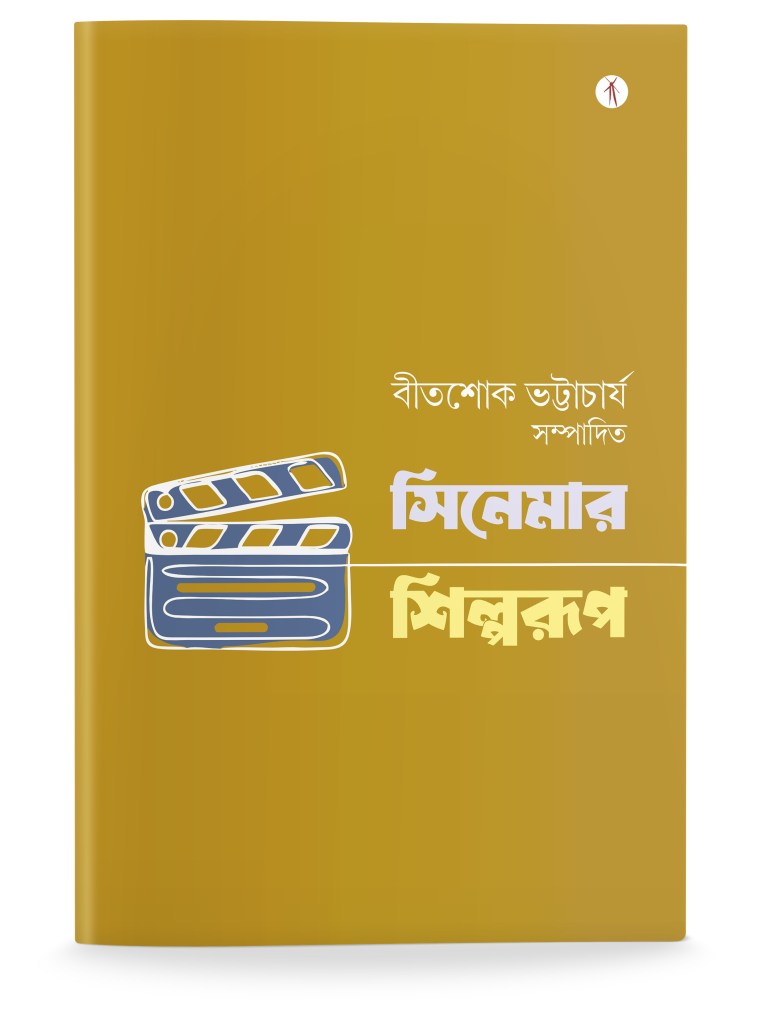
Cinema’s Artform edited by Bitshok BhattacharyaCovers designed by Bitan Chakraborty




 Borderless