Categories
Contents

Borderless, November 2023

Art by Sohana Manzoor

Editorial

Counting Colours… Click here to read.

Conversation

Banjara author Ramesh Karthik Nayak discusses his new book, Chakmak (flintsone), giving us a glimpse of his world. We also have a brief introduction to his work. Click here to read.

Translations

Demanding Longevity by Quazi Johirul Islam has been translated from Bengali by Fakrul Alam. Click here to read.

Moonlight, a poem by Bashir Baidar, has been translated from Balochi by Fazal Baloch. Click here to read.

Maithili Poetry by Vidyanand Jha has been translated from Maithili by the poet himself. Click here to read.

The Window and the Flower Vase has been written and translated from Korean by Ihlwha Choi. Click here to read.

Tagore’s Tomar Kachhe Shanti Chabo Na (I Will Not Pray to You for Peace) has been translated from Bengali by Mitali Chakravarty. Click here to read.

Poetry

Click on the names to read the poems

Michael Burch, Aineesh Dutt, Stuart McFarlane, Radhika Soni, David Mellor, Prithvijeet Sinha, John Grey, Ahana Bhattacharjee, Ron Pickett, Suzanne AH, George Freek, Arshi Mortuza, Caroline Am Bergris, Avantika Vijay Singh, Ryan Quinn Flanagan, Kisholoy Roy, Rhys Hughes

Poets, Poetry & Rhys Hughes

In A Parody of a Non-existing Parody: The Recycled Sea, Rhys Hughes uses TS Eliot’s ‘The Waste Land’ to create a new parody. Click here to read.

Musings/Slices from Life

The Theft of a River

Koushiki Dasgupta Chaudhuri tells a poignant truth about how a river is moving towards disappearance due to human intervention. Click here to read.

In Quest of Seeing the Largest Tree in the World

Meredith Stephens writes of her last day in California. Click here to read.

Beyond Horizons: A Love Story

Sai Abhinay Penna shares photographs and narrative about his trek at Chikmagalur. Click here to read.

Musings of a Copywriter

In Crush on Bottles, Devraj Singh Kalsi inebriates his piece with humour. Click here to read.

Notes from Japan

In Address Unknown, Suzanne Kamata shares a Japanese norm with a touch of humour. Click here to read.

Essays

Peeking at Beijing: The Wall

Keith Lyons travels to The Great Wall and writes of the experience. Click here to read.

Cinema, Cinema, Cinema!

Gayatri Devi writes of the translation impact of cinema, contextualising with the Tamil blockbuster, Jailer. Click here to read.

Coffee, Lima and Legends…

Ravi Shankar explores Lima, its legends and Peruvian coffee. Click here to read.

Stories

Jonathan’s Missing Wife

Paul Mirabile sets his story in a small town in England. Click here to read.

The Tender Butcher

Devraj Singh Kalsi weaves a story around a poetic butcher. Click here to read.

Book Excerpts

An excerpt of The White Shirts of Summer: New and Selected Poems by Mamang Dai. Click here to read.

An excerpt from Ramesh Karthik Nayak’s Chakmak. Click here to read.

Book Reviews

Somdatta Mandal reviews Ali Akbar Natiq’s Naulakhi Kothi, translated from Urdu by Naima Rashid. Click here to read.

Ranu Uniyal reviews I am Not the Gardener: Selected Poems by Raj Bisaria. Click here to read.

Anita Balakrishnan reviews Lakshmi Kannan’s Guilt Trip and Other Stories. Click here to read.

Bhaskar Parichha reviews Akshat Rathi’s Climate Capitalism: Winning the Global Race to Zero Emissions. Click here to read.

.

.

Click here to access the Borderless anthology, Monalisa No Longer Smiles

Click here to access Monalisa No Longer Smiles on Amazon International

Categories
Editorial

Counting Colours

Look around you and expand your heart. 
Petty sorrows are insignificant.
Fill your vacant life with love for humanity. 
The Universe reverberates with celestial ecstasy. 

— Anondodhhara Bohichche Bhubone (The Universe reverberates with celestial ecstasy), Tagore, 1894

Some of the most beautiful colours in this universe are blended shades— colours that are born out of unusual combinations. Perhaps that is why we love auroras, sunrises and sunsets. Yet, we espouse clear cut structures for comprehension. As we define constructs created by our kind, we tend to overlook the myriads of colours that hover in the gloaming, the brilliant play of lights and the vibrancy of tints that could bring joy if acknowledged. That ignoring the new-born shades or half-shades and creating absolute structures or constructs lead to wars, hatred, unhappiness and intolerance has been borne true not only historically but also by the current turn of events around the globe. While battles are never fought by the colours or beliefs themselves, they can harm — sometimes annihilate — rigid believers who are victimised for being led to accept their way as the only one and hate another. Perhaps, this has echoes of the battle between the Big Endians and Little Endians over the right way to break eggs in Jonathan Swift’s Gulliver’s Travels (1726). As the book is mere fiction, we can admire, agree and laugh at the content. However, in real life, watching newsreels has become a torture with destruction and violence being the main highlights. These detract from life as we knew it.

Writing or literary inputs seem to have become a luxury. But is it really hedonistic to play with words? Words used effectively over a period of time can impact readers to think peace, acceptance and love and also help people heal from the ensuing violence. That can be a possibility only if we self-reflect. While we look for peace, love and acceptance in others, we could start by being the change-makers and bridge builders ourselves. That is the kind of writing we have managed to gather for our November issue.

Building such bridges across humanity, we have poems on the latest Middle Eastern conflict by Stuart McFarlane and David Mellor, which explore the pain of the victims and not the politics of constructs that encourage wars, destruction of humanity, the flora, the fauna and our home, the Earth. Michael Burch writes against wars. Prithvijeet Sinha and Ahana Bhattacharjee write about refugees and the underprivileged. Reflecting colours of the world are poems from Ryan Quinn Flanagan, Suzayn AH, Radhika Soni, Ron Pickett, George Freek and many more. Rhys Hughes has brought lighter shades into his poetry by trying a new technique while reflecting on yetis and mermaids. His column tries to make a parody of a non-existing parody, using TS Eliot’s century old poem, ‘Wasteland’, with amazing results!

Our translations are all poetry too this time. Professor Fakrul Alam has translated a poem discussing human aspirations by Quazi Johirul Islam from Bengali. Another Balochi poem of hope by Bashir Baidar has been brought to us in English by Fazal Baloch bringing into play the moonlight.

For the first time, we are privileged to carry poetry from a language that has almost till now has eluded majority of Anglophone readers, Maithili. Vidyanand Jha, a Maithili poet, has translated his poetry for all of us as has Korean poet, Ihlwha Choi. Winding up translations are Tagore’s ultimate words for us to introspect and find the flame within ourselves in the darkest of times – echoing perhaps, in an uncanny way, the needs of our times.

Our conversation this month brings to us a poet who comes from a minority group in India, Banjara or gypsies, Ramesh Karthik Nayak. In his attempt to reach out to the larger world, he worries that he will lose his past. But does the past not flow into the future and is it not better for traditions to evolve? Otherwise, we could all well be living in caves… But what Nayak has done — and in a major way — is that he has brought his culture closer to our hearts. His debut poetry book in English, Chakmak (flintstones), brings to us Banjara traditions, lives and culture, which are fast getting eroded and he also visits the judgemental attitude of the majoritarian world. To give you a flavour of his poetry, we bring to you an excerpt from his book, livened beautifully with Banjara art and an essay by Surya Dhananjay that contextualises the poetry for us. Our excerpts also have a focus on poetry for we are privileged to have a few poems from Mamang Dai’s The White Shirts of Summer: New and Selected Poems. Mamang Dai is a well-known name from the North-eastern state of Arunachal Pradesh for both her journalistic and poetic prowess.

We are happy to host Ranu Uniyal’s beautiful review of I am Not the Gardener: Selected Poems by Raj Bisaria. Bisaria among other his distinctions, was named “Father of the modern theatre in North India” by the Press Trust of India. The other reviews are all of prose. Somdatta Mandal has written of Ali Akbar Natiq’s Naulakhi Kothi, a fictional saga of gigantic proportions. Anita Balakrishnan has reviewed Lakshmi Kannan’s short story collection, Guilt Trip. The book that gives hope for a green future, Akshat Rathi’s Climate Capitalism: Winning the Global Race to Zero Emissions has been reviewed by Bhaskar Parichha. Parichha contends: “Through stories that bring people, policy and technology together, Rathi reveals how the green economy is possible, but profitable. This inspiring blend of business, science, and history provides the framework for ensuring that future generations can live in prosperity.”

The anti-thesis to the theme for a welfarist approach towards Earth can be found in Koushiki Dasgupta Chaudhari’s poignant musing titled, “The Theft of a River”. Meredith Stephen’s travel to California and Sai Abhinay Penna’s narrative about Chikmagalur have overtones of climate friendliness. Ravi Shankar writes further of his travels in Peru and Peruvian coffee. Keith Lyons takes us peeking at Beijing and the Great Wall. Gayatri Devi adds to the variety by introducing us to the starry universe of South Indian cinema while Devraj Singh Kalsi brings in the much-needed humour with his narrative about his “Crush on Bottles“. Suzanne Kamata has also given a tongue-in-cheek narrative about the mystique of addresses and finding homes in Japan. We have fiction from Paul Mirabile located in England and Kalsi’s located in India. Pause by our contents page to view more gems that have not been mentioned here.

Huge thanks to our team at Borderless Journal, especially Sohana Manzoor for her fabulous artwork. This journal would not have been as it is of now without each and every one of them and our wonderful contributors and readers. Thank you all.

Wish you all a wonderful month as we head towards the end of a rather tumultuous year.

Mitali Chakravarty

borderlessjournal.com

Click here to access the contents page for the November 2023 issue

.

READ THE LATEST UPDATES ON THE FIRST BORDERLESS ANTHOLOGY, MONALISA NO LONGER SMILES, BY CLICKING ON THIS LINK.

Categories
Essay

Cinema, Cinema, Cinema!

By Gayatri Devi

Is it appropriate to speak of transnational glee as a legitimate audience response to a film? If so, that might be a fitting label for the global spectator reaction to the blockbuster Indian film, Jailer, released worldwide on August 10, 2023.  The film whose OTT rights were purchased by Amazon Prime is streaming online while simultaneously playing to packed theatres in India, Sri Lanka, Malaysia, China, the Middle East, Australia, Canada, the US, the UK, France, and other countries. In its first month of theatrical release, Jailer brought in an impressive 300 crores in India alone with over 600 crores and counting (just shy of 22 million US dollars) as its worldwide earnings. Many Indian blockbuster films have had a worldwide high-performance index recently with the likes of Ponniyin Selvan, Pathaan, Bahubali etc. thriving on an exoticised glamour of an India of kings and queens and palaces and freedom fighters and medieval breakdance routines, a sort of mystified enchanting India of the travel brochure version for viewers both inside and outside India. Even a mediocre film like RRR had a localised transnational success in the United States during the academy award season as well.

Unlike these historical and revisionist costume dramas, Jailer is a full-on pop culture phenomenon, a movie of the moment, a tale of its time; it is as au courant as cellphones and police corruption. It is full of attitude, and packed chockful of allusions and homages to both Indian and western movies in what is essentially a fun romp. Shot mostly in sumptuous wide shots and rhythmic cuts, it establishes an onscreen India, dry and dusty, with industrial warehouses running forgery, guns and knives, roadside ice cream vendors, fly-by beheadings, and struggling gardens along with elementary school YouTube influencers.  Its real distinction is that people all over the world get it. But it is as Indian, specifically, it is as Tamil as a Tamil can be, and it puts a smile on the face of anyone anywhere who watches it. The international blockbuster with no pretensions to anything other than cinematic entertainment is back, thanks to Jailer and its vibrant young director Nelson Dilipkumar.

Jailer tells the story of two men, a hero and a villain, a retired police officer Tiger Muthuvel Pandian, the eponymous jailer, and a criminal mastermind Varman who runs an art forgery ring. They make counterfeit Indian statuary and sells them in the international market. Their encounter becomes complicated when the jailor’s son, a corrupt police officer, starts working for the villain, the male melodrama of father-son conflict being a favorite trope in Tamil cinema from older films like Thangappathakkam (The Golden Badge, 1974) that starred an earlier era’s superstar Shivaji Ganesan. Jailer belongs to the same pedigree of male melodramatic films. The hero is played by the Tamil superstar Rajnikanth and the villain, the psychopathic leader of the forgers by Vinayakan from the nearby Malayalam film industry in Kerala.

Both Rajnikanth and Vinayakan belong to the highly successful world of mainstream, commercial Indian cinema with strong populist reception while also maintaining a certain level of middle-class entertainment sophistication. When compared to Rajnikanth, Vinayakan is relatively a newcomer, but one who has very quickly claimed his own space in Mollywood, Kerala’s film industry that produces Malayalam language-based films.

Vinayakan’s breakout performance as an underworld operative, an executioner and strongman, a complex character who is right, wrong and everything in between in Kammatti Padam[1] (2016) earned him a Kerala State Film Award for Best Actor.  Jailer sees him as a criminal psychopath with unpredictable ticks like instructing his lackeys to dance for him, drowning his enemies in big vats of sulphuric acid, delivering his Tamil-Malayalam pidgin with menacing comic timing etc.  The overall excesses of his character have the potential to turn him into a stereotypical villain, especially since the sulphuric acid dunking trope has a colourful cinematic legacy in Indian popular culture. (The “sulphuric acid joke” is an instantly recognisable film joke in Indian pop culture attributed to the persona of an outlandish villain played by the erstwhile Bollywood star Ajit who is credited with asking his henchman Raabert (Hindi pronunciation of Robert) the following purely apocryphal lines: “Raabert, is haraami ko liquid oxygen mein dal do; liquid ise jeene nahin dega, oxygen ise marna nahin dega”  (Robert, drown him in Liquid Oxygen; the Liquid won’t let him live, and the Oxygen won’t let him die!”). Jailer abounds in many such recognisable “quotation marks” throughout the film, including an ear-slicing scene, an evident homage to Quentin Tarantino’s Reservoir Dogs(1992), and “Stuck in the Middle with You”. These artfully placed allusions create an enjoyable self-reflexive layer in the film where Jailer talks to film materials that have provided evident inspiration. The self-conscious scripting and direction, and the sheer enjoyment and abandonment with which Vinayakan embraces the deranged psyche of Varman makes him a bonafide villain and not a caricature.

Rajnikanth who plays the title role of the jailer is the 72-year-old veteran superstar of Tamil cinema known to his massive adoring fan base as thalaivar (“Leader/Chief” in Tamil). Rajanikanth started his film career with the 1975 romantic drama Apoorva Ragangal (Rare Melodies), a far cry from the action crime thriller genre which would soon become synonymous with his name in the industry. With his trademark moustache, lopsided pursed lips, thick mop of straight black hair swiped across the forehead, lean frame, and long lanky legs, Rajnikanth from the 80s onwards played the righteous underdog on both sides of the law who took on the snobbish elite as well as the violent underworld players and won. He played orphans, rickshaw drivers, underworld consigliere, police officer, milkman, engineer, writer, grandfather, father, son, brother, husband, lover – he played the full spectrum of masculine roles in mainstream Indian cinema.

There is an underacknowledged colour line in Indian films where the relatively whiter-complexioned actors and actresses are considered stardom material. Rajnikanth with his dark-complexion and Midas touch at the box office demolished this industry practice and became the mirror for the ordinary darker Dravidian face on the Indian silver screen.  Jailer sees him aged but fuller and lighter than his earlier years, though what has not changed are his instantly recognisable dance moves; underworld or the penthouse, underdog or the aggressor, Rajnikanth’s dance moves set the tone in his films. The standing jogs, the high kicks, the hip shake, the robotic arm movements and hand props like dark glasses and hand towels showed a new definition of “cool” to his fans.  His tentative dance performance in Jailer is reminiscent of another accomplished dancer who exhibits a pretend stage fright; John Travolta in Pulp Fiction dancing with Uma Thurman to Chuck Berry’s “You Never Can Tell.”

Other significant performances include Vasanth Ravi as the jailor’s corrupt and clueless son, Ramya Krishnan as the jailer’s visibly irritated wife, along with hilarious cameos by Malayalam superstar, Mohanlal, Bollywood star, Jackie Shroff, and Kannada star, Shiva Rajkumar — all of them act as outlaws who help the jailer in his fight against Varman. An equally hilarious subplot involves a love triangle between the dancing beauty Kamna, her lecherous costar “Blast” Mohan, and her lover, the timid film director.

The film clocks an impressive two hours and fifty minutes on the strength of these men and their vivacious performances, smart, sharp, and funny dialogue, over-the-top violence, and a sizzling cameo dance sequence, popularly known in Indian film lingo as an “item number” by the alluring Bollywood actress Tamannah. The single “Kaavaala[2] composed by the music director, Anirudh, is a proper earworm turned worldwide viral hit with the young and the old alike shaking their hips to its mood altering percussive rhythm, the latest being a Japanese version of the song. Perhaps as a testament to the song’s instant infectious popularity, the original dance features dancers of multiple ethnicities, a global potpourri as it were, with a set reminiscent of the production design of Raiders of the Lost Ark[3] (1981) as well as a flute intro that calls out to Andean musicians. If any song can bring the world together, “Kaavaala” can.

Indeed, the multiple references to Quentin Tarantino, Reservoir Dogs and Pulp Fiction are unavoidable while watching Jailer. As with Tarantino, director Nelson (as he is popularly known) too operates inside a similar vision of cinematic storytelling.

The proper subject of Jailer is cinema, cinemas of India, cinemas of the world. Tamil melodramas of the 1970s, the middle class Tamil comedies of the eighties and the nineties, Bollywood action flicks, Hollywood adventure films, the black  crime comedies of Quentin Tarantino, the epic blood splatter of Robert Rodriguez, the bumbling and menacing sociopathic capers of Guy Ritchie films  – Jailer tips its hat to all of these crime-as-entertainment influences through its multilayered dense scripting, the large cast of characters, and the no holds barred display of gory violence. It is a refreshingly confident film without any false notes though some of the repeated explosion scenes could be tightened.

Jailer tells an old story familiar to the Tamil audience, a story as old as Shivaji Ganesan in Thangappathakkam(1974)—the upright police officer father and the fallen corrupt son. The film chugs through its dense thicket of plot and counterplot towards an inevitable moral resolution to this impasse. This is where the power of the star system in Indian cinema, a status equal to that of gods, plays its trump card. With Rajnikanth playing the jailer father there can be only one moral resolution, son, or no son. It is a formula that never fails, and speaks of a justice perhaps unique to cinema.

.

[1]  Kammatti Paadam — is the name of a slum in Kochi, Kerala. It is a place name. Kammatti is a proper noun without any traceable etymology.  Paadam means “field” in Malayalam. “The Slum Fields” of “The Slum” could be an appropriate translation.

[2] Kaavaalaya — A Telugu phrase, “I Want You, Man”

[3] Set in 1936

.

Gayatri Devi is a teacher, translator and writer living and working in Savannah, Georgia.

.

PLEASE NOTE: ARTICLES CAN ONLY BE REPRODUCED IN OTHER SITES WITH DUE ACKNOWLEDGEMENT TO BORDERLESS JOURNAL

Click here to access the Borderless anthology, Monalisa No Longer Smiles

Click here to access Monalisa No Longer Smiles on Kindle Amazon International

Categories
Review

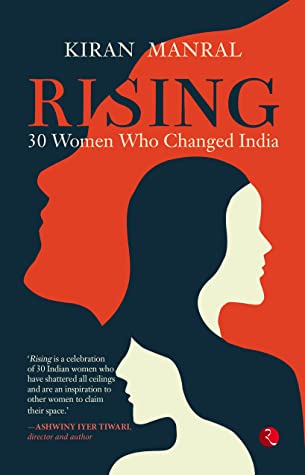
Rising

Book review by Bhaskar Parichha

Title: Rising: 30 Women Who Changed India’

Author: Kiran Manral

Publisher : Rupa Publications

Several books have been brought out on Indian women, coinciding with International Women’s Day this year. These books, in their own style tell the story of how women have shattered glass ceilings and have ventured into what had been perceived earlier as ‘men’s domains’. 

In today’s India, women exercise their right to vote, contest for Parliament and Assembly, seek appointment in public office and compete in other spheres of life with men. This inclusivity shows women enjoy more liberty and equality than a hundred years ago. They have gained the freedom to participate in affairs of the country, whether it is science, technology, finance and or even defense.


Rising: 30 Women Who Changed India by Kiran Manral looks at what moulded these women: the challenges they faced, the influences they had, the choices they made and how they negotiated around or broke boundaries that sought to confine them, either through society or circumstances. The book is an ode to inspirational women who transformed India in a variety of ways. It is a chronicle of valiant achievers and also a depiction of stories about those who swam against the tide. 

From diverse backgrounds and different generations, they have risen through sheer grit, determination, bolstered with passion, and are, today, names to look up to, to be mentioned as examples to the next generation, giving them courage to reach out to their dreams. From politics to sport, from the creative and performing arts to cinema and television, from business leaders to scientists, legal luminaries and more, this book features the stories of these much celebrated, fabulous women: Sushma Swaraj, Sheila Dikshit, Fathima Beevi, Mahasweta Devi, Amrita Sher-Gil, Amrita Pritam, Sonal Mansingh, Lata Mangeshkar, Anita Desai, M.S. Subbulakshmi, Harita Kaur Deol, Madhuri Dixit, Bachendri Pal, Rekha, Chhavi Rajawat, Karnam Malleswari, Shailaja Teacher, Hima Das, Naina Lal Kidwai, Shakuntala Devi, P.T. Usha, P. V. Sindhu, Ekta Kapoor, Kiran Bedi, Mary Kom, Menaka Guruswamy, Tessy Thomas, Aparna Sen, Kiran Mazumdar-Shaw and Gayatri Devi, among others. 

Mumbai- based Kiran Manral is a writer, author and novelist. In previous avatars, she has been a journalist, researcher, festival curator and entrepreneur. A recipient of  multiple awards such as the Women Achievers Award by Young Environmentalists Association in 2013 and the International Women’s Day Award 2018 from ICUNR, Kiran has authored  a couple of fictions and non-fictions too. Her interests are eclectic. 

Writes Kiran in the introduction: “Every story is replete with takeaways, lessons to be learnt, not just professionally but otherwise too. These women have lived life on their own terms, becoming a beacon of hope to many others, women and men alike. If after learning about these inspirational women, a young girl, anywhere in the country thinks to herself that could be me! 1f she can do it, so can I, this book would have served its purpose.”

About Fathima Beevi she writes: “Even before the phrase ‘glass ceiling’ entered common parlance, we had a female judge in the Supreme Court already smash it. With a quiet efficiency that defined her career, on 6 October 1989, M. Fathima Beevi became the first female judge in the Supreme Court, a position she held till her retirement on 29 April 1992.For all her achievements, she remains an enigma, shunning the spotlight and living a quiet life in her hometown post her retirement. Her photographs show a determined expression: her head firmly covered with her saree’s pallu, spectacles lodged on the bridge of her nose and her matter-of-fact demeanour.” 

Written in a crispy style loaded with factoids, the book makes for an enthralling read. The story of Hima Das — who rose from obscurity to international acclaim, a journey that took her from a small village in Assam to the podium of international athletic meets — is as absorbing as realistic. 

 “There’s an iconic photograph that encapsulates Hima Das. Her eyes are twinkling with joy, she’s holding the Indian flag aloft behind her, an Assamese gamusa (a piece of red and white cloth, a cultural identifier) draped around her neck. It had been a long journey from the muddy fields she started training in back in her village near Dhing, in Assam. Back then, she ran barefoot. Basic running shoes was an indulgence, branded shoes were a dream. She ran first for her school, then her district, and when she reached the state level, she got her first pair of real sports shoes. They were an ordinary pair of running shoes, but she wrote ‘Adidas’ on them, along with its logo. One day, she would be able to buy herself a pair of Adidas shoes. Years later, Adidas would name an entire line of shoes after her, but she had to earn that, through struggle, sweat and blood.’ 

On 31 August 2019, Amrita Pritam was commemorated by Google, her centenary birth anniversary, with a doodle. It wrote: “Today’s Doodle celebrates, one of history’s foremost female Punjabi writers, who dared to live the life she imagines.”

Kiran says in her book: “In her writings and her life, she leaves behind a legacy for women writers in India which urges them to defy social constructs and constraints, challenge them, and to live and write as she did — unencumbered.”  

The book about thirty most successful women makes for an interesting read.It is a glorious tribute to the womenfolk who have shattered all maximums and have spurred others to claim individual space.

.

Bhaskar Parichha is a journalist and author of UnbiasedNo Strings Attached: Writings on Odisha and Biju Patnaik – A Political Biography. He lives in Bhubaneswar and writes bilingually. Besides writing for newspapers, he also reviews books on various media platforms.

.

PLEASE NOTE: ARTICLES CAN ONLY BE REPRODUCED IN OTHER SITES WITH DUE ACKNOWLEDGEMENT TO BORDERLESS JOURNAL