Tommy sat down to dinner with his parents. Roast beef and mash again. He grimaced. His mother, a cashier at Lidl[1], and his father, a travelling salesman, threw him cursory looks: “Tommy, you should eat, meat is so dear,” his mother lamented.
“Eat up boy, money doesn’t grow on trees you know,” barked his father, wheezing irritably, followed by a huff that brooked no further comment on the subject.
Tommy slouched over his plate and wolfed down the food without a word. He left the table, as always, casting a contrary glance at his father, who ate his meal in silence, a ritual to which he demanded both his wife and his son to observe scrupulously.
Tommy slipped outside into the warm breeze of late summer, sitting down on the steps of his parents’ (the bank’s!) town council flat. How his father unnerved him with his tyrannical rules and stentorian ditties. “He’s gone almost half the year selling his cheap, nasty wares, and here he is laying down the law like a bloody dictator. Poor mommy does all she can to meet his inept demands, but when she can’t she cries her eyes out,” he fumed inwardly, clenching his fists.
Tommy took out a box of matches, lighting each one, then flicking them into the yellowing grass of their front garden. He enjoyed watching the little sticks sail into the night air all alit, only to fall extinguished on the stone walk-way or grass. He loved the sulphurous smell of the sparks, the vision of the orange flame. They aroused a shiver of excitement in his belly and spine. The door opened. His father snorted: “Whatever are you doing with all those matches ? Matches don’t grow on trees.” And in a heightened voice, “Stop wasting them …” He slammed the door shut. Tommy clenched his fists, his lips whitening in constrained animosity …
Tommy began his incendiary career at school. Armed with a box of matches that he had pinched from the local grocers, he set fire to the large rubbish bin in one of the maintenance rooms on the first floor of the building, causing billows of smoke to fill corridors and lungs of children and teachers as they rushed about either to escape or extinguish it. The fire was not serious in itself. However, the bin contained plastic substances whose horrible odours and ochre-yellow fumes made everyone retch or choke. Several children collapsed from smoke inhalation. Since no one had suspected Tommy, or any other child for that matter, the school board of directors concluded that it was due to an act of negligence. Hence, the elderly maintenance man was promptly sacked!
The thirteen-year old Tommy’s maiden exploit filled his lungs with pride, and would incite him to bigger deeds of daring …
And bigger deeds they indeed were: Southwold’s supermarket fell prey to Tommy’s insatiable fiery appetite. He had spotted an area outside the supermarket where hundreds and hundreds of wooden boxes, crates and cartons had been stacked all along the wall. This storage area was fenced off from a vacant lot which ran the whole length of it. In full daylight, the defiant Tommy sprinkled gasoline all along the mass spread of boxes, crates and cartons, then tossed matches into them. He ran and lay low under the scant bushes of the lot as the fire took hold and spread. Soon the flames were licking the wall, arching high over the roof of the supermarket (it wasn’t Lidl where his mother worked!), casting sparks into the hot, August air.
Tommy crawled away to safety into a nearby woods where he observed the now roaring flames with gratifying glee. Sirens drowned out the shrills of clients and supermarket personnel. The young arsonist dusted himself off, pushed back his tousled hair, and like all seasoned arsonists have done (and will always do), stepped gingerly into the gathering crowd that watched the fiery spectacle, listening to them conjecture unintelligently on the origins of the fire. He covered his mouth, concealing a victorious smile, mesmerised by the grandeur of the blaze. The thirteen-year-old Tommy eyed the spectators with disdain, his shrewd mind already kindling his next performance for all to see — one that would ‘bring down the house’, as his father would always jeer with that gross guffawing of his.
In that nearby woods which separated the shopping mall and the school from Tommy’s neighbourhood, a gang of ruffians had built a huge tree-fort in an aged oak, whose horizontal growth provided an excellent setting for their fort. It was very long, sloping upwards into the large leafy branches, built with brand new wood stolen from the construction sites and roofed with a huge metal sign that the rowdies, no doubt, had pilfered from some warehouse. The fort was furnished with stolen furniture, pieces of carpet, framed pictures, curtains and all sorts of knick-knacks. Tommy despised this gang of thugs who constantly stopped him on his way to school on the wide path that divided the woods in two, either to filch his lunch money, which they deemed ‘toll fee’ for passage through ‘their territory’, or simply to slap him about a bit ‘just for fun’. Tommy could have gone around the woods, but that would have implied a forty-five minute trek. Class began at eight.
Tommy’s heart, aflame by these extorting blighters, especially by their crass, vulgar laughter, carried out his revenge with ardent savagery and meticulous precision …
Four days later, at five o’clock in the afternoon, gigantic flames spearing upwards from the clearing of the woods were seen miles away. Even the heat was felt in the nearby neighbourhoods. Indeed, Tommy had thought out his plan of action with methodical mania. He knew when the wretched hooligans would be out of their lair of lechery, all eleven of them, out on ‘errands’ as they snickered; that is, stealing, extorting, fighting. He spread two small jerrycans of gasoline, siphoned from his father’s car, thick over the tree-fort, trunk and branches of the oak. He felt a pang of sorrow for the aged oak … but what must be done must be done, right ? When these preliminaries had been accomplished the rest was child’s play. The dryness of the tree and the wood of the fort produced a conflagration that even took Tommy by surprise, all the more as it spread at an incredible speed out of the clearing into the surrounding wooded areas. Alarmed but fascinated by the raging, arching, yellowish-orange flames, he threw more and more brushwood into the sweeping blaze, screaming at the top of his lungs – “Feed the fire! Feed the fire! Feed the fire!” But this unexpected madness nearly cost him dearly, for at that very hysterical moment, one of the ruffians who had probably seen the flames from afar on his way back to the tree-fort, overheard Tommy’s uncontrollable cries and spotted the arsonist on the edge of the clearing, flinging dead wood into the flying sparks that shot out from all quarters of the main blaze.
“Hey you!” the lad shouted. Tommy didn’t need to turn around. He recognised the voice. He took to his heels through the twisting paths of the woods which had not as yet been touched by the lapping flames, running as fast as he could. He heard the other pacing after him, yelling at the top of his voice words that struck fear in Tommy’s little heart. But Tommy knew the woods like his hand. He veered off the path and darted into a pocket of thick thorny undergrowth, his face and hands pricked and slashed. The pursuing lad stopped, out of breath, hesitant to follow, for now the unfurling blazes were curling up in front him! Knowing that the criminal had escaped, he back-tracked, hoping to escape. He did, for the morning newspapers reported no deaths from the tragic incident. As to the arsonist, he battled through thorn and thicket, managing to flee by way of a tiny footway which led him behind his neighbourhood. He waited in a copse of willows and, under the cover of darkness, made for his parents’ flat, looking furtively at the rising flames, which by then had all but devoured the woodlands. At ten o’clock he reached his doorstep, seen by no one …
Sirens screamed well into the night, accompanied by the coarse calls of clusters of men, apparently out in search for the culprit.
Tommy, exhausted by the fire and his flight, silently opened the front door, slid in and tip-toed upstairs to wash his face and hands, smelling of smoke and streaked with dried blood from the thorns. Once this operation completed, he stepped outside, then stood on the steps of the flat, watching the crimson glow of the conflagration light up the sky. Many neighbours were doing the same, some standing and talking in the middle of the high street. His father and mother stepped outside to watch the spectacle.
“How awful! How terribly awful!” wailed his mother, hands cupped over her mouth.
“I hope they catch the animal and skin him alive!” his father yelped in a burst of his usual condemnatory judgement. “I’ll be the first to lend a helping hand,” he added in a angry voice, spitting out a cigarette stub into the garden flower-bed. Tommy listened, a slight grin spreading over his aching face.
“Tommy, what are you doing here on the steps at this hour?” his mother suddenly enquired rather nervously, as if she had just emerged from some trance.
“I’m doing what you and everyone else in the neighbourhood are doing, mommy, watching the fire.” This pertinent answer prompted no reply.
The next morning at breakfast, Tommy explained away the scratches on his face and hands because of their cat, whose viciousness was quite known to them all if caressed the wrong way.
“Please don’t muck about with the cat, dear,” his mother lovingly reprimanded. “Look at your face and hands.” Tommy shrugged his shoulders at this show of motherly concern, thanking his stars that his father was out early that morning at some sales show in connivance with his associates to fleece their clients. His mother harped on about the woodland fire and all the rumours and gossip that conflated it. Tommy hardly listened.
The three devastating fires that broke out in the wheat and rye fields and in the orchards of the neighbouring villages and hamlets west of Southwold during September convinced the police that they were not dealing with some feckless firebug, but a shrewd and odious serial compulsive pyromaniac. And since there had been no rain for months, the fields and orchards went up like ‘a box of matches’ as the expression goes. And yet, not one single shred of evidence could be brought against him (or her?). No one had seen anyone near the fires, nor had that ‘anyone’ left a clue of his or her identity by inadvertence. The adolescent who had pursued Tommy in the woods, when interrogated by the police, admitted that because of the smoke and the hood over the fugitive’s head he could not give any clear portrait of the heathen.
Meanwhile, vigilante squads had been formed to track down and ferret out the beast, corner him (or her?) in his or her lair or den …
Tommy read or heard all these trumpetings with considerable apathy, working hard at school, keeping to himself, playing the shy, reserved boy during recreation or when out with a friend or two. His conscious was clear … his keen sense of survival, too. How he jeered inwardly at all this fuss over him: Little Tommy Harper, the pyromaniac! It did indeed hoist his pride. His mother and father talked unceasingly about the misbegotten pyromaniac at dinner night after night, his father booming out his usual commonplace clichés, his mother, those exasperating soughs and sighs. As to Tommy, he remained silent, meditating on the fact that his father had suspended his sacred ritual of silence at the table — at least for this major event– but more importantly, mulled over his next exploit, one that would go down in the chronicles of their precious sea-side town. What Tommy did not know, and this goes without saying, that this chronicled exploit –for indeed it was chronicled– would be his last …
The origin of the daring deed lay in an ugly tussle between Tommy and one of his classmates over a boat-outing at the boy’s father’s boat some five miles or so from Southwold on the River Blyth. It seems that the boy’s father, for some unknown reason, had taken a disliking to Tommy’s father, a dislike which then tainted Tommy. When the classmate invited several mates on his father’s catamaran one Saturday morning, Tommy was overtly excluded. He demanded an explanation for this unfair ostracism. He was given none! The boy merely smiled in unconcealed contempt. Tommy, fists clenched, knocked him down and began pummelling him with vicious blows until two or three teachers came to the battered boy’s rescue. The incident occurred during recreation and created quite a stir at school.
Tommy was, henceforth, not only shunned by his fellow mates, but was suspended from school for three days. His father in a spurt of terrible wrath, took the belt to him, beating him so hard that the boy’s mother had to intervene to avoid her son from fainting: “I’ll have no blood in this house ! No blood!” she raged and ranted, putting an end to the thrashing. The red-faced father pushed his son to the floor and marched out of the house …
A week later Tommy had thoroughly refined his plan. Nothing would curb his revenge. How sweet it would be… He would reduce that boat to cinders! Everything up in crisp, crimson flames! Everything: yachts, catamarans, the boat-house and club. Everything! That’ll teach them all what it means to be humiliated, banned like an outlaw. “Fire for fire! Feed the fire! Feed the fire! Feed the fire!” he repeated to himself raving.
On one very warm night, at the beginning of October, Tommy slipped out of the flat at midnight. His father had gone off on one of his ‘travelling tours’ and his mother was fast asleep. He dressed all in black, a hood hid his blond hair. As always, he had three jerrycans of gasoline stuffed in a backpack, siphoned from a neighbour’s car, along with two or three large boxes of matches and his father’s pruning shears.
The walk to the waterfront took him over three hours, but the effort would be worth its weight in gold. He had studied the area inside and out, had even drawn a map of it. The pruning shears got him into the enclosure. From there, the rest would be easy. First targets: the boat-house and club. He saturated their walls with enough siphoned gasoline to ignite the Tower of London. Then to the yachts and catamarans he skipped gayly, the berthed vessels dancing lightly in their slips[2]. Yachts, motor boats and catamarans were soaked with what was left of the gasoline, Tommy jumping from one to the other in a state of uncontrolled dementia. Above him, a full moon girt with a golden halo seemed to fuel fire to the leaping lunatic, giggling and choking with laughter at each wild hurl of gasoline: “Feed the fire! Feed the fire! Feed the fire!” he howled into the darkened air …
Suddenly hurried footsteps! A torch carved out a hollow tunnel of hazy light in his direction. No time to lose; it was the watchman on to him. He had not counted on that. He lit several matches, igniting boat after boat. The torchlight swung from left to right, the footsteps hurried here and there as flames burst into the blackness. From the boats Tommy then jumped onto the floating dock, hurrying to the boat-house and once there threw matches randomly at the saturated walls. A curtain of flames shot up, spiralling speedily towards the rooftop. The whole house went up like a rocket ship out of its launch. Two small explosions followed.
“There must have been demijohns of gas inside,” Tommy thought. As he raced to the marina club-house to complete his crazed ravaging two or three gunshots rang out, one of which ricocheted metallically off a crane just to the left of him next to a boat ramp. “He’s shooting at me the bloody git!” Tommy lashed out, scowling. He ran and cringed for cover behind stacks of buoys and coils of rope. The marina club-house still lay several feet to his right, but here the desperate arsonist hesitated. He had no cover to reach it, and worse still, because of the dark and the spiralling smoke he couldn’t see the watchman. Could the bugger see him? Tommy had never been confronted by such a perilous predicament. Escaping from pursuing ruffians was one thing but dodging bullets was another. This was no police or action picture. Tommy realised that one bullet could put an end to his life in a split second.
Tommy baulked at the idea of running to that awaiting target, but completely obsessed with it, he was about to take the risk. However, something unexpected happened. Unknowingly he had hid behind the buoys and coils of rope that had been piled up on a pontoon moored to one of the many floating docks on the river waters. The ropes that moored the pontoon to the dock had been burnt away by the flames racing out of the marina boat-house, flames that had all of a sudden surrounded Tommy. About to dash towards the boat-club to escape the approaching flames, he realised that the pontoon was moving out into the river, slowly. The River Blyth that led out to the Broads … then to the ocean! A few more shots rang out in his direction. He caught sight of the watchman, it was good Mister Knowles, the father of one of his classmates. The man, well over his fifties stumbled then fell, lying still as the flames seemed to engulf his body. Tommy screamed in despair. An arsonist he indeed was… but a murderer ?
Sirens rang out in the heat of this dreadful night. Firemen and police had since entered the marina battling through the blazes and stifling smoke with tons of water sprayed at random. Had they seen Mister Knowles body? Would they be able to save him?
Torchlights swept the marina then swerved into the river. Hidden securely behind the buoys and rope the cringing boy could not be seen, yet the police were training their torches on it as if suspecting something. “They’ll get the rubber boats out after me,” Tommy fretted. “I’m done for !” As his father had said, they would skin him alive! Already the lynching squads were out in the nearby streets, tracking the heathen who had struck again. And those blokes were no choir boys.
The pontoon moved quicker and quicker towards the Broads where the fierce swells tossed and rocked the fragile vessel. Tommy thought of putting on a buoy but he couldn’t swim, and anyway the vigilantes would be scouring the marshes along the river in search of the fugitive; he could hardly stay in the water, floating about like a cork in a pond or an apple bobbing up and down in a barrel. Thick grey, fleecy clouds slid athwart the halo of the moon. Tommy was suddenly swallowed up in a shroud of gloom as the pontoon bounded out beyond the Broads into the rising rolls and swells. The thirteen-year old Tommy Harper screamed for his mommy. A scream that no ear heard!
Further and further out the doomed passenger, stranded on the pontoon, was borne into the darkness and distance …
*
After months and months of searching for the pontoon, the naval patrols and the local police abandoned their hunt. All that they were able to find were two or three floating buoys. As to the sudden disappearance of thirteen-year old Tommy Harper, it was said that he had absconded from home. Oddly enough, the police never suspected the boy of the fires, believing his disappearance, and the end of the series of tragic conflagrations, a mere coincidence. Furthermore, the only person to have had a clear view of the criminal, Mr Knowles, had unfortunately died of smoke inhalation, the firemen arriving too late to resuscitate him. When neighbours of dubious doubts questioned Mrs Harper about this ‘coincidence’ over a cup of tea at bridge she would reply in lachrymose accents, wringing her knotty hands: “Why would my Tommy ever do that ?”
One or two neighbours of the Harpers believed that they had caught sight of a boy who bore a remarkable resemblance to their son in Amsterdam, walking up and down the streets, handing out leaflets. This information, however, was never investigated. Besides, Mr Harper, ravaged by all this gossip and hearsay about his son threw up his hands and declared :
“I’ve washed my hands of that boy. Let him go to the devil!”{ His poor mother on the other hand, cried and cried every day and night, praying that her only son, her little Tommy, would cheerfully come walking through their front door …
He never did.
.
[1] A German founded discount supermarket chain located in many European countries
Paul Mirabile is a retired professor of philology now living in France. He has published mostly academic works centred on philology, history, pedagogy and religion. He has also published stories of his travels throughout Asia, where he spent thirty years.
.
PLEASE NOTE: ARTICLES CAN ONLY BE REPRODUCED IN OTHER SITES WITH DUE ACKNOWLEDGEMENT TO BORDERLESS JOURNAL
Ratnottama Sengupta relives the fascination of Sukumar Ray’s legendary Abol Tabol, which has just completed its centenary
Sukumar Ray (1887-1923)Abol Tabol
Sukumar Ray, the creator of Abol Tabol[1], came into my life long before Upendra Kishore Roy Chowdhury, the author of Goopy Gyne Bagha Byne. Pather Panchali, the timeless novel, cast its spell when I outgrew the ghost stories penned by the father for kishore-kishoris, the young adults of Bengal. And Satyajit Ray, Sukumar’s son, became an icon only after I got my primary lessons in film viewing.
But, to go back to the beginning: I was a pravasi toddler growing up in Bombay when I would lisp, Baburam Sapure, kotha jaas bapu re/ Where are you off to, snake-charmer Baburam! And I’d recite, Ramgarurer chhana, haanste taader maana[2]! No no no no, we shall not laugh, I’d say, trying to choke my own laughter at the thought of forbidding laughter. For, by now, I would also fondly spout, Maasi go maasi, pachhe haansi – Neem gaache tey hocche seem… Aunt dear Aunt, I’m rolling in laughter that broad beans are growing on the neem tree! The mushroom wants to be an umbrella for the elephant, and a crow’s hatching the egg of a stork! Yes, I would laugh too as I recited these lines. For I had learnt that contradictions are funny.
RamgarurHunko Mukho HyanglaIllustration made by Sukumar Ray in Abol Tabol
There were other poems that I learnt by rote without knowing they were limericks, not mere rhymes. Some, I later realised, told stories; some were satires aimed at Sukumar’s own Banga samaj – the Bengali society – and some were oblique critiques of the Imperialists then Lording over his land. Hunko mukho hyangla, bari taar Bangla, do you know his dour-faced compatriot? And have you encountered the three pigs maathay jaader neiko tupi? The three pigs wearing no hat!
But most of all, his critique of his compatriots comes through in Sat Patra, A Suitable Boy. I won prizes for reciting it, long before I understood the critique of a Bengali father’s keenness to marry off his daughter to a ‘suitable boy’ – even if the proposed groom is dark or deaf, drunkard or devil…
It took years of growing up, in the literary family of Nabendu and Kanak Ghosh, to realise that some of the lines I heard every day were not abol tabol katha, mumbo jumbo words spewed out perfunctorily. So, my mother never took ‘No’ for an answer: “Utsahey ki na hoy, ki na hoy chestaay?” She’d quote Haaturey to say, “what can not be achieved by enthusiasm and effort?” And if I screamed to protest, she’d simply smile and ‘admire’ like the he-owl, “Khasa tor chechani, how sensationally you scream!” While Baba, come winter, would keep repeating, “Kintu sabar chaitey bhalo, powruti aar jhola gur[3]!” Who would have thought of clubbing the daily bread of the rulers with the winter delicacy of the ruled rustics!
When I visited Kolkata, I often heard the phrases “Narad! Narad! (let the fight begin)”, “Gechho Dada (here now, off again now)”, and “Nyara beltala jaay ka baar (how often does a bald-pated man walk under the wood-apple tree).” And I wondered, did Sukumar Ray weave poems around the phrases, or did they become part of our colloquialism, thanks to Abol Tabol?
It was Baba who brought me alive to the literary merits of the verses sans sense. And even as I studied Edward Lear as a student of literature, I recognised that Sukumar Ray pulled off the harnessing of contradictions with as much ease as he surprised us with his endings. Ei dekho notebook, pencil e haatey,/ Ei dekho bhara sab Kil bil lekhatey[4]. Yes, Ray’s Kheror Khaata – handmade rough red cotton cloth wrapped scroll book — was overflowing with thoughts, words and illustrations. If he was talking of the lack of coherence in God’s own country, Shib thakurer aapan deshe, he was also making fun of Ekushey Aiin, The Law of 21, whereby Karur jodi gof gajaay, a man would have to pay a hefty tax for even the natural occurrence of whiskers! And Abaak Kando! How strange that he ate with his hand, se naaki roj haat diye bhaat maakhey!
Like Satyajit Ray’s reading of his granddad’s Goopy Gyne Bagha Byne,Larai Khyapa has nuggets hidden in the lines to protest the war mongering of nations. So, Saat German, Jagai eka, tabuo Jagai larey! And Paanch byata ke khatam karey Jagai Dada molo! Jagai, a homegrown brawny, alone takes on seven strapping Germans! And breathes his last only when the last of them is dead!
To conclude, I will quote Bujhiye Bola [5]and say, Ki bolchhili, esab sudhu abol tabol bakuni? Bujhtey holey magaj laagey, bolechhilam takhuni![6]
Didn’t I tell you, you need to read and re-read Sukumar Ray, to understand the truth lining his nonsense poems?
*
Khuror KolGonf ChuriDrawings of Sukumar Ray from Abol tabol
“Sukumar Ray’s drawings are a unique part of our art tradition. And Swapan Maity has dared to give sculptural forms to those two-dimensional line drawings.” It is tough to put in words the significance of these miniatures in terracotta, of those humour-induced fun-filled drawings of the quirky protagonists of Abol Tabol, said Partha Pratim Deb. The former Dean, Faculty of Visual Art at Rabindra Bharati University, Kolkata was speaking at the inauguration of ‘Ajab Kumar’, a weeklong exhibition of reliefs and miniatures in terracotta along with portraits of Sukumar, his father Upendra Kishore, his son Satyajit Ray, and grandson Sandip – each of them a legend in their own right. What made the portraits so special was that they were all done in a single stroke of one unbroken line.
Sukumar Ray – born October 30, 1887; died September 10, 1923 — is easily identified as a pioneer in Bengal’s literary art. His father was not only a writer, he played the violin, he painted, he dabbled in composing music, he was an amateur astronomer, and he was an entrepreneur in printing technology. Upendra Kishore Ray studied block-making, conducted experiments and set up a business in making blocks. His sister, Mrinalini, was married to Hemen Bose, elder brother of pioneer scientist Jagadish Bose, who was an entrepreneur of renown.
Sukumar too grew up to be an expert in Printing Technology. To master that, he travelled to London on a scholarship to train in Photography and Printing Technology at the School of Photo Engraving and Lithography. On his return, he worked to further the family firm, M/s U Ray and Sons, where he was involved with his brothers, Subinay and Subimal. And his sisters, Sukhalata Rao and Punyalata, too were involved in the magazine published by Upendra Kishore Ray, Sandesh[7], which carved a distinct place in the realm of children’s literature in Bengali.
Sandesh covers. The Journal was started in 1913
Born at the peak of the renaissance in Bengal when literature to art, religion to fashion, were all experiencing a regeneration after coming in contact with European lifestyle and industrial revolution, Sukumar had among his friends the literary genius Rabindranath Tagore, the scientists Jagadish Chandra Bose and Prafulla Chandra Ray, composer Atul Prasad Sen. Multitalented like his father, Sukumar was adept at photography and had joined the Royal Photographic Society. And apart from limericks, he wrote the stories of Pagla Dashu[8], technical essays on the new methods he had developed in halftone block-making in journals like the Penrose Annual, plays like Abaak Jalpan (The Curious Thirst), a wealth of literature for young readers in Khai Khai[9]. And within days of his passing was published Abol Tabol – mumbo jumbo that etched his name in the mind and heart of every child born to the language spoken by Tagore and Bankim, Nazrul and Sarat Chandra.
Pagla DashuKhai Khai
*
The year was 1993. Swapan Maity, thirty years ago, was a student in the Visual Art Department of Rabindra Bharati University on the campus housed in the ancestral residence of the Tagores at Jorasanko. When his other batchmates spent time singing, playing, painting or simply leg pulling their friends, Maity would tirelessly bury himself in crafting figurines in clay. Some of these figures had naturally different tint – pink or red earth – determined by their source, Ganga in Kolkata or the clay of Rangamati near his hometown Midnapore.
Once satisfied with the finish, the learner would lay them out in the long corridors of the heritage architecture to let them dry in the sun. Even his friends who teased him over his ceaseless devotion to sculpture were left speechless when they recognised the life-like recreation in lifeless mud of the snake charmer, Baburam Sapure; of Uncle’s Contraption, Khuror Kal; of Kumro Potash, the Pumpkin Prince; of the Theft of the Whiskers in Gonf Churi.
Kumro PotashBaburam SapureArt of Sukumar Ray in Abol Tabol
The expressive miniatures have added volume to the body of illustrations imaged by the genius of Sukumar Ray. The miniatures, unique then, are still a marvel. Reviewed in the popular magazine Desh[10]of April 9, 1994, they were exhibited in the closing month of 2023 – at Kolkata’s celebrated Academy of Fine Arts – to mark the completion of a hundred years of their creation in a Bengal – nay, an India that was ruled by the imperialist government in the name of King George V of Britain.
Along with the miniatures Maity – whose statue of Don Bosco is a landmark of Kolkata’s busy Park Circus area – had added a few relief sculptures to encapsulate the entire range of the satire robed in rhymes that amazingly continue to be repeated decade after decade by generation after generation, and still are so pertinent.
The Expressive miniatures of Sukumar Ray’s world by Swapan Maity in ‘Ajab Kumar’, a weeklong exhibition of reliefs and miniatures in terracotta. Photos provided by Ratnottama Sengupta
[1] Literal translation from Bengali: Mumbo Jumbo. First published on 19th September 1923
[2] Literal translation from Bengali: Ramgarur’s children, they are not allowed to laugh
[3] Bengali literal translation: But the most supreme food is bread with liquid molasses…
[4] Bengali literal translation: See the notebook, pencil in hand,/ See it filled with all squiggly writing
Ratnottama Sengupta, formerly Arts Editor of The Times of India, teaches mass communication and film appreciation, curates film festivals and art exhibitions, and translates and write books. She has been a member of CBFC, served on the National Film Awards jury and has herself won a National Award.
.
PLEASE NOTE: ARTICLES CAN ONLY BE REPRODUCED IN OTHER SITES WITH DUE ACKNOWLEDGEMENT TO BORDERLESS JOURNAL
How can anybody comprehend Beijing, one of the largest and most ancient cities on Earth? Its origins date back three millennia, but Keith Lyons tries to get a sense of the real Beijing in just full three days.
Photos provided by Keith Lyons
Day Three*
After a series of false starts on the previous day, when I’d thought I would be ticking off Beijing’s main iconic sights, for my third and final day in the city I took a different approach. Instead of heading into the heart of the capital, I sought out enclaves that were more on the periphery of the megacity, both literally and figuratively.
I’d been reading the accounts of Colin Thubron’s visits to China, including his 1987 book Behind the Wall which started in Beijing. Feeling displaced in the impersonal capital, his impression of Beijing was more of a building site than a city. “I tramped its streets in disorientation, looking for a core which was not there.” He found Tiananmen Square arid and couldn’t wait to get out of the city. “The fission of solitary travel — travel in a boyish euphoria of self-sufficiency — tingles in my stomach as I march across Beijing’s railway station,” he writes as he sets off on his travels around the Middle Kingdom as it emerged from decades of Mao and Cultural Revolution oppression.
Looking back on the previous day’s ‘failures’, I tried to reframe the disappointing experiences as learning, rather than ruminating on the rejection I felt after not getting inside the Forbidden City.
One turning point in my journey was coming across a quote from Robin Sharma while thumbing through a bilingual personal growth book that sat among the artsy and anime library at my new accommodation, the hipster co-working space and ‘serviced apartment boutique hotel, ’ Stey 798. Initially when I saw the pull quote in English and Mandarin, I thought to myself, “What a douchebag; it’s fine for the business guru to say, having made millions spouting his stuff to the likes of Microsoft, IBM, General Motors and FedEx.” But then I reflected on the words and realised the truth in them: “There are no mistakes in life, only lessons. There is no such thing as a negative experience, only opportunities to grow, learn and advance along the road of self-mastery.”
I wasn’t exactly on the road to self-mastery when I found myself lost, tired, bothered and despondent on an unnamed minor road on the outskirts of Beijing. However, I realised that some of my preconceptions had been limiting.
For example, the fixed idea that because Beijing was big and busy that it would be dangerous to hire a bike and cycle around. There were rows and rows of identical-looking bicycles for hire at every street corner, wide separate cycle lanes, and lots of visitors navigating successfully around Beijing by bike. If I’d been on a bike the previous day, I could have cycled right through Tiananmen Square rather than circle wide around the massive open space (though security personnel will still make sure you don’t stop to take photos at the best spots).
So, note to self (and to others), try exploring Beijing on bike rather than just using the subway, taxis, or buses. To make bike hire possible, get a Chinese SIM card, install Mobike, and set up payments via WeChat and Alipay, so you can use the lockless sharing bikes provided by Meituan (yellow bikes), Didi Bike (green) and Hello Bike (blue) simply by scanning QR codes, or unlocking bikes with Bluetooth.
I’ve since learnt some bike hire operators can loan high-quality bikes, with English-speaking staff who deliver bikes to your hotel. So even without a smartphone connected with a local SIM and data, you could arrange to discover the city formerly known as Peking by bike.
Beijing was once capital of the ‘kingdom of bicycles’, with the uptake of bikes trebling in the 1980s across China, as the rationing was cut for locally made bikes such as the prestigious Flying Pigeon brand. Cycle lanes were first incorporated into main roads throughout much of Beijing when car ownership was limited to government officials, with more than 3/4 of Beijing’s road space taken by cyclists in 1988. According to one study, some busy intersections saw 20,000 bicycles an hour, and 8 out of 10 Beijing’s used a bike as their primary transport.
While China is the leading exporter of bicycles, bikes dropped from 62% of vehicles on the road in the late 1980s Beijing to just 16% by 2010. However, in the last decade, there has been a boom in bike use, not so much by the proletariat but by middle-class Chinese with an environmental and health consciousness embracing a post-materialist sharing society. Bike schemes featuring special locks, non-deflating tyres, rust-resistant bodies and GPS tracking have proliferated across Beijing and in most cities and towns, though following the boom there was also a bust for some players unable to cope with aggressive competition practices copied from the Uber monopoly playbook.
In tandem with the return of the bike have been some other initiatives to address the problem Beijing was once synonymous with: air pollution. Much has been made of just how bad air pollution is in China, with 16 of the 20 worst air quality cities up to recently located in China. For the nation’s capital, vehicle emissions and burning coal to produce electricity have been the main causes of smog, but a wide range of measures have seen air pollution in Beijing decline by 50%. The air pollution in Beijing is still three times as bad as that in the US’s most polluted city Los Angeles, and some daily measures still exceed the World Health Organisation’s guidelines, but the initiatives which include better urban planning, switching away from coal, extensive public transport, and Low Emission Zones where only e-vehicles are allowed seem to be working.
As an aside, a recent comparison of air pollution readings found Delhi was five times as polluted as Beijing, though the sources, composition and frequency of air pollutants are different for the two cities, with Delhi’s woes from biomass burning, road dust and the burning of agricultural waste. Delhi has been judged the world’s most polluted capital for four years in a row, according to IQAir.
There’s another thing too. Much has been made about how polluted the air is in Beijing, but on the three full days I visited, only one day seemed to be overly hazy with smoggy, dirty air. Admittedly, particles in the air don’t have to be visible to be harmful, as the world is learning with more research into fine particles, but from a check of several air monitoring sites, including the US Embassy’s real-time monitoring which started in 2008, the readings were not too high. Probably no worse than smoking half a packet of cigarettes. Maybe that’s why many people in China wear face masks, not just because of illness or to stop the spread of germs.
So next time — if there is one — I will definitely brave it on a bike. But that’s for next time.
If Colin Thubron’s stomach was tingling with excitement in anticipation of travel, my stomach that morning was rumbling with anticipation of food to enable me to experience different parts of Beijing. Eating local is one of the best ways to experience a new place.
I retraced my steps to the window-in-the-wall vendor I’d got a snack from the previous night, who made one of the specialties of Beijing, a thin savoury crisp-friend crepe stuffed with a selection of fillings. The man recognised me from the previous day, and we went through the process of assembling the ingredients to my liking to go on and in the pancake, which is eventually folded and wrapped like an American breakfast burrito. Unlike other jianbing I’d seen being made by small eateries, roaming food carts, or on the back of tricycles, my man’s crepes were made with buckwheat rather than wheat or mung bean flour, giving them a speckled purple appearance which I said to myself was like choosing a healthy option at McDonalds.
To keep things fresh, jianbing are always made-to-order and cooked under the watchful attention of the mouth-drawling customer. Once the batter has formed small bubbles on the large round hotplate, a series of interventions are enacted, from cracking eggs over the pancake, to flipping it with long chopsticks. With brushes, the chef would smear on spicy and sweet fermented bean pastes (like miso), hoisin and chilli sauces, sprinkle on chopped coriander leaf, scallions and tangy pickled vegetables, and then add crunchy crispy-friend wonton dough strips and lettuce before cutting it in half and folding it into a rectangle.
The pancake is Beijing’s favourite breakfast, but the staple food is little known outside China compared to steamed buns, dumplings and Yum cha dim sum.
Also not well known outside China is the fact that Beijing has a sizeable Muslim population. At least a quarter of a million people who identify as Muslim reside in the capital, with a Muslim presence in the city dating back to the 8th century. As you may know from following the news, China has some issues in its north-western province of Xinjiang where Turkic-speaking Uyghur Muslims account for 12 million of its inhabitants, along with some ethnic Kazakhs. Less well-known and visible are the Hui Muslims, classified as an ethnic group and religious affiliation, who are found all across China. The Huis have adapted to the dominant Han Chinese culture, while maintaining their beliefs and customs.
There’s one feature of Muslim life that is at odds with Chinese living, and that’s the eating of pork. Pork is China’s favourite and default meat, accounting for up to 70% of all meat eaten. With Muslims not eating pork, deemed unclean, impure and forbidden, instead the preferred Islamic meat is beef, with lamb/goat also featuring. This food divide meant that Muslims often lived together in neighbourhoods with not only a mosque, but also Muslim food processing and services. Across China, Muslim beef noodle restaurants are ubiquitous, and considered cheap and cheerful as well as clean, a godsend in a land of food hygiene concerns and stomach upsets.
In Beijing Niujie and Madian are the two main Muslim enclaves, though the latter in the north has declined. Niujie, south of the centre, even has its nearby subway station, and while there is still a mosque (with Chinese-style architectural characteristics) the main attraction for most visitors is the distinctly Muslim food available, with snacks and delicacies on offer.
Of the quarter of a million Muslims who officially reside in Beijing, perhaps half live in the neighbourhood of Niujie. There are halal supermarkets, butchers selling mutton and beef, a Hui hospital and a kindergarten.
For a block, on both sides of the wide street, are stalls and restaurants, and queues. The smoke from sizzling charcoal grills serving fatty lamb skewer kebabs and the aromatic cumin-scented air probably push Niujie’s air pollution readings beyond acceptable World Health Organisation levels, but no one is complaining. Uyghur vendors, wearing round white hats, call out over the grill to whip up even more business, or shout out to younger men to fetch more of the freshly-baked sesame-studded flatbreads that are stacked high beside tandoor ovens, like round naan, but with a thick edge, like a deep dish Pizza Hut crust.
Steam rises from the large bowls of beef noodle soups slurped by families sitting on low stools around a square table, and visitors line up to order from a selection of fruit pastries. The largest amount of tripe you may ever see is cooked in a huge pot, while a rich cake made with dried fruit, nuts, seeds and sugar is sold by weight.
One of the quests for the self-labelled traveller, as opposed to the unaware tourist, is to be less an outsider and a consumer of tourism products. But underlying all this is the enigma of travel. That we go to experience things that are different from back home. And occasionally we wish to be less visible as an outsider, and more like an insider.
I think you can do this to a certain degree, depending on where you are and the acceptance of diversity of that place. But for me, as a visitor of European heritage, to the reasonably homogeneous and definitely differentness of China, I stand out. Not just because of my height at 6 feet. Or that my hair isn’t the standard black.
So what I seek is more of an authentic experience. Which for me often involves shopping local, eating local, random exploration of neighbourhoods rather than ticking off sights, preferring places without tickets or queues.
It is travel with some risks, not mentioned in the insurance fine print. It is travel which is self-deprecating, acutely aware of my ‘otherness’ and awkwardness, and of how I might connect with others. Some of that is transactional. I buy fruit from an old lady at a local market. I hop on a bus. I go to a place, but it is not the place recommended by the receptionist or concierge.
In Niujie, I am both an outsider and the ‘other’. Yet I have more empathy for and connection with the Muslim street vendors than I do with the Han Chinese who have come that afternoon to eat delicious food that is different to their normal diet.
After rubbing shoulders with fellow diners at a cramped eatery in Niujie, having finally located the area that doesn’t feature in most Beijing guidebooks, I still had one mission to complete.
Photo provided by Keith Lyons
So, as you are probably aware, Beijing hosted the Olympics back in 2008, with much fanfare and pomp. It was China showing off to the world just how modern and developed it was. It awed us not just with its impressive pageantry but also its buildings and facilities, many created just for the International sporting event. The Olympics provided the impetus for numerous infrastructure projects, particularly transport networks which were state-of-the-art.
Some facilities remain, and the Bird’s Nest is still an attraction in itself, despite its lack of use following the 16 years. You probably remember the Water Cube, the swimming pool.
Bird’s Nest: Photo provided by Keith Lyons
Often when I travel, I check to see if there are swimming pools near my accommodation, or even inside my hotel (if someone else is picking up the tab). So when I found out that Water Cube is open for casual swimming, I set my sights on swimming a lap or two in the famous pool.
It turns out the pool for public use isn’t the actual one for Olympic races — that’s reserved for competition — but the training pool where swimmers warmed up and down has been open to anyone for more than a decade. But there’s a catch.
First, you have to know that you can swim there. And there’s another level of safeguard. Because the pool is several metres deep, and there’s the danger of non-swimmers drowning, the pool is partitioned into two halves. The accessible half has a raised floor so it is only around a metre deep. You can stand up in it. Kids can stand up.
But the other half, where the depth darkens the water to deep blue, is strictly controlled entry. You need a swipe card to access it. And to get that, as an American working in Beijing described to me, involved a medical test as well as completing various swimming feats, which included swimming two lengths without pausing.
Without the time in the city to complete the rigorous entry requirements, I had to contend myself with the learner’s side, where parents walked alongside their children like chaperons, adults swam on both sides of the lanes, and there were frequent close calls or collisions.
Inside the Water Cube: Photo provided by Keith Lyons
I’m a reasonably tolerant person, and having lived in China for more than a dozen years had got used to behaviours I initially found, to my mind and upbringing, a little disgusting. But when I swam my first length, only having to stop a couple of times to negotiate around erratic swimmers, the first sound I heard was from a fellow swimmer rising up from his lane to loudly clear his throat and spit onto the floor edge. I made a mental note not to rest my goggles up there.
While I had the passive-aggressive stance towards those spitters, during rests at the end of the lane other swimmers struck up conversations. A middle-aged women confided how she had lessons to swim in her 40s, and now tried to swim at the Water Cube a few days each week, even if she could not go a few metres without gasping for air. “Can you give me any tips to improve my swimming,” she asked as she returned to my end. I replied in Chinese the word my blind masseur used to give me when he hit a sore point on my feet. “Fang song” — relax. It was probably the worst word to say, like shouting ‘keep calm’ out repeatedly when something has gone disastrously wrong.
I probably should have taken on board my own words, as I swam into a father shepherding his daughter along. He was blocking my way. I saw him do the same to others. Deliberately blocking the way of oncoming swimmers. You are the symbol of modern China, I thought. Selfish, entitled, arrogant. Because I am a man of peace and goodwill to all, when he next blocked my way, I just carried on swimming, exaggerating my kicking to churn up the water and splash his rotund belly and smug grin.
I switched to another lane, and after a few more lengths, as I waited for a slow swimmer to get a head start, a boy of 12 years decided to strike up a conversation with me. “My mother says I should practice my English, so that’s why I like to come here,” he said, pointing up to the viewing window where a dragon mom waved and then proceeded to turn her phone camera towards us. After exchanging the usual questions about himself and me, he then abruptly turned the conversation around to China and the world. “China is the biggest country in the world. We are the leader.”
Unable to find the right words to express himself, he asked another swimmer, a man who had just moved to Beijing from the north, to articulate.
I wanted to ask him if China was such a great country, why did so many of its people want to escape to a better life in the US, Canada, Australia and New Zealand. But conscious that swimming at the Water Cube gives just two hours in the facility I escaped myself and tried to complete a length unimpeded or uninterrupted.
When I got back, the boy, who was rather overweight, was still there, waiting with another claim about China’s might.
Maybe I’m being nostalgic, about the good old days, but in the 1990s and 2000s, being a foreigner in China meant automatic adulation and attention from Chinese. Foreigners were feted and admired regardless of their behaviour and personality.
Now, in the mid-2020s, things have changed. They started changing a decade ago, when China realised that foreigners were not so great after all. When stories from the government claimed that most of the foreigners were economic spies. When Chinese TV had footage of young Americans drunk and predatory on the Shanghai subway. When my friends said how they’d heard that many foreigners teaching in China were losers in their own country. The tide had turned. The golden days were over. China has regained its swagger. The sleeping giant was waking up. The dragon was turning. And I was getting tired.
Before my number got called and I got requested to leave the pool, I got out, and used my token in the shower, wishing I’d brought my flip-flops to protect my feet from contact with the floor.
Not just being in the water, but being underground, it always takes a little to adjust to being back above ground and at maximum gravity, weightless. One of the things I like about swimming is that afterwards, some of that fluidity, ease of movement, body perception and gentle feeling remains, like a reminder of how you could be in the world. My senses feel renewed, my mind a little lighter, my awareness more centred.
Near the Bird’s Nest, they were having a skateboard class, with over 50 participants, many of them young women. And as I strode along the wide boulevard, groups of newly initiated skaters wove in and out of the family groups and sightseers, a sign to the world of new ways of being, new freedoms, and new leisure. Was this a victory for American culture? Or was China taking this recreation and adding Chinese characteristics to it?
My last swim was both a relaxation exercise at the end of the day, and a future — proofing myself for a long-haul flight home.
The faint linger of chlorine on the webbing of my hands and fingers. The sensation of lying face down and being held by the water. The realisation that the more I know the less I understand about China. These are the things I took with me as I sat in the aisle seat, stretched out my legs, and reminded myself, that I was 30,000 feet above the earth, going from the ancient capital to one of the youngest nations on earth (New Zealand). Much is lost, falling away, lost in time, the memories not so much fade as slip away imperceptibly. I scroll through the photos on my iPhone. So long Beijing.
Keith Lyons (keithlyons.net) is an award-winning writer and creative writing mentor originally from New Zealand who has spent a quarter of his existence living and working in Asia including southwest China, Myanmar and Bali. His Venn diagram of happiness features the aroma of freshly-roasted coffee, the negative ions of the natural world including moving water, and connecting with others in meaningful ways. A Contributing Editor on Borderless journal’sEditorial Board, his work has appeared in Borderless since its early days, and his writing featured in the anthology Monalisa No Longer Smiles.
.
PLEASE NOTE: ARTICLES CAN ONLY BE REPRODUCED IN OTHER SITES WITH DUE ACKNOWLEDGEMENT TO BORDERLESS JOURNAL.
The year was 1881. The city — Kolkata. Its people, caught in the throes of a social and spiritual awakening the like of which they had never seen before, were sharply divided. Spinning between two worlds—one dying; one struggling to be born–they were all protagonists, all engaged in battle. Some to keep alive and perpetuate the old; others to hasten its death and bring about the birth of the new. But there were also those who felt the pull of both. Old and new. Traditional and modern. Science and faith. One such was Narendranath Datta, eldest son of Advocate Bishwanath Datta of Shimle.
Eighteen-year-old Naren was a fine figure of a man already. Tall and muscular, with broad shoulders and a heavy frame, his large, dark eyes flashed with spirit and intelligence from a strong, handsome face. He was a brilliant student and an even better sportsman. He could fence and wrestle and was an excellent boxer. Only last year he had won the Silver Butterfly at a college contest. With all this he was a fine singer and could play the pakhawaj and esraj[1].
PakhwajEsraj
That afternoon, he was pacing up restlessly up and down Hedo Lake Park under a sullen monsoon sky. Classes were over for the day, but he didn’t want to go home.
Naren: “What shall I do? Where shall I go? Home? Na! Na! Ma has filled the house with matchmakers. But I… I can’t even think of marriage just now. Life is short. Life is precious. I must discover the truth of it first. The worth of it.
“Shall I walk down to the Brahmo Mandir? I’ve gone there often with Dipendra. I like the prayers and sermons. I even join in singing the hymns. But…the experience remains on that level. Once, unable to control the curiosity that burns continually in my breast, I was guilty of a grave impertinence. ‘Have you seen God?’ I asked the Maharshi. But he had evaded the question. ‘You have the eyes of an ascetic,’ he had replied. ‘Abandon all enquiry and give yourself over to Him. With prayer and meditation, you will experience Him some day.’ The answer told me nothing.
“I’ve read the works of Western philosophers–Descartes, Hume and Herbert Spencer and have tried to make Logic and Reason my watchwords. I’ve tried to dismiss religion as the prop of the blind and weak. But…but certain religious customs have entrenched themselves in our culture from time immemorial! Can we wipe them out in an instant. And, even if we could, wouldn’t that create a terrible void?”
He laughed self-consciously. Was this a consequence of my meeting with Ramakrishna? Na Na. Not that. Never …
A few days ago, his uncle Ramchandra Datta had asked him to accompany him to Dakshineswar. And Naren, eager to escape the matchmakers, had agreed. He had been charmed with the place. The wide flight of steps rising from the river! The immense chataal[2]dotted with temples! The river itself — vast and unending as the sea! And, then, he had been led to a tiny room in the north west corner where, on a simple wooden chowki[3], sat a little dark man with a gap between his teeth and tiny, twinkling eyes. His hair and beard were unkempt and his coarse, half-soiled dhuti[4]rose to his knees. But the sacred thread that lay across his bare torso was thick and shining white. “Thakur,” Ramchandra Datta led the boy forward, “This is my nephew Naren. He sings well.” The man smiled and nodded encouragingly. And Naren, who enjoyed singing, dropped to the floor and sitting cross legged, a hand at one ear, commenced in a rich baritone…Mono Cholo Nijo Niketane…mind go to your own abode …
Ramakrishna in a trance
Ramkrishna went into a trance. He returned to consciousness and rushed up to Naren.
Ramakrishna: “I know you, my Lord! You are my Narayan! Why did you take so long in coming to me?”
Naren: (to himself) “The man is mad. Stark, raving mad! What do I do now? (Aloud) Let go of me. Please let go…”
Ramakrishna: “I will. If you promise to come again.”
Naren: (sternly) “I promise but I want to ask you a question first. Have you seen God? Tell me the truth.”
Ramakrishna: “Yes. I have seen God. As clearly as I see you standing before me.”
Naren had promised Ramakrishna that he would go to him again. But he had no intention of keeping his word. His reasoning told him that the man was a liar and a lunatic. But why was his heart saying something else? Why was it urging him to redeem his promise? He made a fresh resolve. He would go to Dakshineswar one last time and tell Ramakrishna, politely but firmly, that their worlds lay apart and he had other things to do.
A few days later Naren and his friends were enjoying a meal in an English hotel when he suddenly rose to his feet and walked out leaving everyone gaping in astonishment. Walking all the way to Dakshineswar, he barged into Ramakrishna’s room.
Naren: “I have just eaten what Hindus call forbidden meat. (His eyes challenged the priest) Now do what you need to do with me!”
Ramakrishna: “O re! Do you think My Mother will peep into your stomach to see what you hide in there? Beef and pork? Or vegetables and greens? She looks only into the heart. And yours is as pure as gangajal[5].” He put his arm around Naren’s shoulders. “See. I have touched you. Am I changed in any way?”
Naren: (aggressively) “How do you know where Your Mother looks or does not look? You claim you see Ma Kali and talk to Her. But I say your claim is false. I believe, like the Brahmos, that God is an abstraction–neither seen nor heard.”
Ramakrishna: (murmurs) “God? …. God is akin to a vast sea; an unending stretch of water. But when true faith is breathed upon it the water congeals and turns into ice—solid, tangible. And only then one sees God. Don’t I see you, one of the seven rishis, standing before me?”
Naren came home and thought long and hard. What did it all mean? Why had Ramakrishna called him one of the seven rishis[6]? Was the man mad? Or did he truly believe what he was saying? And, as the boy groped, his heart beat out the answer — dim and muffled but consistent. He, Naren, had assumed that faith and logic were polar opposites, and one could survive only by denying the other. But what if the two were one and the same? Ramakrishna saw faith as empathy in any relationship — human or divine. He saw Naren as that part of himself he considered his Godhead. Which was why his faith in him was unassailable. What a wonderful concept that was! Could he, Naren, ever establish that kind of empathy with anyone? Man or God? Wouldn’t his spirit deepen; grow richer if he could?
And now Naren understood one thing clearly. He was special because Ramakrishna thought him so. And he would have to carry the burden of love and faith placed on him, throughout his life, and make himself worthy of it…
A few months later Naren’s life changed dramatically. His father died and, as the eldest son, the responsibility for the family fell on him. Bishwanath Datta had been a prosperous advocate but, having always lived beyond his means, had died a pauper. What was worse he had left a trail of debts. Death had come to him so swiftly and suddenly — his wife and children reeled under the blow.
Vivekananda or Naren’s ancestral home in modern day Kolkata
With the creditors baying like a pack of wolves outside the door, Naren was forced to look for employment. He had no idea it would be so difficult. The streets were flooded with job seekers. Naren ran from pillar to post then, weak and exhausted with starvation and fatigue and crushed under a sense of defeat, he decided to run away from it all; to become a sadhu[7] and wander among the mountains. People would blame him for evading his responsibilities. They would call him an escapist. But he didn’t care…
Dakshineswar
Somehow, he didn’t know how, Ramakrishna got wind of his resolution and sent for him. Naren didn’t want to go. The man aroused all sorts of strange sensations in him. His body vibrated violently to Ramakrishna’s touch; his head swam, and his limbs felt weightless. Waves of rapture passed over his soul. Then, suddenly, he became his old, tormented, doubting, questioning self. He couldn’t bear these contradictions and decided to keep away. But Ramakrishna drew him like a magnet. Naren struggled against a current he didn’t understand for days, then succumbing, went to Dakshineswar. Ramakrishna took the boy’s hands in his and burst into tears. Something like a giant wave of light passed from those gripping hands and washed over Naren’s soul. His body trembled with ecstasy, and, in an instant, the truth lay bare before him. This little priest of Kali knew everything; saw everything. He sensed Naren’s suffering and suffered with him. The fire went out of the headstrong, stubborn boy. Loud sobs racked his chest and he clung to Ramakrishna’s hands as if they were his only hope.
Ramakrishna: “Naren re! It’s been so long since I’ve seen you. S-o-o long!”
Naren: (blubbering like a child) “You say you talk to Ma Kali. Why don’t you ask her to give us some food? I’ve heard you call her the Goddess of Mercy; the succour of the poor and wretched. Am I not poor and wretched? Why doesn’t she cast her eyes on me? My mother and brothers are starving…”
Ramakrishna with Naren
Ramakrishna: “Why don’t you ask her yourself?”
Naren: “How can I do that? I don’t know her.”
Ramakrishna: “You don’t know her because you don’t care to know her. I have an idea. Today is Tuesday. Go to her quietly when she’s alone and tell her what you want from her. She’ll give it to you.”
Late that night, when everyone was asleep, Ramakrishna sent Naren, practically by force, to the temple of Kali. The torch of knowledge trembled as enlightened India took her first cautious steps into an unknown realm. A vision, dim and shadowy, of something beyond the tangible world was driving out judgment and debate. Reason was about to surrender to faith, logic to intuition, as Naren stepped into the womb of the temple where Ma Kali stood. An earthen lamp, flickering in a corner, cast a soft glow over the naked form, black as night and of breath-taking beauty. A pair of glittering eyes gazed intently into Naren’s as he walked on unsteady feet and sank to his knees before Her…
Suddenly, a tremor passed through his limbs, making the blood leap up in his veins. He had seen — yes, he was sure he had seen the exquisitely chiseled lips part in a smile. He shut his eyes and opened them again. Yes — there it was. A smile of love and tenderness. And was it, could it, be… triumph? He thought he saw the image sway gently. But the room was full of shadows. Perhaps he was imagining it all! In his desperation he tried to revive all his old arguments; to summon up the logic and reason that had sustained him all these years. But he felt them slipping away. His eyes were glazed. Strange currents were running in his blood — sweeping him away. In the poorly lit room, swaying between patches of light and shadow, the image of the smiling goddess was trembling into life.
Naren: “Ma…Ma… Ma go![8]” Naren called again and again; stopped and looked around as though puzzled. “Why am I calling out to her? What do I want from her? Ah! Yes. I want food for myself and my family.” He shook his head vehemently. “Na Na. She’s the Mother of the three worlds! And she has smiled on me. How can I ask her for mundane things like food and clothes?” Naren knocked his head on the floor and cried out wildly. “Give me knowledge! Give me faith! Give me light! And above all these give me strength. Strength to suffer and endure! Strength to renounce!”
Ramakrishna was ill. He had been suffering from a bad throat and violent fits of coughing for some months now. His disciples had moved him from Dakshineswar, where the river air was cold and clammy, to a house in Baranagar. They had also sent for several doctors who diagnosed his ailment as Clergyman’s Sore Throat. But their treatment wasn’t working. Ramakrishna’s health was deteriorating day by day. His tongue was bloated to twice its size and was covered with sores. And to drink even a drop of water was agony.
At length Dr. Mahendralal Sarkar was called in. He was the most reputed doctor of Kolkata. He was also the harshest and most unpredictable. Yet, looking at the slight figure lying on the wooden chowki, he asked with a rare gentleness, ‘Where does it hurt?’
‘I feel a swelling in my throat the size of a rose apple.’
‘Open your mouth. Let me take a look.’
Ramakrishna obeyed, his eyes fixed fearfully on the stern face above his. Looking down at the torn, bleeding, ravaged organ the doctor’s eyes softened and he shook his head thoughtfully. “What is the diagnosis doctor?” Naren whispered, drawing him aside.
“Karkat Rog.” A shadow passed over Mahendralal’s face. “The sahebs call it cancer.” But within seconds he was his usual cut and dried self. Turning to the patient he said roughly, “I’m leaving some medicines. Take them regularly. And talk as little as possible. The world can do without your eloquence…”
Naren’s face reddened. “He’s our guru,” he said angrily, “Our link with God. He merits your respect.”
“Hunh!” The doctor gave a snort of contempt. “Why can’t man leave God alone and do his work on earth as best as he can? Why…”
“His work is the discovery of God,” Naren interrupted, his face flaming, “Just as yours is the spread of Science.”
Mahendralal laughed. “Has any man obsessed with God, be he Jesus, Chaitanya or Buddha, been content to make it a personal quest? No. He has to scream his lungs out and pull crowds along with him. Anyway– they were not my patients so what they did is none of my business. But this man is.” Fixing his large, fiery eyes on Ramakrishna he said sternly, “Remember what I said. No sermons and homilies. Give your voice a rest — for the present at least.”
Two days later Ramakrishna vomited blood — great globs splattering on his clothes, bed and all over the floor. Groaning with pain he beckoned Naren to his side, and holding his hands, looked deep into his eyes. “I give you all I have,” he said in a hoarse whisper, “From this moment I’m a pauper. I have nothing left. Nothing.” Then, his glance falling on his wife, Saradamoni, as she stood weeping in a corner, he said, “I leave her in your care.” Fixing his eyes on his wife’s pale, drawn face he said, “Do not weep. Naren will be to you the son you never bore.”
At these words something stirred in Naren’s brain. An image rose before his eyes — of a bleeding, battered body hanging from a cross; a pale emaciated brow crowned with thorns; a dying voice murmuring… “Mother…Behold thy son.” Sharp, scalding tears rose to Naren’s eyes and he wept like a child.
Ramakrishna died after midnight, two days later. His disciples thought he was in bhav samadhi[9]. For his eyes were open and his fingers twirled in the air. A thin whirring sound, like that of a clock work toy, was coming from his half open mouth. They moved around him chanting mantras and singing kirtans[10] — all except Naren, who jumped to his feet and ran all the way to Mahendralal Sarkar’s house. But the doctor, when he came, didn’t even touch the patient. “Start making arrangements for the cremation,” he said quietly, “He’s gone.”
One of the disciples, fearful of a sharp rebuke, murmured nervously, “He’s in bhav samadhi Daktar Babu.”
The doctor’s eyes were somber and his voice gentle as he answered, “I’m an ordinary physician who was given the privilege of ministering to a great soul. But I recognise the end when I see it. He is not in a state of bhav samadhi this time. It is maha samadhi[11].”
Swami Vivekananda and other disciples at the Mahasamadhi of Ramakrishna on Sunday, August 15, 1886.
There were a few distinctive features about the funeral procession that wended its way to Neemtala. One of the mourners held a Hindu trident, another a Buddhist spud. A third had a Christian cross in his hands and a fourth a replica of the crescent moon and single star– symbol of Islam. Ramakrishna had preached the concept of jata mat tata path (there are as many paths to God as there are faiths) and, even in their hour of desolation, his disciples hadn’t forgotten it.
Not many people had heard of Ramakrishna. Consequently. the number of mourners was pitifully small. The funeral processions of some other sadhus of the city had contained thousands. Ramakrishna’s numbered a little over a hundred. But one of them …was equal to a million.
Exactly four hundred years ago, to the day, a Italian sailor named Christopher Columbus had set sail on a discovery of India and landed, instead, on the shores of America. To mark that epoch making event a great festival was being organised in the city of Chicago of which an important feature was the coming together of spiritual leaders from all parts of the world. Invitations had been sent to Jews, Muslims, Buddhists, Confucians, Taos, Shintos and Zoroastrians along with representatives from the Roman Catholic, Greek Orthodox and Protestant Churches. Even Brahmos and Theosophists had been invited. The only religion left out was Hinduism. And that was because Americans knew nothing about it. From what they had heard, it was a savage, primitive cult whose members worshipped monkeys, elephants and rivers. The speakers sat in rows on either side of Cardinal Gibbons –Head of the Catholic Church of America. There was a young man among them; a youth in his twenties with strong, handsome features and dark, flashing eyes. He wore a loose robe of orange silk and a turban of the same material. There was something riveting about his appearance and many eyes turned to look at him.
“Who’s he?” Someone whispered from the audience.
“A Hindoo.” Another whispered back, “From India. His name is …let me see…S-o-a-m-i…very difficult to pronounce…S-o-a-m-i Viv…Viveka…Ananda.”
Naren’s metamorphosis from a whimsical lad to a representative of Hinduism at the Parliament of Religions was owing not so much to his own efforts as to a sequence of events that had carried him on its wings. After Ramakrishna’s death he took serious stock of his situation. ‘Who am I?’ he asked himself, “And what should I do with my life?” The answer came to him readily. He was an ascetic. And the true ascetic was rootless and free like a river that needed to flow to keep its waters pure and clear. He took a decision. He wouldn’t stagnate in this little Bengal. He would explore every inch of this huge country and see what it was like.
And thus, Naren’s travels began. He went from place to place without aim or direction. If anyone gave him food, he ate it. If not, he went hungry equally cheerfully. Sometimes someone bought him a railway ticket. But, more often than not, he had only his legs and lathi to take him forward. Everywhere he went he impressed everyone with his knowledge, dignified bearing and fluent English. Gradually his fame spread. More and more people were talking of the scholarly young man who was steeped in the wisdom of the East yet as liberated in thought and spirit as any European. He started receiving invitations from the royals of India. From Hyderabad, Alwar, Kota and Khetri.
While staying in the palace of Raja Ajit Singh of Khetri, Naren had an experience he would never forget. One evening, on entering the Durbar Hall, he was surprised to see a woman sitting on a carpet facing the Raja who lay sprawled on satin cushions surrounded by his courtiers. She was beautiful, though somewhat past her youth, and dressed in rich silks and jewels. She was singing a love song with smiles and provocative gestures. Naren’s back stiffened and his nostrils dilated in distaste. The choleric temperament and intolerance he had taken such pains to subdue flared up in him and he turned to leave the room. Suddenly the woman rose to her feet. Abandoning the song, she was singing she started on another. The song was a bhajan[12], Prabhu avagun chitta na dharo — Lord, hold not my sins against me.
Naren stood at the door, his feet rooted to the ground. His heart thudded painfully and a voice within him whispered, “You call yourself a sadhu! Yet you judge this woman!” Suddenly Ramkrishna’s eyes swam into his vision. Soft and sad. Holding oceans of mercy! And, in a flash, he saw the woman — not as she stood before him, wanton and voluptuous — but as a human being who carried within her a spark of that same godhead that irradiated his own soul. His eyes softened. He entered the room and took his place with the others.
Naren wove back and forth like a shuttle over the vast tapestry that was India. And, wherever he went he saw illiteracy and superstition, poverty and abuse of power. The caste system was like an insidious web trapping and choking the life breath out of the people. “To hell with Hinduism!” he muttered bitterly. “What is the worth of a religion which humiliates and rejects its own followers? True morality lies in feeding the hungry, nursing the sick and comforting the comfortless.”
Kanyakumari with the Vivekananda rock Memorial, where Naren attained enlightenment
It took Naren four years to tour the whole country. Then, one day, he came to the end of his journey. Reaching Kanya Kumari, he sat on a rock jutting out of the sea. A vast expanse of blue green water stretched, as far as the eye could see, on three sides. Behind him was India. Sick, starving, suffering India! Burying his face in his hands he wept; deep harsh sobs racking his starved, fatigued body. But his mind was clear. He had to find food for his countrymen. He could think of their souls and his own afterwards. But how was that to be done? Science was the answer. Scientific knowledge and modern equipment had to be imported from the West and used to grow more food for the masses. But no one gave anything for nothing. What could his country give in return?
He thought for hours and, slowly, the answer came to him. Weak and enfeebled though she was, India had something the West had lost. Christianity was under severe stress, reeling under a weight of doubt and speculation. Despair was setting in. But India had a spiritualism that went back thousands of years. It had survived the shocks and traumas of innumerable invasions and still stood firm. Give us food and we will give you a philosophy. That could be India’s slogan. He would take this message to the West. But how? Suddenly an idea struck him the enormity of which made him spring up, trembling, to his feet. He would go to Chicago and speak at the Parliament of Religions.
Implementing the decision was easy. Funds were raised by his admirers –the largest donation coming from Raja Ajit Singh of Khetri. And it was the latter who designed the costume he would wear at the Conference and gave him his new name. And thus, Narendranath Datta became Swami Vivekananda[13].
Swami Vivekananda at the Chicago Parliament of religions (1893)
And now the hour, for which he had undertaken a long and hazardous journey, was at hand. Naren walked towards the rostrum his heart thudding violently, his mind blank. Looking with glazed eyes at the sea of faces before him he tried to think of his guru Ramkrishna, tried to recall Ma Kali’s face as he had seen it on the night of his first spiritual experience. But, strangely, another face swam before his eyes — the face of Saraswati, the Goddess of Learning. “Have mercy on me Ma!” he prayed, “Unlock my tongue and give me speech.”
Taking a deep breath he began: “Sisters and Brothers of America.” As an opening sentence, this was an unusual one. People started clapping, a few at first, then more and more joined in. Naren was puzzled. Western audiences were generous with their applause. He knew that. But this was something more than ordinary applause; something he couldn’t fathom. Stirred by an emotion he had never experienced before, his fears fell away. His voice rose sonorous and strong:
“I am proud to belong to a religion which has taught the world both tolerance and universal acceptance… As different streams, having their sources in different places, all mingle their water in the sea, so Oh Lord, the different paths that men take through different tendencies, various though they appear, all lead to thee…”
The applause rose to a crescendo. Like a mighty storm it washed over the vast hall, in wave after deafening wave. People rose from their chairs and ran towards the rostrum. The other speakers stared at one another. What had the young man said that they hadn’t? Everyone had, at some point or the other, advocated tolerance of other religions. What they didn’t realise was that their discourses had been academic exercises. Naren had spoken from the heart and, in doing so, had won over the hearts of the Americans.
Swami Vivekananda was in a fix. As soon as it became evident that the young ascetic had the power to draw crowds the go-getting Americans lost no time in making a few dollars out of it. A Chicago firm, The Sleighton Lysium Bureau, offered to organise tours in various towns and cities of the United States for the dissemination of his message. Vivekananda signed the three-year contract with alacrity but regretted his decision within a few months. His managers drove him relentlessly from forum to forum and what began as a joyous interaction soon became a painful drudgery. He also found himself out of sync with the average American mindset. They attended his meetings in thousands but most of them looked at him as though he were a rare and exotic animal and asked absurd questions.
“Hey Mr Kanand!” A man addressed him once. “Is it true that in your country mothers throw their babies into a holy river to be eaten by crocodiles?”
“Well,” Vivekananda smiled, “If my mother had done so would I be standing here before you?”
“Boys are not thrown,” another voice was heard. “Only girls…”
“Is that so?” Vivekananda’s lips twitched. “But if all girls are eaten by crocodiles, I wonder how males are born. Perhaps one of you can enlighten me.”
“Even if you deny female infanticide,” an angry voice boomed, “Can you deny suttee?”
“No. But sati has been punishable by law for many years. Now, may I ask you a question? Have you heard of Joan of Arc of France? Or of the thousands of women who were branded as witches and burned at the stake in all parts of Europe? You haven’t? That’s what I thought. The West has conveniently forgotten its own history. You will never question a Frenchman about Joan of Arc. But the moment you see an Indian you’ll make it a point to ask him about sati.”
However, not all Americans were this insensitive. Some came in a genuine spirit of enquiry and listened to him with interest. One of them was a wealthy widow named Ole Bull. Another was a charming, vivacious woman in her thirties. Josephine Macleod, for that was her name, attended all his lectures and, over the years, became a good friend and an ardent admirer.
But, in faraway England, another young woman was waiting for the call. A woman whose destiny would become synonymous with Vivekananda’s, who would, in time to come, make India her home, imbibe her spirit and culture and work for her people as though they were her own…
Margaret Noble was thirty years old–the daughter of an Irish clergyman and a spinster. Love had come to her drab, lonely existence twice but she had been robbed of them both times. Once by death and once — desertion. This last blow was harder to bear than the first and it was in this frame of mind that she first saw Vivekananda. Listening to him, she felt herself transported to another world. She saw herself standing by a well beside a banyan tree under which an ascetic, bathed in the hues of sunset, was murmuring verses in a strange, exotic tongue. The spell broke in a few seconds, and she went home. But, for days afterwards, his face swam before her eyes– a bright golden face with large dark eyes burning with power and passion. She tried to shake it off, but it kept coming back.
After this she started attending Vivekananda’s lectures regularly — though in a spirit of non-acceptance. Her education had given her rational views and she was atheistic by temperament. But though she rejected the Hindu yogi’s doctrines, she couldn’t stay away from him. Vivekananda was amused. Perhaps he heard in the young woman’s vehement denials, an echo of his own. He had ranted against Ramakrishna but gone to him again and again. Margaret, he knew, was going through a similar experience.
There was one thing, though, that had a profound impact on her. Vivekananda never once touched on the negative aspects of the human race. The word ‘Sin’ was missing from his vocabulary. He always appealed to the highest and noblest instincts of humans. “The world needs men and women,” he said once, “who can find the courage to…abandon their own small families and seek out a larger one…” These words fell like blows on Margaret’s heart. She had sought love; a husband and children–a family of her own. But they had eluded her. She didn’t desire them anymore. She would answer Swamiji’s call. She would walk in his footsteps and seek out a larger world.
Vivekananda returned to India after four years — a conquering hero! A special Reception Committee, set up by the Maharaja of Dwarbhanga, met him at Khidirpur dock and escorted him all the way to Sealdah. As the train chugged its way into the station, the air rang with a tremendous cry and the platform shook under the feet of thousands of people pushing, jostling and treading on each other’s toes to catch a glimpse of the man who had left the country as obscure, penniless Naren Datta and returned as the universally acclaimed Swami Vivekananda. Not that everyone came in a spirit of respect. Many were mere onlookers. Some others came to carp and criticise. “The man is no longer a Hindu,” they whispered to one another. “He has eaten forbidden meat and slept with mlecchha[14] women. Besides, what call has a Kayastha to don a sadhu’s robe? What is our great religion coming to! Chhi! Chhi! Chhi!”[15]
Vivekananda was unfazed–touched neither by adulation nor censure. He had his work cut out. The first thing to do was to go to Alambazar and seek the help of his co-disciples in opening a mission in Ramakrishna’s name.
“A mission in Thakur’s[16]name!” the inmates exclaimed, “Like the Christians?”
“Yes.” Squatting on the floor and taking deep puffs from a hookah, Vivekananda said, “I intend to put together a band of committed workers who will go from village to village, providing succour to the poor and needy and educating the masses especially the women of the land. And by education, I don’t mean literacy. That too. But the need of the hour is the inculcation of self-respect and self-worth in our people. India must awake from her stupor.”
From that day onwards Vivekananda turned all his energies into establishing the Mission of his dreams. It couldn’t have come at a better time for plague had broken out in the city and a severe famine was raging in many parts of Bengal. The disciples formed groups and moved from slum to slum and village to village, distributing rations, nursing the sick, burning the dead and teaching the unafflicted how to protect themselves from the dread disease. As for Vivekananda–he drove himself relentlessly though the strain was unbearable. After four years of living in a temperate climate, his body had lost its ability to cope with the heat and humidity of Bengal. He suffered from bouts of fever and dysentery but wouldn’t let up for a second.
He had his misgivings though. Funds were being organised by Ole Bull and Josephine Macleod. But how would he organise a band of women? Women, in this conservative society, refused to interact with males. He wondered what to do. Should he send for Margaret Noble?
The first glimpse of grey was paling the inky darkness of a winter night when a great ship inched its way into the estuary. Margaret Noble stood on the deck shivering, not so much with cold as with apprehension. She had severed all her links with England and come out to India. But would her new country accept her?
After Swamiji’s return, he had written to her a couple of times. Short, dry missives informing her that the Ramkrishna Mission had been established and that Ole Bull and Josephine Macleod were already there supervising the work. Not a word about her joining them. Then, six months later, the letter she had longed for and awaited, had come. A letter that had set her pulses racing despite the formal courtesy of its tone:
“Dear Miss Noble,
“I am now convinced that you have a great future in the work for India. India cannot yet produce great women, she must borrow them from other nations. Yet the difficulties are many. You cannot form any idea of the misery, the superstition, the shunning of the white skin. Then the climate is fearfully hot, not one European comfort is to be had in places out of the cities. You must think well before you plunge in. If you fail or get disgusted, on my part I promise you, I’ll stand by you unto death–whether you work for India or not.”
I will stand by you unto death…– a tremor of ecstasy passed over Margaret’s frame every time she thought of the words. Now, with doubt and fear gnawing at her heart, she repeated them over and over again like a mantra.
Belur Mathh
On alighting she sought his face eagerly in the crowd. Suddenly, a deep musical voice came from behind her. “Margot!” She spun around and got a shock. It was Vivekananda but how he had changed! He was only 34 but he looked close to 50! She didn’t know that he had been extremely ill. Diagnosed with diabetes he had been advised to make substantial changes in his diet, take a lot of rest and keep his mind calm and free. But he had shrugged off the doctor’s counsel particularly the latter part. The mathh[17]in Alambazar had been gutted by a fire and another one was coming up in Belur. Tension and anxiety had become part of his life. There was nothing he could do about it.
Sister Nivedita (1867-1911)
One evening, as they sat together looking out at the river in Belur, Vivekananda fixed his large dark eyes on Margaret’s clear blue ones and said softly, “I’m giving you a new name Margot. A new identity. From henceforth you shall be known as Nivedita. Do you know what that means? It means One who has dedicated herself.”
Fortunately for Vivekananda, the pestilence disappeared from the city as suddenly as it had come. But the grinding work and sleepless nights had taken their toll. He became very weak and had difficulty in breathing. The doctors were alarmed and ordered him to leave the dust and fumes of the city and go to the hills where he could imbibe some pure, clean air. Vivekananda had wanted to go on a pilgrimage to Amarnath for many years and he decided to do so now. Nivedita insisted on accompanying him. He was reluctant at first. It was an arduous, dangerous climb over steep jagged rocks and ice-covered terrain. The weather was wild and inclement, while the most basic amenities were missing. But Nivedita stood firm. She hadn’t come to India to enjoy a holiday, she pointed out. She had abandoned her own country and was trying to put down roots in this soil. She wanted to gain all the experience she could; to merge with the people and become one with them. Why couldn’t she do what he; what so many others were doing? Hadn’t she given herself to this country? Was not her name Nivedita?
On a dark cloudy day at dawn, a party of about three thousand pilgrims set off for Amarnath. Vivekananda and Nivedita walked side by side for a while. Then, suddenly, he left her and strode off to a ledge where a group of ascetics were flailing their arms and crying, “Hara! Hara! Bom! Bom![18]” Nivedita craned her neck to catch a glimpse of her guru. But she couldn’t see him. A throng of pilgrims had swallowed him up.
And thus, it was throughout the journey. He avoided her most of the time. Occasionally he would appear to make a gentle enquiry about her well-being or to bark out a command to the porter to secure her tent against the wind and rain and put a hot water bottle in her bed. Then he would be gone again. Nivedita walked in a crowd but alone. Footsore and weary; limbs aching with exhaustion; heart heavy as lead.
Along the mountain path the pilgrims walked, the line winding and unwinding like a giant snake. And now the path wound upwards, dramatically, over slippery snow-covered rocks for about two thousand feet. This was the last lap and the most dangerous part of the journey. Nivedita’s heart beat fast. Would she be able to negotiate it without him by her side? What if she failed? So many pilgrims lost their footing and fell down the treacherous precipices to lie there forever — buried under drifts of snow. What if she too…? Even as the thought came to her a voice, rich and resonant as a roll of thunder, called out her name. Startled she looked up to see Vivekananda leaning against a boulder smiling down at her. “Look Margot,” he said, “Look ahead of you.”
Following his pointing forefinger, she saw a stretch of level ground covered with a blanket of freshly driven snow which glimmered like a ghostly sea of silver in the light of the fading moon. At the same time, a shout of jubilation came to her ears. Singing and ululating, the frenzied pilgrims ran forward, slipping, falling, helping each other up. The perils of the journey lay behind them. Amarnath was less than a mile away.
Nivedita wanted to wait for Vivekananda. But the crowd engulfed her carrying her along on its waves. On and on she went propelled by the force of faith behind her, feet flying, arms outstretched; deafened by cries of “Hara! Hara! Bom! Bom!” Was this the merging she had envisaged and yearned for? Then why did she feel so restless? So empty?
Amarnath Temple with its shining pillar of ice
Nivedita entered the cave. In front of her was the shining pillar of ice that was the phallus of Shiva. But all she felt was a sense of anticlimax. Was this all there was to see at the end of this seemingly endless, nightmarish journey fraught with so much pain and peril? Water dripping from a crack in the roof of a cave and solidifying into a column of ice?
Vivekananda came in after a while. He had bathed in the river and his dripping body was naked except for a flimsy bit of saffron that covered his genitals. His eyes were stark and staring and his feet unsteady as he ran towards the linga[19] and flinging himself, face downwards, knocked his head on the ground. Then, rising, he stood eyes closed, head bowed over his hands, lips moving in a silent chant. Nivedita noticed that his body was swaying from side to side. As though he would lose his balance, any moment, and fall to the ground. But Vivekananda did not fall. He turned and, fixing his large bloodshot eyes on hers, cried out in a wondering voice.
Naren: “I saw Him Margot. He revealed himself before me. He who is the first in the pantheon! Deb Adideb Mahadeb[20] stood before me in a cloud of blinding light…. And you…you Margot?”
Nivedita: (shamefacedly) “To tell you the truth, I saw nothing and … and felt nothing. Nothing at all. The famed linga thousands come to see is nothing but a natural phenomenon. I’m sure there are dozens of such ice pillars in Europe.”
Vivekananda: “The eyes of your mind are shut like a newborn child’s and your soul sleeps within you. You understand nothing. Yet the great pilgrimage you undertook will not go waste. You’ll receive its fruits when you awaken–older and wiser.”
Returning to Kolkata Vivekananda flung himself into all his self-appointed tasks. But the old energy was gone. He looked and felt like a ghost of his former self. The doctors told him that his heart was severely damaged. It had gone into a shock and stopped the moment he had plunged his body, steaming and quivering with the rigours of the strenuous climb, into the icy waters of the river at Amarnath. He could have dropped down dead that very minute. But, since all organs have a way of recovering themselves, his heart had started beating again on its own. However, the muscles had slackened and it was, now, hanging an inch longer than it should. It was a dangerous condition and his condition could not improve. It could only deteriorate.
Vivekananda had lost touch with his family for many years now. But these days he found himself thinking of them often. He yearned particularly for his mother and went to see her one day. The old lady was shocked to see her son looking so sick and frail and insisted that he rest, excusing himself from his excruciating schedule. Extracting a promise from him to take her on a pilgrimage to Langalbandha, on the banks of the Brahmaputra, where Parasuram had been absolved of the sin of matricide, she cooked a meal for him and fed him with her own hands as though he was a child.
On his way back from Langalbandha, at Dhaka, Vivekananda had an unforgettable experience. It was a hot humid evening and, exhausted from meeting streams of people, he was standing on the balcony in the hope of catching some cool air when he noticed a phaeton at the gate surrounded by people clamouring in agitated voices.
A few minutes later, two women entered the room. One was stout and elderly; her face coarse and darkened with the ravages of her profession. The other was young and a ravishing beauty. “Sadhu Maharaj,” The older woman knocked her head on the ground at Vivekananda’s feet. “This is my daughter. No one would guess, looking at her, that she is very sick. She suffers from asthmatic attacks so severe–she screams with agony. We’ve come to you from very far with a lot of hope.”
“But I’m not a doctor,” Vivekananda smiled. “I try to cure the ills of the mind. And even in that I’m not very successful. I know nothing about the body.”
“Everyone says you are the greatest sadhu living. Read a mantra over my child’s head and release her from her suffering.”
“If I knew such a mantra, I would read it over myself. I’m an asthma patient, too, and suffer excruciating pain at times.”
“You’re testing me my lord!” The woman burst out weeping –harsh, racking sobs rasping out of a chest congealed with years of repressed grief. “I’m a lowly woman led astray in my youth…”
“I’m not testing you Ma,” Vivekananda shook his head sorrowfully. “Sadhus are human like the rest of mankind. If they had the power of bestowing life and health would they not be immortal themselves?”
The woman continued to weep and plead. “Touch my daughter and give her your blessing,” she begged. “That will be mantra enough for her.”
Suddenly the girl rose to her feet and pulled her mother up by the hand. Hate and anger flashed into her beautiful surma-lined[21] eyes. “You’re wasting your time Ma,” she said. “We’re fallen women–despised by everyone. He won’t touch me.”
Vivekananda smiled. Stretching out his hand he placed it on the girl’s head. “If by blessing you I can soothe your pain away I do so with all my heart. Now you must do something for me. If you find a doctor or a sadhu or anybody who can cure your asthma be sure to let me know. I suffer such terrible agony at times– I would be grateful for some relief.”
Nivedita was on a tour of Europe and America to collect donations for the Ramakrishna Mission. Away from the country she gained a clearer perspective. She saw India’s poverty, ignorance and subservience under an alien rule. She felt her pain and humiliation as she had never felt before. She told herself that the first task before anyone who loved India was to rid her of the foreign yoke.
While in America she heard of the great Japanese philosopher, Count Okakura, and his dream of creating a vast Asian race that could overpower the European. Okakura was in India, already, meeting people and pledging support on behalf of his own and several other countries of the east — not moral support alone but military and financial as well. An overjoyed Nivedita decided to abandon what she was doing and throw herself into Okakura’s movement. Swami Vivekananda heard about Nivedita’s return and felt disturbed and angry.
Nivedita: “Count Okakura is launching a movement for the independence of India. He wants me to accompany him to Mayawati. I’ve come to take your permission.”
Vivekananda: “Independence. Hmph! Is it a piece of candy you can snatch away from the British? Who doesn’t know or admit that living under a foreign rule is humiliating? But backwardness, ignorance and superstition are deep rooted social evils which have to be removed first. Freedom will follow. You’re chasing a mirage, Margot.”
Nivedita: “Why do you say that? Count Okakura…”
Vivekananda: “The most important task before you is to educate the women of the land. And that is what you should be doing.”
Nivedita: “I’m not a simple school teacher. I’m a daughter of India. You have dedicated me to her service. That is why I am Nivedita.”
Vivekananda: “No. I haven’t dedicated you to the service of any country. You’re a disciple of my guru Ramakrishna Paramhansa. I brought you here to serve humanity.”
Nivedita: “I haven’t strayed from the path of service. Is not freeing the enslaved service to humanity?”
Vivekananda: “We are ascetics. Politics is not for us. You have two options before you. To stay with the order and obey its rules or sever your connections with the math and follow your own inclinations. I cannot allow the Mission to be threatened.”
Nivedita’s face turned a deathly white. Stooping she touched Vivekananda’s feet and walked out of his presence. Two days later she left for Mayawati with Okakura.
Vivekananda was stunned on hearing the news. But strangely, what he felt most was neither outrage nor a sense of betrayal. He was overwhelmed by a feeling of loss. Nivedita had left him. Not because she had wanted to but because he had compelled her. Had he been too harsh? Too intolerant? He wanted to go to her and soothe her with a few kind words. But every time he thought of crossing the river his spirit quailed. He felt acutely exhausted and breathless these days and the slightest strain brought on severe palpitations. Yet, one day, he went. Dropping into a chair he said with a desperate urgency in his voice. “Come to the mathh Margot. Come as soon as you can.”
Vivekananda meditating
Nivedita went, early one morning, a few days later. She looked very beautiful in a flowing dress of white silk and a string of rudraksha[22] beads around her neck.
Vivekananda: “You came because I asked you. Not because you wanted to.”
Nivedita: “I wanted to with all my heart,” She murmured with tear-filled eyes.
Vivekananda: “You must be hungry. I’ll cook you some breakfast.” He went out and returned with a thala[23].
She ate. He washed her hands and wiped them tenderly finger by finger.
Nivedita: “What are you doing Swamiji? It is I who should be serving you.”
Vivekananda: “Jesus washed the feet of his apostles…” he murmured so low that it sounded like he was almost speaking to himself, “on the last day… “
Nivedita: (shocked) “Why do you say that? There are many years before you. You have so much more to give…”
Vivekananda: “No Margot. I’ve given everything I had. I’ve nothing left.”
Nivedita: (bursting into tears) “Who else but you? Who else but you?”
Vivekananda: “Sometimes it becomes necessary to cut down a large tree to enable the smaller ones to grow. I must make room for you.”
Vivekananda woke up, the next morning, feeling as though he had never been ill in his life. Rising he walked to the balcony without any pain or breathlessness. And, strangest of all, it seemed to him that his vision had improved. Was the sky really as blue as it looked today? The grass and leaves as green? Then a sensation, long forgotten, stirred in his belly. He was hungry. Prodigiously hungry. He yearned for ilish –thick wedges of the delicate fish — some fried crisp in its own fat, some nestling in a rich spicy mustard curry and some in a sweet and tart sauce. He fell hungrily on the food as soon as it was served. Pouring the fried fish along with its oil on a mound of smoking rice he crushed some sharp green chillies into it and ate big handfuls with noises of relish. When the last course, the sweet and sour fish, came he cleaned the thala with his fingers and licked them, “Yesterday’s fast has left me very hungry,” he said, “I’ve never enjoyed a meal so much.”
He spent the whole afternoon talking to some visitors, who had come to the mathh, without betraying a trace of uneasiness or fatigue. But the moment he retired to his room for a rest he exclaimed, “Why is it so hot in here? And so dark? Is there a storm brewing outside?”
His face was streaming with sweat and he was breathing in loud painful gasps. Throwing himself on the bed, he commanded his young disciple Brajen, “Open all the windows, Byaja, and fan me.” Despite the strong breeze that blew in from the open window and Brajen’s frenzied fanning, he cried over and over again, “I’m sizzling all over. This heat is killing me.” Suddenly his head slid from the pillow and fell over the edge of the bed. Brajen leaned over his guru and shrieked in fear. And now, before his amazed eyes, Vivekananda straightened his head slowly and lay on his back. A deep sigh escaped him…then all was still.
In a few minutes the room was full of people. The doctor was sent for. But no one thought of informing Nivedita…
The news reached her the following morning. Snatching up a shawl she ran out of the house, just as she was, and came to Belur. Swamiji’s room was crammed with people, weeping, chanting Ramakrishna’s name and talking in agitated whispers. They made way for her as she walked in softly, on bare feet, and knelt by the bed. He looked exactly as he had yesterday except that his eyes were as red as hibiscus and runnels of blood had congealed around his nose. Asking for some damp cotton wool she wiped the blood tenderly away.
Around two o clock in the afternoon someone said to her. “You must rise now. It is time.” Nivedita moved away without a word. Fingers of ice clutched at her heart as she watched the disciples bathe the body in gangajal and dress it in new saffron robes. Then they carried their guru to a sandalwood pyre set up under a huge bel tree in front of the mathh. Nivedita looked on as the sanyasis[25] chanted mantras and placed his belongings, one by one, on the pyre. Among them was the shawl he had worn the day he had come to see her. “Can I have that?” Nivedita asked the senior most disciple, Saradananda, timidly. “As a keepsake?” Saradananda hesitated a little. “Everything a sanyasi had used in his earthly life is supposed to burn with him. But if you are very keen…”
“No, no,” she said hastily. “There’s no need to break the rule.”
The pyre was lit, and the flames rose to the sky. Nivedita noticed that no one was talking to her. No one had offered her any consolation. She was an outsider already.
Hours went by. The sun changed from a white-hot blur to a ball of fire that resembled the dancing flames on which Nivedita’s eyes were fixed. Suddenly she felt a warmth, a melting in her ice locked heart. Startled, she looked down. A piece of the shawl she had wanted as a keepsake had come flying from the pyre, grazed her breast, and fallen into her lap.
Aruna Chakravartihas been the principal of a prestigious women’s college of Delhi University for ten years. She is also a well-known academic, creative writer and translator with fourteen published books on record. Her novels Jorasanko, Daughters of Jorasanko, The Inheritors, Suralakshmi Villa have sold widely and received rave reviews. The Mendicant Prince and her short story collection, Through a Looking Glass, are her most recent books. She has also received awards such as the Vaitalik Award, Sahitya Akademi Award and Sarat Puraskar for her translations.
.
PLEASE NOTE: ARTICLES CAN ONLY BE REPRODUCED IN OTHER SITES WITH DUE ACKNOWLEDGEMENT TO BORDERLESS JOURNAL
If he had stayed in his first job as a bank clerk, perhaps Tomaž Serafi would never have discovered new worlds beyond the borders of the small central European country he grew up in. But he ventured out to find both ancient wisdom and inner truths. He talks to an old friend Keith Lyons.
In Mahayana Buddhism, there is a term ‘Bodhisattva’ for those who reach the threshold of enlightenment, but choose instead to remain behind delaying personal liberation, to dedicate themselves to the benefit of others. To me, Tomaž Serafi is like a compassionate Bodhisattva, gently opening doors for others, and encouraging them to go through.
But then, what do I know? I first met Tomaž more than 20 years ago, connected by a woman we loved. But when I recently scanned a map of Europe, one of the first things that came to mind was that in a modest apartment overlooking the Ljubljanica River near the heart of Slovenia’s capital, Tomaž was doing his thing, living his life to the fullest, letting his light shine.
He doesn’t just feature in my own personal geography or spiritual map of the world. Over the last two decades when travelling in Asia or Australasia I’ve come across people from Ljubljana, and on too many occasions, it turns out they also know Tomaž.
What can you tell us about where you live, in Ljubljana?
Ljubljana is located in the heart of Europe, nestled between Italy, Austria, Hungary, Croatia, and the Adriatic Sea. Slovenia’s capital city is neither large nor small, with a population of 300,000. It’s a delightful place to reside, featuring a vibrant community of young people, and hosting numerous cultural events.
I live in the city centre, right alongside the picturesque green river known as the Ljubljanica. From my window, I enjoy a spectacular view of Ljubljana’s castle perched atop a hill and the flowing river. If I wish to take a stroll in nature, there’s a forest just a 3-minute walk from my house in one direction and 15 minutes in the other. Even in the city centre, there are plenty of trees and green spaces.
Ljubljana is a hidden gem in Europe, and not many people know about its story. What can you say about the country and its people?
When I was born in 1962 Slovenia was a part of Yugoslavia, which was a non-aligned country, not affiliated with either the capitalist Western bloc or the communist Eastern bloc. Yugoslavia was a socialist country, somewhere between communism and capitalism. It was wealthier than communist countries but not as affluent as capitalist ones. Back then, we didn’t have much, but there were no truly impoverished people. Nobody was starving, and nobody was wealthy.
Today, we have a significant number of very wealthy individuals alongside many who are extremely poor, struggling with hunger and homelessness. Presently, life in Slovenia is not significantly different from that in other European countries.
What was it like for you growing up in the 1960s and 1970s in Slovenia?
Back then, we didn’t have cell phones and computers, so we spent most of our time outdoors playing with friends. We played games like hide and seek and competed to see who could run the fastest, jump the highest, climb the highest tree, and so on. When I was a child, I either played outside with friends or read books.
Where did reading books take you?
Books became my passion from the moment I learned how to read. Through books, I learned about other places on Earth and different cultures. I especially adored books about Native Americans. I read all of Karl May’s books [1]– Apache chief Winnetou was my number one hero.
So your interest in the whole wide world came from books?
Yes, my love of books furthered my fascination with other cultures. I’ve always been an avid reader. When I recognised that our own culture was not faring well, that it was troubled and leading us toward a precipice, I became curious about other cultures, especially indigenous ones. I began to delve into literature about Native American, Aboriginal, Celtic, and other cultures, exploring their spirituality and beliefs.
What put you on a path of exploring spirituality?
When I was 15, I fell off a rock wall in a canyon while I was climbing, plummeting 15 meters to the ground. I lay there, unable to move, and had to be rescued and taken to the hospital. Fortunately, it turned out that nothing was broken, but that incident profoundly changed my life. I began to contemplate the concepts of life and death. Death came close, examined me, and decided to spare me for a while longer.
Since that moment, I haven’t been afraid of death anymore. I also started pondering the meaning of life, which became the most significant question for me: What is the meaning of life? That question guided me towards spirituality and spiritual growth. Ever since, spirituality has been the most vital aspect of my life, (alongside, of course, the elements of sex, drugs, and rock and roll).
How were your first experiences venturing overseas?
My first journey took place when I was 15 years old, and I hitchhiked through Europe. I passed through Italy, and in Genoa, I attempted to buy marijuana. I gave money to a guy who entered a house but never returned. It was only then that I realised he had exited through another entrance at the back of the house.
Later in the Côte d’Azur, I purchased LSD, only to discover that I had received plain candy instead. In Nice, I was robbed by a group of 14-year-old Algerians. While hitchhiking on the highway outside of Paris, a large truck deliberately ran over my backpack, scattering all my belongings on the road. Moments later, the police arrived and informed me that hitchhiking on the highway was prohibited. When I showed them what had happened to my backpack, they simply shrugged and drove away.
In Brittany, a kind couple invited me to sleep in their house because it was raining, and I had intended to sleep outside in my sleeping bag. In Paris, a young man around 20-years-old invited me to stay in his apartment, but as we shared the same bed, he tried to put his hand into my underwear.
From these experiences, I learned that I couldn’t trust everyone and that I needed to be cautious. I also discovered that some people are incredibly generous and trustworthy. Most importantly, I learned that I am the master of my life, and it’s best to rely on myself. I also realized that the world is vast, and not every place is the same as my small Slovenia. I encountered people of various nationalities and skin colours, broadening my horizons. I understood that a person’s nationality doesn’t matter; fundamentally, we are all the same. In every country, there are both good and not-so-nice people. But regardless of where they are, everyone shares the same desire: to find happiness.
Has your style of travel changed over time from those first adventures in Europe?
When I was younger, I was restless and eager to explore as many places as possible, often staying in one place for no more than a day or two. However, as time went on, I came to realise that the longer I remain in one location, the more fulfilling it becomes. I grow more peaceful and content, and it’s only then that I can truly savour and fully immerse myself in the experiences.
I also came to understand that the slower I travel, the more profoundly I connect with the landscapes I traverse. When I travel by car, it feels like I’m merely watching the scenery on a television screen. Travelling by bicycle is a much richer experience. Walking on foot is even better, as I absorb every step of the journey. Travelling by public transport has its own appeal. On a bus, I can keenly observe the locals, their personalities, and their customs, which offers a splendid perspective on the places I visit.
What has been a really memorable travel experience for you?
One of the most memorable places that I visited in Ghana was a village called Sonyon. I was travelling by bicycle, and wherever I went, I would tell the people that I wasn’t a tourist but a pilgrim who had come to bestow blessings upon them. You can only reach this village on foot or by bicycle. Later, I learned that it’s a spiritual village where people from all over come to heal or achieve specific goals. They perform offerings, and then conduct certain ceremonies, and they say it has a powerful effect.
The houses in this village are single-story, made of mud, and have flat roofs. They are built close together, so in the evening, the villagers go up to the roofs, where it’s cooler due to a gentle breeze, and they walk around the village from house to house, like on a promenade. They even sleep there sometimes. I lay on the roof, and children came up and started touching me because they were curious about my white skin. I lay on my stomach, patted my back, and said, “You can touch me here,” and they began to stroke and massage me. It was a fantastic feeling, like being caressed and massaged by five or six children!
And how about when travelling in my home country, New Zealand?
One of the most memorable experiences during my first trip to New Zealand’s North Island was while stopping for a short break near a magnificent coastline while hitchhiking. I wanted to stay there for a while. So, I headed towards the coast, found a suitable spot, and set up camp. I spent quite a few days there. I was truly enjoying myself. I remained naked throughout the experience, frequently leaping into the water, singing loudly, dancing, and engaging in meditation, among other activities.
Then I was walking for a long time and eventually, I ran out of water and food. With my last bit of strength, I managed to reach the top of a hill. According to the information in my book, I should have soon come across the first settlement along the way. However, the path had disappeared. Tall grass had grown all around me. I climbed onto a rock and saw a belt of forest nearby, with a path beyond it. I headed towards the forest. Wild boars ran past me. The forest was so overgrown that it took me an hour to reach a path about a hundred meters away. I was dirty and scratched, my clothes were torn, and I was hungry and thirsty. It was Christmas Eve.
Soon, I heard human voices and saw a holiday trailer. People were having a picnic. I asked them if I was heading in the right direction towards the main road. They confirmed it and said, “Wait a minute. Are you thirsty, or hungry? Have a beer. It’s Christmas Eve.” I stayed with them. Soon, Māori friends joined them. We sat around the fire, ate and drank, talked, an elderly Māori woman shared stories of their spirituality and sang their songs, and I sang some of ours. I couldn’t have asked for a better Christmas gift.
Let’s go back to your earlier existence. What happened for you to give up a career working in a bank?
It all began with Illusions (1989) by Richard Bach. I was still employed at a bank when I came across this book – and it had a profound impact on me. It meant so much to me that I made a personal commitment to translate it, despite having no prior experience in translation. And so, I translated it. Subsequently, I submitted my translation to all the publishers in Slovenia, but unfortunately, none of them were interested (back then, the book didn’t align with the socialist Yugoslavia prevailing system). Undeterred, I took matters into my own hands. I photocopied 200 copies of my translation and sold them independently. With the proceeds from those sales, I was able to print an additional 500 copies. To my surprise, I found that I was earning more from these efforts than I would have if a publishing house had purchased my translation.
This realization led me to make a life-altering decision—I left my job at the bank and embarked on a journey of translating and publishing other books that I believed had the power to touch people’s hearts and were of great importance. Authors such as Kahlil Gibran, J.R.R. Tolkien, the Dalai Lama, Louise Hay, William Bloom, Paul Solomon, Dan Millman, and Lobsang Rampa were just a few of the writers whose works I translated and shared with the Slovenian audience.
What do you think is the purpose of your life?
When I was going through a very difficult period in my life and couldn’t sleep one night, I went to the balcony and suddenly heard a voice loudly asking me, “Tomaž, why are you here, why did you come to this world?” Suddenly, it dawned on me, and I replied, “I came here to be happy!” The voice replied, “That’s right, Tomaž. Now, take a look at yourself. Are you happy?”
That’s when I decided to be happy. Once I made that decision, I stuck to it, and I truly was happy.
Later, many years later, I realised that I didn’t just come to be happy. I discovered that I’m even happier and more fulfilled when I make someone else happy. Gradually, I realised that my mission is to help others. I help them in various ways. At one point, I helped by translating and publishing books that benefited them. Later, I assisted them with counselling at the New Age Information Centre, which I founded. Now, I help them with therapeutic massages, with conscious and loving touch.
So what’s your superpower?
My superpower is undoubtedly my touch. However, this transforms into true power only when I am fully aware of it and fill it with love. In fact, my superpower is the awareness that everything is one, that all that exists, the entire universe, and all the things and beings that fill it, both material and immaterial, are actually one vast super being or God.
What things do you do most days to keep you balanced?
For a long time now, I’ve had a morning routine that fulfils me and makes mornings the most beautiful part of my day. When I wake up, I first express gratitude for the night and greet the new day that lies ahead, even before I open my eyes. Then I engage in exercise. I limber up all my joints, perform tantric exercises, breathing exercises, practice yoga, tai chi, and chi gong.
Afterwards, I sit down to meditate and spend some time in silence. Only then am I prepared for the day’s responsibilities. Similarly, in the evening, when I close my eyes, I give thanks for the day I’ve lived and bid goodnight to the night that approaches.
How do you think you’ve made an impact on the lives of others?
When I was publishing books, I received a lot of feedback from my customers which made my heart sing. Some were praising my translations, and some were thankful that I decided to publish such beautiful and meaningful books.
I receive even more grateful feedback from the people I massage. One client commented “I was led to the place where everything just is and exists.” And, Frida, gave me this wonderful endorsement, “For a moment you caught me in timelessness that lasted and lasted. My body was dancing under your loving hands and melted with your grace. Thank you for this magical experience. Your love for the work you are doing and for the people can be felt and it is healing.”
Recently I received this feedback, with the person saying “This was not an ordinary massage. Tomaž’s gentle presence made me feel safe, so I entrusted him with my process.” Another wrote “Tomaž, your creation is truly something special. You’ve given the world a wonderful gift, and I thank you for it.” I’m grateful to people like Medeja who thank me by saying “As if a flock of angels, completely devoted and determined angels, guided me through all possible processes — fears, pains, freedom, love, and beauty — and brought me to their home, where it is so beautiful and pleasant that there are no words to replace this feeling.”
What are the most important things you’ve learned?
I’ve learned that the most important thing for me is to live my soul.
I’ve also learned that no one is more important than another, that there is no good or bad, and that life isnot serious; rather, everything is like dust in the wind of the Universe, or as I like to say, “chickenshit.”
The most fulfilling action one can take is to help others because it brings genuine joy. As socialbeings, our connections with others are the most crucial aspects of life, far surpassing thesignificance of material possessions.
If you have a message or advice for others, what would it be?
Don’t worry; life is not so serious. Follow your heart and live your soul. Be yourself; you don’t have to be somebody else, you don’t have to pretend to be somebody else. Everything is changing; nothing is permanent; everything will end or transform. Live fully, live, and be aware of every moment of your life. That’s why we are here: to live our life fully, to experience everything from joy to sadness, from anger to love, from despair to fulfilment. And to be aware of all of this.
[1] Karl May( 1842-1912) German author. Winnetou was a novel by him.
Keith Lyons (keithlyons.net) is an award-winning writer and creative writing mentor originally from New Zealand who has spent a quarter of his existence living and working in Asia including southwest China, Myanmar and Bali. His Venn diagram of happiness features the aroma of freshly-roasted coffee, the negative ions of the natural world including moving water, and connecting with others in meaningful ways. A Contributing Editor on Borderless journal’s Editorial Board, his work has appeared in Borderless since its early days, and his writing featured in the anthology Monalisa No Longer Smiles.
PLEASE NOTE: ARTICLES CAN ONLY BE REPRODUCED IN OTHER SITES WITH DUE ACKNOWLEDGEMENT TO BORDERLESS JOURNAL.


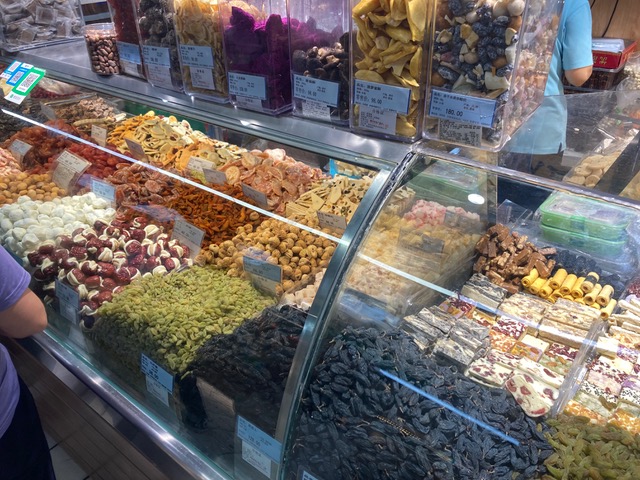
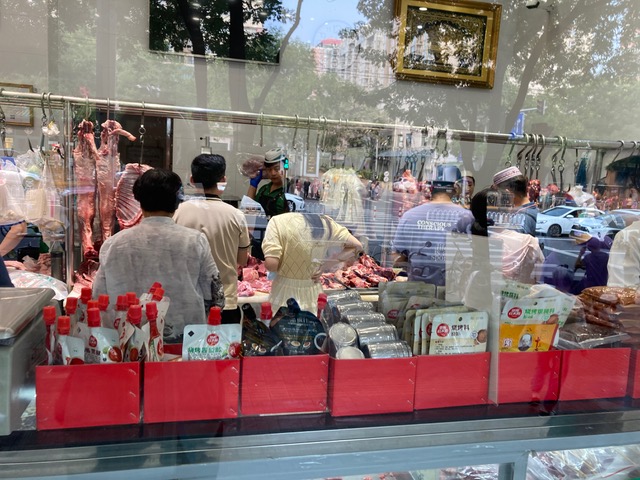
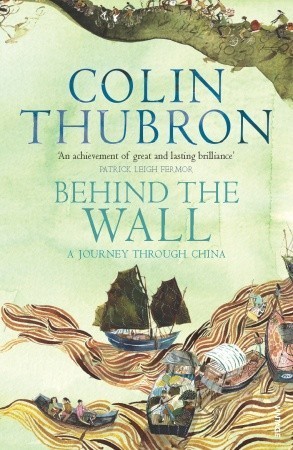
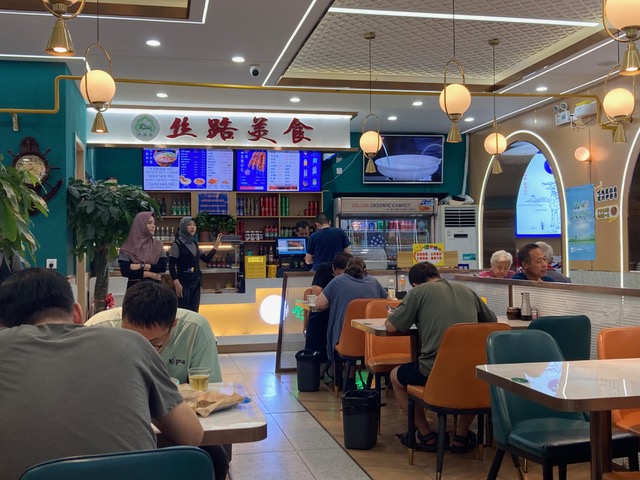
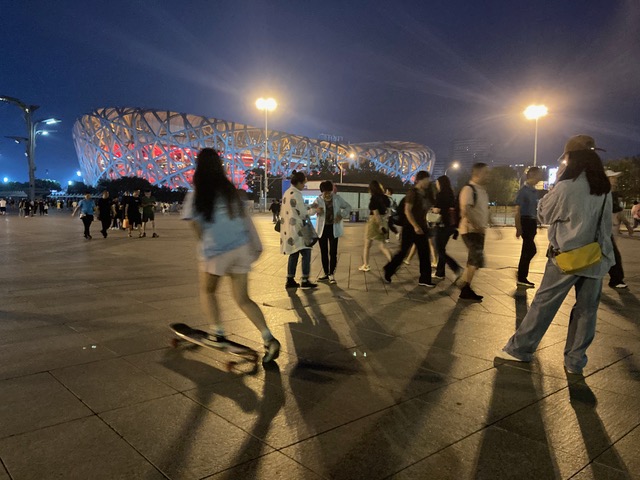





 Borderless