Categories
Contents

Borderless, May 2025

Art by Sohana Manzoor

Editorial

“Imagine all the people/ Living life in peace”… Click here to read.

Translations

The Day of Annihilation, an essay on climate change by Kazi Nazrul Islam, has been translated from Bengali by Radha Chakravarty. Click here to read.

Arise O Woman and Two Flowers on One Leafstalk, lyrics by Nazrul, have been translated from Bengali by Professor Fakrul Alam. Click here to read.

Five poems by Bipin Nayak have been translated from Odia by Snehaprava Das. Click here to read.

Identity by Munir Momin has been translated from Balochi by Fazal Baloch. Click here to read.

Among Strangers, a poem by Ihlwha Choi  has been translated from Korean by the poet himself. Click here to read.

Asha or Hope by Tagore has been translated from Bengali by Mitali Chakravarty. Click here to read.

Poetry

Click on the names to read the poems

Ryan Quinn Flangan, Jim Bellamy, Snehprava Das, George Freek, Niranjan Aditya, Christine Belandres, Ajeeti S, Ron Pickett, Kajoli Krishnan, Stuart McFarlane, Snigdha Agrawal, Arthur Neong, Elizabeth Anne Pereira, Rhys Hughes

Poets, Poetry & Rhys Hughes

In Did He Ever?, Rhys Hughes gives fun-filled verses on Lafcadio Hearn, a bridge between the East and West from more than a hundred years ago. Click here to read.

Musings/ Slices from Life

Will Dire Wolves Stalk Streets?

Farouk Gulsara writes of genetic engineering. Click here to read.

The Boy at the Albany Bus Stop

Meredith Stephens dwells on the commonality of human emotions. Click here to read.

The Word I Could Never Say

Odbayar Dorj muses on her own life in Mongolia and Japan. Click here to read.

Social Media Repetition

Jun A. Alindogan discusses the relevance of social media. Click here to read.

Shanghai in Jakarta

Eshana Sarah Singh takes us to Chinese New Year celebrations in Djakarta. Click here to read.

Musings of a Copywriter

In My Writing Desk, Devraj Singh Kalsi writes of the source of his inspiration. Click here to read.

Notes from Japan

In Feeling Anxious in Happy Village, Suzanne Kamata relates a heartwarming story. Click here to read.

Essays

Reminiscences from a Gallery: The Other Ray

Dolly Narang muses on Satyajit Ray’s world beyond films and shares a note by the maestro and an essay on his art by the eminent artist, Paritosh Sen. Click here to read.

This Garden Calls Out to Me: A Flaneur in Lucknow’s Sikandar Bagh

Prithvijeet Sinha takes us back to a historical landmark, made for love but bloodied by war. Click here to read.

Stories

Going to Meet the Hoppers

Fiona Sinclair writes a layered story on human perspectives. Click here to read.

The Ritual of Change

Parnika Shirwaikar explores the acceptance of change. Click here to read.

The Last Metro

Spandan Upadhyay explores the spirit of the city of Kolkata. Click here to read.

Nico Finds His Dream

Paul Mirabile narrates how young Nico uncovers his own yearnings. Click here to read.

The Bequest

Naramsetti Umamaheswararao gives a story reflecting a child’s lessons from Nature. Click here to read.

Conversation

Ratnottama Sengupta introduces and converses with photographer, Vijay S Jodha. Click here to read.

Book Excerpts

An excerpt from Devabrata Das’s One More Story About Climbing a Hill: Stories from Assam, translated by multiple translators from Assamese. Click here to read.

An excerpt from Ryan Quinn Flangan’s Ghosting My Way into the Afterlife. Click here to read.

Book Reviews

Somdatta Mandal reviews Arundhathi Nath‘s translation, The Phantom’s Howl: Classic Tales of Ghosts and Hauntings from Bengal. Click here to read.

Andreas Giesbert reviews Rhys Hughes’ The Devil’s Halo. Click here to read.

Bhaskar Parichha reviews Aubrey Menen’s A Stranger in Three Worlds: The Memoirs of Aubrey Menen. Click here to read.

.

Click here to access the Borderless anthology, Monalisa No Longer Smiles

Click here to access Monalisa No Longer Smiles on Amazon International
Categories
Slices from Life

Shanghai in Jakarta

By Eshana Sarah Singh

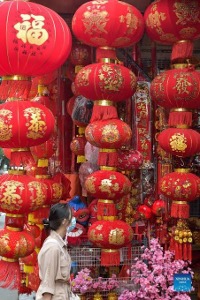
The moment the calendar flips to January, Jakarta undergoes a transformation, almost as if it’s washed anew, like one’s gazing at the city through rose-coloured glasses. Although Chinese New Year normally falls in February, the city wastes no time in dressing itself at its festive best, akin to a newly wed bride right from the beginnings of the year itself. The streets glow with the soft, warm hues of red lanterns swaying gently in the tropical breeze, intricate golden motifs adorning shop windows shaped in Chinese characters signifying good health and luck, ah! and of course the unmistakable notes of celebratory music drifting through the air. For a few short weeks, Jakarta doesn’t just celebrate Chinese New Year—it embodies it.

Growing up in Jakarta, yet hailing from Indian descent, I was always fascinated by how this festival seemed to take over the city, outshining even the likes of Christmas in its grandeur. To an outsider, Jakarta in February might feel more like Shanghai at its prime than the capital of the world’s largest Muslim-majority country, however the fabric of Chinese New Year is woven into the hearts of people across the country.

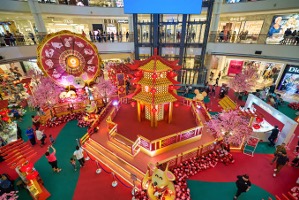
Jakarta’s shopping malls—already known for their extravagance and avant-garde ambiance —take it up a notch during this season, pull the notch all the way up really. Grand Indonesia, Pacific Place, and Central Park become galleries down the streets of metropolitan Beijing, displays of Chinese artistry adorn the walls, with colossal dragon sculptures wrapping around pillars, cherry blossom trees dotting atriums, and enormous red envelopes symbolising prosperity displayed in elaborate installations. At Pantai Indah Kapuk, a neighbourhood known for its Chinese-Indonesian roots, the neighbourhood where I grew up, restaurants overflow with families indulging in yu sheng (a prosperity toss salad) and steaming platters of shumai (dumplings) wafting their aromas into the air.

Photo provided by Eshana Sarah Singh

In Jakarta’s very own Chinatown, Glodok, the roads are chock-filled with movement, cacophonous and chaotic but so vibrant. Red flags with auspicious messages printed in gold are hawked by vendors, temple incense wafts by getting ever-stronger with murmurs of chanted prayers for prosperity and riches along the roads.

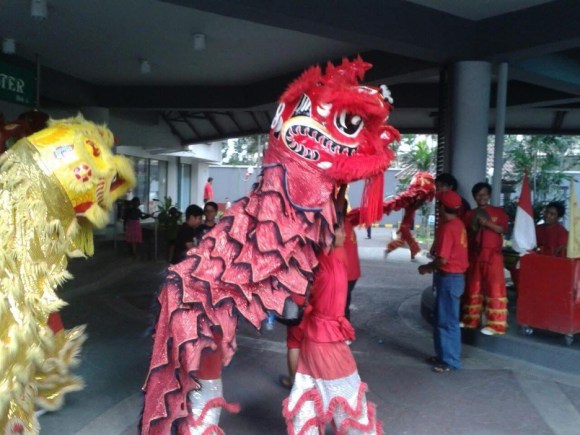
The sound of drums boom so loud that the ribs vibrate, that the very ground trembles beneath one’s feet, proclaiming the onset of the Barong Sai—an ancient lion dance with movements so fluid and gracious that they can’t help but draw eyes passing by. Their beauty, yet further enhanced by the resonant clashing of cymbals, is in theory supposed to ward off evil spirits and usher in prosperity; this tradition infact predates the existence of most civilizations.

Lion Dance. Photo provided by Eshana Sarah Singh

Amidst all this festivity, I am reminded of the countless Chinese New Year’s I’ve spent in school growing up and lessons from my Mandarin teacher, whom we affectionately called Laoshi or teacher.

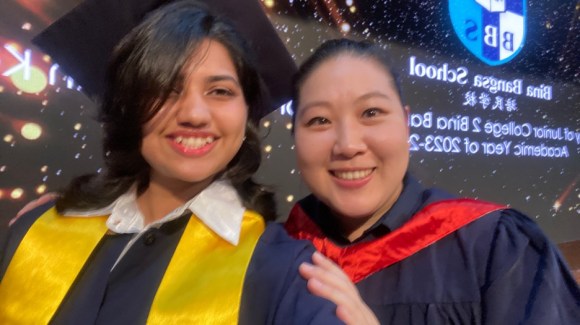
Tha author and her Chinese teacher. Photo provided by Eshana Sarah Singh

“Laoshi, I remember you used to tell us about all the dos and don’ts of Chinese New Year,” I chuckled, eager to hear her insights once again.

She chuckled. “Ah, yes! There are many, and each family follows different ones, some only specific to them. But some are universal. For example, never sweep the floor on the first day!”

I laughed, “Why is that again?”

“Because you will sweep away all the good luck for the year of course! The same goes for washing your hair—avoid it, or you will wash away your fortune. And of course, you should wear red. It brings happiness and wards off the Nian monster.” It seemed a lot of the superstitions absurdly revolved around washing, but then again they’re superstitions so perhaps logical reasoning wasn’t the best path forward.

“What about food? Are there any specific dishes that must be eaten?” I asked.

“There are actually, eating fish is a must because the word for fish in Mandarin sounds like ‘surplus,’ which is meant to bring in abundance for the coming year. And you can’t forget about tangerines as well, have you ever noticed how they’re only ever sold during the Chinese New Year? Their name sounds like ‘luck’ in Mandarin, so people always exchange them with family and friends. I think by now you can guess why,” Laoshi chuckled.

She paused slightly, her voice wavering and tone turning nostalgic. “You know, in Indonesia, many Chinese-Indonesian families have developed their own unique traditions, which are understandable; traditions are never truly the same in a place that’s not their own.   But this way at least there’s something for everyone. For example, we still hand out angpao, the red envelopes filled with money, but nowadays, some people send them digitally! Would you believe it?”

Wading through the bustling streets of Jakarta in the days leading up to the New Year, the tension, the excitement, the wait was palpable in the air. I noticed how the celebration was not confined to Chinese-Indonesian families alone, it was a time for all of us. Malls showcased extravagant public performances, offices hosted small celebrations, every building was decked out in red from head to toe and even my non-Chinese friends, including me of course, joined in by donning red and sharing greetings of “Xin Nian Kuai Le1.”

Indonesia’s long history with its Chinese diaspora has not always been smooth or friendly for that matter, but in these moments of collective celebration, one realised how some moments were made better when shared with everyone. Chinese New Year in Jakarta is not just a cultural event—it is a national one really.

As traditions evolve, so does the way Jakarta celebrates. Some things remain timeless, temple visits, family reunions, and Barong Sai performances, however that does not mean new customs are not emerging. Metropolitan city dwellers now send digital angpao via apps, families opt for lavish dinners at high-end restaurants instead of a table chock full of home-cooked feasts, and social media becomes a hub for sharing well-wishes and festive experiences, because the wishes of luck and prosperity transcend the miles that separate us. Taking in the sea of red around me, the rhythmic drumbeats, and the air filled with the scent of incense and festive feasts, the very grandeur of Chinese New Year in Jakarta, I know that no matter where life takes me, this festival in this city will always feel like home.

  1. Happy New Year
    ↩︎

Eshana Sarah Singh is a media and journalism student with a passion for storytelling, blending authentic personal experiences with rose coloured lenses to ultimately explore diverse and untold narratives that chart off the beaten path. 

.

PLEASE NOTE: ARTICLES CAN ONLY BE REPRODUCED IN OTHER SITES WITH DUE ACKNOWLEDGEMENT TO BORDERLESS JOURNAL. 

Click here to access the Borderless anthology, Monalisa No Longer Smiles

Click here to access Monalisa No Longer Smiles on Kindle Amazon International

Categories
A Wonderful World

Where “Divides of Class, Religion & Ethnicities Collapse”

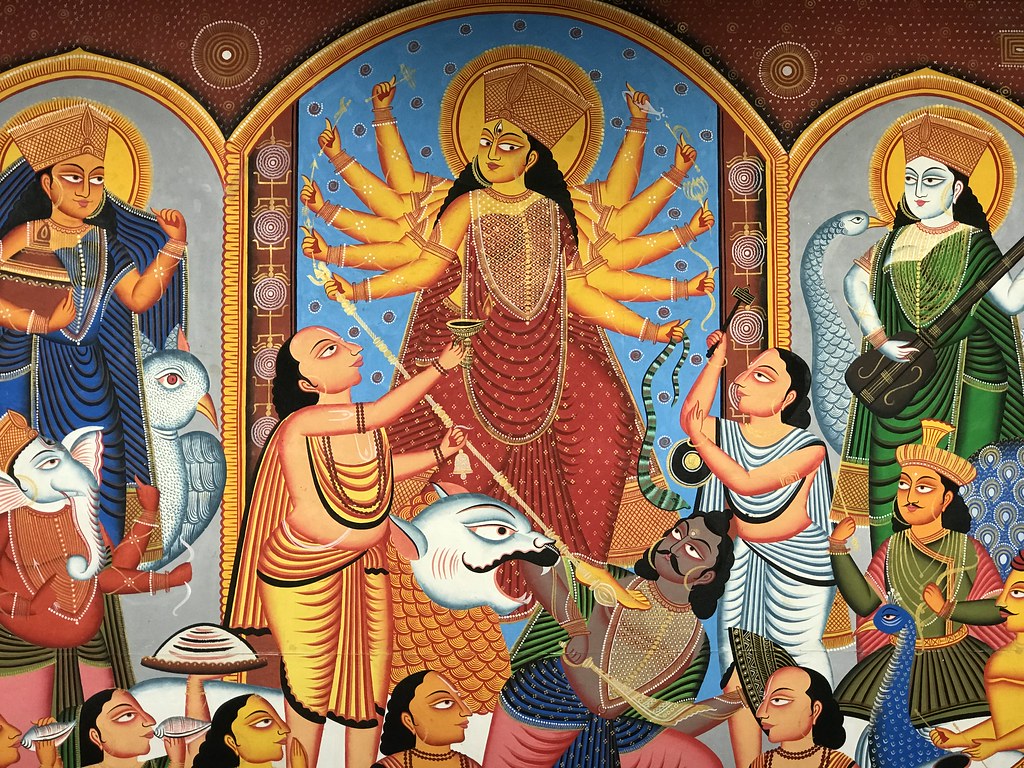
Painting of Durga Puja. Courtesy: Creative Commons
Wherever I look, a golden light 
Suffuses a vision of holidays,
The festive sun rises in the woods
Of puja* blossoms drenched in gold rays. 
             -- Tagore, Eshechhe Sarat

This has been a favourite poem of many who grew up reading Tagore, lines that capture the joy and abandon of the spirit that embodies the celebration of Durga Puja, a festival that many Bengalis deem as important as Christmas, Chinese New Year, Diwali or Eid. It is a major celebration in Bengal and large parts of the sub-continent, though not in all parts.

The reason that reviving the lore associated with this fiesta has become very important is that it centres around women. Given the situation in Iran, where the battle over how to wear headscarves has turned bloody, murderous and violent, celebrating an empowered woman, even if mythical, takes precedence over all else. Mythology has it that Durga was empowered by weapons given to her by various deities, all of who were men, and then, she did what all the male Gods failed to do — destroyed a demon called Mahisasur. Rama too prayed to Durga for victory around this time. And on Bijoya Doushami, the last day of the Durga Puja, some celebrate Rama’s victory over Ravana and call it Dusshera or Dashain.

Taking up this theme of the narratives around Durga Puja and how it has been made into an “Intangible Cultural Heritage of Humanity” by UNESCO is Meenakshi Malhotra’s essay on the festival. Part of the citation reads: “During the event [Durga Puja], the divides of class, religion and ethnicities collapse….” 

To bring to you a flavour of the Puja, we have translations of poetry by Tagore describing the season and of a poet who was writing before Rabindranath, Michael Madhusdan Dutt, by Ratnottama Sengupta, verses exploring the grief of parting Durga’s mother expresses as her daughter returns to her husband’s home. This is also a festival of homecoming for, like Durga, those living far from their homes return to the heart of their families. Rituparna Mukherjee has woven a story specially around this aspect of the festival. Journals in Bengal, traditionally, brought out special editions with writings of eminent persons, like Satyajit Ray. We have an interview with a writer who wrote a book on Satyajit Ray, an actor called Barun Chanda, to bring a flavour of that tradition along with the translation of a celebrated contemporary Bengali writer, Prafulla Roy, by Aruna Chakravarti. We hope you enjoy savouring our Durga Puja Special.

Poetry

Eshechhe Sarat (Autumn) , describing the season of Durga Puja, by Tagore has been translated from Bengali by Mitali Chakravarty. Click here to read. 

Bijoya Doushumi, a poem on the last day of Durga Puja, by the famous poet, Michael Madhusudan Dutt, has been translated from Bengali by Ratnottama Sengupta. Click here to read.

Prose

A Mother, a Daughter & a Demon Slayer?, an essay by Meenakshi Malhotra, checks out the festival of Durga Puja against the concept of women empowerment. Click here to read.

Homecoming by Rituparna Mukherjee is a poignant story about homecoming during Durga Puja. Click here to read.

Nagmati by Prafulla Roy has been translated from Bengali as Snake Maiden by Aruna Chakravarti. Click here to read. 

Interview

Meet Barun Chanda, an actor who started his career as the lead protagonist of a Satyajit Ray film and now is a bi-lingual writer of fiction and more recently, a non-fiction published by Om Books International, Satyajit Ray:The Man Who Knew Too Much in conversation Click here to read.