“Singapore is intimately linked with home and, yet for me, home has always been a process of lifelong search. Partly because of the early months of my birth. The record says I was born in March 1949, but the time was not certain as I do not have a birth certificate. My father forgot to register my birth,” reminisces Dr Kirpal Singh, an internationally recognised scholar. Born in the Straits Settlement of Singapore, before the island emerged as an independent entity, he has lived through much of history. He tells a story of multi-racial, multi-cultural growth that the island afforded him.
His father, he tells us, was “well known throughout Malaya — Jeswant Singh nicknamed as ‘Just One’ — a boxer who would knock people down with his left hook. In 1954, he left boxing when he killed someone during a match.” His mother, a Jewish Scot who he cannot recollect, he tells us, “ might have been David Marshall’s sister according to my stepsister but no one else has said that.” Marshall[1] was the first Chief Minister of Singapore from 1955 to 1956 and then Singapore’s Ambassador to France, Portugal, Spain, and Switzerland 1978 to 1993. He is the founder of the Worker’s Party. His parents had emigrated from Baghdad to Singapore in 1908 according to current resources.
How did Singh’s parents come to be in Singapore? Were they immigrants or colonials?
He responds with what he knows: “My grandfather and grandmother came to Singapore on board a ship in 1900. They left Jullunder, Punjab, in 1899. By the time they reached Singapore, it was the end of 1900. They left to seek their fortune. They were from the farming community. My grandfather was only sixteen and my grandmother was about twelve. They were in transit in Penang for six months. They came to Singapore in 1901. Actually, it was all Malaya — Singapore was part of the Straits Settlement. They came to Singapore by train. Trains were just starting out. It was around August 1901.
Trains in Malaya
“My uncle was conceived during this journey. They halted in Singapore for only two or three weeks. My grandfather’s cousin was in Perak[2], in Malaya. So, he wanted to be with his cousin. His cousin had cattle. Most of the Sikhs were cattle farmers. They settled in Pahang[3], an area which eventually became a nuclear dump[4] for Australia. It is closed to public now. There was a stone that proclaimed the land was a nuclear dump when I went with my son a few years ago.
“My father moved to Singapore as his prospects were better here as a boxer. This is where he met my mother. I was born here. He actually met mum because my mother’s two brothers had invited her to come from Glasgow. My mother is Scottish, from an industrial background. Her brothers came to the Far East to make money. She finished her school leaving exams and came to visit her brothers during her vacation. She would go with her bothers to watch boxing, where she saw my father, the champ. She was only fifteen or sixteen. The next thing the brothers knew was she was pregnant with me.”
Jeswant Singh was popular with colonials. Kirpal Singh tells us: “Some Europeans saw him box and offered him a job then in the Base Ordinance Depot. This was the British Military camps in the Far East. There were three bases in Singapore: the naval base, Kranji and one in the South. He worked there for thirty years and retired after that. In 1972[5], after the final British withdrawal from Singapore, dad’s formal employment status ended. After that he just did odd jobs, ending up as a security guard, looking after the factories in Jurong, earning about two to three hundred dollars a month.”
Kirpal Singh spent his childhood with his grandmother and uncle. Before he started schooling, his father left him with his grandmother and divorced his mother in favour of a new bride. Dr Singh tells us the story of how he returned to Singapore: “I was basically in Perak with my grandmother. My uncle, who was the first Sikh to become a Christian in Southeast Asia, left home because his father gave him a beating for changing his religion. My uncle was an Anglican. His conversion saved him from the Great Depression as the clergy was very well looked after. From 1929 to 1933, the church looked after him because he was the priest in Seramban. My father was still young. My uncle was born in 1911 and my dad in 1923. My grandmother bore eighteen children. Five of the infants passed away before they were one month old. But thirteen survived. She passed away at 95… I knew when I left for my doctorate programme in Adelaide that that was the last time I would see her. I had a hunch and was crying on the plane. Six weeks later, I got a letter with the news of her death.”
He adds: “Dad was in not in a position to look after me. The responsibility fell on his brother William. His full name was William Massa Singh s/o Deva Singh. He had studied at the Ipoh Chinese school, topped the school, eventually worked as an insurance agent. He was very good in English. The principal of his school, a New Zealander, arranged for my uncle to move to Singapore. Then my father moved there too. Singapore was the metropolis even then. It was the centre of English education. Penang was the other one. In 1956, I was sent to Singapore from Perak on a train — a one-and-a-half-day journey to my uncle.”
His grandmother joined them within a few months as his uncle was, he says, “more interested in aiding Lee Kuan Yew get rid of the colonials. Lee Kuan Yew was a self-made man. He met Goh Keng Swee[6] and Rajaratnam[7] as students in England. They became buddies and wanted to move out of colonial rule and be independent.”
Then, how did a young child survive? Dr Singh tells us: “I used to earn my pocket money from age five six by watering gardens. I have had very interesting experiences. When I was in primary two, I used to give tuition to primary one students. With enough gumption, you can survive in this world.”
Kampongs in Singapore’s past
“I grew up with my uncle’s wards, who were brought home to be educated. There was even one who was a Chinese-Japanese mix. So, I grew up being familiar cross-cultural marriages and in a multicultural home. I grew up in the kampong with a Chinese boy and we became friends from the age of seven-and-a-half when we were in primary two. His name is Tan Jwee Song — I call him Jwee, ‘my good saint’. He told me after O-levels he would support me to study further and took to teaching. At that time, you could become a teacher after completing your O level. I joined Raffles late during my time in high school because it was too expensive for me. I taught in night classes started by Lee Kuan Yew and studied. I owed Jwee $80,000 dollars and I wanted to pay his widow back — but she would not accept it. When I graduated in 1973 with an honours’ degree, I was $44 thousand in debt. Then, I was given a scholarship.”
And slowly, Kirpal Singh came to his own. When television came into being, he tells us: “I was often on TV in 1970s — days of early television — debates and interviews as a guest.” Kirpal Singh grew into an intellectual of repute as he worked and studied with the support of the many races and many people who, often like him, were migrants to Singapore.
As time moves forward, these stories — that are almost as natural as the sand, the wind and the sea — ask to be caught in words and stored for posterity, stories from life that show how narrow borders drawn by human constructs cannot come in the way of those with ‘gumption’.
(Written by Mitali Chakravarty based on a face to face conversation with Kirpal Singh. Published with permission of Kirpal Singh)
I had gone on a five-week walking tour of western Ireland when a very perplexing and unsettling event took place. I am not one to believe in the supernatural or in anything more ‘alien’ than, let us say, a snowstorm in May. Nevertheless, what I experienced at Hog’s Head[1] in 1973 shattered all those former positivistic convictions …
My Irish jaunts led me through the Ghaeltacht areas of western Ireland where the majority of the Irish population speak Gaelic. Armed with my trusty walking stick, I tramped over sheep-and horse-dotted meadows, espying every now and then a fleeing fox; trekked near the massive cliffs that plunged into the Atlantic, alive to the thunderous roar of the puffing holes[2]. I pointed my stick at the numerous sea-caves — home to the black-headed gull and the common tern, and above these arched bulky flying buttresses with brilliant sheen.
One particular morning while lodging at a farm near Hog’s Head, I set out very early on the famed loop road all around which spread a series of blanket bogs[3]. The excellent hostess of the farm, a spirited gaunt-faced middle-aged widow with a florid complexion, advised me to stay on the road, the bogs reputed to be dangerous, especially when the fog lay low and thick upon them. As the sun rose, and the fog with it, I pressed forward breathing the clean air of Ghaeltacht Ireland, lands so enchanting both to the eye and the ear. At times my ears caught the echoes of ancient harps, strumming bardic ranns[4] of dead warriors and poets. My Irish was getting better thanks to the communicative people and my constant reading of Irish poetry and children’s stories written in simplified Irish. So delighted was I that particular morning that I broke into an impromptu tune!
I reached a sharp bend in the road which led me around to the other side of a long, grassy hillock. There, at the foot of the hillock, through the recalcitrant wisps of mist, my eyes fell upon the ruins of a homestead. The stone walls remained more or less intact, but its roof had caved in. What astonished me most were the layers of lime that covered the ruins, mantled them like a blanket of soft snow. The lime aroused my curiosity more than the remoteness of the ruins themselves, so far from hamlet or village. I thought of inspecting them but the advisory from the hostess of the house caused me to baulk … I carried on round the bend reaching the farm towards late afternoon.
That night after supper, the hostess, my co-lodger– a young, taciturn man from Devonshire — and I sat comfortably near the sizzling, glowing fire of the hearth in the sitting-room. Aligned like a row of sentinels on guard duty stood a dozen alcohol bottles on the chimney-piece, in between which were snugged two framed photographs of her late husband, a good-looking man with steel-blue eyes. For five evenings now it had been our wont to take our after-supper brandy near the welcoming hearth, listening to the crackling of the logs, inhaling the perfumed scent of resin mixed with the hostess’s excellent brandy.
No longer able to contain my curiosity, I asked the good woman about those ruins and the layers of lime. She turned her eyes from the fire and gave a piercing glance in my direction! I involuntarily fell back into my armchair. She placed her glass on the three-legged table adjacent to her armchair stared at me.
“Did you go into them, lad?” she asked sternly.
“No … no … the bogs.” I stammered.
“Don’t you be going into them,” she followed up, lowering he voice. “Don’t you ever be going into them.” She pulled up her wicket chair closer to us, eyes aflame, face wan.
“Why not?” enquired the other lodger. The young man appeared a bit put out by the change of atmosphere from the usual casual and flippant ambiance. She answered him in a sort of fey chant: “Ruined stone walls, roofless. Former homestead of the famine-stricken. Mournful black tombs never to be laid low.” An eerie silence followed. She took a quick glance out the big bay window as if expecting someone … or something! The logs crackled. The fire glowed. I felt the hour was ripe for story-telling. Had she captured my thoughts? A broad smile spread across her taunt face, one that invited listeners to ready themselves as the curtain slowly rises on a stage already set.
“So I see that both of you would like to know why …”
“Yes. Why?” the other lodger sputtered, taking up his brandy glass.
“Yes, why. Why the lime? Why do those ruins need to be left intact?” I added.
The setting had now been perfectly set; I imagined a reincarnated Mary Wollstonecraft Shelley[5] about to embark on a most disquieting tale. And so she did …
“I need not comment on the terrible Potato Famine that swept over Ireland in the 18th century[6], which caused a million deaths mostly because Irish farmers were forced to produce wheat and corn for export instead of potatoes to feed their families.” The hostess of the house looked sharply at the young man. He, slowly sank into his seat.
The Potato Blight (1847), painting by Daniel Macdonald (1821-1853)
“Do you lads know that one acre of potatoes can feed a family of four for a year?” We shook our ignorant heads. “Anyway, during that famine the Brits ladled out free soup only to those of us who agreed to Anglicise their Irish family names. No change, no soup! Many who refused, emigrated. The others died of starvation. Well, the parents of that poor family refused to Anglicise their names or emigrate. A family of six, three boys and one girl, all under ten years’ old, managed to scrape up some potatoes, but soon were eating the peels of them before they gave up their souls. First their dog, then the children, finally the parents (Here she made the sign of the cross). No one dared offer them food lest the Brits punish them either by a whipping or stopping their soup rations.
“My great grandfather wasn’t afraid of the Brits. One day he went by to help the family with his horse-drawn cart full of flour, corn and some vegetables. He thought to feed them, then ride them from their out-of-the-way homestead over to his farm near Waterville. He found the whole family lying on the only bed of the house, on their backs, the whole lot of them holding each other’s hands, eyes bulging out of their sockets staring into the void of death. Then it happened …”
“Happened?” I spurted out in spite of myself, taking a gulp of brandy.
“IT happened,” she repeated frigidly. “First he heard the horrible yowling of their dog, yet couldn’t really see the animal. The poor beast yowled and whined so much that he covered his ears. Then before his eyes they all rose from their death bed, all of them I say. They rose and floated up, and down on to the bare floor with outstretched hands and open, toothless mouths. They shuffled towards him, all of them huddled together, whining and crying, their cries rising above those of the dog’s! My great grandpa screamed and ran to the bedroom door, then ran for his life across the bogs to the cart. He jumped up to the seat, took up the reins but when he looked back at the homestead there was no one … No one!”
“No one?” squeaked the young man who had been swallowing liberal amounts of the hostess’s brandy.
“No one. It was their ghosts that rose up before my great grandpa’s eyes…what we call in western Ireland appearances or the unquiet dead. You know, they dwell in the invisible world and will emerge at the presence of the living. The living must never disturb the sorrowful slumber of the unquiet dead. They gave up their ghost, their spirit, and if the intruder to their slumber looks upon them, it is their mortal coil that we see (and again the hostess made the sign of the cross), although they be only spirits or ghosts of themselves. That’s why we say they are no longer ‘living’, but do retain ‘life’ in them.”
“Life?” I echoed.
“Yes, life. Because those poor souls have to be saved and not lose themselves in the throes of limbo or Hell … “ And her eyes were ablaze like the blazing flames of the hearth. She went on in fiery tones: “They have been freed from the misery of the living; and because their souls have so suffered we spread lime over their famine-stricken corpses and doomed home so that nothing would trouble their soundless sleep. Nothing! So that no one dares trespass on their earthly hardship and misfortune. Their home has been preserved like a memorial for everyone to see and feel the tragedy of that period. So I’m telling you lads, let them rest wherever they be. You can see it from the roadside but don’t you be going in there.” She paused, lowering her head. “My poor great grandfather; I’m sure those hapless souls were pleading for salvation or heavenly mercy from the only person who dared venture into their damned dwelling.”
By that time I was sitting on the edge of my chair. I managed to state emphatically: “But ghosts don’t exist.”
Her eyes grew fiery: “No ghosts, my lad ? No ghosts you say ? Let me warn you never to set a foot in those ruins; that homestead has been doomed. Don’t go in I say. The shock may turn your wavy blond hair grey in an instant.” She made the sign of the cross, threw a cursory glance out of the bay window then stared at me as if lost in thought. “You know lads I’ve seen them meself.”
Her story was growing thicker like the dense flames rising in the hearth …We sat still in anticipation.
“Yes, meself. I was too stupid or curious after listening to all the tales told about that wretched family. Told again and again by my family and neighbours …”
The young man asked abruptly: “You haven’t told us their name.”
Why he wished to know the name of that family was beyond me. The woman sighed, clearly annoyed at this interruption, and answered with overt irritation: “The Donnellans if that is so important to you, lad. A good Irish name if there ever was one.”
“And what is your good name?” I ventured with a faint smile, attempting to quell the compressed atmosphere of the sitting-room.
“O’Casey, if that makes you happy to know,” she responded, now quite ruffled by our ‘irrelevant’ questions. “Now lads, may I proceed or is there something else that you both would like to know ?” There was not.
“Good! Now, I must have been about twelve or thirteen at the time when one day I gathered courage enough to enter the house of the dead. The smell of lime almost put me off, but I wanted to see for meself ! And see I did: There they lay on the death bed, covered in a smooth blanket of lime, holding hands. I imagine that the lime conserved their bodies. As I stared down at them, little by little my head throbbed and my ears went mute. Everything became so estranged in the world that surrounded me, so blurry, as if I were caught up in a morning mist. Then as God be my witness, voices rose from the death-bed like soft flakes of falling snow. Then they slowly rose from the bed and floated upwards, then downwards to the broken limed boards of the room, slipping out of their bleached mortal coils. The soft voices and the shrivelled bodies all drifted in the air huddled up to one another, drifting closer to me, those skeleton-like hands outstretched, tiny, toothless mouths wide open, chests sunken. Closer and closer they approached in mid-air. I cried out backing away to the doorless bedroom then ran out across the bogs to the road crying sidhes[7], banshees[8]until I got home, my clothes covered with mud. When my father found out about my whereabouts he gave me a proper whipping.”
The hostess collected her thoughts. “Don’t do anything foolish. Stay away from the dead. The dead are the dead, the living, the living.” She stood up and bid us a good night.
Was she being ironic? A good night after that tale? I glanced at my fellow lodger. His face was as white as a ghost’s, if I may say so. We both sat in silence, listening to the crackling of the fire slowly dying into soft glowing embers.
As I trudged up the creaking wooden steps to my room, I will say that her story really spooked me. My pragmatic education had taken quite a few blows, knocked off its pedestal of pedantry. Needless to say my sleep was hounded by queer, saturnine scenes difficult to decipher much less interpret.
It goes without saying that the next morning I felt as if I were in some sort of trance. Ambiguous thoughts wrestled within my confused mind. Our hostess had left for the day to Waterville, and the other lodger had not as yet been down for breakfast.
I remember that it was a rather chilly morning. The fog undulated in rhythmic wavelets over the bogs. I bent my direction towards the homestead walking briskly. As the mist gradually lifted, the ruins rose to my left. The mist, for some odd reason, lay stationary upon the forsaken stones like a shroud upon its corpse. Suddenly I heard the barking and whining of a dog whose echoes filled the misty bogs with rueful omens. I had never heard them on my previous promenades along the loop road. I stole a glance behind me: no one …
Whatever impelled me to cross those bogs to the ruins God only knows! But there I found myself at the threshold of the baneful interdiction. I stepped in, tip-toed towards the bedroom, the thick lime sticking to my walking boots. I tried to chip it off with my stick. Shards of roof tiles and chimney bricks lay scattered under a layer of foul-smelling lime. At that instant the wailings of the dog grew closer. They almost brought tears to my eyes. I felt a sudden helplessness due to this odious intrusion into their mirthless home.
My ears began to drum, pulsating and pulsating an uneven tempo, benumbing my senses, deadening my limbs. A terrible fatigue overwhelmed me. The whining and barking of the dog somewhere out over the bogs aroused such a sadness in me, an uncontrollable desire to cry. The poor beast whimpered and wailed like a baby. I eventually reached the master bedroom: there they lay, the six of them, hands locked together. Sound asleep ? No, their eyes stared up into the now descending mist; eyes without pupils, only the rims of the orbits, blackened by starvation. And as the mist descended soundlessly like falling snow upon the prostrate corpses, the little girl turned her head towards me, lethargically, mechanically like a toy doll, an arched smile spread across her bleached face, widening her bloodless lips. Patches of caked lime clung limply to her tattered clothes as she rose out of the bed like a feather, stood up and began to limp towards me, her tiny, dirty hands outstretched, her eyes … no … no eyes, only empty sockets peered steadily at me, approaching … approaching. I couldn’t move. I screamed but heard nothing. Screaming … screaming my voice summoned no echo, no one flew to my aid. She approached, that horrible smile now an ugly sneer deforming a fleshless face.
How I reached the bogs and over them I’ve never been able to recall. I saw myself running and running, my screams now pounding the misty morning. I splashed through the bogs like a maniac, wallowing in the low, dirty waters, my clothes and long, blond hair mud-splattered. My only salvation was the loop road, which I finally gained, panting like a tracked animal. I remember hearing the voice of the young man calling out to me, his long, lanky figure looming out of the mist like a phantom’s! He caught me in his arms as I screamed a terrible scream. He struggled to get me to my feet and whisked me away as best he could. I looked behind. There was no one.
And still, as the courageous fellow dragged me over the salutary road, I carried on screaming much to his dismay. He tried to calm me down as I tried to explain … No explanation was needed: He understood, frowned, and soon had me hustled off to the farm. It was only late in the evening that I began to regain my senses thanks to the steadfast care of my fellow lodger who plied me successively with tea, brandy and spurts of lively conversation whilst I lay prostrate on my bed.
Luckily the hostess had not as yet returned; she surely would have sensed something amiss and if she did find out about my misadventure would have certainly broken out into a storm of abuse. Contrary to what I expected, however, I slept like a top, waking quite fresh at six in the morning, although I had sensed someone slipping into my room twice or trice that night, most probably my fellow lodger checking on me.
The next morning at breakfast, I said nothing. Our hostess was much too busy to ply me with questions of my whereabouts yesterday, and the Englishman, sipping his tea gloomily, uttered not a word. He departed an hour after breakfast, peering at me from under a pair of reproachful brows which, I suppose, meant to upbraid me for my irresponsible actions in the realms of the supernatural. Before closing the door, though, he gave me a conspiratorial wink and an uneasy smile. I myself took leave of the good woman and her wonderful hospitality en route for Sligo, thanking her warmly for such insights into Irish lore. She looked at me funnily and wished me all the best of Irish luck.
Sauntering towards Waterville, my stick beating out a well-paced rhythm, I suddenly stopped dead in my tracks realising that I never found out the names of my fellow lodger or the hostess. Ah well, no one would hold it against me. Off I went on my wary way in the opposite direction of the accursed homestead not quite avid as last week for any new ‘adventure’ …
Here I now write, back in my cozy house-boat in Amsterdam, somewhat recoverred from that shocking encounter. Although my hair has not turned grey and the ghostly vision of that little girl from the homestead still haunts my sleep every now and then, a gruesome vision that I find impossible to come to grips with. Was it real or a figment of my imagination ? Dangling, wispy threads of the Irish hostess’s eerie yarn ? I’ll probably never seize the reality of that horrible moment
One day as I strolled along the canals on my way to the Stedelijk Museum and the Rembrandt House Museum, my usual haunts, and recently, havens to calm my overtaxed nerves, a book caught my interest in the window of the Scheltema book shop: Visions and Beliefs[9] in the West of Ireland by Lady Gregory[10]. I bought the 1970 Coole edition. Since that purchase, I have read five to ten pages every night, rereading them until the effects of those gleaned encounters with the supernatural banalise mine! A curious woman this Lady Gregory — she learnt Irish and orally collected the stories of banshees, sidhes and ghosts from the inhabitants of the Gaeltacht regions before writing them down and publishing them. She might be acclaimed the Jacob Grimm[11] of Ireland ! So inspiring are her accounts that I am also reading her Poets and Dreams and A Book of Saints andWonders[12].
This being said, in spite of the many months that have passed since my encounter with the unquiet dead, and my readings of Lady Gregory, the image of that little girl has for ever left its indelible imprint on my mind and heart. Mind you, it no longer terrifies me, but I remain wary, none the less.
.
[1] A hamlet located in Kerry County of western Ireland.
[2] Large circular holes located above sea-caves out of which water ‘puffs up’ when the ocean waters rush into the caves.
[3] Wild areas that cover the lowlands of western Ireland made up of decomposed plants.
[4] A stanza of Celtic poetry. It is of Irish origin.
[5] Mary Wollstonecraft (1797-1851) author of the Frankenstein story told before the hearth to her husband, Percy Byshe Shelley and to Lord Byron one stormy night.
[10] Lady Gregory (1852-1932). A remarkable woman who was one of the foremost literary founders of the Irish Republic by her stage works and translations.
[11] Jacob Grimm (1785-1863) A German philologist who collected folk tales from German peasants orally, then had them published, retaining their orthographic and dialectal traits.
Paul Mirabile is a retired professor of philology now living in France. He has published mostly academic works centred on philology, history, pedagogy and religion. He has also published stories of his travels throughout Asia, where he spent thirty years.
.
PLEASE NOTE: ARTICLES CAN ONLY BE REPRODUCED IN OTHER SITES WITH DUE ACKNOWLEDGEMENT TO BORDERLESS JOURNAL
Formative years can imply simply a growing body or the development of a complex outlook on life. My mother, born Mary Ann Hostetler in Pontiac, Illinois, lived her formative years in colonial India. Here is what I know about two formative migrations that made her who she was. She was a quick study, a keen photographer, and resourceful traveler, but she also had an uncanny sensitivity to the need of people to feel welcome anyplace.
She had a deeply fond memory of arriving with her family in West Bengal when she was a mere 2 years old. On the dock of Calcutta, waiting to greet the Hostetlers, was another Mennonite missionary, a man who would escort the family to the mission compound. Dispatched aloft by her mother, little Mary Ann absolutely “sailed into his arms”, feeling sincere love and comfort from this steady and attentive new man. He would sometimes take her for walks in the farms and villages, letting her reach out safely. There was nothing to fear in this new place, and she was allowed to build her confidence.
Crates and luggage would have been handled by porters, a first lesson in India’s system of echelons, privileges and defenses, which even Anabaptists would adopt. India would embrace Mary Ann with her cacophony and vibrancy. There was always the conservative life at home and in the classroom, but she could escape into the chowrasta[1], eat street food, and read the discarded letters such food was wrapped in.
From the age of 5, she boarded at a dreary school in the extraordinary altitude of Darjeeling, wintered in the rural outskirts of Calcutta, spoke street dialect like an urchin, and learned to draw from memory a Mercator map of the world showing the borders of all the British colonies. During school break back in her parents’ mission compound, she and her brother might pass time picking fat ticks from the tender hide of a little bullock her parents kept, but her favourite activity in those warm days was to climb an old mango tree which stood just out of range of her mother’s call and read a book. Any book. She was never without one.
She and her family made two returns to the US, the first in 1936 for a Mission Board furlough, and again in 1944, when she had graduated from high school and the war, closing in first on the Straits Settlements, and soon after striking the Calcutta docks, was too close for comfort.
For that 1936 furlough, the family stayed a few days in Calcutta’s Salvation Army hotel while her mother shopped for items to bring back with them to the States. Her list would have included a tablecloth and sheeting, cotton yardage, British wool, perhaps a few sandalwood items. These things would not have been exotic souvenirs but rather, practical items for their year ahead enduring America’s Great Depression. They were, after all, the family of a pastor, disinclined to appear exceptional or proud.
Through their Salvation Army hotel window, my mother gazed down at the Fairlawn Hotel next door, where well-heeled families relaxed with tea service on white rattan furniture, children scattered gleefully on the vast greensward, late afternoon birdsong above, and a distant Victrola warbling from inside the forbidden edifice. She longed to experience such pleasures, and decades later, she did finally stay a few nights at the Fairlawn in 1992, with me, as I had chosen the hotel without knowing its gnawing maneuvers deep in my mother’s soul.
Checking in, we met the flamboyant and zaftig British redhead in charge of the place, my mother’s very age, daughter of the owner from those last days of the Raj. That woman could scream gutter Bengali at the top of her lungs, and the next moment turn to my mother and politely ask about some little thing important only to little girls from a faraway garden city. I watched as these two disparate women embraced and laughed together.
The day she and her own mother arrived in the Los Angeles port of San Pedro, she was astonished to disembark and hear sweaty stevedores yelling and chattering in English. This told her more about America and what was purportedly its classless society, than any adult’s own description could have. She thrilled at this discovery. She was unconcerned about fitting in with new school mates, got along well with them, even though they whispered amongst themselves about “her brogue.”
She never told me anything about her trip back to India, a year later. But she would have sailed again, stuffed into Second Class. I imagine her trying to lose her parents, availing herself of the ship’s library. But I don’t know.
She graduated from Mount Hermon School as the “Best Girl,” although if you visit there, you can discover that the clueless new headmaster from her graduation year neglected to have the big silver trophy emblazoned with her name for the class of 1944. Her brother’s is there with the year 1943 on the school’s “Best Boy” cup. But he simply forgot to put in the engraving order when it was Mary Ann Hostetler’s honor. My mother harbored few resentments, but this was a sore point, as she had worked very hard at academics.
I have never seen Bombay Harbour, where she finally left India as a young woman, but this is what she has told me. It was wartime, 1944, but she was full of hope and thrilled to be out of that grim and cold school in the clouds.
Mary Ann and her family boarded a passenger liner repurposed to carry a large number of troops. A little sister had been born in India, making the family five, now billeted in what was once a First Class cabin, as were other American families leaving India. Of course, no monogrammed towels or French milled soaps awaited them, but she relished the luxury of portholes and her own bunk.
The ship left Victoria Dock in April of 1944, mere days before the catastrophic accident of the munitions-laden SS Fort Stikine accidental fire and explosion, which destroyed every vessel in the harbor. Wartime secrecy held successfully for decades, and my mother never learned of the near miss until many years after the war was over.
All kinds of security measures were taken, even though the atmosphere on the crowded ship was convivial and relaxed. No flags flew. And they sailed a zigzag course as a precaution against torpedoes. They were in a convoy with two other soldier and civilian transports, but never saw the other ships except when in harbour. One of those harbours was Melbourne, where boarded dozens of Australian war brides, and every last one of those young women, my mother said, had a screaming infant. Those women shared second class cabins. Two mother/baby pairs had bunks and one pair slept on their cabin floor.
Everyone aboard seemed to be flirting with the soldiers and welcoming distraction. My mother and her new girlfriends, and even a few of the young Australian mothers, were nurturing chaste romances and enjoying their youth. It was so much fun, and so stress-free, that my mother looked down at her wrist one day, where there had flourished for many months a large filiform wart, resembling some sort of fleshy agave plant; it had vanished.
They went through the Panama Canal, a surprise for everyone aboard as well as for their stateside families. All had been told by the war department that the convoy would land in San Francisco. Instead, they went to Boston. Plans were upset, lives were disrupted, and thousands of families who had made their way to California were now faced with crossing the wide country to meet their loved ones. Typical instance, my mother said, of the war and the US government inflicting the population with whimsy, wasted efforts, or red tape in the name of national security.
To glimpse at last the American flag flying in Boston harbour gave my mother an indescribable feeling of safety and delight. Worries carefully buried were truly gone. The war would end in a little over a year’s time. She had the rest of her life ahead of her.
The USA was a safe harbour for a few years of university before she was off again, this time to Japan. Decades later, with an empty nest, she and my father chose Italy. Migrations were just part of living, and wherever she went, if she met another person displaced by whatever reason, she had a new best friend. I knew them, too. The Finnish dry cleaner, the Salvadorian woman who answered the phone at the Honda repair shop, or the Japanese lady who ran an art supply store: these people came from away, and so had she.
In her seminal work, Illness as Metaphor, Susan Sontag delves into the intricate realm of disease metaphors and presents evidence from the literary field that has employed metaphors for human illness, especially tuberculosis and cancer. Sontag draws on a rich literary history, referencing the works of Stendhal, Karl Menninger, Thomas Mann, Charles Dickens, Thomas Wolfe, Franz Kafka and others, to illustrate how metaphors for diseases have been ingrained in our cultural psyche. The two diseases, TB and cancer, discussed at length in the essay, are viewed from innumerable literary points of view. Fictional and real-life views of people surrounding these diseases have been put forward, which betray a cacophony of contrasting and similar ideas.
Sontag astutely dissects the contrasting metaphors associated with tuberculosis and cancer. Tuberculosis, she argues, has been romanticised and considered more socially acceptable and often viewed as a glamorous affliction. “Having TB was imagined to be an aphrodisiac and to confer extraordinary power of seduction. Cancer is considered to be de-sexualizing.” Sontag describes the tumour as “a foetus with its own will”. She further states that TB is a disease of poverty and deprivation, whereas cancer is a disease of middle-class life. She adds that cancer is associated with affluence, with excess. The metaphors associated with the diseases, she contends, not only affect the body but also shape societal perceptions and cultural narratives. The metaphorical attributions of TB and cancer in literature and society echo broader societal perceptions of class and status.
Published in 1978Susan Sontag (1933-2004)
There is an aphorism by Heraclitus that men have devised gods in their own images, and as Sontag states, the nomenclature of ‘cancer’ is derived from the Greek- karkinos and the Latin- cancer, both of which mean crab. She clarifies by quoting Galen that since the external tumour’s swollen veins resembled a crab’s legs, that is how it got its name. This tendency to associate unfamiliar things with familiar ones is common; people often perceive shapes in clouds, drawing comparisons to known objects. Similarly, diseases are often viewed through familiar frameworks. Since diseases afflict and weaken us, they are often seen as adversaries. Thus, labelling the experience of battling cancer as a fight imbues individuals with a sense of hope, suggesting the possibility of victory amidst adversity.
Sontag, betraying the nature of cancer as a slowly progressing disease that suddenly manifests without any warning, presents the earliest evidence where it was first used metaphorically by Wyclif in 1382. “The word of hem crepith as a kankir”.She assembles the different metaphors associated with Cancer, which are as diverse as the number of human illnesses. For her, Cancer is a source for topological metaphors: “spreads”, “proliferates”, “diffused”, and “excised”.
The essay examines the mythologies and superstitions associated with these diseases and how metaphors sometimes wear the cloak of superstition, too. But metaphors make the understanding of the disease more manageable. Metaphors are a means of understanding the meaning of things. That which cannot be explained as such can be explained by metaphors. In his books, The Doors of Perception and Heaven and Hell, Aldous Huxley states: “It is difficult, it is all but impossible, to speak of mental events except in similes drawn from the more familiar universe of material things. If I have made use of geographical and zoological metaphors, it is not wantonly out of a mere addiction to picturesque language. It is because such metaphors express very forcibly the essential otherness of the mind’s far continents, the complete autonomy and self-sufficiency of their inhabitants.” The metaphors will exist, and educating the masses is the only way to stop them from becoming a stigma or superstition against that disease.
Published in 1954Published in 1956
Quite possibly, the doctors refraining from revealing the true nature of disease inherently to the patient might reflect the notion of fear of death. The diseased person might perhaps think that death will come to everyone but him. Revealing his cancer to him might imply the idea of the inevitable approaching death. Thus, employing the metaphor of ‘battling’ with cancer provides a sense of relief to the patient of emerging victorious in the battle. A diseased man on the bed is akin to a newborn baby, with the only difference being that in one, the river of life has begun to flow, whereas, in the other, it is on the verge of drying. An afflicted man is as helpless as a baby. He craves for care. In this vulnerable state, directly discussing the illness may be too distressing, necessitating the use of metaphors to convey the situation. The patient’s understanding is limited. The only truth he has made a pact with is the slipping of time and the approach of death.
Regardless of how one has lived, everyone desires a death with dignity. Yet, why is it that some illnesses seem to afford this dignity while others do not? What criteria determine whether an illness is seen as favourable? Is it pain or time? The dilemma is akin to choosing between jumping into a well or off a cliff―Death awaits at both ends. As Susan Sontag herself ‘battled’ breast cancer, one cannot help but wonder whether the book would have been different had her affliction been tuberculosis instead. The essay appears biased, elevating tuberculosis and its sufferers while diminishing the dignity of cancer patients. It only examines these diseases from a personal perspective. TB has been presented as a glorified disease, whereas cancer is something that rots the body. Only briefly does the essay touch on the societal perceptions that label tuberculosis as a disease of poverty and cancer as a disease of affluence.
It is not only cancer and TB that have attracted metaphors or have been known to be identified with them. In fact, every other disease and illness is accompanied by metaphors, like an object and its shadow. And it must be noted that some diseases, apart from being associated with metaphors, are linked with gods and deities.
I recall a passage from the book The Monkey Grammarian in which the author, Octavio Paz, describes a scene inside the ‘Temple of Galta’ which is also known as ‘The Monkey Temple’ in Rajasthan: “The children leap about and point to the stone, shouting ‘Hanuman, Hanuman!’ On hearing them shouting, a beggar suddenly emerges from the rocks to show me his hands eaten away by leprosy. The next moment, another mendicant appears, and then another and another.”
When I first read this passage, I was immediately reminded of the story ‘The Mark of The Beast’ by Rudyard Kipling and a paper that I had read related to the story titled ‘Recognizing the Leper: Hindu Myth, British Medicine, and the Crisis of Realism in Rudyard Kipling’s The Mark of the Beast’. The author of the paper had woven the interconnectedness and drawn parallels between the story, the leprosy affected character and Hanuman-lila. In ‘The Mark of The Beast’, an Englishman named Fleete, in the company of his two friends, desecrates a statue of Hanuman inside a temple with his cigar and declares it as ‘the mark of the beast’ but is soon embraced by a “mewing” leper who emerges from behind the statue following which, Fleete begins to develop skin discolourations and starts exhibiting animal-like behaviour. In the paper, the author establishes a connection between Hanuman and leprosy to justify why the Hindu monkey god is often called ‘sankat-mochan’ or ‘liberator from distress’. Drawing reference from the study of Hanuman lore by Philip Lutgendorf, the author argues how Kipling’s story resonates with a specific Hanuman-lila that relates his manifestation as a leper before the 16th-century saint Tulsidas.
“Instead, he [the tree ghost] told Tulsidas to seek the grace of Hanuman and revealed that the latter came every evening to a certain ghat in the form of an old leper to listen to the narration of Rama's story; he sat at the back of the crowd and was always the last to leave. That night, Tulsidas surreptitiously followed the leper, who led him deep into the forest before the poet finally fell at his feet, hailing him as the Son of the Wind. As the ghost had predicted, the leper "denied a thousand times" that he was anything other than a sick old man, but Tulsidas persisted in his entreaties. Eventually, Hanuman manifested his glorious form. Raising one hand over his shoulder to point southwest, he said, "Go to Chitrakut," and placing the other hand over his heart, added, "I promise you will see Rama.”
Illness as Metaphor should not be considered a caution about metaphors in their relation to illness but rather a critique of their misapplication, where these metaphors can morph into stigmas that persist in people’s consciousness. “Illness is the night-side of life, a more onerous citizenship. Everyone who is born holds dual citizenship in the kingdom of the well and in the kingdom of the sick. Although we all prefer to use only the good passport, sooner or later, each of us is obliged, at least for a spell, to identify ourselves as citizens of that other place,” Sontag states in the opening lines of her book-length essay. But, unless one is born in the mythical Shangri-La, and as long as humanity exists, illnesses and their accompanying metaphors will persist, evolving with each new malady that emerges. Today, it is cancer, just as yesterday, it was tuberculosis and COVID-19. Tomorrow will inevitably bring new illnesses, accompanied by a fresh set of metaphors that shape our collective understanding of the ever-present shadow of illness in the human experience.
Satyarth Pandita is a Junior Research Fellow at the National Institute of Mental Health and Neurosciences, Bengaluru. He completed his dual degree of Bachelor of Science and Master of Science in Biological Sciences (major) and Humanities and Social Sciences (minor) from the Indian Institute of Science Education and Research Bhopal (IISERB).
Links to Satyarth’s published works, email address and social media handles can be found here.
.
PLEASE NOTE: ARTICLES CAN ONLY BE REPRODUCED IN OTHER SITES WITH DUE ACKNOWLEDGEMENT TO BORDERLESS JOURNAL
Sri Lanka can be savoured best via its street food stalls; the aroma of the spices that emanates from the flurry of dishes left drying in the hot sun is supposed to hold the flavour of the country in its entirety.
Quite appropriately, I step out of the airport in Colombo just as dark clouds assemble overhead for an impromptu November gathering. The path to the bus terminal is waylaid in the melee, and the eventual taxi that comes around is met with immense gratitude for the warmth it emanates from within.
Meanwhile, the clouds have picked up pace and lambasted in full strength upon my flimsy raincoat. As the taxi — a Tata Nano — pulls out of the airport, I read a sign that tells me, rather ominously, ‘Welcome to Sri Lanka!’
.
But have I arrived? The drizzle accompanies me all day even as I try to venture out northwest from my dorm near the Galle Face Green towards Independence Square and Viharamahadevi Park. The park has a tinge of tenderness that makes me long for home barely six hours after I have left.
The soldier who has been entrusted to protect the monument of Gautama in the centre of the park slights me at first by asking me to put my camera away, but something about my nationality sparks enough curiousity and reverence in him to apologise and show me around its premises.
Named after the mother of the great Sri Lankan king Dutugemunu [161-137 BCE], who united the island under his banner after generations of oppression from Indian invaders, the park is tranquil in a manner that only the moneyed can afford to be. To be welcomed here by a member of the Lankan military seems ironic to me. Quite intrinsically, I discover that the affluent neighbourhood of Cinnamon Gardens is merely a stone’s throw away.
.
The sunset at Galle Face Green is where I lay my eyes upon the Indian Ocean for the first time; the gentle disappearance of the disk of fire in its graceful attire with lakhs of denizens of the city in attendance is not an event to be forgotten in a hurry.
It strikes me in the bouts of consciousness I still have with me on the start-stop train to Anuradhapura the next morning, which miraculously manages to reach the ancient capital of the island only moments after its scheduled time of arrival despite having spent about fifteen stoppages in the rough-hewn greenery of north-central Lanka.
The Isurumuni Royal Temple, Anuradhapura.
The Vanni, which separates the north from Anuradhapura, begins here, and I do not think I have gathered enough courage to bypass it just yet.
The Maha Sri Jaya Bodhi — a sapling of the Bodhi Tree under which the ascetic Sakyamuni had sat all night in meditation in the fifth century BCE and attained Enlightenment in Gaya — transposes much of the tranquillity one must have felt had Gautama himself been around; instead, hundreds of his lay followers deify his idol and consecrate his ideals with flowers and oaths of incorruptibility.
The compound where the Maha Bodhi stands allows one the permission to whisk the mind away from its constant whirl of thought and towards action based on feeling; its way, as Gautama’s, holds that offering the grant of ‘self-realisation’ to one’s fellow man is far more sumptuous a gift than an endowment of land or capital can ever accomplish.
Novice monks at the Ruwanwella Dagoba in Anuradhapura.
The Ruwanwella Dagoba, which the great Dutugemunu had painstakingly built, offers the refuge that the Maha Bodhi implores one to seek by going inwards. Two quarts of the Buddha’s relics are enshrined here, and the inflow of visitors ensures that the joyful policemen on duty are hard put to shred their visages of quietude, which one would have moments ago thought to be beyond them.
The next morning, with a German fellow traveller — whom I met at dinner while watching India decimate New Zealand on television in the semifinal of the cricket World Cup — I excavate whatever innards of peace and serenity I could from the Isurumuni Royal Temple.
My new friend from Germany tells me of of his experiences while travelling in Japan. He explains how he had made good use of the public parks (greens) at night as the locals did not use them after dark. He did not have money to sleep in hostels/ hotels and used benches in the public parks instead!
I offer him freshly plucked oranges from the gardens abutting the temple, where princes and princesses of an earlier age used to amble while seeking matches.
I get so drawn into the ethics that Gautama’s teachings must have instilled among the laypeople of the island that I almost forget to notice when my landlord — from whom I had also borrowed a bicycle — casually doubles the rate of his homestay when I check out. I learn — only much later — that he is no believer in the path Sakyamuni trod and speaks Tamil.
The Sigiriya rock fortress from afar.
Sigiriya seems much hotter than Anuradhapura1 was, and I write this even as the sun goes down and I climb up to a hidden rock far from the one which gives the town its name. The sun sets farther still from the Sigiriya Galla, and along with a bunch of British fellow travellers, I enjoy the last beads of light seeping past the horizon.
My evening is considerably brightened when our guide Vasu points me towards a green-looking hillock supposed to be the one Hanuman brought from the Himalayas as he sought for the life restoring ‘sanjeevani’ herb. While descending, a girl from Cornwall shrieks in considerable awe of the girth of the trunk of the first elephant she has ever seen.
The hike up Kasyapa’s fortress2 takes little effort, and the sparse crowd makes it feel worthwhile all the more. My newfound British friends — devoid of the SAARC3 protection of a reduced entry ticket to the top — climb the eastward facing Pidurangala instead. They tell me much later that they found the visage of Sigiriya quite appealing from the top of the latter; in a picture they show me, I cannot help but speculate that the black spot on the top of the rock was my shadow.
A dip in a hidden lake authorised by the owner of the backpacker’s hostel we are in is sprinkled liberally with views of the fortress in the backdrop; even the arrival of a slimy water snake that nibbles at my friend Jackson Price — a former telecommunications manager from Bristol — is not enough to shatter our sense of innate wellbeing.
.
There is just about enough time to catch the temple near the centre of Dambulla town unawares before Rapahel Nuding — a mechanical engineer from Stuttgart — and I take the bus south to Kandy. The carvings on the rocks inspire us both differently; me to poetry and him to decode how it could possibly have been done without the help of modern-age machinery.
Kandy is damp and misty when we arrive; the flecks of raindrops prance around nicely as neither of us wants to close the window shades of the rusty old bus we are travelling in. The lake can be sensed before we can see it; within an hour, we are back in the area to witness the ceremony at the Temple of the Tooth Relic where the dante dhatu, or the tooth relic, is displayed to laypeople.
Temple of the Tooth Relic
I help Raphael tuck into his — and my first this trip — masala dosa in the hordes of Tamil restaurants near the temple; I wonder if he asks for a second helping of the mango lassi to cool his inflamed tongue down or merely because he has liked the sensation the frozen — and possibly preserved — fruit. He stays back for a day, but I sling my bag to get on the morning train to Nuwara Eliya, having had enough of the cultural capital of Lanka already.
.
The bitter cold that greets me in Nuwara Eliya is only slightly lessened by the endless cups of tea that keep rolling through the night at the Laughing Leopards backpackers’ hostel. I struggle to explain to Helen Brinkmann, a post-graduate student from Dortmund, why I shall go to bed in tears having watched Australia demolish India in the final of the World Cup; the memories keep plaguing me a few days later in Ella when I sit down to get a grip upon myself and form an understanding of the ill-fated event.
Of the twin haunts of Nuwara Eliya and Ella, it is the journey that fascinates me the most; the rickety old contraption that passes off as a train is as old as I am in spirit and wanders only slightly off the gorgeous trails that have to perforce be left behind. Quite like the train, I am too enamoured by the countryside to trade it for the capital a week later.
The hills of Uva, as seen from Ella.
The hills that rise from the extensive green wildernesses filled with shrubs of undefinable assortment catch my eye in Ella, and it is some time before I can catch a grip of my sentiments and force myself to sit down. The bats and monkeys that gather in numbers at the Ravana Ella — or Ravana’s cave — scare me out of my wits before I can even put my foot into the mouth of the opening. Outside, the sun shines generously on a creek drifting past the hills in a muted whirr that only the sapient can perceive.
.
It speaks highly of the natural largesse that Sri Lanka possesses. Within hours of leaving the cool climes and peaks of Ella, I arrive at sea level, and the Indian Ocean peeks in patches to the left when the bus turns right from Matara, the southernmost tip of the isle. Indeed, I have breakfast in the hills and lunch on the coast.
Sunset at the beach in Mirissa
Mirissa, where I am headed next, brags of pristine beaches uninjured by the droves of tourists that fill it during the season. On arrival that evening, I find a rock to the west that garnishes a panorama that is stunning. My first encounter with kottu roti is astride a charitable helping of coconut sambal which my tongue finds excitable, and I tell myself that I am finally in the south.
.
Excursions are made to the beaches that litter the southern Lankan coast without rhyme or reason, or even distinction to one’s name or creed. Weligama, Midigama, Ahangama, the air force base at Koggala, Habaraduwa and Unawatuna all become names interchangeable with rapture perpetuated by the lack of inaccessibility. From another country, people struggle to reach me on my cell, and their needs stay blissfully away from my purview.
The sun shines on the coast much like it had done when I was in the west; the north and central parts of the country are barraged by untimely rains and I am glad to have left them behind.
The harbour as seen from Galle Fort.
Galle, where I am to stay for a night before heading back to Colombo, charms me out of my wits and looks askance as I walk away evincing a wry smile from the preposterous shindig that one might as well call a fort. The cricket ground stirs a longing for a home I have no rush to return to; on account of the goodwill and record I enjoy, I am allowed into the members’ stand for a gracious helping of a local under-19 match.
The entrapments that the Portuguese, the Dutch and the British had all in turn instituted — that now passes off as a spectacle of great pleasure — protect the town of Galle from outsiders, and also, it seems to me, from itself. Inward-looking to a fault, the Sinhalese of Galle have been known to open their hearts and hearths to all but those who have boasted of a skin tone less plentiful than white.
Upon being given to understand the intricacies of such delights and lodging in a palatial mansion owned by a Lankan Muslim family, I exult in the first serious gelato I have had in my life; an egg roti earlier in the day had barely served the purpose it was intended for.
.
Return to Colombo. I see the capital with eyes that I had not been endowed with when I first landed on these shores; it seems to be a lifetime ago now. The polished highway outside the President’s House, which abut the Chinese-funded port and end up at the imperial inheritance of the Galle Face Green purport me to a world I thought I had left behind in the countryside.
I put it down to my lack of vision but the night creeps up on me unannounced even as I try to trudge out of the humongous man-eating machine they call the One Galle Face shopping mall. It is not without some discomfort that I take flight, aware that it may not be for the last time.
Built during the reign of King Kasyapa [477-495 CE] ↩︎
South Asian Association for Regional Cooperation ↩︎
Mohul Bhowmick is a national-level cricketer, poet, sports journalist, essayist and travel writer from Hyderabad, India. He has published four collections of poems and one travelogue so far. More of his work can be discovered on his website: www.mohulbhowmick.com.
PLEASE NOTE: ARTICLES CAN ONLY BE REPRODUCED IN OTHER SITES WITH DUE ACKNOWLEDGEMENT TO BORDERLESS JOURNAL.
Our Tanda


Our tanda is a bird’s nest
our homes: broken refuges
and our lives are feathers
swirling in the air.

The moon and the sun
hatch time so long as they wish
and flee, leaving folds,
on the lips of time.

Mirrors raise our hopes
showing ourselves
break our knuckles quietly
shatter into fragments and prick hearts.

Goats, cows, buffaloes, sheep and hearts,
all dig out rivers of forests with desires
as kids draw winged horses on the black of night
with fingers
dreaming of sugary peppermints or custard blobs.

Mothers sing lullabies,
oil-lamps
embellishing the night
to sleep.

Fathers guard homes
one eye on the house
the other eye on the field
with their heads out of their windows
they turn into flaming torches.

The ippa flowers grieve
releasing inebriety
listening to the story of our tanda.


Chakmak


	I

There were a few chakmak
at the window, ants and insects wandered
among them.

Whenever I visit the window,
I licked the chakmak,
no sweetness touched my heart,
nor did smell hit my nostril,
though they look like candy jellies.

I picked them
and threw them out of the window.

Daada picked them up,
took them again into the house
and placed them at the sill.
I thought of doing the same again.
He taunted our hen indirectly —
I could understand that the hen was me.

I thought the mysterious relationship
of our folk remains untold,
hid in the skulls
about chakmak.


	II

One day when daadi was busy
in stitching her tukri
she kept the chakmak beside her
sharpening the needle on a chakmak.

I sat beside her staring at the chakmak —
darkness and light played about,
I was astonished by the sharp light
emitting from them.

The beads were placed in front of daadi
on a piece of cloth for stitching them on her tukri,
they stopped singing and rolling,
were trying to peep into daadi's honey eyes.

The needle writing the joy of tukri on the chakmak,
white stains swelled out from the black chakmak
when accidentally her sweat fell on it.

She saw me and asked me to sit beside her,
started narrating the tales of chakmak,
as I continued staring at them.


	III

Birth after the water broke —
you crept out of your mother's womb
with stains of the eternal world
giving her womb to rest from the eternal sea.

This black stone gave you the world,
cut your umbilical cord
but it suffered by your birth,
fevered, it one day burnt our hut.

At the age of two
when the moon was peeping into the rice
squeezed in my hand with milk,
my hand filled with moonlit serpents crawling down
that trembled in my blood tunnels.

Your daada sang a song —
the red stones brought joy to earth,
consoling the hard skin of daada's hand,
illuminating his loneliness

Then you got an invitation to the wonderland,
and there you slept in the bed of the red stone's reflection.

At the age of five,
we were summoned by the monsoon and started migrating.
We were stuck in the forest
you weeping of darkness and hunger,
in the fierce night.

Flesh-coloured stones devoured the darkness,
sprinkled its hunger on your fear
and roasted a few onions for you.

At the age of eight,
you were anxious about seeing the lunar eclipse —
the milk stone dragged the sky in its reflection.

She kept on stitching her tukri.
I was plunged into gazing at the chakmak,
my heart sensed something strange strange is about to happen.


	IV

I picked the chakmak into my palm.
The curves in the palms and lines on the chakmak
are trying to mate, and the curiosity in me reached my neck.
A cleft appeared in the chakmak.
I checked others for any more.

After a few minutes,
a butterfly soars from stone,
a man falls from its wing.
I take him in my hand,
he turns into a flute
made of animal bone.
I train my ear to hear him.

A voice from the bone flute starts talking
from the rusted past,
how we vanished from our identities,
how we were sheltered in the tortoise shells
and hung on horns of deers.

The world is trying to heap the chakmak together,
ransack our tribe for stones
and change the tanda into a haat
of banjara tribes.

The chakmak in the haat were ready to burst
with chronicles untold.
You gather the people.
The flute disappears.
I try fabricating the remaining tale.
Courtesy: Chakmak, art by Ramavath Sreenivas Nayak
Canvassing the Lives of Banjaras
By Surya Dhananjay
Banjara is an indigenous ethnic tribe of India. Banjara were historically nomads and later established settlements called tanda. Generally known as Gor-Banjara, they are also called Lambadis in Telangana, or Banjaras collectively across India. However, they are known by different names in various parts of the country, including Banjara, Gor, Gorya, Tanda, Laman, Lambadi, Sugali, Labhan, Labhana, Baladiya, Ladniya, Adavi, Banjari, Gypsy, Kora and Gormati, among others. The other names also indicate synonyms and signify the principal nature — wandering of Banjaras in various parts of the country.
Banjaras generally suffix Nayak with their names, along with other surnames such as Jadhav, Rathod and Pawar. Nayak was a title given by the local kings, Britishers and Mughals, as the Banjaras were warrior transporters, who transported essential commodities, such as salt, food grains (as well as weapons) on ladenis, bullock caravans for their armies. The titles were bestowed in appreciation of their honesty and hard work. Over time, the title has become the traditional name of many of the Banjaras.
The word Banjara is derived from the Sanskrit word Vana Chara — wanderer of the jungle. The word Lambani or Lamani, by which our community is also known, is derived from the Sanskrit word lavana (salt), which was the principal product the community transported across the country. Their moving assemblage on a pack of oxen was named tanda by the European traveller Peter Mundy in 1632 AD.
Historically, they were the original inhabitants of Rajputana, Rajasthan, and professional cattle breeders and transported these essentials to different parts of the region, using crucial transport routes. They are known to have invented Laman Margass1.
They then migrated to North India, East Asia and Europe in the ancient periods and to Central India and South India in the medieval periods along with the armies of Mughals from thirteenth to eighteenth century.
Banjaras lost their livelihood during British rule when the railways and roadways were constructed and they became the victims of predatory capitalism. Banjaras who were uprooted by the British government from their transportation profession were forced to indulge in petty crimes for their livelihood, which invited the wrath of the British and brought them under the ambit of the Criminal Tribes Act of 1871. Later, abandoning their traditional Ladeni profession, they settled wherever their Ladenis had halted in the colonial period and established their tandas, dwellings.
Traditionally, Banjaras depended on the pack of bullocks and bullock carts, called balder bandi in their Gorboli, for carrying out their ladenis and the cattle and oxen only were their properties for the ages, on which they built their livelihood through centuries. Many generations of Banjaras have taken birth on the balder bandi and have used it as shelter too.
Their language is called Gorboli, an Indo-Aryan language in addition to their own culture and traditions.
Gorboli has no script, it is either written in Devanagari script or the script of the local language, such as Hindi, Marathi, Telugu and Kannada, etc.
Most of their populations are concentrated in Maharashtra, Karnataka, Telangana, Andhra Pradesh, Bihar, Madhya Pradesh, Gujarat, Tamil Nadu, Himachal Pradesh, Orissa and West Bengal.
As such the local languages have much impact on their language, the words of which have found their way into Gorboli.
Owing to the fact that it is a dialect, the Banjaras do not have much written literature either. However, they keep their songs, lyrics, and literature alive orally. As there is no written literature available to the outer society about Banjaras, the chances of knowing their history, sentiments, culture and traditions are meagre.
Banjaras show a unique lifestyle, holding steadfast to their ancient dress code, perhaps the most colourful and elaborate of any tribal group in India.
The versatile and colourful Banjaras are found to be interspersed amidst tribal and non-tribal populations and yet tenaciously maintain their cultural and ethnic identity. Their dress and decoration and social practices have remained almost unchanged through the ages despite the habitation shift from northwest India to across India. Banjaras are a strong and virile race with tall stature and fair complexion.
The Banjara women’s dress and jewellery are auspicious and the whole outfit consists of elaborately embroidered and studded phetya or ghagro (skirt), kaacnhli or kaali (blouse), tukri and ghunghto (veil stitched in patches of cloth of various colours along with mirrors of different shapes, cowries and beads).
Women also wear baliya, bangles made of ivory to save their lives from wild animals. They wear many ornaments like topli, hanslo, rapiyar haar, wankdi, kasse, ghughara and phula pawla, which weigh nearly 20 kgs or more.
Banjara men (maati mankya) wear turban on their heads, a few wear babli (earrings) on the top of the right ear, kameez (white shirt) and dhoti, kolda (silver fat ring wrapped to wrist) in turban they hide chutta (cigar), tobacco, beedi leaves, cotton and chakmak (flint stone), etc.
Tattoos on their body parts define philosophies and memories of childhood. The main intention of tattoos is to sell them and buy food after death in heaven or hell. They make sacrifices to the earth and stones because they believe that God is in nature.
Banjaras have their own culture and traditions that reflect their life and beauty. Banjaras celebrate the festival of Goddess Seethla Matha (starting at the time of the rainy season to save us and our cattle from seasonal disease and for good yield) at the end of the rainy season.
They celebrate Teej Festival, a celebration of wheatgrass grown for nine days in bamboo baskets by maiden girls to get married to a good groom in the presence of Goddess Jagdamba,
Baar Nikler/ Baarand khayer is a feast in the forest, exposing the love towards nature that protects them.
Historically they had a big struggle to settle down since they led a nomadic life for centuries. During difficult times, they ate grass and clay. Their regular diet consists of grass poppies, leafy boiled dough-made baatis (chapattis), bran, maize, jowar, deer, pigeon, rabbit, fish, hen, turkey, peacock, tortoise, turtle, porcupine, goat, sheep, radish, raw onions, wild onions, green chilli, roasted potatoes, red clay, black clay, tamarind sprouts, rela pulu (golden shower flower as used to make curry) and monitor lizard.
Few folks sell their children, lands, traditional dress, ornaments and even wombs and many girls and women are known to have faced human trafficking. Many people have slaved as daily labours, women were sexually exploited, many of their tandas were wiped out and they have been killed.
Though The Constitution of India had provided many rights to the tribes, the provisions are unknown to these people who lead their lives as daily labourers, selling firewood and children for food, becoming street vendors, roadside chapati-makers and the like. People who do not know this stare at them. A small percentage of people use the reservation benefits, and most of them are subject to discrimination and exploitation.
As such, not much is spoken about in media channels and newspapers about the atrocities of land evictions and exploitations of Banjaras. This still happens throughout the country.
Only a few scholars have written books and presented papers on their lives. Few non-fiction collections have been published in Telugu, Kannada and Hindi languages. But no creative literature has been produced from the community.
This effort of bringing out the poetic illustration of the life of Banjaras is made by Ramesh Karthik Nayak, a young member of the Banjara community.
He hails from the small, remote village of VV Nagar Tanda of Jakranpally Mandal of Nizamabad District. He has published a poetry book, Balder Bandi (Ox Cart) and a short story collection, Dhaavlo (Mourning Song), canvassing the life of Banjaras in Telugu.
Both books have been received well by the literary world and have since opened the doors to Banjara literature. Within a short span, he has been able to bring before us this wonderful poetic format, which shows his interest in bringing out the historical, cultural, traditional and contemporary issues of Banjaras before the world.
I believe that he is like a popular flower called kesula (moduga puvvu in Telugu), which is seen brightly among all the trees in a jungle.
According to my knowledge, this is the first poetry collection written on the lives of Banjaras in the English language which brings out the rawness of Banjara’s lives and the poems are brilliantly written. It is a rare drop of honey from a kesula flower, in which the lives of Banjaras are carved transparently.
I believe that each poem of this collection is a chakmak, flint stone, which ignites many endless thoughts in the reader. I hope that this poetic creation of Ramesh Karthik Nayak will also definitely be received in a big way by all the literary minds. I hope this introduction about Banjara tribes will help you understand the tribal communities a little.
Finally, without going into the depth of his poems, I would like to quote a few lines from his poem ‘Tanda’:
Our tanda is a bird’s nest
our homes: broken refuges
and our lives are feathers
swirling in the air.
In this poem Ramesh has carved the picture of the status of the lives of Banjara tribes in the present-day context and earlier days. Banjara lives are indeed shattering day by day.
Courtesy: Chakmak, art by Ramavath Sreenivas Nayak
About the Book
Ramesh Karthik Nayak’s poems are marked by rich imagery, poignant stanzas, and moving stories about his people. I enjoyed reading his poems. — Hansda Sowvendra Shekhar
Ramesh Karthik Nayak distills all the pains and fears of his tribe to create a poetry of intense suffering and profound communion with nature. There is something primal, elemental, about his poetry that helps the reader distinguish it from the dominantly urban Indian English poetry. The poet brings a fresh voice, a new tone, and timbre seldom seen in traditional English poetry in the country, without making his poetry less sophisticated. — K Satchidanandan
Through his poems, Ramesh Karthik Nayak presents the celebratory life of the Banjara people; at the same time, he questions his existence. The questions he poses to us are both poignant and plausible. The poet expresses the truth with spontaneity and ferocity that if we are untouchables then, from nature to your vitality to your body, everything in this world has been touched by us. — Sukirtharani
Ramesh Karthik Nayak’s poems represent the dimensionalisation of Indian poetry in English. It’s appalling to think that a mature collection of poetry from a tribal/nomadic tribe poet had to wait for so long after Maucauley’s initiatives. Anchored in his cultural inheritance, Nayak documents with elan his dreams for the future. — Chandramohan S
About the Author
Ramesh Karthik Nayak is a Banjara (nomadic aboriginal community in South Asia) bilingual poet and short story writer from India. He Writes in Telugu and English. He is one of the first writers to depict the lifestyle of the Banjara tribe in literature. His writings have appeared in Poetry at Sangam, Indian Periodical, Live Wire, Outlook India, Nether Quarterly, and Borderless Journal and his story, “The Story of Birth was published in Exchanges: Journal of Literary Translation, University of IOWA. He was thrice shortlisted for the Sahitya Akademi Yuva Puraskar in Telugu.
Chakmak is his first collection of poems in English.
The poet can be reached at rameshkarthik225@gmail.com
Author: Ali Akbar Natiq (Written originally in Urdu)
Translator: Naima Rashid
Publisher: Penguin Random House India
The recent interest of big publishing houses in India venturing to bring out translated texts from various regional languages and bhasha[1] literatures into English is adding not only richness to the publishing arena but is also spreading the awareness of the existence of so many classic Indian texts which were inaccessible to the layman reader due to their inability to read the language used by the author. This has not only increased pan-Indian readership but spread the richness of Indian literature worldwide.
The novel, Naulakhi Kothi[2], containing 56 chapters and 464 pages, was written originally in Urdu by Ali Akbar Natiq, and has been translated into English by Naima Rashid. It contains a wide historical and meticulous geographical canvas in the micro-level as well as the sweeping narrative of rural Punjab that begins in British India and goes on in the years leading up to the Partition and ends around the nineteen-eighties. It brings us face to face with the lived culture of this place. The days of ordinary people of the entire rural Punjab region going about their business also come alive before us.
The wide canvas of Naulakhi Kothi offers more or less three simultaneous perspectives – that of the feud in the villages of Punjab between the Muslims and the Sikhs and the role of the British administrators who, in trying to maintain law and order in the region, also have their own axe to grind. In the sprawling canvas of characters, in the intricate, multi-layered world that Natiq conjures, with subtext, backstory and arcs, it seems as if we are literally living in the world and conversing daily with its contours.
The first chapter aptly titled “Homecoming” tells us the story of one of the protagonists of the novel, the Britisher, William, who after eight long years in England was returning to Hindustan, the land he had spent his childhood, to work as the newly appointed assistant commissioner of Jalalabad in eastern Punjab. He dreamt of returning ‘home’ to the idyllic Naulakhi Kothi, the titular bungalow built by his grandfather. The manner in which the Britishers had been spoilt silly in Hindustan made many families live like Nawabs and they lived a class apart – often more powerful than the kings who ruled the country. Throughout the novel William is warned by the hardened commissioner Hailey that his behaviour and softness towards the locals does not bode well for any British officer living in Hindustan. His nature was said to display “signs of a certain rebellion and a proclivity towards a poetic bent of mind”. He was reminded that the British were there to rule these lands and not to romance them. He was asked to maintain a distance between the ruler and the ruled and in dispensing justice, distance himself from the wrongdoer and the wronged.
For the four years he was posted in Jalalabad, William took many radical steps. He toiled so diligently, putting his heart and soul in his work that he managed to change the entire face of the region. The standard of education alone had surpassed that in all other tehsils[3] of Punjab. He also had a new canal and several other small streams built. As a result of these, there was a plentiful supply of water across the tehsil, and an abundant produce of wheat, rice, and maize crops; a general well-being began to show on people’s faces. Because of his connections he could prevent his transfer from the place for some time but could not do so for ever. Through many twists and turns of events, after frequent transfers, and after the war broke out, he realised there was a grand conspiracy in which everyone had teamed up against him – the Hindus, the Muslims and the British. By the end of the novel, we find a decrepit old man who, shorn of his former British glory and power, living a lonely life in Naulakhi Kothi when his wife and children left him and went back to England. But soon he was even thrown out of that place to settle in one of the nehri kothis[4]nearby, and in the end, he died like a pauper with no one to even remember him. So much for his love for Hindustan!
The next sub-plot centres around Maulavi Karamat who for the past thirty years, had been the head imam of the small village mosque. The poor people of the village who could barely make ends meet, could not pay him a salary but instead supplied him with rotis daily which were religiously collected every day by his son Fazal Din. Whatever Maulavi Karamat had learnt from his father, Ahmed Din, and even that which he didn’t fully know, he used to transfer it all to Fazal Din, for the survival of their family rested with him. The fortunes of this man took a good turn when he was appointed by William to become the head munshi in Jalalabad and teach Urdu, Arabic and Persian to young children. This move was basically undertaken to do away with the disparity and poor percentage of Muslim students attending the government schools. From then on, we find Maulavi’s fortunes rising and gradually his son Fazal Din turns into a mature and sensible sarkari babu[5]. After two years of working at the Governor House, Fazal Din had enough to buy his own land and build a house. Post Partition, Fazal Din’s work increased considerably and with adequate means to prepare false property documents, he got enmeshed in corruption and amassed a great amount of wealth. His desire to learn more English and to go to Britain to rise above his class is an example often found among those who worked in the administrative service of the government.
The other most significant strand in the narrative is of course the constant enmity between the Muslims and the Sikhs. We are given the story of Sher Haidar who was the zamindar of a certain area being killed by Sardar Sauda Singh and his men — not in a clandestine way, but in an open, offensive manner. Ghulam Haidar, the son of Sher Haidar was entrusted by his subjects and relatives who pledged their loyalty to the new heir to take revenge of the killing and after a lot of incidents, looting, and fighting that ensues between the two rival religious groups, their fortunes kept fluctuating while the ordinary villagers continue suffering. The Sikh leader who was accused of murder remains free and he showed his prowess by moving around with arms in the open. Detailed descriptions of attack and counterattacks between the warring groups are narrated meticulously and one becomes aware of the looting, arson and treachery that prevailed in the villages of Punjab at that time.
It is difficult do justice to the vast canvas of storyline that Natiq so brilliantly interweaves throughout the novel in this review. The problems the British rulers faced during the world war, the changing equations in the country with the Quit India Movement, Jinnah’s policy for an independent Pakistan, the role of the Muslim League, the silent exodus of the British leaving Hindustan, the idea of Partition that had silently started ripping the population apart, the resultant flow of refugees after the Partition was officially declared, the exodus – all these find detailed mention in the narrative as well.
Ali Akbar Natiq’s unique narrative style and the equally brilliant translation by Naima Rashid that stays close to the Urdu text preserving the flavour of Urdu sprinkled with regional dialect is to be really appreciated. There are no footnotes or glossaries but the context holds enough clues for flow of the narrative. In the translator’s note at the beginning, Rashid mentions that in the creative choices she has made. She favoured the mood and tone of the original – “If it’s bitingly sarcastic or insulting in the original, I’ve attempted to recreate the same tone and tailored the other choices accordingly.” Throughout the novel the very detailed descriptions of characters and incidents create a great visual impact upon the reader, and we see the sequences like we do in films. Natiq has managed to cover such a wide canvas of the storyline with dexterity by juxtaposing chapters in such a way that they unfold like a cinematic reel in front of our eyes. Thus, despite its length, this novel with its social, political, religious, historical, and geographical issues covering a wide cross-section of the Punjab region remains a page-turner and is strongly recommended for all classes of reader alike.
.
[1] Language, referring to different languages of India
[2] Translates to House of nine lakhs(ninety thousand)
Migrant stories of yore from Malaysia by Farouk Gulsara
“There she goes again,” thought Saraswati as she cut vegetables she had never seen in her native country. “Here goes Ah Soh cooking her stinky dish again.”
Ah Soh with Nand Lal, Sarawswati’s son.(Photo taken circa the early 2000s).Courtesy: Farouk Gulsara
Saraswati, Ah Soh and the rest of the pack are people commonly called fresh off the boat. They hail from various parts of China and India.
The loud beating of a metal ladle against a frying pan, accompanied by the shrilling Chinese opera over the radio and her shrieking at her children, need no guessing whose kitchen ‘aroma’ is coming from. Everyone knows Ah Soh is frying belacan, a fermented Malay shrimp paste.
A house in the New Village (Photo taken circa the early 2000s). Courtesy: Farouk Gulsara
Ah Soh is Saraswati’s immediate neighbour in a New Village in Ipoh. Ah Soh, by default, is the self-appointed leader of the pack. Since she is one of the oldest occupants of New Village, she leads the group of housewives, all living along the same row of single-story wooden houses. These houses were the brainchild of the British when they wanted to keep the communist at bay in the 1950s. More than ten years into its inception, the houses are still strong and are a catch for many newcomers to Malaya.
Ah Soh and her husband, Ah Leong, hail from Canton, China. Escaping poverty and famine, Ah Leong scrapped the bottom of the barrel to buy himself a one-way ticket to Singapore in the early 1950s, then an up-and-coming international port, to try his luck.
After trying a few odd jobs here and there, Ah Leong heard of an opening in newly opened tin mines in Ipoh. He made a dash for it and found Ipoh and the work he liked. Soon, he saved enough cash and paid an agent to bring over the newly married wife that he left behind in China. Ah Leong, Ah Soh and later, their two young daughters develop roots in the New Village.
Life was no bed of roses for Saraswati either. Losing most of her family members to famine, a 13-year-old Saraswati was bundled off to a distant relative’s house in Bihar. Saraswati is pretty sure she was sold off to work as a maid, as she scrubbed and cleaned from dawn to dusk.
Lady Luck manifested most peculiarly. Saraswati was labelled bad luck when many mishaps hit her new family soon after joining them. One of the kids died of diarrhoea, and a big branch of a peepal tree growing in the compound fell on the house, destroying the roof. So, when the family heard of an elderly widower looking for a suitable bride, Saraswati was bundled off yet again.
Hence, Saraswati’s next phase of life started with her boarding a ship, S Rajula, from Calcutta to Penang, Malaya. She spent an entire month suffering from motion sickness, not only from the ship’s motion but by the various smells of people and their cooking. Starting life as a complete vegetarian, by the time she arrived in Malaya, after overexposure to a plethora of aromas and sights, she had garnered enough courage to taste various types of meat.
So, Ah Soh’s pungent belacan was tolerable to Saraswati’s smell buds, even though she hails from the Hindi heartland where, by design, everybody in her community was vegetarian.
Saraswati’s husband, Lal, had his own tale of melancholy. After losing his family to famine, he became an orphan and a guardian to his 12-year-old sister. With much difficulty, he somehow, doing odd jobs, managed to sustain his little family to adulthood. He was in the marriage market after getting his little sister happily married off. Unfortunately, three months into his marriage, the young bride succumbed to tuberculosis, then a deadly death sentence to anyone. Even the President of Pakistan had died of TB.
Nursing a heartbreak, he heard the news that some people he knew were going to try their luck in Malaya. The talk around town was that Malaya, the land of milk and honey, was the darling was the Empire and had great job opportunities. So that is how he landed in Malaya.
Again, after doing whatever work that came by, he landed in a more secure job washing the British Army’s dirty laundry in a camp in Ipoh. Cleaning, starching and ironing kept him busy, but he was happy for the first time. With money in his pocket and regular meals to look for, he ventured out for humble accommodation. That is how this New Village house came about.
He returned to his hometown in Bihar, India and got a bride for himself. So, here he is, with his second wife, Saraswati, and two young boys.
The New Village is a melting potpourri of people escaping from famine and depravity. If in the 1950s, this place protected the country from communist threat, in the 1960s, it was a pillar of hope for displaced people to start life anew.
Ah Soh had her kind, who hailed from China, and Saraswati had hers hail from various parts of India. It is incredible that despite the skirmishes between the two countries, they were bosom buddies here. These economic immigrants soldiered on, straddled in unfamiliar circumstances, struggling towards an uncertain future with zest in their chests and youth in their limbs. They go on to build their camaraderie, work, mingle, and live in harmony. Graduating from convenient sign language, they have now mastered the art of communication. Like how a cat would communicate with a dog in an adverse situation, such as absconding from the animal catcher, they cling to each other desperately as they go on with life.
Saraswati’s new home gave them, the newcomers, a simple language that contained many Chinese and Indian words to use. Language or no language, they were still able to communicate and fulfil each other’s needs. If one person from one part of China or India could not connect with a fellow compatriot, here they had a motley crew of economic migrants from these countries speaking, eating and looking out for each other.
Lal’s contract workers took him to various towns and kept him away from the family for months. An illiterate Saraswati with only street smartness skills would go on to manage the children and household on her own. With the convoy of housewives from New Village, Saraswati would do her marketing and grocery. Pointing and making gesticulating would constitute making an order, and hawkers were honest enough to return correct change. Slowly, she began to develop a liking for Chinese food.
Monthly grocery was by credit, and things were obtained from Ah Meng’s sundry shop, packed to the brim with everything under the sun. Lal would pay the bills at the end of the month as he returned from numerous contract jobs.
Besides her Chinese neighbours, Saraswati had neighbours from Punjab, Tamil Nadu and Andhra Pradesh. Ajit Singh had a few dairy cows at the back compound of his house. From Ajit, Saraswati and her children had an uninterrupted supply of fresh milk.
R-L: Shobha(Saraswati‘s daughter) , Ah Soh(by then in her early 70s), Meela (Sarawati’s daughter), Saraswati and Kamala. (Photo taken circa the early 2000s). Courtesy: Farouk Gulsara
Two doors away from Saraswati’s house was Kamala’s. It was always a hive of activities from day to night. Kamala had so many children that Saraswati had lost count. People came and went as if it were the marketplace, and their main door was always open. There were always people singing, dancing or simply yakking there.
Ah Soh’s house was next to Devi’s house. Her household was loud, too, at the end of the month, but for a different reason. Devi has five children to show for her seven years of marriage. Her husband, a postman, also had something to offer, a mistress. Somewhere along the way, he picked up drinking, and his frequenting at the local liquor shop introduced him to a dancer. It was a routine that at the end of the month, as everyone received their pay, the neighbourhood would be filled with much noise; the clanging of kitchen utensils from Devi’s, music from Kamala’a and shuffling of mahjong tiles from Ah Soh’s front porch. Devi’s family quarrel noise over money got buried over the rest.
Saraswati has been feeling easily lethargic these days. She realises that her monthlies have been delayed. Her husband’s monthly visit has been productive. She now has to get used to the idea that there will be an addition to the family.
Maybe it is the pregnancy; she is getting a little pensive these days. She sometimes reminisces about the life that she had. Uprooted from her family by the forces of nature, she started a life as a child labour. Because of superstition, she was packed off again into marriage. Driven by economic hardship, she and her husband crossed the dreaded Black Waters to try their luck in a new land.
From an illiterate teenager, now she has morphed into a woman who could command leadership in her circle of friends and care for her family. From a meek non-adventurous vegetarian, she has savoured all meats and dishes, some of which her ancestors would have never dreamt of tasting.
She wonders what the future holds for her, her husband and the three kids she will raise to adulthood in this independent young country called Malaya as it crawls into the mid-1960s.
The foreground: Rohan, Saraswati’s grandson. In the background, Kamala’s son, Raja, in deep conversation with Nanda Lal and Shobha (Saraswati’ kids). The same house they all grew up in, albeit the extensions and refurbishments. (Picture taken circa the early 2000s) Courtesy: Farouk Gulsara
.
Farouk Gulsara is a daytime healer and a writer by night. After developing his left side of his brain almost half his lifetime, this johnny-come-lately decided to stimulate the non-dominant part of his remaining half. An author of two non-fiction books, ‘Inside the twisted mind of Rifle Range Boy’ and ‘Real Lessons from Reel Life’, he writes regularly in his blog ‘Rifle Range Boy’.
.
PLEASE NOTE: ARTICLES CAN ONLY BE REPRODUCED IN OTHER SITES WITH DUE ACKNOWLEDGEMENT TO BORDERLESS JOURNAL
Islands belong to oceans and seas and lakes. They are born within the deepest depths of the marine underworld like infants in the depths of their mothers’ wombs. Born often from surging volcanic eruptions, the molten lava hardens into rock. The rock is smoothed by ocean-swept sands that turn fecund over time. They are gradually populated by migrating birds who rest their weary wings and deposit seeds from which sprout rich and luxuriant vegetation. To these shingled or sandy shores, little by little, pirates, buccaneers, conquistadors, renegades, the exiled or self-exiled, slaves, missionaries and migrant workers come to explore and eventually settle.
They all come flocking to this primordial land floating in the waters of the world, birds and humans, animals too follow. Bees buzz their contentment, donkeys hee-haw, goats baa and mosquitoes whine. And yet the islands do not belong to any one of these creatures. They belong to the oceans and seas and lakes — their creators and benefactors.
Ah! The birth of an island! The centre of which rises high above those shingled or sandy shores, the dense jungles or arid scrub, where Vulcan in rampant rage had spat out smouldering rock and tongues of lava. There they now waft as if levitating from their aqueous-bed, home to a new Humanity …
Since my childhood, whenever I poured over maps my eyes would invariably fall on the islands that dotted the oceans or seas or lakes of our world. They held a more significant, a more imaginative, a stronger attraction for me, ones with which I could empathise. For Sicily was my genealogical point of attachment on those maps, a legacy of thirteen civilisations or so which had landed, settled or departed, leaving their immemorial traces both on the land, in the architecture, in our very mixed genes. Sicily is a perfect ‘officina‘[1] which I translate as the ‘melding of Humanity’ !
I day-dreamed while pouring over those frazzled maps and islands, whilst reading Jules Vernes’ MysteriousIsland and Daniel Defoe’s Robinson Crusoe. Actually, I don’t believe that I love islands because of those novels (or any other), but they did arouse in me a sense of friendship, affection and human compassion towards islands because of the extraordinary diversity of their errant or settled communities, their many languages and customs, their manifold landscapes. Languages that have forged the hybrid compositions of Creole, forged inter-marriages, forged populations whose quotidian merges into the hybrid species of fauna and flora.
I read and read again and again the fabulous tale of Hayy Ibn Yaqzān[2] who lived on his uninhabited island amongst the plants, trees and animals, all alone in wondrous solitude, learning from them: his human qualities, his religion, his love of humanity and sympathy for every quintessential being or object that came into contact with him — be it mineral, vegetal, animal or eventually human …
Islands are bursting with nature and nature is a friend of humanity, thus islands are bursting with friendship — bursting with hybrid species … like their ethnicities and their languages. Even when Nature can become an enemy, this enmity offers islanders the possibility of strength and force through trial and error. When storms arise, they build sturdier homes. When dangerous interlopers reach their shores, they offer hospitality and eventual integration. Perilous sea creatures and beating waves against boulders demand of islanders to muster their ingenuity and imagination. To cultivate friendship, virtue ; to draw closer to one another ; to be able to live only in a way that conforms to Nature … to an island’s generous and bountiful treasures ; to befriend Nature and Humanity, for they are equal in diversity and disinterestedness.
I suddenly stopped dreaming of islands as they pinched with patriotism, narrow nationalism, circumscribed communitarianism. I stopped dreaming of islands and with my fingers touched Sicily, Cuba, Cyprus, Malta, Madeira, and the Princess Islands stringing out in the Marmara Sea. I slid them upon the island of Olkhon on Lake Baikal in Russia, the oldest and deepest in the world; an island where Shamanism, the oldest religion of the world, and Orthodox Christianity vie in relative peacefulness. There my fingers brushed against layers of civilisation, of ethnic blending, of howling winds and raging white-crested waves off boulders and high cliffs and laughing seagulls on the wing. There I heard a myriad of languages spoken by the communities of Humanity both in the public and the private domains: Greek, Turkish, Sicilian, Spanish, Italian, Maltese, Russian, Arabic, Jewish-Spanish, Norman, Armenian and so on. There swelled dark secrets of mythical creatures, of legendary figures whose wild wisdom infused a shroud of enigma that piqued my curiosity towards the universal sympathy that exudes from those aforesaid islands: the fragrance of bougainvillaea, wisteria, honeysuckle and jasmine, of ossified forests laden with the ice of deep winter, of the briny sea spray of stoic rocks, of cries of fishermen at the docks and those of traders at the markets. When I lift my finger that sacred moment, that spell which has been cast upon me vanishes from my waking state …
To Sicily, Cuba, Malta, Madeira Cyprus, Olkhon and to the Princess Islands I weighed anchor and set sail on various shaped vessels — ships that cleaved the high seas or navigated the coasts. At dawn upon disembarking, the colours of the skies drip from violet to orange to red to blue. The fishermen at the harbours or docks always asked me: “How do you like it ?”
“What, the island ?”
“Yes.”
“There is no point on Earth that rivals an island,” I would always repeat in sympathetic earnest.
On shore, wherever that shore be, we would drink coffee or tea in one of the wooden cooperatives for fishermen, traders and sailors. Chickens cackled, dogs barked, seagulls laughed whilst glasses and conversation chimed out the tunes of the islanders’ community spirit: tunes chanted in many tongues, gesticulated in many forms. I broke bread and filled my glass, observing the leathern faces of these hard-working tradesmen mending their nets, fitting their poles, scraping or painting their sea vessels … accomplishing their livelihood together as a whole.
“The wind is blowing from the southeast,” a rough-looking chap declared for all to ponder upon.
“That’s rain !” shouted another with a slight nod of his head.
And then I fell asleep in my bungalow and dreamt of dancing boats and throngs of fishermen talking about their fortunes or misfortunes. Villagers living near the rising waves filled my sleep with their colourful robes or coiffeurs, their daily gestures of sympathy to both nature and humanity.
Pouring over maps filled my childhood. Fingering the points that we call islands submerged me in oceanic rhapsody. Entire archipelagos coiling from North to South and West to East pervaded my soul with the rhythmic cadence of their tides. And as the tides beat out cosmological tunes, my dreams ended. I woke and embarked on many an island adventure in Sicily, Madeira, Cuba, Cyprus, Olkhon, Malta and on the Princess Islands. Points on the map became the unchartered lands of my great middle age sympathetic adventure. I had returned to the lands of my ancestors ! Ships had bore me to those points of human sympathy, exploring fantastic landscapes, communicating in innumerable tongues. There I breathed the air of island sovereignty, simplicity, silence and solitude.
I lived happily on all those islands. And in spite of certain prejudices and intolerances, I rejoiced living with the islanders who are good, heroic, honest and fair in their daily commerce. Who earn their daily living by the sweat of their brow and by the devotion to one another, whoever be that one or other. Inside the cafés faces furrowed by wind and sun concentrated on their drink or their cards or dominoes, whilst outside, hands hardened by generations of toil and moil, mended nets, built boats, cut fish, rowed boats. I rejoiced at all those acts of universal friendship.
I lived happily, intermingling with the melded species of plants, birds and humanity — not only as a spectator, but as an actor: the spectator who observes himself acting, and the actor who perceives his observations. Like in a dream … day and night !
It seemed to me like paradise. Paradise, a word derived from the Old Persian ‘pairidaëza‘ which meant ‘enclosure, a place walled in’: walled in or enclosed by its creator — the water ! But its meaning shifted when read by the Hebrews and became ‘pardēs‘ ‘a garden’. The Garden of Eden ? Yes, a garden so pristine and divine, yet possessing that infamous apple tree of the forbidden fruit. All paradises can descend into the bowels of Hell if tempted by a slithering, sly, snaky and insidious interloper … As we shall soon see !
At present the tides of time have consumed my youth, so I have decided to write a humble meditation about my mingling amongst the islanders of so many islands, of so many archipelagoes. I see them all from the porch of my bungalow, stretching out like a necklace of pearls. A pearly necklace cast in its oceanic casket. So I write and wander upon the silent, deserted roads of the many islands that I have treaded; that I have seen, touched, smelt and tasted. The time has hence come to render homage to those islands, to the nature of those islands, to the nature of those populations.
At this point, I expect readers will retort and point out that not all islands should benefit from such a distinguished homage: How about Cyprus, and the Turkish-Greek conflict ? And Sri Lanka and the terrible war that raged between 1983 and 2010 ? Japan and England, too, big islands indeed but islands, nevertheless. Was the subjugation of Welsh, Scot and Irish not enough? No, those English islanders set out on the high seas to subjugate other ethnic communities … other islands! The first being Ireland, invaded in the XIVth century and conquered uninterruptedly by Henry the Eighth and Oliver Cromwell. The ‘de-Irelandising’ of the island, or more appropriately formulated, the genocidal ‘civilising mission’ produced exile, persecution, misery and death until the founding of the Irish Free State in 1921 and finally the Republic of Ireland in 1949![3]
Were the Japanese not content to eliminate any foreign intrusion on their precious island ? No, they set out to decimate and enslave the ethnic communities that thrived on the islands of the Pacific: Guam, Wake Island, the Philippines, the Solomon Islands, the Aleutian Islands, etc. Japan’s violent and bloody imperialism during WW II, and England’s century’s long brutal colonisation have marked all our History books and memories of their so called ‘civilising missions’. Be it the imperialistic brutality in the lands of the rising sun or that of the setting, as the French say: c’est bonnet blanc et blanc bonnet ![4]
Yes, these counter examples are, alas, historically documented. Are they then accidents of history or sorrowful exceptions? I will answer that in the case of Cyprus, the Cypriots, a fine blend of Greek and Turkish ethnic commingling since the Middle Ages, with a sprinkling of English since King Richard the Lion Heart (1191), became the unfortunate victim of Britain’s ‘civilising mission’. One needs only to read Lawrence Durrell’s Bitter Lemons of Cyprus[5]to understand the sad and tragic events that erupted in the 1950s and their never-ending aftermath and continuity. Cyprus belongs neither to Greece nor to Turkey (and certainly not to Great Britain), but to the Cypriot Greek and Turk, who in turn know perfectly well that their grand island for centuries has always belonged and will always belong to the brilliant whiteness of the Mediterranean Sea! The tragedy that befell this island sprang from the combined effort of British cynicism, Greek nationalism and Turkish overweening military reaction.
As to Sri Lanka, Sinhalese and Tamils had been living together since the twelfth century, assuredly not under the most perfect idyllic neighbourly conduct, yet the intermingling populations, be they Hindu, Christian or Budddhist, carried out their daily lives without too many eruptive disturbances. It was only with the full British conquest in 1815, and their fancied game of pitting one community against another, there, favouring the Tamil populations of the island, that a slow but steady bitterness, rancour and animosity grew within the Sinhalese population. The pent-up enmity exploded as soon as the British abandoned their ‘mission’, leaving both communities in a sort of political vacuum: Who was to govern? Who was to replace the ‘civilisers’ once they decamped without preparing Sinhalese and Tamil for self-rule, as the British had always done in the benignity and magnanimity of their decolonisation? The vacant legacy they left behind was rapidly filled with ethnic rivalry, exposed to Sinhalese vindictiveness and Tamil claims to share power and land in spite of their minority status. Each community claimed their rights as the deprived community at the expense of one another, a situation so similar to the void left behind by the British in Cyprus. The dramatic events that followed became the final act in the history of Britain’s ‘civilising mission’ performance …
In these two cases, the two communities, forsaken victims of the British colonial mindset, instead of achieving ethnic unity, wallowed in the abysmal chasm of oblivion. Islands that could be paradises plunged into the throes of Hell !
To conclude, an island belongs to the vast waters that enshrine it, as its etymology translates: a ‘land’ in ‘water’. Islands do not belong to imperialists or colonialist powers ; they belong to the oceans or seas or lakes that give birth to them, to the nature that stretches its silken carpet over them, to the ethnic groups or communities that gradually settle upon them, intermingling, trading, marrying, creating together a hybrid or Creole culture worthy of any ‘continental’ civilisation. For this very reason, there should not be any dominate power on an island, or official boundaries which sever communities from one another save the natural one that has nurtured and provided for its very existence: the surging billows and silent tides of their eternal creator …
.
[1]‘Factory’ or ‘workshop’ of production. It is of Latin origin
[2] An allegory written by Alī Ibn Sinā or Avicenna (950-1037) Hayy Iby Yazqān, the Bird Salāmān and Absāl interpreted and adapted by Ibn Tufayl with the same title, born in Muslim Spain in the XIIth century. See Lenn Evan Goodman, Ibn Tufayl’s Hayy Ibn Yaqzān, gee tee bee, Los Angelos, CA, 2003.
[3]The slaughter of all Irish aristocrats, the prohibition of inter-marriage between Anglo-Normand and Irish and the prohibition of the Gaelic written language in 1592 were part of the English ‘civilising mission’ in Ireland.
[4]‘It all amounts to the same thing’ or ‘It’s six of one and half a dozen of the other’.
[5] Lawrence Durrell, Bitter Lemons of Cyprus, 1957.
Paul Mirabile is a retired professor of philology now living in France. He has published mostly academic works centred on philology, history, pedagogy and religion. He has also published stories of his travels throughout Asia, where he spent thirty years.
.
PLEASE NOTE: ARTICLES CAN ONLY BE REPRODUCED IN OTHER SITES WITH DUE ACKNOWLEDGEMENT TO BORDERLESS JOURNAL
Title: Smoke and Ashes: A Writer’s Journey Through Opium’s Hidden Histories
Author: Amitav Ghosh
Publisher: HarperCollins India
Amitav Ghosh has been traversing the boundaries between fiction, non-fiction, history, anthropology with ease for a long time. After the publication of his Ibis Trilogy [Sea of Poppies (2008), River of Smoke (2011) and Flood of Fire (2012)] more than a decade earlier, he has been primarily focusing on issues related to environment, global warming and ecology in his later novels like Gun Island (2019), The Nutmeg’s Curse: Parables for a Planet in Crisis (2021), a non-fiction like The Great Derangement (2016), and two slim volumes of fables, Jungle Nama (2021) and The Living Mountain (2022). Now in his latest book Smoke and Ashes: A Writer’s Journey Through Opium’s Hidden Histories (2023), he blends travelogue, memoir, and historical tract into a multi-textured narrative that tells us about how ‘opium is a historical force in its own right’ and ‘must be approached with due attention to the ways in which it has interacted with humans over time.’ When he began his research for the Ibis Trilogy, he was startled to find how the lives of the nineteenth-century sailors and soldiers he wrote of were dictated not only by the currents of the Indian Ocean, but also by a precious commodity carried in enormous quantities on those currents: opium. Through both economic and cultural history, Ghosh traces the transformative effect the opium trade had on Britain, India and China; the trade and its revenues were essential to the Empire’s survival.
Of the eighteen chapters of the book, the first two enlighten the reader about little knowledge of China and the way tea (cha or chai) became an inevitable part of living both in the West and in India. It was after Ghosh’s first trip to Guangzhou (anglicized later to Canton) that the epiphany occurred about the very subtle influence of China and how the British actually stole the technology of tea plantation to make it flourish in the colonies. Thus ‘tea came to India as a corollary of a sustained contest – economic, social and military – between the West and China.’
From the third chapter onwards Ghosh gives us the history of the opium poppy and how social conventions that had developed through centuries of exposure to opium may have helped to protect some parts of Eurasia from highly addictive forms of opioid use and also how the drug was instrumental in the creation of a certain kind of colonial modernity. We get to know how it was the Dutch who led the way in enmeshing opium with colonialism, and in creating the first imperial narco-state, heavily dependent on drug revenues. But in India, the model of the colonial narco-state was perfected by the British. In the entire region of Purvanchal, the British created a system that was coercive to its core. The growth and cultivation of opium poppy was entirely controlled by them and the drug was mass produced in the two largest factories in Patna and Ghazipur. Though the dangers of opium were certainly no secret to the British government, yet they did not bat an eyelid in exporting the drug to China, knowing fully well it was a criminal enterprise utterly indefensible by the standards of its own time as well as ours.
Ghosh then gives details of the poppy cultivation in Malwa and the western provinces of India. By thwarting the British efforts to impose a monopoly on the trade, Malwa opium sustained Bombay and left a large share of the profits to remain in indigenous hands. Throughout the colonial era therefore, Calcutta and Bombay defined the two opposite poles of India’s political economy; the way in which business was conducted in the two cities were completely different and soon the Parsis turned out to be the maximum number of the non-western merchants who were present in Guangzhou in the years before the First Opium War. Thus, Bombay and its hinterlands benefited from Malwa’s opium in multiple ways. From Mumbai’s Parsis we go to the horticulturists and weavers, potters and painters of China, especially of the great city of Guangzhou. The intricacies of the Parsi Gara saris are traced back to weavers of Guangzhou, and so are the origins of an artistic ferment in Bombay when Jamsetji Tata, the founder of the Taj Mahal Hotel in Mumbai, brought back many paintings to India from China. The idea for an art school in Bombay came to Jamstjee Jejeebhoy after his Guangzhou visits, and the JJ School of Art came about.
Ghosh describes how opium money seeped so deeply into nineteenth century Britain that it essentially became invisible through ubiquity. After Britain, the country that benefited the most from the China trade and therefore, the global traffic in opium, was none other than the United States and the beneficiaries included many of the prominent families, institutions, and individuals in the land. By 1818 Americans were smuggling as much as a third of all the opium consumed in China thereby posing a major challenge to the East India Company’s domination of the market. Known as the Boston Concern, all the rich families from Boston, Massachusetts and the fortunate Americans were a series of names from the Northeastern upper crust — Astor, Cabot, Peabody, and so on. The young returnees from China ploughed their opium money into every sector of the rapidly expanding American economy. Even the opium money used in the railroad industry also came from China. “Opium was really a way that America was able to transfer China’s economic power to America’s industrial revolution”. In the United States the connection between opium and philanthropy has endured till the present day. It also left a distinct stamp on American architectural styles, modes of consumption, interior décor, philanthropy, and forms of recreation. Interestingly, Ghosh’s narrative keeps circling back to the present, when in the US as well in many countries around the world including India, the opioid crisis has reached epic proportions and the American government is bullish about its “War on Drugs”. Ghosh candidly states, “The ideology of Free Trade capitalism sanctioned entirely new levels of depravity in the pursuit of profit and the demons that were engendered as a result that have now so viscerally taken hold of the world that they can probably never be exorcised.”
Ghosh reiterates through the book that binary narratives about countries and culture — like, China is evil — that is entrenched in popular perception is misleading and takes away the historical context of trade relations among nations. “The staggering reality is that many of the cities that are now pillars of the modern globalised economy — Mumbai, Singapore, Hong Kong and Shanghai — were initially sustained by opium.”
There are many places in the book where Ghosh skilfully refers to his actual borrowing of historical details in his Ibis trilogy and these interjections add flavour to the non-fiction narration. Chapter Eight again is a memoir of Ghosh’s own lineage and how that has connections with the opium trade. Moving away from their ancestral home in East Bengal, it was the opium industry that took his ancestors to Chhapra in Bihar and kept them there. Like the millions of people that opium trading affected, uprooted, and dehumanised, his father told him stories of growing up in Chhapra and seeing opium ruin as well as make lives. These digressions add zing to the often-monotonous narration of facts and figures of the opium trade.
Ghosh goes on to devote pages to the nature of grassroots psychoactive substances and how opium was different in this class of psychoactive because it became a mainstay among pharmaceuticals too: “The reality is that all other efforts at curbing the spread of opioids have failed: the opium poppy has always found a way of circumventing them.” Towards the end of the book, after Ghosh finds that the wealthy and powerful people of the world to be suicidally indifferent to the prospect of a global catastrophe vis-s-vis the drug scenario, he asks a seminal question: “In such a world does it serve any purpose to recount this bleak and unedifying story?” Apparently, this question had haunted him since he first started working on the book, many years ago. It was the reason why, at a certain point, he felt he could not go on, even though he had already accumulated an enormous amount of material. It seemed to him then that Tagore had got it exactly right when he wrote: ‘in the Indo-China opium traffic, human nature itself sinks down to such a depth of despicable meanness, that is hateful even to follow the story to its conclusion.’ So persuaded was he of this that he decided to abandon the project: he cancelled the contracts he had signed and returned the advances he had been paid by his publishers.
Now we are happy that the story of the opium poppy had its cathartic effect upon Ghosh and in retrospect, after a period of more than a decade, he could give us the story from multiple perspectives today. Like his other books, this text is also accompanied by voluminous end notes which will deter the layman reader from enjoying the book. The amount of material and the different issues that Ghosh mentions is fit for at least four books but it is to his credit that he manages to present to us this world-roving tale in his signature method of weaving diverse narrative strands together into this book. How Ghosh establishes the interconnectedness of economic agency with geopolitics, a plant with human flourishing and wreckage and produces a narrative as luxuriant as it is painstaking in detail and density is his mastery as a prose writer and thinker.
.
Somdatta Mandal, author, academic and translator is former Professor of English at Visva-Bharati, Santiniketan, India.
PLEASE NOTE: ARTICLES CAN ONLY BE REPRODUCED IN OTHER SITES WITH DUE ACKNOWLEDGEMENT TO BORDERLESS JOURNAL

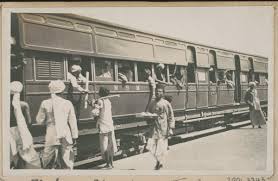

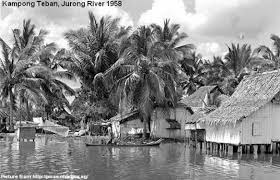


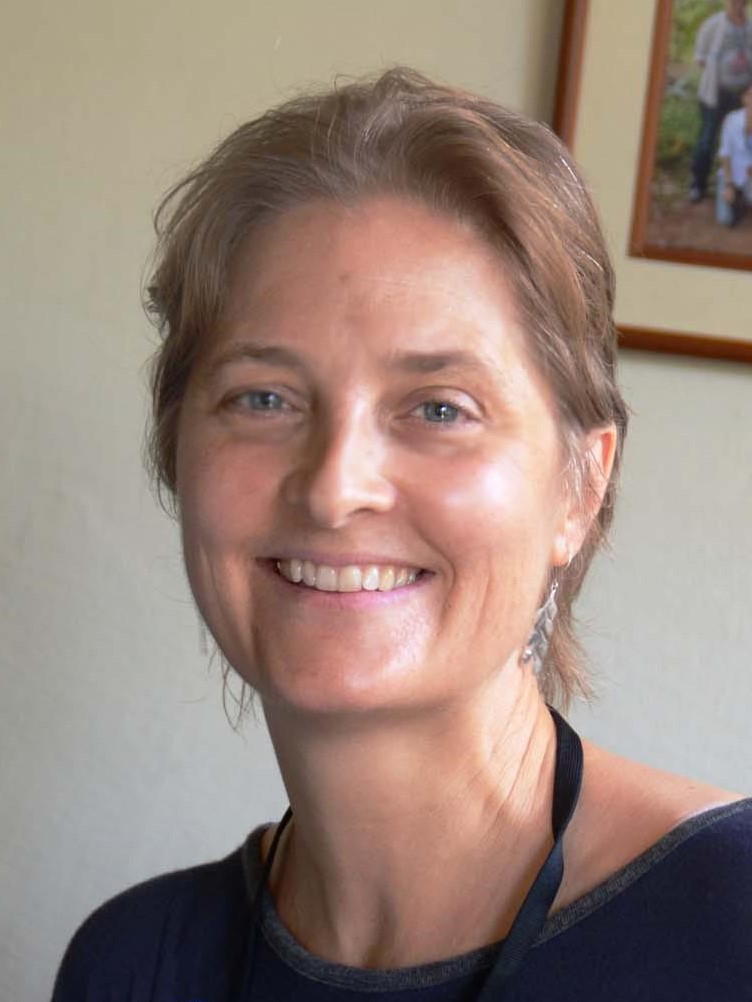
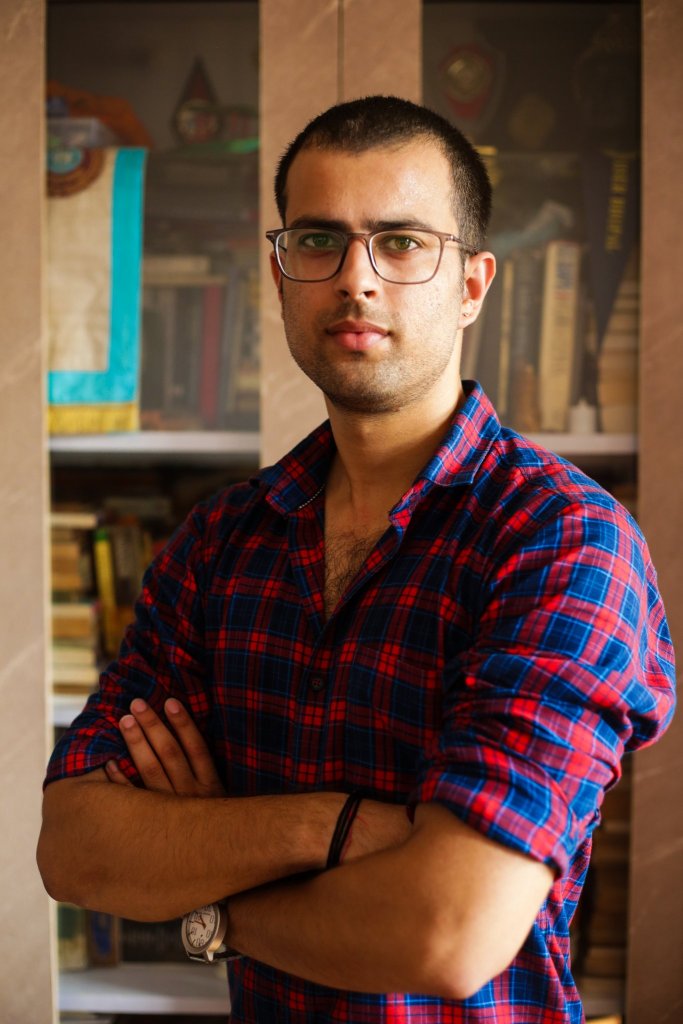
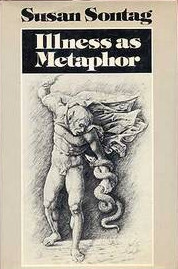
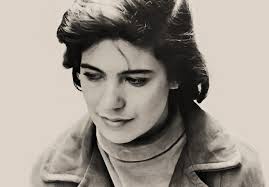


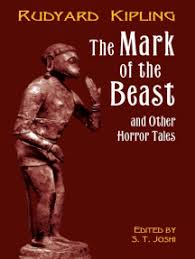
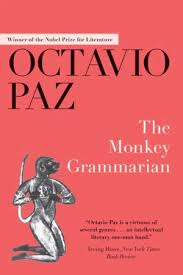


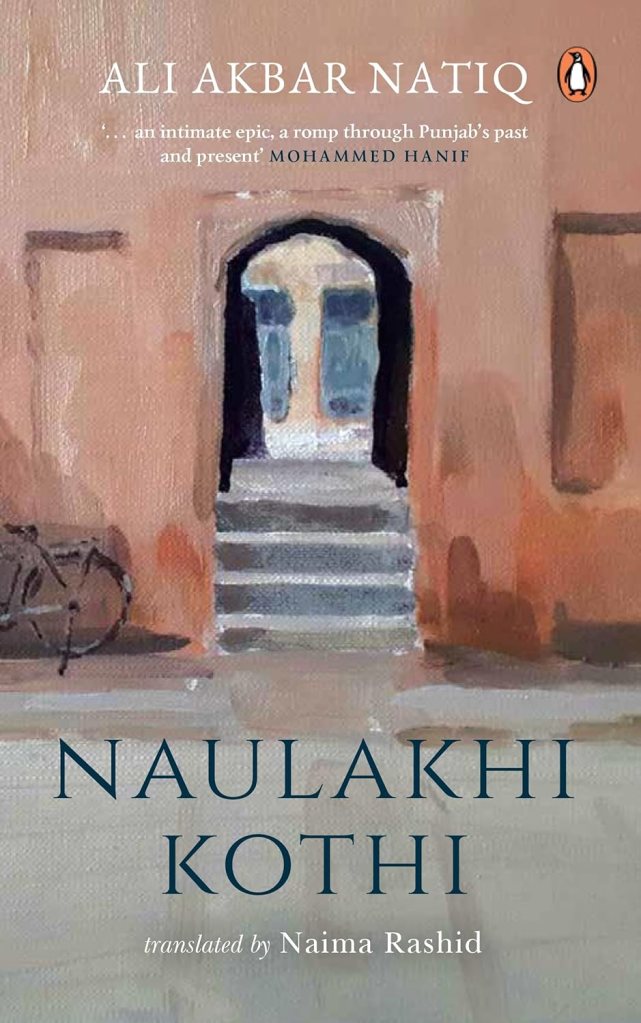


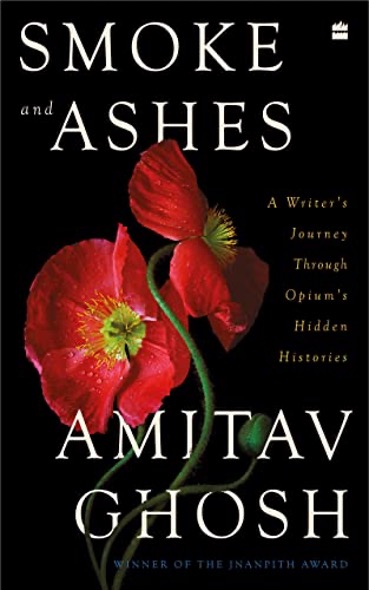
 Borderless