Our home is our planet with it’s unique combinations which have made life possible. These evolve and mutate with human intervention and the passage of time. The changes affect the flora and the fauna — of which we are a part — of this beautiful green planet. The World Environment Day is a UN initiative to protect the environment and to create an awareness about the changes wrought on it and how it could impact us as a species. Writers from yore have written of the beauty and the inspiration invoked by nature as have the moderns. Today, we share with you vintage writings as well as modern writing in prose on the world around us, showcasing the concerns of a century ago and the reality today.
Vintage Prose
One Small Ancient Tale: Rabindranath Tagore’s Ekti Khudro Puraton Golpo (One Small Ancient Tale) has been translated by Nishat Atiya. Click hereto read.
Bolai: Story of nature and a child translated by Chaitali Sengupta. Click hereto read.
Baraf Pora (Snowfall) : This narrative gives a glimpse of Tagore’s first experience of snowfall in Brighton and published in the Tagore family journal, Balak (Children), has been translated by Somdatta Mandal . Clickhere to read.
The Day of Annihilation, an essay on climate change by Kazi Nazrul Islam, has been translated from Bengali by Radha Chakravarty. Clickhereto read.
Modern Prose
The Gift : Rebecca Klassen shares a sensitive fiction about a child and an oak tree. Click here to read.
A Penguin’s Story: Sreelekha Chatterjee writes a fiction from a penguin’s perspective. Clickhere to read.
Navigational Error: Luke P.G. Draper explores the impact of pollution with a short compelling narrative. Click here to read.
Pigeons & People : In his fiction, Srinivasan R explores human nature and imagines impact on our fauna. Click here to read
The Theft of a River: Koushiki Dasgupta Chaudhuri reveals a poignant truth about how a river is moving towards disappearance due to human intervention. Clickhereto read.
Potable Water Crisis & the Sunderbans: Camellia Biswas, a visitor to Sunderbans during the cyclone Alia, turns environmentalist and writes about the potable water issue faced by locals. Click here to read.
Translations are like bridges. Three years ago, we decided to start a bridge between Tagore’s ideas and the world that was unfamiliar with his language, Bengali. He has of course written a few pieces in Brajbuli too. We started our journey into the territory of Tagore translations with Aruna Chakravarti’s Songs of Tagore. Now we have expanded hugely this section of our translations with many prose pieces and more translations of his lyrics and poetry by writers like Aruna Chakravarti, Fakrul Alam, Radha Chakravarty, Somdatta Mandal, Himadri Lahiri, Ratnottama Sengupta, Chaitali Sengupta and Nishat Atiya other than our team’s efforts. To all these translators our heartfelt thanks. We share with you their work celebrating one of the greatest ideators of the world.
Prose
Stories
.Aparichitaby Tagore :This short story has been translated as The Stranger by Aruna Chakravarti. Click hereto read.
Musalmanir Galpa(A Muslim Woman’s Story): This short story has been translated by Aruna Chakravarti. Clickhere to read.
One Small Ancient Tale: Rabindranath Tagore’s Ekti Khudro Puraton Golpo (One Small Ancient Tale) from his collection Golpo Guchcho ( literally, a bunch of stories) has been translated by Nishat Atiya. Click hereto read.
Bolai: Story of nature and a child translated by Chaitali Sengupta. Click hereto read.
Baraf Pora (Snowfall) : This narrative gives a glimpse of Tagore’s first experience of snowfall in Brighton and published in the Tagore family journal, Balak (Children), has been translated by Somdatta Mandal . Clickhere to read.
Himalaya Jatra( A trip to Himalayas) :This narrative about Tagore’s first trip to Himalayas and beyond with his father, has been translated from his Jibon Smriti (1911, Reminiscenses) by Somdatta Mandal. Click here to read.
Library: A part of Bichitro Probondho(Strange Essays) by Rabindranath Tagore, this essay was written in 1885, translated by Chaitali Sengupta. Click hereto read.
Book Excerpts
The Parrot’s Tale: Excerpted from Rabindranth Tagore. The Land of Cards: Stories, Poems and Plays for Children, translated by Radha Chakravarty, with a foreword from Mahasweta Devi. Clickhere to read
Rabindranath Tagore Four Chapters: An excerpt from a brilliant new translation by Radha Chakravarty of Tagore’s controversial last novel Char Adhyay. Click here to read.
Farewell Song :An excerpt from Radha Chakravarty’s translation of Tagore’s novel. Click hereto read.
Oikotan(Harmonising) has been translated by Professor Fakrul Alam and published specially to commemorate Tagore’s Birth Anniversary. Click hereto read.
Monomor Megher O Shongi (or The Cloud, My friend) has been translated by Professor Fakrul Alam. Click here to read.
Professor Fakrul Alam has translated Tomra Ja Bolo Tai Bolo, Hridoy Chheele Jege and Himer Raate — three songs around autumn from Clickhere to read.
Tagore’sAchhe Dukhu, Achhe Mrityu, (Sorrow Exists, Death Exists) has been translated from Bengali by Fakrul Alam. Click hereto read.
Tagore’s long poem, Dushomoy (translated as Journey of Hope though literally the poem means bad times). Click here to read the poem in English and listen to Tagore’s voice recite his poem in Bengali. We also have a sample of the page of his diary where he first wrote the poem as ‘Swarga Pathhe'(On the Path to Heaven).
Deliverance by Tagore: ‘Tran’by Tagore, a prayer for awakening of the subjugated. Click here to read the translation.
Abhisar byTagore: A story poem about a Buddhist monk by Rabindranath Tagore in Bengali. Click here to read the translation.
Amaar Nayano Bhulano Eledescribes early autumn when the festival of Durga Puja is celebrated. Click here to read the translation from Bengali.
Morichika or Mirage by Tagoreis an early poem of the maestro that asks the elites to infringe class divides and mingle. Click here to read the translation from Bengali.
Pochishe Boisakh(25th of Baisakh) is a birthday poem Tagore wrote in 1922 and from he derived the lyrics of his last birthday song written in 1941. Click here to read.
Chhora or Rhymes, a poem describing the creative process, it was written in 1941. Click here to read.
Okale or Out of Syncgives a glimpse of how out of sync situations are also part of our flow. Click here to read.
Mrityu or Death dwells on Tagore’s ability to accept death as a reality. Clickhere to read.
Songs of Tagore: Seven songs translated by Aruna Chakravarti from a collection that started her on her litrary journey and also our Tagore translation section. Click here to read.
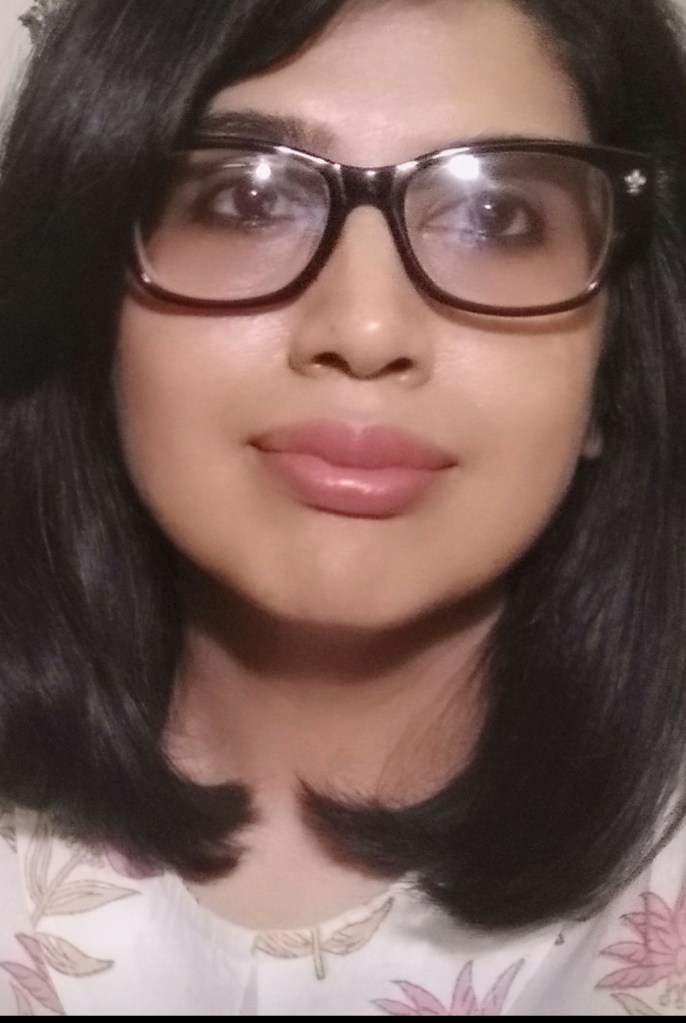
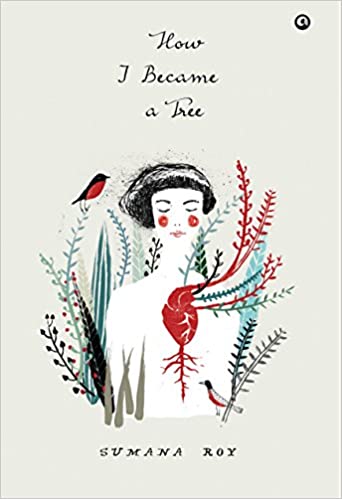
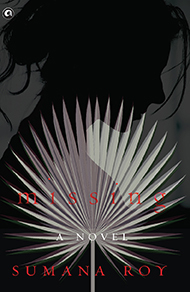
She loves trees and identifies with Tagore’s Bolai, who had an affinity for trees. She has written a non-fiction called How I became a Tree (2017), which is being reprinted now by Yale University Press. Sumana Roy is a writer who writes out her passion for trees and more. The draft of her first novel was long listed for Man Asian Literary Prize, but eventually, abandoned by her because she felt it was not good enough. She later authored a novel called Missing (2018), an anthology of poems called Out of Syllabus (2019), and a collection of short stories, My Mother’s Lover and Other Stories (2019). She also contributes essays regularly on various online forums and teaches in Ashoka University, near Delhi. Sumana hails from a small Himalayan town of Siliguri which impacts here writing in different ways. Her interview reflects how she lives by her convictions and looks beyond man made constructs in quest of an undefined Eldorado which is abstruse in itself. However, I am convinced, when she finds her Eldorado, her readers will probably be overwhelmed by the radiance of what she shares with the world. In this interview, she shares snapshots of her life as writer and her convictions.
When and why did you start writing?
I don’t think any of us can answer this question. I had no ambition to be a writer. I had not met a single writer in my life. In my middleclass Bengali life were people like my parents – teachers, bankers, officegoers, and the unemployed, looking for jobs. I wrote love letters for my friends in boarding school, and letters to the editor before that. Then I started studying literature at university, and I think I wrote nothing else except essays to pass examinations and the occasional letter to the man I would eventually marry. I say this just to reiterate that the idea of a writer as someone who could live an unremarkable life like myself wasn’t available to me at that time. I began working towards a PhD, and as I was living away from home, I hungered for the sound of Bangla. I began reading Bangla poetry and I felt something inside me loosen – I wanted to write like these poets had, but in English, the language I was most comfortable in. I kept the writing a secret from my family and the world. Only after I had submitted my doctoral dissertation did I begin sharing my writing with the world – by submitting to online magazines I liked reading, but also responding to most ‘Call for Submission’ pages that I came across in the early years of social media.
What gets your muse going?
Life. Living. I know this is a cliché and an unsatisfactory answer, but that is what it is – to live inside my writing …
Your first book is about trees. Tell us what egged you on to choose to write about trees and why?
I suppose it came from a disaffection – the Bangla word ‘bishaad’ would be more appropriate perhaps – for the social world, for the human in it. I wanted to live outside the emotion economy of social relationships. Groping for various possibilities, I realised that I wanted to live like a tree. I had been reading and living with plants long before that. I suppose I began seeing them differently after that epiphany.
Would you say your obsession with trees was similar to that of Tagore’s Bolai?
I’ve written about Bawlai in How I Became a Tree. He is a relative, yes, among the many I discovered when looking for those who had felt the human-tree equivalence emotionally, intellectually, or, as in the case of Rabindranath’s story, intuitively.
You have also spoken of Nandalal Bose, the famous Indian artist who passed away before you were born in the book. Why him? Do paintings in general affect your writing?
I discovered Nandalal’s Vision and Creation in Santiniketan’s Subarnarekha bookstore. I might have seen it before, in Bangla, as a child, but much of it had disappeared from my consciousness. I was staying in a guest house in Ratanpalli. The full moon night of spring I still remember, as I do the curiosity of the mosquitoes. I found Nandalal teaching his students how to draw trees by constantly referring to the human anatomy – this analogical plant-human relationship seemed most natural to his imagination. That is how I found another relative in him.
To answer your second question, yes, art – and music – brings something to my life.
Your novel is about a missing woman. Parallels have been drawn between her and Sita. Why?
I don’t know who has drawn this parallel. What I do know is that I was interested in the life of the missing woman, a woman like Sita, in the world today. Why are battles fought and epics written around the missing woman? I did not make this comparison explicit, but always hope that the reader would, on their own, particularly because, like the seven adhyas (parts) of the Ramayan, the novel, too, is structured around seven sections – seven days in the lives of the characters.
If we perceive Rama as a democratic ruler who listened to his subjects, would you hold him guilty for abandoning Sita? How do you perceive him?
Rama was a king, not an elected representative, as we know. Even if he were, as you are asking me to imagine him hypothetically, I cannot see how anything can justify the demand on Sita to prove her ‘purity’. About abandonment, it is a personal matter between the two people involved. Using the narrative of abandonment of a woman to prove one’s purity as a ruler, as a democratically elected representative in our country has done recently, is as ridiculous as the State’s demand on Sita’s purity.
You are a professor too. You have been doing number of columns talking of educational values. What are the things you would want to see changed? And why?
I don’t think I’ve written about values. It’s a loaded word, and I feel incompetent to speak about it. What I have been writing against is the industrialisation of the curriculum, particularly in the English Literature syllabus, specifically the postcolonial syllabus.
What would I like to see changed in this regard? I’d like the structure of such a syllabus to be more egalitarian – in a real way – and not dictated by metropolitan impulses alone.
I remember your essay against long biodatas. Do you think reverting to past values where marketing oneself as a writer with a huge biodata was not a necessity would be relevant or possible today? Is this a construct of the publisher or the writer? Do you think the only the quality of one’s work without a publication history or academic excellence would allow a writer to get published?
The biodata is a marketing tool. The book can stand its own ground without us knowing where the author lives or what prizes they have won or where they studied. If there were blind submissions, without the name and bio of the writer, we might not be reading the same writers in the pages of The New Yorker or the London Review of Books – so much is published because of the reputation that attends writers. I think it is unfair to writers who are just starting out, and, most importantly, those who have not had many of the opportunities that their more well-published contemporaries have had. The snob value of the biodata also creates a hierarchy – it is against this that my reservation lies.
In your opinion, what is most important — fame, money or creative satisfaction? Why? Can there be creative satisfaction without accolades of the external world? Would that be of any value?
I can only speak for myself. This has perhaps to do with one’s temperament. The three things you mention – ‘fame, money, creative satisfaction’ – may all be important for many artists, as it might be for a sportsperson or even a politician. I think I write just to be able to get away from the social world, to stay with myself, self-indulgently – that someone reads me in a world where so much of reading material is available for free is a gift from the reader to me. I don’t exactly know what ‘creative satisfaction’ is. It’s because I suffer from creative dissatisfaction. I dislike everything I have written or everything that I write. And yet I do not want to stop writing. So… I do not write for fame, money, or creative satisfaction. I write to make sense of my world, to protect myself from myself perhaps.
You often colour your writing with food and family. Why?
I enjoy a life of the senses, of eating. I like to cook and eat, but, most of all, I love to fantasise about eating – the things I want to eat, how I could make them, whether I will ever get to taste them, how to grow some of the produce, and so on.
My understanding of ‘family’ is not blood-bound. Those I love are my family, both humans and non-humans. They will naturally enter my writing.
Do you teach creative writing? Can creativity be taught? Is it any different from studying literature or language?
Yes, I teach Creative Writing at Ashoka University. Writing can be taught as much as music can be taught – both involve Riyaz(practice), which is what my writing workshops are meant to be. To be a singer one must first train to become a listener. And so, with writing – one must become a reader first. By this I do not mean that one has to read 52 books a year, but one must be mindful of how words work, how lines and sentences work through us, the senses in which literature comes to us, and so on.
Where are you located now? Gurgaon or Siliguri and does your locale impact your writing.
I live in Sonipat during the teaching semester. The rest of the year I am in Siliguri, which is where I always want to be. My surroundings affect me, and, by extension, my writing. This is true of everyone, I think? By this I do not mean that living in a small town will make me write about the idyllic life in contrast to a life in the metropolis. The sensory affects us and, consequently, our writing.
How do you juggle writing and teaching?
With a lot of difficulty, because there’s also housework and caregiving for the elderly. And yet, I now know that my students make me think of things that I wouldn’t have had I worked on my laptop all day.
What is your favourite genre in writing and why?
The poem and the essay, the shorter forms. I am also very fond of the letter and the interview as literary genres.
What are your future plans? Any more books coming our way?
I am waiting for the semester to end, to get away from the Zoom life, to rest my eyes, to play with my nephew and niece, to comb my mother’s hair, and, if the rains help, to plant a few moringa and jackfruit trees. I want to feel better, for my health to get better than what it has been over the last few months. I’m not thinking about books now.
This interview was conducted online by Mitali Chakravarty on behalf of Borderless Journal.
 Borderless