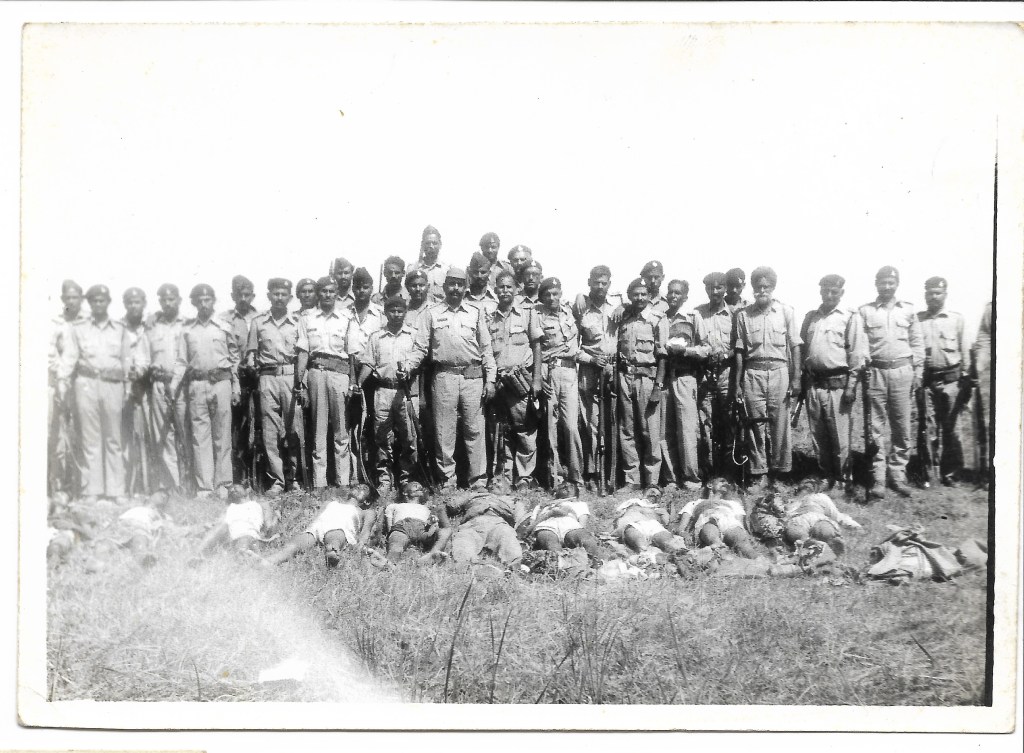
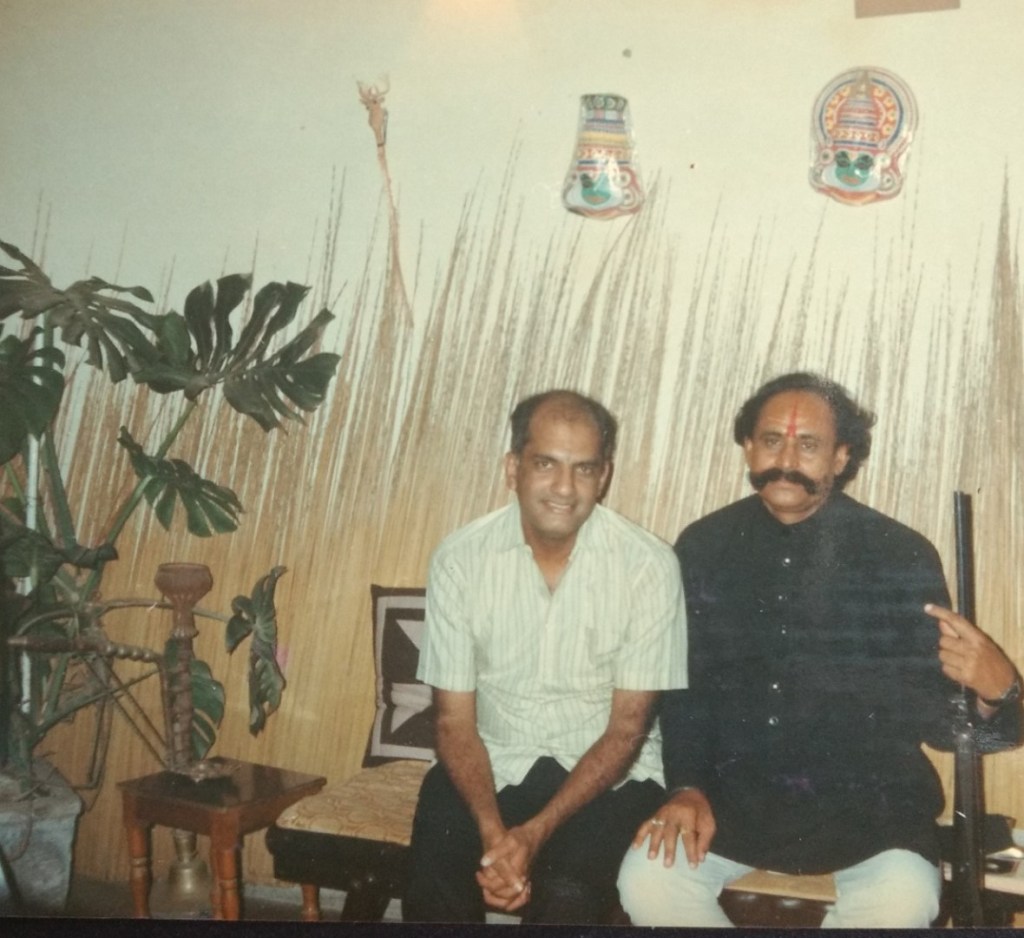
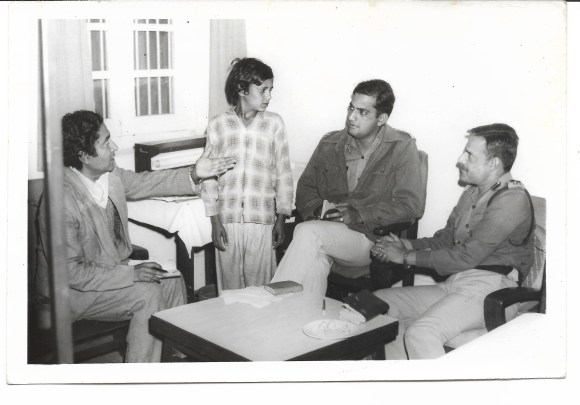
Categories
Conversation

Where Books Create Binding Bonds…

An interview with Amina Rahman, owner of Bookworm, Dhaka

In a world, where online bookshops and Amazon hold the sway, where people prefer soft copy to real books, some bookshops still persist and grow. There are of course many that have closed business or diversified. But what are these concerns that continue to show resistance to the onslaught of giant corporations and breed books for old fashioned readers? How do they thrive? To find answers, we talked to a well-known bookshop owner in Bangladesh.

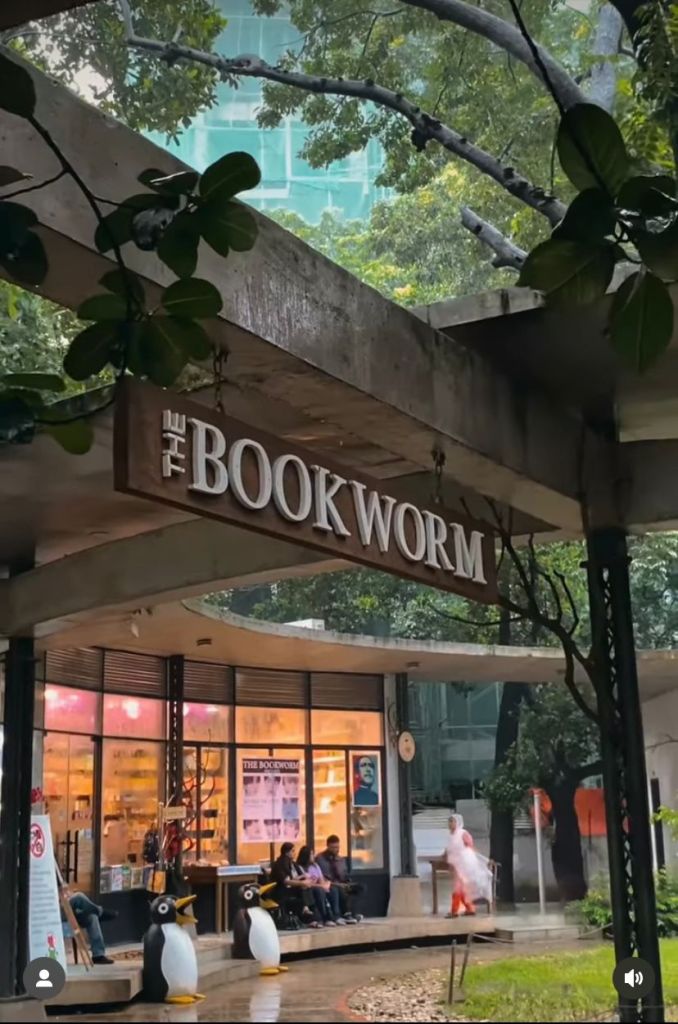
Amina Rahman is an entrepreneur who runs such a concern called Bookworm, a haven for book lovers in Dhaka. Schooled in Italy, India and America, Rahman married into the family that owned a small bookshop. Started by her father-in-law, it was a family refuge till she took over the running and created a larger community – a concept that she believed in and learnt much about during her youth spent on various continents. She believes that just as it takes a community to bring up a child, a bookshop has to be nurtured in a similar vein. Bookworm started at Dhaka’s old airport in 1994 and eventually moved to a more community friendly locale at the town centre. Rahman took over in 2012, rebranding it, repurposing and breathing new life into it.

Bookworm houses books from all over the world, holds special launches, as they did recently of Sam Dalrymple’s Shattered Lands: Five Partitions and the Making of Modern Asia, and of many other local and foreign authors, like Vikram Seth and Aruna Chakravarti. They have even been adopted by the cats in the park! This month they are opening a book-café. Rahman has a unique outlook that makes her redefine ‘success’ and here she also talks about how she evolved into her dream project to make it a reality.

You studied environmental policy and environment, worked for several NGO’s and multinational concerns. What made you turn to or opt to run the bookstore over your own career options?

My choice of subject in university was impacted by a fantastic biology teacher I had in middle school at Rome. He took us out on regular field trips and made us collect garbage to learn about the environment! You can imagine — in 1984-85, when we were kids, he would pick up garbage and show us how diapers and cigarette butts were completely not biodegradable. Disgusting but effective. He told us it would take years before they deteriorated and dissolve into the Earth. These things stick in your mind.

To be honest, I followed the Environment path and ended up working for the King County solid-waste department in Seattle which was all about garbage and recycling and so fascinating. But as you get older and you travel through Asia, you realise the pointlessness of it all as none of it is applicable in the same way in our region. Bangladesh and Asia were green in those days until plastics were introduced in a big way about fifteen years ago. At the end of the day, the community is at the heart of taking care of everything, and if everyone takes care of their particular communities, it’s a better world. And this resonates with why I went into running the bookstore – to make community.

I realised that I was missing some kind of dynamism and I wanted to move forward. I wanted something more to happen. This had been a consistent strain I had with everything. You worked for organisations. They would become very top-heavy. Change happened slowly. When I shifted into the corporate world in Dhaka, I felt that was the most dynamic thing — it was fast moving.  I learnt much. Then I went into market research, which was incredible research into human behaviour but was completely tuned into making money at whatever cost. It all was very self-serving and opposite of a welfarist approach towards the community. Corporations trumped community here.

I lost inspiration.

My father-in-law and I had a mutual love for books. I fell in love with my husband over his books. I married in 2004, and it was in 2012, when I was taking time out to assess my goals that my father-in-law suggested I spend time in his bookstore. So, I did. What was an amazing coincidence, was that the Dhaka LitFest started the same year! And the chief organiser asked if Bookworm could be part of the it and I agreed. Vikram Seth was the star guest that year.

Amina Rahman

Can you briefly tell us the story of Bookworm?

When I joined the Bookworm, it was almost a forgotten venture. The family had moved on to other interests. It was used more as a refuge for relatives, old staff, dusty books, unpaid debts and stalled time.

I had never run a business in my life before. For the book business I literally had to climb from the bottom up. It was definitely not easy. I had to figure out the book world, the suppliers, the publishers, the distribution network. Customer preferences, not to mention accounting, taxes, salaries and taking over a small business and the responsibilities that go with it.

The publishing world and the distributing world is a whole different ball game from every other business. It’s a supply chain of such remarkability from the packers and warehousing to the authors and customers. You go from the very basics to the highest and that is so fulfilling. Nothing can compare to that.

Besides, the love of books, one thing I knew was at bookstore was community. It is the ultimate community for booksellers and writers to connect with the world. As you will know, we hit every audience — everybody from the newborn baby to the old man or woman to young adults to school students to university goers to the erudite pursuing literature. We cover just about everything. Ultimately a physical bookstore is where the community meets, and that’s where the ideas are shared, that’s where if you put attention to it people meet inspiration.

While the Dhaka Literary Festival, in whose first iteration Bookworm was a participant, seems to have petered off, Bookworm continues to hold launches on its own. Do you see the shop as a substitute for the festival?

Absolutely not. I mean book launches are wonderful and are a must for every physical bookstore. They connect the people, and as I tell everyone, if you want to sell your book, even if you written the greatest book, you need to work hard at promoting the book. So, every writer needs to have venues whether small or big to launch their books.

Every city needs to have a LitFest, and it is a must. Dhaka is absolutely famous for having our Boimela[1]. That is a real heritage.

What is it you offer readers other than books? Do you have a café?

Actually, we are opening one now.

We didn’t have a cafe in the store, but we’ve had very interesting sort of cafe and bookstore combination when we were in the old airport. We had a cafe next-door to us, which I finally assimilated, also adding to more space for the books. And that became our own little cafe. It wasn’t really anything great; it was just regular we did not even have a coffee machine. Coffee was the old fashion Nescafe, but it did the trick. The whole set up had a very local flavour. Most of all people just like having an area to sit and drink something hot while freely reading books. And this sufficed.

That was wonderful. That store was in the old airport, which we loved with all our heart, and we were there for 30 years. Then we left. I opened up a branch in Dhanmundi, which is probably the best place for books sellers because the book reading population is huge there. We also got the opportunity to open up our bookstore inside a very famous Coffeehouse called Northend. They had a huge base, and they asked us if we’d like to take some of it and we did and that was fantastic.

We had to close that for Covid. Many say they miss it. And that was the first time we had ventured out of our space and opened a new store like a second branch. Then we got this chance to be in a park where we don’t have a cafe inside of our bookstore, but on the other side of the park, which is why we opened a café in our store.

What do you see as the future of bookstores like yours with the onset of online giants like Amazon? Does that impact you?

Yes. Amazon has had a huge impact. Luckily, we don’t have Amazon in Bangladesh. Amazon has had a very negative impact on our fellow booksellers in India and other places. I won’t even bother to compete with them.

I think everyone’s realised that there is a big difference with access points and how Amazon works. At the end of the day, people who come to our bookstore for the experience, for meeting other people, authors too, and talking to their bookseller. It’s more than just getting the book you want to read — that’s part of it — but it’s also about browsing and finding quiet time.

I think that my great experience with books was in bookstores I didn’t have to buy a book. I could browse. Sometimes, you may not be able to afford the book, but you can open it on any page. You could just read a passage, and that might change you. You could come back and buy it or the passage could just stay with you forever. You know it’s those sort of fleeting moments that you have when you’re browsing a book that makes a bookstore precious. That’s a very different experience from Amazon.

Amazon is much more utilitarian. Both have their ups and downs, I guess. You can’t have book launches on Amazon, but I think, Amazon is a big competition… in the sense that it also gives so many discounts.

What kind of books does your store offer? What kind of writers?

I tried to offer everything. In the beginning when we started, I started to try to figure out what books to get. I started with the catalogues, and it was a bit of hit and miss. You slowly start to realise what works. One of the worst experiences for bookstore are books that sit on shelves and don’t move. Sometimes you can buy what is really number one on the best seller list and it just doesn’t move because it’s irrelevant or it’s number one in a different country. You learn by trial and error and then you start to figure out your customers. It was painstaking yet enjoyable.

We use social media to draw readers to our shelves.

As a wholesome bookstore, we have a bit of everything from literature to history, kids’ books, romance, young adult fictions, thrillers, bestselling thrillers, to fantasy. Christie, Sydey Sheldon, Gabriel Garcia Marquez, Manga, graphic novels, spiritual and religious books to Bangla books and collector’s items, special editions to lighter books that just bring solace. We see your customer choices and learn. You do not stuff literature down their throats. It has to be relevant to our customers.

What are the challenges of running a bookstore like yours in a country where English is not the first language?

I think actually it’s a challenge to run a bookstore anywhere in, especially with the new market forces of Amazon and online shopping and the digital world. Having physical stores is becoming a challenge. I have travelled to bookstores all over the world and learnt from the experience. A bookstore is more of a tactile experience for all people, readers and non-readers. Humanity has learnt from tactile experiences and to touch and smell a book, browse and sit amidst books is very much that. When realised that people were not coming to me, I took the books to them. I took our books to every mela(fairs). Social media was the next big thing. The ultimate was of course the Dhaka LitFest. People were excited to see our English books, and they all sold. Bangladeshis would travel to other countries to buy books as Bengalis love reading.

The LitFest helped a lot. It brought big authors, like Vikram Seth, for they were interested in exploring new readers.

We also started a delivery service. Some customers said it was hard to get to our store. So, we started a thrice week delivery service and then increased it. We bought a cycle for the rider. He went out and delivered the books that readers had ordered and paid for.

When Covid hit, it was prime time for many to turned to books and we had everything in place – our social media and our delivery service. We did well during that phase, though that is not a good thing to say.

What do you see as the future for your bookstore? There are chains like Takashimaya, Times Books and others — which despite having shrunk, post online bookstores, maintain an international presence. Do you see yourself as a chain that will grow into an international presence?

I think a chain store goes beyond the community. It is a model for more profit-oriented sellers. I would rather have a community-based culture where all people are welcome and find something that draws them and gives them a sense of quiet.

A lot of people mistake success with earning huge profits and if that’s what you’re in for that’s fine too — that’s business but what I do isn’t that. I get fulfilment out of other things –- community health and happiness, and you know just interaction. I think one of the ways to make a very powerful long-lasting brand and business is trust and good service. There’s no substitute for hard work and passion. When you love something, you really put your mind to it. And that helps you keep your friends forever.
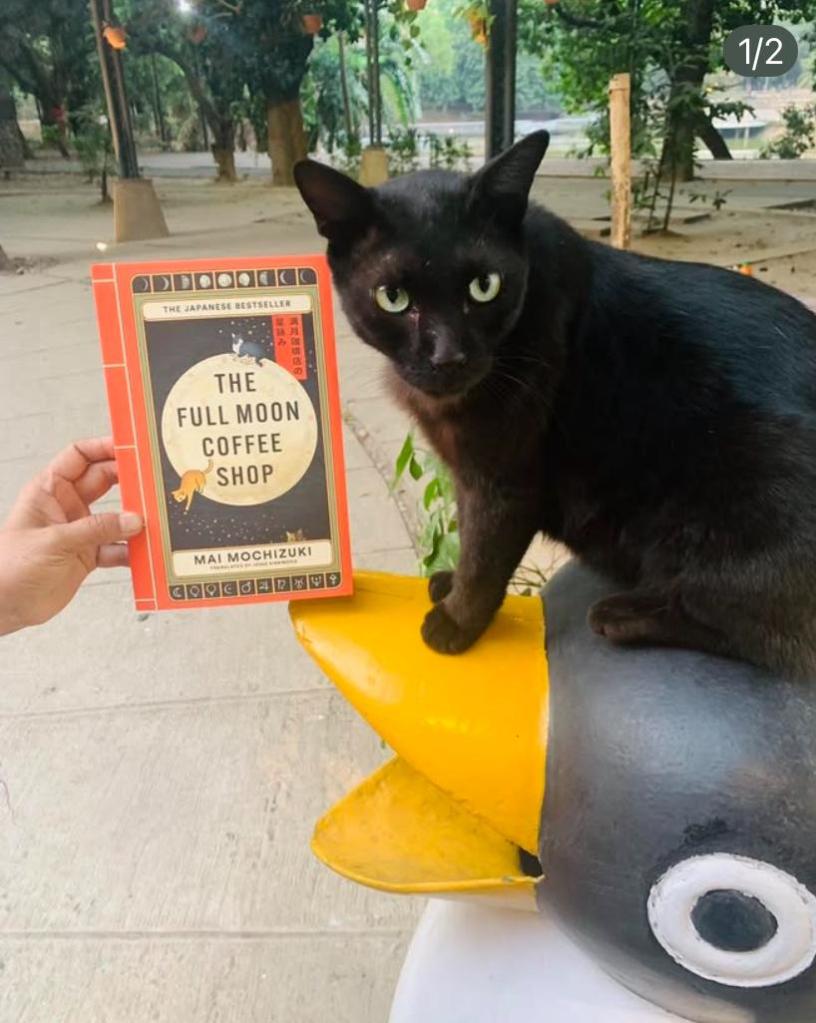

Sam Dalrymple gives his opinion of Bookworm after his session ( 9th November 2025)

[1] Bookfair

(This online interview has been conducted over transcribed voice messages in What’sApp by Mitali Chakravarty. All the photographs have been provided by Amina Rahman.)

PLEASE NOTE: ARTICLES CAN ONLY BE REPRODUCED IN OTHER SITES WITH DUE ACKNOWLEDGEMENT TO BORDERLESS JOURNAL

Click here to access the Borderless anthology, Monalisa No Longer Smiles

Click here to access Monalisa No Longer Smiles on Kindle Amazon International
Categories
Conversation

‘Words, still photos, moving images – they are all storytelling’

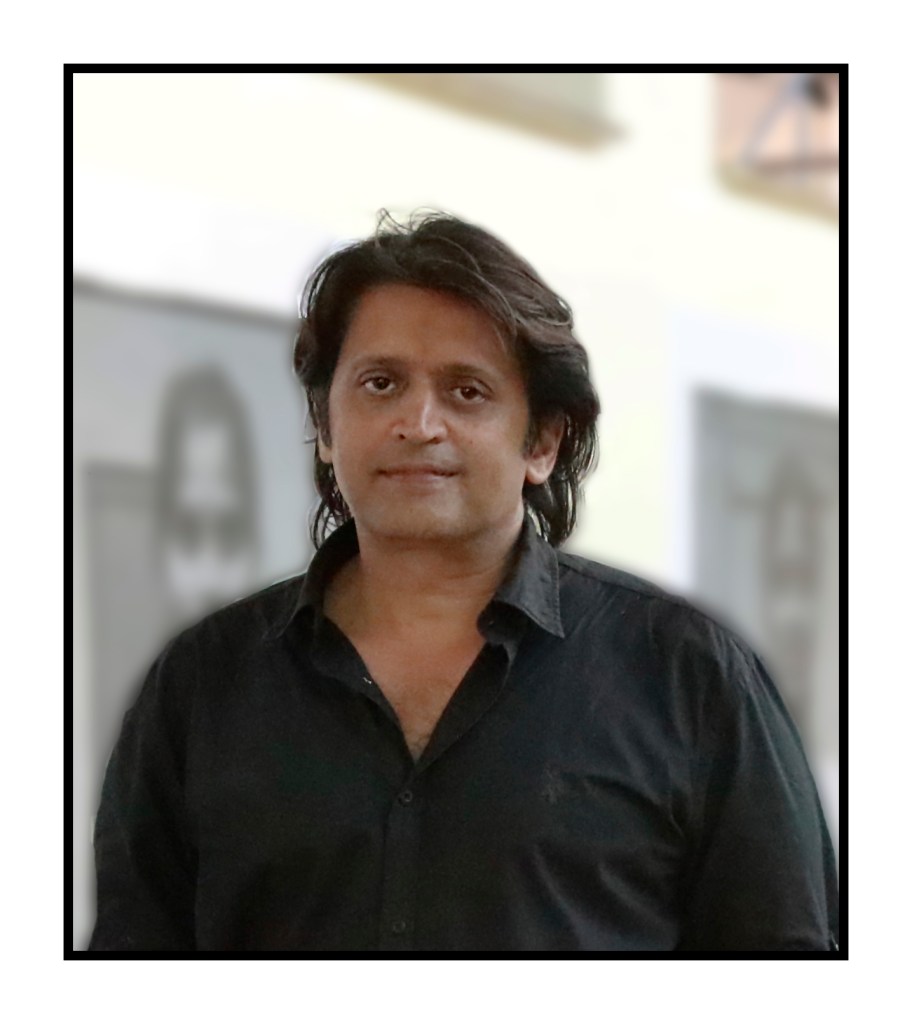
Ratnottama Sengupta introduces and converses with a photographer who works at the intersection of art and social issues, Vijay S Jodha

Vijay S Jodha was yet to become one of India’s leading lens-based artists at the intersection of art and social issues. Back then, in the 1990s, he had no inkling that 30 years later he would be the chairperson of UGC-CEC[1] jury for selecting the best educational films made in India. Or that he would be the national selector and trainer in photography for the National Abilympics Association of India.

When I first met him, he was mounting a collaborative exhibition of his work with the elderly, their contribution to society and the care they deserve. Little did I know that the entire bent of this journalist-turned documentary filmmaker-turned photo artist would go on to focus on subjects ranging from mob violence, riot victims, farmers’ suicide, 75 years of Indian constitution to Joys of Christmas and the Bus Art of Tamil Nadu. 

Not surprising that the International Confederation of NGOs has honoured Vijay with the Media Citizen Award for using media to drive social change. And it is only one among hundreds of honours he has received in two dozen countries. These include awards and grants, from Swiss Development Agency to Ford Foundation and Bill & Melinda Gates Foundation. Screening of his films on 75 channels worldwide and in 250 festivals in 60 countries.

These seem tedious details? So, interestingly, two public showings of his work have been vandalised. And a false police case against him took eight years to be thrown out by India’s courts!

Conversation

Vijay how did you come into photography? 

I’m a trained filmmaker – I mastered in film production – and have been making films for two decades. My films have shown on 75 stations including Discovery, CNN, BBC. But training in photography I have none. All my photography is non-fiction work. Actually my films are also non-fiction or reality based work. I just find still photography very relaxing because, unlike films where a director is responsible for so many things, here I’m on my own. But there’s no production deadline. No huge budget is needed. I can address any subject that catches my fancy and pursue it over several years, without any worry. Otherwise it’s the same: photos or films, you’re storytelling around substantial issues that interest you, in a manner that does justice to those issues, and — hopefully — engaging to the viewers.

So who was your inspiration?

In photography it is obviously the greats who defined the grammar of the medium itself such as Robert Frank[2] and Cartier Bresson[3]. They’ve inspired us all in some manner. I’m fortunate that, as a part time journalist in New York decades ago, I got to meet and interview top filmmakers and photographers like Gordon Parks and Richard Avedon. 

I once did a course at New York’s School of Visual Arts where they honoured Mary Ellen Mark and she had come across. As a journalist, I covered Sebastião Salgado’s launch of his workers’ project that put him on the map (of photography). I met Raghubir Singh while doing a project on Ayodhya in India, and again in New York where we put up the same exhibition. He also photographed some of us – myself, Siddharth Varadarajan, the editor-publisher of The Wire who was then a student at Columbia University, and other Indian students — were protesting some human rights issue.

I’m also fortunate to have our finest photo-journalists and lens-based artists as friends. I can take across my work to get a feedback or pick their brains. This beats the best photo schools in the world. In fact years ago I did a book which had photos from all of them! This was the biggest photo project on the Tiranga[4] as listed in the Limca Book of Records. They have all done many books on their own but this is the only one where all these masters appear in a single volume, their works united thematically. Apart from Raghu Rai, Ram Rahman, Prashant Panjiar,  Dayanita Singh,  T Narayan, and the late TS Satyan, I’d also interviewed people across India, from the then Prime Minister Vajpayee to those selling flags at traffic lights for a few meagre rupees.

You did not go to any international school to train in the art or the technology aspect. So what prompted your PhD?

Three decades back when I decided to go into mass communication as a career there were few computers, no internet, no private TV channels, or mobile phones. Sorry if that makes me seem Jurassic but it was a world with very few media opportunities. Post college, I had got  admissions into a trainee programme with a newspaper as well as in the MA programme in International Relations at India’s premier Jawaharlal Nehru University. My father felt that a masters and exposure at JNU would be a better investment for journalism – probably the single best advice I’ve got in my entire career — and I followed that. 

Then for some time I worked in print media: I freelanced for newspapers, edited and published a journal for a business house, scripted for a film and worked on a book with one of my journalism heroes – late Kuldip Nayar. But in the pre-internet era newspaper articles had a very short life, so I felt the need to produce something that would last longer such as film. So I decided to get a degree in Film. It also encompassed all my interests, from writing to art to music, travel and photography.

You’ve not been a photo-journalist working for any journal or newspaper. Yet you felt inclined to do projects on environment, elder care, survivors of riots and mob violence, farmer suicide, art that travels. Was it inevitable, given your father’s background?

Actually I’ve done a bit of photo journalism too. During my film school days at NYU I was a writer-photographer for their student-run newspaper, Washington Square News. I’ve also been a stringer for mainstream dailies including The Economic Times where I shot images parallel to my writing. I did stills for Mira Nair’s Monsoon Wedding and of course stills for my own film projects. So I’ve a lot of published images in papers worldwide though my main gig has been films. 

Frankly I don’t see much difference between these mediums. Be it words, stills or moving images; an academic paper, photo books, or films, short or long – all this is story telling. I’m a story teller.

And subjects? I’ve filmed every possible subject except wildlife: I just don’t have the patience for that. Otherwise everything, from artist biopics — on Paritosh Sen and Prokash Karmakar, whose inaugural screening you also attended in Calcutta years ago — to films on environment. My The Weeping Apple Tree (2005) was among the first ones on climate change in India. It won the UK Environment Film Fellowship Award 2005 and had multiple screenings on Discovery, with an introduction by Sir Mark Tully.

At that time, few knew about climate change. So Delhi govt organised a special screening for their MLAs and officers of water, electricity and sanitation departments. It was screened at UNEP headquarters in Nairobi and in various festivals. UNIDO and other grassroots level NGOs used it to create awareness. Some years back an IFS {Indian Forest Service} officer told me that Himachal government uses it to train their forest officers. 

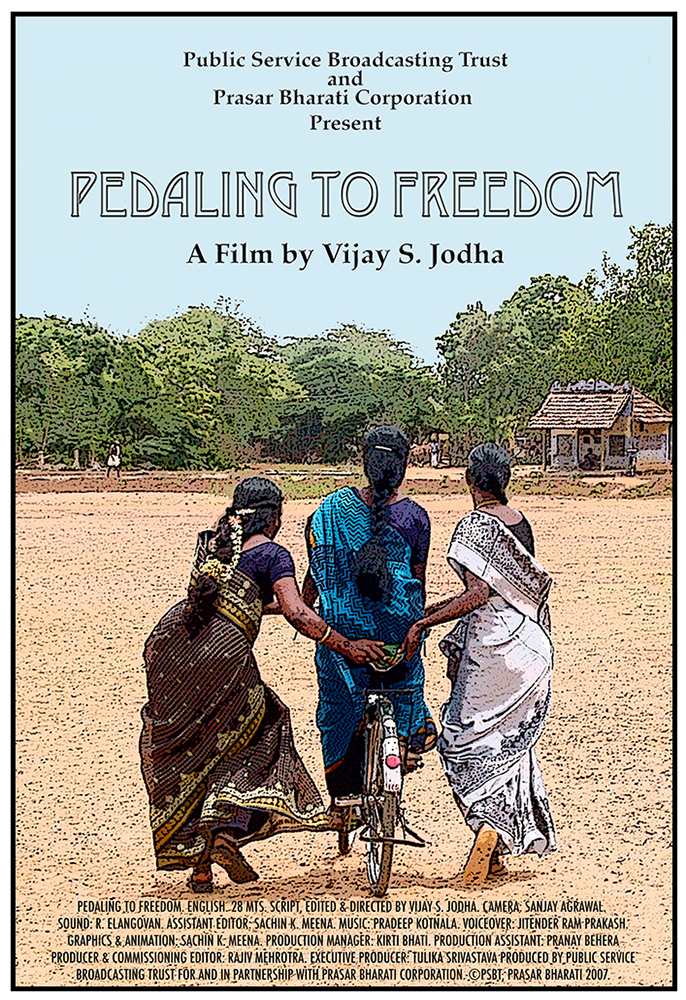
My film on gender, Pedalling to Freedom (2007) revisited an old initiative in one of the poorest parts of the world. It traced the life-changing impact of teaching 100,000 women to ride the bicycle. That film is in the US Library of Congress. It was also chosen for archiving at OSA Budapest, world’s premier repository of materials dealing with human rights. 

Then there are films that get food on the table. Training films. Corporate films. I once did a ‘funeral film’ on a well-known personality whose passing received a lot of press coverage in India but the NRI son could not come for the funeral.

What motivates you Vijay — money, international honour, or the possibility of social change?

Well, all this is livelihood so the money part is important. But doing work that gets recognised far and wide, that is substantial, to hold good for a long time – that’s a huge motivator. 

I have a slightly spiritual take towards this. I feel that regardless of our profession we are all bound by a dharmic or sacred duty. A teacher’s duty is to teach and a doctor’s is to heal. For those in the business of storytelling — including photographers — the sacred duty is to document, bear witness, push things forward. And believe you me, this has little connect with means or accessibility. 

To give you an extreme example: After the Nazis lost the war and Berlin fell, soldiers from the victorious allies army raped virtually every woman in Berlin. Few rapists were taken to task and  to top it, despite all the extensive coverage of the allies victory by forgotten photographers as well as superstars like Margaret Bourke-White  (known to us through her famous Gandhiji with charkha portrait) or Robert Capa (regarded as the greatest war photographer of all time), there was no coverage of this mass outrage in Berlin by anyone be it in photo essays in Life Magazine, or World War photo books. It appears in no Hollywood film or TV series.  

Likewise, fifty years ago, when India came under the draconian Emergency, our courts also endorsed the robbing of our Constitutional rights. Nobody documented, then or since, the forced sterilisation of 6,000,000 who were stripped of their reproductive rights. We, as photographers and filmmakers, failed on this front.

The First Witnesses is my project around farmer suicides. It is not an unheard issue nor something hard to get access. But how many have found it worth their while to document the issue? How many are documenting a disappearing art form or livelihood? Or our urban heritage being torn down? Our movie theatres once represented cinema as an inexpensive and readily accessible mass culture. Now they are being torn down even in smaller towns. Each had a unique character. Is anyone documenting that?

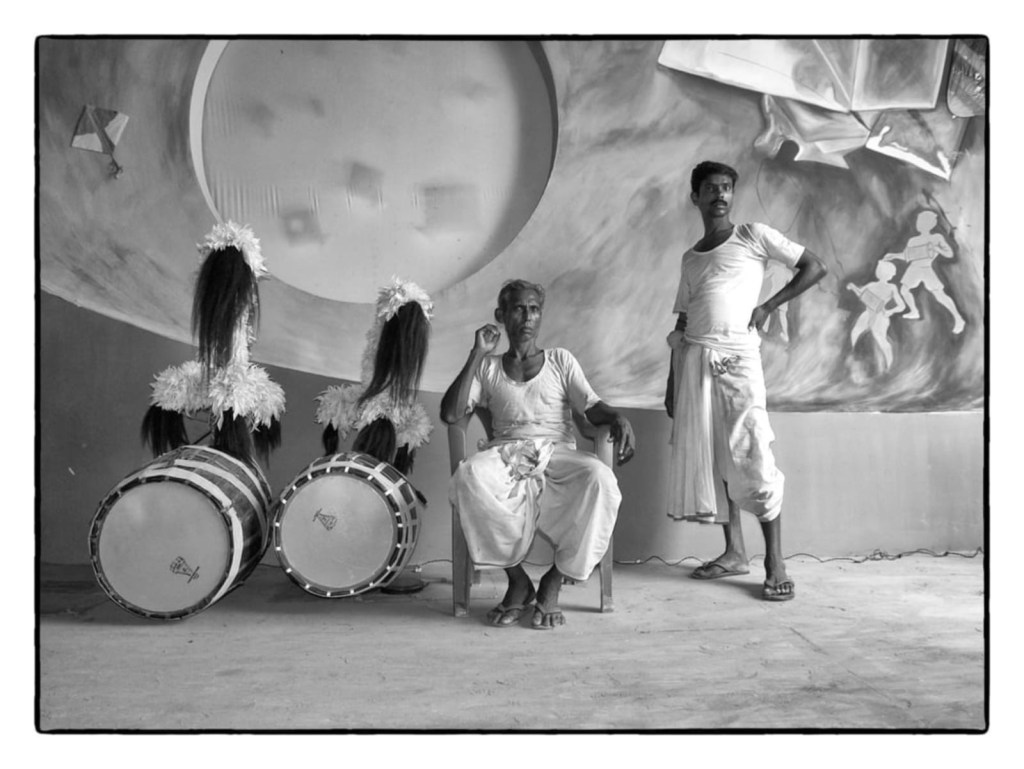
I documented Durga Puja in Kolkata 20 years ago when I was working with painters there. Durga astride a tiger, slaying the demonic Mahisasur emerging out of a buffalo: these elements get interpreted in hundreds of ways across the city each year. Each pandal has a different aesthetic interpretation, inside and outside. The religious aspect is no less important. But  these are also like site-specific installation art works shaped by the imagination of so many talented people but designed for impermanence. How many books of photos exist around this work now recognised by UNESCO as Intangible Cultural Heritage of Humanity?

How successful have you been in achieving this?

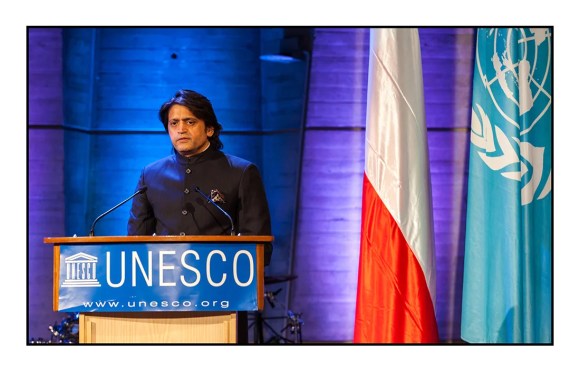
The merit of my work is for others to judge. I’m happy that, though India doesn’t have many foundations or support for non-commercial oriented art, I’ve been able to do at least a few things that are genuinely pathbreaking, substantial and have gone around the world. To be invited to UNESCO headquarters in Paris to screen a film and address delegates from 193 countries, or be honoured by our President for India’s best ever performed at Abilympics — these are certainly my career highlights.

Vijay S Jodha at UNESCO introducing his film. Photo provided by Vijay S Jodha

My work has received over a hundred honours across 24 countries, but what truly motivates me is when people I look up to, my heroes, appreciate what I do. That kind of recognition carries a different weight. For instance, Magsaysay awardee P Sainath, whose ground-breaking reportage has long inspired me, saw my farmers project when it was exhibited alongside his photographic work at the Chennai Photo Biennale 2019. We hadn’t met before, so when he praised my effort, it felt like receiving a medal.

Another moment that has stayed with me was post my time at NYU. My professor, George Stoney, referred to as the father of public access television and mentioned in history books on documentary cinema, mentored Oscar-winning directors like Oliver Stone, Martin Scorsese, Spike Lee, and Ang Lee. When he watched The Weeping Apple Tree, he said, “Vijay, this is better than Al Gore’s An Inconvenient Truth. That was a glorified PowerPoint by comparison.” That one comment meant more to me than most awards ever could.

As a photo artist what is the biggest moment of joy for you — technical hurray or the joy of the subjects?

As I just said, recognition and praise of my heroes gives the maximum joy. There are other honours. Two photo projects listed in Limca Book of Records for being the biggest and path breaking. The first was on ageing that I did over eight years with my brother Samar Jodha – he did the images while I did the concept research, writing and interviews. The other was the aforementioned Tiranga. My film Poop on Poverty (2012) won a Peabody award, the oldest honour for documentary films, and more international honours than any non-fiction film produced out of India. 

After landmark exhibitions in Hong Kong and New York I donated two complete sets of The First Witnesses, my farming crisis project, to two farmer unions including our oldest and biggest All India Kisan Sabha (AIKS). They are using it for awareness raising across villages. That’s a real high as a photographer.

Then there’s high coming from those we pass down our expertise to. Among those I’ve taught or mentored is a highly talented though physically challenged youngster from Vijayawada with missing digits and motoring issues. His family runs a Kirana shop. When he started school, they sent him back saying he cannot even hold a pencil. He won a bronze medal in photography for India at the last Abilympics in France. Another student has himself become a photography teacher in a school for hearing impaired. This is the kind of stuff that gets me very excited. 

Thirty years ago as a volunteer writer and researcher I helped Sanskriti Foundation set up India’s first international artist retreat. That novel venture raised crores in grants and set up three museums. Today it is being scaled back as its founder O P Jain is in his 90s. But that idea caught on and you have scores of artist retreats across India. 

How has digital technology influenced photography as an art form? Has it done more harm? Or widened its spread?

Digital has been a mixed experience. It democratised the process of production and dissemination — be it still images or movies. This is a fantastic thing. But it killed a lot of the processes and livelihoods such as the printing labs, film production and processing facilities. It has also killed an art form like print making. It’s a specialised skill in itself, so a lot of artistry, understanding, appreciation and sustenance of it has got compromised.

The emergence of deep fake images and piracy of work is bad news too. But it has allowed more people to become story tellers. They now bear witness, as filmmakers and photographers, of issues and events that was earlier impossible.

I can cite examples from my work. I’m National Selector and Trainer in photography for National Abilympics Association of India (NAAI) and my students are in different parts of India. Two are hearing impaired, two others have motoring issues and physical challenges. Thanks to digital tools, we’re running long distance classes every week. NAAI provides me sign language interpreter but I can send and receive digital files, use zoom to conduct classes, use google translate to send instructions in Tamil, English and Marathi to my students. Now one student, despite hearing challenge, is running a photo studio. The student who has issues with his leg also works as wedding photographer. Workshops with institutions and festivals, within and outside India, are now easy and inexpensive thanks to these digital tools and communication modes.

Has selfies on mobile camera shortened the life of portraiture?

It has certainly democratised the process while the average person’s patience to study or appreciate any art work — portrait or landscape photo — is shrinking by the minute. Of course, good portraiture requires some skill to make as well as appreciate – that cultural literacy is a challenge everywhere, not just in photo medium. As a seasoned art critic you would have noticed that in the world of painting and sculpture too. Sadly we don’t have that education in our schools. 

You have continued with still images even after doing many documentaries. What is the joy in either case?

I’m doing still photography and movies parallel to each other. Last month I had a book on public policy, as I mentioned. Also launched last month – by our defence minister –was my film on our Armed Forces Medical Corps – it’s one of the oldest divisions in the world, going back 260 years. I’m working on a project on the Indian Constitution and a biopic on Amitabh Sen Gupta, the artist whose retrospective exhibition this year is organised by Artworld Chennai. My still photography project on the farmers crisis is also going on for the past 7-8 years.

All projects are joyous and offer their own challenges. It’s like bringing children into the world. You do the best you can, hope they’ll do well and go far, but you don’t know which one will. Regardless of their line of work you feel happy with each of them and what they achieve. 

What is the future of Arriflex, Mitchell, Kodak Brownie? And that of Yashica, Nikon, Canon, Leica, Olympus…?

Some old camera brands like Konica and Minolta have merged, or evolved into digital Avatars like Arriflex. Others, like Kodak, have faded into history. Interestingly, a small Indian company has licensed their name to market TVs under Kodak brand name now. For those of us from the analogue generation, it’s a bittersweet feeling. When a beloved brand disappears, it feels like saying goodbye to an old friend. But such is the nature of change.

My friend Aditya Arya, one of India’s eminent photographers and a passionate camera collector, has created a remarkable space to preserve this legacy. He established the Museo Camera in Gurgaon, a non-profit centre promoting photographic art, which has become not only a camera museum but also a leading art and culture hub in the Delhi national capital region. If you’re an old time photographer passing through Delhi, it’s a wonderful place to revisit these “old friends.”

(Website of Museo Camera https://www.museocamera.org)

[1]  University Grants Commission-Consortium for Educational Communication

[2] Robert Frank (1924-2019) was a photographer and documentary filmmaker. 

[3] Henri Cartier-Bresson (1908-2004) was a humanist photographer, a master of candid photography, and an early user of 35mm film. One of the founding members of Magnum Photos in 1947, he pioneered the genre of street photography, and viewed photography as capturing a decisive moment.

[4] Three colours, published in 2005

Ratnottama Sengupta, formerly Arts Editor of  The Times of India, teaches mass communication and film appreciation, curates film festivals and art exhibitions, and translates and writes books. She has been a member of CBFC, served on the National Film Awards jury and has herself won a National Award. 

.

PLEASE NOTE: ARTICLES CAN ONLY BE REPRODUCED IN OTHER SITES WITH DUE ACKNOWLEDGEMENT TO BORDERLESS JOURNAL

Click here to access the Borderless anthology, Monalisa No Longer Smiles

Click here to access Monalisa No Longer Smiles on Amazon International

Categories
Conversation

From Outhouse to Backwaters

Ratnottama Sengupta tracks the journey of Leslie Carvalho over a quarter century

It seems like only the other day. The International Film Festival of India, IFFI, 1998 was on. Along with a colleague, I was seated on the steps outside Siri Fort I auditorium connected to a long corridor going to Siri 2. Someone introduced Leslie Carvalho. “Aha! The young filmmaker from Mangalore?”  I responded. “There’s a write up on you in The Times of India today. It says there’s a lot of expectation from The Outhouse.”

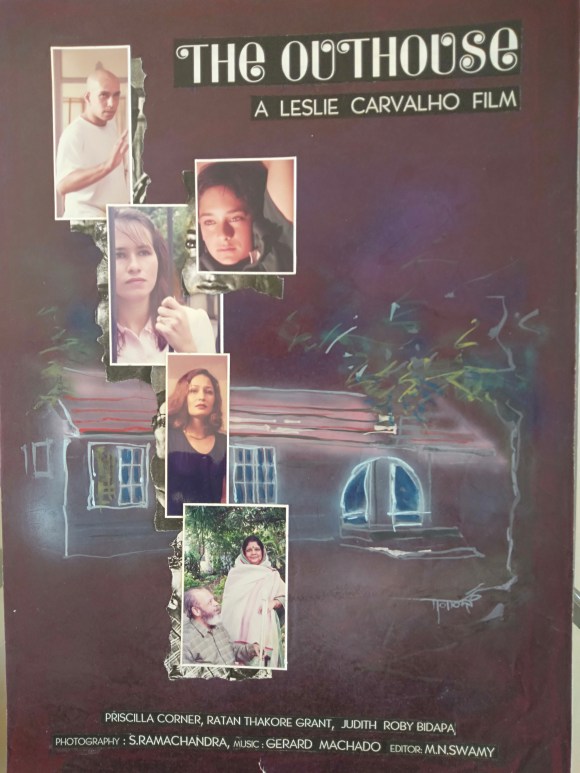
The “delightfully sweet” film had lived up to the expectation of the critics. It was bestowed the Aravindan Puraskaram, presented by the Kerala Chalachitra Film Society to commemorate the iconic Malayalam director, and the first Gollapudi Srinivas award, another national level award to recognise filmmakers marking their debut in Indian cinema. So I was not surprised to meet him next as a co-member of the jury for the National Film Awards 2000.

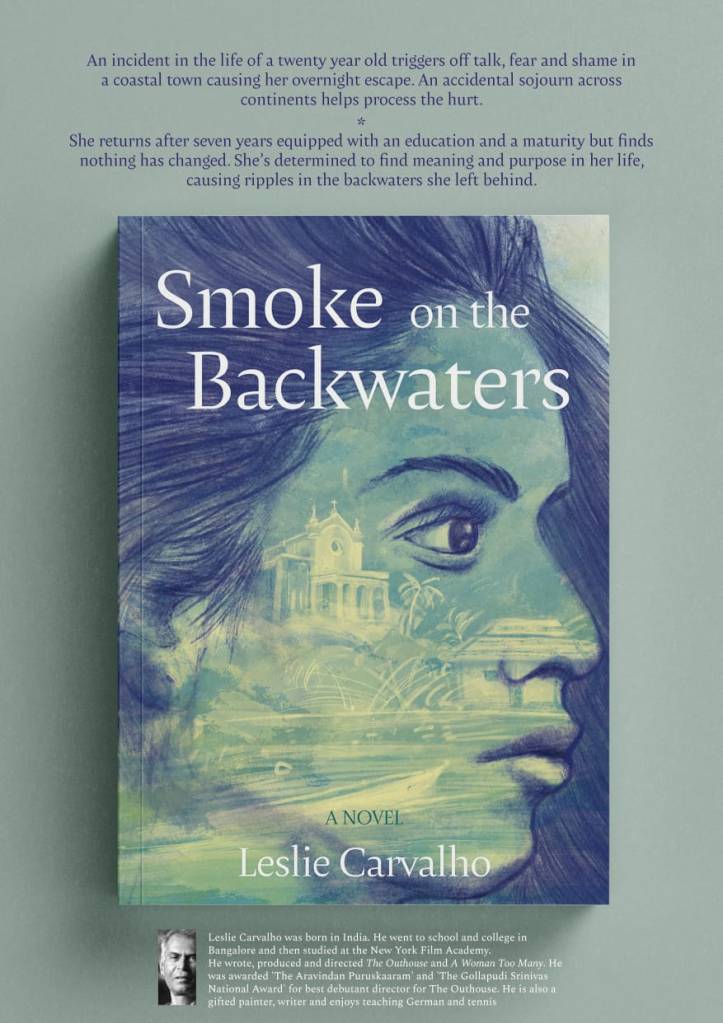
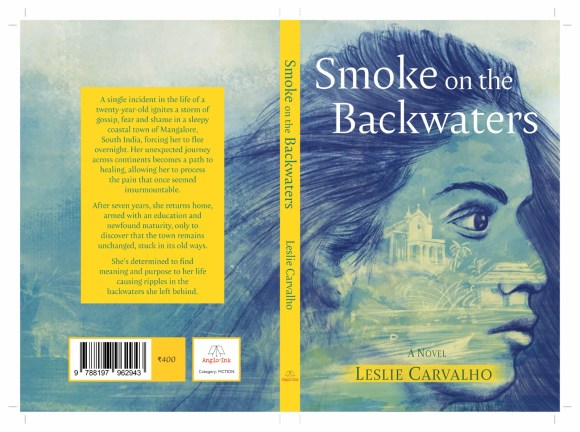
The Tennis coach who is also a German language teacher with a passion for painting has now published his first novel, Smoke on the Backwaters. It centres on Rosa, a twenty-year-old from Mangalore, who is forced to flee overnight because of the storm of gossip, fear and shame unleashed by a single incident in her life. Her unexpected journey across continents becomes a path of healing. Seven years later, armed with education and maturity, she returns home, determined to pursue her purpose in life. But how much had the town she left altered from its old ways?

RS: Leslie, before we talk Backwaters, can we briefly revisit The Outhouse? From where did you derive its content? And what was your compulsion for choosing that subject?

Provided by Ratnottama Sengupta

LC: The Outhouse was a simple, linear narrative about moving on in life despite the odds. A young mother’s need to gain economic independence to supplement the family income; the help she received from her financially independent sister; a kind hearted Bengali landlady’s generosity which causes stress and violence in the Anglo-Indian couple’s day to day life, and how it affects the two children growing up.

RS: Why did you choose this subject as your debut vehicle? If you were to travel in a time machine, would you choose a ‘mainstream’ subject?

LC: I chose this subject as my debut vehicle as I had seen quite a bit of violence in the Anglo- Indian community in the Lingarajapuram area of Bangalore I grew up in.

I was itching to make a movie after my six-month course at the New York Film Academy. As I was working on a very tight budget, I just stuck to what was taught — to keep it simple, straightforward and just tell a story using the various tools of cinema — in short, to make it cinematic.

If I were to go back in time, I don’t think I would have chosen a ‘mainstream subject’. I derived immense satisfaction along with the cast and crew as we felt we were working on something we were passionate about. We all felt drawn towards the characters, the story and the theme of the film.

RS: How did you get interested in cinema? And what were the problems you faced while filming The Outhouse – in terms of funding, casting, shooting location, distribution?

LC: I grew up watching Tamil, Kannada, Hindi, a couple of Konkani and lots of Hollywood films. My mother tailored clothes at home, and she taught a whole lot of women stitching. They were fans of Tamil cinema, especially of Sivaji Ganesan, MGR, and the heroes of Kannada cinema, Dr. Rajkumar and Vishnuvardhan. She also enjoyed the Hindi films of Rajesh Khanna, Dharmendra, Hema Malini, Amitabh Bachchan, Sanjeev Kumar, Jaya Bhaduri and Rekha — that is the popular cinema.

And my father, being an Army person, took us to see English films, like The Ten Commandments, The Bible, Hatari, To Sir, With Love[1]. Also, St. Germain’s School where I studied, screened English films every Friday afternoon in the Hall, from spools off a projector that made a jarring sound. It was an amazing experience — black and white Charlie Chaplin, Laurel & Hardy films and also Patton with all the bad words. Later, when in college, we would bunk classes to watch most of the popular Hindi and English movies.

At the New York Film Academy, I was exposed to an entire range of the world’s best in cinema. Satyajit Ray, Akira Kurosawa, Ingmar Bergman, Antonioni, John Ford, William Wyler, Fellini, Jean Renoir… And I watched a whole lot of films on the American Movie Chain (AMC). There I discovered all of Spencer Tracy’s films and fell in love with his sense of timing and under playing. It was also a time when I discovered Guru Dutt and marveled at his brand of filmmaking from Pyaasa, Kaagaz Ke Phool, Chaudhvin Ka Chand, Sahib Biwi Aur Ghulam to Aar Paar and Mr & Mrs 55[2].

It is hard to believe I began the shoot for The Outhouse on September 18, 1996, and completed it in 14 days – on October 1. After we went through the rushes, we required two more shots to link the gaps. Since I was on a shoestring budget of a few lakh rupees, I had rehearsals with the cast for close to three months. I doff my hat to them in gratitude as 90% of the film was canned on first takes. I could not afford retakes, and I worked with a brilliant cameraman, S Ramachandra, who was very supportive and encouraging. He shot most of B V Karanth, Girish Karnad, and Girish Kasaravalli films as well as the popular tele-serial Malgudi Days[3]. A number of first-time directors like myself, had benefitted immensely by his generosity and patience.

Since it was an independent film, whatever little finance I had, I sunk into the film. And then it took me a year to complete post-production for lack of finance.

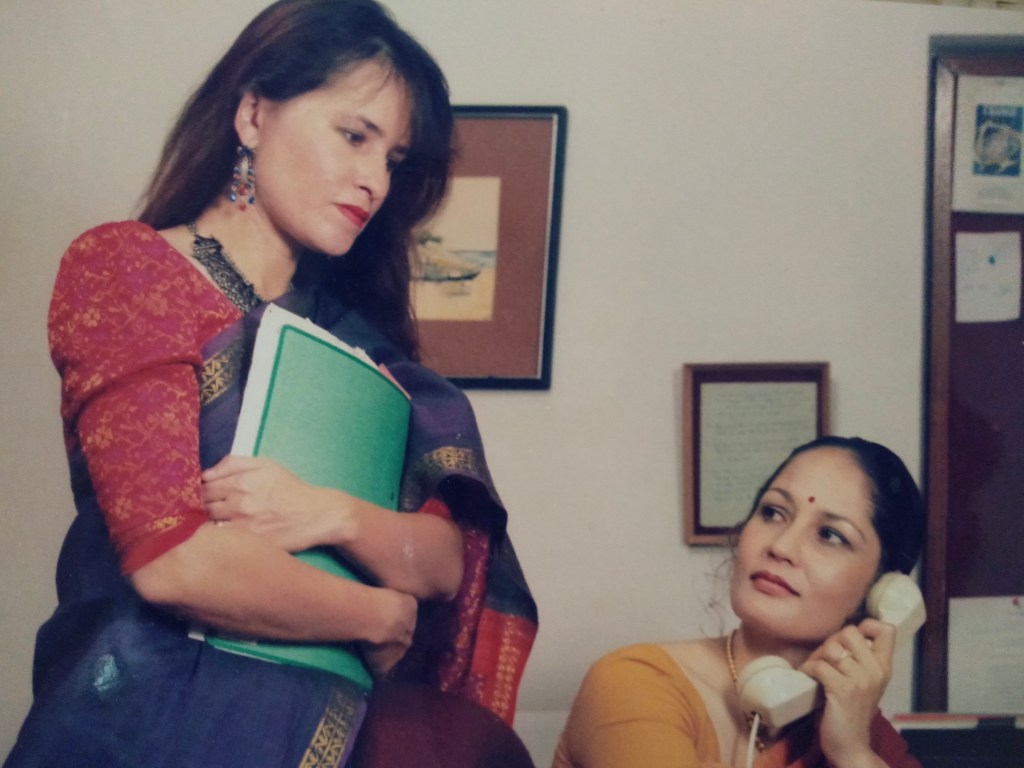
I was particular about the casting. I wanted the Anglo-Indian look, feel, mannerisms, costume, interiors to be authentic. I met each cast member and spoke to them at length about the vision I had for my film. Almost all of them were from the Bangalore English Theatre, and all of them were cooperative. Moreover, Cooke Town is a quaint little place with many English bungalows and outhouses. After some struggle, I found one on Milton Street which suited my story perfectly.

After The Outhouse was selected for the Indian Panorama in IFFI ’98 and received the two national awards, I just walked into Plaza Theatre on MG Road in Bangalore and met the owner, Mr Ananthanarayan. He had heard about the film and asked me to meet the distributor, Nitin Shah of Hansa Pictures in Gandhi Nagar, the biggest distributor of English films. He put it on for a noon show for three weeks while Fire was on for the matinee and evening shows. The distributor then put it in Mangalore and Udupi for a week. And when I received the Gollapudi Srinivas National Award in Chennai, Aparna Sen was one of the honoured guests. She saw a small portion of the film and said that she would speak to Mr Ansu Sur to screen it at Nandan in Kolkata — founded by Satyajit Ray to help screen small independent films. A theatre owner in Kolkata recommended a person who took the film to the North East. It was also screened in parts of Kerala.

Coincidentally, this April 30th, The Outhouse will be screened in the leafy neighbourhood of Cooke Town next to the outhouse where the film was shot.

RS: In the last 50 years we have seen films by directors like Aparna Sen, Ajay Kar, Anjan Dutt. Even before these, Ray had touched upon Anglo Indians in Mahanagar. These are all films made in Kolkata. Is it because this is the erstwhile capital of the Raj?

LC: Many of the films on Anglo-Indians were based in Calcutta. It was the influence of the British Raj and its culture that was so much a part of their long history of ruling there. Of course their influence was in other parts of the country as well like Madras, Hyderabad, Bangalore, Whitefield and Kolar Gold Fields, the railway colonies all over the country, the hill stations, and many other cities which has pockets of Anglo-Indians.

RS: I remember one Hindi film, Julie that had an Anglo-Indian protagonist. How has the community been projected in popular culture? Was it lopsided or biased?

LC: Throughout our film history Anglo-Indians have played bit roles here and there. Some significant roles came their way in Bhowani Junction, the teleserial Queenie, 36 Chowrighee Lane, Bow Barracks Forever, Bada Din, Cotton Mary, The Outhouse, Saptapadi, Mahanagar, Julie, and Calcutta I’m Sorry[4].

Some of the characterisations have been quite biased; some not well fleshed out; some in passing fleeting moments of drunkenness, prostitution. The song and dance sequences have not helped the community, sadly.

RS: What led you to writing? The screenplay for The Outhouse?

LC: I wrote the screenplay of The Outhouse on plain A4 sheets of paper, on both sides. This is not done but I did it to save on cost. I gave the screenplay to my cinematographer S. Ramachandra, and in his generosity he understood my purpose. I went by what was taught at the New York Film Academy. Of course, I had to combine all the elements to make it whole. The idea of the screenplay came to me while I was at the film school in 1995.

RS: What was the trigger for writing Smoke in the Backwaters?

LC: As an artist, filmmaker, and writer, I have tried to combine all the elements of story-telling – fact and fiction — keeping in mind the flow of ideas, pace and momentum to engage and interest my audience and readers.

I remember beginning to write the novel two decades ago when my mother — who studied in Kannada medium — said, “I hope you will write it in simple English so I can read it too.”

And I wanted it to be reader friendly with regard to the font size, the brightness of the paper, the spacing, the clarity and the size of the book. I was lucky my publisher ‘Anglo-Ink’ was supportive and combined well to find that centre.

Provided by Ratnottama Sengupta

RS: How are you marketing the book? Through Litfests? Bookstore readings? Airport bookstalls? A H Wheelers?

LC: Since Anglo-Ink is a small-time publisher, we’ve had a dream launch in my hometown Bangalore at the Catholic Club. My book seller is Bookworm on Church Street in the heart of Bangalore and for people in Cooke Town it is in The Lightroom’ library.

We are looking at launches in various cities as well, through book readings, LitFests, Airport book stalls, AH Wheelers, readings at schools and colleges.

Since a major portion of the novel is set in Germany, we are looking at translating it into German. I hope to get it translated in a few Indian languages as well.

RS: Since the sunset decade of 1900s, Anglo Indians have been migrating to Australia and Canada. What triggered this migration? Economics or politics?

LC: The migration of Anglo-Indians was inevitable. It was bound to happen for reasons more than one, be it political, economic or social. First under the ‘Whites Only’ policy, many fair skinned Anglo-Indians migrated — the brown and dark skinned were left behind. Slowly they opened up and even they left. Some felt they would adapt better to a western culture, and have adopted their new country as their homeland.

RS: You were a big support for me when my son joined NLSUI in 2000. Again, when I curated Anadi, the exhibition of paintings by Contemporary and indigenous artists from MP and Chhattisgarh. Bangalore has since become an international megalopolis. How has life changed for the locals?

LC: Bangalore has changed dramatically and drastically. The change was bound to happen because of its growing prominence of an International City. The IT industry brought jobs, slowly other industries, started picking up from real estate, fashion, digital technology and social media platforms, start-ups, academics, sports, games, recreational and tourism.

The moderate climate was a huge bonus that attracted people from all over. Bangalore has always been cordial, encouraging and accommodative of people from all over through their mild manners, hospitality and gentleness.

Today Bangalore is unrecognisable. Still, some pockets retain that old world charm of neat, clean and green Bengaluru from the old Pensioners Paradise of Bangalore.

.

[1] The Ten Commandments (1956), The Bible (1966), Hatari (1962), To Sir, with Love (1967)

[2] Pyaasa (Thirsty, 1957), Kaagaz Ke Phool (Paper flowers, 1959), Chaudhvin Ka Chand (The Full Moon, 1960), Sahib Biwi Aur Ghulam (The Master, the Wife and the Slave, 1962), Aar Paar (This shore or that, 1954), Mr &Mrs 55 (1955).

[3] From 1986 to 2006.

[4] Bhowani Junction (1956), TV miniseries Queenie (1987), 36 Chowrighee Lane (1981), Bow Barracks Forever (2004), Bada Din (1998), Cotton Mary (1999), Saptapadi (Seven Steps, 1981), Mahanagar (The Big City, 1963), Julie (1975), and Calcutta I’m Sorry (2019)

Ratnottama Sengupta, formerly Arts Editor of  The Times of India, teaches mass communication and film appreciation, curates film festivals and art exhibitions, and translates and write books. She has been a member of CBFC, served on the National Film Awards jury and has herself won a National Award. 

.

PLEASE NOTE: ARTICLES CAN ONLY BE REPRODUCED IN OTHER SITES WITH DUE ACKNOWLEDGEMENT TO BORDERLESS JOURNAL

Click here to access the Borderless anthology, Monalisa No Longer Smiles

Click here to access Monalisa No Longer Smiles on Amazon International

Categories
Conversation

‘Soumitra Chatterjee was my father first and then everything else’

Poulami Bose Chatterjee converses with Ratnottama Sengupta

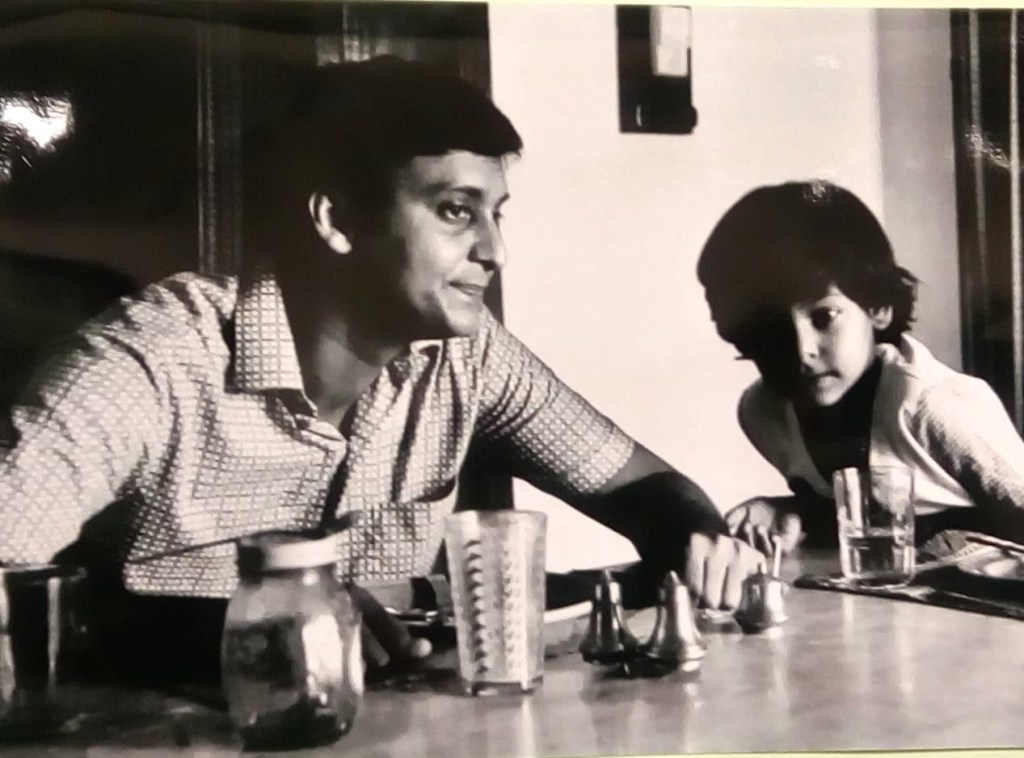
Young Soumitra Chatterjee with his daughter, Poulami. Photo provided by Ratnottama Sengupta

“All the recovery Rono Bhaitu[1]( Soumitra’s grandson) has made, is entirely due to his mother,” Soumitra Chatterjee (1935-2020) had said to me when I met him before Covid set in. His voice was laden with deep affection and paternal pride for his daughter. Deservedly so, as the world has been witnessing since the star actor passed away in November 2020. Poulami took upon herself the male mantle of lighting her father’s pyre.

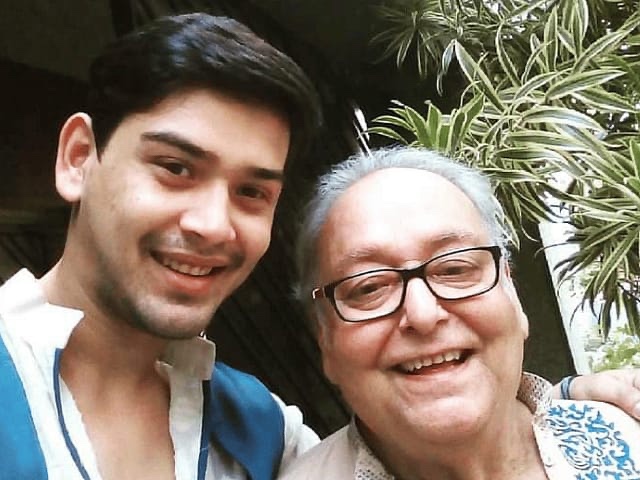
An older Soumitra Chatterjee with his grandson, Ronodeb Bose. Photo provided by Ratnottama Sengupta

But that was neither the beginning nor the end of her duty towards her father. I had seen her perform on stage alongside the thespian in Homapakhi [A Legendary Bird] that had explored the complexities of a society trying to reconcile its modern aspirations with traditional roots.

And last November she directed Janmantar [Rebirth], an original play Soumitra Chatterjee had written in 1993 but was never staged before. Seen through the eyes of a matinee idol who is visiting a remote village in Purulia, it focused on ills like child marriage, witch hunting, clash between and land owners and cultivators.  “Unfortunately, 30 years later too, all the ills are still thriving on that soil,” Poulami said to me.

Poulami with Soumitra. Photo provided by Ratnottama Sengupta

And in January, even as the definitive biography Soumitra Chatterjee and his World was being launched in the Kolkata Literary Meet, she staged Chandanpurer Chor [The Thief of Chanderpur], his light hearted transliteration of Jean Anouilh’s Carnival of Thieves[2], to mark his birth anniversary.

On the eve of the International Women’s Day I conversed with Poulami, whose parents have been an integral part of my life too.   

Ratnottama Sengupta: Who is Poulami? A Bharatanatyam dancer? A theatre person? Mother of an actor with a brief trajectory? Or, daughter of Soumitra Chatterjee?

Poulami Bose Chatterjee

Poulami Bose: I think Poulami is a bit of all this — along with a passionate theatre practitioner. I am my mother’s daughter too. I hope I am a loyal friend to my friends. But above all I’m myself. I like to think of myself as a free spirit — absolutely totally in love with my daughter and son and music and dance and theatre and all that is wonderful in the world.

RS: When did you first realise that your father was not a 10-5 pm office going father like that of other girls? That he was a star?

PB: For a long time in my growing up years I actually didn’t realise how big a star he was. He was a very loving, hands-on father, very involved in our lives. I always knew he was an actor but didn’t realise the magnitude of his stardom. He never brought that aspect home. Our home was always filled with lively discussions, about books, music, paintings, dance, theatre, cinema, the environment, travel… It was a beautiful childhood, very loving, very secure.

Bapi [father] and Ma were always introducing us to new things. Encouraging us to embrace the world. I thought that was normal and that’s what every father was like. Only after I grew up did I realise his impact on the Bengali moviegoers’ lives.

RS: What did a ‘cine star’ mean to you when a) you were learning Bharatanatyam under Thankamani Kutty? b) Studying? c) Getting married to Ruchir Bose?

PB: The word ‘Cine Star’ didn’t matter much when I was learning dance or studying because I was treated just like any other student, by my teachers and my friends. In fact my father didn’t believe in the word ‘Star’. He maintained that he was a professional actor — and we were certainly not encouraged to have airs and graces about us. So we interacted normally with people, and people did likewise. Some people were of course star struck but they didn’t make a difference to me. As for getting married to Ruchir: he was and still is a very down to earth person, far removed from the film industry, very humane. He and his family have always accepted me and treated me for who I am rather than who my father was.

RS: Who was a bigger star for you — Soumitra Chatterjee or Satyajit Ray?

PB: Of course Satyajit Ray! Soumitra Chatterjee was my father first and then everything else, whereas Satyajit Ray was larger than life. We grew up hero worshipping him. Our whole family was absolutely in awe of him — as a person, as a filmmaker, an author and the rest. We were influenced a great deal by his way of life. His sensibilities. In fact we still idolize him.

RS: Which films of Soumitra Chatterjee have you loved most?

PB: Oh there are so many! Apur Sansar, Sansar Simante, Jhinder Bondi, Koni. Ekti Jiban, Dekha, Mayurakshi, Agradani, Ashani Sanket, Abhijan, Sonar Kella, Ganadevata, Atal Jaler Ahwan, Aparichita, Teen Bhubaner Pare, Baghini, Basanta Bilap, Shakha Prasakha, Charulata, Kapurush, Akash Kusum, Dwando, Borunbabur Bondhu…[3] I can go on.

The most impressive thing for me was his versatility. He was different in all the films that I have mentioned above. He was one actor who didn’t have mannerisms. He always became the character. I have seen him doing a lot of homework, research to delve deep into the character’s psyche. Acting was his passion and that was evident in whichever role he played.

RS: Which film of your father has impacted you most? One that moved you at a personal level, perhaps because you identified with it most?

PB: I think Koni. His now iconic dialogue, “Fight Koni, fight!” has stayed with me till this day. Whenever I feel low or face any kind of obstacle, I always remember him in the film. How the human spirit is capable of rising against all odds. How hard work and determination can carry you forward. It inspires not to give up without a fight.

RS: Soumitra Da was a Master in Bengali; Deepadi[4] in English. Who guided you in your studies? Who selected what books you will read?

PB: My parents, like I said earlier, were hands on parents. They, both, helped me with my school work. The atmosphere in our house revolved around books, so we read a lot while growing up. Ma had done her MA in Philosophy. She and Bapi introduced me to both English and Bengali literature. Bapi was more strict, he expected me to read classics and serious books. Ma was more liberal, she let me read anything I wanted to, including romance novels which my father thought were a waste of time.

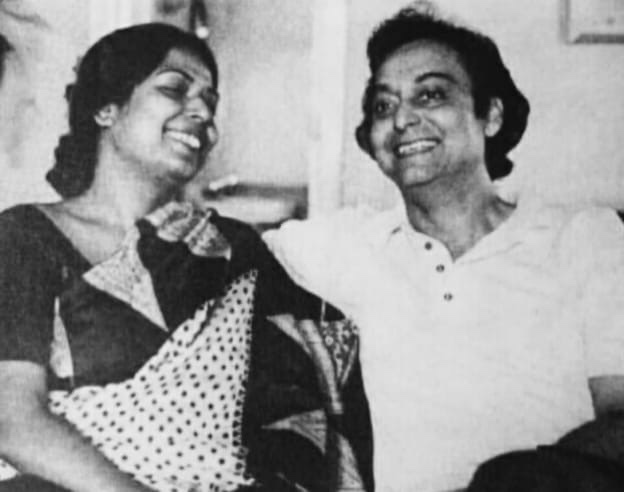
Soumitra and his wife Deepa. Photo provided by Soumitra Chatterjee

RS: So who are your favourite authors?

PB: I am eclectic in my choice. I read classics as well as bestsellers, plenty of them. My favourite authors are Tarashankar Bandopadhyay,  Bibhuti Bhushan, Manik Bandopadhyay, Jibanananda Das, Shakti Chattopadhyay,  Sunil Gangopadhyay, Charles Dickens, O Henry, Oscar Wilde, Maupassant, Shirshendu Mukhopadhyay, Samaresh Basu, John Grisham, Pablo Neruda, Gabriel García Marquez, Arundhati Roy, Agatha Christie, Akhtaruzzaman Elias, Humayun Ahmed, Jeffrey Archer, Khaled Husseini, Chitra Divakaruni Banerjee, Satyajit Ray, Sukumar Ray, Saradindu Bandopadhyay, Paolo Coelho, Gerald Durrell, Charlotte Bronte, Emily Bronte, Lewis Carroll… to name a few!

RS: Soumitra Da was a poet. He also translated plays — classics of world theatre — into Bengali. What was he most happy to do — act in movies? Write and direct plays? Or retire to the inner world of poetry?

PB: All three. I’ve never seen him sit idle or waste time. It depended on his mood — he loved doing all three. But I must add: theatre was, always, his first love. He was deeply influenced by Sisir Bhaduri (1889-1959), with whom he had started out. He directed plays for Pratikriti, a group that Ma had — and he directed plays for Abhinetri Sangha, set up by the actors of Tollygunge.

RS: Deepadi was an ace badminton player. Did she give up her own world to be Mrs Soumitra Chatterjee? 

PB: She gave up her career primarily for us. Bapi was at the peak of his career and was naturally very busy. Ma felt we needed to have at least one parent around, always. In retrospect, I realise it was a huge sacrifice. But I have to say, both my brother and I needed her. I think she realised that and did what most mothers do: she prioritized us over her career.

Ma had the biggest heart ever. She was more intelligent than the three of us put together. And she was non-judgmental about who she was reaching out to. So many sportswomen she helped, on her own. And I vividly remember this young Muslim boy in New Market who always carried her shopping to the car. One day Ma learnt that he had TB. She immediately brought him home and organised a room on the terrace for him to stay until he recovered. She didn’t hesitate because she had children, she didn’t seek the advice of doctors, she didn’t think twice because her husband was a star!

RS: Why did you choose to carry forward Soumitra Chatterjee’s legacy on stage rather than on screen? 

PB: Theatre kind of seeped into me. I used to watch Bapi – when he was idling, he would arrange the empty cigarette and matchboxes to design sets. I have been on stage ever since I could walk. It is my first love. I’m passionate about live performances, be it dance or theatre. Not that I didn’t get offers for films but I never actively pursued them. I married relatively early and had both my children by the time I was 26. Stage was always more accommodating and easier to manage. And till now the magic of the stage hasn’t worn off. I am still madly in love with the stage. Screen just didn’t happen… no particular reason, really.

RS: Soumitra Da was proud of his grandson’s screen presence. And he was extremely proud of the manner in which you handled your son’s unfortunate accident. Would you like to talk about it?

PB: Bapi had high hopes for Ronodeep. He felt Rono was a very sensitive actor perfectly suited for the screen. He was devastated by Rono’s accident. It was the most tragic thing to have happened in all our lives. But I have come to terms with it. I count my blessings — it could have been worse! Rono is with us — a bright and wonderful boy, sensitive and sweet, full of love and empathy. He still has a long way to go in terms of recovery and health but he’s getting there, one step at a time…

I have learned a lot from this phase of my life. I continue to learn every day. It has also shaped me, moulded me as a person. Bapi-Ma told me always to have grace even under pressure, to be always dignified. I have tried to follow them.

RS: Can you recount one cherished moment with your father?

PB: In May 2020, months before he passed away, during Covid, Bapi and I were just sitting and talking about various things. Suddenly he told me, “Mitil I have never said this to you before but I want you to know that I am very proud of the way you have conducted yourself during Bhaitu’s accident and every day since then. Your dignity and your grace has made me really happy. I’m so proud that you have turned out to be the person you are!”

All through my life I will cherish this one moment.

RS: In today’s world many daughters are taking up the responsibility of carrying forward the legacy of their fathers. What, in your opinion, has brought about this social change? Did Soumitra Chatterjee raise you to (consciously) fight patriarchy?

PB: I guess the world is waking up to the fact that what sons can do, daughters can do better! I really don’t know what exactly has brought this social change but I definitely welcome it. My daughter is a great source of strength for me. She is my best friend. My father had raised my brother, Sougata, and me as equals, maybe favouring me a tad more!

Bapi was always ahead of his times. He always told me, “The sky is the limit, you can do whatever you set your mind to.” But it was Ma who very consciously taught me to fight patriarchy. She was a champion for the girl child.

RS: Soumitra Da was never lured by the reach and fame of Bollywood? So, why did he direct Stree Ka Patra[5], the telefilm he made for the national television, in Hindi?

PB: Bapi believed that he could deliver best in his own mother tongue. Besides, he was not enamoured of the kind of films made in Bollywood at that time. He loved his life here, his theatre, his poetry, and co-editing Ekshan, the culture magazine that first published Satyajit Ray’s script. Going to Bollywood, he felt, would put a stop to all his literary and theatrical pursuits.

However, he got the offer to direct Stree Ka Patra for National Doordarshan, and it came with the clause that it had to be in Hindi. The other telefilm he directed, Mahasindhur Opar Theke [ From the Other side of the Ocean] was in Bengali 

RS: Many uncharitable people say that Soumitra Chatterjee wasted his talent by limiting himself to Bengali films and by indiscriminate selection of roles — because of his family responsibilities. Your response to this?

PB: Limiting himself to Bengali films was a conscious decision he made. And I have just elucidated the reasons. Yes he wanted to provide for his family, and he did so the only way he knew to — by acting. He never shied from saying that he was a professional actor. And if he wanted to take on the responsibilities who is anyone else to talk about it?

He could have abandoned his family like many others. He chose not to. His family, his life, his choices… that’s all I can say.

RS: You have grown up in close proximity with stars like Sharmila Tagore, Madhabi Mukherjee, Sandhya Roy, Tanuja, and directors like Tapan Sinha, Ajoy Kar, Tarun Majumdar, Rituparno Ghosh. Please share some memories/ anecdotes with us.

PB: The only name in the list who I have grown up in close proximity with is Tapan Sinha, whose birth centenary is being celebrated. He was a wonderful human being! While we were growing up we didn’t interact much with people from the film industry. We certainly met them but at parties, weddings, social events… 

My parents had a huge circle of friends. A doctor’s group. My mum’s friends. Poets like Shakti Kaku and Sunil Kaku. My dad’s friends like Nirmalya Acharya, the co-editor of Ekshan. Directors Ajit Lahiri, Ashutosh Mukherjee, Nripen Ganguly who was fondly called ‘Nyapa Da.’ Friends from theatre. His childhood friends. It was a vast cross section of people, so it was wonderful, happy and great fun growing up around so many amazing people.

RS: Gaachh [Tree], the documentary by Catherine Berger, focused only on his stage life. Abhijan[6][The Expedition] directed by renowned actor Parambrata Chatterjee, did not excite cineastes who have adored Soumitra Chatterjee, honoured with Dadasaheb Phalke for cinema, Sangeet Natak award for theatre, decorated with the Lotus award of Padma Bhushan and the French Order des Arts et des Lettres. Will you give us a biopic of Soumitra Chatterjee on stage?

PB: I am not in favour of a biopic for someone like Bapi. On the other hand, a stage production would be limiting. He was a multihued talent. It is difficult to capture so many facets of his personality. It is a daunting task to encompass every nuance, every shade of such an extraordinary life in a single film. A biopic should not be made if it does not do justice to the magnificence of the man.

.

[1] Ronodeb Bose, grandson of Soumitra Chatterjee, had a bike accident in 2017

[2] Jean Anouilh (1910-1987), Carnival of Thieves(1938)

[3] Bengali films in which Soumitra Chatterjee played the lead.

[4] Deepa Chatterjee, wife of Soumitra Chatterjee

[5] A pun in the heading. Stree is woman, Patra is vessel as well as a prospective groom. So, a Woman’s Vessel or Prospective Groom

[6] Soumitro Chatterjee played the lead in the 1962 Abhijan, directed by Satyajit Ray

.

Ratnottama Sengupta, formerly Arts Editor of  The Times of India, teaches mass communication and film appreciation, curates film festivals and art exhibitions, and translates and write books. She has been a member of CBFC, served on the National Film Awards jury and has herself won a National Award. 

.

PLEASE NOTE: ARTICLES CAN ONLY BE REPRODUCED IN OTHER SITES WITH DUE ACKNOWLEDGEMENT TO BORDERLESS JOURNAL

Click here to access the Borderless anthology, Monalisa No Longer Smiles

Click here to access Monalisa No Longer Smiles on Amazon International

Categories
Conversation

Ramblings of Joy Bimal Roy

‘So what is it like being the son of Bimal Roy[1]?’ Ratnottama Sengupta asked the author of Ramblings of a Bandra Boy

Ratnottama Sengupta and Joy Bimal Roy. Photo Courtesy: Debashish Sengupta

Rambling, when used for writing – or speech – implies unmapped, confused or, at worst, inconsequential flow of thoughts. In another usage, the word applies to walking in the countryside for sheer pleasure. It is in this second sense that Joy Bimal Roy’s digitally published text, Ramblings of a Bandra Boy is a perfect match of form and content. For, its sweeping take hops from landscape to landscape and life to life of persons who have peopled the world of the author born in a typical Bandra household precisely 70 years ago.

Why typical Bandra household? Because Bandra – derived from the word bandar, meaning harbour – is the Queen of Mumbai’s suburbs. This pocket of history in the heart of the Financial Capital of India is also the home of VIPs, of Bollywood and of political variety too. As the time-weathered Bandra Fort overlooking the Arabian Sea vouches, Bandra predates the British ownership of the Seven Islands gifted to the Crown when Charles II married Princess Catherine of Portugal. Indeed, St Andrew’s Church, in existence since 1575, came up on the strength of Jesuit Priests who won over Koli fishermen winning Christians a stronghold in this part of coastal Maharashtra, much like in Goa.

In the 21st century, Bandra is where Mehboob Studios and Lilavati Hospital stand. Where the Bandra-Kurla Complex defines the dreams of the rich and the rising, overshadowing Asia’s biggest shanty town, Dharavi. And where the awe inspiring Bandra-Worli Sealink bridges the southern extreme of ‘Bombay’ with its ever growing ‘suburbs’.

But all through my lifetime, Bandra has been better recognised as the home of celebrities. Bollywood thespians, Dilip Kumar and Sunil Dutt, to Shah Rukh Khan and Salman Khan; art personalities, KK Hebbar to Kekoo Gandhy; actors, Rekha to Raakhee; directors, Nitin Bose and Hrishikesh Mukherjee, writer Gulzar and cricketer Sachin Tendulkar; umpteen fashion designers and models too have boasted 400050 as their Pincode.

Joy Bimal Roy’s Ramblings takes you on a multi-stop tour of this ‘port’ of India’s social fabric. For, as you skid from one story to another, in no predetermined chronology or thematic order, you get to meet his Yusuf Uncle (Dilip Kumar of Devdas[2] fame) and Bhoba Kaka (Ritwik Ghatak of Madhumati[3]fame), Lata Bai (Mangeshkar) and the Dutts — father Sunil and daughter Priya — who have represented North West Bombay in Parliament even as one member of that family slogged in a jail.

Take a quizzical look at Bollywood divas and peep at actors in their skin labouring on in a posh gym. Get a warm handshake with Shashi Kapoor and gift a sari to Sanjana. Riveting tales of travels to Lebanon, Beirut, Abu Dhabi, Greece, Switzerland, England, San Francisco and San Jose – they’re crowned by nuggets like “I delved into my sister’s recipe book… it has taken the place of Bhagvad Gita in my life” and “I do wish food wasn’t such an important feature in my life. Because it directly correlates to my expanding waistline.”

That’s not all. Here’s a reverential insight into what constituted Shyam Benegal’s greatness — and several irreverent accounts of the crème de la crème schools and colleges that have shaped the author who could have been a top notch contemporary artist, a charming singer, an enviable fashion designer, or an accoladed filmmaker.

Joy Bimal Roy chose not to be either of these. Instead, he stitched together Images of Kumbha Mela when he chanced upon the footage that were to be Bimal Roy’s last film. And he directed Remembering Bimal Roy [4]when his father’s birth centenary came around. He has mounted a series of world class exhibitions to showcase the photography of his mother, Manobina Roy, who, along with her twin Debalina Majumdar, was one of India’s earliest woman photo artist. And in her memory he has installed an imposing sculpture of two hands raised in prayer, ‘Requeim’, at the Bandstand promenade. He has got a road named after his venerable father. He has designed the career of musical talents like Alisha Chinai. He has up-cycled heritage saris and jewellery to support hospices. And he has been editing a newsletter chronicling the life of Bandra, the neighbourhood he was born in, grew up in, and continues to breathe life into.

Now Joy has given us Ramblings, a compilation of his posts on social media between 2017 and 2020. These slices of life “served without any extra seasoning or fancy garnish” as he puts it, have been described by Rachel Dwyer, professor of Indian Cultures and Cinema at SOAS[5], London, as jottings in kheror khata, the traditional cloth bound notebook that Satyajit Ray — and his father Sukumar Ray before him — used to pen down thoughts and visuals that are world’s treasure. In this exclusive, he converses about his book and his life.

What is your earliest memory of being the son of Bimal Roy? 

Finding out in school from classmates that my father was famous!

What is the strongest impression you retain of 8th January 1966 – the day Bimal Roy passed into eternity?

I remember hearing a song from the basti[6] behind our house while I was taking a bath. That song still haunts me. I wasn’t allowed into the living room where Baba’s body was kept, so I peered in through the slats of the back door of the living room. We lived in an old Parsi Bungalow where the wooden doors were 8 ft high and had moveable wooden shutters. The room was packed to capacity but there was pin drop silence. Time stood still. It hadn’t yet sunk in that I would never see Baba again.

Did you develop a deeper understanding of what Bimal Roy was, in the process of making Remembering Bimal Roy?

Absolutely. It was a cathartic and moving experience to hear the memories of people he had worked with over 60 years ago. Not only Tapan Sinha, who was with him in New Theatres; poet, lyricist, director Gulzar who had started as assistant in Bandini; Sharmistha Roy, daughter of his art director Sudhendu Roy; and his accountant Amrit Shah – even next generation personalities like Javed Akhtar and Ashutosh Gowarikar remembered him with so much love and respect that it brought tears to my eyes. I discovered anew that Baba was not only a superlative filmmaker but also a wonderful human being.

Did you likewise get to know Manobina Roy a little more through her photography?

Not really. I was fortunate to have her presence for 46 years of my life. So I grew up being photographed and seeing her photos. But it was only after her death that I discovered from a Bengali book called Chhobi Tola that she and her sister Debalina were two of the earliest known women photographers of India.

Has the insight into Bimal Roy films equipped you to be a responsible filmmaker? Or did you gain greater practical experience as an understudy/ through your interactions with Shyam Benegal, Girish Karnad[7], Basuda[8], and Hrishi Kaku[9]?

I had no interaction with Basuda and Girish in connection with film making. What I learned after watching the making of Chaitali[10] — the last film made under the banner of Bimal Roy Productions, nine years after Baba passed away — was how NOT to make a film. 

Whatever I learned about filmmaking was from watching Baba’s films and my work experience with Shyam Benegal.

I wouldn’t really describe myself as a ‘filmmaker’ after making one documentary on Baba. However it is true that I have very high standards and living up to them was a big responsibility. After all, I am my father’s son. He was a perfectionist and so am I. It took me six months to edit a one-hour film simply because I was striving to do the best possible job with the material I had in hand. 

Before you got into films you have ‘dabbled’ in fashion designing, worked with HMV[11],  and now you are a most absorbing and prolific writer. Personally, I have always admired your painting (which I seldom see you do now). And I know you have mesmerised your college events with your singing. Which of these is your natural calling?

All of them unfortunately, which is why I didn’t know which one I should follow. As a result I have been a ‘dabbler’ — to use your own word. You could accuse me of being a dilettante but as I said before, I have high standards. So whatever I did, it was with all my heart and soul. 

Tell me about the joys and woes of assisting Shyam Benegal.

 That is impossible to describe as one question in an interview. It would be an entire interview! You can, however, get some answers in my book.

Which of the film stars of Bimal Roy’s team have you been closest to?

None. Because I was not even eleven when Baba passed away. But we did keep in touch with Yusuf Uncle. He was incomparable.

What difference in the work culture or cinematic ethics have you noticed between these two legends? 

Baba and Shyam? I can only judge Baba from his films, but I worked with Shyam. It’s a difficult question to answer.

Please tell us about Uttama, Papri, Roopu, Sharmistha (Buri?), Aloka – essentially, about the extended Family of Bimal Roy?

That’s what all of them were and are: Family. One accepts and embraces them as they are.

What led you to the Ramblings which has been described as ‘social document of our times’?

My Facebook friends led me to Ramblings. They drove me mad demanding a book. I did it more to oblige them and make them stop making demands.

What next — cinema a la Bimal Roy — or books after Monobina Roy, who, besides being an ace photo artiste and a fabled cook, wrote Jato Door Tato Kachhe?[12]

A Bengali translation of Ramblings of a Bandra Boy

.

[1] Bimal Roy (1909-1966) Legendary Film Director

[2] Hindi movie, 1955, Dileep Kumar (1922-2021) played the titular role

[3] Hindi movie, 1958, written by Ritwick Ghatak (1925-1976)

[4] Joy Bimal Roy lost his father filmmaker Bimal Roy when he was 11 years. Joy remembered very little of his father. ‘Remembering Bimal Roy’ made by Joy Bimal Roy is the search of a son for his father.

[5] School of Oriental and African Studies

[6] slum

[7] Girish Karnad (1938-2019) Actor, director, playwright

[8] Basu Bhattacharya (1934-1997), Film director

[9] Hrishikesh Mukherjee (1922-2006), Film Director

[10] 1975 movie directed by Hrishikesh Mukherjee

[11] His Master’s Voice, British music and entertainment retailer

[12] Distance draws us closer – translation from Bengali

Read the book excerpt by clickling on this link

Ratnottama Sengupta, formerly Arts Editor of  The Times of India, teaches mass communication and film appreciation, curates film festivals and art exhibitions, and translates and write books. She has been a member of CBFC, served on the National Film Awards jury and has herself won a National Award. 

.

PLEASE NOTE: ARTICLES CAN ONLY BE REPRODUCED IN OTHER SITES WITH DUE ACKNOWLEDGEMENT TO BORDERLESS JOURNAL

Click here to access the Borderless anthology, Monalisa No Longer Smiles

Click here to access Monalisa No Longer Smiles on Amazon International

Categories
Conversation

A Toothsome Exploration of Poetry, Life and Values

In Conversation with Kiriti Sengupta

Based on Paul Gauguin’s life is a book by Somerset Maugham[1] called Moon and the Sixpence[2], a novel about a stockbroker who abandons his profession to become an artist. Gauguin[3] was a stockbroker turned artist, and Maugham was trained a physician but opted to write books and became a famed novelist. While earning a living as solely a writer has become increasingly difficult through the world unless you make it very big like JK Rowling[4], and therefore, most writers opt for being part time writers while holding full time jobs, we do have a few strange aberrations. One of them is Dr Kiriti Sengupta, who turned to publishing and poetry abandoning his profession — that of a dentist.

Kiriti Sengupta: Photo Courtesy: Bitan Chakraborty

He ran away from his home and started writing in a small, rented accommodation in 2011-2012. And now he writes, works as a director in one of India’s top upcoming publishing concerns, Hawakal, and rolls out poetry. Sengupta describes his former profession with, an underlined sense of irony, and perhaps with tongue-in-cheek humour:

I prefer patients who are edentulous. I dread
a tooth will wrangle my expertise, and I’ll fail
to make an impression.
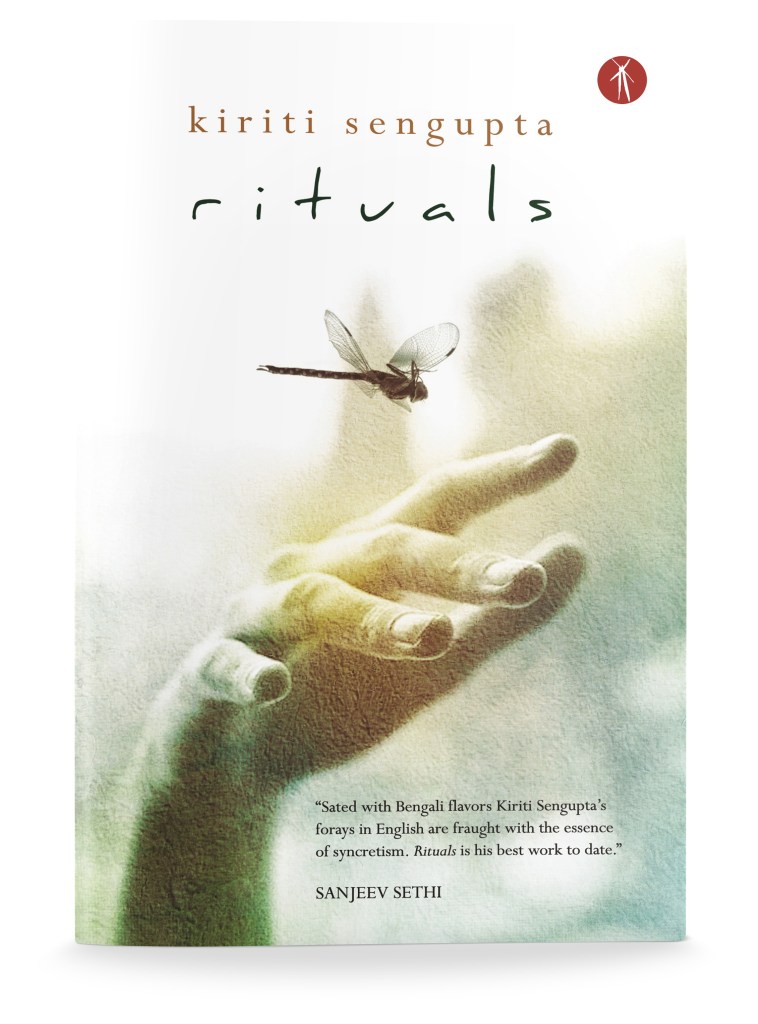
(Rituals, 2019)

Wisdom
the third molar adds
to the surgeon’s expertise
(Oneness, 2024)

He writes about water and the environment:

Water has many colors, 
smudging pebbles
along its path

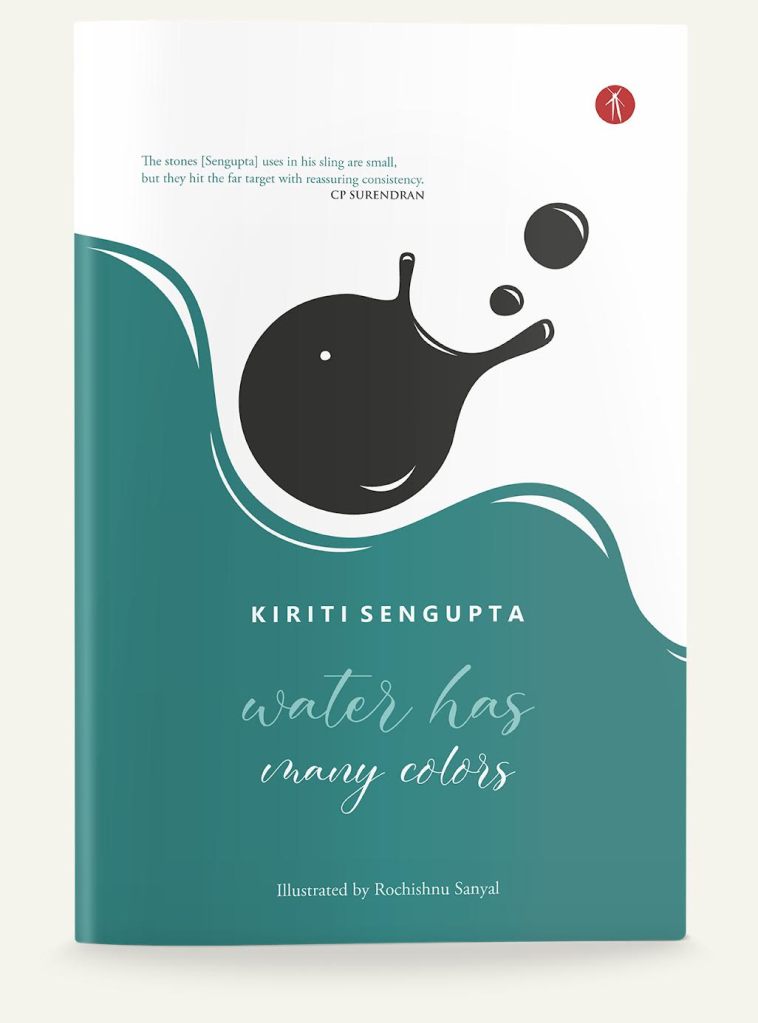
(‘Spectrum’, Water has Many Colours, 2022)


Feed the earth water
she flows in abundance.
Allow the planet to breathe:
the air is her consort.
(‘Hibiscus’, Water has Many Colours, 2022)

He writes for and about women:

How many mujras dwell in a kotha ? 

How many neonates hew to a bordello?

Like her admirers
God is silent.
In her sinews
hides a hint of soil
from the yard of courtesans.

*Mujras are courtesan’s song and dance performances
*Kothas are brothels
(‘When God is a Woman’, Rituals, 2019)

And yet critiques stances with a twisted questions:

You define women as Durga
or Kali. Are you a believer? Are you
being kind? You could have convinced
them to fight the evil.
Instead, when you imply the goddess,
do you illustrate
sisterhood with many limbs? Would you
like men to act as Shiva—the destroyer?

(‘Primordial Learning’, Oneness, 2024)

Underlying all of Sengupta’s poetry, is a strong sense of irony which like a veil drapes words with double entendres. While the poems are layered, he dwells on human frailties too…  like procrastination with a soupçon of sarcastic humour as in ‘From Being Late in Calcutta’ (Rituals):

As soon as you mark me
I’ll talk about events
that guide me to the records
you maintain.

I’d say crowded buses invite passengers
from unscheduled halts.
I’d emphasize the number of speed-breakers on road,
and their poor performance in preventing accidents.

I’d tell you trains run late.
Signals are laggy between stations.
I won’t forget to mention how
a sudden protest
makes the train stand still for hours.

I’d discuss about the day I reported late,
owing to instantaneous suspension
of underground train services
as a man killed himself on the railway lane.

I’d ask you to remember why I came late the other day.

If you can recall,
I had indigestion despite eating at home.
I blamed farmers for sprinkling pesticides on crops.
I pointed at my salary that failed to buy organic veggies.

And then,
I’d invariably argue about maintenance and population.

I’d appreciate China, one-child policy, and their claim on
how the government prevented four hundred million births.
And how India thrives on the revenues earned
from selling nicotine and condoms.

I’ll explore other issues
the next time I reach late.

He pours out lines on stars, film stars and politicians. Sengupta responds to life with poetry, often terse, brief… sometimes with a wry sense of humour. But in the brevity, lies a depth of mystery, which you can mull and cogitate over endlessly. A flickering of spiritual beliefs and a seriousness of intent despite the apparent lightness of words create a conversation within the poems. In this exclusive, an award-winning author of more than fourteen books, Kiriti Sengupta takes us on whirlwind tour of his life, his ideas and his work.

When and how did you start writing poetry? Why did you switch professions — from a dentist to a poet-publisher? What compulsion made you turn from a lucrative to an uncertain profession? Were you sure you’d succeed? Please share your story with us.

First of all, thank you for inviting me to Borderless for a heart-to-heart, Mitali. I greatly appreciate your dedication to literature, especially quality work. Coming to your first question (a bundle of questions, actually), I don’t remember when I first wrote a poem. Coming from a dentistry background, I never imagined that I would write poems. Until then, I was well acquainted with journalistic articles, critical responses, cultural essays, and, of course, scientific papers. Poetry was out of the question. I believe in karma. Maybe I was destined to write poetry. It wasn’t a deliberate choice. It wasn’t a spontaneous stance either.

I was passing through an obnoxious personal crisis that compelled me to reconsider my career in dentistry. I was comfortably placed in a government institution, enjoying a considerably thick monthly salary. In early 2012, I decided to leave my job and spend some time with myself. However, as you can understand, it was risky, as I was the only breadwinner in my family, which consisted of my wife and son. I had no career options to pursue. 

I was new to social media back then. I had the opportunity to become involved with a virtual group, Indies In Action (IIA), run by Stephen L. Wilson. They were raising funds for the victims of the devastating earthquake in Oklahoma. I contributed a few poems to the literary anthology Twist of Fate (ToF), which Steve edited. It was hugely successful, and all proceeds went to the May Tornadoes Relief Fund, managed by United Way. For the promotion of the book, I interviewed a few eminent contributors, such as Bill Lantry, Terry Lucas, Colin Dardis, Marshall G Kent Sr., Allison Bruning, Maggie Rascal, Don Martin, Linda Bonney Olin, Maria Edwards (the then President of the American Authors’ Association), Ency Bearis, among others. Honestly, they all helped me become familiar with the world of poetry. 

In 2013, my first book, The Unheard I, was published. It was released simultaneously in India by Dhansere Prakashan and in the United States by Inner Child Press Limited. It was non-fiction, although it contained two chapters dedicated to poetry. In his commentary, Stuart Aken remarked, “It is a scholarly [collection] that will appeal to those with an interest in poetry, particularly spiritual poetry expressed as literature, as well as [to] those who have a leaning toward or a significant interest in Indian myth and religion.”

Even then, I had no plans to pursue writing (or publishing, for that matter) as my career. Gradually, I evolved, and here I stand today. Do I call myself successful? I’m not sure whether I have turned into a consummate writer. Since I write poetry in a niche market worldwide, it is challenging to become a “successful” poet and earn enough royalties to sustain my family. As a publisher, oh yes, Hawakal has emerged as a leading traditional press that has published several writers and poets and enjoys its presence in New Delhi, Kolkata and Nokomis (Florida). 

How long have you been in the literary framework? Was it a tough journey moving from dentistry to writing? How did your family respond?

My first essay was published in 1995 in the college magazine. I remember it was written for students suffering from anxiety and family expectations. While studying dentistry at North Bengal Dental College, I joined the All-India Freelance Journalists Association (AFJA, Chennai). My senior colleague, Dr. Falguni Maji and I were commissioned by Uttarbanga Sambad to write an article on the pottery art in Matigara (Siliguri). I was a regular contributor to “The Third Law” in The Telegraph (India). Later, I regularly wrote health-related articles for Ganashakti.

As I said before, I was initiated into poetry quite late. It was a challenging move as I had no formal training, but I was immensely blessed to have a few mentors who honed my skills and taught me the basics of writing poetry. 

My family suffered badly from my career-shift. They had to compromise on their living standards. The initial years of becoming a full-time writer were dreadful, to say the least. From only one wholesome meal a day to just a pack of instant noodles for the day — I have personally experienced it all. I ensured that my family didn’t starve, nor did my son lose his schooling. However, their ceaseless support enabled me to survive as a writer and publisher. 

How many books have you authored/translated and how many poetry collections, and within how many years? Do you see yourself more as a poet or as a publisher/editor?

I have written fourteen books of prose and poetry, and as a translator, I have two full-length collections of poems. I have also edited nine literary anthologies, including Shimmer Spring, an all-colour, hardback coffee-table book published during the pandemic, which addresses our perceptions of light.

Honestly, I see myself as a patron of Indian arts, literature and fine arts (painting, sculpture, etc.). I’m an admirer of Indian textiles, too! I love buying drapes, be it a saree, a shawl, or a dhoti, in rich fabrics. Bitan and I have plans to start a men’s brand of drapes. We are working on it.

You claim you are a slow writer, and you isolate yourself in a ‘studio’. Tell us about your poetic process. How do you write? What inspires you to write? Are you influenced by any writers/musicians, or artists?

You know, Mitali, we have two studios in India: one in Kolkata and the other in Delhi. These ateliers are essentially stations where we work on the submissions from authors — we read, select, edit, and design the books we publish. We invite authors and readers to have a one-on-one. Readers also drop by to buy a book or two they want. You see, these studios are not meant for our writing. I say “our” because Hawakal is the collective enterprise of Bitan Chakraborty (the founder director) and me. While Bitan oversees the Bengali department, I supervise the English-language division of Hawakal.

It’s difficult to describe how I write. Anything that stirs my imagination or fancy, whether a line from a song, an incident, or a tragedy, often inspires me to pen my thoughts. I am fond of ekphrastic poems and frequently visit art exhibitions to catch a thread or two. However, it takes days or weeks to write a poem, although most of my poems are short or very short. I believe in condensing my thoughts, which is a time-consuming affair.  

Your first collection of poems, Healing Waters Floating Lamps (2015), was largely spiritual, while your latest, Oneness (2024), covers multiple aspects of life that may not be purely spiritual. Some of the poems in your later works are also ironic or verge on humour. A gap of nine years and multiple publications reside between the two books. Has there been a change or a progression in your poetry through your journey? Do you feel your poetry has changed?

Healing Waters marks my debut full-length collection of poems. Prior to this, I released 4 books, including My Glass of Wine (2013), which featured autobiographical poetry. My journey as a poet has led to a noticeable evolution. Scholars are more suited to examine these transformations. Some observe that my language and craft have become significantly more refined. They argue that my recent works display a level of sophistication. Conversely, others suggest that my earlier poems felt more spontaneous and grounded. Embracing evolution is crucial; without it, my growth as a writer would stagnate.

You translate from Bengali. Tell us who all you have translated. Have the translations impacted your own poetry. Do you feel translations should be literal or more focussed on capturing the essence of the language?

As I said before, I translated two volumes of Bengali poetry into English: Sumita Nandy’s Desirous Water and Bibhas Roy Chowdhury’s Poem Continuous—Reincarnated Expressions. I am delighted that these books have received rave reviews in India and overseas. Moreover, Hawakal recently released the 10th-anniversary edition of Poem Continuous, which has garnered critical appreciation.

Other than these books, I have translated a few contemporary Bengali poets as well: Ranadeb Dasgupta, Gourob Chakraborty, Rajeswari Sarangi, to name but a few. I can confidently tell you that translating Bengali poems has hardly influenced my work.

Whether translations of poems should be literal or more focussed on capturing the essence of the original is debatable. However, it is even more critical to ensure that the translated piece qualifies as poetry in the first place. If the piece does not read like a poem, regardless of the sincerity of the translator, the labour of translating the original work goes into vain. Every language comes with its own nuances. So, the translator should possess an excellent understanding of both the source and target languages.

Hawakal is regarded as one of the most important publishing houses for poetry in India. When and how did you join Hawakal as the director of the English section? How did you meet Bitan? Could you tell us about the journey?

Thank you for your kind comments on Hawakal, Mitali. Bitan Chakraborty established Hawakal in 2008 in Kolkata. He published numerous Bengali poets until I joined him in 2015. A common friend Kishore Ghosh introduced Bitan to me. Ghosh, a Bengali poet of some renown and a journalist, urged Bitan to publish a collection of literary criticism based on my work and that of Sharmila Ray. The book was titled Rhapsodies and Musings: poets in the mirrors of other eyes and authored by Ketaki Datta and Tania Chakravertty. So, we started our collaboration. Eventually, Bitan induced me to become one of the Directors of Hawakal.

Where do you see Hawakal travels as a publishing concern? What is the scenario like? Do you only bring out writers of Indian origin, or are you open to writers from other backgrounds? What does Hawakal look for in writers to publish with you?

For the past few years, Hawakal has been more focussed on fiction and non-fiction manuscripts. There is no dearth of poetry submissions, though. However, it’s challenging to find an authentic voice. We have published American poets like Dustin Pickering, t. kilgore splake, Marshall G. Kent Sr., Gary Manz, and others. Ethnicity isn’t a limiting factor for someone who wants to get published by Hawakal.

We really want to establish a steady foothold in the United States. Our tiny outlet in Nokomis is currently managed by Dr. Robertson James Short II. It has to grow big. Hawakal seeks original work, and we yearn for quality submissions.

Do you have any suggestions for young writers?

Aspiring writers or poets should read more and be well-versed with the works of contemporary authors. It is important to get published in journals, and accepting rejections from the editors is equally beneficial. Getting published should be a slow process. As the saying goes, there is no shortcut through the forest of life…

Thank you for your time and poetry.

Click here to read more poems by Kiriti Sengupta

[1] Somerset Maugham (1874-1965), British writer

[2] First published in 1919

[3] Paul Gauguin (1848-1903), French writer

[4] Author of Harry Potter


CLICK HERE TO SAMPLE KIRITI SENGUPTA’S POETRY

(This online interview has been conducted by Mitali Chakravarty.)

PLEASE NOTE: ARTICLES CAN ONLY BE REPRODUCED IN OTHER SITES WITH DUE ACKNOWLEDGEMENT TO BORDERLESS JOURNAL. 

Click here to access the Borderless anthology, Monalisa No Longer Smiles

Click here to access Monalisa No Longer Smiles on Kindle Amazon International
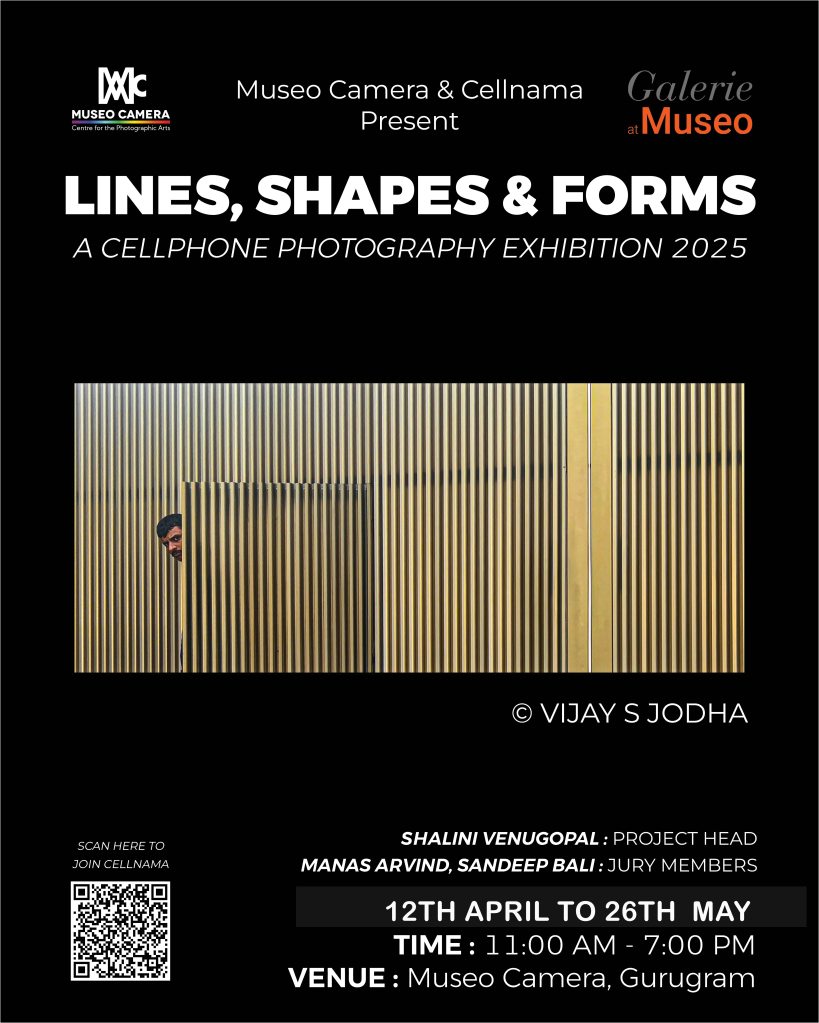
Categories
Conversation

From Ukraine to America: A story of Resilience

Lara Geyla converses about her memoir, Camels from Kyzylkum, and her journey as an immigrant.

A migrant’s journey is never easy – it’s rife with adjustments and changes. Adapting to a country that is totally different from the one in which an immigrant is born, requires adjustments of various kinds, including learning new languages. Migrants also need to find acceptance and friends in the country they move to as did Lara Geyla, when she migrated out of a crumbling USSR to America, pausing by the way of Austria and Italy. She recorded her journey in Camels from Kyzylkum: A Memoir of my Life Journey.

Kyzylkum is a desert located in Uzbekistan. Geyla lived and worked in the desert for twenty years. She learnt that the camels were the hardiest of creatures. Her life’s journey like that of any other immigrant, had been hard. So, at the start of her memoir, she tells us: “I am a camel from Kyzylkum, too. Like a camel, I have adapted and found ways to help myself survive in the desert. As a camel stores his energy in its hump as part of its legendary ability to travel hundreds of miles without food and water, I stored the energy of my spirit to help me stay strong as I crossed continents alone, with two suitcases and $140 in my pocket in my search for a better life.”

Perhaps, this is a resilience that each migrant needs to unearth to settle into a country of their choosing, or sometimes thrust on them due to external factors like war and climate change. Through her memoir, we get glimpses of different parts of the world as she inched her way closer to the country she sought. People helped her along. At one point, when she arrived at the wrong destination for an interview with the American embassy that was crucial to her move to the country of her choice, an Italian taxi driver drove her at breakneck speed to the right address, where after a few questions, she was given the permission to emigrate.

This was in the 1990s. After moving to America, she helped more of her family to move to the country which gave her refuge. She found acceptance in a firm as a programmer/ analyst in Maryland. She lives now in her new home in Florida with her new family and friends and basks in their acceptance and love. In this exclusive, she talks to us of her journey.

Tell us what made you write Camel from Kyzylkum?

I had wanted to write my life story for a long time, as I believed my life journey was filled with incredible places and events. However, while I was working, I never had the time to focus on writing. Even then, I knew that if I ever wrote a book, it would be titled Camel from Kyzylkum. I finally wrote my story during the COVID 19 pandemic in 2020–21, when we were confined to our home.

Where in the Soviet Union did you grow up? What was your childhood like? Tell us about your schooling and a child’s life in the Soviet Union? How was it different from what we find in other countries?

I was born into a Jewish family in Vinnitsa, a city in southwestern Ukraine, not far from the capital, Kiev. At the time, Ukraine was part of the Soviet Union. Life wasn’t easy for those born into Jewish families in the Soviet Union; being Jewish was considered a nationality, not a religion. In fact, during my time there, we lived under the slogan: “Religion is poison for the people.” Religion was heavily suppressed, and atheism was strongly promoted during my time there. Although I grew up much like other children—playing the same games and attending the same schools—I was aware from a young age that there was a stigma attached to being Jewish. I felt different but didn’t understand why. After 1948, anti-semitism in the Soviet Union reached new heights, particularly during the anti-cosmopolitan campaign, when numerous Yiddish poets, writers, painters, and sculptors were arrested or killed. During my time there, antisemitism was consistently supported by the Soviet state and used as a tool to consolidate power.

When I was about 12 years old, my parents divorced, and my mother and I moved to Belarus to live with my grandmother. We all shared the same apartment. Soon after, I was sent to a boarding school, which I hated but had no choice and stayed there until I graduated. I’ve written about all of this in my book.

How was life different from what we find in other countries? That likely depends on the country you compare it to. Despite the many challenges and negative aspects of life in the Soviet Union, one notable advantage was the education system. It was of quite high quality, mandatory, and free.

You moved with your husband to the desert of Kyzylkum. What was it like living in the desert? In tents?

For the first three years, our young family lived in a small settlement belonging to a geological expedition. It really was in the middle of nowhere. The nearest civilized city, Navoi, was 200 kilometers (124 miles) away. Our settlement, simply called Geological Party #10, and it consisted of about two dozen barracks under the blistering sun, set in a barren landscape devoid of vegetation and offering hostile living conditions for humans, plants, and animals alike. The summers were extremely hot. The winters were harsh. At night, the wind became a growling, tumbling mix of sand and snow. I lay awake for hours, listening to the eerie howling outside. It was one of those winds that frayed nerves, made your hair stand on end, and left your skin crawling.

After three years, we moved to Muruntau, a slightly larger geological settlement, but we still lived in barracks. From there, we relocated to Zarafshan, a city in the heart of the Kyzylkum Desert of Uzbekistan, where we finally got our first apartment.

I have written extensively about our life in Zarafshan in my memoir, Camel from Kyzylkum. However, you might find it interesting to read an article by a Canadian reporter who accidentally stumbled upon Zarafshan while exploring Google Earth. He wrote and published the piece online in 2011, In Zarafshan.

What work were you doing there? What jobs did you do in the USSR? Did you go back to university there?

I earned my degree from a geological college in Kiev and worked as a geophysicist in the Kyzylkum Desert, focusing on gold and uranium deposits. Geophysics involves using surface methods and specialised equipment to measure the physical properties of the Earth’s subsurface and identify anomalies. These measurements help to make interpretations about a geological site, detect and infer the presence and location of ore minerals. Geophysical data is then integrated with surface geological observations to develop a comprehensive understanding of a region’s geological structure and history.

My job required me to work in various environments, including the open fields of the desert, open-pit and underground mines, as well as in the office. In fact, the Muruntau gold deposit in the Kyzylkum Desert, where I once worked, was and still is being mined as the world’s largest open-pit gold mine.

You have told us you were part Ukrainian and part Jewish? Judaism is faith — not a geography. So, were both your parents Ukrainian?

I was born into a Jewish family in Ukraine, which was part of the Soviet Union at the time. Both of my parents were Jewish and born in the Soviet Union. In my time there, Judaism was not considered a faith but rather a nationality. Nationality was stated in one’s passport. Synagogues were closed, and like most other Jewish families in the Soviet Union, our did not follow Jewish religious or spiritual practices. Instead, we celebrated all Soviet holidays. However, I do remember my father’s family gathering for Hanukkah and giving us, little kids, gifts and money. My husband, however, was Ukrainian, which made our daughter part Ukrainian and part Jewish.

Were you there during glasnost? Did things improve for you after the Perestroika and Glasnost? Please elaborate. How long did you stay after the dissolution of the USSR within your country of birth?

I would like to answer to this question with excerpt from my memoir Camel from Kyzylkum:

“Glasnost was understood as the movement in the USSR towards greater openness and dialogue. In the period from 1987-1991, Glasnost became synonymous with “publicity,” “openness,” and it reflected a commitment by the Gorbachev administration to allow Soviet citizens to publicly discuss the problems and potential solutions of their system.

I still lived in Zarafshan and took an active part in Perestroika and Glasnost—I was not afraid to express my opinions or attend meetings. I truly believed that we could change life for the better. One day I came to work only to find out that agents from the KGB had searched my office. KGB stands for Komitet Gosudarstvennoy Bezopasnosti, which translates to “Committee for State Security” in English.

At the time of Perestroika and Glasnost, books that previously had been available only through the underground distribution in the Soviet Union became legal, and excerpts were printed in many publications. I read a lot, and these books opened my eyes to the bloody recent history of our country—from the 1918 Revolution to the present day, on to all of the misleading, hidden truth, hypocrisies of our government, and the Soviet system as a whole. I realised that all of the concepts and ideas that they had taught us from early childhood were mendacious.”

I left the Soviet Union in October 1989, and as punishment, my citizenship was revoked. The Soviet Union ultimately collapsed on December 26, 1991, by which time I was already living in the United States.

Why did you want to move out of the Soviet Union? Can you give us the timeframe in which you moved out in terms of Glasnost and other events?

The Glasnost period in the Soviet Union was from 1987 to 1991. I left in 1989.

The late 1980s were years of exodus from the Soviet Union. Gorbachev opened the door of the “iron curtain” and everyone who could escape was leaving. I moved from Zarafshan, Uzbekistan, to Gomel, Belarus, in 1988. At that time, every single day platforms at the Gomel railroad station were full of people: families who were lucky to get exit visas, and relatives and friends who came to say their last goodbyes to them.

There was a code word: “to leave.” If you whispered it with a mysterious gravitas, there would be no need to ask further questions.

When I was asked if I would consider leaving, I said “yes” with no hesitation. I did not know what leaving would entail, but I started to go through the process as everyone else did. I apprised the family members, but there was no need or time to have long discussions—it was a once-in-a-lifetime chance, and the “iron curtain” could be down again at any time. We all knew how challenging and frightening immigration could be, but we had a hope that after all of the suffering, we could build a better life.

How is it you were on the list for visas and others were not given the privilege? Who were the people given the right to leave the Soviet Union?

Under Soviet law, no person could leave the country without the government’s permission, granted through an exit visa. This regulation applied not only to Soviet citizens but also to foreigners, including diplomatic personnel. Emigration policies varied over time and were always challenging to navigate.

In the 1970s, Jewish people in the USSR, often referred to as “refuseniks,” staged hunger strikes to protest the Soviet government’s refusal to grant them permission to emigrate to Israel. These protests highlighted the severe restrictions on their right to leave the country and garnered international attention, becoming a pivotal part of the movement advocating for Soviet Jewry, an international human rights campaign for Soviet Jews.

In the late 1980s and early 1990s, liberalised emigration policies allowed many Soviet Jews to leave, with more than half of the Jewish population emigrating, primarily to Israel, the United States, Germany, Canada, and Australia. However, it wasn’t only Jewish individuals departing; anyone who could endure the convoluted emigration process took the opportunity to leave. As a punishment, those who emigrated had their citizenship revoked.

The Hebrew Immigrant Aid Society (HIAS) played a vital role in assisting people leaving the Soviet Union, supporting them on their journeys to new destinations. HIAS continues to advocate for the protection of refugees and ensures displaced individuals are treated with the dignity they deserve.

For me, navigating the bureaucratic barriers of Soviet emigration policies in the late 1980s was extremely difficult, but my Jewish heritage worked to my advantage. After overcoming numerous hurdles, I left the Soviet Union at the end of October 1989. I had two suitcases, $140 in my pocket, and no certainty about my final destination. With my Soviet citizenship revoked, I became a “citizen of the World”.


Why did you choose to move to the USA over all other countries?

When I left the Soviet Union at the end of October 1989, I knew my point of departure but not necessarily my destination. The only identity document I had was an exit visa from the USSR and the train ticket to Vienna, Austria. I held no citizenship in any country and knew very little about immigration laws or processes. My ultimate goal was to reach America because I believed that the United States was the land of opportunity like no other country. During my interview in Austria, I was given the option to select a country I wanted to go to, and I chose the United States.

Other than language, did you have to study further to get a job in the US? How is working in the US different from working in the USSR?

Yes, I wore many hats and attended various schools before landing my professional job in the USA. First, I had to learn English. My journey began with earning a certificate as a nurse assistant. Next, I attended school to become a medical assistant, followed by completing a two-year program and passing the exam to become an X-ray technician. I worked in that role until I later completed a course for computer programming.

My first job in the US, however, was clearing tables at Burger King. I worked as a waitress, cleaned people’s houses, worked in department stores, and babysat young children. I did whatever it took to survive and was never afraid of hard work.

Working in the US was vastly different from working in the USSR, mainly because of the many barriers I faced: learning a new language, navigating cultural differences, adapting to unfamiliar social norms, and constantly acquiring new skills. Despite the challenges, I succeeded. Now, I’m happily retired, enjoying life in a beautiful community in Southwest Florida.

Have you ever returned to Russia after you migrated? How did you find it, especially as the Soviet Union broke up into so many countries?

My husband and I traveled to Ukraine in 2010, by which time it was an independent country. This was after the Orange Revolution1, a series of protests primarily in Kiev in response to election fraud. The revolution, which unfolded between late November 2004 and January 2005, brought significant political upheaval. Viktor Yushchenko was elected president on December 26, 2004, after weeks of turmoil that thrust the country into chaos.

As the informal leader of the Ukrainian opposition coalition, Yushchenko was one of two main candidates in the 2004 presidential election, the other being Prime Minister Viktor Yanukovych. During the campaign, Yushchenko survived an assassination attempt when he was poisoned with dioxin, leaving him disfigured. Despite this, he persevered and emerged victorious in the re-run election.

When we visited Ukraine in July 2010, the memory of the Orange Revolution was still fresh. We explored many cities, stayed with my childhood friend in Vinnitsia, and visited relatives in Yalta, Crimea. Crimea, sadly, was annexed from Ukraine by Russia in 2014.

The changes in Ukraine since my time living there were noticeable, but some things remained the same. We especially enjoyed our time in Yalta—a vibrant city filled with cheerful faces, where people celebrated life at this beautiful Black Sea resort.

In June 2018, during a cruise around the Baltic countries, we spent a day in St. Petersburg, Russia. The city and its museums are undeniably remarkable, as they always have been. However, the rude customs control at the port, long lines at the museums, being rushed through the exhibits, and other all-too-familiar experiences immediately brought back unpleasant memories from the past. After this brief visit, I have no desire to ever return to this country.

So, are you writing more books?

I’m considering it. However, finding the time to focus has been challenging. Between our extensive travels, my photography and video projects, marketing my memoir, and other everyday activities, my schedule hasn’t left much room for writing another book.

Thanks for giving us your time.

Click here to read an excerpt from Camels from Kyzylkum

(This online interview has been conducted by Mitali Chakravarty.)

PLEASE NOTE: ARTICLES CAN ONLY BE REPRODUCED IN OTHER SITES WITH DUE ACKNOWLEDGEMENT TO BORDERLESS JOURNAL. 

Disclaimer: The opinions expressed are solely that of the interviewee and not of the Borderless Journal.

Click here to access the Borderless anthology, Monalisa No Longer Smiles

Click here to access Monalisa No Longer Smiles on Kindle Amazon International
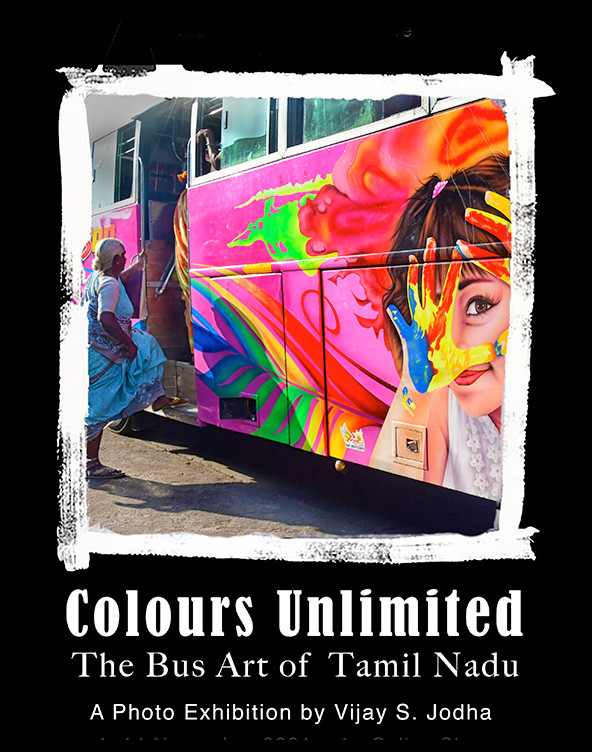
  1. Orange Revolution took place in Ukraine between November 2004 to January 2005, primarily a response to the Presidential elections ↩︎
Categories
Conversation

Exploring the Stars in their Skies

Ratnottama Sengupta, an eminent senior film journalist, converses with Divya Dutta, an award-winning actress, who has authored two books recently, Stars in my Sky and Me and Ma at a litfest in Odisha. Sengupta directs us with her questions to a galaxy littered with Bollywood snippets and emotional stories about life.

Divya you are in this literature festival organised by Shiksa O Anusandhan (SOA)[1], Bhubaneswar with your second book, Stars in My Sky[2]. But your life as an author started with Me and Ma[3]. So your first book was on your personal life. Didn’t your publishers want to know more about your professional life first? 

l never had any motive to become an author, you know! My life has been very organic. Things have just happened. Me and Ma wasn’t planned either. My biggest fear was, l didn’t want to lose my mother. Life teaches us that we don’t lose anyone. They may stop living outside of us but they stay on inside us. In our heart. And we have the security that they won’t go away from there. But l wanted to celebrate my parents.

Many a times our dreams don’t match our parents’. Some 25 years back, it was impossible in a doctor’s family to imagine that l would be an actor. There are many parents who force their children to do what they want, they don’t care to understand their children’s dreams or interests. But my mother did. 

I would often flip through the pages of Stardust, a magazine which was very popular then. One day an advertisement for a talent hunt caught my eyes. l applied with two amateurish photographs clicked by my brother and never expected to get selected. Much to my surprise, l got selected. So I told my mother, l have to go to Mumbai for an audition. 

Both, my brother and I were standing in front of her, our eyes downcast, pin drop silence in the room. My mother said, “You have your second year exams…” And l said, “l promise l will work very hard.” She said, “Look at me.” I looked up. She asked, “Are you sure?” There was a few seconds’ pause. And in those few seconds l realised that this is what l want to do in life. 

My mother said, “Okay fine, I am with you.” At that moment happiness filled my heart. And l knew l can never let down this parent because she has believed in me and stood by me, come what may. When she was in the hospital l thought to myself, “Shall l cry or shall l celebrate her?” And l realised l wanted to celebrate her. 

So I called Penguin and told them l wanted to write about my mother. They said, “It sounds beautiful, please go ahead. What do you call it?” Till then I had not even thought about what to call it! The title that came out of my heart was Me and Ma because it is the story of a mother and a daughter.

As you said, The Stars in My Sky is commercially attractive but nothing can be more fetching, more precious than your mother. So to me Me and Ma was a bestseller from the outset. I could connect with the readers through the book, through the audio book and now the Hindi version is also out.

Words from the heart!

 You see, we don’t build friendship with our parents – neither do our parents. This book is about diminishing those gaps. Children, talk to your parents. And parents, don’t think that you are older, your children should listen to you. Parents too should listen to their children though they may think differently.

I was very fortunate to have outstanding parents. So whenever people told me they had read the book l would call my mother to say, “Mamma l love you.” Many a times we do not say that. We take our parents for granted, and perhaps rightly so — other than our parents, whom can we take for granted? But having said that, I will repeat: We certainly need to convey our love.

The same way parents should convey their love to their children?

Everything in life is mutual but parents, especially a mother’s love is unconditional. Many times when we are in a rush we tell them to “hang up”. Now, when she’s no more, l think, “Whom do l call up when l want her to pick up the phone!”

You touched the core of my heart. When my mother passed away, the first thought that crossed my mind was, “l can never call her again!”

I do call her, and we talk. The bell rings from my heart and we have fun talking, bade majje ki baat hoti hain.[4]

You wrote for your school and college magazines but at which point did you realise that expressing with words rather than emoting is what you want to do? Of course younger years are more about being in front of the camera – later, with your pen dipped in experience, you turn reflective.

All these things are gifts from the universe. When l was writing in my school and college magazines, those were not coming out of experience but were full of sincerity, from my heart. My first love always was to face the camera –- perhaps because l am an ardent fan of Mr Bachchan[5]. I saw him on the screen when l was four or five and was mesmerised. I wanted to belong where he was, which world is it? l wanted to go there.

Remember the song, Khaike paan Banaraswala? [6] I would tear my mother’s dupatta or sari and wrap it around my waist over my kurti. Paan wasn’t allowed, so I would stain my lips with maa’s lipstick. I would invite the neighbourhood kids and tell them that, if they clapped louder after my performance, they would get sweets-and-savoury and rooh afzah [7]too. I loved the claps, the appreciation, the acknowledgment but above all the performance was what l loved most. 

As a student too I loved to entertain my class between two periods. I was the head girl but l was the naughtiest in the classroom. My friends would ask me to perform and l performed. So performance is what l always enjoyed. Alongside I wrote. Perhaps I had been experiencing the magic of words.

Emoting beautiful words penned by others is an actor’s job. Beautiful words always touch our hearts. I experienced the magic of words as an actor. When l started writing it wasn’t for a film, it was for me. And it was to find a different world that resonates with me. So, both go parallelly.

Both writing and acting are based on lived experiences. You write about experiences in your life; you also portray a character from your life experience. Let’s hear how your life moulded your characters.

Sure! Let me tell you about Isri Kaur in Bhaag Milkha Bhaag[8].

My mother was a Doctor in a rural area. If the ladies who came for treatment were asked, “How are you?” They would cry. “You are fine?” and they could cry. They’d cry for everything. After school l used to sit in my mother’s clinic and watch everything. I would wonder why these ladies wouldn’t speak but only cry!

Cut to Bhaag Milkha Bhaag. When Rakeysh Omprakash Mehraji cast me he said, “You don’t have much of dialogue. But you must speak through your eyes.”

“No problem,” I replied.

Now let me tell you about the power of costume. I had gone in jeans for a rehearsal of the scene where I’m washing the utensils, but things were not going right, there was a gap somewhere. Then Rakeyshji asked me to wear my costume.

I said, “l’m absolutely comfortable Sir!”

He said, “I insist.”

I changed into a salwar kameez, draped the dupatta behind my ears and then wrapped it around myself — and magic happened. I was washing as if l were a pro! The Director later told me l’d put my hand on burning coal and got burnt, but l don’t have any recollection of that.

Suddenly, l recognised Isri Kaur! She could be the lady who’d come to see my mother. She was there in my subconscious, and tears just trickled down my eyes. 

At the end of the scene, l was hugging Milkha. Rakeyshji said, “Give it your end.” So l thought to myself, “Should the end be so clichéd! Brother and sister hug each other, and that’s it?!” All of a sudden l realised that the roles we play, the characters, also have subconscious memories. I remembered Isri Kaur had, as a child, seen Milkha saluting his father, “so do it!” I don’t know where the voice came from but it did. I left that embrace and saluted him just like he did. The entire set fell silent. Every person in the team was crying and that became a cherished moment. This is the power of the subconscious!

Now my eyes are moist! But just as ocean gives back what it takes, so does the ocean that’s life.

Beautiful. So aptly said!

Divya you have two books to your credit. Me and Ma is so personal, and The Stars in My Sky probes your connection with the outer world. What was the difference in writing these two books?

There’s a big difference between writing and acting. Each has a different feel altogether. In acting you part with yourself and allow the character to come in.

 You internalise an outsider.

You have put it beautifully. Yes, writing is extremely personal — as personal as my experience with my mother. But  Stars in My Sky is my experience with the people l have encountered on the sets. People l shared my movie journey with:  Amitabh Bachchan, Shabana Azmi, Irrfan Khan, Javed Akhtar, Gulzar, Shahrukh, Salman… 

In the course of making a movie we meet so many people. We cannot say, ‘This person has given me this character,’ or ‘this person has made me a star’.  But each of them did something beautiful which l will always remember. Something that brought a smile to my face at that moment. So l thought, l should write about those moments — and you cannot capture those without being personal. 

And when you write something on a director or a writer you need to share it with them. These were my personalised accounts. But I’ve had the most overwhelming experience sharing the chapters with them. I saw actors and directors alike cry on reading their chapters. One person l was sharing with over the phone fell silent. He did not speak, nor did I. And l realised that, many a times we don’t say, ‘l like this thing of yours’ or ‘what you did for me made a big difference in my life, thank you.’ So this silence was most rewarding.

It’s so very important to let people know they’ve made such an impact! Now, since we are in a lit fest – which is a celebration of words – l’d like to ask you: what is the thrill in holding a printed book in your hands? Let me elaborate: Today so many things are online. We type or key-in more than we write with pen on paper. Yet I always want to touch the book. After retiring from The Times of India, much of my writing got published online. Some of these got published as an anthology, Monalisa No Longer Smiles[9]. I was thrilled to hold a copy of that book. Why?

l can certainly tell you about scripts. These days many directors and producers say, “Shall l mail you the script?” I tell them, “Please send me a bound script.” It imparts a sense of belonging, like the power of hugging. When we hug our book, we can feel the power of touch. So I hug my script, my copy, with my name written over it… It’s fun turning the pages rather than scrolling with your finger. The smell of paper, the sound of flipping the pages, maybe reading while eating had left a spot of turmeric… All these give me the feeling, it’s mine. The touch, the smell, of a new book will always remain my first love. 

You just said you’ll write stories. Will you also write scripts, and direct them?

I’m in love with acting. And, people who write good screenplays should do that. At the same time, we should be open to life. I never knew l would be an actor, I never knew l would be an author, l don’t know what l will be in future. So l say ‘Yes!’ to what life offers us.

Right – Life is a journey, not a destination.

I will go back a little bit to Stars in My Sky. You have mentioned and we also know that Rakeysh Omprakaash Mehra, Yash Chopra, Shyam Benegal, Shabana Azmi who has written the Foreword, are important parts of your career. Can we peep into that world?

I have been fortunate to work with some brilliant and legendary directors. Let me tell you some stories.

Shyam Benegal is one of the most approachable and humble directors ever. When l came to Mumbai from Punjab, no one said ‘No’ in this industry. Who knows when you will require whom? So when l visited production houses they all said, Yes, they will work with me. And i believed them all. And l called Ma to say l was doing 22 films. Of these, 20 never happened and two were made with other heroines, not me. So I was heartbroken.

During that time l met Shyam Benegal at the premier of Train to Pakistan. I said, “Sir l want to meet you.” He said, “Okay. This is my number, call me.” By then I had become cynical, I thought, ‘Is it that simple?’ But I went to Shyam ji’s office – and he was truly honest. “My film’s casting is done,” he said, “but there is one sequence of folk dance. Will you do that?” I said, “Of course Sir.” The film was Samar. He said, “l will need seven days.” Seven days? Then l will have to learn dance and a lot of things, I thought. 

On the very first day he asked me, “What’s your hobby?” I said, “Cooking Sir, l love cooking.” “Okay,” he said, “go to the kitchen, with your co-stars, and make something you like.” I was surprised – when will the dance rehearsal start? But l went to the kitchen, there were Seema Biswas, Rajat Kapoor and others. I used to call Seema Biswas Ma’am. In the process of cooking the formality gave way to familiarity and warmth. Suddenly I found myself saying, “Didi pass me the salt, the paratha is getting burnt!” So Ma’am turned to Didi — and that translated into my chemistry with them in front of the camera. Unassumingly it moulds you into the character, without you being aware of it!

Then he told me, “Go to the folk dancers and watch them dancing.” I went, I saw them dancing, and came back. “Now listen to the song,” he told me. I listened, and responded, “The song is beautiful Sir!” “So choreograph it,” he said. “Me Sir!” I squeaked. Here was Shyam Benegal, who could get any choreographer to do it, but he asked me, all of 18, to do that. Was I nervous! I couldn’t sleep that whole night. But more than nervousness or excitement was the feeling of responsibility: none other than Mr Benegal had asked me to choreograph the song. And when I did it, he asked me to teach it to the dancers. The next day went by in teaching them their dance only!

 What a wonderful way to groom a talent!

The day after was the shoot. A night shoot. The entire crew, cast and the villagers were there to cheer me up. There was a 7-camera setup shooting the dance at one go but l was looking at one person alone – Mr Benegal: he was telling me, “Do it, do it.”

I did it to loud cheer. l was scooped up by my co-stars. I felt so beautiful, and so confident. With gratitude l turned around to thank Shyam Babu, but he had left for the next shot! Nothing mattered to him, but he had left behind a girl who had learnt how to take responsibility. A girl who now knew she had it inside her.

Fabulous! This is what make them icons!

Divya Dutta (born 25 September 1977) is an Indian actress and model. She has appeared in Hindi and Punjabi cinema, in addition to Malayalam and English-language films. She has received many awards including a National Film Award, a Filmfare OTT Award and 2 IIFA Awards.

Highlights in Acting:
1) *Shaheed-e-Mohabbat Buta Singh*/ Punjabi/ 1999
2) *Welcome to Sajjanpur*/ 2008/ Director: Shyam Benegal
3) *Delhi-6*/ 2009/Director: Rakeysh Omprakash Mehra
4) *Stanley Ka Dabba*/ 2011/ Director: Amole Gupte
5) *Bhaag Milkha Bhaag*/2013/ Director: Rakeysh Omprakash Mehra
6)*Irada*/ 2017/ Director: Aparnaa Singh
*Divya Dutta got National Film Award for Best Supporting Actress in Irada*

-- (Compiled by Ratnottama Sengupta)

[1] Studies and Research (translation from Hindi). SOA is a deemed University in Bhuwaneswar.

[2] Stars in My Sky: Those Who Brightened My Film Journey (2022)

[3] Me and Ma (2017)

[4] We really have fun.

[5] Legnedary actor Amitabh Bachchan

[6] Literal translation, ‘Eating a paan (betel leaaf) from Benares’, song from Bollywood blockbuster, Don (1978)

[7] A rose flavoured drink

[8] Run, Milkha, Run, 2013, Hindi film

[9] Monalisa No Longer Smiles: An Anthology of Writings from across the World (2022), Om Books International

.

Ratnottama Sengupta, formerly Arts Editor of  The Times of India, teaches mass communication and film appreciation, curates film festivals and art exhibitions, and translates and write books. She has been a member of CBFC, served on the National Film Awards jury and has herself been the recepient of a National Award. 

.

PLEASE NOTE: ARTICLES CAN ONLY BE REPRODUCED IN OTHER SITES WITH DUE ACKNOWLEDGEMENT TO BORDERLESS JOURNAL

Click here to access the Borderless anthology, Monalisa No Longer Smiles

Click here to access Monalisa No Longer Smiles on Amazon International
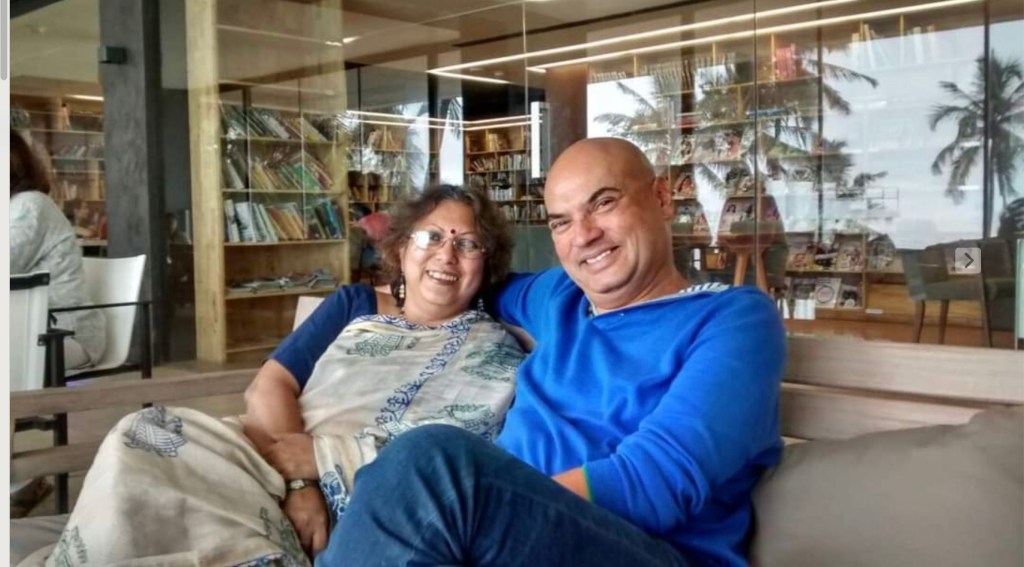
Categories
Conversation

An Officer and a Gentleman: Vijay Raman in Focus

Ratnottama Sengupta, introduces the late Vijay Raman and converses with Veena Raman, the widow of this IPS[1] officer, about his book, Did I Really Do All This: Memoirs of a Gentleman Cop Who Dared to be Different. The memoir was recently launched by Sengupta and brought out posthumously by Rupa Publications.

Vijay Raman’s success as a police officer was not merely a personal triumph. The career of this IPS officer traced the changes in the history of India’s security measures. India’s police organisation in 1947 — the Intelligence Bureau, Assam Rifles and CRPF[2]  — were legacies from the British Raj. The 1962 Indo-China War led to the creation of the ITBP[3]; the 1965 war with Pakistan formed the BSF[4]. Investments in the Public Sector Undertakings led to the establishment of CISF[5]. Indira Gandhi’s assassination in 1985 led to crafting of SPG[6]. The sabotaged crash of Air India’s Kanishka[7] and the Operation Blue Star prompted the formation of NSG[8], and the 2008 terror attack on Mumbai was followed by NIA[9]. Vijay Raman’s life was intertwined with these organisations. He was also responsible for bringing in a number of terrorists and dacoits, including the notorious women dacoit, Phoolan Devi[10] (1963-2001)…He died last year.

In this conversation, Veena Raman[11] reflects on his life and his memoir, Did I Really Do All This: Memoirs of a Gentleman Cop Who Dared to be Different.

Veena this book is a tribute to a police officer who brought honour to his uniform. Having met Vijay Raman I know how wonderful a person he was – deeply loved by not only his family and friends but also many VIPs he interacted with in his professional life. Is this your way of mourning his sudden demise?

When Vijay passed away we — my son Vikram, daughter-in-law Divya, grandson Shaurya and I — were devastated. The cruel illness was swift and relentless: within months he grew weaker before our eyes, and before we were ready to accept the loss. We had no choice but to face it. While we tried to console each other Vikram said, “Mamma we should be grateful that we had him for all these years. After all, Papa was that proverbial cat with nine lives!”

Really?

Absolutely. And why nine? I can give you 19 instances in our years together when his life was in danger and he miraculously escaped. 

I am all ears Veena!

At the very outset, in November 1978, when Vijay was in his first posting as assistant superintendent of police (ASP) in Dabra, Madhya Pradesh, a country-made bomb was flung at his jeep by agitating students in Gwalior. It fell and exploded nearby. Fortunately, no one was harmed.

In 1981, based as he was in the Chambal, notorious for dacoits who stalked the nooks and crannies of the ravines, my illustrious husband had already faced dacoit encounters. The most dramatic of these took place in October, when he led the team that wiped out Paan Singh Tomar who, with his gang, had terrorised the region for years. As he describes in the book, bullets had rained on the encounter team from all sides, caught in the crossfire between the dacoits and the police.

The Pan Singh Tomar gang after a dusk to dawn encounter submits to the police: Photo provided by Veena Raman

He was superintendent of police (SP), Special Branch in Bhopal when the world’s worst industrial disaster took place. On the night of 3 December 1984, more than 40 tons of methyl isocyanate (MIC) gas leaked from the Union Carbide pesticide plant. At exactly that time Vijay was driving to the railway station. “Why inconvenience the driver to stay up late when I want to receive my parents myself?” he had argued. 

Within minutes the gas had created havoc. He was shocked to see hundreds killed and untold hundreds maimed. Somehow he and his parents, so close to the scene of destruction, were spared.

In 1998, as inspector-general of police (IGP) Security, Jammu and Kashmir, while Vijay was in Srinagar, a bomb blast took place on the route during the hour he routinely travelled to office. He was saved that day because his driver had taken an alternative route!

In 2000, as IG-Border Security Force (BSF), Jammu, Vijay was responsible for erecting a much-needed part of the fence between Pakistan and India under highly adverse conditions. Enemy bullets rained down from across the border throughout the operation. That forced him to take some daring and potentially controversial decisions. How very relieved and thankful we were when he came home safe!

Vijay was appointed IG, BSF, Kashmir, in 2003 with the secret mandate to get Ghazi Baba, the mastermind of the 2001 attack on the Indian Parliament. Along with an informer, he had gone on an undercover exploration of the site where the encounter eventually took place. Most unexpectedly the informer pointed out the man himself! Vijay instinctively tried to open the car door and rush out to apprehend the terrorist. The informer roughly pulled him back and screamed to the driver to step on the accelerator and escape immediately. Later the informer explained that Ghazi Baba never left his lair unless he was strapped with explosives, and an attack would have spelled explosions that would have been the end of everyone in the vicinity. 

Did he ever face a situation that he regretted? 

One of the most dangerous situations Vijay ever faced in his risk-fraught career was as Special Director General (DG), Anti-Naxal Operations of the Central Reserve Police Force (CRPF). In April of 2010, many of his men were massacred in Dantewada by Naxalites. The loss weighed so heavily on him that his health declined: he neglected his meals and even forgot to take his medicines. He had moved from the headquarters in Chhattisgarh to Kolkata; Vikram and I were in Delhi. We understood the intensity of what he was going through only later, when he suffered a stroke.

Did your angst-ridden years end with his retirement?

Not really. For, four years after he retired, in 2015, Vijay was handpicked to be a member of a special investigation team (SIT) to investigate the Vyapam (Vyavasayik Pariksha Mandal[12]) examination scam. This was a challenging assignment because the entrance examination admission and recruitment had been going on since the 1990s and had come to light only in 2013.

Did he do anything that was not challenging? What got him a place in the Guinness Book of World Records?

Vijay came close to death even in the personal adventure he undertook with a friend. Together they circumnavigated the globe in an Indian-made car in the last 39 days of 1992. Don’t forget, that was an era when Indian manufacturing was just coming of age. Though this tremendous feat earned him a place in the Guinness Book of World Records, he was exposed to danger of a different kind. For 39 days, they drove at very high speeds, in different countries, different terrains, and different political climates. Let alone sleep on a bed, many a night they could not even catch 40 winks. And still they had only one accident! Yes, it left him badly injured, but he found the strength to complete the challenge and beat the record.

Doesn’t every policeman court danger — even death — in the course of duty? What made him stand apart from other men with stripes?

True, every policeman faces bullets in the course of duty. And Vijay, throughout his career, was inviting them, to see what they could do to him. His faith in the divine, in his own destiny, made him fearless. How very fortunate we were that, time and again, they were deflected.

Another thing that made him stand out was his sheer artlessness. In a field of work steeped in the dregs of humanity, he stood unwavering by the principles of human rights and democracy. Again, fortunately, he came out unscathed, retaining faith in humanity all through life.

This dream run surely merited documenting. And Vijay had a flair for writing. So why did he not pick up the pen until the last hours of his life?

It was indeed a dream run. And that was precisely why I urged Vijay for years to write a book. Yes, many people have achievements, but his narrative was different. Winning without challenges is victory, but winning after overcoming challenges is history! 

I remember that, when you visited us in Pune in 2019, you had said that the range and scope of what he had done, deserved to be recorded. I myself maintained that the consistently straightforward way in which he had done it, had to be recorded for posterity. But whenever this was suggested Vijay would say, “Who would be interested in such a book!” 

None of us agreed with him. We read books by many other police officers which made it clear that Vijay’s experiences were unique. While the others excelled in certain areas of policing, Vijay’s was a whole range of spectacular achievement! 

He may be the only police officer in the country who has dealt with all the aspects of policing — and been successful at each. He was at the forefront of dealing with the changing nature of crime in the country and also at the epicentre of varied policing challenges. 

Doesn’t he write about how his actions led to change in tackling crime and criminals?

Yes, his successes invariably led to major changes in the law-n-order situation in the region. In Bhind, removing the Paan Singh[13] gang led to the surrender of a large number of dacoits who previously considered themselves invincible. This list includes the most notorious Malkan Singh[14] and the celebrated Phoolan Devi. 

Surprise visitor Dacoit Malkhan Singh (right) with Vijay Raman Photo provided by Veena Raman

Similarly, when Vijay initiated the Indo-Pak border fencing, it was a major deterrent because most of the infiltration was from Jammu and there was a marked decline once the fence came up. Ghazi Baba too was seen as invincible, so the encounter destroyed a formidable opponent and also sent a clear message to enemies across the border.

Vijay’s success was not merely personal triumph. His career as an IPS officer traces the changes in the history of India’s security measures, right?

Indeed, his life and career were intertwined with an entire spectrum of events that enhanced the security of Indians. But let me point out that his daily life also contained an extraordinary range of experiences. He grew up in a village in Kerala, and later lived in villages among the most primitive of peoples in other Indian states. But he also lived in the cities, a privileged urban Indian. He had travelled in bullock carts on rutted roads and often walked 30 km in the course of an ordinary day through ravines. And he had also jetted across the world with the prime ministers he protected. 

Vijay exemplified the essential truth of India being one, from Kashmir to Kerala!

Without a spec of doubt Vijay was that quintessential Indian who was intimately connected in different ways to the length and breadth of India. He grew up in Kerala, the deepest south, and spent some of the most significant years of his career in Jammu and Kashmir, the farthest north. His higher education took place in Gujarat; when he retired, we came to live in Pune.

The western part of India was his beloved home as an impressionable youngster, and then again in his final years. There were formative experiences in the east when, as a probationer in the Police Academy, he was taken to explore and understand India’s verdant Northeast. And he was in Calcutta for induction training at the ordnance factory, and later during his stint as Special Director General, Anti-Naxal Operations of the CRPF.

With these influences of north, south, east and west, it was only fitting that Vijay should be allotted the Madhya Pradesh cadre, at the very heart of India.

And he met his darling wife – then a hockey champion – in Nagpur! How did you meet? And how did you sustain your enchantment when the miles kept you in different corners of the land?

Vijay was an excellent writer. Of late I’ve been reading his letters to me over the years, from before we were married as well as during the tenures of separation induced by our work and careers. I can only marvel at his intellectual ability. Even at a very young age, he articulated his thoughts and feelings beautifully, and the letters reflect his tendency to introspect often, and be constantly self-critical. 

I see a proud wife sitting before me.

I have always been extremely proud to be the wife of such an exceptional human being. But Vijay disliked being praised. At the peak of achievement, when his heroic deeds were earning him medals and he was surrounded by people singing his praises to the sky, when he was achieving success after success, he tried to ignore it all. Specifically he would tell me, “Please Veena, you don’t praise me. It’s all right that so many people are praising me. But if you start doing it, it’ll go to my head.” 

Stupidly, I took him at his word. Of course, I boasted to others that the outstanding police officer was also the best husband, and the best father, ever. Even in the 1970s, when so few women had careers, he supported my ambitions. He knew he was marrying a woman who had her own dreams, who wanted to see the world. And yes, he knew that I had not learnt to cook! 

I admired many other things about him. His commitment to perfection no matter how inconsequential the task. His commitment to service, to justice, to humanity. His love for reading. His wry sense of humour. His care for his parents and members of both our families. The deep respect he drew from whosoever knew him well — his family, his colleagues, his subordinates, his superiors, and even many criminals he came in contact with in the course of his duties. 

But because he stopped me from praising him, I could never convey to him in words how much I admired him. It was only when he grew weaker that we worked fast and furious to get down on paper all that he was telling us. And as we approached the final pages of this book he said to me, with some surprise and wonder, “Veena, did I really do all this?”

So this book is Vijay’s story in his words. When he became too weak to speak, and when we lost him, my memories continued to pour in and I took the liberty to fill a few gaps. 

May his legacy live on!

Vijay Raman at work with a kidnap victim. Photo provided by Veena Raman
The A B C of Vijay Raman

Adventure: Awarded citation in Guinness Book of World Records and Limca Book of Records for his around the world tour in an Indian Contessa car in 39 days 7 hrs 55 minutes
Brains: Gold Medals in Law
Courage: Presidents Police Medal for Gallantry

Experience: Over 34 years of rich experience in General Administration, Policing, handled PM Security, CM Security, anti-dacoity operation in Chambal, anti- terrorist operations in Jammu & Kashmir , anti-Naxalite operation, Investigated Vyapam Scam.

Awards
• Presidents Police Medal for Gallantry.
• Presidents Police Medal for Distinguished Service
• Presidents Police Medal for Meritorious Service.
• Gold medals in Law

Click here to read an excerpt from I Really Do All This: Memoirs of a Gentleman Cop Who Dared to be Different

[1] Indian Police Service

[2] Central Reserve Police Force

[3] Indo Tibetan Border Police

[4] Border Security Force

[5] Central Industrial Security Force

[6] Special Protection Group

[7] 1985 crash of AI 182 to London

[8] National Security Guards

[9] National Investigation Agency

[10] Phoolan Devi (1963-2001) was married at the age of eleven and sexually assaulted before she became a dacoit. She was jailed for eleven years and then joined politics till she was assassinated.

[11] Veena Raman retired as General Manager Marketing, Madhya Pradesh Tourism, after serving for 29 years. After retirement, she joined two NGO organisations, University Women’s Association Pune and Pune Women’s Council working towards empowerment of women. She was part of the national hockey team of India in 1975.

[12] Madhya Pradesh Professional Examination Board

[13] Paan Singh Tomar (1932-1981) was an Indian athlete and soldier who became a dacoit due to family feud.

[14] Malkan Singh (born 1943) is a former dacoit who has turned to politics

.

Ratnottama Sengupta, formerly Arts Editor of  The Times of India, teaches mass communication and film appreciation, curates film festivals and art exhibitions, and translates and write books. She has been a member of CBFC, served on the National Film Awards jury and has herself won a National Award. 

.

PLEASE NOTE: ARTICLES CAN ONLY BE REPRODUCED IN OTHER SITES WITH DUE ACKNOWLEDGEMENT TO BORDERLESS JOURNAL

Click here to access the Borderless anthology, Monalisa No Longer Smiles

Click here to access Monalisa No Longer Smiles on Amazon International
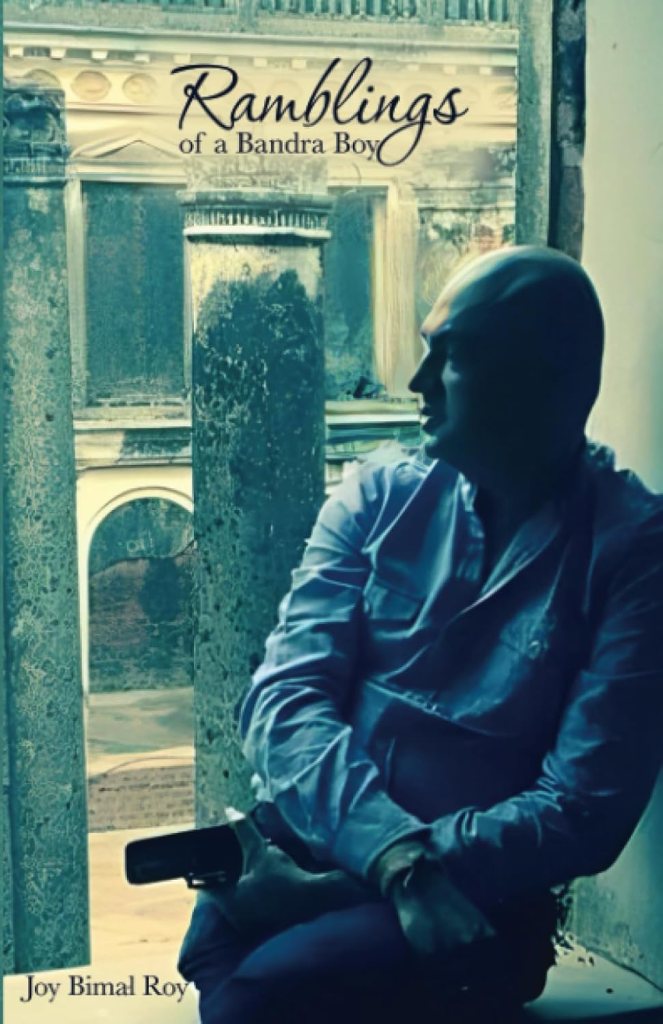
Categories
Conversation

Peregrinations of a Diplomat’s Wife

Ratnottama Sengupta converses with Reba Som

Reba Som

“If Washington goes to Dhaka, there’s a chance that Paris might make it to Stockholm. And of course Moscow would be moved to Geneva!?”

Sounds like gibberish? But this is a piece of the speculative conversation on transfers and postings that is regular in the drawing rooms of embassies and consulates, Dr Reba Som found out on her very first posting after her marriage with Himachal Som.

Both were Presidency graduates pursuing higher careers — he in Foreign Service, she on the threshold of a doctorate. But life as the wife of an ambassador wasn’t only about glamour postings, fancy holidays and brush with celebrities. It was a mixed bag of blessings, as the woman who had grown up in Kolkata with a grounding in Tagore’s music would soon conclude. For, there were the dark clouds of life away from ageing parents and school going children; from the comfort of familiar food and mastered language; from developing your potential and crafting your own identity in the world out there.

In recent years we have read accounts of retired ambassadors and career diplomats’ experiences in diplomatic life. In her memoirs, Hop, Skip and Jump; Peregrinations of a Diplomat’s Wife, Dr Som’s is a woman’s voice, abounding in stories and observations about how the spouses keep a brave front in alien surroundings to hold up the best image of her country. In this conversation, she voices outmore about her encounters with racism, with political emergencies and exigencies. In short, about her lessons in a borderless world of multicoloured humanity.

You went to Brazil (1972), then to Denmark (1974), then Delhi (1976), Pakistan (1978), New York (1981), Dhaka (1984), then Ottawa (1991), Laos (1994), Italy (2002). Please share your gleanings from these lands.

The roller coaster ride was a saga of discovery. Travelling across expanses of the planet earth that we had seen only on the pages of geography books and atlases was a great learning experience. I gained an understanding of diverse cultures, imbibed social customs, became proficient in languages, and was exposed to exotic cuisines. At the same time I faced homesickness. Each posting entailed the challenge of uprooting oneself, finding schools for children, and reinventing oneself every time.

A large part of this life was in the years that had no mobile phones, no video calls, no social media, no internet communication. What did you thrive on?

Continents and hemispheres away from home, the only link with family and friends then was the diplomatic bag. The weekly mail service ferried across oceans by the ministry in Delhi contained letters and parcels from home. We were asked to judiciously use the weight allowed to bring spices, tea, condiments, clothing and other necessities. It became a ritual to write long letters and send them weekly by the diplomatic bag to Delhi from where they would be posted to respective destinations throughout India.

Along with letters would come bundles of magazines and newspapers. These brought us news of home from which we were truly cut off. With no television or internet or phone calls, we were in the dark about all news, be it political, social or entertainment. Every week on the bag day we waited anxiously to receive the newspapers – and the letters, which had instructions, news, recipes, advice, gossip. All of these were crucial for nurturing our souls.

One telegram from my father in 1973 carried the cryptic message: ‘Reba, solitary First class.’ These were the MA results of Calcutta University which were out after a delay of two years.

I was most taken up by the understated humour of some of your encounters in your memoir. Please recount some of them.

On our very first posting, to Brazil, not only our unaccompanied baggage but also our accompanied baggage did not arrive. Eventually when the lost luggage showed up, Himachal’s ceremonial bandhgala[1]was steeped brown — in the colour of the gur[2] my mother had lovingly packed in!

In Brazil, we found the people to be fun loving but too flamboyant. They made tall claims that their institutions were the biggest in the world. But reality often proved the claims to be hollow. Such was the Presidential bid to make the tallest flag pole in the world in Brazil’s new capital, Brasilia. A very tall flag mast was indeed built but the huge flag atop it was torn to shreds since the engineers had not factored in the wind speed at that height. Brazilians mirthfully called it the President’s erection!

And at Denmark. we were surprised by a sudden news of our posting to Mozambique. We had long realised that we were mere players on the chessboard of postings – we could be shunted off across continents at the whims of the powers that be. By the same token, a couple of phone calls by the newly arrived ambassador undid the mischief. We were happy to unpack and settle down again. The only guilt I felt was when I met the owner of Anthony Berg chocolates: I had in no time demolished the entire carton of chocolates he had sent as farewell gift!

You are among the few I know who have mothered in different continents. So how different is it to become a mother away from India?

I always felt that the best way to get to know certain nuances of a country’s cultural tradition was to have babies in them. My elder son, Vishnu was born in Copenhagen and Abhishek, the younger one, in New York — and my experiences each time couldn’t be more different.

In Copenhagen, a social democrat country, hospital visits for full term pregnant women were fixed on a certain day of the week. On the preceding day they had to collect their urine in a jerry can and present it for lab examination. I was confounded and not a little embarrassed to meet other mothers-to-be, swinging their jerry cans like designer bags without fail on the appointed day. I learnt only later that, from the urine examination doctors would note the condition of the placenta and not unnecessarily rush patients into childbirth with caesarean and surgical intervention!

In NY, on the day of my discharge, the hospital staff were highly excited because Elizabeth Taylor had come in for one of her facelifts. I could not forgive them their magnificent obsession when, along with a goodbye hamper, they wheeled in a bassinet with a different baby. On my protestation the nurse rudely shouted, “Can’t you read… the tag says Som Junior?” Shocked by the implication I said, I could not only read but also see! And it was not my child. While everyone was looking on in disbelief another nurse wheeled in my little one. The babies had their diapers changed and were put back in the wrong bassinet.

Years later, we discovered in an informal meeting with an American ambassador that Abhishek was indeed an American citizen. Because, at the time of the child’s birth Himachal was posted not to the embassy in Washington but to the consulate in New York. Only consulate children were given the privilege. This discovery, rechecked by State Department Records, gave our son the US passport. It was a windfall as Abhishek went on to graduate summa cum laude from a prestigious management school in the US and enter Wall Street as an investment banker.

I must also share another truth about birthing away from India. Before Vishnu’s birth, my parents had come to Copenhagen. When I was discharged from the hospital I received their care and being fed Ma’s cuisine was the best gift I could have. So, when phone calls came from hospital, followed by visits enquiring about my state of depression, I was totally confused. I realised how many mothers suffered from postpartum depression in a society bereft of nurturing family care.

How could you master languages as removed as Portuguese from Lao and Italian from Urdu? Is a flair for languages the key to this proficiency or the training imparted before each posting?

 I enjoy learning languages. My stint at learning French at Ramakrishna Mission Golpark stood me in good stead in grasping Portuguese in Brazil, French in Ottawa and Italian in Rome — all Latin languages. But there was also the hazard of mixing up some phrases and words, so similar yet so different! Like Bon Appetit in French and Bueno Appetito in Italian. Or Amor in Portuguese; amore in Italian and amour in French.

Sometimes though, I accidentally learnt how language travels. My mother had packed in many petticoats to match with my saris but without their cord. We went to a store that promised to hold all we need but all my sign language did not bring what I needed. “Phita is obviously not available here,” I told Himachal, preparing to leave. Suddenly the storekeeper perked up. ‘Fita, si senhora!” he said and produced bundles of cord.

In due time I found out that janala, kedara and chabi – Bengali for window, chair and keys – had travelled from India to become janela, cadeira and chavi.

What did Dhaka mean to one raised in West Bengal – per se the Ghoti-Bangal[3]divide, your roots  or the cultural side with Firoza Begum and Nazrul Geeti?

Dhaka was a great posting in so many ways. It was a hop, skip and jump away from my home town Kolkata, with the same language and culture and yet was a foreign posting with foreign allowances!

As you know, there’s a subtle cultural difference in East and West Bengal. Both speak Bengali but in East Bengal, it’s a colloquial rustic dialect while West Bengal speaks its refined cultural form. This formed the infamous ‘Ghoti-Bangal’ divide: Urban Calcuttans looked askance at their country cousins from the East.

The difference extended to the palate. East Bengalis flavoured their dishes with more chillies and West Bengalis, with a pinch of sugar. For the fish loving people, the two iconic symbols are Hilsa and Prawns, for East and West. Emotions soared high in Kolkata when the supporters of the football teams, East Bengal and Mohun Bagan, clashed, after intensely fought matches that spurred deadly arguments and bets.

Given this background, Himachal created a minor storm by announcing to his parents from Chinsurah, Hooghly in West Bengal that he would marry a girl whose parents were from Dhaka and Faridpur in East Bengal.  Ghoti-Bangal feud remained the subject of much friendly banter between Himachal and me until we were posted in Dhaka. There, in a diplomatic turnaround, Himachal played down his Ghoti background to announce that his mother’s family was from Chittagong and he was born in the principal’s bungalow in Daulatpur, Khulna, where his grandfather was posted.

To give a bit of Himachal’s family background: Dr Pramod Kumar Biswas, the first Indian doctorate in Agricultural Sciences from Hokkaido University in Japan, had settled in Dhaka as principal of the Agricultural College. His charming daughter Kana won the heart of Dr Rabindranath Som, a veterinarian who weathered the predictable Ghoti Bangal storm to win her hand in marriage. 

When my parents Jyotsnamay and Manashi Ray visited us, we couldn’t visit Patishwar in Rajshahi district, where my maternal grandfather Atul Sen had worked with Rabindranath Tagore before he was arrested for revolutionary activities with Anushilan Samiti, and exiled to Kutubdia, an isolated island in the Bay of Bengal. As a headmaster, he had given shelter to Jatirindranath Mukherji, popularly known as Bagha Jatin[4].

It was a breezy day when my octogenarian father revisited Faridpur Zilla School. The colonial bungalow had acquired a fresh coat of terracotta paint. Finding his way to the headmaster’s room, he announced with a lump in his throat that history had been rewritten, boundaries redefined and new national identities forged since 1923, the year he had matriculated.

The headmaster, delving through yellowing files, fished out the matriculation results for that year. My father’s face was that of an excited school boy impatient to show off his prowess: “Look at my maths marks! Oh yes, my English scores were a trifle lower than expected because I had a touch of fever, but look at Jasimuddin’s marks in English! Thank God, he passed it.” We looked around in hushed surprise. This isn’t The Jasimuddin, the beloved poet of Bangladesh? “But of course,” my father responded. “Jasim’s weakness in English was my strength!”

Dhaka was also personally fulfilling as my doctoral studies, which I had carried across three continents, found fruition at last! On another front, I met with success in gaining the confidence and blessings of Firoza Begum, the legendary exponent of Nazrul Geeti.

The songs of Kazi Nazrul Islam were a great favourite of my father. He often hummed those made famous by Firoza Begum. Since I had trained in Tagore songs from age five, I never aspired to master the distinctly different style of rendition. A chance encounter with the golden voice revived this desire. Firoza Begum bluntly refused. When I persisted, she wanted to hear me sing a few Tagore songs.

One morning I mounted three flights of steps, harmonium on my driver’s shoulder, to enter her flat with apprehension. At her bidding, I sang four songs of Tagore. She heard me without any comment, then she asked why I hadn’t been singing for Bangladesh television. My relief was palpable! I had passed her test.

Over the next two years, my weekly classes with her extended well beyond the music lessons to serious discussions on life itself and the meaning of religion. What began as a guru-shishya[5]relationship, transcended to deep friendship. She declined any remuneration and dearly wished that I should cut a disc. This wish of hers came true only when Debojyoti Mishra heard me and decided to record my Nazrul-songs for Times Music in 2016.

Food is perhaps the first face of culture. So please share with us some of your culinary adventures. Or should I say ‘fishy’ stories?

Adventures? I could talk about the chapli kebabs in Pakistan, or about putting samosas in Bake Sales. I could tell you about making rasgullas from powder milk. I could even tell you about our gardener in Laos who merrily collected every scorpion and caterpillar that came his way, “for snacks,” he told me. But let me focus on fish.

The very first party I hosted at home in Brazil led me to seek substitutes for Indian ingredients. Fish of course had to be on the menu, mustard fish at that. I had already learnt from the Brazilian ambassador in Delhi that surubim, being boneless, was the most suited for curries. So surubim it was for months until the day I had to go to the fishmongers – and found it was a monster of a whale!

In Pakistan, traversing the arid countryside of Sind, the train would stop at stations where fillets of pala were being shallow fried on large skillets. Savouring its delicate flavour we went into a discussion on the merits of pala versus hilsa. Both have a shiny silver body with thin bones, both swim upstream against current. The taste of hilsa steam-cooked in mustard sauce is a super delight in both Dhaka and Kolkata. There of course the discussions are on the merits of the hilsa from Padma and Ganga respectively.

In Laos I once called the plumber to ease the draining of the bathtub since the pipe had got clogged. He arrived with a live fish in a plastic bag and promptly emptied it into the pipe. It would eat through the slush as it travelled through the pipe, he assured me!

Post retirement, Himachal settled to honing his culinary skills. Cooking, which he had started in Ottawa, became his lasting hobby. He would shop for fish in C R Park or INA Market[6]. He would pore over cookbooks and plot innovative recipes. “Cooking,” he was quoted in Outlook magazine, “is art thought out with palate.” And his piece de resistance was the salmon baked whole.

Which was your most cherished, or striking, brush with celebrities in world history?

At one of the finest dinners in Copenhagen I found myself seated next to a countess. She invited me to visit her since she lived in the neighbourhood. The next day a liveried man arrived to escort us to an imposing manor house. We were welcomed with sherry and we had to select a card from a silver salver with the name of our partner for the dinner. I was escorted by a handsome young man who floored me when we exchanged names. He was the descendent of Count Leo Tolstoy!

Another memorable encounter was with a person straight out of the history books. I was strolling in a forested park outside Copenhagen. I noticed with a shock that I was looking into a glass topped coffin. The aristocratic face inside had an aquiline nose and a goatee that lent a refinement to the visage that still sported a faint smile. The starched lace collar was held in place by a jewelled button that showed impeccable taste. But the elegant hands tapered off to skeletal fingers, and the feet too had become skeletal.

The plaque at the bottom of the coffin informed us that this was James Hepburn, the Earl of Bothwell, with whom Mary, Queen of Scots had fallen in love. It was a fatal attraction since both were married. But soon her husband, Lord Darnley, the father of her son James, the future king of Scotland and England, was mysteriously burnt down in a manor, and Bothwell was granted a divorce. However, their marriage incensed Catholic Europe, so Mary gave herself up to buy the release of Bothwell, who fled to Denmark.

‘Whoever marries your mother is your father’: this dictum defines the acceptance of whatever political dispensation you are forced to live with, at home or abroad. So how did you cope with a turmoil like Emergency or antagonism in Islamabad? 

We had returned to Delhi in the midst of Emergency. We felt some relief to see trains running on time and punctuality being maintained in government offices. Corrupt officers were being hauled up and over-population being addressed. But the atmosphere was sombre and conversations hushed. The deep scar left by the Emergency saw Indira Gandhi being swept out of power the following year.

In Islamabad tension had mounted when I arrived over the imminent execution of Zulfiqar Ali Bhutto[7]. Our residence had become the favourite watering hole for Indian and international journalists who knew Himachal from his Delhi days. Animated discussions over drinks were followed by quick despatches typed out on my rickety typewriter. Unending speculations on the unfolding drama had kept us on tenterhooks. Then one morning in April 1979, the phone rang to say, “It’s done.” [8]
How did Italy change your life?

Italy was easily the best posting of my life in embassies, not only because of its rich history. There I found Italian artists painting inspired by Tagore’s lyrics, and singers like Francesca Cassio singing Alain Danielou’s translations. What made them take it on? The question led me to rediscover Tagore.

My singing of Rabindra Sangeet also found recognition in Rome. My first CD album was released there. I was in many concerts. It was so fulfilling when my translation of Tagore’s lyrics into English found appreciation. Tagore himself believed that his songs were ‘real songs’ with emotions that speak to all people. I began translation in earnest. And that led me to write Rabindranath Tagore: The Singer and his Song (Penguin 2009). The book, with my translation of 50 Tagore songs, was considered very useful to many performing artistes who could understand and represent Tagore better in their art forms.

Please tell us about growing up with Tagore.

Like many girls in Kolkata I began learning Rabindra Sangeet from the age of five. Over the years the songs grew on me. The unique lyrics conveying a gamut of emotions spoke to me when I was far away on postings abroad. I continued my practice of the music through the years and felt vindicated when I got the opportunity to perform to appreciative audiences abroad and back in India.

Why did you work on his songs rather than his poems or stories?

There’s something compelling about Tagore songs. Remember that Gitanjali, which won him the Nobel, was a collection of ‘Song Offerings.’ Songs had given Tagore the strength to ride over the tragedies that had beset his life. They not only helped him express his grief over the deaths and suicides in his family, they were also his mode of expressing his frustration over the political situation that obtained then. And he felt his songs would help others too. “You can forget me but not my songs,” he had written.

Did you ever feel the need to jazz up the songs for Western audiences?

Tagore’s songs are like the Ardhanariswar[9] – the lyrics and the music are inseparable. The copyright restrictions that prevailed after this death did not allow translations. And that was a handicap since his music cannot be appreciated without comprehending his lyrics which are an expression of his creative thoughts.

I would say his songs have near-perfect balance between evocative lyrics, matching melody and rhythmic structure. And the incredible variety of his musical oeuvre touches every emotion felt by any human soul, without jazzing up.

Tagore’s songs are the national anthem of India and Bangladesh, and have also inspired that of Sri Lanka. But will his internationalism hold up with the change of order indicated by the recent developments on the subcontinent?
Tagore was known to be anti-nationalistic. He believed no man-made divisions can keep people segregated. He did not agree with the Western concept of ‘nation,’ he was an internationalist who accepted the ideals of democracy – ‘aamra sabai raja[10], of gender equality – ‘aami naari, aami mohiyoshi[11]; indeed, in equality of humans. What he wrote in lucid Bengali suited every mood. Georges Clemenceau, who was the Prime Minister of France for a second time from 1917 to 1920, had turned to Gitanjali when he heard that World War I had broken out. Even today people can relate to what he wrote.

How did all the hop skip and jump shape the feminist within Reba Som?

The wives of Foreign Service officers are often seen as decorative extensions of their spouses. People only saw the glamour we enjoyed on postings abroad, not the heartbreaks and disappointments we battled. Despite their qualifications the wives were not allowed to work abroad. Instead they had to be perfect hostesses: clad in colourful Kanjeevarams they had to prepare mounds of samosas and gulab jamuns.

But there was little recognition, appreciation or compensation by the Ministry of External Affairs of all the hard work and struggle they put in. To settle down in different postings in rapid succession. To host representational parties where they had to conjure Indian delicacies with improvised ingredients. To raise disgruntled children on paltry allowances.
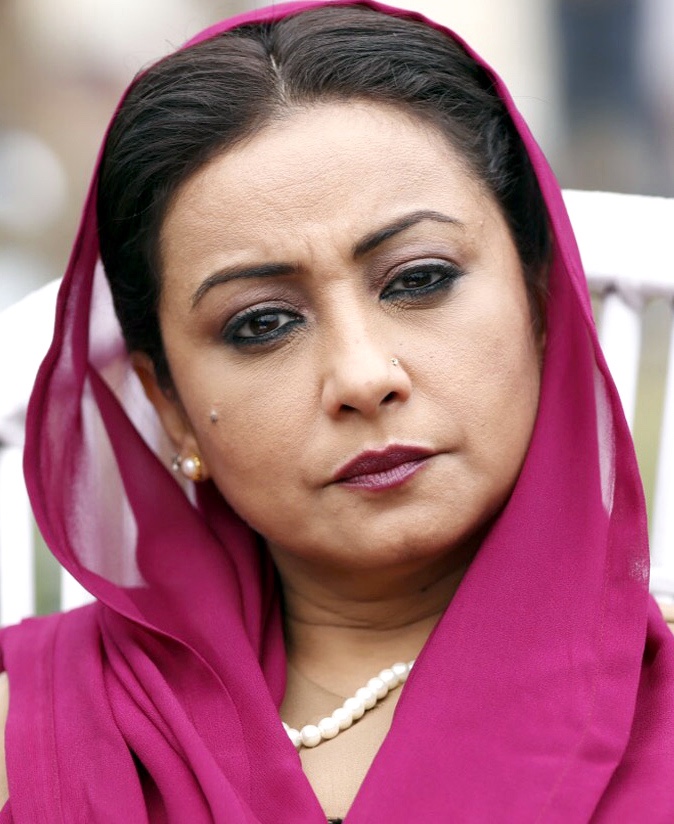
Once, as the Editor of our in-house magazine, I had floated a questionnaire to all the missions abroad asking about the changing perceptions of the Foreign Service wives. That had opened a Pandora’s Box. Eventually in response to our requests the Ministry relaxed service conditions and allowed the wives to work abroad if they had the professional qualifications and received the host country’s permission. This was a veritable coup!

My own act of rebellion was accepting the Directorship of the Tagore Centre ICCR Kolkata (2008-13) after we returned to Delhi on Himachal’s retirement. It became a challenge for me to try and get the Tagore Centre on the cultural map of Kolkata, proving to myself and my disbelieving family in Delhi that it was possible!

[1] Somewhat like a Chinese collared coat

[2] Molasses

[3] Ghoti – People from West Bengal state in India
Bangal – People from Bangladesh

[4] Bagha Jatin or Joyotinadranth Mukherjee (1879-1915) was a famous name in the Indian Independence struggle

[5] Teacher-student

[6] Markets in Delhi

[7] Zulfikar Ali Bhutto(1928-1979) was the fourth president of Pakistan and later he served as the Prime Minister too.

[8] Bhutto was executed on 4th April 1979

[9] Half man half woman

[10] We are all kings

[11] I am a woman, noble and great

Ratnottama Sengupta, formerly Arts Editor of  The Times of India, teaches mass communication and film appreciation, curates film festivals and art exhibitions, and translates and write books. She has been a member of CBFC, served on the National Film Awards jury and has herself won a National Award. 
.

PLEASE NOTE: ARTICLES CAN ONLY BE REPRODUCED IN OTHER SITES WITH DUE ACKNOWLEDGEMENT TO BORDERLESS JOURNAL

Click here to access the Borderless anthology, Monalisa No Longer Smiles

Click here to access Monalisa No Longer Smiles on Amazon International