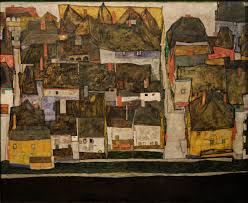
It was a small town,
Its pristine beauty served as an endearing force.
The people appeared happy,
Seemingly embraced by nature.

It was a peaceful town,
With no absurdity in its complexity.
Nothing seemed out of place;
It was paradise in summer.

It was a town where imagination flowed freely,
Bringing home its radiant hues.
Creativity spun effortlessly,
Always a willing companion.

It was a town where twilight evoked a strange feeling.
The streets were deserted,
Though it was safe to walk alone,
If you didn’t mind the footsteps behind and beside you
Thompson Emate spends his leisure time on creative writing. He has a deep love for nature and the arts. His work can be seen in Poetry Potion, Poetry Soup, Written Tales magazine, Writer Space African magazine and elsewhere. He lives in Lagos, Nigeria.
.
PLEASE NOTE: ARTICLES CAN ONLY BE REPRODUCED IN OTHER SITES WITH DUE ACKNOWLEDGEMENT TO BORDERLESS JOURNAL
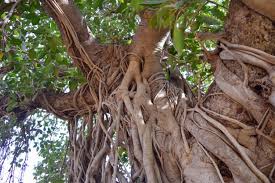
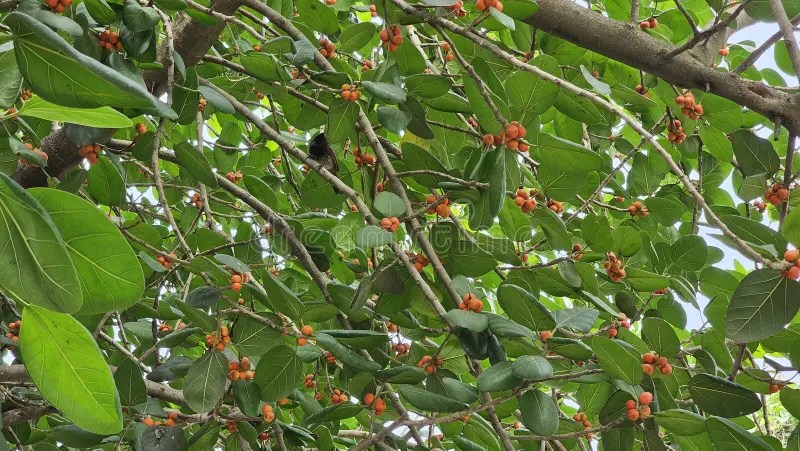
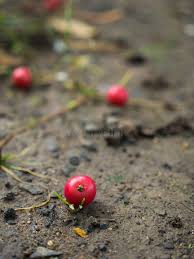
Once, while a bird was searching for food, it spotted a berry under a banyan tree. As the bird grabbed the berry with its beak and flew, it slipped and fell. The place where the berry landed was a field next to a village. On the same day the berry fell, a strong storm brought rain, causing the soil to cover the berry.
Two days later, the berry rotted, and the seeds inside began to talk to each other.
One seed happily said, “We are alive thanks to our luck! Otherwise, we would have been digested in the bird’s stomach within a week.”
Another seed replied, “That’s true. If we had gone into the bird’s stomach, we would have died. We wouldn’t even have had the chance to talk like this.” The other seeds nodded in agreement.
After two more days, one seed sprouted. The sprouting seed excitedly jumped and said, “Look, everyone! I’ve sprouted!”
Seeing the sprout, the other seeds warned, “Pull that sprout back! If you grow, you will change your form and rise above the ground. You will face many hardships while growing. Sometimes, humans might uproot you. Other times, animals might trample or eat you. You must overcome all this to grow into a plant. If you grow, you need sufficient water. If you don’t get enough water, you will wither and die. You cannot endure all these hardships, so it’s better to remain as we are and enjoy our time together.”
The sprouting seed listened but did not respond or pull back its sprout. After a few days, the banyan plant emerged from the soil and began to grow. Its stem grew straight, branches spread out, and many leaves sprouted. Years passed, and it grew into a large tree.
To escape the heat, farmers and travelers rested in the shade of the banyan tree. Animals found shelter beneath it during the night and when it rained. Birds built nests on its branches. The banyan tree provided refuge to many, making the area lively.
Occasionally, indigenous doctors came to the banyan tree to collect its bark, leaves, and buds for medicinal use. Children played in the field, swinging joyfully on swings hung on the banyan tree. The banyan tree felt happy.
Many years went by. One day, a terrifying storm struck. Strong winds blew, and it rained heavily. Many trees were uprooted by the storm, and the banyan tree was among them. The people were deeply saddened by the fall of the banyan tree. The birds and animals living in its branches mourned silently.
After a few days, when the greenery of the banyan tree faded, villagers used axes to cut its branches and trunk for firewood. Everyone who carried the wood remarked, “It was useful even after it died.”
Meanwhile, the remaining seeds in the ground, which had stayed behind selfishly, felt happy hearing their sibling’s praises but were also ashamed. One seed said, “We all made a grave mistake. We remained as we were and couldn’t help anyone. We didn’t do anything worthy of remembrance. Every life should have significance, but our life has been wasted. Although we had a great opportunity to be born, we squandered it. Our sibling, however, did something good. Even in death, it lives on in the hearts and homes of people. Our sibling’s legacy uncovered the true significance of life.”
Hearing this, another banyan seed replied, “Some people also live cowardly lives. They continue to make the same mistake we did. They waste their lives, not realising that a life dedicated to helping others brings true satisfaction. If we understand that helping others leads to everlasting fame and support one another, it would be much better.”
The banyan seeds lamented, “We cannot bring back what has passed, so this is all we have in this life.”
Banyan Berries: Fom Public Domain
Naramsetti Umamaheswararao has written more than a thousand stories, songs, and novels for children over 42 years. he has published 32 books. His novel, Anandalokam, received the Central Sahitya Akademi Award for children’s literature. He has received numerous awards and honours, including the Andhra Pradesh Government’s Distinguished Telugu Language Award and the Pratibha Award from Potti Sreeramulu Telugu University. He established the Naramshetty Children’s Literature Foundation and has been actively promoting children’s literature as its president.
.
PLEASE NOTE: ARTICLES CAN ONLY BE REPRODUCED IN OTHER SITES WITH DUE ACKNOWLEDGEMENT TO BORDERLESS JOURNAL
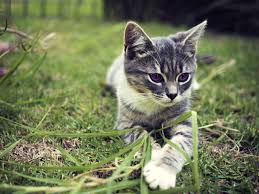
Leaves drift peacefully under a blue sky to fall into eternity. Death should always come so easily. Flowers lie comfortably in their beds, when they’re dead. Change is imperceptible from moment to moment. My cat plays in the grass, as if this moment would never pass. He’s happy that way. Ignorance is bliss, and if he could, that’s what he’d say.
George Freek’s poetry has recently appeared in The Ottawa Arts Review, Acumen, The Lake, The Whimsical Poet, Triggerfish and Torrid Literature.
PLEASE NOTE: ARTICLES CAN ONLY BE REPRODUCED IN OTHER SITES WITH DUE ACKNOWLEDGEMENT TO BORDERLESS JOURNAL
There is a unique charm around books that talk of books and bookstores. Nanako Hanada’s The Bookshop Woman is an honest and touching memoir where she recounts and reflects on real life incidents that transpired in the rock-bottom phase of her life. Seamlessly translated from the Japanese by Cat Anderson, the narrative opens on a certain night in January 2013, with a distraught Nanako sitting listless and dejected in a restaurant at 2 a.m. in Yokohama. She had parted ways with her husband, and moved out of their flat. Living out of a suitcase, she moves through cheap hotels and public bathhouses, like a homeless drifter with an uncertain future.
Nanako is a manager at a branch of Village Vanguard, a bookshop chain. She is depressed with the thought that there’s a lot lacking in her life. However, as we flip through the pages, we see the resilient side of Nanako. She intends to rise above the mess and her depression. She learns to walk with her head held high without feeling sorry for herself. She moves into a cramped apartment near Yokohama station, and also happens to join a new social networking site, the ‘Perfect Strangers’, which provides dating services. She embarks on her ‘Perfect Strangers’ journey with a profile that reads, “I’m the manager of a very unusual bookshop. I have access to huge database of over ten thousand books, and I’ll recommend the one that’s perfect for you.” Although a trivial trend of the modern times, joining this new virtual platform proved a turning point in Nanako’s life.
Through several encounters with random strangers, Nanako discovers a world beyond her broken relationship and self doubt. Meeting new people puts her social skills to test and starts her on a journey of self-discovery. She learns to open up without being over-conscious of herself. In the larger picture, she understands that accepting changes in life is the right way to embrace it. The discussions that Nanako holds with people provide insight into the conditions of the modern day world and human relationships. However, through the eyes of Nanako, Tokyo which “had only felt cold and inhospitable” turns interesting beyond her dreams when she just “tried opening! What freedom there was here!” , and all she wanted to do with this freedom was to introduce more people to new books.
Meanwhile, as the manager of the Village Vanguard, she passionately continues to do her best, innovating with selling strategies and tending to her customers. She gradually learns to “discern what was special about books that perhaps didn’t look so promising at first, and to distil their charm in words”. She talks of the ‘joy of bookselling’ and gives a first-hand account of the challenges of her business. Nanako introduces readers to a host of books through the recommendations she offers during her Perfect Stranger sessions. There is even an appendix in the book that provides more details about these recommendations.
Experimenting with her ideas, Nanako also holds book jam sessions where people come over at a designated spot at an assigned time and share about their favourite books. These book jam sessions humbled her, as she realises that she had hitherto been ‘slightly condescending’ in recommending new books to people. This realisation transforms her outlook immensely.
Weaving through myriads of book suggestions and social meet-ups, Nanako evolves as a person and finds her footing in the real world. Even in the professional sphere she follows her heart and makes changes that resonate with her personal evolution. Her love for books and devotion to bookselling make her empathetic to the extent that she “would inadvertently get a glimpse of something deep in a person’s heart”.
Within a year of that dreary lonesome night in Yokohama, life comes a full circle for Nanako. As a result of her adventures and experiments, she finds peace within herself. Her divorce gets amicably finalised and she even quits the virtual platform to immerse herself in the natural flow of the delightful world she’d discovered — one full of meaningful human connections, friendships, the warmth of books and bookstores. We see Nanako wondering about the day when someone else would pick her books and recommend it to others, triggering an infinite loop– such is the power of books that turns drifters into trendsetters and dreams into reality. The book is indeed a must read to discover this incredible power and reaffirm one’s faith in resilience of human spirit!
Aditi Yadav is an amateur writer from India. She is also a South Asia Speaks fellow (2023). Her works appear in Rain Taxi Review, EKL Review, Usawa Literary Review, Gulmohur Quarterly, Narrow Road Journal, Borderless Journal and the Remnant Archive.
.
PLEASE NOTE: ARTICLES CAN ONLY BE REPRODUCED IN OTHER SITES WITH DUE ACKNOWLEDGEMENT TO BORDERLESS JOURNAL
Running ______ _________ a challenge _________ _________ snot drips ______ breath shortens ____ ____ Toenails dig ______ into ______ puffed skin ______ grip _________ _________ the phone tighter, a reminder Blood pumps _________ _________into my cheeks, _________my body _________ energizing itself _________ I choose to move _________each _________leg _________forward delicious limitlessness, achieved ______ _________ ____.
Destination ahead, continued _________ _________ These gravel roads _________ _________take me home _________ _________ resisting the slow-down inside. _________ in this _________ ______ _________ ______ pushing _________, past _________ old times because I cannot ______ finish ______ that to-do list now. _________ the ache of unresponse _________ _________
Running ______ ______ an achievement ______ The simplicity _________ _________ _________is the lure Knowing _________ when I stop ______ the burn _________ in my chest ______ stops, too _________ Unlike _________ the stride of _________ a long day, The unanswered texts _________ _________ the emails I never wrote _________ _________ the friend waiting for my call _________ _________ No matter what_________ I do _________there is always more faster _______ _________ the time, _________ quicker to outrun _____ _________ ____ _________
the demons inside.
Kelsey Walker is a secondary literacy coach in rural Wyoming. She has an M.Ed in curriculum and instruction and is currently a doctoral candidate at the University of Nebraska.
PLEASE NOTE: ARTICLES CAN ONLY BE REPRODUCED IN OTHER SITES WITH DUE ACKNOWLEDGEMENT TO BORDERLESS JOURNAL
“So relieved that we will make good time today,” I declare. “I’ve had enough of arriving in the dark.”
“We have to stop to get diesel on the way but that won’t make too much of a difference,” Alex reminds me.
We head south of Adelaide to the most fertile part of the state. The coast is lined with stately Norfolk pines, and further south there are rolling green hills lined with heritage gums. There are more cattle than you could count, mobs of kangaroos, and horses wearing coats to protect them from the winter chills. We arrive in Yankalilla, the last town before our departure point, and fill the jerry cans with diesel. There is no fuel at Wirrina Cove, as the marina went out of business a few years ago, so we have to haul diesel to the boat.
We leave Yankalilla and head past yet more horses. After the turn-off for Wirrina I catch a glimpse of my favourites, two Clydesdales, one of whom has a forelock that reaches down past his nostrils. At the marina, we park in front of a tree to protect the car from the harsh marine environment. It’s mid-morning so there should be plenty of time to arrive in Kangaroo Island before darkness. My border collie, Haru, springs from the car, and happily trots down the finger wharf behind me as I carry my luggage to the boat. It’s hard for me to make the leap onto the boat from the finger wharf but Haru skips in while I am still worrying about how not to fall in the water.
“There is less wind than forecast. We’ll have to motor-sail,” bemoans Alex.
I move to the trampoline at the bow to savour the view of boats in their berths opening out in front of me as we exit. Haru sits next to me and whinges every time I stop patting her. Once we are in open water the boat starts rocking, and I walk back along the side of the boat, all the while gripping the side with my right hand, until I am safely inside. Haru trots lightly alongside me.
The waves become increasingly bouncy and Haru frowns. She eyes her crate which is sitting just inside the doorway. I open the flap, and she heads in and curls herself on the old silk cushions and Alex’s old woollen jumper lining the bottom of the crate. She prefers the safety of the crate to sitting outside with the possibility of being splashed.
I abdicate the task of sailing to Alex and watch him at the helm, while I settle myself on the couch, placing cushions behind my head and covering myself with a blanket. I can’t confidently move around on the boat when it is rocking this much, so I stretch my headphones over my head and listen to music, while watching Alex raise the sails and maneuver the boat towards Kangaroo Island. I feel a twinge of guilt at lying down in warm comfort while Alex busies himself with sailing, but he doesn’t seem to mind, so I close my eyes and revel in the music.
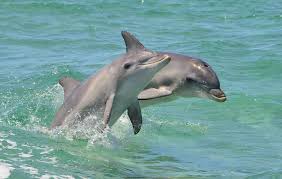
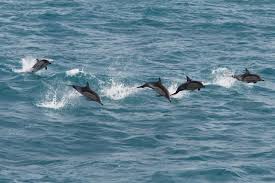
After several hours, we reach the middle of Investigator Strait. I glance outside and can see dorsal fins rising from the waters. As much as I like lying down with a blanket and listening to music, I cannot ignore pods of dolphins. I rise and brace myself for the cold and wind outside the boat. I head towards the bow, but the rocking motion and the cold winds defeat me. From the stern I can see dolphins swimming alongside the boat, and as I gaze into the distance yet more dolphins are breaching as they head towards us. Of our many crossings of Investigator Strait there has never been a time when I have not witnessed pods of dolphins, but the sense of wonder never diminishes.
Despite my determination not to arrive in darkness, by late afternoon the sun begins to slip into the horizon and Point Marsden is still well in the distance. The sky erupts in bright orange, and I hope the light will hold out till we reach our mooring. Heading for Point Marsden is like trying to reach the summit of a mountain. Finally, we pass the point and head into the bay, but darkness has already fallen. Alex locates the mooring buoy in the distance. I grab the boat hook and head to the bow. I crouch on the trampoline and stretch the hook out in front of me over the dark water. Haru crouches at my side and brushes herself against me, willing me to hook the buoy on the first attempt. I stretch forward, hook the buoy, and drag it up to the bow. I call Alex, and he leaves the helm to secure it.
Alex lowers the dinghy, and we prepare to alight. We lift our bags in, and I carefully place one leg into the centre and ease myself in. Meanwhile, Haru has delicately skipped into the dinghy behind me. Finally, Alex enters, unties the ropes, turns the outboard motor on and takes us to the shore. We shine the torch in front of the boat and locate the cove. It’s high tide. Alex hops out into chest-high cold dark waters. He pulls the dinghy towards the rocks and secures it. I clamber out and perch myself on a rock. Alex hands me the bags. I place them on a higher rock just behind me. Then he hands me his backpack containing our laptops. I hold on to them tightly, afraid to place them on the rock in case water rushes over them. Alex picks up Haru and holds her above the water, before placing her on the shore. Then he takes the backpack from me, picks up the bags, and returns to the shore. I pick my way in the dark over slippery rocks, not moving one leg until the other has been firmly anchored. We reach the sand and walk up the switchbacks. Haru delights in running along the switchbacks after having been confined to the boat.
I tread carefully in the dark up the hill, Haru brushing her side against my calf. The holiday house is in sight, and just as I am about to reach the road leading to the house I fall over a boulder and gasp. How did I manage to navigate the submerged rocks in darkness and yet stumble on land?
‘“Oh sorry!” exclaims Alex. “That’s because I wasn’t holding your hand.”
He grabs my hand, and we walk up the last part of the track to the house. We enter and I make a doggie dinner for Haru. Then I collapse on the sofa and Alex makes a fire. After the adventure of arriving by boat and walking up the steep hill in the dark, the pleasure of lounging on a sofa and warming to a fire is multiplied. I am looking forward to spending the next day curling up on the sofa, reading a book in the sunshine, and taking Haru for walks.
A few minutes later the phone rings.
“Auntie May is not doing well. You have to come home as soon as you can!” urges my sister Jemima.
Great Auntie May, aged 103, is my oldest living relative. She was in the nursing home for two decades, even outliving her sons, before moving to the palliative care ward of the hospital. I remember the card from the Queen which she posted on her dressing table three years earlier. She once said that she had lived too long, because her sons and friends had passed. Because her grandchildren are interstate, it is up to her grand-nieces and grand-nephews to visit her.
“OK. We’ll be there as soon as we can!” I reassure Jemima.
“Alex, Auntie May is doing poorly. We have to get back to the mainland as soon as we can.”
“I’ll just check the weather,” he replies. “The wind is in the wrong direction. It’s a north-northeasterly. It may be too rough.”
His brow furrows as he scrutinizes the forecast.
“Can we fly home instead of sailing?” I ask.
“The weather will be getting worse over the week, so it won’t even be safe to let the boat stay on its mooring. Perhaps we can sail to the marina in Penneshaw and leave the boat there. Then we can catch the bus home from there.”
We decide to leave the next morning, but it is noon by the time we lock the front door. I dress Haru in her lifejacket, and don mine as well. We head back down the hill, and down the switchbacks to the shore. Alex picks up Haru and places her in the dinghy. She stands tall, ears pricked, the wispy hairs on her forelegs blowing in the wind, trusting that we will join her.
Alex places the bags in the dinghy. It’s too far away for me to board. If I walk to the dinghy in freezing water, I won’t be able to hop in from water at chest height. Alex pushes the dinghy to the rock I am standing on, and I leap in. He switches on the outboard motor, and we bump over the waves to the boat. Haru is at the front, and she winces as sprays splash onto her face. I pull her back against me to protect her from the sea-sprays. The boat is bobbing in the water. Alex grabs the rope to secure us. I stretch my left leg onto the boat, but the dinghy moves away, and my legs are thrown apart. I don’t want to fall victim to the cold water below. I move my left leg back into the dinghy. The waves are thrusting the dinghy towards the stern.
“Move back. It’s safer to alight from further back,” advises Alex.
Meanwhile Haru jumps effortlessly onto the boat, undeterred by the rough conditions.
“Now!” urges Alex, during a lull in the waves.
This time I extend my left leg onto the boat and somehow the rest of my body follows. Haru is standing expectantly at the bow wondering what all the fuss has been about. Alex raises the dinghy, then the sails, and we head towards Investigator Strait. Once we are in the boat the sea conditions are not as difficult as we had anticipated.
“I think we can sail across to the mainland in these conditions. We don’t need to leave the boat at Penneshaw after all,” Alex informs me.
The sea is bumpy but not enough to make me seasick. I bring Haru inside, and swaddle myself in blankets and locate my headphones, leaving Alex to manage the sailing. Six hours later we arrive at Wirrina Cove and drive back towards Adelaide in darkness.
“Let’s head straight to the hospital!” I urge Alex. “We can’t afford to waste any time.”
Alex floors the accelerator on the freeway, weaving past slow coaches who are blocking our way. Haru curls herself up on the back seat, oblivious to the drama around her.
We arrive at the palliative care ward and enter through the back door where visitors are allowed to enter with their dogs. Will Auntie May have waited for us? We make a beeline for her room. Auntie May is propped up on pillows and beams when she sees us. Haru jumps onto her bed and lies down facing her waiting for a pat.
“I had a bad turn, but I am feeling better today. Did you sail all the way back from Kangaroo Island to see me?”
“Yes, we did.”
“I’m sorry to have put you out. I’m feeling much better now.”
Alex and I glance at each other, and I catch the relief in his eyes. Even though she is 103, we aren’t ready to say goodbye. We hope she will make at least 110.
A few days later the phone rings. It’s the nurse from the palliative care ward.
“Would you come and pick up your Great Aunt May please? She is doing much better than expected and we need to move her out of the palliative care ward. The social worker has found a room with an ocean view for her in the Star of the Sea Nursing Home.”
Later we celebrate Auntie May’s 104th birthday at the nursing home, and next year we look forward to celebrating her 105th birthday. We continue to sail back and forth to Kangaroo Island, choosing our weather to only sail in favourable seas, never hurrying back. Haru continues to sail with us and enjoys visiting Auntie May just as much as we do.
.
Meredith Stephens is an applied linguist from South Australia. Her recent work has appeared in Syncopation Literary Journal, Continue the Voice, MickingOwl Roost blog, The Font – A Literary Journal for Language Teachers, and Mind, Brain & Education Think Tank. In 2024 her story Safari was chosen as the Editor’s Choice for the June edition of All Your Stories.
PLEASE NOTE: ARTICLES CAN ONLY BE REPRODUCED IN OTHER SITES WITH DUE ACKNOWLEDGEMENT TO BORDERLESS JOURNAL
I sit down to remember myself Who and what I could’ve been Had I not fought countless wars in my head An arrow here and a canon there
I sit down to remember myself A master raconteur I could have been Seeking stories and spinning tales An anecdote here and a narrative there
I sit down to remember myself A gifted painter I could’ve been Colouring memories and sketching days An impasto here and a splattering there
I sit down to remember myself A talented musician I could have been Composing melodies and singing ballads An anthem here and a medley there
I sit down to remember myself The butcher I became Slaughtering thoughts, identity and experiences Into a stagnant river of nothing To be lost in a labyrinth of mayhem
Farah Sheikh is a freelance editor based in Bangkok, Thailand. After studying at Lady Shri Ram College and Jamia Millia Islamia, she worked with Dorling Kindersley Publishing and the Rekhta Foundation. She thrives on Urdu poetry and world cinema.
.
PLEASE NOTE: ARTICLES CAN ONLY BE REPRODUCED IN OTHER SITES WITH DUE ACKNOWLEDGEMENT TO BORDERLESS JOURNAL
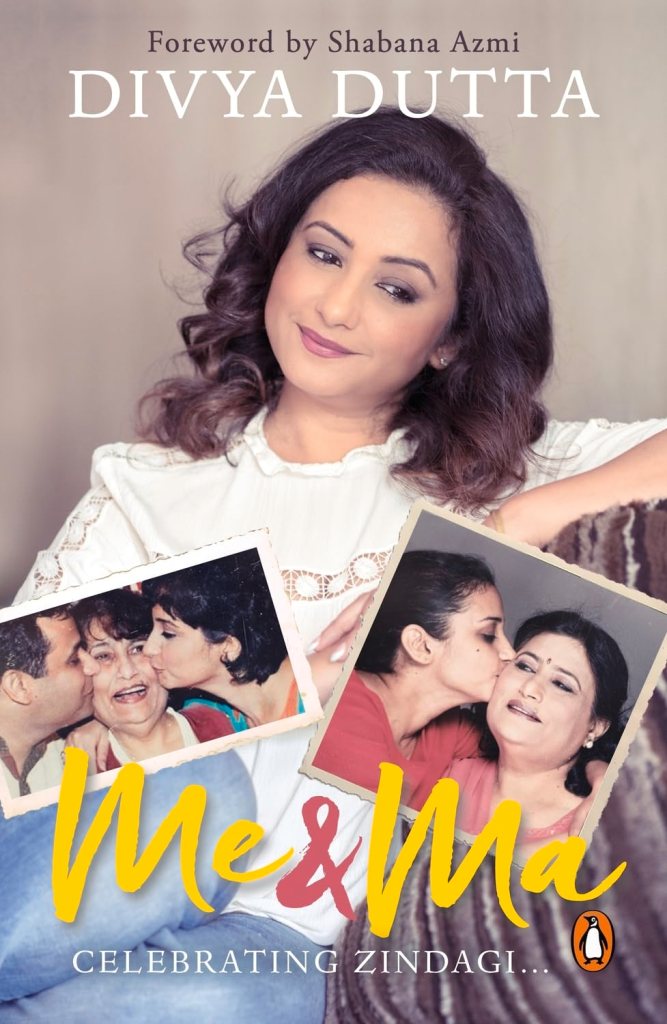
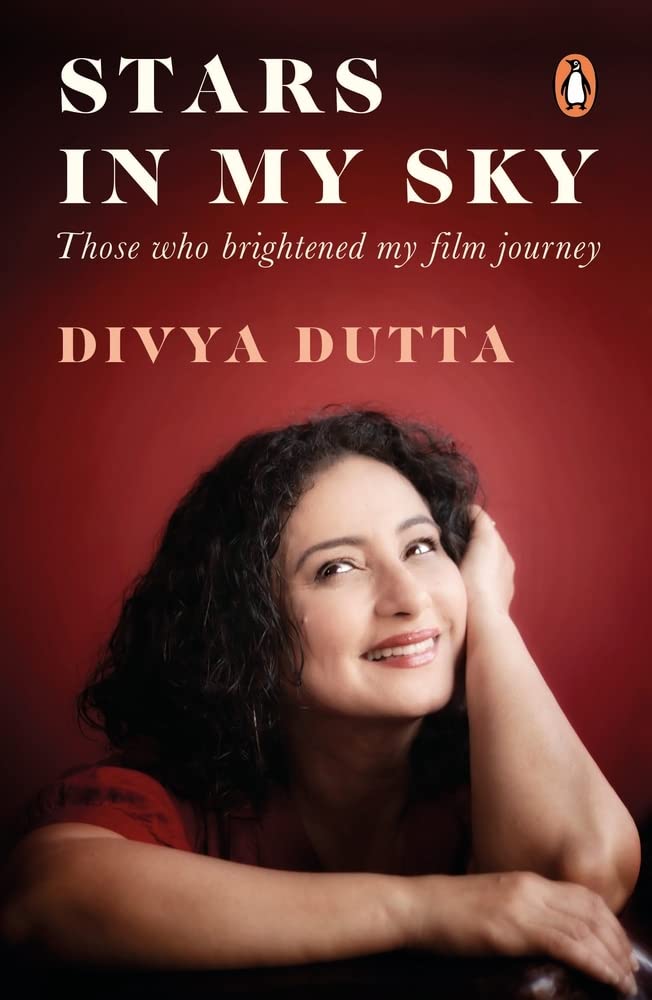
Ratnottama Sengupta, an eminent senior film journalist, converses with Divya Dutta, an award-winning actress, who has authored two books recently, Stars in my Sky and Me and Ma at a litfest in Odisha. Sengupta directs us with her questions to a galaxy littered with Bollywood snippets and emotional stories about life.
Divya you are in this literature festival organised by Shiksa O Anusandhan (SOA)[1], Bhubaneswar with your second book, Stars in My Sky[2]. But your life as an author started with Me and Ma[3]. So your first book was on your personal life. Didn’t your publishers want to know more about your professional life first?
l never had any motive to become an author, you know! My life has been very organic. Things have just happened. Me and Ma wasn’t planned either. My biggest fear was, l didn’t want to lose my mother. Life teaches us that we don’t lose anyone. They may stop living outside of us but they stay on inside us. In our heart. And we have the security that they won’t go away from there. But l wanted to celebrate my parents.
Many a times our dreams don’t match our parents’. Some 25 years back, it was impossible in a doctor’s family to imagine that l would be an actor. There are many parents who force their children to do what they want, they don’t care to understand their children’s dreams or interests. But my mother did.
I would often flip through the pages of Stardust, a magazine which was very popular then. One day an advertisement for a talent hunt caught my eyes. l applied with two amateurish photographs clicked by my brother and never expected to get selected. Much to my surprise, l got selected. So I told my mother, l have to go to Mumbai for an audition.
Both, my brother and I were standing in front of her, our eyes downcast, pin drop silence in the room. My mother said, “You have your second year exams…” And l said, “l promise l will work very hard.” She said, “Look at me.” I looked up. She asked, “Are you sure?” There was a few seconds’ pause. And in those few seconds l realised that this is what l want to do in life.
My mother said, “Okay fine, I am with you.” At that moment happiness filled my heart. And l knew l can never let down this parent because she has believed in me and stood by me, come what may. When she was in the hospital l thought to myself, “Shall l cry or shall l celebrate her?” And l realised l wanted to celebrate her.
So I called Penguin and told them l wanted to write about my mother. They said, “It sounds beautiful, please go ahead. What do you call it?” Till then I had not even thought about what to call it! The title that came out of my heart was Me and Ma because it is the story of a mother and a daughter.
As you said, The Stars in My Sky is commercially attractive but nothing can be more fetching, more precious than your mother. So to me Me and Ma was a bestseller from the outset. I could connect with the readers through the book, through the audio book and now the Hindi version is also out.
Words from the heart!
You see, we don’t build friendship with our parents – neither do our parents. This book is about diminishing those gaps. Children, talk to your parents. And parents, don’t think that you are older, your children should listen to you. Parents too should listen to their children though they may think differently.
I was very fortunate to have outstanding parents. So whenever people told me they had read the book l would call my mother to say, “Mamma l love you.” Many a times we do not say that. We take our parents for granted, and perhaps rightly so — other than our parents, whom can we take for granted? But having said that, I will repeat: We certainly need to convey our love.
The same way parents should convey their love to their children?
Everything in life is mutual but parents, especially a mother’s love is unconditional. Many times when we are in a rush we tell them to “hang up”. Now, when she’s no more, l think, “Whom do l call up when l want her to pick up the phone!”
You touched the core of my heart. When my mother passed away, the first thought that crossed my mind was, “l can never call her again!”
I do call her, and we talk. The bell rings from my heart and we have fun talking, bade majje ki baat hoti hain.[4]
You wrote for your school and college magazines but at which point did you realise that expressing with words rather than emoting is what you want to do? Of course younger yearsare more about being in front of the camera – later, with your pen dipped in experience, you turn reflective.
All these things are gifts from the universe. When l was writing in my school and college magazines, those were not coming out of experience but were full of sincerity, from my heart. My first love always was to face the camera –- perhaps because l am an ardent fan of Mr Bachchan[5]. I saw him on the screen when l was four or five and was mesmerised. I wanted to belong where he was, which world is it? l wanted to go there.
Remember the song, Khaike paan Banaraswala?[6] I would tear my mother’s dupatta or sari and wrap it around my waist over my kurti. Paan wasn’t allowed, so I would stain my lips with maa’s lipstick. I would invite the neighbourhood kids and tell them that, if they clapped louder after my performance, they would get sweets-and-savoury and rooh afzah[7]too. I loved the claps, the appreciation, the acknowledgment but above all the performance was what l loved most.
As a student too I loved to entertain my class between two periods. I was the head girl but l was the naughtiest in the classroom. My friends would ask me to perform and l performed. So performance is what l always enjoyed. Alongside I wrote. Perhaps I had been experiencing the magic of words.
Emoting beautiful words penned by others is an actor’s job. Beautiful words always touch our hearts. I experienced the magic of words as an actor. When l started writing it wasn’t for a film, it was for me. And it was to find a different world that resonates with me. So, both go parallelly.
Both writing and acting are based on lived experiences. You write about experiences in your life; you also portray a character from your life experience. Let’s hear how your life moulded your characters.
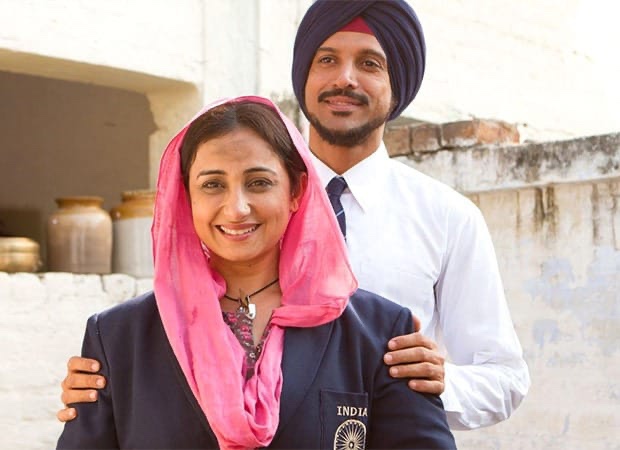
Sure! Let me tell you about Isri Kaur in Bhaag Milkha Bhaag[8].
My mother was a Doctor in a rural area. If the ladies who came for treatment were asked, “How are you?” They would cry. “You are fine?” and they could cry. They’d cry for everything. After school l used to sit in my mother’s clinic and watch everything. I would wonder why these ladies wouldn’t speak but only cry!
Cut to Bhaag Milkha Bhaag. When Rakeysh Omprakash Mehraji cast me he said, “You don’t have much of dialogue. But you must speak through your eyes.”
“No problem,” I replied.
Now let me tell you about the power of costume. I had gone in jeans for a rehearsal of the scene where I’m washing the utensils, but things were not going right, there was a gap somewhere. Then Rakeyshji asked me to wear my costume.
I said, “l’m absolutely comfortable Sir!”
He said, “I insist.”
I changed into a salwar kameez, draped the dupatta behind my ears and then wrapped it around myself — and magic happened. I was washing as if l were a pro! The Director later told me l’d put my hand on burning coal and got burnt, but l don’t have any recollection of that.
Suddenly, l recognised Isri Kaur! She could be the lady who’d come to see my mother. She was there in my subconscious, and tears just trickled down my eyes.
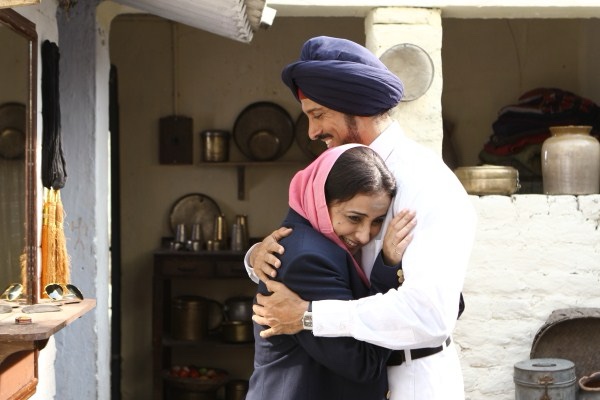
Scenes from Bhag Milkha Bhag. Photo provided by Ratnottama Sengupta
At the end of the scene, l was hugging Milkha. Rakeyshji said, “Give it your end.” So l thought to myself, “Should the end be so clichéd! Brother and sister hug each other, and that’s it?!” All of a sudden l realised that the roles we play, the characters, also have subconscious memories. I remembered Isri Kaur had, as a child, seen Milkha saluting his father, “so do it!” I don’t know where the voice came from but it did. I left that embrace and saluted him just like he did. The entire set fell silent. Every person in the team was crying and that became a cherished moment. This is the power of the subconscious!
Now my eyes are moist! But just as ocean gives back what it takes, so does the ocean that’s life.
Beautiful. So aptly said!
Divya you have two books to your credit. Me and Ma is so personal, and The Stars in My Sky probes your connection with the outer world. What was the difference in writing these two books?
There’s a big difference between writing and acting. Each has a different feel altogether. In acting you part with yourself and allow the character to come in.
You internalise an outsider.
You have put it beautifully. Yes, writing is extremely personal — as personal as my experience with my mother. But Stars in My Sky is my experience with the people l have encountered on the sets. People l shared my movie journey with: Amitabh Bachchan, Shabana Azmi, Irrfan Khan, Javed Akhtar, Gulzar, Shahrukh, Salman…
In the course of making a movie we meet so many people. We cannot say, ‘This person has given me this character,’ or ‘this person has made me a star’. But each of them did something beautiful which l will always remember. Something that brought a smile to my face at that moment. So l thought, l should write about those moments — and you cannot capture those without being personal.
And when you write something on a director or a writer you need to share it with them. These were my personalised accounts. But I’ve had the most overwhelming experience sharing the chapters with them. I saw actors and directors alike cry on reading their chapters. One person l was sharing with over the phone fell silent. He did not speak, nor did I. And l realised that, many a times we don’t say, ‘l like this thing of yours’ or ‘what you did for me made a big difference in my life, thank you.’ So this silence was most rewarding.
It’s so very important to let people know they’ve made such an impact! Now, since we are in a lit fest – which is a celebration of words – l’d like to ask you: what is the thrill in holding a printed book in your hands? Let me elaborate: Today so many things are online. We type or key-in more than we write with pen on paper. Yet I always want to touch the book. After retiring from The Times of India, much of my writing got published online. Some of these got published as an anthology, Monalisa No Longer Smiles[9]. I was thrilled to hold a copy of that book. Why?
l can certainly tell you about scripts. These days many directors and producers say, “Shall l mail you the script?” I tell them, “Please send me a bound script.” It imparts a sense of belonging, like the power of hugging. When we hug our book, we can feel the power of touch. So I hug my script, my copy, with my name written over it… It’s fun turning the pages rather than scrolling with your finger. The smell of paper, the sound of flipping the pages, maybe reading while eating had left a spot of turmeric… All these give me the feeling, it’s mine. The touch, the smell, of a new book will always remain my first love.
You just said you’ll write stories. Will you also write scripts, and direct them?
I’m in love with acting. And, people who write good screenplays should do that. At the same time, we should be open to life. I never knew l would be an actor, I never knew l would be an author, l don’t know what l will be in future. So l say ‘Yes!’ to what life offers us.
Right – Life is a journey, not a destination.
I will go back a little bit to Stars in My Sky. You have mentioned and we also know that Rakeysh Omprakaash Mehra, Yash Chopra, Shyam Benegal, Shabana Azmi who has written the Foreword, are important parts of your career. Can we peep into that world?
I have been fortunate to work with some brilliant and legendary directors. Let me tell you some stories.
Shyam Benegal is one of the most approachable and humble directors ever. When l came to Mumbai from Punjab, no one said ‘No’ in this industry. Who knows when you will require whom? So when l visited production houses they all said, Yes, they will work with me. And i believed them all. And l called Ma to say l was doing 22 films. Of these, 20 never happened and two were made with other heroines, not me. So I was heartbroken.
During that time l met Shyam Benegal at the premier of Train to Pakistan. I said, “Sir l want to meet you.” He said, “Okay. This is my number, call me.” By then I had become cynical, I thought, ‘Is it that simple?’ But I went to Shyam ji’s office – and he was truly honest. “My film’s casting is done,” he said, “but there is one sequence of folk dance. Will you do that?” I said, “Of course Sir.” The film was Samar. He said, “l will need seven days.” Seven days? Then l will have to learn dance and a lot of things, I thought.
On the very first day he asked me, “What’s your hobby?” I said, “Cooking Sir, l love cooking.” “Okay,” he said, “go to the kitchen, with your co-stars, and make something you like.” I was surprised – when will the dance rehearsal start? But l went to the kitchen, there were Seema Biswas, Rajat Kapoor and others. I used to call Seema Biswas Ma’am. In the process of cooking the formality gave way to familiarity and warmth. Suddenly I found myself saying, “Didi pass me the salt, the paratha is getting burnt!” So Ma’am turned to Didi — and that translated into my chemistry with them in front of the camera. Unassumingly it moulds you into the character, without you being aware of it!
Then he told me, “Go to the folk dancers and watch them dancing.” I went, I saw them dancing, and came back. “Now listen to the song,” he told me. I listened, and responded, “The song is beautiful Sir!” “So choreograph it,” he said. “Me Sir!” I squeaked. Here was Shyam Benegal, who could get any choreographer to do it, but he asked me, all of 18, to do that. Was I nervous! I couldn’t sleep that whole night. But more than nervousness or excitement was the feeling of responsibility: none other than Mr Benegal had asked me to choreograph the song. And when I did it, he asked me to teach it to the dancers. The next day went by in teaching them their dance only!
In Welcome to Sajanpur directed by Shyam Benegal In Irada (Intention) directed by Aparnaa SinghDivya Dutta in various roles. Photos provided by Ratnottama Sengupta
What a wonderful way to groom a talent!
The day after was the shoot. A night shoot. The entire crew, cast and the villagers were there to cheer me up. There was a 7-camera setup shooting the dance at one go but l was looking at one person alone – Mr Benegal: he was telling me, “Do it, do it.”
I did it to loud cheer. l was scooped up by my co-stars. I felt so beautiful, and so confident. With gratitude l turned around to thank Shyam Babu, but he had left for the next shot! Nothing mattered to him, but he had left behind a girl who had learnt how to take responsibility. A girl who now knew she had it inside her.
Fabulous! This is what make them icons!
Divya Dutta (born 25 September 1977) is an Indian actress and model. She has appeared in Hindi and Punjabi cinema, in addition to Malayalam and English-language films. She has received many awards including a National Film Award, a Filmfare OTT Award and 2 IIFA Awards.

Highlights in Acting:
1) *Shaheed-e-Mohabbat Buta Singh*/ Punjabi/ 1999
2) *Welcome to Sajjanpur*/ 2008/ Director: Shyam Benegal
3) *Delhi-6*/ 2009/Director: Rakeysh Omprakash Mehra
4) *Stanley Ka Dabba*/ 2011/ Director: Amole Gupte
5) *Bhaag Milkha Bhaag*/2013/ Director: Rakeysh Omprakash Mehra
6)*Irada*/ 2017/ Director: Aparnaa Singh
*Divya Dutta got National Film Award for Best Supporting Actress in Irada*

-- (Compiled by Ratnottama Sengupta)
[1] Studies and Research (translation from Hindi). SOA is a deemed University in Bhuwaneswar.
[2]Stars in My Sky: Those Who Brightened My Film Journey (2022)
[9]Monalisa No Longer Smiles: An Anthology of Writings from across the World (2022), Om Books International
.
Ratnottama Sengupta, formerly Arts Editor of The Times of India, teaches mass communication and film appreciation, curates film festivals and art exhibitions, and translates and write books. She has been a member of CBFC, served on the National Film Awards jury and has herself been the recepient of a National Award.
.
PLEASE NOTE: ARTICLES CAN ONLY BE REPRODUCED IN OTHER SITES WITH DUE ACKNOWLEDGEMENT TO BORDERLESS JOURNAL
Nazrul’s Tumi Shundor Tai Cheye Thaki(Because you are so beautiful, I keep looking at you) has been translated from Bengali by Professor Fakrul Alam. Click here to read.
Hotel Acapulco, has been composed and translated from Italian by Ivan Pozzoni. Click hereto read.
Farouk Gulsara pays a tribute to a doctor and a friend. Click hereto read.
Musings of a Copywriter
InBecoming a ‘Plain’ Writer, Devraj Singh Kalsi explores the world of writer’s retreats on hills with a touch of irony. Clickhere to read.
Notes from Japan
In Educating for Peace in Rwanda, Suzanne Kamata discusses the peace initiatives following the terrors of the 1994 Rwandan Genocide while traveling within the country with her university colleague and students. Click here to read.
Bijoy K Mishra writes of cyclones in Odisha, while discussing Bhaskar Parichha’s Cyclones in Odisha – Landfall, Wreckage and Resilience. Clickhereto read.
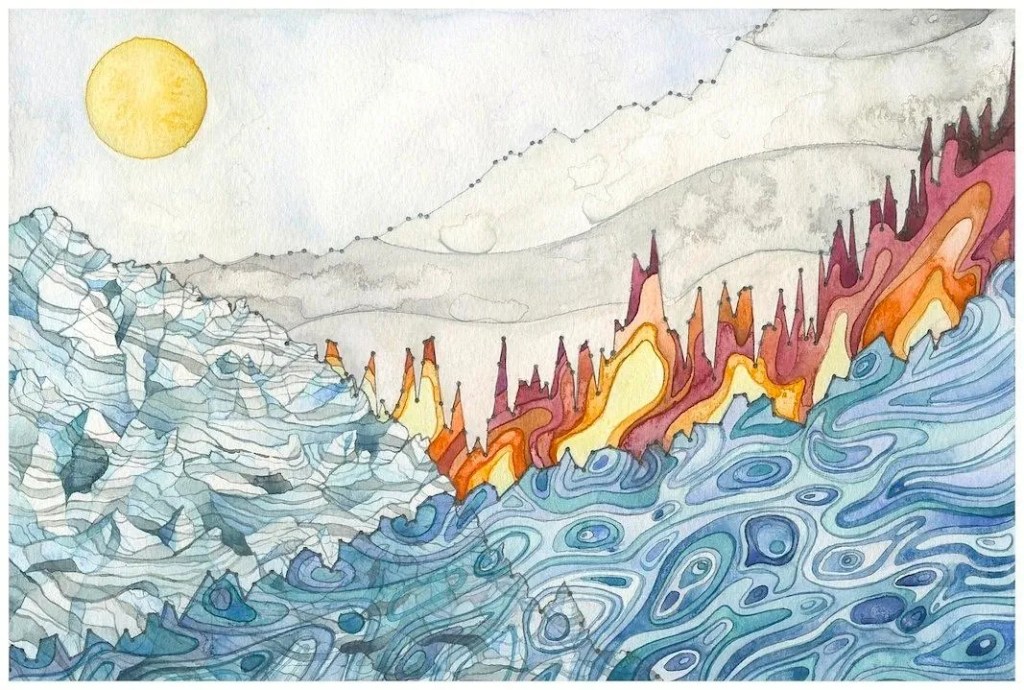
Landscape of Change by Jill Pelto, Smithsonian. From Public Domain
Hope is the mantra for all human existence. We hope for a better future, for love, for peace, for good weather, for abundance. When that abundance is an abundance of harsh weather or violence wrought by wars, we hope for calm and peace.
This is the season for cyclones — Dana, Trami, Yixing, Hurricanes Milton and Helene — to name a few that left their imprint with the destruction of both property and human lives as did the floods in Spain while wars continue to annihilate more lives and constructs. That we need peace to work out how to adapt to climate change is an issue that warmongers seem to have overlooked. We have to figure out how we can work around losing landmasses and lives to intermittent floods caused by tidal waves, landslides like the one in Wayanad and rising temperatures due to the loss of ice cover. The loss of the white cover of ice leads to more absorption of heat as the melting water is deeper in colour. Such phenomena could affect the availability of potable water and food, impacted by the changes in flora and fauna as a result of altered temperatures and weather patterns. An influx of climate refugees too is likely in places that continue habitable. Do we need to find ways of accommodating these people? Do we need to redefine our constructs to face the crises?
Echoing concerns for action to adapt to climate change and hoping for peace, our current issue shimmers with vibrancy of shades while weaving in personal narratives of life, living and the process of changing to adapt.
An essay on Bhaskar Parichha’s recent book on climate change highlights the action that is needed in the area where Dana made landfall recently. In terms of preparedness things have improved, as Bijoy K Mishra contends in his essay. But more action is needed. Denying climate change or thinking of going back to pre-climate change era is not an option for humanity anymore. While politics often ignores the need to acknowledge this crises and divides destroying with wars, riots and angst, a narrative for peace is woven by some countries like Japan and Rwanda.
Suzanne Kamata recently visited Rwanda. She writes about how she found by educating people about the genocide of 1994, the locals have found a way to live in peace with people who they addressed as their enemies before… as have the future generations of Japan by remembering the atomic holocausts of 1945.
In translations, we have poetry from varied countries. Ihlwha Choi has self-translated his poem from Korean. Ivan Pozzoni has done the same from Italian. One of Tagore’s lesser-known verses, perhaps influenced by the findings of sensitivity in plants by his contemporary, Jagadish Chandra Bose (1858-1937) to who he dedicated the collection which homed this poem, Phool Photano(making flowers bloom), has been translated from Bengali. Professor Alam has translated Nazrul’s popular song, Tumi Shundor Tai Cheye Thaki (Because you are so beautiful, I keep gazing at you).
Stories travel around the world with Paul Mirabile’s narrative giving a flavour of bohemian Paris in 1974. Anna Moon’s fiction set in Philippines gives a darker perspective of life. Lakshmi Kannan’s narrative hovers around the 2008 bombing in Mumbai, an event that evoked much anger, violence and created hatred in hearts. In contrast, Naramsetti Umamaheswararao brings a sense of warmth into our lives with a story about a child and his love for a dog. Sreelekha Chatterjee weaves a tale of change, showcasing adapting to climate crisis from a penguin’s perspective.
Trying something new, being out of the box is what helped humans move out from caves, invent wheels and create civilisations. Hopefully, this is what will help us move into the next phase of human development where wars and weapons will become redundant, and we will be able to adapt to changing climes and move towards a kinder, more compassionate existence.
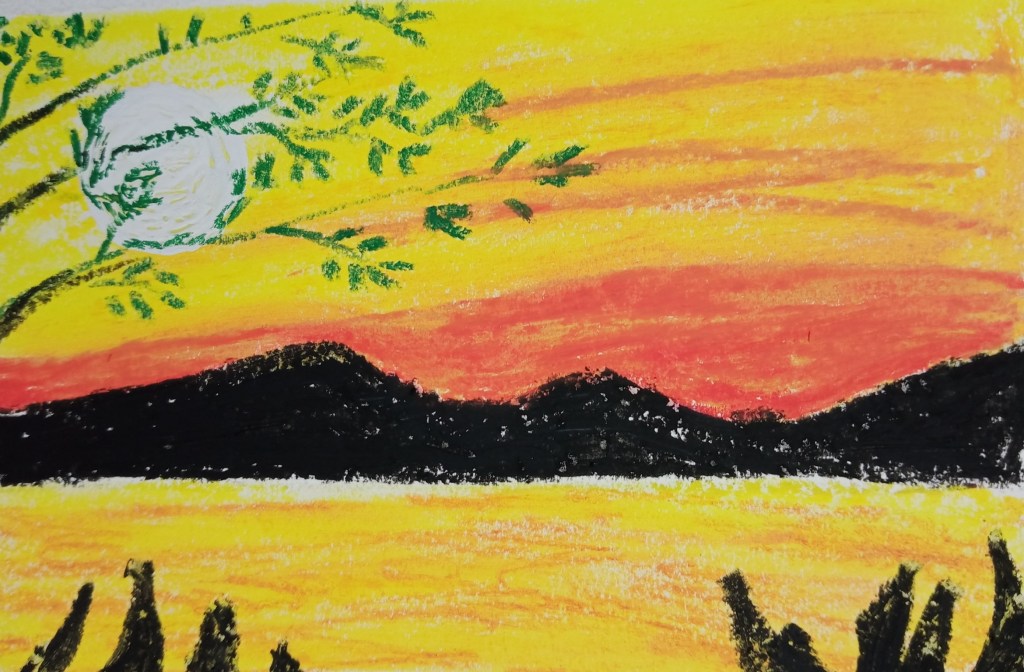
Thank you all for pitching in with your fabulous pieces. There are ones that have not been covered here. Do pause by our content’s page to see all our content. Huge thanks to the fantastic Borderless team and to Sohana Manzoor, for her art too.



 Borderless