Categories
Essay

What Is Your Name?

By Fakrul Alam

From Public Domain

The very last words my mother had said to me constituted the question, “What is your name?” We were in the VIP lounge of Dhaka airport and she had just been wheeled in from an aircraft with one of my sisters. Another sister and I had gathered there to receive her, perhaps knowing as well as her, that she was close to dying. And yet she had managed a smile as she said to me, “What is your name?”

The words, indeed, amounted to a kind of game she would play with me whenever I would meet her at my sister’s house in Dhaka. It was what we call a rhetorical question since she most certainly did not have to be told what my name was. It was her way of reminding me that while I might be professor of English at the University of Dhaka, I — Dr. Alam, as she would also sometimes teasingly call me — should never forget that I had learned English from her, sometimes literally at her feet as she did housework, and on other occasions, when she had done the day’s work, at the table where all of us siblings would gather to study once we were old enough to do so.

On International Women’s Day, I would like to pay a tribute to my mother, her fierce belief in the importance of education, especially women’s education, and the rights of women to study and work and have parity in every sphere with men.

My mother was an outstanding student. Recorded as well as oral family narratives enable me to reconstruct her brilliant performance as a student as well as her aborted student life and its consequences. From one of my aunts’ contributions to the 100th anniversary commemorative volume of Feni Government Girls School, I am reminded that both in Class Four and Six she had made it to the All Bengal Merit List and had been awarded scholarships for her achievement.

From an uncle’s autobiographical narrative, I have an explanation of why she had to stop studying when she was in Class Eight. The only Muslim girl studying in a very conservative town, she had become an obvious target of their religious concern. “Why must a Muslim girl study after a point?” they would say. My mother would go to school properly veiled, but these men reminded my grandfather, who had once been a progressive Swadeshi[1]but was then embracing a very conservative Islamic position, that there were Hindu male teachers teaching in the school. And, they noted, educated women tended to be immoral. For good measure they added, “Is your daughter going to become a judge/barrister after studying?” What was the point of female education, after all?

Persuaded, my grandfather withdrew my mother from school. The clinching point for him, I learnt from my uncle’s narrative, was his own father telling him with finality, “Your daughter has to stop studying. It’s enough that she can write letters and read them!” My grandfather tried to placate her by saying that she could sit for the matriculation examination as a “private” student.

Both my aunt’s account and my uncle’s narrative l record my mother’s intense grief afterwards. For a while, she tried to concentrate on studying for “private” matriculation. But then the First World War broke out; everything was disrupted in Feni, and she was married off after a couple of years. Not only was she grief-stricken at that time, as my aunt notes in her piece, but she would carry her grief at being cheated out of an education almost to her grave.

However, my mother was nothing if not a fighter. My uncles would tease her and call her a “communist”, and if the word had been fashionable in the late ’50s and ’60s when they would always be visiting us in our Dhaka house, surely they would have also called her a “feminist”, although I am sure she would have detested the sanctimonious and self-serving ways in which the word is at times bandied.

What my mother missed in formal schooling, she made up by reading voraciously, whenever she could spare the time. A lasting memory I have of my mother, both after lunch and dinner, and after all the housework was done and our studies supervised, was of her going to bed, day after day and night after night, with the Bangla newspaper, the current issue of the weekly Begum, and some Bangla novel, usually by Sarat Chandra or some other best-selling Bengali author.

Always feisty, and despite being immensely religious and completely devoted to God and the Prophet, she would never miss the opportunity to berate ‘holier than thou’ Muslim priests and men for the way they treated women. Because she knew the religion well, she would always cite examples of how the place of women was not what it was made to be by patriarchal Muslim men of her generation and how veiling beyond a point was totally unnecessary and the ghomta and orna [2]were good enough, if one knew what was prescribed in the holiest of books.

But the most eloquent way that my mother protested against the deprivation she and her generation of Muslim women suffered because of their fathers and their friends and mullahs at large, was in her single-minded dedication to the cause of women’s education. Not only did she teach us and my four sisters the English and Bangla alphabet, but she also ensured that her four daughters as well as her one son had equal access to education. She insisted that her daughters earned the highest degree possible in the field of their choice and was proud when they became working women. She was saddened when a couple of them did not go beyond an MA degree and when one of them gave up her job. And she did everything for them as long as she could to ensure that they could combine not only higher studies but career goals that would help them realise their dreams. When I told my wife I would be writing a tribute to my mother for International Women’s Day, she reminded me that my mother had told her when we were leaving for Canada, where I would be doing higher studies, that she should not come back without earning a higher degree in some field or the other.

Moreover, my mother’s preoccupation with women’s education went beyond her family. She would help any woman wanting to advance herself, through education and through jobs. Whether it was her sisters or her relatives, or even their friends, she offered our house as a home to them and would become their “local guardian” or counsellor, if not a surrogate mother. She also went way out of her way to help any woman she felt was remotely in distress, or lonely, or deprived in any way, with whatever little she could do to help or comfort them. And she would teach anyone, male or female, she could get hold of, believing that education was above all!

There is a lot more that I could say about my mother but I must end here by saying that I took this occasion not really to give you the feeling that my mother largely made me what I am, but mostly to convey to you how she had pledged herself to parity and worked for the emancipation of women in her own way all her life. In that respect, and in so many ways, she was an exemplary woman and truly ahead of her time and thus worth remembering on this day.

[1] Freedom fighter – active in the struggle for independence of the subcontinent from British rule

[2] Covering the head with the loose end of a saree or an orna (shawl or large scarf)

(First published in Daily Star, Bangladesh, on March 9, 2016)

Fakrul Alam is an academic, translator and writer from Bangladesh. He has translated works of Jibanananda Das and Rabindranath Tagore into English and is the recipient of Bangla Academy Literary Award (2012) for translation and SAARC Literary Award (2012).

PLEASE NOTE: ARTICLES CAN ONLY BE REPRODUCED IN OTHER SITES WITH DUE ACKNOWLEDGEMENT TO BORDERLESS JOURNAL

Click here to access the Borderless anthology, Monalisa No Longer Smiles

Click here to access Monalisa No Longer Smiles on Amazon International
Categories
Essay

In the Hidden Kingdom of Bhutan


Narrative and photographs by Mohul Bhowmick


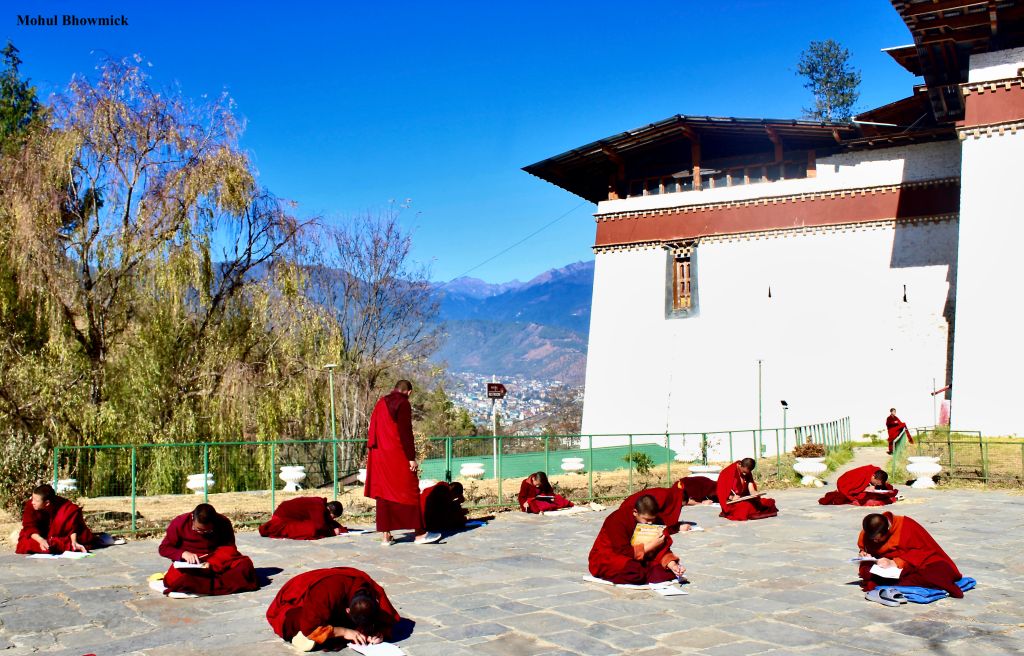
Young lamas, or monks, appearing for their annual examinations in the monsatry of Simtokha Dzong, Thimphu.

Bhutan, 2024

The sun sets far too quickly for my liking in Phuentsoling. There is little to no entertainment to speak of that is worth its name. The town, by and large, presents itself in its entirety and goes to bed by the time my friend, S, and I crisscross our way to our hotel uphill. It does not help that we enter Bhutanese soil on its National Day, celebrated to mark the coronation of their first king Ugyen Wangchuk in 1907, and find most places of public convenience closed.

The stark contrast that the Indian border town of Jaigaon offers to its Bhutanese counterpart Phuentsoling is remarkable. The lack of men — and their wherewithal — on crossing the north-eastern frontier is welcome, as is the steep upkeep that the Himalayan kingdom pushes upon its citizens.

*

The Phuentsoling-Thimphu highway has improved by leaps and bounds since Queen Mother Ashi Dorji Wangmo Wangchuck made her initial foray into the hills of Kalimpong from the village of Nobgang in the 70s. I try my best to spot a mule — or its track — but am left disappointed by the presence of a modern-day state-of-the-art business college in Gedu[1] instead.

The lower reaches of the Himalayas that surround us to the east act as forbidding barriers into the hidden crevices of the hidden kingdom we are attempting to climb in a motor vehicle, the likes of which were first seen in this country in the 1980s. The light — of which I had been so painfully deprived in Phuentsoling — seeps in with zeal I have seldom seen in the plains of the Deccan, and the lifeblood that flows inside me is roused enough to taste the incandescent flavours of kewa datsi[2]with red rice. And before I know it, a lifelong love affair has begun with this enticing dish.

*

We are welcomed into Bhutan proper only after arriving in Thimphu the next day, or so it seems. The capital city of this virgin kingdom has evolved significantly from Pico Iyer’s assumptions in 1989 that all of it could be explored over the course of an afternoon. That the Druk Hotel in which the legendary essayist stayed remains steadfast beyond the clocktower that shows no change of hands is a testament to the art of stillness that the Bhutanese so pride themselves upon; at 11 AM on a weekday at a laundromat not far from the main street hangs a signboard proclaiming, ‘closed for lunch.’ Iyer is not too far off the mark even thirty-five years later.

That the people smile easily takes me by surprise; I have seldom known a populace so unburdened by the weight of living that they have overtaken all their consternations and settled finally upon the art of being. Jigme Khesar Namgyel Wangchuk, Bhutan’s present king, finds himself immortalised in pictures across every restaurant, hotel and store across the country.

The fervour seems, to me, all the more in Thimphu, where the local masses try to outdo their neighbours in anticipation of the gentle 44-year-old stepping out of the Tashicho Dzong grounds (his palace) to inspect these pictures and possibly reward their owners for their loyalty. I suspect this ardour stems as much from devotion to their ‘living God’ as to the fear of missing out or merely keeping up with the Joneses — or Wangchucks. Some modern predicaments seem to have crept into Druk after all.

It is not without these frailties that one’s mornings in Thimphu are strewed. Gather and scatter, as the bard Vikram Seth[3] was wont to have mentioned, applies less to the hounding of the dogs mid-street all night than to the karaoke bars that pride themselves on staying open when the rest of the world sleeps.

Had Nehru not arrived in Paro from Nathu La in 1958 on the back of a yak, this journey would have seemed almost romantic to that of the least fatalistic of Indian prime ministers. It is not known whether the venerable freedom fighter from Allahabad shared any of his midnight oil burning advice with the Bhutanese during his state visit; it appears for certain that the karaoke bars sprung up like mushrooms much later and took his guiding directions to heart.

*

If it is not the baying of the foolhardy dogs, it is the crowing of the late-night suppliers at the fifty shops selling similar products on the Thimphu main street that keeps me — and my journalistic tendencies — awake. Onitsuka Tiger [4]rubs shoulders with Adidas Samba[5] with a glee that one forsakes in favour of the warmth that a bowl of tofu thukpa [6]offers; before long, a handsome policeman in his impeccable uniform including a heartening jacket and betel-stained teeth joins me for a cup of tea. He has just finished his duty of acting as the traffic signal in a city that has no traffic signals.

With the precision best described as that of mimicking an archer — of whose credulity there is a lot in Bhutan — my newfound friend diverts the few cars that choose to make the hike into Thimphu’s central business district on this cold night. He tells me about how gently the tea goes with the thukpa I have with me, all while seated on the plank of a wooden crate left behind by the Adidas doppelgangers.

A plate of momos — beef for him, and cabbage for me — soon arrives from Kinley Tsering, a lady who sells home-cooked food at night after tending to her household all day to augment the family income. In a horror mixed with incomprehension of protocol, my friend in livery whips out his wallet to pay; I am stunned by an act I have never seen uniform-clad men do in the past. The temperature plunges to minus six degrees Celsius as I walk back with the numbing, tear-inducing breeze on my face. I feel exhilarated.

*


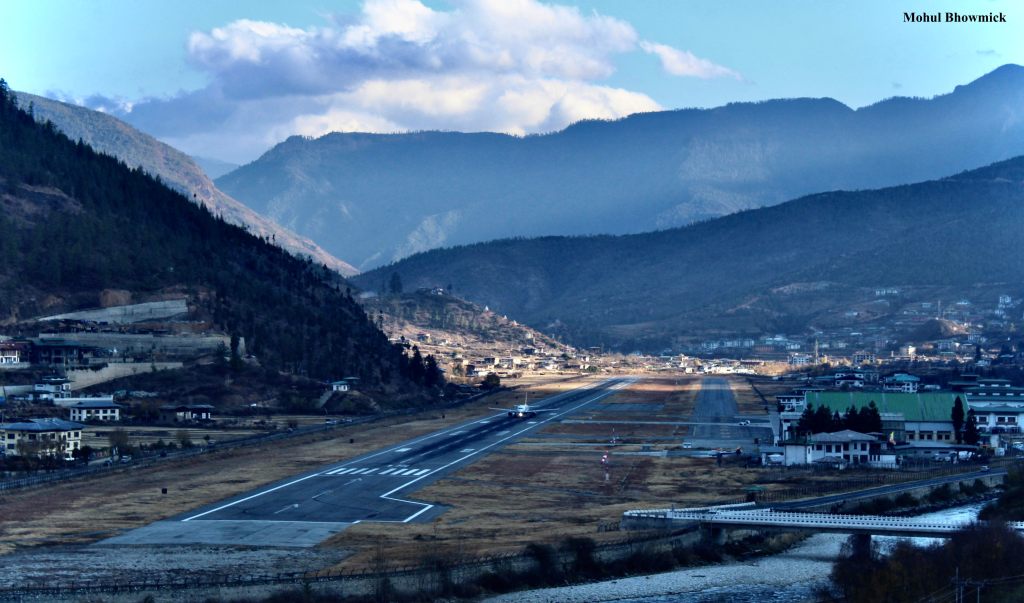
The Paro airport is considered to be one of the most dangerous places in the world to land in.

Paro[7], imperious, meek and all-abiding, comes too soon and whisks away any perceptible delight that one feels at having escaped the wrath that Thimphu denotes upon those who cannot see. The dzong, located several miles outside of town, is the only real attraction besides the museum on the way down; modern tourists — and locals besides — tend to find enjoyment in climbing up the steep hillocks to gain a view of a Druk Airplane taking flight from what is considered to be among the most dangerous airports in the world. Back on the main strip that connects this valley to Chuyul in the north, dinner consists of dried ema (Bhutanese chilli), vegetables and rice, with accompaniments of dumplings.

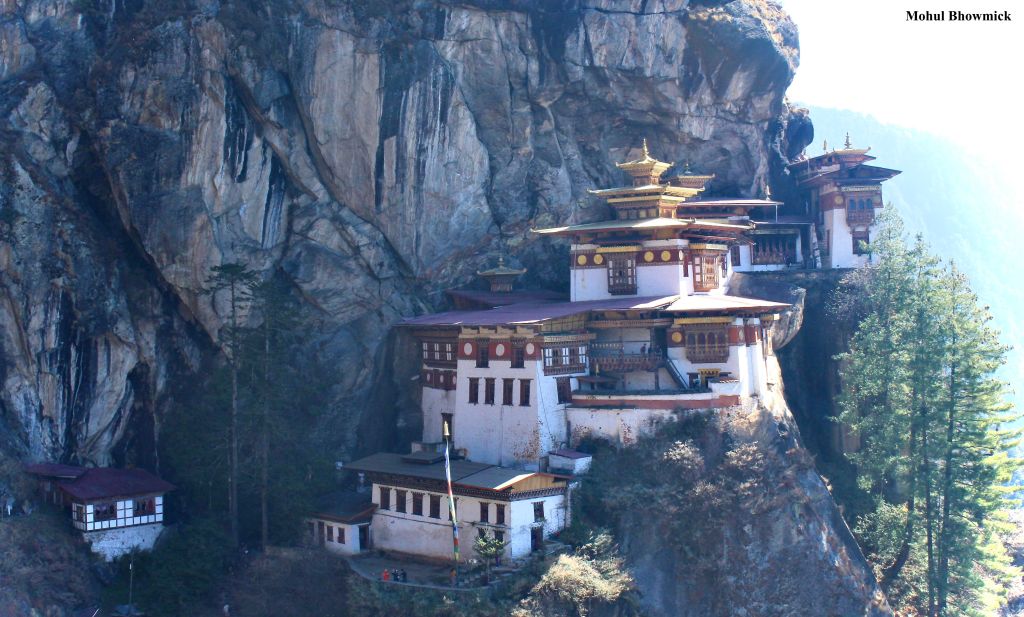
The Taktsang Lakhang[8] stands upright on the shoulder of a cliff the next day; I am perplexed as to how I could be so close as to see the finer details of its inner sanctum in my mind yet far enough to appreciate the impossible angle at which it is perched. The monastery, which had dominated so many of my dreams about Bhutan in the past, is often referred to as the ‘Tiger’s Nest’ by the West. It takes its name from a spot allegedly visited by the Indian guru, Padmasambhava[9], on the back of a mythical flying tiger in the eighth century to flay a demoness who was tormenting the locals of the area.

The climb is demanding, but the panoramic views of the valley to the east make it seem less so. The ardour of the fellow pilgrim is contagious enough for me to push past the mental barriers I have erected for myself without even trying, and before I know it, we are at the halfway point where the government has been kind enough to let an eatery ply its trade. The Local Train’s Vaaqif[10] accompanies us as Taktsang appears all the more closer, and all the more dangerous.

The ascent, dusty and translucent though it is due to the lack of rain for several months, troubles me with its penchant for nonchalance. I loathe to fall into the reverie that takes me over every minute while glimpsing at a branch of the hundred-year-old rhododendron that has stood firm while men have grappled past their anxieties. I awaken soon enough with the realisation that my worries and physical ailments may seem impotent to the staunch Buddhist who makes the six-kilometre hike to the monastery by prostrating himself full-length, getting up and repeating the feat till he gets to the top a week after he has begun.

The top is still way off from where one reaches the monastery proper. Perched dangerously on the edge of this cliff, the monastery virtually hangs into oblivion attracting gusts of wind, who somehow choose not to play to the gallery. Yet, it has survived for centuries, and if faith were one’s sole determinator, it shall survive for several more. The inside has temples dedicated to Padmasambhava in his various forms: astounded, wrathful and compassionate.

Propitiating the gods — and as an extension, their other halves, the demons — is commonplace in Bhutan, and the same holds for ParoTaktsang. While the inordinate thangkas[11] and artefacts collected over the years provide the inner sanctum sanctorum of the monastery with its sheen, it is the historical hostility that the local deities have displayed towards demons that make it eerily attractive. Indeed, folk tales observe that several local, protective deities were demons won over by the Buddhist dharma when Padmasambhava arrived on the back of his mythical tiger.

And so it is that I find myself in the dark, indistinct crevices of the cliff on which the monastery proper is located but beneath which is the original Tiger’s Nest which the Bhutanese claim to have a pug mark of Padmasambhava’s beast. The descent into the darkness, almost as if plunging into the unknown, requires one to be on his back and flatten himself along the rocks to reach the acute angle where the pug mark is located.

A lonely candle blows in this unventilated corner of the cliff, and only a sliver of light to the east remains to remind me of the vast world outside, that which I have forsaken to witness this tiny fraction of hope at Taktsang. This hope flutters unabated, almost as if without any beginning or end, and for a moment, I am suspended in the brilliant sunshine overlooking a valley fit for the heroic landscapes I so fervently pursue. Might this be the only time when I forsake my attachment to life in search of a glorious future, real or imagined?

There is no end to the ruminations that I have while being assailed by the light that peeps in almost as if it is too shy to ask for permission. The way out may be more difficult than the way in — as in life — but how do I respond to the call I have heard inside, the one that compels me to sing the songs of my fathers in the temples of my gods?

The thought strikes with a speed I had not known I possessed until I see the boulder above me swerve in its position in a quarter of a millisecond; with an equal lack of precision and comfort, I come out of the cave, for all the world a dishevelled a youth with an abrasive attitude towards the world, but in my own estimation, a changed man. I did not need new eyes, but merely a new way of seeing.

*


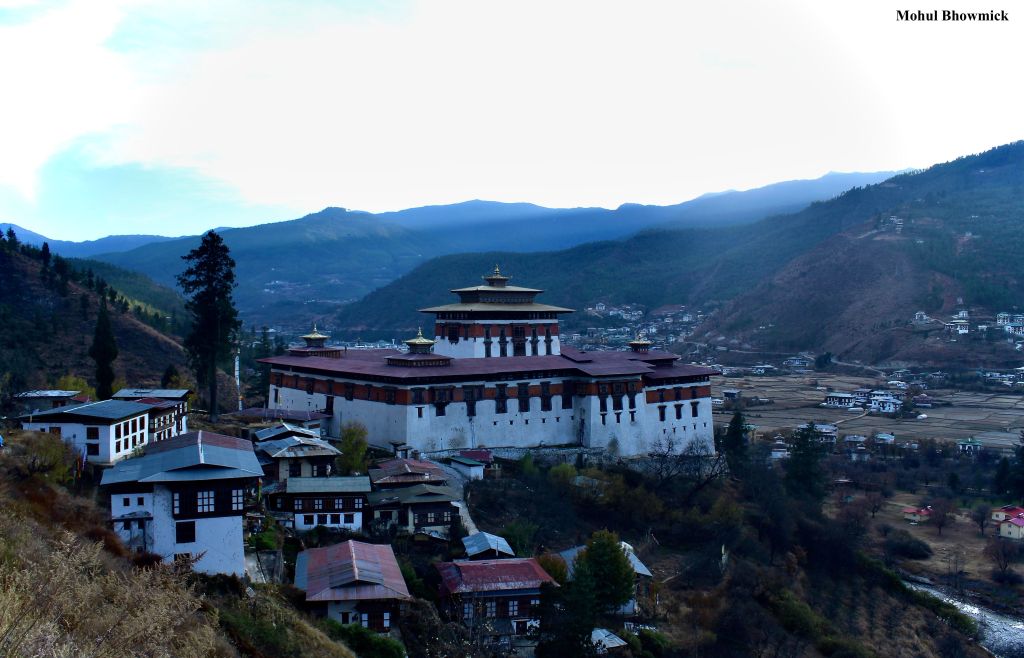
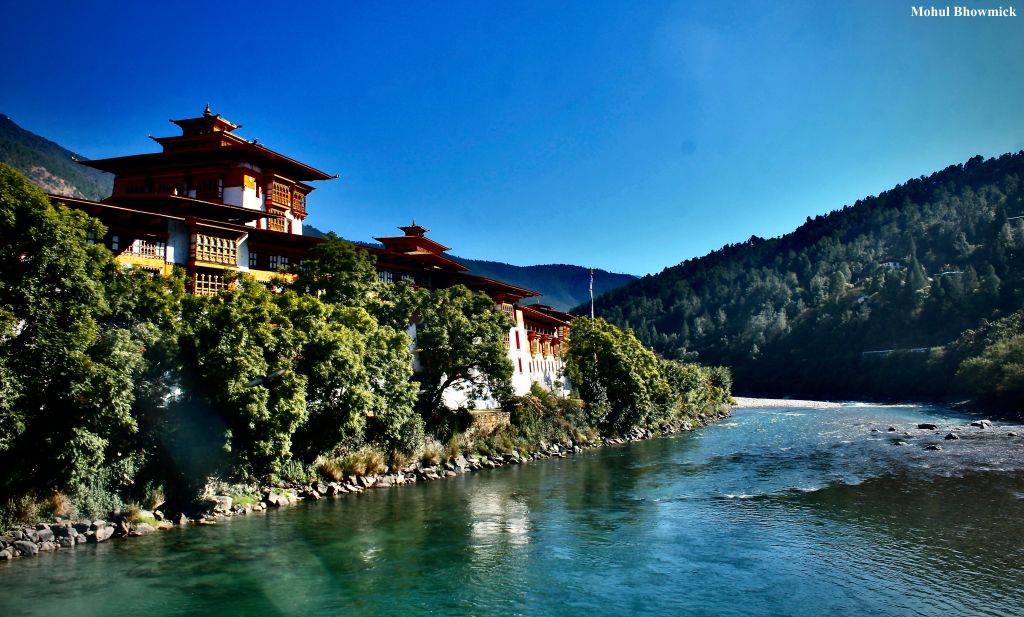
The magnificent Punakha dzong is surrounded by the river Mo Chhu.

The dzong[12] of Punakha is a magnificent object of interest to lovers of history and architecture alike; straddled on an oasis that one must reach after crossing the timid-looking Mo Chhu River, it looms large into the thoughtful sunshine all the while immersed in a meditative calm that only its altitude has any makings of. Like all dzongs in Bhutan, the one in Punakha too is much more impressive from the outside. Tall, gaunt and imperial in its outlook, it acts more as a presence of the godly authority that the king and abbot enjoy in Bhutanese society, the former only matched in his regal bearing by the latter.

Even more impressive, if the word is right, is the suspension bridge that takes one across the river Po Chhu (the male consort of Mo Chhu) behind the dzong. There is little to look at but the other end as one sways with the wind — and the breeze is far too strong for my liking even at three in the afternoon here — while praying to the Gods, both Indian and Bhutanese, that the bridge does not give way and deposit me into the freezing waters of the river about three vertical kilometres below. The 160-metres bridge span seems more than a mile to me; awake finally at the reality of life slipping away from my grasp in the blink of an eye, I experience the innards of a fear that I thought I had buried deep inside myself.

For the entire time that I cross the bridge — and return — for there is nothing to see on the other side but an eatery that sells delightful ice cream, this fear flares in a bid to reignite my passions for a world I had once deeply cared for and strongly felt like changing. For all the lack of consideration that I display, either in terms of material or intangible riches, there is little that stays on par with this kind of fear, the one that reminds me at every step that I am virtually playing with my fate, and that everything I have with me, most perceptibly my heartbeat, could drown in a second if the heavens so choose. A strong gust of wind and I can finally sense what Matthiessen[13] meant when he wrote:

This is a fine chance to let go, to win my life by losing it…’

I am driven back to life when a local teenager rides across the heavily swaying bridge and into the sun — with the mildly flowering dandelions emitting a heady scent ideal for such gallant terrains, on his bicycle — too young to care about life’s intricacies, yet old enough to realise that everything one wants is on the other side of fear.

It is in such heroic landscapes that I change my stance towards the heavens; where I drink the water from the stream gurgling past the Po Chhu and gulp in the air that promises a revival of a dream seen long ago. Such dreams deserve their rightful places in a world shorn of temerity in a way that human emotions can seldom fathom. And yet the dandelions, by now competing with the rhododendrons that shall have to wait till spring, promise a tomorrow that may not get swayed by this incredible afternoon breeze.

*

When I wake up a month later in the arid plains of the Deccan, unsure if such dreams are still worth chasing — or life still worth living — I remember that the dandelions would soon be in bloom in the hidden kingdom I so arduously seek within myself.


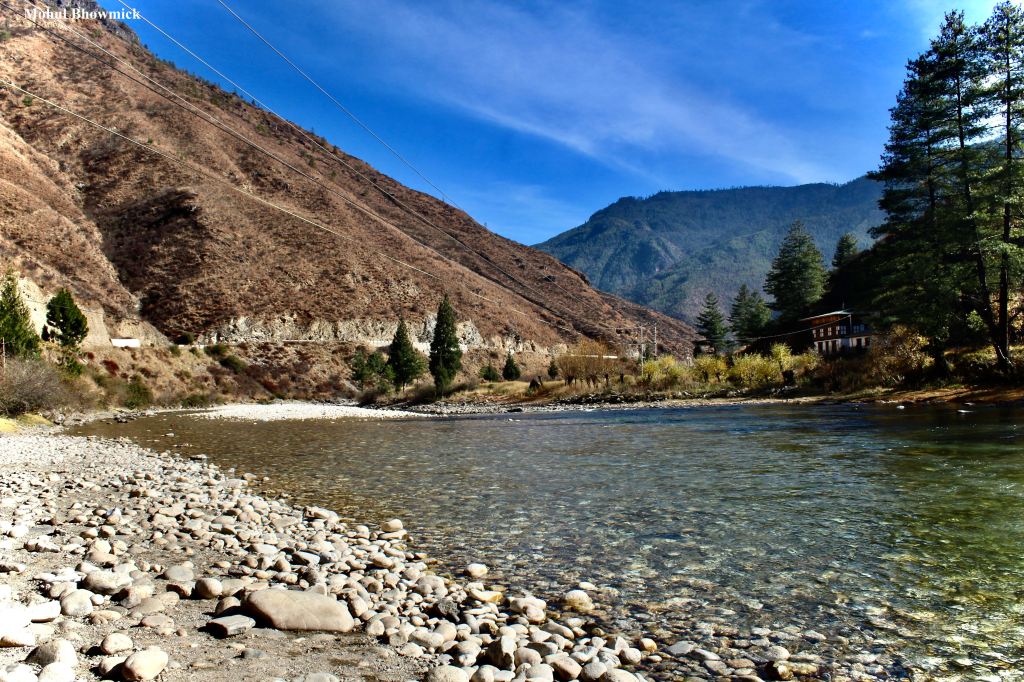
The gently flowing Paro Chhu river makes one lie down beside it and do nothing.

[1] In Bhutan

[2] A dish made of potatoes and cheese

[3]  From Summer Requiem, a book of poems by Vikram Seth

[4] A Japanese fashion brand

[5] A shoe brand

[6] A Tibetan noodle soup

[7] Historic town in Bhutan

[8] Monastery in Paro

[9] Buddhist mystic of the 8th century CE

[10] Song by pop group, Local Train

[11] Buddhist art on cotton

[12] Fort

[13] Peter Mattheissen (1927-2014) novelist, naturalist and CIA Agent

Mohul Bhowmick is a national-level cricketer, poet, sports journalist, essayist and travel writer from Hyderabad, India. He has published four collections of poems and one travelogue so far. More of his work can be discovered on his website: www.mohulbhowmick.com.

PLEASE NOTE: ARTICLES CAN ONLY BE REPRODUCED IN OTHER SITES WITH DUE ACKNOWLEDGEMENT TO BORDERLESS JOURNAL. 

Click here to access the Borderless anthology, Monalisa No Longer Smiles

Click here to access Monalisa No Longer Smiles on Kindle Amazon International

Categories
Poetry

Miscellaneous Poems by Michael Burch

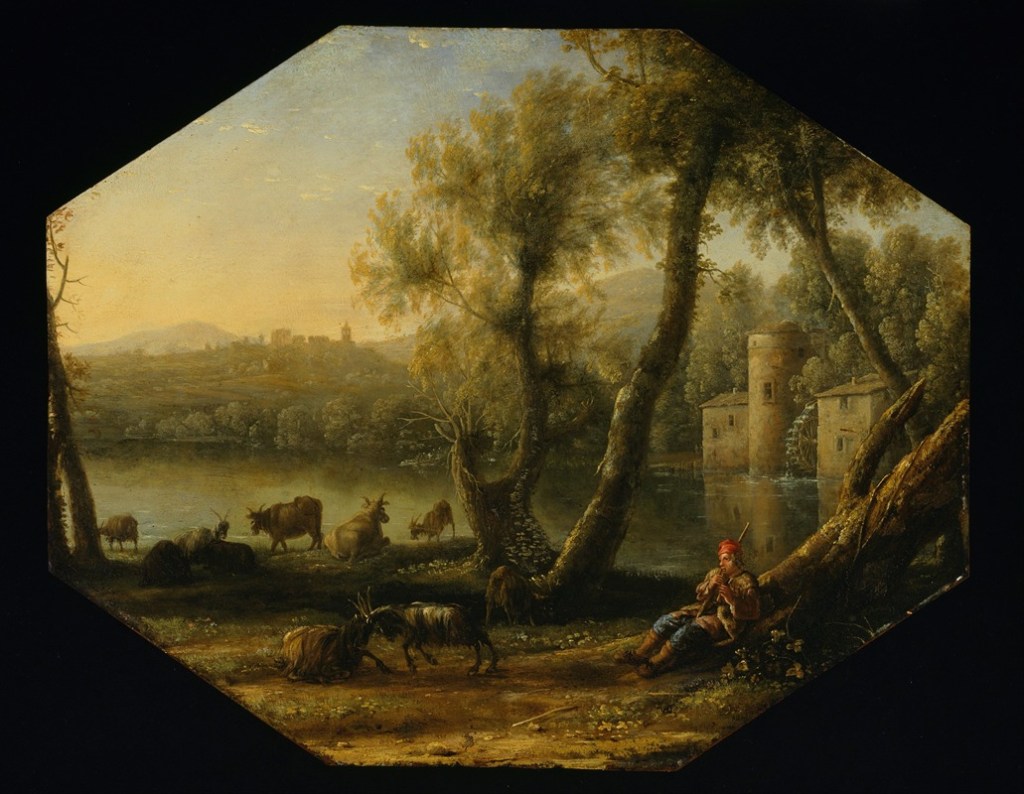
Painting by Claude Lorrain (1604-1682). From Public Domain
COWPOKE

Sleep, old man ...
your day has long since passed.
The endless plains,
cool midnight rains
and changeless ragged cows
alone remain
of what once was.

You cannot know
just how the Change
will sweep the windswept plains
that you so loved ...
and so sleep now,
O yes, sleep now ...
before you see just how
the Change will come.

Sleep, old man ...
your dreams are not our dreams.
The Rio Grande,
stark silver sand
and every obscure brand
of steed and cow
are sure to pass away
as you do now.


DESPERADO

Have you ridden the fences
of plains never-ending
as the wind sighed for lovers
long past, or long gone?
Have you dreamt of a night
with a pale moon ascending,
as Death stole a kiss
from your lips before dawn?

If love is the gold that you seek,
are you fleeing
for fear that its luster
may blind you again?
Oh, desperate lover, I loved you
not knowing
you would flee from my arms
through this cold, driving rain

to wander alone where the stars do not shine
having stolen the brightness from love — yours and mine.


TWELVE-THIRTY

How cold the nights become so quickly;
now a small fire does little to quench
the winter's thirst for warmth.

Sometimes it seems that all my life
has been an endless winter:
the longer it grew, the more of me it demanded...
and time goes slowly when a man's strength
is not enough to meet his needs.

Tonight I feel an old man
creeping into my bones,
willing to die and sleep and never dream,
and I accept him,
not because I wish to lie and live a life of peaceful ease
until I die,
but because I’m too damn weak and weary
to wish it otherwise...
and a man is so very close to the edge
when he lacks the strength to wish.

Long ago, when I was young,
I would run and fall and cry
and not give up.
But now it is twelve-thirty,
the darkest hour of the night,
and I am at the darkest point
that I have ever known in life.

So even as the frigid winds
pass silently across the hills,
I feel my spirit sigh within
and steal into its cell.

No longer does it venture forth
to dare new feats and find its fate,
but it lies asleep throughout the night
and does not awake except to eat
a little more of my life away.

Michael R. Burch’s poems have been published by hundreds of literary journals, taught in high schools and colleges, translated into fourteen languages, incorporated into three plays and two operas, and set to music by seventeen composers.

PLEASE NOTE: ARTICLES CAN ONLY BE REPRODUCED IN OTHER SITES WITH DUE ACKNOWLEDGEMENT TO BORDERLESS JOURNAL

Click here to access the Borderless anthology, Monalisa No Longer Smiles

Click here to access Monalisa No Longer Smiles on Kindle Amazon International

Categories
Notes from Japan

Finding Inspiration in Shikoku’s Iya Valley

Photographs and narrative by Suzanne Kamata

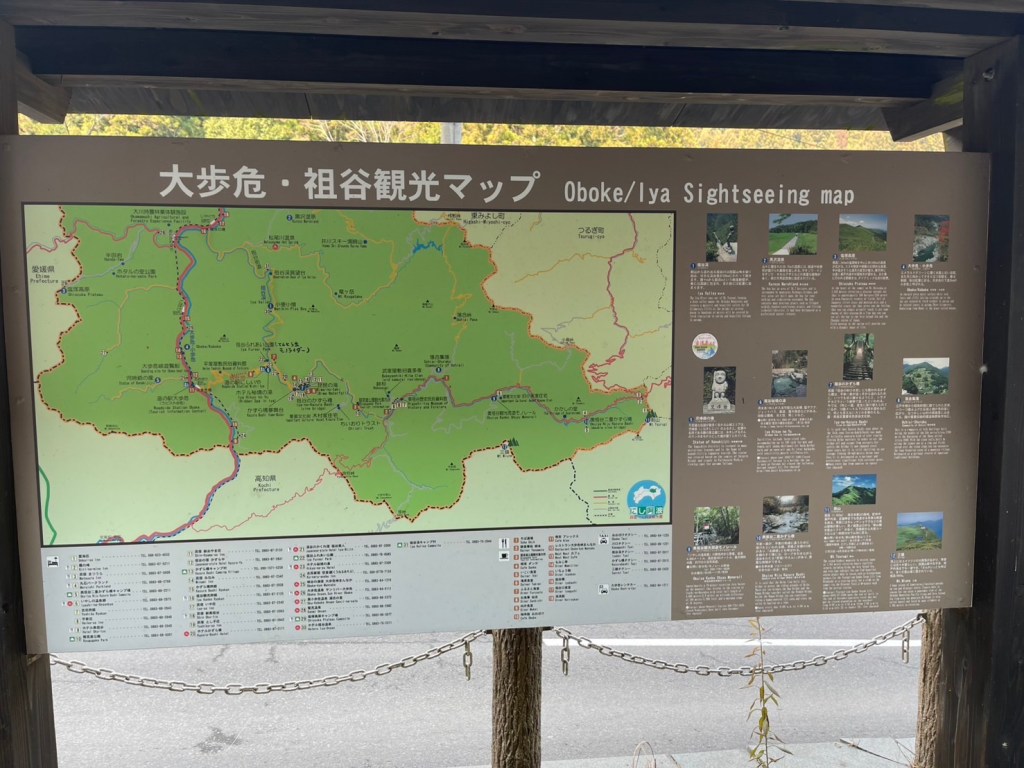
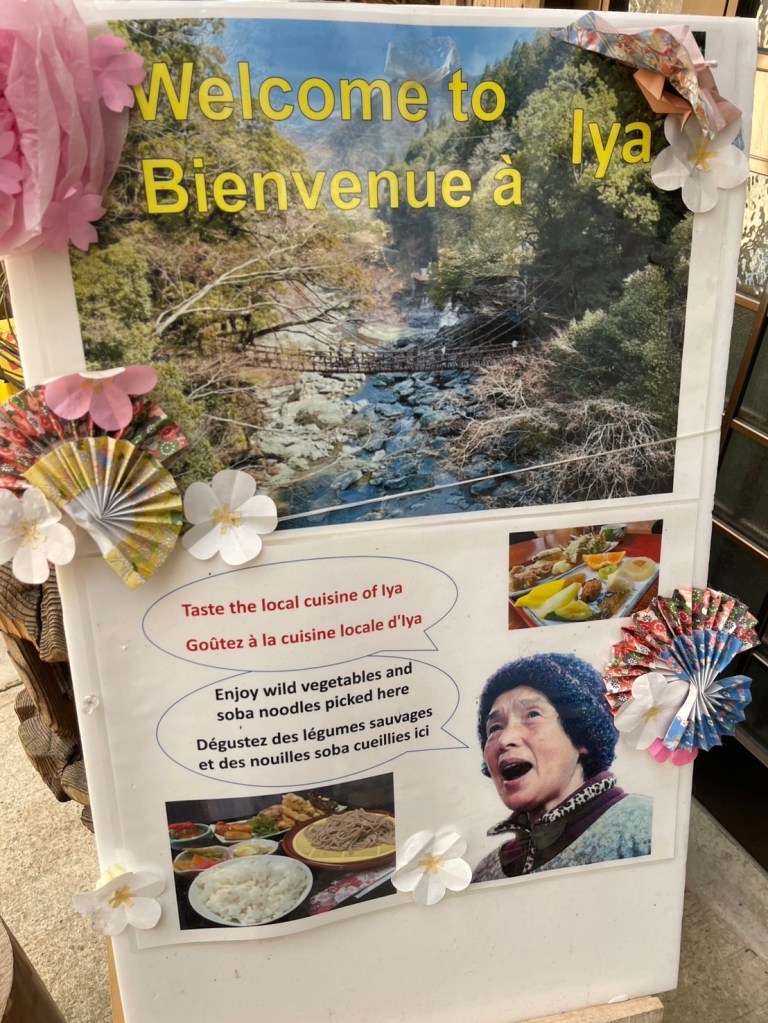
When I first arrived in Japan over thirty-five years ago, one of the first places that I visited was the Iya Valley, deep in the interior of Tokushima Prefecture. It wasn’t easy to get there then, and it’s not easy now. From Tokushima, there are no trains – only very occasional buses, or you can brave the narrow, twisty mountain roads sans guardrails and drive on your own. At the time I visited, I recall no restaurants or hotels, but apparently some abandoned houses have been refurbished as high-end inns.

The Iya Valley attracts adventurous travelers who are up for white-water rafting on the river that cuts through the Oboke Gorge. Another thrill that can be had is crossing Iya Kazurabashi, the swaying vine bridge that spans the gorge. I crossed the bridge on that first visit years ago, and I remember clinging to the rope railings while taking careful steps, my heart hammering all the while.

The vine bridge is periodically reconstructed, but the original was said to have been created by aristocrats who had fled the capital of Kyoto. The Heike clan, who have been immortalised in the Japanese literary classic Heike Monogatari, were defeated by the Minamoto clan in the Genpei War (1180–1185) at the end of the Heian Period. They found the wilds of Shikoku to be the perfect hideout. Their descendants continue to live in the area.

I found this story incredibly fascinating. As a university student, I had been captivated by descriptions of Heian court life – the ladies-in-waiting in their layered brocade kimono, lover’s messages exchanged in the form of poetry. As anyone who has seen the recent miniseries Shogun has noted, ancient Japan was filled with aesthetic delights. Imagine going from a wooden house with fragrant tatami mats, sliding paper doors, and an ornamental garden to an untamed mountain, probably teeming with wild boar and monkeys.

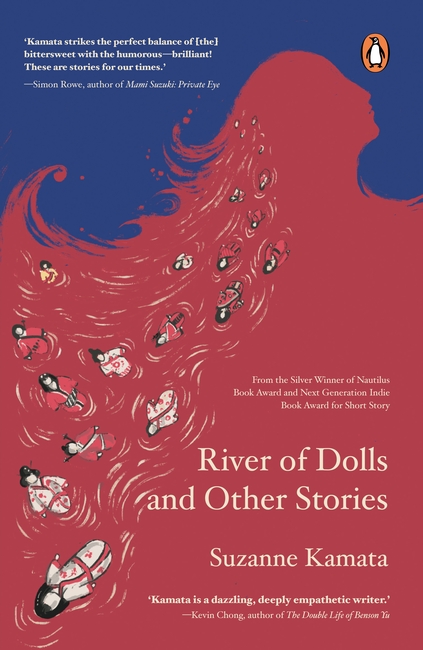
I was inspired by this place to write the short story “Down the Mountain,” which appears in my newly published collection River of Dolls and Other Stories. I blended ancient history with the Japanese folktale “Kaguyahime,” or “The Moon Princess.” I was also influenced by reports that I had read of the forced sterilisation of Japanese women who were mentally ill. The story begins like this:

You say that you want to leave this mountain, daughter, and I know that your will is strong. For you, there is not enough of life in selling fish-on-a-stick or serving noodles to strangers. You look at the swaying vine bridge and see a magnet for tourists, those busloads of people who come up from the city, filling the valley with sounds of laughter and loud voices. I will not stand in your way, but before you go, there are some things that you must know.

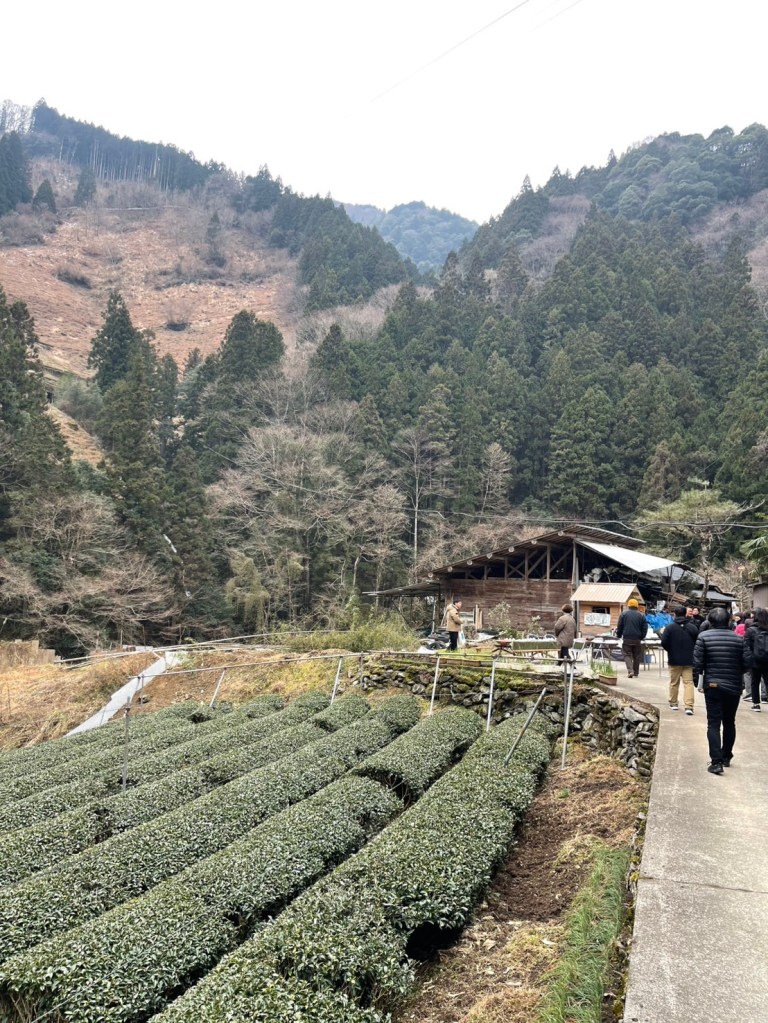
Last week my husband, who is newly retired, took a trip to the Iya Valley as a tour-guide-in-training. While I was at work, he crossed the bridge and was treated to thick udon noodles in broth and a sampling of teas grown on the mountain. A local woman sang a traditional song to the group of visitors.

“Have you ever been to Iya?” he asked me when he’d returned home.

“Yes,” I told him. “Long ago. As a matter of fact, I even wrote a story about it.”

Suzanne Kamata was born and raised in Grand Haven, Michigan. She now lives in Japan with her husband and two children. Her short stories, essays, articles and book reviews have appeared in over 100 publications. Her work has been nominated for the Pushcart Prize five times, and received a Special Mention in 2006. She is also a two-time winner of the All Nippon Airways/Wingspan Fiction Contest, winner of the Paris Book Festival, and winner of a SCBWI Magazine Merit Award.

PLEASE NOTE: ARTICLES CAN ONLY BE REPRODUCED IN OTHER SITES WITH DUE ACKNOWLEDGEMENT TO BORDERLESS JOURNAL

Click here to access the Borderless anthology, Monalisa No Longer Smiles

Click here to access Monalisa No Longer Smiles on Amazon International
Categories
Poetry

The Moon Never Speaks to Me

By George Freek

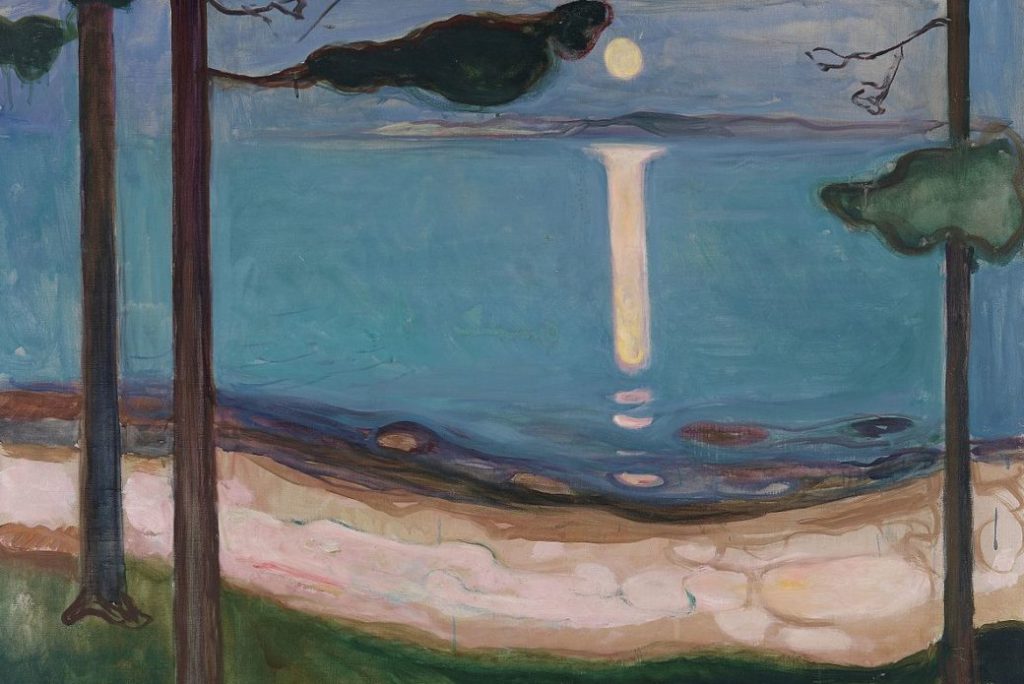
Moonlight by Edvard Munch (1863-1944). From Public Domain  
THE MOON NEVER SPEAKS TO ME 

Life unrolls from day to day,
like an endless carpet
full of ancient mysteries.
I watch day become night
like a moth emerging
from its cocoon,
as the moon reveals
some hidden scheme.
I have no idea what it means,
but the moon soon vanishes,
along with the night,
and dust falls from the stars.
In some other world,
far beyond our sight,
another sun is rising
to provide light,
for life there,
as it begins its unknown,
precarious start.

George Freek’s poetry has recently appeared in The Ottawa Arts Review, Acumen, The Lake, The Whimsical Poet, Triggerfish and Torrid Literature.

PLEASE NOTE: ARTICLES CAN ONLY BE REPRODUCED IN OTHER SITES WITH DUE ACKNOWLEDGEMENT TO BORDERLESS JOURNAL

Click here to access the Borderless anthology, Monalisa No Longer Smiles

Click here to access Monalisa No Longer Smiles on Amazon International
Categories
Review

The Oldest University in the World?

Book Review by Bhaskar Parichha

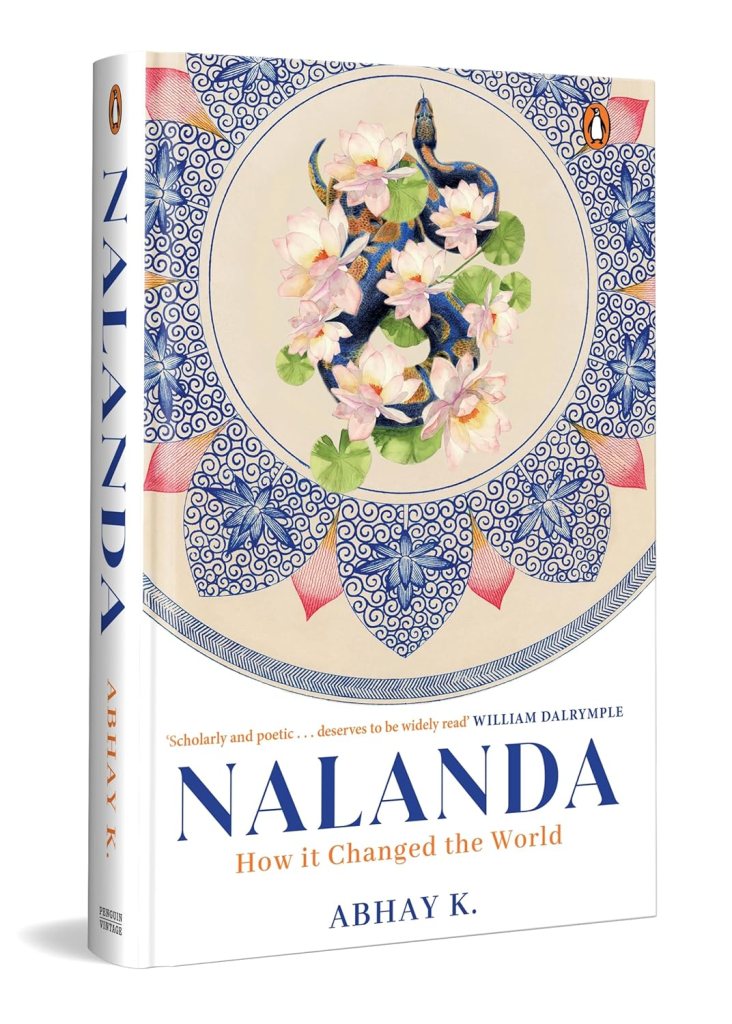
Title: Nalanda: How it Changed the World 

Author: Abhay K

Publisher: Penguin Vintage

Nalanda University, founded in 427 CE in ancient India, is considered the world’s first residential university. It attracted 10,000 students from across Eastern and Central Asia to study medicine, logic, mathematics, and Buddhist principles. The University flourished for over seven centuries, predating the universities of Oxford and Bologna by more than 500 years. Nalanda’s enlightened approach to philosophy and religion significantly shaped Asian culture long after its decline. The Gupta Empire, though Hindu, supported Buddhism, fostering a liberal environment that allowed it to blend intellectual Buddhism with multidisciplinary academics.

Nalanda was destroyed in the 1190s by Turko-Afghan military general Bakhtiyar Khilji, who sought to extinguish the Buddhist center of knowledge. The fire set by the attackers reportedly burned for three months. Today, the excavated site is a UNESCO World Heritage site.

Numerous aspects of Nalanda continue to be enveloped in an enigma. What is the date of its establishment? Who were its founders? Which individuals engaged in study and instruction at this institution? What disciplines were available for study? What was the population of students and educators? Can Nalanda be classified as a university by contemporary standards? What factors contributed to its eventual decline? Nalanda – How It Changed The World by Abhay K. unravels these questions.

Abhay K. has authored numerous poetry collections, such as Celestial, Stray Poems, Monsoon, The Magic of Madagascar, and The Alphabets of Latin America. Additionally, he serves as the editor for several notable works, including The Book of Bihari Literature, The Bloomsbury Book of Great Indian Love Poems, Capitals, New Brazilian Poems, and The Bloomsbury Anthology of Great Indian Poems.

Writes Abhay in the introduction to the book: “There is no clear and entirely reliable interpretation of Nalanda’s past or, for that matter, the past of just about anything. Rather, there are scattered ideas that we try to string together as history, an overview stitched from snippets. And there is no single interpretation of these snippets but rather competing and conflicting interpretations. Recognizing this slippery nature of the past and its documents is part of what makes scholarship such an exciting enterprise.

“Buddhist monasteries existed all over India, Central Asia, and East Asia. However, Nalanda became a celebrated monastery in comparison to its contemporaries. What might be the reason? One of the reasons was its proximity to Rajagriha (modern Rajgir), the first capital of Magadha. Rajagriha in those days was full of political intrigue and rivalries. It became a fertile ground for the birth of the Magadha Empire. Over the centuries, Magadha was ruled by a succession of dynasties, including the Brihdratha dynasty, the Pradotya dynasty, and the Haryanka dynasty. The Haryanka dynasty was the third ruling dynasty of Magadha. It was founded by Bimbisara (c. 558-c.491 BCE). He is considered to be a contemporary of both Mahavira (599-527 BCE) and Gautama Buddha (563-483 BCE). His son Ajatashatru further consolidated it after forcefully taking over Magadha from his father and imprisoning him. He fought a war against the Vajjika League, led by the Lichhavis, and conquered the republic of Vaishali.”

Divided into eight chapters – Nalanda the capital of Magadha, the legendary sons, the rise of Nalanda Mahavihara, luminaries, foreign scholars of Nalanda, Nalandas’s contributions and its global footprint – this is an exhaustive book. The narrative chronicles the ascendance, decline, and resurgence of Nalanda Mahavihara. It delves into Nalanda’s significant contributions to various fields, including science, mathematics, philosophy, art, architecture, and poetry, supported by thorough research. Additionally, it emphasises the distinguished scholars who enhanced its unmatched status as a leading center of learning, as well as the international scholars who frequented the renowned monastery.

Concludes Abhay K: “Nalanda’s footprints to be spreading to new territories in the twenty-first century, where they have not been strong before. As our planet faces the triple threats of climate change, biodiversity loss, and environmental pollution, humanity needs to make peace, both with its inner self as well as with its fellow species, rivers and lakes, oceans, and all entities that support life on our beautiful planet. Nalanda’s timeless tradition of imparting knowledge, wisdom, and kindness can guide humanity toward overcoming hatred, anger, frustration, and greed while fostering inner and outer peace.”

The core message of the book — with numerous photographs — is that the creation of institutions named after Nalanda around the world instills in him a sense of optimism that humanity will eventually resolve all its conflicts through the esteemed Nalanda tradition of dialogue and discourse, rejecting violence and warfare permanently. In this context, the ongoing legacy and revival of Nalanda, both in India and internationally, serves as a significant beacon of hope.

Nalanda, with its expansive scope and rich historical background, offers an engaging narrative that illuminates the evolution of this ancient institution over the course of thousands of years.

Bhaskar Parichha is a journalist and author of Cyclones in Odisha: Landfall, Wreckage and ResilienceUnbiasedNo Strings Attached: Writings on Odisha and Biju Patnaik – A Political Biography. He lives in Bhubaneswar and writes bilingually. Besides writing for newspapers, he also reviews books on various media platforms.

.

PLEASE NOTE: ARTICLES CAN ONLY BE REPRODUCED IN OTHER SITES WITH DUE ACKNOWLEDGEMENT TO BORDERLESS JOURNAL

Click here to access the Borderless anthology, Monalisa No Longer Smiles

Click here to access Monalisa No Longer Smiles on Amazon International
Categories
Poetry

Where Lies the End of this Unquenchable Thirst?

Poetry by Atta Shad, translated from Balochi by Fazal Baloch


Had we known the fate of tomorrow,
Today would’ve not slipped
So carelessly from our hands.

Alas! On the gallows of follies,
Desire stands condemned.

True — it is the heart alone
That bears witness to God’s existence,
Not the eye,
For each reflection is a slave to sight.
But what the heart feels —
That alone is the truth:
The rest is illusion.

Some walk with reason,
Some, in a dreamlike haze,
Yet all are bound together,
Step by step,
Carrying the weight of longing
In the folds of a thirsty soul.

In the vast realm of my imagination,
Stands the idol sculpted by my own hands.
I bow before it—
This endless expanse but remains devoid of the Divine.

From being, nothingness emerges,
And from nothingness,
The being is born, over and again.

The lament for yesterday,
The hopes for tomorrow,
The wealth of ages
In search of unseen wisdom,
Wander upon the shores of today.
Either the flood shall wash them away,
Or the shore shall stand unshaken
Before the surging tides.

Where lies the end
Of this unquenchable thirst?
From Public Domain

Atta Shad (1939-1997) is the most revered and cherished modern Balochi poet. He instilled a new spirit in the moribund body of modern Balochi poetry in the early 1950s when the latter was drastically paralysed by the influence of Persian and Urdu poetry. Atta Shad gave a new orientation to modern Balochi poetry by giving a formidable ground to the free verse, which also brought in its wake a chain of new themes and mode of expression hitherto untouched by Balochi poets. Apart from the popular motifs of love and romance, subjugation and suffering, freedom and liberty, life and its absurdities are a few recurrent themes which appear in Shad’s poetry. What sets Shad apart from the rest of Balochi poets is his subtle, metaphoric and symbolic approach while versifying socio-political themes. He seemed more concerned about the aesthetic sense of art than anything else.

Shad’s poetry anthologies include Roch Ger and Shap Sahaar Andem, which were later collected in a single anthology under the title Gulzameen, posthumously published by the Balochi Academy Quetta in 2015. 

Fazal Baloch is a Balochi writer and translator. He has translated many Balochi poems and short stories into English. His translations have been featured in Pakistani Literature published by Pakistan Academy of Letters and in the form of books and anthologies. Fazal Baloch has the translation rights of Atta Shad from the publisher.

PLEASE NOTE: ARTICLES CAN ONLY BE REPRODUCED IN OTHER SITES WITH DUE ACKNOWLEDGEMENT TO BORDERLESS JOURNAL

Click here to access the Borderless anthology, Monalisa No Longer Smiles

Click here to access Monalisa No Longer Smiles on Amazon International
Categories
Slices from Life

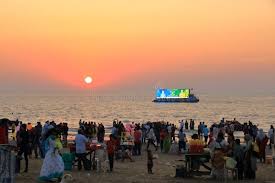
Juhu

Lokenath Roy gives us a vignette of Juhu Beach, Mumbai[1]

You wake up to the wet, slimy plywood stuck to your long back brushed hair on the deck. It is morning already. The faint disc of the comforting winter sun bristles by your narrow eyes. Aditya guns his hoarse voice towards the sparse crew of the boat.

Another day on the Arabian Sea.

Bone-thin legs scramble to the colour-faded slippers as they flaccidly make their way down the pier. You trod the lukewarm Juhu surface sands. The legs dip deep at certain spots. It is still morgue cold underneath.

The shadows of posh skyscrapers do little to mask the scaly smell of fresh fish sold on rows of marble slabs. The dhaba[2] owner honks his hacked voice at the trickle of daily commuters. Scratching the rashes on your forearm you drag a pockmarked plastic chair from across the narrow alley. The smoking omelet with half-cooked onion bounces down your throat. This is breakfast every day.

The plastics pile up at this end. The ocean stays buried under trash cans, cardboard, and polythene. Ponds of rotting sabzi[3] stay entangle in decaying fishing nets. The gnawing boat treads this wasteland. Sahil adjusts the balloon bag as it fills up at the front. Your eyes scrape the collections on the deck for valuables. The stink gets to your nostrils, even under the thick-lined dirty handkerchief. This is livelihood.

You’re fourteen. The letters of the English alphabet only graze your eyes on the benches of dhabas, amongst folded newspapers left behind by morning office goers. You try to read them. An article on trash-clearing boats at the Juhu beach grabs your attention. Not the writing, but rather the image, the image of your boat. You bend forward, looking narrow-eyed into the pixels over the paper, trying to find any speck on the deck that resembles you.

.

[1] The persons mentioned are fictitious but typical of people he has noticed

[2] Street side eateries

[3] Cooked vegetables with spices

Lokenath Roy, a writer from Kolkata who explores themes of society, memory, and the human experience, has published  in several literary journals and online magazines like The Cawnpore Magazine, The Monograph Magazine, The Aeos Magazine and the Borderless Journal.

.

PLEASE NOTE: ARTICLES CAN ONLY BE REPRODUCED IN OTHER SITES WITH DUE ACKNOWLEDGEMENT TO BORDERLESS JOURNAL

Click here to access the Borderless anthology, Monalisa No Longer Smiles

Click here to access Monalisa No Longer Smiles on Kindle Amazon International

Categories
Poetry

Unmade Worlds

By Aditi Dasgupta

The winds were brittle and thin
in —Lia, —Ria, —Ine, —Iti.
Countless small, starved shadows entered the promised gates of Arbeit macht frei
now clung to memories’ bones

They were no older than nine when the world turned to ash
as hands of mothers in —Ria shovelled fifty-eight-point-six-inch graves
under smoke-kissed skies.

Prayers spiralled from broken chimneys,
for the lives too brief to make the heavens care.
Radios flashed hundred different types of despairs in —Ine;
some were named by its taste:
Sawdust bread laden with the salt of silent tears.

Steel eyes pierced into every household,
flashing their drug-laced lanyards
inflicting wounds on bullet-sized hearts.

Barracks were the coffins that held the living
like rows of ribs rising and falling in unison;
like small defiant fires in a world of ice.

Dreams were exchanged under uprooted trees like contrabands.
As rhythms of death marched in,
their slow, deliberate cadence of boots
worn by my friends who were taught foreign tongues
practiced to toy with a godless lottery of borrowed time.

I heard in worlds that don’t end with —Lia, —Ria, —Ine, —Iti
they fight to build identities.
Here, I choose to be invisible; without name
wearing frost and dust like second skin.

As I write on a bomb-exploded paper,
I see liberation come, sudden and strange;
Freedom feels like a coat that doesn’t fit;
Breads taste like gruel
And our stomachs continue to shrink.

As I search for faces on burnt grounds,
a shadow held my hand and showed me
the stars.

* Arbeit macht frei, German for ‘work liberates’

Aditi Dasgupta is the author of the book Silencing of the Sirens, which has been internationally circulated. She has also completed the Yale University’s programme, ‘Storytelling: An Art for Non-Fiction Writers’, on partial scholarship, which sees applicants worldwide annually.

PLEASE NOTE: ARTICLES CAN ONLY BE REPRODUCED IN OTHER SITES WITH DUE ACKNOWLEDGEMENT TO BORDERLESS JOURNAL

Click here to access the Borderless anthology, Monalisa No Longer Smiles

Click here to access Monalisa No Longer Smiles on Kindle Amazon International

Categories
Stories

Naughty Ravi

By Naramsetti Umamaheswararao

Ravi, a fourth-grade boy, could never sit still. His hands were always busy with some mischief. Whenever he found something at home, he would play with it, often damaging valuable items. Despite his mother’s occasional scoldings, Ravi never stopped his antics or playing around.

One morning, while playing with a ball inside the house, Ravi threw it at the television in the hall. The screen cracked, and his furious mother couldn’t hold back her anger. She hit him, but before she could deliver more blows, Ravi’s father intervened, rescuing the boy.

Through tears, Ravi said, “I didn’t mean to, Dad! I promise I’ll never play with a ball inside the house again.” His father calmed him down and persuaded his mother to forgive him.

But Ravi’s mischief didn’t end there. Another day, he saw a bug on the glass-top tea table in the hall. Picking up a cricket bat, he swung at the bug, but it flew away unharmed. Unfortunately, the table shattered under the force of his swing. The sound of breaking glass brought his parents running. They found Ravi holding the bat, standing next to the broken table.

Afraid of another scolding, Ravi glanced nervously at his mother. Before she could say anything, his father stepped in and asked, “Didn’t you promise not to play inside the house? What happened now?”

“I only used the bat to hit a big bug on the table, Dad. It got away,” Ravi explained, gesturing with his hands. His father patiently advised him, “Alright, but remember, no more damaging things at home.” Ravi’s mother, however, remained silent, visibly upset.

Another day, Ravi wanted a storybook from the shelf. Climbing onto a chair to reach it, he accidentally knocked down several books and other items. Hearing the commotion, his mother rushed in to find books and belongings scattered on the floor.

Frustrated, she scolded, “How many times have I told you to be careful? You’re always breaking or dropping something! Now clean this mess up!” Ravi tried to explain that the other items fell when he pulled out one book, but his mother refused to listen. Feeling deeply hurt, Ravi decided to leave the house for a while.

“If I go out, Mom will worry and search for me. She might even cry. That would make her stop scolding me,” he thought.

Ravi walked to the nearby park. Sitting amidst the greenery, he watched people, children playing in the distance, and ducklings swimming in a pond. Slowly, his irritation and sadness faded.

Just then, he noticed a baby bird falling from a nest in a nearby tree. The bird chirped loudly in fear. Ravi quickly ran to the tree and caught the bird in his hands before it could hit the ground. Gently stroking its wings, he calmed the frightened bird.

From Public Domain

Moments later, the mother bird flew down, circling Ravi and chirping anxiously. The baby bird flapped its wings joyfully at the sight of its mother. Ravi placed the baby bird carefully back near its nest. The mother bird covered it lovingly with her wings.

“The mother bird came back to protect her baby. Maybe my mom is already worried about me. I should go home and let her know I’m safe,” Ravi thought.

Ravi rushed back home. The moment his mother saw him, she smiled and said, “Where were you? I made some payasam for you. Come and eat.” Ravi sat down and narrated everything that had happened in the park.

Hearing his story, his mother’s face lit up with pride. She kissed his cheek and said, “You’re my precious little gem. You’re mischievous at home, but outside, you’re so helpful and kind.”

Ravi realised, “Mom scolds me when I do wrong and praises me when I do good. She truly loves me. I should never make her sad or upset again.” From that day on, Ravi started listening to his mother and became more careful both at home and outside.

Naramsetti Umamaheswararao has written more than a thousand stories, songs, and novels for children over 42 years. he has published 32 books. His novel, Anandalokam, received the Central Sahitya Akademi Award for children’s literature. He has received numerous awards and honours, including the Andhra Pradesh Government’s Distinguished Telugu Language Award and the Pratibha Award from Potti Sreeramulu Telugu University. He established the Naramshetty Children’s Literature Foundation and has been actively promoting children’s literature as its president.

.

PLEASE NOTE: ARTICLES CAN ONLY BE REPRODUCED IN OTHER SITES WITH DUE ACKNOWLEDGEMENT TO BORDERLESS JOURNAL

Click here to access the Borderless anthology, Monalisa No Longer Smiles

Click here to access Monalisa No Longer Smiles on Amazon International