Categories
Stories

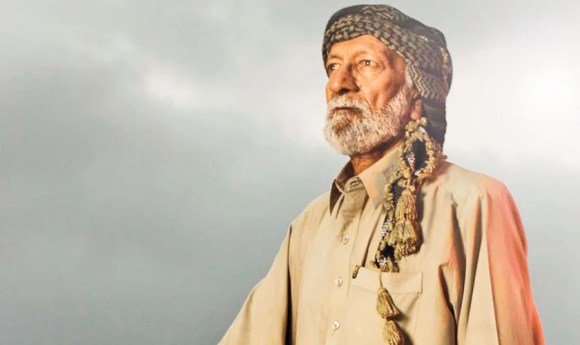
Ali the Dervish

By Paul Mirabile

Whirling Dervishes, painting by Jean Baptiste Vanmour (1671-1737). From Public Domain

In 1976, I bought a small country cottage very pleasantly located near the town of Sheffield at Dronfield in South Yorkshire from an elderly woman who informed me she that had travelled quite extensively throughout Asia in the nineteen twenties and thirties before settling down here. She never married. The learned woman left no forwarding address.

Settling in took much time and energy because of my abundant belongings. At last, one rainy afternoon having nothing to do, I climbed the shaky stairway that led to the garret. The door had been left ajar. Inside the low-ceiling, ill-lite space, there was nothing but a large chest placed in the middle. The lid lay aslant. Its hinges were broken. 

Curious about its contents, I began rummaging through the numerous newspaper and magazine clippings, booklets, letters and other documents. A particular envelop caught my eye because the red wax seal had been broken. Wax-sealed letters are very out-dated these days. When I opened the envelop I understood why it was sealed. A seven-page letter had been written in fine, elegant script, by Lady Sheil, dated 1869. Lady Sheil was quite a prominent woman in her time[1] . This indeed was a remarkable find. It baffled me why the former proprietor would leave in a chest of documents a letter of such archival interest. Since there was little light in the garret, I took the letter downstairs to read it. Unfortunately there was no addressee, so I assumed it was sent to the former proprietor. I must confess that a feeling of guilt touched me when I began my reading. Luckily I overcame this sensation because the contents of the letter proved extraordinary …

Lady Sheil details a very peculiar adventure of an Englishman who named himself Ali the Dervish -or as she spelt it, Deervish — who had undertaken a voyage to ‘Balochestan, Persia’[2]. As I read through her letter, I came to realise that the Englishman had abandoned his British ways entirely, adopting those of the semi-nomad Balochi. To such an extent was his assimilation that he even married a Balochi woman, something utterly unthinkable at that time — in the year 1856. Why Lady Sheil would write a long letter about this chap to an unknown reader or readers heightened my curiosity.

I began investigations at the Sheffield library and found Lady Sheil’s Glimpses of Persian[3] though I found nothing at all about Ali the Dervish. Lady Sheil mentioned something about his diary but nothing substantial came of this. Be that as it may, the letter fascinated me by its mysterious allusions and ellipses, especially concerning this unusual identity change. Not a simple task for a European in the nineteenth century, or even in our century for that matter. This Ali even outdid Sir Richard Burton’s bursts of outlandish impersonation …

Examining the letter carefully, I felt a strange, slight tremor goading me to do justice to this eccentric Ali. Something unsaid in the sentences urged me to read between them, to scrutinize the margins and the paragraph indents as if Lady Sheil had deliberately left out parts of her narrative for her reader to fill in those blank, yellowing spaces.

I picked up my pen, imagining myself to be both Lady Sheil and Ali the dervish, and began filling in the those blanks, writing in the gaps, the lacuna, the untold events and details so to speak. Indeed, I had convinced myself that the letter had been destined for me. And this resolution was enough for me to divulge the mystery of Ali …

Ali, whose English-born name was left unknown, had had the best of aristocratic educations in the fine arts, especially languages. He was fluent in Hindustani, Persian, Pashtun and Turkish, besides having mastered four or five European languages, including Hungarian. This was quite a linguistic feat, second only to Richard Burton whom, by the way, Ali had the occasion to meet in Lahore. A meeting which lasted two or three weeks according to a friend of Burton’s memoirs. Little, however, is reported about their relationship.

Prior to Ali’s arrival in India and that fortuitous encounter with Burton, he apparently had led a rather lukewarm existence in England, and this in spite of his family wealth, or perhaps because of it. His accumulation of capital was analogous to his successive accumulations of prolonged bouts of depression. They left him utterly exhausted. How and when he left England is not written in the letter, although he probably reached India by ship, then on horseback or foot into Northwestern India, accompanied often by erring minstrels and story-tellers. From whom Ali learned the art of dancing, chanting and story-telling. It was not a question of imitating these rituals and customs. Ali had integrated them as if they had been part of some distant, latent self that required jolts of recollection to surge up from the depths of the unconscious. In fact, Burton was quite taken aback by Ali’s very ‘unEnglish’ appearance. His manner of speaking English, too, possessed a curious twist of Persian and Hindustani syntax — a ring of their tonal stress.

To Ali’s pleasant surprise, he no longer suffered from bouts of violent depressions. The former Englishman on leaving Burton, perhaps in 1849, rid himself of paper money, donating it to missionaries, then rode off into the verdant valleys of North-western India towards Afghanistan carrying only the clothes on his back, two gourds of fresh water, several loaves of acorn-bread and a pouch of Arabic gum. Ali carried no weapon.

Ali’s sound knowledge of Hindustani, Pashtun and Persian offered him unparallel glimpses of these undomesticated lands. Lands of shifting desert sands whose rising heat conjured in the distance illusions of ravishing oases and sparkling cascades off tree-laden crags. Ali had been warned about these deceitful mirages (by Burton?) whose marvellous vision had been the death of many a brave adventurer.

He kept to the clayey track, accepting food and board from the hospitable villagers or sleeping under the silver stars on his woven kilim-saddle cloth. He rode days or nights penetrating landscapes of indescribable beauty, of terrifying singularity, of unbearable heat in the day and equally freezing nights. At one point in his wanderings, Ali, slumbering on his horse due to the rising heat and lack of food, looked up to discover a gigantic Buddha hewn into a tuft-like cliff. A small stream ran in front of the lithic niche along which flourished many date trees. There the Buddha stood, calm, reposed, sedentary, encased in his stone casket, home to a myriad birds who had made their nests on his rounded shoulders and shaven head. Ali jumped off his horse, filled his gourds with clean water, scouted about for fresh dates. With one last look at the towering Enlightened One he set off towards Persia, filled with equivocal sensations. He felt that his nomad days would soon be numbered …

A month or two passed. Now villagers tilling their fields or collecting wood no longer greeted or spoke Pashtun to him, but in Dehwari or Persian. He welcomed this language shift. Ali felt more at ease in Persian, albeit it be the Dehwari dialect, which he had learnt from one or two erring Zarathustrian talebearers in India. By then his uncombed beard touched his chest and his hair his shoulders. In one village he traded his khaki-coloured shorts for a shalwar[4] and his boots for goat-skin sandals. In another his Safari sun hat for a turban and his heavy flax shirt for a long, cotton tunic. Whenever he met tillers or merchants they would greet him with the customary ‘hoş amati’[5]. By their pronunciation and vocabulary Ali knew he was travelling southwards into Balochestan. Temperatures rose and rose — 37° C … 42° C. His horse trotted slower and slower. Her rider drooped soporifically over her mane. Ali no longer calculated his wanderings in farsakhs[6] but by the risings and settings of the sun …

Notwithstanding these discomfitures, the persevering Ali carried on. To his delight the track widened, hospitable shepherds driving before them their herds of sheep or goats offered the solitary traveller the warmth of their camp-fires, goat’s milk, cheese and acorn-bread. Caravans of transhumance nomads pressing towards the high plateaus nodded to him. The stony-faced herdsmen chanted in their own language which translated means —

 A breath of mountain breeze,
A breath of wind from the Sea,
In the middle,
We trudge
The pilgrims of the fountain…

Then they called after their huge, savage dogs. Ali seized upon that admirable chant and intoned it to himself or aloud …

One sparkling, azure day, Ali, road-weary, alighted from his horse in a large settlement of tents, called Sa’idi. There both Persian and Dehwari were spoken, judging from the scores of people who came to greet him. It was a charming settlement, surrounded by fields of red poppies, iris, bluer than the blue of the sky, crown imperials whose orange tints glowed like lit candles, and tulips. Horses, sheep and goats dotted the terraced rows of poppies on the hills and skirts of the low-laying piebald mountains, motionless. Ali, both dazzled and comforted by the undulating kaleidoscope colours decided to halt for the night in this welcoming settlement to rest his fatigued physical and mental state and his horse.

When he asked for the elder of the settlement, he was directed to a very large white tent. In fact, since his arrival the snowy-bearded elder had been eyeing the stranger askance. He threw open the flap of his tent and greeted him in Persian as custom would have it, inviting his visitor inside for tea. Sipping their respective glasses of sugared tea, the snowy-bearded elder’s deep-set black eyes peered into those hazel-brown of Ali’s. Though he was pleased to meet this curious traveller, he was confused about his identity. Finally he put the question point blank to his sipping visitor: “Are you Persian?”  

Ali nodded neither yes nor no. His ambiguous nod set off the string of events that followed. events that transformed the already transforming Ali into a rather ambiguous Other …

The snowy-bearded elder had read that ambiguous nod as a sign of belonging. Ali’s sun-mat complexion, his extraordinary command of both Persian and Dehwari, his knowledge of social and religious habits and practices, mostly acquired during his years on the road, opened the elder’s heart and those of the Balochi people of Sa’idi, people who now had stepped into the tent, forming a large circle round Ali and the snowy-bearded elder. Out of this wide circle came the elder’s three sons and daughter to lead him to his own red tent at the outskirts of the settlement. His horse was led to pasture with the others.

On the thick carpets of his medium-sized tent, Ali sat and meditated upon that ambiguous nod. Had he really become the one of them? Deep within his heart, the former Englishman rejoiced … rejoiced at his ‘crossing over’. He had become what he really was …  

Several years passed. Ali no longer felt guilty about leaving his past behind. His immersion seemed complete. He sang and danced round the ritual fire at night. He told stories night after night after a hard day’s work in the poppy fields, apple and peach orchards and the vineyards, the tribesmen chanted their chants of ancestral lore, joined him in his whirling dance, one palm to the Heavens and the other to the Earth, eyes staring into a void of quiescence …

It was in Sa’idi that he began to be called Ali the Dervish, whirling as he did before and behind the leaping flames. Ali taught his dance to the snowy-bearded elder’s three sons. In turn, the elder offered his daughter to him in marriage — a privilege since this signified entrance into the chieftain’s family.

Once the three-day marriage ceremonies were over, his lovely bride — for she was truly lovely — sat next to him in the nuptial red tent. His wife, whose name has never been recorded, demanded nothing of him. She accepted all his nightly hesitations … ‘failings’ … Her fruity laugh and obsidian back eyes spoke a language that communicated higher values … loftier treasures than uncertainty, physical gratification or hereditary obligations.

Ali slowly discovered that his young bride possessed the quality of a seer, perhaps even belonged to a long lineage of Central Asian mystics. Intense were her meditations and visions of the Other World, of events passed and those to come … His past … Their future … Ali, both bewildered and beguiled by this power of prophesy, would timidly question his bride about her unusual gifts. She would answer enigmatically: “One must remove the Husk before bringing in the Bride,” an adage he never fully understood, nor would she ever elucidate.

On other moonlit nights, alone within the sanctuary of their intimacy, Ali’s wife would envision scenes of his long aristocratic lineage, each member afflicted by physical or mental atrophies, plagued by wasting ennui. The Dervish listened in awe as she revealed events quite unknown to him. Yet, he remained speechless, peering into the almond-shaped eyes of this woman depicting scenes that could very well cost him his life. She said nothing. He yearned to avow everything to her but some fey voice prevented him each time. She read his mind and laughed her fruity laugh, delving ever deeper into his life … theirs !

Ali accompanied her with his eyes then turned them to the dying embers of the stove fire, the glowing logs sizzled lightly in the silence. Was he deluding himself? He knew that his wife had discovered his native idenity. But were all those past scenes his true identity? He indeed stemmed from that hoary lineage, the last scion. Was he the last to play a role on this world stage of masquerade and mummery? No ! He was Ali the Dervish … Here amongst these hearty tribesmen he played no role. He had overcome the hardships of childhood as a fatherless boy. That unknown gentleman had left for Africa never to return! Never a letter nor a message brought by acquaintances. Before dying of grief, his poor mother repeated to him everynight: “Look to the stars.” And the sullen boy looked, and believed that they would lead him to another life … another identity !

Once Ali began to cry softly listening to the sizzling embers and the light, rhythmical breathing of his strange wife.

Many years had passed and yet, they had no children. His hair and beard had greyed. Yet, no reprimand, no rebuke, no judgement ever came from the community, especially from her aging father. Was the power of her revelations known to him ? Would he be the last branch of that gnarled and rotten aristocratic tree ?

Ali rode often into the fields and mountains to gather wood to build tent-frames or glean fruit from the many apple and peach trees. During these solitary moments his past crept up on him, making him feel guilty. There seemed only one solution : speak openly, candidly to his wife about his British birth, his genuine desire to become the Other. She would surely understand since she had already read his former life by sounding his heart. That night he would go straight to his wife.

But, just then out of the blue sky his wife came galloping towards him, whipping up her stead. She jumped off, an odd expression wrinkling her forehead. Ali ran up to her, took her shoulders gently, admiring the sapphire blue that framed them so perfectly like a painting. There she stood, basking in the soft glow of the mellowing, evening sun. Before he could utter his rehearsed confession she put a hand to his lips.

“Father has just passed away,” she whispered softly, without emotion. “He has been freed from the trammels of worldly existence.” She smiled. “Now you too are free to divest yourself of a personage that has been conferred to you by the stars and the strength of your will.”

“But who am I really, my dear?” her husband wondered. She caressed his bearded, burning cheeks. She answered: “If you want the horse to neigh, you must slacken the reins.” Turning round, she rode back to the settlement to wash the body of her deceased father and prepare the three-day funeral rites with her brothers. Ali puzzled by that enigmatic counsel trudged to his horse.

He rode back far behind her, meditating his ‘freedom’. What other choice had he?

This sentence was the last in Lady Sheil’s long, detailed letter. On further investigation into this strange fellow at the London library, I discovered that Ali the Dervish had divorced and remarried his bride to one of her brother’s mates, then left Sa’idi. He was last seen in Tabriz, Persia. No document reports his whereabouts after his reaching that northwestern town in the lands of the Azeri people. 

I have often wondered whether Lady Sheil ever knew who Ali the Dervish really was. I have my doubts. Only his Balochi wife knew, and of course, that mysterious person could have never been questioned. It’s also odd that Ali himself — whatever self that be– had never woven his thoughts and experiences into a book, never enlightened a Western public on integration and assimilation into a foreign culture.

As time went by I even considered that this letter might have been a hoax to hoodwink a naive fellow like myself into clothing Ali in legendary fashion. On second thought, though, who’s to arbitrate between fact and fiction ? Not I, in any case. For isn’t it a refreshing act of freedom to slip from one to the other without a pinch of guilt ?     

.

[1]        1803-1871.

[2] Balochistan is in Pakistan but the Baloch community spreads to Iran and Ali’s story dates before the formation of Pakistan.

[3]        Published in 1856.

[4]        Large, light baggy trousers.

[5]        ‘Welcome’ in Persian.

[6]        A Persian measurement equivalent to 5.35 kilometres

.

Paul Mirabile is a retired professor of philology now living in France. He has published mostly academic works centred on philology, history, pedagogy and religion. He has also published stories of his travels throughout Asia, where he spent thirty years.

.

PLEASE NOTE: ARTICLES CAN ONLY BE REPRODUCED IN OTHER SITES WITH DUE ACKNOWLEDGEMENT TO BORDERLESS JOURNAL

Click here to access the Borderless anthology, Monalisa No Longer Smiles

Click here to access Monalisa No Longer Smiles on Kindle Amazon International
Categories
Poetry

The Scarecrow by Anwar Sahib Khan

Translated from Balochi by Fazal Baloch

Anwar Sahib Khan

Anwar Sahib Khan (1944–2018) was a notable poet, drama artist and film actor. His poetry explores a wide range of themes, from love and romance to social and political issues. He published two anthologies, Chaotaar (A Riot of Colours) and Sareechk (The Scarecrow). The translated poem is taken from his second anthology, Sareechk.

Like a scarecrow,
I stand—
Rooted in fields of green,
Until time strips away
The truth of my being:
A breath of nothingness.

I am the emblem of eternal stillness,
My outside,
My inside —
Two different tales.

When the truth dawns,
The beasts — once fled
From the fear I’d fashioned —
Will return.
My walls will scatter
Like tufts of cotton
Cast to the wind.

Birds will nest in me,
Jubilant creatures will roam
Unafraid,
Dancing in my shadow.

And the tale of my stillness
Will drift through the air —
I’m a lifeless scarecrow standing here.

Fazal Baloch is a Balochi writer and translator. He has translated many Balochi poems and short stories into English. His translations have been featured in Pakistani Literature published by Pakistan Academy of Letters and in the form of books and anthologies. Fazal Baloch has the translation rights to Anwar Sahib Khan’s works. 

.

PLEASE NOTE: ARTICLES CAN ONLY BE REPRODUCED IN OTHER SITES WITH DUE ACKNOWLEDGEMENT TO BORDERLESS JOURNAL

Click here to access the Borderless anthology, Monalisa No Longer Smiles

Click here to access Monalisa No Longer Smiles on Kindle Amazon International
Categories
Excerpt

Ostia Antica: The Fatehpur Sikri of Rome?

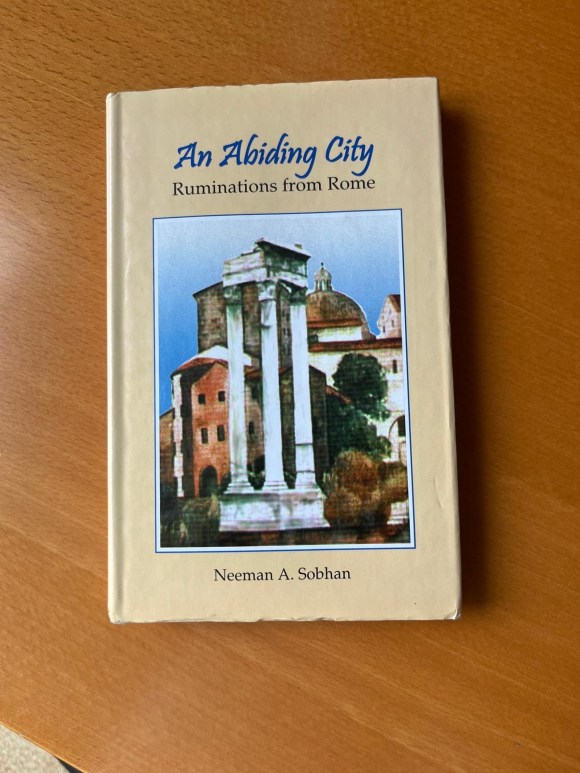
Title: An Abiding City: Ruminations from Rome

Author: Neeman Sobhan

Publisher: University Press Limited (Dhaka)

Ostia Antica

Sometimes, when my visitors to Rome, arriving in the sweltering month of July or August, voice over-zealous ambitions to ‘do’ Pompeii, I don’t have the heart to discourage them. But I beg off from accompanying them. I have nothing against Pompeii as such, but I am not sufficiently suicidal to relish the thought of trudging miles of arid ruins under a punishing sun for the twenty-third time!

It’s at this point, usually, that I try to sell what I call my ‘Lazy man’s Pompeii’: Ostia Antica. I could have called it the ‘Poor man’s Pompeii’ as well, but the riches of the ancient city can almost equal a Herculaneum to the imaginative tourist. And its biggest plus-point is that it is so much closer to Rome (as against Pompeii, about 200 kilometers away, towards Naples), and may I add, that much shadier!

Less than an hour away from Rome, Ostia Antica was founded in the fourth century B.C by King Arcus Martius (a historical persona of whom I readily admit to being shamelessly ignorant) it became Ancient Rome’s commercial and military port, and during Emperor Constantine’s time, it boasted a population of 100,000!

Ostia reminds me of another ancient city I once visited and loved: Fatehpur Sikri in India, the Mughal king Akbar’s doomed capital near Agra. The comparison to Akbar’s city is justified because, although Ostia is a remarkable example of historic Roman towns like Pompeii and Herculaneum, unlike them, it was not destroyed, rather, like Fatehpur Sikri, it was abandoned.

While the Mughal city was abandoned due to a lack of sustainable water supply, in the case of the Roman city, it was mosquitoes. Strange but true that an epidemic of malaria drove out the inhabitants of this once flourishing port city. An odd quirk of history and biology that a puny anopheline community managed to drive out a powerful anthropical one, hundred times its size!

A quick reminder here: in talking about Ostia, we must make a clear distinction between Ostia Antica, the archeological site, and the present-day beach town of Ostia, a popular seaside resort within the municipality of Rome, further down.

The excavated areas of ancient Ostia abound in numerous ruins and reminders of a thriving commercial city of times past: public and private buildings, streets, defensive walls, and harbors.

I find the residential streets most fascinating because it brings to life a real world of ordinary people. Much has been written about Roman tenement-housing and remains of these buildings abound in Ostia.

Reconstructed models apparently reveal that a typical apartment block could be five-storeys high, and that the flats were probably quite functional, mostly reached from courtyards or from the street by stairs running between shops on the ground floors.

I think of all this as I stop at a crumbled courtyard here, touch a moth-eaten wall there, step over a threadbare threshold, or mount a mysterious flight of steps that end abruptly in mid-air, leading nowhere.

For me, it’s in this residential environment that I find the faint but persistent pulse of a bygone life. Visiting it on some empty afternoon, while I might be sitting on the broken steps of a roofless room, I can surmise the life of the ordinary man or woman who once lived here: I smell the fragrance of fresh baked bread in the gutted bakery next door; I hear the sound of children playing in the silent streets, or the hum of voices in the tavern with its dusty counter; and suddenly, the entire history of the humble populace seems to be whispered and echoed by the sea-spiked breeze among the pines and cypresses.

Let the Archeologist and Historian keep their details. To me the romance of a ruined city is not necessarily in the structures themselves, in the revealed or concealed splendor of its remains, it is in the mystique of its very presence, its undefined shape as a messenger from lost times, telling us stories of the long ago.

A dead city serves to remind us that it once existed, and that the past, although it is no more, is never completely wiped out, never obliterated from the collective memory of the world. In leaving behind its footprints, the spirit of the city has defied negation and accompanies me this afternoon.

And thus, I love to sit, under the peristyle of a vanished villa, absorbing the atmosphere of this long-deserted city, contemplating the history not just of this particular Roman town, but all the nameless cities of countless civilizations in the past. I wonder at the basic story it tells of our collective and individual engagement with Life, of the heroic audacity of the human spirit attempting, again and again, to build its sandcastles against the wind, trying to carve a permanent niche on the elusive surface of Time.

Whether the crumbling habitation is in Ostia Antica or Mohenjo-Daro, in Petra or Machu-Pichu, in Moinamoti or Fatehpur Sikri; each is a monument to the Spirit of Man, the builder of cities, the creamer of dreams.

[ Extracted from An Abiding City: Ruminations from Rome. Published by UPL (University Press Limited, Dhaka), 2002 ]

ABOUT THE BOOK

An Abiding City: Ruminations from Rome is a fresh look at Italy and Rome from the perspective of a long-time resident of non-Italian origin. Neeman Sobhan, living in Italy, since 1978 wrote for two decades a personal column in the Bangladesh English language daily, The Daily Star, spinning vignettes and sketches out of her daily encounters and reflections living in Rome. Here, in vivid prose and poetic detail are selections from her work.

Among some of the myriad themes in this collection of essays and poems: the charm of everyday Rome; the romance of history; the adventure of the expatriate’s eternal quest for home; the poetry of seasonal transformations; the mysteries of relationships; the kaleidoscope of life in general, and of one woman in particular, who within her journey through the Eternal City, shares with her readers her passage through life.

The writing is enhanced by ink sketches by Italian-American artist/writer Ginda Simpson.

ABOUT THE AUTHOR

Neeman Sobhan is a Bangladeshi-Italian fiction writer, poet, columnist. She writes in English, and her fiction and poetry have appeared in many anthologies and literary journals within the sub-continent. Till recently she taught English and Bengali at the University of Roma, La Sapienza.She lives in Rome with her husband. She has a collection of short stories, Piazza Bangladesh (2014) which has been recently translated to Italian; a volume of poetry, Calligraphy of Wet Leaves (2015) and a collection of her columns, An Abiding City: Ruminations from Rome (2002). Presently, she is finishing her first novel, and lives between her home in Rome and Dhaka.

.

PLEASE NOTE: ARTICLES CAN ONLY BE REPRODUCED IN OTHER SITES WITH DUE ACKNOWLEDGEMENT TO BORDERLESS JOURNAL

Click here to access the Borderless anthology, Monalisa No Longer Smiles

Click here to access Monalisa No Longer Smiles on Kindle Amazon International

Categories
Poetry

Permutations by Ryan Quinn Flanagan

From Public Domain
Sitting up, unconjured by thoughtless easel,
a turpentine painter runs through all the permutations
of light and license – the early sunrise crawling his curtains
with sleepless termites; this is how the unrendered morning
will appear to proxied bothered mind, precursor to eager
foot traffic by hours.

It is said to be quite unhealthy to stew in the quicksand
of one's own thoughts, to wander as doddering widower
might, muttering gibberish before a return to prolonged silence:
Washington Square had its own hanging tree,
an old execution ground long before it became the Village.

And one may feel ghosts upon shivered nape, but never see them.
Never know them like the neighbourhood bodega*, that smell
of simple courage. The binding of someone not named Isaac.


*Small neighbourhood shop

Ryan Quinn Flanagan is a Canadian-born author residing in Elliot Lake, Ontario, Canada with his wife and many bears that rifle through his garbage.  His work can be found both in print and online in such places as: Evergreen Review, The New York Quarterly, Borderless Journal, GloMag, Red Fez, and Lothlorien Poetry Journal

.

PLEASE NOTE: ARTICLES CAN ONLY BE REPRODUCED IN OTHER SITES WITH DUE ACKNOWLEDGEMENT TO BORDERLESS JOURNAL

Click here to access the Borderless anthology, Monalisa No Longer Smiles

Click here to access Monalisa No Longer Smiles on Kindle Amazon International
Categories
Musings of a Copywriter

Syrupy Woes

By Devraj Singh Kalsi

The doctor is shocked to hear my advice when he prescribes pills and capsules. Accustomed to customisation offers almost everywhere, I am quick to spell out my preference: syrup. As expected, he casts a befuddled look, and takes a while to cool down by closing his eyes, to distract his agitated mind. Here’s a fussy patient sitting right in front of the trained physician, showing the gall to be choosy during a bout of illness, directing the medical practitioner to write what he loves to drink to get cured. Had he not been a member of this noble profession and contractually bound to be courteous, his anger would have compelled him to throw the patient out of his chamber along with his fees.

My fascination for syrups dates back to childhood days. Dr Nandy, a gentle paediatrician, kept the tender organs of a developing kid safe from the side-effects of pellet-size capsules. Whenever my mother took me to him for liver concerns, poor appetite issues, gastric problems or cough and cold complications, he always gave syrups the first chance to cure me. Most of the time, these seemed to suit me well. So much so that I loved to memorise the names and recall them with ease in front of the doctor during the next visit, hoping he would add one of these in the fresh prescription he wrote for me.

Whenever I find these bottles lined up on the shelves inside medical stores even today, I am thrilled beyond measure to discover that these, much like classics, have survived the test of time, despite the arrival of newer brands. My instant query relates to how well these age-old brands are doing in the competitive market, and the chemist does not disappoint by saying most of these record higher sales vis-à-vis several new and heavily promoted brands.

The fear of vitamin deficiency haunts me and this explains my inclination to pop supplements from time to time, with fortnightly breaks thrown in between. Since many of these are sold over the counter, without a valid prescription, I feel it safe to down them without medical recommendations. The first one is the Vitamin B complex syrup that I am fond of – the sweet taste makes me feel tempted to slurp a spoonful twice a day, sticking to the standard dosage limit printed on the label. 

Cough syrups are addictive for some who consume these throughout the year. The sleep-inducing impact slows them down and they tend to relax, not knowing a thing about the harmful effect on their vital organs. As the chemist in the neighbourhood informs me that I should avoid these though the taste is good even if it’s sugar free. I am left with no option but to cough and prove that I need it genuinely and desperately. He offers herbal brands instead, which are costlier but supposedly healthier and safer when consumed in moderation, proving himself to be a true devotee of the bearded yoga instructor who has stretched all possible limits to ramp up the profitability of his medical business empire.  

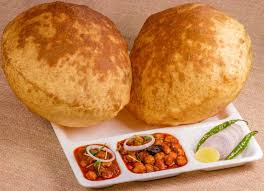
The pineapple or mixed fruit flavour of the enzyme-boosting appetiser syrup features on top of my list in every season. The pure delight of enjoying the yummy flavour is further enhanced as it makes me crave for more. Instead of two chhole bhatura, I can gobble up four and still find space to add a sweet dish like kheer[1]. When it comes to developing more appetite for a heavy lunch punctuated with burps, trust the syrup to work wonders. In case there is a persistent feeling of heaviness, this is the right time to consume a teaspoonful of antacid syrup to neutralise digestive threats forming alliances inside me. These have retained their charm over the years and I prefer to have a dedicated cabinet for these, just like those who flaunt a wine cabinet to mirror their class.

My last visit to a very senior doctor to find relief from stress and anxiety did not produce results of my choice as he ruled out the possibility of syrups being effective in my case. He wrote down the name of a sleep-inducing drug to relax my jangled nerves. I discontinued the dose after having a few pills that produced some side effects I was not ready to face. I switched to bananas for higher magnesium and preferred darker chocolates to boost up feel-good hormones to battle rejections with a smiling visage.

Being a vegetarian, my mother was deprived of Omega 3 as chia seeds were not a household name yet. She kept having capsules that were specified to be non-vegetarian. Despite knowing the truth, she made no distinction between vegetarian and non-vegetarian stuff when it came to life-saving medicines. When I approached the doctor to know if a syrup for Omega 3 enrichment existed, he suggested a new syrup. I started enjoying the awesome taste as it is cheaper and affordable than walnuts and seeds. To keep nerves strong in a precarious profession like advertising is a priority and the consumption of a syrup for better nerve function is justified. What goes on inside the brain and the damage caused due to creative exhaustion is something undetected until the symptoms of shaky hands begin to disturb. One never knows when one reaches the excess level using supplements to stay healthy.

When the snack break phase started, I switched to protein shakes and protein bars to imitate body builders and gym goers. Always being deficient in terms of protein, I found this to be a good source to regain muscles, to punch mobsters and gangsters with my powerful fist. From a practical angle, this would mean I was strong enough to lift shopping bags and gaze at my brawny biceps without feeling ashamed that they lacked firmness. Guzzling syrupy, sugary protein and energy boosting drinks might not be the healthiest way to stay fit, but it is certainly one of the most effective ways for protein-keen people to build strength and stamina without burning a hole in the pocket. With discount offers raining across online platforms at odd hours, I am always on the lookout for the steal deal to pick up protein-rich drinks. My calf muscles need to remain strong enough to enable my long, winding walks to connect with nature and ideate, to climb three floors without feeling breathless and worn-out.

Whenever I am travelling within the country, I prefer to carry my syrup bottles as I am not sure of getting the same brands elsewhere. I do not forget to consume these during breakfast, post lunch and after dinner. Many doctors I met in my circle have found it funny that I was so obsessed with syrups.

After I discovered from articles that many creative people, not just writers, were fond of syrups and they were legends, my confidence has grown manifold. Even if I cannot compare my output with their body of work, what enters my body does some good work indeed.

The other day, my chemist made an attempt to break my bonding with syrups and suggested that I should consult good doctors for pills because syrups are not right for my age. I did not understand what made him suggest this, but I felt he realised I was old enough to fatten his medical income. These syrups were nominally priced and of no use for his profitability. To sound less hurtful, I said I would add an iron supplement next month but it was a lollipop he was not interested in. Even if he stopped giving discounts on syrups, I was okay with that.

I produced prescriptions which were old, and he refused to sell on the basis of these. I confessed the doctors who wrote these prescriptions were no longer alive. I had to produce a new prescription and so I was forced to approach a young doctor who sat in his shop. I told the doctor I have no health reason to consult him for but I want his permission to keep drinking these syrups. He refused to write down the names but when I came out with a forlorn look and paid the fees, the chemist gave me a hamper of syrups again! Was he trying to make an extra buck forcing me to consult with the doctor on his premises?

[1] Dessert of thickened milk

Devraj Singh Kalsi works as a senior copywriter in Kolkata. His short stories and essays have been published in Deccan Herald, Tehelka, Kitaab, Earthen Lamp Journal, Assam Tribune, and The Statesman. Pal Motors is his first novel.  

PLEASE NOTE: ARTICLES CAN ONLY BE REPRODUCED IN OTHER SITES WITH DUE ACKNOWLEDGEMENT TO BORDERLESS JOURNAL

Click here to access the Borderless anthology, Monalisa No Longer Smiles

Click here to access Monalisa No Longer Smiles on Kindle Amazon International

Categories
In Memoriam Poetry

Poetry by Fakrul Alam

From Public Domain
In Memory of Iffat Sharmin

Depressingly, you kept disappearing by degrees.
First, the emerging woman in you had to be veiled.
Next, the shy charm you exuded had to be obscured.
And then it seemed you decided life itself should cease!
Now, more than ever, I see you smiling ever so softly
Now, keenly, I think of your bright but quiet presence.
Could it be that you had finally opted for absence?
Did you decide to extinguish your light fully, voluntarily?
Why else would you fall to a rare, autoimmune disease?
Surely you had felt it was time for you to cease!
All of us can only rue that so brilliant a mind had so short a lease
But tired of remorseless life you had decided in the end to cease!

(Written for the condolence meeting for Iffat held at EWU on 20 July, 2013)

.

Fakrul Alam is an academic, translator and writer from Bangladesh. He has translated works of Jibanananda Das and Rabindranath Tagore into English and is the recipient of Bangla Academy Literary Award (2012) for translation and SAARC Literary Award (2012).

.

PLEASE NOTE: ARTICLES CAN ONLY BE REPRODUCED IN OTHER SITES WITH DUE ACKNOWLEDGEMENT TO BORDERLESS JOURNAL

Click here to access the Borderless anthology, Monalisa No Longer Smiles

Click here to access Monalisa No Longer Smiles on Amazon International

Categories
Stories

The Gift

 By Naramsetti Umamaheswararao

It was a science class for the 9th grade. All the students were listening attentively as the teacher was explaining the lesson. Just as there were 15 minutes left for the bell to ring, the attendent walked in with the notice register.

After sending him away, the teacher looked at the class. He noticed Ramu and Gopi sitting at the back and talking to each other.

“Children! Are you all listening?” the teacher asked aloud.

All the students except Ramu and Gopi raised their hands to show they were paying attention.

The teacher felt that Ramu and Gopi were talking about something more important than the class. Curious, he quietly walked over to them.

At that moment, Ramu was saying, “Mohan’s gift wasn’t liked by anyone at our home.”

“I thought it would be something valuable because he told me he would give a special gift,” replied Gopi.

“You didn’t come to our new housewarming ceremony, so you don’t know. Honestly, I feel a bit embarrassed to talk about it,” Ramu said sadly.

Hearing Mohan’s name in their conversation, the teacher felt it was something worth discussing. He gently tapped their desk with a stick and asked them to explain what they were talking about.

Mohan was a smart and well-behaved student, so the teacher was surprised to hear any complaints about him.

“Ramu had invited his friends for the housewarming a few days ago. I couldn’t go,” said Gopi. “But we were just talking about how the gift Mohan gave wasn’t good when you came, sir.”

“I see… what kind of gifts did the other students give?” asked the teacher.

“They gave useful household items,” replied Ramu.

“And what did Mohan give you?” asked the teacher.

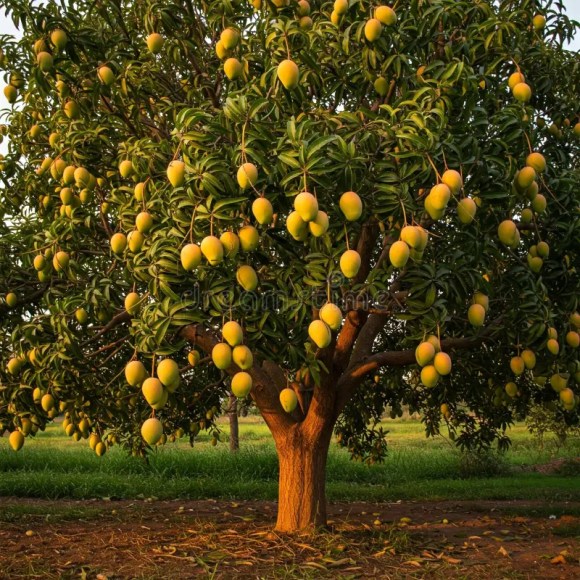
“A mango plant,” said Ramu with a laugh.

The whole class burst out laughing. The teacher looked at Mohan, who bowed his head in embarrassment.

The teacher scolded the students and asked, “How can you say that a plant is not a good gift?”

Ramu replied, “To grow a plant, you need space. You have to water it every day. If it grows into a tree, its leaves will fall everywhere. Cleaning up is hard. It would have been better if he gave something else.”

“So, is that all you know about plants?” asked the teacher.

“Growing and maintaining a plant is difficult,” said Ramu again.

The teacher turned to the class and asked, “Is Ramu right?” The students nodded.

Then the teacher told Mohan to stand up and asked, “You said you would give a valuable gift, but you gave a plant. Why?”

Mohan answered, “The other gifts may break or become useless after a while. But a plant won’t. That’s why I chose it.”

“Tell us more about why you think it’s valuable,” the teacher encouraged him.

Mohan began to explain: “When a plant grows into a tree, it gives us many benefits. It absorbs the carbon dioxide we breathe out and gives us oxygen in return. Trees give us clean air to live. Their branches and leaves spread out to give us shade. People rest under trees to cool down. That’s why trees are important.

“If this mango plant becomes a tree, it can give us mangoes. Raw mangoes can be used for pickles and other dishes. Ripe mangoes are tasty fruits. A tree can give fruits worth thousands of rupees in its lifetime. We can eat the fruits or share them with relatives. The branches can be used as firewood. Even the dried leaves can be used to cook food. There are so many benefits. That’s why I gave a plant. I hoped Ramu would understand.”

“Is that all? Most people know these things. Tell us what science says about plants,” said the teacher, encouraging him further.

Mohan continued: “Cutting trees reduces forests. Because of that, rainfall is not coming on time. Pollution is increasing. Holes are forming in the ozone layer, and the Earth is becoming hotter. If we give plants as gifts and grow more trees, it helps society. If every citizen does this, we can enjoy green nature. It also reduces air pollution caused by too many vehicles. People will become healthier.”

“Well said! You explained it beautifully. I’m proud to say you’re my student,” said the teacher, clapping.

The class clapped too, just as the bell rang.

Looking at Ramu, the teacher asked, “Now tell me, was Mohan’s gift a good one?”

Ramu replied, “I couldn’t understand the value of the gift before. I behaved wrongly. Mohan’s gift is truly valuable.”

The teacher concluded, “Children, be wise. If you want to give a gift to someone, give them a book… or a plant!”

“Yes, sir!” the whole class replied loudly.

At that moment, the next class bell rang.

From Public Domain

.

Naramsetti Umamaheswararao has written more than a thousand stories, songs, and novels for children over 42 years. he has published 32 books. His novel, Anandalokam, received the Central Sahitya Akademi Award for children’s literature. He has received numerous awards and honours, including the Andhra Pradesh Government’s Distinguished Telugu Language Award and the Pratibha Award from Potti Sreeramulu Telugu University. He established the Naramshetty Children’s Literature Foundation and has been actively promoting children’s literature as its president.

.

PLEASE NOTE: ARTICLES CAN ONLY BE REPRODUCED IN OTHER SITES WITH DUE ACKNOWLEDGEMENT TO BORDERLESS JOURNAL

Click here to access the Borderless anthology, Monalisa No Longer Smiles

Click here to access Monalisa No Longer Smiles on Amazon International

Categories
Poetry

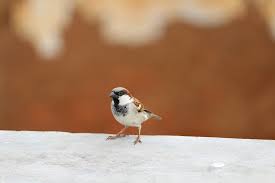
The Sparrow

By Ashok Suri

From Public Domain
There it is!
Flitting from nook to nook,
In fear of the thundering clouds.

For a while,
There is silence all around.

I hear no sound
Except rain
Lashing the ground.

Then, I hear her jubilant notes again.
I understand the clouds have relented
And there is no rain.

I look out, and lo!
I behold the chirpy creature,
Flapping its wings in the little pool of water,
Without any worry or bother.
From Public Domain

Ashok Suri is a retiree and is settled with his family in Mumbai. He tries to convey with simple words what he wants to say.

.

PLEASE NOTE: ARTICLES CAN ONLY BE REPRODUCED IN OTHER SITES WITH DUE ACKNOWLEDGEMENT TO BORDERLESS JOURNAL

Click here to access the Borderless anthology, Monalisa No Longer Smiles

Click here to access Monalisa No Longer Smiles on Kindle Amazon International

Categories
Review

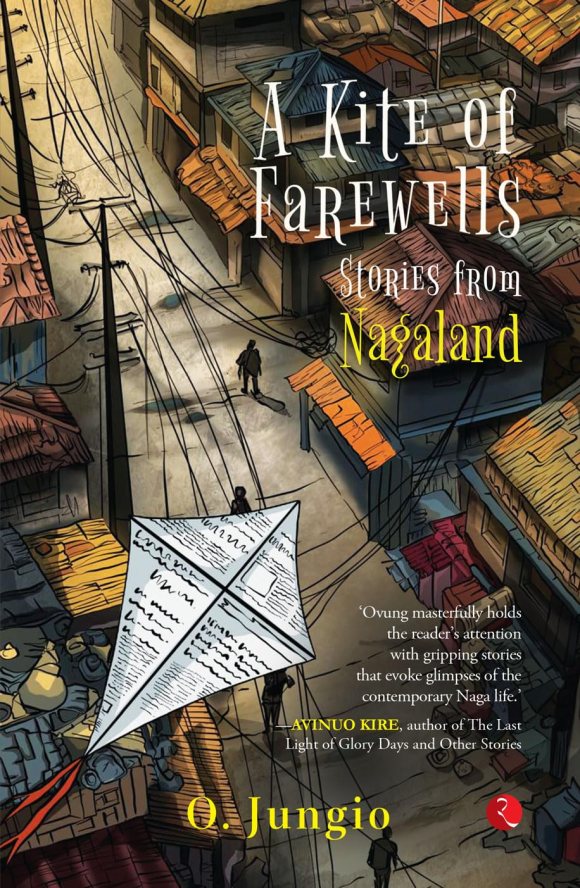
The Kite of Farewells

Book Review by Madhuri Kankipati

Title: The Kite of Farewells: Stories from Nagaland

Author: O’Jungio

Publisher: Rupa Publications

O. Jungio’s The Kite of Farewells: Stories from Nagaland is a collection of short stories of longing and grief set in contemporary Nagaland. The author is a tribal studies scholar, and cultural historian whose research and essays focus on oral traditions, folklore, and socio-cultural changes among Naga communities. In the book’s preface, he writes, “The objects—mute spectators to human sorrow—become the vessels of collective grief, the repositories of the most intimate of the farewells”. And every story in this collection does explore of longings of different kinds followed by farewells.

The first story, ‘Fire’, begins with a man driving in a downpour. He forgot to carry the food packed by his Ayo’s(mother’s). Like many others she believes hotels are “vectors for every ungodly disease in the world masquerading as something palatable.” What follows is at night he ends up in a strange village for food and shelter; where it seems like the lines between the living and the dead are blurred. The narrator chances upon a man who serves him raw food. He notes, “perhaps by way of some idiosyncratic tradition, this village served raw food on this particular day of the great harvest” and starts a fire to cook himself only to be spooked out by the man. Despite his longing for food, he has to make an escape. 

In ‘The Encyclopaedia of a Salesman’, a young man selling encyclopaedias meets a retired government official. Initially, the narrator is cautious about why a man so steeped in command would be interested in something as democratic as encyclopedias. He reflects: “With a career of bossing around subordinates, were more inclined to be loud in their admission of suspicion and disinterest in things that challenged and subverted their sphere of command. What annoyed such men more was the vague possibility that for once in their life they would be hoodwinked by a lesser man like me. It would amount to an abominable upset of social order.” This single observation is enough to collapse multiple distances of age, profession, class. The salesman’s mind, seasoned by years of observation, becomes its own encyclopedia. Just when the disparity gets real, Jungio reminds us of a harder truth: that conversations end.

Jungio tries play on the longing for nostalgic memories in ‘Scoreboard’, highlighting an exchange about keeping a manual scoreboard for FIFA world cup 2017; the son arguing “you can get match summaries and stats from google” for the father to brush it off with “it has been a tradition for me”. The whole act of hanging a whiteboard with teams playing and the predictions along with their scores stands out as a cherished activity for the season. When tragedy strikes, that brief exchange transitions itself into a way of longing, in the practices we all hold on to after the passing of loved ones.

It is not just about the personal objects of longing, but also the social objects, or feeling like a forgotten object that has stood still in time. In the story ‘Showroom’, we meet a middle-aged man, who has always “shopped cheap and done so unapologetically,” visits a new mall in town after much contemplation, only to find himself embarrassed when he misunderstands the mall purchase policy. The story is tinged with humour.

In ‘Sacred Crow’ the concept of ‘Echu Li’ is introduced to the reader and the protagonist at the same time as “a world not different from ours. It is a transient stop for the dead before they move on to the Great Home, where they all would become noble spirits, formless like the wind” — which presents itself as an acceptance of loss. The protagonist awaits the black crow, building curiosity only to close on a note that better fits the tales passed around orally in rural Nagaland.

The final story, ‘The Newspaper Kite’, features four rowdy boys who “create” trouble for their neighbours with their games, their little understanding of familial financial struggles and a bond they both form with a man in his sixties. They lovingly call ‘Amotsu’ when he kindly returns them their newspaper kite in a new frame the boys “dropped” in his garden. The boys find joy in a paper boat because “Lofty ideas are, to an extent, a luxury when the means to materialise it are limited or absent. When you are poor, you train your mind to dream on a budget, and some days, you surprise yourself by getting so much out of so little.” When the boys find about the sudden demise of the Amotsu, they remember his words, “There is always a next day,” with the awareness that the coming days would be without Amotsu. It is in the memory of “that thread trick Amotsu used to do” while flying kites, the boys stay connected to the person who left this world.

O. Jungio does a balancing act between inherited lore and the present. He subtly hints at that it is the lore that differs from landscape but not the emotions or beliefs. Regardless of the objects that offer solace, people connect with the commonality of emotions.

.

Madhuri Kankipati is a reader, writer, and translator with too many hobbies and refuses to pick just one. She was raised to follow instructions, but the real world doesn’t work that way, she just stares at her problems. You can find her on instagram @withlovemadhuu

PLEASE NOTE: ARTICLES CAN ONLY BE REPRODUCED IN OTHER SITES WITH DUE ACKNOWLEDGEMENT TO BORDERLESS JOURNAL

Click here to access the Borderless anthology, Monalisa No Longer Smiles

Click here to access Monalisa No Longer Smiles on Amazon International

Categories
Poetry

Poems by Angshuman Kar

Angshuman Kar has translated some of his shorter Bengali poems to English

Angshuman Kar
RULE

A river wants
pebbles on its bosom.
Only then the water will get a jolt,
the current will be visible.

The wind wants
a few trees to stand against it.
Only then it will whiz,
the speed will become visible.

A word also wants a few antonyms
in opposition.
Only then can it sparkle like a jewel!

Nature wants opposition

A boss slavery…


GROUP PHOTO


Father is gone. Uncle is gone.
Grandma is gone. Tikla is gone.
I am still here. Tukai is here.
Looking at a forty-year-old group photo,
it becomes clear that people take pictures together
only to realise, someday,
that in a cruel world made of black stone,
they are alone.

UMBRELLA

A broken rib.
The plastic handle is partly cracked.
It holds back the drizzle,
but when the rain pours hard,
it gives up.
From head to toe, I get drenched.

And so, the monsoon comes, the monsoon goes.

Looking at the umbrella, sometimes
it seems,
it is my father from the distant past.

Always hesitant.


ONE HUNDRED YEARS OF SOLITUDE

One can immediately identify the other
the moment the two meet.

One understands the other.
Understands the pain, the suffering, their causes–
everything.

The two drink coffee together.
Gossip. Quarrel.
Together they watch the young couples
pass by.

Boarding the same bus, then,
they go back home together.

One solitary man, still,
can never become the friend of
another.


LOVE

The wind is blowing gently
and the leaves of a tree
are shivering.
It seems
a deaf and dumb boy
has fallen in love
with a girl, deaf and dumb.


THE WIND

Those who think you are a friend
are fools.
You just touch and pass–
A foreigner in every land.

Angshuman Kar, a Bengali poet and novelist, is Professor of English at University of Burdwan, West Bengal. He was also the Secretary of Sahitya Akademi, Eastern Region. Kar is the recipient of several prestigious awards including Paschim Banga Bangla Akademi Puraskar, Krittibas Award, Bangiya Sahitya Parishad Puroskar and Shakti Chattopadhyay Samman. He has read his poems in Scotland, Germany, America and Bangladesh. Wound Is the Shelter is a collection of his poems translated to English. 

.

PLEASE NOTE: ARTICLES CAN ONLY BE REPRODUCED IN OTHER SITES WITH DUE ACKNOWLEDGEMENT TO BORDERLESS JOURNAL

Click here to access the Borderless anthology, Monalisa No Longer Smiles

Click here to access Monalisa No Longer Smiles on Amazon International