Categories
Interview

Harry Ricketts: Mentor, Poet, Essayist…

Keith Lyons in conversation with Harry Ricketts, a writer and mentor who found himself across continents and oceans

Harry Ricketts has authored thirty books and mentored many writers, including Keith Lyons. Photo Courtesy: Robert Cross

Harry Ricketts is a New Zealand poet, essayist, and literary biographer whose work has gained recognition for its wit, lyricism, and insight into memory, identity, and everyday life. He has published widely across poetry, biography, and literary criticism, and his writing blends formal elegance with accessibility. After studying at Oxford University, he taught in the UK and Hong Kong before moving to New Zealand in the early 1980s. A respected teacher and mentor, Ricketts has shaped both the literary culture of New Zealand and the broader English-language literary world through his poetry, essays, and guidance to emerging writers. His works include a major biography of the British India-born journalist, novelist, poet, and short-story writer Rudyard Kipling, The Unforgiving Minute, Strange Meetings: The Poets of the Great War, and his most recent books, the memoir First Things, and the poetry collection Bonfires on the Ice. His How to Live Elsewhere (2004) is one of twelve titles in the Montana Estates essay series published by Four Winds Press. The press was established by Lloyd Jones to encourage and develop the essay genre in New Zealand. In his essay, Ricketts reflects on his move from England to New Zealand. In this interview, he brings to us not only on his writerly life but also his journey as a mentor for other writers.

KL: Tell us about your early life?

HR: My father was a British army officer, and we moved every two years till I was ten: England, Malaysia, two different parts of England, Hong Kong, England. My first words were probably Malay. From eight to eighteen, I went to boarding schools in England; apart from the cricket and one or two teachers, this was not a positive experience.

KL: How do you think moving around affected you, and your sense of self and being in the world? Does that transience shape your perspective and writing now?

HR: I think constantly moving around gave me a very equivocal sense of belonging anywhere and also a strong sense of needing to adapt (up to a point) to wherever I found myself. I was an only child, and friendship became and remains incredibly important to me. Perhaps this hard-wired sense of temporariness has contributed to my trying to produce as many different kinds of books as possible, but eventually you discover what you can and can’t do: I can’t write novels.

KL: How has your sense of ‘home’ evolved in your work over the years?

HR: As above, but I’ve lived in New Zealand for more than forty years, so that must count for something. My second wife, Belinda, was a Kiwi; for thirty years, she was a lovely person to share the world with. I’d say I like to live slightly at an angle to whatever community I’m in.

KL: How did books and poems come into your life, and what do you think have been influences on your later work?

HR: My mother was a great reader and read me Beatrix Potter, A.A. Milne etc as a child. When I was seven, I had measles and had to stay in bed for a fortnight. I read Arthur Ransome’s Peter Duck and then I couldn’t stop. Books were a protection and a passion at boarding school. As for poetry, at school we had to learn poems by heart which I enjoyed and later recited them in class which was nerve-wracking. When I was fifteen – like many others – I fell in love with Keats, then a few years later it was Sylvia Plath, Ted Hughes, T.S. Eliot, Gerard Manley Hopkins, C.P. Cavafy ….. I was also listening to a lot of music, particularly singer songwriters like Bob Dylan, Leonard Cohen, Richard Thompson, Joni Mitchell.

Everything you read and listen to is an influence. My mind is a lumber-room of things I’ve read and listened to, things other people have said, things that have happened to me and to others, places I’ve been, love and friendship – and all that crops up in my poems in one way or another. Plath and Hughes were a wrong trail. It took me a while to work that out. Well into my twenties, I couldn’t stand Philip Larkin, but not now. I like witty, melancholy poets.

KL: Your first book, People Like Us: Sketches of Hong Kong was published when you were 27. How did that come about.? What satisfaction did you get from seeing your name in print?

HR: People Like Us is a mixture of short stories and song lyrics. Hong Kong, as I experienced it in the 1970s, (still very much a British colony) was a heterogeneous mishmash of styles, and I tried to mimic that mishmash in the pieces I wrote. I was pleased when it got published but it wasn’t much good.

KL: Can you describe your writing space?

HR: I have a small study, but since Belinda died two years ago, I’ve shifted to the kitchen table. She wouldn’t have approved, but the kitchen is light and airy and the stove-top coffee-maker close by.

KL: What is your writing process from start to finish?

HR: I do a lot of drafts. First thoughts can almost always be improved. A friend likes to say, ‘It’s not the writing; it’s the rewriting’, and I agree. But some poems have come quite quickly. When I’m writing prose, I often play music, but not when I’m working on a poem.

KL: What usually sparks a new poem for you: an image, a phrase, or a rhythm?

HR: It can be anything really. I’m usually doing something else entirely – writing an email or some piece of prose or just walking around – and something will interrupt me. It’s often a phrase which for some reason acts like a magnet, attracting another phrase or an images or an idea. It might be something I’m reading; this has happened with English poets like Edward Thomas, Philip Larkin, James Fenton, Hugo Williams and Wendy Cope and New Zealand poets like Bill Manhire, Fleur Adcock and Nick Ascroft. Occasionally, I’ve written a commissioned poem: for a friend’s wedding, say.

KL: How do you balance experimentation with accessibility in your work?

HR: I don’t think like that, but I do try not to repeat myself if I can help it. However, several poems of mine have had successors; so I wrote a poem in the mid-1980s about my six-year-old daughter Jessie called ‘Your Secret Life’, imagining her as a teenager and me waiting up late for her to return home, and my latest collection contains a ‘Your Secret Life 5’, written when she was forty. I’ve found myself writing a few poem-sequences recently, including one about an imaginary New Zealand woman poet. That was quite new for me.

KL: How do your roles as poet, biographer, and critic feed into each other?

HR: Constructively, I hope. I think you can always get prose out of yourself if you sit there long enough (fiction writers might disagree), but not poems. Some initial reverberation/interruption has to happen, some ‘spark’, as you put it. It’s all writing, of course, and writing is a habit. You have to keep doing it, otherwise that part of you switches itself off or attends to other things.

KL: Looking back across more than thirty books, what evolution do you see in your writing life, and what themes do you keep on coming back to?

HR: I think lots of writers (except the very vain ones) suffer from versions of ‘imposter syndrome’ and have problems with their personal myth — that they are a writer. I’ve got a bit more confident that I am a writer and in particular that I can write poems. Getting published helps a lot with the personal myth: something you’ve done is now out in the world. Once you publish a book, though, you lose any control you had over it. People may love it, hate or, worst of all, ignore it. But that’s just the deal.

I prefer the term preoccupations to themes. I’m preoccupied with people, places, trying to make sense of the past, happiness, the role of luck, life’s oddities, incongruities and ambiguities….

KL: You often talk about ‘gaps’, doubt, and ambiguity as central to your work. How do these function in your poetry today?

HR: To measure gaps, to be in doubt, to see the ambiguity in things: that just seems to me to be human. Poems can be acts of discovery or at least partial clarification. They can also simply preserve something: an experience, a moment, a realisation, some sense of those we love.

KL: You describe teaching as a kind of midwifery: helping writers bring out what is already within them. How did you arrive at that approach?

HR: Decades of teaching suggest to me that encouragement is more likely to help someone tell the stories they have it in them to tell rather than giving them a hard time. Writing can be a bit like giving birth and, for some, having support and encouragement is more helpful than trying to do it all on your own. Of course, in the end you do have to do most of it on your own.

KL: What advice did you find yourself giving students most often, and does it still hold true for you?

HR: I have taught poetry courses, but over the last twenty-five years I’ve mostly taught creative non-fiction. I often quote Lytton Strachey’s comment that ‘Discretion is not the better part of biography’ and then add: ‘Nor the better part of autobiography.’ I also suggest that mixed feelings are more interesting to write out of and about than clearcut ones. If you’re writing about someone else, pure admiration tends to produce hagiography, pure dislike a vindictive portrait – all warts, rather than warts and all. Serious doesn’t mean earnest; you can be serious and funny at the same time.

KL: What is the best advice you’ve received as a writer?

HR: The best advice it would have been helpful to be given (but no one did) would have been: ‘Don’t eat your heart out trying to be a kind of writer you aren’t (say, a novelist). Try to find out what kind of writer you are and pursue that as hard as you can.’ Chaucer knew: ‘The lyf so short, the craft so long to lerne.’

KL: Which authors do you most often recommend to students or emerging poets?

HR: I mostly suggest they should read as widely as they can and that they should read as a writer.

KL: What writers are you returning to most these days?

HR: I often go back to Montaigne’s essays and Orwell’s and Virginia Woolf’s. Poets I often reread include: Derek Mahon, Hugo Williams, Thomas Gray, Wendy Cope, Fleur Adcock, Edward Thomas, Andrew Marvell, Seamus Heaney, Lauris Edmond, Anne French, Robert Browning, Thomas Hardy, Philip Larkin …

KL: What responsibilities do reviewers have to writers, and what responsibilities do they have to readers?

HR: Reviewers have an obligation to be fair-minded towards their subject and to write something as worth reading (ie well-written and enjoyable) as any other piece of prose.

KL: How can reviewers give criticism that is honest yet constructive?

HR: They should try to understand what the writer was aiming at (rather than the thing they think the writer should have been aiming at) and judge the work accordingly. This is easier said than done. Writers rarely remember the positives reviewers say, and rarely forget the negatives. Reviewing is hard, if you’re trying to do a good job. In a small country like New Zealand, there’s only one-and-a-half degrees of separation, which makes puffing and pulling your punches a tempting prospect.

KL: What kind of legacy do you hope to leave through your poetry and teaching?

HR: Whatever legacy you might leave (and few writers or teachers in the scale of things leave any) is not up to you. But of course writers hope people will positively remember something they’ve written and that their work will continue to be read after their death. When I think of the teachers who have matter to me, I think of them with immense gratitude and I hope some of my pupils might feel something of that, too.

KL: Is there a question about your work that you wish people asked more often?

HR: Interesting question, but I don’t really have an answer. Perhaps ‘Why, given that you also write plenty of poems in free verse, do you still think that there are possibilities in fixed poetic forms like the sonnet, villanelle and triolet?’ I could talk about that for a long time.

KL: If your life was a movie, what would the audience be screaming out to you now?

HR: Keep going! Well, I’d like to think they might.

KL: What’s next for you? What are you working on now? 

HR: I’m threequarters of the way through a second volume of memoirs and about to write about a particularly difficult part of my life. I want to finish that and then a third volume, if I can. And write more poems.

*This interview has been conducted through emails.

Click here to read Harry Rickett’s poem.

.

PLEASE NOTE: ARTICLES CAN ONLY BE REPRODUCED IN OTHER SITES WITH DUE ACKNOWLEDGEMENT TO BORDERLESS JOURNAL

Click here to access the Borderless anthology, Monalisa No Longer Smiles

Click here to access Monalisa No Longer Smiles on Kindle Amazon International

Categories
Stories

Unspoken

By Spandan Upadhyay

The city hummed in the distance, a restless body of lights and shadows. From the 10th-floor balcony of an aging apartment building, the sound of honking cars, barking dogs, and occasional train whistles formed a chaotic symphony. The night air was thick with the scent of rain-soaked pavement, diesel exhaust, and something else, something old, unspoken, waiting: like the breath of a forgotten tomb.

Flat 10-B faced east. At dawn, sunlight strained through grime-caked windows, pooling weakly on floors that hadn’t seen polish since Madhavi’s husband died. The walls, once eggshell white, had yellowed like ancient newspaper clippings. Cracks branched across the ceiling in fractal patterns, mapping silent histories of monsoons absorbed and endured.

Madhavi Bose had lived in this apartment for twenty-seven years. She had moved in as a young bride, her heart brimming with the quiet satisfaction of middle-class security. Her husband had been a government officer with a voice like a rusted hinge and hands that smelled always of mustard oil and ink. She’d learned to love him through ritual: starching his shirts, packing his tiffin, listening to his stories of petty office politics. Her world contracted to the geometry of his needs, his nap times, his preference for fish on Thursdays, his mother’s backhanded compliments about Madhavi’s rice.

And then, suddenly, he was gone. A heart attack at forty-five, slumped over a stack of tax files. No time for goodbyes, no time for regrets. Just the scent of his hair oil lingering on pillowcases, and the pension that arrived every month like a condolence card.

Left with a sixteen-year-old daughter and a life halved, Madhavi had done what was expected of her. She survived. She woke each morning, brewed tea for one, and scrubbed the balcony tiles until her knuckles bled. She learned to kill cockroaches without flinching. She stopped wearing sindoor.

And then there was Riya.

Riya, now twenty-four, had been a bright, sharp-eyed child, full of questions, full of hunger. At eight, she’d torn maps from schoolbooks to tape above her bed. Patagonia! Istanbul! Marrakech! Places whose names rolled like marbles in her mouth. At fourteen, she wrote stories about women who rode motorcycles through deserts. Too restless for a city like this, too impatient for a life like her mother’s. She devoured novels as if they were contraband, hiding Rushdie under her mattress, scribbling poems in the margins of math notebooks.

University had been a brief reprieve. For three years, she’d rented a hostel bunk near campus, subsisting on muri[1]and the euphoria of all-night literary debates. She fell in love twice, once with a Marxist poet who quoted Faiz, once with a biology student who sketched ferns in her notebooks. Both left for Delhi. Both promised to write. Neither did.

Her first job interview had been at a glossy magazine office where the editor yawned while she spoke. The second, at a publishing house, ended when they asked her to fetch chai for a visiting author. “You’ll start as an intern,” they’d said, though she’d graduated top of her class. Soon, she found herself in a cubicle the colour of wet cement, editing corporate brochures about cement. The future is built on solid foundations. Her colleagues wore polyester saris and discussed baby formulas. At lunch, she hid in stairwells, nibbling canteen samosas gone cold, scrolling through friends’ Instagrams: New York! Berlin! — until her eyes burned.

And so, she returned to Flat 10-B. To her mother. To a house where the only real conversations happened in the spaces between words.

The apartment’s rhythm was metronomic. Madhavi rose at 5:30 AM, the click of her alarm clock splitting the dark like a dry twig. She brewed Assam tea, the pot whistling two precise notes. The newspaper arrived with a thud; she read it front to back, circling typos in red pen. By 6:45, she descended the ten flights (the elevator had died with her husband), her cane tapping each step like a metronome. She walked exactly three laps around the park, nodding at the same widows on the same benches, their saris fading to identical shades of ash.

Riya woke at 8:00 AM to the smell of cumin seeds burning, Madhavi’s eternal attempt at breakfast. She dressed in the dark, avoiding mirrors. The corridor to the front door felt longer every day, lined with family photos fossilized in time: her parents’ wedding portrait, Madhavi’s smile stiff as starched cotton, Riya’s fifth birthday, half the cake uneaten, her father’s garlanded graduation photo gathering dust.

Evenings condensed into separate silences. Madhavi parked herself before the television, absorbing soap operas where women wept over stolen inheritances and switched-at-birth babies. The flickering blue light etched her face into something statue-like, immovable. Riya retreated to her room, headphones blaring punk rock, rereading The Bell Jar [2] for the twelfth time. She’d marked a passage years ago, I saw my life branching out before me like the green fig tree, but now the figs seemed rotted, the tree petrified.

Dinner was a sacrament of avoidance. “There’s dal in the fridge.” “Okay.” They passed each other like shadows, careful not to touch. Once, Madhavi’s fingers brushed Riya’s wrist while handing her a plate. Both recoiled as if scalded.

They never argued. Arguments required collision, and collision required caring enough to crash.

Then the sleepwalking began.

It was Riya who noticed it first. She woke one morning with grit beneath her nails, the taste of soil sharp on her tongue. Her legs ached as if she’d climbed mountains. On a hunch, she checked her shoes, the soles caked with mud.

The next night, she hung her mobile around her neck. The footage, grainy and green-tinged, showed her move out at 2:17 AM. Her movements fluid as that of a marionette. She glided past the cracked full-length mirror, her reflection blurred, as if out of focus, turned the doorknob with eerie precision. Moments later, Madhavi emerged from her room, eyes milky in the dark, nightgown billowing like a sail. Together, they drifted into the hallway, bare feet soundless on cracked tiles.

Riya didn’t speak of it. Words would make it real. Instead, she began stealing glances at her mother, really looking, for the first time in years. Madhavi’s hands fascinated her: long fingers calloused from scrubbing, nails pared to the quick, a silver band still indenting her ring finger. Once, she caught Madhavi humming a Rabindra Sangeet tune while chopping onions, her voice girlish, almost playful. The sound froze Riya mid-step. By the time she exhaled, the humming had stopped.

One rain-heavy evening, Madhavi broke the unspoken rules. “I wanted to be a teacher,” she said abruptly, ladling dal onto Riya’s plate.

Riya’s thumb hovered over her phone screen. “What?”

“At Bethune College, I’d been accepted. History. Your grandfather said educated wives were headaches. So.” She shrugged, a single lift of the shoulder that contained a lifetime of folded dreams. “Your father preferred my fish curry to my opinions anyway.”

The admission hung between them, delicate as a cobweb. Riya thought of her own application to Columbia’s MFA program, buried under a strata of rejection emails. She wanted to ask, Were you angry? Did you ever scream? Instead, she muttered, “The dal’s good.”

Madhavi stared at her, eyes glinting with something that could’ve been pity. Or recognition.

The sleepwalking intensified. Riya began waking in strange tableaus: perched on the fire escape, her toes curled over the edge; kneeling in the building’s puja[3] room, marigold petals stuck to her knees; once, standing in the parking lot, arms outstretched as if awaiting crucifixion. Her phone footage revealed nightly pilgrimages, down ten flights, through the lobby’s broken turnstile, into the skeletal garden behind the building. Always, Madhavi followed.

Then came the monsoon night.

Rain sheeted the balcony grilles, the wind howling through gaps in the window seals. Riya was sleepwalking, mud squelching between her toes, her nightdress plastered to her skin. She stood in the garden’s center, lightning fracturing the sky. To her left, Madhavi hovered, drenched and spectral, her gaze locked on Riya.

A current passed between them, not a spark, but a surge.

Madhavi spoke first, her voice unspooling like smoke. “At last. At last, my enemy.”

Riya’s jaw clenched. The words came out involuntarily. “Hateful woman. Selfish and old. You want my life to be your epilogue.”

“You devoured my youth.” Madhavi’s hands flexed. Her eyes had a glassy look, but they were inanimate. Still. “You, who blames me for her cage.”

“You never fought! You just… folded.”

“And you?” Madhavi’s laugh was a dry leaf crushed underfoot. “You run, but only in circles. You think I don’t see your applications? Your hidden bank account?”

Riya’s breath hitched. The garden seemed to pulse, neem leaves trembling, earth exhaling decades of buried words.

“I could’ve left,” Madhavi whispered. “After he died. Gone back to school. But you-”

“Don’t.”

“– you needed stability. Security.”

“I needed a mother, not a martyr!”

Lightning flashed. For an instant, Madhavi’s face was a mask of cracks. Then, a dog barked, the neighbor’s irritating new resident, and the spell snapped.

Madhavi blinked, rain dripping from her lashes. “Is that you, darling?”

Riya hugged herself, shivering. “Yes, Ma.”

And then, as if nothing had happened, they went back inside. They climbed the stairs in silence, leaving wet footprints that evaporated by dawn.

.

[1] Puffed rice

[2] Novel by Sylvia Plath published in 1963 under the penname of Victoria Lucas

[3] Prayer


Spandan Upadhyay
 is a new writer whose work captures the vibrant nuances of everyday life. With a deep appreciation for the human experience, Spandan’s stories weave together subtle emotions and moments of introspection. Each of his stories invite readers into a world where ordinary occurrences reveal profound truths, leaving a lasting impact.

.

PLEASE NOTE: ARTICLES CAN ONLY BE REPRODUCED IN OTHER SITES WITH DUE ACKNOWLEDGEMENT TO BORDERLESS JOURNAL. 
Click here to access the Borderless anthology, Monalisa No Longer Smiles

Click here to access Monalisa No Longer Smiles on Kindle Amazon International

Categories
Bhaskar's Corner Tribute

Ramakanta Rath: A Monument of Literature

By Bhaskar Parichha

The death of Ramakanta Rath, a provocative figure in contemporary Odia poetry, has left a considerable gap in the literary landscape. Born on December 13, 1934, in Cuttack, Ramakanta was a prominent modernist poet in Odia literature. He obtained his Master’s degree in English Literature from Ravenshaw College and joined the Indian Administrative Services (IAS) in 1957.

His work was significantly shaped by the influences of poets such as T.S. Eliot and Ezra Pound, often delving into themes of mysticism, mortality, and human isolation. Ramakanta Rath’s contributions have profoundly impacted modern Odia literature in various ways. He brought modernist themes and styles to Odia poetry, drawing significant inspiration from Western poets such as T.S. Eliot and Ezra Pound. His examination of topics like the search for the mystical, the concepts of life and death, and the experience of inner solitude facilitated a transition in Odia poetry towards more contemporary and universal themes.

 Rath’s poetry is marked by symbolic references to spiritual and metaphysical dimensions of existence, which enhanced the intellectual richness of Odia literature. This methodology enabled readers to engage with intricate philosophical concepts through the medium of poetry. Rath’s poetry is noted for its somber tone and symbolic references to the spiritual and metaphysical dimensions of existence.

His significant literary contributions include Kete Dinara (Of Bygone Days, 1962), Aneka Kothari (Many Rooms, 1967), Sandigdha Mrigaya (Suspicious Hunting, 1971), Saptama Ritu (The Seven Seasons, 1977), Sachitra Andhara (Picturesque Darkness, 1982), Sri Radha (1984), and Sri Palataka (Mr Escapist, 1997). Rath was honoured with the Sahitya Akademi Award in 1977, the Saraswati Samman in 1992 for Sri Radha, the Bishuva Samman in 1990, and the Padma Bhushan in 2006. He also received the Sahitya Akademi Fellowship in 2009 before which he was the vice-president of the Akademi.

Rath is particularly celebrated for his lengthy poem, Sri Radha, in which he reimagines Radha, freeing her from theological limitations and depicting her as a remarkable character who embodies deep emotions, love, defiance, and resilience. This poem uniquely intertwines themes of erotic love with existential introspection. This notable work initiated a new trend in Odia poetry that echoed the confessional styles of poets like Sylvia Plath, infusing a personal and introspective quality into Odia literature.

He skillfully combined traditional Odia poetic meters and techniques with contemporary free verse, creating a unique hallmark of his artistic expression. Odia poetry is characterised by its extensive use of classical meters and forms, such as chhanda, chautisa and  champu which serve to articulate intricate emotions and themes in a structured and rhythmic manner. By incorporating these traditional elements, Rath infused his poetry with cultural richness and musicality, thereby amplifying its emotional resonance and thematic depth.

Ramakanta Rath’s integration of traditional Odia meter enriched his themes in multiple ways. By using these familiar poetic forms, his work connects more profoundly with readers who recognise them. This cultural connection amplifies the emotional resonance of his themes, making them easier for his audience to relate to. Additionally, traditional Odia meters often hold symbolic significance, which Rath skilfully utilises to deepen his modernist themes.

The combination of symbolic annotations and modernist concepts enhances Rath’s poetry, adding depth and encouraging reflection. By contrasting traditional forms with modernist ideas, his work creates a dynamic tension. This tension amplifies the emotional resonance of his poetry, prompting readers to navigate the clash between traditional values and contemporary realities, which adds layers to his themes. Rath’s incorporation of traditional meters with modern free verse invites readers to think critically about his poetry.

This fusion of styles encourages a deeper exploration of his themes, leading to a more profound appreciation of his work. While the traditional Odia meters offer a cultural base, Rath’s modernist themes keep his poetry relevant on a global scale. This interplay between tradition and modernity enables his work to reach beyond local confines, attracting a wider audience interested in existential and philosophical questions.

Rath’s poetry stands out for its masterful incorporation of irony and wit, elements that add depth and complexity to his body of work. Critics note that his use of irony can often be challenging to interpret, reflecting the nuanced and multifaceted nature of his poetic viewpoint. This unique approach, combined with his thematic explorations, has sparked a resurgence among a new generation of Odia poets, playing a crucial role in the advancement of modern Odia literature.

Ramakanta Rath’s impact has been instrumental in shaping the landscape of contemporary Odia poetry, solidifying his reputation as a monumental figure in the realm of Indian literature today. His passing signifies the conclusion of a significant era in the narrative of Odia literature, leaving behind a legacy that will continue to inspire future writers and poets.

.

(First published in Odisha Plus)

Read his translated poems by clicking here.

Bhaskar Parichha is a journalist and author of Cyclones in Odisha: Landfall, Wreckage and ResilienceUnbiasedNo Strings Attached: Writings on Odisha and Biju Patnaik – A Political Biography. He lives in Bhubaneswar and writes bilingually. Besides writing for newspapers, he also reviews books on various media platforms.

.

PLEASE NOTE: ARTICLES CAN ONLY BE REPRODUCED IN OTHER SITES WITH DUE ACKNOWLEDGEMENT TO BORDERLESS JOURNAL

Click here to access the Borderless anthology, Monalisa No Longer Smiles

Click here to access Monalisa No Longer Smiles on Amazon International

Categories
Essay

Drinking the Forbidden Milk of Paradise…

By Meenakshi Malhotra

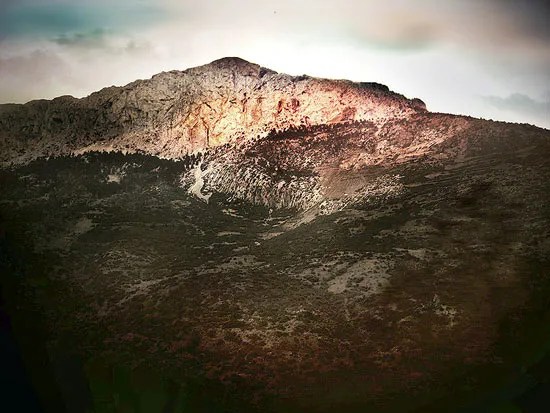
Mount Parnassus in Greece, where the muses were said to gather, was regarded as the home of poetry: From Public Domain

For the longest time, women were uncomfortable occupants of the house of poesy[1], particularly where there were existing canons of poetry established by the institutional gate-keepers and male custodians of literature. At best, they were viewed as Jane-come-latelies who sought to transgress the hitherto hallowed domains of high verse, interlopers to the hallowed heights of Parnassus who dared not “drink the milk of paradise”.

This ‘absence’ of women from the terrain of poetry is in spite of the fact that women have always written poetry, from ancient times to now. Sappho in the western tradition, was a Grecian poet from 5th-6th century BCE who was the pioneer of lyric poetry, a genre which apart from being set to music, also inaugurated the poetic ‘I’. In India, Buddhist nuns in the Mahayana and Theravadas who wrote poems known as the therigathas were early precursors of female poets. These early women poets engaged in the sometimes forbidden, sometimes lascivious charms of verse and versification. Down the ages, there were many others who joined them and kept the lamp of women’s versification lit. However, if women have always been versifiers, why has there been a  resistance and grudging admission for women to the poetic domain, which becomes a sort of “No (Wo)man’s land”? Why do women poets have only a token presence in traditional poetic anthologies?

Some reasons have been offered, not least among them being the preponderance of male poets who have often also been self-proclaimed and self-appointed guardians, legatees and arbiters of poetic tradition. Canonical poetic traditions, many claim, require a knowledge and understanding of Latin and Greek in the West while a knowledge of Sanskrit/Persian in the Asian context was deemed necessary. Thus women, who, for the most part, lacked formal education and had but small Latin and less Greek, could only hover around the margins and fringes of poetry. The situation with Sanskrit and Persian was similar and women remained mostly absent from or shadowy denizens of poetic terrains. Even if and when women were writing, they were doing so in colloquial registers and in the languages of the common people  and not in formal or decorative language, deemed essential for poetry, for the most part. Almost the first group of women writing poetry in India were Buddhist nuns who wrote in Pali, one of the many ancient languages in the ancient Indian subcontinent, which enshrined its own scholarly tradition. Sappho wrote in the Greek Aeolic dialect, which was difficult for Latin writers to translate.

Between 12th and 17th century, there was an advent  of devotional mystic poetry called “Bhakti” and “Sufi” poetry. While the poems were uttered/written in a devotional idiom, the poems and songs were often rebellious and iconoclastic, rejecting institutional religions and social norms. This poetry was rooted in personal and unmediated devotion and rejected formal languages and established societal norms. Some of this poetry was in an informal register, colloquial language and performative with a strong dramatic quality. Thus we have lines in Kannada from Akka Mahadevi (1130-1160) who rejects her earthly husband:

I love the handsome one: He has  no death decay nor form… no end no clan, no land.
Take these husbands who die, decay, and feed them to your kitchen fires.(Vachanas)

Women poets for the longest time had a crisis of identity, identification and non-belonging. They laboured under the anxiety of authorship where they felt the absence of precursors and fore-mothers and the lack of a poetic tradition to which they could belong. They were often made to feel as if they lacked genuine poetic talent or that they were transgressors against womanhood and femininity.

In Aurora Leigh (1855) by Elizabeth Barrett Browning, the eponymous title character, considers  the diverse fields of literature where women can exercise their talent and claim a space. The field of dramatic writing poses a challenge because the former demands that the woman writer be in the public eye in order to promote her plays. Further, to achieve or even aspire to the rank of Poet, Aurora must become capable of  “widening a large lap of life to hold the world-full woe”. Over the course of the long epic poem, she tries to reconcile her femininity with her artistic aspirations. In both cases, she is denied emotional fulfilment. She refuses to accept the role of an obedient wife, since it would mean foregoing the intellectual independence needed to develop as an artist, but then she must also refuse the love of a husband. In Book Five, she mentions three poets, none of whom she admires for their “popular applause”. Yet she admits that she envies them for the time they can devote to their chosen vocation and the adoring women that surround them and provide emotional support and fill their days with glory.

Another issue with women’s writing and poetry is the uncomfortable positioning of women in relation to patriarchal language or male centred language. If as Dale Spender  declares in “Man-made Language”, the masculine is asserted as the norm, where do we position women’s voices? While language is a universal medium of communication, man-made language is full of sexism and chauvinism and expresses reality from a predominantly masculine and patriarchal perspective. If language is a social system which women are persuaded or co-opted to use, how do they work within its confines to express their poetic aspirations? How do they stretch, bend, subvert language to express their own realities? Can we read techniques of irony, satire and other figurative and metaphoric strategies of defiance and subversion and an attempt to undermine from within?

Juliet Mitchell in her essay on ‘Femininity, Narrative and Psychoanalysis’ states that the woman writer/novelist must of necessity be a hysteric, straddling two opposed worlds. One world is that of male definitions and conceptions of femininity  and the other, a resistance and defiance of such conceptualising, accompanied by an attempt to undermine from within. Her defiance and resistance makes her character that of a hysteric, one who defies accepted notions and standards of femininity and is therefore considered transgressive. She troubles fixed gender categories, roles and definitions. She also disrupts and challenges the symbolic order of language, one which insists on rules of grammar and linguistic structures through the semiotic order which uses word play, repetitions and  childish rhymes, in order to express inner desires and drives. The symbolic order deals with the denotative aspects of language and the semiotic order with the affective aspect.

Women’s poetry often houses and accommodates the semiotic, seeming psychobabble that plays with and disturbs fixed notions of femininity and binary gender identities.

What are the popular themes that inform women’s poetry? Some themes are to with women’s search for authentic  self-hood and identity, their search for roots and a space of their own. As we see in Aurora Leigh, much of women’s poetry is self-conscious and self-reflexive, about the act of writing itself, the “awful daring of a moment’s surrender which an age of prudence could never retract.”(T.S.Eliot

Many contemporary women poets, across continents, have evinced a substantial  interest in exploring their poetic self  through their poems. On the one hand is the confessional poetry of Sylvia Plath and Anne Sexton, on the other the brief gnomic utterances of Emily Dickinson. Before the advent of the twentieth century, one hears of Barrett Browning, Emily Dickinson and Christina Rossetti, among many others. Names like Aphra Behn and Anne Bradstreet have been included in many syllabi, often as a token inclusion in an otherwise male centric course.

Women poets have talked about the horrors of war including rape, pillage and destruction. In their critique of war and violence, we find the forging of transnational solidarities, whether it is women’s poetry from Sri Lanka or Birangona (War heroines). 

In India the many names that come to mind are that of  Kamala Das, Eunice D’Souza, Meena Alexander, Sujata Bhatt and Sunuti Namjoshi. Women poets have employed effective means to explore the entire gamut of experience.The private  and the public domain, their process of  self-analysis; the process of poetic creativity and a probe into  poetic identities are all significant fields of exploration. For these women writers, analysing the creative process becomes much more than just a poetic theme. As they unravel the mystery of their poetic psyche in their writings, it becomes an epiphanic journey for the poets and their readers.

[1] Archaic word for poetry

Dr Meenakshi Malhotra is an Associate Professor of English Literature at Hansraj College, University of Delhi, and has been involved in teaching and curriculum development in several universities. She has edited two books on Women and Lifewriting, Representing the Self and Claiming the I, in addition  to numerous published articles on gender, literature and feminist theory.  Her most recent publication is The Gendered Body: Negotiation, Resistance, Struggle.

.

PLEASE NOTE: ARTICLES CAN ONLY BE REPRODUCED IN OTHER SITES WITH DUE ACKNOWLEDGEMENT TO BORDERLESS JOURNAL

Click here to access the Borderless anthology, Monalisa No Longer Smiles

Click here to access Monalisa No Longer Smiles on Amazon International

Categories
Poetry

Poetry by Naisha Chawla

Naisha Chawla
GULAB JAMUN

Kafka would've liked these corridors,
these walls of painted advertisement,
these coloured towns with attributions to deities at every tree's feet.
The running nerve of this place,
through the garble of a thousand dialects,
sounds all kinds of chants,
of faith, food, and architecture,
of life weaving through its weighting waiting slums,
through linoleum hardened heel-clad grounds.

Not a day goes by without auto horns,
or political instability,
or chai,
sweet, sweet, God-sent chai,
a thousand wicks in a thousand burning lamps,
a million lit cigarettes in stalls,
a million lit-up smiles in places you wouldn't expect to belong.

This home functions upon its dysfunctions,
builds upon what breaks it,
ever encompassing,
entirely amassing,
fields in farms,
skills of talents,
sacks of wheat,
bundles of wires,
collected coins,
plastic bags like Russian dolls,
ringing evening bells,
a life so culturally fulfilled,
lived in the grand denominations of
Division of the masses
and Parle G*.


* A popular brand of biscuits in India


Naisha Chawla is inspired by the works of Robert Frost, Oscar Wilde, W.H. Auden, Sylvia Plath, and Richard Siken amongst many others. She believes poetry to be a language of infinite letters, words and secret combinations to figuring out the better mysteries of life! Her debut book is called The Grants of Calliope.

PLEASE NOTE: ARTICLES CAN ONLY BE REPRODUCED IN OTHER SITES WITH DUE ACKNOWLEDGEMENT TO BORDERLESS JOURNAL

Click here to access the Borderless anthology, Monalisa No Longer Smiles

Click here to access Monalisa No Longer Smiles on Kindle Amazon International

Categories
Interview Review

The Subliminal World of Radha Chakravarty’s Poetry

In conversation with Radha Chakravarty about her debut poetry collection, Subliminal, published by Hawakal Publishers

Radha Chakravarty

Words cross porous walls
In the house of translation—
Leaf cells breathe new air.

We all know of her as a translator par excellence. But did you know that Radha Chakravarty has another aspect to her creative self? She writes poetry. Chakravarty’s poetry delves into the minute, the small objects of life and integrates them into a larger whole for she writes introspectively. She writes of the kantha — a coverlet made for a baby out of soft old sarees, of her grandmother’s saree, a box to store betel leaves… Her poetry translates the culture with which she grew up to weave in the smaller things into the larger framework of life:

Fleet fingers, fashioning
silent fables, designed to swaddle
innocent infant dreams, shielding
silk-soft folds of newborn skin
from reality’s needle-pricks,
abrasive touch of life in the raw.

--'Designs in Kantha’

She has poignant poems about what she observes her in daily life:

At the traffic light she appears 
holding jasmine garlands
selling at your car window for the price
of bare survival, the promise
of a love she never had, her eyes
emptied of the fragrance
of a spring that, for her, never came.

--‘Flower Seller’

Some of her strongest poems focus on women from Indian mythology. She invokes the persona of Sita and Ahalya — and even the ancient legendary Bengali woman astrologer and poet, Khona. It is a collection which while exploring the poet’s own inner being, the subliminal mind, takes us into a traditional Bengali household to create a feeling of Bengaliness in English. At no point should one assume this Bengaliness is provincial — it is the same flavour that explores Bosphorus and Mount Everest from a universal perspective and comments independently on the riots that reft Delhi in 2020… where she concludes on the aftermath— “after love left us    and hate filled the air.”

The poems talk to each other to create a loose structure that gives a glimpse into the mind of the poetic persona — all the thoughts that populate the unseen crevices of her being.

In Subliminal, her debut poetry book, Radha Chakravarty has brought to us glimpses of her times and travels from her own perspective where the deep set tones of heritage weave a nostalgic beam of poetic cadences. Chakravarty’s poems also appear in numerous journals and anthologies. She has published over 20 books, including translations of major Bengali writers such as Rabindranath Tagore, Bankim Chandra Chatterjee, Mahasweta Devi and Kazi Nazrul Islam, anthologies of South Asian writing, and several critical monographs. She has co-edited The Essential Tagore (Harvard and Visva-Bharati), named ‘Book of the Year’ 2011 by Martha Nussbaum.

In this conversation, Radha Chakravarty delves deeper into her poetry and her debut poetry book, Subliminal.

Your titular poem ‘Subliminal’ is around advertisements on TV. Tell us why you opted to name your collection after this poem.

Most of the poems in Subliminal are independent compositions, not planned for a pre-conceived anthology. But when I drew them together for this book, the title of the poem about TV advertisements appeared just right for the whole collection, because my poetry actually delves beneath surfaces to tease out the hidden stories and submerged realities that drive our lives. And very often, those concealed truths are startlingly different from outward appearances. I think much of my poetry derives its energy from the tensions between our illusory outer lives and the realities that lurk within. In ‘Memories of Loss’, for example, I speak of beautiful things that conceal painful stories:

In a seashell held to the ear
the murmur of a distant ocean

In the veins of a fallen leaf
the hint of a lost green spring

In the hiss of logs in the fire,
the sighing of wind in vanished trees

In the butterfly’s bold, bright wings,
The trace of silken cocoon dreams

So, when and why did you start writing poetry?

I can’t remember when I started. I think I was always scribbling lines and fragments of verse, without taking them seriously. Poetry for me was the mode for saying the unsayable, expressing what one was not officially expected to put down in words. In a way, I was talking to myself, or to an invisible audience. Years later, going public with my poems demanded an act of courage. The confidence to actually publish my poems came at the urging of friends who were poets. Somehow, they assumed, or seemed to know from reading my published work in other forms, that I wrote poetry too.

Did being a translator of great writers have an impact on your poetry? How?

Yes, definitely. In particular, translating Tagore’s Shesher Kabita (as Farewell Song), his verses for children, the lush, lyrical prose of Bankimchandra Chatterjee (Kapalkundala) and the stylistic experiments of contemporary Bengali writers from India and Bangladesh (in my books Crossings: Stories from India and Bangladesh, Writing Feminism: South Asian Voices, Writing Freedom: South Asian Voices and Vermillion Clouds) sensitised me to the way poetic language works, and how the idiom, rhythm and resonances change when you translate from one language to another. Translating poetry has its challenges, but it also refined my own work as a poet. Let me share a few lines of poetry from Farewell Song, my translation of Tagore’s novel Shesher Kabita:

Sometime, when you are at ease, 
When from the shores of the past,
The night-wind sighs, in the spring breeze,
The sky steeped in tears of fallen bakul flowers,
Seek me then, in the corners of your heart,
For traces left behind. In the twilight of forgetting,
Perhaps a glimmer of light will be seen,
The nameless image of a dream.
And yet it is no dream,
For my love, to me, is the truest thing …

What writers, artists or musicians have impacted your poetry?

For me, writing is closely associated with the love for reading. Intimacy with beloved texts, and interactions with poets from diverse cultures during my extensive travels, has proved inspirational.

Poetry is also about the art of listening. As a child I loved the sound, rhythm and vivacity of Bengali children’s rhymes in the voice of my great-grandmother Renuka Chakrabarti. She has always been a figure of inspiration for me, a literary foremother who dared to aspire to the world of words at a time when women of her circle were not allowed to read and write. A child bride married into a family of erudite men, and consumed by curiosity about the forbidden act of reading, she took to hiding under her father-in-law’s four-poster bed and trying to decipher the alphabet from newspapers. One day he caught her in the act. Terrified, she crept out from her hiding place, and confessed to the ‘crime’ of trying to read. Things could have gone badly for her, but her father-in-law was an enlightened individual. He understood her craving to learn, and promised that he would teach her to read and write. Under his tutelage, and through her own passion for learning, she became an erudite woman, equally proficient in English and Bengali, an accomplished but unpublished poet whose legacy I feel I have inherited. Subliminal is dedicated to her.

As a child I absorbed both Bengali and English poetry through my pores because in our home, poetry, and music were all around me. I was inspired by Tagore and Nazrul, but also by modern Bengali poets such as Jibanananda Das, Sankho Ghosh and Shamsur Rahman. In my college days, as a student of English Literature, I loved the poetry of Shakespeare, Donne, Yeats, T. S. Eliot and the Romantics.

Later, I discovered the power of women’s poetry: Emily Dickinson, Sylvia Plath and Adrienne Rich, to name a few. I am fascinated by the figure of Chandrabati, the medieval Bengali woman poet who composed her own powerful version of the Ramayana. Art and music provide a wellspring of inspiration too, for poetry can have strong visual and aural dimensions.

You translate from Bengali into English. How is the process of writing poetry different from the process of translation, especially as some of your poetry is steeped in Bengaliness, almost as if you are translating your experiences for all of us?

Translation involves interpreting and communicating another author’s words for readers in another language. Writing poetry is about communicating my own thoughts, emotions and intuitions in my own words. Translation requires adherence to a pre-existing source text. When writing poetry, there is no prior text to respond to, only the text that emerges from one’s own act of imagination. That brings greater freedom, but also a different kind of challenge. Both literary translation and the composition of poetry are creative processes, though. Mere linguistic proficiency is not enough to bring a literary work or a translated text to life.

English is not our mother tongue. And yet you write in it. Can you explain why?

Having grown up outside Bengal, I have no formal training in Bengali. I was taught advanced Bengali at home by my grandfather and acquired my deep love for the language through my wide exposure to books, music, and performances in Bengali, from a very early age. I was educated in an English medium school. At University too, I studied English Literature. Hence, like many others who have grown up in Indian cities, I am habituated to writing in English. I translate from Bengali, but write and publish in English, the language of my education and professional experience. Bengali belongs more to my personal, more intimate domain, less to my field of public interactions.

Both Bengali and English are integral to my consciousness, and I guess this bilingual sensibility often surfaces in my poetry. In many poems, such as ‘The Casket of Secret Stories,’ ‘The Homecoming’ or ‘In Search of Shantiniketan’, Bengali words come in naturally because of the cultural matrix in which such poems are embedded. ‘The Casket of Secret Stories’ is inspired by vivid childhood memories of my great-grandmother’s  daily ritual of rolling paan, betel leaves stuffed with fragrant spices, and arranging them in the metal box, her paaner bata[1]. When she took her afternoon nap, my cousins and I would steal and eat the forbidden paan from the box, and pretend innocence when she woke up and found all her paan gone. Of course, from our red-stained teeth and lips, she understood very well who the culprits were. But she never let on that she knew. It was only later, after I grew up, that I realised what the paan ritual signified for the housebound women of her time:

In the delicious telling,
bright red juice trickling
from the mouth, staining
tongue and teeth, savouring
the covert knowledge
of what life felt like in dark corners
of the home’s secluded inner quarters,
what the world on the outside looked like
from behind veils, screens,
barred windows and closed courtyards
where women’s days began and ended,
leaving for posterity
this precious closed kaansha* casket,
redolent with the aroma of lost stories

*Bronze

But I don’t agree that all my poetry is steeped in Bengali. In fact, in most of my poems, Bengali expressions don’t feature at all, because the subjects have a much wider range of reference. As a globe trotter, I have written about different places and journeys between places.

Take ‘Still’, which is about Mount Everest seen from Nagarkot in Nepal. Or ‘Continental Drift’, about the Bosphorus ferry that connects Asia with Europe. Such poems reflect a global sensibility. My poems on the Pandemic are not coloured by specific Bengali experiences. They have a universal resonance. I contributed to Pandemic: A Worldwide Community Poem (Muse Pie Press, USA), a collaborative effort to which poets from many different countries contributed their lines. It was a unique composition that connected my personal experience of the Pandemic with the diverse experiences of poets from other parts of the world. The poem was nominated for the Pushcart Prize. I guess my poems explore the tensions between rootedness and a global consciousness.

What are the themes and issues that move you?

I tend to write about things that carry a strong personal charge, but also connect with general human experience. My poems are driven by basic human emotions, memory, desire, associations, relationships, and also by social themes and issues. Specific events, private or public, often trigger poems that widen out to ask bigger questions arising from the immediate situation.

Sometimes, poetry can also become for me what T. S. Eliot calls an “escape from personality,” where one adopts a voice that is not one’s own and assume a different identity. ‘The Wishing Tree’ and the sequence titled ‘Seductions’ work as “mask” poems, using voices other than my own. This offers immense creative potential, similar to creating imaginary characters in works of fiction.

There are a lot of women-centred poems in Subliminal. Consider, for example, ‘Designs in Kantha’, ‘Alien’, ‘River/Woman’, ‘That Girl’, ‘The Severed Tongue’ and ‘Walking Through the Flames’. These poems deal with questions of voice and freedom, the body and desire, and the legacy of our foremothers. Some of them are drawn from myth and legend, highlighting the way women tend to be represented in patriarchal discourses.

The natural world and our endangered planet form another thematic strand. I am fascinated by the hidden layers of the psyche, and the unexpected things we discover when we probe beneath the surface veneer of our exterior selves. My poems are also driven by a longing for greater connectivity across the borders that separate us, distress at the growing hatred and violence in our world, and an awareness of the powerful role that words can play in the way we relate to the universe. ‘Peace Process’, ‘After the Riot’ and ‘Borderlines’ express this angst.

How do you use the craft of poetry to address these themes?

Poetry is the art of compression, of saying a lot in very few words. Central to poetry is the image. A single image can carry a welter of associations and resonances, creating layers of meaning that would require many words of explanation in prose. Poems are not about elaborations and explanations. They compel the reader to participate actively in the process of constructing meaning. Reading poetry can become a creative activity too. Poems are also about sound, rhythm and form. I often write “in form” because the challenge of working within the contours of a poetic genre or form actually stretches one’s creative resources. In Subliminal, I have experimented with some difficult short forms, such as the Fibonacci poem, the Skinny, and the sonnet. Take, for instance, the Skinny poem called ‘Jasmine’:

Remember the scent of jasmine in the breeze?
Awakening
tender
memories
bittersweet,
awakening
buried
dormant
desires,
awakening,
in the breeze, the forgotten promise of first love. Remember?

The last two lines of the poem use the same words as the beginning, but to tell a different story. The form demands great economy.

I pay attention to the sound, and even when writing free verse, I care about the rhythm.  Endings are important. Many of my poems carry a twist in the final lines. I mix languages. Bengali words keep cropping up in my English poems.

Are your poems spontaneous or pre-meditated?

The first attempt is usually spontaneous, but then comes the process of rewriting and polishing, which can be very demanding. Some poems come fully formed and require no revision, but generally, I tend to let the first draft hibernate for some time, before looking at it afresh with a critical eye. Often, the final product is unrecognisable.

Which is your favourite poem in this collection and why? Tell us the story around it.

It is hard to choose just one poem. But let us consider ‘Designs in Kantha’, one of my favourites. Maybe the poem is important to me because of the old, old associations of the embroidered kantha with childhood memories of the affection of all the motherly women who enveloped us with their loving care and tenderness. Then came the gradual realisation, as I grew into a woman, of all the intense emotions, the hidden lives that lay concealed between those seemingly innocent layers of fabric. The kantha is a traditional cultural object, but it can also be considered a fabrication, a product of the creative imagination, a story that hides the real, untold story of women’s lives in those times. Behind the dainty stitches lie the secret tales of these women from a bygone era. My poem tries to bring those buried emotions to life.

As a critic, how would you rate your own work?

I think I must be my own harshest critic. Given my academic training, it is very hard to silence that little voice in your head that is constantly analysing your creative work even as you write. To publish one’s poetry is an act of courage. For once your words enter the public domain, they are out of your hands. The final verdict rests with the readers.

Are you planning to bring out more books of poems/ translations? What can we expect from you next?

More poems, I guess. And more translations. Perhaps some poems in translation. My journey has taken so many unpredictable twists and turns, I can never be quite sure of what lies ahead. That is the fascinating thing about writing.

Thank you for giving us your time.

[1] Container for holding Betel leaves or paan

(The online interview has been conducted through emails and the review written by Mitali Chakravarty.)

Click here to read poems from Subliminal.

PLEASE NOTE: ARTICLES CAN ONLY BE REPRODUCED IN OTHER SITES WITH DUE ACKNOWLEDGEMENT TO BORDERLESS JOURNAL. 
Click here to access the Borderless anthology, Monalisa No Longer Smiles

Click here to access Monalisa No Longer Smiles on Kindle Amazon International

Categories
Interview

In Conversation with Adam Aitken

Poet, creative writer and teacher Adam Aitken talks about cross-cultural identity, and the challenges of travel, writing, and belonging with Keith Lyons.

Adam Aitken

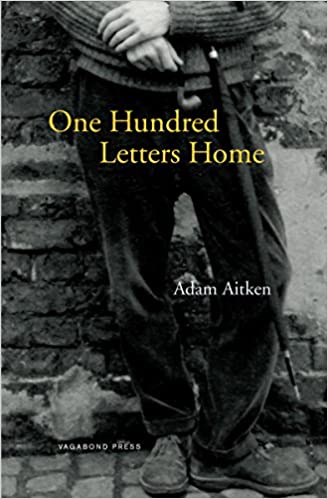
Adam Aitken is a London-born teacher and writer with a PhD in creative writing. He migrated to Sydney after spending his early childhood in Thailand and Malaysia. His poetry and prose have been widely anthologized. He has published poetry, chapbooks, essays on Asian Australian literature, book reviews, and was co-editor of Contemporary Asian Australian Poets. The story of his mixed heritage is featured in his creative non-fiction work One Hundred Letters Home. In this exclusive, he shares about the challenges of writing, identity and place.

You were born in the UK and have spent most of your adult life in Australia but tell us about your early childhood in Thailand and Malaysia.

It was a very happy childhood, and I was spoilt by everyone, except my mother, who was chronically anxious every time my father appeared. I was unaware of it at the time, but they were not happy together. I remember my fourth birthday in Birkenhead Liverpool. Then we moved to Southeast Asia. In Thailand, my father was almost always absent. I had good schooling in Kuala Lumpur, at a Catholic pre-school run by the Good Shepherd order. I remember my first day, I was illiterate in prayers and scared of the large carving of Jesus crucified and bleeding from his crown of thorns. Around seven, I went to an international school in Bangkok, which was great except for the bullying I received from an American kid. After he hit me on the head with his sneaker, I reported him, and he was publicly shamed. There are few worse things you can do than insult someone with your shoe, especially by touching the head.

What was your experience like moving to Australia when you were still young? How did your sense of identity or homedevelop?

Worse, the racism in Perth was total, violent, totalitarian. Teachers were complicit. Nothing was done about it. My brother and I were once howled out of the school as we went home. I am afraid that when I talk about the worst aspects of ‘Whiteness’, I remember that time. My father was again absent, unable to get a job he liked and implicated in a civil adultery case involving another couple. We left for Sydney after a year. My poem ‘The Far East’, is an attempt to record that kind of trauma.

When did you first discover that you liked writing creatively, and in particular, writing poetry?

About aged 14, after six years living in Sydney, I started to enjoy my English classes. I had a fabulous teacher Rick Lunn, who I think became a successful sci-fi writer. I will never forget the magic of listening to ‘The Rime of the Ancient Mariner‘. After that I had access to David Malouf’s library in Sydney, when we stayed at his flat for a few months. I discovered the alternative reality that books provide. I bought a typewriter and enjoyed the process of typing on paper. A few years later I attended a poetry reading at Exiles Bookshop in Sydney and was enchanted by the strange glamour and seriousness of the writers. Martin Johnson, John Forbes, Gig Ryan, John Tranter were all there.

What early recognition or encouragement meant you saw being a writer as a career option?

At my primary school, I wrote a poem about a forest walk we did, and on seeing a sea eagle, and that was read to the whole class. At high school in Sydney, a poem or two made it into the school magazine. I think the English Master also recognised me and encouraged me. I was lucky to grow up in a time when creative writing was still valued but not necessarily seen as a vocation for which tertiary qualifications were essential, but at Sydney University, I enjoyed lunchtime poetry workshops when there were no creative writing courses to do at all. I met practising writers in a very informal atmosphere and so ‘being a poet’ seemed a comfortable choice. My mentors were real writers but there was no pressure of assessment. The goal was to get poems into magazines. This happened when I was in 3rd year. I had great lecturers who loved poetry. I was published in Southerly. I featured in an issue of Chris Mansell’s Compass. It was a thrill to have a few pages in a well printed and produced ‘zine. I also read at what was then the largest reading in Sydney, The Harold Park Hotel. Probably Sydney’s most dynamic place at the time, and since.

How did you develop your mastery of the craft, own voice and style?

I baulk at this question as I am not sure how I can define my voice or style. Certainly, early imitation of other poets, practice and attention to poetic technique (metaphor, simile etc.) helped me develop the craft. Listening to poetry out loud helps. Revising and trying out new versions. It’s like writing music. I also have a very good ear for languages so pick up stylistic and prosodic patterns quite quickly. I listened to early advice about metrics and line endings and spent a lot of time reading traditional verse and learning the metres and forms (ie. sonnets), even though I don’t apply them much these days. Writing ‘in the style of’ is an enjoyable exercise and imitating others is fun, even though it can be unoriginal. I tend to allow a line or sentence to suggest its own metrics, then use that to write a draft. I am very much more into allowing content to dictate form.

What do you think is unique about your work, that makes it distinctly yours?

In terms of the questions of form and craft, I don’t think there are many Asian Australian poets who had a traditional training in English Lit, augmented by Modern American literary influences (like the Imagists, Ezra Pound, and the New York School). I was there in the early days of postmodern theory. I was starting out during the ‘Poetry Wars’ in the ‘seventies. I also studied linguistics and became an English language teacher. I was there in the heady days of the Sydney early ’80s. I think this gives me a kind of technical awareness of language and grammar, form and genre.  I am probably one of most well know of migrant poets for having been recognised since then. I was fortunate to not have to work so much and so I had plenty of time to develop my craft. On a personal level I don’t know many other Australian poets who have had my parents who were literary enthusiasts, and both culturally eclectic. Of course, Thai heritage has given me a lot. Few Asian Australian writers have had a childhood like mine, or possibly the eclectic experience of reading as I have had. I don’t know of any Asian Australian writer who has explored their cross-cultural heritage as I exhaustively as I have in both poetry and memoir.

How do you communicate through poetry something very personal, to an audience that is on the outside?

I received a ‘New Critical’ dogma about the poem being an impersonal object, but it did not stop me reading Sylvia Plath or Frank O’Hara. I begin by thinking about how the personal could be interesting to someone I don’t know. Attend to the particulars and details of the personal, and to avoid sentimentality.   Be as brave as possible as to the trauma of an experience and celebrate the positive. My own preference is to avoid histrionic outbursts, something a learned writing my memoir. Again, the particulars and exactitude of description work better than bare statements. I do still hold to the dictum of showing, not telling.

One of the characteristics of your work is attention to detail. Does that start with being observant and taking notes? How do you then find the most poignant moments or parts?

I often know I have a poignant subject, but often writing leads you to it. The previous answer is relevant here also. I don’t do a lot of notes, but I do a lot of drafts that grow into larger structures. What seems poignant early may pale into insignificance later, so I do a lot of revisiting of old notes and drafts. I often take note of dreams and reflect on what they might mean. I have always been interested in painting, photography, and films, (which I studied at Uni) so I do spend a lot of time thinking about what is ‘in the scene’, what the detail is, how close ups and panning work, what a montage is. As a child I liked to look through microscopes at insects. As far as grammar in concerned, I am fascinated by how grammars work in other languages, and in the etymology of words.

How do you go about writing a poem?

Again, often I start with a fragment, a line, a phrase, and go from there. Sometimes, I set out trying to describe a scene, a photo, a painting, an experience of looking, whether that be looking at a film or a view. Interior monologue or talking to myself and putting thought onto a page helps. I occasionally address a theme, most often at the instigation of a journal issue callout. I also have a long running series of satiric poems written in the character of an avatar, though I sometimes doubt that these amount to anything lasting.

Is poetry about finding meaning and making sense, or looking at something from different perspectives?

The Cubist method has a lot going for it, and I don’t really make the distinction between making sense and the various means we use to perceive of something. I do struggle with the fragmented poem that does not seem to find meaning, that I can’t find the sense in, or that lacks context, a heritage, a precedent in a more powerful text. But that is part of the job, to struggle towards meaning, using what is at hand.

How different is it writing an essay or review, does it use a different part of your brain or a different process?

Well, audience and purpose are more important in an essay, though not as important as I often thought.  A review should help a reader decide whether to go and read the text, and I am pragmatic about this. I find writing essays almost impossible now, because I don’t have the patience and attention span needed. Essays and reviews (arguably) have strong generic patterns to follow, whereas I write poetry without constraining myself too strictly to generic considerations. Long forms are exhausting, and my eyesight is deteriorating and so long sessions at the computer are unpleasant.

If the financial rewards from writing arent great, does being a writer mean you have to hold a day job’ or other income streams (teaching) to enable you to write?

I have always earned most of my income from teaching English as a Foreign Language, but since COVID, I live on savings. In the space of my career, grants and prizes have only amounted to about a year or two of an average income salary. I admire my peers who are full time creative writing academics but still manage to produce books in between the admin and marking. I’ll be taking up a Visiting Writer job in Singapore in 2024, and I am very much looking forward to that.

How useful have awards, being shortlisted for prizes, and residencies been to your progression as a writer? What specific things have been springboards into new worlds?

Apart from allowing me to take time off from the day job, residencies and grants have helped me to keep going and to believe in myself and has added some motivation for many in the community of like-minded poets where I live now. It is interesting to follow up on what writers have written after a stint in Rome for example.

Residencies help you reside for a longer time than average in places that you can explore. The most difficult residency I have had was probably the Paris Studio, even though I found writing time. I was overwhelmed by ‘Paris’ as a grand subject and theme and had to learn to look for the personal relevance and the original detail again. My stint as Visiting Writer in Hawai’i was powerful, as I had to rethink my use of English and my relationship with the local scene. Working with creative writing students there taught me a lot and brought me into a new way of writing that was alive to vernacular American and local patois.

Certainly, winning a postgraduate award to do a doctorate in creative writing cemented my self-belief while giving me four years of income and time to write my memoir and a thesis on hybridity and cross-cultural desire as a theme in Australian writing. My most productive period was funded by an Australia Council grant that allowed me to live and write for a year in Cambodia. While time and freedom to read and write is unarguably valuable, it allows writers to defamiliarise their surroundings.  I was challenged to really question my own privilege as a w\Westerner, and as a relatively wealthy Asian Australian living in a poor country. I was already familiar with the history of the region, but the time there allowed me to have encounters with the real actors (and their descendants) in that history.

How has travel in Asia reinforced/challenged your sense of self and personal/national identity? Do you feel like an Australian, or more of a global citizen?

Travel always brings up questions of where you come from, and where you are headed, but most importantly you begin to situate your identity across a range of places. I am talking about Thailand and France, which have personal family ties. I have spent a lot of time learning French and Thai, in order to be able to feel more at home with people in these places. I feel more intimate with these regions, but not at all with places like the UK, where I was born. Obviously, Sydney is my home, and Sydney is not Cairns or Melbourne, places with which I have a lot less intimacy. I think Sydney was once more of a community, but almost none of my closest university friends live here, and a lot of writers I know have moved elsewhere.

I don’t believe that I personally can embody the concept of a Global Citizen, which is a fiction unless you are rich enough to be able to go where-ever you like and whenever you like and can afford to live anywhere.

I recently flew back from Bali, and the crowd at Denpasar airport were for the most part Australians — somewhat diverse, but also unfamiliar to me, people who would probably not want to hang out with me!

In your memoir One Hundred Letters Home what did you learn about your parents and yourself?

I learned that having intended to explore my mother as the leading agent in our lives, I became drawn into my relationship with my father. He took over the book as a subject, and I learned how complex he was. I learned also that there was a whole stretch of his life that were off limits to me, and I didn’t know enough to write about them. I learned that writing about parents can be a frustrating way to get to learn about yourself. I did learn a lot about my own attempts at identity transformation, I mean the attempt to ‘become a Thai man’. The book is self-analysis, though I did not intend it to be limited by that theme. I think I learned more about intergenerational trauma that is specific to Australian men who were born last century, and of course, more about ways of writing about the father-son relationship that move beyond Freud.

I also learned a lot about my father’s ancestry, that he was descended from an Army family, even though he had been an anti-Vietnam war Moratorium activist. I learned how his branch of the family had been rich, but that a lot of the wealth had never come done to him. I learned that I am the descendant of the founder of Victoria Brewery, or VB. I also learned that my great-grandfather was a survivor of Gallipoli and the Western Front. My father never told me any of this. I also learned that my maternal great-grandfather had been a Protestant Minister of the Australian church, and that he was a pacifist and a teetotaller.

How does writing challenge the status quo/ colonialism/ stereotypes? Was your first poetry collection seeking to challenge Marco Polo’s narrative?

Writing should, in some aesthetic way ‘contaminate’ the status quo, while calling out the conditions of oppression. Naming the invader, and resisting is the intention. Methods can vary from diction and descriptions of outright violence to underhand subversion. Poison the invader’s food, dress as them, but turn it to your advantage. My first book Letter to Marco Polo was a way of putting together poems about foreign travel, as I had spent a year in Thailand and the title of the book seemed obvious after I had written the poem that goes by that title. I liked the casual postcard style of address, – ‘Dear such-and-such the natives do this and that…’  Then it was easy to parody the renaissance ‘travel’ genre (which is a fantasy genre for sure), and it felt like a duty to write my own questions of travel, and to add ‘reality’ to the encounter by re-casting the traveller’s gaze as that of a lost son returning to his ancestral home. My encounters with my mother’s family were life-changing and Letter to Marco Polo was a snapshot into that encounter.

John Kinsella has commented on how my recent poems enact the colonial voice in order to undermine it, which seems paradoxical. He refers to these lines in Revenants (2022):

I read my father’s letter on Hong Kong,

how he loved it:

the heat, the beer in bottles, the tailoring, the freedom.

I imagine him reading Somerset Maugham

with the temperature at 105.
Waited on by one silent Chinese boy (sic)

who lights his cigarettes.

Eastern food, and chopsticks.
If you cant use them you cant eat!

Dense traffic and ceaseless din.

John Kinsella saw me draw attention to colonialism through citing Maugham, and quoting his and my father’s language, only to undermine it, which is a form of irony. John explains it better than I can:

“He contests the language of bigotry (always seeking to ‘centralise’ itself) through the ‘borrowed’ or ‘quoted’ language, as he does through the evocation of a bigoted colonialist and lauded British writer such as Maugham. A colonial positioning takes place and then is undone. The aligning of ‘tailoring’ and ‘freedom’, and the lighting of the cigarettes in the arrangement of master and mastered is painful and unaugmented. It is what it is. The chopsticks line is configured against the Western cliché of density and noise. This weaving of the marginal into the central dialogue of colonial behaviour and colonial imposition is polysituated into the fact of inheriting the array of experiences and impositions, and acting and enacting out of conflicting experiences. Aitken’s poems de-centre racist discourse. They break the binaries. That is not to say that Aitken is aligning his voices as either ‘subaltern’ or ‘master’, but rather attempting to deconstruct the language of such experience without owning that experience.”

It makes some sense to think of this approach as a tactic of mimicry and soft parody, I suppose, rather than a didactic approach.

Whats your process for bringing together work created in different places — such as in Revenants —  to create something that is linked and unified?

I had originally intended to put together poems only situated in France, but then I found I wanted the poems situated in other places.  Early drafts did not achieve much linking and unification, but Giramondo’s editor Lisa Gorton and I worked through drafts to find something more or less unified. What were unifying tropes were linked to how my father’s travel and my own were comparable: we had both travelled to Asia. We were both foreigners in alien territory and I wanted the book to work on one level as an elegiac dialogue with my father who died in 2017. Memory and the return and siting/sightings of the spirit, of the revenant, were emplaced, embodied and situated, and every place in Revenants has some allusion to the idea of a return of the past. In a way I am mining a post-romantic pantheism. Or perhaps, it’s the spirit, or mana, or the Dreaming (though I am wary of appropriation here!)One can return to a place and feel the past come back through that place, just as one can read a poem and it evokes their presence by quite simply addressing the dead. I speak to the tombstones; I tell my monsters to go away; I speak to my father as if he were listening etc. Of course, in the end the book is tonally and stylistically consistent despite the intertextuality. The unity has to do with editing, the order of the poems, and compression of the lines themselves. I use quoted material economically, but there is quite clearly a ‘lyrical’ pulse to the whole collection.

What are you working on next?

There are the dramatic monologues I have collected over the last 11 years, but also more poems that did not fit into Revenants, but still seem to have legs.  I have just returned from three months travel in Thailand, Malaysia and Bali, and I haven’t really written anything related to that yet. I spent time in around 35 hotels, so this suggests a framing device and maybe a new title.

For aspiring writers, whats your advice?

I have often felt like giving up, but I remind myself that not writing is like death. Persistence but also having a supportive network, especially if you are putting together a book. It’s very important to have trusted readers who are also critical. I don’t react so much to unhelpful reviews these days, though I asked ChatGPT what adverse criticism my poetry has generated and it listed ‘overly experimental’, obscure’ and ‘difficult’. I have always fretted about not connecting with readers, but there are readers for all kinds of poetry these days. My advice is read a lot.

There’s more information on Adam at https://adamaitken.wordpress.com/

.

Keith Lyons (keithlyons.net) is an award-winning writer, author and creative writing mentor, who gave up learning to play bagpipes in a Scottish pipe band to focus on after-dark tabs of dark chocolate, early morning slow-lane swimming, and the perfect cup of masala chai tea. Find him@KeithLyonsNZ or blogging at Wandering in the World (http://wanderingintheworld.com).

.

PLEASE NOTE: ARTICLES CAN ONLY BE REPRODUCED IN OTHER SITES WITH DUE ACKNOWLEDGEMENT TO BORDERLESS JOURNAL. 
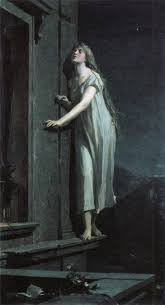
Click here to access the Borderless anthology, Monalisa No Longer Smiles

Click here to access Monalisa No Longer Smiles on Kindle Amazon International

Categories
The Literary Fictionist

Missing

By Sunil Sharma

Man Crying Out, Rembrandt (1606-1669) Courtesy: Creative Commons

The December morning came with a shock.

Pa was not in his room. It was crisp morning and the air brittle in your numb figure. There were raindrops glistening on the windowpane and on the treetops and the telephone poles. The cold hit you hard and your exposed skin felt like a reptile was crawling on it. It was as if your insides were being sliced with a cold dagger.

A Russian landscape, almost, that is typical of a Chekhovian story!

Bright, yet dismal!

Or Hemingway. Maybe.

The tall eucalyptus trees rose majestically in the distance. A clump of white, slender-waisted eucalyptus, half-a-mile away, near the shallow strip of river, swaying in the wind.

The silvery face of the river threw off a white haze. A few mud houses stood here and there. Vegetable fields ran down to the river edge, all green and rich, in the brilliant sun.

This side of the house, it is urban sprawl. That side, at the back, the country. This, ugly. That one, enchanting. The house he was standing in stood on a rising ground, all three-storied, of red brick, part completed, part painted, dwarfing other one-roomed houses of the small colony, recently sprung up, like the twisted innards, in an area, where basic amenities are as foreign as hunger is to the rich.

He surveyed the illogically constructed and misshapen houses where dirty and ill-clad children, nose running and feet bare, were playing, in the dust and garbage, with great gusto and abandon.

This house could not house a gentle soul! The man who spent his hard earnings in turning this dream into reality!

But where would Pa go?

The room, as usual, was very clean. The bed was made, the sheets smooth, the pillows neatly laid, the quilts neatly piled up. The English papers were kept in a corner. The bed was not slept in, at least, by the looks of it. The bookcases were lined with books — majority on philosophy and language, criticism and fiction. In English.

The soul had deserted the room!

“The aim of literature, good literature, mind it my boy, is to give courage, moral courage, to give insights into the nature of reality, the world,” a faraway look so typical of such encounters, “the courage to come to terms with life. To sort out the mess… to straighten up the whole twisted-up thing-life. What religion could not do, good literature does. It tells you about persons, the world, time…. A good artist is the seer…. Mad for conventional society but sane for the followers. Van Gogh, for example, and his sunflowers…”

During such moments, Pa looked unearthly. A halo appeared behind his head, the face dark in the erupting blinding light, the voice coming from clouds. He belonged to a different realm.

Is Pa an angel in human form?

How articulate!

So calm!

Looking at someone invisible, having a dialogue with that force, a dialogue liberating!

Pa communes with the spirits!

“Yes”, says he, “the dead speak. Through the mist of centuries. They come to me in dreams.”

He, the listener, is mesmerized. He cannot figure out the why of it.

But he looks and listens. Pa is majestic. Regal. Tall, thin. Fine face.

A straight nose. Thin full lips. A pair of piercing brown eyes. A rich husky voice. An erect posture. Commanding attention. That is the sum total.

Pa.

Cogito ergo sum. That is my philosophy.” Pa declared.

When he decides, he can be vocal. Very articulate. Precise.

Otherwise, he can be an iceberg.

Brooding. Off limits.

They had many animated discussions. Prod him on his favourite topic and he would be all animation. Gesturing. Eyes rolling. Hands moving up, down. Voice rising and falling.

“Nobody writes good literature. A soul companion in hours of solitude. Where are the Tolstoys, Romain Rollands, Hemingways, Nerudas in the 80s and 90s of the world? Human spirits speak through them. Now it is exhaustion. Personal idiosyncrasies. Language experiments”. He was dismissive. Hurt. Bitter. Literature had abdicated the messianic role. The artist celebrates a personal hell. What a climb down!

A reversal shocking. Market has ruined everybody.

Could Pa, this man of steel, desert us like this? Disappear?

He could not make any sense out of this sudden exit of Pa.

He returned to the room. It reflected the neatness of its occupant. A cold blast came from the narrow corridor adding to the silence of the room. Chilling! The wind ruffled up a stock of papers. The hissing sound unnerved him. He went out and down to the living room on the ground floor. The family was gathered up there. When he entered, they became quiet. He looked at them. They were lost in their own worlds. He thought he was intruding upon a private moment. He got up gingerly, without being obvious.

“Where are you going, Rajesh?”

It was Uttam, his eldest son.

“Just for a smoke,” he said.

“Any clue? Letter?” Uttam said without any conviction.

“No.”

“Where can Pa go?”  asked Raman, the second son.

“Only God knows.” Uttam said dully.

Their wives and children stared blankly. Two more neighbours dropped in.

“What happened?” asked one old lady. “Nothing.” Uttam said with a note of finality.

“He ate his dinner. Watched the 10 P.M. news. Read a book till 11:30 pm and then retired,” said Raman, voice devoid of emotion.

“Very strange!” The lady exclaimed.

It was a quest for Rajesh now. He went to Amol Shrivastava. The retired man was alone in the flat, sipping tea and reading morning paper. He answered the bell on the third ring. They went out into the small balcony. The news surprised the old man.

“I met him yesterday,” said the old man. “He was cheerful. We went for our regular walk of three miles. He was pretty jovial. I cannot believe it.”

They were quiet for some time.

“I also cannot believe it,” Rajesh said. A healthy man suddenly disappeared without any clues. He was not depressed. Went for a morning walk. It was very confusing!

“When did they discover his absence?” Shrivastava asked, his lined forehead a furrow of crisscrossing lines.

“At about six. The youngest daughter-in-law went to his room with tea. He was not there. She left the tea there. An hour later, she returned. The cup was still there. Untouched.”

“Hmm!” grunted the retired accountant. “She raised the alarm,” Rajesh said. They had searched the house, the neighbourhood. Pa had left no trace.

“Maybe he went for a long walk!” Amol said, the voice drained of any feeling. “It is almost eleven now,” said Rajesh. “A man cannot walk that long!”

“Umm!” grunted Amol.

“A man cannot walk out like this, on a bitter winter morning, wearing a woolen sweater, a shawl, shoes, with little money and vanish just like that! It sounds ridiculous.”

‘Right.” agreed Amol. A man cannot!

‘Why did he do it then?” Rajesh asked.

“Was there any quarrel in the family?” Amol inquired.

“Not. as far as I know.”

“I cannot guess, either.” Amol said in a tired voice.

“Did he ever say anything about his family?” queried Rajesh.

“Never.” Amol answered. “He was very happy with his two sons, their wives. With his three daughters and their husbands. His wife, you know, expired ten years ago. He never complained.”

They fell quiet.

“I cannot figure it out,” Rajesh said, “a man suffering from nothing, apparently very happy, healthy, leaves his own house. And at the age of 63, to top it all. It is absurd!”

His next stop was the college. Some of his colleagues greeted the news with bewildered looks. A.N. Jha, a lecture in English, was unable to believe the fact.

“He is not that type!” exclaimed Jha. “He can never run away this way. I met him three days go in a literary function. We chatted for an hour. There was no sign of any stress or depression. And why should he? His sons were settled. Daughters married. He led an active life. He retired as a lecture in English. He was well known in the town. A great scholar. And a fighter. I mean I cannot believe it at all!”

“Jha Saab is right,” Trivedi from the department of Psychology spoke. “He was a healthy person. Social and outgoing. Affectionate. A hard worker. He can never do such a thing!”

Others also joined in.

The Pa that emerged from this group discussion was the Pa he had admired: strong, heady, realistic, with deep convictions, widely read, honest. A great intellect who was largely ignored in media and university circles of Delhi because of his roots in a small town that was a satellite of a hot, buzzing Delhi with its palace intrigues.

Apart from two books, he never published anything in a long and beautiful academic year. Since these two books were on Marxism, very scholarly and difficult for the pseudo, the Left also was miserly in its recognition of a small-town intellectual. Most of the Left travelled in cars, lived in big houses in south Delhi, worked in the university and had their books published by major publishing houses and went to London, Paris or Moscow. The town was still painfully feudal and backward where goons and the police and the rich ruled, where casteism, in the year 1999, was deeply entrenched in the social consciousness, despite the arrival of pizza huts, MacDonalds, Hondas.

Pa worked against all this with workers and peasants — worked for a dream in a world without Berlin Wall, U.S.S.R., for a unipolar world without boundaries; a world where a young student no longer read Capital but invested his small capital in an Archie card and gave it as a valentine to a demure lower-middle-class girl in the college corridors. In this world eating spring rolls or burgers and drinking Pepsi was more ‘happening thing’ than taking part in the student protests. Where the only ideology was myself and my world. “The whole world is getting Americanised. Third world, too quickly, I am afraid. The MacDonald culture is everywhere. The Walt Disney culture. The dollar culture. American businessmen should be congratulated. They have made all of us Yankees, without any force or coercion. We are Yankee with our brown, black and yellow skins. Is it not marvellous? Ha, Ha, Ha!”

Pa had laughed loudly in a wayside eatery, over cups of sugary tea, surrounded by a group of gaping followers and former and current students. A happy, star-struck group of lower middle-class young men, idealism running like a molten lava in their veins, dreams of conquering Everest, talking Brecht and Howard Fast and Miller, in that steamy, thatched, mud-plastered, small eatery near the highway, on charpoys, under the swaying eucalyptus trees, on a pleasant March evening when early spring was in the air and flowers were blooming and the scented air and the orange disk setting in the western sky lent an ethereal touch to the whole encounter there. Some of them were M.A. students and some, recent post-graduates in English, were unemployed. Majority wrote stories or poems or acted in plays. They wanted to be either famous authors or actors. They lived in a realm of young imagination and pure ideas with an enduring appeal, universal and eternal. They wanted to be artists in a market-driven era, and, in a town where there were hundreds of hotels and restaurant and one, very small shop that sold magazines in Hindi and English and a couple of popular English novels! With no reading culture or very little theatre there, they dreamed, like Pa, dreams that looked impossible for those who were not part of the camp.

“It is like discussing Shakespeare with a whore!” exclaimed a detractor once. Pa was unfazed, unruffled.

All of us have our dreams, some black and white, some Eastman colour, that is the only difference! Pa had remarked, face deadpan.

Remember, guys, the dead never dream! Pa had fascinated him. A hypnotic effect. Whatever he uttered became new gospel for him and souls kindred. Souls that found themselves misunderstood in family, home, society. They thrived on ideas and hopes. They became members of the clan and the Pa was the grand patriarch, a Moses, who was to guide them through the Egyptian wilderness to the promised land. A small band of warriors assaulting the monumental stone walls of the town. He thought Pa was a Von Gogh, painting sunflowers in an ugly urban sprawl which did not have a single potted plant constricted uncrushed by urban squalor and poverty. Only the human spirit thought of sunflowers, open meadows, wheat fields — of freedom, equality, of liberating world of imagination with frothy seas and magic casements and aching hearts. Only a genius could do that.

And suddenly this man disappears!

“Socrates, Tolstoy and Lincoln have one thing in common: a nagging wife,” Pa said once, while taking a long evening walk amid a cascading landscape of mustard flowers and a setting sun that had set the heavens on fire in deep crimson. Bird songs were sonorously punctuated by a scented, tranquil, ethereal air. The humble cottages of a fast-vanishing hamlet, off the main highway and on the outskirts of the town, loomed like far off phantoms in the gathering dusk and the invigorating country air, now seriously endangered because of the rapid encroachment of the town.

“But”, he had paused and stood there for a minute, appearing as a solitary figure in that solitary place, out of breath, “All wives are nagging, my boy. Ha, ha, ha.” The deep laughter unsettled a stork and made it fly. He looked imposing and formidable there, framed by a dark sky, the gentle wind ruffling his hair. He was giant, touching the sky, tall and erect, powerful and mesmerising, amid those undulating fields of mustard.

He resumed walking. The trance was over. “Somewhere at same point, you feel lonely. Terribly lonely. A perfect stranger. Look at Tolstoy. Driven out of his own home. Suffering from pneumonia. Homeless. Old man. King Lear minus the kingdom. Or Marx. Broken by the death of wife and daughter. Terribly lonely and isolated figure. Or Van Gogh. Or Dostoevsky. The list is long and impressive. Masters creating beautiful worlds, blessed with noble souls, yet lonely at a basic human level, suffering pain and humiliation, rejection. Ordinary life is like that. The difference is the artist transforms all this through art and becomes immortal. The ordinary man dies with this pain unsung. He cannot even share this pain with anyone.” He stopped momentarily.

“The thing is, boy, life does not favour art. This age is not favourable to it. It destroys your nobility, soul, person at the altar of money, commerce, vulgarity. You were born with divinity and end up dying as an animal.” He resumed walking again in the gathering gloom, “This age belongs not to Rembrandt or Leonardo but to the stockbroker, to DiCaprio, to Mario Puzzo,” a long pause. Then, “Look at the greats. Joyce becoming blind. Virginia Wolf and Sylvia Plath and Hemingway, committing suicide. Their spirits shining through their monumental works. But the same spirit is caving in, after a long battering. Joyce died poor. O’ Neil and Mayakovski, again embittered. They could never belong to this inhospitable place and cracked up. The most beautiful children, sensitive, highly intelligent and gifted, superior imagination, language — all these beautiful and innocent children of life, totally wasted by a cruel mother!” His voice had cracked up and choked.

A mournful silence descended, and the darkness suddenly appeared as eerie and gloomy. Lights were twinkling in the mud houses and seen through mellow enveloping darkness, looked magical and sweetly assuring and beckoning. A fire in an open hearth danced merrily and lit up a small surrounding area with hovering shadows and the mysterious black beyond frequented by the nightly visitors — the unseen spirits of the forest. The whole thing was unreal.

Finally, they emerged from the dark curtain on to the highway. Ear shattering cacophony of motor sounds and harsh sodium vapour lights invaded these two minstrels of a lost song. They went to a nearby tea stall. Rickshaw pullers were sipping tea.

“The thing is,” Pa said in an even voice, “the fact catches up with you sooner or later. In a grim fight between the fine spirit and the fact it is the vulgar fact that triumphs.” The air was putrid, heavy with charcoal smoke and dust. The tea was served by an ill-clad urchin with a swollen eye and of indeterminate age. The boy listlessly stared at the duo and then shifted his stare at the highway. “Imagination does not offer a permanent sanctuary to the alienated spirit,” Pa said, gazing at the passing motors, the characteristic far-off look in his liquid eyes, voice resonating, “Fancy cannot cheat us long. Facticity returns to claim us back. More viciously. More grimly. We wage a war against the desertification.  A losing war but worth fighting for.”

And then, “What can you write in a bustling Las Vegas? Or what New York can offer you except its dazzling skyline?” If the name of John Barth were to be added to these stray observations, he thought, critics would have already started quoting and anthologising them! That is what marketing can do. They can create icons out of anonymity, obscurity. He looked at pa in the mild darkness lit up by a lantern. “You are wonderful. A genius!”, he exclaimed, admiration oozing. Pa smiled. Said nothing. Finally, “These are your sentiments. For the world I am a retired teacher. No more than that. Anonymous. Ordinary like millions. My name does not sell.”

“But market success is not everything!”

“Yes, it is,” Pa replied, sipping tea, “without market success, in a market economy, you are nobody, howsoever brilliant you are! It is the way you market yourself, that counts. The way you sell yourself. Otherwise, you are a zero.”

“Then why did you not sell yourself?”

“Because I hated the whole process. I can never do that.”

“But you are a great for me, for all of us here.”

Pa looked at him and smiled. “This small recognition is enough for me. And, by the way, after death, all are equal…unto dust thou shalt return.” He winked at him.

Now, looking back at this conversation, he could sense something which he had missed out at that time. Pa was deeply troubled and was trying to communicate this through this pantheon of artists, in an oblique manner, to him the loneliness, anguish, anger of an old, retired person who had made the painful discovery: that he was now redundant to his family and society. How dumb of him to miss the larger picture! A fine example of breakdown of personal communication.

But why did Pa take recourse to such a play?

Why did he not tell the plain truth to an adoring disciple?

That he was adored by a small group of artists who made him feel wanted and the feeling of being superfluous in the family, maybe, this social contradiction he could not resolve meaningfully. He had seen it happen earlier with others also. In late fifties, many had felt useless, with no defined role to play. The kids had outgrown their fathers. Most of them had turned to religion and yoga. They suffered diabetes, elevated blood pressure, angina pin, ulcers, and what not. Their eyes were sunk, skin leathery, teeth caved in, eyesight failing. They went on creating fictions. Reinventing themselves. Deep down they waited for the curtain call. A date with their maker. Religion comforted; paltry pension brought some cheer, but the gloom did not lift. The fact remained. They were no longer wanted. Had no price. Were irrelevant in a fast-changing society.

The police inspector, huge and rude, looked at him with malevolent eyes. So, what, if an old man is missing? He bawled angrily, is he a king or P.M.?

“Our Saab does not care about big shots,” the fawning sub-inspector said in a mocking tone. “He is the PM. of this station.” The huge pot-bellied inspector smiled. The graying handlebar moustache moved up and down on a fat face of a hard drinker. His blood-shot eyes were menacing, teeth pan-stained, garlic on breath. He looked intimidating. “A trigger-happy bastard,” he thought, “who shoots first and then asks.”

“See, officer, we have been made to wait here for two hours and nobody has bothered to take down out complaint,” he said in a mild tone, controlling anger and revulsion.

The inspector turned his full gaze on the speaker. The cop eyes were hard and full of hatred of a common, powerless man.

“Oh!’ He exclaimed and laughed. He pressed a button. A hungry-looking constable burst in.

‘Idiot,” the inspector roared, “where were you? Do you not see we have the governor sir here with us?”

The constable was confused. The inspector laughed uproariously. Sub-inspector also added a few decibels to the racket. “Governor, ha, ha, ha.” Inspector was rocking.

“Now listen Mr. Inspector,” he spoke in a commanding voice. The laughter died down immediately.

“Yes, Excellency!” the inspector said, taking out his revolver and playing it.

“I am Ashok Suri, news editor, with the star TV,” he spoke, slowly, a snarl dilating nostril. “A very good friend of S.S.P. and D.M. very close to the governor. A man is missing. An old man to people like you, but a father to these sons, teacher to me, a precious person to all of us! He is not a figure. He is a man. Ex-president of teacher’ union. Active on many fronts of the communist party. Do you get me?”

The inspector underwent a dramatic change.

Suri got up, followed by the two sons. “And I am going straight to S.S.P.,” Suri said, eyes blazing. “See you there, Mr. Inspector, the doorway. Except a lot of trouble tomorrow. Dharnas (strikes) by teachers, students and communist party workers. Goodbye, Mr. Governor. I will be there to cover it for my T.V. channel!”

They exited in a hurry. The cops came out in a fast-forwarding motion. The trio was escorted back. Tea and biscuits were served. The F.I.R. was lodged promptly. Half-an-hour later, they came out of the station.

Uttam shook hands with Suri, “Ashok you were superb!”

“What if they had caught your lie?” asked Raman.

“Oh!” Suri said, “you know I am a very good actor.”

“I spoke to them in the only language they understand,” said Suri.

The night came early and silently. The lanes were deserted. Houses stood shivering in the cold. Suri looked out of the window. The fog was swirling about like a ballerina, painting everything with a white brush. Somewhere a street dog was weeping, adding to the macabre. He was feeling tired and sad, Shambu came and sat down in the opposite chair. He lit a cigarette and spoke in a musical voice. Pa had come to me last Sunday.

“Was it?” asked Suri.

“Yes.”

“Was he disturbed?”

“Nope, slightly distracted.”

“I see. Anything else?”

“Well, well…lemme think… it was Sunday afternoon, and it was pouring…”

Pa had come around three in the afternoon. The overcast grey skies were pouring rain that came battering the neighborhood in a furious manner. Pa stood in the doorway, dripping, the grey hair being whipped by the cruel blasts of wind. Shambuda lived three houses away and was a good friend. Shambu sprang to his feet and welcomed Pa with a towel.

“So, what brings Marx here?” Shambhu asked.

“To meet Beethoven,” said Pa.

That was the opening gambit. Pa was Marx to Shambhu and Shambhu, Beethoven to Pa.

“What would your majesty have? Tea? Rum?”

“No Thanks.”

“No problem.” Shambhu, known as Da, went and brought two pegs of rum. Some salted cashew nuts.

“This lousy weather…pouring…kills my mood …to the angry elements and to Majesty’s good health.”

They sipped the liquid.

“Good stuff!” Pa said. “Fires up an old guy.”

“And makes the world red and golden,” Da said.

The wind-driven rain came in a sudden gust and lashed the shuttered glass Windows. Families were huddled around T.V. sets. It was bleak place. Dark, rainy, cold, cheerless. Pa was silent. Da refilled the glasses.

“Shambhu?” Pa said.

“Yes, boss,” replied the fiftyish portly man.

“It is dismal. This bleeding rain, this winter.”

“No quarrelling with your judgment, boss!”

“Can I hear a song from you?”

Da looked at his senior friend.

“No problem. Music is my first love.”

Da called his youngest son. Harmonium and tabla were brought out. Da sang a folk song, his favourite, in a sweet voice, the voice of a music teacher and a classical singer, a voice that always drew admirers, like pins to a magnet, from all the corners of the town:

Where are you,

My beloved?

I miss you dear,

In this rain and

Scorching summer,

Come back,

Come back,

Before I die,

Pining for

Your

Beautiful

Hair.

The melody, the earthly song, the rain and the rum. When Da finished and came out of the trance, he saw Pa wiping his tears with his hanky. Music had washed the souls of the two solitary figures on that wind-swept Sunday afternoon.

“I also have a distinct memory of that Sunday,” said Ashok.

Ashok’s Narrative

The sky was overcast, dull grey — a wet early evening gloom spreading in the vast skies, a strong wind pregnant with pearl drops of rain buffeting town and country. The streets were deserted. Pa was there in the doorway, smelling of hard liquor, wet and dishevelled, umbrella dripping. But Pa was always a welcome guest.

“Let us go, Ashok,” Pa said. A simple order. I look my umbrella and we went out on wet, slippery, pebbly road. Trees were shedding rain drops as big as stones. Birds were shivering. We walked two kilometers and then came to an abandoned culvert across a deep drain.

Around us were long stretches of soggy plains and looming mills and chimneys. We sat down on the wet culvert. Pa was quiet.

“Perfect setting for a rum-soaked evening,” I said, “for paneer pakoras (cottage cheese fritters), fried green chilies and roasted grams…”

“And hard-boiled eggs,” Pa said and laughed, his lean body shaking.

“If life were such a royal banquet…”

We lit cigarettes and emitted rings. Pa took out a half-bottle, two plastic cups, disposable soda and a packet of fried black grams topped with onion rings, tomatoes sliced and chopped coriander leaves, from the shoulder bag of khadi.

“Your wish is fulfilled, master.” Pa said.

“No, you are master, my master.” I spoke.

We drank and ate the grams. Pa was silent but I was used to his mood and unpredictable ways.

“Why do you love me so much?” he asked

“Because life teaches me through you. A fine, noble, learned man…”

“Who bothers an’ le guy like me? Who bothers for learning? For a mental worker? They bother for money. Cars. Good houses…Not a writer, a teacher, no, they do not care.”

“It does not matter…to me.”

“You are different, Ashok.”

“You, too.”

“That is why…we interact. I see myself in you.”

We sipped the rum. Dark thickness thickened.

“Folks like us are unhappy. Get crucified. Marked. We cannot escape our lot.”

I clung on to each word. Epiphany, you know.

“Once, during my young days, I walked along with my pop along a country road, on a dark wintry night, for five kilometers, to reach our village home. The road never seemed to end.

Father told many stories to lessen my fright. Then he lifted me up and put me on his shoulders. He walked, carrying his nine- year-old on his heavy shoulders, telling wonderful tales, to relive monotony, to comfort me, to ease my fears. The fields were full of mischievous ghosts…the wind produced strange music.

Shadows threatened…lions roared.

We were two Red-Indians walking the forest in night, watched by the spirits. I forgot my terror and listened to his comforting voice…

He paused for long period.

“That image still haunts me…Two figures and an unending road…A dialogue in the wilderness. He was my father, so was safe. Nothing could harm me. Twelve years later I had to travel the same road, alone. I had missed my last bus. The country road was same. My fears came back…lions still roared in my ears. Ghosts whispered. Shadows danced about. I was awfully scared. Death lurked. I died every minute. The journey took ages…when I arrived home, safe, I realised I was missing my father. A father who had died many years ago…”

Pa looked pathetic. Bent. Gaunt.

Ranting. They stood up on the fringes.

Sympathetically. Boundaries collapsed.

The steel in Pa was cracking up.

“When your own family denies you, mocks you, it is time to bid goodbye. “Listen to the Bard:

“……The tempest in my mind,

Doth from my senses take all

Feeling else,

Save what beats there! Filial

Ingratitude!

No, I will weep no more…”

The rain was pouring. Gently dark veil had obscured everything. Pa was looking across centuries where another old man was holding forth his own private audience…

Sitting now, in Da’s room, I came to realise the import of that last encounter on that rainy lovely night.

.

“I must leave now,” Ashok said suddenly.

“Why?” Asked da, alarmed.

“I am tired,” Ashok said.

“O.K.!” Da said. “Do you think he would come back?”

Ashok stood up and reflected.

“No,” he said. “He won’t.”

“What do you mean?” Da was surprised.

“Well, he said his goodbye, on last Sunday,” Ashok said.

He came out and bent a last look at Pa’s house.

Goodbye, teacher!

Tears were running down the solitary man’s face.

.

Sunil Sharma is an academic and writer with 23 books published—some solo and joint. Edits the online monthly journal Setu. 

.

PLEASE NOTE: ARTICLES CAN ONLY BE REPRODUCED IN OTHER SITES WITH DUE ACKNOWLEDGEMENT TO BORDERLESS JOURNAL.