The last year and a half has seen exhaustive commemoration of the works Satyajit Ray (1921 – 92) as it marked his birth centenary. To us in India and to the world in general, Satyajit is now revered as a filmmaker, primarily. He has become a myth and a legend in the art of filmmaking, so much so that Akira Kurosawa has pleaded that the ignorance of the former’s art is comparable to not having seen the sun or the moon. Nevertheless, it would be highly unjust to his artistic persona if we study him merely as a film maker. He was a polymath intellectual who was versatile in several arts, where literature, visual art and music were only among a few of his talents apart from cinema. Satyajit had re-invented himself severally, in various times of his life and career.
The Beginnings
Born to the illustrious and talented family of the Rays of Gorpar in north Kolkata, Satyajit was grandson to Upendrakishore Ray Chowdhury (1863 – 1915) and the only son of Sukumar Ray (1887 – 1923), whom unfortunately Satyajit lost, when he was merely two and a half years old. The vein of versatility ran high in the family. Upendrakishore distinguished himself as a pioneer in the art of photography and later also in printing technology. In fact, to him we owe the science of half-tone printing and photography. His research papers were published in the prestigious Penrose journals of England. Upendrakishore also distinguished himself as a writer of children’s literature and published not only in Bengali journals like Mukul, Sakha and Sathi (in the nineteenth century), but also founded his own magazine for children in 1913, by the name Sandesh – a name indicative, not only, for a Bengali sweet meat, but also for information and news. Sukumar Ray was primarily a student of science, with a double B.A in Chemistry and Physics honours from Presidency College Kolkata. He, however, went to England to study Printing Technology with the long term goal that he would assist his father in their own press, U. Ray and Sons. Sukumar too, got his research papers published in prestigious scientific journals. He was in England at a time when Rabindranath Tagore, too, had made his visit in 1912 and was a witness to some of the poet’s reading of his poems from Gitanjali (1912) in the company of many influential people in that country. Sukumar returned to Kolkata and was compelled to take up the editorship of Sandesh from 1915, after the death of his father. Sukumar had already started the ‘Nonsense Club’ and his hand written journal Share Batrish Bhaja (Thirty-two and a half Fried Savories) even before he went to England. The vein of the ‘nonsense’ tradition only perfected itself after his return; his own poetry and prose began to see the light of day from the time he began to edit Sandesh. However, and rather unfortunately, his life and career too, came to an abrupt end in 1923. It was only a few years after this that the magazine Sandesh closed down.
Satyajit Ray was largely brought up in his maternal uncle’s home in Ballygunge, from where he completed his schooling at Ballygunge Government School and attained his B.A in Economics (Honours) from Presidency College Kolkata. His mother Suprabha Devi, preferred that Satyajit follow up his education under the guidance of ‘gurudev’ Tagore and hence cajoled him to join Kala Bhavana in Santiniketan in the year 1940. The reluctant Satyajit actually wanted to study ‘commercial art’, but was denied that opportunity in Santiniketan. Nevertheless, he was struck with the brilliance of Nandalal Bose and Binodebehari Mukhopadhyay, whom he got as his mentors in Kala Bhavana. Satyajit was steeped in the nuances of western art, music, films and books; ever since his childhood he was an avid listener of western classical music and a keen viewer of foreign films as they appeared in erstwhile Calcutta.
Santiniketan, for the first time, afforded a glimpse of the beauty of rural Bengal, a gift that he would utilise later when he would make films. While here, Satyajit still felt restless and left after completing only over two years of the course. He returned to Kolkata and joined the advertising firm of D. J Keymar in 1942 as Junior Visualizer, where D.K. Gupta was then Assistant Manager. Among his colleagues were the talented artist Annada Munshi and the younger O.C. Ganguli and Makhan Dutta Gupta. It may be mentioned here that Satyajit, at that point, was rather keen on getting a job and procuring an independent residence for himself and his mother. The scourge of having to labour without a father was quite evident. In 1943, the Signet Press was founded by D. K. Gupta and Satyajit was assigned several books to design. Thus began a career in book designing, which marks an interesting chapter in his artistic career.
The Composite Artist
Satyajit Ray has designed as many as over 300 book covers. The repertoire of Ray book covers is extensive and varied; he continued to remain a composite and wholistic artist throughout the span of his career when he evolved as a writer, mainly for children, even while continuing to make films. He designed books for a host of writers beginning with Sukumar Ray to Bibhutibhusan Bandyopadhyay, to Premendra Mitra, Jibanananda Das, to Lila Majumdar, while he worked for Signet, and later even for other publishers. Each of these covers were aesthetic statements linking themselves to the themes and the content within. The frontispiece as well as the illustrations inside, ranged from the linocut / woodcut designs to fine lines and geometric solid shapes. Each one of these designs proved beyond doubt his versatility, talent and uniqueness of vision. Some of Ray’s book covers found pride of place in internationally reputed journals like the Graphis (in 1950).
Book cover by Satyajit Ray from personal collection
Ray’s artistry found new space in the covers of Ekshan, a Bengali bi-monthly periodical edited by Nirmalya Acharya and actor Soumitra Chattopadhyay between 1961 and 1995. The periodical died an untimely death after the demise of Nirmalya Acharya. Satyajit designed several of its covers and each one of them is a masterpiece of visual jugglery. There are three letters in the title and Ray seems to act as a visual conjuror of these three letters using various planes, letterings, geometry and even characteristics of various art forms.
Ekshan journal, Photograph from Frontline Ray Commemorative Issue, November 2021
The 1950s saw Ray totally emerged in films and his own maiden attempt at a directorial venture took shape in 1955, with Pather Panchali (Song of the Little Road) Ray also designed his film posters, title cards and even fliers, apart from writing the screenplay himself. Later, he also graduated to composing his own music and writing his own stories; seldom do we see such a versatile artist.
It may be pointed out here that while we keenly study the various facets of Satyajit Ray, he was not alone in diversifying the art of design and illustration in books. One may mention here the works of Purnendu Patri, Pranabesh Maity and several others whose works are significantly remarkable in the history of book making. As mentioned earlier, Satyajit has constantly re-invented and adapted himself to the changing face of time. This has allowed him to survive several cultural and historical changes.
The Writer
Satyajit began writing consistently from his fortieth year, somewhat out of necessity. Before that he wrote sporadically. That year, 1961, saw the revival of the children’s magazine Sandesh under the entrepreneurship of Ray and his poet-friend Subhas Mukhopadhyay. The magazine, inactive since the thirties, saw a new lease of life when Ray and Mukhopadhyay decided to revive it in 1961. They were also the editors of the new Sandesh. Ray designed most of its covers and like the various letterings of Ekshan, he juggled with the masthead of Sandesh as well.
New Sandesh in 1961, experiments with masthead (3 Rays)
The magazine continues to be among the leading children’s magazines till date and is currently being edited by Sandip Ray, Satyajit’s son. In the first issue of the new Sandesh, published in May 1961, Satyajit decided to translate some of Edward Lear’s The Jumblies into Bengali, simply as a gesture of participation. The second issue of the magazine carried his first short story in Bengali along with his own illustration. That marked the beginning of a series intriguing literature primarily published in the pages of Sandesh in a Bengali that is modern, contemporary, smart, and attractive to the young and inquiring minds of children. Some of his works were also published in Anandamela, another children’s magazine in Bengali and Target, a children’s magazine in English, which was quite popular in the 1980s. The latter mostly published Ray in English translation, mostly made by himself. Some of his English translations were anthologised in Stories, published by Secker and Warburg in 1987. There are many more translations of Satyajit now available in English; those of the adventures of Feluda and Professor Shonku, and Fotikchand and many others are also published by Penguin.
Satyajit Ray’s books were a staple to the children of the eighties in the last century. Most of us then, welcomed our teenage with the scientific adventures of Professor Shonku and those of the private investigator Prodosh Mitter alias Feluda. These books were the repository of a variety of knowledge – one emerged cleverer and better enriched after regaling oneself with the exhilarating laboratory experiments of Shonku, while on the other hand, one cajoled one’s brains with the cerebral magic of Feluda. For children like us, Ray’s identity as a filmmaker came second to his writing, as we understood less of that art in that age. In fact, his stories were a rage among our contemporaries then, and we marvelled at his plots, along with his accurate illustrations and cover designs, all of which made him a supreme artist-figure in our childhood. There were also occasions when we connected his films on children with respect to his books. Hence, the adventure tales around the ‘golden castle’ (Sonar Kella, 1974) or those around in Benaras (Joy Baba Felunath, 1978), were only a derivative of what we perused in the books of the same names.
The Ray Generation
It would, perhaps, not be wrong to say that Ray’s writing created a brand in the genre of children’s literature. As contemporary and the immediate consumers of his books, some of us identify a part of our childhood with the Ray literature. He was a master in the handling of the bizarre and the fantastic, the investigative crime thrillers and also the evolution of the science fiction. Again, Ray may not be said to be a pioneer in any of these genres, but he made them highly palatable and attractive to the young minds. One would be guilty of falsification if one does not mention Sukumar Ray himself, or Hemendrakumar Ray and Premendra Mitra, who made, perhaps, the earliest forages into the art of the bizarre, the supernatural or the sci-fi in their own times and generations.
Satyajit Ray’s repertoire as a writer for children is extensive. He is credited to have composed thirty-eight adventures of Professor Trilokeshwar Shonku. In him, Ray creates a familiar Bengali with extraordinary scholarliness who was once a teacher in Scottish Church College Kolkata, but now resides in Giridi. Although his only companions are now his valet Prahlad and pet cat Newton, he has an elaborate family history which the author creates as a back drop for his readers. Professor Shonku’s various travel destinations offer extensive scope for young minds to travel within the safety of their homes. In creating the several marvels of science Satyajit must have surely drawn extensively from the works of Jules Verne, H.G. Wells as well as The Chariot of the Gods (1968) by Erich von Dӓniken – works with which he must have been familiar ever since his childhood. Scholars also propound similarities between Professor Challenger of Arthur Conan Doyle (The Lost World) and Professor Shonku. However, there is also reason to believe that Professor Shonku has a distant antecedent in the character of Professor Hushiyar (Heshoram Hushiyerer Diary) created by Sukumar Ray. With time, of course, Shonku evolves as a more serious and responsible, internationally acclaimed scientist. Ray had also wanted to make a film on aliens, with a sound background on science fiction, but this dream remained unexecuted. The first ever film on Professor Shonku was made by his son in 2019.
The Private Investigator Mr. Prodosh C Mitter first made his appearance in the arena of Bengali detective fiction in the year 1965. The Bengali readership was already accustomed to private detectives created by Niharranjan Ray (Kiriti Ray) and Sharadindu Bandyopadhyay (Byomkesh Bakshi) before Ray launched the career of Feluda, who emerged as a highly identifiable neighbourhood man with his nephew and assistant Topshe and their elderly writer-friend Jatayu. One may again mark the presence of other detectives in contemporary literature like Kakababu (Sunil Gangopadhyay), Gogol (Samaresh Basu) and the boy group of Pandava Goyenda (created by Sasthipada Chattopadhyay), which were also available to the young readers along with the adventures of Feluda. All of them were simultaneously popular among contemporary children, although Ray scored higher because of his razor sharp intelligence and complete artistic and aesthetic package that his books offered. Some, made into films, made him the most popular among children and adults alike. Apart from his series characters like Shonku or Feluda, Ray has created a host of other characters in numerous short stories and novellas, over a period of thirty years or more. There is, quite interestingly, very little adult fiction written by Satyajit, with the exceptions of Nayak (The Hero, 1966), Kanchenjunga (1962) and Pikoo’s Diary (1980), all of which have been made into films.
Ray as Translator and maker of Children’s Films
Ray distinguished himself as a translator as well. The first major translation done by Satyajit Ray was, perhaps, those of a selection of Sukumar Ray’s Aabol Taabol (‘Nonsense Verse’, 1923). About ten such poems were translated / trans-created in the pages of a radical weekly called Now, edited by Samar Sen during 1967-69. These poems were then noticed by P. Lal of Writers Workshop, a pioneering publishing enterprise which patronised (and still does), Indian writing in English, since 1958. They were brought forth as an independent collection by this house in much admiration for Satyajit’s skill in rhyme and meter, in 1970. The edition has remained a popular one and has recently suffered alterations in the fourth corrected and expanded edition in 2019. The text is also prescribed for study in a course on Popular Literature in the undergraduate syllabus of the University of Calcutta, since 2018.
A Page from Now featuring Ray’s Translations (3 Rays)The Writers Workshop book of Nonsense Rhymes, Personal Collection
Satyajit also translated some works of Upendrakishore along with other works of Sukumar into English in various times of his career. These are now available with the translations of his own works, in a compendious edition titled 3 Rays (Penguin Books, 2021) and edited by Sandip Ray.According to Sandip Ray, these were mostly done with a view to popularise the works outside Bengal and to a larger audience, mostly as recreational activities, which Satyajit undertook between the shooting of his films.
In 1969, Satyajit Ray directed Goopy Gyne Bagha Byne, a novella originally written by Upendrakishore Ray Chowdhury about two rustic simpletons Goopy and Bagha and their careers in music. The occasion was the birth centenary of Upendrakishore and was a result of requests from his teenaged son Sandip, to create something for children. The film was an improvement on the literary text, and continues to be a marvel in the study of the fantastic, given the limited means with which it was produced. Satyajit introduced in the film a dance – the sequence of the ghosts’ dancing – which remains a marvel of cinematography and an example of ingenuous thinking, intelligent editing and deft execution within a limited budget. As always, Satyajit creates a family pattern for Goopy and Bagha, too. They re-appear after a hiatus of ten years in Hirok Rajar Deshe (1980). By this time, the duo has earned fame as extraordinary performers, with magical powers to transfix their listeners and with uncanny powers to unravel the mysteries of state politics. On the domestic front, they are also married to princesses as well as proud fathers. Hirok Rajar Deshe or ‘The Land of the Diamond King’ is a study on an ugly regime of totalitarianism, where almost all are being brainwashed to worship a power hungry king. The film may be identified as a political satire under the garb of entertainment for children, where good eventually overcomes evil. Satyajit makes extensive use of fantasy and magic as well as creates a world where science is being used to destroy the good sense of people. It is the musical duo of Goopy and Bagha who re-affirm good sense and sanity in an anarchic and dystopian state. The duo returns in Goopy Bagha Phire Elo(Return of Goopy Bagha, 1991) and the setting now is influenced more by a sense of science fiction and fantasy. The last film of the trilogy was directed by Sandip Ray, who re-affirms his presence in a cyclical and metaphorical ‘coming of age’ marking himself as a filmmaker.
The cover page of the Commemorative Calendar celebrating 50 years of Goopy Gyne Bagha Byne
The enormity of the Satyajit Ray papers, letters, manuscripts, posters, notebooks, sketches, as well as his film prints are now being collectively maintained and conserved by the Society for the Preservation of Satyajit Ray Archives. The Society also organises regular lectures and exhibitions and looks to the publication of books on the maestro. It is significant that Penguin India has decided to dedicate a whole collection of books on Ray as ‘The Penguin Ray Library’. One must not fail to acknowledge the scholarship and hard work of his son Sandip Ray and Satyajit-scholars like Debashis Mukhopadhyay and Pinaki De, who mesmerise with their encyclopaedic knowledge on the master. The past year and half have seen innumerable lectures and scholarly interactions on Ray where the two have shone independently. The present author stands in awe of their scholarship.
( Note: All the photographs used in this article are taken by the author, except the one licensed under creative commons.)
References
Frontline – ‘The World of Ray: A Commemorative Issue’, November 5, 2021
Ray, Sandip (ed.). 3 Rays: Stories from Satyajit Ray. New Delhi: The Penguin Ray Library, 2021.
Ray, Sandip (ed.). Sandesh. Festival Numbers 2020 and 2021. Commemorative issues on Satyajit Ray entitled ‘Satyajit 100’. Kolkata.
‘Why does education in love not feature in today’s curriculum?’
— Mahasweta Devi, Our Santiniketan(Translated by Radha Chakravarty, 2022, Seagull Books)
As the world celebrates Valentine’s Day, one pauses to think how far commercialisation has seeped in over time that the very concept of a tender emotion was questioned by Tina Turner in a song called, “What’s love got to do with it” nearly four decades ago.
This was written even before Mahasweta Devi (1926-2016) published a nostalgic memoir of 1930’s Santiniketan in Bengali in 2001. She raised her pen to ask the very pertinent question that is quoted above. Why is education in love not a part of our curriculum anymore? She was reminiscing about her days in Santiniketan where children were brought up with rigorous academics while discipline was coloured with love and affection. They nurtured a love for nature in students too. This has become a rarity for many and perhaps needs to be revived as the Earth struggles to continue habitable for humankind. In the process of educating students to love and give, Santiniketan threw up many greats like the writer herself. We are delighted to host an excerpt from the start of Our Santiniketan translated beautifully by Radha Chakravarty.
Santiniketan was only the very visible part of a huge project taken on by Tagore (1861-1941). The other part now united with Santiniketan under the banner of Visva Bharati University is Sriniketan, a group of villages where Tagore experimented with raising consciousness and standards of villagers to integrate them into a larger world. He brought in new techniques in agriculture and crafts into the villages under this programme involving many prominent scientists, artists and humanists. And the project has blossomed. Did you know Tagore thought of himself as an NGO and his ‘life work’ he felt was developing villages (Sriniketan) and educating young minds to build a world where borders of knowledge, poverty and ignorance could be smoothened?
He wrote: “I alone cannot take responsibility for the whole of India. But even if two or three villages can be freed from the shackles of helplessness and ignorance, an ideal for the whole of India would be established.
“Fulfill this ideal in a few villages only, and I will say that these few villages are my India. And only if that is done, will India be truly ours.”
All this can be found in a book called A History of Sriniketan (Niyogi Books), written by Uma Das Gupta, a major authority on Tagore who moved from Oxford to Santiniketan and made Tagore’s work in these two institutions her own life’s work. We have featured her and her book in our interview/review section.
Raised out of such ashes of poverty that Tagore sought to dispel, are youngsters from the village of Nithari, where ceaseless efforts by volunteers of organisations like Saksham and pandies’ has given a new lease for life to those who have been exposed to violations, violence, divides, poverty and deprivation. One of them, Sharad Kumar, now studying to be an engineer, kicks off our new section called Pandies’ Corner with his story in Hindustani translated by a volunteer, Grace M Sukanya. His story learns from history and shows rather than tells.
A similar approach to view the present through lenses focussed on the past at a much grander scale has been taken by Shazi Zaman, an author and journalist, who has stepped into the Anglophone world with the transcreation of his own novel from Hindi to English, Akbar, A Novel of History (Speaking Tiger Books). He has brought to the fore how in days when sectarian violence based on religions killed, Akbar (1542-1605) tried to create a new path that would lead to peace so that he could rule over an empire united by administration and not broken by contentious religious animosities which often led to wars. In his interview, he tells us of the relevance of the Great Mughal in a period of history that was torn by divides, divisions so deep that they continue to smoulder to this day and date. That history repeats itself is evident though our living standards seem to improve over time. Bhaskar Parichha’s review of Growing up Jewish in India: Synagogues, Customs, and Communities from the Bene Israel to the Art of Siona Benjamin, edited by Ori Z. Soltes, also reinforces these divides and amalgamations in the modern context. The other books that have been reviewed include The Best of Travel Writing of Dom Moraes: Under Something of a Cloudby Indrashish Banerjee, and Gracy Samjetsabam has introduced us to an intriguing murder mystery in Masala and Murder by Patrick Lyons.
Translations have thrown up interesting colours this time with a Tamil story by a Sahitya Akademi winning writer, S Ramakrishnan, translated on our pages by B Chandramouli, one from Korean by Ihlwha Choi and of course a transcreation of Tagore’s songs where he sings of the meeting of horizons. A beautiful poem by eminent Balochi poet Atta Shad (1939-1997) has been translated by Fazal Baloch. We are again privileged to host an original translation of Jibananda Das(1899-1954) by Professor Fakrul Alam. We also managed to get permission to share some of Professor Alam’s fabulous translations of Jibananada Das from UPL (United Press Limited) and are starting it out by excerpting two of his poems on Banalata Sen, which were till now restricted to readership who only had access to the hardcopy. Rakibul Hasan Khan has given us an essay on these translations. An interesting essay on Satyajit Ray (1921-1992) by Rebanata Gupta and personalised tribute to the first Booker Prize winner from New Zealand, Keri Hulme (1947-2021), by Keith Lyons, who had many non-literary encounters with the sequestered author, add to the richness of our oeuvre.
Ratnottama Sengupta has also paid a moving tribute to the music legend, Lata Mangeshkar, who died at the age of 92 on 6th February, 2022. The choral symphony of multiple voices that hums through the paean recreating the larger than life presence of Lata reinforces that her lilting voice will stay embedded in many hearts and lives forever. Her perfect honing of musical skills delivered with the right emotions make her an epitome of human excellence. She gave the best of herself to the world.
Wrapped in more dry humour is Devraj Singh Kalsinarrative on why he does not want pets. Meredith Stephens, on the contrary loves pets and sails the seas of West Australia with her camera, words, seals and dolphins. Luke PG Draper also speaks for animals — for the intrusion of pollutants that harm creatures like whales in his short story. Hop all over the world with Ravi Shankar breaking nightly fasts with food from different cultures. More colour is brought in by Suzanne Kamata who starts a new column, Notes from Japan — introducing us to Japanese sensation, Masaki Nakagawa, who has sung his way to hearts with Lativian songs that he loves, so much so that he got to perform at the Japanese coronation and has pictures with the Latvian President.
The time has come to let you discover the mysterious pieces that have not been mentioned here in the February edition — and there are many.
Before I wind up till the next month, I would like to thank our fabulous team who make this journal possible. Keith Lyons has now become part of that team and has graciously joined our editorial board. Sohana Manzoor and Sybil Pretious deserve a special kudos for their fabulous artwork. Our grateful, heartfelt thanks to all our wonderful contributors and readers who keep the journal alive.
In Conversation with Professor Uma Das Gupta, Tagore scholar, author of A History of Sriniketan: Rabindranath Tagore’s Pioneering work in Rural Reconstruction published by Niyogi Books, 2022
Tagore (1861-1941) has been celebrated as one of the greatest poets of the world, a great philosopher, a writer, an artist, a polyglot but what did the maestro himself perceive as his greatest ‘life work’?
He wrote: “My path, as you know, lies in the domain of quiet integral action and thought, my units must be few and small, and I can but face human problems in relation to some basic village or cultural area. So, in the midst of worldwide anguish, and with the problems of over three hundred millions staring us in the face, I stick to my work in Santiniketan and Sriniketan hoping that my efforts will touch the heart of our village neighbours and help them in reasserting themselves in a new social order. If we can give a start to a few villages, they would perhaps be an inspiration to some others—and my life work will have been done.” This was in a letter in 1939 to an agricultural scientist, Leonard Elmhirst (1893-1974), who helped him set up Sriniketan, a craft and agricultural development project for the villages which fell under the purview of the Tagore family zamindari.
To Tagore, his ‘life work’ lay in the welfare of humankind and poetry was just one of the things he did, like breathing. He told a group of writers, musicians, and artists, who were visiting Sriniketan in 1936: “The picture of the helpless village which I saw each day as I sailed past on the river has remained with me and so I have come to make the great initiation here. It is not the work for one, it must involve all. I have invited you today not to discuss my literature nor listen to my poetry. I want you to see for yourself where our society’s real work lies. That is the reason why I am pointing to it over and over again. My reward will be if you can feel for yourself the value of this work.”
Uma Das Gupta
These are all incidents woven into a book called A History of Sriniketan by historian and Tagore biographer, Uma Das Gupta, who did her post-doctoral research on the maestro and the history of the educational institutions he founded at Santiniketan and Sriniketan. She moved out of Oxford and pursued her studies in Calcutta. She has highlighted Tagore uniquely as an NGO (Non-governmental organisation) operator and also an educator. Mahasweta Devi (1926-2016) in her book Our Santiniketan, recently translated by Radha Chakravarty, focussed on his role mainly as an educator who sought to revive values, a love for nature along with rigorous academics to create thinkers and change makers like the author herself.
A History ofSriniketan is about his work among villagers to bridge gaps. Often, his poetry and writing expresses the empathy he felt for pain and suffering, his need to instil beauty and well-being into humankind so that they could evolve towards a better world — an ideal which he described to an extent in poems like ‘Where the Mind is Without Fear’ and India’s national anthem.
Dasgupta did this by not only delving into Tagore’s own writings but by devoting her life to unearth the depth of the maestro’s commitment and the hard work and money he invested in the project he described as his ‘Life’s work’. She even visited the villages and talked to the beneficiaries and workers. Her book is peppered with photographs of Tagore in Sriniketan. It is amazing to see pictures of the poet with people from Sriniketan sitting on the ground or celebrating festivities.
Tagore, Das Gupta tells us, poured all his Nobel prize money, into the Sriniketan Bank project which was led by his son, Rathindranath. The project hoped to free the peasant from debt. How well were these experiments received by Tagore’s contemporaries? Das Gupta writes in her book: “It would not be an exaggeration to say that Rabindranath had to encounter all of those things, that is, to ‘overcome opposition’ and to ‘conquer space and time’, in no uncertain measure. In short, he had to drive hard to do anything good for a better village life. As a first step, he insisted that Indians should unite to provide nation-building services to the village and not look to the State for doing what was our own duty towards our people. For him, this had to be the more important function of the Swaraj being sought from alien rule.
“In Rabindranath’s view, what had misled society in our transition to modernity was the introduction of the Western concepts of private property and material progress. What this led to was that mankind, though never free from greed, now crossed the limits, within which it was useful rather than harmful. What came about as a result was that property became individualistic and led to the abandoning of hospitality to our people and loss of communication with them. As a consequence, there was an increasing divide between city and village. He found all that to be the reality, when trying to bring about changes, both in his family’s agricultural estates and in the villages surrounding Santiniketan-Sriniketan.”
Tagore, Nandalal Bose & Leonard Elmhirst are together in this picture taken in 1924. Lord Elmhirst, then Tagore’s secretary/assistant stands at the back with Nandalal Bose between him and Gurudev. Courtesy: Creative Commons
To bridge this divide, Sriniketan was created with the involvement of more of the Tagore family, agriculturists, scientists from all over the world, like Leonard Elmhirst whom Tagore had invited in 1921 to lead the Sriniketan work, and artists, like Nandalal Bose. It was a path breaking experiment which found fruition in the long run. They adapted from multiple cultures without any nationalistic biases. Rathindranath brought batik from Indonesia into the leather craft of Sriniketan. We are told, “One of the early influences was from Santiniketan’s association with a group of creative thinkers from Asia, who were spearheading a Pan-Asian Movement that questioned Western hegemony in art and artistic expression. A pioneer of the Pan-Asian Movement was Kakuzo Okakura (1863–1913, Japanese scholar and author of The Book of Tea). He came to Calcutta in 1904, when he met Rabindranath, and they became friends. Okakura admired and supported Rabindranath’s Santiniketan school. Nandalal’s Kala-Bhavana syllabus included Okakura’s artistic principles of giving importance to nature, tradition, and creativity, which were the same as Rabindranath’s artistic principles.”
That Tagore’s effort was unique and overlooked by the mainstream is well brought out through the narrative which does not critique but only evidences. For instance, Das Gupta contends: “He (Tagore) wrote the same to Lord Irwin, the Viceroy, in a letter dated 28 February 1930, when appealing for a government grant towards agricultural research. ‘I hope I shall have the opportunity on my return for another talk with Your Excellency in regard to what has been my life’s work and in which I feel you take genuine personal interest.’ Lord Irwin had come for a visit to Sriniketan at the time and Rabindranath was told of his favourable impression of what he saw during his visit to Sriniketan. In his letter, Rabindranath wrote how he was doing the work ‘almost in isolation’, without any understanding from his people or from the government.” Does that often not continue to be the story of many NGOs?
Sriniketan by Dasgupta is a timely and very readable non-fiction which brings to light not just the humanitarian aspect of Tagore but the need for the world to wake up to the call of nature to unite as a species beyond borders created by humans and live in harmony with the Earth. It all adds up in the post-pandemic, climate-disaster threatened world. To survive, we could learn much from what is shared with us in this book. I would love to call it a survival manual towards a better future for mankind. Scholarship has found a way to connect with the needs of the real world. The book is reader friendly as Das Gupta writes fluently from the bottom of her heart of a felt need that is being voiced by modern thinkers and gurus like Harari — we need to bridge borders and unite to move forward.
Das Gupta retired as Professor, Social Sciences Division, Indian Statistical Institute. She was Head of the United States Educational Foundation in India for the Eastern Region. Recently, she has become a National Fellow of the Indian Institute of Advanced Study (IAAS), Shimla, and a Delegate of Oxford University Press. Her publications include Rabindranath Tagore: A Biography; The Oxford India Tagore: Selected Essays on Education and Nationalism; A Difficult Friendship: Letters of Rabindranath Tagore and Edward Thompson, 1913–1940; Friendships of ‘largeness and freedom’: Andrews, Tagore, and Gandhi, An Epistolary Account, 1912–1940. In this interview, she focusses mainly on her new book, A History of Sriniketan, while touching on how Tagore differed from others like Gandhi in his approach, his vision and enlightens us about a man who created a revolution in ideological and practical world, and yet remained unacknowledged for that as in posterity he continues to be perceived mainly as an intellectual, a poet and a writer.
Uma Das Gupta in the corridors of the Indian Institute of Advanced Studies (IIAS), Shimla, where she was visiting as a National Fellow (2012 – 2014) to advise on a permanent exhibit on Tagore’s life and work. The project was sponsored by the Ministry of Culture in celebration of Tagore’s 150th anniversary. This Institute is housed in the erstwhile Viceregal Lodge of imperial times. Photo provided by Uma Das Gupta
You are a well-known biographer of Tagore and have done extensive research on him. What made you put together A History of Sriniketan?
Grateful for your kind appreciation.
Writing a history of Sriniketan has been a priority for me. As a Tagore biographer, my dominant theme is about a poet who was an indefatigable man of action. His work at Sriniketan is of prime importance in that perspective. The secondary theme is of him as a poet and writer of many a genre, lyric, poetry, narratives, short stories, novels and plays. I had to make a choice of emphasis between the two themes since I did not intend to write a full-scale biography covering all aspects of Tagore’s life, equally. My choice was to explore his educational ideas and to examine how he implemented them at his Santiniketan and Sriniketan institutions. His work as an educator and rural reformer is even today hardly known because his genius as a poet and a song writer overshadowed his work as an educator, rural reformer, and institutional builder. That area of research was quite virgin when I started it as a post-doctoral project in the mid-1970s. For perceptions about his poetry and his large oeuvre I have drawn on the work of the scholars who know the subject better than I do.
My focus is on the concerns that featured persistently in Tagore’s writings and his actions. These were about the alienation in our own society between the elite and the masses, about race conflict and the absence of unity in our society, India’s history, nationalism, national self-respect, internationalism, an alternative education, religion, and humanism as elaborated by him in his collection of essays titled The Religion of Man (1931).
A History of Sriniketan is a detailed presentation about his ideas and his work on rural reconstruction. The idea of doing something to redeem neglected villages came to him when he first went to live in his family’s agricultural estates in East Bengal. His father sent him as manager in 1889. The decade that he spent there was his first exposure to the impoverished countryside. He was then thirty, already a poet of fame, and had lived only in the city till then. The experience played a seminal part in turning him into a humanist and a man of action. The closer he felt to the masses of his society the further he moved from his own class who were indifferent to the masses. His independent thinking gave him the courage of conviction to work alone with his ideas of ‘constructive swadeshi’.
As a pragmatist he knew there was not a lot he could do given his meagre resources as an individual in relation to the enormity of the needs. But he was determined at least to make a beginning with the work. His goals were a revitalized peasantry, village self-reliance through small scale enterprises, cottage industries and cooperative values. He wrote, “If we could free even one village from the shackles of helplessness and ignorance, an ideal for the whole of India would be established…Let a few villages be rebuilt in this way, and I shall say they are my India. That is the way to discover the true India.”
Disillusioned with nationalist politics he turned to his own responses to the many troubled questions of his times. Tagore was convinced there could be no real political progress until social injustices were removed. He pointed repeatedly to the sectarian elements of Indian nationalism which kept our people divided. He hoped that the Santiniketan-Sriniketan education would create a new Indian personality to show the way out of the conflict of communities. He thus brought a different dimension to nationalism by arguing for universal humanity. It led to doubts about his ‘Indianness’ among his contemporaries. He had the courage to defy the idea of rejecting the world as a condition for being ‘Indian’. In fact, he tried continuously to break out of the isolation imposed on his country by colonial rule. He had the foresight to sense that the awakening of India was bound to be a part of the awakening of the world.
What is the kind of research that went in into the making of this book? What got you interested in Tagore in the first place?
I am a historian by training. Historians have to back up every statement they make in their analysis by written documents. That is why the historian’s main source is the archives. Likewise, my research for this book has been mainly archival. I searched for written documentation from 1922 when the Sriniketan scheme of rural reconstruction work was officially launched. The documentation included the minutes of meetings, memoranda exchanged among the workers of the Institute of Rural Reconstruction, official notes, and annual reports written and filed.
In addition, I used to visit the villages in which the scheme was implemented to get an understanding of the ground reality. The work was started with six villages in 1922, extended to twenty-two more villages in the first ten years, and to many more villages afterwards. When the work was being run on a small scale, the Institute tried to post a village worker to stay in the village itself and work along with the villagers to implement the Sriniketan scheme. Some of these villages actually kept notes and records of their work which I could use as part of my local level research. I also interviewed some of the workers who had retired but who were still living around Sriniketan in their old age though their number was small. I have used those oral interviews in my documentation. Some of the Village Workers had their own private correspondence to which they gave me access.
There is also extensive personal correspondence in the Rabindra-Bhavana Archives between the leaders of the Sriniketan work. Among them first and foremost are Rathindranath Tagore and the British agricultural scientist, Leonard Elmhirst, whom Tagore had invited in 1921 to lead the Sriniketan work. Elmhirst had been to India earlier as a Wartime Volunteer during World War 1. When Tagore came to know of him through another British agriculturist working in Allahabad, Sam Higginbottom by name, he contacted Elmhirst with a request to come to Santiniketan and to lead the Sriniketan work. One of Tagore’s prime targets was to implement Scientific Agriculture in the villages. In fact, many years earlier, in 1906, he had sent his son Rathindranath and another student of the Santiniketan school, Santoshchandra Majumdar, who was Rathindranath’s classmate, to the University of Illinois at Urbana-Champagne to study Agriculture with the view that they would bring back the expertise for the Sriniketan work at the completion of their studies.
Elmhirst was in Sriniketan from 1922 to 1924 after which he returned to his work in England. He worked closely with the Sriniketan team even from far through the letters they exchanged. Rathindranath consulted Elmhirst regularly over Sriniketan’s work in progress and this correspondence is in the archives.
There is also a very charming body of personal letters between Tagore and Elmhirst. Tagore’s originals are among the Elmhirst Papers in the Dartinghall Hall Trust archives in Devonshire, UK, and Elmhirst’s original letters are in the Rabindra-Bhavana archives, Santiniketan. This correspondence has been published.
Another very important source of documentation is available in the Diaries of Leonard Elmhirst which he wrote from the start of the Sriniketan work in 1922. Elmhirst’s Diaries were published by Visva-Bharati titled Poet and Plowman. There are some day-to-day accounts of how the work was being done on the ground by a group of senior students from Santiniketan who had chosen this field for training and of course by the Village Workers who had been appointed by the Institute. There were other leaders who helped with the work throughout like Kalimohan Ghose who later carried out the pioneering Surveys of the Villages. I have included some of these path breaking Surveys in the Appendices of A History of Sriniketan.
Last but not the least important for my research were Tagore’s ideas of education and rural reconstruction about which he wrote several essays in two important collections, namelyPalli-Prakriti(Countryside and Nature) and Sikshya (Education). Some of the essays were autobiographical as to how he started the rural work in his family’s agricultural estates in East Bengal where his father sent him in 1889. He stayed at Selidaha, the Estates’ headquarters, with his family till 1900 when he moved to Santiniketan in South Bengal’s Birbhum district where his father had founded an ashram and called it Santiniketan, the ‘Abode of Peace’. It was not a monastic ashram but one for householders to spend some days in prayer and meditation away from their household responsibilities. This is where Tagore and his young family moved in 1900-01 with his plans to start a school for children in the heart of nature. It was to be a school where the children could learn to creatively assimilate the knowledge imparted to them instead of in the classroom that characterised colonial education. This was how his Santiniketan school was founded in 1901.
Santiniketan was located within two miles of the Bolpur Railway Station on the East Indian Railway Line. It was situated on high ground, in the middle of a wide plain, open to the horizon on all sides. There, father and son had planted noble groves of mainly mango and sal trees. There, in the heart of nature not far from a big city, Tagore had the advantage of being able to draw upon both raw materials and cultural products in equal measure as it were. There was the influence of trees, open fields, and the seasons changing so starkly on the one hand; on the other hand, there was the inspiration of artists, science teachers, libraries, and hand-made, machine-made, equipment.
You ask why I got interested in working on Tagore. There is a very personal story to share. When our son was born in Oxford where my husband and I were working with University Fellowships during 1972-73, we decided to move to Visva-Bharati on an invitation from the then Vice-Chancellor, the eminent historian Pratul Chandra Gupta. We were of course attracted to the possibility of being at Tagore’s institution and also to the prospect of raising our child in its pastoral environment. We did thus move to Visva-Bharati in 1973 leaving our Calcutta jobs at Presidency College, where my husband was Professor of History, and Jadavpur University, where I was teaching. Once we went Visva-Bharati, I began to explore the possibility of doing post-doctoral research on Tagore rather than on colonial history as was the area of my doctoral dissertation at the University of Oxford.
What would be the purpose of such a book? Do you think Tagore’s model would work if multiple NGOs adopted his ideas?
As I have already mentioned I am a biographer of Tagore’s educational ideas and the history of his institutions at Santiniketan and Sriniketan. To me writing this book on a history of Sriniketan was an integral part of my research. But at a personal level, I was concerned that the history of that practical and experimental work that Tagore did under the most difficult of circumstances might get completely forgotten if it were not documented. That was a genuine concern because of two reasons. Firstly, while Santiniketan has retained its charm as a popular tourist spot, and as Santiniketan’s oldest buildings of exceptional architecture had become heritage buildings, Sriniketan did not have anything to show or display for outsiders to connect with its one-time strident presence in bringing life and action to the villages. Secondly, Sriniketan never reinvented the wheel but just carried on from the 1950s as a unit of Visva-Bharati University to fill in for routine bureaucratic and funding purposes. Even its beautiful and thriving craft work that brought acclaim to Sriniketan from well beyond its precincts, would slowly but surely erode.
Therefore, the primary purpose of this book is to document a pioneering humanistic enterprise for posterity, and also for the next generations who were expected to be engaged in the field of rural development even though the original model was not necessarily practically and theoretically viable in today’s socio-economic scenario. The book is also for the scholar and for the generally interested person. When I was starting my work in the mid 1970s, there was no doubt in my mind that Sriniketan was becoming less visible.
As for whether multiple NGOs could use the Tagore model is for the NGOs to tell us, but I do know that in its neighbourhood, Sriniketan remains an important inspiration for mobilizing villages non-politically. There have been one or two such movements in the vicinity of Santiniketan-Sriniketan which are continuing to work actively at grassroots. One is Pannalal Das Gupta’s ‘Tagore Society for Rural Development’. Founded in 1969-70 as a registered society, the Tagore Society specialises in motivating villagers to take on environmental self-help projects. There is also the ‘Amar Kutir Society for Rural Develoment’ located very close to Sriniketan which was once a shelter for runaway political prisoners. Founded in 1923 by Susen Mukhopadhyaya, a young revolutionary freedom fighter then, who was attracted to Tagore’s work in rural reconstruction. We learn from his writing that he kept observing the work while coming in and out of jail himself. ‘Amar Kutir’ developed the work of organising local crafts persons, upgrading their skills, training them in design, and in marketing their products for economic rehabilitation. The Birbhum district had several families of traditional weavers. Some of them had been engaged in trade by the East India Company.
Another such non-governmental private initiative for rural development has come up more recently in 1984 in the outskirts of Sriniketan called the ‘Elmhirst Institute of Community Studies’, (EICS), whose members are working mainly in the areas of women and child development including family counselling, family adoption, de-addiction and rehabilitation, HIV/AIDS education and intervention. They were started with substantial moral and financial support from Elmhirst who was interested in spreading Sriniketan’s pioneering enterprise and taking the ideas further to meet the needs of the later day.
In other parts of India individual leaders were drawn to the work of building village self-reliance and a few had dedicated themselves to the cause in post-independence India. For his Ashrams at Sabarmati and Wardha, Gandhi himself kept closely in touch with Sriniketan which he visited several times even after Tagore’s passing and knew it well. Gandhi’s follower, Baba Amte, in Madhya Pradesh was a key worker in the field. More contemporarily one reads of the utopian commune ‘Timbaktu Collective’ in rural Andhra Pradesh where a husband-and-wife team, Bablu and Mary Ganguly, have organised the hapless farm labourers of Anantapur district to work for the regeneration of wasteland and start projects on organic farming, soil conservation, propagation of traditional food crops and have also taken steps for women’s and Dalit empowerment and rural health. Most of these ideas were at one time born and nurtured in the holistic laboratory for socio-economic development that Sriniketan was. Bablu Ganguly acknowledges Fukuoka as his mentor. Being Bengali by birth, it would not be surprising if he was aware of Tagore but perhaps only as a poet and songwriter.
Tagore withdrew from the national movement to develop villages, which is where, he felt lived a large part of India. Gandhi had a similar outlook. So, where was the divide?
With his deepening sympathy for the suffering millions of his country, Tagore became increasingly critical of the changes that Britain had brought to India. But he also felt strongly for the West’s ideas of humanism and believed they were of benefit to Indian society. Revolutionary changes were inescapably entering into our thoughts and actions. This was evident in the proposition that those whom our society decreed to be ‘untouchables’ should be given the right to enter temples. The orthodox continued to justify their non-entry into temples on scriptural pretexts, but such advocacy was being challenged and resisted. The people’s ‘voice’ had put out the message that neither the scriptures nor tradition nor the force of personality could set a wrong right. Ethics alone could do so.
There were important factors that led gradually to this new way of thinking. The impact of English literature was one such. Tagore pointed out that acquaintance with English Literature gave us not only a new wealth of emotion but also the will to break man’s tyranny over man. This was a novel point of view. The lowly in our society had taken it for granted that their birth and the fruits of their past actions could never be disowned; that their sufferings and the indignities of an inferior status had to be meekly accepted; that their lot could change only after a possible rebirth. Society’s patriarchs also held out no hope for the downtrodden. But contact with Europe became a wake-up call. It was no surprise that in his landmark essay Kalantar (Epoch’s End) Tagore recalled and endorsed the British poet Robert Burns’s unforgettable line, “A man’s a man for a’ that”.
It was in that longing to bring hope to the deprived people that Tagore and Gandhi felt really close. They were both carrying out rural reconstruction work because they knew that the majority of Indians lived in villages and wanted to bring awakening and national consciousness to the villages as the prime goal to freedom. Both men focused their attention on the peasantry as the largest class within Indian society who were paralysed by anachronistic traditions and weighed down by poverty and the absence of education.
The major issues on which Tagore and Gandhi differed were debated nationally. Before discussing the specific issues in the controversy, it would be useful to examine their general positions on freedom and nationalism. In The Religion of Man (1931), Tagore developed the position that the history of the growth of freedom is the history of the “perfection of human relationship”. Gandhi applied the same principle to resolving India’s racial conflict. Tagore took the idea further and challenged the credo of nationalism. Tagore argued that the basis of the nation-state was a menace to the ideal of universal harmony or to the “perfection of human relationship”. But to the nationalist leadership all over the country, including Gandhi, political self-rule or swaraj came to be understood as a necessary phase of spiritual self-rule, or swarajya, and nationalism as the first step towards attaining free human fellowship.
Tagore alone spoke out against that trend. He argued that the crucial stumbling block in India’s future lay in the social problems of the country such as the absence of human rights for the masses and the alienation between the educated classes and the masses. He emphasised what the country needed most of all was constructive work coming from within herself and the building of an ethical society as the best way for rousing national consciousness. The rest would inevitably follow, even political freedom.
In his novel, Ghare Baire (The Home and the World, 1916), Tagore seemed critical of Gandhi’s call for Khadi and burning of mill cloth imported from England. Yet, Sriniketan was a handicraft forum for villagers to find a way to earn a living through agriculture and craft. So, why the dichotomy of perspectives as both were promoting local ware? Where was the clash between Gandhi’s interpretation of Khadi and Tagore’s interpretation of selling indigenous craft?
There was never any conflict in their perceptions or feelings for the poor, Gandhi’s and Tagore’s. Other issues were stirred in relation to the Khadi campaign and the burning of foreign cloth. For instance, the Congress in 1924 moved a resolution under Gandhi’s recommendation enlisting its members to spin a certain quantity of cloth on the charka (spinning wheel) as a monthly contribution. The idea was to give the movement country-wide publicity, and also, to make spinning a means of bonding between the masses and the politicians.
Tagore was wholly opposed to the idea of using the charka as a political strategy for swaraj and explained his position in his 1925 essay titled ‘The Cult of the Charka’. He argued that there was no short-cut to reason and hard work if anything was to succeed; that nothing worthwhile was possible by mass conversion to an idea; that our poverty was a complex phenomenon which could not be solved by one particular application such as spinning and weaving Khadi. Tagore raised the question if our poverty was due to the “lack of sufficient thread”, or due to “our lack of vitality, our lack of unity”?
On burning clothes Tagore’s position was that such a method hurt the poor by forcing them to sacrifice even what little they obtained from selling those clothes. He concluded that buying and selling foreign cloth should be delegated to the realm of economics. In his reply Gandhi wrote, that he did not draw “a sharp or any distinction between economics and ethics”. He added that the economics that hurt the moral well-being of an individual or a nation “are immoral and therefore sinful”.
Is Sriniketan unique? Can it be seen as Tagore’s model for rural development?
To the best of my knowledge there is no parallel institution in India.
I am not aware if Tagore was ever talking of a ‘model’ that he expected others to follow. He was certainly hoping, as he wrote, that his work will help to establish an “ideal” [his word] for the rest of the country.
My own sense is that an “ideal” has been established given that empowerment of the villages through the Panchayats has become a nationwide project. Of course, the government’s approach is not fully in character with Tagore’s holistic vision for the individual’s humanistic development. Today the individual hardly counts, politics and economics are what matter. All the same it has to be said that the villages are getting some attention and are not left to rot as had been the case in the earlier century.
You have said that Tagore faced criticism for the way he used Nobel Prize money. Can you enlighten us on this issue? Tell us a bit about the controversy and Tagore’s responses.
As anyone would surmise the Nobel Prize money was very precious also to the Santiniketan community because the teachers and workers there had to struggle over the resources for the institution. But contrary to the community’s expectation, Tagore decided that the Prize money would be given to the cause of rural credit. He had started the Patisar Krishi (farmers’) Bank in 1906 followed by the Kaligram Krishi Bank. According to Tagore’s biographer, Prasanta Pal, the total investment in the rural banks in 1914 amounted to Rs 75,000 of which Rs 48,000 was invested in the Patisar Krishi Bank at 7% interest per annum and Rs 27,000 at the same rate of interest in the Kaligram Krishi Bank. Tagore decided that only the interest from those investments could be used to pay for the maintenance of the Santiniketan school. The actual purpose of the fund was to give loans to the poor peasants so as to relieve them from exploitation by moneylenders and some unethical landlords too. In order to repay their loans, the peasants had to sell their produce at a rate lower than the market price immediately after drawing the harvest. This phenomenon was causing them perpetual indebtedness. The Krishi Banks were to loan money to the peasantry at a lower rate than the money lenders and relieve them from the age-old exploitation.
Tagore was firm that the primary beneficiary of his Nobel Prize money would be the poor peasantry of his family’s estates, and the Santiniketan school would be only the secondary beneficiary. He tried thus to balance his two main concerns when settling the future of his Nobel Prize money.
It cannot be said there was a ‘controversy’ over this as Gurudev (which was how the community addressed Tagore) was too revered for a controversy to be raised about a decision that he had taken. But there was disappointment. It seemed strangely that even his inner circle had not realised his deep emotional attachment and ideological commitment to the cause of the impoverished peasantry. Perhaps, my response to your earlier question may explain why.
Tagore had noticed the gaps between the different strata of Indian society. Sriniketan was an attempt to bridge the gap. How far did his ideals succeed?
There was tremendous societal gap between the different strata of Indian society. With all of Tagore’s will and effort, it cannot be said that the Sriniketan ideals could bridge the gap. Even today, a perceptive visitor, who visits Santiniketan and Sriniketan, located only within two miles of each other, can tell the difference between the two. Santiniketan looks bright and thriving, but Sriniketan looks neglected.
Community life in the Indian villages was seen to break for the first time with the emergence of professional classes among the English-educated Indians. The city began to attract them away from the villages. Those Indians were happy to let the government take over guardianship of the people and relinquish to it their own traditional duties to society. The result was a widening gap between town and country, city and village. Tagore knew from his life’s direct experience that none of those who dominated the political scene in his time felt that the villagers ‘belonged’. The political leadership apprehended that recognising this vast multitude as their own people would force them to begin the real work of ‘constructive swadeshi’. They were not even interested to try. That was where the Sriniketan effort was invaluable to Tagore. He saw that the endeavour built at least a relationship with the village, if nothing else.
The Sriniketan scheme sought to bridge the gap by bringing to the village a combination of tradition and experiment. Tagore knew that a civilisation that comprises of only village life could not be sustained. “Rustic” was a synonym for the “mind’s narrowness”, he wrote. In modern times, the city had become the repository of knowledge. It was essential therefore for the village to cooperate with the city in accessing the new knowledge. One such vital area of expertise was in agriculture. His study of “other agricultural countries” had shown that land in those countries was made to yield twice or thrice by the use of science. A motor tractor was bought for Sriniketan in 1927 because he believed that the machine must find its way to the Indian village. He wrote, “If we can possess the science that gives power to this age, we may yet win, we may yet live.”
Your book tells us that Sugata Dasgupta’s publication, A Poet & A Plan(1962) showed that Sriniketan had benefitted the villages it adopted decades after Tagore’s death. Has there been further development of these communities or is it status quo?
No, it cannot be said that it is status quo from the 1960s. There have been changes for sure. There have been benefits to the villages from the Government’s projects. Indeed, the government had adopted some of their early projects from Sriniketan’s original work.
More interventions are needed of course but it has to be said something is being done. Of course, the changes I can mention that have benefitted the condition of the villages and therefore the villagers’ lives came well after Sugata Dasgupta’s publication. The three that I can mention are communications, roads, and electricity. Today there are more long-distance buses than ever before transporting people to and from the villages. Totos and cycle rickshaw-vans take passengers from the bus stands to the interior villages. Roads are another major development. Besides the highways, the mud paths in the villages are now being converted to metalled roads. There is electricity in the villages.
I should mention one other significant change which is that secondary education is now fairly common to the present-day rural populace. College education has also come within their reach.
What is the current state of the present day Sriniketan? What do you see as the future of Sriniketan?
Presently, Sriniketan runs as a department or unit of Visva-Bharati University and works according to the University’s requirements. I am not acquainted with the requirements. I continue to be a regular user of the University’s Rabindra-Bhavana archives even now. But I have not been connected with the University in any official capacity after the 1980s which is a long time ago.
Thank you for your time.
(This is an online interview conducted by Mitali Chakravarty.)
PLEASE NOTE: ARTICLES CAN ONLY BE REPRODUCED IN OTHER SITES WITH DUE ACKNOWLEDGEMENT TO BORDERLESS JOURNAL
Somdatta Mandalis a former Professor of English and ex-Chairperson, Department of English, Visva-Bharati, Santiniketan, India. A recipient of several prestigious fellowships like the Fulbright Research and Teaching Fellowships, British Council Charles Wallace Trust Fellowship, Rockefeller Residency at Bellagio, Italy, Salzburg Seminar and Shastri Indo-Canadian Faculty Enrichment Fellowship, she has been published widely both nationally and internationally. She has also an award from Sahitya Akademi for the All India Indian Literature Golden Jubilee (1957-2007) Literary Translation Competition in the Fiction category for translating short stories series ‘Lalu’ by Sarat Chandra Chattopadhyaya.
In Conversation with Somdatta Mandal, a translator, scholar and writer who has much to say on the state of Santiniketan, Tagore, women’s writing on travel and more. Click here to read.
This narrative gives a glimpse of Tagore’s first experience of snowfall in Brighton and published in the Tagore family journal, Balak (Children), has been translated by Somdatta Mandal . Clickhere to read.
This narrative about Tagore’s first trip to Himalayas and beyond with his father, has been translated from his Jibon Smriti (1911, Reminiscenses) by Somdatta Mandal. Click here to read.
Title: A Bengali Lady in England by Krishnabhabini Das (1885)
Translator: Somdatta Mandal
Publisher : Cambridge Scholars Publishing
Foreword
When, in 1882, teenage Krishnabhabini Das (1864-1919) left for an extended trip to England with her husband, leaving behind her six-year-old daughter, she regarded this as her self-sacrifice in the service of her long-suffering Bengali people. Even before leaving home, she took on uncomfortable English-style clothing, diet and deportment in order to prepare herself for that alien Western world. She determined to use her own challenging experiences in order to awaken and uplift her nascent nation, especially by improving the customary roles of women like herself. She wrote and published her discoveries and evaluation of Britain as a book, England-e Bangamohila, in 1885, even before her own return home. She would remain in Britain for a total of eight years, even as her in-laws married off her own distant daughter at age ten.
With this current volume, Professor Somdatta Mandal has added to her already impressive body of books and other publications by making accessible for the first time to Anglophone readers this significant book by Srimati Krishnabhabini Das. This translation enables non-Bangla readers to deepen our understanding this key transitional period in India’s and England’s connected histories from the acute first-hand perspective of a woman traveller and published author.
One of the striking features of Krishnabhabini’s fascinating account is how genuinely new and unfamiliar to her were her journey and life in England. By that time, men and women from India had been venturing to Europe for more than four hundred years. Even over the decade prior to Krishnabhabini’s own visit, many Bengali men and at least half a dozen Bengali women had preceded her. Indeed, this was the second trip for her husband, Debendranath Das, having returned only months earlier after six years in England where he had narrowly missed entry into the Indian Civil Service and had taken a degree in mathematics from Cambridge University.
Krishnabhabini, although married at nine and home schooled by her in-laws, had herself long read and heard about England. But, even to educated middle-class Indian women, distant imperial Britain still seemed overwhelmingly intimidating. Determined to enlighten her Bengali sisters through her book, Krishnabhabini still seems to have hesitated to assert her own authority to do so, publishing anonymously. Even her first publisher in Kolkata condescendingly prefaced the book by apologetically asking tolerance from readers for her misperceptions and simple language but applauding her sincere attempt.
In her account, Krishnabhabini repeatedly raises two central dilemmas. First, how can she and her compatriots preserve their own culture and values while simultaneously becoming Anglicized. As an example of this danger, she criticizes her contemporary, Ms. Pandita Ramabai (1858-1922), for having abandoned Hinduism to become a Christian ‘and hence degraded the Hindu race’. Initially, Krishnabhabini laments with shame how, through her own adoption of a ‘memsahib’ Englishwomen’s dress, she had distanced herself from her Hindu Bengali sisters. But she takes heart from her conviction that she has done so for their sake.
Krishnabhabini’s second dilemma is who should be included in her vision for the nascent Indian nation. As she first leaves Bengal and journeys by train to Mumbai, she notes both the stereotypical differences and also the foundational commonalities among middle-class Hindu women and men of India’s diverse regions. But she does not identify with people of lower classes or other communities living in India. Thus, her evocative account tells us much about her own personal perceptions and cultural journeys and those of many comparable people of her time and status.
Through Krishnabhabini’s thoughtful ethnography, we also learn much about English Victorian society and culture. Insightful outside observers like her can note and record customs and details that are so commonplace for natives that they often remain unremarked. Her descriptions of the world of middle-class English households, as well as the indigenous racial and other cultural attitudes toward Indians and other foreigners, thus enrich our understanding of this transitional period for imperial England.
Readers of Krishnabhabini’s fascinating and significant book will therefore find much to learn from and savour.
Michael H. Fisher
Robert S. Danforth Professor of History
Oberlin College, USA
January 2015
Chapter Twenty
Last Words
I have seen so many new things in this country and have gained knowledge on so many new subjects; but the more I see and learn about it, the longer I am living here, the more I am remembering India and this makes my heart ache. As I compare this country with that, I understand the great differences between them even more. I am also suffering a lot of mental pain on seeing the pitiable condition of India. Sometimes, I feel totally frustrated and feel India’s sorrow will never be reduced. At other times, I feel a little hopeful and think just as I am feeling for my country, similar feelings are also reverberating in many people’s minds back there. Like me, many people are mentally suffering after seeing the miserable condition of my country and so, hopefully they will compare both the good and bad aspects of the homeland and foreign lands and try to do something for the well-being of our country.
After reading about the knowledge, trade, labour, and women’s education in England, every Indian will understand how much more developed England is in comparison to India. Again, when you read about the English society, domestic life, personal independence of every individual, their love for the motherland, self-respect, etc., you will understand how different English life is from the Indian one. We Hindus are the descendants of the famous Aryans. Right from ancient times, even before the Greeks, our civilisation, religion, knowledge and learning have been famous in the world. We admired truth and courage. Even when all civilised nations had the practice of owning slaves, the Hindus were the only people who restrained themselves from such a heinous act as they did not believe in keeping another fellow human being bonded for life. Their brave deeds and fame spread across the world and their excellence in ancient mathematics, astrology, and philosophy acted as a leading light for other civilised races to follow and get inspired from to make new discoveries. We are the children of those Hindus but why are we in such a state now? Today, we have lost our courage, strength, wealth, prestige, independence, and complete happiness. Why are we residing in our own country in such a pathetic condition? Why have we forgotten the great achievements of the Hindus in cities like Kashi (Varanasi), Prayag (Allahabad) and Mathura today and are paying all our respects to Calcutta only? Everyone knows the reason why but no one is willing to give the answer or wants to listen to the answer. No one will even admit that this has happened due to our own fault. The English people have two hands, two legs, and no part of their body is different or superior to that of the Indians. Isn’t it our fault that now we are subservient to them?
The Hindu women who undauntedly committed themselves to the fire in order to maintain their sanctity when their husbands left for the battlefield were also, at one point of time, known in all corners of the world because of their bravery. Their religion, chastity and bravery were ideals to be followed but today we, their daughters, are subservient and are being crushed underfoot. Isn’t this the fault of India’s own sons and daughters? Where is the bravery and courage of the Indian women today? Where is their zeal today to offer all the jewelry for procuring food for the soldiers? Today, when we see the sons of India sitting idle like cowards, we ask: where is the zeal to ignite their minds once again? We have nothing now and we have lost everything due to our own fault. Lack of unity, like an evil serpent, has caused our destruction. It is because of this lack of unity that India is divided into so many parts and after the rule of the Muslims, she has now fallen under the control of the English. It is because of their unity that the people of this very tiny island could defeat the huge Hindustan and rule over it completely. It is because of this lack of unity that we are now turning poor and powerless and in spite of being civilised, we are subservient and considered uncivilised. Tiny termites get together and create huge molehills and if man tries to torture them in any way, instead of getting scared of huge human beings, they come out aggressively in hordes and start taking revenge for the torture inflicted upon them. But we human beings, with huge bodies, do not get together to protest but are afraid to face our rivals instead.
The Hindus were worshipped throughout the world at one point of time for their civilisation and repository of knowledge; but now they are considered uncultured, lifeless cowards who are subservient to the independent races of people. They are looked down upon and in spite of being creatures of flesh and blood, they remain complacent about it and endure all humiliation. Isn’t it our own fault that we do not even feel insulted about it? The Bengalis are the most intelligent and learned among all Indians but they are cowards and lack bravery. So, what is the necessity for all their wisdom and learning? Other people in different parts of India are not crushed under the feet of the British as the Bengalis are, nor do they quiver in fear after seeing a white man’s face.
These people behave very strictly with women. The educated Bengali youth are busy acquiring degrees and seeking their own pleasure but they are incapable of seeing the silent tears that the Bengali woman keeps on shedding while being confined in a cage. The English women are now struggling to become members of parliament, are creating a lot of commotion and trying very hard to win power for themselves. In a similar manner, if we could strike at the heart of each Indian and ask for women’s liberation, if we did away with our docile and tender nature, and instead of keeping all our sorrows confined within our hearts, could shout and create a commotion in front of them, probably the Bengalis would lend ears to our pain and suffering. But by remaining subservient for a long time, we have lost all our power and strength for an independent life and that is why we are incapable of being equal to men in all respects as the English women are attempting to be.
There are so many kinds of pleasurable sights in this country but what I prefer to see most are the meetings where men and women participate equally, play games together and also, grown-up women going to school. I love to see how all of them move around like brothers and sisters and play and laugh together. Which Indian’s mind would not be filled with joy after seeing this? But after looking at their happiness, instead of forgetting our sorrow, we become doubly sad. The more I see the mark of independence on the face of the English woman, the sad and demure face of the Indian woman arises in my mind even more.
Many people lack racial strength, intelligence or unity; but the firm love for their nation has helped them to uplift themselves from a miserable and subservient state. But we do not even know the meaning of what love for the nation is. We spend our days complacently and do not get excited or eager to sacrifice our leisure even when we see the torture being inflicted upon our homeland. Like animals, we only prefer self-gratification and are totally oblivious of the welfare of India. We do not sit down together to have serious discussions on issues that would either develop the nation or bring more harm.
To conclude, I want to say that it is no use lamenting ancient times. Instead, we should specifically think of the present and the future. A truly knowledgeable person should understand the issues related to the past and then, act carefully now as well as in future. When we consider both our homeland and the foreign land together, we understand the reality of the present condition. We should constantly evaluate and then, adopt methods that will improve our present condition and also be beneficial in the future. If we analyse the history of civilised and prospering nations, we find that they have been continuously changing. This change has come very slowly and the gradual development has brought in a new countenance. We also see that those races which have not undergone any change at all and have remained in the same static position for a long time are now declining to a worse position and moving towards an imminent downfall. Just as man, animals, trees etc. change continuously, in the same way the main goal of every race is also to bring forth change. So, the only way to rectify the current miserable state of our country is through change and development.
Many people are excited by the idea that “we have to become independent” and ignite false hopes in the minds of others. But we must first consider whether we have the requisite qualifications to become independent, whether we can retain that independence and whether we have the strength to gain that independence. Before succeeding in our goal, we should know the ways and means to be adopted to achieve that goal. We should know whether we possess the virtues of the race we want to defeat and bring them down from their position as rulers. We have to ascertain whether we have sufficient power, knowledge, and tactics within ourselves. If we don’t have those qualities collectively, instead of showing false chivalry, we have to do away with superstitions and all old and harmful traditions and try our level best to inculcate all their virtues.
Leaving behind all my friends and relatives, I bade farewell to my loving motherland with a lot of difficulty and am now living in this foreign land. I don’t even know whether I will be able to see my birthplace and my loving friends and relatives again. Many thoughts have been disturbing my mind for a long time and at times, I cannot control the pain and anxiety within me. That suffering has doubled after coming to this foreign land and I am expressing parts of it in this book in order to offer solace to my own mind. If any part of this book seems bad to my fellow countrymen, they will hopefully pardon me by thinking that the more one is hurt, the more loudly one speaks out. Many people could have written this book in a more refined language, expressed the inner thoughts of my mind in better words; but no one else could experience the mental stress and turmoil that this Bengali woman is undergoing for residing in a foreign land. My readers can discard the bad sections and select only the good portions, if there are any. If even one person is inspired by new thoughts and feelings after reading this book or thinks about his homeland and the foreign land, I will know that all my labour has been successful.
Here, Mother! I have come to independent Britain
With lots and lots of hope
I thought I will win eternal peace
But Mother India! Where is the happiness?

The more I listen to songs of independence here
The more I see jubilant spirits all around
The more my heart breaks into hundred pieces
And flows away in tears.

This Britain, like your daughter
A tiny country, but vigorous in spirit
Shakes the earth with its strength and bravery
Humanity is scared in fear
Of its courageous feats.

But no one fears us
Finding us cowards, they chase us far away
Mother! They take away all your wealth
And chain you instead.

As I look at this zealous spirit
This great pleasure, rich in wealth,
I despise myself and loathe to remain alive
In low subservient disgrace.

If you were ugly, and
Only with deserts full of sand,
Even that was better than this slavery
And to live a life of abject disgrace.
Only the weak tolerate such torture.

Mother! It would even have been better
If we were all caught in a web of ignorance
If we were savages like the Zulus,
And possessed the wealth of freedom,
We would be free of all pain.

Of what use is the wealth of knowledge
Of art and civilisation
If the priceless wealth eludes us
And glorifies the whole world?
Only heartache abounds!

I can see you suffer
With greater clarity from this distance
But alas! This merely doubles the pain
And increases it further.
Mother! It’s a terrible Bengali life.

So I think once more
If we were seeped in sea of ignorance
I would not cry ceaselessly
Sitting with a broken heart,
In this distant land of free Britain.

I see lots and lots of wealth
In Britain that has come
Floating from India,
Leaving the country forever in poverty
They will never go back again.

I also see the flag in the distance,
Flying with pride on top of the palace.
Inside sits Queen Victoria,
Ruling from Britain our mother India
With the Kohinoor crown on her head.

But, as I contemplate how
The Kohinoor becomes your jewel
And finds a place in the heart of England,
I remember this and such events in history.
And feel overwhelmed.

The goddess of Britain is not above you
O Mother! What injustice!
Even now I cannot think of it
The jewel of Ranjit Singh on her head.
Blood boils in my veins.
About the Book
This is a translation from Bengali to English of the first ever woman’s travel narrative written in the late nineteenth century when India was still under British imperial rule with Bengal as its capital. Krishnabhabini Das (1864-1919) was a middle-class Bengali lady who accompanied her husband on his second visit to England in 1882, where they lived for eight years. Krishnabhabini wrote her narrative in Bengali and the account was published in Calcutta in 1885 as England-e Bongomohila (A Bengali Lady in England). This anonymous publication had the author’s name written simply as “A Bengali Lady”. It is not a travel narrative per se as Das was also trying to educate fellow Indians about different aspects of British life, such as the English race and their nature, the English lady, English marriage and domestic life, religion and celebration, British labour, and trade. Though Hindu women did not observe the purdah as Muslim women did, they had, until then, remained largely invisible, confined within their homes and away from the public gaze. Their rightful place was within the domestic sphere and it was quite uncommon for a middle-class Indian woman to expose herself to the outside world or participate in activities and debates in the public domain. This self-ordained mission of educating people back home with the ground realities in England is what makes Krishnabhabini’s narrative unique. The narrative offers a brilliant picture of the colonial interface between England and India and shows how women travellers from India to Europe worked to shape feminized personae characterised by conventionality, conservatism and domesticity, even as they imitated a male-dominated tradition of travel and travel writing.
About the Translator
Somdatta Mandal is former Professor of English and Chairperson of the Department of English and Other Modern European Languages at Visva-Bharati University, Santiniketan, India. Her areas of interest are contemporary fiction, film and culture studies, diaspora studies and translation. A recipient of several prestigious awards and fellowships, she has been published widely both nationally and internationally. She has also an award from Sahitya Akademi for the All India Indian Literature Golden Jubilee (1957-2007) Literary Translation Competition in the Fiction category for translating short stories series ‘Lalu’ by Sarat Chandra Chattopadhyaya. She has written two academic books and edited and co-edited twenty books and journals, including three anthologies, Indian Travel Narratives (2010), Journeys: Indian Travel Writing (2013), Indian Travel Writing: New Perspectives (2021) and “India and Travel Narratives” for Rupkatha Journal on Interdisciplinary Studies in Humanities Volume 12 (3), May 2020.
Among her translations on travel writing are The Westward Traveller by Durgabati Ghose with a foreword by Ashis Nandy, Wanderlust: Travels of the Tagore Family, Englande Bongomohila (A Bengali Lady in England) by Krishnabhabini Das, Bangamohilar Japan Jatra (A Bengali Lady’s Trip to Japan and Other Essays) by Hariprabha Takeda with a foreword by Michael H. Fisher, Chitrita Devi’s Onek Sagar Periye (Crossing Many Seas), Rabindranath Tagore’s Pather Sanchoy (Gleanings of the Road), and two travel memoirs of Nirmalkumari Mahalanobis along with Rabindranath Tagore, Kobir Shonge Europey (With the Poet in Europe) and Kobir Shonge Dakkhinattey (With the Poet in the South).
.
PLEASE NOTE: ARTICLES CAN ONLY BE REPRODUCED IN OTHER SITES WITH DUE ACKNOWLEDGEMENT TO BORDERLESS JOURNAL
Devi (The Goddess) is a 1960 Satyajit Ray film, based on a story by a writer called Prabhat Kumar Mukhopadhyay, that showcases nineteenth century India, where the silence of a young girl who is deified, wreaks havoc in her home, village and life. In an interview, Satyajit Ray contended that the film was to make people rethink ‘messiahdom’. The exact words he used to state this was that the film was against ‘religious dogmatism’ as the film and story literally dealt with the deification of a young bride. Tagore had similarly questioned blind deification in a number of his poems and plays. These (as Ray spelt out in his interview) did not address religion per se but malpractices, among them, the tendency to worship an idol to a point where flaws are justified, accepted and emulated. Satyajit Ray and Tagore were both Brahmos — which can be seen as a reform movement. These two were not criticising religion but talking of rising above gawky hero worship to think logically and arrive at logical conclusions. When we talk of characters from the Ramayana, the Mahabharata, other mythologies or substitute the adulated with stars, writers, politicians and businessmen who run huge concerns, we tend to idolise them. But these were and are all characters with flaws, whether fictitious or real. We can well learn from their mistakes, rather than deify and worship them to justify bad behaviour by quoting instances from lives of past legends or prominent persons in the current world.
Akbar Barakzai, a poet exiled from Balochistan, talks in a similar vein in his interview. You can see it in his poetry too — some of which can be found translated by Fazal Baloch in our pages. Barakzai talks of transcending barriers we draw for ourselves in the real world, of writing with honesty and sincerity. He has shared vignettes of his life as he changed countries to continue his work. Baloch has also brought to us another excellent poet in translation, Munir Momin. A major poem by Nazrul (the ‘bidrohi kobi’), ‘Bidrohi or Rebel’ has wound its way to our pages translated by Professor Fakrul Alam. We are honoured and grateful that Prof Alam chose to share this excellent translation with us. We have more translations: Jibonananda’s ‘Motorcar’(1934) by Rakibul Hasan Khan, a Korean translation by Ihlwha Choi, another short story from Nepal and Tagore’s powerful poem, ‘Morichika or Mirage’, which is a wake-up call for the inert affluent who hold themselves aloof from common masses. We have also interviewed a major prose translator of Tagore, Professor Somdatta Mandal. With much to share on Santiniketan, Nabanita Deb Sen and many interesting anecdotes, Mandal talks of her extensive work with her translations spanning many more writers from the past.
We have a colourful ensemble this time almost as vibrant as the autumnal colours that have invaded nature in some parts of the Northern Hemisphere. Michael R Burch has given us beautiful poems on autumn, including the autumn of life. We have a poem in a similar vein by George Freek whose work continues influenced by Liu Yong (1719-1805), an influential minister and calligrapher in the Qing Dynasty. Ryan Quinn Flanagan touches on Leonardo Da Vinci’s Mona Lisa in his poetry. Rhys Hughes has given us humour in both his poetry and his column. Our other humorist, Devraj Singh Kalsi has given us darker, more caustic black humour in his narrative. We have lovely photographs from Penny Wilkes with her verses in Nature’s Musings. It is amazing the way she photographs birds in flight. Stories from Malaysia, Bangladesh, India and America add to the richness of our oeuvre. Sunil Sharma has given us an avant-garde telling of Odysseus’s voyage in the modern world, transcending the borders of time and ethnicity.
A well-known senior journalist, Ratnottama Sengupta, has also travelled through time to give us a recall of her experience at the 35th Cairo Film Festival one November, nine years ago. Her narrative about the time that the Shariat law was adopted by Egypt reminds me of the way things moved in Afghanistan few months ago and what is even more stunning is the way in which organisations dubbed extremists earlier are allowed to run countries now. Is it really not yet time to get rid of messiahs and look for one world?
Do pause by and find many more authors who dot our November edition. As usual, naming each one will keep you away from our delectable reads for longer. We thank all our readers for their continued patronage, and I would like to thank my fabulous team who are now even providing visuals to brighten our pages. A huge thanks to Sohana Manzoor and Sybil Pretious, who write as well as they paint. Thanks to all our wonderful contributors for making Borderless a reality.
By the small window of the distant city Santiniketan, I met the morning of my birthday.

I have arrived here by train and airplane, where language and customs are different.

Does my mother know this city? She stays in a land further than the sun and the moon.

Long, long time ago, I was a tiny seed in my mother’s womb.

She left for a land farther than the legend of the sutras,

Leaving the frail bud in this world like one who pushes away her own baby with hate.

The day when the tiny black seed sprouted for the first time in the garden is my birthday.

Mother usually remembers the small bud and the sunshine of that spring.

Today should have been my mother's joy, but she is in a land further than the sun and moon.

When I approached the window of the unfamiliar city in the twilight with my body and mind worn out,

Mother visited me as an afterglow of the evening sun.

After looking around my room and my face, she brought me my birthday dinner.

When I finished having dinner, she had already left me,

Putting aside the silent blanket of night next to me.

She left me with the afterglow of the evening to the land further than the sun and moon.
Ihlwha Choi is a South Korean poet. He has published multiple poetry collections, such as Until the Time When Our Love will Flourish, The Color of Time, His Song and The Last Rehearsal.
PLEASE NOTE: ARTICLES CAN ONLY BE REPRODUCED IN OTHER SITES WITH DUE ACKNOWLEDGEMENT TO BORDERLESS JOURNAL.
To Commemorate Tagore’s 80th Death anniversary, we present a review of Somdatta Mandal’s translation of memoirs around Tagore’s last days with a forward by Professor Fakrul Alam
Book Review by Meenakshi Malhotra
Title: The Last Days of Rabindranath Tagore in Memoirs
Translator/ Editor: Somdatta Mandal
Publisher: Birutjatio Sahitya Sammiloni, 2021
The Last Days of Rabindranath Tagore in Memoirs, selected, edited, translated, and put together from the original Bangla by Somdatta Mandal, hovers along a fine line between biography, autobiography and perhaps a bit of hagiography around the account of a life lived in the shadow of imminent death. Mandal draws on all these genres to create a rich chiaroscuro of effects, with a chorus of the memoirs of a few caregivers, mostly women, who were in close proximity to Tagore and served and took care of him in the last year of his life.
Criss-crossing between bouts of illness and creativity, the caregivers also doubled as scribes and notetakers, transcribing the precious words of the great poet. Together, they create an incredibly rich web of narratives, which have been very ably selected and translated by Professor Somdatta Mandal. The memoirs also convey a sense and flavour of the place, whether it is Santiniketan, Jorasanko, Kalimpong or Mongpu — the various places and haunts of Rabindranath in the twilight of his life. The interesting thing is that many of these ancillary memoirs were written by young people who later became famous as writers and artists, their talents often nurtured, encouraged and incubated by the greatly revered poet himself.
The titles of their respective memoirs attest to their unique writerly talents: ‘Nirbaan’ by Pratima Devi, representing a release and freedom from a painful state. Rani Chanda, the second section talks about the ‘alapchari’(Musical) Rabindranath and Gurudev, highlighting his sensitivity to and concern for others. Mongpu-te Rabindranath and Swarger Kachakachi (Rabindranath at Mongpu and Close to Heaven) by Maitreyi Devi are deeply evocative pieces. Nirmalkumari’s “22nd Shravan” is perhaps given the most space by the editor/translator and shows his anxieties about the fate of the university built by him, a unique educational experiment very dear to his heart. Living in the shadow of the great man, it is as if each memoir and person measures up their life which gains in meaning and significance, as a result of the unique legacy bequeathed to them, with love and affection, by the poet.
In reflecting and refracting, through the prism of their care and service, the closing year of Rabindranath’s life, the memoirs lay bare several facts. The bard was often a difficult patient, experiencing several crests and troughs as far as his moods — creative and otherwise — were concerned. Too intelligent and perceptive to avoid facts, he could see his imminent death, but did not want his caregivers to be morose and mournful. On them, fell the job of entertaining him, creating laughter and fun, in which he would participate when his health permitted him. He was less scared of death, he said, than of surgery advocated by his very eminent doctors like Dr Bidhan Chandra Roy (later he Chief Minister of West Bengal from 1948-1962) and Dr Nilratan Sarkar.
That this book is a labour of love is evident from Professor Mandal’s careful selection and editing, as well as her meticulous and competent translation. She has presented the momentous and moving final months of Rabindranath Tagore’s eventful life up to the day of his death which witnessed an outpouring of grief from many quarters. It is the final months of his life which is transcribed and inscribed by his memorialists, among whom are Pratima Devi, his daughter-in-law and son Rathindranath’s wife; Rani Chanda, his secretary Anil Chanda’s wife and a writer herself; Maitreyi Devi, the well-known writer and a protégé and favourite of Tagore’s; Nirmalkumari Mahalanabis, whose exchanges with the kobi-guru (great poet) have been detailed in Kobi and Rani (translated by Professor Mandal in 2020) and Amita Thakur, his granddaughter.
The first selection Pratima Devi’s ‘Nirbaan’ (1942) demonstrates his faith in and affection for his conscientious daughter-in-law, who, along with Rani Chanda and others, become an embodiment of care and nurture. He is aware of being a difficult patient and this awareness, which shines through in many of his comments and pet peeves, not only redeems him, but makes him more human. Musing “fondly on the poet’s twilight moments” while punning on the Robi (Bangla for sun) in the poet’s name, Maitreyi Devi, a Sahitya Akademi award-winning novelist writes: “The almost setting sun…was no less pleasant than the glory and radiance of the afternoon sun” and even within the sickroom, the poet continued “playing” his tunes, along with the march of time.
In his sensitive and nuanced foreword, Professor Fakrul Alam points out the memorialists’ refusal to minimize or sentimentalize Gurudev’s illness. In fact, Rani (Nirmalakumari Mahalanobis) expresses her impatience and criticism of the happenings and the people around the poet in the last stages. Amita Thakur, Rabindranath’s granddaughter was a notable exponent of his songs in her time, and he would depend on her to note down the songs as they came to him. Her work is chosen, says Alam, “as a coda for her assemblage of extracts from the memoirs of the five devoted caregivers who were women who had served him selflessly for sustained periods.”
The literary and archival value of such a work is undeniable and its benefits for exploring literary culture is immense. Between its glimpses of a towering giant in the world of letters with a truly international perspective to its comments about Tagore’s closeness to women and his seeking women as caregivers, the collection is also a testament to Tagore’s faith in the selfless capacity of women.
The book and Rabindranath’s close relationship with his many caregivers and later, memoirists, sometimes created a family dynamic of some tension between his natal family and adopted one. At one point, Maitreyi Devi (called “Mongpobi” or “Mitra” by the poet) talks of the negative comments made about her by Indira Debi (Bibi), one of Tagore’s favourite nieces, daughter of Satyendranath Tagore and Jnadanandini Debi. Later however, Maitreyi Devi also mentions the kindness shown to her by Indira Debi when they are together in Santiniketan.
Like in Kobi and Rani, the memoirs of Rani Mahalanobis (called Prathama or first to differentiate her from Rani Chanda who was referred to as Dwitiya or second) show the many facets of the great man himself — his many moods from his mellow moods even when he was in extreme pain to his irascible mood to his playful and humorous moments. It is to the credit of the editor/translator that she has organised and arranged the material very skillfully to bring out his mercurial nature, his flashes of temper and his expectation that his caregivers would wear their responsibilities lightly.
Overtly committed to personal memory, life narratives and biographies occasionally come close to hagiography. They also lay bare a performativity inscribed in the very form, implicit in the relationship between the great man/ luminary and those who are satellites in his orbit. The many layers of feeling get reflected in a plurality of forms that are both sedimented and fluid in structure — comprising letters, diaries, poems, fragments. These innovative narrative structures are evolved to convey through an overlapping of various genres: non-fiction, poetry, memoir, autobiography, letters, etc. Extending well beyond any coherent theoretical coordinates to streamline its disparate forms, life narratives are as much constructed by an individual artist — subject as they are the product of her/his intersecting textures of historical, social, political, economic, and cultural contexts.
The socio-cultural context is specifically that of the progressive environment of Santiniketan and Vishwa Bharati. We see how the ambience of cultural efflorescence and Brahmo liberal ideas helped shape these young women. Perhaps, because of the reformist cast of Brahmo womanhood or the holistic educational schemes fostered by Tagore, in his caregivers, we see the emergence of relatively independent or mobile women, cast in agentic roles of decision making. We see an extraordinary sense of a tightly-knit community of caregivers whether in Pratima Devi and Maitreyi Devi during the harrowing journey back from Kalimpong to Calcutta when Tagore’s illness worsens, the encounters of Maitreyi Devi with British doctors in Kalimpong or the journey undertaken by Maitreyi from Mongpu along with her young daughter immediately after a landslide, when her husband, Manmohan Sen, undertakes to get the landslide cleared.
With a vibrant assembly of many pictures and voices, the story emerges from a collage. Piecemeal in bits and pieces, like the oranges sent to Rabindranath by Maitreyi Devi from Mongpu. Each experience, like the fruit, is savoured slowly and with relish. The remaining fruit, both actually and figuratively/symbolically, is given to the students.
A life, even one as extraordinary as Rabindranath Tagore’s, unfolds in time, simultaneously, it also participates in eternity. Thus, even as his nearness and the promise of proximate greatness draws his mentees into his magical orbit, we see him worrying about his imminent death and the fate of Santiniketan. We have to also see the life of the women, details of which get inscribed in their memoirs. The demands placed upon them are often relegated to the margins as they form part of the enchanted circle around the ailing poet, who at times seems to assert his claim on their time, albeit often in jest, sometimes in a semi-serious way, competing for their attention with their other affections and preoccupations. Their lives, they realise, are given significance and irradiated by his presence, endowed with value through the care they could extend to the great soul.
Ultimately the collection testifies to the power of great literature and poetry. As the poet himself says:
“Of course, literature is based upon lies — from beginning to end. Whatever I have said, whatever I am saying, how much of that is true? I have done a lot of farming for 80 years. I cannot vouch that all the grains will be stored in the barn. Some will be eaten by rats, but even then, something would be left behind. I cannot say that with certainty, eras change, times change and along with that everything also changes. But I can say with certainty that my songs will last the longest. Especially Bengalis will have no other way except to sing my songs in grief, sorrow, joy and happiness. They will have to go on singing them for ages.”
Kumar Sri Jayantanath is aptly quoted in Appendix B of the memoirs: “There is nothing new to say about Rabindranath because whatever we had to say has already been said by him.” Therefore, we pay a tribute to the poet in the poet’s own words:
“You had brought along with you
Deathless soul
In your death you have
Donated that
You have donated that
In your death.”
.
Dr Meenakshi Malhotra is Associate Professor of English Literature at Hansraj College, University of Delhi, and has been involved in teaching and curriculum development in several universities. She has edited two books on Women and Lifewriting, Representing the Self and Claiming the I, in addition to numerous published articles on gender, literature and feminist theory.
.
PLEASE NOTE: ARTICLES CAN ONLY BE REPRODUCED IN OTHER SITES WITH DUE ACKNOWLEDGEMENT TO BORDERLESS JOURNAL

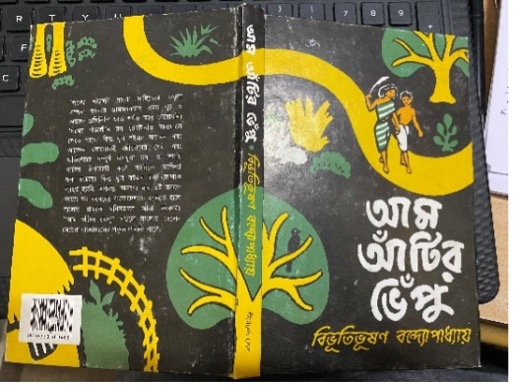
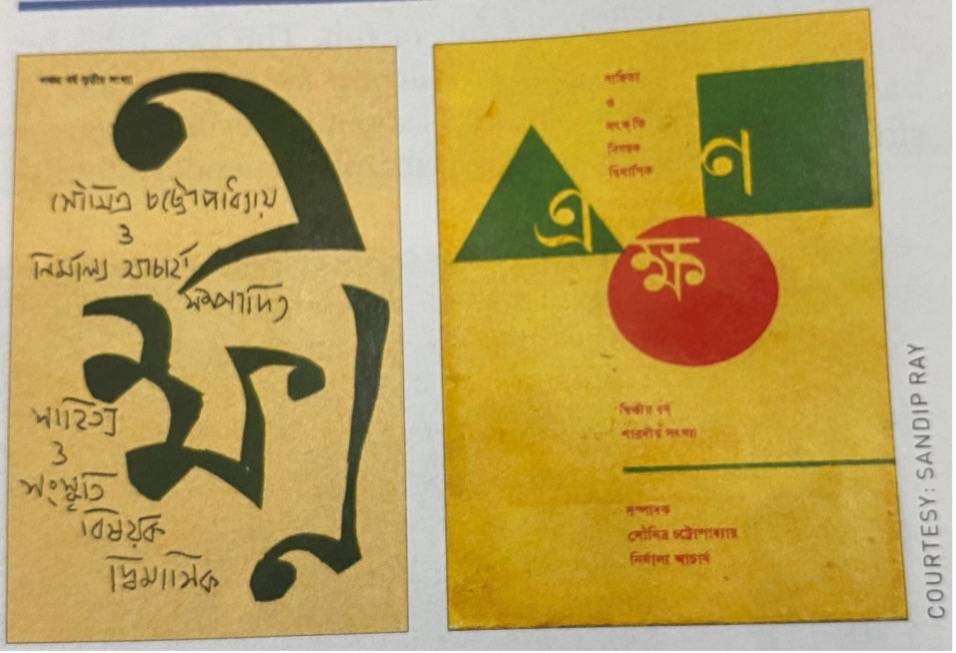
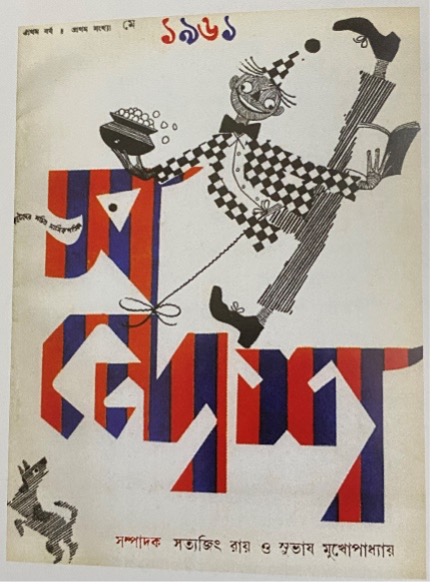

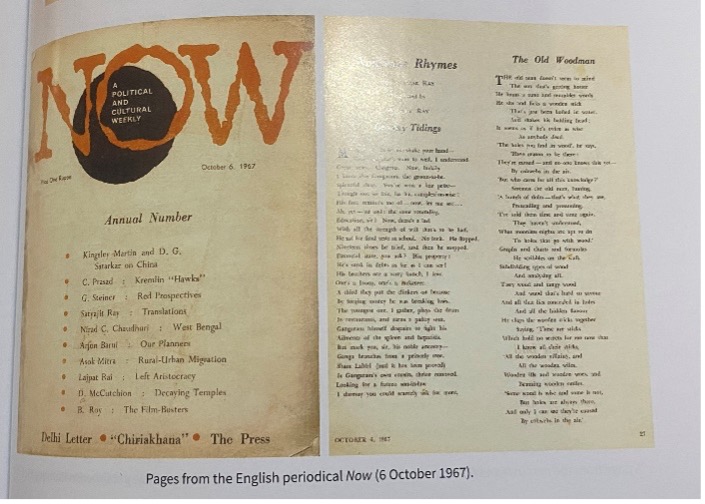
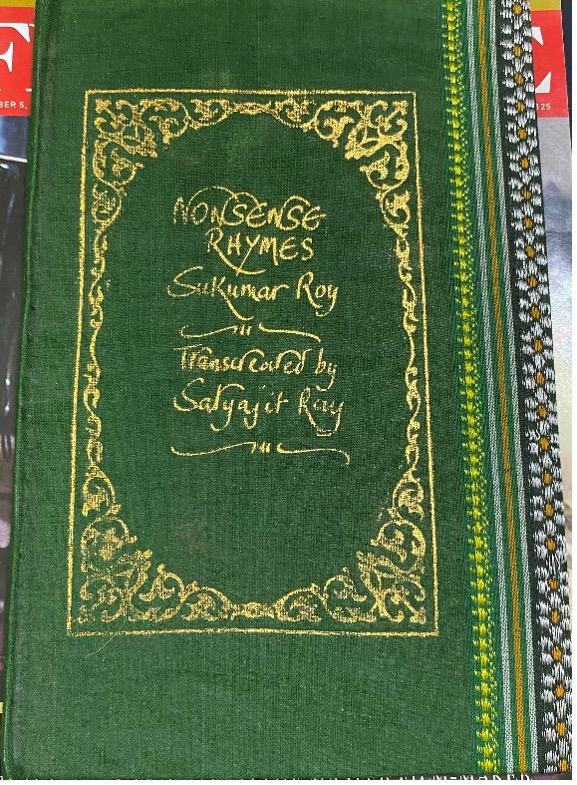
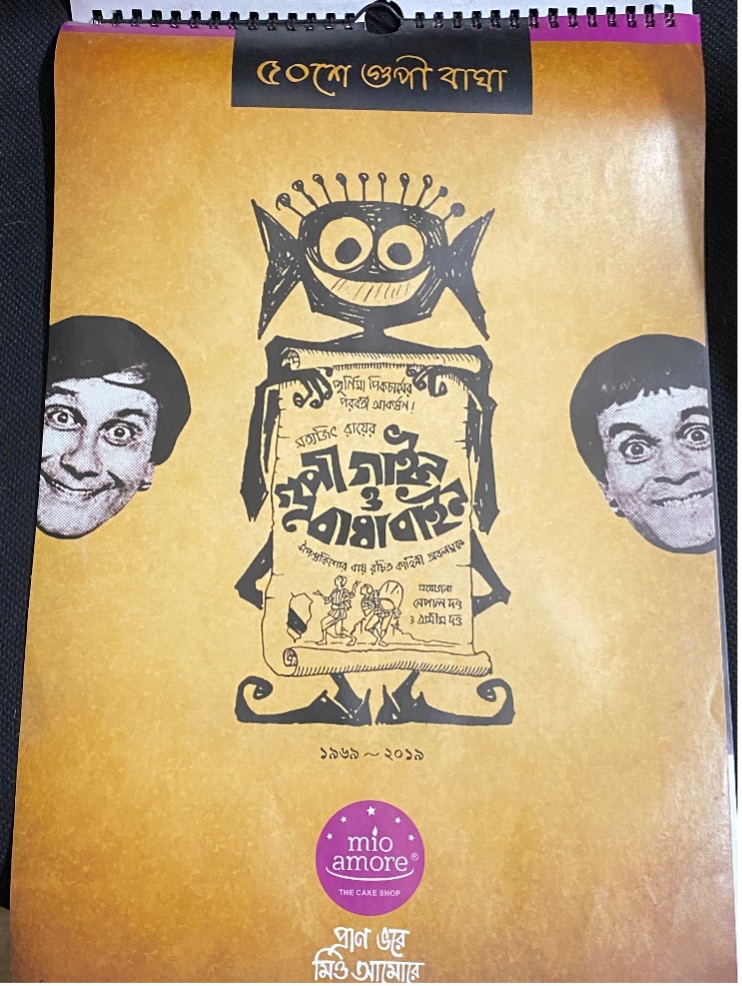
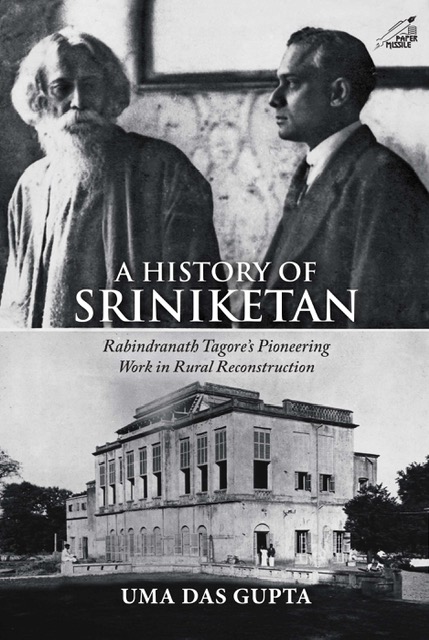
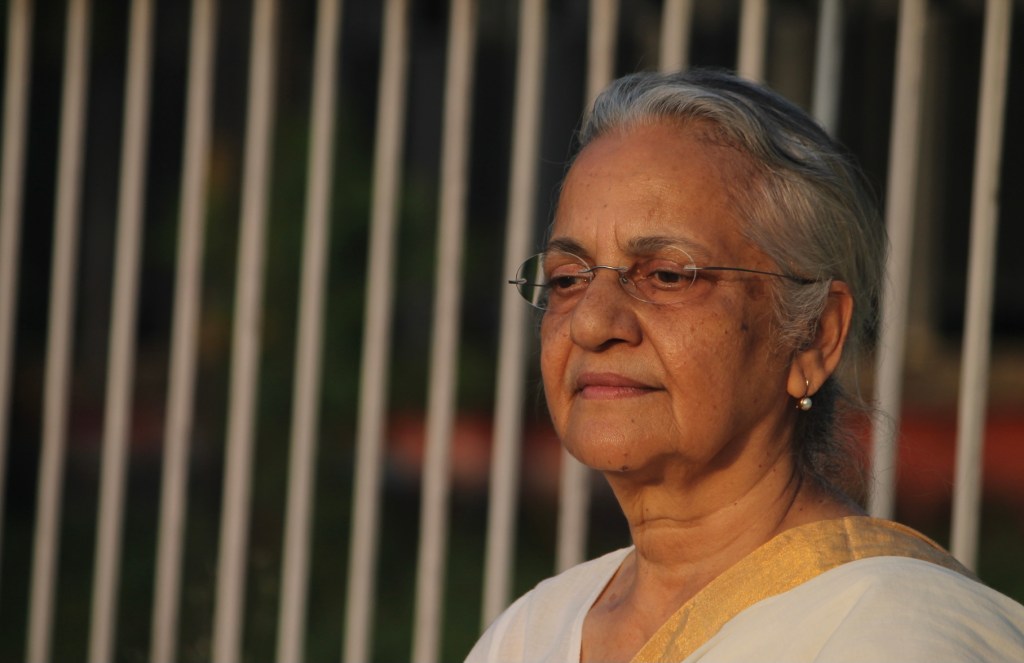


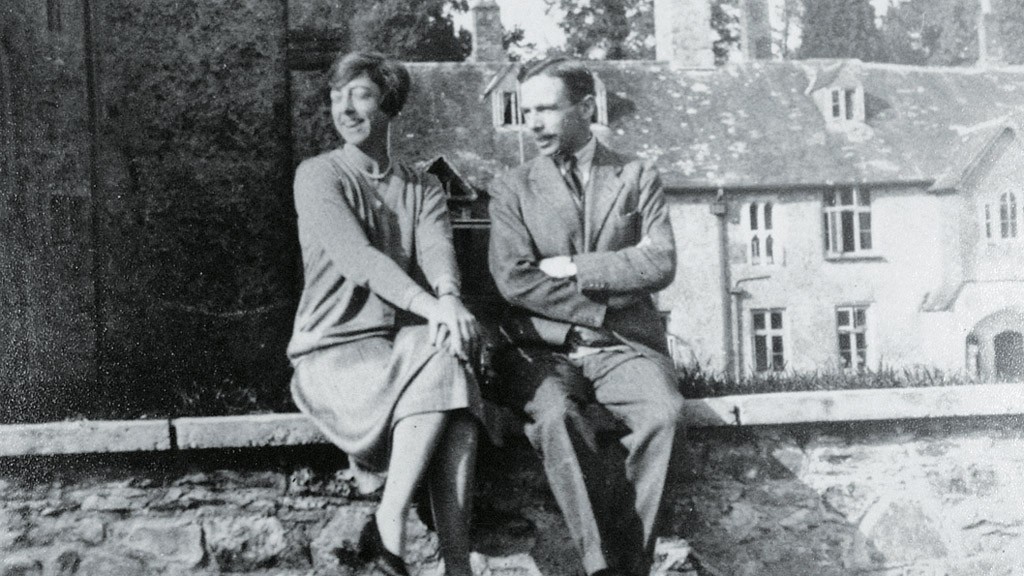
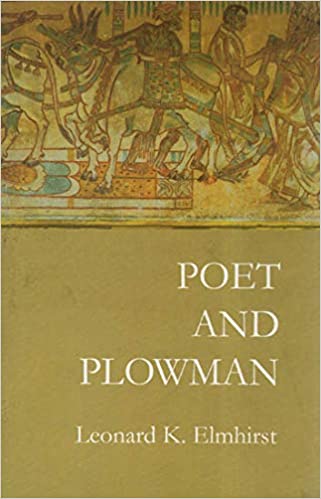
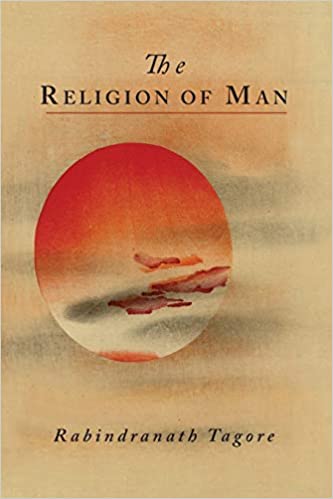

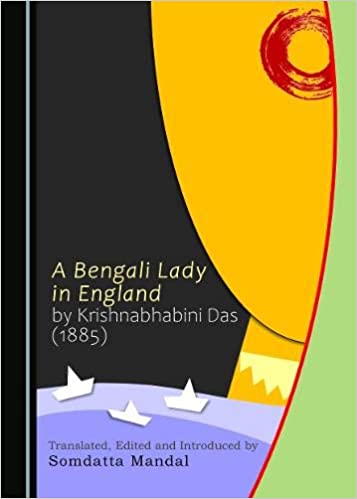


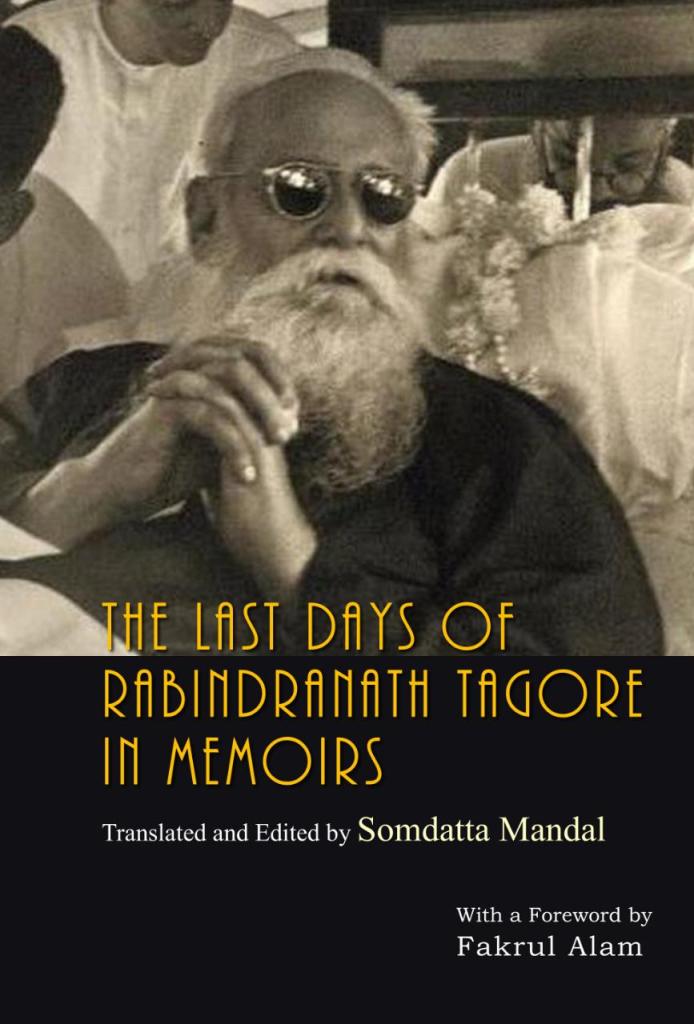

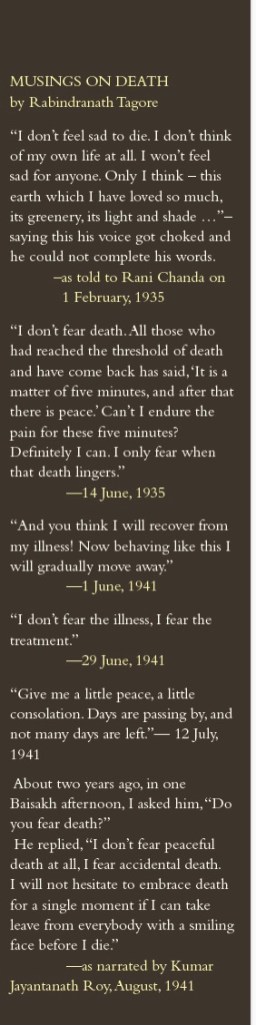
 Borderless