Categories
Contents

Borderless, January 2026

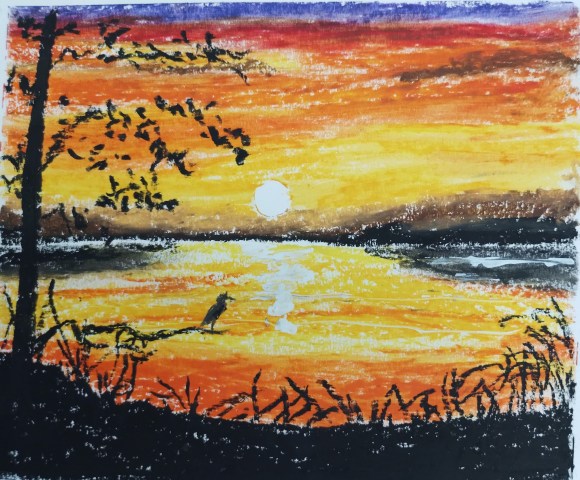
Art by Sohana Manzoor

Editorial

Sense and Nonsense: Atonal, Imperfect, Incomplete… Click here to read.

Translations

Akashe Aaj Choriye Delam Priyo(I sprinkle in the sky) by Nazrul has been translated from Bengali by Professor Fakrul Alam. Click here to read.

Four of his own Malay poems have been translated by Isa Kamari. Click here to read.

Six Fragments by Sayad Hashumi have been translated from Balochi by Fazal Baloch. Click here to read.

Five poems by Pravasini Mahakuda have been translated to English from Odia by Snehaprava Das. Click here to read.

A Poet in Exile by Dmitry Blizniuk has been translated from Ukranian by Sergey Gerasimov. Click here to read.

Kalponik or Imagined by Tagore has been translated from Bengali by Mitali Chakravarty. Click here to read.

Pandies Corner

Songs of Freedom: The Seven Mysteries of Sumona’s Life is an autobiographical narrative by Sumona (pseudonym), translated from Hindustani by Grace M Sukanya. These stories highlight the ongoing struggle against debilitating rigid boundaries drawn by societal norms, with the support from organisations like Shaktishalini and Pandies. Click here to read.

Poetry

Click on the names to read the poems

Ryan Quinn Flanagan, Ron Pickett, Snehaprava Das, Stephen Druce, Phil Wood, Akintoye Akinsola, Michael Lauchlan, Pritika Rao, SR Inciardi, Richard Murphy, Jim Murdoch, Pramod Rastogi, Joy Anne O’Donnell, Andrew Leggett, Ananya Sarkar, Annette Gagliardi, Rhys Hughes

Poets, Poetry & Rhys Hughes

In What is a Prose Poem?, Rhys Hughes tells us what he understands about the genre and shares four of his. Click here to read.

Musings/Slices from Life

Duties For Those Left Behind

Keith Lyons muses on a missing friend in Bali. Click here to read.

That Time of Year

Rick Bailey muses about the passage of years. Click here to read.

All So Messi!

Farouk Gulsara takes a look at events in India and Malaysia and muses. Click here to read.

How Twins Revive Spiritual Heritage Throbbing Syncretism

Prithvijeet Sinha takes us to the Lucknow of 1800s. Click here to read.

Recycling New Jersey

Karen Beatty gives a glimpse of her life. Click here to read.

Musings of a Copywriter

In ‘All Creatures Great and Small’, Devraj Singh Kalsi writes of animal interactions. Click here to read.

Notes from Japan

In The Cat Stationmaster of Kishi, Suzanne Kamata visits a small town where cats are cherished. Click here to read.

Essays

The Untold Stories of a Wooden Suitcase

Larry S. Su recounts his past in China and weaves a narrative of resilience. Click here to read.

A Place to Remember

Randriamamonjisoa Sylvie Valencia dwells on her favourite haunt. Click here to read.

Christmas that Almost Disappeared

Farouk Gulsara writes of Charles Dickens’ hand in reviving the Christmas spirit. Click here to read.

The Last of the Barbers: How the Saloon Became the Salon (and Where the Gossip Went)

Charudutta Panigrahi writes an essay steeped in nostalgia and yet weaving in the present. Click here to read.

Aeons of Art

In Art is Alive, Ratnottama Sengupta introduces the antiquity of Indian art. Click here to read.

Stories

Old Harry’s Game

Ross Salvage tells a poignant story about friendship with an old tramp. Click here to read.

Mrs. Thompson’s Package

Mary Ellen Campagna explores the macabre in a short fiction. Click here to read.

Hold on to What You Let Go

Rajendra Kumar Roul relates a story of compassion and expectations. Click here to read.

Used Steinways

Jonathan B. Ferrini shares a story about pianos and people set in Los Angeles. Click here to read.

The Rose’s Wish

Naramsetti Umamaheswararao relates a fable involving flowers and bees. Click here to read.

Discussion

A brief discusion of Whereabouts of the Anonymous: Exploration of the Invisible by Rajorshi Patranabis with an exclusive interview with the author on his supernatural leanings. Click here to read.

Book Excerpts

An excerpt from Showkat Ali’s The Struggle: A Novel, translated from Bengali by V. Ramaswamy and Mohiuddin Jahangir. Clickhere to read.

An excerpt from Anuradha Marwah’s The Higher Education of Geetika Mehendiratta. Click here to read.

Book Reviews

Somdatta Mandal reviews Showkat Ali’s The Struggle: A Novel, translated from Bengali by V. Ramaswamy and Mohiuddin Jahangir. Click here to read.

Meenakshi Malhotra reviews Anuradha Marwah’s The Higher Education of Geetika Mehendiratta. Click here to read.

Udita Banerjee reviews The Lost Pendant, translated (from Bengali) Partition poetry edited by Angshuman Kar. Click here to read.

Bhaskar Parichha reviews Rakesh Dwivedi’s Colonization Crusade and Freedom of India: A Saga of Monstrous British Barbarianism around the Globe. Click here to read.

.

Click here to access the Borderless anthology, Monalisa No Longer Smiles

Click here to access Monalisa No Longer Smiles on Amazon International

Categories
Editorial

Sense and Nonsense: Atonal, Imperfect, Incomplete

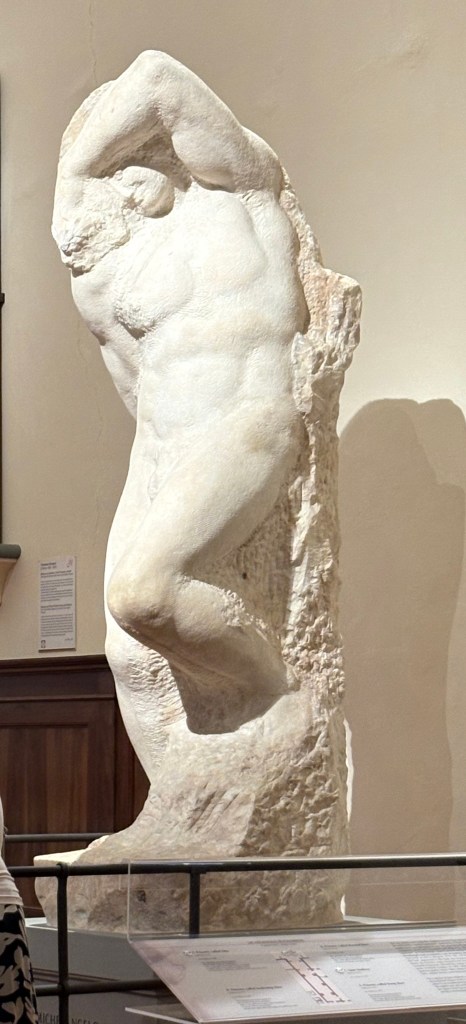
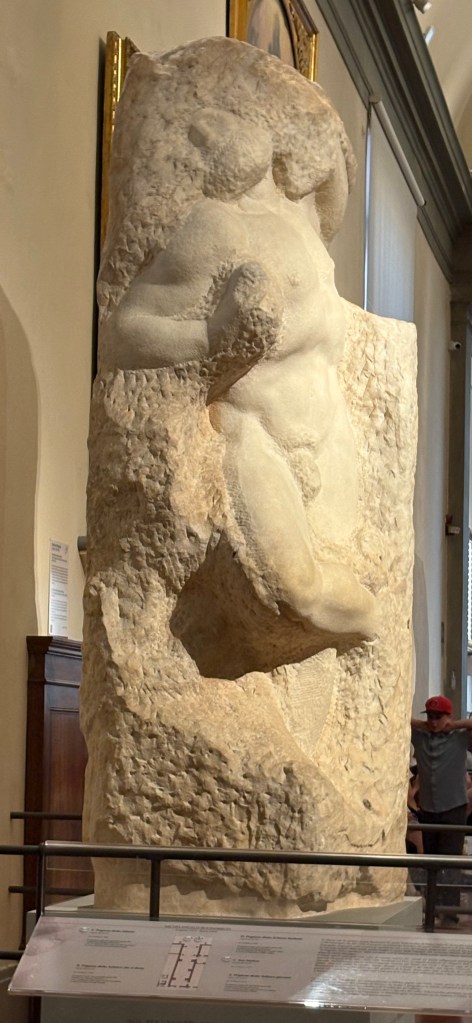
In the Accademia Gallery, Florence, are housed incomplete statues by Michelangelo that were supposed to accompany his sculpture of Moses on the grand tomb of Pope Julius II. The sculptures despite being unfinished, incomplete and therefore imperfect, evoke a sense of power. They seem to be wresting forcefully with the uncarved marble to free their own forms — much like humanity struggling to lead their own lives. Life now is comparable to atonal notes of modern compositions that refuse to fall in line with more formal, conventional melodies. The new year continues with residues of unending wars, violence, hate and chaos. Yet amidst all this darkness, we still live, laugh and enjoy small successes. The smaller things in our imperfect existence bring us hope, the necessary ingredient that helps us survive under all circumstances.

Imperfections, like Michelangelo’s Non-finito statues in Florence, or modern atonal notes, go on to create vibrant, relatable art. There is also a belief that when suffering is greatest, arts flourish. Beauty and hope are born of pain. Will great art or literature rise out of the chaos we are living in now?  One wonders if ancient art too was born of humanity’s struggle to survive in a comparatively younger world where they did not understand natural forces and whose history we try to piece together with objects from posterity. Starting on a journey of bringing ancient art from her part of the world, Ratnottama Sengupta shares a new column with us from this January.

Drenched in struggles of the past is also Showkat Ali’s The Struggle: A Novel, translated from Bengali by V. Ramaswamy and Mohiuddin Jahangir. It has been reviewed by Somdatta Mandal who sees it a socio-economic presentation of the times. We also carry an excerpt from the book as we do for Anuradha Marwah’s The Higher Education of Geetika Mehendiratta. Marwha’s novel has been reviewed by Meenakshi Malhotra who sees it as a bildungsroman and a daring book. Bhaskar Parichha has brought to us a discussion on colonial history about Rakesh Dwivedi’s Colonization Crusade and Freedom of India: A Saga of Monstrous British Barbarianism around the Globe. Udita Banerjee has also delved into history with her exploration of Angshuman Kar’s The Lost Pendant, a collection of poems written by poets who lived through the horrors of Partition and translated from Bengali by multiple poets. One of the translators, Rajorshi Patranabis, has also discussed his own book of supernatural encounters, Whereabouts of the Anonymous: Exploration of the Invisible. A Wiccan by choice, Patranbis claims to have met with residual energies or what we in common parlance call ghosts and spoken to many of them. He not only clicked these ethereal beings — and has kindly shared his photos in this feature — but also has written a whole book about his encounters, including with the malevolent spirits of India’s most haunted monument, the Bhangarh Fort.

Bringing us an essay on a book that had spooky encounters is Farouk Gulsara, showing how Dickens’ A Christmas Carol revived a festival that might have got written off. We have a narrative revoking the past from Larry Su, who writes of his childhood in the China of the 1970s and beyond. He dwells on resilience — one of the themes we love in Borderless Journal. Karen Beatty also invokes ghosts from her past while sharing her memoir. Rick Bailey brings in a feeling of mortality in his musing while Keith Lyons, writes in quest of his friend who mysteriously went missing in Bali. Let’s hope he finds out more about him.

Charudutta Panigrahi writes a lighthearted piece on barbers of yore, some of whom can still be found plying their trade under trees in India. Randriamamonjisoa Sylvie Valencia dwells on her favourite place which continues to rejuvenate and excite while Prithvijeet Sinha writes about haunts he is passionate about, the ancient monuments of Lucknow. Gulsara has woven contemporary lores into his satirical piece, involving Messi, the footballer. Bringing compassionate humour with his animal interactions is Devraj Singh Kalsi, who is visited daily by not just a bovine visitor, but cats, monkeys, birds and more — and he feeds them all. Suzanne Kamata takes us to Kishi, brought to us by both her narrative and pictures, including one of a feline stationmaster!

Rhys Hughes has discussed prose poems and shared a few of his own along with three separate tongue-in-cheek verses on meteorological romances. In poetry, we have a vibrant selection from across the globe with poems by Ryan Quinn Flanagan, Ron Pickett, Snehaprava Das, Stephen Druce, Phil Wood, Akintoye Akinsola, Michael Lauchlan, Pritika Rao, SR Inciardi, Jim Murdoch, Pramod Rastogi, Joy Anne O’Donnell, Andrew Leggett, Ananya Sarkar and Annette Gagliardi. Richard Murphy has poignant poems about refugees while Dmitry Bliznik of Ukraine, has written a first-hand account of how he fared in his war-torn world in his poignant poem, ‘A Poet in Exile’, translated from Ukranian by Sergey Gerasimov —

We've run away from the simmering house
like milk that is boiling over. Now I'm single again.
The sun hangs behind a ruffled up shed,
like a bloody yolk on a cold frying pan
until the nightfall dumps it in the garbage…

('A Poet in Exile', by Dmitry Blizniuk, translated from Ukranian by Sergey Gerasimov)

In translations, we have Professor Fakrul Alam’s rendition of Nazrul’s mellifluous lyrics from Bengali. Isa Kamari has shared four more of his Malay poems in English bringing us flavours of his culture. Snehaparava Das has similarly given us flavours of Odisha with her translation of Pravasini Mahakuda’s Odia poetry. A taste of Balochistan comes to us from Fazal Baloch’s rendition of Sayad Hashumi’s Balochi quatrains in English. Tagore’s poem ‘Kalponik’ (Imagined) has been rendered in English. This was a poem that was set to music by his niece, Sarala Devi.

After a long hiatus, we are delighted to finally revive Pandies Corner with a story by Sumona translated from Hindustani by Grace M Sukanya. Her story highlights the ongoing struggle against debilitating rigid boundaries drawn by societal norms. Sumana has assumed a pen name as her story is true and could be a security risk for her. She is eager to narrate her story — do pause by and take a look.

In fiction, we have a poignant narrative about befriending a tramp by Ross Salvage, and macabre and dark one by Mary Ellen Campagna, written with a light touch. It almost makes one think of Eugene Ionesco. Jonathan B. Ferrini shares a heartfelt story about used Steinway pianos and growing up in Latino Los Angeles. Rajendra Kumar Roul weaves a narrative around compassion and expectations. Naramsetti Umamaheswararao gives a beautiful fable around roses and bees.

With that, we come to the end of a bumper issue with more than fifty peices. Huge thanks to all our fabulous contributors, some of whom have not just written but shared photographs to illustrate the content. Do pause by our contents page and take a look. My heartfelt thanks to our fabulous team for their output and support, especially Sohana Manzoor who does our cover art. And most of all huge thanks to readers whose numbers keep growing, making it worth our while to offer our fare. Thank you all.

Here’s wishing all of you better prospects for the newborn year and may we move towards peace and sanity in a world that seems to have gone amuck!

Happy Reading!

Mitali Chakravarty

borderlessjournal.com

CLICK HERE TO ACCESS THE CONTENTS FOR THE JANUARY 2026 ISSUE.

.

READ THE LATEST UPDATES ON THE FIRST BORDERLESS ANTHOLOGY, MONALISA NO LONGER SMILES, BY CLICKING ON THIS LINK.

Categories
Stories

Hold on to What You Let Go

By Rajendra Kumar Roul

After nearly twenty years, perhaps more, I bumped into Sadhu Kaka[1] again.

That meeting—sudden, strange—pulled me back. Back to a time before Google was born. When the world still moved at its own unhurried pace, unshackled by the glow of mobile screens; when days stretched longer; when people were simply, quietly human.

That morning, I sat at the bus stop with my wife and daughter. The air was still; the sunlight tender. We were on our way back to Bhubaneswar when he saw me—came running, shouting my name, and clasped my hands tightly. I felt the roughness of his palms, the faint tremor of age in his grip. A smile lingered on his lips—gentle, unguarded, like the soft fragrance of fresh jasmine. And yet, no matter how hard I tried, I could not bring myself to smile. Something within me had gone still, as if time itself had forgotten to move.

I looked at my wife, bewildered and uncertain. My guess had been right. By then, her face had set like stone, her eyes dulled by silence. She looked at me once, then at him, and turned away. A grimace flickered across her lips, carrying the sting of quiet satire. She stepped aside and stood there wordlessly, her gaze fixed on the road. Cars passed in a slow rhythm, their noise distant and unreal, as though the world around me had quietly lowered its volume.

I wasn’t surprised by my wife’s reaction. She had always flinched whenever I surrendered to the weakness of my heart. I knew my failing well, and what rose in me was not anger but a slow, lingering guilt. Men like Sadhu Kaka have long taken advantage of the tenderness in me, and each time, it was my family that carried the scar. Once, in a moment of misguided affection—or perhaps a surge of foolish tenderness—I had pushed my daughter into danger for his sake, and now, it was my turn to bleed before the world—this time, for the same fragile sentiment that refused to die, the one I still hold for my childhood friend, Jagabandhu.

There was a time when Jagabandhu and I sat side by side in class—sharing the same bench, the same cracked slate, the same fragile dreams that fluttered like paper kites in the dusty afternoon air.

Then one day, poverty came and sat beside him—silent, patient, and unyielding. From that day on, his place in the classroom remained empty. He began walking to the fields with his father instead, turning the soil where once he had turned the pages. The spade and the hoe became his prayer, the sun his only witness.

I went on, class after class, until the village felt too small for my growing dreams. I left, but he stayed behind, as though the earth itself had claimed him, unwilling to set him free.

The words came unbidden as I walked to the bus stop. Without intending to, I turned down the narrow lane that led to Jagabandhu’s house.

He was sitting beneath the guava tree in his courtyard, the same spot where I had seen him years ago. The tree had grown denser, its shadow trembling on the cracked earth. A brown cow stood nearby, chewing its cud in slow, unhurried rhythm.

When I saw Jagabandhu, I hesitated. It took a moment to recognise him. His face had grown thinner, his eyes sunken, as if time had quietly worked its way through him. His life, I thought, could have belonged to one of those tragic stories that never make it to paper.

The years had pressed heavily on him. The weight of poverty had bent his frame. Life, for him, had withered into a cruel jest of fate—an endless hum from some tired, indifferent machine. His wife lay ill inside the house. Last year, his eldest daughter had died. The papers called it suicide, but Jagabandhu whispered that her in-laws had murdered her. Three unmarried daughters still lived with him, and he carried their future like a stone in his chest. At night, he said, a dull pain rose from his stomach and stayed there until morning.

My eyes welled with tears the moment I heard of Jagabandhu’s plight. I have always been an emotional soul; sorrow, whether on screen or stage, seeps into me until I lose sense of where the story ends and my own ache begins. But this was no performance. This was the truth of a man’s suffering, and I was only a witness, powerless to soften his suffering.

A heaviness gathered in my chest. I laid my hand upon Jagabandhu’s shoulder. A long, tremulous sigh slipped out of me, as though my heart itself had grown tired of carrying sorrow.

“Give me five thousand rupees,” I said to my wife.

Startled, she looked up. Her eyes widened—half fear, half disbelief. I ignored her and pressed on, my voice firm. “Didn’t you hear what I said?”

For a moment, a spark of rebellion flared in her eyes, but she held it back. Wordlessly, she opened her purse. Her fingers trembled. She drew out a bundle of hundred-rupee notes and placed it in my hand as though it weighed a mountain.

I passed the money to Jagabandhu and whispered a silent prayer to Lord Jagannath. Not for fortune, but for mercy. Then I turned away and walked toward the bus stop, leaving him behind with his burden of sorrow.

The road stretched empty; my footsteps sounded hollow. It felt as if every sound within me had fallen still—as though the earth itself had grown quieter than it should be. I seemed to sink into a darkness so deep that I had not known it existed within me.

How does Jagabandhu live beneath such sorrow? How does he bear a life so heavy? Is what he endures truly a life—or a curse disguised in the clothes of living?

If I were in his place…

No. My body trembled. I tried to imagine it, but I could not. It was not merely difficult—it was impossible, like trying to build a ladder that reaches heaven.

Just as I was making a futile attempt to step into Jagabandhu’s shoes, and failing all the same, my wife’s voice drifted through the silence.

“You gave the last note to charity. Do you have money for the bus fare?”

I snapped out of my thoughts and asked, “Why? What about the money I gave you the day we came to the village?”

As though she had already anticipated my question, she quietly handed me a notebook where every expense was recorded, down to the last coin.

“The money you gave your friend was the last you ever gave me,” she said. “Now you’ll have to take care of the bus fare yourself.”

It was as if a cold hand had struck me awake. I stepped out of my daze into the harsh glare of truth: I was penniless. I didn’t even have enough to buy the bus tickets.

What madness drove me to Jagabandhu’s house? Why had I stopped there on my way to the bus stop?

He is my friend, yes—but that doesn’t mean I must lose my head every time I think of him. More than anything, why had that sudden tide of emotion risen in me the moment I saw him?

It would have been different if I’d been alone. But I wasn’t. My wife and daughter were there, silent witnesses to my grand stupidity. How could I tell the bus conductor, without shame, “Brother, I have not a paisa left. Take us to Bhubaneswar for nothing”?

My mind went blank. Darkness pressed close, thick and suffocating. I wished I could slap myself. And if anyone asked why, I’d tell them plainly: because I earned it.

Sadhu Kaka broke my trance. “Are you disturbed?” he asked gently. “Your wife doesn’t seem well. Has there been some disagreement between the two of you?”

I forced a smile. A thin, artificial smile.

I wanted to tell him, Life isn’t as simple as you think, Sadhu Kaka. You, who have stepped away from the world, can never truly understand it.

I studied, loved, built a home, became a father—and soon, I’ll be the one giving my daughter’s hand away. And yet, I still wonder if I’ve ever truly grasped the delicate mathematics of living.

If I had, would I, once again ensnared by emotion, have placed my last bit of money in Jagabandhu’s hands today—just as I did twenty years ago, when my daughter burned with fever and I gave you the money meant for her medicine?

I still remember it clearly: my daughter’s asthma had flared again after days of fever. The doctor had ordered an urgent injection, and I set out in haste to buy it.

Sadhu Kaka caught me in the traffic. He ran to me, gasping, and gripped my arm.

“Jayant, disaster has struck. I must leave for the village right now, but my bag is gone. Lend me some money. I’ll send you a money order the moment I reach home.”

I opened my wallet, not even sure why. There were three thousand rupees inside. The instant his eyes fell on them, he said, “That will do. Don’t worry, I’ll return it as soon as I reach the village.”

Before I could protest, he tore the notes from my hand and disappeared onto a bus.

I went back home with nothing. No medicine, no words to explain. My daughter’s condition worsened that night, and by morning she was in the ICU.

That morning never left me. Even now, the sound of an ambulance makes my chest tighten.

Twenty years have gone by since then.

And now, Sadhu Kaka again, after twenty long years.

I wanted to cry out, to shout until my voice broke. I wanted to grab Sadhu Kaka by the shoulders and plead:

“I desperately need that money today, Sadhu Kaka. Otherwise, the bus conductor will humiliate me in front of my wife and daughter. If only you could return what I gave you twenty years ago, it would save me now.”

But I said nothing. His vacant eyes, his frail face, left no space for words.

Long ago, he had loved someone. She betrayed him, and he never recovered. He lived only as long as duty required—until his parents were gone. Then he simply let the world slip past.

People say he has no place to call his own. No one knows what he does or where he lives. How could I expect anything from a man who has already abandoned everything, even himself?

The bus pulled in at the stop. My wife caught our daughter by the hand and climbed aboard. I loosened my grip on Sadhu Kaka’s hand and turned to follow them. But before I could reach the door, he ran after me. With trembling fingers, he straightened my collar and smoothed the stray hair from my forehead. Perhaps he wished to speak, but no words came.

For an instant, I faltered, my mind adrift. His face glowed before me like that of the Lord Buddha at the Peace Pagoda in Dhauli—calm, compassionate. Then I turned away in revulsion. I’ve always been vulnerable to such people. Who would help me now? Sadhu Kaka, or Jagabandhu?

My face hardened in defiance. I pushed him aside, climbed into the bus, and sank onto the three-seater beside my wife. My eyes closed. Inside me, it felt as though the cyclone of ninety-nine was still raging.

Ah, why does this keep happening to me? Why do I remain a slave to my own emotions? Even after stumbling into trouble time and again, why can’t I understand that charity is good—but never at the cost of losing yourself?

I don’t know when I drifted into sleep. A soft touch pulled me back. I opened my eyes. The bus conductor stood before me.

Oh my God!

Startled, I cried out silently. Sweat broke across my skin; the ground seemed to give way beneath my feet. My blood turned cold. I saw my wife and daughter staring at me, their faces pale with fear.

“Mr. Jayant, right?” the bus conductor said, smiling. “Here—your ticket to Bhubaneswar. And three thousand rupees.”

I looked up, uncertain I had heard him correctly.

A ticket… money… what was all this?

The bus conductor’s smile lingered.

“Sadhu Kaka bought the tickets for you,” he said. “He told me to give you the money as well. He was afraid you might refuse if he tried to hand it to you himself.”

So, this time in the crowded market place, both my wife and I smiled and looked with contrition at him. Before we could speak, he smiled and said, “Stay well!” Then he disappeared.

[1] Kaka means “uncle” and is often used in Odia as a respectful form of address for an elderly man. Thus, Sadhu Kaka may be understood as “Uncle Sadhu.”

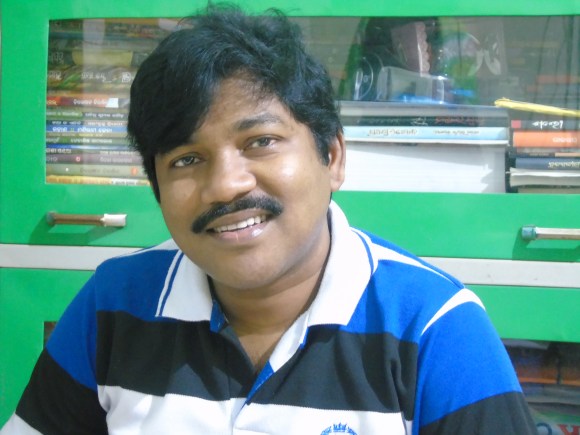
Rajendra Kumar Roul is an acclaimed bilingual fiction writer. A professional feature journalist, he has written more than a hundred short stories, over a thousand feature articles for Odia daily newspapers, two novels and several plays for the stage.

.

PLEASE NOTE: ARTICLES CAN ONLY BE REPRODUCED IN OTHER SITES WITH DUE ACKNOWLEDGEMENT TO BORDERLESS JOURNAL

Click here to access the Borderless anthology, Monalisa No Longer Smiles

Click here to access Monalisa No Longer Smiles on Kindle Amazon International