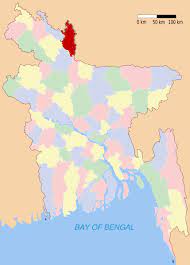
I’ve never been to Kurigram.

In the dead of night, sleeping Kurigram steadily detaches itself
From the world that we know.
Ignores gravity completely
Taking off with its tiny kingdom
To some far-off galaxy.

We keep looking then at the deep blue of the sky
While the tiny village becomes a speck up high.

For a long while Kurigram floats from one dome of heaven to another.
Till that star in the southern sky that pursued it so single-mindedly
Settles by its side and claims it as its own.
Then from this new luminary
A mild red vaporous smell wafts across the sky.

In that realm, in Kurigram,
The Kingfisher and the Pankouri bird are stepbrothers.
When all the rivers of Kurigram become calm
The two brothers make the river their home
Squabbling with each other like families bickering!

When the river calms down again
The womenfolk, once bound by scriptural edicts,
Throng to the riverbank.
Breaking all barriers,
They sparkle like large resplendent crystals.

Suddenly, a lonely babui bird, sans weaving skills,
Perched on a battered old mast, starts swinging,
Finally settling down on the translucent steel-foiled river water.
Kurigram, ah Kurigram!

Where Kurigram used to be
Is a dark and solitary space now.

Alas, I’ve never been to Kurigram
And I don’t think I ever will!

Kurigram—An innocuous town located in the northern region of Bangladesh
Paankouri—A species of bird, black in colour, found in marshes and rivers
Babui—A species of weaving bird
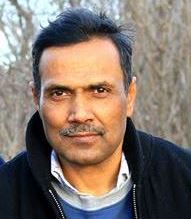
Masud Khan (b. 1959) is a Bengali poet and writer. He has, authored nine volumes of poetry and three volumes of prose and fiction. His poems and fictions (in translation) have appeared in journals including Asiatic, Contemporary Literary Horizon, Six Seasons Review, Kaurab, 3c World Fiction, Ragazine.cc, Nebo: A literary Journal, Last Bench, Urhalpul, Tower Journal, Muse Poetry, Word Machine, and anthologies including Language for a New Century: Contemporary Poetry from the Middle East, Asia, and Beyond (W.W. Norton & Co., NY/London); Contemporary Literary Horizon Anthology,Bucharest; Intercontinental Anthology of Poetry on Universal Peace (Global Fraternity of Poets); and Padma Meghna Jamuna: Modern Poetry from Bangladesh(Foundation of SAARC Writers and Literature, New Delhi). Two volumes of his poems have been published as translations, Poems of Masud Khan(English), Antivirus Publications, UK, and Carnival Time and Other Poems (English and Spanish), Bibliotheca Universalis, Romania. Born and brought up in Bangladesh, Masud Khan lives in Canada and teaches at a college in Toronto.
Translated by Professor Fakrul Alam from the Bengali poem, Itihas (History)
Masud Khan
How then can an authentic history of the world be written? The one who writes— who is he and where is he writing from? When is he writing? From which vantage point is he writing and for what reason? All these factors will decide the truth of the history. And in any case the subject itself is bound by its own conventions and is inevitably subjective.

Is it then impossible to write an authentic history of the world?

No! In the light already reflected from the surface of the world till now is impressed the history of the world— chronologically! Which is to say, the history of the world is in the light dispersed from the world. And that must be authentic version of the history of the world since it’s being written naturally. Perhaps in kingdom after kingdom of the cosmos someone or the other is sighting that history through telescopes, unknown to us all.

But will such a history be absolutely authentic? What about the chapters of history that are dark and depressing? Of episodes that have been denuded of light and have become shrouded in darkness and decadence? Of episodes that have never exuded light and will never reflect any radiance anywhere? What about them?

And what about the history of people who are dark or tan-brown?

Perhaps their evolution has become blurred in the lenses of telescopes; perhaps their histories have become obscure in the telling— since they are dark and tan-brown; perhaps because they are able to transmit only a feeble light they are deemed to be totally incapable of reflecting any light at all!

Does this mean that the history of dark and tan-brown people will remain obscure forever in the history of mankind? And in nature? Bereft of light and therefore of history too?
Masud Khan (b. 1959) is a Bengali poet and writer. He has, authored nine volumes of poetry and three volumes of prose and fiction. His poems and fictions (in translation) have appeared in journals including Asiatic, Contemporary Literary Horizon, Six Seasons Review, Kaurab, 3c World Fiction, Ragazine.cc, Nebo: A literary Journal, Last Bench, Urhalpul, Tower Journal, Muse Poetry, Word Machine, and anthologies including Language for a New Century: Contemporary Poetry from the Middle East, Asia, and Beyond (W.W. Norton & Co., NY/London); Contemporary Literary Horizon Anthology, Bucharest; Intercontinental Anthology of Poetry on Universal Peace (Global Fraternity of Poets); and Padma Meghna Jamuna: Modern Poetry from Bangladesh (Foundation of SAARC Writers and Literature, New Delhi). Two volumes of his poems have been published as translations, Poems of Masud Khan (English), Antivirus Publications, UK, and Carnival Time and Other Poems (English and Spanish), Bibliotheca Universalis, Romania. Born and brought up in Bangladesh, Masud Khan lives in Canada and teaches at a college in Toronto.
Nazrul’s poem, Proloyullash, has been translated as ‘The Frenzy of Destruction’ by Professor Fakrul Alam, published in his first anthology Agnibeena (Fiery Instrument) in 1922.
Born in united Bengal, long before the Partition, Kazi Nazrul Islam(1899-1976) was known as the Bidrohi Kobi, or “rebel poet”. Nazrul is now regarded as the national poet of Bangladesh though he continues a revered name in the Indian subcontinent. In addition to his prose and poetry, Nazrul wrote about 4000 songs.
THE FRENZY OF DESTRUCTION

Ring bells of victory!
Ring bells of victory!
Summer’s storm flutters the flag of the New!
Ring bells of victory!
Ring bells of victory!

He who was to come is coming,
Dancing as if possessed and bent on destruction!
Crossing Oceans, storming the Main Gate, smashing portals,
Into the dark hole of death
In the guise of the eternal executioner—
Through smouldering smoke
Lighting the lamp of lightning
The Violent One comes,
Bursting with glee!
Ring bells of victory!
Ring bells of victory!

Locks swaying in the overcast sky, He makes the sky flare,
Forcing even the fiery all-consuming comet’s tail to tremble.
In the very heart of the Creator of the universe
Like an unsheathed sword the blood sparkles
Roll and sway!
His loud laughter stuns the universe into silence—
Look how stunned the universe is!
Ring bells of victory!
Ring bells of victory!

A dozen suns’ rays stream fiercely from His eyes
The sorrows of the world stick in His disheveled hair.
Every teardrop falling from His eyes
Makes the seven seas roll and swell
His cheeks flush and glow!
Hugging Mother Earth in His huge arms,
He thunders, “Let destruction triumph!”
Ring bells of victory!
Ring bells of victory!

Take heart, take heart, cataclysms shake the universe,
The sluggish and shrunken, the dying and decrepit,
Hide and flee because of the coming catastrophe.
Cheerfully, compassionately,
The infant moon’s beams will shine in the sky’s unkempt locks.
Light will flood your home now!
Ring bells of victory!
Ring bells of victory!

The eternal charioteer comes, lashing his bloodied whip,
His horses neigh out; their cries resound in thunder and rain.
Their hooves spark off stars and scatter them across the blue sky
In the covered well of the dark dungeon
The gods are tied up with sacrificial stakes
And heaped in cold stony pillars.
Time for Him and His chariot to shake the earth.
Ring bells of victory!
Ring bells of victory!

Why fear destruction? It’s the gateway to creation!
The new will arise and rip through the unlovely.
Hair disheveled and dressed carelessly
Destruction makes its way gleefully.
Confident it can destroy and then build again!
Ring bells of victory!
Ring bells of victory!

Why fear since destruction and creation are part of the same game?
Ring bells of victory!
Wives, hold up your lamps of welcome!
The Beautiful comes in the guise of the Violent One

Ring bells of victory!


(The translation was first Published in Daily Star, 2007)
It was converted to a song called Tora Sab Jayadhani Kar or ‘Ring Bells of Victory’ in 1921 and set to tune by Nazrul himself.
Tora Sab Jayadhwani Kar sung in Bengali by contemporary singer Swagatalakshmi.
Born in united Bengal, long before the Partition, Kazi Nazrul Islam(1899-1976) was known as the Bidrohi Kobi, or “rebel poet”. Nazrul is now regarded as the national poet of Bangladesh though he continues a revered name in the Indian subcontinent. In addition to his prose and poetry, Nazrul wrote about 4000 songs.
WHY PROVIDE THORNS

Why provide thorns as well as flowers?
Wouldn’t lotuses bloom if thorns didn’t prick?

Why must fluttering eyes become moist with tears?
Why provide hearts if hearts won’t unite?

Why do cool wet clouds allure the swallow
Only to greet it with thunder and lightning?

Why allow buds to blossom if flowers wither?
Why stain the moon’s brow with a frown?

Why must desire for beauty be mired in lust?
Won’t faces look beautiful without the dark mole?

Poet, keep imaging bliss in this bower of thorns,
While restraining yourself within your moist eyes.

(First published in the Daily Star, 2007)
Keno Dile E Kanta rendered in Bengali by Khairul Anam Shakil
Farewell, neighbours of my nightly vigil,
Standing aloft next to my window,
Companions, the night of parting elapses.
From this day ceases our secret exchanges,
From this day ends our quiet conversations....

Putting its worn forehead on the porch of the setting sky
The moon cries, “Traveler awake, night is all but over”
Night spreads across the forest deep; overcome with sleep,
It glances back, clasping in its hand its dark disheveled hair!

Startled, I wake up, wondering: whose breath brushes my forehead?
Who fans my warm forehead, who wakes up by my bedside?
I rise seeing by my window the sentinel of my dreams,
Companions of my dark nights, the row of betel nut trees!

Hadn’t we once viewed each other through fluttering eyelids?
Friends, I recall what we said to each other all night long!
When tears flowed from weary eyes beginning to burn,
Your leaves appear to me to be like the cooling palms
Of my beloved. The rustling of your leaves reminded me
Of her plaintive voice, calling out mournfully.
I saw in your leaves the kohl-dark shape of her eyes.
Your bodies in silhouette suggested her slim shape.
The gentle breeze wafting by evoked her delicate air.
Your branches seem to be draped with her sari’s borders.
And you fanned me as tenderly as she did with her hands!

These thoughts troubled me as I entered sleep’s domain.
As I slept, I felt the frill of your dark blue dresses lying
Unfurled besides my pillow. I saw in my dream you entering,
Furtively and fervently kissing my warm forehead.

Perhaps in the dream I extended my hands to touch you
Only to touch the window. Then I clasped your hands shyly.
Companions, now that window will have to be shut.
The path beckons, fellow travelers shout, “time to depart!”

This day before I take my leave
I feel like revealing myself to you as well as knowing you.
I feel close to your feelings; yet why does my insatiable mind
Yearn to hear from you the thoughts lodged in your bosom?
I know—we will never get to know each other physically,
Our hearts will only keep playing a tune of pain mournfully!
 Perhaps I’ve seen a vision of you that is not like you at all.
But how can that harm you, if it does enough to swell my heart?
If my tears transform you into a thing of beauty,
If I can build a monument stirred by love of someone
As the Taj Mahal was built from the pain of losing Mumtaz,
Tell me, what harm will that do to anyone?
I won’t adorn my room with you, won’t create a paradise....

Perhaps birds never lighted on your branches,
In your bower, amidst your foliage, cuckoos never sang.
Looking up to the heavens in exaggerated appeal
You kept vigil in the dark, though none stayed up
To open the window. But I was always the first to arrive,
And look at you in rapt attention in the dark. Departing lovingly,
On your leaves I wrote my first letters of love.
Let that be my consolation, whether I meet her or not....

Companions, I’ll never wake up again to look at you
I won’t interrupt anyone’s trance after a tumultuous day.
Silently, all alone, I’ll burn the incense of my suffering.

I shouldn’t ask, but can’t help doing so before leaving today—
From behind your wooden screen, did you view me lovingly too?
Did you also take a look at me when I opened the window?
Was it the wind or my love that made your leaves sway?
When behind your green borders, the moon will go to sleep,
And I will have to repress all happy feelings—
In your joyous moments, will you recall this passerby’s brief visit?
Will your voice resound in this empty room in loud lamentations?
Will the moonlight become insipid in your vision then?
Will you open shutters and look at the formless world outside?
Or will you keep standing rapt in your thoughts all day long?

Tied to exhausted earth, you’ve become a row of helpless trees,
Your feet are soiled with dust, your heads enveloped in emptiness.
Your days scald in the sun’s heat, your night’s chill in the dew,
You lack the strength to cry, you seem to be in a deathlike stupor.
If your problems fail to arouse you, companions, and stir you,
What can I hope to gain by burdening you with my gift of pain?...

*                  *                  *                 *

If I come to your mind by mistake, try to forget me,
If by mistake my windows open again,
Please shut them again.... Don’t look out in the dark at all
Through your wooden screen—for the one no longer on earth
The poem recited by Nazrul’s son, Kazi Sabyasaachi, in Bengali
Born in united Bengal, long before the Partition, Kazi Nazrul Islam(1899-1976) was known as the Bidrohi Kobi, or “rebel poet”. Nazrul is now regarded as the national poet of Bangladesh though he continues a revered name in the Indian subcontinent. In addition to his prose and poetry, Nazrul wrote about 4000 songs.
Written by Kazi Nazrul Islam in 1926, translated from Bengali by Professor Fakrul Alam
Nazrul’s statue in Bangladesh: Courtesy: Creative Commons
POVERTY

Poverty, you’ve empowered me,
Endowed me with Christ’s dignity
And adorned me with a thorny crown,
Ascetic one, you’ve inspired me
To speak out and eye the world boldly
Deliver messages as incisively as a knife;
Your curse has made my veena a sword!

Arrogant hermit, your scorching flame
Has shorn my golden visage of its glitter,
Shrinking its sap and drying the soul early,
When I try grasping with emaciated hands
Beauty’s bounty, O Impoverished One,
You step forward and lap it up.
A forlorn desert is all you leave
For my imagination to play with.
My eyes blaze at my own beauty!

My desires, tinged with pain-yellow buds,
Would rather bloom like the soft, white,
Fragrant shefali flower.  But Cruel One,
Like an unfeeling woodcutter, you break
All branches and destroy all blossoms,
My heart glistens like an autumnal dawn,
Wet with dew shed by sympathetic earth.

You are the sun -- your heat dries up
Every dewdrop of pity. I shrink
Inside the shade that earth affords.
Dreams of Beauty and the Good shatter.
Pouring liquid poison down the throat
You ask, “What good is nectar now?
There is no parching sensation,
No intoxication, no madness.
Weakling that you are, not for you
To seek manna from heaven
In this sorrow-laden world!
You are a serpent, in birth singed
By pain! In a thorny garden you weave
Garlands. On your forehead
I leave this mark of woe!”


I sing songs, weave garlands, and feel my throat burn,
Snakebites have left their marks all over my body!

Like unforgiving Durbasha*, you wander
From door to door with a beggar’s bowl.
Even as newlywed couples embark
On their night of Happiness, you cry out:
“Dumb ones, Listen: this world
Is no bower of bliss but full of sorrow,
Of want and the pangs of parting,
Of thorns that underlie bridal beds
And are embedded even in the Beloved’s arms,
Take your fill of them now!”
Instantly, cries of anguish overwhelm,
In that bower of bliss light fades,
And dreadful night overwhelms!

Exhausted, worn out by hunger, you peer,
Surveying earth with knotted eyebrows
When, suddenly, something strikes you,
And your eyes dart out fiercely.
Whole kingdoms are devastated then
By Plagues, Famines, and Cyclones,
Pleasure Gardens burn, palaces topple—
The only verdict you know is death!

You never stoop to modest displays,
But revel in revealing yourself naked.
You know no hesitation or shame
But raise the heads of those bent low.
At your wish, people condemned to die
Tie nooses around their neck gladly.
Despite burning in the fire of penury daily
They embrace death with devilish glee.

From goddess Lakshmi’s head you snatch
Her crown and throw it to the dust.
O Champion, what tune do you strum
So deftly on your veena? All I hear is lamentation!

Yesterday morning I heard the shehnai wail
A melancholy note, as if a dear one
Hadn’t returned home yet. The shehnai
Seemed to cry out to him to come back.
Some bride’s heart wafted away with the tune
As if searching for her beloved.
Her friends wondered why she should cry,
And let her kohl dissolve with her tears....

Even this morning I woke up to hear
The shehnai call plaintively: “come, come”
Sad-faced, shefalika flowers drop off—
Like a widow whose smile keeps fading—
Their delicate fragrances overwhelm
Butterflies fluttering on restless wings,
Intoxicated with the scent of flowers
They kissed! Bees yellow their wings
With pollen and wet their bodies with honey.

My soul overflows in all directions!
Unconsciously I sing out welcoming songs
Happily! My eyes fill with tears unaccountably
Someone seems to tie the knot,
Uniting me with earth. With hands full of flowers,
Earth appears to step forward with its bounty.
It is as if she is my youngest daughter!
I wake up suddenly in wonder! Alas, my child
Has been up all night and is crying in my home,
Famished and hands full of soot.  O Cruel One,
You’ve brought perpetual tears to my home!
I haven’t been able to give my dear child,
My loved one, a drop of milk!

Familial duty is no delight! Poverty is intolerable,
As it cries endlessly as one’s son or wife
Clasping one’s door! Who will play the flute?
Where will one get radiant smiles of bliss?
Where will one taste a rich bouquet of wine?
Rather swallow a glass of the poisonous dhutura
To make the tears flow....

Till this day I hear the shehnai’s overture wailing
Seemingly saying: nothing, nothing has survived!

*Durbasha: A legendary rishi who was revered but was rather hot tempered
Born in united Bengal, long before the Partition, Kazi Nazrul Islam(1899-1976) was known as the Bidrohi Kobi, or “rebel poet”. Nazrul is now regarded as the national poet of Bangladesh though he continues a revered name in the Indian subcontinent. In addition to his prose and poetry, Nazrul wrote about 4000 songs.
She was as beautiful as a fairy-child. Her face was angelic as was her nature. She did not know jealousy and during the days of my childhood in that large palatial house of my stepfather, she was my only friend. She shared all that she had with me. Or, rather, she tried to share. Her mother, actually I should say our mother, tried to keep her away from me. After all, I was only her half-sister. I was a creature of wildernesses. My skin was darker, and I climbed the trees like a monkey. In return for her niceties, I shared with her all the fruits of the trees I had rampaged. We were both very young then. She was five and I, ten. Our mother often caught us in the garden rolling in the mud, stained with the color of blackberries or devouring green mangoes. Of course, I was the one who always got punished. She was the darling of her father’s eyes. Who would dare to touch her?
I often wonder if I loved Priya back then. I do not know. Do children love one another? Looking back on those years, I believe I treated her as a doll that was denied to me. I wanted to please her so that she would come to me behind our mother’s back. I knew as early as then that mother didn’t love me. My own father was twenty years older than her, and I was born to her when she was barely eighteen. But he had died in an accident before I was born, and she caught the eye of an extremely rich man, and they were wedded in no time. I was born six months after my mother’s marriage to her second husband. And mother made it very clear that the man she had married was not mine to claim even if he was my father in papers.
I can still recall that particular day I was leaning out of the living room door to watch the family tableau of father-mother-daughter and wishing I was part of it too. Suddenly, mother turned back and saw me. She hissed, “Get inside. What are you doing here?”
Then Priya and her father turned too. Priya waved and laughed, “Come, Apu[1]. Can’t she come too, Abbu[2]?” Her upturned face was radiant with expectation as she looked at her father who also smiled back. “Yes, of course. Come along, Nara.”
Mother glowered, but at Priya’s insistence she agreed to let me join them all on the terrace. Of course, I did not sit with them at the tea-table, but I did hang around them. I watched them contentedly as I had received more than I ever expected.
That was, however, only the beginning.
Up till this moment I only wished that he was my father too. But ma always made sure that I remembered my place. I was always the other sister, the other daughter, the other girl in the family. From this moment onward, I walked behind Priya as her shadow, taking care of her needs, and she depended on me as if I was a second mother. I believe, she loved me too because she knew that nobody else loved her as I did.
I remember the wedding ceremony of Atushi. Atushi was Priya’s cousin, the only daughter of Farzand Fuppi[3]. Priya was of course, as lovely as a rose. She wore a pink coloured lehenga[4] embroidered with seed pearls. It was outrageously expensive as her parents made sure that she had the best of things. But she was still a young girl of thirteen and it was I, the eighteen-year-old Nara, who caused a stir that evening. I was dressed in a peacock blue lehenga that my stepfather almost bullied my mom into getting for me.
“I won’t have one daughter wearing the most expensive thing and another dressed like a pauper,” he had bellowed.
Mother protested, “Nara’s not your daughter.”
He roared, “She’s mine as much as Priya. Don’t you ever say she’s not my daughter.”
Mother cringed and went as pale as a waif. She tried to say something but could not form a single syllable.
Some young male cousins of Priya wowed at our entrance and a female relative sneered, “Goodness gracious! Look at Nara! She just sailed in! Fayaz Uncle will have a Draupadi in his hands in no time.” At some innermost corner of my heart, I reveled. As I turned to look at my mother and Priya, I saw contrasting emotions. Priya was beaming with pure blithe, my darling sweet sister. But in mother’s eyes, I saw panic. She appeared like a terrified deer and clung to Priya. I could not understand why she was so afraid of her very own daughter. But I was naïve, and I did not know the world as she did. Nor did I know the darkest secret she held in her heart.
Priya
They called me a princess. From my childhood I was pampered like one and my mother guarded over me with utmost jealousy. I was an only child and the doctors had said that my mother could not bear another. But then I also had Nara Apu even though everybody called her my half-sister. Technically, she was my half-sister as we had different fathers. Mother always made it clear that she did not care for her at all. And she disliked her even more because I loved her to distraction. In that palace-like prison, she was the only person who cared for me truly. Love shone in her eyes like a beacon, and I cannot help wondering how Nara Apu, who got so little love herself, could love me with such abundance.
She had dark complexion, but that made her all the more beautiful. Her eyes were like pools of black water, the only feature she had inherited from our mother. My eyes are of greenish hue, the eyes that came from my father’s side of the family. When we were children, father was kind of indifferent toward Nara Apu. But Apu had such an unselfish nature that it was difficult to remain unresponsive towards her. And even though my father was a busy man, he did not miss how much she cared for me. Slowly, his attitude toward her changed.
And there was that one time when she practically saved my life. I jumped into the lake after being goaded by some of my cousins even though I did not know how to swim. I realised how stupid the move was as I gulped water and I saw my two dumb cousins standing by the shore gaping at me in horror. I heard a piercing cry, and I sensed it was my mother and then there were several splashes. Then someone got me by the hand, “Don’t grab me,” it said. “Just hold on to my hands.” I flailed and splashed and cried. Then two stronger hands got hold of me.
As I was lying in bed later with mother crying beside me, I learnt that I had two saviours—Nara Apu and Shahnewaz Uncle. It was Nara Apu who had reached me first, and Shahnewaz Uncle reached a few seconds later and grabbed us both and brought me ashore. From that day, everybody knew that Nara and Priya belong together.
By the time she was fifteen, Abbu made sure that mother was not mistreating her daughter from her first marriage. I heard him once telling her, “Salma, do you consider me such a petty creature that I would be jealous of that slip of a girl? You don’t have to treat her so bad, you know, to prove that you love Priya more.”
Mother wept and I could see she was disturbed. But she never really loved her. It is one mystery I never understood until years later.
I also formed a close bonding with Shahnewaz Uncle. Of course, he lived in the same house, but he was always busy with painting. He was Abbu’s younger brother, but they did not have a very close relationship. But he did take notice of me and sometimes patted me on the head. After this particular incident, he started taking interest in both me and Nara. He brought for us licorice of different shapes and tastes and other delicacies. My favourite was orange, while Apu liked peppermint. He laughed at her, “What an old woman you are!” Nara Apu made faces at him and grinned impishly.
During these times, I also started to note that Mother was actually afraid of Nara Apu. It did not make sense to me at all. But whenever Apu was around either Abbu or Shahnewaz Uncle, she would fidget uncomfortably and say nasty things. Once I heard her grumbling to herself that Nara Apu was out to grab men. Poor Apu was only sixteen years old at that time. Then on her nineteenth birthday Mother suggested that she could be married off to Rabbi, a poor relation who worked in our country estate. When Abbu realised that she was serious, he suddenly went very still. Then he said in a very low voice, “If you ever utter such nonsense, or if I ever hear that you’ve initiated something like that, I will have you drowned. Daughters of my family don’t marry servants…. And, from today, she is mine. Forget that you ever gave birth to her, you wretched woman.”
I don’t know what come over her, but mother just fainted away.
Nara
Mother was always a troublemaker. In those days, I could never understand why she hated me so. Our father (I had started calling him Baba[5] at some point; I did not call him Abbu though) was away on a business-trip. And that is when I discovered a terrible secret. I never knew the whole story, but I can still recall the strange conversation that night when Priya was raving in fever and Baba was away. I had fallen asleep in the sofa in Priya’s room and the words streamed into my consciousness:
“All these years, I’ve waited. I’ve waited for him to die. Is there nothing you can do? Priya will always be known as someone else’s daughter.” I heard the sound of muffled weeping of a woman. She whimpered as she said, “And I have to remember all the time that the child that is legitimate is actually the result of rape. I… I … can never love Nara… I was young and I didn’t want her… I hated that man… why couldn’t she die at birth…Why didn’t you let her die?”
Even in my sleep I went numb with pain. Until that moment I had resented that my mother never loved me. There in that nightmarish darkness, in a half-conscious state I learnt the nature of the relationship that existed between my mother and father. I knew, of course, that he was way older than she was. But I never knew that she was married off to him because he had raped her.
Then I heard the voice of a man. The voice was sad but steady, “He’s the rightful son of my father, Salma. I cannot do anything. Even if he dies, I won’t inherit the family property. My mother was only my father’s mistress, you know. Fayaz bhaiya[6] has been generous enough to let me live here. If his mother was alive, he would never be able to do so. You already know that. And Priya has to be recognised as his daughter, otherwise she will get nothing either.”
I was so shocked that a sound escaped my mouth, and my mother was at my side within a moment. In that semi-darkened room, I saw her dark eyes glazed with sheer terror. And I knew that a woman in her predicament would not allow anything or anyone to get between herself and her object of desire. I pretended that I had had a bad dream about Priya. Then we both ran toward Priya’s bed.
A week later, before Priya had completely recovered, mother fell from the stairs and was killed. But a lot of things started to fall in place. Since she could not have any more children, she was protective about Priya and so possessive too. She had no choice but to pass her off as the daughter of her husband. She also wanted to remain the wife of the man who was as rich as a king. She had nowhere to go either. The man she loved, she could not have. And the other daughter, that is me, was a child she never wanted. My father, she never loved. Poor woman! What a life!
It was a strange house after that—two brothers grieving for the woman they both loved. Shahnewaz Uncle suddenly seemed to have grown old. He reminded me of Tithonus bereft of his Dawn. And our stepfather seemed distant and gloomy like a thunderstorm. Yes, that’s how I started thinking. He was Priya’s father only as much as mine. Somehow, the running of the household fell into my hands and Priya became my shadow. She grew to be afraid of the dark. She saw mother’s shadow in the darkness, and I started sleeping in her room. We grew closer than ever. That’s the time when I learnt to love her truly, like my very own sister, without the slightest trace of jealousy.
Priya
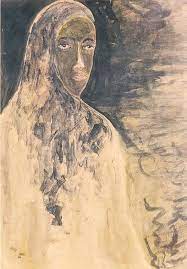
I saw the woman in shroud for the first time about two weeks after Mother died. She was sitting in the veranda in the evening. I called out without thinking and when she looked back, I shuddered because she had no face. Yet I knew she was a woman. I heard a piercing scream and when two arms gathered around me, I realised that it was Nara Apu and that I had screamed. I think I fainted and when I woke up, I was in my bed and Apu was sitting by my bed, her eyes clouded with worry.
“I saw her, Apu,” I whispered. “I think I saw Ma.”
Apu’s face paled, but she shushed, “You saw nothing, darling. It was just a shadow. And don’t worry, I’m here. I’ll take care of everything.”
But I saw the woman again a few days later. She was watering the plants on the rooftop at the wake of dawn. I saw her from my window, and I knew it was her. Why was she haunting me? And why did nobody else see her?
Nara Apu made sure after that I was always surrounded by people, esp. in the evening. At night, she slept in my room. Initially, she slept in a cot, but later at my insistence, she slept in the same bed with me. During those days, Nara Apu was strong. She walked with grim determination; she protected me like a warrior-princess. I felt safe when she was around. During daytime, things were normal, but as soon as the darkness crept in, a fearful feeling rose in my heart. I was afraid of shadows. I realised I had to bring Nara Apu in. But how to tell her? I could not give away my secrets; hence I told her only what I could.
That night when we were getting ready for bed, I caught her hand and whispered, “Apu, I have to tell you something. Have you seen Shahnewaz Uncle’s mother?”
Nara Apu gaped at me in incomprehension.
“I saw her picture in his closet. He said it was the picture of his mother.”
Very slowly Apu got up and sat again. And then she said even more slowly, “She… was… drowned… in a… pond, they say. I wonder…”
I stuttered, “Nara Apu, she… looks … exactly… like me.”
Nara Apu did not say anything, but just looked at me. And I realised with a jolt that she knew. When did she come to know that? And she still protected me like anything? When did she learn about it?
I burst into tears, and she held me close like she always did. “Shush, shush, my pretty. You’re safe with me. None can harm you when I’m here. Shush…” What if she knew the truth? Could she bear it? Could I bear if she did not?
Nara
I had to be strong and brave for the sake of Priya. I could not tell her what Baba had told me. Sometimes I wonder how was it that my own mother never loved me, but I got so much love from a complete stranger. No, I am not talking about Priya, I mean Baba. That rainy afternoon when he called me to his study, haunts me still.
He was standing by the window watching the rain. When I entered, he bade me sit. He did not turn to look at me but spoke:
“Sit, Nara. I have some things to tell you.”
I waited patiently.
“We’re in a strange situation here, are we not? Your mother has died, and you are stuck within the walls of a strange house with people whose ties to each other are stranger.” I shuffled uneasily. What was he saying? What was he referring to?
“This is a big house. Do you know that walls have ears?” he ploughed on. “There are many secrets this house holds and even I do not know them all.” Here he turned to look at me. He had smoky eyes, eyes he inherited from his mother. He was a very handsome man even though he was in his mid- fifties. He sighed and said, “I know who Priya is.”
I bolted from my chair, and I knew my face had lost its colour.
He shook his head. “I have known it for quite some time now. Priya looks a lot like Shahnewaz’s mother. I had not realised when she was younger, but as she is growing up, I’ve been detecting the resemblances.”
I sat trembling. Was he planning to punish us? Why was he telling me all these?
“Sit, Nara. I am not going to hurt you or Priya for something your mother did.”
A terrible suspicion started to creep in my mind. And I had thought… “Did… you… you did not kill her, right?” the words tumbled out of my mouth.
He looked at me sadly. “I did not kill her.” He paused and searched my face. “But why do you say that, Nara? Your mother died in an accident, did she not?”
I remained silent.
“Nara, I want you to know that I have drawn documents with my lawyers and have divided my property equally between you and Priya. Both of you are my daughters, mind you. I do not care who the natural fathers are, I recognise you as my children. And I want you to take care of Priya, no matter what.” He paused again and asked, “Do you understand?”
I nodded mutely. Then I asked, “But why? I mean, are you going somewhere?”
He seemed lost in thought. But then he raised himself out of his reverie and smiled, “I guess, you can say that.” He paused and then added, “You can trust Shahnewaz. Like me, he loves both of you. I believe that he loves you even more because you are not his child. He has no hold over you and yet he owes you for saving his daughter’s life.” At that moment I realised how much he loved us both. I felt a wrenching pain for this man who was more than a father to us, and yet he was not our father.
As I was walking out of the room he called me back, “You’re strong, Nara. Far stronger than any of us. You’ll survive.”
Nara and Priya
There was total chaos in the family after Fayaz Chowdhury’s disappearance. The bulk of the property was left to Nara and Priya with Shahnewaz Chowdhury as the legal guardian. Neither Nara, nor Priya could claim their share until their 25th birthday. If either of them died before that, their share would pass on to Shahnewaz. Fayaz Chowdhury’s sisters could not make head or tail of their brother’s wishes. Why did he leave half of his property to Nara? Even though adopted, she virtually was no blood relation to him. Naturally, not any of them could accept that she had suddenly been elevated to the status of a princess.
Priya’s problem at this point was she still saw the shadow of a woman periodically. But by now they both had accepted that Priya would keep on seeing her. She became more and more dependent on Nara.
On that particular afternoon, Nara was making tea on the veranda. Priya was sitting on the small sofa when she just could not take it any more. “Apu, do you know that you are the most beautiful girl that ever lived?” she asked with an unnatural fervency.
Nara raised her dark eyes and laughed. “What got into you, sweetie? If I’m the most beautiful one, what are you?”
Priya smiled in spite of herself. “Apu, will you go away when you get married?”
“I’ll never get married,” Nara suddenly went somber.
“Why not?”
“I don’t trust men,” came the simple reply. She paused and then proceeded to say, “Our poor mother! I just feel so sorry for her.”
“Why do you feel sorry for her? She was a selfish bitch!” There, it was out in the open, thought Priya. It still bothered her that the wretched woman never learnt to love her elder daughter.
Nara shook her head. “No, Priya, she was just a miserable woman. She could not have the man she loved and had to deal with two other men.”
Priya’s eyes stung as the words tumbled out, “You loved her?”
“She was my mother,” said Nara matter-of-factly. “What she did was done out of her own miserable state of mind. I cannot help loving her.”
Priya’s face went as white as chalk. “Apu, I killed her.” The whispering confession was as soft as the first snow. Nara went still. When she turned to look at her sister, she said with a sadness that only tremendous love for a child can produce, “I know. Baba knew too, I believe.”
Priya cried with an abundance that knew no limit. “She hated you. That wretched woman! She wanted to kill you when you were born. Did you know that? Shahnewaz Uncle did not let her. Those two men—they have had so much love in them for that wicked woman. And you love her too? How can you love her? … Sh she was… a witch… an evil witch… I can never… forgive her… never…. Do you know she planned on killing you again? She… she had come to … sus… suspect that you knew the secret of… my birth. I p-pushed her d-down the stairs. I would n-never let anyone harm you… never…” by this point Priya had become hysterical.
Priya was still screaming when they took her away. Her mind had gone completely berserk. She certainly was not a criminal. No wonder the pressure she had retained through the two years after her mother’s death overwhelmed her completely. Nara pulled through the time, and she dragged her Shahnewaz uncle through it too. When Fayaz Chowdhury finally returned home, it was once again a strange household—two fathers held together by a daughter who belonged to neither. And yet, she was the daughter of the woman they both had loved. It is strange that Nara’s mother never loved the child begotten through rape and abuse, and yet Nara had so much to give. That made all the difference.
Sohana Manzoor is Associate Professor, Department of English & Humanities at ULAB. Her short stories and translations have been published in many journals and anthologies in South and South-East Asia. Currently, she is also the Literary Editor of The Daily Star, Bangladesh. This story was first published in Six Seasons’ Review.
.
PLEASE NOTE: ARTICLES CAN ONLY BE REPRODUCED IN OTHER SITES WITH DUE ACKNOWLEDGEMENT TO BORDERLESS JOURNAL
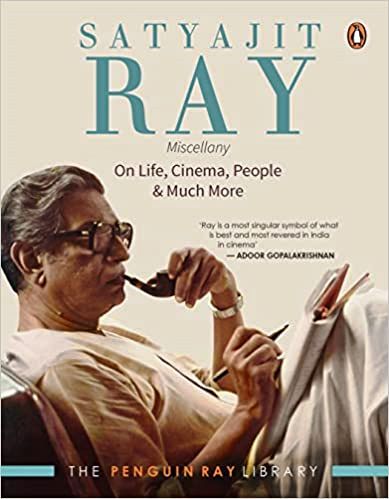
Title: Satyajit Ray Miscellany: On Life, Cinema, People & Much More
Author: Satyajit Ray
Publisher: Penguin Randomhouse
There could be any number of books on Satyajit Ray. Even after thirty years after his death, he continues to be written about. The present book Satyajit Ray Miscellany: On Life, Cinema, People & Much More, as the title suggests, is everything that the veteran filmmaker India had put in black and white.
As part of the Penguin Ray Library, the book has more than seventy rarest essays on filmmaking, screenplay writing, autobiographical pieces, and rare photographs and manuscripts.
“Ray is a singular symbol of what is best and most revered in Indian cinema” as the film director and scriptwriter, Adoor Gopalakrishnan, has put it and the actor, Ben Kingsley, complimented him: “Satyajit Ray, I salute you. The greatest of our poets of the cinema.”
One of the doyens of world cinema, Ray gave a “unique aesthetic expression to Indian cinema, music, art, and literature. His writings, especially, autobiographical works, thoughts on filmmaking, screenplay writing, and eminent personalities from art, literature, and music, among others, are considered treasure troves, which largely remained unseen and therefore less known till date.” Ray was a writer of repute – his short stories, novellas, poems, and articles, written in Bengali and translated into English, have been immensely popular. Author of the famous Feluda stories, Ray’s Bengali books have long been bestsellers.
Ray was awarded the Oscar for Lifetime Achievement by the Academy of Motion Picture Arts and Sciences in 1992 – the year he was also awarded India’s highest civilian honour the Bharat Ratna, and also when he breathed his last.
Writes Sandip Ray in the ‘Foreword’ to the book: “Since his schooldays, my father was a cinema addict in the true sense of the term – lapping up Hollywood movies of Billy Wilder, William Wyler, Frank Capra, and others as well as the timeless comedies of Chaplin and Keaton. The hobby gradually turned into a serious interest. The formation of the Calcutta Film Society in 1947 with a few like-minded friends opened to him the diverse range of European cinema, and in a sense, acting as a catalyst to his writings on cinema. In his first two articles, he heavily criticized the make-believe stereotypes of erstwhile Bengali cinema and called for soul-searching among the filmmakers. The result as he himself remarked later amusingly – ‘Nothing of that sort happened. The piece was simply shrugged off by the people of the trade as yet another piece of tomfoolery by some arrogant upstart who saw only foreign films and knew nothing of local needs and local conditions.’”
The book has been enchantingly divided into: ‘Satyajit Ray – A Self-Portrait’, ‘A Director’s Perspective’, ‘Personal Notes’, ‘Reminiscences’, ‘Festival greetings LP Sleeve Notes’, and ‘Miscellaneous Writings’. There is also a chapter on the ‘Preservation of Satyajit Ray Archives’. Together, these writings bring to the fore fascinating anecdotes of Ray’s eventful life.
About the art of Rabindranath Tagore, Ray wrote: “Tagore took to painting at a later stage in his life. Some manuscripts dating back to his youth show doodles in the margin which suggest a natural flair for drawing. After that, there is nothing to show that he had any interest in visual expression until, when he was well over sixty; fantastic forms began to appear in his manuscripts. Where one would normally cross out a word or a sentence, Rabindranath turned them into grotesque creatures. These emendations were stung together until the whole page took on the appearance of a tapestry of words and images. In time, paintings and calligraphic drawings began to appear as independent efforts, unrelated to manuscripts. Blue-black ink gave way to transparent colors, and the subjects became more and more varied. The output clearly suggests that Rabindranath was absorbed in his new pursuit and enjoying the experience. The lack of formal training was compensated by an instinctive feel for rhythm, texture, and spacing. There was also the calligraphic virtuosity when he used the pen. (His unique and beautiful Bengali handwriting– which came to be known as the “Rabindrik” script has been widely imitated.) But the brush, too, was frequently used. Some of the efforts were purely abstract while others dealt with subjects which covered a wide field.’
Ray considered scriptwriting to be an integral part of direction. Initially, he refused to make a film in any language other than Bengali. In his two non-Bengali feature films, he wrote the script in English; translators adapted it into Hindustani under Ray’s supervision. Such was the purist in Ray!
In the section ‘The Outlook for Bengali Films’ Ray was fairly real-world: “It is generally conceded that the film industry in Bengali is facing a big crisis. Some have gone so far as to predict a total annihilation of the Bengali film as such, and the sprouting up in its place of a product not dissimilar to the well-known type created by Bombay. This may be the height of pessimism, but there is no denying some alarming symptoms. Firstly, the area of exploitation of the Bengali film has been considerably reduced by the Partition; secondly, for reasons we shall presently examine, the exhibitors in Bengal have grown increasingly distrustful of the home product preferring the unpretentious, brassy, and frankly escapist products of Bombay and more recently, Madras.”
Nemai Ghosh was Satyajit Ray’s only cinematographer who did almost all his films. Ray wrote: “We founded the Calcutta Film Society in 1947 with the help of a few friends and associates. Nemai Ghosh was one of them. Like me, he was also enamoured by the cinema; so we got along very well. I was a mere cineaste then but he was already a practitioner as a cameraman. However, he harboured the desire to direct films himself at the back of his mind. The chance came his way during the late forties when he made Chhinnamul (The Uprooted, 1952) on the theme of Partition. It was the first instance of realism in Bengali cinema. But thereafter he was compelled to head for Madras for want of work in Calcutta and had to spend the rest of his life there. Being a leftist to the core, he did a lot for the cinema workers in Madras. We exchanged correspondence only occasionally. But whenever we met, the old warmth of friendship was revived. Today I am feeling his absence intensely and I am sure the cine workers of Madras are also feeling likewise.”
Satyajit Ray Miscellany, the second book in the Penguin Ray Library series, brings to light some of the rarest essays and illustrations by Ray that opens a window to the myriad thought-process of this creative genius. With more than seventy gripping write-ups and rare photographs and manuscripts, this 275-page book is undoubtedly a collector’s item.
.
Bhaskar Parichha is a journalist and author of Unbiased, No Strings Attached: Writings on Odisha and Biju Patnaik – A Political Biography. He lives in Bhubaneswar and writes bilingually. Besides writing for newspapers, he also reviews books on various media platforms.
.
PLEASE NOTE: ARTICLES CAN ONLY BE REPRODUCED IN OTHER SITES WITH DUE ACKNOWLEDGEMENT TO BORDERLESS JOURNAL
These are songs of Tagore centred around autumn, a season that is split into two parts in Bengal. Early autumn is called Sarat and late autumn Hemonto. The first two songs are descriptive of Sarat and the last one of Hemonto.
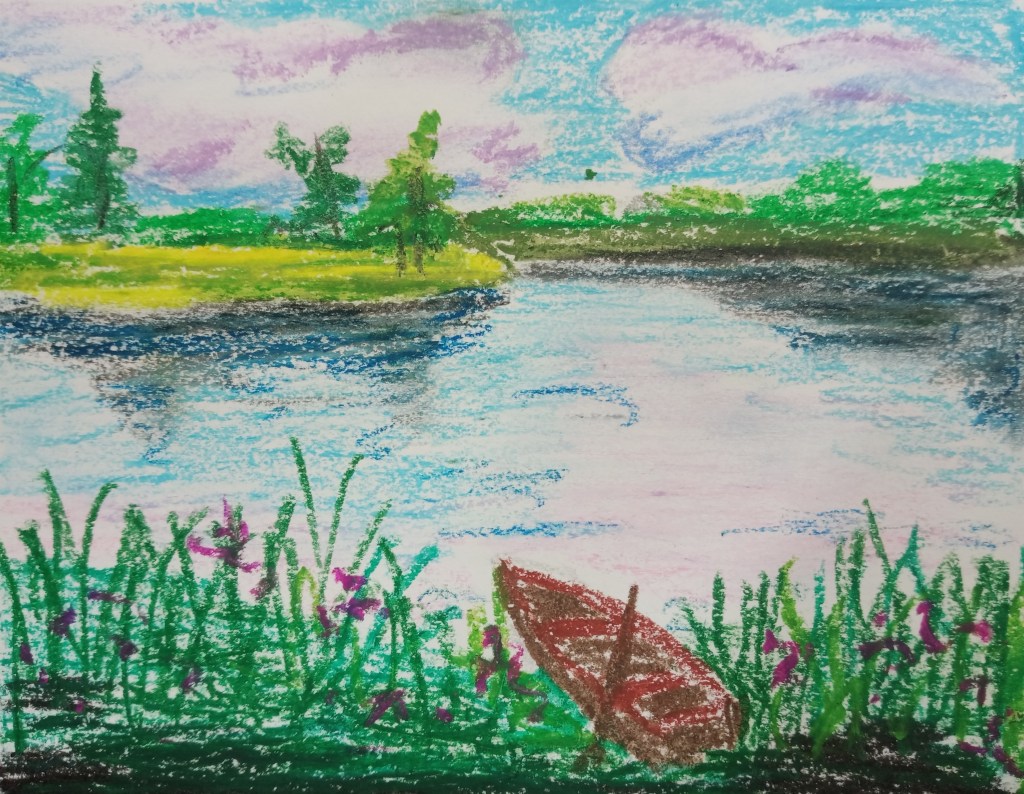
Autumn: Art by Sohana Manzoor
SAY WHAT YOU WILL (Tomra Ja Bolo tai bolo, written in 1921)

Say what you all will, I don’t mind
My time flies, and hours pass, aimlessly
The wild wind stirs me to a song
And spreads its tune across this deep-blue sky.
That song has stuck in my mind.
What nectar do I seek in the humming of bees?
Whose sky-pervading gaze seeks me out
And settles on my sight thus this day?
Shiuli flower that bloom in autumns in Bengal. Courtesy: Creative Commons
THE HEART WAS AWAKE (Hridoye Chheele Jege, written in 1921)

You were wide awake in my heart
But I see you in autumnal clouds this day!
How was it you stole so quietly away at dawn,
Letting only your dress’s borders caress the dew?
            What song is it that I should sing?
            I simply can’t find words for it now!
They lie scattered with shiuli flowers under forest canopies
They’ve flown away with the gusting winds in sudden showers.
                        ***
Shiuli-Jasmine
AUTUMNAL NIGHTS (Himer Raate, 1927)

On such cool autumnal nights
Hemonto hides heaven’s lamps with its cloak.
To every house it gives this call,
“Light festive lamps, make bright the night,
Shine your own lights, illuminate the world.”
Gardens are flowerless now; cuckoos sing no more;
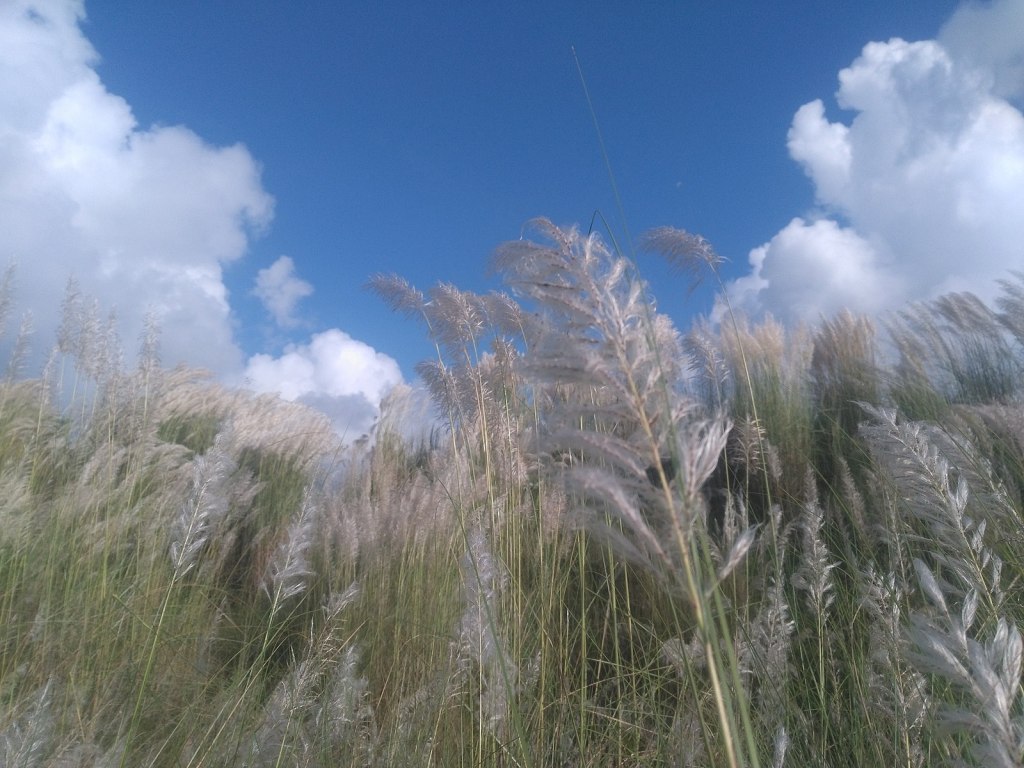
Kash reed flowers keep falling by riverbanks,
But let go of darkness, despair and misery; light festive lamps--
Shine your own lights and proclaim the triumph of light
The gods look on — sons and daughters of earth, arise,
Illuminating the night,
Darkness may descend and day end but light festive lamps,
Shine your own light and triumph over this dark night
                         ***
Hemonto-Late autumn
Kash-Long grass
Below is a Youtube upload of Autumnal night or Himer Raate sung by the legendary singer Debabrata Biswas (1911-1980)
The mention of “Japan” evokes dreamy Instagrammable scenery of Sakura with Fuji-san, serene shrines, grand castles, modern skyscrapers, cute dolls, geishas, bullet trains, cool robots, so on and so forth — a long list of all things ‘kirei’[1] and ‘kawaii[2]’. Of late, the world has been swept by the tsunami of Japanese life philosophies of Ikigai, Wabi-sabi, Kintsugi, and Zen. To an outsider, the perception of Japan is mostly curated through social media stories, anime, J-pop and J-drama. However, the first-hand experience as a tourist or resident will have a spectrum of shades to offer.
Orienting : An Indian in Japan by Pallavi Aiyar vibrantly captures this spectrum. Aiyar is an award-winning foreign correspondent and author of several books including travel memoirs on China and Indonesia. In “Orienting”, she shares her insights on Japanese society, history and customs against the background of her globe-trotting experiences and Indian heritage. The book originally published in English in 2021 has recently been translated into Japanese, a rare feat for an Indian author.
Historically speaking, the “Oriental” depiction of the East has been a West orchestrated exercise. As a result, the world vision and perception of countries like Japan have been dominantly seen through the lens of Western authors, historians and travelers. Aiyar’s book is a fresh breeze in travel literature — a global Asian writing about another Asian country– especially given the shared culture of Buddhist heritage. From the get-go, the title stands out for its intelligent word play.
The author has a difficult time orienting herself. A country that’s world famous for its punctuality, hits her as “anachronistic” when she discovers how cumbersome it is to buy a mobile connection, open a bank account or use a taxi app. In neighboring China even beggars are open to e-payments while Japan still struggles with credit card usage in stores and restaurants. Yet, to the average Japanese, “Chinese were lacking in good manners”. The book is delightfully sprinkled with cross-cultural comparisons, insights and of course haikus.
It is common to spot young kids traveling on their own to school on buses and subways, as Japanese society watches out for them with solidarity, ensuring their safety. Talking of awe-inspiring features of Japan, the list is long one– literally convenient kobinis, super-smooth public infrastructure, clean public toilets, vending machines, and most strikingly, the land of ‘what is lost-is-always found’. Aiyar narrates how she and her family members lost their iPhones, wallets, laptops, umbrellas, jackets, tiffin boxes and hats during their four-year long stay in Japan. And, every single item was retrieved undamaged. Yet, despite all the community spirit, safety and solidarity, Japan is home to almost one million hikokimoris, people who have withdrawn from society and avoid social interaction. Patriarchy, high rates of suicide, overtime at workplace and death by overwork (karoshi) are hard facts of life in Japan that take some sheen off its ‘first world-ness’. Just like any other place on earth, the bright and dark sides exist together with multiple shades of gray.
The apparently ‘homogeneous’ society has shied away from discussing issues like ‘racism’ or ‘discrimination’. While historically, indigenous race of Ainus, Korean descendant Zainichies and socio-economically backward Burakumin were dealt second grade treatment, in these globalised times, unlike many rich countries, Japan had resisted multiculturism. The ‘gaijin’ syndrome (prejudice against foreigners) conspicuously stands out given that Japanese invented a whole new script ‘katakana’ to address anything ‘non-Japanese’. The kikokushijo, the children who return to school in Japan after being partly educated abroad, face bullying and harassment for their foreign association. The half- Japanese peculiarly termed as ‘hafus’, are also subjected to prejudices of various kinds. However, a mild streak of silver lining is evident in cases of Priyanka Yoshikawa – half-Indian, half-Japanese winner of Miss Japan title in 2016 and Yogendra Puranik, an Indian who won the elections for City Councilor (Edogawa ward) in 2019. Such cases, though few and far between, are indicative of some changes in the Japanese air of insularity. Comparing discrimination in Japan to its Indian counterpart, Aiyar observes that it almost felt churlish to point it out at all. “Indians were the perpetrators of the ugliest kinds racial and religious discrimination”. While Japan’s racism was “more respectable, less violent. It simmered rather than boiled over, and got mixed in with a general shyness and culture of suppression”.
On gastronomic spectrum, India and Japan are almost diagonally opposite. It is relatable how as an Indian, Japanese food strikes the author as “too cold and polite with too many bonito flakes” — too spiceless and raw for Indian tastes. On a trip to Tottori, she discovers how some restaurants even discourage Indian groups because they carry their own pickles and sauces, a habit which offends most Japanese. The land of mouth-watering sushi, sashimi and mochi quite amusingly is also fond of fugu, the puffer fish, which is 1200 times more poisonous than cyanide! Curry is by far the most loved Indian food. But its Japanised version would hit Indian taste buds differently. The author details how Rash Behari Bose, the Indian nationalist settled in Japan and introduced authentic Indian curry in Nakamuraya café in Tokyo.
Historically, Japan and India share the common thread of Buddhism. The oldest documented Indian resident in Japan was Bodhisen, a monk from Madurai, who held a very exalted status as a Buddhist scholar in his days. He arrived in Osaka in AD 736, and moved to Nara. He taught Sanskrit and helped establish the Kegon school of Buddhism. Japanese Buddhist pantheon even absorbed several Hindu gods in its fold. Aiyar gives an interesting account of the shared culture of yore and also “not always salubrious” relationship during the colonial era. The latter period saw Indian luminaries like Subhash Chandra Bose, Vivekananda, P.C Mozzomdar and Rabindranath Tagore visit Japan, which deepened the connections between the two countries. But when it comes to doing business together, the practical jugaad-proud Indians and perfectionist shokunin-spirit driven Japanese find it difficult to cope up with this dichotomy. The book analyses it all with facts and engaging experiences. Anyone who has ever been to Japan will find the book extremely relatable and sincere.
Aiyar writes with enthusiasm of a traveler who has pitched her tent in foreign land to capture the richness of landscape in daily travels, with a keen eye, humour and honest penmanship. The read is indeed a rewarding journey towards “Orienting”!
Aditi Yadav is a public servant from India. As and when time permits, she dabbles in translation works. She is an alumnus of Yokohama National University, Japan and a devout Japanophile.
.
PLEASE NOTE: ARTICLES CAN ONLY BE REPRODUCED IN OTHER SITES WITH DUE ACKNOWLEDGEMENT TO BORDERLESS JOURNAL







 Borderless