Categories
Conversation

Ramblings of Joy Bimal Roy

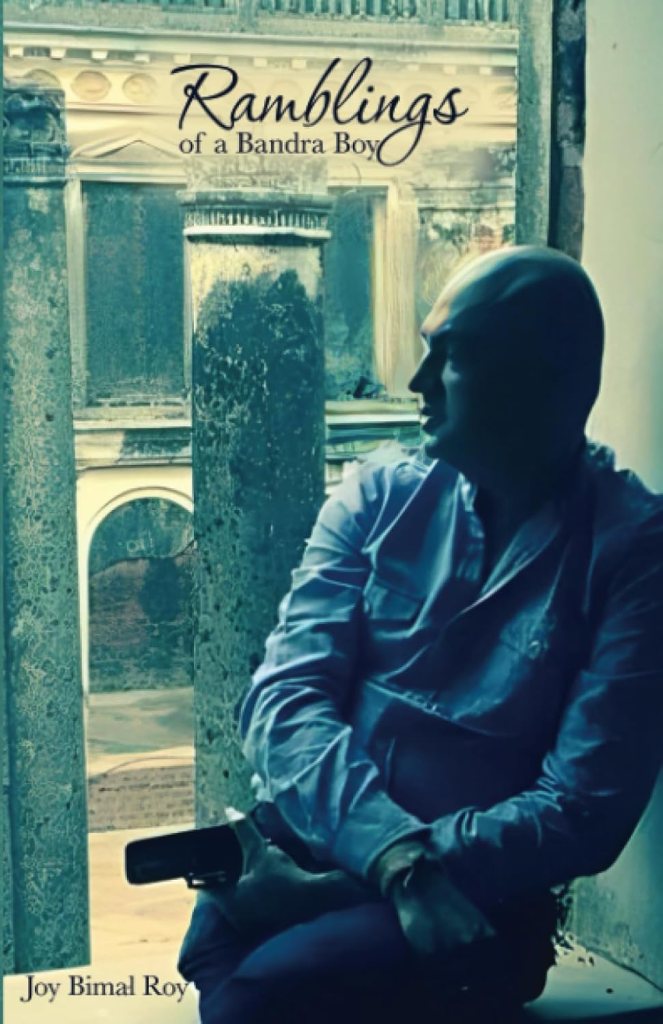
‘So what is it like being the son of Bimal Roy[1]?’ Ratnottama Sengupta asked the author of Ramblings of a Bandra Boy

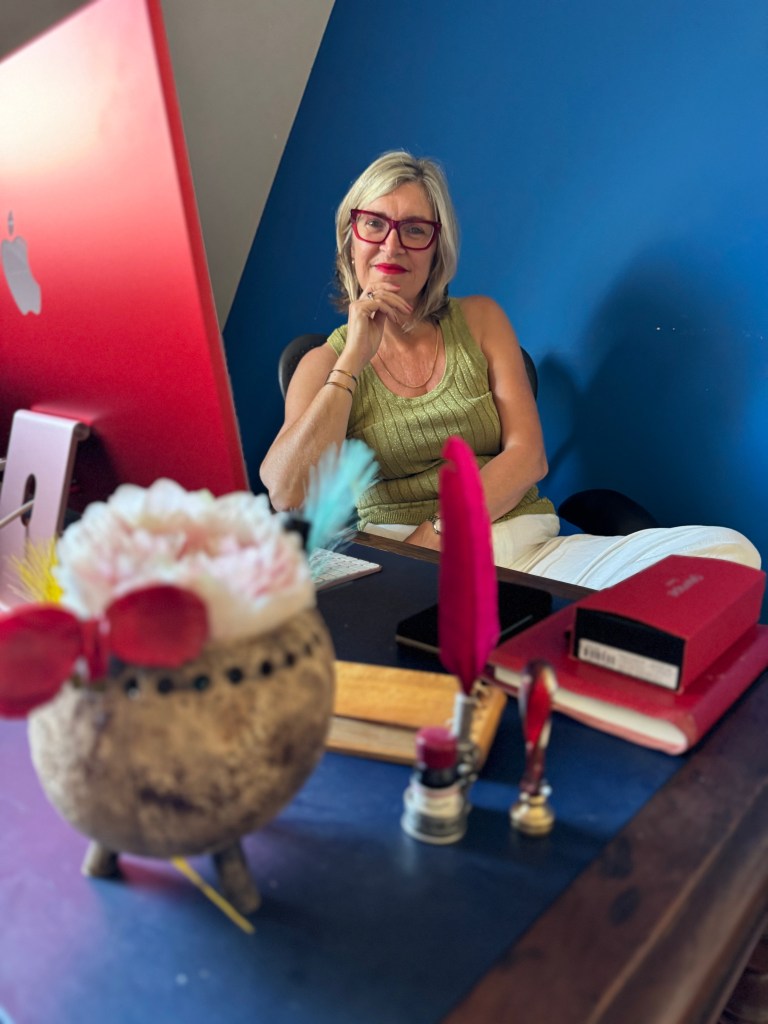
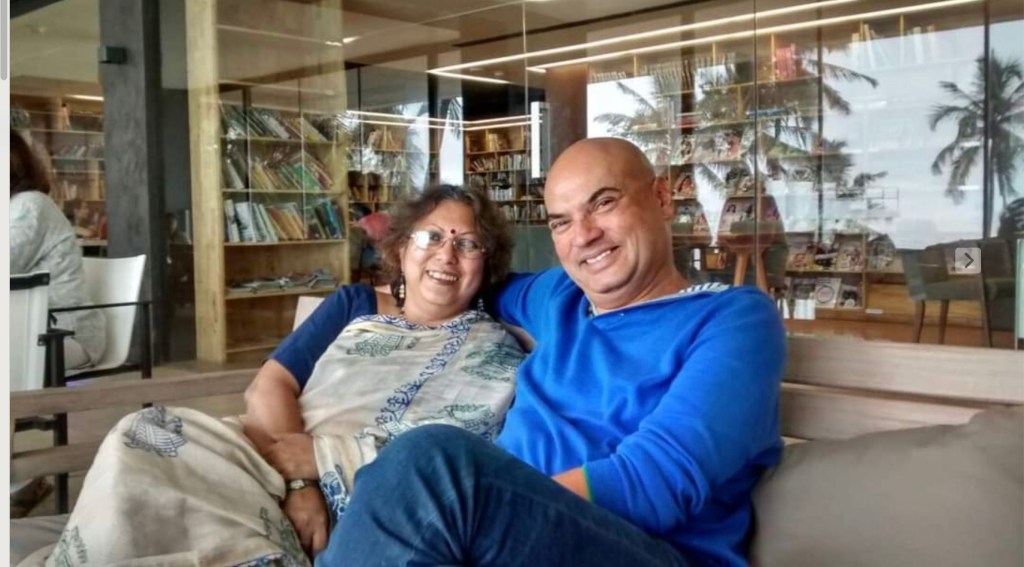
Ratnottama Sengupta and Joy Bimal Roy. Photo Courtesy: Debashish Sengupta

Rambling, when used for writing – or speech – implies unmapped, confused or, at worst, inconsequential flow of thoughts. In another usage, the word applies to walking in the countryside for sheer pleasure. It is in this second sense that Joy Bimal Roy’s digitally published text, Ramblings of a Bandra Boy is a perfect match of form and content. For, its sweeping take hops from landscape to landscape and life to life of persons who have peopled the world of the author born in a typical Bandra household precisely 70 years ago.

Why typical Bandra household? Because Bandra – derived from the word bandar, meaning harbour – is the Queen of Mumbai’s suburbs. This pocket of history in the heart of the Financial Capital of India is also the home of VIPs, of Bollywood and of political variety too. As the time-weathered Bandra Fort overlooking the Arabian Sea vouches, Bandra predates the British ownership of the Seven Islands gifted to the Crown when Charles II married Princess Catherine of Portugal. Indeed, St Andrew’s Church, in existence since 1575, came up on the strength of Jesuit Priests who won over Koli fishermen winning Christians a stronghold in this part of coastal Maharashtra, much like in Goa.

In the 21st century, Bandra is where Mehboob Studios and Lilavati Hospital stand. Where the Bandra-Kurla Complex defines the dreams of the rich and the rising, overshadowing Asia’s biggest shanty town, Dharavi. And where the awe inspiring Bandra-Worli Sealink bridges the southern extreme of ‘Bombay’ with its ever growing ‘suburbs’.

But all through my lifetime, Bandra has been better recognised as the home of celebrities. Bollywood thespians, Dilip Kumar and Sunil Dutt, to Shah Rukh Khan and Salman Khan; art personalities, KK Hebbar to Kekoo Gandhy; actors, Rekha to Raakhee; directors, Nitin Bose and Hrishikesh Mukherjee, writer Gulzar and cricketer Sachin Tendulkar; umpteen fashion designers and models too have boasted 400050 as their Pincode.

Joy Bimal Roy’s Ramblings takes you on a multi-stop tour of this ‘port’ of India’s social fabric. For, as you skid from one story to another, in no predetermined chronology or thematic order, you get to meet his Yusuf Uncle (Dilip Kumar of Devdas[2] fame) and Bhoba Kaka (Ritwik Ghatak of Madhumati[3]fame), Lata Bai (Mangeshkar) and the Dutts — father Sunil and daughter Priya — who have represented North West Bombay in Parliament even as one member of that family slogged in a jail.

Take a quizzical look at Bollywood divas and peep at actors in their skin labouring on in a posh gym. Get a warm handshake with Shashi Kapoor and gift a sari to Sanjana. Riveting tales of travels to Lebanon, Beirut, Abu Dhabi, Greece, Switzerland, England, San Francisco and San Jose – they’re crowned by nuggets like “I delved into my sister’s recipe book… it has taken the place of Bhagvad Gita in my life” and “I do wish food wasn’t such an important feature in my life. Because it directly correlates to my expanding waistline.”

That’s not all. Here’s a reverential insight into what constituted Shyam Benegal’s greatness — and several irreverent accounts of the crème de la crème schools and colleges that have shaped the author who could have been a top notch contemporary artist, a charming singer, an enviable fashion designer, or an accoladed filmmaker.

Joy Bimal Roy chose not to be either of these. Instead, he stitched together Images of Kumbha Mela when he chanced upon the footage that were to be Bimal Roy’s last film. And he directed Remembering Bimal Roy [4]when his father’s birth centenary came around. He has mounted a series of world class exhibitions to showcase the photography of his mother, Manobina Roy, who, along with her twin Debalina Majumdar, was one of India’s earliest woman photo artist. And in her memory he has installed an imposing sculpture of two hands raised in prayer, ‘Requeim’, at the Bandstand promenade. He has got a road named after his venerable father. He has designed the career of musical talents like Alisha Chinai. He has up-cycled heritage saris and jewellery to support hospices. And he has been editing a newsletter chronicling the life of Bandra, the neighbourhood he was born in, grew up in, and continues to breathe life into.

Now Joy has given us Ramblings, a compilation of his posts on social media between 2017 and 2020. These slices of life “served without any extra seasoning or fancy garnish” as he puts it, have been described by Rachel Dwyer, professor of Indian Cultures and Cinema at SOAS[5], London, as jottings in kheror khata, the traditional cloth bound notebook that Satyajit Ray — and his father Sukumar Ray before him — used to pen down thoughts and visuals that are world’s treasure. In this exclusive, he converses about his book and his life.

What is your earliest memory of being the son of Bimal Roy? 

Finding out in school from classmates that my father was famous!

What is the strongest impression you retain of 8th January 1966 – the day Bimal Roy passed into eternity?

I remember hearing a song from the basti[6] behind our house while I was taking a bath. That song still haunts me. I wasn’t allowed into the living room where Baba’s body was kept, so I peered in through the slats of the back door of the living room. We lived in an old Parsi Bungalow where the wooden doors were 8 ft high and had moveable wooden shutters. The room was packed to capacity but there was pin drop silence. Time stood still. It hadn’t yet sunk in that I would never see Baba again.

Did you develop a deeper understanding of what Bimal Roy was, in the process of making Remembering Bimal Roy?

Absolutely. It was a cathartic and moving experience to hear the memories of people he had worked with over 60 years ago. Not only Tapan Sinha, who was with him in New Theatres; poet, lyricist, director Gulzar who had started as assistant in Bandini; Sharmistha Roy, daughter of his art director Sudhendu Roy; and his accountant Amrit Shah – even next generation personalities like Javed Akhtar and Ashutosh Gowarikar remembered him with so much love and respect that it brought tears to my eyes. I discovered anew that Baba was not only a superlative filmmaker but also a wonderful human being.

Did you likewise get to know Manobina Roy a little more through her photography?

Not really. I was fortunate to have her presence for 46 years of my life. So I grew up being photographed and seeing her photos. But it was only after her death that I discovered from a Bengali book called Chhobi Tola that she and her sister Debalina were two of the earliest known women photographers of India.

Has the insight into Bimal Roy films equipped you to be a responsible filmmaker? Or did you gain greater practical experience as an understudy/ through your interactions with Shyam Benegal, Girish Karnad[7], Basuda[8], and Hrishi Kaku[9]?

I had no interaction with Basuda and Girish in connection with film making. What I learned after watching the making of Chaitali[10] — the last film made under the banner of Bimal Roy Productions, nine years after Baba passed away — was how NOT to make a film. 

Whatever I learned about filmmaking was from watching Baba’s films and my work experience with Shyam Benegal.

I wouldn’t really describe myself as a ‘filmmaker’ after making one documentary on Baba. However it is true that I have very high standards and living up to them was a big responsibility. After all, I am my father’s son. He was a perfectionist and so am I. It took me six months to edit a one-hour film simply because I was striving to do the best possible job with the material I had in hand. 

Before you got into films you have ‘dabbled’ in fashion designing, worked with HMV[11],  and now you are a most absorbing and prolific writer. Personally, I have always admired your painting (which I seldom see you do now). And I know you have mesmerised your college events with your singing. Which of these is your natural calling?

All of them unfortunately, which is why I didn’t know which one I should follow. As a result I have been a ‘dabbler’ — to use your own word. You could accuse me of being a dilettante but as I said before, I have high standards. So whatever I did, it was with all my heart and soul. 

Tell me about the joys and woes of assisting Shyam Benegal.

 That is impossible to describe as one question in an interview. It would be an entire interview! You can, however, get some answers in my book.

Which of the film stars of Bimal Roy’s team have you been closest to?

None. Because I was not even eleven when Baba passed away. But we did keep in touch with Yusuf Uncle. He was incomparable.

What difference in the work culture or cinematic ethics have you noticed between these two legends? 

Baba and Shyam? I can only judge Baba from his films, but I worked with Shyam. It’s a difficult question to answer.

Please tell us about Uttama, Papri, Roopu, Sharmistha (Buri?), Aloka – essentially, about the extended Family of Bimal Roy?

That’s what all of them were and are: Family. One accepts and embraces them as they are.

What led you to the Ramblings which has been described as ‘social document of our times’?

My Facebook friends led me to Ramblings. They drove me mad demanding a book. I did it more to oblige them and make them stop making demands.

What next — cinema a la Bimal Roy — or books after Monobina Roy, who, besides being an ace photo artiste and a fabled cook, wrote Jato Door Tato Kachhe?[12]

A Bengali translation of Ramblings of a Bandra Boy

.

[1] Bimal Roy (1909-1966) Legendary Film Director

[2] Hindi movie, 1955, Dileep Kumar (1922-2021) played the titular role

[3] Hindi movie, 1958, written by Ritwick Ghatak (1925-1976)

[4] Joy Bimal Roy lost his father filmmaker Bimal Roy when he was 11 years. Joy remembered very little of his father. ‘Remembering Bimal Roy’ made by Joy Bimal Roy is the search of a son for his father.

[5] School of Oriental and African Studies

[6] slum

[7] Girish Karnad (1938-2019) Actor, director, playwright

[8] Basu Bhattacharya (1934-1997), Film director

[9] Hrishikesh Mukherjee (1922-2006), Film Director

[10] 1975 movie directed by Hrishikesh Mukherjee

[11] His Master’s Voice, British music and entertainment retailer

[12] Distance draws us closer – translation from Bengali

Read the book excerpt by clickling on this link

Ratnottama Sengupta, formerly Arts Editor of  The Times of India, teaches mass communication and film appreciation, curates film festivals and art exhibitions, and translates and write books. She has been a member of CBFC, served on the National Film Awards jury and has herself won a National Award. 

.

PLEASE NOTE: ARTICLES CAN ONLY BE REPRODUCED IN OTHER SITES WITH DUE ACKNOWLEDGEMENT TO BORDERLESS JOURNAL

Click here to access the Borderless anthology, Monalisa No Longer Smiles

Click here to access Monalisa No Longer Smiles on Amazon International

Categories
Poetry

         Spot Assessment     

By John Zedolik

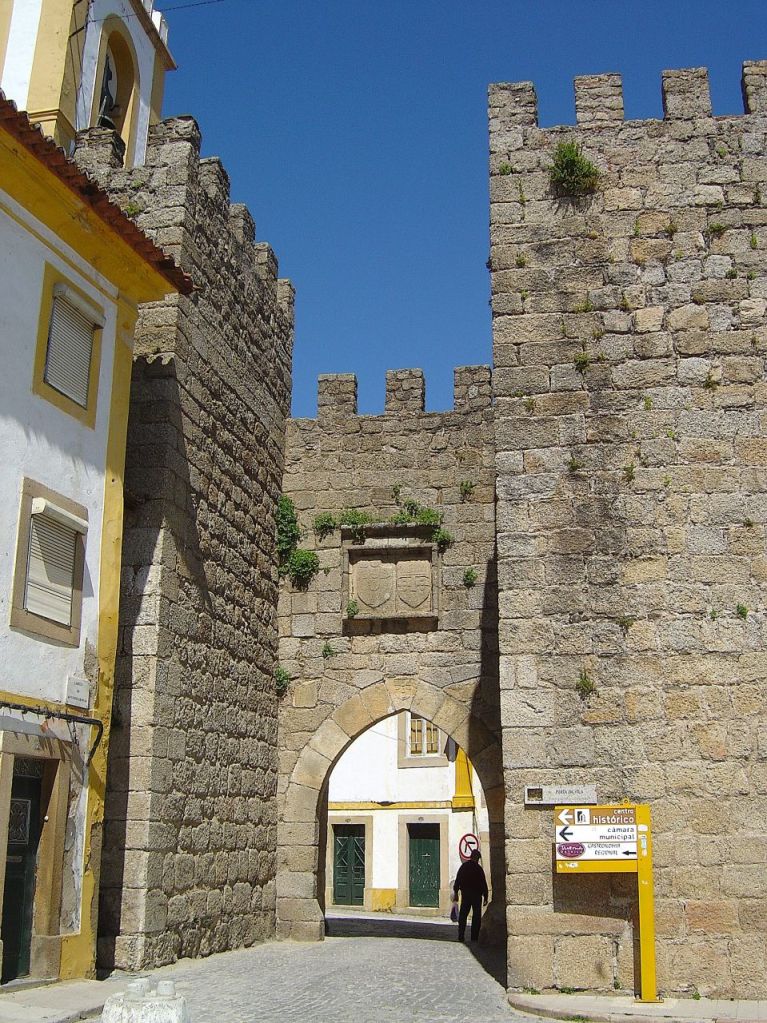
These skeleton keys hail from Portugal,
states the hand-drawn phrase on gray
 
cardboard, which provenance unlocks
my thinking as to what is so special
 
about these thin fingers of old iron and brass
that to my lay-eyes do not appear any different
 
from the domestic variety that might sell
for far less, especially as used item and even
 
worse lacking the complementary locks,
necessary for utility securing some equally lost
 
door or chest, but in which some expert
in Iberian antiques might find money
 
and historical value. I cannot rid
 
      thus, my doubt of the sign’s worth
 
and the wares, better left to the keener sight
and mind that can unlock the mystery
 
safe, pendant and plain before a blind view.

John Zedolik has published hundreds of poems in many journals around the world. Earlier this year, he published Mother Mourning (Wipf & Stock), his third collection, which is available on Amazon.

PLEASE NOTE: ARTICLES CAN ONLY BE REPRODUCED IN OTHER SITES WITH DUE ACKNOWLEDGEMENT TO BORDERLESS JOURNAL

Click here to access the Borderless anthology, Monalisa No Longer Smiles

Click here to access Monalisa No Longer Smiles on Kindle Amazon International

Categories
Review

Saudade for Sale?

Book Review by Rakhi Dalal

Title: The Wistful Wanderings of Perceval Pitthelm

Author: Rhys Hughes

Publisher: Telos Publishing

The cover image of this book, depicting kangaroo like feet fitted to a patch of land and carrying homes, hopping through what it seems like a desert is as incredible an image as the story that the book proceeds to tell. At first glance one wonders what kind of imaginative world the author has invented and given life to in these pages and where is this thing hopping to and why.

It doesn’t help that the subtitle line reads “The Absurdity of Existence and The Futility of Human Desire”. For as the book begins, we are flung into the realms of a fantastical world swathed up in saudade and encountering bizarre events. Incidents triggered by the bittersweet longings of human heart, which makes the absurdity seem plausible amidst the ludicrous.

Such is the allure of the words crafted by Rhys Hughes. Nimbly, he makes use of the elements of the fantastic, comic and absurd in a highly imaginative setting while focusing on the human condition brought about by an intense yearning for something unattainable or saudade. An English writer of speculative fiction, much like the narrator of this book is, Hughes employs inconceivable ingredients, making this book a fun riot in every sense. Having written nearly fifty books, more than nine hundred short stories and innumerable articles, his style assumes certain effortlessness, turning the reading experience of this book into a marvellous excursion.

The book begins with Perceval Pitthelm, the narrator, arriving in Portugal in the quest of finding a quiet place to live and write. He rents a most peculiar house which arouses his curiosity to know about its history. His search leads him to the former owner old Rogerio, a seller of saudade, who goes on to tell him the tale of the house, originally situated in the town of Kionga in Africa and transported along with the town to Portugal on big hopping legs coursing a journey through the deserts. And thus begins the fantastical tale which not only captivates the narrator but also suffuses his heart with a passionate desire to taste saudade.

The events that succeed set in motion an adventure, taking us onto a journey through sea and desert, by boat employing huge hands, submarines battling giant squidmills and rafters sliding across desert. We witness cheek trees whose petals flush furiously and are accompanied by sweet and painful strains of Fado singing. We behold the play of a cheek tree guitar by giant Django hands and ripping open of Fado singer Cristina into a mist. We bump into a Don Quixote like Captain of the submarine followed by his own Pancho Sanza, on their mission to free the human existence from giant squidmills. We meet Mustapha, the inventor of hopping legs; a cast away on the desert who wishes to have a revenge on the world but instead finds love and goes onto find a quiet place to settle. Towards the end, our narrator, now free from saudade, is left with a bottle of song and the tale he is left with to recount.  

The roller coaster of the ride that this book turns out to be is every bit delightful. In a subtle way, it does lead to contemplation upon the absurdity of human struggle to achieve the impossible whilst all that is needed is a little love and peace.

The book wraps up with a review of the works of Perceval Pitthelm by a reviewer who turns in a ruthless critique, a reviewer who is a large orange gargoyle with three eyes (invented of course by old Mustapha) and who has to write reviews for a living. This critique appears to be echoing Hughes’ own oeuvre of work and a quip on reviewers who put an eternal curse on the readers! A curse, if I may add, from which there is no respite for the readers who stand on the shore of his writing, intoxicated by the desire to delve into the unbelievable world conjured by him. 

Rakhi Dalal is an educator by profession. When not working, she can usually be found reading books or writing about reading them. She writes at https://rakhidalal.blogspot.com/ .

.

PLEASE NOTE: ARTICLES CAN ONLY BE REPRODUCED IN OTHER SITES WITH DUE ACKNOWLEDGEMENT TO BORDERLESS JOURNAL

Click here to access the Borderless anthology, Monalisa No Longer Smiles

Click here to access Monalisa No Longer Smiles on Kindle Amazon International
Categories
Stories

The Agent

By Paul Mirabile

Nisa, Portugal. Courtesy: Creative Commons

  “ … And do you think our present government is meeting the demands of its people ?” spouted the Spokesman Doctor, chairman of the Portuguese Communist Party Delegation in Nisa. Seated in a squalid, fly-laden café, he directed his poignant words towards a group of glassy-eyed villagers, seemingly rather perplexed at such a display of political pathos. He had been at it now for at least two hours.

A dusty gust of wind and shuffling of feet directed the villagers’ languid attention to the doorway. Long strips of coloured plastic peevishly scraped against one another. Someone stepped in : a young man, well-to-do, by his appearance, obviously not from Nisa. He side-stepped a dozing dwarf, making his way to the counter. All glassy eyes fell on the stranger.

 “You never answer questions,” the Spokesman Doctor said, turning on the villagers coldly, although keeping a watchful eye on the stranger at the counter. “All of you, how long are you going to sit here swallowing insult and humiliation ? You can’t live on olives and bread alone. Look at our land … where are the tractors ? Where’s the money from America ?” There was no reply to those beseeching questions, only the slight chuckling of the stranger, who leaned gingerly at the bar sipping a coffee.

 “You’d rather live then without running water and electricity ?” the Doctor spat out, staring hard at the stranger, who stared back at the Doctor even harder. “And still you don’t understand my questions.” One skinny, toothless fellow made some effort to amuse the Spokesman Doctor, but only succeeded in ordering another cup of coffee. The stranger broke into a wide grin. All eyes peered at him from yellow, sunken sockets. He broke the frosty silence by asking in the most delicious courtesy, but in the most atrocious Portuguese, for a glass of iced lemonade.

The unexpected appearance of this stranger brought whispered comments from the villagers. The Spokesman Doctor’s wiry face eyed the stranger with suspicion. He set aside his cup of coffee. A fly aimlessly found itself inside the sugar-coated rim of the cup where it remained until the Spokesman Doctor swished it disdainfully away.

“Are you Portuguese ?” he asked, rhetorically, with a slight accent of irony. The young man turned to him and answered in his choppy Portuguese that he was not, adding a few instants later that he was an American on visit to a friend whom he works with in France. This last phrase was declared in excellent French, something which surprised many of the villagers, most of whom had worked in France for years. The most astounded, however, was the Spokesman Doctor.

“So you have a friend in Nisa ?”

 “Yes I do,” returned the American, catching a note of doubt in the Doctor’s authoritative tone.

 “Who is this friend of yours ?”

“Domingo Flaco, but he’s still in France just now. I think he’s on his way, or at least he should be. I’m not certain ; he wrote me some time ago.”

“Do you still have the letter ?”

The American searched the Doctor’s tiny, black eyes, twitching nervously in their sockets.“No, am I supposed to have it ?”  the other retorted dully.

The lanky American’s easy flow of speech and command of French relieved some of the villagers’ mistrustful thoughts, thoughts put there by the Doctor’s obsessional fear of alien spies in the mountain villages. Domingo’s name set the villagers at ease, but the Doctor remained on his guard, shifting irritably about the table, playing mindlessly with his empty cup of coffee. Another fly, finding itself helplessly stuck in the grounds of the coffee, the Doctor savagely crushed it with his thumb. He seemed to sense something foul ; something amiss, even insalubrious in this clean-cut American who spoke excellent French. Domingo indeed did live in Nisa, that was an undeniable fact. But what would an American be doing with Domingo … a poor mountain peasant who had immigrated to France, and there was presently working on a wine farm ? This relation had no logical link to it, or if it did, it completely escaped his wits. A well-to-do American visiting a peasant in the poverty of Portugal concealed a reason that his imagination could not fathom.

The Spokesman Doctor fell on his prey like a lion : “Does anyone know him ?” he asked the villagers in Portuguese. There followed a long pause. During that pause the American ordered another lemonade, quite unaware that he had become the topic of discussion. Nonchalantly he drained his glass, eyeing the assembly curiously. Again a jumble of words struck him oddly. The cold lemonade contrasted sharply with the heat that had been accumulating around him.

“Do you know this American ?” asked the Spokesman Doctor again, but this time addressing the veiny-face villager behind the counter.

 “I think he does work with Domi,” he responded, wiping the counter for about the hundredth time which scattered the vexatious flies.

 “No, I don’t think he does work with Domingo,” rallied the Doctor hurriedly. “I saw him handing out Jesus Christ leaflets yesterday. He was haranguing people for money. Then he went from bar to bar asking questions. Where’s your papers, American ?” The Doctor shot a fiery glance at the young man, who for one, was relieved that this man had finally spoken to him directly, and in French.

“What papers ?” he inquired. The Spokesman Doctor laughed haughtily. The others followed, but with more restraint. The Doctor now felt he had hit the nail on the head. His ‘people’ were with him, as always. “Come on, we want to see your papers. I saw you yesterday handing out Jesus Christ leaflets to people in the streets.”

The American wiped the sweat off his forehead, intrigued more by the use of ‘we’ than by the accusation. “What the hell are you talking about ?” replied the American, crimsoning under the glow of a dozen eyes.

“Are you a Communist ?” rifled the Doctor. The American nodded in the negative, taken aback by the bluntness of the question.

“Are you then a Capitalist ?” Again the same negative nod.

 “Then you are nothing but an evangelizing parasite !” A pasty smile flitted across his lips. The American breathed deeply, moving a trembling finger across the counter. He couldn’t think of anything to say to defend himself ; all this seemed utter nonsense.

“Where are your papers ?” asked the Spokesman Doctor cloyingly.

 “What in God’s name are you raving about, man ?” fired the American, stepping back, the enraged flies skirling about his red, sweaty face.

Again the Doctor smiled, slowly pushing his way towards the circle of villagers round the counter.

“Do you know about the CIA here in Portugal ?”

This question frightened the stranger. He brushed his flaky blond hair from his forehead, then threw the villagers a bewildering look. “Should l know about it ?” he retorted, involuntarily shifting his right foot towards the swaying, plastic strips of the doorway.

Suddenly a man shouted out coarsely : “No Doctor, he does work with Domi in France. I saw him there six months ago when I visited my cousin in Beaune.”

“No !” brayed the Spokesman Doctor vehemently. “I tell you I saw him yesterday handing out  Jesus Christ leaflets. You know, there’s lots of those people in Portugal today, mostly Americans, too … you know, with the elections coming up … Look what happened before the last elections … the same thing, American agents running about the countryside posing as people of the Jesus Christ Movement.” This last statement was met by incredulous glances from the villagers. They all acknowledged the Doctor as a grand man, politically astute and well-read, but a doubt reigned over their blurry, uneducated minds. And yet, it was true: an American in Nisa posed a problem, and raised a mystery that none, at least in that hot and illiterate café, could unravel.

“You know a lot about many things, don’t you ?”enquired the Spokesman Doctor, ingratiatingly. This time the subject of conversation did not deign to reply. The Doctor scoffed at this show of pretense. “I don’t know American, but I saw you yesterday going from café to café with those dirty leaflets in your hands. There’s something about you I can’t understand. I know you speak excellent Portuguese, too.” With this ‘compliment’, if it may be considered as one, the American lifted an enigmatic eyebrow.

“There’s a lot of CIA activity in this area round election time,” continued the Doctor with his pasty smile. “Communism is very strong in our villages. Look around you … everything is falling apart in our villages. Americans are to blame for the poverty of our country.”

 “Not Americans,” blared out the young man beside himself. “The …”

 “No !” screamed the other louder than his rival. “I don’t want to listen to your sweet, poisoned words. Laughing, he turned away to speak quietly to his people.”

Many words darted in and round the savage, swirling flies, words which the American was at a loss to comprehend. He could have left, the way was clear to the door. But he remained adamant in his right to be in that café and drink coffee with the villagers. No proxy lout of a Communist courtier would eject him from that public place. Then a strange sensation crept up on him : everyone appeared to have come to some sort of resolution … verdict would be a better word … As if he had been accused of some crime. He saw the jury to his right … then the judge, to his left, a dark man, sporting a moustache with a horrible pasty smile.

“We have found the accused guilty,” came a hushed, indescribable voice. A wave of panic seized the accused.

“Guilty … guilty of what ?” The sad, sunken eyes of the jury hung suspended in the air. The flies, too, seemed to have adjourned their monotonous gyrating. The eyes of the judge were laughing at him, as a sickly moustache inched its black way into the left corner of his mouth.

— Has everyone gone crazy ? the American thought. –An innocent man has been falsely accused. Yes, something is very wrong here. How could this have happened ? I only came in for a cup of coffee ! Really I did … — These inner pleadings hammered at his temples, hot and pulsating. Was it real ? –To the doorway– were his next whispered words. –Must escape before they trap me in here.– The American rushed towards the doorway but scraping feet forced him to swing his shoulder to the left. –It’s not true … they’re on me. For what ? — A knotty fist shot out. He blocked it with his forearm. Then another which again he easily countered. –They’re all crazy … really crazy, — a tiny voice within him admonished.

He wanted to speak aloud but his voice found no chamber to echo his confused thoughts. Something cracked in his mouth; blood filled the spaces between his teeth. He stumbled back, catching hold of the counter. Turning, he faced his judge, and in an instant of crystal clarity he caught sight of a dull, metal object in his hairy hand. A flame tore through his belly. He grabbed at it … fingered it … found clots of blood smeared on it.

“What have you done ?” he managed to spit out in a flow of blood, his eyesight gradually fading into an empty space behind his head.

The American crumbled to his side, still conscious of his surroundings. A face slid across his sight, that of a moustached man, smiling a very pasty, wicked smile. A glibly voice nettled what remained of his pride. “That will be all for you,” said the pasty, wicked smile.

And it was true what that smile said. For the young man moaned aloud, then lay still. Everyone rose and left the café …

Paul Mirabile is a retired professor of philology now living in France. He has published mostly academic works centred on philology, history, pedagogy and religion. He has also published stories of his travels throughout Asia, where he spent thirty years.

Categories
Interview Review

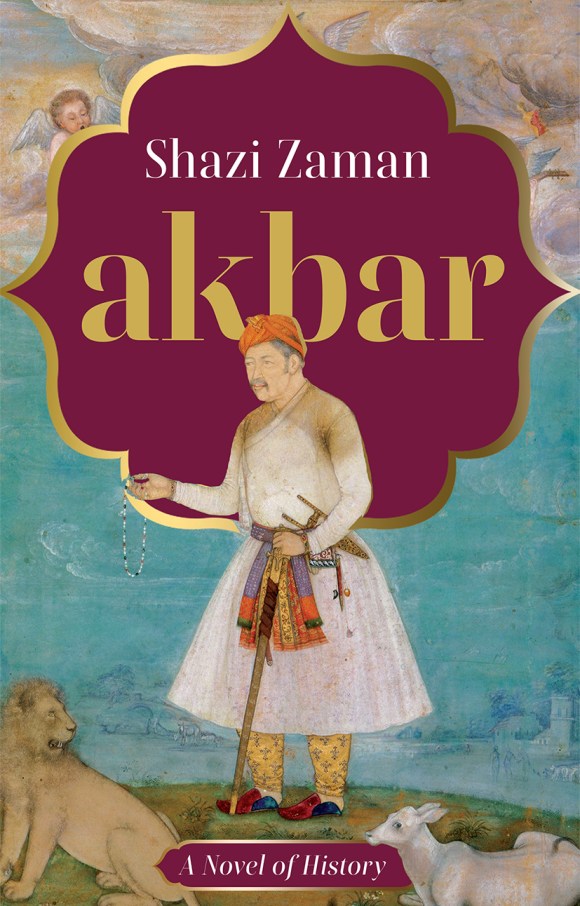
Akbar: The Man Who was King

In Conversation with Shazi Zaman, author of Akbar: A Novel of History, published by Speaking Tiger Books

“I profess the religion of love, and whatever direction
Its steed may take, Love is my religion and my faith.”
— Ibn-i-Arabi (1165-1240), Akbar: A Novel of History by Shazi Zaman

These lines were written by a mystic from Spain who influenced Emperor Akbar (1542-1605), a ruler who impacted the world with his broad outlook. Based on such ideology as preached by Ibn-i-Arabi more than three hundred years before him, with an urge to transcend differences and unite a world torn by strife, the great Mughal founded his own system of beliefs. He had few followers. But Akbar chose to be secular and not to impose his beliefs on courtiers, many of whom continued to follow the pre-existing religions. He tried to find tolerance in the hearts of practitioners of different faiths so that they would respect each other’s beliefs and live in harmony, allowing him to rule impartially.

Akbar is reported to have said: “We perceive that there are varying customs and beliefs of varying religious paths. For the teachings of the Hindus, the Muslims, the Parsis, the Jews and the Christians are all different. But the followers of each religion regard the institutions of their own religion as better than those of any other. Not only so, but they strive to convert the rest to their own way of belief. If these refuse to be converted, they not only despise them, but also regard them for this very reason as their enemies. And this causes me to feel many serious doubts. Wherefore I desire that on appointed days the books of all the religious laws be brought forward, and that the doctors meet together and hold discussions, so that I may hear them, and that each one may determine which is the truest and the mightiest religion.” Of such discussions and ideals was born Akbar’s new faith, Din-i-ilahi.

Was it exactly like this? Were these Akbar’s exact words?

They have been put in perspective by an author and a journalist who has written a novel based on his research on the grand Mughal, Shazi Zaman. He tells us in the interview why he opted to create a man out of Akbar rather than a historical emperor based only on facts. He has even mentioned that Akbar might have been dyslexic in the introduction. But Zaman’s admiration for the character he has recreated for us overflows and floods the reader with enthusiasm for this legendary Mughal. Akbar is depicted as a man who was far ahead of his times. He talked of syncretism and secularism in a world where even factions within the same religion were killing each other.

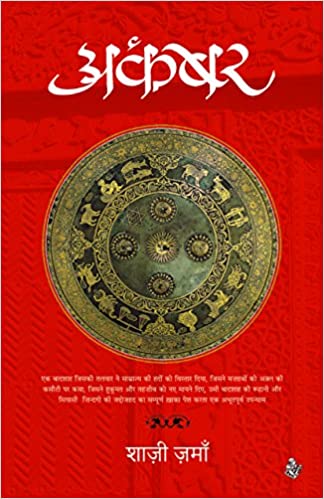
Akbar by Shazi Zaman in Hindi

The novel was first written and published in Hindi in 2017 by the bilingual Zaman, who started his three-decade-long career in broadcast journalism at Doordarshan and has since, worked with several media organisations. Zaman trans created his Hindi novel on Akbar to English to reach out to a broader audience. The whole experience has been a heady one for Zaman as the interview shows but for the reader what is it like? To start with one felt like the Connecticut Yankee in King Arthur’s court, except one was flitting around in the Indian subcontinent of the sixteenth century, with a few incursions to the Middle-East, but mostly within India. Transported to a different age, it takes a while to get one’s bearings. Once that is established, the novel is a compelling read.

The first part deals with Akbar’s developmental years and the second part with his spiritual outlook which helped him create an empire with many colours of people and religions. This is a novel that has been written differently from other historical novels, like Aruna Chakravarti’s  Jorasanko (2013), for the simple reason that it belongs to a different time and ethos which was farther from our own or Tagore’s times.  Akbar has a larger tapestry of people across a broader canvas than Jorasanko and it takes time to grasp the complexities of relationships and interactions. The other recent non-fiction which springs to the mind while reading Akbar is Avik Chanda’s Dara Shukoh: The Man Who would be King (2019) about the great grandson of the emperor who lived from 1615-1659. Again, this was a narrative closer to our times and was not a novel, but a creative non-fiction based strongly on history. While Dara’s character painted by Chanda showed weaknesses like an inability to respect the nobility or plan wars, Akbar painted by Zaman is kind but a man of action who ruled and intended to rule well. A leader — one has to remember — is not always the most popular man. Nor was Akbar with his eccentricities and erudition despite his inability to read — the book does tell us why he did not learn to read and how he educated himself. Most of the novel is a work of passion based on extensive research over two decades. As Henry Kissinger had said at a much later date, “The task of the leader is to get their people from where they are to where they have not been.” And the Akbar recreated by Zaman does just that.

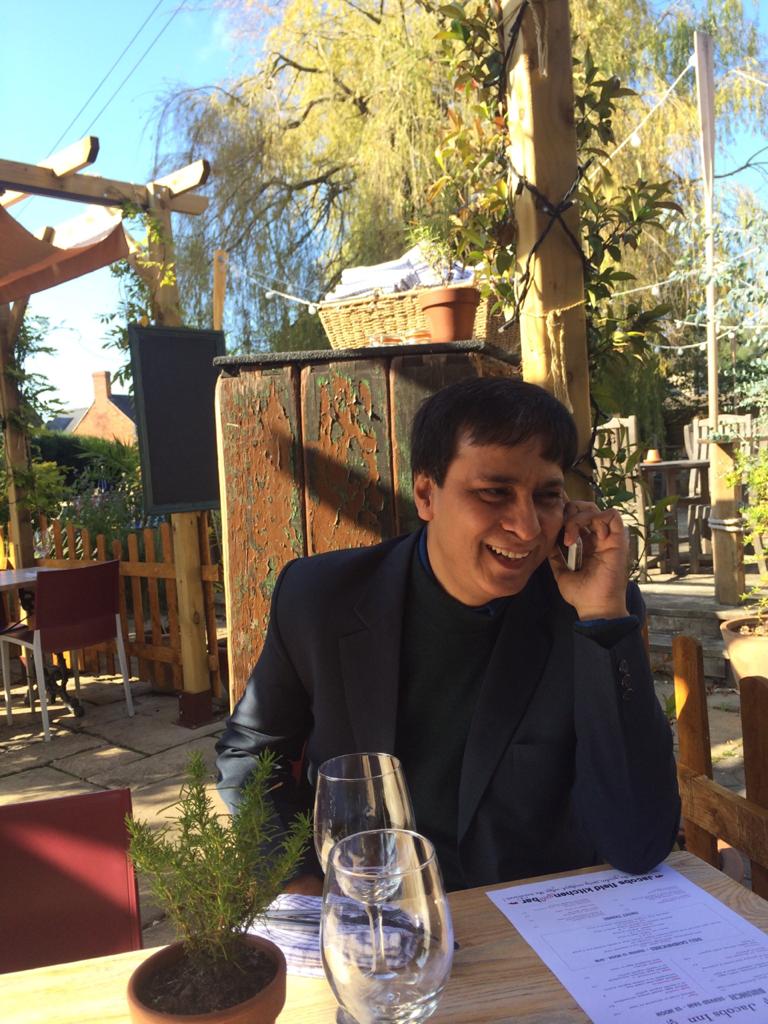
Shazi Zaman

Zaman who had been with the ABP (Anand Bazar Patrika) News Network as their Group Editor, was on the governing bodies of the Film and Television Institute of India, Pune, and the Indian Institute of Mass Communication, Delhi. He has worked with Aaj Tak, Zee News, Star News and also with the BBC World Service, London. He has served as the Director, Video Services of the Press Trust of India. Akbar is his third novel. He has authored two novels in Hindi earlier. In Akbar: A Novel of History (2021), Zaman with his journalistic background and his love for literature inherited from his novelist father, Khwaja Badiuzzaman, has done the mammoth task of astutely bringing to life a character who might have been a perfect solution to the leadership crisis that many are facing in the current day.

If you are still wondering how close this novel comes to the Bollywood movie called Jodha Akbar (2008), the major things in common were the grand Mughal’s sense of justice and his ability to tame wild elephants! For a deeper understanding of both the emperor and the book, in this exclusive, Zaman tells us what went into the making of this novel and his journey.

Why did you choose to write of Akbar?

One has to have a bit of Akbar inside oneself to write on him—and to read about him as well. Writing on Akbar was not a conscious decision. By the time I realised that I was going to write a novel of history on Akbar, my sub-conscious was miles ahead. Of course his personality had attributes that appealed to me consciously and sub-consciously, especially his belief in primacy of ‘aql’ (reason) over ‘naql’ (blind imitation of tradition) and his ability to question all orthodoxies.

Do you think Akbar is relevant in the current context?

I believe that his message is so ennobling that it transcends the boundaries of space and time. Across ages and across geographies, and within a geography by various groups and communities, his memory has been kept alive.

There was a book a few years ago called Dara Shukoh: The Man who would be King. Would you say he would be more relevant for our times than Akbar or is Akbar a better choice?

It is difficult to give them a comparative score. Dara could have been a very worthy successor to Akbar. And his initiatives and writings are really inspiring. Robustness of ideas and your resolve to push them are tested when faced with exigencies of statecraft. Sadly, Dara did not get that chance and Akbar did. I find that Akbar could navigate but sometimes be audacious to the extent that his courtier poet-musician Tansen had to caution, ‘dheere dheere dheere man, dheere hi sab kachhu hoye (Slowly, slowly, slowly, all happens at a slow pace)’.How would Dara have navigated while on throne is an unanswered question in Indian history. Having said this, his defeat in the battle of succession should not undermine the originality of his initiatives.

Why did you choose to write this in a novel form? Dara Shukoh was a non-fiction. Have you introduced fiction into this?

History largely tells us what happened. Most often it does not tell us of the state of mind that brought people to the point where we find them take momentous decisions. I think momentous events or actions are rooted in mental journeys. And these journeys are seldom documented. When Akbar faced a mental crisis—‘haalat-i-ajeeb’ (a strange state) as a contemporary called it— in the summer of 1578 on the banks of the river Jhelum, one wants to map what was happening in his mind and what had brought him to that point.

What lay behind the agitation of this man who was one of the mightiest emperors of the world, who had never lost a battle and was at the peak of his power ? Were there some forces testing his patience ?  Or as he stood at a place linked to the history of his forefathers, did he wonder about the trauma they had faced ? Or when he dealt a physical blow to a top cleric of yester years, there must have been a mental journey preceding this act. One can try and go into a person’s mind by closely studying his actions and utterances as also that of people and texts that influence him. We all know that people often mean much more than what they choose to say and sometimes, they say one thing and mean the other.

A close examination of this maze can give a glimpse of what was happening inside the great mind. As you try to create a period piece around his state of mind you mine information from all available sources—textual, aural, visual, architectural. For me fidelity to known facts is essential even in historical fiction. But there does come a point when the trail goes cold. Even the best documentary evidence might be insufficient in finding all the pieces of the period piece. For example, we do not know what Akbar was wearing the night he experienced the ‘haalat-i-ajeeb‘ but we have a Mughal miniature in all likelihood of the next morning when Akbar takes an unexpected decision about the great game. Now, it has come down to us that he appeared wearing last night’s clothes. So we know what he was probably wearing at the time he was in ‘haalat-i-ajeeb’ of the previous day. Or we do not know the details of the carpet of the room where he lay dying. Nobody recorded that. Thankfully, some details have come down to us of carpets of those times. I have chosen to use them. After exhausting all means of finding the right pieces of this period piece, I have exercised my imagination. So this is fiction very much rooted in history. If I have been able to do what I had intended, you would feel you have read his mind as also feel that you are actually standing backstage in the Akbarian arena.

In the debate I often encounter about the element of history in historical fiction, perhaps we miss a basic point. Most fiction has history in it. Some have history that is known. Some have history that is personal or unique to the author. It is only when known history figures in your work that the issue of reality versus fiction surfaces. Otherwise, this mingling is not questioned.

What was the kind of research you did? How long did it take you to research and write this book? Tell us about its evolution.

The idea had been simmering under the surface since early years. As I have mentioned in my preface, a childhood incident imprinted Akbar on my mind. During my school days, a member of the education department of the government made a surprise inspection and gave a short introduction to Akbar’s life and his relevance to our times. It left a mark. I was especially blessed to have teachers who stoked my interest. I shall be eternally grateful to my teacher Muhammad Amin–Amin Saheb as he was called at St.Stephen’s College (Delhi University) — to have brought history to life in classroom and sessions outside classroom. Amin Saheb taught us Akbar’s ‘sulh-i-kul’ , which he said stands not for tolerance or co-existence because even these terms denote some separation. He said, Akbar’s ‘sulh-i-kul’ meant harmony. Amin Saheb taught us about Akbar’s desire to build bridges and his respect for diversity. Many like me graduated from the university but never left his class. I feel privileged that for quarter of a century after leaving College I continued to sit at his feet and learn about Akbar. A good teacher teaches and also shows the path to further learning.

My interest in Mughal miniatures took me to various museums within the country and abroad and of course to places like Fatehpur Sikri–a city that Akbar created with a purpose– very often.  Over decades I have gathered in my personal collection most of what has been written about Akbar and almost all books published on his art and architecture. I can say that all published Mughal miniatures reside in my study now.  So Akbar was a character I had been breathing much before it became the idea of a novel.  However, for a period spread over two decades I did consciously try to piece together a story.

 How did you create the character of Akbar ?

Akbar was not merely a historical figure. He was also acutely conscious that he was making history. And as a person conscious of this, he left ample footprints.

When you try to get into a person’s mind you piece together all he saw and read (or in case of Akbar, was read to) and experienced; all he interacted with; all he surrounded himself with; all he spoke and wanted to be spoken, read and spread; and all that he created. Foremost, of course, is  Akbarnama which was a monumental image  building exercise entrusted to a close and trusted courtier, Abul Fazl. Abul Fazl knew what went on in Akbar’s mind. This work is rich in details and is a comprehensive history of Akbar and his forefathers. Akbar also commissioned others who knew his forefathers to write histories that would help Abul Fazl in his work. Akbarnama is an official account. It was vetted by Akbar and tells us how Akbar wanted to be seen by his contemporaries and by future generations. It is extremely useful in giving us the image the emperor aimed to project.

Then there were many others who wrote their histories during his reign. But it is the history called Muntakhab-ut-Tawarikh by a disgruntled cleric, Mulla Abdul Qadir Badayuni, which was written secretly that gives us an unofficial perspective.  I am grateful to the anonymous author of the historic Rajasthani work, Dalpat Vilas, for giving an informal and unique access into the emperor’s mind. Anybody studying Akbar feels especially grateful for the elaborate atelier —tasveer khana — as it was called — that the emperor established. Paintings made under his direction and patronage give us a vivid picture of what he thought was worth projecting. If you look closely, Mughal miniatures of his time often have a story and even a back story that gives you an indication of the emperor’s mind.

Akbar built at a huge scale and many of his buildings still stand tall and the stones speak even now of why he gave them the shape that he did. Then of course are works related to his ancestors like Baburnama which Akbar was fond of and later, of his son’s Tuzuk-i-Jahangiri. Akbar’s public contact and communication was prolific. We might well have seen him if we were living in that age. He travelled and interacted widely.

Almost every morning of his half a century long reign he appeared at the balcony so that the subjects could see him. Even those who did not see him felt his presence. Banarsidas, a trader of his time, who also wrote a chronicle, notes the widespread alarm amongst common people when the emperor fell ill. Letters  Jalaluddin Muhammad Akbar wrote to Uzbek and Persian kings, the emperor of Spain and Portugal, to nobles and others have been handed down to us. His interactions with religious persons find mention in Vaishnavite, Jain and Mahdawi literature. The letters that Jesuits at his court were writing to their superiors are useful for their perspective as also for the ‘unofficial’ details. Then there were personalities Akbar drew to his court who were poets, warriors, administrators and diplomats who were themselves eminent enough to be written about, or  were writers themselves. I closely studied them.

Abdur Rahim Khan-i-khanan was like a son to Akbar and wrote poetry that is timeless in its appeal. Tansen, an eminent poet and musician at his court wrote ‘takhat baitho Mahabali ishvar hoye avtar (the mighty Emperor sits on the throne as incarnation of God)’, which is how Akbar would have wanted to be described.  Works written on Raja Mansingh like Mancharit and Mancharitra Raso helped me understand a mighty noble, who again was like a son—‘farzand’—to Akbar. Akbar himself is believed to have been a poet and pieces of poetry deemed to be his have come down to us. His memory resonates even now in folk songs.

In terms of material evidence of personal effects, we have an armour of Akbar which was helpful in ascertaining his approximate height. Of course, this was achieved with the help of experts.  Not all that one gathered necessarily went into this work but I tried to gather as much as I could so as to know how Akbar lived, ate, slept, worked, played, deliberated, relaxed, fought and thought and what was the world he inhabited, and also what was the kind of world he wanted to inhabit.

I must say that I tried to access original sources in Persian, Sanskrit and other languages with the help of experts, in addition to what I could read myself in English, Hindi and Urdu.

In your introduction you have said Akbar might have been dyslexic or bipolar. Why? What made you think he might have been dyslexic or bipolar? Could it not be that as a child he was not just into books and therefore did not learn to read?

There has been some academic work on some of the issues Akbar faced. I think his behaviour on the full moon night of the year 1578 on the banks of the river Jhelum and on occasions before that definitely call for more investigations in that direction, though one is conscious that the emperor himself is not available for close examination. As for dyslexia specifically, one can say that the man loved books. He commissioned and collected them at a huge scale but he did not read them. They were read out to him. Historical sources indicate that he could not read or write. Though I have seen copies of his handwriting, they seem laboured. It would be a fair assumption that he was dyslexic. I think he was a great visual learner. That is why no Mughal emperor before or after had as big a tasveer khana as him.

You have repeated this phrase thrice in the book. ‘Hindus should eat beef, Muslims should eat pork, and if not this, fry a sheep in the pan. If it turns into pork, Hindus and Muslims should have it together. If it turns into beef, Hindus and Muslims should have it together. If it becomes pork, Muslims should have it. If it becomes beef, Hindus should have it. A divine miracle would thus happen.’ Why?

More than one account reveal puzzling behaviour and utterances of the emperor. This forced one person to say that this was ‘haalat-i-ajeeb’. Nobody at that time could fully understand his state or his words. I feel that it was reflective of his anguish over religious disputes and religious orthodoxy. An emperor who had never lost a contest was getting impatient. In moments of mental crisis it is possible for a person to  say things which have layers of meaning. One has to peep underneath the words to fathom the anguish of  a sensitive mind. This was one such utterance. 

What is the most endearing quality you found in Akbar? And why?

It is difficult to pinpoint one in a person who embodied numerous qualities. His belief in giving precedence to ‘aql’ (reason) over ‘naql’ (blind adherence to tradition). His spirit of enquiry and his desire to provide space for differing thoughts. He believed—“It is my duty to have good understanding with all men. If they walk in the way of God’s will, interference with them would be in itself reprehensible; and if otherwise, they are under the malady of ignorance and deserve my compassion.”

There is an incident mentioned in the book. The Jesuits who came with the intention of converting Akbar finally despaired because he would give them ample space and ample attention but stop short of conversion. So one evening, they came and sought leave since their embassy had failed in its purpose. Jalaluddin Muhammad Akbar replied, “…how can you say that the time you have spent with us has been profitless, seeing that formerly the Muslims had so much credit in my land that if any had dared to say that Jesus Christ was the true God, he would straightway have been put to death; whereas you are now able to say this, and to preach the same in all security ?”

You wrote the novel first in Hindi and then trans created it to English. Why? What is the difference between the Hindi and the English versions?

The novel Akbar naturally came to my mind in Hindi, a language the emperor would have been comfortable with had he been alive. Having said this, I am grateful to my publishers, Rajkamal and Speaking Tiger, for initiating the idea of an English  version. And I did immediately see the need to take Akbar to a wider audience because the novel has an idiom and language rooted in Hindustan but Akbarian thought and vision have an appeal that is wider than the regions he ruled. So the challenge was to take the text, sub-text and the idiom to an English audience. The challenge was also to make Akbar’s 16th century intelligible to 21st century English-speaking world. I have tried my best with help of editors at Speaking Tiger to make it a work English speakers would be at home with. I am sure they would be able to savour the milieu, the plot and the sensibility of 16th century Hindustan in their preferred language.  A good translation should in fact be a trans creation and should read like it has been written in the same language. 

You have two novels in Hindi. Do you plan to translate those too to English? Why? Why not write directly in English?

I believe that no thought is completely translatable into words and no words are completely translatable into another set of words. Thus the word transcreation. The first two novels Premgali Ati Sankri (The Narrow Alley of Love) and Jism Jism Ke Log (Various Bodies) have intense conversation between characters which is rooted in their shared understanding of an idiom. Translation is desirable and relatable because stories strike a chord across space but works have texts, sub-text and idiom. The problem and the challenge lies in taking the sub-text and the idiom into another language. That is why trans creation requires a deep understanding of the text, the sub-text and the idiom of the original work as also of the sensibilities of the audience for whom you are trans creating. Having said this, I would be happy to translate the first two novels for an English readership. The theme would strike a chord, the idiom would need some fine work.

Will you shuttle between English and Hindi in the future? Are you planning more books?

Shuttling between Hindi and English is an interesting thought. I am already seized by an idea that came to my mind as an English text. It is germinating. As for more books, I have already sent a Hindi novelet for publication which could be thematically seen as third in series after Premgali Ati Sankri and Jism Jism Ke Log. While telling stories to my children, and making them up as I went along, I created a short novel for children which awaits publication. I am also in the process of writing another novel in the genre of historical fiction.

Thank you for your time.

This is an online interview conducted on behalf of Borderless Journal by Mitali Chakravarty.

Click here to read an excerpt from Akbar: A Novel of History

.

PLEASE NOTE: ARTICLES CAN ONLY BE REPRODUCED IN OTHER SITES WITH DUE ACKNOWLEDGEMENT TO BORDERLESS JOURNAL