Probhatey (In the Morning) was published as a part of Rabindranath Tagore’s collection called Kheya (Ferry) published in 1906.
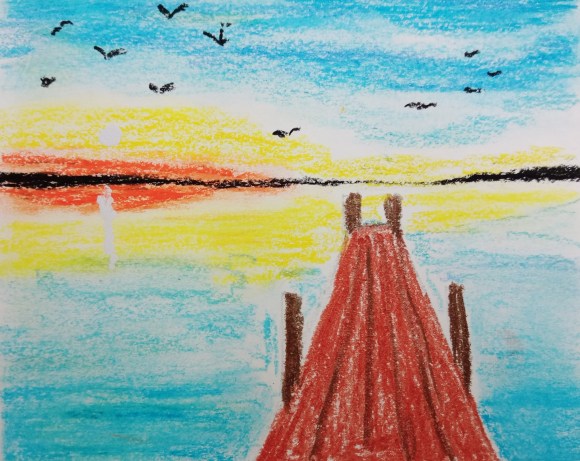
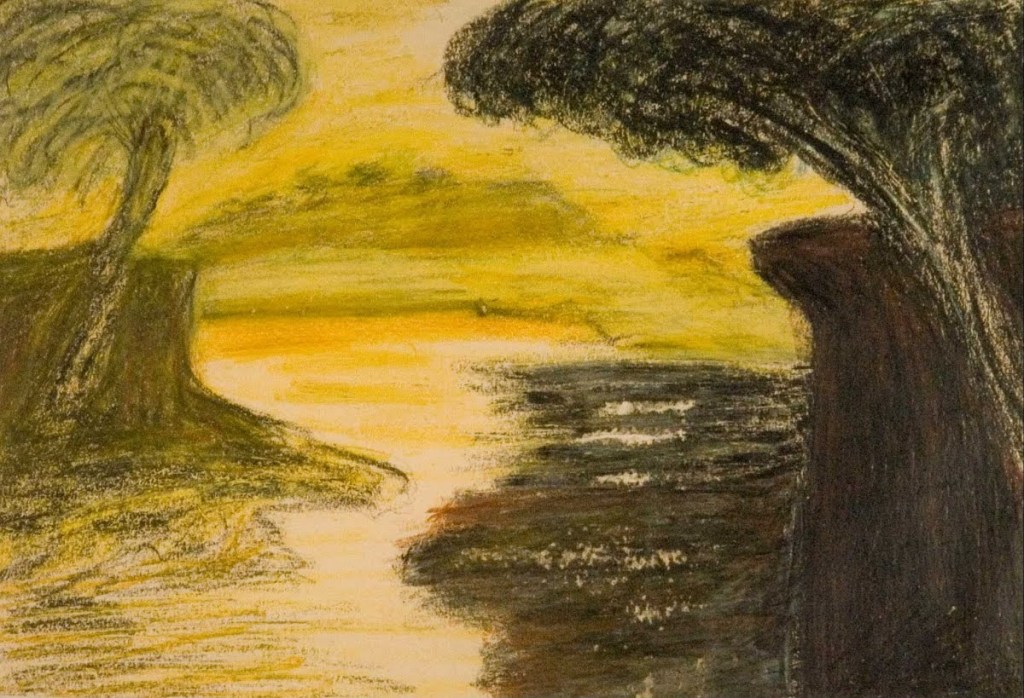
Art by Sohana Manzoor
      IN THE MORNING

 The heavy downpour
               Of one night
   Has filled the lake in my home
              To the brim.
        When I look, I see
     Deep blue waters overflow.
Where is its shore? Where is its bottom?
        Where does it turn?
  With one downpour, see the lake
          Is filled to the brim.


    Last night, who could imagine
            This would happen!
      The rain poured incessantly
            In the deep dark night.
     In the midnight of this monsoon,
     While I lay in a lamp less room,
            I heard the wind howl
                 As if in distress —
                  Who knew then
                This would happen!


  Amidst this outpouring of teardrops,
            I found today
           A serene lotus
        Presiding the scene.
   O tell me, when O when did it bloom,
          Pristine among multitudes
             Shining with vibrancy,
             Bringing solace to me
            In the midst of this abyss
                   Of despondency!


Today, sitting alone, I ponder
          Gazing at the site.
       I see the treasures torn
  From the chest by the tragic night.
       I can see the heartbreak,
    Hear the wailing, the awakening,
          I write from my heart
          Of the raging tempest.
    I gaze at the treasures torn
 From the chest by the stormy night.
This poem has been translated from Bengali by Mitali Chakravartywith editorial input from Sohana Manzoor.
.
PLEASE NOTE: ARTICLES CAN ONLY BE REPRODUCED IN OTHER SITES WITH DUE ACKNOWLEDGEMENT TO BORDERLESS JOURNAL
Aparna Vats shares a narrative around female infanticide centring her story around a BBC interview and an interview with the journalist who unfolded the narrtive. Click here to read.
Dolly Narang recounts how she started a gallery more than four decades ago and talks of her encounter with world renowned artist, MF Husain. Click hereto read.
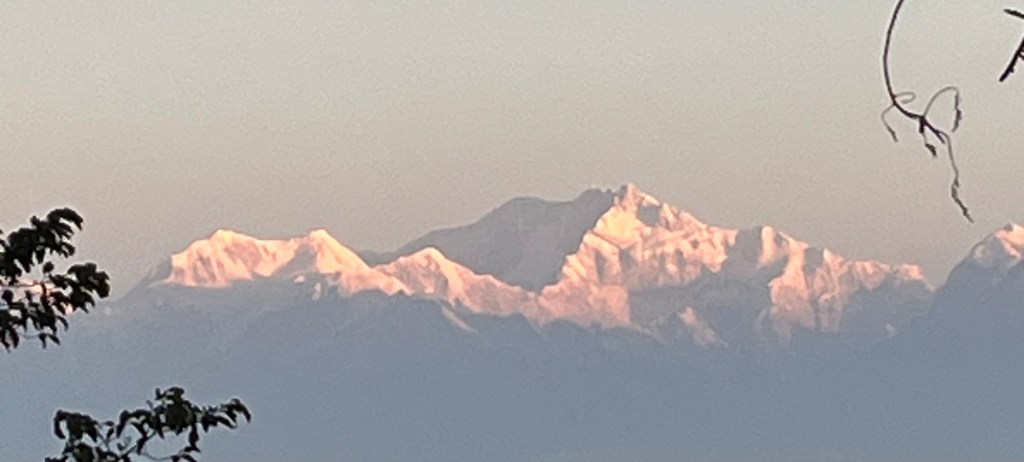
Ghoom, Darjeeling, is almost 2.5 km above sea level. Standing in the rarified air of Ghoom, you can watch the Kanchenjunga turn gold as it gets drenched in the rays of the rising sun. The phenomenon lasts for a short duration. The white pristine peak again returns to its original colour blending and disappearing among the white cirrus clouds that flit in the sky. Over time, it’s shrouded by mists that hang over this region. The event is transitory and repeats itself on every clear morning like life that flits in and out of existence over and over again…
Witnessing this phenomenon feels like a privilege of a lifetime as is meeting people who shine brightly and unusually, like the Kanchenjunga, to disappear into mists all too early. One such person was the founder of pandies’ 1 who coordinated the pandies’ corner for Borderless Journal, the late Sanjay Kumar (1961-2025). The idea of starting this column was to bring out the unheard voices of those who had risen above victimhood to find new lives through the work done by pandies’. In his book, Performing, Teaching and Writing Theatre: Exploring Play, published by Cambridge Scholars Publishing, he described his scope of work which in itself was stunning. His work ranged from teaching to using theatre and play to heal railway platform kids, youngsters in Kashmir, the Nithari survivors and more — all youngsters who transcended the scars seared on them by violations and violence. We hope to continue the column in coordination with pandies’.
Another very renowned person whose art encompassed a large number of social concerns and is now lost to time was the artist, MF Husain (1915-2011). This issue of Borderless is privileged to carry an artwork by him that has till now not been open to the public for viewing. It was a gift from him to the gallerist, Dolly Narang, on her birthday. She has written nostlgically of her encounters with the maestro who walked bare-feet and loved rusticity. She has generously shared a photograph of the sketch (1990) signed ‘McBull’ — a humorous play on his first name, Maqbool, by the artist.
Drenched with nostalgia is also Professor Fakrul Alam’s essay, dwelling on more serious issues while describing with a lightness his own childhood experiences. Many of the nonfiction in this issue have a sense of nostalgia. Mohul Bhowmick recalls his travels to Bhutan. And Prithvijeet Sinha introduces as to a grand monument of Lucknow, Bara Imambara. Lokenath Roy takes us for a stroll to Juhu, dwelling on the less affluent side. Suzanne Kamata describes her source of inspiration for a few stories in her new book, River of Dolls and Other Stories. A darker hue is brought in by Aparna Vats as she discusses female infanticide. But a light sprays across the pages as Devraj Singh Kalsi describes how his feisty grandmother tackled armed robbers in her home. And an ironic tone rings out in the rather whimsical musing by Farouk Gulsara on New Year days and calendars.
Everyone was at each other's throats, insistent that the world was ending. But I felt differently, as though I were just beginning, or just beginning again…
Poets, like visionaries across time and cultures, often see hope where others see despair. And humour always has that hum of hope. In a lighter tone, Rhys Hughes makes one laugh or just wonder as he writes:
I once knew a waiter who jumped in alarm when I somersaulted across his restaurant floor after entering the front door on my way to my favourite table: he wasn’t able to control his nerves and the meal he was bearing ended up on the ceiling with people staring as it started to drip down.
Translations feature poetry. Lyrics of Nazrul (1899-1976) and Tagore (1861-1941) appear together in Professor Alam’s translations of their love songs from Bengali. He has also transcreated a Bengali poem by Jibananada Das (1899-1854). Profoundly philosophical lines by Atta Shad (1939-1997) in Balochi has been rendered to English by Fazal Baloch for his birth anniversary this month. Ihlwah Choi has translated his poem from Korean, taking up the poignant theme of transience of life. A Tagore poem called ‘Kheya (Ferry)’, inspired by his rustic and beautiful surroundings, has been brought to us in English.
Huge thanks to all our contributors, the Borderless team for all these fabulous pieces. Thanks to Gulsara, Kamata, Bhowmick and Sinha for the fabulous photography by them to accompany their writings. Heartfelt gratitude to Sohana Manzoor for her cover art and to Dutta for her artwork accompanying her poem. Without all your efforts, this issue would have been incomplete. And now, dear readers, thank you for being with us through this journey. I turn the issue over to all of you… there is more as usual than mentioned here. Do pause by our contents page.
pandies’ was started in 1987. It’s spelled with a small ‘p’ and the name was picked by the original team. Read more about pandies’ by clicking here. ↩︎
Kheya (Ferry) by Tagore is the titular poem in a collection called Kheya published in 1906.
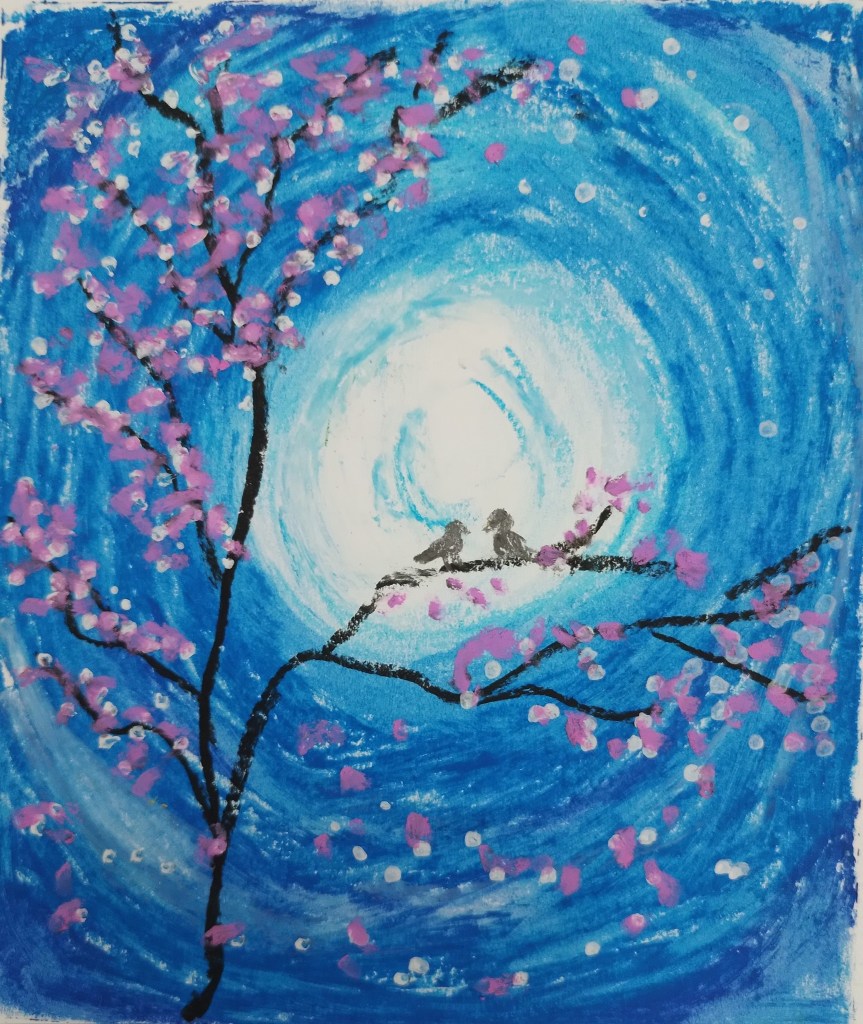
Art by Sohana Manzoor
KHEYA OR FERRY

Who are you traversing the shores,
          O boatman!
I sit at my doorstep,
        And gaze,
          O boatman!
As the haat* closes,
People to the ghat flock.
Then I imagine
        Myself among them
          O boatman!


In the gloaming, you row the boat
       To the other shore.
My heart soars to sing
       As I gaze upon the scene,
         O boatman!
The dark waters gurgle as the golden glow
Spreads across the other shore.
My teardrops flow
     With euphoria
         O boatman!


You have no words to express,
         O boatman!
I gaze to read
     What your eyes speak,
        O boatman!
Momentarily, if your gaze,
Falls on my face,
Then I imagine
     Myself among them
        O boatman!
This poem has been translated from Bengali by Mitali Chakravartywith editorial input from Sohana Manzoor
.
PLEASE NOTE: ARTICLES CAN ONLY BE REPRODUCED IN OTHER SITES WITH DUE ACKNOWLEDGEMENT TO BORDERLESS JOURNAL
Phul Photano (Making Flowers Bloom) by Tagore was first published in 1906 in Kheya (Ferrying), a collection of 55 poems. The book was dedicated to the Indian scientist, Jagadish Chandra Bose (1858-1937), who discovered plants can feel pleasure, pain, understand affection and make sounds of distress.
From Public Domain
MAKING FLOWERS BLOOM

You cannot force,
    Force flowers to bloom.
Whatever you say or do,
However hard you try,
Day and night, excitedly
      Striking the stem —
None of you can force,
      Force flowers to bloom.

You can repeatedly
Fatigue with your glances.
You can tear the bunches,
       And throw them in the dust —
In such extreme chaos,
If they break their silence,
Their colours could spill,
      Their perfumes could overwhelm.
None of you can force,
      Force flowers to bloom.

He who can make flowers bloom,
          Does so on his own.
He radiates
With his eyes rays
Of the lifeforce
          To enchant the stem.
He who can make flowers bloom,
          Does so on his own.

Just his breath, seems
To make the flowers yearn to fly.
With wings made of leaves,
          They waft in the breeze.
Vibrant varied hues bloom
Like the heart in a swoon.
Many are drawn to them,
         Allured by the scents.
      He who can make a flower bloom,
          Does so on his own.
This poem has been translated from Bengali by Mitali Chakravartywith editorial input from Sohana Manzoor
.
PLEASE NOTE: ARTICLES CAN ONLY BE REPRODUCED IN OTHER SITES WITH DUE ACKNOWLEDGEMENT TO BORDERLESS JOURNAL
Despite all odds, I will not sell Myself. I want to stand with everyone As a part of a queue. In the morning light, Shame should not sully me. May I be enlightened by the Permeating radiance. I will not sell, not sell Myself.
I will have a clear accord With the world. I will breathe in the breeze That flits in the open skies. My body will be purified by the Affectionate touch of the Earth. The trees will sway with the Delight I experience. I will be content with this Accord with the world.
I will care for others and feel happy In my heart. Let no discordant notes sound from the tunes of my bina*. Whatever I experience, give me the Strength to accept, let my Heart be filled with the joyousness Of the skies. May the wellbeing of others fill my heart With contentment.
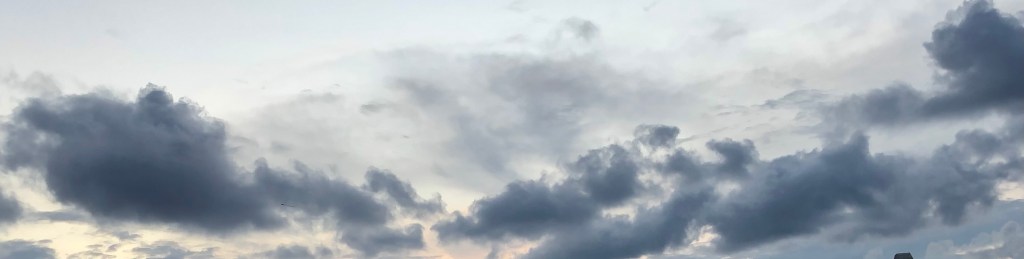
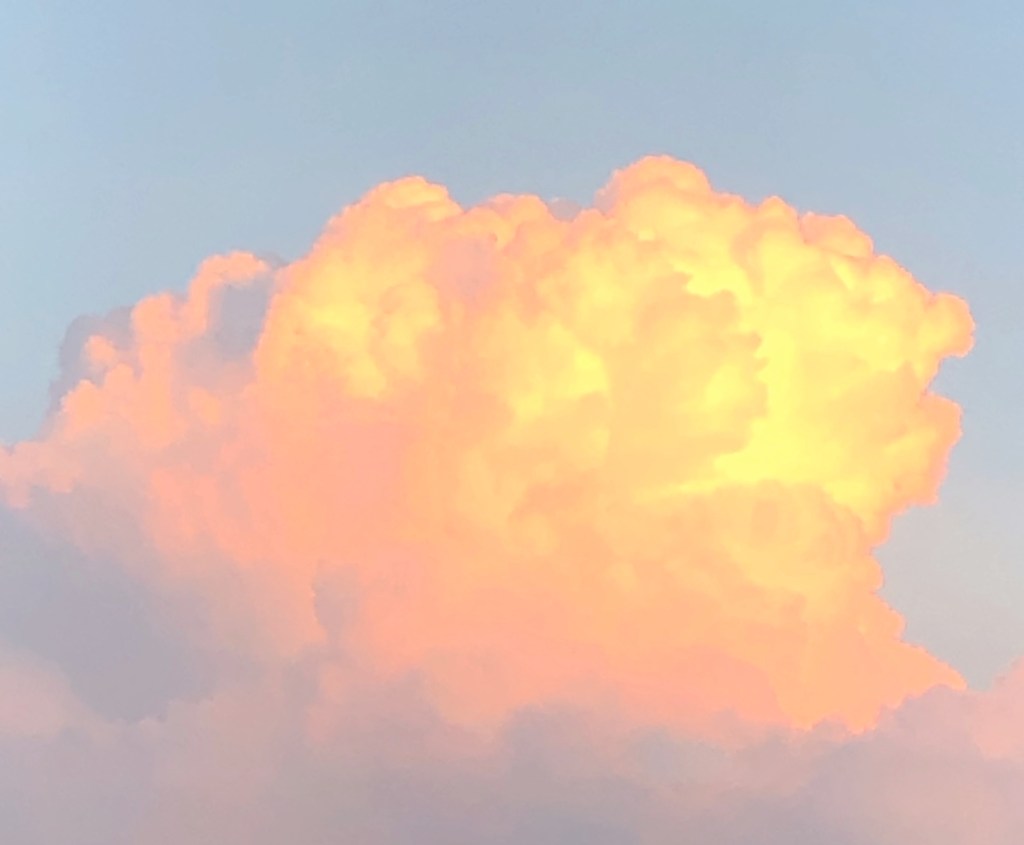
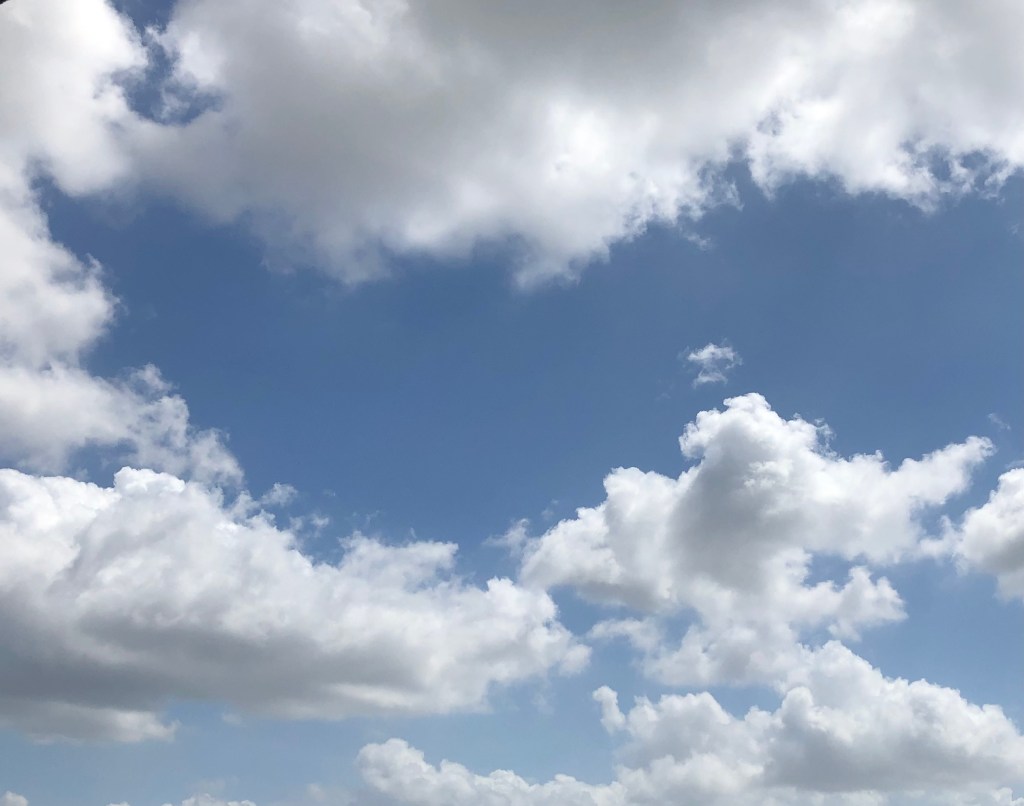
Published in 1906,Megh (cloud)can be found in Tagore’s collection called Kheya (boat).
Adrift, without a beginning and an end,
With an awning of black and white blend,
        The sky is dressed whimsically.
We are all merely mounds,
Stacks of wafting clouds.
    I think only of him and his whimsicality.
We have no boundaries nor home,
We come and we are gone.

Suns, planets, stars shine bright.
Though they are garlands of lights,
        They remain tied to eternal tasks.
With permanence, they grace
Words illuminating a dark page.
         We are merely like drafts—
 With myriad of colours filled,
Re-written and erased at will.

Sometimes, when we are free,
We call out in a spree,
              Smiling without a reason.
Does our caprice create an illusion?
The rain still falls without evasion.
            The lightning is not a diversion.
Only, my friend, we do not stay.
With the breeze, we drift in or float away.
(This poem has been translated by Mitali Chakravartywith editorial support from Sohana Manzoor)
PLEASE NOTE: ARTICLES CAN ONLY BE REPRODUCED IN OTHER SITES WITH DUE ACKNOWLEDGEMENT TO BORDERLESS JOURNAL
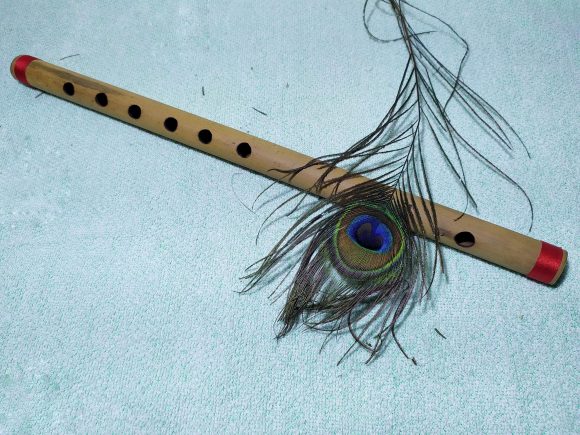
FLUTE

Your flute —
For a short while,
Pretend it's mine.
The sarat* morning flowed by.
The day grew tired nigh.
If you are weary
Of playing your flute,
Then please let,
For a short while,
Your flute be mine.

I will not do much with it.
I will only play
For part of the day.
Raising it high,
I will hold it to my lips
I will express my happiness
By playing many snatches —
In this way losing myself
I will only play
For part of the day.

Then as dusk descends,
I will get flowers in a basket
to make a necklace.
Adorning a garland of juthi*,
Filled with its heady perfume
I will pray with an
Offering of lamps.
That is why in the gloaming,
Fill a basket of flowers
To make a garland of juthi.

A half-moon will rise
Amidst the stars
To gaze at your path.
Then I will come to you
To return your flute.
And you will play a tune
Expressive of the depth of night —
A half- moon will rise
Amidst the stars
To gaze at your path.


*Sarat is early autumn.
*Juthi is a kind of Jasmine
This poem has been translated by Mitali Chakravarty with editorial input from Sohana Manzoor & Anasuya Bhar
PLEASE NOTE: ARTICLES CAN ONLY BE REPRODUCED IN OTHER SITES WITH DUE ACKNOWLEDGEMENT TO BORDERLESS JOURNAL



 Borderless