Titles: The Poisoner of Bengal/The Prince and the Poisoner
Author: Dan Morrison
Publishers: Juggernaut (India)/ The History Press (UK)
November1933:HowrahStation
For most of the year, Calcutta is a city of steam, a purgatory of sweaty shirt-backs, fogged spectacles, and dampened décolletage. A place for melting. In summer the cart horses pull their wagons bent low under the weight of the sun, nostrils brushing hooves, eyes without hope, like survivors of a high desert massacre. The streets are ‘the desolate earth of some volcanic valley’, where stevedores nap on pavements in the shade of merchant houses, deaf to the music of clinking ice and whirring fans behind the shuttered windows above.
The hot season gives way to monsoon and, for a while, Calcuttans take relief in the lightning-charged air, the moody day- time sky, and swaying trees that carpet the street with wet leaves, until the monotony of downpour and confinement drives them to misery. The cars of the rich lie stalled in the downpour, their bonnets enveloped in steam, while city trams scrape along the tracks. Then the heat returns, wetter this time, to torment again.
Each winter there comes an unexpected reprieve from the furious summer and the monsoon’s biblical flooding. For a few fleeting months, the brow remains dry for much of each day, the mind refreshingly clear. It is a season of enjoyment, of shopping for Kashmiri shawls and attending the races. Their memories of the recently passed Puja holidays still fresh, residents begin decking the avenues in red and gold in anticipation of Christmas. With the season’s cool nights and determined merriment, to breathe becomes, at last, a pleasure.
Winter is a gift, providing a forgiving interval in which, sur- rounded by goodwill and a merciful breeze, even the most determined man might pause to reconsider the murderous urges born of a more oppressive season.
Or so you would think.
On 26 November 1933, the mercury in the former capital of the British Raj peaked at a temperate 28°C, with just a spot of rain and seasonally low humidity. On Chowringhee Road, the colonial quarter’s posh main drag, managers at the white- columned Grand Hotel awaited the arrival of the Arab-American bandleader Herbert Flemming and his International Rhythm Aces for an extended engagement of exotic jazz numbers. Such was Flemming’s popularity that the Grand had provided his band with suites overlooking Calcutta’s majestic, lordly, central Maidan with its generous lawns and arcing pathways, as well as a platoon of servants including cooks, bearers, valets, a housekeeper, and a pair of taciturn Gurkha guardsmen armed with their signature curved kukri machetes. Calcuttans, Flemming later recalled, ‘were fond lovers of jazz music’. A mile south of the Grand, just off Park Street, John Abriani’s Six, featuring the dimple-chinned South African Al Bowlly, were midway through a two-year stand entertaining well-heeled and well-connected audiences at the stylish Saturday Club.
The city was full of diversions.
Despite the differences in culture and climate, if an Englishman were to look at the empire’s second city through just the right lens, he might sometimes be reminded of London. The glimmer- ing of the Chowringhee streetlights ‘calls back to many the similar reflection from the Embankment to be witnessed in the Thames’, one chronicler wrote. Calcutta’s cinemas and restaurants were no less stuffed with patrons than those in London or New York, even if police had recently shuttered the nightly cabaret acts that were common in popular European eateries, and even if the Great Depression could now be felt lapping at India’s shores, leaving a worrisome slick of unemployment in its wake.
With a million and a half people, a thriving port, and as the former seat of government for a nation stretching from the plains of Afghanistan to the Burma frontier, Calcutta was a thrumming engine of politics, culture, commerce – and crime. Detectives had just corralled a gang of looters for making off with a small fortune in gold idols and jewellery – worth £500,000 today – from a Hindu temple dedicated to the goddess Kali. In the unpaved, unlit countryside, families lived in fear of an ‘orgy’ of abductions in which young, disaffected wives were manipulated into deserting their husbands, carried away in the dead of night by boat or on horseback, and forced into lives of sexual bondage.
Every day, it seemed, another boy or girl from a ‘good’ middle- class family was arrested with bomb-making materials, counterfeit rupees, or nationalist literature. Each month seemed to bring another assassination attempt targeting high officials of the Raj. The bloodshed, and growing public support for it, was disturbing proof that Britain had lost the Indian middle class – if it had ever had them.
Non-violence was far from a universal creed among Indians yearning to expel the English, but it had mass support thanks to the moral authority of Mohandas Gandhi. Gandhi, the ascetic spiritual leader whose campaigns of civil disobedience had galvanised tens of millions, was then touring central India, and trying to balance the social aspirations of India’s untouchables with the virulent opposition of orthodox Hindus – a tightrope that neither he nor his movement would ever manage to cross.
And from his palatial family seat at Allahabad, the decidedly non-ascetic Jawaharlal Nehru, the energetic general secretary of the Indian National Congress, issued a broadside condemning his country’s Hindu and Muslim hardliners as saboteurs to the cause of a free and secular India. Nehru had already spent more than 1,200 days behind bars for his pro-independence speeches and organising. Soon the son of one of India’s most prominent would again return to the custody of His Majesty’s Government, this time in Calcutta, accused of sedition.
It was in this thriving metropolis, the booming heart of the world’s mightiest empire, that, shortly after two o’clock in the afternoon on that last Sunday in November, well below the radar of world events, a young, slim aristocrat threaded his way through a crowd of turbaned porters, frantic passengers, and sweating ticket collectors at Howrah, British India’s busiest railway station.
He had less than eight days to live.
About the Book:
A crowded train platform. A painful jolt to the arm. A mysterious fever. And a fortune in the balance. Welcome to a Calcutta murder so diabolical in planning and so cold in execution that it made headlines from London to Sydney to New York.
Amarendra Chandra Pandey, 22, was the scion of a prominent zamindari family, a model son, and heir to half the Pakur Raj estate. Benoyendra Chandra Pandey, 32, was his rebellious, hardpartying halfbrother – and heir to the other half. Their dispute became the germ for a crime that, with its elements of science, sex, and cinema, sent shockwaves across the British Raj.
Working his way through archives and libraries on three continents, Dan Morrison has dug deep into trial records, police files, witness testimonies, and newspaper clippings to investigate what he calls ‘the oldest of crimes, fratricide, executed with utterly modern tools’. He expertly plots every twist and turn of this repelling yet riveting story –right up to the killer’s cinematic last stand.
About the Author:
Dan Morrison is a regular contributor to The New York Times, Guardian, BBC News and the San Francisco Chronicle. He is the author of The Black Nile (Viking US, 2010), an account of his voyage from Lake Victoria to Rosetta, through Uganda, Sudan and Egypt. Having lived in India for five years, he currently splits his time between his native Brooklyn, Ireland and Chennai.
.
PLEASE NOTE: ARTICLES CAN ONLY BE REPRODUCED IN OTHER SITES WITH DUE ACKNOWLEDGEMENT TO BORDERLESS JOURNAL
Shantanu Ray Chaudhuri in conversation with M.S. Viraraghavan and Girija Viraraghavan
M.S. Viraraghavan and Girija Viraraghavan
In their new book Roses in the Fire of Spring: Better Roses for a Warming World and Other Garden Adventures (Running Head, 2023), world-renowned rose hybridisers, M.S. Viraraghavan and Girija Viraraghavan, record their journey of over fifty years, creating more than a hundred new rose varieties, in a range of colours, shapes and types. The authors spoke to Shantanu Ray Chaudhuri on their lifelong passion for the rose.
The passion for roses goes back a long way – can you recall the first moments when you realised that this was a ‘calling’ you had to follow? Any epiphanic moment that leaps to the mind?
From quite a young age, Viraraghavan was fascinated with roses, but the epiphanic moment was really when his family spent summer vacations in Coonoor, staying at the government guesthouse within Sim’s Park, which overlooked a rose garden. Every morning, he would wander about this garden which was a blaze of colour of the new roses created from the golden rose of Persia, R. foetida by Pernet Ducher, a great French rose breeder. The brilliant, never-before-seen colours of these roses amazed him – from bright gold and apricot to dazzling oranges and reds. In particular, one of the golden roses took his breath away – ‘Julien Potin’, aptly named for a jeweller – its vivid colour was quite overwhelming for the boy of thirteen, already thrilled with roses. From this came the intoxicating thought: ‘If Pernet Ducher could do it, why not I?’
There’s a delightful little bit about Viraraghavan sir’s viva-voce for the IAS and how his knowledge of roses played an important part in him getting through that. Would you like to share that with our readers?
A difficult part of the IAS examination is the viva-voce, where a panel of senior administrators question the aspirant about various aspects of his or her life and ambitions. Viraraghavan was in the middle of this interview when the Chairman, by chance a learned rose grower, asked him what his hobbies were. ‘Growing roses,’ was the response. The next question was meant to be a googly to confuse a nervous candidate. ‘What roses can you grow in Madras City?’ But Viraraghavan had read the CompleteGardening in India by K.S. Gopalaswamiengar, well-known horticulturist of Bangalore, many times, so my answer was nearly verbatim from the chapter on various kinds of roses which do well in low-to-medium elevations, i.e., warm climates, so he reeled off the different rose classifications: Teas, Noisettes, Bourbons, Chinas, Hybrid Teas, Hybrid Perpetuals. The interview committee then decided it was prudent to go on to other questions rather than get a lecture from a young and seemingly unflurried candidate! But his capacity to master detailed information on various subjects had been noted, and he came through with flying colours (pun intended).
You mention making your presence on the world stage as late as 2000. Please give us a brief account of your work on roses before and after – a potted highlights package, if one can call it.
From the start, our rose breeding focused on creating better roses for warm climates based on the dictum of India’s pioneer rose breeder, B.S. Bhatcharji of Bengal and Bihar, who had stressed the need for a separate breeding line for warm climates as distinct from the Western focus on creating cold-hardy roses suitable for them. Thus, in the early years, our work was with those roses which, though Western, performed well in hot climates, and we had bred many which did well in Hyderabad where we lived. Then, after perusal of many books on roses, we realised the potential in two Indian rose species Rosa gigantea (from northeast India) and Rosa clinophylla (perhaps the world’s only tropical rose species). After getting them with great effort, we began to work with them. At every annual national rose convention in India we would present updates of our work. In 1999, at what happened to be a World Regional Rose Convention, in Jaipur, Viraraghavan’s talk, as always, focused on the breeding with the two rose species mentioned. After the talk, the World Federation of Rose Societies President, Helga Brichet, and Vice-President (South America), Mercedes Villar, came up to him and said they had never before heard of this kind of rose work or of these rose species and invited him to be a speaker at the next World Rose Convention to be held in May 2000 in Houston, Texas.
That was the start of a further phase of rose breeding with the realisation that other than India, several warm parts of the world were also looking for roses that would do well there. These two rose species had been personally collected by us from their native habitat. At Houston, and in other places, people were fascinated by this aspect, which no earlier breeder had undertaken, that is, personally collecting rose species in the wild, at great risk, growing them and using them in creating new roses; starting from scratch as it were. It made sense to them when Viraraghavan explained the dictum of that great German breeder Wilhelm Kordes I who said –‘The soup ladle will only bring out what is already in the tureen’, meaning that fresh genetic input was required if new and different roses are to be created. The enthusiastic response to his ideas strengthened his determination to go ahead with this new rose breeding line. There is nothing as intoxicating as the realisation that the rose world is watching our work with great interest.
One of the most fascinating sections of the book is the one titled ‘The Ones Who Came Before’. Please provide readers with a short account of these legendary influences.
Karrie’s Rose. Photo courtesy: M.S. Viraraghavan and Girija Viraraghavan
We had noticed that invariably roses were named for famous people with often no connection to the world of roses. This made us think: why not name our roses for the intrepid plant-hunters who had discovered roses in the wild, on mountains and in forests, and botanists who had contributed to the knowledge on plants.
One wild Indian rose is R. gigantea, from our north-east, and Myanmar. Three great plant hunters were responsible for collecting this species in the wild – Sir George Watt, General Sir Henry Collett and Frank Kingdon Ward. We decided to name our rose hybrids for all three. Sir George was a medical doctor with an interest in botany, and worked as a surveyor with the British India government. During the course of his work, in the 1880s, he found Rosa gigantea growing on the slopes of Mt Sirohi, now in Manipur, and collected specimens. Almost simultaneously, so did Sir Henry Collett, except in the Shan Hills in what is now Myanmar. Both specimens were identified as being the same and named by the great Belgian taxonomist of the time, François Crepin. Climbing Mt Sirohi in 1990, we came across and collected plants from perhaps the precise location that Sir George had found Rosa gigantea. We named our first hybrid, a creamy yellow climbing rose, for him. We then felt it should be planted near his ancestral home in Scotland. With the help of the Royal Botanic Garden, Edinburgh, we managed to get this new rose planted in the Logan Botanic Garden, very near Sir George’s birthplace. Some years later we embarked on a sentimental journey, along with his descendants and his associates’ descendants, visiting his grave and the hospital he had worked in after retiring from India, to see the rose blooming in Logan.
We named a second seedling we had bred from R. gigantea for General Sir Henry Collett, a rose with big creamy white blooms that has been planted in suitable areas in Britain as well, and, gratifyingly, being grown by some of his descendants. A third rose, a climber with blooms of yellow-suffused pink, was named for Frank Kingdon Ward, the legendary and intrepid plant hunter who collected innumerable new and wild Himalayan plants despite his surprising acrophobia! We then came across a piece by the then BBC 4 gardening anchor, Matthew Biggs, who had visited Kingdon Ward’s grave in Grantchester near Cambridge. He wrote about the neglected condition of the grave of one of the world’s greatest plant explorers. So we decided to make amends by planting ‘Frank Kingdon Ward’ by the wall nearest his grave in the churchyard in a moving ceremony organised by Matthew Biggs, and attended by a number of well-known British horticulturists, as also the family. An urn with the ashes of Sheila Macklin, Kingdon Ward’s wife, for whom he had named a Himalayan lily, and who had died just the previous year, was interred near his grave, and close to where the rose was planted.
We have also named a rose for Leschenault de la Tour, the great French plant explorer who found a beautiful new rose species, called Rosa leschenaultiana after him, in the Western Ghats in the early 1800s; our rose named for him is a climber with pure white blooms.
And of course we have a rose to celebrate the remarkable life and career of the great Indian botanist and cytogeneticist, E.K. Janaki Ammal, who co-wrote the Chromosome Atlas of All Cultivated Plants in 1945. She studied botany at Michigan State University in the 1920s on a full scholarship, later receiving a PhD and DSc honoris causa. Back in India, she played a vital role in creating the ‘Noble’ strain of sugarcane – an extraordinary hybrid of sugarcane and bamboo leading to varieties thick as a man’s arm in contrast to the pencil-thin traditional varieties. But credit was stolen by seniors at the research station, and so she went off to Britain. There she worked at famous institutes, including John Innes, Kew and the Royal Horticultural Society. Later, she met the then Prime Minister Jawaharlal Nehru on a plane, and he put her in charge of reforming the Botanical Survey of India in Calcutta. But sadly she was a forgotten figure by the time of her death in 1984. Our rose named for her has the same colour hues as the saris she wore – orange yellow and saffron. A plant of this rose was planted in 2020 at the World Regional Rose Conference Kolkata, at the Botanical Survey of India garden. The rose has also been planted in the John Innes Institute, in Kew and the Royal Horticultural Society’s garden in Wisley in the UK.
If one were to ask you of one moment each – one particular achievement in the journey and one abiding regret – what would these be and why?
There can be no doubt that the moment which was special in our rose breeding career was the moment described above, when Helga Brichet and Mercedes Villar came up to us in Jaipur in 1999, and said they had never heard such a new approach to breeding roses, pioneered by us, of using two Indian rose species to create a new line of warm-climate roses. It was their invitation to speak in Texas launched us on to the world stage of roses.
As for an abiding regret, that’s all too easy to answer. It’s the systematic neglect of Indian-bred roses by the rose-growing public of India, who remain fascinated by roses raised in Europe and the U.S. though they are utterly unsuited for Indian climates. This unreasonable preference for foreign rose varieties is part of the general craze for all things foreign. Fortunately, more recently, there has been a change, and young rose breeders and growers are realising that Indian bred roses do better in the heat and are slowly beginning to grow these.
Give us an insight into the challenges and pitfalls of growing and creating roses in India, as informed by your journey. Interesting story that highlighted these.
The main challenge was getting Indian roses accepted by the Indian rose growing public, as highlighted above. Indeed, now our roses are being grown in India, perhaps because they are being grown around the world! Another thing is one must learn patience. It takes us about eight to nine years to name and release a new rose. It is a long process, of the actual crossing of two roses, waiting for the fruit to ripen, then harvesting the fruit (rose hips), collecting the seeds, stratifying them in the refrigerator (if one lives on the hot plains), sowing the seed, waiting for the seedlings to sprout, growing the plant for a number of years to test its potential, and suitability, and only then finding a name and releasing it, by sending to a rose nursery to make more plants.
Our long career in rose breeding and our connected travels around the world has provided us with many interesting, even hilarious experiences. We were in Japan, at the Sakura Rose Garden. With us was a group of people including our friend, the well-known Japanese plant scientist, Dr Yuki Mikanagi. We were looking at a rose plant, with dark pinkish-red blooms with white on the reverse, bred by us and as yet unnamed. Yuki said she liked this rose very much. We immediately told her that we would name it for her. She said: ‘But this rose is red and white, whereas my name means “snow” in Japanese. Viru’s instant response was, ‘Then we will it name it Blushing Yuki,’ much to the delight of Yuki and everyone.
In his government service days, when we lived in Hyderabad, Viru would tend to his roses, watering and spraying them with fertilizers before leaving for office. There would be a number of telephone calls for him about some official matter. Girija would answer the phone (landline in those days), and when she told the callers he was busy spraying, they would hear it as ‘praying’ and immediately apologise: ‘Please do not disturb him when he is at his prayers’.
Both of us were hands-on gardeners, doing most of the work ourselves and you cannot garden without muddy hands and clothes. Very often visitors would mistake us for the garden help and request us to take them to the master or the mistress of the house. The looks on their faces when they realised who we were would make us laugh.
On one occasion, we were in California to receive the ‘Great Rosarians of the World’ Award. At the ceremony, we both first gave a talk on ‘Roses in India, Past Present and Future’. At the end of the ceremony, an earnest old lady came up to us and asked, in all seriousness, ‘Do roses grow in India?’
For most of us, roses are red and a Valentine’s Day Gift. Appendix 1 of your roses runs to 50 pages! Tell us briefly of some of the interesting ones, in particular the very evocative names you have, for example, Kindly Light, Meghamala/Wine-dark Sea, Twilight Secret. What goes into giving a name to a rose?
Apart from the roses we have named for friends, for other roses we like to give evocative names.
KINDLY LIGHT: we named this lovely white shading to soft pink rose after the hymn ‘Lead, Kindly Light’, a favourite of Mahatma Gandhi’s. We have the practice of giving two names to some of our roses, one better understood in India, if it is a Sanskrit word, and one for the West. This rose is named ‘Swami Vinayananda’ in India, for a monk of the Ramakrishna Mission order. He was great plantsman, his book on dahlias is a definitive work on all aspects of dahlia growing and he was very good rose grower.
MEGHAMALA/WINE-DARK SEA: One more example of two names for a rose. Meghamala translates as ‘garland of clouds’. The name for our rose was inspired by the purple garland-like pattern, reminiscent of clouds, on the petals of this rose, which otherwise are dark orange-red in colour. ‘Meghamala’ is from a line by Devulapalli Krishna Sastri, beloved modern poet of the Telugu language, to whom the rose is a tribute. ‘Wine-Dark Sea’ derives from Homer’s epithet, in both the Iliad and Odyssey, of the purple shadows of approaching night on the orange-red waters reflecting the rays of a setting sun on the Aegean Sea.
ALLEGORY OF SPRING: We named a very special light-pink rose with intriguing pointed petals after the famous Botticelli painting La Primavera, also called ‘Allegory of Spring’.
INCENSE INDIGO: An indigo purple rose with an enticing fragrance was the inspiration for this name.
TWILIGHT SECRET and TWILIGHT TRYST: Two purple-hued roses that remind one of the late evening, shadowy light, romantic secrets and trysts.
AHIMSA: We gave this name to a golden yellow rose borne on a plant without any thorns (prickles), thinking of the Mahatma’s philosophy of non-violence.
KUSABUE’S GUARDIAN ANGELS: Kusabue is the name of a rose garden in Sakura City, Japan, entirely looked after by volunteers, all very senior citizens. This is our tribute to them.
Golden ThresholdKanyakumariPhoto Courtesy: M.S. Viraraghavan and Girija Viraraghavan
Shantanu Ray Chaudhuriis a film buff, editor, publisher, film critic and writer. Books commissioned and edited by him have won the National Award for Best Book on Cinema twice and the inaugural MAMI (Mumbai Academy of Moving Images) Award for Best Writing on Cinema. In 2017, he was named Editor of the Year by the apex publishing body, Publishing Next. He has contributed to a number of magazines and websites like The Daily Eye, Cinemaazi, Film Companion, The Wire, Outlook, The Taj, and others. He is the author of two books: Whims – A Book of Poems(published by Writers Workshop) and Icons from Bollywood (published by Penguin/Puffin).
.
PLEASE NOTE: ARTICLES CAN ONLY BE REPRODUCED IN OTHER SITES WITH DUE ACKNOWLEDGEMENT TO BORDERLESS JOURNAL
Nirupama Kotru, a film buff renews her acquaintance with Chaplin and, in the process, learns a life lesson.
“In that dark room in the basement of Oakley Street, Mother illuminated to me the kindliest light this world has ever known, which has endowed literature and the theatre with their greatest themes: love, pity and humanity.”
— Charles Chaplin, My Autobiography
He has been called a genius by scientists, philosophers, writers, humanists, film-makers and actors. His films continue to fascinate generations. They are timeless in the true sense of the word. As children, we laughed at the slapstick and the physical humour in his films. As adults, we have learnt to appreciate the world-view that lies behind some of his funniest films. Charlie being sucked into the giant machine in Modern Times (1936) remains one of the indelible memories of childhood. Later in life, one came to appreciate the thought – the causes and consequences of the Great Depression (1929–39) – that went into the writing of the film.
Charlie Chaplin has been an important influence in Indian films. Take celebrated actor-director Raj Kapoor, for instance. Raj Kapoor absorbed the mannerisms associated with Chaplin’s Little Tramp, including the waddle. It is a tribute to Chaplin’s genius that this Indian actor came to be universally recognised as the tramp, with his film Awara (the title of the film means a vagabond or a tramp) becoming a huge hit at home and abroad. Many actors after Kapoor, among them Sridevi (Mr India,1987), Mehmood (Aulad,1968), Kamal Haasan (Punnaigai Mannan,1986), and Chiranjeevi (Chantabbai,1986), channelised their inner Charlie into their performances. But it was Noor Mohammed who first adopted the Chaplin persona, and even used the screen name “Charlie” in films like The Indian Charlie (1933), Toofan Mail (1934) and Musafir (1940).
In November 2022, when I was informed that I would have to travel to Geneva for work, my first reaction was far from enthusiastic. I thought Geneva would be bitterly cold; also I needed to start planning my forthcoming family vacation to the United States. The United Nations Conference on Trade and Development (UNCTAD), under whose aegis this program of the Intergovernmental Forum on Mining was taking place in Geneva, had asked India to send a women leader in mining.
Over the next four working days, I came to love Geneva Lake Geneve, the beautiful weather, the lovely architecture and the people. But the highlight of my trip was the last day, which I had taken off. The surprising part was that none of my colleagues, including those posted in the three Indian Missions/Consulates in Geneva, had visited the Chaplin Estate (The Manor de Bain). It was sheer luck that I remembered reading about Chaplin spending the last twenty-five years of his life in Switzerland, until his death in 1977. I discovered in the nick of time that Corsier-sur-Vevey was less than a two-hour drive from Geneva. I realised that this was a once-in-a-lifetime opportunity. A quick booking of tickets on the Chaplin World website and I was off to the Manor de Bain! I decided to combine my Vevey trip with one to Gruyere, the beautiful town which lends its name to a popular kind of cheese.
After a quick trip to Gruyere, I set off for Vevey. My heart started racing as I passed the town square in Vevey which had huge murals of Chaplin on some buildings. Finally, I entered the hallowed portals of the estate where Chaplin spent twenty-five years with his wife, Oona, and his children. Passing through his study in the main living quarters, as I entered the drawing room with its cosy sofas, I came across French windows which overlooked the massive grounds of the estate. I stopped to take a picture. Suddenly, my phone camera froze. I panicked. I tried to close the camera app and switch off my phone, but nothing worked. I thought, this was it, I won’t be able to take any more pictures to remind me of this special day. Dejected, I moved into the dining room. A lady guard came to me and asked me if I would like to write something in the visitor’s book, which I did, sitting down on a chair in the corner.
All this while I was feeling disappointed. Suddenly, I looked up to see a home video playing in a loop, of Chaplin enjoying a meal on a sunny day with family and friends. I thought to myself: Was this a sign? Was Chaplin saying, “Why are you obsessed with taking pictures? You have come so far to see my home; I want you to enjoy my estate, look at my work. Don’t let these modern gadgets rule your life. Slow down.Take it all in.”
The last images on my phone when it froze
I calmed down and went back to those French windows in the drawing room to take in the magnificent view of the estate grounds. A man walked towards me. I asked him if he could help unfreeze my phone. He suggested I switch it off and then on again. I did that, and voila! It worked. Though I was relieved when my phone came back to life, I realised that in those intervening ten-fifteen minutes when my phone was frozen, I was forced to take a breather, to reflect upon the beauty I was surrounded by, and all the blessings which make life worth living. And I went back to the study and foyer of the house to spend some more time reading more about the struggles, trials and triumphs of this great artist.
As I emerged from the main building, I thought of rounding off the visit with a leisurely walk around the grounds. Suddenly I noticed a sign which said “The Studio”. I had deliberately avoided researching on what the visit had to offer, so I decided to just go with the flow and enjoy whatever was on offer. There was a screen outside “The Studio” which said that a film screening was to start in nine minutes. I waited, and finally watched the film, a moving take on Chaplin’s life and work, with ten other viewers.
After the film ended, we were asked to move towards the screen. Suddenly, the screen disappeared and lo and behold, I found myself on a beautifully recreated set from The Kid. We were prompted to go behind the set, and to my bewilderment, what followed was one set after another – The Great Dictator, City Lights, Gold Rush, Limelight, A King in New York, whew! It was such a delight to go through those sets, to see the wax figurines, to sit on the chair from The Gold Rush with Charlie peeping from under a table, to pose next to Charlie in my own bowler’s hat, to sit on the jail bench next to him, to be swallowed by the giant machine from Modern Times. Mercifully, my camera behaved throughout the studio visit and I took many keepsake pictures. After a stroll through the beautiful grounds, I picked up some books, including Chaplin’s autobiography, and other memorabilia. I started reading the autobiography shortly after my visit and it reaffirmed my views about Charlie.
Inside The Studio
During my visit and afterwards, I got a lot of time to reflect upon how Chaplin’s films were deeply concerned with the human condition, with all the miseries and challenges brought upon it by events that the common man has no control over. Chaplin’s work includes The Gold Rush (1925), which drew from real-life events such as the Klondike Gold Rush and the Donner Party, and The Great Dictator(1940), a satire on Adolf Hitler. Limelight (1952), which depicted the frustration of a has-been comedian, can be classified as auto-fiction, as can The Kid (1921), while Modern Times has been hailed as an astute commentary on industrialisation. Levity was Chaplin’s forte, but all his films were deeply rooted in his political and social consciousness. More often than not, he had to pay a heavy price for sticking to his beliefs.
Recollecting the making of The Great Dictator, Charles says in his autobiography, “Halfway through, I began receiving alarming messages from United Artists … But I was determined to go ahead, for Hitler must be laughed at. Had I known of the actual horrors of the German concentration camps, I could not have made The Great Dictator; I could not have made fun of the homicidal insanity of the Nazis.”
The boundary wall of the Manor de Bain. The sounds of cow bells from across the road drifted towards the estate, making for a mesmerising setting.
Chaplin was a genius who understood the power of the audio-visual medium. Since pantomime was his greatest strength, having performed bit roles in theatres during his childhood days of great hardship and penury, he used this technique to convey pathos through humour. Although he was earning quite well as a comedian-writer-director in Hollywood, by 1919, he was so frustrated with the studio system, which did not give him a free hand to write his own scripts, that he co-founded United Artists along with Douglas Fairbanks, Mary Pickford and D.W. Griffith.
His first major hit under his own banner was The Kid, which drew from his childhood experiences. So strong were his convictions about the silent film that he swam against the tide and released City Lights in 1931, well after talkies had completely taken over Hollywood. Slowly, he started warming up to the possibilities of sound in film. He used sound effects in Modern Times but no spoken dialogue. He composed and sang a charming ditty in gibberish, ‘Titine’,with some random words in French, Italian and English thrown in, for Modern Times which never fails to bring a smile to the face, even eighty-seven years after its release
Whether it was silent films or talkies, Chaplin continued to tell his stories of universal values, of hope amidst great suffering. As an artist, he never shied away from speaking truth to power. Like most great artists, he did not accept manmade boundaries. Although he was English by birth, he was criticised for not fighting in World War I. He had long arguments with Winston Churchill about Mahatma Gandhi and the struggle of the Indian people for freedom. In fact, he met Gandhi-ji shortly after meeting Churchill, during a trip to London, and questioned him at length about his abhorrence for machinery. He returned from the meeting with great admiration for Gandhi-ji’s strategies for achieving independence and his principles of non-violence and truth. His conversation with Gandhi-ji influenced his writing of Modern Times, especially the Gandhian theory about modernisation and rapid industrialisation being the cause of unemployment and rising inequality. The fearless artist once made an uncharitable remark about the English royalty, telling Churchill, “I thought socialists were opposed to a monarchy”, to which Winston Churchill replied, with a laugh, “If you were in England, we’d cut your head off for that remark.”
Being wary of the ways of Hollywood where an artist was judged by his or her success at the box office, he made few friends in the film industry. Chaplin was happy spending time visiting his childhood haunts on his trips to London, and also enjoyed wining and dining with film stars, princes and princesses, prime ministers and presidents, scientists, philosophers, poets and writers. He was friends with Mary and Douglas Fairbanks, Albert Einstein, George Bernard Shaw, H.G.Wells, Harold Laski, Aldous Huxley, Theodore Dreiser, et al. He went to Lucerne in Switzerland to meet India’s first prime minister, Jawaharlal Nehru, expressing his surprise at finding him “a small man like myself”. Chaplin invited Pt Nehru to his estate in Vevey for a meal. They had a long chat on the way, which left Chaplin impressed with the “…man of moods, austere and sensitive, with an exceedingly alert and appraising mind”.
Chaplin was a pacifist and a philosopher, and was derided for his views in America – not just mocked, but harassed by the FBI under its founding director, J. Edgar Hoover. In 1952, the country which has historically been considered the land of free speech hounded Charlie out of its borders under the mistaken impression that he was an avowed communist, and told him to never come back. Chaplin even narrowly escaped an assassination attempt in Japan.
Chaplin’s autobiography ends in 1964, on a poignant yet hopeful note, just like Charlie’s films, with Chaplin expressing his sadness at having to leave America, but also describing his happy days in Switzerland, where he befriended several artists who lived in the area. Eight years later, in 1972, Charles Spencer Chaplin was called back to America by the Academy of Motion Picture Arts & Sciences to receive an Honorary Oscar. After initial hesitation, Chaplin decided to attend the ceremony, which would end his twenty-year exile from America. He went on to receive an unprecedented standing ovation lasting twelve minutes. Cries of “Bravo!” filled the auditorium and Chaplin was clearly overwhelmed. It was an emotional homecoming for the man who had left Los Angeles in extremely unpleasant circumstances in 1952.
Chaplin was knighted by Queen Elizabeth II in 1975, but by then he was frail and had to accept the honour in a wheelchair. He passed away in 1977, but his legacy lives on. I hope cine buffs like me keep rediscovering him, for The Tramp is timeless.
(The photographs have been provided by the author, except for the book cover)
Nirupama Kotru is an officer of the Indian Revenue Service,1992 batch. Ms.Kotru has served in the Income Tax Department at Mumbai, Chennai, Delhi and Pune. On deputation, she served as Director (e Governance) in Ministry of Corporate Affairs and as Director (Films) in M/o Information & Broadcasting, where she looked after policy issues such as censorship, India’s participation in film festivals abroad, archiving, film schools and production of films.
As Joint Secretary in Ministry of Culture she has looked after prestigious national akademis such as Sahitya Akademi and National School of Drama, and national museums such as Indian Museum and Victoria Memorial Hall &Museum. She is presently posted as Joint Secretary& Financial Advisor, Ministries of Coal, Mines & Minority Affairs. She has released an album of bhajans called Upasana. She has also written around thirty articles on cinema and other topics such as parenting. She is currently co-authoring an anthology on Hindi cinema of the 1970s.
.
PLEASE NOTE: ARTICLES CAN ONLY BE REPRODUCED IN OTHER SITES WITH DUE ACKNOWLEDGEMENT TO BORDERLESS JOURNAL.
Title:Ashoka and the Maurya Dynasty: The History and Legacy of Ancient India’s Greatest Empire
Author: Colleen Taylor Sen
Publisher:Speaking Tiger Books
In The Outline of History, H. G. Wells wrote of Ashoka: “In the history of the world, there have been thousands of kings and emperors who called themselves their highnesses, their majesties their exalted majesties and so on. They shone for a brief moment, and as quickly disappeared. But Ashoka shines and shines brightly like a bright star, even unto this day.”
Ashoka and The Maurya Dynasty: The History and Legacy of Ancient India’s Greatest Empire by Colleen Taylor Sen is a refreshingly ravishing account of the Mauryan empire. Two things stand out prominently in the book: flawless and wide-ranging. Sen has done something extraordinary in dealing with the most powerful empire in India – the amount of material she has used to write the book.
Says the blurb: “At its peak in 250 BCE the Maurya Empire was the wealthiest and largest empire in the world, extending across much of modern India, except a small area in the far south, Pakistan, and parts of Afghanistan up to the Iranian border. The Maurya capital, Pataliputra, was one of the largest cities of antiquity. India (although it was not yet called by that name) was a global power that traded and maintained peaceful diplomatic relations with its neighbors, as far afield as Greece and Egypt.”
Chicago-based, Dr. Colleen Taylor Sen is a culinary historian – having authored several books on food from across continents. A widely translated author, this book does full justice to the subject.
Says the book: “[O]f the seven or eight Maurya emperors, two are remembered today as among India’s greatest leaders: Chandragupta Maurya and his grandson Ashoka. Chandragupta, the founder of the Maurya dynasty, created his empire through both war and peaceful means. He was the first Indian leader known to have signed an international treaty (with the Greeks in the northwest). His grandson Ashoka, after conquering Kalinga in a bloody war in 261 BCE, renounced violence. He then spent the rest of his life advocating and propagating a policy of religious tolerance, kindness to all creatures, and peaceful coexistence in a multicultural society—a policy he called Dhamma.”
Sen discusses Emperor Ashoka’s life, achievements, and his legacy in her book. It also explores the legacy and influence of the Mauryas in politics throughout Southeast Asia, China, and India, as well as in contemporary popular culture. That makes the book broad-based.
An anecdotal reference to the book is in order. While searching for food histories in India, Sen found herself intrigued by Ashoka and began exploring more about him. After conquering Kalinga in a bloody war in 261 BCE, Ashoka renounced violence. He spent the rest of his life propagating religious tolerance and peaceful coexistence in a multicultural society.
In a book of about two hundred sixty adrenaline-charged pages, Sen deals with the rise, the highest point it reached, and the fall of the dynasty. She focuses on the accomplishments of Ashoka. In addition to a truthful account, she discusses Buddhist legends, the legacy of the Mauryas, and colonial South Asia. A captivating add-on tells the story of the rediscovery of the long-forgotten historical Mauryas in the 19th and 20th centuries. The intricacies of Mauryan historiography do not take her away from storytelling and she tells it rather profoundly. The result is a glowing record of one of the world’s most remarkable political eras.
The appendix to the book is as fascinating as it is inquisitive. She does a thorough analysis of how several historians unearthed the Mauryas and what led to those explorations. In her view, the post-Independent Indian historians took a ‘patriotic line’ and presented Ashoka as a ruler free of foreign influences. India’s first Prime Minister, Jawaharlal Nehru, saw in Ashoka the embodiment of a secular role. The Marxist historian, DD Kosambi, wrote that the Ashoka edicts were the first bill of rights for citizens. Then she says, despite extensive scholarship, many questions about the Mauryan empire remain unanswered. For example, what did the city of Pataliputra look like, and will it ever be excavated?
The book is a brilliant addition to the existing literature on Ashoka and the Mauryan Empire. A must-read for history professionals and general book lovers.
.
Bhaskar Parichha is a journalist and author of Unbiased, No Strings Attached: Writings on Odisha and Biju Patnaik – A Political Biography. He lives in Bhubaneswar and writes bilingually. Besides writing for newspapers, he also reviews books on various media platforms.
PLEASE NOTE: ARTICLES CAN ONLY BE REPRODUCED IN OTHER SITES WITH DUE ACKNOWLEDGEMENT TO BORDERLESS JOURNAL
Title: Between Heaven and Earth: Writings on the Indian Hills
Editors: Ruskin Bond and Bulbul Sharma
Publisher: Speaking Tiger Books
She was eighty-six, but looking at her you wouldn’t have guessed—she was spry and took some care to look good. Not once in the five years that we spent together did I find her looking slovenly. The old-fashioned dresses she wore were clean and well-ironed, and sometimes she added a hat. Her memory was excellent, and she knew a great deal about the flowers, trees, birds and other wildlife of the area—she hadn’t made a serious study of these things, but having lived here for so long, she had developed an intimacy with everything that grew and flourished around her. A trust somewhere in England sent her a pension of forty or fifty rupees, and this was all the money she had, having used up the paltry sum she’d received from the sale of her property.
She’d had a large house, she told me, which she had inherited from her parents when they died, and she’d had an ailing sister whom she had nursed for many years before she too passed away. As she had no income, she kept boarders in the house, but she had no business sense and was losing money maintaining it. In the end, she sold the house for a song to one of the local traders and moved into two small rooms on the ground floor of Maplewood Lodge, a kindness for which she remained grateful to her friends, the Gordon sisters.
It must have been lonely for Miss Bean, living there in the shadow of the hill, which was why she had been excited when I moved into the floor above her. With age catching up, she couldn’t leave her rooms and her little garden as often as she would have liked to, and there were few visitors—sometimes a teacher from the Wynberg Allen School, the padre from the church in town, the milkman twice a week and, once a month, the postman. She had an old bearer, who had been with her for many years. I don’t think she could afford him any longer, but she managed to pay him a little somehow, and he continued out of loyalty, but also because he was old himself; there wouldn’t have been too many other employment opportunities for him. He came late in the morning and left before dark. Then she would be alone, without even the company of a pet. There’d been a small dog long ago, but she’d lost it to a leopard.
Camel’s Back Road, going to a tea party at a friend’s house, the dog sitting in her lap. And suddenly, from the hillside above her, a leopard sprang onto the rickshaw, snatched the dog out of her hands, and leapt down to the other side and into the forest. She was left sitting there, empty-handed, in great shock, but she hadn’t suffered even a scratch. The two rickshaw pullers said they’d only felt a heavy thump behind them, and by the time they turned to look, the leopard was gone.
All of this I gathered over the many evenings that I spent chatting with Miss Bean in her corner of the cottage. I didn’t have anyone to cook for me in the first few years at Maplewood. Most evenings I would have tinned food, and occasionally I would go down to share my sardine tins or sausages with Miss Bean. She ate frugally—maybe she’d always had a small appetite, or it was something her body had adjusted to after years of small meals—so I wasn’t really depriving myself of much. And she returned the favour with excellent tea and coffee.
We would have long chats, Miss Bean telling me stories about Mussoorie, where she had lived since she was a teenager, and stories about herself (a lot of which went into some of my own stories). She remembered the time when electricity came to Mussoorie—in 1912, long before it reached most other parts of India. And she had memories of the first train coming into Dehra, and the first motor road coming up to Mussoorie. Before the motor road was built, everyone would walk up the old bridle path from Rajpur, or come on horseback, or in a dandy held aloft by four sweating coolies.
Miss Bean missed the old days, when there was a lot of activity in the hill resort—picnics and tea parties and delicious scandals. It was second only to Shimla, the favourite social playground of the Europeans. But unlike Shimla, it had the advantage of being a little more private. It was a place of mischief and passion, and young Miss Bean enjoyed both. As a girl, she’d had many suitors, and if she did not marry, it was more from procrastination than from being passed over. While on all sides elopements and broken marriages were making life exciting, she managed to remain single, even when she taught elocution at one of the schools that flourished in Mussoorie, and which were rife with secret affairs.
Do you wish you had, though,’ I asked her one March evening, sitting by the window, in the only chair she had in her bedroom.
‘Do I wish I had what?’ she said from her bed, where she was tucked up with three hot-water bottles.
‘Married. Or fallen in love.’
She chuckled.
‘I did fall in love, you know. But my dear father was a very good shot with pistol and rifle, so I had to be careful for the sake of the young gentlemen. As for marriage, I might have regretted it even had it happened.’
A fierce wind had built up and it was battering at the doors and windows, determined to get in. It slipped down the chimney, but was stuck there, choking and gurgling in frustration.
‘There’s a ghost in your chimney and he can’t get out,’ I said.
‘Then let him stay there,’ said Miss Bean.
Excerpted from Between Heaven and Earth: Writings on the Indian Hills, edited by Ruskin Bond and Bulbul Sharma. Published by Speaking Tiger Books, 2022.
ABOUT THE BOOK
‘What is it about the hills that draws us to them again and again?’ asks one of the editors of this collection. In these pages, over forty writers—from a daughter of the Tagore family and a British colonial officer in the 19th century, to a young poet and an Adivasi daily-wage worker in the 21st century—show us what the many reasons could be: Green hillsides glowing in the sun; the scent of pine and mist; the wind soughing in the deodars; the song of the whistling thrush; a ritual of worship; a picnic, a party, an illicit affair. They show us, too, the complex histories of hill stations built for the Raj and reshaped in free India; the hardship and squalor behind the beauty; the mixed blessings of progress.
Rich in deep experience and lyrical expression, and containing some stunning images of the hills, Between Heaven and Earth is a glorious collection put together by two of India’s finest writers, both with a lifelong connection with the hills. Among the writers you will read in it—who write on the hills in almost every region of India—are Rumer Godden, Rabindranath and Abanindranath Tagore, Emily Eden, Francis Younghusband, Jim Corbett, Jawaharlal Nehru, Khushwant Singh, Keki Daruwalla, and of course the two editors themselves. Together, they make this a book that you will keep returning to for years to come.
ABOUT THE EDITORS
Ruskin Bond is one of India’s most beloved writers. He is the author of numerous novellas, short-story collections and non-fiction books, many of them classics and several of them set in the hills of north India. Among his best-known books are The Room on the Roof, Time Stops at Shamli, A Book of Simple Living, Rain in the Mountains and Lone Fox Dancing. He was awarded the Padma Shri in 1999 and the Padma Bhushan in 2014. He lives in Landour, Mussoorie.
Bulbul Sharma is an acclaimed painter and writer, author of best-selling books of fiction and non-fiction, including My Sainted Aunts, The Anger of Aubergines, Murder in Shimla and Shaya Tales. Bulbul conducts ‘storypainting’ workshops for special needs children and is a founder-member of Sannidhi—an NGO that works in village schools. She divides her time between New Delhi, London and Shaya, a village in Himachal Pradesh.
.
PLEASE NOTE: ARTICLES CAN ONLY BE REPRODUCED IN OTHER SITES WITH DUE ACKNOWLEDGEMENT TO BORDERLESS JOURNAL
Bhaskar Parichha reviews a non-fiction written on Netaji by his family.
Title: Netaji Subhas Chandra Bose’s Life, Struggle and Politics
Author: Krishna Bose
Editor and Translator: Sumantra Bose
Publisher: Picador India
Books on Netaji Subhas Bose are plentiful and readers are unvaryingly fascinated by every book that hits the bookshelves. The enigma and the ecstasy of Netaji’s short yet eventful life continue to enthrall people worldwide even after decades since his death in a plane crash.
This new book Netaji Subhas Chandra Bose’s Life, Struggle and Politics by the late Krishna Bose is a refreshingly new account of the great leader’s life. Three aspects of his life stand out prominently in the book: Subhas Chandra Bose’s political motivations, personal relationships, and the daring military campaigns he undertook to secure India’s independence.
Krishna Bose (1930-2020) was a Member of Parliament thrice. A professor of English Literature, Krishna (nee Chaudhuri) married Dr. Sisir Kumar Bose — son of Netaji’s elder brother Sarat Chandra Bose. Sisir was Netaji’s chief aide in his daring escape from India in 1941 and drove the escape car from the family’s mansion on Kolkata’s Elgin Road. After Netaji’s death, Krishna helped Sisir build the Netaji Research Bureau at Netaji Bhawan. She served as NRB chairperson after Sisir’s death.
The book offers a rare in-depth account of the Netaji’s meaningful life by one of Bose’s close family members. That makes the book authentic and stimulating. Originally written in Bengali, the writings reveal the “human being alongside the revolutionary and freedom fighter”. It traverses Bose’s life from childhood to his death in August 1945. With important chapters about his youth, political career, and the power equation with Mahatma Gandhi and Jawaharlal Nehru, the book subtly brings out different shades of Netaji’s personality.
Drawing on Netaji Research Bureau’s archives and decades of fieldwork and interviews, this book offers an unmatched portrait of Subhas Chandra Bose – the man, his politics, and his epic struggle for India’s freedom. Krishna Bose’s writings were compiled, edited, and translated from Bengali by her son Sumantra Bose.
Krishna Bose traveled the world and extensively to the subcontinent in order to find out more about Netaji’s life. She strung together her findings, giving new insights into Subhas Chandra Bose’s political motivations, his personal relationships, his epic journeys, and the daring military campaigns he undertook to secure India’s independence. Written over six decades the book vividly reveals Netaji as a human being alongside his radical views.
The book has a detailed account of the women who influenced Netaji (his mother, adoptive mother, wife, and close friends as well as the soldiers of the all-women Rani of Jhansi regiment that was trained in Singapore), an eyewitness account of Netaji’s epic struggle in Europe and Asia, his secret submarine journey and escape from his Calcutta home and the Andamans where Netaji raised the national tricolour.
Divided into seven chapters (‘The Women who Influenced Netaji’; ‘Netaji’s relationships with Indian and World Leaders’; ‘Azad Hind Fauj’: ‘Netaji’s Epic Struggle in Europe and Asia’, ‘Netaji’s Soldiers: Remembering the Brave’; ‘The Liberated Lands’: ‘Visiting Manipur and the Andamans’; ‘Netaji and Women’: ‘In War and Friendship and Requiem’), the book is a truthful chronicle of Netaji.
The book contends: “[W]e visit the Manipur battlefields where the Indian National Army waged its valiant war, the Andamans where Netaji raised the national tricolor; Singapore, where the INA took shape; Vienna and Prague, his favorite European cities; and Taipei, where his life was tragically cut short. We meet Netaji’s key political contemporaries – from Nehru and Gandhi to Tojo and Hitler. And we learn in gripping detail about the Azad Hind Fauj’s spirit of unity and the bravery in the war of its men – as well as the women who fought as the Rani of Jhansi Regiment.”
In fact, Krishna Bose closely knew many personalities who feature in this book – Basanti Debi, Subhas’s adopted mother; Emilie Schenkl, his spouse; Lakshmi Sahgal, Abid Hasan, and many other leading soldiers of the Azad Hind movement – who all shared vital memories that helped complete Netaji’s life story.
Rabindranath Tagore and Subhas Chandra Bose are the two most iconic figures late modern Bengal has produced. The nature of their relationship is, however, not very well known. We are told: “Tagore and Bose first met at sea, in July 1921. Subhas, aged twenty-four was returning by ship from England to India after resigning from the Indian Civil Service to join the national struggle for freedom taking shape under Mahatma Gandhi’s leadership. Tagore, aged sixty, happened to be a co-passenger on the ship. In his book, The Indian Struggle, 1920-1934, published in London in January 1935, Netaji recalled that journey and wrote that he and Tagore had extensive discussions during the voyage.”
Aiming to bring an end to the controversies and conspiracy theories surrounding the freedom fighter, the over 300-page book gives a detailed and evidence-based account of his death in one of its chapters. Notwithstanding the mystery surrounding his demise, Netaji is widely believed to have died in a plane crash in Taiwan.
Featuring 95 images and letters from family albums and Netaji Research Bureau archives, this compilation by Krishna Bose on Netaji and his struggle for India’s freedom will enlighten readers, and especially the younger generation, about Subhas Chandra Bose’s ideals and his vision about the development of a free India.
.
Bhaskar Parichha is a journalist and author of Unbiased, No Strings Attached: Writings on Odisha and Biju Patnaik – A Political Biography. He lives in Bhubaneswar and writes bilingually. Besides writing for newspapers, he also reviews books on various media platforms.
.
PLEASE NOTE: ARTICLES CAN ONLY BE REPRODUCED IN OTHER SITES WITH DUE ACKNOWLEDGEMENT TO BORDERLESS JOURNAL
Ratnottama Sengupta gives a glimpse of the life of a woman impacted by the Partition, spirited enough to be a celebrated performer and to have a compelling saga written on her life posthumously, Zohra: A Biography in Four Acts by Ritu Menon, published by Speaking Tiger Books. This feature is based on the book and Sengupta’s own personal interactions with the aging Zohra Sehgal.
Zohra Sehgal. Photo provided by Ratnottama Sengupta
Zohra Sehgal[1] mirrors, in a strange kind of way, the story of the Indian subcontinent.
Born a Khan in 1912, raised in purdah by the Nawabs of Rampur in palaces and mansions in Lucknow and Dehradun, educated in Queen Mary’s College of Lahore; trained in Western dance in pre-Hitler Germany; whirling through the globe and basking in limelight as the dancing partner of the phenomenal Uday Shankar; setting up her own dance school with husband Kameshwar Segal in pre-Partition Lahore; rising to carve a niche for herself as a member of Prithvi Theatres; dominating the screen as a nonagenarian cast against the legendary Amitabh Bachchan… Sahibzadi bestowed with an impulse to find her way in the world, made of her life what she would.
So, was it all sunshine and moonlight in the life of the lady who, when she turned 100, had the wit to say, “You are looking at me now, when I am old and ugly… You should have seen me when I was young and ugly…”? No. She had seen the failure of Uday Shankar Cultural Centre in Almora; the closure of her own dance school in Lahore. She’d relocated to Bombay and be a less appreciated ‘side-kick’ to her ‘prettier’ younger sister in Prithvi Theatres. She performed in makeshift stages more often than in the Opera House; traveled in third class compartments with the troupe, slept on trunks, washed her own clothes. She had to worry about providing for her children and their father. She had to cope with the whimsicality, alcoholism, depression and finally, the suicide of her husband… But the caravan of misfortunes never dampened her spirit. “If I were to be reborn, I’ll be back as a blue-eyed, five feet five, 36-24-36,” she could repartee with humorist Khushwant Singh.
But then, much of the tragedy unfolded around the Independence cum Partition at Midnight. And I thank Ritu Menon’s ‘ABiography in Four Acts’ for lifting the curtain on this side of Zohra Segal – the phenomenon I had the good fortune to know through the years we spent in Delhi’s Alaknanda area.
Zohra’s father, Mohammed Mumtazullah Khan had descended from Maulvi Ghulam Jilani Khan, the warrior chieftain of a clan of the Yusufzai tribe[2] and a religious scholar of repute who came to the Mughal court in Delhi possibly in 1754. Along with infantry and cavalry and the title of Khan Saheb he was given Chitargaon Pargana in Bihar, but since the British rulers were taking over Bengal and Bihar, he fled to Rohilkhand and joined the Rohilla chieftains who survived the battle against the Nawab of Awadh and rose to become Nawab of Rampur.
Zohra’s mother, on the other hand, descended from Najibuddaulah, another Rohilla Pathan[3] in the service of Ahmad Shah Abdali and the Mughals, who founded Najibabad in 1740 and received the hereditary title of Nawab. By 1760, the tract of land he ruled included Dehradun, Najibabad, Meerut, Muzaffarnagar, Badayun, Bijnor and Bulandshahar. After 1887 his descendents, being incharge of the Regency Council that looked after the affairs of the Nawabs, set up schools to teach English, impart western education, encourage education of girls…
So, like many of India’s Muslim royalty and landed gentry, the Mumtazullahs were largely liberal, often westernised, and mostly secular. Their daughters, educated in English medium schools, went on to become hightly qualified professionals, including as ophthalmologist or Montessori teacher. Their sons went abroad for further studies, as did Zohra’s betrothed Mahmud — her maternal uncle’s son who went to school in England, graduated from Oxford, became a Communist, married a comrade and distributed all his inherited land in Moradabad to the peasants. Her elder sister Hajra married Z A Ahmed, an alumni of the London School of Economics who, as a committed communist, organised railway coolies, press workers, farmers and underground members of the then CPI[4].
Yet, even for such a family it was unusual to send the daughter to a boarding school — Queen Mary College, founded in 1908 — in a distant city like the cosmopolitan Lahore. It was a purdah school for girls from aristocratic families from where Zohra matriculated in 1929. By then she had imbibed the secular, broadminded values of her mostly-British teachers, and of an education that placed equal emphasis on physical activities – sports, to be precise. Here Zohra was initiated into both, art and acting – two passions of Uday Shankar who proved providential in her life.
It wasn’t so surprising then, that after matriculating, she set out on an arduous, even hazardous, overland trip across Afghanistan, Iraq, Turkey and Middle East, with a kindred spirit: her strong willed maternal uncle Memphis who, being a maverick much like Zohra herself, endorsed all her unconventional choices. He enrolled her in Mary Wigman Tanz Schule in Dresden; he financed her stay as too her owning a teeny-weeny car so she wouldn’t have to travel by train! None of this, however, ruled out her performing Namaz five times a day or reading the Koran. Years later, it was he who unreservedly stood by her decision to marry Kameshwar Sehgal when her own family was wary of the choice. And they spent their honeymoon in his house ‘Nasreen’ – now well-known as Welham Girls’ School. Built by an Irishman on five acres of land, it had pointed roofs, gables and half-timbering with extensive lawns, gravel pathways and exotic trees…
Young Zohra. Photo provided by Ratnottama Sengupta
‘Can you dance?’ Mary Wigman had asked Zohra. It wasn’t to her disadvantage that her sheltered childhood did not have the scope for that. A radical artiste herself, Wigman had rejected formal technique in favour of improvisation although Zohra had to master theories, alongside choreography and dramatic pieces that entailed limbering up exercises for the whole body, from fingertips and wrists to arms and shoulder, neck, head, back, chest, hips, knees, legs, toes… There were no mirrors: the training did not allow them to look at themselves while composing since, Wigman held, “consciousness and awareness should proceed from within rather than from an external image.”
All this was different from the grammar of classical Indian dancing – and by the end of her third year, when Hitler was hovering on the horizon, she was nimble on her toes dancing foxtrot, waltz, polka and tango. When she returned to Dehradun, she enjoyed a newfound freedom that expressed itself in cutting all her silk burqas to make petticoats and blouses!
Zohra delighted in the adventure of travel, in discovering new places and people. She sought out travel agents, pored over brochures, spotted packages to travel with groups, by trains or buses, walked with friends, rucksacks on their back and sandwiches in their pocket, to Norway, Austria, Hungary, Switzerland, France. This was the time when Uday Shankar and Simkie – Simone Barbier[5] – were crisscrossing Europe. These stars of the Uday Shankar Dance Company were rapturously received by audiences who were mesmerised by the oriental exotica that had little to do with classical or folk dances of India. Instead, it offered romance and sensuousness wrapped in myth and mysticism. The blithe Adonis and his graceful energy cast a spell with his ‘physical beauty,’ ‘transcendental expression,’ ‘grandness’ and ‘command of muscles’. The ‘deep charm of the indescribable nobility’ of his dance became the face of ‘the rare yet mysterious personality of Modern India.”
When she joined Shankar in Calcutta as he prepared to tour Rangoon, Singapore, Moulmein and Kuala Lumpur, Zohra not only learnt to apply western make-up on an Indian face. She had to adapt if not unlearn her training at Wigman’s, to discipline her body and rehearse, rehearse and rehearse. For, at Shankar’s, there was no rule or theory. Instead, there were parties and dinners, meetings with the Viceroy and the Governor of Bengal, driving fast cars and boating, ballroom dances and cabarets too! If Zohra reveled in this, she also soon imbibed the almost religious atmosphere of Shankar’s performances that required them to travel regardless of the time of day or night and be in the theatre well before the hour in order to shed every thought other than the dance — one in which movements radiated from a concept and merged back into it.
Most of all, Shankar’s physical beauty and creative iconoclasm proved irresistible, and Zohra happily succumbed to the dancer and his stage lights. She saw how his unorthodox dance imagination reveled in sensuality and she marveled at its potential. None in India then was experimenting with form and movement nor choreographing for an ensemble. And then, Shankar was using a unique orchestra of violin, sitar, piano, sarod, gongs, drums and cymbals. The musicians composed for the dance, the dancers in glittering costumes moved on dazzling sets to their music. This transported audiences to unexplored aesthetic heights and conquered the world.
With Shankar, Zohra performed in Palestine, Syria, Iraq, Egypt, Greece, the Balkans, Czechoslovakia, Italy, Switzerland. Belgium, Holland, Poland, Italy, France. By now, the company included Allauddin Khan[6], Ravi Shankar, Kathakali artiste Madhavan Nair, and Zohra’s younger sister Uzra. Names, all, that would go on to shine long after Shankar set up the Almora Dance Centre – modeled after Dartington Hall, a country estate in Devon, UK that promoted forestry, agriculture and education too, besides the arts. Before that, however, Zohra toured America performing love duets with Shankar, in New York, Chicago, Boston, Philadelphia. Wherever they went, they were greeted by applause and bouquets, photographs, reviews and receptions. Besotted audiences treated them like rockstars and on one occasion Pearl S Buck presented ‘the princess’ an autographed copy of The Good Earth.
On a subsequent visit to Bali with Shankar, she had the heady experience of romance and passionate discovery – of the splendours of dance and music on the island as much as her very being. The magnetic field that was Shankar aroused her senses thrilling awareness of her body. And on her return to India, she met Rabindranath in Santiniketan…
*
When the Uday Shankar Cultural Centre opened in 1940 at Almora, there were only ten students. As its repertoire kept growing, so did its popularity. Soon they were joined by Nehru’s nieces, Nayantara[7] and Chandralekha[8]; Guru Dutt who would one day become a celluloid maestro; Shanta Kirnan — later Gandhi — who’d shine on stage; Sundari Bhavnani who’d become Shridharani, the founder of Delhi’s Triveni Kala Sangam; and Shiela Bharat Ram, of the industrial family, who gained stardom as Baba Allauddin Khan’s disciple. Classes in technique combined with training under gurus of Kathakali, Bharatanatyam and Manipuri — Sankaran Namboodiri, Kandappa Pillai, Amoebi Singh — and to music by Shankar’s brother Ravi, and Baba’s son, Ali Akbar.
Zohra, besides assisting Shankar just like Simkie, also prepared a five-year course for the learners to improvise intricate movements. If theories of Shankar’s art gave form to his dreams, Zohra also learnt the importance of walking elegantly, suppleness of facial expression, and relaxation of mood, prior to dancing. The training evoked in his dancers the consciousness of the body as a whole. A body that moved in space to form patterns of intrinsic beauty.
Kameshwar Segal, a Rossetti-like boy, slim and fair with curly locks, slender hands and feet, fitted right into the scenario. The great grandson of one of the dewans – prime ministers – of the then princely state of Indore, he was well versed in Urdu and Hindustani besides his mother tongue, Punjabi. Soon he was a painter, set designer, light designer, mask-maker, handyman. Though Zohra, being involved with Shankar, had decided never to marry, she admired Kameshwar’s ingenuity, loved his humour and responded to his banter. Soon he proposed to his teacher. Zohra, senior to him by eight years, was aware of the odds against them. Yet she responded, perhaps because by now, the air in Almora was thick with romance and its byproduct, jealousy. Besides Simkie, so far recognised as his prime dance partner, there was Amala Nandi, whom Shankar would garland as his life partner. Simkie herself settled down with Prabhat Ganguly; Rajendra Shankar married Lakshmi Shankar, and Ravi Shankar married Baba’s daughter, Annapurna.
Photographs provided by Ratnottama Sengupta
Uzra, who had met Hameed Butt in Calcutta, also married the same year – 1942 – as Zohra. But, unlike Uzra she had to reconcile with a vegetarian, orthodox Hindu family of Radha Soami sect. Surprisingly, her uneducated mother-in-law welcomed the alliance more readily than Zohra’s own father who was used to the interfaith marriages of his own communist sons but didn’t wish for either Zohra or Kameshwar to convert. Jawaharlal Nehru was to attend the civil wedding which took place on 14 August 1942, in Feroze Gandhi[9]’s mother’s house in Allahabad, Zohra had learnt from his secretary. Her brother-in-law being Nehru’s secretary, the future prime minister of India had even shared that he would gift them Persian rugs. But two days before that the Quit India Movement[10] started, and Jawaharlal Nehru was jailed. Zohra, ever her sprightly self, had revealed her own story to me: “My brother received him on his release, and the first thing he asked was ‘Where is the young couple?’ I asked my brother, ‘Why didn’t you ask him where are the Persian rugs?’”
*
However, the dream wedding may have been the peak moment of happiness in the life of Kameshwar and Zohra. There on the WW2 gained in intensity, transportation became difficult, food and money too got scarce. In a couple of years, Shankar downed the shutters at Almora and went on to film his dream project, Kalpana. Simkie soon left India never to return. Sachin Shankar set up his ballet unit in Bombay. But before that, when Zohra put her all into starting Zoresh Dance School in Lahore of 1943, Kameshwar staked his claim as director.
Photo provided by Ratnottama Sengupta
When the school was inundated with students, she was forced into motherhood. When she returned to the stage, they went on a national tour with boxes and curtains from Lahore to Amritsar, Bareilly, Dehradun, Meerut, Lucknow, Allahabad, Patna, Asansol and Calcutta. Artistically a huge success, the school, however, left the coffers dry. More importantly, at the end of the Big War in 1945, Britain didn’t rule the waves and India was restive. The Muslim League was at loggerheads with the Congress, equations between the Hindus and Muslims had soured, their Muslim friends were looking at them with misgivings. Lahore clearly was not an ideal place for a couple like them. Kameshwar and Zohra relocated to Bombay, where Uzra and Hameed had set up home.
But in the city of celluloid dreams Zohra did not stand a chance in cinema. Not only was she short, somewhat plump, not quite a beauty; in cinema, a nachnewali was merely a nautch girl. In fact, she did not ever dance on stage again. She re-invented her fluidity of movement and expression to make her mark as a choreographer in Prithvi Theatres where her sister was already a leading lady. Eventually, in mid-1950s she choreographed for a few films such as Navketan’s Nau Do Gyarah and Guru Dutt’s CID.
Their bungalow on Pali Hill – a neighbourhood that was home to British, Catholic and Parsi families — was surrounded with Uma and Chetan Anand, his brothers Dev and Goldie, Balraj and Damayanti Sahni, Meena Kumari, Dilip Kumar, the Kapoors… Frequent visitors included Guru Dutt, Raj Khosla, Mohan Segal, Geeta Dutt, Nasir Khan[11], writers Sahir Ludhianvi, Sardar Jafri, Vishwamitra Adil, Amita Malik, composers S D Burman, and Ravi Shankar … Names that would in the next decade become Bollywood royalty.
Cinema was of course the big thing in Bombay of 1940s. Bombay Talkies had already heralded glory days with titles like Achhut Kanya (1936, untouchable maiden), Kangan(1939, Bangles), Bandhan (Ties, 1940), Jhoola(Swing, 1941), Sikandar(Alexander the Great, 1941). Devika Rani, Ashok Kumar, Leela Chitnis, Sohrab Modi, Prithviraj Kapoor were stars who would soon be joined by Punjabis from Lahore such as K L Saigal, Jagdish Sethi, B R Chopra, F C Mehra. Partition wasn’t a certainty yet, in the city of the political beliefs of Right and Left, mixed with industrialists and progressive writers and struggling artistes, the cry for freedom had created a ferment of ideas and the house resounded with scripts, arguments, reading, dancing, painting. K A Abbas, Sajjad Zaheer, Sadat Hasan Manto, Ismat Chughtai, Shahid Lateef[12] – they would associate with Utpal Dutt, Ritwik Ghatak, Salil Chowdhury, Hamid Sayani, Ebrahim Alkazi, Balraj Sahni and Prithviraj Kapoor[13], to pledge that they would present the crisis of the times through the medium of theatre.
*
Prithviraj[14], although a superstar on screen, believed that theatre should proliferate every city, not temples and mosques. Instead, he urged, “spend on theatres that would become centres for cultural education.” After the first election, when he was nominated to the Rajya Sabha in 1952, he’d said, “In that temple called theatre, a Hindu, Muslim, Christian, Jew, Parsi and Sikh all come together. No one cares whether it’s a pandit or a mulla [15]sitting next to them. Communists sit with communalists, to laugh together and cry together. It would be the biggest temple for the benefit of the nation.”
Such a person could not reconcile to the Partition of the subcontinent. It meant, in his own words, that “You will turn me out of Peshawar, and leave my unfortunate Muslim brethren here in the lurch, with their roots uprooted from the soil!” His protest took the shape of four plays that started in 1945 by underscoring the folly of dividing lives on religious basis.
The quartet began with Deewar (Wall), an original play thoroughly contemporary in its politics and communicating its message in a language everyman could follow. The Partition was symbolised by two brothers who, egged on by the foreign wife of one brother – played by Zohra – insist on dividing their ancestral home into two halves by erecting a wall. At a time when Jinnah was raising his pitch for a Muslim nation, the play interpolated the dialogue with speeches by him, Gandhi and Macaulay. So prescient was the message that the British government refused to allow the performance without a green signal from the Muslim League, despite the go-ahead by its CID and the IG Police.
Eventually, despite objection by certain Urdu papers, the play continued to play till 1947 with the peasants pulling down the wall in the climax. In reality, though, the Radcliffe Line concretised the division on the midnight of 14/ 15 August, unleashing bloodshed and misery for millions. On that fateful day, the play was exempted from Entertainment Tax for one full year. Deewar was performed 712 times between 1945 and 1959, until Prithvi Theatres folded up.
The secular credentials of the company is summed up in one practise: The actors began their days with voice production handled by Prithviraj himself, and singing rehearsed by the music director Ram Gangoli. And what did they sing? The base tones were practised by singing Allah Hu! While the high pitches intoned Ram! Ram!
In another expression of his secularism, after the Direct Action Day[16] riots unleashed on August 16th by Jinnah’s demand for Pakistan, leaving 5000 dead and 15000 homeless in Calcutta alone, Prithviraj drove through the city in an open truck with Uzra and Zohra on either side. However, this Hindu-Muslim amity resulted in death threats for them.
And on the eve of Independence, the entire company gathered in the compound of Prithvi Theatres, unfurled the Indian Tricolour, sang Vande Mataram, then took out a procession. Zohra danced with abandon on the streets of Bombay, while Prithviraj’s son Raj Kapoor played the drum. The euphoria did not last: at a personal level Kameshwar was annoyed; on a larger level, death and destruction stalked the streets and the country was engulfed in the horror of untold violence.
Prithviraj’s immediate response was to stage Pathan, the story of two friends – a Muslim Pathan and a Hindu Dewan. When Tarachand dies, Sher Khan promises to look after his son as his own. Local feuds result in a revenge killing where Vazir is implicated. When tribal custom demands an eye for an eye, Khan sacrifices his own son, Bahadur. And when this scene was enacted, there would be no dry eye in the auditorium. Uzra and, in particular, Zohra immersed herself in the play along with Raj and Shammi, the two sons of Prithviraj, who played the two boys. Raj, then only 23, also travelled to Peshawar to design and redesign to perfection the single set of the play. The play was staged 558 times between 1947 and 1960, when curtain fell on Prithvi Theatres.
When rehearsals for the play were on, so was rioting in the cities and towns across India. Prithviraj would, without fail, visit the affected mohallas[17]and hold peace processions. The one dialogue that resonated long after the play ceased to be staged is still pertinent: “Do you want that Hindus should sacrifice their lives for Muslims and the Muslims should not sacrifice their lives for Hindus? Why should they not when they know they belong to one country, eat the same food, drink the same water, and breathe in the same air? Knowing this, you still raise this hateful question of Hindu-Muslim?”
Prithviraj truly believed that religion does not make for conflict, only the abuse of religion, turning it into the handmaiden of vandals, created conflict. “And it is the responsibility of art to present the true aspect of reality.” So, his next production, Ghaddar (Traitor) covered the period from Khilafat Movement to 1947 to deal with the question of the four million Muslims who had remained in India. If they were traitors, who had they betrayed – Islam or Pakistan? Prithviraj as Ashraf and Uzra as his wife join Muslim League but remain staunch nationalists. Shattered by the violence unleashed in Punjab after August 15, he vows to stay back and serve his motherland. He is therefore shot dead by a ‘friend’ Muslim Leaguer.
Zohra loved the cameo she played of a maidservant who refuses to go to Pakistan. Fully identifying with the sentiments of the character — whom she crafted after the family retainers in her mother’s home — she would add extempore dialogue, and these endeared her to the audiences. She was deeply pained that the Partition created personal loss in her family as many of her own people moved across while she, married to a Hindu, never even considered it. But, in covering the thirty-year span of the play she had to enact an old woman – and “feeling old from within” was against the grain of the ever-exuberant lady who, even at 102, would go to bed with a smile on her lips as she whispered to her long dead husband, “Wait just a little longer Kameshwar, I’m on my way to be with you…”
As with Deewar, Ghaddar too faced problems with censor board clearance. The chief minister of Bombay asked Prithviraj to approach the Central government. Sardar Patel introduced him to Nehru, who sent him to Maulana Azad. The Education and Culture minister not only gave him a letter of clearance but also a 50 percent reduction in train fare for all cultural troupes. But the Muslims boycotted the play; Muslim Leaguers in Cochin threatened to burn down the theatre; and some crazy elements wanted to shoot Prithviraj. When he invited people from Bhendi Bazar to watch the play, they concluded that, “People who have been shown as Ghaddar deserve to be shown as traitors.”
Meanwhile the entire population of villages — where their neighbours were their community, their family — were being uprooted in Punjab and Bengal. They were going crazy trying to decide, “To go or to stay?” People who didn’t know any borders were figuring out if, by crisscrossing the imaginary line, they would remain Indians or become Pakistanis. Would they forego their lifestyle by going or ditch their religion by staying? The questions assumed frightening proportion as two of Zohra’s brother, one of her sisters, and even her dearest Uzra relocated themselves in Lahore and Karachi.
However, the real tragedy in all this for Zohra was that Kameshwar had distanced himself from her. Never having found a foothold for himself in Bombay, he had taken to alcoholism, substance support, and perhaps occult activities. Her touring with the Theatre did not make matters easy. But the need to put food on the table combined with the draw of footlights, and acting became Zohra’s calling and, yes, her second nature.
Ahooti (Sacrifice), Prithvi’s final play in the Partition Quartet, was the story of Janki, who is abducted and raped on the eve of her wedding. She’s rescued by Mohammed Shafi and reconciled with her father in a relief camp. But when the family moves to Bombay, she is subjected to slander, and although her fiancee is willing to marry her, his father forbids that, compelling her to commit suicide. The story mirrored the life of countless ‘Partition widows’ – on either side of the border — who have found place in literature and, much later, in films like Shahid-e-Mohabbat Buta Singh(The Sacrificing Lover, Buta Singh, 1991) and Gadar:Ek Prem katha (Rebellion: A Love Story, 2001)too. The published estimates of the number of women abducted by the governments of both the fledgling countries put the figure at 50,000 Muslim women in India and 33,000 non-Muslim women in Pakistan. The enormity of the problem led the two governments to enter into an agreement to locate, recover and restore all such women to their respective families. But what of the women who had, in the meantime, acquired a new family?
In the original script it was to be the story of a mother and daughter but since Uzra had left the country, Prithviraj rewrote it as the story of a father and his daughter. Zohra did not have her heart in the play: first, becaue Uzra was not there; then, because her original role had been altered. Here too, she discerned Prithviraj’s self-indulgence. The play opened in 1949 to tepid reception and dull reviews that dubbed it ‘boring’. But the Deputy Genral of Bombay Police was moved by the girl’s plight and offered his services to help all such women. Prithviraj introduced him to one refugee whose daughter had been separated in the chaos of fleeing – and within days the daughter was found and restored to him. That is not all: at the end of the play the larger-than-life personality would stand with shawl spread out to collect any donation dropped into it, to help the relief work. Such was the emotional response that women even dropped their jewellery in the shawl – which Prithviraj soon requested them to desist from doing.
The Partition Quartet was to first perhaps to see where the rhetoric of religious difference can lead, the contest over territory can entail, the violence and violations that can result. Whatever the quantum of success or criticism they earned, they certainly provoked debate and affected political discourse that still hasn’t lost its sting. Zohra’s heart would swell with pride when Prithviraj rose to address conventions; call on people to turn his moves into a movement for peace. Through him she found herself performing in Punjab’s Firozpur jail, for prisoners who sat with hands and feet in chain… and she also got to witness the hanging of a man scheduled for the next dawn.
All this changed Zohra in a fundamental way: she shed her arrogance; she learnt to respect the dignity of everyone she worked with; she understood the transformative power of theatre. And perhaps she came to love her country, her people, her roots a little more.
Ratnottama Sengupta, formerly Arts Editor of The Times of India, teaches mass communication and film appreciation, curates film festivals and art exhibitions, and translates and write books. She has been a member of CBFC, served on the National Film Awards jury and has herself won a National Award. Ratnottama Sengupta has the rights to translate her father, Nabendu Ghosh.
.
PLEASE NOTE: ARTICLES CAN ONLY BE REPRODUCED IN OTHER SITES WITH DUE ACKNOWLEDGEMENT TO BORDERLESS JOURNAL
“He was badly beaten in lockup, denied medicine, and died soon after,” my cousin writes in his article on our Uncle Anand in a local Indian publication.
“Uncle A. died of dysentery,” I respond via WhatsApp. “He was only eleven or twelve. Not fourteen as you state. And my father was eight at the time. It says so in my father’s writings.” Later in life, my father had kept notes on his brother’s death.
My cousin hesitated. “I have it on the evidence of Aunt S.,” Aunt S. is our only surviving relative from that generation. “She told me that the police warned our grandfather, that they were watching Uncle A. They finally arrested him. They threatened our grandfather into silence.”
“With all due deference,” I say, because my cousin is nine years older than me, “Aunt S. was just a few weeks old in August 1930. She hardly counts as an eyewitness. And neither you nor I were alive then.”
1930 was the year of Mahatma Gandhi’s civil disobedience movement. Mahatma Gandhi led the fight for independence from the British Empire by nonviolent means. Even in the small coastal town of Karwar, men and women joined in the struggle. Uncle A. with a natural flair for leadership organised the “monkey brigade” that was made up of youngsters. Townspeople hinted to my grandfather that his son, who was leading boys and girls every morning in the dawn marches, was perhaps neglecting his studies. To which my grandfather replied that his son was very smart and secured the first rank in class.
These dawn marches were accompanied by stirring patriotic songs, punctuated by lusty salutations to Mother India, Mahatma Gandhi, and Jawaharlal Nehru. Boys and girls accompanied Uncle Anand to the sea to produce salt out of seawater in defiance of the law. Making salt was a government monopoly. The spirit of swadeshi, of boycotting foreign goods for domestic ones, was in the air and Uncle A. learned how to make soap and taught it to others. He acquired a spinning wheel and showed his family how to spin cotton into yarn on a spindle. The finished yarn was mailed by Uncle A. in a parcel to the handlooms of Nandangadda.
The movement slackened a bit with the advent of the monsoons, and then in August 1930, Karwar was struck for the first time by an epidemic of dysentery.
I write to my cousin, “Uncle A. was not arrested or beaten. He was the first one to contract dysentery. Would you like to see my father’s writings?”
Dysentery was still an unfamiliar disease for the doctors in Karwar. The family doctor was very competent, and he gave Uncle A. the best treatment he knew. There were no antibiotics then. The family doctor believed that another doctor had the penicillin that could save Uncle A. He asked our grandfather to approach him, but the second doctor did not oblige. It was alleged that he was saving it for his own patients. (Our grandfather never forgave this second doctor.) Perhaps he never had any penicillin in the first place.
In the night of the fourth day of the attack, Uncle Anand died. Unexpectedly, the cloth made of yarn that he had spun arrived from Nandangadda on the morning of the funeral. It covered his body like a shroud as he was led to the cremation ground. The town held a large public meeting to mourn the death of Uncle A.
Several people died in the epidemic. My father also had a long brush with the disease, but he survived because this time the family doctor was able to acquire the penicillin.
I wonder why my cousin wants to falsify facts and revise history because that often results in making people believe none of it. This is how myths are born. Was dying from police brutality more tragic or glamorous than dying of dysentery? To me this was like an important intervention between historiography and the “woke” debate.
My cousin resents my contradicting him. Did I, a girl, albeit a grandmother now, younger than him, dare impugn his credibility? I was the unpatriotic one, removed from her heritage, a U.S. citizen who lived in the West with a westernized preciosity that downplayed the brave deeds of Indian patriots. How could I know better?
My beef with my cousin is that he doesn’t check his facts and seeks out the sensational. My cousin’s “facts” came via an aunt whose information was based on hearsay because my grandparents never spoke of the tragedy that had befallen them.
In my cousin’s defense, I must admit that I have my biases too: I hero-worship my father and regard him as the custodian of historical truth; could he have overlooked the arrest and police brutality in recording his brother’s short but heroic life? My father’s memory could just as easily have been distorted.
I also had a grievance. On my ninth birthday, my cousin had snatched my new water colour set before I even had a chance to open it and mixed up the coral with the ultramarine and the white with the green. Maybe I found it hard to believe him.
We are in agreement on one point: that my grandparents could never bear to utter Uncle A.’s name again. His name “Anand” meant “joy”—and after his death the word was forevermore excised from their vocabulary.
Once, during one of my subsequent visits to Karwar, I came across a concrete till. It stood in the shadow of the road, at some distance from my grandparents’ house. The till had a slit for coins, and a sign asking for donations for the oil needed to light the lamp for the Brahma. The Brahma was believed to be the spirit of an unmarried Brahmin youth who haunted peepul trees and coconut palms. I suspect this was a ghost that predated Uncle A.
Then it struck me. The reason for the lamp for the Brahma was to memorialise the dead so that they were not forgotten. It was a way of bearing witness to their lives and the unrealised potential of their lives. Similarly, my cousin’s write-up on Uncle Anand was like a lamp that had been lit to rescue his memory from the jaws of oblivion. If some facts had been embellished for a “good story,” it was all part of the homage.
Ravibala Shenoy has published award-winning short stories, short stories, flash fiction, memoir, and op-ed pieces. She was a former librarian and book reviewer, who lives in Chicago.
.
PLEASE NOTE: ARTICLES CAN ONLY BE REPRODUCED IN OTHER SITES WITH DUE ACKNOWLEDGEMENT TO BORDERLESS JOURNAL
I mostly read commercial fiction and novels the first eight to ten years after I started reading. At that time, I was not familiar with the concept of genres and didn’t know – much less cared – about them. I was taking my first steps into the world of books and reading a new novel and finishing it was all that mattered. A decade or so later, now much more comfortable in the bibliographic world, I started experimenting with other types of books. Freakonomics (2005) by Steven Levitt was my first foray into non- fiction. Then I experimented with a few more history non-fiction books (history was one of subjects in graduation) mainly by William Dalrymple and Jawaharlal Nehru but also by other writers. Keen on territorial conquests of another kind, I experimented with Khushwant Singh, Anita Desai, RK Narayan and a few works by a few more Indian writers. Further from home, I tried out Charles Dickens (had read some abridged versions of his novels in school), Thomas Hardy, EM Forster and more. I read their novels, short stories and essays whatever I found.
I had travelled very far from where I had started many years ago, crisscrossing genres. But my idea of what makes a good read had hardly changed. Whether it came to fiction or non-fiction, contemporary or classic, it still revolved around ‘a story well told’. Of course, some characteristics had changed. I had become more patient with slower narratives, more adept at handling complex narratives, more comfortable with narrative calisthenics and more at ease with diverse types of writing. I had also developed an understanding about the basic differences between literary and commercial works. Even so, my idea of a good read had remained resistant to transformative changes, engendering the question in my mind: “Do genres really matter?”
The answer is both yes and no. Genres help categorise books based on what the reader can expect of them. There are millions and millions of books in the world and just imagine there being no basis to separate one book from another. The reader would have to go from the beginning to end of a book to understand what it was all about or start a journey without knowing what lay ahead. As much as it could be a delightful experience, it would bring in its own challenges. One of them would be to market the book.
Even if we don’t want to overlook the importance of commerce to art, let’s admit that no two things in the world treat each other with as much suspicion. Be that as it may, writers have, from to time, expressed their derision for genre. Kazuo Ishiguro, who has written many genre benders, once said in an interview that genres have no profound literary purpose or any substantial contribution to literature. They are creations of book marketers and their purpose is solely to sell books.
But is literary genre’s relevance to literature only archival and commercial? Maybe a minor digression will bring in a new perspective.
In Hindustani music, genre plays a vital role: it adds variety and richness. There are multiple gharanas (schools) in Hindustani music. Their identity is based on their geographical regions (Lucknow gharana, Carnatic gharana) they come from, the distinct musical heritage and ancestry they represent and the musical form they practice. However, the uniqueness of each gharana is determined by the raga it engineers by combining several suras (pitches). There are seven suras (notes) in Hindustani music.
Film genres contribute to films, of course, in terms of variety but also by creating slots based on audience preferences, social anxieties, aspirations and various other factors which allow filmmakers to address the associated emotions by placing their films in the predefined categories which helps to find a ready audience. Film genres are more fluid than Hindustani music genres. They come and go and also get clubbed creating a hybrid genre where different genres are built into one narrative to appeal to a wider audience.
On the other hand, traditionally, book genres have had rigid boundaries with very minimal or no cross-genre exchanges. In fact, the boundaries have been so rigid that authors of one genre have never shied away from expressing their disdain for their counterparts in another genre. Broadly speaking, the two warring factions have been literary and commercial fiction.
In The Naive And The Sentimental Novelist (2011), Orhan Pamuk says commercial novels (detective, crime, romance, sci fi novels) lack a ‘centre’ – a profound reflection on the meaning of life – which is integral to literary novels. This absence of a centre in commercial novels makes almost all of them same with nothing substantial separating one genre novel from another except their characters, plot twists and the murderer. This lack of substance makes it important for genre novels to always provide excitement to their readers, he alleges. On the contrary, according to Pamuk, a literary novel is a constant quest for the centre not just for the reader but also for the writer.
Some writers may not know the centre to start with discovering it while writing the novel as an act of serendipity. Some may structure their plots such as to illuminate the centre. Tolstoy had to change War and Peace (written in 1869, Translated in 1899) many times to discover its centre. Pamuk informs that Dostoyevsky had suffered epileptic attacks, after writing The Devils (1871-72, translated 1916), when he had realised that he had made a mistake leading to the sudden appearance of a new plan. And he had changed everything radically, Dostoyevsky had claimed.
Howevee, in The Miraculous Years, Joseph Frank, Dostoevsky’s biographer had said Dostoyevsky was exaggerating. The new plan had indeed changed the novel from a mediocre novel with one dimensional characters to a brilliant political one, but Dostoyevsky hadn’t changed more than forty pages of the 250 pages he had written the previous year. Apparently, it’s the ‘centre’ of the novel the great writer had referred to when he had said he had radically changed it, Pamuk concludes.
In The Great Derangement: Climate Change and the Unthinkable, Amitav Ghosh blames this obsession of serious literature with daily humdrum, or the ordinariness of life has traditionally kept it away from dealing with subjects which are not considered ‘serious’ leaving them for the humbler genre fiction. Climactic events like a gale flattening a town or massive rains drowning it were considered too incredulous, not making the cut for nineteenth century literary gravitas.
Until 19th century the division between fiction and non-fiction was fuzzy. In the 19th century, thanks to Industrial Revolution, there was a profusion of factories – moving workforces from unorganised, ruralized setups to more disciplined and controlled environments. What followed was people constructing their lives around their workplaces. This transformed rural and agricultural societies into orderly and urbanised ones bringing about a new kind of society which was far more cloistered, sober and unexciting than earlier societies which, being agricultural and rural, were far rougher and exposed to vagaries of life and nature. The colourful stories of pre 19th century couldn’t adequately capture this new reality; it needed a new kind of literary tool. In came the serious fiction or what we call today the literary novel.
Pamela by Samuel Richardson (1740), Shamela by Henry Fielding (1741) and Tristram Shandy by Laurence Sterne (1760) were the first attempts at literary novel dealing with such solemn themes as social differences, inner conflicts and women’s sexual autonomy. This style of writing travelled far and wide. Among others, it was adopted by Bankim Chandra Chatterjee, among the earliest practitioners of the novel in India, digressing from the earlier traditions of storytelling in India, the Jataka tales and so on, informs Amitav Ghosh in The Great Derangement: Climate Change and the Unthinkable.
Over a period of time, puritanism around contours of literary fiction set in, and it’s difficult to say when the wall between serious and literary fiction collapsed – in fact one can say it never did. But just as literary novels had emerged to accommodate a new kind of reality in 19th century, breaking away from genre fiction, genre benders have accounted for another kind of changing reality which is presenting challenges hitherto unimagined within the conventional boundaries of human life, like the effects of climate change and technological advances like artificial intelligence and machine learning.
To capture the idiosyncrasies of modern life, many literary writers have flouted the boundary between literary and genre novels by setting their plots in the genre format while retaining the treatment of literary fiction. In Kazuo Ishiguro’s When We Were Orphans (2000), Christopher Banks, now a private detective in London, sets out to investigate how his parents disappeared from Shanghai during the Second Sino-Japanese War. The novel is about life’s profundities like memory, nostalgia at its heart, although it’s written like a detective novel. The plot constantly moves from one incident to another keeping the reader waiting for the end, even as it draws a detailed picture of Shanghai society during the war. In Ishiguro’s recent book – Klara And The Sun (published in 2021) – he explores what separates human from robot even after the robot has acquired human-like intelligence. The book has a children’s book like element to it which is its main charm.
Many writers have experimented with multiplicity of forms, but among the notable books are Kobo Abe’s 1950s novel, Inter Ice Age 4, which starts as a hardwired sci fi but slowly evolves into a political thriller and Italo Calvino’s If on a Winter’s Night a Traveller (1979) whose plot bifurcates into two in the middle of the novel. There on, in some chapters, the reader is solving literary mysteries while the other chapters are the first chapters from other novels of varied styles.
The novel like any other art form has survived and moved ahead through adoption from within its various forms or external influences. When a new form arrives as a reaction to a social change or occurrence or an enterprising writer pushing back the boundaries, puritanism sets in to preserve the form in its purest state if it achieves literary acceptance and fame. Novels with magic realism and migration are some examples. When the form outlives its utility or is made obsolete by emerging trends or excessive repetition, it gets subsumed by another form and survives as part of it or slowly dies out. And thus, a new form, a mix of the two or many more, emerges. And the novel lives to fight another day.
.
Indrasish Banerjee has been writing and publishing his works for quite some time. He has published in Indian dailies like Hindustan Times and Pioneer, and Café Dissensus, a literary magazine. Indrasish is also a book reviewer with Readsy Discovery. Indrasish stays and works in Bangalore, India.
.
PLEASE NOTE: ARTICLES CAN ONLY BE REPRODUCED IN OTHER SITES WITH DUE ACKNOWLEDGEMENT TO BORDERLESS JOURNAL
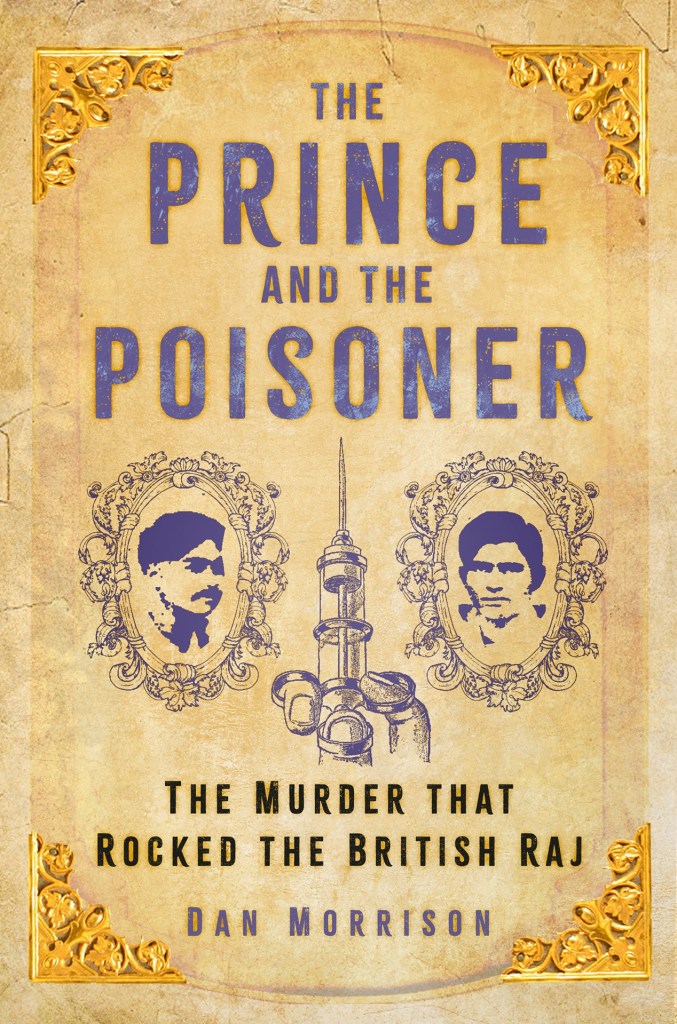






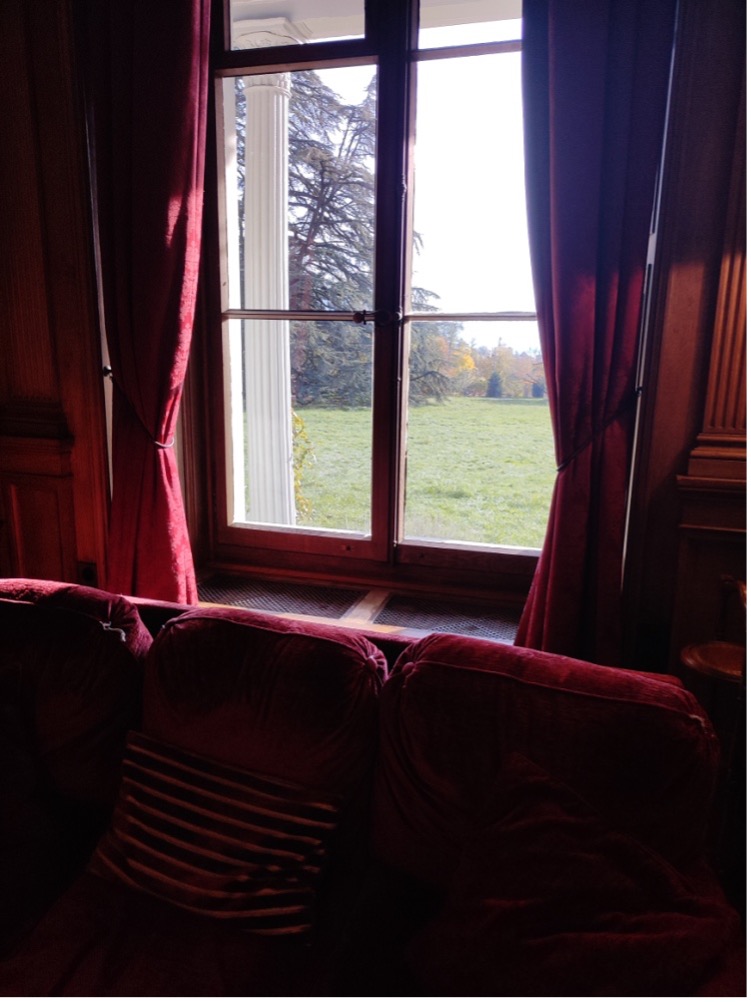
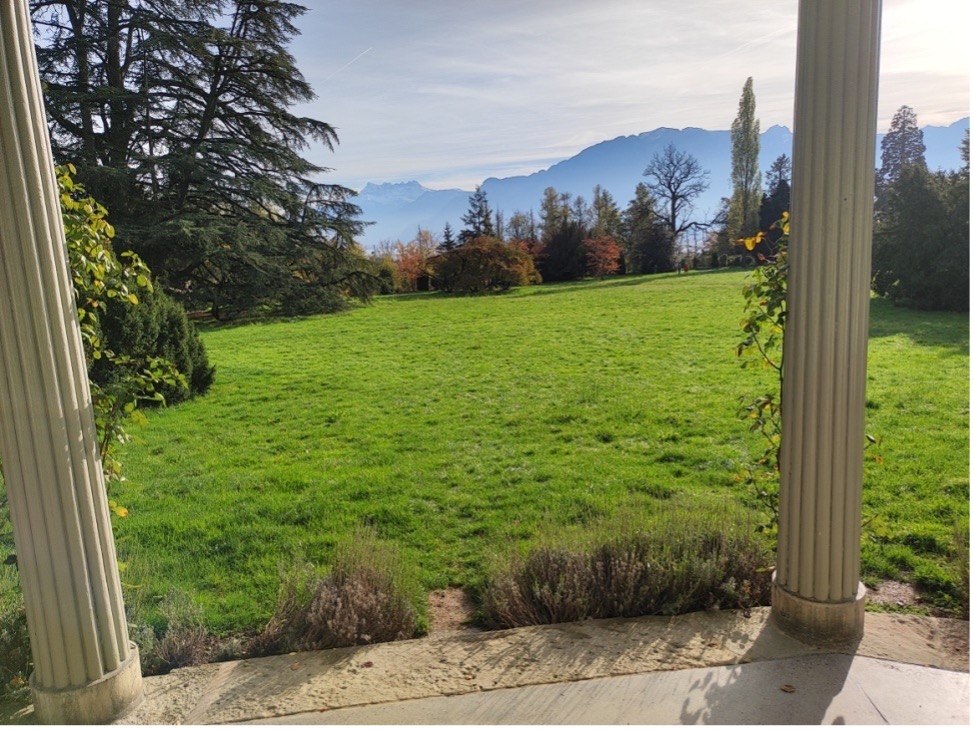


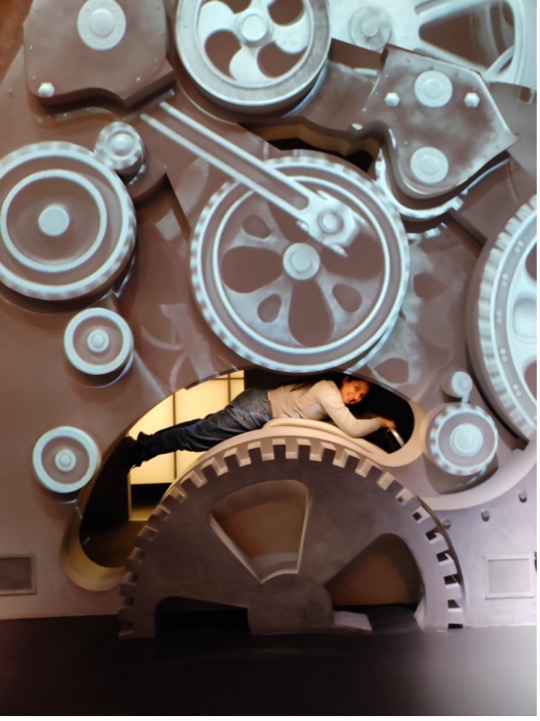
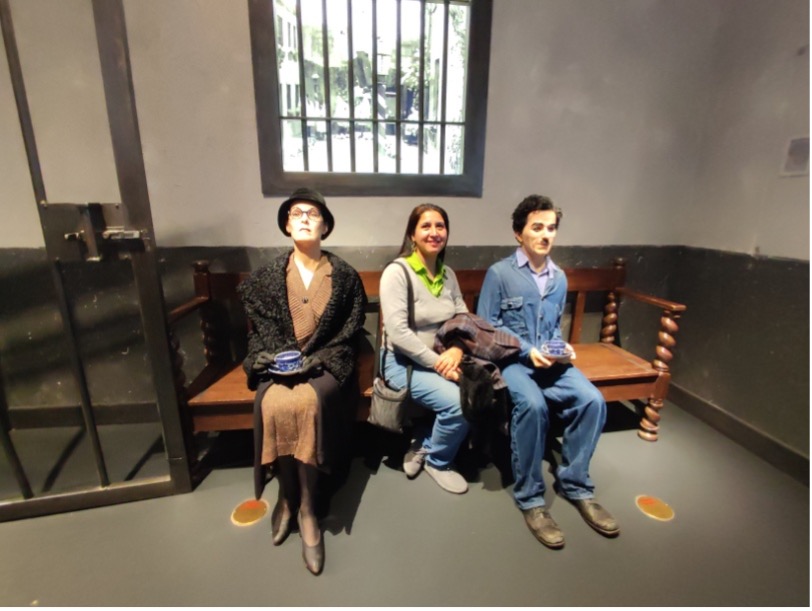
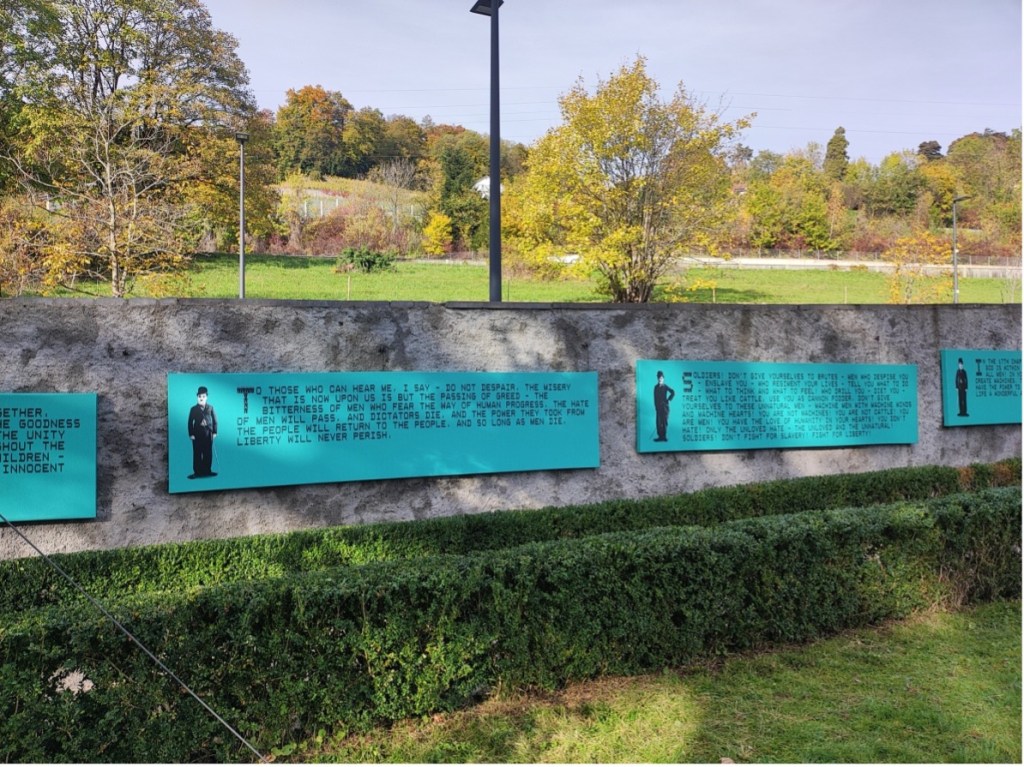

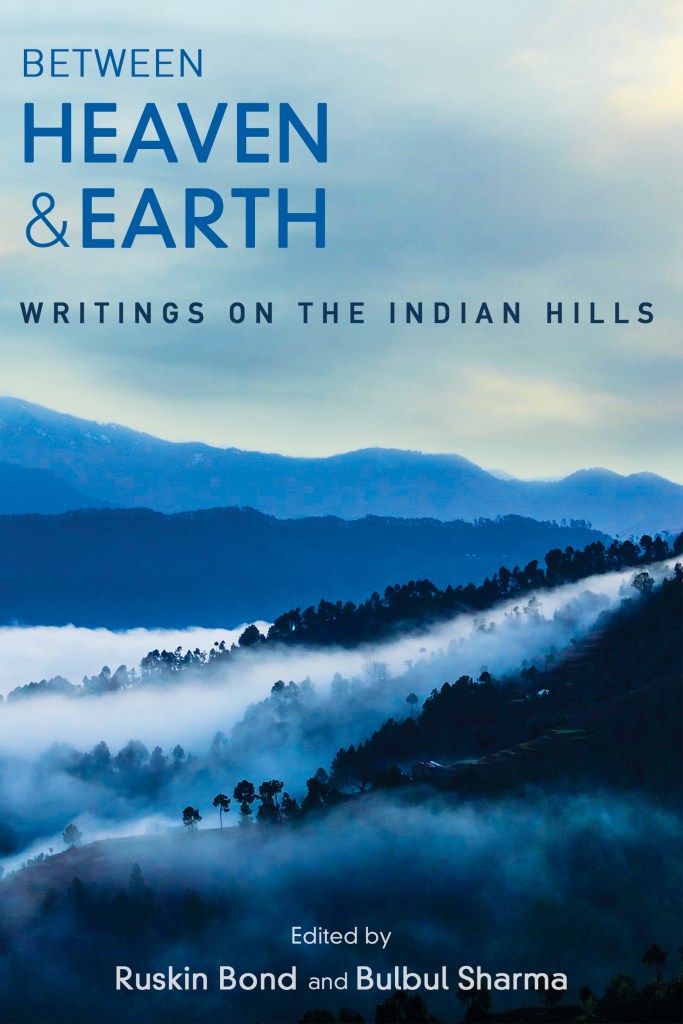
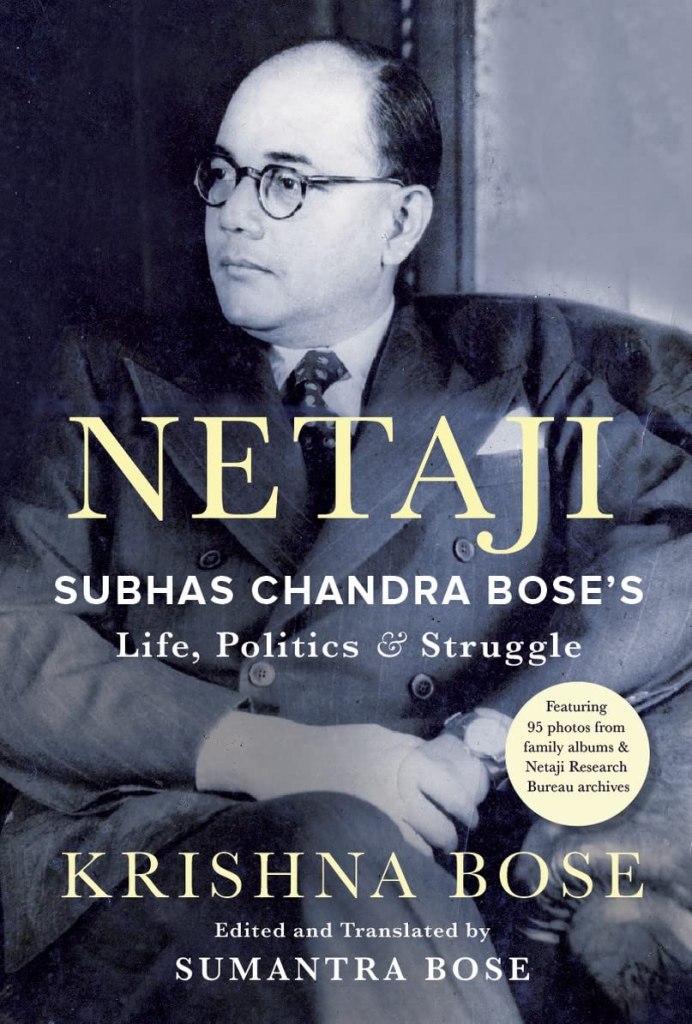
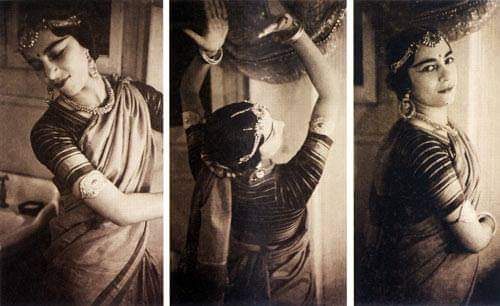

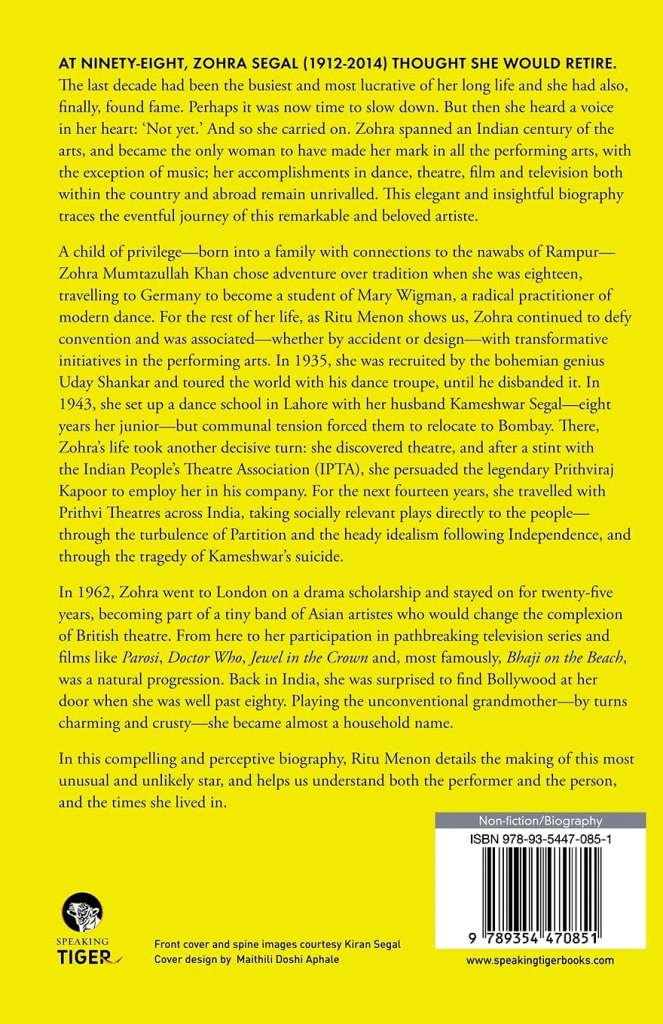
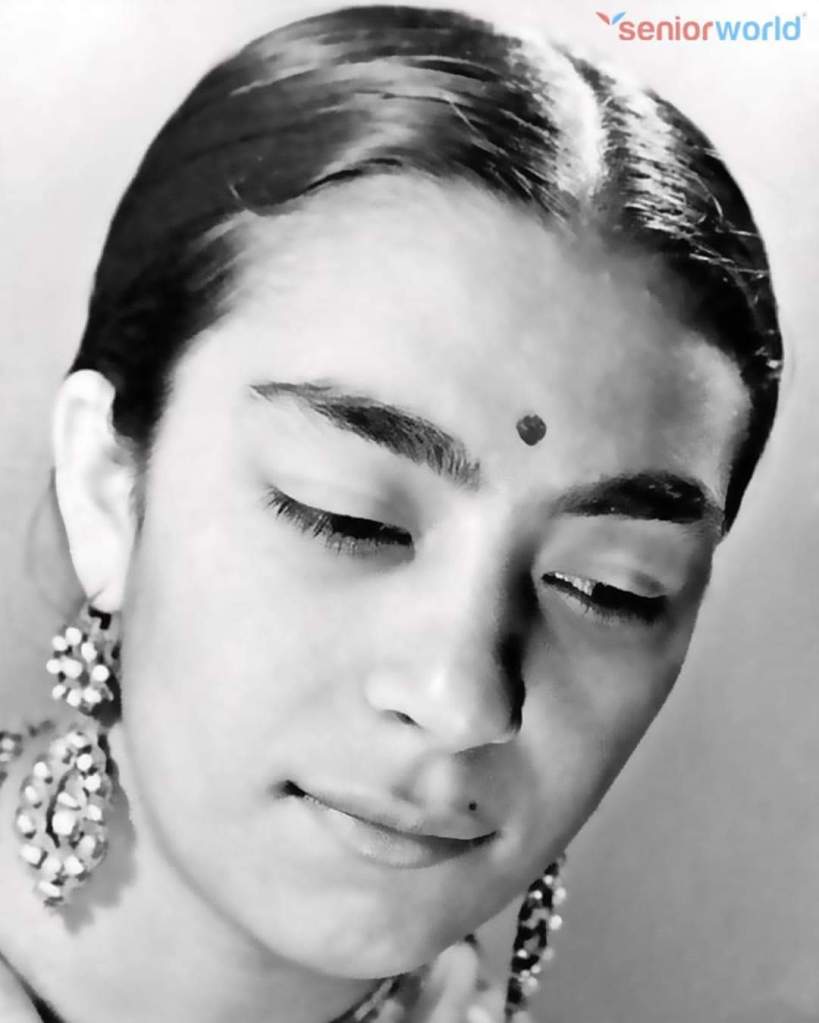
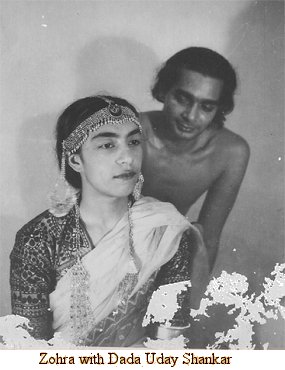

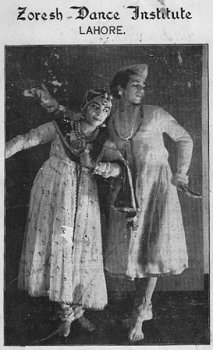

 Borderless