Categories
Review

Maya Nagari: Stories of Bombay-Mumbai

Book Review by Somdatta Mandal
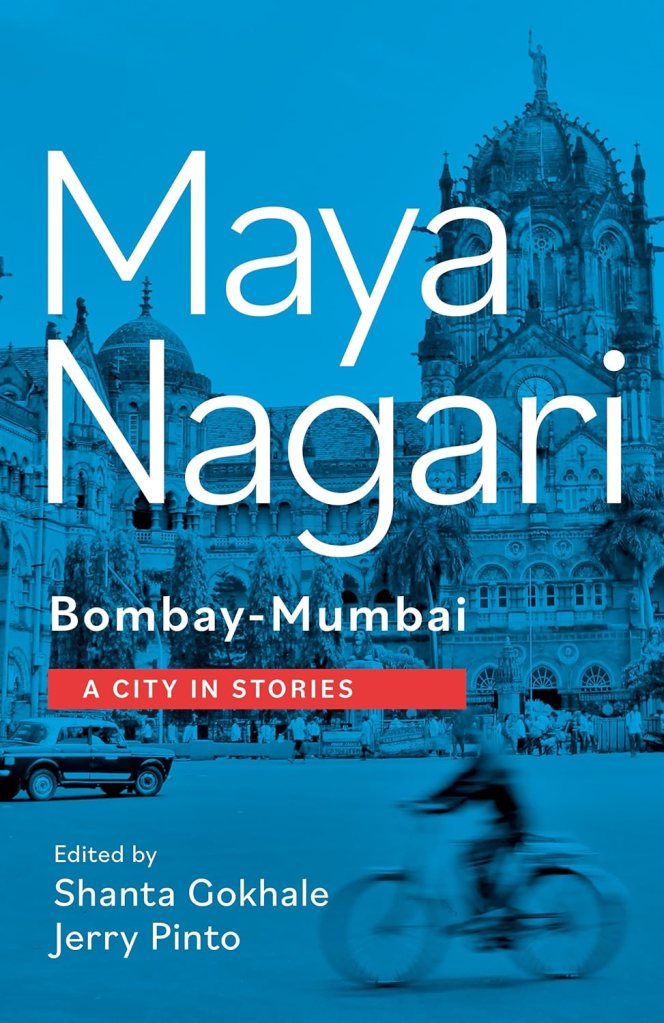
 Title: Maya Nagari: Bombay-Mumbai A City in Stories

Editors: Shanta Gokhale, Jerry Pinto

Publisher: Speaking Tiger Books

The very mention of the name Mumbai (or Bombay) brings to our minds a great city in India where the thriving metropolis grows at a rapid speed because people not only flock here from different parts of the country to make quick bucks and survive against all odds, but also because the film industry of Bollywood has also established it as a city of dreams, one that never sleeps and instead creates a mirage-of-sorts — an illusion, rightly labelled by the editors of this anthology as ‘Maya Nagari’. Edited by Shanta Gokhale and Jerry Pinto, this book, comprising twenty-one short stories about Mumbai takes the road less taken to create a non-uniform image of the metropolis. In tune with its multicultural and multilingual nature, we have stories about the city that is a sea of people and speaks at least a dozen languages. There are stories translated from Marathi, Urdu, Gujarati, Tamil, Hindi, Kannada, Malayalam, and stories written originally in English. Among the writers are legends and new voices—Baburao Bagul, Ismat Chughtai, Pu La Deshpande, Ambai,Urmila Pawar, Mohan Rakesh, Saadat Hasan Manto, Ambai, Jayant Kaikini, Bhupen Khakhar, Shripad Narayan Pendse, Manasi, Krishan Chander, Udayan Thakker, Cyrus Mistry, Vilas Sarang, Jayant Pawar, Tejaswini Apte-Rahm and Anuradha Kumar.

As Jerry Pinto clearly states in the introduction, the stories can be read as we like, we can begin with the first story or the last, or any story in between. The observant reader might notice that he and the other editor Shanta Gokhale have deliberately chosen not to organise the material according to chronology, or geography. This is partly because they believe that the city lives in several time zones and spaces at once, as does India, but also because there is something essentially chaotic about its nature. So, he says, “the stories echo and bounce off each other, they do not collide, but there is a Brownian motion to these patterns” and he hopes to let the readers find it. Here, Mumbai is stripped of its twinkle; it is deglamourised to reveal how it’s the quotidian that lends the city its character—warmth and hostility alike and as inhabitants of the city the editors call ‘home,’ they hope a narrative will emerge.

In the twenty-one stories of this collection, there is the city that labours in the mills and streets, and the city that sips and nibbles in five-star lounges, the city of Ganapati, Haji Malang and the Virgin Mary. What binds the stories together is ‘human muscle’ – the desperate attempts of men and women of all classes and castes to survive in this heartless city amid all odds.

The stories are of different lengths and written in different narrative styles. Of the five or six stories translated by Shanta Gokhale herself from Marathi, one is struck by the excessive length of the so called ‘short’ stories. The very first one “Oh! The Joy of Devotion” by Jayant Pawar, forty-five pages in length, narrates in detail about the Ganapati festival and how it is related to the fate of the local people. Pu La Deshpande’s story “A Cultural Moment is Born”, set in the 1940s, tells stories of people living in chawls [slums] and how they spend their cultural days. Another very long story translated by Gokhale called “The Ramsharan Story” tells us about the rise and fall of a bus conductor by the name of Ramsharan who turns out to become a union leader. Baburao Bagul’s “Woman of the Street”, written originally in Marathi and translated by Gokhale again, tells the story of Girija, a sex-worker trying to collect money to cure her son in the village. The story ends on a disturbing note, as it reaffirms the relativity of success.

Once again, Krishan Chander’s story “The Children of Dadar Bridge” translated from Hindustani by Jerry Pinto is so long that it qualifies to be called a sort of novella. In this powerful story God comes to earth to a chawl and offers food to the first-person narrator. Then, impersonating as a small and innocent child, and along with the child narrator, he moves around different places in the city to witness its activities firsthand — we get to know about behind the scene affairs that take place in the film studios, about satta[1] dens, about bribery, local dons who arm-twist every new hawker to carry on their business after receiving their weekly cut money and more. In “Civic Duty and Physics Practicals”, Malayalam writer Manasi reveals the different experiences one comes across living in a society defined by power equations. Issues of hooliganism, superstition, illegal colonies, corruption, intimidation and violence are explored in a single story where the narrator is struggling, for days, with blaring speakers at a wedding nearby, even as her son tries hard to prepare for his upcoming exams. The story soon takes a dark turn where power trumps over consideration for fellow human beings.

A very powerful story written by Ambai in Tamil called “Kala Ghora Chowk” deals with issues of Marxist ideology, trade unions and the fate of a raped woman called Rosa. Anuradha Kumar’s “Neera Joshi’s Unfinished Book” tells us the life story of one woman who “made the city” and the perennial problems of displaced mill workers when the closed mills give way to high-rise buildings. Some of the stories are of course written in a lighter vein, though they also depict different problems related to city life. As the title of Vilas Sarang’s story “An Afternoon Among the Rocks” suggests, it narrates the plight of a couple trying to make love in the deserted seashore and how they get hijacked by a smuggler! In “The Flat on the Fifth Floor”, Mohan Rakesh writes about two sisters who meet the narrator after one failed love affair. A moving picture of the closing down of cinema halls in Mumbai comes out very beautifully in the Kannada story “Opera House” by Jayant Kaikini, especially narrating the plight of one of the sweepers working there when the declaration of permanent closure is pasted everywhere. Tejaswini Apte-Rahm’s “Mili” tells the story of a man who meets his ex-girlfriend after five years.

Though it is not possible to give the details of each and every story included in this anthology in this review, one must mention some of the stories that were originally written in English. Cyrus Mistry’s “Percy” about a young and lonely Parsi boy is so compelling that it was even made into a Gujarati motion-picture. “House Cleaning” by Jerry Pinto tells the story of a woman cleaner and his son, who talks about the reality of street dwellers. Eunice de Souza’s “Rina of Queen’s Diamonds” is not a straightforward narration at all but offers a collage of different vignettes of life in Bombay.

Though most of the stories portray the seamier side of life and in some ways de-glamourise Mumbai, at the same time they also portray how human resilience can combat all sorts of odds, and the city can be revealed only through shared experiences. Thus, each of the twenty-one stories in this collection tells a different tale of Mumbai, Bombay, Momoi, Bambai, Manbai and many others. As the editors have rightly pointed out at the beginning of their introduction, “You cannot catch a city in words. You cannot catch a city at all.”  They felt that “it is not meant to be caught…this city resists even more because it was not designed at all; it just happened and it keeps on happening.” Thus, the four-hundred plus pages of this anthology Maya-Nagari remains a book to be treasured and read now at leisure and also at any time in the future.

.

[1] Betting or gambling dens

Somdatta Mandal, critic and translator, is a former Professor of English at Visva-Bharati, Santiniketan, India.

.

PLEASE NOTE: ARTICLES CAN ONLY BE REPRODUCED IN OTHER SITES WITH DUE ACKNOWLEDGEMENT TO BORDERLESS JOURNAL

Click here to access the Borderless anthology, Monalisa No Longer Smiles

Click here to access Monalisa No Longer Smiles on Kindle Amazon International

Categories
Review

The History Teacher of Lahore by Tahira Naqvi

Book Review by Somdatta Mandal

Title: The History Teacher of Lahore: A Novel

Author: Tahira Naqvi

Publisher: Speaking Tiger Books

Tahira Naqvi, the Pakistani American writer, has extensively translated the works of Saadat Hasan Manto, Khadija Mastur, Hajra Masroor, and the majority of works by Ismat Chughtai from Urdu into English. As a teacher/professor of Urdu language and literature at New York University, she has regaled us with several short stories that speak of cross-cultural encounters of immigrant Pakistanis in America, especially about how women experience acculturation in the New World. The History Teacher of Lahore is her first novel where she recollects the sights, sounds, and ambience of growing up in Lahore in intimate details. The setting of this novel is the nineteen eighties, which was particularly a time of unrest in Lahore. In this debut political novel, Naqvi eloquently portrays the struggle between a besieged democracy and the rise of Islamic fundamentalism on the one hand, and the thriving cultural traditions of Urdu poetry on the other.

The story begins with the young protagonist Arif Ali who moves from his hometown of Sialkot to Lahore with a dream of being a history teacher and a poet. A ‘tall, slight man in his late twenties,’ we find him relaxing on a bench in Jinnah Park — a place that has become haven for him to spend his time reading, far away from the ferocity of traffic and street crowds. In the days that followed, Arif realised that in the Government Model School for Boys where he taught, he was forced to teach the boys another kind of history for his sake as much as theirs. But that required deep thought, time, and enthusiasm. He befriended Salman Shah, another teacher in his school, and his rapport with him grew stronger by the day. But once again, Arif found the atmosphere in the school was becoming increasingly confining. He would often engage in animated chatter with the high school Islamiyat teacher Samiullah Sheikh, whom he found disagreeable. Not only dressed in Shariyah compliant clothes, but this man was also waiting for his opportunity to teach at a madrassah[1]. This was the period when bans were being imposed on popular music of the kind Nazia Hasan and her brother sang for the younger generation, and even though ‘Disco Deewane’ and ‘Dreamer Deewane’ were sung loud, fear had become an elixir for rebellion. Arif was forced to resign from the school and along with his friend Salman. he ultimately got another position as a history teacher in another private school, Lahore Grammar Institute, where there was more freedom to teach than in the earlier one. The free socializing among the sexes here was new and noteworthy for Arif.

As Arif’s impotent rage towards the increasing religious intolerance grew, he joined his friend’s uncle Kamal and his partner Nadira to secretly help them rescue underprivileged children in clandestine ways. In the meantime, his poetic creations found great impetus when he found a secret admirer in Roohi, Salman’s sister, and started sending her his poems regularly. Though they never met, Roohi would write letters to him every week, and gradually, the more letters Arif received from her, the more his feelings for her grew. The secrecy of their epistolary courtship continued for quite some time till things were disclosed and after a lot of twists and turns in the story, they were finally engaged to get married.

In the meantime, his friend Salman got engaged to a colleague Zehra Raza, and despite the Shia-Sunni clashes that prevailed in society all around, they were unaffected by such ideology. The three of them developed a close camaraderie among themselves, but soon after, the General’s death brought in a lot of political turmoil in the city. The mentality of the public also changed, people went en-masse to watch public flogging, and trouble loomed ahead when Sunni Shia, Ahmadi non-Ahmadi, Punjabi Urdu-speaking, Protestant-Catholic, divisions and sub-divisions, inter-faith, inter-class and inter-religion issues became more and more marked in all spheres of society. The warp and weft of faith produced such tangled intricacies as could only be imagined in nightmares.

As the nation was caught in the vortex of religious extremism, Arif’s position also underwent a great change in the school when he wanted to teach ‘true’ history to his students. He was caught in a dilemma when he found he was forced to teach false historical information in the doctored textbook that Aurangzeb with his hatred of other religions was adored whereas Akbar with more religious tolerance was totally sidelined. He tried to rectify the errors by providing supplementary notes to his students, but that landed him in more trouble. Apart from differences of opinion with the other teachers in school, Arif’s was gripped with a kind of fear and frustration when some unidentified goons threatened him to stay away from issues that did not concern him. Things got worse when a Christian student in his class was falsely accused of blasphemy and Arif decided to save him from being arrested. He embarked on a dangerous mission to resolve this Christian-Muslim conflict that landed him in the middle of sectarian clashes and without giving out all the details, one just mentions that the novel ends at a tragic moment.

In the acknowledgement section Naqvi states that she is grateful to her father for many things but especially for his Urdu poetry which she has used freely in translation. These poems, ghazals and nazms, help to explain the different moods of the protagonist and his mental situation very clearly. One interesting aspect of the novel is that each of the twenty-two chapters is prefaced by a small quote that in a way summarizes the mood and content of that chapter. Most of these quotes are from Jean-Paul Sartre, while others are from Spinoza, Ghalib, Shakespeare’s Sonnet 116, H.W. Longfellow, Jacques Derrida, Tertullian, Thomas Mann, and four entries particularly from The Lahore Observer dated 15 September 1990, December 1990, January 1997, and January 1998 respectively. These wide-ranging quotes not only increase the story-telling impact, but also endorse the erudition of the novelist herself.

To conclude we can say that Bapsi Sidhwa’s The Ice-Candy Man gave us the sights, sounds and details of Lahore during the Partition in 1947, and the same city becomes wonderfully alive again through the pen of another woman writer from Pakistan who had spent her growing years there, and who gives us details about it from the 1980’s onwards when  the political situation of the country was once again very murky. The novel wonderfully portrays the radical Islamisation of the country that included murder, mayhem, and public flogging and more that was visible in Lahore, as this process resulted in terrible uncertainty in the lives of the city’s residents from all walks of life. Strongly recommended for all readers, we eagerly wait for more novels by Tahira Naqvi in the future. The insider-outsider’s point of view offered by her is remarkable and this debut novel can be counted as a collector’s item.

[1] Muslim religious school

Somdatta Mandal, critic and translator, is a former Professor of English from Visva-Bharati University, Santiniketan, India.

.

PLEASE NOTE: ARTICLES CAN ONLY BE REPRODUCED IN OTHER SITES WITH DUE ACKNOWLEDGEMENT TO BORDERLESS JOURNAL

Click here to access the Borderless anthology, Monalisa No Longer Smiles

Click here to access Monalisa No Longer Smiles on Kindle Amazon International

Categories
Editorial

Making a Grecian Urn

“Beauty is truth, truth beauty — that is all
                Ye know on earth, and all ye need to know.”  
  
John Keats (1795-1821), Ode to a Grecian Urn
‘Beauty is Truth’ : The Potato Eaters(1885) by Vincent van Gogh (1853-1890). Courtesy: Creative Commons

What makes for great literature? To me, great literature states the truth — the truth that touches your heart with its poignancy, preciseness, sadness, gentleness, vibrancy, or humour.  If Khayyam, Rumi, Keats, Tagore, Frost or Whitman had no truths to state, their poetry would have failed to mesmerise time and woo readers across ages. Their truths – which can be seen as eternal ones — touch all human hearts with empathetic beauty. Lalon Fakir rose from an uneducated illiterate mendicant to a poet because he had the courage to sing the truth about mankind — to put social norms and barriers aside and versify his truth, which was ours and still is. This can be applied to all genres. Short stories by Saki, O’ Henry or plays and essays by Bernard Shaw — what typifies them? The truth they speak with perhaps a sprinkle of humour. Alan Paton spoke the truth about violence and its arbitrariness while writing of South Africa — made the characters so empathetic that Cry, My Beloved Country (1948) is to me one of the best fictions describing divides in the world, and the same divides persist today. The truth is eternal as in George Orwell’s 1984 (1949) or Suskind’s Perfume (1985). We love laughter from Gerald Durrell or PG Wodehouse too because they reflect larger truths that touch mankind as does the sentimentality of Dickens or the poignancy of Hardy or the societal questioning of the Bronte sisters, George Eliot, and Jane Austen. The list of greats in this tradition would be a very long one.

 Our focus this time is on a fearless essayist in a similar tradition, one who unveiled truths rising above the mundane, lacing them with humour to make them easily digestible for laymen – a writer and a polyglot who knew fourteen languages by the name of Syed Mujtaba Ali (1904-1974). He was Tagore’s student, a Humboldt scholar who lived across six countries, including Afghanistan and spoke of the things he saw around him. Cherished as a celebrated writer among Bengali readers, he wrote for journals and published more than two dozen books that remained untranslated because his witticisms were so entrenched by cultural traditions that no translator dared pick up their pen. Many decades down the line, while in Afghanistan, a BBC editor for South and Central Asia, Nazes Afroz, translated bits of Mujtaba Ali’s non-fiction for his curious friends till he had completed the whole of the travelogue.

The translation named In a Land Far from Home: A Bengali in Afghanistan was published and nominated for the Crossword Awards. This month, we not only run an excerpt from the translated essays but also have an interview with the former BBC journalist, Afroz, who tells us not only about the book but also of the current situation in ravaged Afghanistan based on his own first-hand experiences. Nazes himself has travelled to forty countries, much like our other interviewee, Sybil Pretious, who has travelled to forty and lived in six. She had been writing for us till she left to complete her memoirs — which would cover much of history from currently non-existent country Rhodesia to apartheid and the first democratic election in South Africa. These would be valuable records shared with the world from a personal account of a pacifist who loves humanity.

We have more on travel — an essay by Tagore describing with wry humour vacations in company of his niece and nephew and letters written by the maestro during his trips, some laced with hilarity and the more serious ones excerpted from Kobi and Rani, all translated by Somdatta Mandal. We have also indulged our taste for Tagore’s poetry by translating a song heralding the start of the Durga Puja season. Durga Puja is an autumnal festival celebrated in India. An essay by Meenakshi Malhotra explains the songs of homecoming during this festival. It is interesting that the songs express the mother’s views as highlighted by Malhotra, but one notices, never that of the Goddess, who, mythology has it, gave up her life when the husband of her own choosing, Shiva, was perceived by her family as ‘uncouth’ and was insulted in her parent’s home.

In spirit of this festival highlighting women power and on the other hand her role in society, we have a review by Somdatta of T. Janakiraman’s Wooden Cow, translated from Tamil by Lakshmi Kannan, where the protagonist upends all traditional values ascribed to women. Another book which is flavourful with food and would be a real fit on every festive occasion is Mohana Kanjilal’s A Taste of Time: A Food History of Calcutta. Bhaskar Parichha tells us in his review, “In the thriving universe of Indian food books, this clearly stands out.”

Aruna Chakravarti’s review of Shazia Omar’s Golden Bangladesh at Fifty also stands out embracing the colours of Bengal. It traces the title back to history and their national anthem — a Tagore song called ‘Amaar Sonar Bangla – My Golden Bengal’. Gracy Samjetsabam’s review of Suzanne Kamata’s The Baseball Widow, a cross cultural novel with an unusual ending that shuttles between America and Japan, winds up our review section this time.

As Kamata’s book travels across two continents in a pre-covid world, Sunil Sharma in reality moved home from one continent to another crossing multiple national borders during the pandemic. He has written an eye-opening account of his move along with his amazing short story on Gandhi. Another unusual story creating a new legend with wonderful photographs and the narrative woven around them can be relished in Nature’s Musings by Penny Wilkes. This time we have fiction from India, Malaysia, Bangladesh and America. Steve Davidson has given a story based partly on Tibetan lore and has said much in a light-hearted fashion, especially as the Llama resumes his travels at the end of the story. Keeping in step with light humour and travel is Devraj Singh Kalsi’s account of a pony ride up a hill, except it made me laugh more.

The tone of Rhys Hughes cogitations about the identity of two poets across borders in ‘Pessoa and Cavafy: What’s in a Name?’ reminds me of Puck  or Narada! Of course, he has given humour in verses with a funny story poem which again — I am not quite sure — has a Welsh king who resisted Roman invasion or is it someone else? Michael Burch has limericks on animals, along with his moving poem on Martin Luther King Junior. We have much poetry crossing borders, including a translation of Akbar Barakzai’s fabulous Balochi poetry by Fazal Baloch and Sahitya Akademi winning Manipuri poet, Thangjam Ibopishak, translated by Robin S Ngangom. A Nazrul song which quests for a spiritual home has been translated from Bengali by no less than Professor Fakrul Alam, a winner of both the SAARC award and Bangla Academy Literary Award.

Former Arts Editor of Times of India, Ratnottama Sengupta, has shared an essay on how kantha (hand embroidered rug) became a tool to pass on information during the struggle against colonial occupation. The piece reminded me of the narrative of passing messages through mooncakes among Chinese. During the fourteenth century, the filling was of messages to organise a rebellion which replaced the Yuan dynasty (1271-1368) with the Ming (1368-1644). Now the filling is delicious lotus paste, chocolates or other edible delicacies. Women were heavily involved in all these movements. Sameer Arshad Khatlani has highlighted how women writers of the early twentieth century writing in Urdu, like Ismat Chughtai, created revolutionary literature and inspired even legendary writers, like Simone de Beauvoir. There is much more in our content — not all of which has been discussed here for again this time we have spilled over to near fifty pieces.

We have another delightful surprise for our readers – a cover photo of a painting by Sohana Manzoor depicting the season titled ‘Ode to Autumn’. Do pause by and take a look at this month’s issue. We thank our writers and readers for their continued support. And I would personally like to give a huge thanks to the team which makes it possible for me to put these delectable offerings before the world. Thank you all.

Wish you a wonderful month full of festivities!

Mitali Chakravarty,

Borderless Journal

Categories
Essay

How Women’s Education Flourished in Aligarh Muslim University

By Sameer Arshad Khatlani

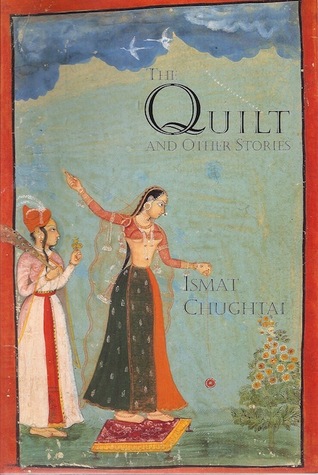
When iconic Urdu writer Ismat Chughtai (August 21, 1915-October 24, 1991) wrote ‘Lihaaf’ (quilt) and made waves by portraying alternative sex in 1941, second-wave feminism was still around two decades away. Her feminist subversion of patriarchy with the portrayal of a woman’s conditioning vis-à-vis her body had no parallels in the West then. ‘Lihaaf’ predated Simone De Beauvoir’s The Second Sex by five years. Chughtai’s journey to becoming South Asia’s top feminist writers began in Aligarh where she had her literary grounding at a school affiliated with the prestigious Aligarh Muslim University (AMU). The school was upgraded to a college in 1937, nineteen years before Delhi’s premier Lady Shri Ram College was founded and when the literacy rate among women was just three per cent in India.

The AMU Women’s College was the labour of love and realisation of the dream of its founders, Sheikh Abdullah and his wife, Wahid Jahan, of educating and empowering women in a dusty inland town while western education had just begun to flourish in far off coastal centers. It was not an easy task for them. Both Hindus and Muslims opposed Abdullah’s movement to educate women, fearing it would lead to ‘immorality’. Many years later, he told the students of the college with a sense of triumph and pride: “When, after innumerable odds, we came out of the darkness, it was found that education had the same bright effect on them as silver polish has on pots and pans. Educated girls have illuminated our society.”

The movement for educating women in Aligarh started during the lifetime of AMU founder Sir Syed Ahmad Khan, who, in celebrated historian Ramachandra Guha’s words, ‘propagated liberal values and rational outlook to oppose blind adherence to traditional values’. As a result, the Muslim Educational Conference formed a separate department for women’s education in 1898. It promoted the idea through Aligarh Institute Gazette. Abdullah, who was close to Khan, was appointed to look into the women’s educational project in December 1902. A special ‘Aligarh Monthly’ issue was published in November 1903 for the purpose. Abdullah, who was educated at AMU after migrating from Poonch in Jammu and Kashmir, later started a dedicated journal Khatoon (woman) for the promotion of women’s education in 1904. He simultaneously founded Female Education Association in 1904 to promote his cause and provide support to institutions working for it. Abdullah got a shot in the arm when Bhopal’s ruler, Begum Sultan Jahan, offered him a grant. Thus Aligarh Girls School took off with five students and a teacher on October 19, 1906. Science and social science were part of the initial syllabus.

The school was the first for Muslim girls in north India, where Abdullah’s daughter Rashid Jahan honed her rebellious streak. Rashid was trained as a doctor, who chose a radical path of a communist and a rebel. She went on to study at Lucknow’s Isabella Thoburn College after her schooling in Aligarh. Rashid was among the first Muslim women to be trained as a doctor at Delhi’s Lady Hardinge Medical College.  She was a woman ahead of her times — both in personal life and the literature she produced.  Rashid was unusual in the choice of her profession of a gynaecologist, her dress — a khaddar sari with sleeveless blouse — and style — short hair. She travelled to far-off places to treat the needy and the poor. All this was rare for any woman of her generation particularly in Uttar Pradesh in the first half of the 20th century before independence.

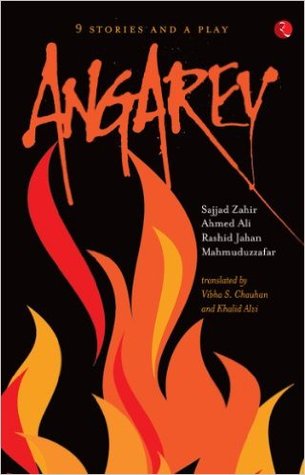
Rashid was one of the four authors of a polemical collection of stories, Angaarey (embers), which provoked outrage in 1932 with its attack on religious conservatism and British colonialism. The collection was banned in March 1933. But it led to the formation of the Progressive Writers’ Association, which attracted the likes of Kaifi Azmi, Ali Sardar Jafri, and Chughtai and revolutionised Urdu literature. Rashid wrote about female bodies with the exactness that only a doctor with intricate knowledge of human anatomy would.  She attacked purdah, patriarchy, and misogyny. Rashid influenced Faiz Ahmed Faiz with Marxist ideas along with her husband Mahmuduzzafar, while the latter was Amritsar’s Muhammadan Anglo-Oriental College principal while the poet taught English there.

Besides Faiz, Rashid influenced successive generations of Indian and Pakistan feminist Urdu writers and inspired them to explore forbidden subjects such as love and sex. This included her junior at school, Ismat Chughtai.  Like ‘Angaarey’, ‘Lihaaf’ triggered a storm as it humorously dealt with lesbianism and sexual desires of women. The British colonialists charged Chughtai with pornography and she was summoned before a court over it. Yet years after her death her legacy lives on. According to Chughtai’s translator Tahira Naqvi, in nearly every department where South Asian Studies, Women’s Studies, Feminist/Gender Studies, and South Asian literature are taught, her work draws as much attention as her Western peers. Chughtai is often described as one of Urdu fiction’s pillars. She has deeply influenced the likes of Khadija Mastur, Hajira Masroor, Bano Qudsia, etc. Naqvi believes Pakistani poets like Kishwar Naheed and Fehmida Riaz have ‘derived inspiration from her bold, uninhibited style of writing’. Other notable alumni of AMU Women’s College included artist Zarina Hashmi, Pakistani film actor Nayyar Sultana, and writer Kusum Ansal, etc.

Many AMU Women’s College alumni may not have realised their full potential had not it taken its present shape in 1937 when India’s female literacy rate was less than three per cent. This is up to 65% now. Much credit for this goes to the pioneers of female education in India. Among them, Abdullah would be in the same league as the founders of India’s first women’s college, Calcutta’s Bethune College, in 1879 and Lucknow’s Isabella Thoburn College (1886). Abdullah’s efforts were recognised in 1964 when he was awarded the country’s third-highest civilian award — Padma Bhushan.

This is a slightly edited version of a piece published in The Times of India, the author’s former employer, in 2014. And then republished in his blog. Republished with permission of the author.

Sameer Arshad Khatlani is an author-journalist based in New Delhi. He has been a Senior Assistant Editor with Hindustan Times, India’s second-biggest English newspaper. Khatlani worked in a similar capacity with The Indian Express. Penguin published Khatlani’s first book The Other Side of the Divide: A Journey into the Heart of Pakistan in February 2020.

.

PLEASE NOTE: ARTICLES CAN ONLY BE REPRODUCED IN OTHER SITES WITH DUE ACKNOWLEDGEMENT TO BORDERLESS JOURNAL