Zihan stirred in his sleep. A chill breath passing over his limbs had awakened him. He strained his eyes, still heavy with wine fumes, and looked around. Where was he? This was not his room and this wasn’t his bed. He was lying in what seemed to be a small, confined space under an ornate gilded ceiling in a bed so soft, his limbs were sinking into its depths. The sky was paling with first light and long beams from a dying moon streamed in through the open window. The fragrance of an unknown flower, wild and sweet, filled the room.
He turned his head towards the window. Something, like an opalescent haze, was obscuring his vision. At first, he thought it was a sheet of mist. Then, before his amazed eyes, it started to take a shape and form. It became a woman. He could see her slender limbs, smooth as white satin, shimmering through the garment that swayed and billowed around her form. Diaphanous as a film of gossamer. So light, it seemed woven out of moonbeams. Her face was swathed in mist.
The figure moved from the window and came gliding towards him. He could see her face clearly now. A perfect oval with apricot shaped eyes, brows like strung bows and hair that fell down her back like a sheet of black silk. He stared at the vision of loveliness so long and hard …his eyes began to hurt. He had never seen such beauty in a woman before.
She stood by his bed for a while gazing into his eyes, then lay down, her body light as a feather against his. Taking his face in her hands, she caressed it with a tenderness that reminded him of his mother’s touch. She drew the silky strands of her floating hair all over his naked body. Across his chest and abdomen, over his genitals, thighs and legs, down to the insteps of his feet. The wildflower scent from her limbs filled his nostrils. Her kisses fluttered on his lips, soft and cold as drifting snow…
The wine, still running in his blood, quivered in his veins. His limbs, untouched by a woman before, heaved luxuriously and his eyes closed in ecstasy. He drifted away…
How long he lay in this state of bliss, he couldn’t tell. It could be minutes. It could be hours. Gradually, an uneasy feeling came over him. Something heavy was pressing against his body. It was squashing his chest and squeezing the breath out of his lungs. He moved aside but the pressure grew in intensity, driving him further and further towards the edge of the bed. And now his heart beat rapidly with an unknown dread. What was happening? Washe still asleep and this a fearful dream? Suddenly his eyes sprang open and what he saw sent currents of ice water rippling down his spine. He felt the hot blood pulsing and pounding in his ears. A muscle twitched and shuddered in his cheek…
The reed-slim body of the woman beside him had bloated to a colossal size. Her eyes, thin slits in the vast globe of her face, glittered with hate. Her mouth was a deep red gash through which yellow teeth, long and sharp as a panther’s fangs, hung to her chin.
The mountain of flesh was growing larger and larger every moment. It was filling the bed. He would fall over the edge any moment now. A scream gathered in his lungs but froze before it could reach his throat…
Suddenly she sprang on him; her nails sharp as claws ripping the skin off his chest and thighs. Digging her teeth into the soft flesh just below the right shoulder, she bit off a large hunk. Zihan’s eyes were glazed with pain and fear. He stared mesmerized as the monstrous creature rose from the bed and swayed and shuffled towards the opposite wall. She wore a garment of sheer white muslin that swelled and surged like waves about her form. Blood dripped from her slavering mouth and fell on the floor as her great body waddled, like a gorilla’s, from side to side. And now, for the first time, Zihan saw the coffin. It was open…
Zihan screamed. Shriek after shriek burst from the throat that had been frozen all this while, hit the walls, and sent fearful echoes all through the house. Then, exhausted and half dead from shock and loss of blood, he lay motionless, whimpering like a child.
Kueilan was a light sleeper and the first to hear the cries. They seemed to be coming from the dead girl’s room. Her heart thudded with fear as she rushed to it and flung the door open. She stood where she was for a while, her eyes glued to the coffin. It stood in the same place but the seal was broken and its open lid rested against the wall. A lily-white hand with long tapering fingers was dangling from the edge. And now the lid began to move downwards. Slowly, soundlessly, it was falling in place. In a few moments it would reach the hand and crush it. A tremor ran through Kueilan’s frame. Her mouth opened in a scream but before she could utter a sound, the hand glided over the edge and slipped into the hollow where the rest of the dead girl lay. Then, before Kueilan’s amazed eyes, the coffin closed, the seal came together and all was as it had been.
‘Published with permission from Penguin Random House India from Creeping Shadows (2026)’.
About the Book:
The stories in Creeping Shadows are spread over a vast canvas, both in terms of time span and locale. A teahouse in ancient China. A brothel in nineteenth-century Calcutta. A forest lodge in Bankura. An old mansion in Bangladesh. A university campus in today’s Delhi. Beginning as human-interest narratives, they end with sudden, unexpected twists that raise hair ends and send trickles of ice water down the spine. Here are tales of shadows, tingles and chills…
About the Author:
Aruna Chakravarti has been principal of a prestigious women’s college of Delhi University for ten years. She is also a well-known academic, creative writer and translator with eighteen published books on record. They comprise five novels, two books of short stories, two academic works and nine volumes of translation. Her first novel, The Inheritors (published by Penguin Random House), was shortlisted for the Commonwealth Writers’ Prize and her second, Jorasanko, received critical acclaim and became a bestseller. Daughters of Jorasanko, a sequel to Jorasanko, has sold widely and received rave reviews. Her novel Suralakshmi Villa was adjudged ‘Novel of the year (India 2020)’ by Indian Bibliography published in The Journal of Commonwealth LiteratureU.K. Her other well-known works include The Mendicant Prince which has been shortlisted for the Rabindranath Tagore Literary Prize, and Through a Looking Glass: Stories. Her translated works include an anthology of songs from Rabindranath Tagore’s Gitabitaan, Saratchandra Chattopadhyay’s Srikanta and Sunil Gangopadhyay’s Those Days, First Light and Primal Woman: Stories. Her most recent work is titled Rising from the Dust. Among the various awards she has received are Vaitalik Award, Sahitya Akademi Award and Sarat Puraskar. She is also a scriptwriter and producer of seven multi-media presentations based on her novels. Comprising dramatized readings, interspersed with songs and accompanied by a visual presentation by professional artists and singers, these programmes have been widely acclaimed and performed in many parts of India and abroad.
There were very few things that Sir Mark Tully touched which did not turn to gold. In his later years, disenchanted by journalism, he resorted to making documentaries on steam trains. Accompanied solely by a production crew and armed with the knowledge that comes with instinct, Sir Mark established that the locomotives pulling these trains — running on steam — did exist in India, even if he had to crisscross his way to the western peripheries of Kutch to make his point. By then, the BBC, whose outstanding representative he had become, and whose torch he held aloft in times of crises, had become enamoured by the crony capitalism of the centre-right, which we would go on to see in later years.
Born in the southern suburb of Tolluygunge in Calcutta to parents who were Indian in all but name, Sir Mark was sent to study in England at the age of nine before joining the organisation which would, for better or worse, be the making of him. Known essentially for his factual reporting, albeit with the possession of a nuanced eye that made his stories seem humane, Sir Mark’s passion for conversation with his subjects made him highly esteemed in the eyes of his peers. The added benefit of reporting on events that shaped modern India — the Bhopal gas tragedy, Operation Blue Star, Rajiv Gandhi’s assassination, the Babri Masjid demolition, et al — was the ream of concepts he had up his sleeve, and of which he made good use when he started writing books.
Amritsar: Mrs Gandhi’s Last Battle was Sir Mark’s first book, but it was No Full Stops In India that embellished him as a legend who could comfortably balance storytelling with a subtle hint of refinement, and who had the repertoire of knowing his subjects inside. Despite being born in the country, he was only given the privilege of being an Overseas Citizen of India (OCI), but this did not deter Sir Mark from his goal — to tell the stories of real Indians and real India to those who did not know where to look. All his life, he rallied behind the cause of religious pluralism and batted for the inclusion of marginalised communities and minorities into the mainstream, but died a man broken by the scars of battle.
Much like the Ashokan rock edicts that were unknown to the ordinary Indian till James Prinsep deciphered the Brahmi script in the early 19th century, Sir Mark’s work went largely unnoticed in the country until he left the BBC. Harassed and harangued by the Indira Gandhi government, he had also been forced to leave the country when the Emergency was imposed. However, return he did, to his country of birth, and stayed loyal — to its people and to the truth — and continued challenging those in power with constant, if gratifying, attacks.
Telling stories with a precision that most remain unaware of despite the possession of all-seeing eyes, Sir Mark’s work remained a terrifying but ambitious challenge for any aspiring journalist to recreate. He left just the way he had wanted to leave, in the country of his birth, known as an Indian who had struck roots in its soil, blossomed in its spring and withered at its dusk. A man ahead of his times by several generations, Sir Mark Tully was an Indian we did not deserve.
Mohul Bhowmick is a national-level cricketer, sports journalist, poet, essayist and travel writer from Hyderabad, India. He has published five collections of poems and one travelogue so far. His latest book, The Past Is Another Country, came out in 2025. More of his work can be discovered on his website: www.mohulbhowmick.com.
.
PLEASE NOTE: ARTICLES CAN ONLY BE REPRODUCED IN OTHER SITES WITH DUE ACKNOWLEDGEMENT TO BORDERLESS JOURNAL
Art by Salvador Dali (1904-1989) From Public Domain
Soon, there will be nothing left to see.
One drop in the ocean - my imagination -
Walking past shards of disjointed memory
May kindle a profane, unkindly creation.
You meant more to me than I ever said;
Approving lesser still of what lay ahead.

Since you never asked for black and white,
Our paths may have crossed to some extent.
Well, you seem unobsessed. If you ever fight
My memories, unjaded and thus unspent,
Your voice will not crack. You'll choose to see
All my flaws for loving you unconditionally.

Seeing you then, I broke down in tears.
Opportunity knocked, as if in a dream.
What could I do? Despite the safety of years,
My mind still aches when rushing upstream.
Your memories come back to me, unasked.
And I find myself traversing to the past.
Mohul Bhowmick is a national-level cricketer, sports journalist, poet, essayist and travel writer from Hyderabad, India. He has published five collections of poems and one travelogue so far. His latest book, The Past Is Another Country, came out in 2025. More of his work can be discovered on his website: www.mohulbhowmick.com.
.
PLEASE NOTE: ARTICLES CAN ONLY BE REPRODUCED IN OTHER SITES WITH DUE ACKNOWLEDGEMENT TO BORDERLESS JOURNAL
Signing in the Air, Malashri Lal’s second poetry collection, announces itself as a meditative, non-linear poetic journey from the very outset. A poet, academic and critic, Lal explains in her preface, there is “no linearity in such a theme,” and the poems move instead through cycles of time, memory, myth, and lived experience. The seventy-six poems converse with each other and portray her meticulous craftsmanship.
The collection draws deeply from the Indian concept ofritu — the six seasons — while simultaneously acknowledging the disruptions of climate change and modern dislocation. Nature in Lal’s poetry is neither sentimental nor static; it is capable of both “ravage and rejuvenation,” a duality that becomes central to the collection’s philosophical stance.
The poet’s voice resists fixity. The lyrical “I” is deliberately “timeless, generic author, reader, witness,” allowing the poems to transcend individual autobiography and become collective meditations on human and feminine destinies. This makes the book not merely confessional but contemplative, situating personal memory within wider cultural and ecological continuums.
The five sections of the book do not function as isolated compartments but intricately connected that speak to one another.
‘Whispers of the Earth’ foregrounds the elemental: trees, rain, seasons, and landscapes, yet avoids pastoral nostalgia. Lal speaks to nature rather than about it, creating an intimacy that acknowledges environmental fragility without moralising.
‘Installations’ shift attention to material culture and memory. Objects, such as, old books, domestic utensils, inherited artefacts become repositories of time. Lal’s reflection on ancestral possessions, such as the hamam or the dol[1] for washing clothes, raises radical questions: have women’s destinies changed as technology has advanced, or have only the tools evolved while labour and inequality persist?
‘Echo of Myths’ is one of the most resonant sections, reworking mythological figures like Lakshmi, Sita, and Radha not as static icons but as evolving subjects. Lal’s engagement with myth is neither reverential nor iconoclastic; it is dialogic. Myth becomes a living language through which contemporary women’s struggles, endurance, and resilience are articulated.
‘Meditative Missives’ carries a distinctly philosophical tone. Time dissolves into moments of stillness, and poetry itself becomes an act of contemplation. Lal explicitly frames the volume as possessing “a meditative streak weaving through it,” where mind and body interact to create “kaleidoscopic images” that search for form and vocabulary.
‘Women Who Wander’ brings the collection into the socio-political present. Drawing upon the idea of the flâneuse, Lal reimagines wandering as a gendered act—women moving through cities, histories, and emotional terrains. These poems reclaim mobility as agency and witness.
Lal’s language is marked by clarity rather than excess. Her metaphors are precise, often luminous, and grounded in lived experience. The imagery functions kaleidoscopically: fragments turning to reveal new patterns rather than fixed meanings. Light, shadow, seasons, and movement recur as motifs, reinforcing the book’s concern with impermanence and continuity.
A powerful example of Lal’s ethical and spiritual engagement appears in the opening poem, ‘Invocation: Devi Stuti – The Divine Feminine’. Here, the feminine divine is portrayed as both creator and destroyer, compassionate yet fearsome:
She, the feminine power creates as well as destroys…
Evil seems to flourish and goodness struggles
but She knows whom to vanquish
in the final reckoning.”
The poem moves beyond ritual praise to a contemporary plea, invoking divine protection against “violence, brutality, torture of the everyday woman”. This invocation sets the moral and emotional tone of the entire collection, anchoring the personal within the cosmic.
A recurring concern in Signing in the Air is hybridity of place, language, identity, and time. Lal reflects on her own transitions between Jaipur, Bengal, and Delhi, embracing what critics have described as her ability to be “at home in her multiple worlds, and an outsider looking in”. This tension enriches the poems, allowing them to speak across geographies and generations.
Memory functions not as nostalgia but as ethical inheritance. The poet’s recollection of her grandmother—an early graduate of the University of Calcutta—foregrounds women’s intellectual legacies often erased from public history.
The book cover is understated yet evocative. The image of a silhouetted tree against a luminous sky visually echoes the book’s thematic preoccupations: imprint and erasure, presence and absence, rootedness and transcendence. The title Signing in the Air is aptly suggestive, writing that leaves no permanent mark yet insists on meaning.
In terms of physical quality, the book is finely produced. The paper and layout are reader-friendly, lending dignity to the text without distraction. The careful structuring of sections and the inclusion of preface, acknowledgements, and critical blurbs enhance the book’s scholarly and aesthetic value.
Signing in the Air is a mature, reflective, and deeply humane collection. Malashri Lal writes with quiet authority, weaving together ecology, myth, memory, spirituality, and women’s lived realities. The poems resist closure, inviting readers into an ongoing conversation, one that unfolds across seasons, histories, and inner landscapes.
Ultimately, this is a book that does not shout but resonates. It affirms poetry as an act of witness, meditation, and ethical imagination: truly, as Lal suggests, a way of “scribbling in the empty air where intimations of spirituality and social truth coexist without definable boundaries.”
Story by Lakhvinder Virk, translated from Punjabi by C. Christine Fair
Translator’s note
This story comes from Lakhvinder Virk’s first collection of Punjabi-language short stories titled, Colors that Were Not Red (Rang Jo Suuha Nahin Sin), which was published in 2024 by Ojj Parkashan in India. Punjabi literature, despite the presence of important giants such as Amrita Pritam and Ajeet Cour, is still dominated by male voices and male interiorities. Even when male authors ventrilolocute for female characters, it often feels voyeuristic. Upon reading this story, I was immediately struck by its distinctive voice and storyline. This story is distinctive both because of its adventurous female protagonist, who is willing to explore her own sexuality and negotiate the boundaries of marriage, but also its theme of a husband who seeks an open marriage. In India such concepts are even more rare and controversial than they are in the United States. Upon encountering this story, I was awed by Virk’s brave willingness to engage a subject matter that is so verboten in India. While other stories in her collection of short stories flirt with similarly provocative themes, I believed “Open Marriage” was an important story to translate. While the specificities of this story are rooted in upper-class Mumbai, India, the challenges confronted by the young female protagonist are universal. How do women everywhere negotiate unreasonable demands and behavior from a husband who was heretofore presented as loving and caring? When has the Rubicon been crossed? When does a woman leave a marriage that is destroying her? How much is too much to tolerate? This story presents its own answers.
Lakhvinder Virk
Open Marriage by Lakhvinder Virk
The sound from the phone caught both of their attention. It was likely text message. Indeed, Siddarth got a message on his phone. He did not pick up his phone to look. Tania’s gaze was fixed on the television screen. Because it was Sunday, both were free, and they planned to watch the film Animal on Netflix. They ordered out for food and began watching the movie.
On the TV. screen, there was a scene: the hero, having lied to his wife, formed a physical relationship with another girl. When the wife found out, she was inconsolable. She cried and left the house, taking the children with her.
Siddharth picked up the phone and went to the bathroom. But the sound of the message on his phone kept nagging Tania.
Tania tried to focus on watching the film. “Is it such a big deal if a husband is involved with another woman? He still loved his wife,” she thought to herself. “If what is being depicted is real, then so what?”
*
Siddarth and Tania were married two years ago. Siddarth was the CEO of a multinational company in Mumbai, and Tania was the general manager in a branch of the State Bank of India. They had an arranged marriage through a matchmaking app. After marriage, the husband and wife would clean the kitchen together as well as other household chores. Because Tania shifted from Delhi to Mumbai, she had to work hard to understand the new place and new environment. Siddarth helped her thoroughly in this process.
One day Siddarth asked, “Tania, did you have a boyfriend before marriage?”
“I am not so narrow-minded. Don’t worry. Come on. Tell me.”
“In truth, no.” Tania was collecting herself.
“This isn’t possible, dear. Don’t lie.”
“No Siddarth, it’s the truth.”
“This means that you don’t trust me, Tania. These days, there’s nothing bad about having relationships. Moreover, in our society, if you don’t have a relationship, it means that there is something wrong with you.” Siddarth wanted to know about Tania’s past.
“I never got the free time, Siddarth. I just focused upon my career and studies,” Tania answered, looking away. She was afraid that Siddarth would read her emotions.
“Tell me about yourself,” Tania asked.
“Yes. I had many. I had my first girlfriend when I was in the sixth grade. Before marriage, I had thirteen girlfriends.” Siddarth answered proudly, counting them on his fingers.
“Oh my god! At such a young age,” Tania said in bewilderment.
“Young?” Siddarth looked at Tania as if she had come out of the jungle and knew nothing about the world. “Some of my friends had several physical relationships by the time they were in the tenth grade. I even had a friend who was caught with his girlfriend in the school toilet. Both of them were kicked out of school. In this regard, I was slow. My friends would make fun of me because I was clueless. Then somehow, during my graduation, I mustered the courage with my fourth girlfriend,” Siddarth explained while laughing. Tania was looking at him, astonished.
“Delhi is also an open environment like this. How is it possible that you did not have a boyfriend? Yaar[1], these days one has to do a lot of things due to peer pressure. Among my friends, if someone didn’t have a girlfriend, they would kick him out of the group. I don’t believe you didn’t have a boyfriend. Come on. Tell me,” Siddarth insisted.
“It’s not necessary that every girl has a relationship.”
Tania had two boyfriends. One was in the twelfth grade. When Tania saw him, she fell in love with him. But this was a childhood crush that ended in a few days when he became friends with another girl. The second was when she was doing her MBA. She fell in love with a classmate. She was fairly serious in this relationship. She wanted to marry him, but when she raised this matter with him, he responded in rage. Tania was outdated to him. “I’ve never even thought like this. What does marriage mean?” he had said.
After that, they could never be normal again, and they broke up.
Tania wanted to tell all of this to Siddarth, but she was afraid. She had always heard that a boy could do whatever he wanted, but a boy wouldn’t tolerate hearing this from girls. Her mom said that talking about such things could lead to a divorce. Thinking about all of this, she kept quiet.
Siddharath brought Tania into his embrace and said, “This is normal, Tania. We go out of the house, it’s natural that we’re attracted to members of the opposite sex. If I can, why can’t you? I am not an old school type.”
Even though Tania didn’t want to, she hid the truth. After this, Siddarth did not raise the issue again.
One night after dinner, when all of the work was finished, Tania came into the bedroom. Siddharth was reclining on the bed, reading a magazine.
“Do you know about open marriages?” Siddharth asked, signaling her to come near him.
“Open marriage?” Tania asked out of great curiosity, sitting beside him.
“I am reading some stuff about open marriages and…So be it. I myself am thinking about this,” Siddarth said.
For a moment, silence spread between them.
“What is an open marriage?” Tania stood up and started putting on some lotion. She had put on a nightie in Siddarth’s favourite color, but Siddarth had paid it no attention.
“An open marriage means that within the marriage, there are some commitments, but both partners can form relationships apart from the other,” Siddarth explained. “It’s not cheating but understood as a different aspect of intimacy.” He was looking towards Tania and saying, “In doing this, the couple’s bond can deepen and they never get bored.”
Before responding, Tania was quiet for some time, thinking about this.
“It seems interesting but….is it practical? Moreover, it could bring stress to the couple. And consequently, the marriage will get very complicated.”
Siddarth shook his head, “I know that this isn’t easy, but if one talks openly and honestly with each other, it seems to me that it isn’t so hard.”
For some time, a silence spread between them.
“Tania I don’t want our marriage to become old and conventional, and after some years we fight and become distant. Many of my friends are in open marriages or are into wife swapping. Actually, I didn’t want to get married, but my parents pressured me and I got married.”
“You mean you can have a girlfriend, and I can have a boyfriend. Right?” Tania asked in astonishment.
“Yes. It’s necessary to keep our marriage alive.”
“But how will this work? This seems very awkward to me.” Tania was stuck, conflicted.
“Go back deep into history, there is polygamy in our culture,” he began to explain to Tania. “In our country, there are multiple such examples in which Kings had hundreds of marriages. Apart from this, they had other relations. The queens had relations with the various slaves living in her palace. Were these not open marriages? We boast about that culture. I also want to follow that culture. It’s not impossible.” Siddharth wanted to convince her through whatever means.
Tania, flabbergasted, sat there in silence listening to him speak.
“Then after some time when there are children, nothing can happen anymore. At the very least, until then, we should enjoy our life according to our wishes.”
For some days, this argument went on between them. In the end, after hearing the various arguments, Tania agreed with Siddharth, and they decided to have an open marriage.
Whenever Siddarth had a new girlfriend, he discussed it with Tania. If he went to see a film or went on a date, he definitely told Tania. In the beginning, Tania did not like this. She felt jealous, but this feeling gradually faded. Siddarth kept on asking Tania whether she had a boyfriend. Tania, in those days, was very busy at the office. She didn’t take a liking to any man.
“You are so lazy,” Siddarth teased her, laughing.
“I have made a third girlfriend and tomorrow I am going on a date with her.”
“Well done,” Tania said with great flair. They both began to laugh.
The next day, Tania looked very closely at the men working with her, but none struck her fancy.
For the last few days, Tania had begun taking yoga classes. On that day, she went to her yoga lesson after work, and she saw a new face in the class. He was about 30 years old. He was a tall, attractive young man. Tania’s attention kept floating towards him. As soon as the session finished, people began gathering their mats.
“Hello.” The young man said to Tania, sitting on the same bench where Tania was sitting, and putting on her shoes.
“Oh. Hello, I am Tania.” Tania extended her hand and immediately felt that her hand was the hand that had touched her shoes. She pulled her hand back.
“Gavi.” The young man extended his hand, smiling. “My hands also touched my shoes. It’s no big deal.”
Tania really liked his style. “This is the first time I am seeing you?” Tania asked.
“I have just joined. Actually, I just shifted from Chandigarh a few days ago,” he replied.
“Oh nice. Chandigarh is a happening place. I wonder how people from Chandigarh can live in a congested place like Mumbai,” Tania said as they were heading towards the parking.
“You are right, but this is my first required posting outside of the state. No doubt, Chandigarh is a very beautiful and peaceful city, with zero crime. But you have to leave it for career growth. Chandigarh is a city of retired people. After retirement, I will definitely shift to Chandigarh,” Gavi looked toward Tania while smiling.
“In which department are you?” Tania asked.
“I am an Indian Police Service Officer.”
“Oh Wow!” Tania said happily.
“And you?” Gavi also wanted to learn about her.
“I am a general manager at the State Bank of India.”
“Good post.”
“Thank you. My flat is just here, and where do you live?” Tania asked as she was opening the car door.
“My flat is a five-minute drive from here.”
“Nice to meet you. See you soon.” Saying this, Tania sat in the car.
“Same here.” And as he said this, Gavi closed Tania’s car door.
After some days, Gavi and Tania became good friends. They sat side by side doing yoga. Sometimes, after class, they would stop to drink organic juice, and they would make small talk. Because he was newly arrived in the city, Gavi had no friends, but because of Tania he felt no loneliness. Tania also felt a lot of affection for Gavi. When she was with Gavi, she felt very special herself which she had never felt with anyone else.
On a vacation day, they planned to see a movie.
Tania had a message from Gavi on her phone that they would leave their homes at 10 o’clock. First, they would see the movie, then they would have lunch together. Siddarth read this message.
“You are dating someone?” Siddarth asked over dinner.
“Not exactly dating, but something like that. It’s nothing like this. We are good friends.”
“Hmmm. So you are going?”
“Yes. We made a plan.”
“Listen. I don’t like this,” Siddarth said, twirling his fork on his plate.
“What?” Tania asked with inquisitive eyes.
“This open marriage…Let’s close it.” Siddarth said.
“So…You have been enjoying the open marriage. I am just going to see a movie, and you want to close it?” There was bitterness in Tania’s voice.
“Yes. I want to close it. I cannot now live in an open marriage. You yourself were saying that marriage would get very complicated. Now I think the same.” Siddharth announced his decision.
“OK. No problem.” Tania agreed. “But it should be closed from your side too.”
“Yes. Done.”
Tania messaged Gavi that she was busy and, for this reason, she couldn’t come. After that, on several occasions, Gavi tried to make plans with her, but Tania made some excuse or another. She began to ignore Gavi.
For some days, Siddarth was working from home. One day, Tania finished her work early and returned home quickly so that she could spend some time with Siddarth. She took the duplicate key from her purse, unlocked the door, and went inside.
From inside, she heard a girl’s voice filled with anger. “Bastard. Scumbag. Have you no shame in having relations with me even though you are married? Did you tell me that you are married? I didn’t know anything. Either divorce your wife and marry me, or give me 2 Crore Rupees. Otherwise, I am going to the police station.”
Tania was astonished hearing this.
She went to the bedroom from which this noise was coming. She saw Siddarth begging this girl to forgive him. Tania didn’t know what she should do. She felt pity for Siddarth as well as anger.
Seeing Tania, the girl left quietly.
Siddarth told Tonia that he had been in a relationship with her for the past five months, and now this girl was blackmailing him. “She kept some videos and photos of our private moments, which she is threatening to make viral,” he added.
Tania didn’t know how to help Siddharth.
During this dilemma, she went to her evening yoga class. When the class finished, Gavi asked her why she was so sad, “What happened. Is your health okay? You are absolutely ashen. What happened?”
Tania needed a friend at this time. She went with him to a nearby coffeehouse. While drinking coffee, Tania told Gavi everything. It was like icing on the cake that Gavi was a friend but also a police officer.
Gavi listened to the entire thing and said, “Don’t worry, Tania. These kinds of groups, which ensnare people, are very active these days. They take their photos. Make videos. Then they blackmail them. Sometimes, these people don’t personally meet the victim. They do sexting and then record the phone sex. On this basis, they blackmail them. This is an elaborate net that has been cast. Our entire department is searching for these people. Don’t you worry. I will help you as much as possible.”
“Thank you so much, Gavi. I had no idea what I should do.” Tania felt as if a burden would be lifted.
The next day, Gavi called Tania and Siddarth to the police station. Sitting them in his office, he took the First Information Report and began to take action. It turned out that the girl was a member of such a group. The police wiretapped the entire group and arrested them.
During this, the way Gavi took care of Tania drew her even closer to him. She felt as if she had always needed a wise companion like him. She saw in Gavi’s eyes love and honour for her, something she had always wanted to see in Siddharth’s eyes. But apart from emptiness, there was nothing in his eyes.
*
Siddarth returned from the bathroom and became engrossed again in watching a movie.
Siddarth had taken his phone to the bathroom. She was very bothered by this. For the past few days, she was feeling that Siddarth was hiding something from her, whereas they both had agreed that they would not hide anything from each other.
“Should I ask him straightaway?” Tania thought to herself, but she thought it better to wait a bit. He may tell me himself. Is he still?…”
“Tania, tomorrow I am going to Pune for two days, for a workshop,” Siddarth told Tania while looking at his screen.
“Okay. Alone?” Tania asked.
“Of course. Can I take friends to a workshop?” Siddharth said in irritation.
The film was over, but in Tania’s mind, the phone’s notification kept playing. She could not stop thinking about this.
In the evening, when Tania was in the kitchen working, Siddharth’s phone was on the dining room table when a message came. Tania saw that Siddarth was taking clothes out of the armoire and packing them.
Tania picked up the phone, but it was locked. She was very baffled. Previously, Siddarth did not lock his phone. She tried to unlock it. After some efforts, she managed to unlock the phone. She saw that a message had come on WhatsApp. When she opened the message, she saw a girl in a transparent nightie. The girl wanted to confirm that she should bring this nightie to Lohkhandwala if Siddharth liked it.
Tania, seeing this, was stunned. She messaged Gavi, “Can I stay in your house tonight?”
“Why not. But what happened?” Gavi quickly responded.
“I’ll tell you when I get there.” After messaging Gavi, she went to her armoire and took out clothes and necessary documents and began to pack them in a bag.
Seeing her do this, Siddarth repeatedly asked her where she was going? Why is she packing?
Tania did not answer. When she was leaving the house, she left the key to the flat on the shoe rack, and Siddarth grabbed her arm.
“Where are you going? What happened to you? Why aren’t you talking?” Siddarth didn’t understand what was going on.
“Wherever I may be going, I am definitely not going to Lokhandwala,” she said looking straight into Siddarth’s eyes.
Hearing this, Siddharth knew he was busted. He said nothing, and his grip loosened.
Lakhvinder Virk obtained her PhD from Punjabi University, Patiala in the department of linguistics and lexicography under the supervision of Professor Joga Singh. She lives in Chandigarh and serves as the head of the Punjabi Department in JDSD College in Kheri Gurana, Banur in Punjab. Her first book of short stories, Colors That Were Not Red, (Rang Jo Suuha Nahin sin) was published in 2024. This story was published in that volume.
Christine Fair did her Ph.D. in South Asian Languages and Civilizations at the University of Chicago. She is currently a professor of Security Studies at Georgetown University. Her translations have appeared in LIT Magazine, Muse India, Orientalia Suecana, The Bangalore Review, Borderless, The Punch Magazine, The Bombay Literary Magazine, and The Bombay Review.
PLEASE NOTE: ARTICLES CAN ONLY BE REPRODUCED IN OTHER SITES WITH DUE ACKNOWLEDGEMENT TO BORDERLESS JOURNAL
Let me begin by saying that like most readers enamoured by her works, I really enjoyed reading Arundhati Roy’s first work of memoir Mother Mary Comes to Me published in 2025. It is a soaring account, both intimate and inspiring, of how the author became the person and the writer she is, shaped by circumstance, but above all by her complex relationship to the extraordinary, singular mother she describes as a gangster, as ‘my shelter and my storm’. In the meantime, many reviews of the book have already been published, some full of praise and some quite critical, but it can be undoubtedly said that the book created a literary storm that one hadn’t experienced for quite a long time. And to add to that, social media is now flooded with her interviews, readings etc., some very recent and some as old as fifteen years. This essay delves into several issues pertaining to it that have struck me as unique.
Born out of the onrush of memories and feelings provoked by her mother Mary’s death in 2022, this is the astonishing, often disturbing and surprisingly funny memoir of the Arundhati Roy’s life, from childhood to the present, from her movement from Kerala to Delhi. There are forty-two chapters in this book, not numbered, but the titles themselves are self-explanatory. By following their interesting nomenclature, one can get an inkling of how Roy has laid out her narrative strategy, by talking not only about her own life but how it has been intertwined with her mother in a peculiar love-hate relationship. In the very first chapter titled ‘Gangster’, (which Roy has been reading in many gatherings till now), she tells us about her peculiar relationship with her mother. In her excellent and unique narrative style, she says:
“As a child I loved her irrationally, helplessly, fearfully, completely, as children do. As an adult I tried to love her cooly, rationally, and from a safe distance. I often failed. Sometimes miserably. I wrote versions of her in my books, but I never wrote her.”
She then advices her reader: “Most of us are a living, breathing soup of memory and imagination – and that we may not be the best arbiters of which is which. So read this book as you would a novel. It makes no larger claim.”
The narration of the incidents always does not follow a strict chronological order. Some of the stories are already quite well-known. This tells us how the young Syrian Christian Mary Roy married a Bengali tea planter in Assam and had to soon leave her husband because of his drunkenness and lack of responsibility towards his family. Having no support except for a bachelor’s degree in Education, she takes the bold decision of walking out of the marriage and lands in Ooty along with her two young children to live in her father’s cottage. A few months into her fugitive life, her estranged mother and elder brother arrived from Kerala to evict her. They told her that under the Travancore Christian Succession Act, daughter had no right to their father’s property and that they were to leave the house immediately. Years later Mary would challenge the act in the Supreme Court and demand an equal share of her father’s property, and luckily by winning the case in 1986 she became a sort of celebrity overnight.
The story then moves on to Kottayam and then to Ayemenem in Kerala (some of the details of which are beautifully narrated in The God of Small Things too) where Mary Roy struggles to find a foothold for herself and the children and open a school. That story of how that school began in a rudimentary form and how it gradually grew into the well-known residential institution called Pallikoodam designed by the famous architect Laurie Baker, how it remained a top priority in Mary Roy’s life ( the school children prioritised over her own) along with her own eccentricities, her uncompromising nature and peculiar behaviour ( her refusal to be accepted as the mother of the famous writer Arundhati Roy, being one of them), till her death remains one major strand of the narrative.
The other major narrative strand pertains to Roy’s own life. Arundhati’s version of the story tells us how in the summer of 1976 she finished her high school at sixteen and leaving Kottayam (and of course her mother whom she wanted to dissociate forever), arrived alone without any contact in a completely alien territory in Delhi to take the entrance exam for the School of Architecture. Not having any contact with her mother for several years, she led a bohemian life, lived together with different people, saw partly the underbelly of life and did odd jobs to sustain herself. In the architectural school, she met Pradip Kishen and eventually married him (who was then the husband of the boss under whom she was working for a while). She scripted a screenplay for a movie called In Which Annie Gives ItThose Ones about the college life and though it was once telecast in Doordarshan decades ago, it had been lost till recently the footage has been recovered, restored and set as an official entry in the Berlin Film festival this year but one which Roy refused to attend citing the cause of Palestine.
She was involved in another movie script Electric Moon and acted in minor roles in some off beat films like Massey Sahib till she changed her mission of life. After the publication of The God of Small Things, Roy stopped writing novels and got involved in political and social causes and got involved with social activists like Medha Patkar and the Maoists in the Chhattisgarh region and even faced jail for a day for her protests. The writing she produced for a couple of decades were all powerful political manifestos supporting leftist politics (“The Algebra of Infinite Justice” being one of the well- known texts and My Seditious Heart, published in 2019, is a collection of her non-fiction) till she came up with her second novel The Ministry of Utmost Happiness.
In the meantime, the handsome royalty she received from her first novel changed her living style and for the first time Arundhati Roy managed to eke out a comfortable lifestyle and even buy a house of her own. Her narration is interspersed with several interesting anecdotes, relating to her relationship with her brother whom she mentions throughout as LKC, and their chance meeting with Micky Roy, their father in pathetic condition in Delhi. The chapter titled ‘Mama Bear, Papa Bear’ is very interesting to read. It begins with the following lines: “Seven years had gone by since I’d last seen Mrs Roy. The strangest thing is that I cannot remember how she and I came to be in contact with each other again”. Then the joy of seeing her brother after so many years was exacerbated with their meeting of their father Micky Roy, who had totally disappeared from their lives when they were kids. The pathetic state of the man almost dying out of liquor addiction, we are told about how he was “as frail as a small bird, lame and hunched over …he was severely malnourished, like people in UN pamphlets.” This is how Roy narrates the incident:
‘You would never have believed I was your father. You look so much more like me than your mother. Doesn’t she, Kapil Dev? Same nose. Same eyes…sorry eye.’(Giggle.) ‘I say Orundhuti, do you hit the bottle?’
He pronounced my name the Bengali way.
‘Me? No.’
‘Oh, go on. Tell the truth. All good Roys hit the bottle. Whaddyou say, Kapil Dev?’
(Giggle. Slap.)
After going through all the ups and downs of life, especially in relation to her mother (too many to be narrated here), the story end in the last chapter aptly titled ‘A Declaration of Love’ when in January 2022 she got a message from her mother saying that she loved her. Despite everything that had happened between them, somehow, she knew that to be true. “My lifelong refusal to stop loving her, no matter what, had finally breached her barriers.” The story ends with her death, the details of her cremating process, the performance of the Kottayam Police Band, the 21-gun salute she received and ultimately the memorial they built for her in the bamboo grove where the headstone mentioned Mary Roy as ‘Dreamer Warrior Teacher’ and ‘Founder Pallikoodam.’ The strange love-hate relationship that persisted between Arundhati and her mother comes out beautifully in the end when she writes:
“The first night in a Mrs Roy-less world, I spun unanchored in space with no coordinates. I had constructed myself around her. I had grown into the peculiar shape that I am to accommodate her. I had never wanted to defeat her, never wanted to win. I had always wanted her to go out like a queen. And now that she had, I didn’t make sense to myself any more.”
Another interesting piece of information is revealed in this concluding chapter is about how Arundhati casually decided to get divorced from Pradip Kishen with the same lack of seriousness with which she had got married, so that he and the girls (and their property) had no legal connection to her. The order granting them the divorce had been delivered to her the previous morning, at the very moment Mrs Roy died. ‘So, I, free woman, free falling, was heir to nothing at all. But I was curious about our great will-making mother’s will.’ Later she gets to know that her brother had marked off Mrs Roy’s house and its compound from the rest of the school and had it registered in her name. So, she decided to renovate the house and build the Grove simultaneously in it.
The Cover Design
Before concluding, I want to draw the reader’s attention to the special care that has been taken to make and market this book. The cover design is a highly skilled piece of production. On the stark red cover of the book with the title embossed artistically, we have half a dust jacket in white with two different pictures of Roy on the front and the back cover– one a current photograph of the author with her head full of pepper and salt curls and with a discreet smile on her face. The other photograph is of a much younger and radical Arundhati with a distinct far-away look in her eyes and with a burning cigarette on her lips. Though the publisher gives the statutory warning that cigarette smoking is injurious to health and it does not support it in any way, a very stark visual statement about the unnatural bohemian nature of the author gets revealed through this photograph.
Incidentally, this selling of a book through its stark and attractive cover reminded me of a similar strategy undertaken in 1997 when Roy’s debut novel The God of Small Things won the Booker Prize and took the literary world by storm. The book came out in what was essentially the pre-internet and social media era and the maximum number of reviews and essays that came out during that time were in print. In an essay which I had authored then, calling it “The Making and Marketing of Arundhati Roy” I had shown that the contents of the dust jacket of the book differed radically from region to region and it was done through a deliberate and effectively thought-out strategy. So, in the Indian edition we had a different story outline giving us a gist of what to expect inside, especially the love of a paravan, an untouchable man with an upper-caste woman, along with the local setting in Kerala, Ayenemem to be exact.
In the Random House edition published from New York, the story outline was completely different, not only telling us about untouchability and the love between Radha and Krishna that would lure the western reader to pick up the book about a unique place in India defined as ‘God’s Own Country’ in tourist brochures. Also, the photographs of Roy (both taken by her then husband Pradip Kishen) differed radically. With this new book, of course, such strategies didn’t work anymore. With innumerable book launches, readings by the author everywhere (a search on Youtube will even land you with interviews that are more than a decade old) we now come upon other ways and means through which the book has been popularised. But all said and done, I must conclude by saying that whether you agree or disagree with the extreme left wing political views that Arundhati Roy professes, those who still haven’t read this memoir have really missed reading a wonderfully written book with its 372 pages that is really unputdownable, with its lyrical as well as down to earth style of narration, full of new metaphors, new word coinages that are the USP of Arundhati Roy.
Somdatta Mandal, critic and translator, is former Professor of English at Visva-Bharati University, Santiniketan, India.
.
PLEASE NOTE: ARTICLES CAN ONLY BE REPRODUCED IN OTHER SITES WITH DUE ACKNOWLEDGEMENT TO BORDERLESS JOURNAL
Pongal Pot. Photo Courtesy: Ravi Varmman K Kanniappan
On the 15th of January 2026, while much of the modern world was busy checking notifications, updating calendars, and worrying about quarterly outcomes, traditional Tamil households across the globe were doing something far more radical, watching milk boil. “Pongal”, the harvest festival, is one of those ancient cultural practices that stubbornly refuses to modernise. It does not arrive as an app update, cannot be streamed, and has no subscription model.
Milk is poured into a pot, heated patiently, and allowed, indeed encouraged, to overflow. This overflow is not considered inefficiency or waste, but it is the very point. It signifies abundance, wellbeing, and prosperity not merely for humans but for the entire ecosystem that made the meal possible, the sun, the rain, the soil, the cow, and the quiet, unseen labour of nature itself. Rice, lentils, jaggery, nuts, legumes, and raisins follow, and the resulting sweet dish is shared freely among family and friends, because prosperity that is not shared is considered incomplete.
This is an economy based not on accumulation but on circulation, not on profit but on participation. Something I believe is deeply unsettling to modern sensibilities.
Into this defiantly non-consumerist ritual wandered a chickpea with an extraordinarily well travelled past. This was no humble backyard legume, nor had it been picked up at the nearest market. It had sprouted in Mexico, been packed in Lebanon, purchased in Sierra Leone, and generously gifted by my wife Greeja’s friend, Saras, and her husband Pieter, a Belgian whose kindness, like the chickpea itself, clearly knows no borders. The chickpea’s journey to Malaysia, where, after crossing more continents than most humans manage in a lifetime, it finally fulfilled its destiny, being cooked into a traditional Tamil Pongal.
By then this chickpea had crossed more borders than most people ever will, navigated more currencies than a multinational executive, and yet arrived without a single stamp of self-importance. If globalization were ever to seek a spokesperson, it would do well to choose this chickpea, which achieved in silence what conferences and treaties have struggled to explain. The chickpea does not attend Davos, does not publish white papers, does not tweet about resilience or sustainability, and yet it embodies globalisation with a calm confidence that makes economists look unnecessarily stressed.
We often speak of globalisation as though it were invented sometime in the late twentieth century by economists with impressive haircuts and Power Point skills. But the chickpea, unimpressed by timelines, has been global for at least nine thousand years. Its origins lie in the “Fertile Crescent”, that much abused cradle of early civilisations covering modern day Turkey and Syria, where early cultivation was recorded between 7500 and 6800 BCE. The wild ancestor, “cicer reticulatum”, still grows in southeastern Turkey, quietly ignoring the fact that humans have spent millennia fighting over the land around it. From this region, chickpeas spread naturally to the Middle East, the Mediterranean basin, and India by around 3000 to 2000 BCE, becoming a staple across cultures, religions, and cuisines. This was globalisation without shipping containers, trade sanctions, or consultants, just humans carrying seeds because hunger is wonderfully non-ideological.
India, once it encountered the chickpea, embraced it with characteristic enthusiasm and then proceeded to dominate its production. Today, India accounts for more than 70 percent of global chickpea output, a statistic that has made the chickpea an unlikely participant in modern trade wars. Protectionist policies, tariffs, reciprocal duties, and import bans imposed by major players such as India, the United States, and Mexico have transformed this humble legume into a politically sensitive commodity. It turns out that even the simplest food becomes controversial once spreadsheets get involved.
Thiruvalluvar (an ancient philosopher), writing two thousand years ago, anticipated this uncomfortable truth with brutal clarity:
“Only those who live by agriculture truly live; all others merely follow and feed upon them.” - Kural 1033
The verse throws stylish shade at modern life, while we sip lattes under perfect air conditioning and call it “work”, farmers are out there negotiating with the sun, rain, and stubborn soil to keep humanity fed. Our sleek jobs, fancy titles, and glowing screens? Well, they are merely luxury addons. Strip away agriculture and civilisation collapses into a very well-dressed famine. Turns out, all our progress still runs on dirt, with attitude.
The chickpea’s journey to South America, especially Mexico, is a reminder that globalisation has often travelled under less noble banners. Portuguese and Spanish explorers introduced chickpeas to the New World in the sixteenth century, carrying them across oceans as reliable, non-perishable protein sources. From these initial points of contact, chickpeas spread across Central and South America, embedding themselves into local agriculture and diets. In modern times, Mexico has emerged as a significant exporter, specialising in the Kabuli variety prized for its size and quality, with major production zones in Sonora and Sinaloa. Argentina and Chile also joined the club. Thus, a crop born in ancient Anatolia, nurtured in India, and sanctified by ritual, found itself repackaged for global markets, complete with branding, logistics, and regulatory oversight. The chickpea, once again, remained silent.
Silence, however, does not mean insignificance. Homer knew this. In TheIliad (Book 13) he famously compares arrows ricocheting off Menelaus’s armour to chickpeas and dark-fleshed beans flying off a threshing floor in the wind. The metaphor works only because the audience knew exactly how dried chickpeas behave, hard, resilient, and oddly bouncy. By likening lethal weapons to pulses, Homer not only emphasises the strength of the armour but also performs a subtle act of cultural grounding. The epic world of gods and heroes is momentarily tethered to the everyday agricultural reality of farmers winnowing grain. War, Homer seems to say, may be glorious, but it is ultimately sustained by food. Chickpeas, by 800 BCE, were so deeply embedded in Greek life that their sound and movement were universally recognisable. Even epic poetry depended on legumes.
Indian tradition offers an equally revealing, if more logistical, narrative. In South Indian tale associated with the Mahabharata, an Udupi King is said to have managed catering for the massive armies at Kurukshetra. Legend holds that he could predict daily casualties by observing leftover food. In some versions, the king visits Krishna at night, who eats a handful of roasted chickpeas, the number consumed corresponding mysteriously to the thousands who would fall the next day. This allowed precise meal planning and zero waste on an industrial scale of destruction. These divine data analytics allowed the king to cook exactly the right amount of food, avoiding waste on a genocidal scale. It is perhaps the earliest example of just-in-time inventory management, achieved without software, powered entirely by chickpeas and divine omniscience.
If you have ever wondered why Udupi cuisine is famous for efficiency and planning, this story offers a clue. Here, chickpeas function not just as food but as instruments of cosmic accounting.
Interestingly, while early Vedic texts sometimes viewed certain pulses as unsuitable for sacrifice, the Mahabharata period saw chickpeas elevated into sraddha rites (funeral rituals) and daily offerings. They transitioned from questionable to sacred, a promotion many humans would envy.
Thiruvalluvar’s ethical framework accommodates this evolution effortlessly:
“Sharing food and caring for all life is the highest of virtues.”-- Kural 322
A noble idea, until chickpeas quietly steal the spotlight. Modest, beige, and absurdly cooperative, they divide endlessly without complaint and nourish everyone from monks to gym bros. While humans argue ethics in panels and podcasts, chickpeas get on with the job, feeding the masses without ego. In the moral economy of virtue, they don’t preach but they simply multiply and sustain, humbling us one hummus bowl at a time.
Across civilisations, chickpeas became the dependable fuel of endurance. Roman soldiers consumed them as part of their standard rations, boiling them into thick porridge known as “puls” when meat was scarce. Gladiators relied on pulses for strength, earning nicknames that emphasised grain and legume consumption rather than heroism. Spanish and Portuguese sailors trusted chickpeas on long sea voyages because they did not rot, sulk, or demand refrigeration. During World War II, Allied researchers turned again to pulses to address vitamin deficiencies among troops, while the modern Indian Army continues to include chickpea flour and whole chickpeas in field rations due to their high caloric density and reliability. Empires rise and fall, but soldiers keep eating chickpeas.
Modern science, arriving fashionably late as usual, now confirms what ancient armies, monks, and farmers already knew. Chickpeas are celebrated as “brain food,” dense with nutrients that support cognitive function, mood regulation, and neurological health. Nutritional psychiatry highlights their role in reducing inflammation and stabilising the gut brain axis, making them valuable in alleviating anxiety and depression. Unlike the sugar-fuelled spikes and crashes of contemporary diets, chickpeas offer slow-release energy, the kind required for sustained thought, emotional regulation, empathy, and decision making. In a world addicted to instant gratification, caffeine dependence, and burnout worn as a badge of honour, the chickpea is almost offensively patient. That patience makes it profoundly incompatible with modern lifestyles, and incompatibility, in our times, is the surest mark of subversion.
If this sounds like ancient wisdom romanticised through hindsight, it is worth noting that modern civilisation has recently spent billions of dollars rediscovering precisely the same conclusion, often during lunch breaks. Sometime in the post-Covid era, somewhere between a glass walled co-working space and an overbranded café serving ethically sourced air, a young startup founder sat staring at his laptop, attempting to optimise a problem modern life seems uniquely skilled at inventing, how to eat “mindfully” without actually having time to eat. His company was building an AI-driven wellness platform designed to “personalise nutrition using real time biometric feedback.” Investors liked it. The pitch deck had the correct fonts. The valuation was impressive for something that had not yet solved hunger, distraction, or exhaustion.
Lunch arrived in recyclable packaging engineered to survive a nuclear winter. Inside was a bowl labelled Ancient Protein Medley. It contained quinoa flown in from the Andes, kale grown in a vertical farm two kilometres away, avocado sourced from somewhere geopolitically awkward, and, almost as an afterthought, roasted chickpeas. The chickpeas were rebranded as “plant-based protein spheres,” presumably because “chickpea” did not sound sufficiently disruptive, scalable, or fundable.
As the founder ate mechanically between Slack notifications, his smartwatch vibrated with updates. Blood sugar stable. Cortisol marginally elevated. Cognitive focus acceptable. The AI recommended breathing exercises and fewer screens. The founder ignored both and continued eating. The irony was complete. A system powered by cloud computing, global capital, and predictive algorithms had concluded, after millions in funding, that roasted chickpeas were ideal for sustained energy and mental clarity.
This was not new knowledge. Roman soldiers had marched on it. Tamil farmers had lived on it. Sailors had crossed oceans with it. But now it had a dashboard, a graph, and a subscription model.
Later that evening, the same founder attended a panel discussion on sustainability. Someone in the audience asked about regenerative agriculture. The panellists responded confidently, invoking carbon credits, blockchain traceability, lab-grown proteins, and the future of food. No one mentioned legumes fixing nitrogen. No one mentioned soil. No one mentioned that the chickpeas quietly sitting in the founder’s lunch bowl had already done more for planetary health than the entire panel combined. The chickpeas, true to form, offered no comment, no keynote, and no thought leadership, only nourishment.
The chickpea’s journey eastward is no less intriguing. It reached China via the Silk Road, settling primarily in Xinjiang, where evidence of cultivation dates back around two thousand years. There, it became part of Uighur medicinal traditions, prescribed for ailments ranging from hypertension to itchy skin. During the Tang and Yuan dynasties, chickpeas gained prominence as a “cosmopolitan” food, sometimes referred to as the “Muslim bean”. Yet in central China, the chickpea struggled for a distinct identity, often conflated with the common pea even by Li Shizhen[1], the famed Ming dynasty herbalist. Not all travellers are recognised for who they are, some spend centuries being mistaken for someone else.
And yet, through all this travel, confusion, commodification, and conflict, the chickpea remained quietly regenerative. Unlike extractive crops, it forms a symbiotic relationship with Rhizobium bacteria in its roots, fixing nitrogen from the air and enriching the soil. It takes and gives simultaneously, leaving the land better than it found it. This is perhaps the most radical aspect of the chickpea’s philosophy, one that stands in stark contrast to modern economic models based on extraction and exhaustion.
Thiruvalluvar warns us gently but firmly:
“Harm done to others inevitably returns to oneself.” – Kural 319
A warning humans hear, nod at, and immediately ignore. The chickpea takes a cooler approach. It survives by being outrageously generous, throwing itself into curries, salads, and hummus without a trace of resentment. No revenge arc, no ego. Just pure edible goodwill. While we stress over karma and consequences, the chickpea lives its truth, give everything away, become indispensable, and achieve immortality in every lunch bowl.
Humanity today resembles the ancient chickpea, hard, resilient, perpetually defensive. We pride ourselves on toughness, bouncing off crises with admirable persistence, yet rarely ask what we leave behind. Climate change, trade wars, and political upheavals are the shrill winds of Homer’s winnowing floor, tossing us about. The question is not whether we survive the tossing, but whether we enrich the soil when we land. Progress, the chickpea suggests, is not about becoming larger, louder, or more profitable. It is about being regenerative, ordinary, and useful.
In an age obsessed with luxury, consumption, and curated lifestyles, the chickpea offers a quietly subversive model. It is not elite food, but it is the food of soldiers, monks, labourers, and families. It does not advertise, rebrand, or reinvent itself. It simply nourishes.
Thiruvalluvar captures this understated wisdom perfectly:
“From seeds come harvests, and from giving comes abundance.” -- Kural 1030
A line politicians quote solemnly before approving tax breaks for themselves. The chickpea, deeply unimpressed, just does the math. One seed becomes many, then redistributes itself aggressively into every cuisine on earth. No gatekeeping, no merit tests, no ‘personal responsibility’ lecture. While humans weaponise scarcity and call it policy, the chickpea runs a ruthless experiment in abundance and wins, by being cheap, shared, and impossible to cancel. The chickpea has lived this truth for millennia.
So perhaps the real lesson of globalisation does not lie in trade agreements or consumer choices but in a small legume that has travelled from ancient Turkey to modern Mexico, survived Roman marches and mythic wars, endured misnaming and trade barriers, and still ends up quietly nourishing someone’s meal.
Even now, after dashboards have glowed, algorithms have pontificated, and every opinion has been optimised into a performance, the answer remains stubbornly ancient, from Roman roads to Tamil fields. The chickpea does not care about your ideology, your portfolio, or your meticulously curated identity. It will grow, fix nitrogen, feed someone, and move on without a press release.
In a world addicted to spectacle, branding, and moral pontification, this calm, beige indifference feels almost obscene. Quiet competence and unfashionable, the chick pea, turns out to be the rarest, and most outrageously extravagant, luxury left.
The travelled chickpea. Photo Courtesy: Ravi Varmman K Kanniappan
[1] Li Shizen(1518-1593), Ming acupuncturist, herbalist, naturalist, pharmacologist, physician.
Ravi Varmman explores leadership, culture, and self-inquiry through a philosophical lens, weaving management insight with human experience to illuminate resilience, ethical living, and reflective growth in an ever shifting world today.
PLEASE NOTE: ARTICLES CAN ONLY BE REPRODUCED IN OTHER SITES WITH DUE ACKNOWLEDGEMENT TO BORDERLESS JOURNAL
Bibliography
Pongal festival, milk boiling ritual, symbolism of abundance and ecology
Ramaswamy, N. (2004). Festivals of Tamil Nadu. New Delhi: Sterling Publishers.
Origins of chickpea domestication in the Fertile Crescent; dates (7500–6800 BCE); wild ancestor Cicer reticulatum
Zohary, D., Hopf, M., & Weiss, E. (2012). Domestication of Plants in the Old World (4th ed.). Oxford: Oxford University Press.
Spread of chickpeas to India by 3000–2000 BCE
Fuller, D. Q. (2006). Agricultural origins and frontiers in South Asia. Journal of World Prehistory, 20(1), 1–86.
India producing ~70% of global chickpeas; modern trade disputes
FAO. (2023). FAOSTAT Statistical Database: Pulses Production and Trade. Rome: Food and Agriculture Organization of the United Nations.
Thiruvalluvar quotations, dating (~2nd century BCE–2nd century CE), agrarian ethics
Pope, G. U. (1886). The Tirukkural. London: Oxford University Press.
Introduction of chickpeas to the Americas by Spanish and Portuguese explorers
Smith, B. D. (2011). General patterns of niche construction and the management of ‘wild’ plant and animal resources. Philosophical Transactions of the Royal Society B, 366(1566), 836–848.
Modern chickpea cultivation in Mexico (Sonora, Sinaloa), Kabuli variety exports
Gaur, P. M., et al. (2012). Chickpea breeding and production. Plant Breeding Reviews, 36, 1–87.
Homer’s Iliad Book 13 chickpea/threshing-floor simile
Homer. (c. 8th century BCE). The Iliad, Book XIII. Trans. E. V. Rieu. London: Penguin Classics.
Udupi King / Mahabharata legends involving chickpeas and casualty prediction
Hiltebeitel, A. (2001). Rethinking the Mahābhārata: A Reader’s Guide to the Education of the Dharma King. Chicago: University of Chicago Press.
Chickpeas in sraddha rites and post-Vedic ritual elevation
Olivelle, P. (1993). The Āśrama System: The History and Hermeneutics of a Religious Institution. Oxford: Oxford University Press.
Roman soldiers, gladiators, and chickpea-based diets (“puls”)
Garnsey, P. (1999). Food and Society in Classical Antiquity. Cambridge: Cambridge University Press.
Chickpeas in maritime rations and early modern naval diets
Braudel, F. (1981). The Structures of Everyday Life: Civilization and Capitalism, Vol. 1. New York: Harper & Row.
Use of pulses in World War II nutrition and modern military rations
Nestle, M. (2002). Food Politics: How the Food Industry Influences Nutrition and Health. Berkeley: University of California Press.
Nutritional psychiatry: chickpeas, gut–brain axis, slow-release energy
Jacka, F. N. et al. (2017). Nutritional psychiatry: The present state of the evidence. The Lancet Psychiatry, 4(3), 271–282.
Modern “wellness tech,” quantified nutrition, and startup food culture
Lupton, D. (2016). The Quantified Self. Cambridge: Polity Press.
Nitrogen fixation via Rhizobium in chickpeas; regenerative agriculture
Peoples, M. B., et al. (2009). The contributions of legumes to reducing the environmental risk of agricultural production. Agriculture, Ecosystems & Environment, 133(3–4), 223–234.
Chickpeas in China via Silk Road; Xinjiang cultivation; “Muslim bean”
Hansen, V. (2012). The Silk Road: A New History. Oxford: Oxford University Press.
Li Shizhen and historical misclassification of chickpeas
Unschuld, P. U. (1986). Medicine in China: A History of Ideas. Berkeley: University of California Press.
Title: River Traveller: Journeys on the TSANPO-BRAHMAPUTRA from Tibet to the Bay of Bengal
Author: Sanjoy Hazarika
Publisher: Speaking Tiger Books
Sanjoy Hazarika, a former reporter for the New York Times, dons many hats, combining roles as researcher, columnist, mentor and practitioner. Over decades this veteran journalist has travelled extensively across the Northeast and its neighbourhood. His interests include developments in Myanmar, Bhutan, Tibet (PRC), Bangladesh and Nepal and he has produced over a dozen documentaries including on the Brahmaputra, dolphins, governance, conflict, and rights.
River Traveller tells the story of a great river, as powerful as it is mysterious. The Brahmaputra rises in Tibet, travels through three countries and, after travelling over 2,900 kms, flows into the Bay of Bengal. But the most interesting part is that this river is known by many names: Yarlung Tsangpo and Po Tsangpo in Tibet, Siang in Arunachal Pradesh, Brahmaputra in Assam, the Jamuna in Bangladesh, merging with the Ganga at Arichar Ghat, to form the vast Padma on its unending flow to the Bay of Bengal and its quest for union with the sea.
This book has come together over decades of travels on this braided river (including on the boat clinics that he launched in 2005 in Assam) where Hazarika had seen its beauty and faced its wrath, been stuck on sandbanks and swept out to sea. He listened to those who plied the boats, the pilots, drivers, fishermen and their families, the sick and the ailing, women and children, Buddhist and Hindu monks, Sikh and Muslim priests, officials, politicians, students and scientists. He has listened to poets, singers, writers and artists, and to businessfolk and daily wage earners, boat builders, contractors, tea planters and workers. The writer amalgamated all their stories which were a mix of sadness, a determination to survive, an acceptance of fate and joy. Therefore, his traveller’s tales span not just his own journeys but the stories of those who had gone before him. Like the river, the region and its neighbourhood “never cease to delight, surprise, inspire, sadden and confound.”
Of course, the most ostentatious reason for Hazarika’s travels is the filming of documentaries on the river at different points of time. His first travel was for the film A River’s Story, the Quest for the Brahmaputra that he scripted and produced with Jahnu Barua as the director, Sudheer Palsane as cinematographer, Sanjoy Roy and Jugal Debta as audiographers as well as many others. The thrust area was to study the stories of the river and its people, from its beginnings in the Tibetan Plateau to the end in the Bay of Bengal. It wasn’t about science and theory, or politics and the environment, or climate change, but about the river and its moods, and especially its people and their relationship with each other, through history and changing geography, culture, faith, peace and poverty.
In the second venture, Gautam Bora was director and cinematographer of Brahmaputra, a six-part series for Doordarshan, shot in Arunachal Pradesh and Assam. In his third venture, he was involved in the making of Children of the River, the Xihus of Assam, which was directed and filmed by Maulee Senapati and where he learned much about dolphins.
Divided into three parts, the book is as exhaustive a study on the river as can be imagined. The Brahmaputra is one of the world’s longest and widest rivers—sustaining entire civilizations and agrarian systems. It has fascinated cartographers, lured adventurers, attracted kings and dynasts, and has supported life and ways of living by its banks. Before beginning with the actual travel in Part One that includes his sojourns in Tibet and Arunachal Pradesh, Hazarika goes back to history of the thirteenth century when in about 1215 AD, the Tai-Ahom prince Siu-ka-pha left his native land now on the China-Myanmar border and undertook a long march before settling down in Charaideo, his capital, with its surrounding flat plains, rich red soil, streams and the vast Brahmaputra nearby. After that for centuries, traders, smugglers, fighters, fugitives, goods, cuisines, languages and ideas as well as religions and religious people have travelled in either direction on the Siu-ka-pha trail.
Hazarika begins his yatra in Tibet and narrates how the challenges relating to it were not new. He describes a Tibet that was trying to hold on to its cultural legacy in the face of Chinese rule and the land’s exploitation for its resources. He recounts stories of explorers, spymasters and mapmakers, especially a motley crowd of intrepid men in the service of the East India Company and the Survey of India, who discovered the route of the river especially when it’s source was hidden in the most inhospitable terrain on earth. They finally solved the puzzle of the vanishing river and established that the Brahmaputra and the Tsangpo were the same river.
In Arunachal Pradesh, Hazarika views the river from a helicopter and to him it resembled a great, brown meandering serpent, moving in huge loops, with many channels; at times, a stream or two which joined the flow backed down on themselves, creating elegant oxbow lakes. At Gelling, the first village on the Indian side, the turbulent Tsangpo churns its way through a narrow valley after a cascading drop from Tibet. Here for the first time the Tsangpo changes its name and is known as the Siang or Dibang for the next 200 kilometers before it enters Assam. At a place called Kobo, the Lohit meets the Dibang, Noa Dihing, Tengapani and Siang and develops the immense power that is mirrored in the Brahmaputra in full flow.
Part Two comprising of nine chapters focuses on Assam. After the earthquake of 1950, water ‘blockades’ happened not just on the Siang but also on several other rivers flowing into the Assam Valley and as a result the river changed its course, lifted the riverbed, flattened the banks and land, and braided it in many places far more than ever before. As a result, many towns like Rohmoria, Sadiya simply vanished after being embraced by flood waters, and places like Barpeta, Goalpara and Dhubri underwent demographic changes.
In separate chapters we learn about the tea gardens of Assam, the influence of Srimanta Sankaradeva and his satras[1], about the great river island Majuli, the singer Bhupen Hazarika, the presence of dolphins in the Brahmaputra, the thousands of islands known as the chars and saporis, which are permanent in their impermanence, where the Muslim residents are known as Miyas, the large number of migrants that inhabit the place, the sand bars and sandbanks that dot the riverscape from Upper Assam and how the collection of sand and its sale and distribution has changed the lives of many along the river to the point where it enters Bangladesh. He also gives us details about the ferry system, the boat clinics on the river that represent both a dream and a reality, as annually, nearly three lakh people are treated in these mobile structures.
The third part of the narrative obviously ends with four chapters on Bangladesh. We are told how to move from a slow riverine economy to a bustling one is quite challenging. This section includes fear of being hunted by pirates on an open sea, the faith in the navigators, ‘drivers’, pilots and other crew members who can read the mind of the river, the trip to the confluence of the Ganga and the Brahmaputra along with a Bangladeshi singer called Maqsoodul Haque or Mac. Both these rivers have different names in Bangladesh. The Ganga is the Padma while the Brahmaputra is the Jamuna. We are told about the story of the island known to Indians as New Moore Island and to the Bangladeshis as Sandwip island that appeared and disappeared, causing a diplomatic furore. The Brahmaputra’s role in shaping the destiny of low-lying Bangladesh is well-established and we are told of the connectedness of the people to the river, on either side of the human-made border. There are many places where the turbulent river refuses to accept human markers and controls and the border just remains an imaginary line snaking across shifting sands.
After reading about the multifarious experiences of Hazarika, it is needless to state that this book of non-fiction mesmerizes the readers to such a great extent that one hankers for more information. It is best to conclude the review by quoting from the poetic way Hazarika himself speaks at the end of the book about the interconnectedness that lies even in a grain of sand:
“I have traversed the river, shared my secrets with it and laid my fears and troubles to rest there. It too has spoken to me and has been kind and generous, in the midst of its vastness and power, to someone who could not swim.
“River Traveller is deeply personal and piloted by my life and learnings on the river, failings, shortcomings, understanding. It’s about shared stories, loves gained and lost, inspiration and sadness. Autobiographical in parts, it navigates history and crosses borders.
“Many travels beckon, for the river still calls.“
From extremism to environmental responsibility, politics to ethnography, River Traveller touches on a multitude of subjects, and is an enduring study of human life and natural history. It is a rich and memorable portrait of one of the mightiest rivers on our planet. The colour photographs that are included in the middle of the narrative add extra charm to the narration. A volume worth possessing and reading and rereading repeatedly.
[1] Specialised Vaishnavi monasteries in Assam serving as socio-religious, cultural and educational centres since the fifteenth century.
.
Somdatta Mandal, critic and translator, is a former Professor of English at Visva-Bharati University, Santiniketan, India.
.
PLEASE NOTE: ARTICLES CAN ONLY BE REPRODUCED IN OTHER SITES WITH DUE ACKNOWLEDGEMENT TO BORDERLESS JOURNAL
Late, late August; the ample rains muddy The floor of the forest in dear desolation. The berries lie pristine dampened By the final drips of last night's drizzle. The forsythia blooms unhindered outside The window as my mind turns to America. Each year, as fall approaches, I think of you. Yet all I do now is turn, turn, turn to the rain. The leaves moisten in indefinite wait for the Sun that leaves no room for conjecture. The shadows tell diverse tales at different Hours of the day; my watch dissents sometimes. The infidelities of the clouds run amok in terse Acceptance of their inabilities to shimmer. Prodded by the indecisive nature that life Bestows upon my very being, I remain rooted To the oranges that fill my basket with yearning. The grass would leave no imprint of our touch, Nor the daisies without whom monsoon had Little meaning. The jasmines would be seen Flitting about with a sense of purpose As we chased them without pity or faith. With a deep lust for expectation, I remind myself Of the days when we would crowd these streets Littered with the shrubbery of touch-me-nots. Every year, I would hope against hope.
(First published in The Past Is Another Country, poems by Mohul Bhowmick)
Mohul Bhowmick is a national-level cricketer, sports journalist, poet, essayist and travel writer from Hyderabad, India. He has published five collections of poems and one travelogue so far. His latest book, The Past Is Another Country, came out in 2025. More of his work can be discovered on his website: www.mohulbhowmick.com.
PLEASE NOTE: ARTICLES CAN ONLY BE REPRODUCED IN OTHER SITES WITH DUE ACKNOWLEDGEMENT TO BORDERLESS JOURNAL
By Hamiruddin Middya: Translated from Bengali by V. Ramaswamy
Babu, I am merely a poor Santhal. Please don’t take offence at anything I say. After all, we people who belong to the forest have always been losing. We are day labourers. We neither have nice houses nor do we possess any cultivable land.
Rangakul, Kusumkanali, Nabindanga and Mohulboni were all small Adivasi villages in the forest. Nearby were farmers, and people of the Ghosh, Mahato and Sinha communities. All the land belongs to them. We gaze at the sky in the hope of rain and cultivate a single crop. Some people have taken up the timber business and become rich and arrogant overnight. Why would they care about farming! It’s us who want to farm the land. A one-third share to the landlord, or else a monetary arrangement. We are poor folk, where will we get so much money! So, we cultivate the land on a crop sharing crop basis. But can one survive the whole year with that? The moment there’s no more rice for the cooking pot, we queue up beside the metalled road, wave out to any bus going eastward and get on board. After all, there’s no shortage of jobs there. With water from the canal available there, the fields yield golden paddy twice a year. By the grace of Marang Buru, all we want is to work our bodies so that we can feed our bellies.
When water is scarce at the edge of the forest where we live, famine looms. What’s new about that!
Singh babu is the big warehouse keeper here. He’s in the timber business. His house is at the fringe of the forest, across the railway line. It’s not a house but a fortress. He has done well in business with the help of his sons. Our men and women carry dry wood gathered from the forest to the babu’s warehouse across the railway bridge. He weighs our bundles and buys them. Even if the price is higher in the marketplace, who wants to go there if you have someone close by!
I cultivate a bigha-and-a-half of the babu’s land. It’s his warehouse that Lokha’s Ma carries wood to. There was a terrible drought this year. Fields, pastures and ponds were all parched, gasping for water. The paddy harvest was not good. The stalks were not tall. Just like a mother’s milk dries up if she is unable to eat, it’s the same with the ears of paddy. What will we eat the whole year? An unpared bamboo in the arse! How will I go to the babu and tell him?
I got the opportunity. Lokha set a trap somewhere and caught a waterhen. I told him, “Give me the bird, son. Let me give it to the babu.”
But Lokha did not want to part with it. “Why should I give it just like that?”
I said, “It’s not just like that, son. I have to make the babu happy, he’s very fond of bird meat. After all, we survive by cultivating his land.”
Who knows what Lokha thought but he did not argue any more.
I went with the bird at dusk. Singh babu was sitting with his son on a platform under the mango tree in front of the warehouse, he was doing some calculations. As soon as he saw me, he exclaimed, “Arey[1] it’s Hansda! What’s that in your hand?”
I went close to the babu. The babu studied the bird and exclaimed, “Wow! You’ve brought a waterhen!”
The babu never called me Sanatan Hansda, only Hansda. I could see that he was very happy to get the waterhen. His middle son, Haru, took the bird from me and left. Their house, surrounded by walls, was just behind the warehouse. I sat down below the platform.
The babu asked, “Has the paddy been threshed?”
“Babu, that’s what I came to tell you about. All the paddy has been destroyed in the drought! After threshing the remaining stalks, I could only get six sacks of paddy.”
The babu’s face turned grave. He blurted out angrily, “What the hell are you saying, bastard! Six sacks? I went to the field and saw for myself, it was full of swaying stalks.”
“Yes, babu, it was like that then. But there was no rain in Magh[2]. The plants began to droop after that!” I pleaded with the babu.
“Enough of your nonsense! Haru will go tomorrow and see how it’s only six sacks. Don’t try to be cunning!”
“Sure, send him then, babu. I am not telling you lies.”
Haru didn’t come. The next day, Singh babu himself arrived in haste. He came in the middle of our festivities. I was anxious wondering where I would ask him to sit, and what I would feed him. All of us, men and women, drink hanriya [3]and dance. Ours is a small village. We can’t afford to buy a dhamsa or a madol. We had everything earlier, but they broke long ago. When the boys and girls of the village grow up and it’s time for them to get married, we get those drums on rent. During our festivals, the boys in the youth club play music on the mic. We dance to that. Seeing our song and dance, Singh babu later whispered to me, “Give me a glass of hanriya too. Let me try it. But mind it, don’t tell Haru!”
“Oh no, babu. Don’t worry about that. Have as much as you want.” I thought it was funny. The father drinks out of his son’s sight. After all, we have none of all that. Father and son drink together to their heart’s content.
Why were Singh babu’s eyes so bloodshot today? I was scared. I said to him, “Come, come babu. Come inside and sit comfortably.”
The babu said angrily, “I haven’t come to sit, Hansda. Show me the paddy quickly.”
So, I showed the babu the paddy. He looked at me sternly and asked, “You haven’t hidden it somewhere, have you?”
“No, no babu. I would never do something like that in my life,” I said, holding my ears with my hands. “Why don’t you ask someone?”
“Chandmani and Gona Murmu got a good harvest. What kind of farming are you doing?”
“They got a pump-set from somewhere and irrigated their fields twice. There’s a shallow tubewell in the field there.”
The babu was about to leave with a sullen face. I said to him, “Let us keep the crop this time, babu. It’s a meagre harvest. My family can survive for a few days with that. I’ll repay you next time.”
The babu came to a halt with a start. He lowered his voice, and said, “Why should you go without food – am I not there! You have a young wife at home. Send her to the warehouse in the evening. After all, you can’t send her when people are around!” And saying so, the babu left. There was a strange smile on his face. Seeing that smile, my chest heaved. What on earth did the babu say before he left! How could I send Lokha’s Ma to the warehouse with wood now?
2
There was a fair in the nearby village of Mohulbani. As the Shalui festival is not celebrated with much fanfare in our village, it’s to the fair in Mohulbani that everyone dresses up and goes. There’s a cockfight every year during this time. This year, I too was a hauchi. Someone who participates in a cockfight is called a hauchi. I had never put a cock to fight. But the idea of doing that during this year’s festival caught my fancy.
Lokha’s Ma had brought the rooster as a tiny chick from her father’s house. I saved it so many times from the jaws of wretched mongooses and civets. It was big now, and sparkling red in colour. It crowed, konk konkkor konk, in the semi-darkness of dawn. Hearing its crow, the birds on the trees then began chirping. It hovered around every hen in the village, all by itself. It walked with its chest puffed out, as if it was the king of the forest. If such a rooster could not fight, then why on earth was it born?
Lokha tugged at my lungi and demanded, “I’ll go too, Baba. Take me along with you to see the fair.”
Lokha’s Ma said, “Take him along. He’s my little boy. On a festival day, he’ll go to see the fair, he’ll eat jilapi[4], but no – what kind of a father are you!”
“All right. Come along then.”
Mustard flowers were in bloom in the fields. It was yellow everywhere, both on the lowlands and the uplands. After all, it was a festival of flowers now. Men and women, old and young, were walking to the fair along the narrow boundary ridge. Some raced along on bicycles on the red laterite road, ringing their bells, kring kring. Close to the forest was the field known as Bhangatila Maath, which was where the fair took place. Shops with captivating wares, flutes for children, toy drums. Such a variety of food items, telebhaja[5], jilapi. Earthen pots and utensils were selling somewhere under a tree canopy. Rows of bicycles and pick-up vans were elsewhere. An old Santhal man was going around selling bamboo flutes. He himself was rapt in the melody he was playing. There was a cloud of red dust. Girls and young men were walking around holding hands, disregarding the dust. The crowd at the fair was made up of people from all the nearby villages.
Was it only Santhals? No, babu folk too had come to have fun. Everyone was dressed in new clothes, looking their best. Girls had applied mahua oil on their hair and parted their hair, with wildflowers adorning their coiffure.
Hidden away from the fair, in a clearing inside the forest, there was a crowd of people. That’s where the cockfights took place. It used to take place in the fair ground itself earlier. But a few times, police vans had arrived and pulled down everything. It has moved its venue into the forest ever since. I went there with Lokha. Sal-wood poles had been planted, and the spot had been encircled with a rope. Everyone was standing around the rope, Some of them were hauchis, with roosters in their hands. Others had come only to watch.
I asked Lokha to stand under a tendu tree, and told him, “Don’t go anywhere, son. Just stand here and watch the cockfights. I have to find us an opponent.”
I was going around with my rooster, looking for an opponent, when a suited and booted babu with a camera on his shoulder pushed his way through the crowd. Everyone gaped at the man.
A few kaatkaars, those who tied blades to the roosters’ feet, had gone into the enclosure through the boundary rope. Seeing the babu, they said, “Hey babu, what business do you have here? You want to publicise the cockfight? Stop taking pictures, we warn you!”
The babu put his camera into his bag following the threat.
As I went around searching, who should I encounterbut Singh babu — a pleasure-seeking man indeed! He frequently participated in cockfights to indulge his fancy. From time to time, he also wagered money on the days of the weekly market. There was a spirited rooster in the babu’s hands. Seeing me, he said, “What’s up, Hansda, have you brought one too?”
I nodded my head, and said, “Yes, babu. I did it for fun.”
“But you’re in bad times! So how come you’re indulging your fancy?”
Seeing the rooster in my hand, the babu’s rooster stretched its neck, fluffed the feathers on its neck, and glared agitatedly. When I had told the babu about the six sacks of paddy, the babu had glared at me in the same way. My rooster’s eyes too emitted fire. They were a fine pair, but how could I tell the babu that! He was a well-known man, why would he agree to a cockfight with me?
The kaatkar Hiralal, from Panchal was nearby, tying blades toa rooster’stoes. Seeing our two roosters, he burst out, “The two make a fine pair! Why don’t you get them to fight?”
Had Hiralal lost his head or what! What’s this he was saying! Would someone like Singh babu agree to a cockfight with my rooster! I was a poor Santhal. I survived by farming the babu’s land. But I was astonished to hear the babu’s response.
“Hey Hansda! Are you willing?”
I replied hesitantly, “Whatever you wish, babu.”
Hiralal began tying blades to the two roosters’ toes. We didn’t call them blades. The blades were known as heter. Kaatkars had arrived to tie the heter to the toes of all the fighting roosters. After all, there were so many roosters for the cockfight! If there had been only one kaatkaar, it would be night by the time the contests were over.
The rooster belonging to Budhon Ghosh, the ration-dealer from Harindanga village, was fighting now with the one belonging to Fatik Ghosh from Panchal. There was a circle made with lime powder within the roped-in enclosure. The two roosters were made to face each other within the circle. The roosters in the hands of other cockfighters in the crowd raised their necks and crowed. The cockfight was going to be a lively one.
Man playing the DhamsaMan playing the MadolFrom Public Domain
Meanwhile, the beats of the dhamsa and madol came wafting from the fairground. Intoxicated with mahua[6]and hanriya, our young men and women were dancing in a circle, hand in hand. A tide of joy washed over the hills. The whole forest was in a state of intoxication with the drim drima drim beat.
Budhon Ghosh won the cockfight. The spectators clapped and whistled to congratulate him. Fatik’s defeated rooster was his now.
It was our turn next. Singh babu and I entered the roped enclosure. We held the tails of the two roosters and stood them face to face in the middle of the lime circle. Singh babu and I too were face to face. These weren’t roosters! They were like magnets drawn to iron. They could not be restrained, they kept pulling forward. As soon as the whistle blew, fweeeet, we released the roosters. The fight began. They flapped their wings, torn feathers flew into the air. Neither of them spared the other.
When the babu’s rooster was overcoming mine, the spectators applauded, and cried out, “Singh babu! Singh babu!” Again, when my rooster was beating the babu’s rooster, a few spectators behind me excitedly burst out, “Hansda! Hansda!”
I was witnessing another battle. After all, the two roosters weren’t roosters. They were Singh babu and me. We were down on our hands and knees, both of us had become roosters. We were in an unflinching face-off. Behind me were rows and rows of Santhal men and women, mothers, brothers and sisters, standing with bows and arrows, battle axes, and spears in their hands. And behind the babu were row upon row of diku, as outsiders were known.
I suddenly heard the Santhals cry out excitedly, ‘Sanatan! Sanatan!’ I realised I had lost my concentration. I saw that my brave rooster had pierced his blade into the breast of the babu’s rooster and felled it. I had won!
I rushed and picked up the babu’s rooster. It was mine according to the regulations. The kaatkaar too had to be paid for fixing the blades. There was no end to Lokha’s joy! The next fight had already begun.
Lokha’s Ma had forbidden me again and again. “Hey, what if this fully grown rooster loses? How about indulging yourself with food only at the festival instead?” But I paid her no heed. How happy Lokha’s Ma would be now!
But as soon as I glanced at Singh babu, I had a strange feeling. Why had his face turned so ashen? After all it was merely a battle between two roosters…
I felt no joy despite having won. What had I done, oh dear! I had beaten the babu. How could I take his rooster home and eat it?
I said to Lokha, “Go, my son. Go and give the rooster to the babu.”
Lokha asked me, “Are you very angry? We won! So why should I give it?”
What was Lokha saying! That we won? After all, we had never been able to win! We had been beaten time and again, my dear! Ever since some distant time. What had I done now, oh dear, by beating the babu! My eyes turned moist. I went with the rooster to the babu.
The babu did not say a single word to me.
I said, “Hey babu! Take this. Let your boys have a feast. I have one already!”
The babu said, “No, Hansda. I won’t take a beaten rooster home.”
Hearing that, I shook my head. The babu patted my shoulder and said, “Let’s see what happens next year.”
Hamiruddin Middya was born in 1997 in Ruppal, a remote village in Bankura district in West Bengal. Born in a marginal farmer’s family, he has been in agricultural fields and farming from his childhood. His passion for writing started from his school days. He has worked as a domestic helper, a migrant construction mason, and travelled to rural fairs to sell wares. Hamiruddin’s first story was published in the magazine Lagnausha in 2016. Since then, three collections of his short stories have been published, Azraeler Daak (2019), Mathrakha (2022), and Ponchisti Golpo (2025). The story collection, Mathrakha, received the Yuva Puraskar for 2023 from the Sahitya Akademi, India.
V. Ramaswamy took up translation following two decades of engagement in social activism for the rights of the labouring poor of Kolkata. Beginning with the iconic and experimental writer Subimal Misra, he then devoted himself to translating “voices from the margins”, both in fiction and nonfiction. Besides translating four volumes of Misra’s short fiction, Ramaswamy has translated Manoranjan Byapari, Adhir Biswas, Swati Guha, Mashiul Alam, Shahidul Zahir, Shahaduz Zaman and Ismail Darbesh, among others.
PLEASE NOTE: ARTICLES CAN ONLY BE REPRODUCED IN OTHER SITES WITH DUE ACKNOWLEDGEMENT TO BORDERLESS JOURNAL
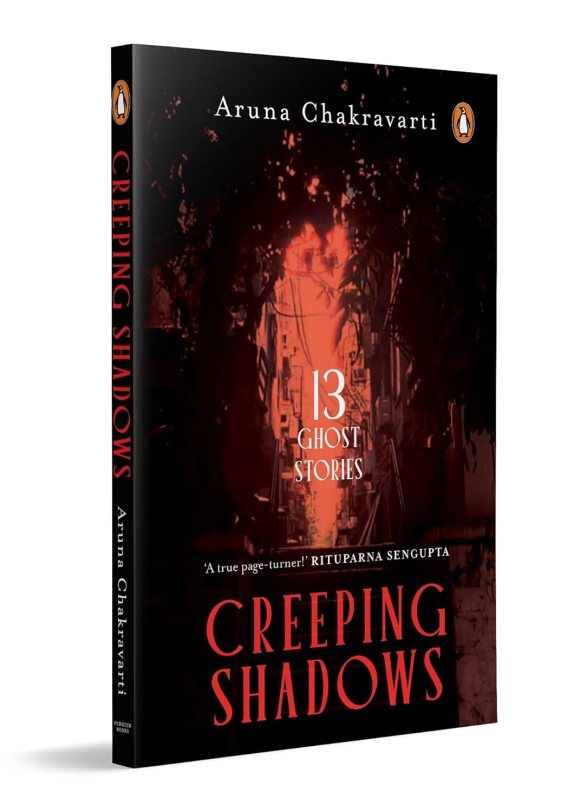
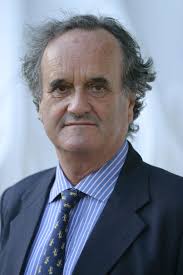
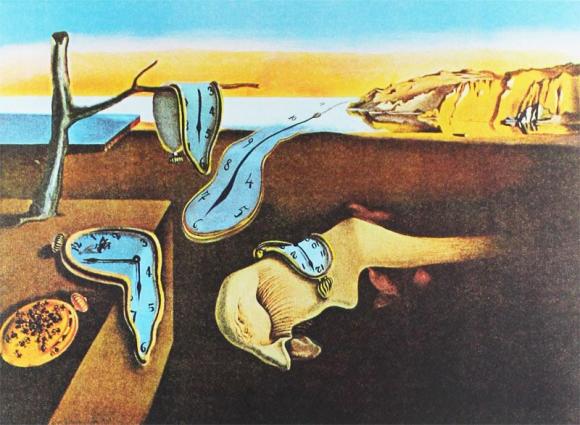

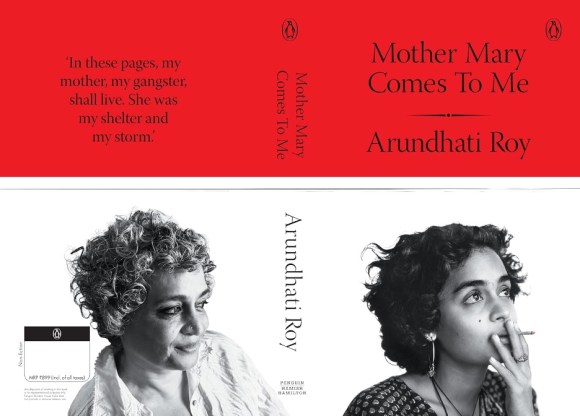
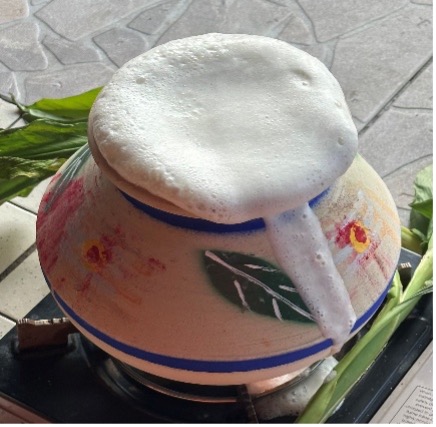
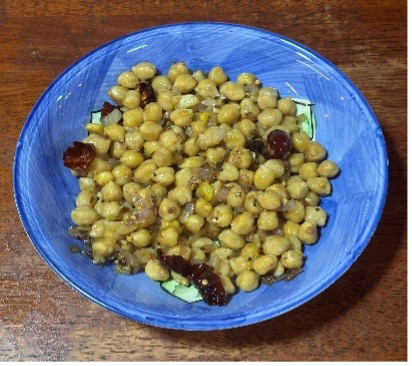
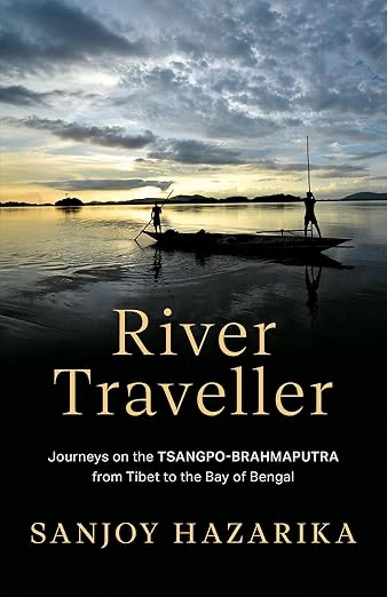
 Borderless