“My story should remain simple, step by step, click by click.” -- Raghu Rai
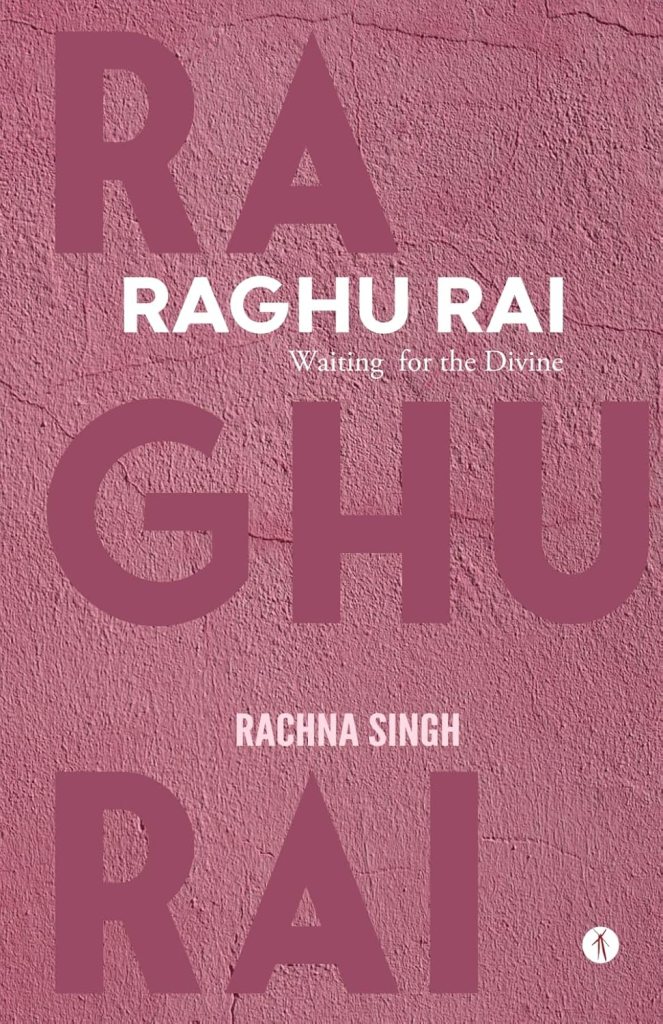
Rachna Singh, notebook and recorder tucked in her bag, pen in hand, first meets Raghu Rai in his picturesque home nestled in the Mehrauli forest of New Delhi, a landscape with occasional medieval structures peeping through the trees. Away from a concrete encrusted city, Rachna, a patient biographer, knows that the legendary photographer whose images shaped the visual progress of a nation, has his own deep stories. But will he reveal them? She pries the tales open by carving pathways through Raghu Rai’s photos— and a remarkable book about the person behind the camera is captured by a literary image-maker, in this sensitive, tender, and insightful biography. Rai permeates a series of chapters that play intricate games with memory because every frame in the camera is connected to myriad threads of experience.
Since the book is sub-titled “Waiting for the Divine”, I naturally look for references to Mother Teresa and the Dalai Lama to discover how the transcendent power of Raghu Rai’s photos of these two personages emerged. Entry into sacred precincts is never easy, and a camera in hand signals a definite obstacle. However, at the Sisters of Charity in Kolkata the photographer is permitted to follow the Mother unobtrusively. Yet, when a curtain flutters to reveal angel-like nuns and Rai dives to the floor to catch the best angle and the right light, even the Mother’s equanimity breaks and she is aghast! From such “shadowing” emerges the divine photograph titled “Mother Teresa in Prayer” with every crease in the luminous face catching the glow, an expression transporting her to realms beyond ordinary comprehension.
If Raghu Rai’s association with Mother Teresa is marked by reverence, his link with His Holiness the Dalai Lama is marked by friendship—one that extends to warm handshakes and brotherly embrace, informal conversations and a conviction about universal compassion. Says Rai, “His Holiness is an uninhibited, wonderfully loving man. How gracious of him to say he is my friend.” Again, it is the camera lens that reveals remarkable facets of the Dalai Lama– his childlike smile as also the sombre spiritual leader of a people in exile. Rachna Singh recounts an almost surreal story of a protective stone gifted to Rai by His Holiness that saw him survive a severe heart condition of ninety percent blockage while still chasing images of a crowded procession!
This takes me back to Rachna Singh’s intention, “My book is not a third-person memoir nor a chronological recounting of Raghu Rai’s life. Instead, it unfolds through candid conversations, inviting the readers into an intimate dialogue.” The reader’s response being part of her textual strategy, I too could add my account of the mystical energy felt in the presence of the Dalai Lama. The book’s attraction lies in this fluidity of the biographer, her subject and the reader being part of the evolving discussion of the deep philosophical pool from which photos are created. The trajectory of Raghu Rai’s life is well known—the photo journalist with The Statesman and India Today; his famous photo essays in the international magazines Time, Life, The New Yorker and numerous others, the award of a Padma Shri, his eminent friends and compeers, but Rachna Singh’s book probes Rai’s mind, his consciousness, his search and his beliefs. Therefore, it offers gems of information through anecdotes and the atmospherics of events, and some delectable quotations in Punjabi and English.
I turn here to Raghu Rai’s series on the Bhopal gas leak of 1984. “The black and white picture of a dead child, eyes open, staring sightlessly into space, lying in the rubble with a hand gently caressing the ravaged face in farewell,” describes Rachna, calling Rai a ‘Braveheart’ who painted a “searing picture of the tragedy.” The conversation is strangely matter of fact as though both the biographer and her subject are numbed by the enormity of that night of terror. Did Rai fear for his health or safety in the toxic air? The answer is “No” because the human pain around was greater than the instinct for self-preservation. All the journalists visited the mass cremations, the hospitals, the dead and the dying as though it was a “job”, Rai being practical enough to say, “You cannot let your spirit turn soggy with emotion.” Those of us who read of such tragedies and see photos in newspapers while sipping our morning tea should admire the intrepid people providing the raw material from ground zero.
Another memorable series was on Bangladesh refugees after the 1971 war—emaciated women and men often carrying sick children in baskets. Rai had been in the frontlines of the war and had once been surrounded by a hostile mob. Rachna is on tenterhooks as he narrates the details but he declared “I was more excited than scared … there was actually no time to feel scared.” At one time he even smiles and says, “It was a lot of fun.” Which brings me to probe the extraordinary grit and strength of photo journalists or reporters from war zones. Where does compassion and newsworthiness meet? Is image more important than the decimated human body? What lasting imprint does such witnessing leave?
Perhaps the answer lies in Raghu Rai’s quest for the Divine—beyond image, outside time. He was born in pre-partition India, in the village of Jhang that is now in Pakistan. He speaks haltingly of the childhood terrors—homes in flames, of escape in the pre-dawn—Rachna notes the tremor in his voice and the reluctance to recall those years. Yet she astutely links Rai’s portrayals of hurt and human sorrow, his sensitivity yet distancing from those early experiences. Finally, it’s been a holistic calm. Rai is quoted: “Photography has been my entire life—it has, in fact become my religion, a faith to which I have dedicated myself completely. My craft led me toward a meditative path that gave me insights to life and the divine.” And that quest bridges the beatific and the aesthetics in this most commendable book.
Malashri Lal, writer and academic, with twenty four books, retired as Professor, English Department, University of Delhi. Publications include Tagore and the Feminine, and The Law of the Threshold: Women Writers in Indian English. Co-edited with Namita Gokhale is the ‘goddess trilogy’, and also Betrayed by Hope: A Play on the Life of Michael Madhusudan Dutt which received the Kalinga Fiction Award. Lal’s poems Mandalas of Time has recently been translated into Hindi as Mandal Dhwani. She is currently Convener, English Advisory Board of the Sahitya Akademi. Honours include the prestigious ‘Maharani Gayatri Devi Award for Women’s Excellence’.
PLEASE NOTE: ARTICLES CAN ONLY BE REPRODUCED IN OTHER SITES WITH DUE ACKNOWLEDGEMENT TO BORDERLESS JOURNAL
Based on Paul Gauguin’s life is a book by Somerset Maugham[1] called Moon and the Sixpence[2], a novel about a stockbroker who abandons his profession to become an artist. Gauguin[3] was a stockbroker turned artist, and Maugham was trained a physician but opted to write books and became a famed novelist. While earning a living as solely a writer has become increasingly difficult through the world unless you make it very big like JK Rowling[4], and therefore, most writers opt for being part time writers while holding full time jobs, we do have a few strange aberrations. One of them is Dr Kiriti Sengupta, who turned to publishing and poetry abandoning his profession — that of a dentist.
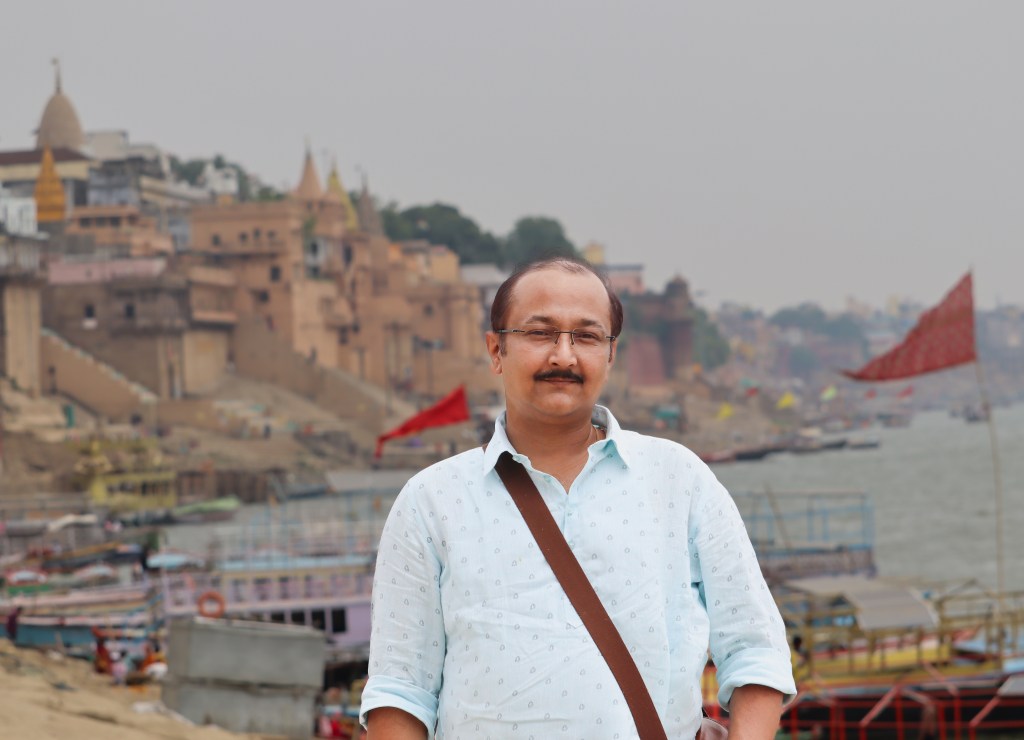
Kiriti Sengupta: Photo Courtesy: Bitan Chakraborty
He ran away from his home and started writing in a small, rented accommodation in 2011-2012. And now he writes, works as a director in one of India’s top upcoming publishing concerns, Hawakal, and rolls out poetry. Sengupta describes his former profession with, an underlined sense of irony, and perhaps with tongue-in-cheek humour:
I prefer patients who are edentulous. I dread
a tooth will wrangle my expertise, and I’ll fail
to make an impression.
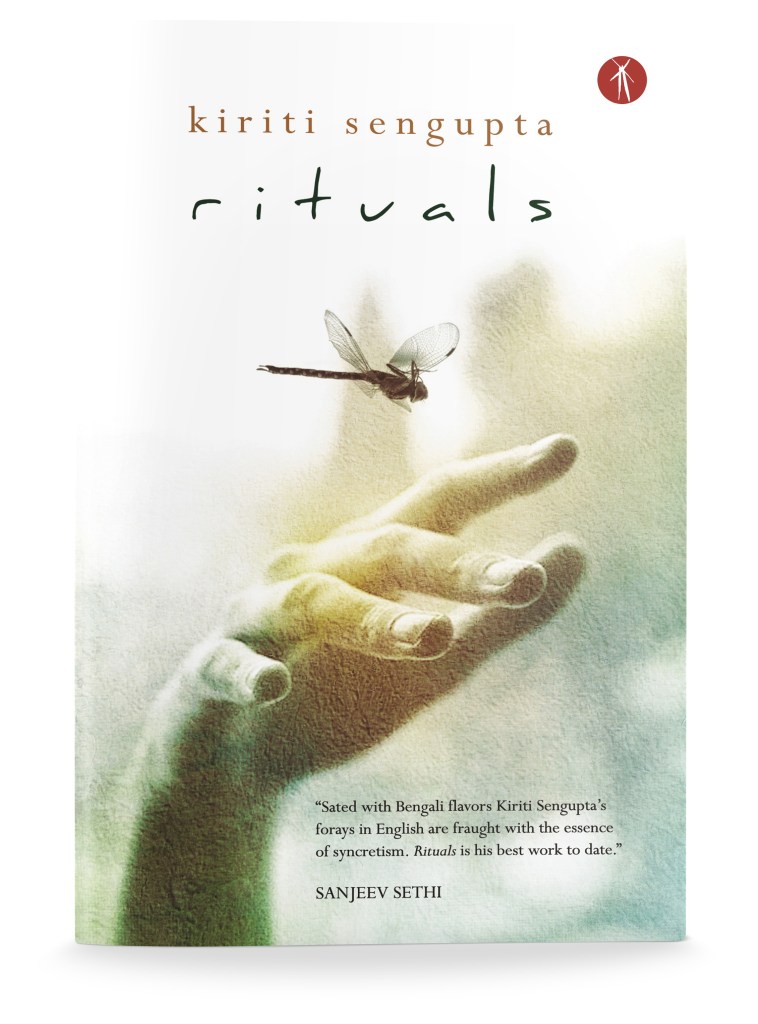
(Rituals, 2019)

Wisdom
the third molar adds
to the surgeon’s expertise
(Oneness, 2024)
He writes about water and the environment:
Water has many colors,
smudging pebbles
along its path

(‘Spectrum’, Water has Many Colours, 2022)


Feed the earth water
she flows in abundance.
Allow the planet to breathe:
the air is her consort.
(‘Hibiscus’, Water has Many Colours, 2022)
He writes for and about women:
How many mujras dwell in a kotha ?

How many neonates hew to a bordello?

Like her admirers
God is silent.
In her sinews
hides a hint of soil
from the yard of courtesans.

*Mujras are courtesan’s song and dance performances
*Kothas are brothels
(‘When God is a Woman’, Rituals, 2019)
And yet critiques stances with a twisted questions:
You define women as Durga
or Kali. Are you a believer? Are you
being kind? You could have convinced
them to fight the evil.
Instead, when you imply the goddess,
do you illustrate
sisterhood with many limbs? Would you
like men to act as Shiva—the destroyer?

(‘Primordial Learning’, Oneness, 2024)
Underlying all of Sengupta’s poetry, is a strong sense of irony which like a veil drapes words with double entendres. While the poems are layered, he dwells on human frailties too… like procrastination with a soupçon of sarcastic humour as in ‘From Being Late in Calcutta’ (Rituals):
As soon as you mark me
I’ll talk about events
that guide me to the records
you maintain.

I’d say crowded buses invite passengers
from unscheduled halts.
I’d emphasize the number of speed-breakers on road,
and their poor performance in preventing accidents.

I’d tell you trains run late.
Signals are laggy between stations.
I won’t forget to mention how
a sudden protest
makes the train stand still for hours.

I’d discuss about the day I reported late,
owing to instantaneous suspension
of underground train services
as a man killed himself on the railway lane.

I’d ask you to remember why I came late the other day.

If you can recall,
I had indigestion despite eating at home.
I blamed farmers for sprinkling pesticides on crops.
I pointed at my salary that failed to buy organic veggies.

And then,
I’d invariably argue about maintenance and population.

I’d appreciate China, one-child policy, and their claim on
how the government prevented four hundred million births.
And how India thrives on the revenues earned
from selling nicotine and condoms.

I’ll explore other issues
the next time I reach late.
He pours out lines on stars, film stars and politicians. Sengupta responds to life with poetry, often terse, brief… sometimes with a wry sense of humour. But in the brevity, lies a depth of mystery, which you can mull and cogitate over endlessly. A flickering of spiritual beliefs and a seriousness of intent despite the apparent lightness of words create a conversation within the poems. In this exclusive, an award-winning author of more than fourteen books, Kiriti Sengupta takes us on whirlwind tour of his life, his ideas and his work.
When and how did you start writing poetry? Why did you switch professions — from a dentist to a poet-publisher? What compulsion made you turn from a lucrative to an uncertain profession? Were you sure you’d succeed? Please share your story with us.
First of all, thank you for inviting me to Borderless for a heart-to-heart, Mitali. I greatly appreciate your dedication to literature, especially quality work. Coming to your first question (a bundle of questions, actually), I don’t remember when I first wrote a poem. Coming from a dentistry background, I never imagined that I would write poems. Until then, I was well acquainted with journalistic articles, critical responses, cultural essays, and, of course, scientific papers. Poetry was out of the question. I believe in karma. Maybe I was destined to write poetry. It wasn’t a deliberate choice. It wasn’t a spontaneous stance either.
I was passing through an obnoxious personal crisis that compelled me to reconsider my career in dentistry. I was comfortably placed in a government institution, enjoying a considerably thick monthly salary. In early 2012, I decided to leave my job and spend some time with myself. However, as you can understand, it was risky, as I was the only breadwinner in my family, which consisted of my wife and son. I had no career options to pursue.
I was new to social media back then. I had the opportunity to become involved with a virtual group, Indies In Action (IIA), run by Stephen L. Wilson. They were raising funds for the victims of the devastating earthquake in Oklahoma. I contributed a few poems to the literary anthology Twist of Fate(ToF), which Steve edited. It was hugely successful, and all proceeds went to the May Tornadoes Relief Fund, managed by United Way. For the promotion of the book, I interviewed a few eminent contributors, such as Bill Lantry, Terry Lucas, Colin Dardis, Marshall G Kent Sr., Allison Bruning, Maggie Rascal, Don Martin, Linda Bonney Olin, Maria Edwards (the then President of the American Authors’ Association), Ency Bearis, among others. Honestly, they all helped me become familiar with the world of poetry.
In 2013, my first book, The Unheard I, was published. It was released simultaneously in India by Dhansere Prakashan and in the United States by Inner Child Press Limited. It was non-fiction, although it contained two chapters dedicated to poetry. In his commentary, Stuart Aken remarked, “It is a scholarly [collection] that will appeal to those with an interest in poetry, particularly spiritual poetry expressed as literature, as well as [to] those who have a leaning toward or a significant interest in Indian myth and religion.”
Even then, I had no plans to pursue writing (or publishing, for that matter) as my career. Gradually, I evolved, and here I stand today. Do I call myself successful? I’m not sure whether I have turned into a consummate writer. Since I write poetry in a niche market worldwide, it is challenging to become a “successful” poet and earn enough royalties to sustain my family. As a publisher, oh yes, Hawakal has emerged as a leading traditional press that has published several writers and poets and enjoys its presence in New Delhi, Kolkata and Nokomis (Florida).
How long have you been in the literary framework? Was it a tough journey moving from dentistry to writing? How did your family respond?
My first essay was published in 1995 in the college magazine. I remember it was written for students suffering from anxiety and family expectations. While studying dentistry at North Bengal Dental College, I joined the All-India Freelance Journalists Association (AFJA, Chennai). My senior colleague, Dr. Falguni Maji and I were commissioned by Uttarbanga Sambad to write an article on the pottery art in Matigara (Siliguri). I was a regular contributor to “The Third Law” in The Telegraph (India). Later, I regularly wrote health-related articles for Ganashakti.
As I said before, I was initiated into poetry quite late. It was a challenging move as I had no formal training, but I was immensely blessed to have a few mentors who honed my skills and taught me the basics of writing poetry.
My family suffered badly from my career-shift. They had to compromise on their living standards. The initial years of becoming a full-time writer were dreadful, to say the least. From only one wholesome meal a day to just a pack of instant noodles for the day — I have personally experienced it all. I ensured that my family didn’t starve, nor did my son lose his schooling. However, their ceaseless support enabled me to survive as a writer and publisher.
How many books have you authored/translated and how many poetry collections, and within how many years? Do you see yourself more as a poet or as a publisher/editor?
I have written fourteen books of prose and poetry, and as a translator, I have two full-length collections of poems. I have also edited nine literary anthologies, including Shimmer Spring, an all-colour, hardback coffee-table book published during the pandemic, which addresses our perceptions of light.
Honestly, I see myself as a patron of Indian arts, literature and fine arts (painting, sculpture, etc.). I’m an admirer of Indian textiles, too! I love buying drapes, be it a saree, a shawl, or a dhoti, in rich fabrics. Bitan and I have plans to start a men’s brand of drapes. We are working on it.
You claim you are a slow writer, and you isolate yourself in a ‘studio’. Tell us about your poetic process. How do you write? What inspires you to write? Are you influenced by any writers/musicians, or artists?
You know, Mitali, we have two studios in India: one in Kolkata and the other in Delhi. These ateliers are essentially stations where we work on the submissions from authors — we read, select, edit, and design the books we publish. We invite authors and readers to have a one-on-one. Readers also drop by to buy a book or two they want. You see, these studios are not meant for our writing. I say “our” because Hawakal is the collective enterprise of Bitan Chakraborty (the founder director) and me. While Bitan oversees the Bengali department, I supervise the English-language division of Hawakal.
It’s difficult to describe how I write. Anything that stirs my imagination or fancy, whether a line from a song, an incident, or a tragedy, often inspires me to pen my thoughts. I am fond of ekphrastic poems and frequently visit art exhibitions to catch a thread or two. However, it takes days or weeks to write a poem, although most of my poems are short or very short. I believe in condensing my thoughts, which is a time-consuming affair.
Your first collection of poems, Healing Waters Floating Lamps (2015), was largely spiritual, while your latest, Oneness (2024), covers multiple aspects of life that may not be purely spiritual. Some of the poems in your later works are also ironic or verge on humour. A gap of nine years and multiple publications reside between the two books. Has there been a change or a progression in your poetry through your journey? Do you feel your poetry has changed?
Healing Waters marks my debut full-length collection of poems. Prior to this, I released 4 books, including My Glass of Wine (2013), which featured autobiographical poetry. My journey as a poet has led to a noticeable evolution. Scholars are more suited to examine these transformations. Some observe that my language and craft have become significantly more refined. They argue that my recent works display a level of sophistication. Conversely, others suggest that my earlier poems felt more spontaneous and grounded. Embracing evolution is crucial; without it, my growth as a writer would stagnate.
You translate from Bengali. Tell us who all you have translated. Have the translations impacted your own poetry. Do you feel translations should be literal or more focussed on capturing the essence of the language?
As I said before, I translated two volumes of Bengali poetry into English: Sumita Nandy’s Desirous Water and Bibhas Roy Chowdhury’s Poem Continuous—Reincarnated Expressions. I am delighted that these books have received rave reviews in India and overseas. Moreover, Hawakal recently released the 10th-anniversary edition of Poem Continuous, which has garnered critical appreciation.
Other than these books, I have translated a few contemporary Bengali poets as well: Ranadeb Dasgupta, Gourob Chakraborty, Rajeswari Sarangi, to name but a few. I can confidently tell you that translating Bengali poems has hardly influenced my work.
Whether translations of poems should be literal or more focussed on capturing the essence of the original is debatable. However, it is even more critical to ensure that the translated piece qualifies as poetry in the first place. If the piece does not read like a poem, regardless of the sincerity of the translator, the labour of translating the original work goes into vain. Every language comes with its own nuances. So, the translator should possess an excellent understanding of both the source and target languages.
Hawakal is regarded as one of the most important publishing houses for poetry in India. When and how did you join Hawakal as the director of the English section? How did you meet Bitan? Could you tell us about the journey?
Thank you for your kind comments on Hawakal, Mitali. Bitan Chakraborty established Hawakal in 2008 in Kolkata. He published numerous Bengali poets until I joined him in 2015. A common friend Kishore Ghosh introduced Bitan to me. Ghosh, a Bengali poet of some renown and a journalist, urged Bitan to publish a collection of literary criticism based on my work and that of Sharmila Ray. The book was titled Rhapsodies and Musings: poets in the mirrors of other eyes and authored by Ketaki Datta and Tania Chakravertty. So, we started our collaboration. Eventually, Bitan induced me to become one of the Directors of Hawakal.
Where do you see Hawakal travels as a publishing concern? What is the scenario like? Do you only bring out writers of Indian origin, or are you open to writers from other backgrounds? What does Hawakal look for in writers to publish with you?
For the past few years, Hawakal has been more focussed on fiction and non-fiction manuscripts. There is no dearth of poetry submissions, though. However, it’s challenging to find an authentic voice. We have published American poets like Dustin Pickering, t. kilgore splake, Marshall G. Kent Sr., Gary Manz, and others. Ethnicity isn’t a limiting factor for someone who wants to get published by Hawakal.
We really want to establish a steady foothold in the United States. Our tiny outlet in Nokomis is currently managed by Dr. Robertson James Short II. It has to grow big. Hawakal seeks original work, and we yearn for quality submissions.
Do you have any suggestions for young writers?
Aspiring writers or poets should read more and be well-versed with the works of contemporary authors. It is important to get published in journals, and accepting rejections from the editors is equally beneficial. Getting published should be a slow process. As the saying goes, there is no shortcut through the forest of life…
Translated from Original Bengali by Hiranmoy Lahiri
Publisher: Hawakal Publishers
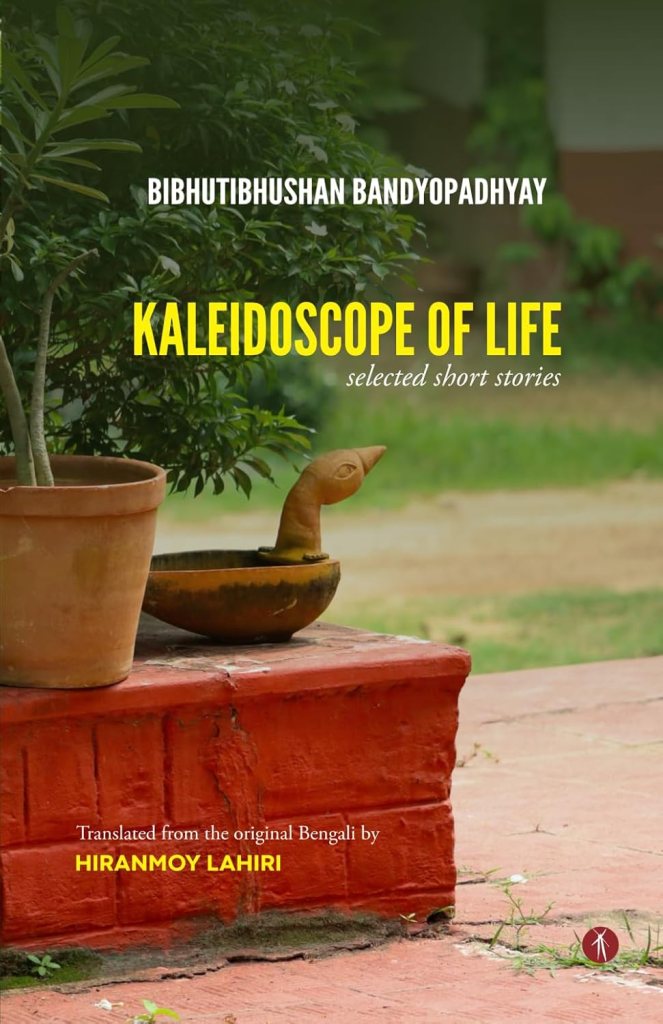
Bibhutibhusan Bandyopadhyay (1894 – 1950) is one of the best-known Bengali writers of the twentieth century and therefore needs no introduction. Though most of his works are largely set in rural Bengal, he didn’t receive much critical attention until 1928. Author of famous novels like Pather Panchali (1929), Aparajito (both of which inspired the famous film director Satyajit Ray make his films based on them), Chander Pahar and Aryanak, he is the also the author of several short story collections like Meghmallar (1931), Jonmo O Mrityu (1937), Kinnardal (1938), Talnabami (1944), Upolkhondo (1945), Kshanavangur (1945), and Asadharon (1946). The multifaceted nature of his short stories has invited translators to explore the different facets of this genre and till date, we find several new translated volumes of his short stories see the light of the day quite frequently.
An interesting feature of the short story is that down the centuries the genre’s changing variety made it difficult to be classified under any fixed notion. Whatever may be the subject matter, structure, or style, a short story tells a ‘story’; otherwise, readers would not read it. Whether events in their stages of development or sequential movements and logical relationships are enough for it to be considered a story have been debated so often that it is not necessary to repeat them here. We just need to remember that as far as the short story is concerned, readers have opted for it because of the beauty that lies within its compact structure, a beauty that thrills the reader when the story ends.
Now to come to this collection of Bibhutibhusan’s short stories selected and translated by Hironmoy Lahiri, a young translator and a freelance writer. Apart from the semi-autobiographical piece “How I began writing,” with which it begins, there are fifteen stories ranging from the sentimental, bizarre, thrilling, meditating, and occult where different other kinds of emotions are also expressed. Except for a couple of already translated pieces by other hands, most of the stories selected here by the debut translator have not been translated earlier and all of them are unique for their theme, style and narrative method. The stories have not been chosen on the criterion of chronology of their appearance in print or a particular theme which is usually resorted to by other translators; instead, the focus has been on the diverse nature of the author’s creative world. The volume thus includes ‘slices of life’ stories, unusual stories such as those of smugglers and dacoits, fictions of remote places and unusual personalities, and even supernatural narratives. They really provide a comprehensive view of Bibhutibhusan’s genius, and the phrase ‘kaleidoscope of life’ mentioned in the title definitely justifies this collection.
The very first story in this collection titled Upekshita, ‘The Disregarded’, is significant because it happens to be Bibhutibhusan’s first published story that appeared in the leading Bengali magazine Prabasi in 1921 and narrates the writer’s special relationship that he had developed with a village lady who took on the responsibility of taking care of his meals and looking after him. Drawn upon his personal experiences, especially during his stint as a teacher at a suburban school in Harinavi, when the myopic residents of the area misrepresented the author’s innocent nature of the relationship with the lady as a scandalous incident, it led to such misunderstanding that Bibhutibhusan eventually resigned from his school and moved to Calcutta.
‘Archaeology’ talks about a statue that mysteriously comes to life and establishes Bibhutibhusan’s interest in ghosts, the mystic and occult that is revealed in several other stories as well. Some of them are simplistic, like the story ‘Motion Picture’ that narrates the vision of seeing a lady djinn swinging outside an old house, or the sighting of the ghost of an opium seller in ‘Gangadhar’s Peril’. But there are also much more complicated ones like the very popular long story of ‘Taranath, the Tantrik’ where the protagonist is a mystic figure and practitioner of occult. With a growing fascination for tantra and tantric practices and philosophy in real life, it is said that the author had interactions with a commanding female ascetic who was a devoted follower of the Hindu goddess Kali, and she offered him words of wisdom about tantra and afterlife. The popularity of this fictional character created by Bibhutibhusan was later continued by his son Taradas Bandyopadhyay and even graphic stories continue to be created on him.
Bibhutibhusan’s penchant for exotic locations in his fiction like Chander Pahar (The Mountain of the Moon, 1937) and Moroner Donka Baje (The Death Knell, 1921) comes out clearly in the story ‘Chyalaram’s Adventure’ where a driver is recruited to help the King and his family escape from Kabul by crossing inhospitable terrain and reach India. The narrative is packed with action and thrilling escapades and Bibhutibhusan portrays Chyalaram’s brave actions and unorthodox approach to life in a positive light. As in the novels mentioned above, it expresses the author’s impressive ability to vividly and accurately describe exotic places he had never visited but write about them imaginatively, totally resting upon ‘the wings of poesy.’
In several stories, we find a delicate twist at the end of the tale, be it ‘Grandpa’s Tale’ narrating how he was forced to marry a dacoit’s daughter with a subtle touch of humour seamlessly integrated into the narrative, or ‘Not a Story’ that focuses on the danger posed by dacoits in rural Bengal at that time, where a traveller narrates the tale about a person called Satish Bagdi; or the sweet romantic ending of ‘The Suitcase Wrap’ that was inspired by an actual event when the author’s sister-in-law’s suitcase was accidentally switched on a train. This story captured the attention of readers and was eventually made into a very popular Bengali feature film called Baksho Bodol. ‘Jawharlal and God’ is a satirical tale born out of the author’s anguish and sorrow caused by the Partition of India and the tumultuous aftermath of World War II. The story was written to depict the loss of human values and how man had lost compassion and wonder for the natural world and distanced himself from God. Each of the remaining stories in this collection is unique and once again the translator needs to be congratulated for such an eclectic selection.
Providing a suitable glossary at the end, Hironmoy Lahiri has tried to stick to the original as far as possible, as well as to keep inconsistencies at bay. He has also taken particular care to maintain the essential Bengali linguistic and cultural nuances in the stories. The book will provide non-Bengali readers a good example of the quintessential Bibhutibhusan Bandyopadhyay, who is definitely a difficult writer to translate. The stories explore several universal themes that transcend cultural boundaries and will prove to be popular with readers from different cultural backgrounds.
.
Somdatta Mandal is a critic and translator and a Former Professor of English, Visva-Bharati, Santiniketan.
.
PLEASE NOTE: ARTICLES CAN ONLY BE REPRODUCED IN OTHER SITES WITH DUE ACKNOWLEDGEMENT TO BORDERLESS JOURNAL.
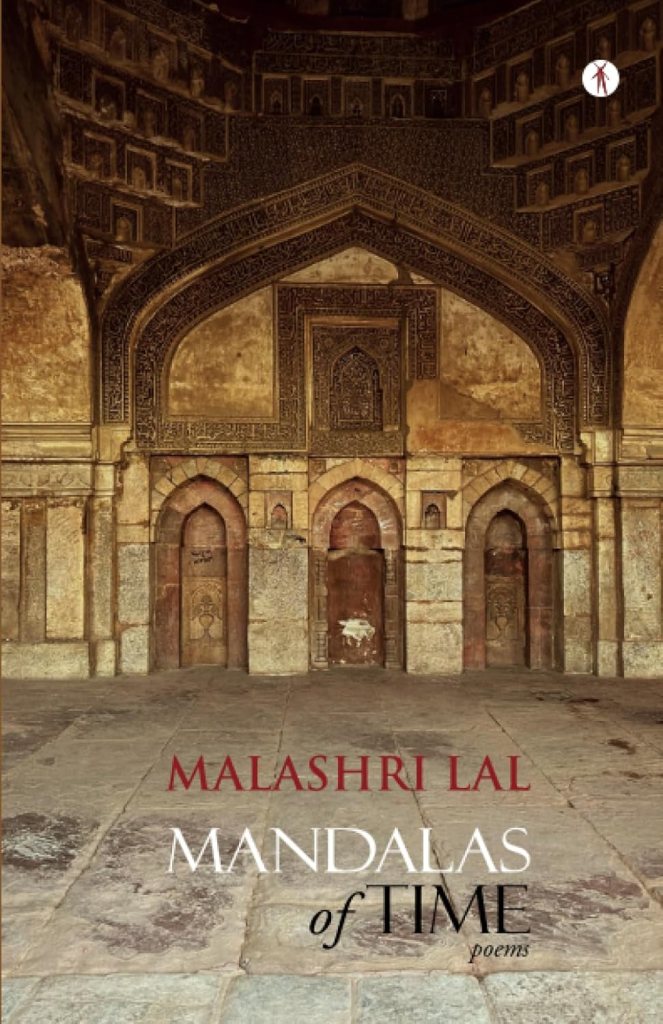
In Conversation with Malashri Lal, about her debut poetry collection, Mandalas of Time, Hawakal Publishers
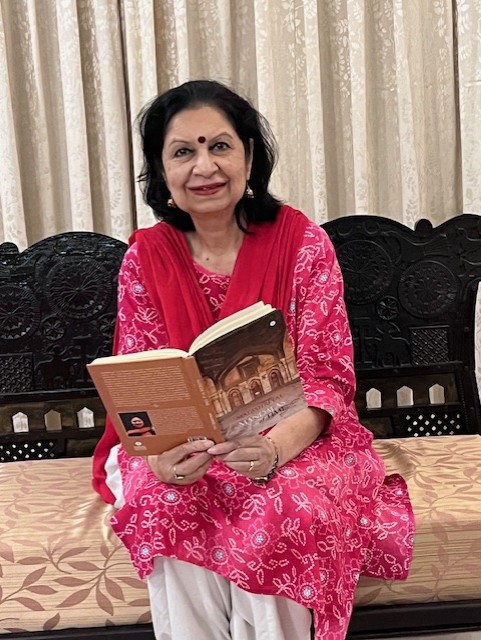
Professor Malashree Lal
Time present and time past Are both perhaps present in time future, And time future contained in time past. If all time is eternally present All time is unredeemable.
‘Mandalas’ means circle in Sanskrit, the root, or at last the influencer, of most of the Indian languages in the subcontinent. Sanskrit belongs to the Indo-Germanic family, which homes Latin and Greek among other languages. Malashri Lal, a former professor in Delhi University, has called her poetry collection Mandalas of Time.
Her poetry reiterates the cyclical nature of the title, loaning from the past to blend the ideas with the present and stretching to assimilate the varied colours of cultures around the world.
Embracing an array of subjects from her heritage to her family — with beautiful touching poems for her grandchild — to migrants and subtle ones on climate change too, the words journey through a plethora of ideas. Nature plays an important role in concretising and conveying her thoughts. In one of the poems there is a fleeting reference to wars — entwined with the Pilkhan (fig) tree:
The Pilkhan tree thinks of its many years
Of shedding leaves, bearing inedible fruit, of losing limbs
But smiles at his troubles being far less
Than of unfortunate humans
Who kill each other in word and deed
But gather around the tree each Christmas
With fulsome gifts and vacant smiles
To bring in another New Year.

--Another New Year
Amaltas (Indian Laburnum) or Bougainvillea bind her love for nature to real world issues:
Only the Amaltas roots, meshed underground
Thrust their tendrils into the earth’s sinews below.
Sucking moisture from the granular sand, desperately.
The golden flowers pendent in the sun, mock the traveller
Plump, succulent, beacon-like, they tease with
The promise of water
Where there is none.

--Amaltas in Summer
And…
The Bougainvillea is a migrant tree, blossom and thorn
That took root in our land
And spread its deception
Of beauty.

--Bougainvillea
Her most impactful poems are women centric.
Words crushed into silence
Lips sealed against utterance
Eyes hooded guardedly
Body cringing into wrinkled tightness
Is this what elders called
‘Maidenly virtue?’

--Crushed
There is one about a homeless woman giving birth at Ratlam station during the pandemic chaos, based on a real-life incident:
Leave the slum or pay the rent
Who cares if she is pregnant,
Get out — go anywhere.
…
Ratlam station; steady hands lead her to the platform.
Screened by women surrounding her
A kind lady doctor takes control.
Pooja sees a puckered face squinting into the first light.
"This is home," she mutters wanly,
"Among strangers who cut the cord and feed my newborn,”

-- Ladies Special
In another, she writes of Shakuntala — a real-world migrant who gave birth during the covid exodus. She birthed a child and within the hour was on her way to her home again — walking. It reminds one of Pearl S Buck’s description of the peasant woman in Good Earth (1931) who pauses to give birth and then continues to labour in the field.
Most interesting is her use of mythology — especially Radha and Sita — two iconic characters out of Indian lore. In one poem, she finds a parallel to “Sita’s exile” in Italy, at Belisama’s shrine. In another, she finds the divine beloved Radha, who was older to Krishna and married to another, pining after the divinity when he leaves to pursue his life as an adult. And yet, she questions modern stances through poems on more historical women who self-immolated themselves when their husbands lost in battle!
Malashri Lal has turned her faculties post-retirement to literary pursuits. One of her co- authored books around the life of the poet Michael Madhusudan Dutt, received the Kalinga award for fiction. She currently serves on the English advisory board of Sahitya Akademi. In this conversation, Lal discusses her poetry, her journey and unique perceptions of two iconic mythological women who figure in her poetry.
When did you start writing poetry?
Possibly my earliest poetry was written when I was about twelve, struggling with the confusing emotions of an adolescent. I would send off my writing to The Illustrated Weekly which used to have pages for young people, and occasionally I got published. After that, I didn’t write poetry till I was almost in my middle age when the personal crisis of losing my parents together in a road accident brought me to the outpourings and healing that poetry allows.
What gets your muse going?
Emotional turmoil, either my own or what I observe within the paradigms of social change. With my interest in women’s issues, my attention is arrested immediately when I hear or read about injustice, violence, exploitation or negligence of women or girl children. It doesn’t have to be a dramatic or extreme event but even the simple occurrences of decision making by a husband without consulting his wife has me concerned about the dignity and agency of a woman. Some poems like “Escape”, hint at such inequality that society takes for granted. On the other hand, my poems about migrant women giving birth on the long march to a hypothetical village “home” during the pandemic, are vivid transferences from newspaper stories. “Ladies Special” is about Pooja Devi giving birth at Ratlam station; “The Woman Migrant Worker” is based on a report about Shakuntala who stopped by the roadside to give birth to a baby and a few hours later, joined the walking crowd again.
Why did you name your poetry book Mandalas of Time?
To me ‘Mandalas’ denote centres of energy. Each node, though distinct in itself, coheres with the others that are contiguous, thus resulting in a corporeal body of interrelatedness. My poems are short bursts of such energy, concentrated on a subject. They are indicative of a situation but not prescriptive in offering solutions. Hence the spiritual energy of ‘Mandalas’, a term used in many traditions, seemed best suited to my offering of poems written during periods of heightened consciousness and introspection. The poems are also multilayered, hence in constant flux, to be interpreted through the reader’s response. Many of them end in questions, as I do not have answers. The reader is implicitly invited to peruse the subject some more . It’s not about closure but openness. See for instance: “Crushed”, or “Shyamoli”.
Today, I rebel and tug at a
Divided loyalty —
The feudal heritage of my childhood
Fights off the reformist Bengali lineage,
My troubled feminism struggling
Between Poshak  and Purdah
White Thaan  and patriotism
Can one push these ghosts aside?

--Shyamoli
*Poshak: Rajasthani dress
*Thaan: White saree worn by the Bengali widow
You have written briefly of your mixed heritage, also reflected in your poem dedicated to Tagore, in whose verses it seems you find resolution. Can you tell us of this internal clash of cultures? What exactly evolved out of it?
My bloodline is purely Bengali but my parents nor I ever lived in Bengal. My father was in the IAS in the Rajasthan cadre and my mother, raised in Dehradun, did a lot of social work. In the 1950s and 1960s, Rajasthan was economically and socially confined to a feudal heritage and a strictly hierarchical structure. Rama Mehta’s novel Inside the Haveli (1979), describes this social construction with great sensitivity. Elite homes had separate areas for men and women, and, within that, a layout of rooms and courtyards that were defined for specific use by specified individuals according to their seniority or significance. Such hierarchies existed in Bengal too — the ‘antarmahal[1]’ references bear this out — but the multiple layers in Rajasthan seemed more restrictive.
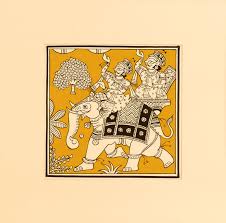
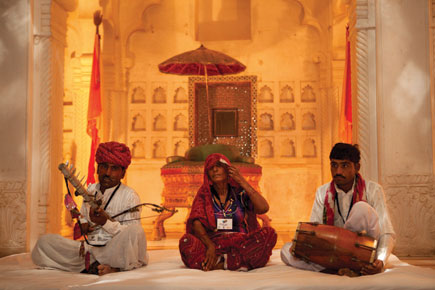
In my “mixed heritage” of being born of Bengali parents but raised in Rajasthan, I started noting the contrasts as well as the similarities. I recall that when my father went on tours by jeep into the interior villages along rutted roads, I would simply clamber on. At one time I lived in a tent, with my parents, during the entire camel fair at Pushkar. I would listen to the Bhopa singers of the Phad painting tradition late into the evening. So my understanding and experience of Rajasthan is deep into its roots.
Phad paintingBhopa singersFrom Public Domain
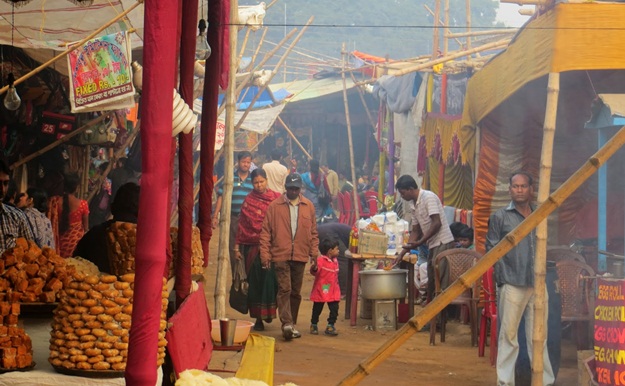
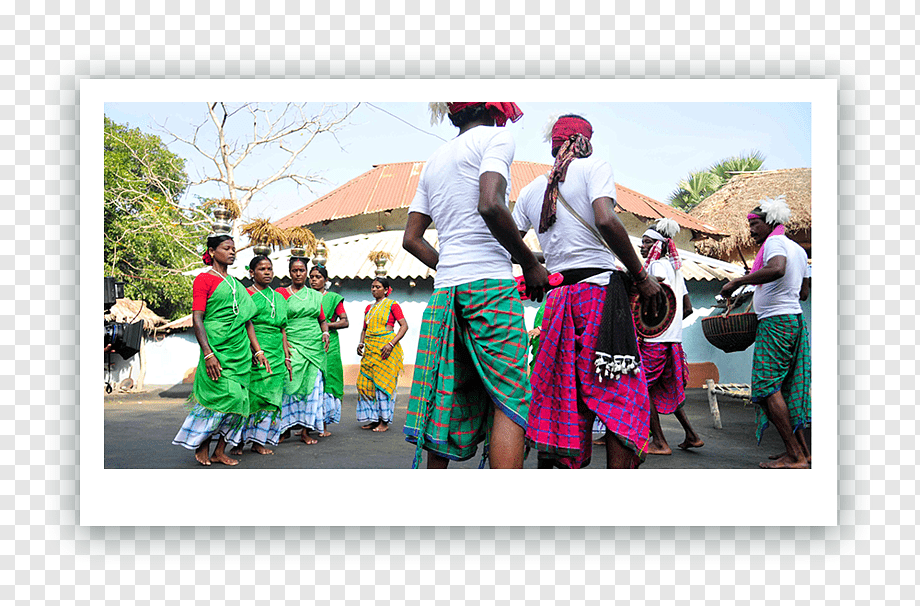
Bengal– that is only Calcutta and Santiniketan–I know through my visits to grandparents, aunts and uncles. My cousins and I continue to be very close. I saw a fairly elite side of Calcutta—the Clubs, the Race Course, the restaurants on Park Street, the shopping at New Market, and sarees displays at Rashbehari Avenue. Santiniketan though was different. I was drawn to the stories of the Santhal communities, visited their villages, attended the Poush Mela[2] regularly and knew several people in the university. After Delhi, the wide-open spaces, the ranga maati (red soil), the Mayurakhi River, and the tribal stories were fascinating. I am fluent in Bengali and because of my relatives in Calcutta as well as Santiniketan, I never felt an outsider. My father’s side of the family has been at Viswa Bharati since the time of Rabindranath Tagore. So, I felt comfortable in that environment. And through an NGO called Women’s Interlink Foundation, established by Mrs Aloka Mitra, I had easy access to Santhal villages such as Bonerpukur Danga.
Poush Mela, started by the Tagore Family in 1894Santhali Performance at Poush Mela
However, in summary, though I lived with both the strains of Bengal and Rajasthan, the daily interaction in Jaipur where I received all my education till PhD, was more deeply my world. The fragmented identity that some poems convey is a genuine expression of figuring out a cultural belonging. Poems such as “To Rabindranath Tagore” helped me to understand that one can have multiple exposures and affiliations and be enriched by it.
Do you feel — as I felt in your poetry — that there is a difference in the cultural heritage of Bengal and Rajasthan that leads you to be more perceptive of the treatment of women in the latter state? Please elaborate.
Indeed, you are right. Bengal has a reformist history, and my family are Brahmo Samaj followers. Education for women, choice in marriage partner, ability to take up a career were thought to be possible. My paternal grandmother, Jyotirmoyi Mukerji, was one of the early graduates from Calcutta University; she worked as an Inspectress of Schools, often travelling by bullock carts, and she married a school teacher who was a little younger than her. They together chose to live in Rangoon in undivided India, heading a school there. These were radical steps for women in the late 19th century. My father grew up in Rangoon and came to Rajasthan as a refugee during the Second World War. My grandmother, who lived with us, was a tremendous influence denoting women’s empowerment. But what we saw around us in Jaipur was the feudal system and purdah for women in Rajasthan.
Fortunately, Maharani Gayatri Devi had set up a school in 1943 in Jaipur to bring modern thinking in the women, and I was fortunate to study there till I went to university. Let’s recall that Maharani Gayatri Devi was from Coochbehar (Bengal) and had studied at Santiniketan. She brought Bengal’s progressive ideas to the privileged classes of Rajasthan. My classmates were mostly princesses. I visited their homes and families and delved deeply into their history of feudalism. Without being judgmental, I must say that Rajasthan’s heritage is very complex and one must understand the reasons behind many practices and not condemn them.
You have brought in very popular mythological characters in your poems — Sita and Radha — both seen from a perspective that is unusual. Can you explain the similarity between Sita’s exile and Belisama’s shrine (in Italy)? Also why did you choose to deal with Radha in a post-Krishna world?
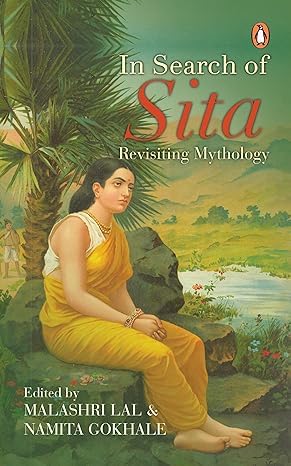
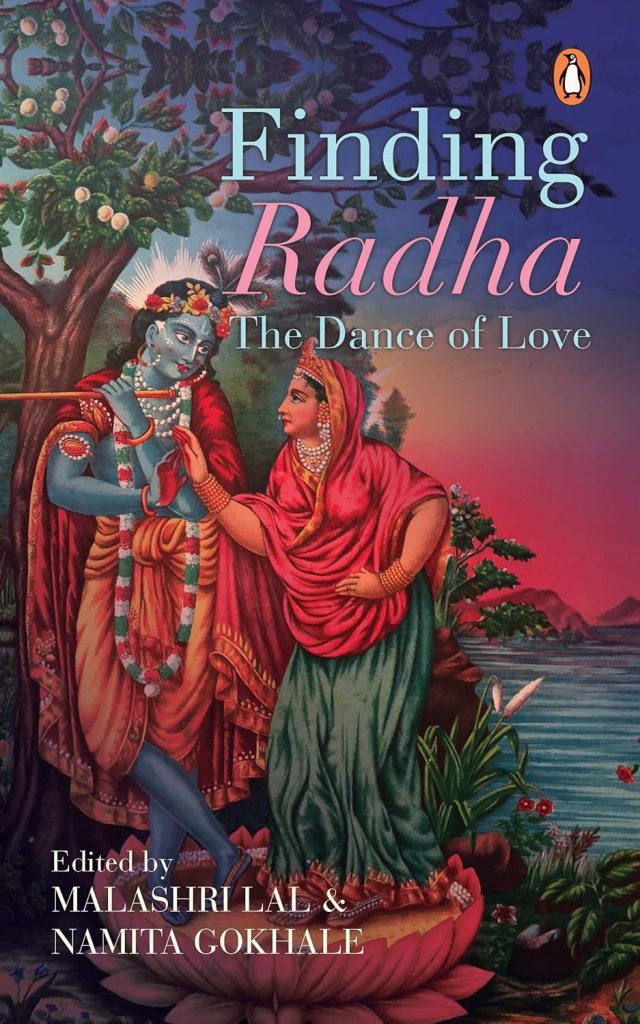
Namita Gokhale and I have completed what is popularly known as the “Goddess Trilogy”. After In Search of Sita and Finding Radha, the latest book, Treasures of Lakshmi: The Goddess Who Gives, was launched in February 2024 at the Jaipur Literature Festival, and the Delhi launch was on 8th October 2024 to invoke the festive season.
Version 1.0.0
In answering your question let me say that myth is storytelling, an indirect way of contending with issues that are beyond ordinary logic or understanding. Sita and Belisama coming together is an illustration of what I mean. The backstory is that Namita Gokhale and I had a joint residency at Villa Serbelloni in Bellagio (Italy) and we were revising the final manuscript of our book In Search of Sita. The thrust of that book is to recall the strength of Sita in decision making, in being supportive of other women, in emerging as an independent minded person. Our research had unearthed a lot of new material including oral history and folklore. In Bellagio, we started enquiring about local mythical stories and chanced upon Belisama,[3] a Celtic goddess known for her radiant fire and light, and in the village we chanced upon an old grotto like structure. Unlike in India, where we have a living mythology of commonly told and retold tales, in Italy the ancient legends were not remembered. The poem “Bellagio, Italy” took shape in my imagination bringing Sita and Belisama, two extraordinary women, together.
As to my poems on Radha, I cannot think of a “post-Krishna” world since Vrindavan and Mathura keep alive the practices that are ancient and continuous. Radha is the symbol of a seeker and Krishna is the elusive but ever watchful divine. They are body and soul, inseparable. The stories about “Radha’s Flute” or “Radha’s Dilemma” in poems by those names have an oral quality about them. The craft of writing is important, and for me, the theme decides the form.
Interesting, as both the poems you mention made me think of Radha after Krishna left her for Rukmini, for his role in an adult world. You have a poem on Padmini. Again, your stance is unusual. Can you explain what exactly you mean — can self-immolation be justified in any way?
This is a poem embedded in the larger query about comparative cultural studies. Rani Padmini’s story was written by Jayasi[4] in 1540, and it described a ‘heroic’ decision by Padmini that she and her handmaidens should commit Jauhar (mass self-immolation) rather than be taken prisoners and face humiliation and violent abuse by the men captors. You will note that my poem ends on a question mark: “I ask you if you can rewrite /values the past held strong?” Self-immolation has to be seen in the context of social practices at the time of Padmini (13-14th queen in Mewar, Rajasthan). The jauhar performed by Rani Padmini of Chittor is narrated even now through ballads and tales extolling the act if one goes into oral culture. But there is counter thinking too, as was evident in the controversy over Sanjay Leela Bhansali’s film Padmavat (2018) which stirred discussions on historicity, customary practice and oral traditions. Sati and Jauhar are now punishable offences under Indian law, but in recording oral history can one change the storyline? It’s not just self-immolation that comes under such a category of questioning the past — polygamy, polyandry, child marriage, prohibitions on widows and many other practices are to be critiqued in modern discourse, but one cannot rewrite what has already been inscribed in an old literary text.
This is a question that draws from what I felt your poems led to, especially, the one on Padmini. Do you think by changing text in books, history can be changed?
“History” is a matter of perspective combined with the factual record of events and episodes. Who writes the “history” and in what circumstances is necessary to ask. The narration or interpretation of history can be changed, and sometimes ought to be. To take an obvious case why is the “Sepoy Mutiny” of 1857 now referred to as the “First War of Independence”? In current discussions on Rana Pratap[5] in Rajasthan’s history, there are documents in local languages that reinterpret the Haldighati battle of 1576 not as the Rana’s defeat but his retreat into the forests and setting up his new kingdom in Chavand where he died in 1597. The colonial writers of history—at least in Rajasthan– were dependent on local informers and had little understanding of the vast oral repertoire of the state. Even Col. James Tod’s Annals and Antiquities of Rajasthan (1829) about the history, culture, and geography of some areas in Rajasthan, is often reproducing what he has heard from the bards and balladeers which are colourful and hyperbolic renderings as was the custom then. In Bengal, the impact of Tod is seen in Abanindranath Tagore’s[6]Rajkahini (1946), which is storytelling rather than verified facts. I feel history cannot be objective, it is author dependent.
Nature, especially certain trees and plants seem to evoke poetry in you. It was interesting to see you pick a fig tree for commenting on conflicts. Why a Pilkhan tree?
The Pilkhan is an enormous, bearded old fig tree that lives in our garden and is a witness to our periodic poetic gatherings. Mandalas of Time is dedicated to “The Poets under the Pilkhan Tree” because my book emerged from the camaraderie and the encouragement of this group. I see the tree as an observer and thinker about social change—it notes intergenerational conflict in “Another New Year”, it offers consolation against the terrors of the pandemic in the poem “Krishna’s Flute”. It’s my green oasis in an urban, concrete-dominated Delhi. In the evening the birds chirp so loudly that we cannot hear ourselves speak. Squirrels have built nests into the Pilkhan’s wide girth. It’s not a glamorous tree but ordinary and ample—just as life is. By now, my poet friends recognise the joy of sharing their work sitting in the shadow of this ancient giant. There are no hierarchies of age or reputation here. We are the chirping birds—equal and loquacious!
You have successfully dabbled in both poetry and fiction, what genre do you prefer and why?
Mandalas of Time is my first book of poems and it comprises of material written unselfconsciously over decades. During the pandemic years, I decided to put the manuscript together, urged by friends. Meanwhile my poems started appearing in several journals.
As to fiction, I’ve published a few short stories and I tend to write ghostly tales set in the mountains of Shimla. Its possibly the old and the new that collides there that holds my attention. I’ve been urged to write a few more and publish a book—but that may take a while.
Should we be expecting something new from your pen?
Mandalas of Time has met with an amazing response in terms of reviews, interviews, speaking assignments, and online presentations. The translation in Hindi by 13 well known poets is going into print very soon. Permission has been sought for a Punjabi translation. I’m overwhelmed by this wide empathy and it is making me consider putting together another book of poems.
A CITY FULL OF SIRENS
On a rain kissed day
sirens from ambulances wring at full volume
sending a shockwave through this somnolence
the city has been suddenly diagnosed with Stage 3C
and all of us who matter to her:
slum dwellers, middle class, uber rich
upper caste, sub-middle-sub-lower, lower,
converts, casteless, outcasts, pimps and city planners
were late by a minimum of ten months in pre-empting this disease
nobody took the city to an oncologist
pointed out this infernal spread
no one bothered when her vitals temporarily shut down
no octogenarian ruins were consulted
when her uterus screamed a history of malfunctioned births
now, water levels are rising
her stomach bloats with a spell of monsoon
and there’s no omental biopsy in sight
no cytology report collected
everyone’s figuring out which part of her abdomen
could be punctured to release the flow
forgetting we had to close the tap, long ago.
the city kept a lot in her womb for far too long
regret and debris
garbage and a festering wound
what she needs isn’t saline and drips
but a memory from the books of sunshine
an embrace from salt lines and mangroves
the reassurance of leafy smiles stretching into infinity
somebody holding her hand, somewhere
she deserves a Sunday with a beginning, middle & end
an unclogging of mind with forests of her childhood
ultimate exculpation from all traffic jams, under construction sites,
illegitimate saat bara* of a river rechristened as a gutter
a forehead filled with deep-rooted kisses
not immigrant, sweat-soaked goodbyes
she needs hope in her veins
laughter under her tissue
maybe, a joke from the past
before she’s sent for chemotherapy
*Saat bara: The 7/12 extract is an information document prescribing details about a specific piece of land such as survey number, area, date and more particulars about the existing owner's name.MID FLIGHT
Bending over clouds
we are dunked, face first
into the broken arteries of Kolkata:
dissected torso of a civilization, blinking back
A vanishing sunset sprints
below a network of lackluster lakes
suspended in time
green stillness festering in its colonial wounds
Our fingers trace her desiccated tributaries, desolate perimeters
brittle sentences from a lost fable breaking at the seams
while miniaturized humanity rearranges
the lost pages of an endless narrative
A new story foams
at the mouth of its river
yearning for reinterpretation
from citizens in the sky
We realize
mid-sentence and mid-flight
are the same things
spoken skywards
CULTURE OF TRANSIENCE
It took a river for civilizations to be born
how else do you explain the nature of blood in our veins?
rivers wait for none, sometimes, not even themselves
and here we are stuck in the make believe of eternality
created to throw us off the scent of water
too precious, like truth, residing in our atoms
anything that doesn’t change our body can never change us:
a law that stays hidden in deep trenches of our epidermis
underneath all permanence lies everything in passing
oceans, forests, islands, farms, clouds, cities—landmasses of desire
suspended raft-like, floating on the ever-flowing waters of time
while we are left to determine our own culture of transience
VERTICAL FORESTS
Words are seeds
we sow for tomorrow
where an axe melts into the navel of the axis
emerges a flower on the other side
our voices etched in the bark
can put a soul to sleep
an Amazon in each word; stretching
through thick mesh of bones and arteries
pulp synchronized to our heartbeats
birdsong to a breath
while ink sprawls
on a dream of half slept pages
blank verses quivering with eternality on empty lines
blood and conscience ensnared
in a network of memories
rooting us
To a new earth
where only time exists
—Unhalved
About the Book
In Sanket Mhatre’s debut collection, A City Full Of Sirens, poetry is intertwined with the body language of love. From the simple act of facing oneself every morning deeds are garbed in the language of sensual love. These are deeply thought out, deeply experienced poems, germinating from a nameless place of profound experience. They measure intricately the delicate entities of parting and separation and pine for a union of the truth with the truth. Enmeshed with memories and half-memories, longings and surrender, Sanket’s poems reflect the deepest flushes of love and the brokenness that inevitably follows.
About the Poet
Sanket Mhatre is a Mumbai based bilingual poet, writer and columnist. His first book of cross translated poems in Marathi and English, titled The Coordinates Of Us , won the prestigious Raza Foundation Grant after being shortlisted at iWrite2020 in Jaipur Literature Festival. Apart from being widely published nationally and internationally, Sanket has been invited to recite poems at Kala Ghoda Arts Festival, Jaipur Literature Festival, Poets Translating Poets, Vagdevi Litfest, GALF, Glass House Poetry Festival, Anantha Poetry Festival, National Poetry Festival Kolkata, Ledo National Poetry Confluence Assam among many others. Sanket has also been curating multilingual poetry performances through Crossover Poems. He is also the co- creator of Kavita Café – a unique digital platform that blends cinematic vision with poetry.
I wait
weighing words against memories
memories against poetry
poetry against noise
noise against feeling
feeling against time
only to arrive
at the deepest homecoming of words
-	‘Homecoming’
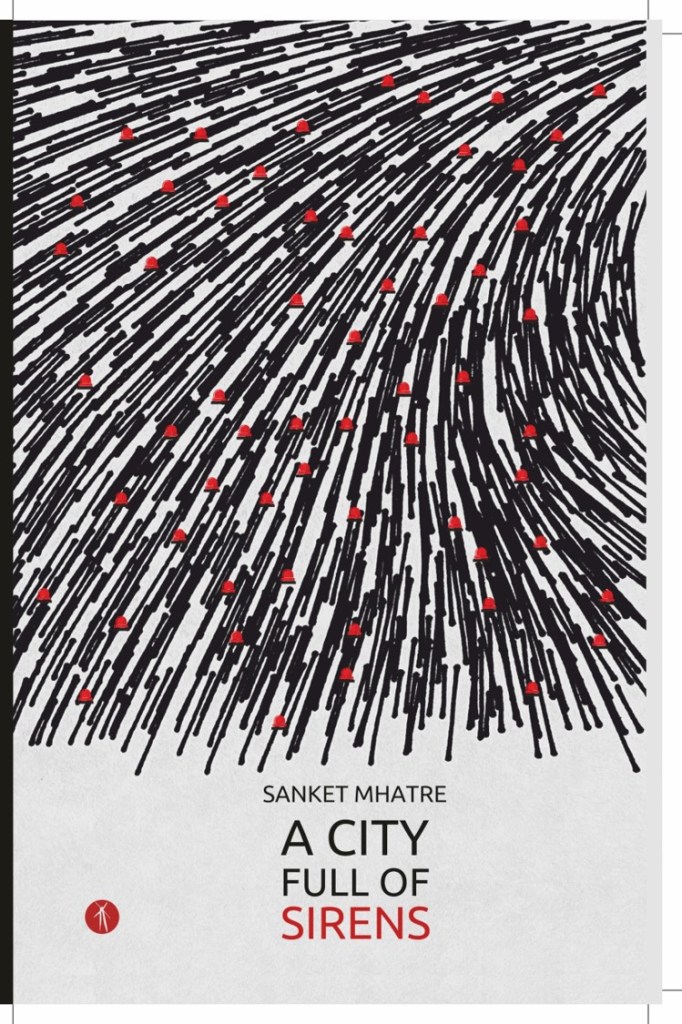
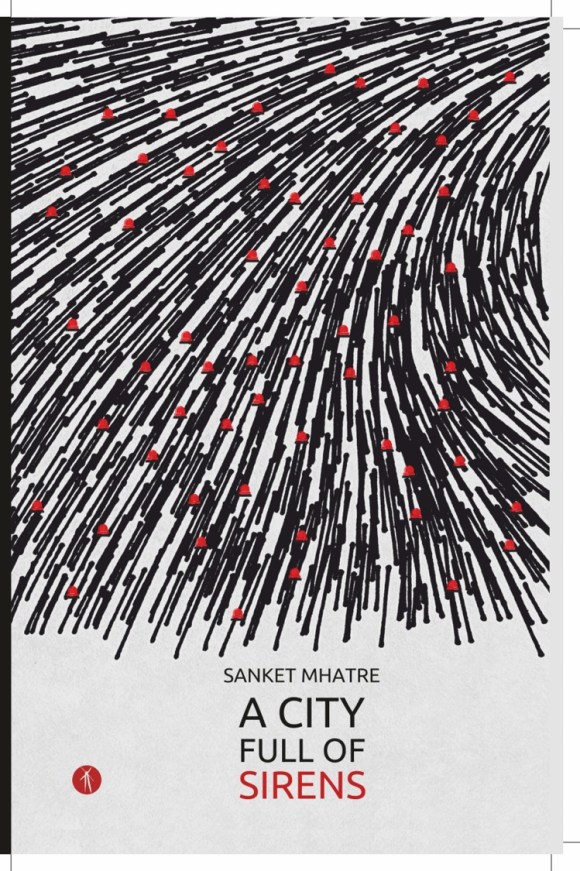
Something irreplaceably urgent yet inconsolably fragile commands the readers’ attention in Sanket Mhatre’s A City Full of Sirens. There is, to begin with, the orderly chaos of the book cover that with its startling depiction of noise and alarm, summons us to a danger that is as neurological as it is existential, as concretely physical as it is metaphysical, and as identifiable as it is, ultimately, anonymous.
Darkness asphyxiates
shifting the axis of your soul
madness froths
bubbles of hurt
shadows of shards
inserting lost files of remembrance
pulse rising –
raising a question at boiling point
Here is an understanding of the city as both protagonist and witness, as conquistador and vanquished, as healer and diseased. Mhatre is mostly talking about Mumbai (“Andheri East doesn’t realize/ that it is sleeping in a belly of void/ It is only a matter of time/ until all the lights go out”) but his city could be “the broken arteries of Kolkata” (‘Mid-flight’) or precisely any cityscape where life routinely unravels amidst disillusionment, betrayal, threat and hope, every poem to it being “a wound or a flower or a piece of sunshine” “written on the threshold of vulnerability and despair” as “a letter trying to find its own footprint on the shifting axis of time and circumstance” (‘Introduction’)
Tortuous and tortured, Mhatre’s city is a site of bereavement, uncertainty, imperilment, disease, derangement and more, its inhabitants choiceless in their compulsion to wear its frayed fabric upon their skin. But this is not all. Lurking within these poems is also the decisive realisation of the city as a human construct, a mirror that reflects rather than distorts or imposes human irresponsibility and disorder. In the title poem of the collection, for instance, the city is a patient incapable of being saved by its nonchalant dwellers:
the city has been suddenly diagnosed with Stage 3C
and all of us who matter to her:
slum dwellers, middle class, uber rich
upper caste, sub-middle-sub-lower, lower,
converts, casteless, outcasts, pimps and city planners
were late by a minimum of ten months in pre-empting this disease
Mhatre’s cities emit steady sirens of disaster – biological, ecological, technological, moral and aesthetic. But redemption, too, is to be found here alone (“Clay hands in a relentless prayer to -/ everything the earth stands for/ and everything that rises upwards from it.” – ‘A Kiss of Cotton’) for only what hurts has the ability to effectively transform – “anything that doesn’t change our body can never change us”. (‘Culture of Transience’) What, chiefly, reconciles the city as wound to the city as mirror, is the imperative of language and its expressive potential for love and poetry. (“A verse could be an open road” – ‘These Years with Her’)
A City Full of Sirens is a dense interrogation of the city, its sirens of overpopulation, congestion, capitalism and climate change, and an exploration of the fullness or plenitude of language that can somehow soften all of this and make it more bearable for life and time. Firmly rooting this collection is a momentous faith in the capacity of words to resist postmodern fragmentation by building bridges across emotions, cultures, and epistemologies. Mhatre’s imagination in poetry is luxuriantly metaphorical. In almost every poem, words defy ordinary appearances to transform into winged images in deep conversation with a reality tangential to the page. In ‘Anuvaad[1]’, as the poet says, all languages are born “from the same birdsong”. In ‘The Concept of Distance’, every stanza offers a new perspective into distance – “The space of pain between two alphabets, now divorced,/ looking on either side of a sentence”. In ‘Morphing into Everything’, the beloved and the city coalesce into one:
my fortresses crumble
dissolve mid-sea
rebirth as an archipelago
sink into her navel
populate her mind
germinate on her dermis
disintegrate into a thousand birds
taking early flight
In each of the fifty-six poems in the collection, is a seamless interweaving of self and space. Most of Mhatre’s sirens are symbolic, conjured through the weight and immediacy of metaphor. In each poem is this sense of something that must be overcome — a lurking claustrophobia, an unnamed distrust, a haunting faithlessness, a constant suggestion of order tipping into anarchy.
An acute precariousness, marked by a vital need to thresh out feeling on the floor of language, is the signature of this collection.
Very significantly, many of these poems are about poetry itself — its genesis, composition, structure, and its relentless shapeshifting ability to weld disparate worlds and subjectivities into a coherent experiential whole. Unravelling within this book’s narrative arc is an empathetic journey of the body and spirit, its goal being to discover “the completeness of existence…Time. Tide. Man. Woman. Humanity. Age. Difference. Distance”. (‘Rain Being’) Passion configures these poems in various ways and not least through the erotic of language. In the best poems here, love, poetry, woman and city become indistinguishable from one another, permeating ontological and aesthetic boundaries and accomplishing a spiritual surrealism that marks the distinctness of this collection.
A City Full of Sirens is, thus, about cities that are both germane and antithetical to poetry, about a “confabulated planet” and mutating geographies “stretching/ through thick mesh of bones and arteries/ pulp synchronized to our heartbeats/ birdsong to a breath/ while ink sprawls/ on a dream of half-slept pages”. (‘Vertical Forests’) It is equally about the inhabitants of the cityscape, the reconciliation of their numerous fragments and roles – “a new you added everyday/ an old you subtracted”. (‘The Queue’), intending “to geolocate/ the fulcrum of our absolute feeling/ outliving erasures”. (‘Synthesis’)
The collection remains remarkable for its obsession with language, its authentic emotional inflections, its charged candour, and its oscillations across a wide thematic range of existence, estrangement, erosion, and redemption. Annihilation, disease and death watermark these poems in undeniable ways but the energy of the book lies in its refusal to be contained within scripts of hopelessness or pain. Summoning optimism to thought and agency to action, A City Full of Sirens makes a palliative of poetry and crafts an entourage of life’s resilience to learn from every setback –
I was never the rain.
Until you cloud-burst me with words.
You gave me the first drop.
It’s my turn to take you in.
--‘Rain Being’
Basudhara Roy teaches English at Karim City College affiliated to Kolhan University, Chaibasa. Author of three collections of poems, her latest work has been featured in EPW, The Pine Cone Review, Live Wire, Lucy Writers Platform, Setu and The Aleph Review among others.
.
PLEASE NOTE: ARTICLES CAN ONLY BE REPRODUCED IN OTHER SITES WITH DUE ACKNOWLEDGEMENT TO BORDERLESS JOURNAL


 Borderless