Categories
Essay

The Literary Club of 18th Century London

By Professor Fakrul Alam

We Bengalis think that no one can match us for our addas[1]. If you were growing up in Dhaka in the 1950s or the 1960s and happened to be literary in your inclinations, chances are you would end up on some evenings in Old Dhaka’s hotel-cum-restaurant Beauty Boarding. You would do so not mainly for the good food sold there at modest prices, but chiefly because you intended to see and hear poet Shahid Quadri regaling everyone in a table that probably included budding poets such as Shamsur Rahman and Syed Shamsul Huq, a promising film maker like Abdul Jabbar Khan, or a gifted painter like Debdas Chakraborty.

Over seemingly endless cups of tea, Quadri and his fellow poets and artists and friends and many other enchanted hangers-on would be entertaining each other late into the evening. Everyone present would in all probability say to each other or to others later: “Was there anywhere any adda as good as the one that took place in Beauty Boarding that evening?”

And, of course, Bengalis of Kolkata will claim that there was never ever any place for chatting and no addas held anywhere that have been able to match the ones at the city’s College Street Coffee House. Who hasn’t heard the song by Manna Dey[2] that has immortalised the conversation and the characters there—poets, journalists, actors, artists—all engaged in intellectual chitchat over nonstop cups of coffee? And though the song laments the passing away of a generation, one can find Kolkata’s Coffee House, like Dhaka’s Beauty Boarding, still very busy and very full of addas even now. But surely among the most famous addas of all times were the ones that took place in 18th century London’s “The Club,” aka “Literary Club”. This was the archetypal club for flowing conversation conducted over good food, great coffee, and suitably stimulating drinks (this last bit is conjectural!). Without a doubt, it is the most famous British literary club in history, and here outstanding intellectuals would engage in always entertaining and often scintillating conversation.

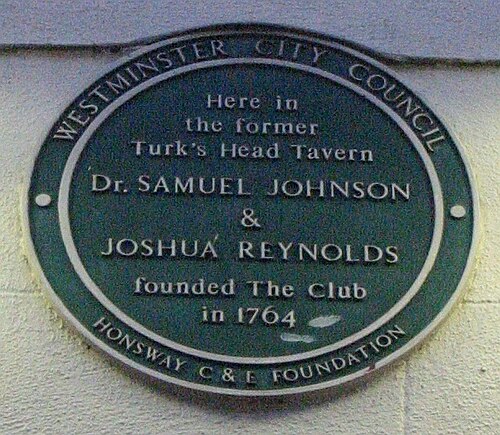
Just consider the luminaries in attendance at the Club on a typical London evening. At the centre of the conversation would be the physically huge figure of Dr Johnson—he of the towering intellect, he who was also known as “Dictionary Johnson” for his incredible feat of penning the first substantial dictionary of the English language almost single-handedly. Listening to him would be his devoted biographer, James Boswell; the greatest painter of the period and the founder of the Club, Sir Joshua Reynolds; Burke, the brilliant orator, passionate parliamentarian and indefatigable critic of the East India Company; Oliver Goldsmith, the renowned author and playwright, and Dr Christopher Nugent, the successful physician. As they conversed, sparks surely must have flown all around the table and Boswell must have been taking notes all the time of the pearl s dropping from Dr Johnson’s lips!

It was Reynolds who had proposed the toast associated with the Club— “Esto perpetua,” Latin for “Let it be perpetual.” Club membership was restricted—at first there were nine members, but soon some more were inducted. They included cultural luminaries such as the greatest actor of the time, David Garrick; the great parliamentarian and minister of the British Government for a while, Charles James Fox; the luminous economist Adam Smith and arguably one of the greatest of British historians, Edward Gibbon. According to the author and member of the Club, Bishop Thomas Percy, as far as Johnson was concerned, the thing that all members were to keep in mind was that the Club “was intended” to “consist of such men, as that if only two of them chanced to meet, they should be able to entertain each other without wanting the addition of more Company to pass the evening agreeably”. Or, to use the word coined by the great Dr Johnson himself, Club members had to be “clubbable!”

As one can imagine, with such amazing minds and larger than life characters, the reputation of the Club spread far and wide—in London and beyond. For sure, there were other clubs in swelling and increasingly prosperous London (as is the case with Dhaka now!), and Johnson himself was associated with quite a few of them, but who could compete with the members of The Club?

Initially, Tuesday was set aside as the meeting day, then Friday; eventually other days were considered good for clubbing as well. According to one member, the writer and lawyer John Hawkins, The Literary Club soon proved to be “the great delight of Johnson’s life, a centre of conversation and mental intercourse.” As the century progressed and more and more, people vied with each other to become a member of The Club, strict rules were initiated to keep up its reputation.

Eventually, elections and “blackballing” were procedures chosen to control the number of members as well as to ensure that only “quality” people became members. Hawkins, unfortunately, was deemed to be “unclubbable” by Johnson himself and therefore was soon expelled from the Club! But Club members could be of varying political beliefs—Burke, for example, was passionate about the rights of the American colonists but Johnson critical of them. Burning political issues such as the right of the American colonists came up for discussion and debate but tempers were kept under control and wit-combats proved to be the rule and not scuffles. On most days, conversation flowed freely.

On April 3, 1778, Boswell records in his biography of Johnson, for example, “The conversation began with sculpture” and then “the subject is dropped for emigration; it then moved on to “population increase” and “density”; next to parliamentary oratory, then to philology; afterwards to travelling abroad and thence to “human nature generally”!

Johnson died in 1784, and The Club eventually disappeared from recorded history, but it had survived long enough to become a model of clubs where great minds could come together for a convivial atmosphere, free and witty exchange of ideas, and company worth seeking every evening. It became the inspiration of many such institutions all over the world. Dhaka Club, thus, can claim that any recorder of its primordial history would find The Club as one of its ancestors. For sure, for our club members, or literary minded people wanting to elevate their addas a lot, the London Club can be a source of inspiration and the conduct of its members well worth emulating during addas for fantastic clubbing!

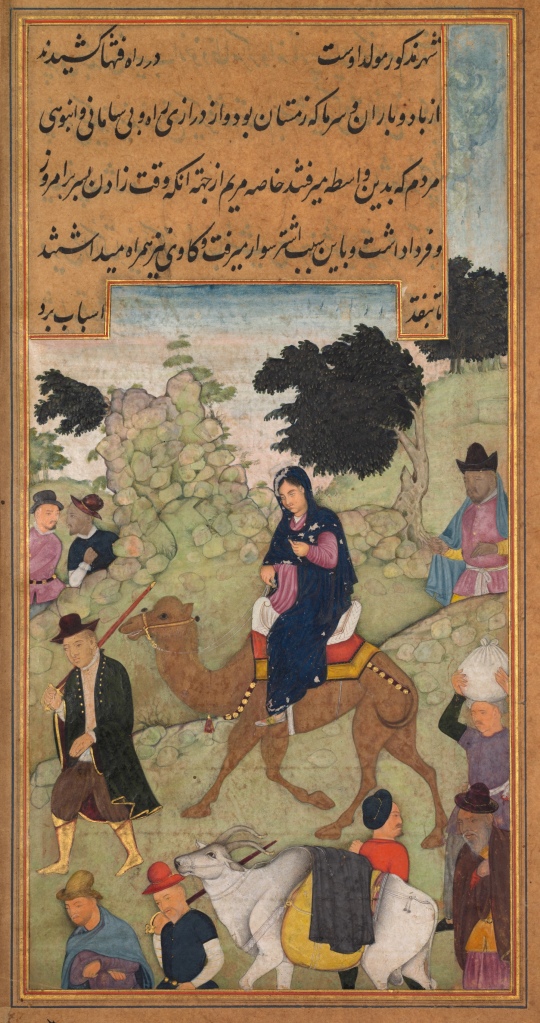
The Literary Club met on Friday evenings until midnight in London. The club gatherings with all the luminaries spanned a period of 20 years. From Public Domain

[1] Could be a tête-à-tête or just a chat with multiple people.

[2] Manna Dey (1919-2013) sang about adda in the legendary Coffee House of Calcutta.

(First published on August 20, 2018 in Daily Star, Bangladesh)

Fakrul Alam is an academic, translator and writer from Bangladesh. He has translated works of Jibonananda Das and Rabindranath Tagore into English and is the recipient of Bangla Academy Literary Award (2012) for translation and SAARC Literary Award (2012).

PLEASE NOTE: ARTICLES CAN ONLY BE REPRODUCED IN OTHER SITES WITH DUE ACKNOWLEDGEMENT TO BORDERLESS JOURNAL

Click here to access the Borderless anthology, Monalisa No Longer Smiles

Click here to access Monalisa No Longer Smiles on Amazon International

Categories
Review

Job Charnock and the Potter’s Boy

Book Review by Somdatta Mandal
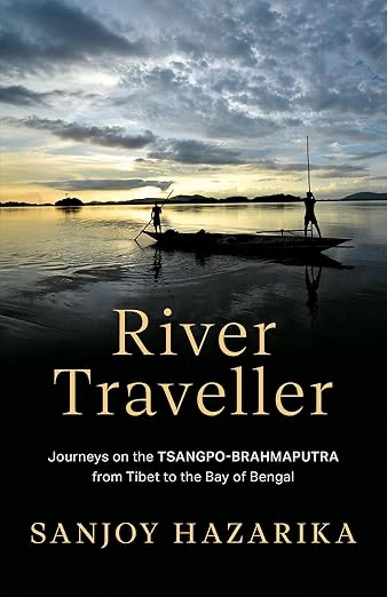
Title: Job Charnock and the Potter’s Boy

Author: Madhurima Vidyarthi

Publisher: Niyogi Books

The nomenclature ‘historical fiction’ is sometimes quite confusing for the reader who keeps on wondering how much of the novel is real history and how much of it is the figment of the author’s imagination. Beginning in 1686, and set in the later part of Aurangzeb’s reign, this work of historical fiction named Job Charnock and the Potter’s Boy charts the turbulent history of an insignificant hutment in the inhospitable swamps of Sutanati in Bengal that becomes one man’s unyielding obsession. This man is no other than Job Charnock whom we all claim to be the original founder of the city of Calcutta.

Bengal during that period was the richest subah of the Mughal Empire and the centre of trade. The English were granted a toehold in Hugli when Shah Jahan ousted the Portuguese in 1632 and made it a royal port. Since then, they had been worrying Shaista Khan, the current nawab at Dhaka, to give them permission to erect a fort at the mouth of the river but the wily old nawab did not agree and dismissed their petitions repeatedly. This was a period of extreme flux when the European powers like the Dutch, the Danes, the French and the English were all playing out age-old rivalries in new battlefields, aided and abetted by individual interests and local conflicts. This is when Sir Joshua Child was at the helm of East India Company’s affairs in London throughout the 1680s and his plans were brought to fruition in faraway Bengal by William Hedges and then Job Charnock.

Of the earliest champions of the British Empire, none was as fanatic or single-minded as Job Charnock. He evinced no wish for private trade or personal gain, and unlike many of his contemporaries who returned to England as wealthy ‘nabobs’, he lived and died here as a man of modest means. His life’s work was only to identify the most strategic location on the river and secure it for his masters.

Sutanati, with its natural defences and proximity to the sea, appealed to his native shrewdness and he applied himself in relentless pursuit.  The story of this novel begins in Hugli in 1686, on the first day of the monsoon, when a poor potter, Gobardhan, and his wife, Indu, find it difficult to make ends meet and their life is centred around their young son Jadu. In the guise of Gobardhan relating bedtime stories to his son, the novelist very tactfully gives us the earlier historical background of the place. He tells us how during his great-great-grandfather’s time, two hundred years ago, Saptagram was the greatest city in the country, the greatest port in the Mughal Empire where ships and boats came from all over the world. Later the Portuguese bought land and built a fort at Golghat, but the Mughals grew jealous of them and finally attacked Hugli and ousted them from there.

Coming down to the present time, Jadu is twelve years old when his parents are burnt to death in front of his eyes as they were innocent bystanders in the struggle for power between the East India Company and the Nawab of Bengal. By a quirk of fate, Jadu is rescued by his father’s Mussalman friend, Ilyas, who is really protective of the boy and acts as a substitute father figure. But soon Ilyas leaves for Dhaka on a diplomatic mission and thrusts the young boy in the hands of a trusted Portuguese sailor and captain called D’ Mello. Since then, Jadu is drawn into the whirlwind of events that follow. He spends a lot of time on the river, and from December 1686 to February 1687, stays at Sutanati. Then, he moves from Sutanati to Hijli, and back to Sutanati up to March 1689, till at last he stands face to face with the architect of his misfortune — Job Charnock himself.

The rest of the tale hovers around how Jadu becomes one of his most trusted aides and though Charnock’s grand dreams did not come to fruition during his lifetime. When he died in 1693, the place was still a clutch of mud and timber dwellings still awaiting the nawab’s parwana[1] to build and fortify the new settlement. The English finally managed to acquire the zamindari rights to Sutanati, Kolkata and Gobindopur in November 1698, when the area had become quite lucrative by then.

In exploring the how, but more importantly the reason for this coming into being, the story then speaks of the motivations of the great and good and the helplessness of the not so great, all of whom in their own way contributed little nuggets of history to the city’s birth.  The novel is also filled with common folk, both local natives as well as foreigners, who watch unheeded while destinies are shaped by the whims of rulers. Interwoven with verifiable historical events and many notable characters from history, the novel therefore is above all primarily the story of an innocent boy Jadu who navigates the different circumstances he is thrust in and emerges victorious and hopeful in the end. As the narrative continues, he also moves from innocence to maturity. Through his eyes we are given to read about a wide range of characters who form the general backdrop of the story.

In the ‘Author’s Note’ at the end of the novel, Madhurima Vidyarthi categorically states that this is not a history book, but she has strung together imaginary events over a skeleton of fact, based on the sum of information available. She states, “While trying to adhere to accepted chronology, the temptation to exercise creative license is often too great to be overcome”. The most significant character in this perspective is Job Charnock’s wife, who has been the subject of much research and her treatment in the Company records is typical of the time. But though a lot of information is available about Charnock’s daughters repeatedly in letters, Company documents, baptismal registers, and headstones, their mother is conspicuous by her absence. This is where the author applies her ‘creative license’ and makes Mrs. Charnock’s interactions with Jadu reveal his coming of age, and with her death, he symbolically reaches manhood. Vidyarthi also clarifies that several characters in the novel like Jadu, his parents, Ilyas, Manuel, Madhu kaka and Thomas Woods are also imaginary, and they represent the nameless, faceless masses during that period and therefore provide a ‘slice of life’ that make up history. All in all, this deft mingling of fact and fiction makes this almost 400-page novel a page-turner, ready to be devoured as fast as possible.

[1] Written permission

Somdatta Mandal is a critic, translator and a former Professor of English, Visva Bharati, Santiniketan.

.

PLEASE NOTE: ARTICLES CAN ONLY BE REPRODUCED IN OTHER SITES WITH DUE ACKNOWLEDGEMENT TO BORDERLESS JOURNAL

Click here to access the Borderless anthology, Monalisa No Longer Smiles

Click here to access Monalisa No Longer Smiles on Amazon International
Categories
Essay

This Garden Calls Out to Me: A Flaneur in Lucknow’s Sikandar Bagh

Photographs and Narrative by Prithvijeet Sinha

Sikandra Bagh

What if I tell you that History is my neighbour? It would sound like hyperbole to a lay person. But if you are a resident of the historic and expansively beautiful urban area of Hazratganj that is the heart of the city, it will seem a shorthand for reflections in time.

Hazratganj is a state of mind, not only a piece of land stretching across kilometres and hosting the best that humanity has to offer, whether natural or man-made, including the Imambaras, gardens and riverfronts and gateways that define Lucknow as also the mass of commercial institutions, cultural centres and culinary establishments elevating its profile as a diverse area of activity.

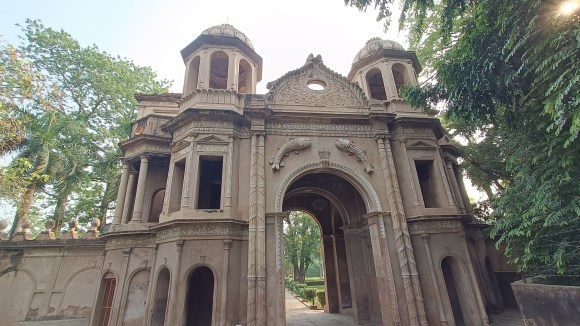
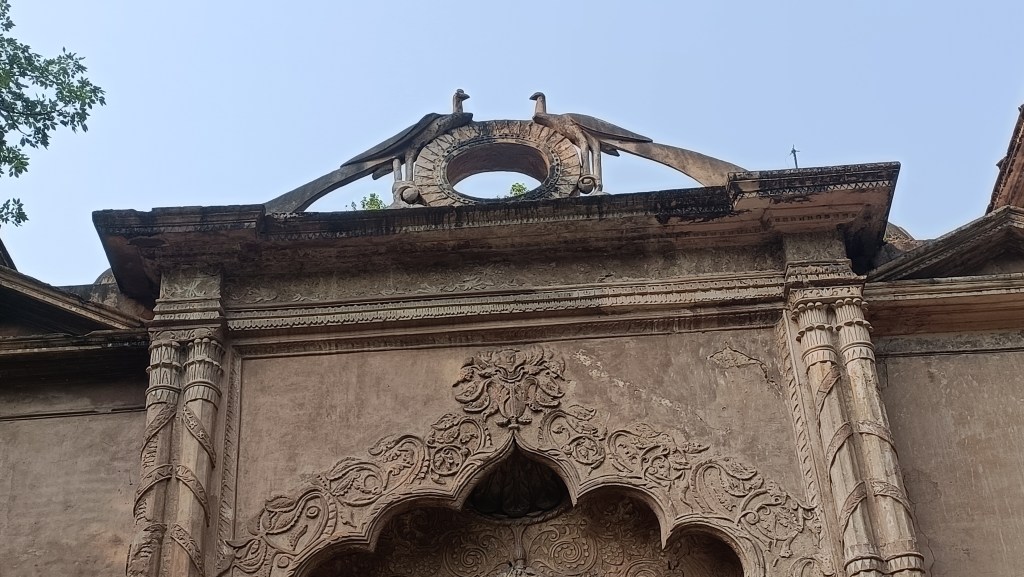
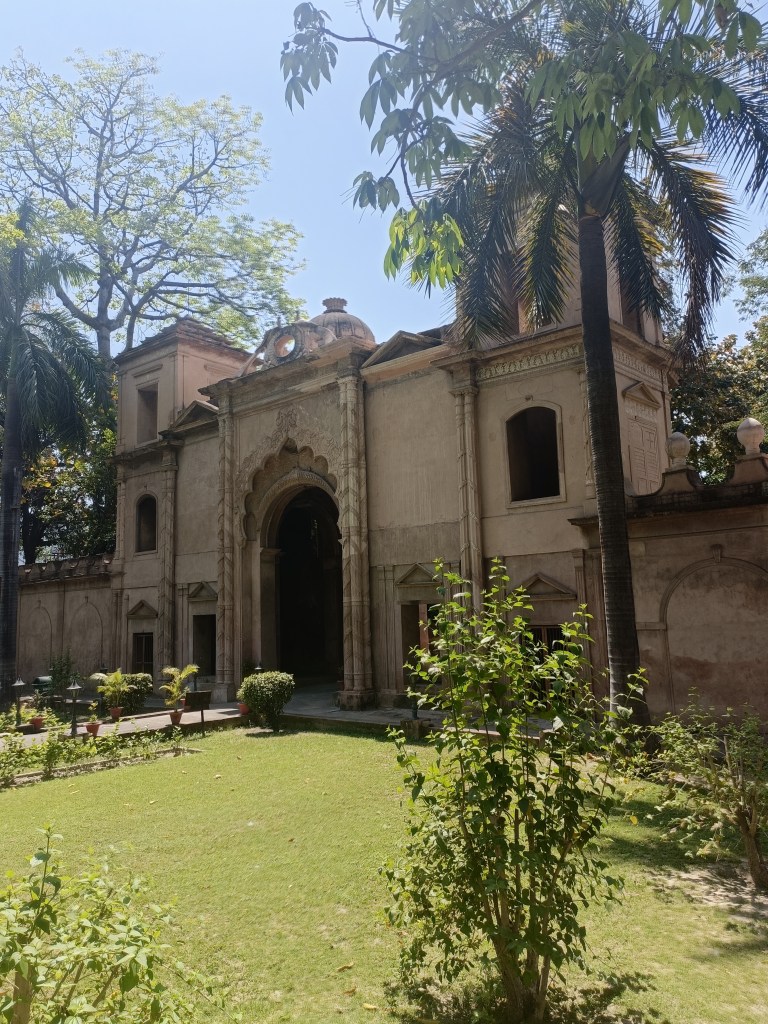
In this beautiful centre of a glorious city lives yours truly and one of the most evocative of the historic gardens dotting Hazratganj also happens to be a mere five-minute walk from his home. I’m talking about Sikandar Bagh, a garden complex that is a sight for sore eyes and retains history in its structure, with lime yellow walls of lakhauri[1], a beautiful gateway bearing the city’s fabled fish symbol and a pagoda style arch signifying the melange of influences in its multidimensional whole.

The domes and ramparts retain the haunting afterglow of history but also the dark days that led to its tragic unraveling.

Built around the mid 1840s by Nawab Wajid Ali Shah[2], the great aesthete and ruler of Lucknow, Sikandar Bagh was a private residence, a garden of elegance and a performance art venue made to honour his love for Sikandar Begum, his beloved wife. The intimacy of this saga of love and mutual respect shared between two life-partners is reflected in the way the place comes alive for any visitor. There’s nothing grand here. Yet there’s the gift of verdure, the protection of huge, dome-like trees and remnants of the original structure that reminds us of a place preserved in its handsome inception and prevalence down the ages.

But Sikandar Bagh is a cultural outlier because apart from its blessed beginnings and present serene state, it had also been scarred by the First War of Independence in 1857[3]. This was the site that was used by sepoys of Awadh (a hallowed title for the region comprising Lucknow and its neighbouring districts that continues to this date) to mount their rebellion against British supremacy. This was a private garrison and hiding place in those erstwhile days of November 1857 where the plotting of a historic rebellion took place. History was not kind to the rebels, and nearly all were slain by the colonial establishment. Knowing that the serenity here could hold so much ballast in its open space makes one ponder. To know about this is to understand that we are progeny of these brave and the remains of the walls facing this garden and continuing up till the Shahnajaf Imambara seem to take the toll of all that bloodshed and hurt that lies embedded within these bricks.

Of course, knowing the background is imperative but so is being inured to its beauty. I am an eternal walker, a flaneur, so for me Sikandar Bagh has been a favourite place to revel in the humbling and aesthetic aspects of Lucknow. Sikandar Bagh befits my desire to saunter and take in the bouquet of nature.

*

It’s been my morning ritual to be comforted by the breeze, swayed and lulled to satisfaction with the lullaby of the trees within its compound and behold a distant beehive in the tallest Goliath among these ancient trees, looking at nestling birds and squirrels in the lower branches of their trunks.

As I write this after a brief stroll in this garden on a pleasant Sunday afternoon, the summer seems to have been evoked to spread its sunny yellow carpet with mellow repose instead of scorching us with humid darts and blows.

The thing with Sikandar Bagh is that history is alive here but also a natural companion. Always the silent, sturdy type, an occasional morning walker or casual passers-by make for rare sights inside its premises in the early hours. It always makes me feel like the chosen one, allowed to roam its length and breadth, making it a regular haunt.

*

A lot of times while going from one place to another, I see young people seated on its green benches, relieving themselves of their pressures and sometimes enjoying a quiet meal here. I also look at people who, besotted by its unique beauty and structure, walk leisurely and photograph its stretches.  Their eyes register the special place it holds for them.

Today, Sikandar Bagh is overseen by the Archeological Survey of India. Around early 2022, it commissioned a refurbishment that restored its walls, ramparts with the lakhauri , a far cry from the concrete jungle that is an urban reality in the modern era.

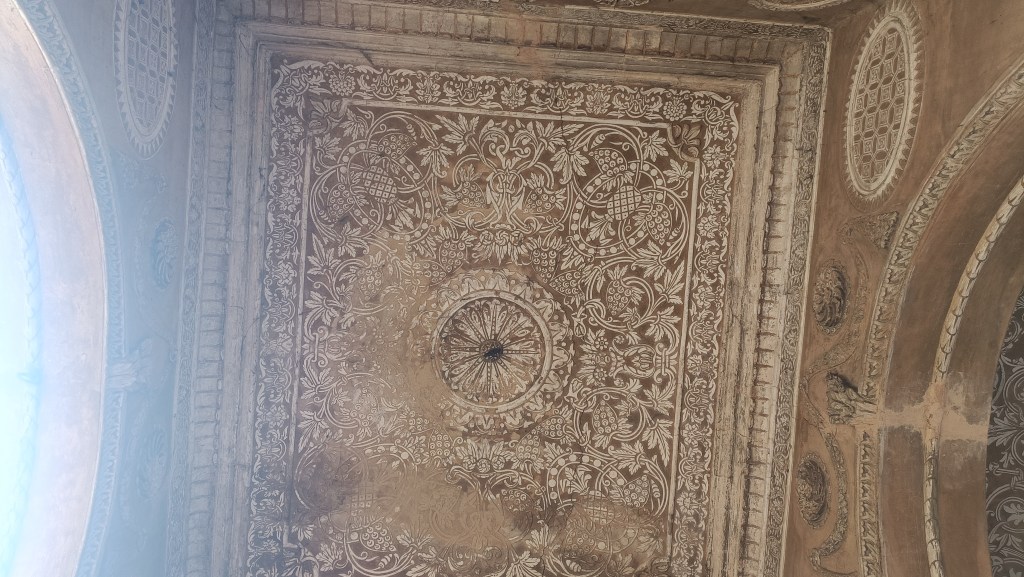
It always comes down to these columns, frescoes, ramparts, a humble mosque within this secular compound, the pavilion signifying what once was an open theatre and the palatial remains, all blended in the unique textures and colours of centuries; worn out by time but never denuded of glory, a stark yet humbling reminder that Sikandar Bagh is a labour of love. Writing this, I am enchanted by its gateway’s peacock iconography, how they seem to call out to the actual birds who visit from the neighbouring Botanical Gardens premises facing this little slice of verdure and architectural wonder.

I inhale the sights, simultaneously rattled by the annoyance of traffic outside its main gate intruding upon its peculiar, unique position within the heart of the city. Yet I know it’s sealed by a dignified reserve, as if these domes and the gateway spell quietude and ubiquity like the red eyes of the pigeons flying near the roof and peering down its height.

*

Honeybees on the tallest trees here go from the nectar of one season to the next and the sun shades this compound in moods invoking the spirit of a poet in me. It’s so easy to be wrapped in the peace and calm of this open space and its historical representation, so easy to know that creative inspiration fed by such a pleasant source is far from just a fictional device. It is a living, breathing ally to diurnal times.

Being in the lap of nature within cities can be a novel intervention. But my love affair with Sikandar Bagh – my own paradise — never waits for a distinct memento. It came to be from a place of love. It is my composite love for it that makes it stand out.

[1] lime paint and plaster

[2] Nawab Wajid Ali Shah was the eleventh and last nawab of Awadh. His kingdom was annexed by the East India Company in 1856 and he was exiled to Kolkata.

[3] Revolt of 1857: The sepoys – Hindus and Muslims – rose united in rebellion against the British Raj. As a result, the British adopted the weapon of Divide and Rule successfully, and the subcontinent continues to be scarred by the fanning of the same flame to this day.

Prithvijeet Sinha  is an MPhil from the University of Lucknow, having launched his prolific writing career by self-publishing on the worldwide community Wattpad since 2015 and on his WordPress blog An Awadh Boy’s Panorama. Besides that, his works have been published in several journals and anthologies. 

PLEASE NOTE: ARTICLES CAN ONLY BE REPRODUCED IN OTHER SITES WITH DUE ACKNOWLEDGEMENT TO BORDERLESS JOURNAL

Click here to access the Borderless anthology, Monalisa No Longer Smiles

Click here to access Monalisa No Longer Smiles on Kindle Amazon International

Categories
Excerpt

The Wanderers, Lost and Seeking

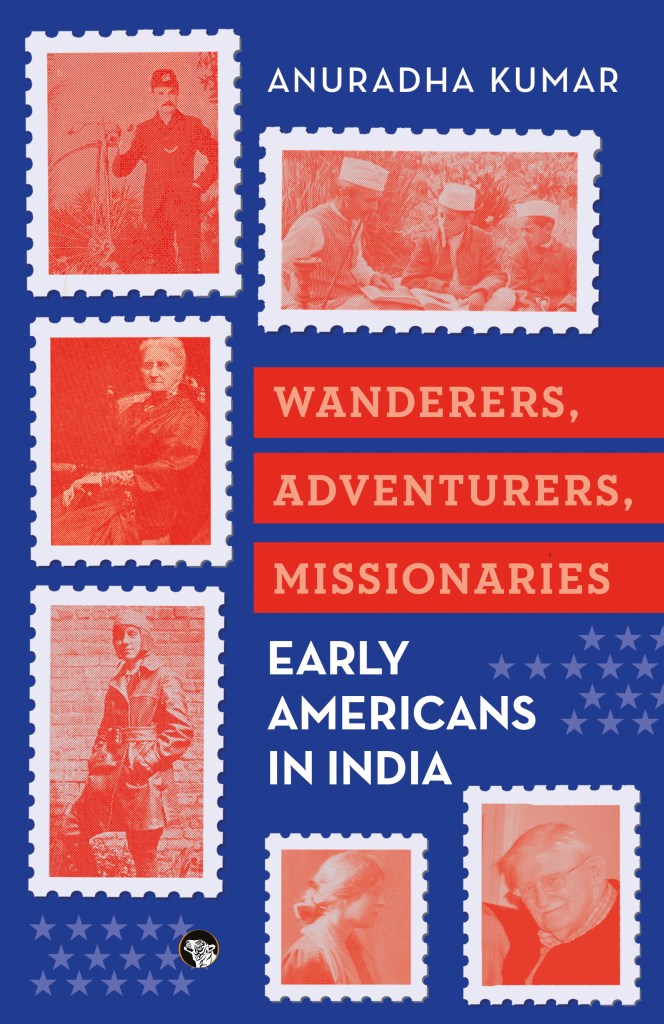
Title: Wanderers, Adventurers, Missionaries: Early Americans in India

Author: Anuradha Kumar

Publisher: Speaking Tiger Books

INTRODUCTION

The Wanderers, Lost and Seeking

The people you will meet here—the ‘first Americans in India’—were indeed all wanderers. They came, not attached to the intentions of a country, or even protected by it, unlike their peers, the Englishmen who made up the East India Company, and who came to trade backed by a royal charter granted by Elizabeth I in the year 1600.

The wanderers, the first of whom came at a time when the United States of America had not come into being—and their actions, thus, were different from what was ordained as state policy. The ‘wanderers’ were not ‘state actors’ in that sense, but they, men, and some women, came to India, on their own, driven by their own spirit of search. They were brought here by a sense of adventure, or by a wild dream—that of finding something that would make their fortune—gold or inspiration quite like gold—or by the need to do something good and enobling.

But they were in some ways quite lost after they came to India.

Stepping Into a Mosaic

To these wanderers who travelled to Asia between 1700-1950s, India came as a mosaic of many impressions, a spread of colour and many experiences. It offered a field of new sensations compelling them to revise received knowledge. They were intrigued, they saw its contradictions, its strangeness, and how things were very different from the homes they had left behind. In the process, life for these wanderers was made afresh.

They came as traders, adventurers, military men, fortune hunters, seekers of knowledge, storytellers, mystics, those seeking a new career, or who came simply to serve.

To them, India—that looked quite different from what it does now—was a land of adventure. A land to make a fortune in, or to find fame.

It was a mysterious, magical place, one that fuelled the imagination, a land that contained the ancient truths of the universe. Yet it was a place caught in the ‘medieval age’, a place they had been sent to, a matter ‘divinely ordained’—as the missionaries and mystics believed—to save souls.

A place one could write about, for it was as strange as fiction; it was a land that offered inspiration and where one could find new, yet old, wisdom. A place to serve and cure and heal. A land where a new world was possible, or an arena to set the world aright.

The wanderers were awed and overwhelmed, and then, scandalized and shocked in equal measure. Some of what they wrote mirrored each other’s experiences. For example, their surprise at the number of servants that were needed. The astonishing beauty of the temples. The majesty of the Taj Mahal. The artistry produced by craftsmen and artisans, an art passed down generations. The riot of unexpected colour—in the bazaars, in the turbans men wore, and in the forests with ‘exotic’ fauna and flora yet to be named and classified by the new science of taxonomy. Balmy days spent on houseboats—‘doongas’—in Kashmir. The spiciness of the food, the liberal doses of pepper in curries. And then, the sad state of its women, especially the child brides, and the young widows, who had to be ‘saved’. The timeless stubbornness of the caste system. The very unchanging nature of things.

Change in America

To look at this period—1700-1950—and talk of Americans is somewhat anomalous. For one thing, for the early part of this time, America was a British colony. By the mid-1770s things would change. The United States of America emerged as a new political entity only in 1776.

On the other hand, from the early 18th century onward, the once dominant Mughal Empire was in decline. Aurangzeb, the last powerful ruler of that dynasty, had worn himself and the empire out with his battles in the Deccan and the upsurge of discontent elsewhere that he failed to contain. Even before the Battle of Plassey in 1757 tilted the balance—beginning in the east—in the East India Company’s favour, India was a patchwork of regional rulers, each brimming over with ambition and jostling for power. To adventurers and fortune-seekers—like the ‘wanderers’—who had no master, who came lacking the conqueror’s zeal, but who had their own sense of adventure, such a state of affairs was ideal to make a fortune, to remake a life.

It is thus of little surprise that the first of the wanderers came as part of the East India Company, to associate themselves with it, as ordinary private traders. America at that time, showed the same precarity that characterized India. It was a continent divided up between competing European powers, and to the west of the continent, the different native American groups too had their territories.1

In the next decades, as America extended westward into new frontiers, set its own foundations as a young democracy, some of the wanderers, citizens of a new nation, also faced their own frontiers, as they sailed eastward onto an unknown land.

Most of these early travellers were those who lived on the northeastern seaboard of the American continent, that is, in the port towns of New England that had historic links with England since the early 17th century. These travellers who came all the way from the faraway West to the East were immigrants themselves, children of people who had moved a generation or two ago, a westward journey from Europe to the ‘New World’. The wanderers to India—the South Asian subcontinent—were thus children of wanderers themselves.

(Extracted from Wanderers, Adventurers, Missionaries: Early Americans in India by Anuradha Kumar. Published by Speaking Tiger Books, 2025)

THE BOOK

In 1833, Frederic Tudor, an American businessman, made history when he shipped 180 pounds of ice harvested from Walden Pond in Boston, to Calcutta—this luxury item being much in demand amongst the elites of British India. Tudor was deservedly christened the ‘Ice King’, and soon built a flourishing trade exporting American ice to India.

Others were drawn to the country by less materialistic goals. Like the ‘medical missionaries’ who were deeply concerned with the ‘women’s condition’ in India. Ida Scudder’s efforts in the 1900s resulted in the setting up of the Christian Medical College in Vellore, which continues to save lives till this day; in 1873, ‘Doctor Miss Sahiba’ Clara Swain set up the first hospital for women and children in Asia, in Bareilly, on land donated by the Nawab of Rampur.

There were also those who came to stay. Twenty-two-year-old Samuel Evans Stokes came to Kotgarh in the Himalayan foothills in 1904, embraced Hinduism and became Satyanand Stokes. He revolutionized apple cultivation in the area, now in Himachal Pradesh, by introducing the ‘Red Delicious’ apples of Missouri; today, his descendants still live and work in the region. Likewise, the Alter family. Martha and David Emmet Alter arrived in Mussoorie in 1917, to spend the summer studying at the Landour Language School; in 1941, Emmet became principal of Woodstock School, just around the hillside. Twenty-five years later, his son Robert occupied the same position. Robert’s son Stephen continues to live in Mussoorie, pursuing a successful writing career; his cousin Tom Alter was a much-loved actor in Indian films until he passed away in 2017.

These are just some of the ‘first Americans in India’ who came here, beginning in the 1700s, with different motives and dreams—as adventurers, traders, reformers, writers and artists. All of them, without exception, were fascinated, astonished, moved and, in the end, profoundly changed by their ‘Indian experience’.

Anuradha Kumar’s skilful and well-researched account of these early visitors makes this an important and engrossing book that informs, surprises and amuses in equal measure.

THE AUTHOR

Anuradha Kumar lived in Mumbai for over a decade, where she worked for the Economic and Political Weekly. She now lives in New Jersey in the US, and writes often for Scroll, The India Forum, The Missouri Review, Catamaran Literary Reader, The Common and Maine Literary Review. Two of her essays received ‘notable’ mention in Best American Essays editions of 2023 and 2024.

PLEASE NOTE: ARTICLES CAN ONLY BE REPRODUCED IN OTHER SITES WITH DUE ACKNOWLEDGEMENT TO BORDERLESS JOURNAL

Categories
Contents

Borderless, March 2025

Happy Birthday Borderless… Click here to read.
Art by Sohana Manzoor

Editorial

Celebrating a Borderless World… Five Years and Counting… Click here to read.

Translations

Jibanananda Das’ poems on war and for the common masses have been translated from Bengali by Professor Fakrul Alam. Click here to read.

A Scene with an Aged Queen, a poem by Ihlwha Choi  has been translated from Korean by the poet himself. Click here to read.

Tagore’s Esho Bosonto, Esho Aj Tumi (Come Spring, Come Today) has been translated from Bengali by Mitali Chakravarty. Click here to read.

Pandies’ Corner

For Sanjay Kumar: To Sir — with Love has been written for the founder of pandies’ theatre by Tanvir, a youngster from the Nithari village where pandies’ worked with traumatised victims. Over time, these kids have transcended the trauma to lead fulfilling lives. The late Sanjay Kumar passed on this January. This is a tribute to him by one of his students. It has been translated from the Hindustani original by Lourdes M Surpiya. Click here to read.

Poetry

Click on the names to read the poems

Luis Cuauhtémoc Berriozábal, Kiriti Sengupta, Ryan Quinn Flanagan, Snehaprava Das, Stuart McFarlane, Arshi Mortuza, George Freek, Jyotish Chalil Gopinathan, Ahmad Al-Khatat, Michael Burch, Bibhuti Narayan Biswal, Mark Wyatt, Owais Farooq, Adriana Rocha, Rakhi Dalal, Rhys Hughes

Musings/Slices from Life

Nobody Knows…

Farouk Gulsara muses on the dichotomies in life exploring beliefs that shape our world. Click here to read.

Beachcombing on the Abrolhos Islands

Meredith Stephens goes beachcombing in a thinly inhabited island. Click here to read.

As Flows the Gomti: A Monument of Tranquility 

Prithvijeet Sinha takes us to the past of Lucknow. Click here to read.

Musings of a Copywriter

In All Creatures Great and Small, Devraj Singh Kalsi talks of living in harmony with nature… is it tongue in cheek? To find out, click here to read.

Notes from Japan

In Haiku for Rwandan Girls, Suzanne Kamata writes of her trip to Africa where she teaches and learns from youngsters. Click here to read.

Essays

Take One

Ratnottama Sengupta takes stock of women in Bengali cinema over the last fifty years. Click here to read.

Drinking the Forbidden Milk of Paradise…

Meenakshi Malhotra explores the past of poetry and women writers. Click here to read.

Where have all the Libraries Gone?

Professor Fakrul Alam writes of the loss of libraries as we knew them. Click here to read.

Stories

In the Realm of Childhood

Paul Mirabile gives us a story set in Scotland. Click here to read.

The Appropriate Punishments

Naramsetti Umamaheswararao gives a fable set in a forest. Click here to read.

Eyes of Inti

Swati Basu Das shares a lighthearted flash fiction. Click here to read.

‘Solitude is a Kind of Freedom…’

Munaj Gul gives an introspective story set in Balochistan. Click here to read.

Why I Stopped Patronising that Cheese Maker’s Shop…

Zoé Mahfouz shares a humorous vignette of Parisian life. Click here to read.

Conversations

Ratnottama Sengupta discusses the famous actor, Soumitra Chatterjee, with his daughter, Poulami Bose Chatterjee. Click here to read.

Keith Lyons interviews Malaysian author and editor, Daphne Lee. Click here to read.

Book Excerpts

An excerpt from Frank S Smyth’s The Great Himalayan Ascents. Click here to read.

An excerpt from Rhys Hughes’ The Devil’s Halo. Click here to read.

Book Reviews

Somdatta Mandal reviews Tsering Namgyal Khortsa’s non-fiction, Little Lhasa: Reflections in Exiled Tibet and fiction, Tibetan Suitcase, together. Click here to read.

Malashri Lal reviews Rachna Singh’s Raghu Rai: Waiting for the Divine. Click here to read.

Bhaskar Parichha reviews Sandeep Khanna’s Tempest on River Silent: A Story of Last 50 Years of India. Click here to read.

Vignettes from a Borderless World… Click here to read a special fifth anniversary issue.
Categories
Essay

Where have all the Libraries Gone?

Professor Fakrul Alam writes of libraries affected by corporate needs… With this essay, we hope to launch a discussion on libraries as we knew them and the current trends

From Public Domain

Dhaka, 2003

Where have all those libraries gone?

Back in the ‘70s, in-between classes, adda[1], and sports, I used to spend most of my time in the USIS[2], British Council, or Dhaka University libraries. I would go to USIS for its collection of magazines and fiction, and to the Dhaka University Library for almost everything else. Despite the dust, the load shedding, the noise, the frequent closures of the university and the missing pages within the books, it was a splendid place for both adda and study. Some of my friends and acquaintances lamented that somehow, I had lost interest in “fielding” and had turned into a bookworm, but every book that I read made me thirst for more treasures of English literature. And then there was the British Council Library.

Perhaps memory always rose-tints the past, but it seems to me now that it was the friendliest part of the city then. The lush green lawn and the open spaces that surrounded the library, the access to stacks and stacks of books, the periodicals that you could leaf through, anything from the latest cricket news to reviews of books, the abundantly stocked reference section that was a source of special delight for me, the rows after rows of books that you could explore—here was God’s plenty! The Dhaka University Library had no doubt a much richer collection, but inside the British Council Library you could occasionally experience the bibliophile’s ultimate thrill: leafing through yellowing pages of a fairly old book, only to set it aside for another one; or merely reading surreptitiously through a page or two, secure in the knowledge that not all books are to be swallowed, chewed, and digested, that at least a few are to be tasted, and that was what the British Council Library was for! I would take a book or a periodical on a lazy day, sit down in one of the chairs, and then dream away, secure in the feeling that “there is no Frigate like a Book/ To take us lands away/ Nor any Coursers like a Page/ Of prancing Poetry.”

Everything about the British Council of this period seemed to be inviting. You got to know the staff after a few visits and they were all very friendly. I was still a student when I was on a “first-name basis” with the expatriate assistant representatives and librarians. In the middle of the decade, though only a lecturer at Dhaka University, I could claim the Librarian, Graham Rowbotham, to be a dear friend. In retrospect and especially compared to the library decor and staff now, everybody and everything associated with the library seemed to be amateurish in a way that was endearing and conducive to aimless browsing and long hours of lounging. Book of verse or criticism in hand, I loved spending my mornings here, although “thou” would be a few desks away, and to be glanced furtively in an essentially one-way traffic!

New books kept coming fairly regularly and were ordered by people of catholic tastes and wide-ranging interests. But most importantly, membership was cheap. I can’t remember what the membership fees were, but it must have been ridiculously low since even in those cash-strapped days I never seemed to have been bothered about renewing my membership from year to year. And yet you didn’t have to be a member to go in and browse, although I always preferred to be one so that I could always have books to take away and read at home.

Returning to Bangladesh after six years in Canada, I found the British Council of the ’80s not that different from the inviting, relaxed place I knew in the ’70s, although by now incoming books had slowed down to a trickle. Towards the end of the decade, I think, the library added a video section, but, on the whole, the Council seemed to be cutting back on everything. I had also heard that the library was going to be restructured; apparently, the “Iron Lady” was bent on making the British Council less of a burden on the British economy and more of a self-sustaining, income-generating unit.

But the full effect of the restructuring of the British Council into a self-sustaining, charitable organisation was obvious only by the middle of the ’90s. The Thatcherite assault on the arts, a heightened British concern with security after the Gulf War, and unrest in Dhaka University all must have played their parts, for in 1995 the British Council decided that they would leave the campus for the security of the Sheraton Annex.

The first casualty of what was surely an ill-conceived decision, like USIS’s move to Banani was the British Council’s wonderful collection of books. Row after row of books were given away for free. Indiscriminately. Thoughtlessly. Even some reference books and bound periodicals were distributed gratis since it was felt the Sheraton British Council would have very little space.

Thankfully, the British Council abandoned its move to the Sheraton, but the Fuller Road library never recovered from the book-giving spree. Instead, the library was redesigned to give it a contemporary feel on the outside as well as the inside, security was beefed up, and everything about the library redone to give it a “new”, packaged look.

A cyber centre was installed to make you feel that the ambience was au courant, and impressive graphics-brightened the walls. But what is a library without stacks and stacks of books? The British Council was always the repository of the best in British culture, but this one seemed to be as anaemic as the foreign policy of present-day Britain and nowhere representative of the nation’s past cultural glory. Indeed, where were the Booker Prize winners, the Nobel laureates, the Poetry Book Society choices, London Magazine, Granta, The New Left Review, The London Review of Books? Where were the bibliographies, the reference books that you could use to track an idea or pursue a stray thought to an ever-widening world, so that even within the confines of a library you “felt like some watcher of the skies/ when a new planet swims into his ken?”

The British Council has leased the best piece of property in town from the University of Dhaka. And what does it offer the university’s students? Forced to generate revenues for its upkeep, it had become, as my dear friend put it so memorably, the New East India Company, making money any which way it is able to. Thus, the Council was now more bent on offering exorbitantly-priced language courses and all sorts of examination services, trading on its Englishness and cashing in on the dismal state of our educational system set back by excesses of linguistic nationalism, than on stocking books that represented the best in British culture and that could be made available to the largest group of people. Library fees are ridiculously high—which middle class family can afford to make its children members at Tk 1,300 a year? And entry to the library itself is restricted—you have to be a member to browse! In fact, everything about the present British Council Library reinforces the feeling that it serves almost exclusively two groups of people: the upper class of Dhaka and people desperate about going to Britain for higher studies!

Significantly, the British Council Library now has remade itself as the Library and Information Services. What services? I stopped becoming a member in 1998 when I realised that the membership fees, which I could barely afford even then (the current fees are Tk 650 a year!), were entitling me to diminishing returns every year since the books and most of the periodicals I wanted to read were not there. The year I quit my membership after I had requested the library to procure a book on Burke and India for a research project but, despite repeated reminders to the librarian, that book never came (and I thought that they would listen to a professor of English literature at Dhaka University). The reference section was no longer stocking current bibliographies and sources of information about the world of books.

When I decided to write this piece, I thought in all fairness I should spend some time checking out the Library’s current state before I started critiquing its current library policy. To my dismay, I found that things had gone from bad to worse in the last few years. What services? There is now left only one shelf of literature books and another one devoted to reference items. The library looks pretty, and everything is neatly arranged but why does it remind me of the artificial, vacuous smile of the catwalk beauty? No doubt in line with modern concepts of interior design the library has more space than ever before, but all I see in it is emptiness! Yes, it is smartly done and for the smart people, but where is the world of knowledge in all this?

As my colleague pointed out to me in a note, “What services? How can the young come and request books they don’t know about? Knowledge comes from browsing the shelves, from looking at books and authors you have never seen before, and then you pick it up and read a new author, and perhaps you find a lifelong favourite and your mental landscape changes and that’s what a library’s function is, to widen, to broaden, to expose minds to superior stuff, not provide some crap ‘services’, some videos, some paper hangings, and then have the gall to call it ‘progress’ or ‘keeping up with the times’ or whatever!”

I should add that I have no real problem with the British Council cashing in on the O and A level market and IELTS[3] examinations, but I can’t figure out why it can’t plow back more of its surely substantial profits into establishing a proper library instead of the Fuller Road scam that now calls itself one. Let it charge the people who can afford its outrageously-priced language courses all it wants to, but why can’t it lower library fees so that anybody who wants to can use the library facilities, can browse and read in the library without having to pay anything? I am aware that the British Council is a registered charity and believe that it is supposed to spend its gains here, but can’t it become a leaner operation so that it can beef up its library services? Shouldn’t charity begin at home?

Our libraries have become shadows and shells of their former selves, and it is time we started to ask ourselves a very simple question: what exactly is a good library? And don’t we owe our children and ourselves at least one library?

(Adapted from the essay, ‘The British Council Library: The New East India Company?’ Published on November 8, 2003 in Daily Star)

[1] Casual sessions of tête-à-tête

[2] United States Information Service Library

[3] Internation English Language Testing System

Fakrul Alam is an academic, translator and writer from Bangladesh. He has translated works of Jibonananda Das and Rabindranath Tagore into English and is the recipient of Bangla Academy Literary Award (2012) for translation and SAARC Literary Award (2012).

PLEASE NOTE: ARTICLES CAN ONLY BE REPRODUCED IN OTHER SITES WITH DUE ACKNOWLEDGEMENT TO BORDERLESS JOURNAL

Click here to access the Borderless anthology, Monalisa No Longer Smiles

Click here to access Monalisa No Longer Smiles on Amazon International
Categories
Slices from Life

Not Quite a Towering Inferno

By Farouk Gulsara

We were told to be ready for dinner by 6 p.m., so we had one and a half hours to kill before gathering at the lobby. My varsity mates and I, fourteen of us, on our regular bromance outing, had decided to embark on a six-day tour around Sri Lanka. Colombo was our last stop.

I told myself there was time for a shower. I thought I heard the yell of two men. They must be at the heights of merry-making, I reckoned. Nothing wrong. After all, many were holidaying in Colombo, like us, in what was hailed as paradise on Earth. Maybe they took the celebrations too far. It was then that the lights went off. Then I thought I heard a barrage of a loud bang. Did somebody drop something heavy? Then came the indistinctive smell of burning rubber.

Then it clicked. Everything fell into place. Damn. There must be a fire somewhere! I open my room door. I could see a hint of smoke whirling at the ceiling.

What happened to the fire alarm and emergency light or water sprinklers? This is not a rundown half-grade hotel. This is a reputable hotel with its rich Scottish tradition plastered all over its walls, tartans, Scots family insignia and all. Even though we think the British ruled India, the Scottish served in the East Indian Company in big numbers as well. They, too, joined the bandwagon to usurp wealth from unsuspecting natives through their mercantile activities.

As a matter of reflex, I got into the drill. The passive learning from watching all those disaster movies had to be put to good use. Like a child regurgitating what he learnt from rote learning, I fell in line.

“Relax, said the night man!” The first thing that came to mind was, “Don’t panic!” Earlier there had been a blackout. I was too relaxed to think of sitting through the outage and letting the electricians sort it out. That was the wrong move.

Learned experience from flight stewardesses was “in case of emergency, leave behind your belongings and head to the exit”. I realised that it may only work sometimes. Stuck in a third-world country, running around to the fancy of their bureaucracy is not my idea of a holiday. I stuffed my passport, wallet and mobile phone into my jeans and headed out of the room without my luggage. Again, another mistake, I thought.

I remember reading, “Do not use the elevator in case of emergency,” during those long hours spent waiting for lifts. Keeping that in mind, I headed to the stairs. Wow, so far, so good. I began wondering how everything was working like clockwork. Are people so desensitised after watching so many reels on YouTube that they just know what to do? The hotel staff must have been bombarded with so much footage of disasters elsewhere that they could perform the next course of action half asleep.

To be fair, the hotel staff were on their toes, guiding guests down to the exit with the light of their phones. Without their help, the stairs would have been pitch dark. Now, what happened to the emergency lights along the stairway?

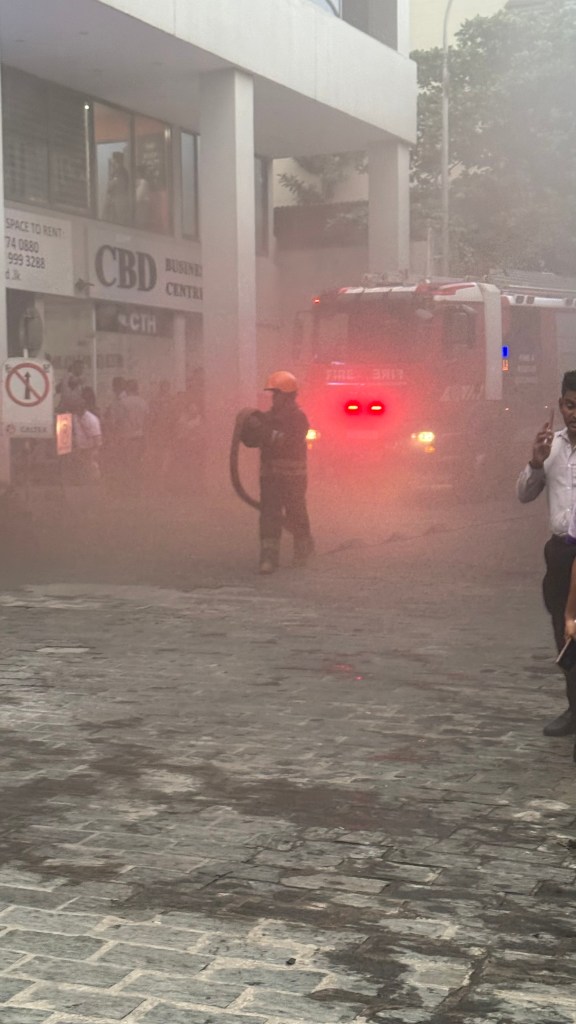
Going down was easy, but there was mayhem once I reached the ground floor. Visibility was almost zero, and the lobby was filled with thick smoke. For the first time, panic was palpable. People were coughing and shouting. My first instinct was to pull up my T-shirt to cover my mouth and crouch down as low as possible to minimise smoke inhalation. I switched my mobile phone light on to guide my way forward. My foot hit upon what was the Christmas tree. Huh! I remember observing a giant Christmas tree in the lobby very near the entrance while checking into the hotel. The only differences were it was then brightly lit and covered with fake snow. Now it is dull and grey. I knew the exit was nearby. I followed the steady traffic of the crowd herding out.

Still, the thick smoke was overwhelming, and the pungent smoke slowly irritated my throat. I continued the rest of the journey in anaerobic mode, trying not to inhale more smoke than I had already ingested. Luckily, the way out was short.

It was hard to stay relaxed when everybody else was not. Somehow, I made it out, patting myself for staying calm. What greeted me outside was a crowd surrounding the perimeter of the hotel, directing me to an area nearby. They were pointing up at the building that was supposed to be my two-night stay. There was thick smoke bellowing from its 7th floor.

News spreads like wildfire in this digital world. People were engrossed in getting the best angle for the personal shot with their devices. Soon, the footage would grace their social media and, perhaps, be potentially ‘viralled’. Photographers with zoom lenses were already there as if they had purposely ignited a fire to film it. Curious onlookers with work clothes were locked in their gaze, in awe, as if it were the second coming. I followed.

I could see one elderly gentleman out at the window. Yes, I had seen that man before when checking in. He was then struggling to move. He must have opened his window to let the smoke out of his room. But luck had different plans. The smoke had grown in intensity and was blowing directly at his window. Desperate, he climbed out of his window and wanted to jump out against the pleading and yells of onlookers, including me. Maybe it was the confusion of inhaling carbon monoxide; he must have thought the fast out of his misery was to jump down without a safety harness.

A modern fire engine moved in just then, much to everyone’s relief. In a jiffy, an aerial ladder was summoned to whisk the victim from the window. Applause ensued, and the victim was quickly stretchered to a nearby ambulance.

The bellowing smoke quickly settled down, and my friends and I sighed in relief. Though one of my friends went on a tirade of cough. Even before the start of the holiday, he had been recovering from a nasty dry cough. The smoke must have made it worse. The paramedics checked on him, too, and took him in for overnight observation. 

The hotel was cordoned off with yellow tape and classified as a crime zone. The police had to investigate to rule out arson. Until then, our luggage was the property of the Sri Lankan Police Department, and no one could go in or out. 

We were left out like refugees with only our pants and clothes on our backs.

“… but we have our luggage stuck upstairs. We need them!” we told the hotel staff.

As expected, the reply was, “Sorry, Sir. Nobody can enter the building. But don’t worry, Sir. We will take care of your things.”

We were later given rooms in a nearby hotel, which was better and newer than the drab one we had been given earlier.

We soon left to bury our sorrows in some Ceylonese comfort food: apom[1] and coconut milk-rich crab curry. We had enough action for the day.

In retrospect, leaving the luggage behind was a wise move. Chugging the bags along the dark stairs and smoke-filled foyer is quite daunting. Sleeping with the clothes on our backs without toiletries must have been a trade-off for smoke inhalation and hospital admissions.

Overnight, we had become stars of sorts. Everywhere we went, it became the ice breaker. We became the talk of the town as the ‘guys who cheated the hotel fire”. Of course, we did nothing like that. Still, it spiced up our holiday and gave us friends of more than forty years something to reminisce about in our twilight years.

We only had access to our bags the following morning, which also meant we could not personally enter the premises to collect our belongings. Only designated hotel staff could do that. The hotel was still a crime investigation zone, which must mean we were considered potential arsonists who could tamper with evidence. The police personnel were still busy taking samples and photographs of the crime scene.

Luckily, the fire was localised, and the firefighters did not need to hose the whole building down. Hence, our baggage was dry. My room was on the second floor, while my other friends were on different floors. The fire had been on the seventh. Even though most of our rooms were far from where the fire allegedly started, the retrieved luggage came with a grimy layer of soot, compliments of the furious, fiery invader. Even the garments and bags gave a whiff of smoke for days afterwards, even after sunning it in the open. 

Imagine how it would have been if I had waited a little longer. What is damage to property when, above all, health and life matter most? Going back without the luggage is better than returning in a body bag.

.

[1] apom – soft, sweet and fluffy traditional pancake from Southern India and Sri Lanka.

Farouk Gulsara is a daytime healer and a writer by night. After developing his left side of his brain almost half his lifetime, this johnny-come-lately decided to stimulate the non-dominant part of his remaining half. An author of two non-fiction books, Inside the twisted mind of Rifle Range Boy and Real Lessons from Reel Life, he writes regularly in his blog, Rifle Range Boy.

.

PLEASE NOTE: ARTICLES CAN ONLY BE REPRODUCED IN OTHER SITES WITH DUE ACKNOWLEDGEMENT TO BORDERLESS JOURNAL

Click here to access the Borderless anthology, Monalisa No Longer Smiles

Click here to access Monalisa No Longer Smiles on Kindle Amazon International

Categories
Poets, Poetry & Rhys Hughes

Lines for Loons, Loonies, and Such-like…

SAILING AWAY

I sailed across the seas
balanced on my knees,
each kneecap in a little
toy boat and for sails the
flaps of my big raincoat,
open to catch the breeze.

TURNING THE DIAL

Nash your teeth in envy, Ogden,
when you read this rhyme
for I have turned the dial higher
on the daftness amplifier
and now it’s on eleven,
which is two more than nine.


WHAT WE CALL

I sometimes wonder
what we call a sea
in which a brave dog
swims desperately
through tempestuous
and perilous waves?

Rough! Rough!

CALLING MY BLUFF

Someone called my bluff
earlier today while I was
sunning myself in the park.
“Here boy! Good bluff!
Who’s a good bluff then?”

And it actually came running!
I have seen some weird
stuff in my time but never
a bluff that runs. That was
tough on my sense of fun.

CROOKED SMILE

Someone just told me
that I have an old crooked smile
and I must confess it’s true.
My smile embezzled
100 doubloons from
the East India Company in 1642

CHARGING MY PHONE

I am
charging
my phone.

The field is
a large one
but I think I’ll be able to
gore it before it reaches
the gate.


THE WINDS IN SEASON

Spring Summer Autumn Winter
do your worst, blow your best.
There’s a splinter in the sprinter.
North, South, East, and West.

Winter Spring Summer Autumn
put your boots on and come forth.
Silver talons finally caught them.
East, West, South, and North.

Autumn Winter Spring Summer
scrub the dishes for the feast.
Fools in clover are made dumber.
South, North, West, and East.

Summer Autumn Winter Spring
Arch an eyebrow, gape a mouth.
Hark the harps unattended sing.
East, West, North, and South.

SCIENTIFIC POETRY

Newton with a suit on
Einstein eating limes
Archimedes in a tree
and that’s just three
who rhyme.

Von Neumann in a bath
Faraday on a trampoline
Gödel playing castanets
and that’s just three
who don’t.


MY BROTHER


My brother
is captain
of a soccer team
and he wants me to play
in goal. And he says
that if I refuse
they will lose the game
and he’ll weep
and do some other
melodramatic things.
But why should I
oblige him?
Am I my brother’s
keeper?


AS A SPOON

I went
to a fancy
dress party
yesterday.

Most of
the evening
remains
a blur.

But I know
that I was
the only man
in the room
dressed as
a spoon.

Caused quite a stir.


THE BAD BANDIT

The bad bandit
has been banned
from banditry
because his moustaches
when twirled
got out of hand
on his face.

So he joined a band
in which he plays
a rubber band mandolin
and now it’s only girls
who twirl on the
dance floor during
the encore.

Not his whiskers anymore.

Rhys Hughes has lived in many countries. He graduated as an engineer but currently works as a tutor of mathematics. Since his first book was published in 1995 he has had fifty other books published and his work has been translated into ten languages.

.

PLEASE NOTE: ARTICLES CAN ONLY BE REPRODUCED IN OTHER SITES WITH DUE ACKNOWLEDGEMENT TO BORDERLESS JOURNAL

Click here to access the Borderless anthology, Monalisa No Longer Smiles

Click here to access Monalisa No Longer Smiles on Amazon International
Categories
Review

‘Burradin’: An Indian Christmas

Book Review by Somdatta Mandal

Title: Indian Christmas: Essays, Memories, Hymns

Editors: Jerry Pinto and Madhulika Liddle

Publisher: Speaking Tiger Books

We all know that Christmas Day, the night that Jesus came to earth, bringing with him peace and love for all humanity, is celebrated by Christians all around the world with great enthusiasm and merriment. Interestingly, for a multicultural country like India, Christmas is equally celebrated — not only as a religious festival but also as a cultural one. For a country where less than three percent of the population is Christian, the central celebration is the birth of a child, but it takes on new meaning in different Indian homes.  Known in local parlance also as “Burradin”[big day] Indians from all classes and communities look forward to this day when they can at least buy a cake from the local market, shower their children with stars, toys, red Santa caps and other decorative items, and go for a family picnic for lunch, dine at a fancy restaurant or visit the nearby church. This syncretic cult makes this festival unique, and for Jerry Pinto and Madhulika Liddle editing this very interesting anthology comprising of different genres of Indian writing on the topic – essays, images, poems and hymns, both in English and also translated from India’s other languages is indeed unique.

In his introduction which he titles “Unto All of Us a Child is Born,” Jerry Pinto reminisces how he was surprised when he saw his first live Santa Claus. He was a figure in red that Akbarally’s, Bombay’s first department store, wheeled out around Christmas week. “He was a thin man, not very convincingly padded… seemed to be from my part of the world, someone who would climb up our narrow Mahim stairs and leave something at the door for us at three or four a.m., then take the local back to his regular job as a postman or seller of second-hand comics. The man in the cards and storybooks preferred London and New York. And a lot of snow. … Today, it is almost a cliché to say that Christmas, like every other festival, is hostage to the market.”

The other editor, Madhulika Liddle in her introduction “Christmas in Many Flavours” states, “According to the annals of the Mambally Royal Biscuit Factory bakery in Thalassery, Kerala, its founder Mambally Bapu baked the first Christmas cake in India”.  It was way back in 1883, at the instance of an East India Company spice planter he set about trying to create a Christmas cake. Liddle wondered what that first Christmas cake tasted like; how close it was to the many thousands of cakes still baked and consumed at Christmas in Kerala? She also writes about the situation in India, where instead of wholesale and mindless importing of Christmas ideas, the people have been discerning enough to amalgamate all our favourite (and familiar) ideas of what a celebration should be and fit them into a fiesta of our own.


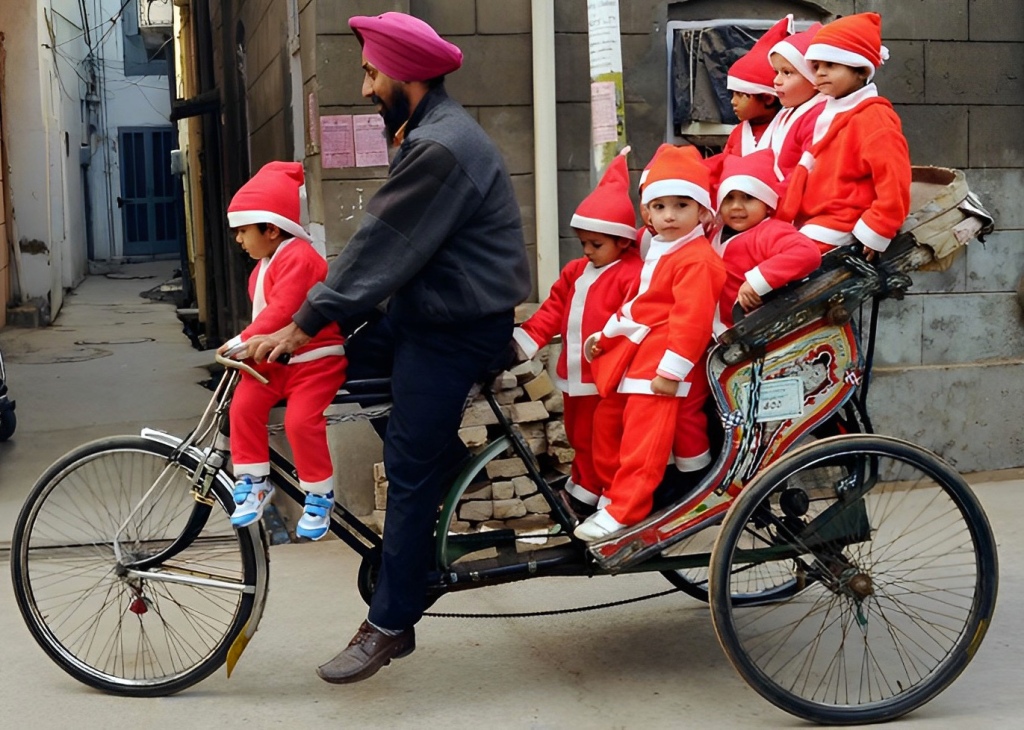
Images from Indian Christmas: Essays, Memories, Hymns: dressed up as Santa Claus leave for school in Punjab. (Picture courtesy: Ecocabs,Fazilka).

There are several other aspects of Christmas celebrations too. The Christmas bazaars are now increasingly fashionable in bigger cities. The choral Christmas concerts and Christmas parties are big community affairs, with dancing, community feasts, Christmas songs, and general bonhomie. Across the Chhota Nagpur area, tribal Christians celebrate with a community picnic lunch, while many coastal villages in Kerala have a tradition of partying on beaches, with the partying spilling over into catamarans going out into the surf. In Kolkata’s predominantly Anglo-Indian enclave of Bow Bazar, Santa Claus traditionally comes to the party in a rickshaw, and in much of northeast India, the entire community may indulge in a pot-luck community feast at Christmas time. Thus Liddle states:

“Missionaries to Indian shores, whether St Thomas or later evangelists from Portugal, France, Britain, or wherever brought us the religion; we adopted the faith, but reserved for ourselves the right to decide how we’d celebrate its festivals.”

Apart from their separate introductions, the editors have collated twenty-seven entries of different kinds, each one more interesting than the other, that showcase the richness and variety of Christmas celebrations across the country. Though Christianity may have come to much of India by way of missionaries from Europe or America, it does not mean that the religion remained a Western construct. Indians adopted Christianity but made it their own. They translated the Bible into different Indian languages, translated their hymns, and composed many of their own. They built churches which they at times decorated in their own much-loved ways. Their feasts comprised of food that was often like the ones consumed during Holi or Diwali.

Thus, Christmas in India turned to a great Indian festival that highlighted the syncretism of our culture. Damodar Mauzo, Nilima Das, Vivek Menezes, Easterine Kire, Hansda Sowvendra Shekhar, Nazes Afroz, Elizabeth Kuruvilla, Jane Borges and Mary Sushma Kindo, among others, write about Christmas in Goa, Nagaland, Kerala, Jharkhand, Delhi, Kolkata, Mumbai, Shillong and Saharanpur. Arul Cellatturai writes tender poems in the Pillaitamil tradition to the moon about Baby Jesus, and Punjabi singers compose tappe-boliyan about Mary and her infant. There are Mughal miniatures depicting the birth of Jesus, paintings by Jyoti Sahi and Sister Claire inspired by folk art, and pictures of Christmas celebrations in Aizawl, Bengaluru, Chennai and Kochi and these visual demonstrations enrich the text further.

Interestingly, the very first entry of this anthology is an excerpt from the final two sections of one of Rabindranath Tagore’s finest long poems, inspired by the life of Jesus Christ. Tagore wrote the poem “The Child” in 1930, first in English and translated it himself into Bengali the following year, titling it “Sishutirtha.” But many years even before that, every Christmas in Santiniketan, Tagore would give a talk about Christ’s life and message. Speaking on 25 December 1910, he said:

“The Christians call Jesus Man of Sorrow, for he has taken great suffering on himself. And by this he has made human beings great, has shown that the human beings stand above suffering.”

India celebrates Christmas with its own regional flair, its own flavour. Some elements are the same almost everywhere; others differ widely. What binds them together is that they are all, in their way, a celebration of the most exuberant festival in the Christian calendar.

Apart from the solemnity of the Church services, there is a lot of merrymaking that includes the food and drink, the song and dance. The songs often span everything from the stirring ‘Hallulujah Chorus’ to vibrant paeans sung in every language from Punjabi to Tamil, Hindi to Munda, Khariya and Mizo tawng.

Among the more secular aspects of Christmas celebrations are the decorations, and this is where things get even more eclectic. Whereas cities and towns abound in a good deal of mass decorating, with streets and public places being prettied up weeks in advance, rural India has its own norms, its own traditions. Wreaths and decorated conifers are unknown, for instance, in the villages of the Chhota Nagpur region; instead, mango leaves, marigolds and paper streamers may be used, and the tree to be decorated may well be a sal or a mango tree. Nirupama Dutt tells us how since her city had no firs and pines, she got her brother’s colleague to fetch a small kikar tree as kikars grew aplenty in the wild empty plots all over Chandigarh. In many entries we read about how Christmas decorations were rarely purchased but were cleverly constructed at home.

A very integral part of the Christmas celebrations of course is music. In many Goan Catholic neighbourhoods, Jim Reeves continued to haunt the listeners in his smooth baritone: “I’ll have a blue Christmas without you/ I’ll be so blue thinking about you/ Decorations of red on a green Christmas tree/ Won’t mean a thing, dear, if you’re not here with me.”  Simultaneously, the words and music of “A Christmas Prayer” by Alfred J D’Souza are as follows: “Play on your flute/ Bhaiyya, Bhaiyya/ Jesus the saviour has come./ Put on your ghungroos/ Sister, Sister/ Dance to the beat of the drums!/ Light up a deepam in your window/ Doorstep, don with rangoli/ Strings of jasmine, scent your household/ Burn the sandalwood and ghee,/ Call your neighbour in, smear vermillion/ Write on his forehead to show/ A sign that we are one/ Through God’s eternal Son/ In friendship and in love ever more!/ Ah! Ah!” But the most popular Christmas song was of course “Jingle bells, jingle bells, jingle all the way….”

In “Christmas Boots and Carols in Shillong”, Patricia Mukhim tells us how the word ‘Christmas’ triggers a whole host of activities in Meghalaya and other Northeastern states that have a predominantly Christian population. Apart from cleaning and painting the houses, everything looks like fairyland during Christmas, a day for which they have been waiting for an entire year. She particularly mentions the camaraderie that prevails during this time:

“Christmas is a time when invitations are not needed. Friends can land up at each others’ homes any time on Christmas Eve to celebrate. Most friends drop by with a bottle of wine and others pool in the snacks and the party continues until the wee hours of morning. It’s one day in the year when the state laws that noise should end at 10 p.m. is violated with gay abandon. …Shillong [is] a very special place on Planet Earth. Everyone from the chief minister down can strum the guitar and has a voice that could put lesser mortals to shame. And Christmas is also a day when all VIPism and formalities are set aside. You can land up at anyone’s home and be welcomed in. It does not matter whether someone is the chief minister, a top cop, or the terrifying headmistress of your school.”

One very significant common theme in all the multifarious entries is the detail descriptions provided on food, especially the makeshift way Christmas cakes are baked in every home and the Indian way meat and other specialties are being prepared on the special day. There are several entries that give us details about the particular food that was prepared and consumed at the time along with actual recipes about baking cakes. “Christmas Pakwan[1]” by Jaya Bhattcharji Rose, “The Spirit of Christmas Cake” by Priti David, and “Armenian Christmas Food in Calcutta” by Mohona Kanjilal need special mention in this context.  Liddle in her introduction wrote:

“Our Christmas cakes are a reflection of how India celebrates Christmas: with its own religious flair, its own flavour. Some elements are the same almost everywhere; others differ widely. What binds them together is that they are all, in their way, a celebration of the most exuberant festival in the Christian calendar.”

Later in her article “Cake Ki Roti at Dua ka Ghar[2],” the house where they lived in Saharanpur, Uttar Pradesh, she wrote how her parents told her that ‘bajre ki tikiyas’, thin patties made of pearl millet flour sweetened with jaggery, used to be a staple at Christmas teatime at Dua ka Ghar[3], though she has no recollection of those. She of course vividly recalls the ‘cake ki roti’. This indigenisation of Christmas is something that’s most vividly seen in the feasting that accompanies Christmas celebrations across the country. While hotels and restaurants in big cities lay out spreads of roast turkey (or chicken, more often), roast potatoes and Christmas puddings, the average Indian Christian household may have a Christmas feast that comprises largely of markedly regional dishes.

In Kerala, for instance, duck curry with appams is likely to be the piece de resistance. In Nagaland, pork curries rich in chillies and bamboo shoots are popular, and a whole roast suckling pig (with spicy chutneys to accompany it) may hold centre stage. A sausage pulao, sorpotel and xacuti would be part of the spread in Goa, and all across a wide swathe of north India, biriyanis, curries, and shami kababs are de rigueur at Christmas.

This beautifully done book, along with several coloured pictures, endorses the idea of religious syncretism that prevails in India. As a coiner of words, Nilima Das came up with the idea that ‘Christianism’ in our churches is after all, a kind of ‘Hinduanity’ (“Made in India and All of That”). This reviewer feels guilty of not being able to mention each of the unique entries separately that this anthology contains, so it is suggested that this is a unique book to enjoy reading, to possess, as well as to gift anyone during the ensuing Christmas season.

[1] Cuisine

[2] Cake bread

[3] Blessed House

Somdatta Mandal, critic, academic and translator, is a former Professor of English at Visva-Bharati, Santiniketan, India.

Click here to access an excerpt of Tagore’s The Child

PLEASE NOTE: ARTICLES CAN ONLY BE REPRODUCED IN OTHER SITES WITH DUE ACKNOWLEDGEMENT TO BORDERLESS JOURNAL

Click here to access the Borderless anthology, Monalisa No Longer Smiles

Click here to access Monalisa No Longer Smiles on Kindle Amazon International

Categories
Review

The Warrior Queen of Awadh

Book Review by Somdatta Mandal

Title: Begum Hazrat Mahal: Warrior Queen of Awadh

Author: Malathi Ramachandran

Publisher: Niyogi Books

Over the past few decades there has been a surge in the publication of Indian historical fiction where the authors are fascinated by India’s rich past, and the many human stories of love and loss buried beneath the larger narratives. Simplistically speaking, historical fiction is a literary genre in which the plot takes place in a setting related to the past events, but is fictional.  An essential element of historical fiction is that it is set in the past and pays attention to the manners, social conditions, and other details of the depicted period. Authors also frequently choose to explore notable historical figures in these settings, allowing readers to better understand how these individuals might have responded to their environments. After The Legend of Kuldhara (2017) and Mandu (2020), Malathi Ramachandran has now presented us with a fascinating novel, Begum Hazrat Mahal: Warrior Queen of Awadh (2023). She endeavours in her novel not just to re-create history as it happened long ago, but to also explore the lives and relationships of those who lived in those times.

The setting of the novel is Lucknow, 1857 where the First War of Independence against the British is fought. Wajid Ali Shah, the last Nawab of Awadh has been exiled by the British to Calcutta along with his courtiers and his coterie some months ago. Only his second wife, the beautiful queen Begum Hazrat Mahal, who had refused to accompany her husband to Calcutta stays back with her young twelve-year old prince Birjis Ali. Hazrat vows to fight the British and win back her beloved Awadh for her people and the crown for her son. She builds a rebel army and high drama ensues as they besiege the Residency, the walled British cantonment, for five months. A fictional saga based on actual events, this book takes us within the walls of the Residency where love and passion rage alongside the battle, and into the world of Begum Hazrat and her loyal band. From the beginning we encounter Hazrat’s interactions with Major Kenneth Murphy, the Company’s liaison officer who is enamoured by the beauty of the Begum and succumbs to her machinations. She wants his help to crown Birjis Ali the next Nawab and win back their lands and their properties. Then there are many stereotypical British characters – women who came from England to seek husbands and worked in evangelical missions, doctors, sergeants, and officers who took up native women for sexual gratification, and the like.

When Hazrat decides on action against the Angrez1, she forms baithaks2 comprising of the rich and poor, powerful and subordinate, Hindu, Muslim and Christian, all of whom feel that they had had enough of subjugation by these tyrants from another land. They would not take any more of their religious conversions, their oppression on the streets, their suppression in the garrisons. Her friendship with Jailal Singh, based on a shared love for Hindustan, blossomed and he promised her his allegiance in the fight against the British. She had found in Jailal a confederate, an able accomplice.

A large section of the narrative is then devoted to the details of the fight that ensued. There were times when the natives thought that they had managed to restrict the British soldiers from winning; at other times the tide of fortune turned in their disfavour when even after forming women’s brigade and defiant groups among the natives, success didn’t come in their favour. The reader is kept guessing whether the rebel army would storm the British bastion before their relief forces arrived or the tide would turn in a wave of loss and grief, crushing Hazrat Mahal’s dream for Awadh and her son. In November 1858, after more than nine months of fighting in Lucknow, and finally establishing complete control over North India, the Governor General, Lord Canning, presided over the Queen’s Durbar in Allahabad and read out the Proclamation from Queen Victoria. The territories of India, up until now governed by the East India Company, would now come directly under the Crown, and be governed by the Queen’s civil servants and military personnel.

After several turns of incidents Hazrat realises that defeated she and her army may be, but they would never be vanquished in spirit. In her chamber in the Baundi fort, she paces back and forth, the printed proclamation crumpled in her hand. Her close supporters watched in mute frustration. She would never agree to the British offer of clemency with all its benefits. She would rather live in penury than become one of their vassals. Deep inside the stone fortress, she sits huddled in her quilt, and feeling the loneliness and desolation of one who had fought and lost everything. The story ends with Hazrat and her son silently leaving the already orphaned Awadh and heading into the forests to cross over to Nepal on the other side and seek asylum there.  

Malathi Ramachandran must be appreciated for the racy narrative style of the novel that does not weigh down under the plethora of historical events. Here one must mention the similarity of incidents narrated about the plight of another Indian queen in another historical fiction titled The Last Queen written by Chitra Banerjee Divakaruni. This novel also tells us the story of Jindan Kaur, Maharaja Ranjit Singh’s youngest and last queen, his favourite. She became regent when her son, Dalip, barely six-years-old, unexpectedly inherited the throne. Sharp-eyed, stubborn, passionate, and dedicated to protecting her son’s heritage, Jindan distrusted the British and fought hard to keep them from annexing Punjab. Defying tradition, she stepped out of the zenana, cast aside the veil, and conducted state business in public. Addressing her Khalsa troops herself, she inspired her men in two wars against the ‘firangs3.’ Her power and influence were so formidable that the British, fearing an uprising, robbed the rebel queen of everything she had, including her son. She was imprisoned and exiled. But that did not crush her indomitable will. Like Begum Hazrat Mahal, she also had to live the last years of her life in exile, shorn of all her power and wealth. In both the novels, we learn about the strong and determined will power of Indian women who wanted to retain the pride of their motherland despite all odds and machinations of the British. A perfect blending of fact with fiction, the novel is strongly recommended for all categories of readers, serious and casual alike.

  1. British ↩︎
  2. Concerts ↩︎
  3. Foreigners ↩︎

Somdatta Mandal, author, critic and translator, is former Professor of English at Visva-Bharati University, Santiniketan, India.

PLEASE NOTE: ARTICLES CAN ONLY BE REPRODUCED IN OTHER SITES WITH DUE ACKNOWLEDGEMENT TO BORDERLESS JOURNAL

Click here to access the Borderless anthology, Monalisa No Longer Smiles

Click here to access Monalisa No Longer Smiles on Kindle Amazon International