In the Philippines, ‘maximum tolerance’ refers to peacekeepers practicing a high level of restraint during public gatherings to ensure safety and maintain peace, while law enforcement implements action against violent demonstrators and shows tolerance towards those who are peaceful. Essentially, it means tolerating an individual’s capacity for patience, endurance, and long-suffering in the face of behavioral challenges.
Until now, I have maintained a close relationship with an orphaned nephew of a colleague of mine. Our bond grew stronger when he moved to our church shelter from a nearby mountainous town to live with his uncle. I have always empathised with him, as my family also provided care for fatherless children. The purpose of his relocation was to enable him to complete his college education. He eventually graduated with a degree in computer science from an institution that claims to have an Asian focus, despite lacking a physical campus during the Covid-19 pandemic. Understandably, he struggled to find employment. He returned home to stay with his aunt’s family, patiently waiting for an opportunity to secure a job, which proved to be challenging.
During his studies, we would occasionally meet for meals to discuss the work on his paper requirements before graduation and plan his group thesis. When the pandemic hit, our conversations shifted online, but his willingness to seek my assistance remained strong, and I gladly supported him.
His first job involved selling organic powdered coffee imported from Malaysia at an office in the heart of Quezon City. When the Covid-19 virus spiked, all the company’s employees had to work from home. However, there were times when they were asked to come to the office despite the significant health risk.
My friend refused to do so, which was quite reasonable as he lived with his elderly aunt and uncle. As a result, he was reprimanded and issued a memo for unauthorised leave of absence. I had to help him draft a letter in response to the memo. This situation challenged him to assert his rights as an employee as not every human resource policy is beneficial. At times, companies will test your threshold of tolerance to the limit which is not necessarily wrong. Upon repeated emails that we sent to the HR department, he was finally given his last paycheck months after his resignation.
His next job was as a management trainee for a Canadian-based coffee shop in a mall chain. Coffee shops and fast-food stores often hire college graduates from any field to fill staffing gaps caused by high employee turnover, even if their majors are unrelated to the food industry. Unfortunately, he did not pass the probationary period because he said he was verbally mistreated by the store manager over work principles and practices.
His initial job application at a global fast-food chain was unsuccessful, as he did not receive an interview. He ended up taking a part-time online job at a small pharmaceutical company to earn money for his expenses. After a year of waiting, he was finally invited for a management interview at the same fast-food chain in a city near his hometown. He got the job.
He has been working for the global fast-food chain for over two years now and enjoys his role as a specialist manager due to his interest in computing and ordering items. However, the local store management has not been supportive in terms of taking care of their team. For example, when he had a high-grade fever while working, he was not allowed to go home until the next shift manager arrived, in the midst of a heavy, rainy evening. There was even an instance where he had to attend a management meeting at another store after his graveyard shift.
On a particular rest day after his graveyard shift, he was instructed to attend management classes in a southern city for three days, without being given additional days off to offset his attendance during his rest day. Another schedule required him to report at 2pm after working a graveyard shift. At times, he was also instructed to go to other stores to manage, without any fare allowances. All these cases are documented online. The goal is for the team to hit the sales target at whatever cost and without offering any additional incentives. Even when he had toe-surgery and had to go on sick leave, he was still expected to work from home regarding stock orders. The global fast food chain’s work-life balance policy is only superficial.
Maximum tolerance does not mean to allow individuals, communities, and corporations to exploit us to unimaginable levels, where our self-worth is solely dependent on our output. Outstanding results should be based on a holistic approach that recognises everyone’s basic humanity. Resignation prevails simply because individuals are not allowed to exercise and enjoy their humanness in any circumstances. This should not be the case.
This scenario is not only limited to corporations, but also to religious institutions. In the church that I regularly attend, the resident minister encourages members to be involved in various programs, as leadership should not be dependent on a single individual but on the collective efforts of everyone. However, in doing so, he expects every member to participate in a series of activities all day on Sundays. Sundays, or any Sabbath day, should be a day of spiritual and physical refreshment and renewal. However, with the onslaught of day-long programmes each Sunday, the maximum tolerance of members is tested to the point where most skip events instead of feeling encouraged, as the minister makes them feel guilty. Saying ‘n’o is not a sin of omission.
I look forward to a time when it will be common for business enterprises and social institutions to implement appropriate mechanisms that help individuals to be more human, rather than just robots mindlessly following instructions.
Manuel A. Alindogan, Jr. or Jun A. Alindogan is the Academic Director of the Expanded Alternative Learning Program of Empowered East, a Rizal-province based NGO in the Philippines and is also the founder of Speechsmart Online that specialises in English test preparation courses. He is a freelance writer and a member of the Freelance Writers’ Guild of the Philippines (FWGP).
.
PLEASE NOTE: ARTICLES CAN ONLY BE REPRODUCED IN OTHER SITES WITH DUE ACKNOWLEDGEMENT TO BORDERLESS JOURNAL
Title: Epidemic Narratives: The Cultural Construction of Infectious Disease Outbreaks in India
Author: Dilip K. Das
Publisher: Orient BlackSwan
After the major outbreak of COVID-19 pandemic in 2020, there has been a plethora of studies about epidemic narratives in different kinds of literary and visual forms. Not that the issue had not been dealt with earlier, but somehow it increased manifold times and contends with a reality that is now increasingly becoming our way of life as new infectious diseases break out and older ones resurface almost every year. Drawing from the humanities, medicine and social sciences, and using the approach of interdisciplinary studies, this non-fiction examines stories of epidemic outbreaks in India, from the late-nineteenth century to the present, in the form of fiction, film, memoir, blogs, media reports and epidemiological accounts, to show how epidemics have been represented in social understanding.
Epidemics signify a crisis in society on multiple levels. The author, who specialises in medical humanities and has been meticulously studying and teaching courses in this area for several years, realised that very little is readily available in the nature of theoretical and analytical scholarship of epidemic narratives in general and on Indian narratives in particular and so he decided to write this book.
Divided into ten chapters, the study attempts a close textual analysis and focuses on the subjective experience of people affected by the outbreak. This ranges from the emotional impact of the suffering it causes to socio-political conflicts that it brings to the fore as a collective crisis. It poses two questions: what kind of plot do they employ, and what significances do they attribute to outbreaks as complex human events?
In the first chapter, the author discusses the social understanding of epidemics using a theoretical framework drawing on Charles Rosenberg and several other theorists to show how this understanding both derives from and adds to the biomedical view of disease. It examines how, in pluralistic societies, epidemic reality is constructed through both biomedical and cosmological paradigms, leading to contrary ways of responding to it. Thus, worshipping goddesses like Sitala Mata or Corona Devi and ritualising the event in shows of solidarity exists along with scientific perspectives.
The second chapter is about the impact of pandemic on the nation as a community that imagines itself as healthy yet is vulnerable to the threat posed by pathogens and pathogenic outsiders. The COVID-19 pandemic has made it clear that the future of public health in a rapidly globalizing context depends on how nationalism and internationalism balance mutual interests. Chapters three to ten deal with specific outbreaks. The third chapter discusses two intertextual narratives of the plague outbreak Pune in 1897 which culminated in the assassination of the Plague Commissioner Walter Charles Rand. The first is the autobiography of Damodar Hari Chapekar, who was convicted and hanged for the assassination. It shows how the outbreak was constructed and framed as a political event, marking the emergence of militant nationalism and anticipating the freedom struggle. The second narrative is 22 July 1897, a film made on the same incident by Nachiket and Jayoo Patwardhan.
U. R. Ananthamurthy’s novel Samskara1is usually studied as a text that deals with the themes of caste and religious orthodoxy, the role of tradition in a modernising society, and the tension between allegory and realism. In the next chapter, Das argues that plague not only provides the inspiration for the novel and its point of departure but also serves the function of a focaliser. Samskara is about the question of social order, how a particular code of conduct becomes rigid. In this context the plague outbreak serves as a metaphor for larger social and ethical crises.
Chapter five is about Spanish flu, which broke out in Bombay in June 1918 and was rapidly carried to the rest of the country by soldiers returning from the First World War. It begins with two official reports on the flu by the assistant health officer of Bombay municipality and the sanitary commissioner of India. The author examines newspaper accounts of the outbreak and two literary narratives to show how the outbreak was variously framed as a lapse of colonial public health, a personal tragedy and a cosmological crisis. The final section of the chapter discusses the memory of the Spanish flu a hundred years later with the outbreak of COVID-19.
Chapter six deals with an outbreak of viral hepatitis, a disease that is largely endemic but has occurred intermittently in epidemic form in India in the last hundred years. The author analyses Satyajit Ray’s 1990 film Ganashatru, an adaptation of Henrick Ibsen’s An Enemy of the People, which is about an outbreak of infectious hepatitis in a pilgrimage town in West Bengal. Taking the main theme of asserting commitment to ethics as against manipulation of truth for personal gain, Ray changes the plot, characterisation and context of Ibsen’s story to criticise religious dogma which contradicts rationality and places at risk the health of people.
The next chapter analyses narratives of the HIV/AIDS epidemic which broke out in India in 1986. It examines a range of media articles, literary and cinematic texts and an AIDS awareness video to track changes in the social understanding of the disease and those affected by it. From the stigmatising accounts of risk groups and HIV-positive individuals that was characteristic of the early decades of the epidemic in India, the focus shifted at the turn of the century to empathy for them. The author discusses in details the first commercially released Hindi film on AIDS, Naya Zaher (New Poison,1991) directed by Jyoti Sarup, mentions two human interest stories like Ritu Sarin’s ‘The Outcast’ (1990) and Subhash Mishra’s ‘Damned to Death’ (2000), analyzes a film like Ek Alag Mausam ( A Different Season, 2003) directed by K. P. Sasi, Negar Akhavi’s anthology AIDS Sutra (2008), and Kalpana Jain’s Positive Lives (2002) where the author journeys more than 15,000 kilometers in four months in order to get an idea of the epidemic’ s scale. He also analyses movies like Phir Milenge ( We’ll meet again, 2004) directed by Revathy and Onir’s My Brother…Nikhil(2005) and examines the dialectical relation between social understanding and narrative in bringing about this change.
Aashique Abu’s Malayalam film, Virus, is a fictional reconstruction of the outbreak of the Nipah virus disease in Kerala in the summer of 2018 and deals with biomedical explanations as well as accounts of personal suffering. The eighth chapter therefore shows how the film constructs the event as the disintegration and renewal of community and as a sign of the vulnerability of human life. It also shows how the ending denies any assurance that the crisis is over and will not recur.
The recent outbreak of COVID-19 in India that resulted in a nationwide lockdown in 2020 forms the subject of the next chapter. It discusses stories of the pandemic and the lockdown in terms of the suffering they caused, the loneliness, disruption of everyday life, time-space disorientation, loss of life and livelihood, the lack of institutional support, and the precariousness that resulted from all of these. It focuses on two kinds of stories, those of personal suffering like the video Infected 2030 and the Times of India blog ‘My Covid Story’, and those of collective suffering like Vinod Kapri’s documentary 1232 KMS and the book that followed from it, 1232 km: The Long Journey Home. The lockdown following the COVID outbreak in India disproportionately affected migrant workers who lost livelihoods and were prevented by the police and the local administration from returning to the safety of their villages. The author clearly analyses how the governments were unable to deal effectively with so complex a crisis.
The last chapter attempts to explain why narrative is the genre best suited to represent the experience of epidemic, and why epidemic in turn calls forth narrative as its most suitable mode of representation. We make sense of an outbreak in two ways, as an objective event and as subjective human experience. Narratives bring out both these dimensions, by emphasising emotional responses to disease, death and suffering as well as making cognitive sense of it. The book also contains an interesting epilogue by S. Mukundan who examines a narrative poem Plague Sindhu (1924) by Anthony Pillai recording the outbreak of plague in his home district of Theni in Madras Presidency. The poem is an apt example of how an outbreak of infectious disease comes to be socially constructed in terms of both modern scientific ideas of disease-causation and traditional ideas of disease as divine punishment for wrongdoing.
As mentioned earlier Epidemic Narratives takes as its main theme Charles Rosenberg’s argument that the social reality of disease is constituted in the frames of explanation provided by biomedical, political, cultural and social ideals and practices. Das mentions that the book is about “human suffering and compassion” and it will be of interest to researchers and students of literature, cultural studies, the history of medicine and public health policy.
.
Translates to ‘A Rite for a Dead Man’, a Kannada novel written in 1965 ↩︎
Somdatta Mandal, critic and translator, is a former Professor of English at Visva Bharati, Santiniketan.
PLEASE NOTE: ARTICLES CAN ONLY BE REPRODUCED IN OTHER SITES WITH DUE ACKNOWLEDGEMENT TO BORDERLESS JOURNAL
Borderless Journal started on March, 14, 2020. When the mayhem of the pandemic had just set in, we started as a daily with half-a-dozen posts. Having built a small core of writings by July, 2020, we swung to become a monthly. And we still continue to waft and grow…
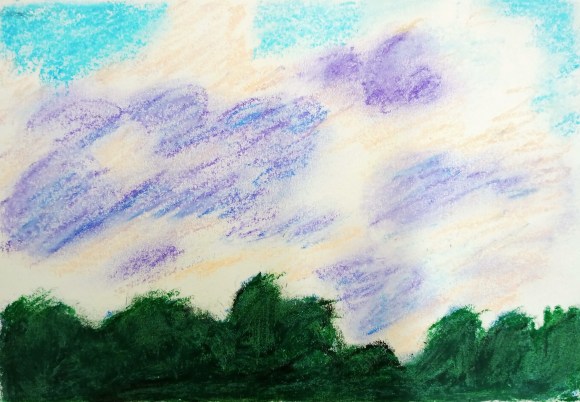
Art by Sohana Manzoor
We like to imagine ourselves as floating on clouds and therefore of the whole universe. Our team members are from multiple geographies and we request not to be tied down to a single, confined, bordered land. We would welcome aliens if they submitted to us from another galaxy…
On our Fifth Anniversary, we have collected celebratory greetings from writers and readers stretched across the world who share their experience of the journal with you and offer suggestions for the future. We conclude with words from some of the team, including my own observations on being part of this journey.
Aruna Chakravarti
Heartiest congratulations to Borderless on the occasion of its fifth anniversary! Borderless, an international journal, has the distinction of carrying contributions from many eminent writers from around the world. From its initiation in 2020, it has moved from strength to strength under the sensitive and skillful steering of its team. Today it is considered one of the finest journals of its kind. I feel privileged to have been associated with Borderless from its very inception and have contributed substantially to it. I wish to thank the team for including my work in their distinguished journal. May Borderless move meaningfully towards the future and rise to greater and greater heights! I wish it every success.
Professor Fakrul Alam
Five years ago, when Borderless set out on its literary voyage, who would have imagined the length and breadth of its imaginative crossings in this span of time? The evidence, however, is digitally there for any reader who has seen at least some of its issues. Creative writing spanning all genres, vivid illustrations, instant links giving resolute readers the option to track a contributor’s creative voyaging—here is boundless space always opening up for those seeking writing of considerable variety as well as originality. The best part here is that unlike name-brand journals, which will entice readers with limited access and then restrict their spaces unless you subscribe to them, all of Borderless is still accessible for us even though it has attracted a wide readership in five years. I certainly hope it will stay that way.
And what lies ahead for Borderless? Surely, more opportunities for the creative to articulate their deepest thoughts and feelings in virtual and seemingly infinite space, and innumerable avenues for readers to access easily. And let us hope, in the years to come Borderless will extend itself to newer frontiers of writing and will continue to keep giving space to new as well as emerging writers from our parts of the world.
May the team of Borderless, continue to live up to their claim that “there are no boundaries to human imagination and thought!”
Radha Chakravarty
Since its inception, Borderless Journal has remained true to its name, offering a vital literary space for writers, artists and scholars from around the world to engage in creative dialogue about their shared vision of a world without borders. Congratulations Borderless, and may your dream of global harmony continue to inspire.
Somdatta Mandal
According to the famous Chicana academic and theorist Gloria Anzaldua, the Borderlands are physically present wherever two or more cultures edge each other, where peopIe of different races occupy the same territory, where under, lower, middle and upper classes touch, where the space between two individuals shrinks with intimacy. Hatred, anger and exploitation are the prominent features of this landscape. There, at the juncture of cultures, languages cross-pollinate and are revitalized; they die and are born. Borders are set up to define the places that are safe and unsafe, to distinguish us from them. A border is a dividing line, a narrow strip along a steep edge. A borderland is a vague and undetermined place created by the emotional residue of an unnatural boundary. It is in a constant state of transition. The prohibited and forbidden are its inhabitants.
About five years ago, when a new online journal aptly called Borderless Journal was launched, these ideas which we had been teaching for so long were simply no longer applicable. Doing away with differences, with limits, it became a suitable platform where disparate cultures met, where people from all disciplines could express their views through different genres, be it poetry, translation, reviews, scholarly articles, creative writing and so on. Many new writers from different parts of the world became regular contributors to this unique experimentation with ‘borderlessness’ and its immense possibilities are very apt in this present global context where social media has already changed many earlier notions of scholarship, journalism, and creativity.
Jared Carter
In its first five years Borderless has become an important witness for international peace and understanding. It has encouraged submissions from writers in English based in many different countries, and has offered significant works translated from a wide range of national literatures. Its pages have featured writers based in India, Pakistan, China, Taiwan, Japan, South Korea, Australia, the UK, and the US. In the future, given the current level of world turmoil, Borderless might well consider looking more closely toward Africa and the Middle East. As the magazine continues to promote writing focused on international peace and freedom, new horizons beckon.
Teresa Rehman
The best part of this journal is that it is seamless and knows no margins or fringes. It is truly global as it has cut across geographical borders and has sculpted a novel literary genre called the ‘borderless’. It has climbed the mountains of Nepal, composed songs on the Brahmaputra in Assam, explored the hidden kingdom of Bhutan, walked on the streets of Dhaka, explored the wreckage of cyclones in Odisha, been on a cycling adventure from Malaysia to Kashmir, explored a scenic village in the Indo-China border, taken readers on a journey of making a Japanese-Malayalam dictionary, gave a first-hand account of the war in Bosnia-Herzegovina and described the syncretic culture of Bengal through its folk music and oral traditions. I hope it continues telling the untold and unchartered stories across mountains, oceans and forests.
Kirpal Singh
In a world increasingly tending towards misunderstandings across borders, this wholesome journal provides a healthy space both for diverse as well as unifying visions of our humanity. As we celebrate five distinguished years of Borderless Journal, we also look forward to another five years of such to ensure the underlying vision remains viable and visible as well as authentic and accurate.
My heartfelt Congratulations to all associated with this delightful and impressive enterprise!
Asad Latif
The proliferation of ethnic geographies of identity — Muslim/Arab, Hindu/Indian, Christian/Western, and so on — represents a threat to anything that might be called universal history. The separation and parcelling out of identities, as if they are pre-ordained, goes against the very idea (proclaimed by Edward Said) that, just as men and women create their own history, they can recreate it. Borders within the mind reflect borders outside it. Both borders resist the recreation of history. While physical borders are necessary, mental borders are not. This journal does an admirable job in erasing borders of the mind. Long may it continue to do so.
Anuradha Kumar
I have been one of Borderless’ many readers ever since its first issue appeared five years ago. Like many others, I look forward with great anticipation to every issue, complete with stories, , reviews, poems, translations, complemented with interesting artwork.
Borderless has truly lived up to its name. Within its portal, people, regardless of borders, but bound by common love for literature, and the world’s heritage, come together. I would wish for Borderless to scale even greater heights in the future. As a reader, I would very much like to read more writers from the ‘Global South’, especially in translation. Africa, Asia and Australasia are host to diverse languages, many in danger of getting lost. Perhaps Borderless could take a lead in showcasing writers from these languages to the world. That would be such an invaluable service to readers, and the world too.
Ryan Quinn Flanagan
To me, Borderless Journal is a completely free and open space. Topics and styles are never limiting, and the various writers explore everything from personal travelogues to the limp of a helpful druggist. Writers from all corners of the globe contribute, offering a plethora of unique voices from countless circumstances and walks of life. Because of this openness, Borderless Journal can, and likely will continue to grow and expand in many directions simultaneously. Curating and including many new voices along the way. Happy 5th Birthday to a truly original and wonderfully eclectic journal!
George Freek
I feel the Borderless Journal fills a special spot in the publishing world. Unlike many journals, which profess to be open-minded and have no preference for any particular style of poetry, Borderless actually strives to be eclectic. Naturally, it has its own tastes, and yet truly tries to represent the broad spectrum which is contemporary poetry. I have no advice as to where it should go. I can only say keep up the good work, and stooping to a cliche, if it’s not broken, why try to fix it?
Farouk Gulsara
They say time flies when one is having fun. It sure does when a publication we love regularly churns out its issues, month after month, for five years now.
In the post-truth world, where everybody wants to exert their exclusivity and try to find ways to be different from the person standing next to them, Borderless gives a breath of fresh air. At a time when neighboring countries are telling the world they do not share a common history, Borderless tries to show their shared heritage. We may have different mothers and fathers but are all but “ONE”!
We show the same fear found in the thunderous sounds of a growling tiger. We spill the exact hue of blood with the same pain when our skin is breached. Yet we say, “My pain is more intense than yours, and my blood is more precious.” Somehow, we find solace in playing victimhood. We have lost that mindfulness. One should appreciate freedom just as much as we realise it is fragile. Terrorism and fighting for freedom could just be opposing sides of the same coin.
There is no such thing as a just war or the mother of all wars to end all wars as it has been sold to us. One form of aggression is the beginning of many never-ending clashes. Collateral damage cannot be justified. There can be no excuse to destroy generations of human discoveries and turn back the clock to the Stone Age.
All our hands are tainted with guilt. Nevertheless, each day is another new day to make that change. We can all sing to the tune of the official 2014 World Cup song, ‘Ola Ola,’ which means ‘We are One.’ This is like how we all get together for a whole month to immerse ourselves in the world’s favourite sport. We could also reminisce about when the world got together to feed starving kids in Africa via ‘Band-Aid’ and ‘We Are the World’. Borderless is paving the way. Happy Anniversary!
Ihlwha Choi
I sincerely congratulate Borderless Journal on its 5th anniversary. I am always delighted and grateful for the precious opportunity to publish my poetry in English through this journal. I would like to extend my special thanks for this.
Through this journal, I can read a variety of literary works—including poetry, essays, and prose—from writers around the world. As someone for whom English is a foreign language, it has also been a valuable resource for improving my English skills. I especially enjoy the frequent features on Rabindranath Tagore’s poetry, which I read with great joy. Tagore is one of my favourite poets.
I have had the privilege of visiting Santiniketan three times to trace his legacy and honor his contributions to literature and education. However, one aspect I find a little disappointing is that, despite having published over 30 poems, I have yet to receive any feedback from readers or fellow writers. It would be wonderful to have such an opportunity for engagement.
Additionally, last October, a Korean woman received the Nobel Prize in Literature—the first time an author from South Korea has been awarded this honor by the Swedish Academy. She is not only an outstanding novelist but also a poet. I searched for articles about her in Borderless Journal but was unable to find any. Of course, I understand that this is not strictly a literary newspaper, but I would have been delighted to see a feature on her.
I also feel honoured that one of my poems was included in the anthology Monalisa No Longer Smiles: An Anthology of Writings from across the World. I hope such anthologies will continue to be published. In fact, I wonder if it would be possible to compile and publish collections featuring several poems from contributing poets. If these were made available on Amazon, it would be a fulfilling experience for poets to reach a broader audience.
Moving forward, I hope Borderless Journal will continue to reach readers worldwide, beyond Asia, and contribute to fostering love and peace. Thank you.
Prithvijeet Sinha
The journey of authorship, self-expression and cultural exchange that I personally associate with Borderless Journal’s always diverse archives has remained a touchstone ever since this doorway opened itself to the world in 2020. Going against the ramshackle moods of the 2020s as an era defined by scepticism and distances, The journal has upheld a principled literary worldview close to the its pages and made sure that voices of every hue gets representation. It’s also an enterprise that consistently delivers in terms of goodwill and innocence, two rare traits which are in plenteous supply in the poems, travelogues, essays and musings presented here.
The journey with Borderless has united this writer with many fascinating, strikingly original auteurs, buoyed by a love for words and expression. It is only destined for greatness ahead. Happy Birthday Borderless! Here’s to 50 more epochs.
From Our Team
Bhaskar Parichha
As Borderless Journal celebrates its fifth anniversary, it is inspiring to see its evolution into a distinguished platform for discourse and exploration. Over the years, it has carved a unique niche in contemporary journalism, consistently delivering enlightening and engaging content. The journal features a variety of sections, including in-depth articles, insightful essays, and thought-provoking interviews, reflecting a commitment to quality and fostering dialogue on pressing global issues. The diverse contributions enrich readers’ understanding of complex topics, with a particular focus on climate change, which is especially relevant today. By prioritising this critical issue, Borderless informs and encourages engagement with urgent realities. Having been involved since its inception, I am continually impressed by the journal’s passion and adaptability in a changing media landscape. As we celebrate this milestone, I wish Borderless continued success as a beacon of knowledge and thoughtful discourse, inspiring readers and contributors alike.
Devraj Singh Kalsi
Borderless Journal has a sharp focus on good writing in multiple genres and offers readable prose. The platform is inclusive and does not carry any slant, offering space to divergent opinions and celebrating free expression. By choosing not to restrict to any kind of ism, the literary platform has built a strong foundation in just five years since inception. New, emerging voices – driven by the passion to write fearlessly – find it the ideal home. In a world where writing often gets commercialised and compromised, Borderless Journal is gaining strength, credibility, and wide readership. It is making a global impact by giving shape to the dreams of legendary poets who believed the world is one.
Rakhi Dalal
My heartiest congratulations to Borderless and the entire team on the fifth Anniversary of its inception. The journal which began with the idea of letting writing and ideas transcend borders, has notably been acting as a bridge to make this world a more interconnected place. It offers a space to share human experiences across cultures, to create a sense of connection and hence compassion, which people of this world, now more distraught than ever, are sorely in need of. I am delighted to have been a part of this journey. My best wishes. May it continue to sail through time, navigating languages, literature and rising above barriers!
Keith Lyons
Is it really five years since Borderless Journal started? It seems hard to believe.
My index finger scrolls through Messenger chats with the editor — till they end in 2022. On the website, I find 123 results under my name. Still no luck. Eventually, in my ‘Sent’ box I find my first submission, emailed with high hopes (and low expectations) in March 2020. ‘Countdown to Lockdown’ was about my early 2020 journey from India through Thailand, Malaysia, Indonesia, and Australia to New Zealand as COVID-19 spread.
Just like that long, insightful trip, my involvement with Borderless Journal has been a journey. Three unique characteristics stand out for me.
The first is its openness and inclusiveness. It features writers from all over the globe, with various contributions across a wide range of topics, treatments and formats.
The second feature of the journal is its phenomenal growth, both in readers and writers, and in its reach. Borderless really does ‘walk the talk’ on breaking down barriers. It is no longer just a humble literary journal — it is so much bigger than that.
The third unique aspect of Borderless is the devotion endowed in nurturing the journal and its contributors. I love the way each and every issue is conceived, curated, and crafted together, making tangible the aspiration ‘of uniting diverse voices and cultures, and finding commonality in the process.’
So where can we go from here? One constant in this world is change. I’d like to think that having survived a global pandemic, economic recession, and troubling times, that the core values of Borderless Journal will continue to see it grow and evolve. For never has there been a greater need to hear the voices of others to discover that we are all deeply connected.
Rhys Hughes
I have two different sets of feelings about Borderless Journal. I think the journal does an excellent job of showcasing work from many different countries and cultures. I want to say it’s an oasis of pleasing words and images in a troubled sea of chaos, but that would be mixing my metaphors improperly. Not a troubled sea of chaos but a desert of seemingly shifting values. And here is the oasis, Borderless Journal, where one can find secure ideals of liberty, tolerance, peace and internationalism. I appreciate this very much. As for my other set of feelings, I am always happy to be published in the journal, and in fact I probably would have given up writing poetry two years ago if it wasn’t for the encouragement provided to me by regular publication in the journal. I have written many poems especially for Borderless. They wouldn’t exist if Borderless didn’t exist. Therefore I am grateful on a personal level, as a writer as well as a reader.
Where can Borderless Journal go from here? This is a much harder question to answer. I feel that traditional reading culture is fading away year after year. Poets write poetry but few people buy poetry books. They can read poems at Borderless for free and that is a great advantage. I would like to see more short stories, maybe including elements of fantasy and speculative fiction. But I have no strategic vision for the future of the journal. However, one project I would like to try one day is some sort of collaborative work, maybe a big poem with lots of contributors following specific rules. It’s an idea anyway!
Meenakshi Malhotra
Borderless started with a vision of transcending the shadow lines and has over time, evolved into a platform where good writing from many parts of the world finds a space , where as “imagination bodies forth/ The forms of things unknown, the poet’s pen/Turns them to shapes and gives to airy nothing/A local habitation and a name.”
It has been a privilege to be a part of Borderless’s journey over the last few years. It was a journey based on an idea and a vision. That dream of creating solidarity, of transcending and soaring over borders and boundaries, is evident in almost every page and article in the journal.
Mitali Chakravarty
Looking at all these responses, thinking on what everyone has said, I am left feeling overwhelmed.
Borderless started as a whimsical figment of the imagination… an attempt to bring together humanity with the commonality of felt emotions, to redefine literary norms which had assumed a darker hue in the post Bloomsbury, post existentialist world. The journal tried to invoke humour to brings smiles, joys to create a sense of camaraderie propelling people out of depression towards a more inclusive world, where laughter brings resilience and courage. It hoped to weave an awareness that all humans have the same needs, dreams and feelings despite the multiple borders drawn by history, geographies, academia and many other systems imagined by humans strewn over time.
Going forward, I would like to take up what Harari suggests in Homo Deus — that ideas need to generate a change in the actions of humankind to make an impact. Borderless should hope to be one of the crucibles containing ideas to impact the move towards a more wholesome world, perhaps by redefining some of the current accepted norms. Some might find such an idea absurd, but without the guts to act on impractical dreams, visions and ideas, we might have gone extinct in a post-dino Earth.
I thank the fabulous team, the wonderful writers and readers whose participation in the journal, or in engaging with it, enhances the hope of ringing in a new world for the future of our progeny.
The Sun rears its orangey hue over the horizon. Yet another new day dawns. The Sun does not know it is starting a new horizon. It performs its preordained duty, firing nuclear fusion reactions on its surface. It is the round Earth that revolves around the Sun. The Earth does not know a new day has begun. It just revolves counterclockwise on its axis. It has multiple new dawns at its manufactured latitudes. It neither knows where it started nor its point of reference. A series of celestial accidents brought it to be with its speed and its faithful lunar companion.
The day does not know it is a new day. Wednesday does not know it is Wednesday. It is merely an agreed arrangement for convenience. There is nothing specific about Wednesday or, for that matter, any day. It can rain, shine, snow, or be a non-discrete day. Good or bad things can happen, just like any other day. It is daylight, and night befalls before another day.
Earthlings have been miscalculating their calendars anyway. In 1582, Pope Gregory XIII replaced the Julian calendar with the Gregorian calendar. They realised they had miscalculated the solar cycle and had to remove ten days from the Julian calendars to be in sync with a complete revolution. It took the world three centuries to agree on a single calendar. Imagine the ensuing pandemonium. Sweden had to add two leap days to correct their miscalculations. Imagine finding headstones bearing dates like February 30 or 31 as death dates! So, going back, today’s Wednesday could have been a Saturday in the old Julian calendar.
Different cultures view the beginning of the calendar year at various times, depending on whether they follow a solar, lunar, or lunisolar calculation. The Chinese, who follow a lunar system, celebrate theirs in late January or early February, allowing for leap years. The Persians start theirs, Nowruz, on the summer solstice. The Indians and their Southeast Asian counterparts usher it in April with a water festival, prayers and much merriment. Not to forget the Cambodian despotic leader who established Year 0 on 17th April 1975 to whitewash their glorious past, much like the French Year Zero of the 1789 Bastille Day.
In essence, it is just another day. Just as Paul McCartney described in his song, ‘Another Day‘, one merely slips into shoes on the first day of the calendar and follows the same old routine. That is sad. So, to break the monotony, we attach importance to these days. We start a new ledger or a new school term in some countries. In Malaysia, our school term used to begin on the first Monday of January until COVID-19 befuddled everything. The Education Ministry had to close the schools and postpone examinations. The public examinations used to be done at the end of the year those days. Now, nobody knows when the term begins and when the examinations are written.
Many seize the opportunity to use the new year as leverage to get their lives in order. In the post-inebriation hangover following Christmas and New Year’s Eve, one would vow to become a teetotaller. The resurgence of gym memberships can be observed again. The days into the New Year would see new, eager, wannabe Jane Fondas, who would be MIA by mid-January, often seen arguing at the front desk for a refund.
Life is a continuum; it is not compartmentalised. Though it is good to use the birth of a new year as a fulcrum to springboard oneself to greater heights, any day is a good day to start. All it requires is determination and focus. However, it is easier said than done, and the motivational push varies from person to person. Elements that break the will and opinionated naysayers are aplenty.
Anyway, life will be boring if there are no days to look forward to— no birthdays to shower love, no Christmas to bond, no Harvest Festivals to show gratitude to the forces of Nature, and no New Year’s to make new resolutions for the umpteenth time and break them once again. This makes the world go on. There is always something to look forward to.
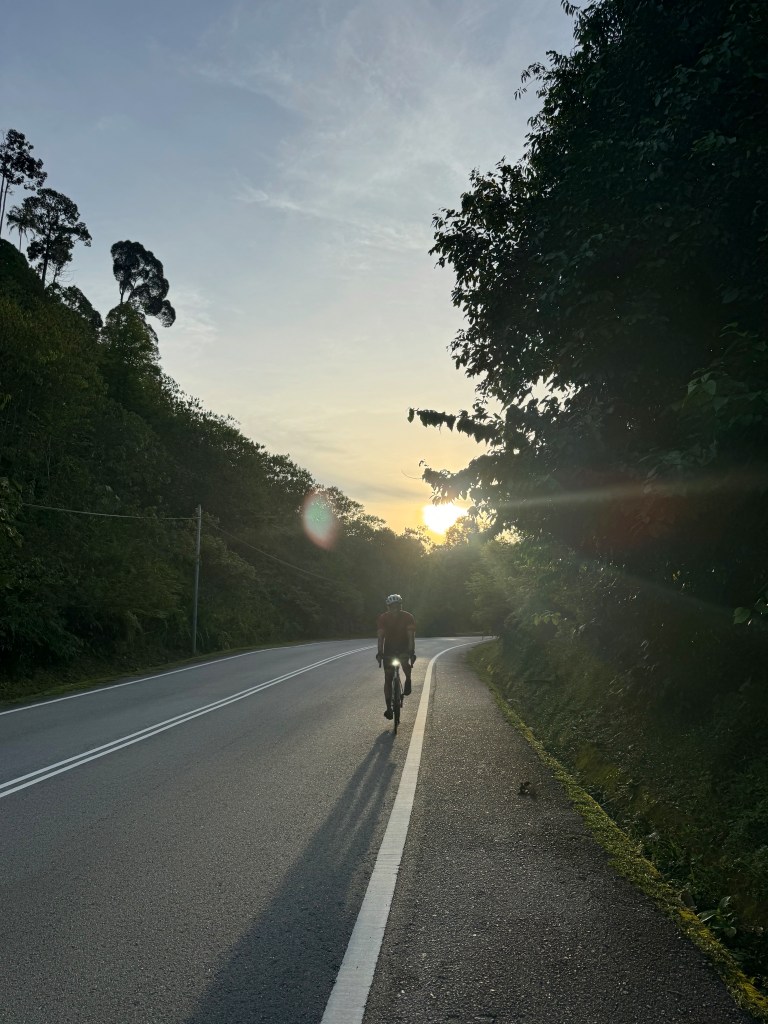
Photo Courtesy: Farouk Gulsara
Farouk Gulsara is a daytime healer and a writer by night. After developing his left side of his brain almost half his lifetime, this johnny-come-lately decided to stimulate the non-dominant part of his remaining half. An author of two non-fiction books, Inside the twisted mind of Rifle Range Boy and Real Lessons from Reel Life, he writes regularly in his blog, Rifle Range Boy.
.
PLEASE NOTE: ARTICLES CAN ONLY BE REPRODUCED IN OTHER SITES WITH DUE ACKNOWLEDGEMENT TO BORDERLESS JOURNAL
In Conversation with Suzanne Kamata about Cinnamon Beach, published by Wyatt Mackenzie Publishing, and a brief introduction to her new novel.
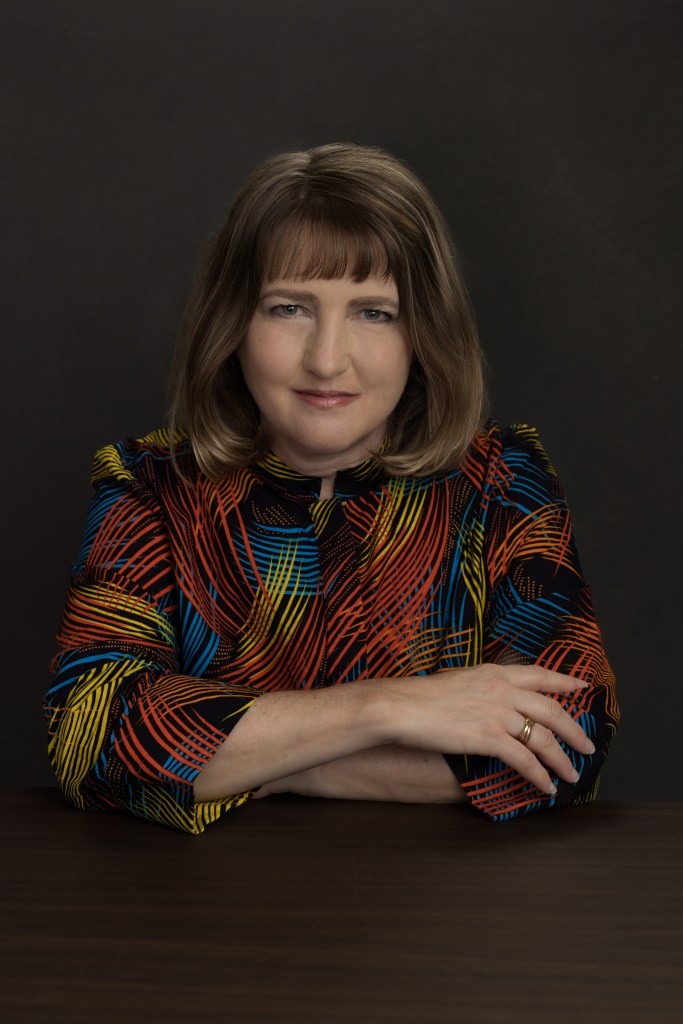
Suzanne Kamata
Cinnamon beach by Suzanne Kamata seems to be ostensibly a normal romantic novel but there is an aspect that makes it unique. It glues all colours of humanity together. Almost all the families in her narrative are of mixed heritage or multiracial. She has stepped beyond the veneer of race and nationality to highlight that all humanity has the same needs— for love, acceptance and kindness, irrespective of colour and creed, a gentle reminder in a world that is moving towards polarisation in terms of constructs made by human laws.
Set against the backdrop of the Cinnamon Beach, the narrative shuttles through two countries that she has called home — Japan and USA. There are autobiographical elements woven into the narrative but perhaps, they halt in becoming lived experiences. The protagonist, upcoming writer, Olivia Hamada, an American married to a Japanese, has lost both her job and finds her marriage in doldrums when she visits her sister-in-law, Parisa. Parisa is a renowned fashion designer, daughter of an immigrant Indian and has lost her husband, Ted, Olivia’s elder brother. It is a poignant story with Olivia and her deaf daughter, Sophie, falling in love with a star, Devon, and his son, Dante respectively — both persons of colour. Devon’s ancestors were brought in from Africa. So how mixed are the races – Sophie is half Japanese-half American and Dante is part African-part American!
The narrative start simply and gains nuances as it progresses. There are comments and conversations that introduce twists and turns to explore attitudes and prejudices.
At a point Kamata tells us: “She’d heard, several years ago, of a revolt at a liberal college cafeteria in protest of its serving sushi. And there was that dust-up over a reality TV star using the name ‘kimono’ for her new line of shapewear. Perhaps she had been wrong to ever go to Japan in the first place. But she had done it and she had gone and written a collection of short stories heavily inspired by events in her real life, and now, here she was.” The bias against Japan that led to the destruction of Hiroshima and Nagasaki are hinted at conversationally – world events that conspired more than eighty years ago. Why do such biases still exist today when we have moved forward so much technologically?
When Olivia asks Devon why he never liked to talk race or indulge in activism, he tells her, “It’s just that I would rather build bridges than burn them.”
And he explains further, “Sometimes taking a stand on issues creates more division.”
Religious observances seem to be unboxed too with Buddhist, Hindu and Christian customs intermingled. All festivals become a celebration of love and acceptance. Her world is idyllic when it comes to interactions between the lead characters. Living in a city like Singapore, that does not seem an impossibility as many are of mixed origins.
One would hope that the whole world will eventually learn that all these differences are only the colours of the rainbow, as shown in Kamata’s novel. The novel ends on a note of hope — hope for a new beginning and for love and for a multiracial relationship.
Kamata’s style is fluid. The situations and events are so much a part of the lived reality that you can almost feel and see the characters come to life. Anyone can enjoy the novel, whether as a light read or to find the nuances that explore the need for the redefinition of societal norms. With her smooth and untroubled storytelling, Kamata leaves it to the reader to decide what they want to find in her storytelling. Nothing is coerced or made incomprehensible.
With a number of novels, short stories and poetry collections under her belt, as an award-winning storyteller, Kamata guides us through her world skilfully leaving us with a feeling of having made new friends and gained deeper insight into myriad colours of humanity. In this interview, she talks about her writing, her novel and beyond.
Tell us when you started writing? And how?
I have been writing since I was a child. I loved reading, so perhaps it was natural that I would start to make up my own stories. I got a lot of encouragement from my teachers and parents, which inspired me to continue.
How many novels have you written in all? And which has been your favourite?
I have written seven, including young adult novels and one for middle grade readers. At the moment, Cinnamon Beach is my favourite, maybe because it’s shiny and new.
You do stories for children too and poetry. Tell us a bit about those.
I subscribed to a magazine called Ladybug for my children when they were young. I decided to try writing a story and submitting it to the magazine, and it was accepted. Other stories, inspired by my children, followed. For example, my son requested a baseball story. My middle grade novel, Pop Flies, Robo-pets and Other Disasters is the result of that.
What is your favourite genre to read and to write?
I prefer to read and write realistic fiction. The age level doesn’t really matter. I personally read everything from picture books to middle grade novels to adult novels.
How did Cinnamon Beach come about? How long did it take you to write the novel?
This was my pandemic book. I wrote most of it within a year, which is unusual for me. It usually takes me about four years to finish something. But I had a lot of free time during the pandemic, when I was alone in my office, and I wrote. I was kind of obsessed with what was happening in the United States, where things were much, much worse than where I live in Japan. I actually made a visit to the US at the height of COVID-19 because my father broke his hip. So, my thoughts were turned toward South Carolina, where my parents and sister-in-law live. Also, I had been thinking about writing a multicultural beach novel for some time. I enjoy reading novels set at the beach, but they usually feature only white people. My family is very diverse, so when we go to the beach together there is a very interesting mix of cultures. I wanted the book to reflect that.
What kind of research went into it?
As I mention above, I did visit South Carolina during the pandemic. I also talked about it with my sister-in-law, who is Indian American. She gave me some ideas and commented on the final draft. Other than that, I went for a lot of walks on a nearby beach here in Japan.
In Cinnamon Beach, you have woven in autobiographical elements. Tell us how much of it is from your lived experiences.
A lot of it starts with something true and then leaps into “what if”? I did lose my brother, but not during the pandemic. He died in 2019, and I attended his funeral, but what if he had died a year later, when travel restrictions were in place? Also, I did have a work experience similar to Olivia’s. I brought my story to a newspaper, but I found a new job before the story was published, and I asked that it not appear in print after all. But what if I had allowed it to be published? My daughter is deaf and she uses an app to communicate with non-Japanese users. As far as I know, she doesn’t have a secret boyfriend, but what if she did?
You have written of nepotism in a Japanese University. Is that based on your experiences, facts or is it fiction?
Olivia’s experiences at a Japanese university are based on mine. People often get jobs through connections in Japan.
Having been married to a Japanese for a number of decades, what are the cultural differences? How do you bridge them? Is that woven into your narrative?
There are so many! There are a lot of little ones, such as my husband’s expectation for homemade soup with every meal (which I find troublesome to prepare), and my expectation for some sort of celebration on my birthday (which is rarely met). And there are many greater differences. For example, I feel that people don’t take gender harassment as seriously in Japan as they do in my native country, or that they are unaware of what it means. Also, Americans are very forthcoming about mental health issues, whereas it seems more secret and shameful to talk about them in Japan. I don’t know that my husband and I have necessarily bridged our cultural differences, but I have accepted that we think differently about many things. Olivia is divorced, so she and her Japanese husband did not bridge them very well.
Are mixed marriages more common in Japan or America? Please elaborate.
Mixed marriages are much more common in the United States than in Japan. Marriages between Japanese men and Western women are quite rare. According to Diane Nagatomo’s Identity, Gender, and Teaching English in Japan, in 2013, less than 2 percent of the 21,488 marriages registered in Japan between a Japanese and foreign national were between Japanese men and American women. I doubt that those numbers have changed much.
Do such families — with Western, Japanese, Indian and black, exist outside your fiction? Please elaborate.
Certainly. The ethnic mix of the family in Cinnamon Beach is based on that of my own family. As another example, Nikki Haley, the former governor of South Carolina, is an Indian American married to a white man. Their daughter married a black man. Many children of my Western friends who are married to Japanese have partners who are of other cultures (neither Japanese, nor Western). I think Third Culture Kids tend to be very open to people from other cultures.
What books, stories, music impact your writing and how?
In the case of Cinnamon Beach, having read beach novels by authors such as Elin Hilderbrand, Dorothea Benton Frank, Mary Alice Monroe, Patti Callahan Henry, Kristy Woodson Harvey and Sunny Hostin made me want to write my own beach novel. I don’t know that music influences my writing, because I write in silence, but it was fun to come up with a playlist of songs that related to the book.
Having said that, I love music and I have known people in bands. The music world is fascinating to me, and I have created musician or music-adjacent characters in other books as well. The character Devon was inspired by the Black American Country and Western singer Darius Rucker. I knew him a bit in college, because he and his then-band sometimes practiced in the house next to mine.
What are your future plans? What other books can we look forward to from you soon?
Next up in a short story collection, River of Dolls and Other Stories, which will be published in November by Penguin Random House SEA. And I also have an essay collection (mostly travel narratives) in the works. Will keep you posted!
Thank you for giving us a lovely novel and your time.
(The online interview has been conducted through emails and the review written by Mitali Chakravarty.)




 Borderless