“Which part of India did your people come from?” asked the Tamil tour guide during our last trip to Chennai.
“I know my forefathers came from Tamil Nadu, but, sorry can’t tell you which part of Tamil Nadu or village they came from,” I told him in Tamil. “I am a third generation Malaysian Indian. We lost touch with all the relatives back home.”
“Your Tamil is very good for someone out of this country. Judging from way you speak, you could pass off for someone from Thanjavur!” he went on.
“People from Malaysia have mostly left their original accent and have developed new ones with Malay and Chinese words in theirs, so you cannot pigeonhole them to any region in India anymore.” I replied.
In a philosophical tone, he paused, then said, “I am here in Chennai, and you are there in Malaysia, and the only thing that connects us is the Tamil language.”
Of course, there is the DNA that unites us, but the bond that draws us to India is independent of the language spoken or written.
Our little conversation reminded me of the 1980s music video ‘Down Under’ by the Australian rock band, Men at Work. In that scene, the singer goes around the world, and everyone recognises him with his characteristic Aussie mannerisms. “Do you come from a land Down Under?” is their first response.
My grandparents and parents believed that, despite moving away from their homeland due to increasingly hostile living conditions, it was necessary to pass down their culture and language. Perhaps it was the only language they knew. They did not turn their backs on Tamil Nadu, nor let their offspring immerse themselves solely in the local culture. They had no anger towards their country. They did not turn their backs on her. They understood their motherland was going through difficult times and that tides would eventually change. Maybe they thought that one day their descendants would return and boast about how their princes of the soil had succeeded in a distant land, even while still holding onto their ancestral roots – the mother tongue.
It looks like the sun has risen, and the country has awakened from her long slumber, continuing to pursue what she stopped in her glorious past. Even her children, who have spread across all corners of the Earth, have made her proud.
For the rest of my trip, I conversed in Tamil, checked into a four-star hotel, and even conducted transactions at a bank counter. At first glance, I am sure they could tell I was not local, with liberal use of the word ‘lah’[1] in my sentences and the distinctive sing-song manner Malaysians use when speaking Tamil, it seems. The Malaysians are also described as extremely courteous, unlike the locals there.
[1]Lah is a phrase used by Malaysians and Singaporeans in local parlance
.
Farouk Gulsara is a daytime healer and a writer by night. After developing his left side of his brain almost half his lifetime, this johnny-come-lately decided to stimulate the non-dominant part of his remaining half. An author of two non-fiction books, Inside the twisted mind of Rifle Range Boy and Real Lessons from Reel Life, he writes regularly in his blog, Rifle Range Boy.
PLEASE NOTE: ARTICLES CAN ONLY BE REPRODUCED IN OTHER SITES WITH DUE ACKNOWLEDGEMENT TO BORDERLESS JOURNAL
If language were a haircut, “saloon” got a buzz cut and a blow-dry and came out as “salon.” That change in spelling is the visible tip of a larger style transformation: one rough, male-only ritual space has been trimmed, straightened, scented and repackaged into a gleaming, multi-service, mostly woman-centred retail experience. Along the way, the loud, fragrant, argument-heavy mini-parliaments of small-town India — the saloons — have been politely ushered into warranties, playlists and polite small talk.
Barbers in India are almost as old as conversation itself. The profession of the barber — the nai or hajam — is embedded in pre-colonial life: scalp massage (champi), shaves, tonsure at rites of passage, and quick fixes between chores. These services were usually delivered in open-fronted shops or under trees, with tools that were portable and livelihoods that were local.
The “saloon” as a distinctive, Western-flavoured, male gathering place began to consolidate during the 19th and early 20th centuries. Port cities and colonial cantonments — Bombay (Mumbai), Calcutta (Kolkata), Madras (Chennai) — saw the rise of dedicated shops selling not only shaves and haircuts but also imported tonics, straight razors and a distinctly public atmosphere shaped by newspaper reading, debate and gossip. Over time, that form blended with older local practices and spread inland. By the mid-20th century, the saloon — a recognisable, chair-lined, mirror-fronted social stage — existed in towns from Kashmir to Kanyakumari and from Gujarat’s chawls to Assam’s market roads.
So ancient barbering traditions fed into a colonial-era intensification of the barbershop as public forum; by the 1950s–70s, the saloon as we remember it was firmly a part of India’s social furniture. The precise start date is a quilt of custom and commerce rather than a single founding ceremony — and that is part of the saloon’s charm.
Walk into a saloon in Nagpur, Nellore, Shillong or Surat and you’ll notice an uncanny resemblance. The reasons are simple and human:
Low price point: Saloons survive on quick volumes and walk-ins. That encourages many chairs, fast turnover, and layouts that invite waiting men to talk rather than sit quietly.
Ritual services: Shave, cut, champi. These are short encounters that thread customers through the same communal space repeatedly — ideal for gossip to collect and ferment.
Social role: The barber doubles as ear, counsellor, news-disseminator and crossword referee. That role is culturally consistent across regions: a saloon’s psychic geography is the same whether the tea is masala or lemon.
The result is that a saloon in Kutch and a saloon in Kerala will differ in language, politics and local jokes — but both will produce that same satisfying racket of opinion, repartee and advice. They are India’s unofficial, peripatetic fora for public life.
Enter the salon: padded seats, curated playlists, appointment-booking and a menu so long it reads like a restaurant wine list (colour, rebonding, keratin, facials, pedicures, threading, and sometimes a minor festival of LED lights). A couple of business realities did most of the heavy lifting:
Women’s services earn more and recur more often. Regular facials, hair treatments and beauty routines translate into steadier, higher bills. The money follows the customer, and the space follows the money.
Franchising and professional training created standardized staff who follow brand scripts — which tighten conversation and reduce the barber-confessor vibe.
Unisex salons consolidated footfall, but that consolidation shrank male-only territory. Men who once had a semi-public living room now sit in chic, quieter spaces that discourage loud, extended debate.
The practical upshot: the saloon’s boisterous mini-parliaments were replaced by stylists with laminated menus, muted background music and an etiquette that favours privacy over political salvoes.
What we miss (and what we gained)
We miss the moralisers, the wisecracks, the boisterous consultancy of unpaid experts who knew which councillor was friendly with which shopkeeper and which wedding was scandalous; the loud education in rhetoric and local affairs; the bench-seat apprenticeship in how to perform masculinity in public.
We gain in expanded choices for women, more professional hygiene and techniques, new livelihoods for trained stylists (especially women), and spaces where people can pursue personalised care without the social cost that used to attend public rituals.
It’s not a zero-sum game — but it does reorder who feels proprietorial about public grooming spaces. The new economics say: she who pays more — and pays more often — gets the say.
Not all saloons are extinct. In smaller towns they still hum. In cities, they’ve evolved into hybrid forms:
Old-school saloons persist where price sensitivity and cultural habit remain strong: walk-ins, communal benches, loud conversation and a barber who’ll recommend both a haircut and the correct candidate for local office.
Nostalgic barbershops in urban pockets lean into the past with “vintage” decor, whiskey-bar vibes and sports on TV — except now they charge a premium and call the barber a “grooming specialist.”
Some entrepreneurs stage “men’s nights” or open-mic gossip hours in neighbourhood shops, trying to recapture the civic pulse while keeping the modern business model.
If you want the old saloon spark, look for places without appointment apps, with too many phones in sight but none in use, and with a tea flask on the counter.
What’s lost isn’t only a loud, male-only gossip pit; it’s a training ground for public argument and a place where local memory was kept live and messy. The saloon taught people how to spar without a referee; the salon teaches how to look good while being politely neutral. If you mourn for the saloon’s barbed banter, you can grieve — but also take action: host a “Salon for Men” in your local café, revive a community noticeboard at the barber, or convince your neighbourhood salon to schedule a weekly “open-chair” hour for community talk (and maybe offer tea).
And until then, if you miss the salty, pungent chorus of small-town democracy, go to any saloon that still has a kettle on the stove and a barber who knows the mayor’s schedule by heart. Sit down, get a shave, and watch a mini-parliament assemble around you. You’ll leave clean-faced, better informed, and maybe a little animated — exactly how democracy used to feel.
From Public Domain
.
Charudutta Panigrahi is a writer. He can be contacted at Charudutta403@gmail.com.
.
PLEASE NOTE: ARTICLES CAN ONLY BE REPRODUCED IN OTHER SITES WITH DUE ACKNOWLEDGEMENT TO BORDERLESS JOURNAL
Title: Silver Years: Senior Contemporary Indian Women’s Poetry
Editors: Sanjukta Dasgupta, Malashri Lal and Anita Nahal.
Publisher: Sahitya Akademi
Several centuries ago, women poets had to fight to be heard, their poems often dismissed as unworthy or mediocre. It is a testament to their determination, grace and sheer talent that today female poets are amongst the most celebrated and respected the world over. In India, pathbreaking women poets such as Toru Dutt, Sarojini Naidu and Kamala Das paved the way for more recent talents such as Eunice de Souza, Suniti Namjoshi and Sujata Bhatt. Of course, this list does not include the vast number of women poets writing in Indian languages ranging from Assamese, Bengali, Hindi, Malayalam, Punjabi, Tamil and Telugu to name but a few.
A recent anthology of poems by senior contemporary Indian women poets titled Silver Years, reflects the centrality of women in today’s Indian society. While elders have always been revered in this society, the overwhelming influence of western media has brought in a certain skepticism towards such traditions. In this context, it is refreshing to read these poems that showcase the maturity, resilience, humour and sagacity of these women. They offer their diverse perspectives on the experience of being an Indian woman, exploring changing societal attitudes to their place in the world, the dynamics of their social roles and the trauma and transcendence they encounter in their lives.
The poems in this collection are not just pretty words that pander to social expectations, they carry the weight of the experiences of fifty senior women poets who have lived rich and varied lives, working in their chosen fields and observing the radical transformation of the world around them. The common thread that runs through this anthology is the forthright tone and boldness of expression in the over 160 poems included. As women who have lived full lives, both in India and across the world, these poets never shy away from controversies, rather expressing with rare grace and tenderness what it means to be sixty plus and female in contemporary society.
The introduction to this volume is no less impressive than the poems. Jointly written by the editors of the collection, Sanjukta Dasgupta, Malashri Lal and Anita Nahal, the introduction traces the evolution of Indian women’s poetry in English, eloquently delineating the political and social challenges faced by women writing in English. Furthermore, the introduction also explores the impact of a deeply patriarchal culture on women in Indian society. The recasting of mythology to suit contemporary societal expectations also finds a mention as well as an emphasis on the voice, agency and power these poets claim for themselves through their poetry. Most significantly, the introduction underscores the resolve, resilience and charm of these sixty plus women, who erase with the power of their words the negativity and weakness associated with aging.
The poems in this anthology vary widely in style and theme, ranging from poems that reimagine gender and societal roles, to those that focus on the havoc wrought by humans on the environment. Perhaps understandably, in an anthology of poems by women poets over sixty, perspectives on aging are numerous.
Anita Nahal’s poem ‘We are the Kali Women’ is a searing condemnation of patriarchal oppression, casteism and discrimination based on skin colour. The poems refrain “Ma Kali. Ma Kali. Ma Kali. Don’t think she’s not watching” strikes a warning note to those hypocrites who are guilty of crimes against her followers while piously bowing before her image.
On a similar theme, but in an entirely different key, is the poetry of Lakshmi Kannan. This poet’s feminism is not overt, but the poems convey an effective message nonetheless. ‘Silver Streaks’ sets forth an idea that is common to many of the poems in the anthology, that senior women do not become less attractive as they age. Instead, this poem emphasizes the power of self-knowledge that maturity brings.
Malashri Lal’s poetry slides into the readers’ consciousness as smooth as silk. Replete with irony and layered with nostalgia, her minimalistic verse has a visceral appeal. ‘Book of Doubts’ evokes a sense of loss for the books one used to treasure. ‘Jaipur Bazar’ is almost like a haiku, conveying the beauty of an emerald and the heritage it encapsulates. ‘Kashmir One Morning’ contrasts the senselessness of sectarian violence with the Gandhian legacy of nonviolence. ‘Krishna’s Flute’, juxtaposes the mellifluous music of the flute and the dreaded coronavirus pandemic. One is associated with the certitude of faith that Krishna’s tunes represent while the other stalks the silent city leaving death and loss in its wake. This is elegant poetry, that does not shock for effect, instead gently evoking images that resonate in the reader’s mind.
Sanjukta Dasgupta’s poems focus on aging with honesty interwoven with humour. Her poems cut to the bone without any unnecessary sentimentality or understatement. Aging, for Sanjukta Dasgupta is an undeniable fact, she asserts that one has to accept the harsh reality of physical debility and the inevitability of death. The poet does not try to gloss over the signs of age, rather she sees them as a culmination of a life lived to the hilt.
The poem ‘When Winter Comes’, is a recasting of P. B. Shelley’s famous line ‘…when winter comes, can Spring be far behind’. The optimism of Shelley’s ‘Ode to the West Wind’ is contrasted with the reality of aging as Dasgupta notes:
In such an intimate Winter
No time
To spring back to Spring

Spreading its embrace….
Scripting a cryptic memoir
On every inch
From face to toe
The poem ‘Fall’ resonates with the repetition of the words ‘falling’ and ‘failing’, which sets the tone for the final descent “into everlasting rest”. The images used in these poems are at once concrete and fanciful, “the swan throat a tortoise neck now” with “countless rings of recorded time”. The poem “Crowning Worry” addresses the anxiety of aging:
Silver waved among blackened hair
Like flags of treachery
Flashing grin of metallic strands
This poem highlights the power of poetry to acknowledge the reader’s anxieties and ameliorate their lack of self-worth:
Black and blonde tresses howled
In low self-esteem, utter frustration
And massive bi-polar manic depression
As the Grey Gorgeous divas
Grinned and Glowed
Poems such as these emphasise the beauty of the older woman, whose youthful innocence may have gone, replaced by something finer, the beauty of self-assurance and poise.
Another significant theme among the poems is climate change and environmental degradation, the burning issue of our times. As mature adults who are aware that their legacy to future generations includes denuded forests, polluted rivers and oceans, arid landscapes and a rampantly consumerist mindset, these poets feel compelled to lament. The elegiac tone is prominent in many poems. Well-known poet from Northeast India, Mamang Dai celebrates the biocentric culture of the tribes of the region in her poem ‘Birthplace’. The poem ‘Floating Island’ also describes the harmony that exists between women and nature. ‘Earth Day’ by Smita Agarwal is another poem that focuses on the negative impact humanity has had on the environment.
The poems in this anthology reflect the changing status of women in present day society. The poets are successful women and their clear-sighted view of life reflects their wisdom and rich experience. Aging is not seen as degeneration, but an enlightened phase where the wealth of one’s experience makes for a perspective that is to be celebrated. The poets included herein write with skill, empathy and wisdom, showing readers the hidden nuances of life that are often overlooked in the heedlessness of youth. They are unafraid to boldly present their wrinkles and grey hair as signs of a new beauty, one that is bolstered by maturity and self-acceptance. Pathbreaking feminist Betty Freidan sees aging not as decline, but as a new stage of life filled with power and promise. Her famous quote “Aging is not lost youth but a new stage of opportunity and strength” emphasises her views on the fountain of age.
In these 143 poems, these poets have offered readers a fresh perspective on these new horizons, so that they can be viewed with compassion and a renewed appreciation for the felicities of life. Most significantly, these poems reiterate that the silver years are a time of hope and light that shines on the promise of fresh achievement.
.
Dr. Anita Balakrishnan is former Head, Department of English, Queen Mary’s College, Chennai, India. Author of Transforming Spirit of Indian Women Writers (2012) and contributor to the Routledge Encyclopaedia of Postcolonial Studies, ed by Sangeetha Ray and Henry Schwarz. Has published papers in national and international journals and reviewed books for The Book Review, Borderless Journal and others. Her interests include contemporary Indian Writing in English, Ecocriticism, Ecofeminism, Cultural Studies and Postcolonial studies.
.
PLEASE NOTE: ARTICLES CAN ONLY BE REPRODUCED IN OTHER SITES WITH DUE ACKNOWLEDGEMENT TO BORDERLESS JOURNAL
Nazrul’s Jonomo, Jonomo Gelo(Generations passed) has been translated from Bengali by Professor Fakrul Alam. Click here to read and listen to a rendition by the famed Feroza Begum.
Ajit Cour‘s short story, Nandu, has been translated from Punjabi by C Christine Fair. Click here to read.
The Scarecrowby Anwar Sahib Khan has been translated from Balochi by Fazal Baloch. Click here to read.
Naramsetti Umamaheswararao moulds children’s perspectives. Click here to read.
Notes from Japan
In American Wife,Suzanne Kamata gives a short story set set in the Obon festival in Japan. Click here to read.
Conversation
Neeman Sobhan, author of Abiding City: Ruminations from Rome, discusses shuttling between multiple cultures and finding her identity in words. Click here to road.
She restores textiles at the museum in Central Chennai. Her fingers work over ancient threads as if decoding messages from the dead. This is a job that requires patience, belief in the value of preservation and a certain kind of loneliness.
Every day she lets the early morning sunlight into her apartment, 308, which has walls the colour of abandoned hope.
Her grandmother named her Yazhini. “It originates from the name of a stringed instrument in Tamil,” she had explained to the young girl. A stringed instrument, a hollow vessel, designed to resonate with whatever touches it. To amplify what might otherwise go unheard. Yazhini has spent thirty-two years resisting resonance. She has built her life in measures: the precise fold of conservation tissue; the exact temperature of her morning filter coffee; the calculated distance she maintains from her neighbours and from herself.
She first noticed her shadow move on a Wednesday. It lingered on the wall after she had stepped away, like an afterthought or a question. Yazhini noticed and catalogued the anomaly in her mind under “phenomena: unexplained” and continued washing dishes.
But the shadows continue to persist in their small rebellions. They stretch toward one another when she isn’t looking directly at them. They pulse slightly, as if breathing. Waiting.
She watches her grandmother’s lacquered trunk, brought from their ancestral house after the funeral. For three years it has served as an oversized paperweight, holding down memories she has no interest in excavating. The trunk is red-black, the colour of dried blood, with brass fittings gone green at the edges. Sometimes, in the thin light between sleeping and waking, Yazhini imagines it breathes in time with the shadows.
On the night of the new moon, Yazhini returns home damp with rain. The power is out. She lights a candle, and in its uncertain illumination, the shadow cast by her hand seems to drift away from her fingertips.
Without thinking she reaches toward the disloyal shadow and brushes against it. Immediately it feels cool like silk underwater, substantial as regret. Her shadow peels away, a layer of herself she didn’t know could be removed.
She holds it cupped in her palms. It doesn’t weigh anything, but it carries something. Memory, perhaps.
The trunk seems the logical place for it. When she lifts the heavy lid, the interior smells of camphor, cloves, and memories. Her shadow slides from her hands to the bottom of the trunk, spreading and settling as if it has found its home.
This doesn’t frighten her. Instead, she feels the first vibration of a string, long silent inside her. An unheard note being played.
The trunk closes with a sound like satisfaction.
In the days that follow, Yazhini discovers what it is to be a collector of absences. Other shadows reach for her now. The barista’s shadow stretches across the counter, elongating itself unnaturally. The museum director’s shadow pools at her feet during budget meetings.
The shadows know. They have been waiting for someone hollow like her who’s sensitive enough to hold them.
She learns that permission matters. A shadow freely given slides easily into her hands, cool and weightless. A shadow taken leaves a residue like ash on her fingertips.
Mr. Renganathan from apartment 110, a man, eighty-seven years old, who feeds pigeons on the rooftop with the devotion of the religious, is the first to offer his shadow directly to Yazhini. “Take it,” he says, not looking at her but at the sky beyond the building’s edge. “It’s tired of following me.” His shadow has worn thin in places, gossamer with age, and the edges fraying like old silk. When it detaches from his feet, there is a sound like a sigh of relief.
That night, with Mr. Renganathan’s shadow nestled among the others in the trunk, Yazhini dreams of the flood. Not the sanitized version from newspaper archives, but the visceral experience of it: the roar of rising waters, the weight of sodden belongings hastily gathered, the sight of familiar streets transformed into rushing rivers. She wakes tasting salt, uncertain if the tears are hers or that of the memories’ from the shadow. The trunk is open a crack. A thin seam of darkness spills onto her bedroom floor.
Inside, the shadows are not still. They dance, or perhaps they struggle. Yazhini watches until dawn.
In the morning, she examines herself in the mirror. There is no visible difference. Her body casts a shadow. Weaker, perhaps, diluted like the tea she makes some evenings; steeped too briefly, but present nonetheless.
She has not become a vampire or a ghost, those staples of stories where the self is compromised. Yet something has changed. The stringed instrument of her name now plays notes she cannot control. She feels the absence of her original shadow like an amputee might sense a phantom limb, present in its nonexistence.
At the museum, she works on a fragment of brocade retrieved from a shipwreck. Three hundred years underwater, and still some threads hold their colour. Preservation is an act of defiance against time. Or perhaps an accommodation with it or a negotiation. As she works, she becomes aware of the shadows cast by ancient fabrics, the negative spaces between threads that have outlived their creators. These shadows too seem to recognize her. They lean toward her hands as she passes over them with her tools. She learns that history casts its own kind of shadow. She wonders what these textile shadows would feel like if she were to collect them. What medieval fingers might have left behind, what Renaissance whispers might still cling to the weave? She restrains herself. There are boundaries, even in the unprecedented.
That evening, she visits Mr. Renganathan on the rooftop. He sits with the pigeons arranged around him like attendants. His frail body is wrapped in a cardigan despite the Chennai heat. Without his shadow, he seems more substantial. Unburdened.
“You saw?” he asks, not specifying what. Yazhini nods.
“Madurai, 1993,” he continues. “When the floods came. I was 55 then, with my clockmaker’s shop well-established for over two decades. The waters rose so quickly.” His voice softens. “I carried my mother on my back through waist-deep water. My wife Lakshmi held our daughter’s hand, clutching our family documents in a waterproof pouch around her neck. We lost the shop, all my precision tools, everything we’d built. But we survived.” He tells her about rebuilding the clockmaker’s shop where he worked for the next fifteen years, the precision of gears and springs, the satisfaction of fixing what is broken; his wife Lakshmi, who died remembering the garden of her childhood home that she never saw again. As he speaks, Yazhini notices that a new shadow has begun to form beneath him, faint as a watermark. Shadows regenerate, apparently. The body forgives.
The shadows in her trunk multiply. Each night, they perform for her, or perhaps for themselves. Shadow theatre without the puppeteer. They blend and separate, forming patterns that remind her of the textiles she restores: mandalas, paisleys, intricate borders that tell stories in a language she almost understands. Sometimes she sees faces in the patterns, sometimes entire scenes: a child running through monsoon puddles; lovers meeting beneath a banyan tree; an old woman teaching a girl to play the Yazh, an instrument that resembles the harp. Their fingers move in unison across phantom strings. Yazhini begins to understand that she is not collecting shadows but stories, not capturing darkness but light impressed upon it. Memory, it turns out, has texture and weight, density and dimension. It can be archived like fabric, preserved against the ravages of forgetfulness.
As weeks pass, Yazhini decides to take only what is freely offered, and even then, she is selective. Some burdens are not hers to carry.
Mr. Renganathan’s health deteriorates. His visits to the rooftop become less frequent, then cease altogether. Yazhini visits him in apartment 110. His new shadow, still forming, has a different quality than the one she keeps. Cleaner somehow. Unburdened by memories, his body has learned to grow only what it can bear.
“I have a daughter,” he tells her on a Thursday morning when his breath catches between words.
“In Toronto. We haven’t spoken in eleven years.” He doesn’t explain why.
That evening, Yazhini brings a portion of his original shadow to him, the part that holds his daughter at age seven, spinning in a light blue dress. He cups it in papery hands, and for a moment his eyes focus on something beyond the walls of apartment 110.
She helps him record messages. Not the formal apologies of deathbed reconciliations, but everyday words: descriptions of pigeons on the rooftop, complaints about the building manager’s music, recipe of his wife’s biryani. The shadows know what needs to be said when words alone are insufficient.
One morning, “Twilight Towers” absorbs another absence, the way buildings do.
After the funeral, Yazhini finds Mudra, the daughter from Toronto, standing in the hallway outside apartment 110. She wears her grief awkwardly, like borrowed clothing.
“He left me a key,” she says, “and instructions to meet someone named Yazhini.” The resemblance to her father is not in her features but in the quality of her shadow, which stretches toward Yazhini of its own accord.
Back in apartment 308, the trunk waits. When Yazhini opens it, the shadows perform not their usual abstract patterns but a specific scene: a man teaching a little girl to repair a clock. Precise and tender movements. Mudra watches without speaking, her hand at her throat where a locket might hang if she were the type of woman who wore her memories visibly.
“What is this?” she finally asks.
“A type of conservation,” Yazhini answers.
That night, after Mudra returns to her hotel with a promise to visit again tomorrow, Yazhini sits with the open trunk. The shadows have settled into a new configuration. Among them, she notices something unexpected: a small patch of darkness the size of a thumbprint, containing no memory but rather the impression of potential. Not a shadow of what was, but of what might be. A beginning rather than an archive.
The seasons shift. Mudra extends her stay. She finds an apartment in Chennai city, ostensibly to settle her father’s affairs but really to settle something within herself. She visits Yazhini often. They drink coffee. They feed pigeons. Occasionally, they examine shadows together.
The trunk accommodates its growing collection, expanding inward in defiance of spatial logic. The shadows develop rhythms, preferences. Some cling to each other, forming composite memories that never existed but feel true nonetheless. Others maintain their integrity, reluctant to blend. All of them, Yazhini notices, seem to pulse in time with her heartbeat.
One morning Yazhini arrives at the museum to find her supervisor agitated. A rare textile has arrived. A fragment of silk believed to belong to an unnamed Tamil musician from the colonial era. “It needs your touch,” he says, which is as close to praise. The fabric, when Yazhini, unwraps it, carries a pattern she recognises instantly. It had the same configuration the shadows formed in her trunk the previous night.
She works with careful precision. As she does, she becomes aware of her own shadow on the workbench. She wonders how it has changed in these months of keeping others’ darkness. It carries subtle patterns now, impressions from all the shadows she’s collected. The outlines of her fingers contain multitudes: Mr. Renganathan’s clockmaker precision, the barista’s musical rhythm, the museum director’s careful assessment, and countless others.
In her apartment that evening, Yazhini sits before her grandmother’s trunk. “Is this what you meant me to find?” she asks the empty room. No answer comes, but she doesn’t expect one. The dead cast no shadows. They become them.
She opens the trunk and watches the shadows dance. In certain slants of light, she can see them extending beyond the trunk’s confines, threading invisibly throughout the building and beyond, connecting residents who may never speak to one another directly. Mr. Renganathan’s clockmaker hands. Mudra’s cautious smile. The barista’s fluid movements. The child who skips instead of walking.
Yazhini remembers her grandmother’s words about her name. That it meant not just any stringed instrument, but specifically one that requires both hands to play: one to create the note, one to shape it. One to preserve, one to transform. One to hold the past, one to invite the future.
She has become a keeper of shadows, yes, but more importantly, a keeper of the light that made them possible.
Hema R is a novelist, children’s author, and poet. Her short story is featured in Ruskin Bond’s “Writing for Love” anthology.
.
PLEASE NOTE: ARTICLES CAN ONLY BE REPRODUCED IN OTHER SITES WITH DUE ACKNOWLEDGEMENT TO BORDERLESS JOURNAL
Ratnottama Sengupta introduces and converses with a photographer who works at the intersection of art and social issues, Vijay S Jodha
S Vijay JodhaLines, Shapes & Forms – Vijay S. Jodha’s group show is on view at Museo Camera Gurgaon till May 26, 2025Photo Courtesy: Vijay S Jodha
Vijay S Jodha was yet to become one of India’s leading lens-based artists at the intersection of art and social issues. Back then, in the 1990s, he had no inkling that 30 years later he would be the chairperson of UGC-CEC[1] jury for selecting the best educational films made in India. Or that he would be the national selector and trainer in photography for the National Abilympics Association of India.
When I first met him, he was mounting a collaborative exhibition of his work with the elderly, their contribution to society and the care they deserve. Little did I know that the entire bent of this journalist-turned documentary filmmaker-turned photo artist would go on to focus on subjects ranging from mob violence, riot victims, farmers’ suicide, 75 years of Indian constitution to Joys of Christmas and the Bus Art of Tamil Nadu.
Photo Courtesy: Vijay S Jodha
Not surprising that the International Confederation of NGOs has honoured Vijay with the Media Citizen Award for using media to drive social change. And it is only one among hundreds of honours he has received in two dozen countries. These include awards and grants, from Swiss Development Agency to Ford Foundation and Bill & Melinda Gates Foundation. Screening of his films on 75 channels worldwide and in 250 festivals in 60 countries.
These seem tedious details? So, interestingly, two public showings of his work have been vandalised. And a false police case against him took eight years to be thrown out by India’s courts!
Conversation
Vijay how did you come into photography?
I’m a trained filmmaker – I mastered in film production – and have been making films for two decades. My films have shown on 75 stations including Discovery, CNN, BBC. But training in photography I have none. All my photography is non-fiction work. Actually my films are also non-fiction or reality based work. I just find still photography very relaxing because, unlike films where a director is responsible for so many things, here I’m on my own. But there’s no production deadline. No huge budget is needed. I can address any subject that catches my fancy and pursue it over several years, without any worry. Otherwise it’s the same: photos or films, you’re storytelling around substantial issues that interest you, in a manner that does justice to those issues, and — hopefully — engaging to the viewers.
So who was your inspiration?
In photography it is obviously the greats who defined the grammar of the medium itself such as Robert Frank[2] and Cartier Bresson[3]. They’ve inspired us all in some manner. I’m fortunate that, as a part time journalist in New York decades ago, I got to meet and interview top filmmakers and photographers like Gordon Parks and Richard Avedon.
I once did a course at New York’s School of Visual Arts where they honoured Mary Ellen Mark and she had come across. As a journalist, I covered Sebastião Salgado’s launch of his workers’ project that put him on the map (of photography). I met Raghubir Singh while doing a project on Ayodhya in India, and again in New York where we put up the same exhibition. He also photographed some of us – myself, Siddharth Varadarajan, the editor-publisher of The Wire who was then a student at Columbia University, and other Indian students — were protesting some human rights issue.
I’m also fortunate to have our finest photo-journalists and lens-based artists as friends. I can take across my work to get a feedback or pick their brains. This beats the best photo schools in the world. In fact years ago I did a book which had photos from all of them! This was the biggest photo project on the Tiranga[4] as listed in the Limca Book of Records. They have all done many books on their own but this is the only one where all these masters appear in a single volume, their works united thematically. Apart from Raghu Rai, Ram Rahman, Prashant Panjiar, Dayanita Singh, T Narayan, and the late TS Satyan, I’d also interviewed people across India, from the then Prime Minister Vajpayee to those selling flags at traffic lights for a few meagre rupees.
You did not go to any international school to train in the art or the technology aspect. So what prompted your PhD?
Three decades back when I decided to go into mass communication as a career there were few computers, no internet, no private TV channels, or mobile phones. Sorry if that makes me seem Jurassic but it was a world with very few media opportunities. Post college, I had got admissions into a trainee programme with a newspaper as well as in the MA programme in International Relations at India’s premier Jawaharlal Nehru University. My father felt that a masters and exposure at JNU would be a better investment for journalism – probably the single best advice I’ve got in my entire career — and I followed that.
Then for some time I worked in print media: I freelanced for newspapers, edited and published a journal for a business house, scripted for a film and worked on a book with one of my journalism heroes – late Kuldip Nayar. But in the pre-internet era newspaper articles had a very short life, so I felt the need to produce something that would last longer such as film. So I decided to get a degree in Film. It also encompassed all my interests, from writing to art to music, travel and photography.
You’ve not been a photo-journalist working for any journal or newspaper. Yet you felt inclined to do projects on environment, elder care, survivors of riots and mob violence, farmer suicide, art that travels. Was it inevitable, given your father’s background?
Actually I’ve done a bit of photo journalism too. During my film school days at NYU I was a writer-photographer for their student-run newspaper, Washington Square News. I’ve also been a stringer for mainstream dailies including The Economic Times where I shot images parallel to my writing. I did stills for Mira Nair’s Monsoon Wedding and of course stills for my own film projects. So I’ve a lot of published images in papers worldwide though my main gig has been films.
Frankly I don’t see much difference between these mediums. Be it words, stills or moving images; an academic paper, photo books, or films, short or long – all this is story telling. I’m a story teller.
And subjects? I’ve filmed every possible subject except wildlife: I just don’t have the patience for that. Otherwise everything, from artist biopics — on Paritosh Sen and Prokash Karmakar, whose inaugural screening you also attended in Calcutta years ago — to films on environment. My The Weeping Apple Tree (2005) was among the first ones on climate change in India. It won the UK Environment Film Fellowship Award 2005 and had multiple screenings on Discovery, with an introduction by Sir Mark Tully.
At that time, few knew about climate change. So Delhi govt organised a special screening for their MLAs and officers of water, electricity and sanitation departments. It was screened at UNEP headquarters in Nairobi and in various festivals. UNIDO and other grassroots level NGOs used it to create awareness. Some years back an IFS {Indian Forest Service} officer told me that Himachal government uses it to train their forest officers.
My film on gender, Pedalling to Freedom (2007) revisited an old initiative in one of the poorest parts of the world. It traced the life-changing impact of teaching 100,000 women to ride the bicycle. That film is in the US Library of Congress. It was also chosen for archiving at OSA Budapest, world’s premier repository of materials dealing with human rights.
Then there are films that get food on the table. Training films. Corporate films. I once did a ‘funeral film’ on a well-known personality whose passing received a lot of press coverage in India but the NRI son could not come for the funeral.
What motivates you Vijay — money, international honour, or the possibility of social change?
Well, all this is livelihood so the money part is important. But doing work that gets recognised far and wide, that is substantial, to hold good for a long time – that’s a huge motivator.
I have a slightly spiritual take towards this. I feel that regardless of our profession we are all bound by a dharmic or sacred duty. A teacher’s duty is to teach and a doctor’s is to heal. For those in the business of storytelling — including photographers — the sacred duty is to document, bear witness, push things forward. And believe you me, this has little connect with means or accessibility.
To give you an extreme example: After the Nazis lost the war and Berlin fell, soldiers from the victorious allies army raped virtually every woman in Berlin. Few rapists were taken to task and to top it, despite all the extensive coverage of the allies victory by forgotten photographers as well as superstars like Margaret Bourke-White (known to us through her famous Gandhiji with charkha portrait) or Robert Capa (regarded as the greatest war photographer of all time), there was no coverage of this mass outrage in Berlin by anyone be it in photo essays in Life Magazine, or World War photo books. It appears in no Hollywood film or TV series.
Likewise, fifty years ago, when India came under the draconian Emergency, our courts also endorsed the robbing of our Constitutional rights. Nobody documented, then or since, the forced sterilisation of 6,000,000 who were stripped of their reproductive rights. We, as photographers and filmmakers, failed on this front.
The First Witnesses is my project around farmer suicides. It is not an unheard issue nor something hard to get access. But how many have found it worth their while to document the issue? How many are documenting a disappearing art form or livelihood? Or our urban heritage being torn down? Our movie theatres once represented cinema as an inexpensive and readily accessible mass culture. Now they are being torn down even in smaller towns. Each had a unique character. Is anyone documenting that?
I documented Durga Puja in Kolkata 20 years ago when I was working with painters there. Durga astride a tiger, slaying the demonic Mahisasur emerging out of a buffalo: these elements get interpreted in hundreds of ways across the city each year. Each pandal has a different aesthetic interpretation, inside and outside. The religious aspect is no less important. But these are also like site-specific installation art works shaped by the imagination of so many talented people but designed for impermanence. How many books of photos exist around this work now recognised by UNESCO as Intangible Cultural Heritage of Humanity?
How successful have you been in achieving this?
The merit of my work is for others to judge. I’m happy that, though India doesn’t have many foundations or support for non-commercial oriented art, I’ve been able to do at least a few things that are genuinely pathbreaking, substantial and have gone around the world. To be invited to UNESCO headquarters in Paris to screen a film and address delegates from 193 countries, or be honoured by our President for India’s best ever performed at Abilympics — these are certainly my career highlights.
Vijay S Jodha at UNESCO introducing his film. Photo provided by Vijay S Jodha
My work has received over a hundred honours across 24 countries, but what truly motivates me is when people I look up to, my heroes, appreciate what I do. That kind of recognition carries a different weight. For instance, Magsaysay awardee P Sainath, whose ground-breaking reportage has long inspired me, saw my farmers project when it was exhibited alongside his photographic work at the Chennai Photo Biennale 2019. We hadn’t met before, so when he praised my effort, it felt like receiving a medal.
Another moment that has stayed with me was post my time at NYU. My professor, George Stoney, referred to as the father of public access television and mentioned in history books on documentary cinema, mentored Oscar-winning directors like Oliver Stone, Martin Scorsese, Spike Lee, and Ang Lee. When he watched The Weeping Apple Tree, he said, “Vijay, this is better than Al Gore’s An Inconvenient Truth. That was a glorified PowerPoint by comparison.” That one comment meant more to me than most awards ever could.
As a photo artist what is the biggest moment of joy for you — technical hurray or the joy of the subjects?
As I just said, recognition and praise of my heroes gives the maximum joy. There are other honours. Two photo projects listed in Limca Book of Records for being the biggest and path breaking. The first was on ageing that I did over eight years with my brother Samar Jodha – he did the images while I did the concept research, writing and interviews. The other was the aforementioned Tiranga. My film Poop on Poverty (2012) won a Peabody award, the oldest honour for documentary films, and more international honours than any non-fiction film produced out of India.
After landmark exhibitions in Hong Kong and New York I donated two complete sets of The First Witnesses, my farming crisis project, to two farmer unions including our oldest and biggest All India Kisan Sabha (AIKS). They are using it for awareness raising across villages. That’s a real high as a photographer.
Then there’s high coming from those we pass down our expertise to. Among those I’ve taught or mentored is a highly talented though physically challenged youngster from Vijayawada with missing digits and motoring issues. His family runs a Kirana shop. When he started school, they sent him back saying he cannot even hold a pencil. He won a bronze medal in photography for India at the last Abilympics in France. Another student has himself become a photography teacher in a school for hearing impaired. This is the kind of stuff that gets me very excited.
Thirty years ago as a volunteer writer and researcher I helped Sanskriti Foundation set up India’s first international artist retreat. That novel venture raised crores in grants and set up three museums. Today it is being scaled back as its founder O P Jain is in his 90s. But that idea caught on and you have scores of artist retreats across India.
How has digital technology influenced photography as an art form? Has it done more harm? Or widened its spread?
Digital has been a mixed experience. It democratised the process of production and dissemination — be it still images or movies. This is a fantastic thing. But it killed a lot of the processes and livelihoods such as the printing labs, film production and processing facilities. It has also killed an art form like print making. It’s a specialised skill in itself, so a lot of artistry, understanding, appreciation and sustenance of it has got compromised.
The emergence of deep fake images and piracy of work is bad news too. But it has allowed more people to become story tellers. They now bear witness, as filmmakers and photographers, of issues and events that was earlier impossible.
I can cite examples from my work. I’m National Selector and Trainer in photography for National Abilympics Association of India (NAAI) and my students are in different parts of India. Two are hearing impaired, two others have motoring issues and physical challenges. Thanks to digital tools, we’re running long distance classes every week. NAAI provides me sign language interpreter but I can send and receive digital files, use zoom to conduct classes, use google translate to send instructions in Tamil, English and Marathi to my students. Now one student, despite hearing challenge, is running a photo studio. The student who has issues with his leg also works as wedding photographer. Workshops with institutions and festivals, within and outside India, are now easy and inexpensive thanks to these digital tools and communication modes.
Has selfies on mobile camera shortened the life of portraiture?
It has certainly democratised the process while the average person’s patience to study or appreciate any art work — portrait or landscape photo — is shrinking by the minute. Of course, good portraiture requires some skill to make as well as appreciate – that cultural literacy is a challenge everywhere, not just in photo medium. As a seasoned art critic you would have noticed that in the world of painting and sculpture too. Sadly we don’t have that education in our schools.
You have continued with still images even after doing many documentaries. What is the joy in either case?
I’m doing still photography and movies parallel to each other. Last month I had a book on public policy, as I mentioned. Also launched last month – by our defence minister –was my film on our Armed Forces Medical Corps – it’s one of the oldest divisions in the world, going back 260 years. I’m working on a project on the Indian Constitution and a biopic on Amitabh Sen Gupta, the artist whose retrospective exhibition this year is organised by Artworld Chennai. My still photography project on the farmers crisis is also going on for the past 7-8 years.
All projects are joyous and offer their own challenges. It’s like bringing children into the world. You do the best you can, hope they’ll do well and go far, but you don’t know which one will. Regardless of their line of work you feel happy with each of them and what they achieve.
What is the future of Arriflex, Mitchell, Kodak Brownie? And that of Yashica, Nikon, Canon, Leica, Olympus…?
Some old camera brands like Konica and Minolta have merged, or evolved into digital Avatars like Arriflex. Others, like Kodak, have faded into history. Interestingly, a small Indian company has licensed their name to market TVs under Kodak brand name now. For those of us from the analogue generation, it’s a bittersweet feeling. When a beloved brand disappears, it feels like saying goodbye to an old friend. But such is the nature of change.
My friend Aditya Arya, one of India’s eminent photographers and a passionate camera collector, has created a remarkable space to preserve this legacy. He established the Museo Camera in Gurgaon, a non-profit centre promoting photographic art, which has become not only a camera museum but also a leading art and culture hub in the Delhi national capital region. If you’re an old time photographer passing through Delhi, it’s a wonderful place to revisit these “old friends.”
[1]University Grants Commission-Consortium for Educational Communication
[2] Robert Frank (1924-2019) was a photographer and documentary filmmaker.
[3] Henri Cartier-Bresson (1908-2004) was a humanist photographer, a master of candid photography, and an early user of 35mm film. One of the founding members of Magnum Photos in 1947, he pioneered the genre of street photography, and viewed photography as capturing a decisive moment.
Ratnottama Sengupta, formerly Arts Editor of The Times of India, teaches mass communication and film appreciation, curates film festivals and art exhibitions, and translates and writes books. She has been a member of CBFC, served on the National Film Awards jury and has herself won a National Award.
.
PLEASE NOTE: ARTICLES CAN ONLY BE REPRODUCED IN OTHER SITES WITH DUE ACKNOWLEDGEMENT TO BORDERLESS JOURNAL
“Do you think my son will really make cartoons one day, Amma?” Aarti asked, leaning on the kitchen counter. Her face was tired but animated, her eyes filled with the kind of hope that could withstand storms. “He’s obsessed with Pikachu. Says he’ll create something even better!”
My mother, chopping onions at the time, paused. “And what do you say to him?”
“I tell him to focus on his homework first,” Aarti replied, laughing, the sound carrying the weight of her exhaustion and her joy.
That was Aarti—equal parts pragmatic and dreamer.
Aarti entered our lives quietly, one morning in June. It was the start of another humid monsoon, and I remember her standing at the door, wiping rain from her forehead, sari sticking to her frame. My mother had been looking for help around the house, and a neighbour sent Aarti our way. She was in her early thirties, with a bright, almost childlike smile that seemed at odds with the world-weary shadows under her eyes.
She wasn’t the kind of maid who kept her head down and avoided conversation. She had a way of speaking as though she were a longtime friend, not an employee. My mother, who was in her mid-fifties and naturally reserved, found herself talking to Aarti more than she did to some of her relatives.
Between chores, I often found them on the balcony, sipping tea, their laughter filling the space between them. It was an unlikely friendship, but one that felt natural.
My mother always ensured that Aarti had enough food, even extra servings. Aarti laughed it off, saying she had a big appetite and always finished everything she was given. She relished the food, always making sure to appreciate even the smallest gestures. We all ate from the same vessels, sharing the same meals without reservation. It was a simple act that, to me, symbolized the ease of their bond.
She’d sit on the kitchen floor, her back against the wall, and sip slowly, the steam clouding her face. It was during one of these moments that she spoke of Nepal, of fields terraced along the mountains, of her father’s small paddy field.
One rainy afternoon, as thunder rolled faintly in the distance, she told my mother a story from her childhood in Nepal. “I was four,” she began, her voice distant, as if she were looking through a window into a world she no longer inhabited. “There was a carnival near our village. My father had saved up for weeks to take us. It seemed so magical at the time—bright colours, laughter, everything perfect.”
She paused and smiled, the kind of smile that belongs to a person who has lived through too much. “That day, I thought we were rich. My father and mother seemed so tall, so strong.”
She laughed softly, more at herself than the memory. “It was only later, when we lost the fields and came to Chennai, that I understood. We weren’t rich, Amma. My father just wanted me to feel like we were. He gave me one perfect day.”
Aarti had two children—a boy and a girl—and she poured her soul into raising them. They were confident and outspoken. “She’s given them a rare gift,” she told me once. “A sense of self-worth. They don’t feel inferior to anyone, they walk into a room like they own it.”
Aarti’s children, despite everything, carried themselves with a quiet self-assurance that was hard to miss. They didn’t slink away in shyness or look down at their shoes when spoken to. Instead, they met people’s gazes with a steady resolve that belied their modest upbringing.
For her children, she was a fortress, shielding them from the storm of her struggles.
Her pride in her children was boundless. Her son wanted to be a cartoonist, her daughter a doctor. She had no doubt they would achieve these dreams, even if the path was steep.
One evening, as my mother and Aarti stood on the balcony watching the rain, she revealed a part of herself she rarely showed. “I was engaged once before Vikas,” she said softly. My mother, who had been watching the rain, turned to her.
“I was only fifteen,” Aarti continued. “He was just like me—talked a lot, dreamed a lot. Mad fellow. He wanted to become an actor. Said he’d be in all the TV serials one day.” She laughed, but there was no joy in it. “I believed him, Amma. He painted such a beautiful life for us. I loved him.”
“What happened?” my mother asked.
“On the day of the wedding, he ran away,” she said, her voice breaking for the first time. “Just disappeared. I still don’t know why. Maybe he got scared. Maybe he didn’t love me the way I loved him.”
After the failed wedding, Aarti’s life took a different turn. Her father moved the family to Chennai, fleeing debt and the cruelty of bad harvests. He found work in a sawmill, and they lived in a cramped room with thin walls that let in too much noise and too little light. The move was jarring—exchanging the cool air of the hills for the oppressive heat of the city, the quiet of village life for the chaos of urban sprawl.
After her father passed away in an accident, her mother remarried, and they moved to Hyderabad. Aarti found herself in a new household with stepsiblings she adored. “They were kind,” she said once, “but I always felt something missing. A father figure, maybe.”
Her marriage to Vikas came a few years later. He was much older, a quiet man who had lost his job as a school peon. Their life together was neither loving nor hostile; it was functional. When Vikas lost his job, Aarti stepped into the role of breadwinner, working tirelessly to give her children the life she never had.
“Vikas isn’t abusive,” Aarti said once, shrugging. “He wasn’t unkind, but he never really saw me either. He is distant.”
It was her children who gave her life meaning. Aarti celebrated her children’s birthdays with a joy that felt almost contagious. She would save up for months to buy them small gifts—a toy car, a new set of crayons—and make simple but hearty meals for them. “We had a feast last night, bhayya[1],” she’d report cheerfully. “I made chicken biryani!”
“We may not have much,” she often told her children, “But you are no less than anyone else.”
But life had a cruel way of catching up. Her body began to betray her. Years of standing for hours, washing utensils, and working in damp conditions left her legs covered in sores. She ignored them at first, brushing off the pain, but the wounds worsened. Then came the coughing, relentless and deep. Tuberculosis, the doctor said.
Vikas, who had always been distant, stepped in to cook and care for the children. But it was Aarti’s absence from our home that hit us hardest.
One afternoon, after a brief hospital admission, Aarti’s daughter came to our house. She was teary-eyed, and I knew something was wrong.
“Ma’am, my mother won’t be coming to work anymore,” she said. “She’s too sick. We’re moving to another locality.”
My mother’s heart sank. “What happened to her?”
“She’s just… sick. Her health has been bad for a while, and now… it’s worse.” The girl’s voice trailed off, and she left without saying another word.
My mother didn’t say much after that. She went about her chores in silence, but I noticed how often she paused, her hands lingering over the vegetables she chopped or the clothes she folded. It was as if a piece of her routine, her life, had gone missing.
Years passed. My sister moved to the US, married, and had a son. My mother visited her there, her excitement about becoming a grandmother filling our calls. I moved to another city for work, and though life pulled us in different directions, we sometimes found ourselves talking about Aarti.
“Do you think her son ever became a cartoonist?” I asked my mother once.
“I hope so,” she replied.
“She deserved more,” my mother said one day, her voice quiet.
“Maybe,” I replied. “But she always tried to make sure her children wouldn’t have to stay the same.”
And so, life continued, as it always does. But the memory of Aarti—her strength, her dreams, and the way she had woven herself into our lives—remained. Aarti wasn’t extraordinary in the way the world measures greatness, but in her quiet, unassuming way, left a mark on us all.
[1] Brother, used as a term of respect for her employer’s son.
Priyatham Swamy is an emerging writer exploring complex human relationships and societal narratives. He works in India’s rural and agriculture domain and is passionate about literature and human connection.
PLEASE NOTE: ARTICLES CAN ONLY BE REPRODUCED IN OTHER SITES WITH DUE ACKNOWLEDGEMENT TO BORDERLESS JOURNAL
Yet another sop story on slimming woes from a fat woman, you might think. But, no, this is about an erstwhile slim woman trying to stay slim.
At the turn of the century, I had just discovered the art of slimming. But my smiles in front of the mirror turned to frowns at the dinner table. While following a strict diet: breakfast of two slices of plain bread, lunch of vegetable salad, and dinner of two chapathis[1], I used to motivate myself with images of me going as slim as those skinny girls, who we’d all admire for their hourglass figures. Finally, after loads of exercising, yoga, and dieting, I slimmed down to a figure my friends called “Chic”. In those six months, I also learned the art of dressing well—an exclusive knowledge only the affluent had back then.
As time went on, I went to work, married, switched jobs, made money, lost money, gained fame, and graced anonymity. I had found dealing with people — be they friends or relatives — unpredictably tough. Sandwiched between my parents and in-laws, my emotion too had its highs and lows. Moments of clarity could follow chunks of confusion. But, through all those tranquil and torrid times, my determination to follow my dietary routine and exercises never wavered. I was unbelievably steadfast in balancing feasts with fasts and idleness with mobility. I bought a lot of expensive dresses, well-cut and flowing, and prided myself in them. I stayed slim.
Pandemic happened. Recipes crowded the YouTube listings. Women doled out never-before-heard dishes. Kids, when not running around bringing the roof down, went about relishing and demanding varieties of snacks. Everyone I knew burst out of their blouses. Amidst all the pandemonium, I was overly cautious about—you guessed it—eating. For my part, I also doled out varieties of dishes, but not for me. My family savoured every last bit. To maintain my routine, I went for long walks in nearby parks to offset all the sitting that work brought along with it. While my friends graduated to buying XL-size dresses, I stayed slim. Although I looked wistfully at the expensive dresses I had bought earlier, I saved them for wearing to work after the lockdowns.
Alas, little did I know that that ‘wearing’ was never to come. Imagine my shock when I could not bring the kameez[2]down my neck! I felt like somebody had slapped the insides of my head. My vanity went for a toss. How could I not know I was putting on weight? Wait, was it some health issue? Checkups followed. No problems there. Then, what was wrong? Had I become complacent? By now, I knew all the tricks to staying slim, and they had never let me down. What happened? Was I overconfident?
Last year, a mischievous aunt’s comment on my getting fat made matters worse. Up until then, she had never acknowledged my slim figure—not that I had expected her to, relatives being what they are. But she was quick to point out that I had grown fat and hoped there was no underlying disease. The overfamiliarity on her part, especially when she had never bothered to interact with me, filled me with disgust. But the damage was done. My expensive dresses went to charity. I started buying XLs. XXLs were in the offing too. My blouse size matched my husband’s shirt. I began exercising with greater vigour. Every morning, panting and puffing, I would jog, do floor exercises, and yoga.
One beautiful morning, I was exercising with full energy, pushing in my tummy hard, and I sighed with defeat at my fat waist and protruding tummy. When I sat down with a huff, my husband said, “Why are you torturing yourself? Don’t exercise to lose weight. Just do it to stay fit.”
A great relief engulfed me.
He said, “Do you know you look really beautiful now? Your face has broadened. That makes you look pretty. The dark circles under your eyes are vanishing so fast.”
Shobha Sriram is a writer from Chennai and a former fellow at Amherst College, US. Her writing has appeared in print and online magazines and journals, including The Wire, The New Indian Express, Muse India, Funny Pearls UK, and others.
.
PLEASE NOTE: ARTICLES CAN ONLY BE REPRODUCED IN OTHER SITES WITH DUE ACKNOWLEDGEMENT TO BORDERLESS JOURNAL
“Limitless and immortal, the waters are the beginning and end of all things on earth.” -- Heinrich Zimmer, German Indologist and linguist
Little Varshita has an inborn affinity for proximity to water bodies. A June-born Cancerian, she eagerly looks forward to short walks along the Marina Beach in Chennai – the second-largest urban beach in the world. Five-and-a-half years old now, she is a prodigy eagerly looking forward to starting school next year. Whether her genius owes itself to nature or nurture or both, is difficult to say. It can be mentioned here that both her parents are teachers. She also possesses a very high emotional intelligence for her age. Perhaps there is a connection here to the aforementioned affinity for proximity to water bodies. Perhaps not.
“We were there two days ago, Varshita. Can we go tomorrow instead?” Her father Ramesh who wants to watch a cricket match on television at home, smilingly attempts to dissuade her.
“Okay, no problem, Appa. Can I watch Animal Planet then this evening? If they show fish and crabs and whales and sharks and dolphins and orcas and octopuses and squids and seals and penguins….and….my-aunties?”
“Your aunties? Are Periyamma[2] and Aththai[3] going to be seen swimming, on Animal Planet?” Ramesh asks with a wink and a smile, eagerly expecting a response from Varshita.
“Noooo…M.A.N.A.T.E.E.S…” She hurls a pillow playfully at Ramesh, realising that he is pulling her leg.
“Ah, I see! Those creatures which are also called sea-cows.”
“Are they also called sea-cows, Appa? I did not know that. Now I do. But I knew sea-lions.” Ramesh is happy that he has invested in his daughter’s knowledge bank. Perhaps, his sister and sister-in-law are not going to be very happy if Varshita decides to share the joke with them. His sister especially does not have a sense of humour.
“Do not share this joke with your aunties, Varshita.”
“I promise, but in return you have to take me to the beach three times next week,” she says matter-of-factly.
“Done! Good girl!”
Varshita looks at Ramesh and knows that she has somehow gotten her way, tactfully. Little girls wiser than men; cleverer too, thinks Ramesh, recalling the Leo Tolstoy story about Akulya and Malasha[4], he had read in school in the ninth grade.
.
The waters of the Bay of Bengal are calm. Waves, longing for contact with the littoral sands, swoosh against the shore. Even though there are many people there on the beach, they seem to be observing silence in deference to the Sea-God. Varshita tends to speak less when out on these walks. She watches Mother Nature intently, listens carefully to Her sounds, and once in a while her curiosity leads her to ask a carefully-thought-out question. Ramesh does his best to reply, and whenever he is not able to find an answer instantly, he makes it a point to put the question on the back-burner, give it serious thought, and get back to Varshita with the answer. At times, that is even a day or two later. Once in a while, there are unanswerable questions hurled at him. Being a senior lecturer at the Indian Institute of Technology, he is used to this practice. After all, his daughter is also his student – a special one at that.
“Appa, is it okay to throw a chocolate wrapper into the water?”
“No, Varshita. It is not. One must not pollute the environment.”
“But then why are there so many things lying around here? That is bad, right?”
“Yes, it is. Very much so. But maybe, people will learn not to do so, and when you are an adult, you will see that the beach is perfectly clean.”
She looks up, nods and smiles.
“Appa, when the waves come and take all these things into the sea, what happens to them?”
“ A good question, Varshita. Many things which you see lying here are harmful to the animals which live in the water. All the animals you like seeing in the Animal Planet.”
“I will not throw anything, Appa, when I come here with you to walk.”
Ramesh and Varshita do a high-five, and Ramesh tells her that he is very proud of her.
The blue sky starts turning grey and some clouds float in. Precisely at that moment, Varshita sees a little girl with a sack on her back, and a stick in her hand, bending down and picking up a plastic bottle.
“Appa, what is she doing?”
“She is doing a very good thing. People throw things, and this little girl is collecting them, so that they do not get dragged into the sea to cause harm to the animals living in it. There are many people like her in our city. They are poor, yes. But we have to be thankful to them for what they do for us.”
It starts drizzling, and Ramesh tells Varshita that they have to head home. She keeps looking sideways at the little girl with the sack, as they walk away from the sea. Unanswered questions, for sure, start piling up in that four-and-a-half-year-old brain of hers.
.
Rains reign in Chennai for the next three days. Varshita knows that she cannot compel Ramesh to take her out to the beach for a walk. Ramesh however remembers the promise, and keeps checking the weather forecast every day. On Thursday, he tells Varshita that it is going to be sunny for four days at a stretch.
“So, can we go the beach tomorrow, the day after and the day after the day after?”
He chuckles, realising that his daughter remembers the promise in letter and spirit.
“Why are you laughing?”
“Because I am happy to go to the beach three evenings in a row with you. We must also ask Amma[5]to come along.” He winks, and they do a high-five.
“Yes, that will be fun. But Amma is afraid of the waves.”
“We will help her to get over her fear. But you must convince her to come with us.”
“Yes! I take on that challenge,” she says.
Ramesh’s wife Megha works as a school-teacher. She picks up Varshita daily from the kindergarten on her way back home from school. “Amma, are you interested in coming to the beach tomorrow evening with me and Appa?’
Megha looks at Varshita and studies the expression on her face. She realises that the last time she was out with Ramesh and her for a walk on Marina Beach, was over a month ago. She agrees.
“You do not seem really interested,” says Varshita.
Megha is taken aback. “How can you say that?”
“It is written all over your face,” Varshita says.
Megha bursts out laughing. “Well, whatever is written on my face, I will join you both tomorrow. That is a promise.”
“Yes!” Varshita does a V-sign this time.
.
Friday evening happens to be just the perfect time to be out on Marina Beach. Yes, there are some stray clouds, but they do not seem to be in a mood to discharge their content in Chennai. Some other place is destined to receive rainfall from them.
Megha, Ramesh and Varshita buy three ice-creams, and walk down closer to the shore. Megha spreads a large plastic sheet, and they sit down on it. Varshita remembers the little girl with the sack on her back she had seen on the previous weekend and starts looking around. Call it intuition or what you will, she spots her about 50 metres away. The girl spots a big plastic bottle floating on the water, but is a bit wary of the waves advancing to the shore.
“Appa, can I go and help her to retrieve that plastic bottle? I like getting my feet wet in the water.”
Megha glares at Ramesh and nods her head from left to right, signalling to him that he must not give in to Varshita’s request. Ramesh winks at Megha. “I will go with her. Do not worry.”
The father-daughter duo walks towards the girl, and Ramesh tells Varshita to go and talk to her. She is as tall as Varshita is, and may perhaps be a little older than her. Not more than six years old, for sure.
“You want to get that bottle?”
“Yes, but I am afraid of the waves.”
“I will get it for you. Wait here.”
Varshita looks at Ramesh, who gives her the thumbs-up sign. The little girl notices that and smiles.
Varshita takes off her slippers, and leaves them beside her father. “Take care of them, Captain, till I come back.”
Courtesy: G Venkatesh
Laughing aloud, she wades two metres into the sea when the nearest incoming wave is still a few metres away. She retrieves the bottle, turns and walks up to the girl, and says, “Here. I managed to get it for you. It was easy. My name is Varshita. What is your name?”
The girl smiles gratefully, accepts the bottle, and drops it into her sack. “My name is Mary. You are not afraid of the waves, Varshita?”
“I used to be.” She points to Ramesh and continues, “Appa told me not to be. He said that we must be careful, not afraid. But you know what, Amma is still afraid.”
“You visit the beach daily, Varshita?”
“Appa and I like to walk here sometimes. I love the sea. How about you?”
Mary looks into the distance. “I do not know if I love the sea or not. I just come here to look for things like these.”
“What do you do with them? Appa says that we must be thankful to all of you who clean up the beaches. He says that you help to stop damage being done to the fish.”
Mary smiles weakly. “You see my Amma there,” she points to a woman with a bigger sack hunting for treasures, about 100 metres away. “I will give these to Amma. Then my Amma and Appa will sell these and get money. Then we buy food and eat.”
Varshita listens intently, as she always does. “You like ice-cream, Mary?”
“Yes, I ate an ice-cream long ago. On Christmas Day.”
“Wait here,” says Varshita. She runs to where Ramesh is guarding her slippers, puts them on, and runs to her mother. “Amma, can I give my ice-cream to Mary over there? I just helped her to get that plastic bottle.”
“I saw you doing that, dear. I am so proud of you. Yes, you can give her your ice-cream. It is melting away slowly. Ask her to eat it quickly.”
Varshita grabs the ice-cream cone and runs towards Mary with a cherubic smile of her face. “Here, Mary. Your second ice-cream.”
“Have you eaten?”
“I will eat Amma’s. She usually does not eat her ice-cream and ends up giving it to me.”
“Will you be coming tomorrow, Varshita?”
“Yes, that is the plan. And the day after tomorrow also.”
“At this time?”
“Yes, and you?”
“I am not sure. I go with Amma wherever she goes. If she chooses to come here, it will be at this time.”
“What is that you are wearing around your neck?” Varshita asks, pointing to the little crucifix.
“Oh, this one. This is Jesus. Our God. I got this on the same day I ate my first ice-cream.”
Mary’s mother is calling out to her from a distance. “I am so happy that you got me the bottle and then gave me your ice-cream. You are a good person. Can we be friends?”
Varshita smiles cutely, and extends her hand for a handshake. Mary reciprocates, puts her little sack on her right shoulder, holds the stick in the right hand and the ice-cream in the left, and hurriedly walks towards her mother.
“Eat the ice-cream quickly. It will melt away,” shouts Varshita.
“Yes, I will,” Mary shouts back.
.
The next day, Mary’s mother decides to take her to a stretch of the beach further away. The day after that, Varshita feels a little unwell and the trip to the beach is called off. The two girls never meet each other again in Chennai.
But as we already know, God’s ways are mysterious. Many years pass, before they meet again in Bengaluru in a public school. One in her capacity as the mother of a girl named Sarah, and the other in her capacity as Sarah’s science teacher.
The air hummed with an enchanting melody, and the sun tipped below, casting long shadows that danced like playful spirits along the path. I boarded a small wooden boat, it’s hull adorned with intricate carvings that seemed to tell ancient tales of the forest that glides across the still waters.
The mangroves that appeared tiny from afar now rose like towering sentinels, their twisted roots reaching down into the depths. Under the canopy rising up like a vast green cathedral, the sunlight dappled into a mosaic of varied hues. The boatman, a weathered old soul with eyes that gleamed with ancient wisdom, guided us through the labyrinthine channels with a steady hand. He spoke in a hushed tone, weaving tales of forgotten gods and spirits that dwelled within the heart of the forest,
Suddenly, the boatman pointed ahead to the other side, his voice barely more than a whisper through the mist. I saw it as a portal hidden among the tangled roots of an ancient tree. As they drew closer, the earth drummed with power, and I felt a sense of wonder wash over me.
With a gentle nudge from the boatman, we passed through the portal and into another realm entirely. The world around us shifted swirling colours, blending and merging into more hues. It seems strange but wonderful, the way nature’s law seemed to bend and twist, defying all logic and reason.
The trees danced with joy, their branches swinging in time to an unseen melody, while the leaves of the green mangrove stretched out in every line, shining in the sun as they unfurled like delicate works of art.
As we ventured deeper into the heart of the mystical realm, I could almost envision Lord Shiva himself taking on the form of Nataraja, the cosmic dancer. In the shifting shadows and shimmering light, I could see the divine figure gracefully moving amidst the swaying trees and swirling mist. His celestial dance seemed to echo through the very fabric of the universe, a mesmerizing display of cosmic energy and divine grace. With each step, he breathed life into the world around him, weaving together the threads of creation and destruction in a harmonious symphony of movement. It was as though the entire forest had become his sacred stage and I, a humble witness to the timeless dance of the cosmos.
All too soon, the journey came to an end. The boatman guided us back through the portal, and we emerged into the familiar world of the mangroves. I felt a pang of sorrow tug at my heart. I longed to stay in that magical realm forever, to lose myself in its wondrous embrace.
As we made our way back to the shore, the world around me seemed somehow different. The trees whispered secrets as we passed, their voices soft and melodic. The journey into the heart of the Pichavaram Forest[1] had changed me permanently, and I could feel the hum of unseen forces in the air.
And though I may never fully understand the mysteries that dwell within its depths, I will always carry with me the memory of this magical journey.
The journey made me conscious of the endless beauty the earth has to offer and revealed to me that real magic is found in the unending beauty of nature, not in spells and incantations.
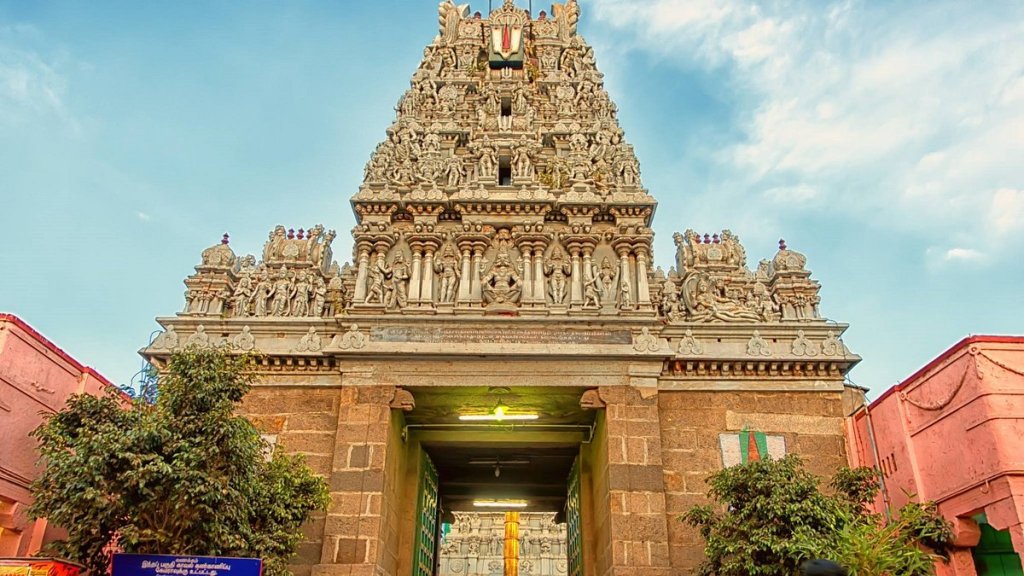
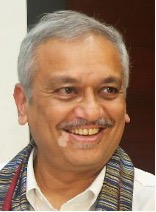
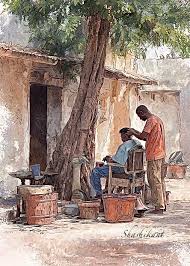


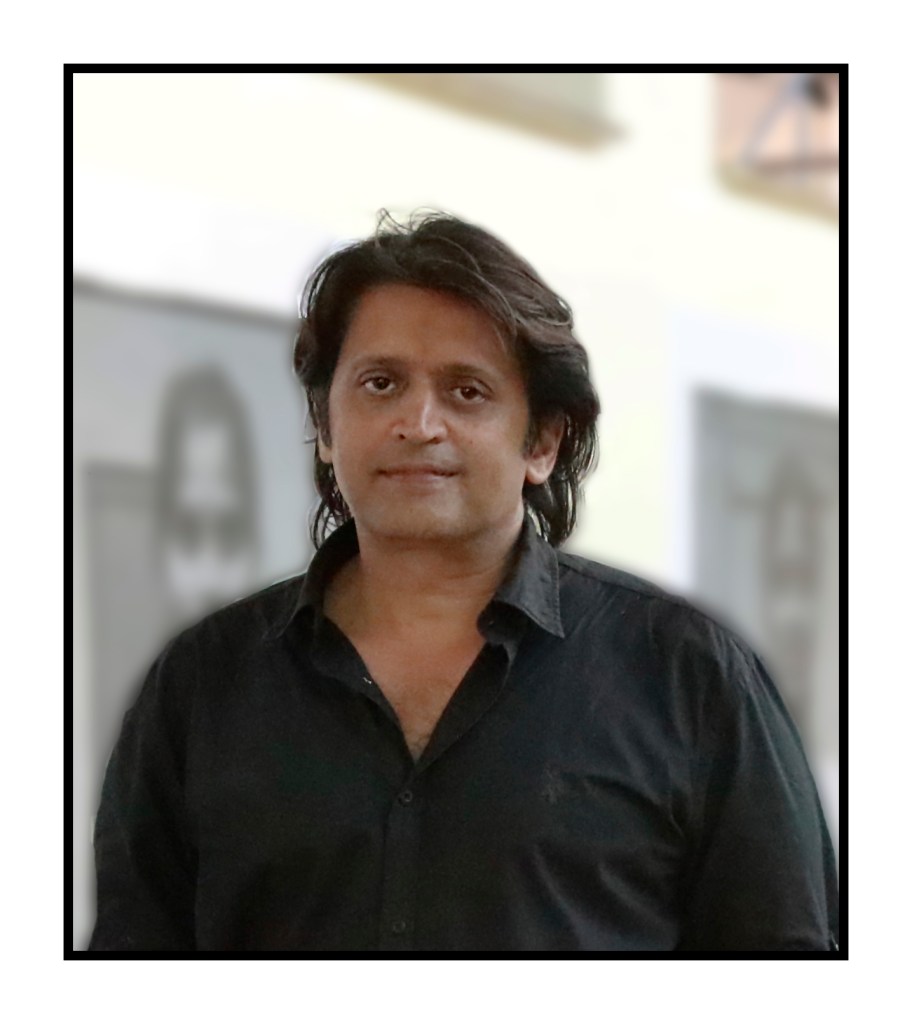
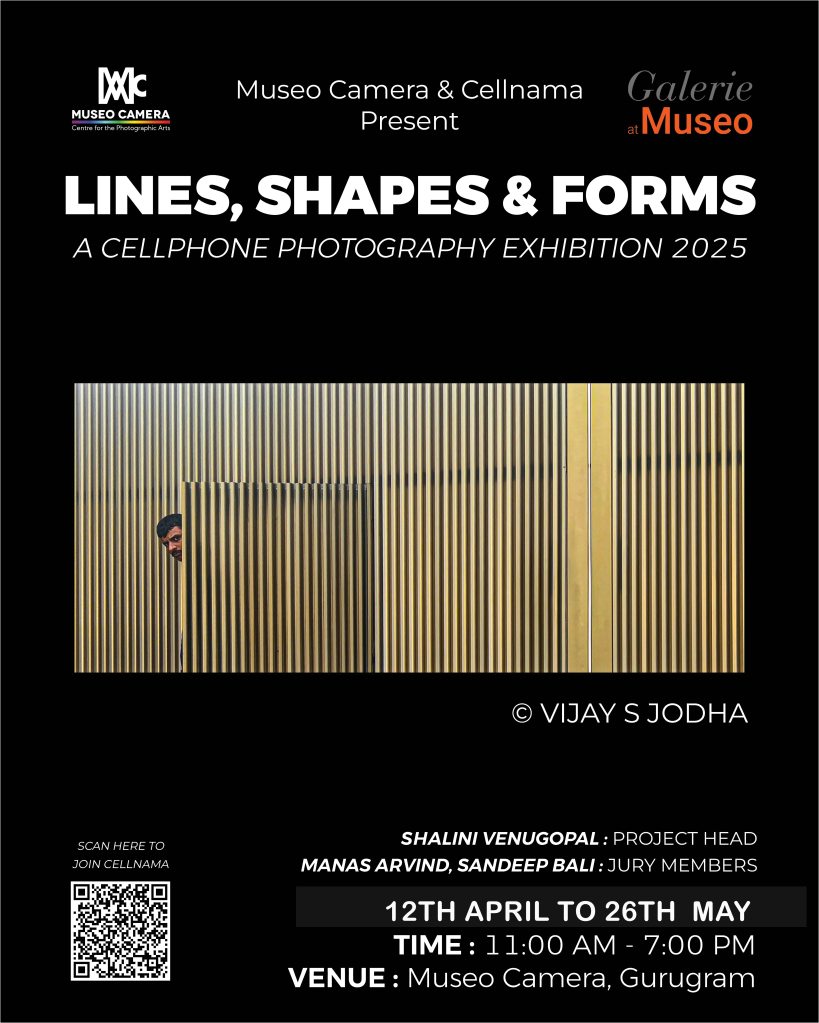
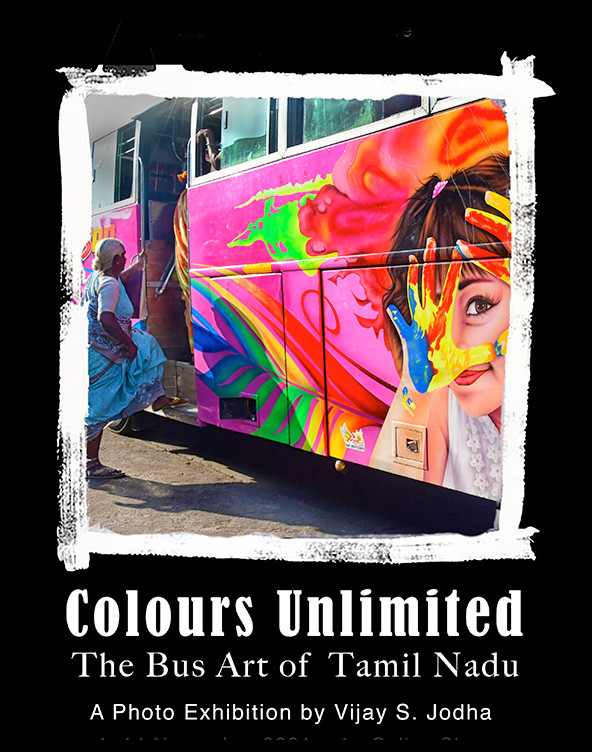
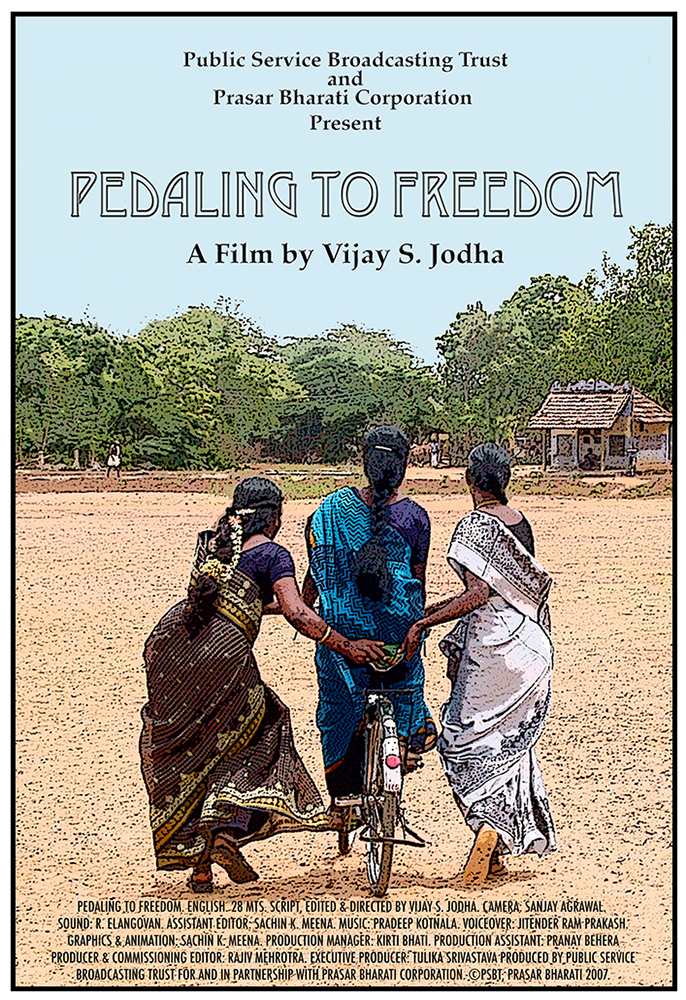
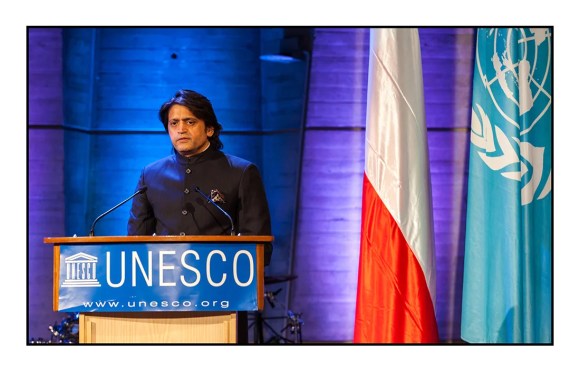
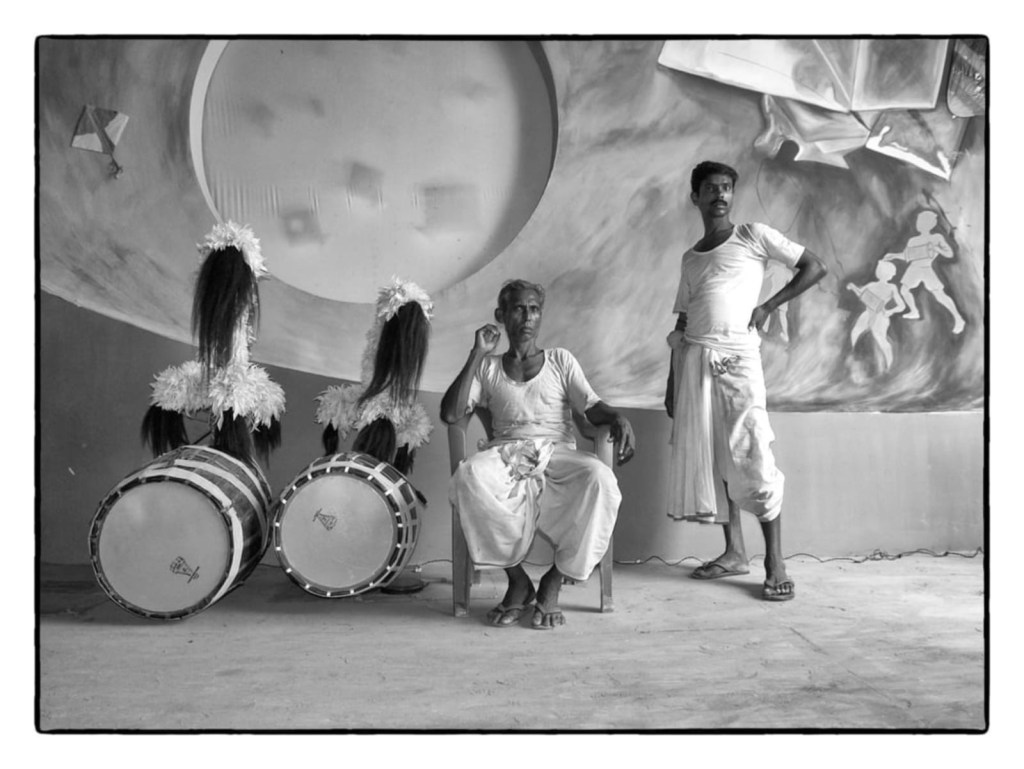
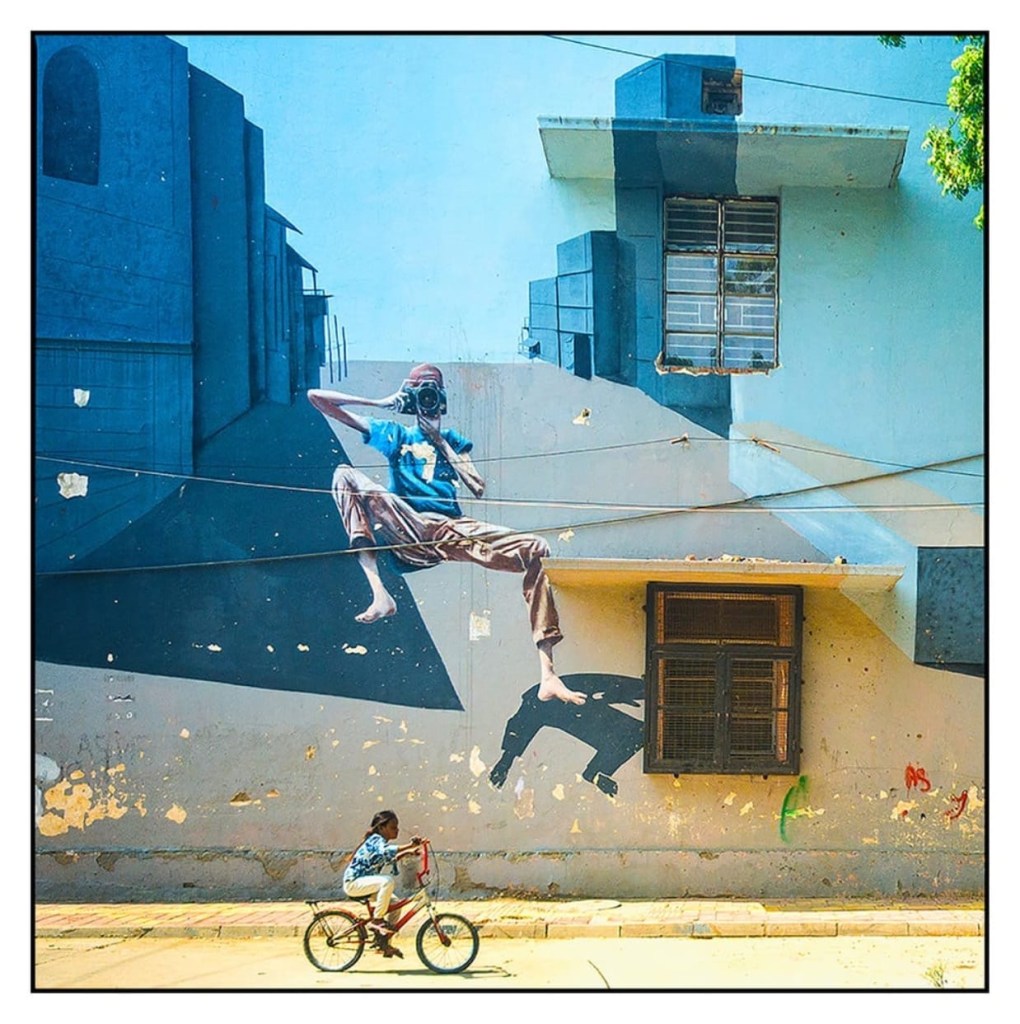


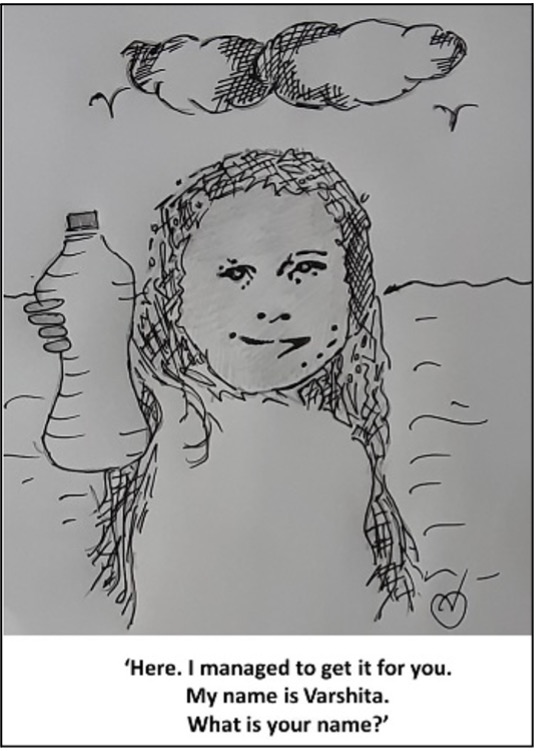
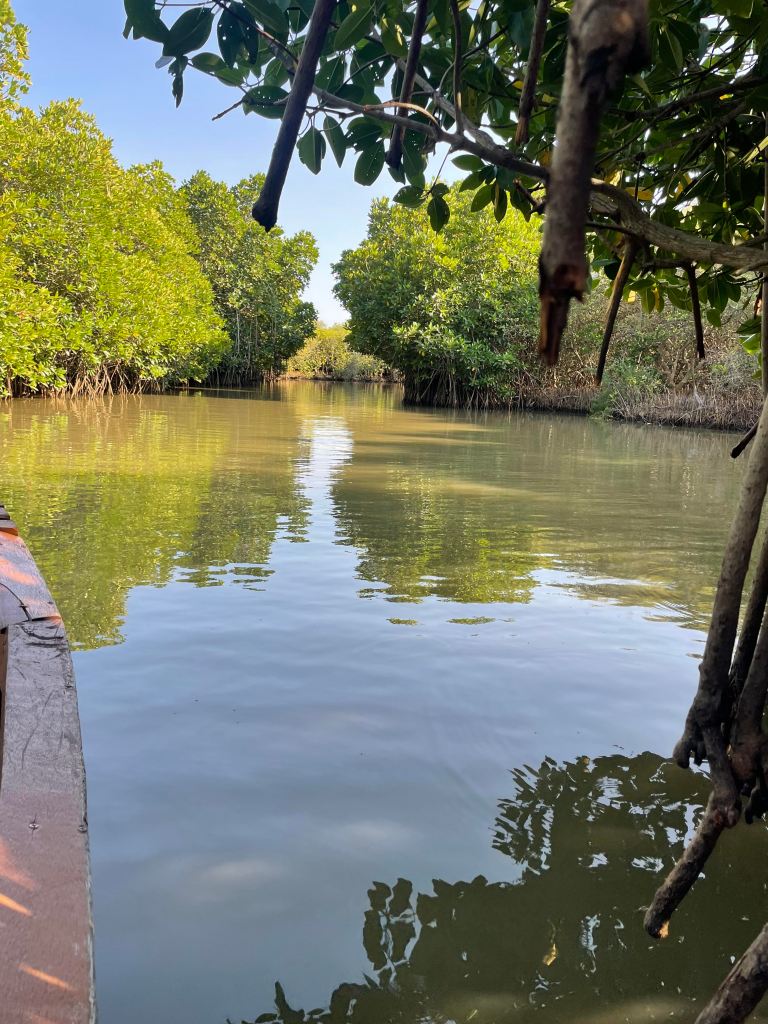

 Borderless