The year 2023 seemed to have been hard on all of us. Wars in the post-pandemic world, weapons and armies that destroy innocent civilian lives have taken the centre stage, vying with climate disasters, refugees, senseless shootings and unrest. Amidst this gloom and doom, we need hope — a gleam of light to help us find solutions towards a peaceful world. Let us give the newborn 2024 a fair chance towards its own wellbeing with cheer and laughter. Let’s laugh away our troubles and find the inner strength to move forward towards a better future where people live in harmony… perhaps to hum and recall Paul Mc Cartney’s wise words in ‘Ebony and Ivory'(1982)…
We all know that people are the same wherever you go
There is good and bad in ev'ryone
We learn to live, when we learn to give
Each other what we need to survive, together alive
....
Amidst this wave of conflict,
In the haze of the games you script,
            I will swing towards my own dream.

            Let the breeze blow off the lamplight,
            Let storms thunder in the sky —
Every moment in my heart,
I can sense your footfall.
             In darkness, I strive to find my stream.
In that spirit, we look inward not just to find our dreams and materialise them, but also into the treasure chests of Borderless Journal to find writings that bring a smile to our lips. Tagore, translated by Fakrul Alam and Somdatta Mandal, leads the way as we start with humour and wonder in poetry and meander into a few prose pieces that evoke laughter, at times upending our current stream of thoughts or values. We move on to our three columnists, Rhys Hughes, Devraj Singh Kalsi and Suzanne Kamata, who bring laughter and uncover the nuances of the world around us on a monthly basis. Included also are the pieces by our travelling granny, Sybil Pretious, whose spirited travels prove that age is just a number. Capturing the spirit of diversity with a tinge of laughter, let us usher in the new year to a more hopeful and sturdy start.
Poetry
Giraffe’s Dad by Tagore: Giraffer Baba (Giraffe’s Dad), a short humorous poem by Tagore, has been translated from Bengali by Professor Fakrul Alam. Click here to read.
Humbled by a Pig: Farouk Gulsara meets a wild pig while out one early morning and muses on the ‘meeting’. Click here to read.
Leo Messi’s Magic Realism: Sports fan Saurabh Nagpal explores the magic realism in famous footballer Messi’s play with a soupçon of humour. Clickhere to read.
I am a Jalebi: Arjan Batth tells us why he identifies with an Indian sweetmeat. Click here to read why.
A Day at Katabon Pet Shop , a short story set amidst the crowded streets of Dhaka, by Sohana Manzoor. Click here to read.
In conversation with Fakrul Alam, an eminent translator, critic and academic from Bangladesh who has lived through the inception of Bangladesh from East Bengal, translated not just the three greats of Bengal (Tagore, Nazrul, Jibanananda) but also multiple political leaders. Click here to read.
In conversation with Arindam Roy, the Founder and Editor-in-cheif of Different Truths, an online portal for social journalism with forty years of experience in media and major Indian newspapers. Click here to read
Akbar Barakzai’s poem, The Law of Nature, translated by Fazal Baloch. Click here to read.
Kazi Nazrul Islam’s poem, Shammobadi(The Equaliser) translated by Shahriyer Hossain Shetu. Click here to read.
Tagore’sAmar Shonar Horin Chai(I want the Golden Deer) translated by Mitali Chakravarty, edited and interpreted in pastel by Sohana Manzoor. Click here to read.
To mark the birth centenary of Satyajit Ray, Ratnottama Sengupta translates fromNabendu Ghosh’s autobiography experience of Pather Panchali ( Song of the Road) — between covers and on screen. Click here to read.
Wendy Jones Nakanishi, an academic who started her life in a small town called Rolling Prairie in midwestern US, talks of her journey as a globe trotter — through Europe and Asia — and her response to Covid while living in UK. Click here to read.
‘Did life change or did I change from the events of the last year,’ ponders New Zealander Keith Lyons who was in the southern state of Kerala when the first cases of Covid-19 were detected in India last January. Click here to read.
An excerpt from Enter Stage Right by Feisal Alkazi with a visual of young Alkazi dancing in one of the earliest discos of New Delhi. Click here to read.
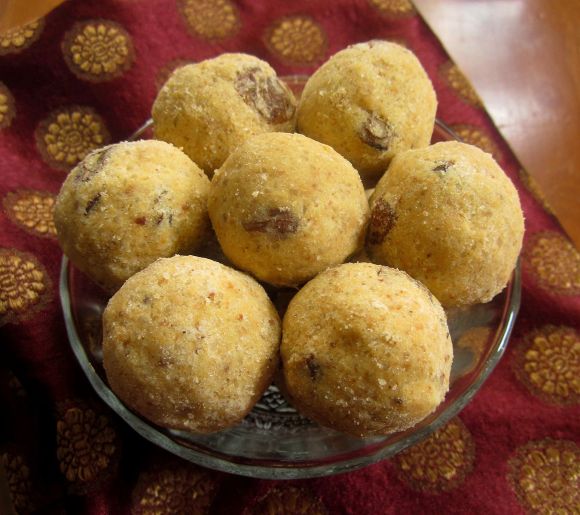
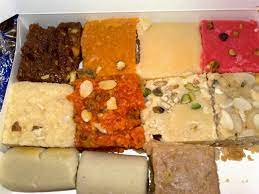
A jalebi, with a name as eccentric as its appearance, is made by a halwai (or a confectionery maker) with skillful etchings of concentric circular shapes of a paste of flour in hot bubbling ghee like a discerning painter with a brush. Oil simmers in unison with Lata Mangeshkar’s filmi voice, price bargaining, and noisy traffic — a distinctly South Asian symphony. The jalebi becomes fully congealed, eventually submerged in syrup and infused with its sweetened spirit. This delicate confection is then put in a basket on the side of a narrow street or in the midst of a chaotic bazaar, appearing as a platter of petite suns, seducing the occasional child like a syrupy siren. There are other mithai or sweets among it — barfis, ladoos, gulab jamun and more besan (gram flour) progenies. But the jalebi, like me, is markedly different from the rest. While it may be quite odd to describe oneself as a confection, I have inevitably come to the realization that I am, quite indubitably, a jalebi.
Besan Ladoos
Barfis
Gulab Jamuns
I am a jalebi not because I am saccharine, nor because of my lingering unpalatable aftertaste, but rather, because I am different, with my intricately eccentric swirls and peculiar oddities — a disorderly collection of twists that spiral infinitely into oblivion. I remain a vibrant enigma that is overtly incongruous, out of place in the world around me, a spectacle that can’t quite be made sense of. Seeing myself as a jalebi seemed the only way to make sense of the various oddities I have exhibited from a young age. It finally offered an explanation for my differences which seemed to have no tangible cause or explicable origin. And while it was a peculiar explanation, it was an explanation nonetheless, one that temporarily ended a search for an answer and brought with it a certain equanimity. Although I may not be appealing in the way a jalebi is, I am indeed the confection — a twisted, swirly, and overly orange one.
It was self-evident from a young age that I was not like most others. It was this feeling of being different that later blossomed into a profound estrangement. Most people are products of their environment and are thus well adapted to their surroundings. However, I seem to be the product of some other, indefinable forces. I feel irrelevant, always having the urge to be somewhere else, where others are more similar to me in a place that would make me feel a little more relevant. I am under the impression that I was born into the wrong life, in the wrong circumstances or context, the subject of a divine blunder and ridiculed by probability. I should be this rather than that. There rather than here. I am frustrated by the immutability of it all, the permanence of the things you are born into — religion, culture, language, and time. While it may seem futile to be frustrated by such things, they didn’t seem to fit in with who I was.
Inevitably, I remain pierced by loneliness. It is a paradoxical loneliness, not one due to physical isolation, but one borne out of my ability to see the world differently than most and my inability to see the world conventionally. One of the most distressing things that I felt knew, or at least believed I knew, that there were others like me, but just that they weren’t where I was, as if they were deliberately staying hidden away from me. While I have had some relationships before, most lack the intimacy and closeness that comes with genuine friendship. Compared to others, my idiosyncrasies and differences seemed magnified to a microscopic level, making me feel that there was something wrong with me clinically. This estrangement created an opaque silence within me, when I could no longer make sense of what was happening around me. I felt completely different, the discomfort and incongruity in the air around me, almost seemingly tangible and graspable, as thick and viscous as sea water. It is this certain “off” feeling, a discomfort, a malaise of some sort, a feeling of deep irrelevance, that I often felt.
My condition seems to be mirrored by the big jalebi in the sky, the Sun, the suraj, who like me, exhibits much jalebi-ness. The Sun’s interstellar solitude reminds me of my own alienation. It is the only star of its kind in the solar system; the next nearest star is 4.25 light years (24.9 trillion miles) away. And quite significantly, both of us are seemingly encumbered by the weight of the universe.
While I may seem outwardly peaceful because of my superficial reticence, I actually remain quiet because of the turmoil within me. I am pensive while my thoughts attempt to make sense of the confusing world around me. My mind is a spiraling jalebi that tightens and tightens, swirls and swirls, twirls and twirls into neurotic rumination. I often feel disordered, like a faulty machine. I am anxious and apprehensive about some things, fastidious about minor aberrations, and often despondent.
Some days, everything seems to be tinged in a certain sadness. A certain understood, yet unspoken hopeless injustice. My melancholy springs from a fusillade of realisations about the world. Being exposed to the world’s harshness and its lack of hope and reason, my reality seems to have a propensity, an innate tendency, to be brutal. I anachronistically experienced the Romantic ennui that French teenagers felt in the 19th century, trying to find meaning in our capitalistic, success driven world. Like Nick Carraway from The Great Gatsby, “I was within and without, simultaneously enchanted and repelled by the inexhaustible variety of life.” I am a ghost of sorts, a specter of vicarious and passive living. But beyond my nihilism, I am disturbed by the unfathomability of concepts that govern our universe: the concept of time, the size of the universe, death, the sun’s brightness, human consciousness. But as a single living organism, the universe has no obligation to make sense to me and holds no obligation of any other kind.
I am also a jalebi because of my South Asian background. Even though I have grown up thousands of miles away from India, it infuses itself into my life, an every day, colouring of a distinct shade of Indianness. It is in the food I swallow. The thoughts I think. The genes that materialize my body. Yet, there is a disconnect to “my homeland” not only due to the seemingly interminable physical distance, but because I have spent my entire life in the West. As such, I perceive India and the world through a unique lens. I see it as a Westerner, yet also as an Indian, making sense of the world through a complicated, paradoxical mosaics.
The boundaries of a culture are always delineated by an “us” and “them”. But I struggle to define the “us” and the “them”. In India, the borders between ethnic, linguistic, and religious identity all simultaneously converge and diverge. In the modern post-colonial era with the ancient civilization partitioned and shattered, the definition of Indian is constantly questioned and changing. As technically a minority in India’s extremely diverse cultural landscape, I feel like a decimal point, a fraction not a whole, in a country with over a billion people. And in the US, I am not just American, but an Indian American — another “doctor” trying to uphold the coveted model minority status.
I have long felt like an outsider, a conspicuous jalebi, in both places, perpetually stateless and displaced, like a refugee devoid of a nationality. As I don’t know what to think of my culture, I don’t know what to think of myself. There is no dictionary that contains my name as a word entry. No particular space to define me or explain who I am. It is absent. Unwritten. Blank. And so, in an attempt to define the indefinable, I define myself as a jalebi.
Rather than ponder upon my loneliness, I muse on the big jalebi in the sky, my constant companion. I try to find the sun in other things. The suraj meets me. Sometimes in the grass. In a busy city. Or near the ocean. On a windy day. Or on a walk. In my mind. In my dreams. Wherever really — sometimes among the surajmukhis (sunflowers)thatsprout out of the ground, with the grimming expression of the sun. The suraj is in the juicy, citrus fruits hanging off verdant trees. And of course, the sun is in every jalebi. I realize that because of the sun, all colours exist. Because of the sun, I am able to see. And while the sun does illuminate a brutal world, there are some things that my eyes can find worth looking at. I try not to think of the sadness that everything is tinged with, but rather the colours of our world. People wear sunglasses to dim the radiance of the sun, but I fully embrace its blinding light — I find solace in the sol. I sit there, a petite sun myself in the light of a large sun, wistfully wondering.
And while I may feel quite alone right now, I think that other jalebis in other places are waiting for me. Somewhere on this spinning planet. Under the radiance of the big jalebi in the sky. Somewhere in this jalebi-shaped galaxy.
.
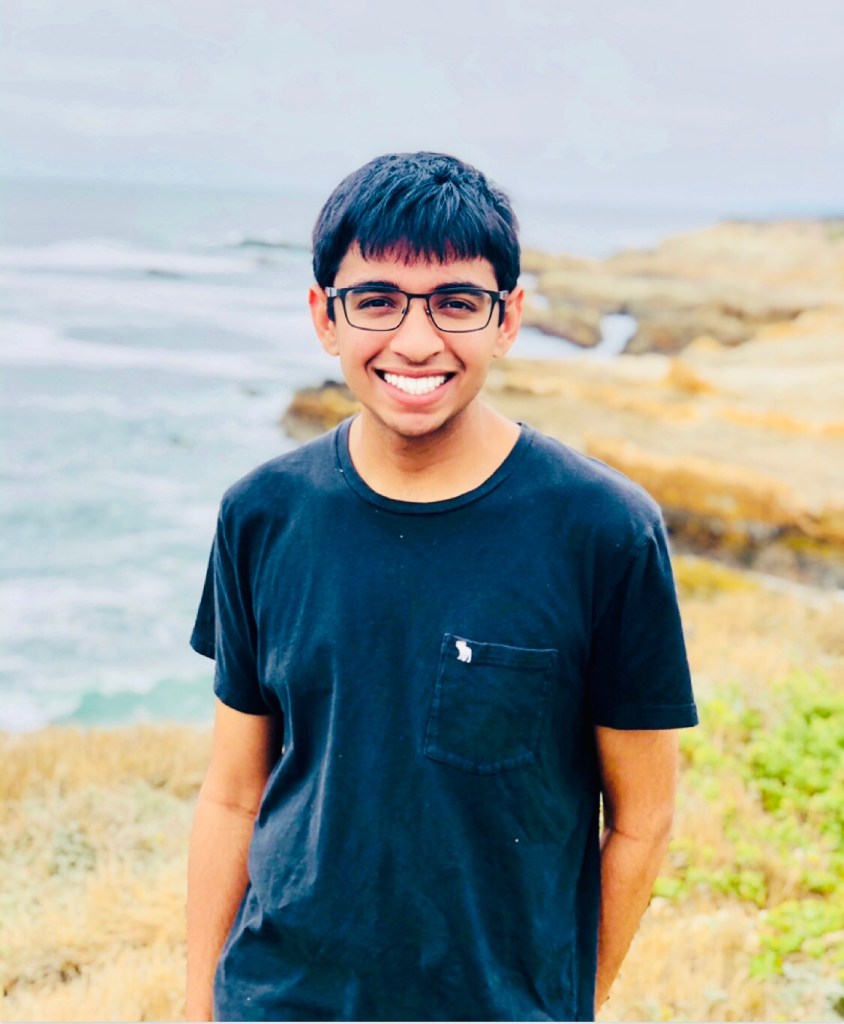
Arjan Batth is a student from California. He has recently written a children’s book, ‘Dear Humans’, that tackles the issue of climate change. As a young South Asian-American, he is determined to represent Asians more in the writing field and has a passion for writing and literature. He can be reached at arjanbatth@gmail.com
.
PLEASE NOTE: ARTICLES CAN ONLY BE REPRODUCED IN OTHER SITES WITH DUE ACKNOWLEDGEMENT TO BORDERLESS JOURNAL





 Borderless