How can anybody comprehend one of the largest and most ancient cities in the world? With its origins dating back three millennia, Beijing has been China’s capital for over 1,200 years. Keith Lyons tries to get to the heart of China’s megacity in just three days.
Photo provided by Keith Lyons
Day Two*
As the strong sun beat down on my pale jet-lagged wintered skin, I tried to guess the temperature of the warm Beijing air enveloping me. Over 30 degrees Celsius, my mind computed. Over 30 was possibly outside my body’s operating range. It was certainly outside my comfort zone.
I concluded that it was unseasonably hot and humid for early autumn, drawing on my vast experience of being in Beijing for just over 24 hours. A bead of sweat formed under my right armpit and started to trickle slowly down my side, the perspiration a futile attempt to cool down. My daypack stuck resolutely to a sweat imprint patch it had made on the back of my freshly laundered shirt. I’d just finished my second can of complimentary hotel soda water, and already the back of my throat felt as dry as the trampled brown grass that lay unloved between the uneven paving stone pavement and the stain-weathered concrete housing estate sweltering in the September mid-morning.
I looked down the wide 4-lane road I’d just walked along in the hope of spotting – like a mirage shimmering in the distance – a bus to rescue me from this situation. But all I could see was another batch of oncoming shiny new electric SUVs, unmarked white delivery vans, and angry-faced FAW trucks overloaded with gravel. The noise of their tyres on the asphalt increased to a roar and then faded away, as if to serve to remind me I was going nowhere fast. The buzz of cicadas hidden in a willow tree on the opposite side of the road taunted my already addled brain. Not only was I hot and flustered, but I was also completely lost. So much for my exceptional navigational skills, my Beijing map pre-loaded on my iPhone, and my ability to read a few Chinese characters.
I had set off early that morning with my detailed trip notes, a plan including the day’s itinerary and lists of vital bus numbers, and the intention of getting into the heart and soul of China’s capital: Tiananmen Square and the Forbidden City. I was so chirpy that I whistled to myself the catchy song from the 2008 Beijing Olympics ‘Bei jing huan ying ni’ (Beijing welcomes you). However, instead of catching a couple of buses the 15km from outside the 4th Ring Road into the downtown, I had mistakenly taken a bus that deposited me on the outskirts of Beijing. To make matters worse, rather than cross the road and hop on a bus going back to where I started, I decided to walk around the corner in the hope of getting a bus that would somehow bring me closer to the Forbidden City.
Not wanting this wrong turn to ruin my day’s plans, I decided first to address the essentials in life: shelter and food. The only shade I could find lay behind the bus shelter, so I leant in close to escape the sun’s harsh rays, every so often checking the road for any signs of salvation. I rummaged around my daypack to locate my emergency stash of muesli bars, and ate one, oblivious to the wrapper information which I understood to mean I’d just consumed 2 teaspoons of refined sugar. Today was not going to be my day to give up sugar.
The insulin spike also fuelled my optimism. As if I had manifested it into being, I saw a bus in the distance coming this way. Not caring about the sun or the heat, I strode out across the pavement to be sure to alert the driver to my desire to get on his bus. But as I waited on the curb, I noticed that the bus didn’t switch lanes to execute a passenger pick up or drop off. No, instead, the bus just kept going, onto the roundabout that joined a busy ring road half a kilometre away. I retreated to the shade again.
The same process repeated itself. Another Beijing bus approaching. Another exit, the shade to stand by the roadside by the broken yellow lines. Another speeding past. It was like Groundhog Day, or The Truman Show. I started to wonder if I was invisible, or just trapped in some time warp. Is this how it ends, I pondered.
With no one around, and no one to ask, I figured eventually a bus might stop. I had read in a travel guide that there were 30,000 buses in Beijing, plying over 1,600 bus lines and routes. And, after all, it was a bus stop. And on the other side of the road, the red, green, yellow city buses were stopping.
A rather podgy man in his 30s appeared, seemingly out of nowhere, to wait for a bus on the opposite side. I was about to go over to ask if he could help me, but then he crossed over to try to catch another bus heading along the road on my side. The bus zoomed past. Shading his phone from the sun’s glare, he peered into the device. I realised, that just like me, he was equally lost, like another soul you meet in a labyrinth limbo dream.
With the morning slipping away, and me getting more and more frustrated at being stuck, I resign myself to the day being a complete write-off. I lower my aspirations to just find my way back to my hotel before dark. So, when the next bus neared, I was less invested in it being my rescue. And, you guessed right, that bus slowed down and stopped, and two relieved passengers got on, grateful just for being transported away from there.
I stayed on that bus as it sped around roundabouts, raced on ring roads, stopped at major intersections and turned onto more crowded streets. Even though I still clutched my lucky list of bus numbers, 1-999, I was less inclined to get off it when I saw one of the route buses I was seeking. Given that there was always the chance I take the right bus line (1-140) the wrong way, I figured it was best to locate a subway station, and then make my way to the centre in a more exact way.
When I did finally spy a subway station and get off the bus, I realised that I’d travelled from the north-east of the city to the south-west in a clockwise direction, albeit in a very random fashion. When I started hours before I was 15km from the centre. Now, after quite a lot of travel and much travail, I had reduced the road distance to the centre to a mere 14km. But at least I was somewhere. Even if from a nearby China Telecom store I heard blaring from the speakers that overplayed tune, ‘Take me to your heart, take me to your soul . . . It’s easy, take me to your heart.’
Before I could take the subway train, there was a cursory security check with my daybag put on an X-ray conveyor belt, a security gate to walk through, and a bored officer barely out of high school waving his handheld detector wand over me like he was bestowing a lazy blessing rather than seeking out concealed weapons. A row of ticket machines was my next challenge. Even with the option of English, my money was repeated spat out, and then the monitor said unless you have a Chinese ID card go to the help desk to buy your ticket. There was no one staffing the office, but the most alert of the security kids told me to wait, and the clerk duly returned, changed the window sign, confirmed my destination on the electronic route map, took my money, and issued the ticket.
I went up to the ticket gate and eventually worked out which scanner I had to use for my printed ticket. Locals were negotiating the subway with much more ease. Some whipped out mobile phones to use apps, WeChat or e-cards. Others placed their hands on an electronic palm reader, and there was a poster on the wall which seem to suggest that soon, facial recognition could provide express entry and exit to frequent (and trusted) commuters.
When I finally emerged at Tiananmen West Station, I joined a throng of people also intent on venturing into the great square. We marched along the wide barricaded footpath to a security station, me still humming to myself ‘It’s easy, take me to your heart’. As we reached the gate, and I saw a sign in Chinese with a translated version in English, I realised today was not my day. You needed a ticket to enter the square and its attractions. What’s more, the ticket had to be purchased at least a day in advance. There’s a limit of 80,000 tickets available each day. I retraced my steps back to the subway station, but then decided while I was in the neighbourhood, I might as well look around. And even if I couldn’t get into Tiananmen Square itself, or the Forbidden City, National Museum, Zhongshan Park or the quirky Chairman Mao Memorial Hall, I could at least check out the sights that were accessible.
First, there was the Great Hall of the People, built in the imposing Soviet neoclassical style, and then its opposite, the shiny egg-like National Centre for Performing Arts. Further along, there was the anomaly of a church, still in use, which I later learnt was the Methodist Zhushikou church. And in a modern Japanese hotel, featuring bamboo, recycled bricks and lounge walls lined with shelves of books. The hotel has been designed to reflect ‘an anti-gorgeous, anti-cheap concept’ says the website. Rooms are US$110-500 a night.
Tianamen SquareNational Centre for Performing ArtsPhotos provided by Keith Lyons
At the south entrance to Tiananmen Square, I tried again to slip through a gap in the barricades with some other ticketless visitors, but we were turned back by a guard. At the official entrance, I saw a woman was China’s southwest holding her baby sobbing after she too was refused entry.
Photos provided by Keith Lyons
Having abandoned my pursuit of getting anywhere near the Gate of Heavenly Peace, I took heart from the incursions by others around the periphery of Tiananmen square. The several Starbucks dotted around, including one guarding the entry to Qianmen, the foreboding gate in the Imperial City’s wall, and equally impressive, the first KFC in China which opened in 1987, with over 2,200 buckets of chicken sold from the red and white striped building sporting the Colonel’s smiling face within the first 24 hours. Queues stretched into Tiananmen Square. Mao had died 11 years earlier. He would have turned in his grave . . . however, he’s not buried, but embalmed and on display in a glass case not too far from the smell of Kentucky fast food’s 11 secret herbs and spices, and the burnt, nutty scent of Seattle coffee. A photo I’d taken by the southern entrance, on closer inspection after I’d departed China, included the mausoleum housing Mao Zedong.
Turning my back on Tiananmen, I wandered along the 850m of Qianmen Street, a pedestrian ‘shopping’ street newly restored in the architectural style of old Peking. The Dashilan area has been a place of commerce for nearly six centuries, with medicine, shoes, silk, tea and hats China-famous, but I reckon, most of the buildings date back to 2007, with many away from the main thoroughfare appearing to be under construction.
Photo provided by Keith Lyons
Content with small pleasures and moments, I enjoyed finding a stream running through a neighborhood, with flower gardens, pagodas, and a couple of women taking photos dressed in traditional clothing. I bookmarked it on my map. A reference point was ‘Defeng East Alley No.65 toilet’. I saw an old woman taking a dog and a ginger cat for a walk and was delighted when the cat came up to me, and I chatted with the woman. “Yes, every day the cat goes for a walk with me. The cat and the dog get on. The cat probably thinks it is a dog.”
I finished my day in Beijing’s heart by heading up to the highest point of the central city, with a 10-minute hike up Jingshan Park north of Tiananmen Square for panoramic views of the Forbidden City. The views were expansive, though the visibility wasn’t great due to the air pollution and haze. What was I supposed to be looking at, I wondered. The red walled buildings of the Forbidden City, or the immense void beyond, of Tiananmen Square. So close to the symbolic centre of the Chinese universe, I peered at the scene before me. The dull tones contrasted with the display panel with its brilliant blue skies and landmark buildings. I was thirsty and hungry. The 6pm sun was making for the exit door. It was time to make my way back home to my hotel.
The Forbidden City. Photo provided by Keith Lyons
On my way down, gratitude came through in the last song of my day in my head, “Oh, it’s such a perfect day. I’m glad I spent it with you. Oh, such a perfect day. You just keep me hanging on. You just keep me hanging on.”
Keith Lyons (keithlyons.net) is an award-winning writer and creative writing mentor originally from New Zealand who has spent a quarter of his existence living and working in Asia including southwest China, Myanmar and Bali. His Venn diagram of happiness features the aroma of freshly-roasted coffee, the negative ions of the natural world including moving water, and connecting with others in meaningful ways. A Contributing Editor on Borderless journal’sEditorial Board, his work has appeared in Borderless since its early days, and his writing featured in the anthology Monalisa No Longer Smiles.
.
PLEASE NOTE: ARTICLES CAN ONLY BE REPRODUCED IN OTHER SITES WITH DUE ACKNOWLEDGEMENT TO BORDERLESS JOURNAL.
Is it appropriate to speak of transnational glee as a legitimate audience response to a film? If so, that might be a fitting label for the global spectator reaction to the blockbuster Indian film, Jailer, released worldwide on August 10, 2023. The film whose OTT rights were purchased by Amazon Prime is streaming online while simultaneously playing to packed theatres in India, Sri Lanka, Malaysia, China, the Middle East, Australia, Canada, the US, the UK, France, and other countries. In its first month of theatrical release, Jailer brought in an impressive 300 crores in India alone with over 600 crores and counting (just shy of 22 million US dollars) as its worldwide earnings. Many Indian blockbuster films have had a worldwide high-performance index recently with the likes of Ponniyin Selvan, Pathaan, Bahubali etc. thriving on an exoticised glamour of an India of kings and queens and palaces and freedom fighters and medieval breakdance routines, a sort of mystified enchanting India of the travel brochure version for viewers both inside and outside India. Even a mediocre film like RRR had a localised transnational success in the United States during the academy award season as well.
Unlike these historical and revisionist costume dramas, Jailer is a full-on pop culture phenomenon, a movie of the moment, a tale of its time; it is as au courant as cellphones and police corruption. It is full of attitude, and packed chockful of allusions and homages to both Indian and western movies in what is essentially a fun romp. Shot mostly in sumptuous wide shots and rhythmic cuts, it establishes an onscreen India, dry and dusty, with industrial warehouses running forgery, guns and knives, roadside ice cream vendors, fly-by beheadings, and struggling gardens along with elementary school YouTube influencers. Its real distinction is that people all over the world get it. But it is as Indian, specifically, it is as Tamil as a Tamil can be, and it puts a smile on the face of anyone anywhere who watches it. The international blockbuster with no pretensions to anything other than cinematic entertainment is back, thanks to Jailer and its vibrant young director Nelson Dilipkumar.
Jailer tells the story of two men, a hero and a villain, a retired police officer Tiger Muthuvel Pandian, the eponymous jailer, and a criminal mastermind Varman who runs an art forgery ring. They make counterfeit Indian statuary and sells them in the international market. Their encounter becomes complicated when the jailor’s son, a corrupt police officer, starts working for the villain, the male melodrama of father-son conflict being a favorite trope in Tamil cinema from older films like Thangappathakkam (The Golden Badge,1974) that starred an earlier era’s superstar Shivaji Ganesan. Jailer belongs to the same pedigree of male melodramatic films. The hero is played by the Tamil superstar Rajnikanth and the villain, the psychopathic leader of the forgers by Vinayakan from the nearby Malayalam film industry in Kerala.
Both Rajnikanth and Vinayakan belong to the highly successful world of mainstream, commercial Indian cinema with strong populist reception while also maintaining a certain level of middle-class entertainment sophistication. When compared to Rajnikanth, Vinayakan is relatively a newcomer, but one who has very quickly claimed his own space in Mollywood, Kerala’s film industry that produces Malayalam language-based films.
Vinayakan’s breakout performance as an underworld operative, an executioner and strongman, a complex character who is right, wrong and everything in between in Kammatti Padam[1] (2016) earned him a Kerala State Film Award for Best Actor. Jailer sees him as a criminal psychopath with unpredictable ticks like instructing his lackeys to dance for him, drowning his enemies in big vats of sulphuric acid, delivering his Tamil-Malayalam pidgin with menacing comic timing etc. The overall excesses of his character have the potential to turn him into a stereotypical villain, especially since the sulphuric acid dunking trope has a colourful cinematic legacy in Indian popular culture. (The “sulphuric acid joke” is an instantly recognisable film joke in Indian pop culture attributed to the persona of an outlandish villain played by the erstwhile Bollywood star Ajit who is credited with asking his henchman Raabert (Hindi pronunciation of Robert) the following purely apocryphal lines: “Raabert, is haraami ko liquid oxygen mein dal do; liquid ise jeene nahin dega, oxygen ise marna nahin dega” (Robert, drown him in Liquid Oxygen; the Liquid won’t let him live, and the Oxygen won’t let him die!”). Jailer abounds in many such recognisable “quotation marks” throughout the film, including an ear-slicing scene, an evident homage to Quentin Tarantino’s Reservoir Dogs(1992), and “Stuck in the Middle with You”. These artfully placed allusions create an enjoyable self-reflexive layer in the film where Jailer talks to film materials that have provided evident inspiration. The self-conscious scripting and direction, and the sheer enjoyment and abandonment with which Vinayakan embraces the deranged psyche of Varman makes him a bonafide villain and not a caricature.
Rajnikanth who plays the title role of the jailer is the 72-year-old veteran superstar of Tamil cinema known to his massive adoring fan base as thalaivar (“Leader/Chief” in Tamil). Rajanikanth started his film career with the 1975 romantic drama Apoorva Ragangal (Rare Melodies), a far cry from the action crime thriller genre which would soon become synonymous with his name in the industry. With his trademark moustache, lopsided pursed lips, thick mop of straight black hair swiped across the forehead, lean frame, and long lanky legs, Rajnikanth from the 80s onwards played the righteous underdog on both sides of the law who took on the snobbish elite as well as the violent underworld players and won. He played orphans, rickshaw drivers, underworld consigliere, police officer, milkman, engineer, writer, grandfather, father, son, brother, husband, lover – he played the full spectrum of masculine roles in mainstream Indian cinema.
There is an underacknowledged colour line in Indian films where the relatively whiter-complexioned actors and actresses are considered stardom material. Rajnikanth with his dark-complexion and Midas touch at the box office demolished this industry practice and became the mirror for the ordinary darker Dravidian face on the Indian silver screen. Jailer sees him aged but fuller and lighter than his earlier years, though what has not changed are his instantly recognisable dance moves; underworld or the penthouse, underdog or the aggressor, Rajnikanth’s dance moves set the tone in his films. The standing jogs, the high kicks, the hip shake, the robotic arm movements and hand props like dark glasses and hand towels showed a new definition of “cool” to his fans. His tentative dance performance in Jailer is reminiscent of another accomplished dancer who exhibits a pretend stage fright; John Travolta in Pulp Fiction dancing with Uma Thurman to Chuck Berry’s “You Never Can Tell.”
Other significant performances include Vasanth Ravi as the jailor’s corrupt and clueless son, Ramya Krishnan as the jailer’s visibly irritated wife, along with hilarious cameos by Malayalam superstar, Mohanlal, Bollywood star, Jackie Shroff, and Kannada star, Shiva Rajkumar — all of them act as outlaws who help the jailer in his fight against Varman. An equally hilarious subplot involves a love triangle between the dancing beauty Kamna, her lecherous costar “Blast” Mohan, and her lover, the timid film director.
The film clocks an impressive two hours and fifty minutes on the strength of these men and their vivacious performances, smart, sharp, and funny dialogue, over-the-top violence, and a sizzling cameo dance sequence, popularly known in Indian film lingo as an “item number” by the alluring Bollywood actress Tamannah. The single “Kaavaala[2]” composed by the music director, Anirudh, is a proper earworm turned worldwide viral hit with the young and the old alike shaking their hips to its mood altering percussive rhythm, the latest being a Japanese version of the song. Perhaps as a testament to the song’s instant infectious popularity, the original dance features dancers of multiple ethnicities, a global potpourri as it were, with a set reminiscent of the production design of Raiders of the Lost Ark[3] (1981) as well as a flute intro that calls out to Andean musicians. If any song can bring the world together, “Kaavaala” can.
Indeed, the multiple references to Quentin Tarantino, Reservoir Dogs and Pulp Fiction are unavoidable while watching Jailer. As with Tarantino, director Nelson (as he is popularly known) too operates inside a similar vision of cinematic storytelling.
The proper subject of Jailer is cinema, cinemas of India, cinemas of the world. Tamil melodramas of the 1970s, the middle class Tamil comedies of the eighties and the nineties, Bollywood action flicks, Hollywood adventure films, the black crime comedies of Quentin Tarantino, the epic blood splatter of Robert Rodriguez, the bumbling and menacing sociopathic capers of Guy Ritchie films – Jailer tips its hat to all of these crime-as-entertainment influences through its multilayered dense scripting, the large cast of characters, and the no holds barred display of gory violence. It is a refreshingly confident film without any false notes though some of the repeated explosion scenes could be tightened.
Jailer tells an old story familiar to the Tamil audience, a story as old as Shivaji Ganesan in Thangappathakkam(1974)—the upright police officer father and the fallen corrupt son. The film chugs through its dense thicket of plot and counterplot towards an inevitable moral resolution to this impasse. This is where the power of the star system in Indian cinema, a status equal to that of gods, plays its trump card. With Rajnikanth playing the jailer father there can be only one moral resolution, son, or no son. It is a formula that never fails, and speaks of a justice perhaps unique to cinema.
.
[1]Kammatti Paadam — is the name of a slum in Kochi, Kerala. It is a place name. Kammatti is a proper noun without any traceable etymology. Paadam means “field” in Malayalam. “The Slum Fields” of “The Slum” could be an appropriate translation.
[2]Kaavaalaya — A Telugu phrase, “I Want You, Man”
The city of Lima, Peru was founded by the Spanish conquistador, Francisco Pizzaro in 1535. Spanish scouts sent out by him reported the place had ample water, fertile lands, sea access, and fair weather influencing the decision to settle there. Now, the city is in the agricultural region known by the locals as Limaq. It was once the most important city in the Viceroyalty of Peru that ruled over a large part of South America. Today over one-third of Peru’s population resides in the greater Lima area. The moisture-laden winds from the ocean result in fog throughout most of the year. The cold Humboldt current keeps the Pacific Ocean temperatures low. The coastal region of Peru known as the Costa is a dry desert and rainfall is scarce. The combination of very little rain with a thick fog fascinates both residents and visitors. Most mornings were foggy during my stay in Lima.
Lima serves as the entry point to Peru and during your trips around the country, you can enter and leave Lima multiple times like I did. During one of my visits, I stayed with Cesar, a pharmacist with the Ministry of Health, on the 15th floor of a modern apartment complex overlooking the Pacific Ocean, in Magdalena del Mar, with a beautiful view of the Pacific.
Magdalena del Mar is fast becoming a trendy neighbourhood has an immaculate Heart of Mary Church, an ornate beautifully designed church in pink stone. Roman Catholicism with its emphasis on ceremonies, ornamentation, and ostentatious displays shares many similarities with the religions of the East. One afternoon after lunch, I visited the long stretch of beach which I admired from the fifteenth-floor window. I had to cross the Circuito de Playas, the six-lane highway that links several spots along the coast in Lima.
Heart of Mary ChurchArt Museum
The city of Lima is famous for its museums. The Museum of Art in Lima is wonderful. Located in downtown Peru at the Parque de la Exposicion (Park of the Exposition), the museum houses one of the best collections of Peruvian art from pre-Columbian times to the modern day. The artworks are mostly grouped according to the period of their creation. Different cultures like the Moche, Nazca, Chimu, Chancay, Ica, and the Incas are represented. After the Spanish conquest, local artists and artisans concentrated on religious Catholic art. Modern Peruvian secular art began in the nineteenth century. I read with great interest the struggle between two schools/visions on how this art should grow and develop. One school wanted a cosmopolitan art like that developing in Europe while the other school wanted Peruvian artists to concentrate on traditional Peruvian topics like Inca buildings, town planning, Peruvian plateaus and mountains, and the Peruvian Indian.
Holiday makers in Plaza de Armas.
The Plaza de San Martin is one of the most representative public spaces in the capital. It was declared a UNESCO World Heritage site in 1988 and is connected to the Plaza de Armas by the Jiron de la Union. The plaza pays homage to the liberator of Peru, Jose San Martin (1778-1850). The plaza was built in 1921 in honor of the 100th anniversary of Peruvian independence. The buildings lining the plaza date from 1910 to the 1940s.
Exhibits of Gold
In the 1960s, Miguel Mujica Gallo used his private collection, gathered throughout his life, to open the “Gold Museum of Peru and Weapons of the World”. The museum has over 7000 gold, silver, and copper objects. Gold and silver had a religious importance in pre-Columbian Peru. Gold represented the Sun while silver represented the Moon. The collection is valued at over 10 million US dollars. The other major section represents the weapons of the world. I found it ironic that humanity expended so much effort and resources on devising better and better ways of killing each other. There is a Japanese room at the museum highlighting the close ties between Japan and Peru. Many Peruvians of Japanese and Chinese descent are still able to read in their native languages while at the same time being fluent in Spanish.
On my last day in Peru, I decided to use the public bus to visit the ruins of Pachacamac which is located outside the capital in the city of Lurin. Pachacamac was a major religious site for the different cultures of Peru. As new cultures became dominant, they added their constructions to the holy site. The site was first settled in 200 AD and is named after the earth-maker God, Pacha Kamac. some museums in Peru there are concessions for teachers which I feel is a very good idea. School children visit museums accompanied by their teachers and museum guides to develop a good understanding of their culture.
Pachacamac MuseumQuipu, recording devices made from Camelid hair
Unfortunately, Pachacamac was too near the capital Lima to escape the attention of the rapacious Spaniards. The conquistadores were mainly driven by their limitless appetite for gold and a narrow bigoted religious view which regarded Roman Catholicism as the only true religion and other religions as heretic practices to be destroyed. They caused much damage to Pachacamac.
Pachacamac
The wind started blowing and a flurry of dust pervaded the air. The Sun Temple is the major building. There were separate locations for religious buildings, administrative buildings, and residential buildings and there were also granaries.
View from the Sun Temple
The Incas and the pre-Inca cultures practiced human sacrifice. Enemies were ritually sacrificed but young virgin girls were also sacrificed. These mamacuna (Virgins for the Sun), had important status. They wove textiles for priests, and brewed corn beer which was used in Inca festivals. The women were sacrificed in the highest ritual; they were strangled with cotton garrote. They were wrapped in fine cloth and buried in stone tombs. Each was surrounded by offerings from the highlands of Peru, such as coca, quinoa, and cayenne peppers.
Peruvian coffee like Peruvian food turned out to be a hidden treasure. Smooth without bitterness or harshness, the coffee can be drunk black without milk. Peru is also home to ‘poop coffee’. Dung coffee is made by having an animal (usually a civet) eat coffee cherries. The natural digestion process reduces bitterness. When they poop out the beans, they’re gathered, thoroughly washed, and typically take on flavors of the animal’s diet. Peruvians use the uber-adorable coatis, which are like tiny raccoons. They are fed the best-of-the-best Arabica beans and nature takes over from there!
Twined with the flavour of Peru is a beautiful legend which needs to be told to highlight their colours. In the good old days, a widowed mother, Pacha, worked day and night to feed her three sons. The sons were lazy and survived on the food provided by their mother. One evening while returning home the mother tripped on a stone and was injured. She was bedridden and became dependent on her sons. The sons were too lazy to work their farm and stole from the villagers and eventually started selling their farm part by part. They lied to their mother about their plentiful harvests. One day, the mother went to the farm to see the harvest but was beaten by the villagers who mistook her for a thief. Learning about this, the sons got angry and turned themselves into hail, frost, and furious wind devastating the villagers’ farms and houses. Since that day when the elders gather at night to tell stories, they talk about the hail, the frost, the wind, and how they ruin the fields from time to time, and they continue to blame the men of the village for having mistreated the mother (mother earth / Pachamama)!
I enjoyed my days in the city of kings. The weather was good, the accommodation was great, the food was excellent, great architecture and art greeted one everywhere, getting around was not too difficult and the cost was reasonable. What more can a man want? I plan to return one day in the near future.
Peruvian camelids
Dr. P Ravi Shankar is a faculty member at the IMU Centre for Education (ICE), International Medical University, Kuala Lumpur, Malaysia. He enjoys traveling and is a creative writer and photographer.
.
PLEASE NOTE: ARTICLES CAN ONLY BE REPRODUCED IN OTHER SITES WITH DUE ACKNOWLEDGEMENT TO BORDERLESS JOURNAL
How can anybody comprehend one of the largest and most ancient cities in the world? Keith Lyons goes up high, underground, underwater and down some dead-end alleyways as he tries to understand in just three days what took 3,000 years of history to create.
Day One*
My fascination with China started at an early age. I remember as a child leaving through the Time-Life World Library series volume for China (1965); its photographs grainy black and white, and tinted colour, only serving to increase the mystique about the nation then isolated behind the Bamboo Curtain at the height of Mao’s Cultural Revolution. Back then, to be able to stand on the Great Wall of China, or to see the vastness Tiananmen Square seemed as probable as going on a school trip to the Moon.
I was in my late 20s when I first visited the Middle Kingdom, and through a series of events, choices, and decisions, later found myself living and working in the ethnic borderlands of southwest China for more than a dozen years from the mid-2000s. During that time in-country, as well as before and after during my various travels throughout China, how many times do you think I visited the capital, Beijing? Half-a-dozen times? Or at least 10 times? Sorry. I have to confess, even though I ‘knew’ Beijing through books and documentaries — and creating travel itineraries for tour groups — I never once visited in person the Chinese capital.
Yes, that’s right. I crafted detailed, tailor-made itineraries for first-time visitors to Beijing, to give them an insider’s experience of the capital, without getting within a thousand kilometres of the great city. My excuses include:
1 – China is vast, and almost the same size as Europe;
2 – It would take 3 days by train from my courtyard house in Yunnan’s Lijiang to the Forbidden City, and I wasn’t up for such a long journey
3 – To be honest, I wasn’t as enthralled about Beijing after hearing mixed reports from other travellers, so I decided I could live (and/or die) without casting my eyes upon the sights and wonders of Beijing.
A small window of opportunity opened to me recently when the stars aligned between jobs and other responsibilities. I had turned down the invitation to speak at a national tourism conference about the future of China’s tourism development post-pandemic, but I got to visit China for the first time since 2019, making an extended stopover in the capital. A visa-exemption initiative recently re-instated to encourage tourism without the need for pre-approved visas meant I could theoretically apply for a 144-hour transit stamp.
So, I touched down at Beijing’s Capital International Airport (IATA code PEK) early one morning after an overnight flight from the southern hemisphere. This being my first time without a pre-approved (and expensive) visa I was a little nervous, and my fears were not allayed when no one was staffing the 144-hour visa desk. Was this the first great wall I had to overcome? I got sent from one immigration queue to another, a couple of times having to go against the flow of newly-arriving passengers and slip upstream through security. When eventually an official arrived to process the paperwork and issue the transit stamp, I had to show all my flight and accommodation bookings; not an easy task when you can’t connect to the airport wi-fi.
I was sweating, not just because of the late summer heat, but also because I had booked a bus tour to the Great Wall that was leaving at 8 a.m. from central Beijing, a train and subway ride away. “Dear Sir, our assembly point is at Exit C of Dengshikou Subway Station on Line 5,” read my instructions. “You can see the guide wearing a blue vest. Please arrived at the assembly point 10 minutes early.”
Having a Chinese bank card, a map preloaded onto my phone, and some decent residual Mandarin skills, along with no reservations about queue-jumping as payback for being delayed, I found an ATM, and headed to the exit of the massive airport. There were only a few seconds to admire the impressive roof arching over Terminal 3, designed by Sir Norman Foster for the 2008 Beijing Olympics as I marched across the marble floors towards the Capital Airport Express. It was just after 7 a.m. but already I could see how Beijing Capital Airport is — or was — the second busiest airport in the world.
Transferring from the airport line train downtown to the metro, the time on my phone was counting down towards the departure time. I worried that if I missed my bus, my whole trip would be ruined; and that such an inauspicious start to my Beijing exploration would cause a chain reaction of delays, missed opportunities and regret. Maybe I’d never make it to the Wall. Then I thought: take it easy, it’s not the destination, it’s the journey. I studied the Chinese characters for Dengshikou, recognising the first Sinogram as meaning light or lantern.
Arriving at the subway station, I quickened my pace up the stairs and escalators to emerge into sunlight at Exit C. It was 7:59. Fortunately, a blue-vested person was standing in the middle of the carpark. “Do I have time to grab something to eat or drink?” I asked the ZANbus guide in my slightly rusty Mandarin. “No. We’re leaving right now,” she said, ushering me onto the bus.
“But we have bottles of water on sale onboard.”
My online booked tour, a bare basics budget-friendly US$25 including admission ticket, offered three advantages: visiting a less-visited section of the Great Wall a mere 70km from Beijing, arriving before the ‘other tourists’, and being a strictly ‘no shopping’ experience (many tours visit several stores where guides and drivers make huge commissions). As the only non-Chinese person on the coach, the guide (who was supposed to speak some English) gave me a special briefing (in Mandarin), explaining the options for going up and coming down from the Mutianyu section of the wall, as we sped out of the metropolis heading towards the green rolling hills in the hazy distance.
As we passed orchards, with growers selling freshly-picked fruits and nuts, I secretly wished we could stop for some shopping, not just to support the locals, but to ease my rumbling empty stomach. A nearby passenger, a man in his 20s visiting from a central province, whom I later dubbed ‘Running Man’, live-streamed the succession of farmer’s markets we zoomed past, in between video-chatting to his girlfriend. “There’s apples, pears, apricots, plums, grapes, persimmon, walnuts and huge peaches,” I heard him say. Since the bus driver didn’t once slow down, I justified to myself that, even though probably quite delicious, that produce would probably be exorbitantly over-priced for day-tripping Great Wallers like myself.
By 9.30am I was striding along an arcade of mainly unopened shops past the visitor centre, stopping to buy more water, and some snacks. “How about an ice cream?”one vendor asked me after I looked into his glass-top freezer. “Later, OK?” A cafe offered a latte coffee, but the US$8.25 price tag reminded me that China gives too much status to the beverage, which is sometimes just instant coffee and creamer. A Chinese family, long-resident in the UK, gave me a fuller rundown on the logistics for sightseeing, where to meet the guide for the trip back to Beijing (the waiting hall just near Burger King), and most importantly, when the bus driver would be leaving (4pm sharp). “Also, if you tell them you are with this bus company, there’s a discount at Subway,” the teenage son chimed in as we boarded an electric vehicle for a short ride to the base station for the ascent of the crestline high above us. Looking along the line of the hills, I could just make out the crenellated up-and-down patterns of the walls, stretching off into the far distance.
Now you’ve probably heard it many times, but let’s dispel the myth: the Great Wall of China is not visible from space. It is not visible from the Moon. It isn’t even visible to the naked eye from the low-orbit International Space Station. The popular myth goes back centuries, and more recently has been part of the propaganda of modern China to state that the wall was the only human-made structure that could be seen from space. The myth was challenged when Apollo 12 lunar module pilot Alan Bean said, “The only thing you can see from the Moon is a beautiful sphere, mostly white, some blue and patches of yellow, and every once in a while, some green vegetation. . . No man-made object is visible at this scale.”
Some artificial structures such as cities, highways and dams are visible from space, but the Great Wall is only visible from low Earth orbit with magnification or high-powered camera lenses. This was confirmed by China’s own first astronaut who went around planet Earth 14 times in 2003 on Shenzhou 5. “The Earth looked very beautiful from space, but I did not see our Great Wall.”
Photographs provided by Keith Lyons
To get personal and up-close with the Great Wall, other passengers decided to get a chairlift up and traipse further along between watchtowers and then take a toboggan (“speed slide”) down for 5 minutes of excitement. Rather than hike up (crazy in the heat), I opted to take the same cable car up and down (less than US$20 return).
Within minutes we could look down on the graceful, curved line of each section of the wall as it gently arched from one watchtower to the next. Wow! As the cable car reached its terminus near watchtower 14, the extent of the Great Wall to the north was revealed, fading to the horizon as vegetation and battlement became indistinguishable.
The Mutianyu section extends some 5.4km, and though work began in the 6th century, much of it was rebuilt or renovated in the 15th and 16th centuries. In the 1980s about 2.3 km of that section was restored, so over the last three decades, more and more people have been able to visit the less crowded and commercialised alternative to the more famous, most-restored, scenically magnificent Badaling section.
At Mutianyu, constructed of granite blocks, the wall has been made pedestrian-friendly and smooth, though there were steps, some steep in parts as they climb to the series of watchtowers. My fellow passenger Running Man darted around taking selfies and videos, as if he had only 24-hours left to live. Couples set off to the best spots to take photos, while a group of three university students set their sights on the highest watchtower, No.20, which could take one or two hours return depending on speed, stops and stamina. The path climbs from the low of watchtower 17, with the steepest leg between 19 and 20.
Being something of a mountain goat myself, you might expect me to join them purposefully climbing towards the much-talked-about ’20’, but this goat was tired, jet-lagged, and hungry. Instead, I wandered along to the next abutments and decided to just sit in the shade admiring the view. This is just what I had envisioned, I wrote in my journal. And it was. Just like in the photos. Actually, I had expected the Great Wall might be more crowded with jostling visitors, but less than half those getting off the cable car ventured beyond watchtower 16 — and it wasn’t a weekend or holiday.
At watchtower 17, it was so quiet and still that I could hear cicadas in the pine and chestnut trees flanking the wall. A pair of sparrows darted around, a plane flew overhead, and I watched the slow progress of a centipede across the path from the inner parapet to the invader-facing crenelation, a distance of four or five metres. Surely, the centipede hadn’t climbed all the way up the seven or eight metres of the Wall’s walls, five times the height of an adult? During its construction, which went until the mid-1600s, parts of the wall were made with bricks, held together by a durable glutinous rice mortar — arsenic was used to prevent insects from eroding away the wall.
An old man, who has been sitting nearby in the shade while his adult son and grandchildren went on further, finishes drinking from a plastic water bottle and discards it over the side. I feel like saying something, but stop myself, realising that some attitudes and behaviours are slow to change. He probably thinks the Great Wall was visible from space, I confide to myself.
The Wall’s modest width, no bigger than a road, was probably why it couldn’t be easily spotted from above. However, it did provide a fast means of travel and transportation for troops. Officially, the Great Wall was some 21,198 km long – that’s equivalent to half the equator – but up to a third of the structure has disappeared over time. It’s not just one continuous wall either, with sidewalls, parallel walls, enclosing walls, and even sections where there are no walls, just high mountain ridges, rivers, ditches or moats as the barriers. The Wall can lay claim to being the longest man-made structure as well as the largest building construction project ever undertaken. On a blank page I start a rough sketch of the section in front of me, trying to get my head around how this is just a tiny fraction of the longer, greater wall.
As well as being for border defence, the Great Wall also served to transmit messages, using watchtowers and beacon towers. From the next watchtower, the grandson of the bottle-litter-man waves but failing to catch the attention of the old man, he runs back along the wall path yelling, “Yéye – Granddad! Did you see me waving to you at the next castle?”
There is a certain irony about this extensive bulwark constructed across northern China and southern Mongolia up to two millennia ago to keep out invaders which now every day is climbed over by tourists from Mongolia, Russia, Eurasia and beyond. This is supposed to keep us out. But here we are, on the top of the wall and fortifications, having invaded, not from beyond, but from the downtown of the capital of the nation. So much for the upright projections, resembling teeth bared at the enemies.
Other travel experts and expats living in Beijing tell me if I visited Mutianyu a month later, I would see the surrounding maple, oak and chestnut trees in their autumn splendour. In winter, snow transforms the scene. But on this day, I am just happy to be present, to take on the literal meaning of Mutianyu — Admire Fields Valley — as I take the cable car down to the bountiful valley, snack on a corn cob sprinkled with chilli, and some fresh walnuts. As the clouds turn to a sudden rainstorm, in the comfort of the waiting hall, after savouring an ice cream, I let the day catch up on me.
Photo provided by Keith Lyons
Back on the bus at 4pm, Running Man is sunburnt red and sweaty — but still grinning as he sorts through his photos and videos. The mother hen guide gives us all a small memento of the day, a fridge magnet of the Great Wall, as a reward for all making it back on time.
The next thing I recall is being woken by the guide. I must have drifted off to sleep. “We’ve arrived,” she says, pointing towards an entrance to the Beijing metro which seems different from the starting point. For a moment, I wonder if I have been dreaming it all: the Great Wall, the perfect day, how everything worked out in the end. Then I realised it was all true: I’ve just seen and been on the Great Wall. And I have the fridge magnet in my pocket to prove it. I turn to say goodbye to Running Man, but he’s already exited the bus, and is making for the escalator down.
Keith Lyons (keithlyons.net) is an award-winning writer and creative writing mentor originally from New Zealand who has spent a quarter of his existence living and working in Asia including southwest China, Myanmar and Bali. His Venn diagram of happiness features the aroma of freshly-roasted coffee, the negative ions of the natural world including moving water, and connecting with others in meaningful ways. A Contributing Editor on Borderless journal’s Editorial Board, his work has appeared in Borderless since its early days, and his writing featured in the anthology Monalisa No Longer Smiles.
.
PLEASE NOTE: ARTICLES CAN ONLY BE REPRODUCED IN OTHER SITES WITH DUE ACKNOWLEDGEMENT TO BORDERLESS JOURNAL.
Agomoni (1878–1883), Metropolitan Museum of Art, Kolkata
Bengal — and here I refer to undivided Bengal — with her plurality of religions, cultures and sub-cultures and her numerous linguistic forms and dialects, provides a wonderful kaleidoscope of thoughts and ideas through her oral utterances. Multiple streams of expressions provide a fascinating study for the researcher. This cultural heritage is deeply enmeshed in the life of a Bengali enfolding Hindu and Muslim alike. In the present scenario of divisive identity politics, it is imperative that we draw upon this common heritage constantly and consistently.
In this essay, we will highlight practices in which there was equal participation of Hindus and Muslims, with each community infusing and enriching the traditions of poetry, music, narrative and ritual. What is observed is a readiness to dissolve religious differences in a common cultural pool of assimilated identities.
A large body of the oral literature of Bengal is rooted in the worship of demonic powers. As is to be expected in a tropical region and a primitive, rural society, certain deities are seen as holding human lives in thrall by their control of natural calamities, animal attacks and epidemics. Though Islam sanctions worship of none other than Allah, the Muslims of Bengal are equal participants in the propitiation of these deities. Interestingly, most of these are female deities, indicating that Bengalis have seen the powers of destruction and preservation as vested in women from time immemorial.
Olai Chandi
Let us begin with the Saat Bibir Upakhyan, the legend of the seven sisters who hold in their hands the power to unleash and contain some of the deadly diseases that strike rural Bengal from time to time. The eldest and most feared is Ola Bibi or Bibi Ma –the goddess of cholera or olautha –ola, in the rustic dialect meaning diarheoa and utha –vomiting. When the two symptoms appear together the villagers see it as Ola Bibi’s curse and rush to offer prayers and sacrifices. So great is their awe and terror of this deity that they invest her with the most flattering attributes. Worshipped by both Hindus and Muslims alike, she is represented as a woman of surpassing beauty, striking personality and noble mien. The Hindu version of the idol, Olai Chandi, has a bright yellow complexion and long slanting eyes. She wears a blue sari, has open hair and is adorned with the jewellery wealthy Hindu women wear – bangles, necklaces, armlets and a nose hoop. The Muslims visualize her as a high-born Muslim maiden in Islamic attire – loose pyjamas, shirt, cap, veil and nagras[1] on her feet.
The worship of Ola Bibi continues vibrantly into the present in Nadiya, Bankura, Birbhum, Bardhman and even Kolkata, sometimes singly, sometimes along with her other six sisters –Jhola Bibi, Ajgai Bibi, Chand Bibi, Bahurh Bibi, Jhentuni Bibi and Asan Bibi. Her puja is performed out in the open under the trees or by the river. But some places are earmarked as Saat Bibir thaan or Ola Bibir thaan –thaan being a corruption of the word sthaan meaning place. The rituals, even when the devotees are Brahmins, are performed by Muslims or drawn from the lowest rung of the caste ladder –the Hadis or Doms.
The second sister Jhola is the goddess of pustules – the full range from the harmless measles to the killer smallpox. But at least one of the seven sisters is a benevolent deity. The youngest, Asan Bibi, makes things easy for women who invoke her aid.
Asan Bibir brata katha[2] tells the story of Shireen, the first brati or invoker of the deity’s aid. Shireen’s father Sultan Isa Khan ordered his daughter to be killed at birth to save her from falling into the hands of the pirates of Arakan who descended on his kingdom, periodically, to loot, plunder and rape. But his purpose was foiled by his eldest son Chand, who escaped with his sister into the forest, far away from the civilised world and its cruelties to women. When Chand was forced to go out to seek a livelihood, he gave his sister seven munia[3] birds and charged her solemnly to give them their gram and water everyday and keep them alive, for his life was bound up in theirs. Young Shireen, in a playful mood, forgot her duty one day and was shocked to find that the birds had died. She set up a wail hearing which Asan Bibi appeared before her. Commanding Shireen to find seven married women and make them sit around the birds and listen to her story, Asan Bibi brought the birds and Chand back to life.
This was the first Asan Bibir puja[4]. Isa Khan’s cruelty to his daughter, with all its implications of female infanticide and honour killing being foiled by his rebel son –an enlightened man and champion of women’s rights — is as relevant today as it was then. Asan Bibi is not only a deity. She is the manifestation of woman power. The seven bratis symbolise the bonding and coming together of women in a bid to protect each other from masculine cruelty and domination.
Asan Bibi is a Muslim deity but, as part of an appropriation and assimilation that has gone on for centuries and is typical of Bengalis, the legend of Asan Bibi is enacted, to this day, by Hindu women not only in Bengal but all over India. The offerings are gram and water and the birds are represented by clods of earth
The rituals of this puja display a fascinating blend of Hindu and Muslim practices. The square of red silk on which the pot of water is placed, the silence observed when the tale is being told and the prasad being eaten out of the pallus[5] of the women’s saris, are pure Muslim. But the water in the pot is Gangajal[6], the pot is adorned with a swastika and the clods of earth have to be taken from the base of a tulsi bush[7]. Sindoor, alta and paan[8] with which the chief brati or pledger greets the other six women are the other Hindu elements of the puja.
Another women’s brata[9] is centred around Bhadu — a folk deity worshipped extensively in Rarh and its surrounding districts. Bhadu puja is performed throughout the month of Bhadra, that is the middle of August to the middle of September. The main component of the puja is the community singing by women in which the tale of young Princess Bhadreswari of Manbhum and her tragic, untimely death is told. Bhadu gaan or the ballad of Bhadu expresses the hopes and aspirations of young maidens in ordinary, everyday village life. This puja has no religious basis. No mantras are required and no priests to conduct the rituals. The devotees, like in the Asan Bibir brata, are all women. But despite the non-Aryan nature of the puja and the absence of mantras, there are references to Kali and Krishna in the ballad. The drums announce the coming of Bhadu from Brindaban but, at some point, in her journey she must have stopped at Kailash for her hands are covered with blood red sandal paste, like Kali’s, and a garland of hibiscus hangs around her neck.
Thus, Vaishnav and Shaivaite ideologies are mixed and mingled in the worship of Bhadu, and Shyam and Shyama come together. Yet Bhadu is human – a young girl. She is petted and pampered by her devotees and called Bhadu Rani and Bhadu Dhan[10]. Young girls form eternal friendships with her using the tradition of Soi patano – the exchange of symbolic names with special girl friends. In the song that follows a devotee makes Bhadu her soi picking phul (flower) as a name for her. But what is she to give Bhadu as a gift? Flowers and garlands, of course.
To go back to the deities who hold the key to human suffering and happiness we have Ghentu – the patron deity of skin ailments like sores, itches, scabies and carbuncles. Like Jhola Bibi of the pustular menace, Ghentu appears in spring which, though a season of sweet breezes and mellow sunshine, is particularly conducive to skin afflictions. But Ghentu is not accorded the same respect as Jhola. Though feared, like her, he is also hated and held in contempt. This, perhaps, is owing to the fact that he is only capable of causing minor irritations. He doesn’t have the power to kill or wreak serious damage.
Ghentu Puja is performed by women, mainly mothers, in the twenty-four parganas and the Bardhaman / Bankura belt through the month of Chaitra[11]. There are no temples to Ghentu and no images. A well-worn household pot of black clay is placed on a broken winnowing tray. A pat of cowdung on the pot forms the face and two cowrie shells the eyes of the god. He is made to look bizarre and ugly because Ghentu, though a Deb Kumar[12], had to take birth among the ghouls following a curse by Vishnu. The offerings denote the contempt the idol is held in. Ghentu phul (a foul-smelling flower) parboiled rice (also foul-smelling) and masur dal[13] which is considered unholy for some reason (caste Hindu widows are not allowed to eat it) are placed before the pot with the left hand and not the right. There are no mantras but some verses, insulting and derogatory, and meant to drive him away, are chanted.
Ghentu puja
On the last day of the puja the clay pot is beaten with sticks and kicked to pieces by an excited crowd. This extraordinary humanising of deities and the concept of irreverence as a form of worship is admissible only in Hinduism and never better expressed than in Ghentu puja.
Agrarian societies are almost totally dependent on the whims of nature. Droughts, floods, storms and pests might bring to naught months of hard labour in the fields. Thus, fear and uncertainty dog the lives of peasants and they can breathe easy only after the harvest is reaped and safely stowed away in their paddy bins.
The harvest festival of Bengal starts on Makar Sankranti or the Winter Solstice when the crops begin to ripen. In some districts this festival is known as Tush Tushulir Brata and in others Tushu. Tushu is neither a goddess nor a human like Bhadu. Tush or the husk that protects the precious grain for the whole period of ripening is the object of worship here.
The puja is performed by women irrespective of age or status. Young girls, married women, matrons and widows are all allowed to participate in the rituals which go on for three days. An earthen plate filled with husk is placed in a room where the women of the household assemble chanting verses in praise of Tushu. On the third day one of them carries the plate on her head to the pond and sets it afloat. The rituals vary from region to region but the practice of bauri bandha is prevalent in most parts of Bengal. The outer surface of a clay saucer is smeared with rice paste then filled with water and placed on the fire. As the rice paste bakes and hardens and gets stuck to the pot women chant and sing for joy, for the ritual of bauri bandha symbolises the binding of the grain. It is now firmly in the household and cannot escape. It is only on the conclusion of this ritual that the preparing of peethe puli – an array of sweets made from new rice, coconut and mollases –can commence.
The emotions that spark off the festival of Tushu are relief and gratitude for being spared the prospect of starvation for another season. What better way to express these feelings than in song? Song which liberates the mind and relieves fears and anxieties? Tushu gaan[14]is similar to Bhadu gaan in many ways but whereas the latter focuses on the dreams and aspirations of young maidens Tushu expresses the hopes and fears of an entire community and is represented as a rustic lass celebrating a bountiful harvest with her friends –boys as well as girls.
The literature of rural Bengal is studded with references to these deities. Brata katha and katha katha, stories with a moral lesson at the end, were told by professional narrators or kathak thakurs at religious gatherings from as early as the 5th or 6th century AD. The practice continues vibrantly into the present. At some point down the years they were given a structured form called panchali, a story chanted in verses. Still later, they were textualised by erudite versifiers or pada kartas in a form called Mangal Kabya[15].
The worship of Satyanarayan or Satyapir is performed by both Hindus and Muslims. The rituals are identical, but the deity is called by different names –Satyanarayan by Hindus and Satyapir by Muslims. The offering is identical too – a thick gruel like substance made of flour, milk, mashed bananas and mollases called shirni, which seems to be a corrupted form of the Persian word phirni. Satyanarayan puja in Hindu households is performed by Brahmin priests learned in the Shastras. A Shalagram Shila[16](symbol of Vishnu) is placed on a square of carpet called an asan. Five small plates surround it each containing a betel leaf, a supari[17], a banana, a batasha[18] and a coin. These are called mokams. A metal object, usually a knife or blade, is placed next to the Shalagram Shila.
There is some debate on what came first – the Islamisation of Satyanarayan or the Sanskritising of Satyapir. The latter seems to come nearest to the truth for the following reasons:
The presence of a metal object on the asan of the Shalagram Shila is totally alien to any form of worship sanctioned by the Shastras.
2. The words Satya and mokam are Arabic in origin.
3 Shirni, as an offering, is not seen in the worship of any other Hindu deity.
The truth probably is that someone called Satyapir actually existed at some point of time and was subsequently raised to the status of a deity by his followers. Since Islamic shariat does not sanction worship of any other than Allah, Satyapir remained on the fringes till caste Hindus, ever eager to swell the ranks of their pantheon, appropriated him and made him their own. The rituals remained the same. The only thing they added was the concept that Satyapir was an incarnation of Vishnu in Kaliyug[19]. Hence the Shalagram Shila.
Several eminent pada kartas have written of the exploits of Manasa, the daughter of Shiva and Ganga, another name for whom is Bishhari (conqueror of poison). Of these the most popular version is the one by Ketakadas Khemananda and is still performed by theatrical troupes in the small towns and villages of Bengal.
Manasa Devi (1920) by Jamini Ray (1887-1972)
Manasa worship is said to have emanated from that of the goddess of snakes Manacha Amma of Karnataka — the ch sound having changed to sh in provincial Bengali. There are several versions of how the concept arrived from South India to Bengal of which the most reliable one is that it was brought by bands of Bedeys –nomadic snake charmers who wandered from place to place exhibiting their skills in taming snakes and making them dance to the trilling of their pipes. Bedeys — a community that still exists in Bengal, though Muslim, are fervent worshippers of Manasa.
Manasa puja is traditionally performed at the base of a phani manasa bush – a wild plant with thick, spiky leaves edged with thorns. The bush is supposed to be the protector of snakes and hence their favourite haunt. Though a pre-Aryan deity, Manasa puja is performed by Brahmin priests in accordance with Vedic rites. The goddess is offered flowers, paddy, incense and sindoor. But the bhog – a meal of rice, dal and vegetables– has to be cooked the previous night and offered stale. Manasa puja is also performed in Bangladesh, often by Namazi Muslims who see no contradiction between their worship of Allah and this indigenous deity.
ManasaMangal or Manasar Bhashan is a long-drawn-out narrative set to music. The versification is rudimentary – composed of octosyllabic couplets interspersed with occasional quatrains. The story line is simple and the tunes primary and repetitive. The ballad tells the story of the complete humiliation and defeat of the merchant Chand Saudagar at the hands of the snake goddess Manasa. Puffed up with pride at his wealth, his seven sons and his fleet of ships that carry expensive cargo from one port to another Chand Saudagar refuses to pay Manasa the homage due to her. Manasa decides to teach him a lesson. His seven sons die of snake bite. Seven of his ships, in some versions it is fourteen, are lost at sea. But the youngest son Lakhinder’s wife, the great sati[20], Behula, saves her father-in-law from Manasa’s wrath. She refuses to cremate her husband or don widow’s weeds. Making a raft of banana trunks, she sets herself afloat on the Ganga with her husband’s head on her lap. The river takes her to the abode of the gods where she wins Manasa over with her devotion and humility. Manasa forgives Chand Saudagar and all ends well with Chand acknowledging Manasa’s divinity and Manasa returning to him all she had taken.
The story of Behula predates Brahminical Hinduism and established caste structures. The names—Behula, Sonoka and Lakhinder serve as evidence to the fact. Yet the moral is rooted in patriarchy. A woman’s chastity and steadfast loyalty to her husband, as integral to the welfare of family and community, has been valorised in ‘Manasa Mangal‘ and to this day Behula’s chastity is seen to be on par with that of the great satis of the epics, Sita and Savitri.
Agomoni, verses sung in preparation for Durga’s coming by itinerant minstrels, both Hindu and Muslim, got its first structured form in the songs of the sage Ramprasad who, along with Horu Thakur, Ramnidhi Gupta and other pada kartas from the Twenty-four parganas, Bardhaman, Bankura and Murshidabad, imbued the form with extraordinary sensitivity and human feelings.
At the end of the monsoons when the first clear light of Autumn suffuses the skies, when the lotus blooms and the waving kaash is reflected in the waters of ponds and rivers, Bengal villages come alive with the singing of Agomoni, the legend dear to Bengali hearts, of the coming of Uma. For the great goddess, the ten-armed Mahashakti and the vanquisher of Mahishasur, comes to her earth mother’s lap in the form of her little Uma. The emotional Bengalis, ever ready to humanise their deities and form relationships with them, rejoice at her coming.
Agomoni song by former folk artiste, Amar Pal (1922-2019)Giri Ebar Uma Ele… Kaaro Katha Manbo Na (Giri, when Uma comes, I will not listen to anyone), A song composed by Ramprasad Sen (1718 or 1723 -1775)
Agomoni is an expression, pure and simple, of the everyday life of women in a rural community –their joys and sorrows; hopes and fears. Agomoni opens with Menaka’s grief at the plight of her daughter Uma married, by a careless, indifferent father, to the wayward, half crazed beggar Shiva who covers his nakedness with ash, gets stoned with bhang and consorts with ghosts and spirits. Maneka’s impassioned plea to her husband Giri Raj to bring her darling to her, if only for a few days, echo the yearning of all mothers for a daughter married far away from home.
Giri Raj, like most men, likes to believe what suits him. Convinced that his daughter is perfectly happy in her husband’s home, he dismisses his wife’s fears and tries to placate her with vague promises. But Menaka won’t let him off so lightly. She tells him that she won’t send Uma back to her husband’s house when she comes next. She’ll turn a deaf ear to what people say and, if Shiva insists on taking her back, she and her daughter together will give her son-in-law the tongue lashing he deserves. This song, composed by Ramprasad Sen in the eighteenth century, touches a chord in every mother’s heart for all women, including Menaka, know that this show of rebellion is worth nothing and will be quelled by Giri Raj before he has even heard her out.
Uma comes but Menaka has to reckon not only with her husband but with a daughter whose other name is Sati and who smiles away her mother’s suggestion of keeping her permanently with her. The three days of Uma’s visit pass quickly, too quickly. A desperate Menaka changes her tune. She appeals to her daughter to persuade her husband to come to his father-in-law’s house and stay a few days. Dropping her aggressive stance, she promises to pamper him and give him everything he wants including his favourite bhang.
But that, of course, is not to be. Shiva, incensed with Giri Raj for past insults, won’t even step across the threshold. Nabami[21] night comes. Only a few hours to dawn and Uma will go back. Menaka breaks down and weeps. Alas, her desperate plea to the night of the ninth moon to embrace eternity and never see the face of dawn remains unheard and unanswered.
From the complex compound of anxiety, nostalgia and hope that is Agomoni, we move to another area of cultural memory—the legend of Kerbela. Through the month of Muharrum the Muslims of rural Bengal enact the legend of the battle of Kerbela and the massacre of the prophet’s grandsons Hassan and Hussain. The tale is sung in verse known as jaari gaan—the word jaari, derived from Persian, denoting mourning. It is accompanied by the playing of musical instruments like drums and cymbals and body movements like leaping and dancing. About twenty young men, with gamchhas[22] on their shoulders and ghungroos[23] on their feet, make up a jaari troupe. They go from door to door, the lead singer telling the tale—the others singing the refrain.
Jaari is presumed to have originated in the 16th century with its roots in the Muharrum legend. But the form evolved and came to incorporate other tragic legends—not all of them Muslim. For instance, a very popular Jaari theme is that of Chandidas and his ill-fated love for the washer woman Rami. And, over the years, Jaari has moved on bringing every form of human suffering within its ambit. While retaining old myths and legends in its repertoire, present day Jaari explores and foregrounds the adversities and afflictions of common folk – the fears and terrors that make up their day-to-day existence – poverty, sickness, failed harvests and natural disasters. A famous Jaari gaan reflects this transition. It begins with a heart-rending account of the trials and tribulations suffered by the adherents of Allah after losing the battle of Kerbela—the miles of walking in the desert under a white-hot sun, feet on fire against the burning sand, chests crackling with thirst.
Allah Megh De: Pani De (God give cloud, give water): Jaari song by legendary folk singer Abbasuddin Ahmed (1901-1959)
But soon the focus moves from the plight of the faithful in distant Arabia to the plight of the ryot in rural Bengal. From a song of worship it becomes a song of livelihood. Peasants, who live by the soil, in the grip of the whims of Nature, look up at a drought hit sky and call upon to Allah to send rain.
Music runs in the Bengali blood, particularly in that of the rural masses. Work and song are so closely inter-woven that every livelihood is expressed in song. All working people whether potters or weavers, cowherds or blacksmiths, peasants or palanquin bearers sing as they work. But being a land of many rivers and waterways and sailing being a way of life here, perhaps some of the most poignant forms of folk music are to be found in the songs sung by the boatmen of Bengal.
Bhatiyali is the song of the lone boatman as he drifts down the river, wide as the sea from monsoon rains, far away from his loved ones, braving storms and tempests, the fear of never reaching his destination in his heart. The boatman pours out his love and longing, dreams and hopes in a melody that is as slow and tranquil as the flow of the water. Of all the folk songs of Bengal, nothing matches the subtle and sensitive blending of word and image, tune and rhythm that characterises Bhatiyali. The boatmen are both Hindu and Muslim and their songs, though reflecting their distinctive lifestyles, throb with the same emotions of nostalgia and despair.
Like Bhatiyali, Saari Gaan is essentially a collection of river songs. But these are sung during regattas when rows of boatmen need to ply their oars in synchrony to attain maximum speed. In fact, whenever a group of men or women try to accomplish a physically demanding task – be it weeding a field, threshing paddy, washing jute or rowing a boat — they tend to chant or sing to give a rhythm to their movements and to relieve the tedium of the work. In that sense all the songs sung collectively by the labouring class comes under the category of Saari Gaan – saari meaning row or line. But Saari Gaan, like Bhatiyali, is linked in the minds of Bengalis primarily with the movement of a boat – quick and rhythmic in Saari; slow and languorous in Bhatiyali. The other, more fundamental difference between the two is that Bhatiyali is sung in a single voice—Saari in a chorus of voices.
Boat races are organised, and Saari Gaan sung, extensively in Rajshahi, Dinajpur, Dhaka, Mymensingh and Barisal, on both Hindu and Muslim festivals such as Sravan Sankranti, Bijoya Doushami, Eid ul fitr and Eid ul zuha. They have a wide range of themes. The songs sung before the starting of the race are usually paens of praise to the deities with the idea of invoking their blessings. After the boats set sail, the singing becomes loud and clamorous and is accompanied by the beating of drums and the clanging of metal plates. These songs are loaded with comic jibes, contempt and invective for the rival group. Sometimes the main singer is seen dancing on the boat to the rhythm of the oars.
On the return journey, the mood changes. The singing becomes somber and pensive; the language thoughtful and imbued with philosophy.
Bhavaiyya is essentially a wonderfully lyrical love song expressing the full range of emotions that sway the heart of a woman in love. Sung mainly in Rangpur, Cooch Bihar Assam and Jalpaiguri, Bhavaiyya describes the rapture of union and surrender and the anguish of parting and loss. But, somewhere down the line, the fate of the abandoned woman is fused with the tragic destiny of the mahout—the dangers he faces as he guides his elephant through impenetrable forests. These songs are also known as Goalparar gaan—after a forest of Assam where, presumably they had their origin.
Jhumur is the name given to a style of folk music common to many parts of India such as Bengal, Bihar, Madhya Pradesh and Gujarat. The language differs from region to region, but the tune and style of singing is more or less similar. The bordering areas of all these states, being hilly terrain covered with forests, are inhabited by adivasis of whom the ones in Bengal and Bihar are santhal. Santhali Jhumur having come under the influence of Bengali folk and classical traditions, has evolved into something different in terms of form, tune, language and expression.
Santhali performance in spring
Santhali Jhumur is made up of three-line verses. The singing is accompanied by dancing and the playing of musical instruments like the madol (a kind of drum) and banshi (flute) The themes are mostly those that pertain to everyday adivasi life – such as the agony of a girl whose father, lured by a large bride price, marries her off to a man from a distant village or the aspirations of a vivacious lass who wishes to dress and walk as gracefully and elegantly as the women of the city.
But soon the girl’s flirtatious charm is revealed for what it really is– a thin veneer. Her real self is laid bare in the heart broken lament that follows; of a woman for whom poverty and deprivation are constant companions; whose children die because she cannot feed them.
We now come to the two universally acclaimed traditions of music in Bengal.Keertan and Baul, which while transcending the traditionally religious, and social and community needs and concerns, yet absorb and assimilate them all in the rich fabric of their complex plurality.
Cultural movements such as Bhakti and Sufi, spanning time and territory, entered Bengal in successive waves creating a syncretic culture in which music, poetry and other fine arts were amalgamated. Bhakti and Sufi found their creative expression in several parallel musical forms in Bengal. These forms, though distinct from one another, have some attributes in common. The presence of a mystical fervour which celebrates the unity of God and man and a philosophy of humanism which rejects rigid and stifling religious orthodoxies and stresses the equality of all human beings irrespective of caste, class, race, gender or religion is common inKeertan and Baul.
Keertan, derived from the word keerti or deed, is a form that showcases the attributes and exploits of the gods, humanising them to an extent that makes them part of the everyday lives of ordinary men and women. Keertan is said to have emanated from Sri Chaitanya Mahaprabhu. Vaishnavas believe him to be the eleventh incarnation of Krishna. It is said that Radha wept a hundred years after Krishna’s desertion –- that is his departure from Brindavan to assume the kingship at Mathura. But, as the legend goes, Radha didn’t stop at tears. Her grief and yearning were transmuted into a burning rage in the throes of which she cursed Krishna with another incarnation. He would be born among the common people, she said, bearing his own form but her heart, mind and senses. He would experience for himself the breathless rapture and the excruciating agony of Krishna love. Great God though he was, Krishna could not shake off Radha’s curse. He came down to earth as Nimai of Nadiya. But he didn’t come in his own aspect. The cloud complexioned god took on the hue of a golden lotus, Radha’s hue, becoming Gouranga or He of the Fair Form. The itinerant minstrel sings…
Nimai was Krishna’s natural incarnation in infancy – playfull and mischievous, the bane of his mother Sachi’s life. Then gradually she, whose heart, mind and senses he bore within his body, began asserting herself and he was drawn towards Krishna as a moth is to a flame. In the grip of a divine frenzy that could only be matched by Radha’s for her Madanmohan, Nimai found himself drowning in a sea of Krishna consciousness. He would stop in his tracks whenever he heard the God’s name then, lifting his arms above his head, he would close his eyes and start swaying and pirouetting, chanting …hare Krishna hare Krishna[24]…
This was the origin of Keertan. Naam Keertan (reciting the names of the god) swelled as villagers, both Hindu and Muslim, started veering around Nimai in twos and threes. Then, with the passing years, a large band of devotees was formed and Nimai the wayward and incorrigible was metamorphosed into the great saint and sage Sri Chaitanya Mahaprabhu who preached a religion of humanism and founded the Vaishnava cult.
As the numbers grew, Naam Keertan changed in form and content. Sang Keertan (sang meaning together or in a chorus) added adjectives and descriptive phrases to the names and used drums and cymbals to liven up the singing which became loud and clamorous. The Mahaprabhu often took the lead himself and the rest took up the refrain. Sang Keertan parties moved from village to village in the manner of troubadours disseminating the Mahaprabhu’s message.
From these humble beginnings Keertan passed, by degrees, into the hands of skilled versifiers and came to be known as Padabali Keertan – pad meaning verse. Haridas Thakur, Narottam Thakur, Jnandas Thakur and Raghunandan Thakur were some of the padakartas[25] from whose creative genius Keertan evolved into the intricate, meticulously structured musical form it is today. But though it had its genesis in the Radha Krishna legend, Keertan moved, over the years, towards the Shaivaite tradition imbuing it with its philosophy of humanism and love. Down the river from Nadiya was Halishahar where the great Kali sadhak[26], Ramprasad sang Kali Keertan which humanised the goddess of terror and turned her into a mother whose eyes held oceans of mercy.
Concentrated mostly in Kushthia, Shilaidaha and Sajadpur in East Bengal (now Bangladesh) and Murshidabad and Birbhum in West Bengal, Baul is a folk tradition rooted in the lives of the rural people. Though traces of other influences are seen in Baul gaan its main flow is from two strong sources—Muslim Sufi and Hindu Vaishnav. Hence the equal presence of Hindu and Muslim bauls in the villages of Bengal. Though they dress differently –Muslims wear robes of motley-coloured rags and carry a hookah and chimta[27]and Hindus don saffron and have sandalwood markings on their brows and ektaras[28] in their hands – their message is one and the same. Nurtured by great composers like Lalan Fakir, Duddu Shah, Madan Baul, Gagan Harkara and Fikir chand, Baul songs disseminate a message of harmony between man and man rejecting religious codes like Shariat and Shastras, caste differences, and social conventions and taboos as barriers to a true union with God. But where is one to find God? Gagan Harkara, an unlettered rustic whose livelihood was carrying the post from village to village sang as he went: “Ami kothai pabo tar amar moner manush je re…”[29]
And how does man find this moner manush—the being within himself. Only by freeing himself of all external forms of worship and trusting the flow of his own spirit.
The Baul (the word is derived from bayu –air) moves spontaneously towards God the way air flows in and out of all created things. The term could also be derived from the Arabic bawal meaning mad –in this case, mad with love of God.
Since God is believed to reside within man, the human body is looked upon as the site of the ultimate truth; that which encompasses the entire universe. This tenet of Baul philosophy is known as dehatatwabad—the belief that the soul being pure the body that houses it, together with all its functions, is pure and true. Lalan Fakir expresses this philosophy in a song so complex in idea and image as to be almost abstruse. The body is likened to a cage from which the godhead flits to and fro. The Baul spends a lifetime trying to capture it but the bird remains elusive.
Khachar Bhitor Ochin Pakhi( An unknown Bird in a Cage) Song by Lalan (1772-1890) sung by Kartik Das Baul, a contemporary Baul singer
In such a philosophy there is, one would think, no place for Guruvad[30]. If the godhead you seek resides within you, where is the need for a middleman? Yet, strangely enough, guru, peer, murshid and sain are extolled in Baul lyrics and often take the place of God. Baul philosophy, like a gigantic honeycomb, seems to have a slot for all human needs.
I would like to end this piece, with an account of the life of the greatest of Baul composers Lalan Fakir. Not much is known of him except what has come down to us in the form of anecdotes. Lalan was born in the year 1774 in the village of Bhadara in Nadiya district, to a kayastha family with the surname Kar or, as some academics maintain, Das. He lost his father in infancy and was married while still in his teens. As a young man he went on a pilgrimage to Puri and on the way back was stricken with small-pox. His fellow travellers abandoned him or, as per another account, set his body adrift on the Ganga thinking him dead. He was found, alive but badly pitted and blinded in one eye, by a Muslim woman who nursed him back to health. In this village, he met an itinerant Baul singer named Siraj Sain who became his murshid or mentor. There are frequent references to Siraj Sain in Lalan’s compositions.
Lalon by Jyotindranth Tagore. The poet Tagore and his family brought Lalon’s music to limelight… as much as they could.
At some point Lalan went back to his native village but was not accepted by his family and community because, having lived among Muslims and eaten with them, he had lost caste and was no longer acceptable as a Hindu. Many of Lalan’s songs question this aspect of Hinduism. But Lalan’s rejection is not only of the discriminations practiced by the Hindus. He questions the very basis of the divisive walls created by religion between man and man.
Shocked and hurt by his rejection Lalan renounced his family, community and religion and started keeping company with Siraj Sain. On the latter’s death, Lalan set up an akhra[31]in Chheuria village on the banks of the Gorai River and gradually a band of followers gathered around him. Lalan was an inspired singer and could only sing when the Muse was on him. But being totally illiterate, he could not record what he sang. Thus, many of his songs are lost to us. Later a disciple started writing them down the moment they issued from his lips. And his collection is what we have today. Though he didn’t go through any formal process of conversion or adopt Islamic religious practices, Lalan lived like a Muslim and among Muslims till his death in 1890 at the age of 116. In Lalan’s life and art is seen the confluence of the two greatest religions of this world in its truest and most humane form. He lies buried in Chheuria —a place of pilgrimage for all Bauls of Bengal, Hindu and Muslim.
[21] The fourth day of the five day festival of Durga Puja, the last day of Uma’s stay with her parents and the ninth day of Navratri, the Hindu festival.
[30] A guru is seen as a middleman who will help you reach out to God.
[31] An enclosure where they would live and practice their beliefs
Aruna Chakravartihas been the principal of a prestigious women’s college of Delhi University for ten years. She is also a well-known academic, creative writer and translator with fourteen published books on record. Her novels Jorasanko, Daughters of Jorasanko, The Inheritors, Suralakshmi Villa have sold widely and received rave reviews. The Mendicant Prince and her short story collection, Through a Looking Glass, are her most recent books. She has also received awards such as the Vaitalik Award, Sahitya Akademi Award and Sarat Puraskar for her translations.
.
PLEASE NOTE: ARTICLES CAN ONLY BE REPRODUCED IN OTHER SITES WITH DUE ACKNOWLEDGEMENT TO BORDERLESS JOURNAL
The rich golden-brown skin peeled off easily to expose the pink flesh underneath. The ‘frita’ was a perfect symphony of flavours with every note being in the right place. I enjoyed the entire fish including the bones and the head. I was having a ‘trucha frita’ (fried trout) at a restaurant in Magdalena del Mar, Lima, Peru. The fish was large and had been fried without much oil. Peru is known for its food, and I enjoyed my lunch (almuerzo) throughout my visit. Lunch is the major Peruvian meal. There were special lunch menus and for around 8 nuevo soles (around 2 US dollars and fifty cents). I got an entrada (usually a soup or a salad) and a segundo (seconds with a big variety of dishes) with a drink and often a dessert.
I landed at Lima’s Jorge Chavez International Airport late at night late in September. The airport is not very large by international standards but functions quite well. Taxi fares from the airport are on the higher side. I had taxi-hailing apps on my phone, but they did not seem to work at the airport. Lima is a city of around 11 to 12 million people. About a third of Peru’s population lives in the capital. There has been a recent influx of Venezuelan refugees to the city. The city is crowded but most of it is well-planned with squares, roundabouts, parks, and sidewalks.
I liked Lima. For a large city, it is not very polluted though some areas are dusty. The city is usually covered by haze or fog till late in the morning. The weather is usually cloudy though it rarely rains. About 40% of Peru’s population lives in the arid coastal region (la Costa). You see a lot of cambios or shops where you can change money. You also see a lot of restaurants. Lima is the third largest city in Latin America and recently has gained a reputation for its food. Peru has a lot of Japanese and Chinese immigrants (most of whom arrived at the end of the nineteenth and beginning of the twentieth century) and may be the most ‘Asian’ country in Latin America. Many Chinese run Peruvian Chinese restaurants called ‘chifas’.
Lima gained in importance during the Spanish rule and was the capital of the viceroyalty of Peru which included parts of modern-day Ecuador, Colombia, Bolivia, Chile, and Argentina. The city became very wealthy. During my different visits, I stayed in three different parts of the city — Pueblo Libre (Free town), Magdalena del Mar, and Jesus Maria. Lima is divided into several municipalities.
In Pueblo Libre, I stayed near the Plaza de la Bandera (Plaza of the Flag), a huge roundabout. The archeological ruins of Mateo Salado were nearby. Peruvians take great pride in their rich heritage. Following the Spanish conquest, the pre-Hispanic religions and cultures were violently suppressed by the Spaniards. They do continue to influence modern Peru in several ways but there is a stark discontinuity.
In the museum…
The Larco Museum is one of the many fine museums in the city. The museum has a rich collection of pre-Columbian art, is well-maintained, and is very appealing to the senses. Many civilisations took root on the arid coast. The Paracas and Nazca civilisations were prominent. The population had to learn to harness and use water from underground sources. The Anthropology Museum was under renovation, and I could only see the section commemorating the life of the liberator, Simon Bolivar. Bolivar is very popular in South America with several streets and buildings named after him. There is even a detergent named after him.
The Parque de la Leyendas (Park of Legends) is the zoo. The zoo is huge and is structured according to the three regions of Peru, the coast (costa), the mountains (sierra), and the jungle (selva). The Amazon rainforest constitutes the largest part of the country by land area. The largest city, Iquitos, can be reached only by boat or by air. The zoo also has a huge garden with plants from all over the world and a huge archeological site.
Plaza de Armas
Plaza de Armas de Lima (Plaza Mayor lof Lima) is the main square of the city surrounded by fine Spanish colonial buildings. Every town in Peru has a Plaza de Armas. Town planning is mostly good with numbered sectors and streets within the city. I was fortunate to see the changing of the guard at the Presidential palace which takes place around noon. What a show of pomp, colour, and pageantry on horseback! The synchronisation was perfect. The cathedral of Lima, the municipal palace, and the palace of the Union are major historical buildings.
Changing of Guards
I had heard and read a lot about one of the more recent attractions of Lima – the magical water fountain. The Circuito Magico de Agua creates magic with water. I reached the place mainly known for the spectacular fountains around 5 p.m. You can walk underneath a tunnel of water. As the sun began to set the lights were turned on. The lights at the main fountain could reproduce an extravagant palette of colors and different scenes were created in tune with the music. There was a light show at 7.15 pm. Crowds began to gather around the main fountain. The light and sound show using lasers and lights was spectacular and provided a brief introduction to the rich tapestry of Peru.
Magical Fountains
Chicha morada is a drink from the Andes region and is made from purple corn. Rich in antioxidants, the drink is refreshing and healthy. Chicha morada is smooth and beautifully complements various Peruvian dishes. The alcoholic variety plays an important role in different religious and other ceremonies from ancient times to the present day. There is a legend about the corn (mama jora, mother corn) plant from which these drinks are derived.
The legend about the chicha[1] is especially popular in Cuzco, the ancient capital of the Inca empire, and also in other cities in Peru. In ancient times the God Viracocha (the creator) saw people working hard. He wanted to help them, so he came down from Hanaq Pacha (the world above) to place in a single plant the powers he wanted to give humans. He chose a weak plant that struggled to grow amidst spiny weeds. To give his power to this plant, Viracocha took from his bag a sliver of huaranguay wood, a puma hair, a condor feather, and the fox’s brain. He put them together and placed them on the small plant.
The city that treats visitors like kings with its sumptuous meals and friendliness, creates mystery with magical legends, like the one about Viracocha. Perhaps, that is why a sense of lingering longing and gratitude fills my being as I think of the colourful capital of that distant country on the other side of the globe.
Acknowledgment: Senor Fernando needs to be thanked for his hospitality and help during my visit — Dr P Ravi Shankar
Dr. P Ravi Shankar is a faculty member at the IMU Centre for Education (ICE), International Medical University, Kuala Lumpur, Malaysia. He enjoys traveling and is a creative writer and photographer.
.
PLEASE NOTE: ARTICLES CAN ONLY BE REPRODUCED IN OTHER SITES WITH DUE ACKNOWLEDGEMENT TO BORDERLESS JOURNAL
Can anyone say for sure, when Japan and Kerala or, for that matter, Japanese and Malayalam languages, came into contact for the first time? No, it is all buried in the chronicles of yore! This is so, in spite of the legendary Bodhidharma travelling from somewhere in the South-West part of India (Kerala?) to China on its way to Japan in AD 520, albeit still disputed!
With the arrival of the Portuguese in Southern Japan from Cochin(?) during AD 1543, there was obviously a possibility of Malayalee priests or laymen including ‘horse trainers’ and cooks, reaching Japan along with Portuguese navigators. But records of such visits are yet to be made public, being either in Portuguese, Chinese or Japanese archives.
However, according to Takako Mulloor, a daughter-in-law from Japan living in Kerala for the past half a century, such obscurities need not always be the case. She remembers the story of four Japanese youths who happened to visit Quilon and from there to North Kerala, sometime during the reign of Ōtomo Sōrin (1530-1587).
Sorin was one of the few feudal lords of Japan (Daimyo), to embrace Catholicism under the influence of Portuguese missionaries. Originally known as ‘Fujiwara-no-Yoshishige’, he was very powerful at the time, ruling most of Japan. Apparently, he thought it apt to ascertain the ‘truth’ behind the new religion that was spreading fast in his domain. Thus, he is said to have deputed four Japanese youths to Rome and Europe – a new world — to meet the Holy Pope and report back to him.
These youths, after completing their mission successfully, landed in Quilon, on their return voyage. Quilon was a flourishing port of that period. Due to some unknown reasons, they proceeded further north towards Cochin by local crafts, called ‘Kettuvalloms’. Unfortunately, one of them caught malaria and died somewhere on the way and was buried.
According to personal communication from Takako, such records are available with the NHK ( Nippon Hōsō Kyōkai) Brodcasting Corporation of Japan. She remembered that a TV team from NHK had visited Kerala sometime in 1979-80, to make a documentary on these youths and to locate the grave of the one who had lost his life. Takako was their interpreter on this mission, being fluent in Malayalam, Japanese and English.
While I was in Japan from 1965 to 1969, very little information was available in Kerala about Japan. Prior to leaving India, except for some writings by the renowned author MT Vasudevan Nair, the knowledge of Japanese language or culture was scanty.
On joining Osaka University of Foreign Languages (Ōsaka Gaidai), I was fascinated by the general manners of people in and out of the university. They were always kind, polite and willing to help especially students and others from abroad.
Despite having an advanced ‘Language Laboratory’ and excellent faculty, my language proficiency was mostly strengthened by the people on the street or in the villages of the Osaka suburbs. From the very beginning, I was also struck with an inexplicable quality in their language, with its unaccented delivery and melodious intonations that always reminded me nostalgically, of Malayalam!
Amazingly, both these languages were similar in several respects such as the order of alphabets, vowels and structure of sentences that usually didn’t end in a consonant.
We foreign students had to learn some special topics namely ‘Things Japanese’ that included Flower arrangement (Ikebana); Japanese theatre traditions Kabuki, Bunraku and the oral Rakugo and so on. In general, most of them including folk arts, proverbs, and day to day practices, reminded me of the village life in Kerala.
For instance, ‘banishing’ evil spirits from home was just the same as practiced in villages here. Above all, I could also recognise a few Japanese words more or less similar in meaning and pronunciation, synonymous with Malayalam!
That was when the idea of a Japanese-Malayalam Dictionary germinated in me. But, back in Tokyo University after completing six months’ language course, my attention was mainly focused on research, to earn a doctorate. Still, I was able to hone my Japanese speaking skills by constant interaction with the local people who were always enthusiastic about teaching foreigners, their language.
During the second year in Tokyo, unexpectedly one day, the Indian Embassy in Tokyo called me to enquire if I could teach a few senior Japanese government officials, Malayalam.
Didactic skill being not my forte with Malayalam, my first response was a polite ‘no’, despite the attractive remuneration offered. But the potential pupils would not be dissuaded. Thus started my part-time job as ‘Malayalam Teacher’, in Tokyo. Nearly three years of teaching came to an end on my completing my doctoral research, so as to return home.
Contacts with my erstwhile students were soon reduced to almost nil. One exception was an exchange of communication with a Shyoichi Itoh, who retained his interest in Malayalam as also Kerala. Occasionally, he used to write to me in Malayalam to my great delight, for comments and correction. He had also written some articles on Kerala in Japanese journals, on topics of interest to Japanese readers, based on his experience.
The unique Writers’ Co-operative of Kerala (SPCS) was one of such topics covered. Similarly, at my request and as suggested by the editor M T Vasudevan Nair, he wrote an article for the Malayalam weekly, Mathrubhoomi, focusing on the ritual suicide of the famous Japanese writer Yukio Mishima, in 1970. He had also written a guide book for Japanese students interested in learning Malayalam entitled ‘Malayalam for Beginners’.
Subsequently in 1974, Itoh made a surprise visit to me in Poona where I was working at the time. In fact, he came with the happy news of joining The Tokyo University of Foreign Studies (TUFS) as Professor and Head of the Department of Malayalam. That was a deserving recognition of his dedication to the study of Malayalam. His Malayalam for Beginners is still in use in the University and elsewhere.
My last meeting with Prof. Itoh was during early 1982, when he visited my official residence in Tokyo, with his dear daughter. At that time, I was on a government of India assignment (1981-’85), renewing old contacts as well.
Sadly, Prof. Itoh passed away rather prematurely, in 1998.
After taking superannuation from my employer — an international organisation at that time – at the beginning of the current millennium, I settled down in Cochin, India. Still, the dictionary dream was alive and efforts for bringing Japanese and Malayalam closer, was always a passion!
During the early nineties, despite being immersed in professional activities, I had undertaken the translation of Nobel Laureate Yasunari Kawabata’s [1]novel, Yama no Oto or ‘Sound of the Mountain’ (1971) directly from Japanese to Malayalam as Malayute Shabdam.
Published by Current Books (Trissur) in 1994, the translation was well received by Malayalee readers, resulting in more editions. Considering the fact that such translations are usually based on the English version due to language constrains, my work, directly from the original Japanese, is thought to be the first of its kind, in Malayalam.
However, the dictionary project could not be taken up immediately even after retirement, due to personal preoccupations. Ultimately, work on this long-awaited project was started in 2002, two years after retirement, in right earnest.
An old dictionary of Japanese-English-Japanese format, brought along from my ‘student’ days in Osaka was used as the first reference source. Published in 1950 by the Obunsha Company of Tokyo, it was the only one available for me at that juncture.
Following untiring work, the first draft was ready in two years. It was prepared in the Japanese-English-Malayalam format covering some 2000 foolscap pages and nearly a hundred thousand head-words. The meaning of each word and phrase was given in English and Malayalam with Japanese pronunciation in Malayalam fonts. The entire manuscript was compiled in long hand, without using a typewriter or computer!
Thereafter, attempts to get a competent publisher in Kerala was futile mainly due to the non-availability of Japanese fonts for printing. As a final solution, it was felt necessary to obtain fonts from Japan. However, the impasse was broken finally when my old friend and great historian Prof (Dr.) M.G.S. Narayanan introduced Toshie Awaya, a faculty member of the TUFS, as a conduit for assistance from that university.
While discussing various possibilities with Awaya, it was a pleasant surprise to know that late Prof. Itoh, my ‘old student’, used to be her Malayalam Professor!
Subsequently, on visiting Japan with my wife, a meeting was arranged with the late Indologist and renowned historian, Prof. Noboru Karashima, whom I knew during Tokyo University days. He was living in Kamakura, and Awaye took us to his very impressive residence for discussion.
On that occasion, as he suggested, it was decided we meet Prof. Jun Takashima and Prof. Makoto Minegishi engaged in dictionary-related research, in TUFS. They were attached to the Institute of Languages and Cultures of Asia and Africa (ILCAA). Established in 1964 within TUFS, this institute was engaged in promoting academic exchanges between Japan and other Asian-African nations, having been recognised as competent to carry out that task.
The two Professors during a meeting that ensued in the Institute, were amazed to see the sample manuscript of the dictionary that was shown to them. Firstly, use of ‘long hand’ instead of typing or computer printing, seemed out of this world to them.
Another fact, of more importance, was that the dictionary used as reference source material was outdated. It was pointed out that in view of the fast-evolving nature of languages with the addition of new words incessantly, the earlier work had become redundant.
While agreeing to discard the manuscript, we decided to start afresh using a latest dictionary as source to digitalise the new version with the help of a software developed by Prof. Takashima! It was also agreed that the manuscript thus produced with my data would be arranged in a ‘camera-ready’ copy at the ILCAA, that could be suitably published in Kerala.
After several exchanges of visits from India to Japan and Japan to India followed by umpteen number of corrections and revisions, the promised ‘final’ product was ready by the end of 2018.
Then, it was a matter of finding a qualified publisher. The Kerala State Institute of Languages, Thiruvananthapuram, that readily agreed, was found to be the most appropriate one to accomplish that task, in an excellent manner.
The formal release of the beautifully printed and bound Japanese-Malayalam Dictionary of some 1500 pages was formally carried out in the presence of the ILCAA Professors, by Kerala State Cultural Minister A.K. Balan. Hideki Asari, Minister and Dy. Chief of Mission, Japanese Embassy, New Delhi and several other dignitaries were present on the occasion in Thiruvananthapuram on March 8, 2019.
With such a happy finale of a hard work put in during some sixteen years of my post-retirement years, the dictionary may represent a milestone in the annals of Japanese-Malayalam affinities.
During the half a century that elapsed from the time of my first landing in Japan and the release of the dictionary, major changes are manifested in the ethos of Japan-Kerala interactions. Exchange of visits by artists, academics, writers and common people, resulted in the publication of several travelogues, translations, studies, and so forth enabling people of these two parts of the world to come closer, as I dreamt in the 1960s.
Several literary works from Japanese were translated into Malayalam by eminent writers from Kerala including M.K. Menon (Vilasini), K. Kunhikrishnan and others! General studies were also published about Japan, in Malayalam. An in-depth study of Kerala-Japan cultural relations is available in the remarkable book, ‘The Throne of Chrysanthemums’ by the gifted writer and artist, K. Asok Kumar.
In addition to such developments, many professionals from Kerala are now finding gainful employment in Japan, something unheard of a few years back.
In conclusion, it has to be emphasised that the age-old affinity between Japanese and Malayalam needs to be studied afresh by our linguists and historians, in the light of significant evidence emerging from various new studies.
When Rev.(Dr.) Robert Caldwell (1814-1891) postulated the theory of possible origin of Japanese and Tamil languages from the same root, there was no mention of Malayalam, in particular. So also Japanese professors – Akira Fujiwara (1981) and Susumu Ohno (2007) — who revived that hypothesis recently, were also not referring to the Malayalam connection.
Meanwhile, some of our erudite linguists such as Prof. Naduvattom Gopala Krishnan, were able to prove the ancient origin of Malayalam, from the same root as modern Tamil, proving eligibility of both these languages to be included in the ‘Classical Languages’ category, already accepted officially.
According to Prof Gopala Krishnan, the very fact that some ‘Malayalam only’ words were identified in ‘Sangam Literature’ of 300 BCE- 300 ACE, reaffirms its classical position. Even epigraphical evidence from the Edakkal Caves of Wayanad (Malabar), that go back to 6000 BCE, are said to be supportive of ancient origin of Malayalam, together with Tamil.
As such, there is an urgent need for a relook into our perspective of the gamut of Japanese-Malayalam affinities!
[1] Yasunari Kawabata (1899-1972) was the first Japanese to win a Nobel prize in 1968
Dr. KPP Nambiar, formerly a Consultant/Technocrat at the UN Food and Agriculture Organisation, is the author of many scientific papers and books, including a 1500-page Japanese-Malayalam dictionary.
PLEASE NOTE: ARTICLES CAN ONLY BE REPRODUCED IN OTHER SITES WITH DUE ACKNOWLEDGEMENT TO BORDERLESS JOURNAL.
G Venkatesh writes about a book from 1946. What is interesting is no women writers are featured in it despite their being a phrase which he quotes in his essay, ‘a stepdaughter of the Muses’…
Photo graph by G Venkatesh
There is this book published in 1946 in New York, that I picked up at a Red Cross charity shop in Karlstad (Sweden) of late. A compilation of micro-biographies (make that ‘nano’ if you will) of 20 novelists (fiction-writers in other words) from Italy, Spain, France, England, Scotland, the USA, Russia and Ireland, who graced the world of literature in flesh between the mid-14th and the mid-20th centuries, and will continue to do so, in spirit, forever.
Pillars of fertile imagination, seeded from the idea-realm Visual by G Venkatesh
I venture in this article to present some gleanings from this little gem of a book, to enlighten, motivate, inspire, educate and rekindle interest in the classics of yore. Ralph Waldo Emerson wrote that all writing happens by the grace of God. We witness that in the lives of the twenty writers profiled in the book. Some had an inborn urge to write, some developed the penchant to do so as if the idea floated in from the idea-realm beyond the astral, and some others were blessed by the Divine to transmute their pain and suffering to the written word that has stood the test of time, and will continue to do so, into the distant future. Condemnation paved the way to commendation for some, while rejections emboldened others to transcend the limits of human judgement and rejoice in the sunshine of hard-earned glory.
At its perigee, the ‘novel’, as observed by Henry and Dana Lee Thomas, is an epitome of philosophy as applied to life. The Thomases ask readers to consider the life of every novelist profiled to be a magnum opus in itself – each adorned with facts stranger than fiction.
Boccaccio, Rabelais, Cervantes
This is an Italian-French-Spanish trio (encompassing the 14th to the early 17th century), and perhaps most of the readers may be familiar only with the third-named. Giovanni Boccaccio was a contemporary of Alighieri Dante (whose biography he wrote). A ‘friendly sinner’, he was a devotee of the here and now, while also being profoundly interested in the hereafter.’ Novelists, well and truly, leave behind accounts of their times, couched in fiction (and that, read alongwith factual history, helps us readers to visualise and understand better how things were in the past). The ‘poets’ in them, simultaneously dwell on and dream about how things can, must and will be in the future. Many of them refrain from including a semi-autobiographical element to their novels, and the Thomases have identified Francois Rabelais as being one such. To the Frenchman, all life was an anecdote with a bitter ending, a truth he based his limited fictional creations on.
Miguel de Cervantes, the Spaniard, is presented as a disappointed, shattered and disgusted man, who was chiefly motivated by his own trials, travails and tribulations to pen the famous Don Quixote. This knight who fought windmills, was perhaps what Cervantes thought himself to be – blessed with the good fortune to live in folly and die in wisdom.
Defoe, Swift, Sterne
From the simple Quixote and the clumsy Sancho Panza to the resourceful Robinson Crusoe and his helpful Man Friday, characters created by Daniel Defoe in a novel eponymous with the protagonist. Defoe was a paradox of moral integrity and material ambition (if you can visualise one such blend), who by virtue of the fact that he donned the mantles of businessman, pedlar, politician, pamphleteer and spy (not necessarily in that order) in his life, could interpret mankind expertly in his fiction. A kind of ‘been-there, seen-that, done-that, can-write-about-all-with-authority’. Jonathan Swift, of Gulliver’s Travels fame, was gifted with a supreme intellect and a spiritual-religious leaning, but encumbered by physical weakness. God gives but also deprives at the same time, a mystery which humankind has not been able to solve. Fatherless when barely half-a-year old, he was verily a titan (like the character Gulliver he created) among pygmies (like the Lilliputians). He abhorred injustice and thought and prayed forever for the felicity of humankind. He lived to be 78, but contended on the basis of his experiences that the gift of a long life is bought at a very high price.
Laurence Sterne, the preacher-poet Yorkshireman, left behind several nuggets of wisdom in his novels and a couple of them can be cited hereunder:
“I laugh till I cry, and I cry till I laugh” (reminding one of the Yin and the Yang which feed into each other)
“Give me all the blessings of wisdom and religion if you will, but above all, let me be a man.”
Scott, Balzac, Dumas
Sir Walter Scott, while being a prodigy like Swift, also had to contend with physical disabilities like him. He tided over them marvellously, prudently, gallantly and tirelessly, en route to a knighthood and immortality in the realm of English literature. Dreamy Honoré de Balzac, obdurate and uncompromising, believed that man’s destiny and purpose in life was to “rise from action through abstraction to sight” – a deed-word-thought ascent in other words. “Life lies within us (spiritual), and not without us (material)”, he averred. He never got the glory he deserved when he was alive, and his soul perhaps got the peace it richly merited when fame showed up posthumously.
Athos, Porthos, Aramis and D’Artagnan – characters from The Three Musketeers, a novel by Alexandre Dumas which presents the facts of 19th century France through the medium of fiction – were known to school-goers in the 1970s and 1980s, like yours sincerely. Dumas, as the Thomases have noted, met praise with a shrug and insults with a smile – stoically in other words. However, he had a penchant for sarcasm and trenchant wit which were unleashed whenever required. “I do not know how I produce my poems. Ask a plum tree how it produces plums,” is verily a testimony to his transatlantic contemporary Ralph Waldo Emerson’s “All writing happens by the grace of God.”
Hugo, Flaubert, Hawthorne
Two Frenchman and a New-Englander American comprise this trio. Viktor Marie Hugo, of Les Misérables fame, was born in the same year as Dumas, and was regarded widely as the ‘Head’ of the 19th century to Abraham Lincoln’s ‘Heart’. His crests of hard-won success coincided with the troughs of ill-deserved sorrow (he had to contend with the deaths of his wife and children). The Divine Will strengthened his mind, soul and fingers to move quill on paper, enabling the much-bereaved Frenchman to cope and conquer. “Sorrow,” he wrote, “is but a prelude to joy.” A stoic would however add, “and vice versa”. Quite like Sterne’s “I laugh till I cry, and I cry till I laugh”. Despite all that he had to endure; Hugo always believed in God and the purposes he lays out for human beings in their lives.
Hugo’s friend Gustave Flaubert considered the written word to be a living entity, with a voice, perfume, personality and soul. A concoction of realism and romanticism, if ever there was one, Flaubert was also a peculiar amalgamation of poet-cynic, artist-scientist and humankind’s comforter-despiser. He ardently believed that though the soul is trapped within a mortal corpus on the terrestrial realm, it (which is the actual identity of a human being) lives in the idea-realm, and finds its rewards therein.
Hawthorne, on the other side of the ocean, was charmed by the sea and surf and sand in his childhood and youth, having spent a lot of time along the New England coast in north-western America. That led him to dwell on the mysteries of the human soul (which continue to be mysteries at the time of writing), while rebelling against the Puritanic influences that had engulfed the region. He was on an eternal quest, an intellectual and moral pathfinder in his own right, and a pioneering rebel with the pen and quill in his arsenal.
Thackeray, Dickens, Dostoyevsky
William Makepeace Thackeray, readers will be interested to know, was born in Calcutta (now, Kolkata). A sentimental cynic who glimpsed the stupidity of life through the fog of sorrow, he believed that foolishness of the past is a pre-requisite to wisdom in the present and the future – in other words, simply put, we learn from our errors as we move on. ‘Gifted with a bright wit and an attractive humour’, in the words of Charlotte Bronte, he contended that literature was more a misfortune and less a profession. His cynicism helped him to grasp reality, and feel empowered in the process –“How very weak the very wise; how very small the truly great are.” Kind and wise humans often lack the power to change things for the better, while the powerful ones lack the conscience, will and goodness to want to do so.
Thackeray rivalled with Charles Dickens for fame and glory. Dickens, similar to Scott and Swift, had to contend with physical discomfort in his childhood and adolescence, in addition to a father who was not responsible with the money he earned. These experiences would later feed into the stories he churned out prolifically; semi-autobiographical some of them, while informing readers at the same time about the times that prevailed – “the best of times and the worst of times” (A Tale of Two Cities). His humble beginnings made him burn the midnight oil later in life, fuelled by the ambition to succeed, which he sustained all along. Quite like it was Hugo across the Channel, the troughs of torment annulled the acmes of accomplishment. Yet, he remained grateful to God and fellow-humans for the life he lived, and bade one and all a ‘respectful and affectionate farewell’, before ascending to the astral realm.
Reclusive Feodor Dostoyevsky, like Hawthorne in America, struggled to shake off a Puritan upbringing and sought fodder for his literature among the common man – the suffering proletariat who visited liquor shops to drown their sorrows in alcohol. Man, he believed, was responsible for his own salvation…and not God. He however did believe at times that God saved those whom men punished. But then, he also contradicted himself or seemed to do so, when he said that man is saved only because the Devil exists. But perhaps that was not a contradiction after all – God saves man from what he has to be saved from! The meaning of life, according to Dostoyevsky, was the brute-to-angel and the sinner-to-saint transformation of man; quite on the lines of Balzac’s action-abstraction-sight prescription.
Novelist
Lifespan
Selected works
Giovanni Boccaccio
1313-1375
Filocolo, Filostrato, Teseide, Fiammetta, Amorosa Visione, Ameto, Decameron, Life of Dante
Francois Rabelais
1495 – 1553
Pantagruel, Gargantua
Miguel de Cervantes
1547 – 1616
Galatea, Don Quixote, Novelas Exemplares, Persiles y Sigismunda
Daniel Defoe
1661-1731
The True-Born Englishman, The Apparition of Mrs Veal, Robinson Crusoe, The Dumb Philosopher, Serious Reflections, Moll Flanders
Jonathan Swift
1667 – 1745
The Battle of the Books, The Tale of a Tub, Gulliver’s Travels Children of the Poor, Directions to Servants, Polite Conversation
Laurence Sterne
1713-1768
A political romance, Tristram Shandy, Sermons by Yorick, The Sentimental Journey
Sir Walter Scott
1771 – 1832
The Lady of the Last Minstrel, Ivanhoe, Kenilworth, The Lady of the Lake, Waverley, The Monastery
Honoré de Balzac
1799 – 1850
The Country Doctor, Eugenie Grandet, Jesus in Flanders, Droll Stories, Louis Lambert, Seraphita, A Daughter of Eve, The Peasants
Alexandre Dumas
1802 – 1870
The Three Musketeers, The Count of Monte Cristo, The Black Tulip, The Prussian Terror, The Forty-Five, Chicot the Jester, The Queen Margot
Victor Hugo
1802 – 1885
Les Misérables, The Toilers of the Sea, The History of a Crime, Legend of the Centuries, The Hunchback of Notre Dame, The Supreme Pity
Gustave Flaubert
1821 – 1880
Madame Bovary, The Sentimental Education, The Temptation of St Anthony, Bouvard and Pécuchet, Salambbô
Nathaniel Hawthorne
1804 – 1864
Twice Told Tales, The Blithedale Romance, The Scarlet Letter, Mosses from an Old Manse, The Marble Faun, Tanglewood Tales, The Snow Image
William Thackeray
1811 – 1863
The Great Hoggarty Diamond, Vanity Fair, The Book of Snobs, Henry Esmond, The Virginian, Lovel the Widower, The Newcomes
Charles Dickens
1812 – 1870
Pickwick Papers, Oliver Twist, Nicholas Nickleby, Barnaby Rudge, David Copperfield, A Tale of Two Cities, Great Expectations
Feodor Dostoyevsky
1821 – 1881
Crime and Punishment, Poor Folk, The Double, The Landlady, The Family Friend, The House of Death, The Gambler, The Idiot,
Leo Tolstoy
1828 – 1910
War and Peace, Anna Karenina, Childhood, The Cossacks, Two Hussars, Three Deaths, A Confession, Master and Man, Resurrection, What is Art
Guy de Maupassant
1850 – 1893
Une Vie, The Ball of Fat, Mademoiselle Fifi, The Necklace, Yvette, Our Heart, Bel-Ami, Pierre and Jean, A Piece of String
Emile Zola
1840 – 1902
Doctor Pascal, Therese Raquin, The Dram Shop, Nana, Germinal, The Earth. The Dream, Rome, Paris, Fertility, Work, Truth, Justice
Mark Twain
1835 – 1910
Huckleberry Finn, The Adventures of Tom Sawyer, Joan of Arc, A Connecticut Yankee, What is Man, The Prince and the Pauper
Thomas Hardy
1840 – 1928
A Pair of Blue Eyes, Under the Greenwood Tree, Far from the Madding Crowd, The Trumpet-Major, The Mayor of Casterbridge, Jude the Obscure, Tess of the D’Urbervilles
Table: The novelists profiled, and a list of their selected works
Tolstoy, Maupassant, Zola
Leo Tolstoy, also a Russian like Dostoyevsky, unlike Dickens, was not guided onward and forward by ambition. He believed in stooping to conquer and was motivated in his life’s journey by compassion. Orphaned when not yet a teenager, haunted by an inferiority complex pertaining to his ‘unprepossessing appearance’, and disgusted with organised religion (the Orthodoxy which prevailed in Russia), he discovered his purpose in Rousseau’s philosophy and in ridding the human heart of evil and helping it to live in peace, in communion with Nature. His dissent, rebellion and dissatisfaction with extravagance (of the nobility), bigotry (of the clergy) and tyranny (of the royalty), were the seeds, water and fertiliser for his contributions to Russian literature. Readers know that Mahatma Gandhi was inspired by the philosopher-prophet-penman Leo Tolstoy to set up the Tolstoy Farm in South Africa. Some nuggets which will serve as parts of vade mecums for readers:
“Death, blessed brother death, you are the final deliverance.”
“There are millions of human beings on earth who are suffering. Why do you think only of me?”
Guy de Maupassant was one of those millions who suffered a lot. Reading about the tragic short life led by him, with constant physical and psychological afflictions which led to autoscopy in his 42nd year, and death in the 43rd, makes one sad. It also makes readers turn to his short stories – of which he is known to be a master – more eagerly. Flaubert and de Maupassant knew each other well, the former being a ‘guru’ guiding the latter on from time to time, along his literary journey.
Another Frenchman – Emile Zola – a contemporary of de Maupassant and Flaubert and a good friend of the painter Paul Cezanne, progressed through pitfalls and serendipitous godsends to profile the poor people of France, and ironically rise to richness thereby. A man who defended justice and spoke up against all forms of unfairness, Zola is known for standing up for the French army captain Alfred Dreyfus, a Jew who was wrongly (and knowingly so) accused of treason in 1894, and playing a key role in clearing the Jew’s name in 1906 (four years after Zola passed away). His last written words –“…to remake through truth a higher and happier humanity.”
Twain and Hardy
The man most readers know as Mark Twain, was born Samuel Clemens in America. Though it would not be right to compare and contrast the travails endured by the novelists profiled by Henry and Dana in this book, it can at least be said that a peep into Twain’s life tugs at your heartstrings and the vibrations linger on for a long time. Indeed, as a natural consequence, respect and admiration well up in the heart, for this novelist. He suffered an awful lot, but also learnt to laugh at his own agony as an ‘onlooker’ – the soul observing the pain of the body and the trauma of the mind it enlivens, from a distance, without being affected in any way. Like Hugo on the other side of the ocean, he endured what can be considered as possibly the greatest sorrow a man can face – burying/cremating his own children, one after another. Twain always supported the underdogs while voicing his disgust at the pompousness of the rich and powerful, in his own unique brand of sarcasm. The following words of his may sound cynical, but they are open to interpretation:
“Nothing exists but you. And you are but a homeless, vagrant, useless thought, wandering forlorn among the empty centuries.”
Without letting these words deter you, link them with the other sufferer Viktor Hugo’s “Nothing is as powerful as an idea whose time has come”, and soldier on.
The last of the twenty, Thomas Hardy, is yours sincerely’s favourite (I happen to read all his important works in my twenties, if I remember right). Hardy like his fellow-Britons Swift and Scott was born with a “frail body, strong mind and compassionate soul”. He was compassionate towards and appreciative of the forces and elements of Mother Nature – winds, clouds, bees, butterflies, squirrels, sheep etc., as pointed out by the Thomases. The manner in which he moulded his protagonists in his novels was catalysed by this compassion. Most of them are compassionate themselves, and evoke compassion in the hearts of readers, quite easily. Hardy wanted to teach his fellow-humans how to “breast the misery they were born to”, by using his fictional protagonists as instruments. His life was an exercise in “subduing the hardest fate” and “persistence through repeated discomfitures”. As it often happens with true geniuses, he was much ahead of his times, and the glory that illumined his soul in heaven posthumously, more than compensated for the disappointments which had to be endured when it was encased in his mortal corpus.
Not the last word by any means
Serendipity, it must have been, which made me stride into the Red Cross charity shop in Karlstad in June, wherefrom I purchased this 280-page treasure. To quote Longfellow (who incidentally was a college-mate of Hawthorne’s),
“Lives of great men all remind us/We can make our lives sublime/And departing leave behind us/Footprints on the sands of time.”
The 20 authors profiled in this book represent a huge family of writers who converted fiction from ‘a stepdaughter of the Muses’ to an ‘epitome of the philosophy of life’, except that there were no ‘daughters or stepdaughters of men’ listed among the novelists in this volume.
.
G Venkatesh (50) is a Chennai-born, Mumbai-bred ‘global citizen’ who currently serves as Associate Professor at Karlstad University in Sweden. He has published 4 volumes of poetry and 4 e-textbooks, inter alia.
.
PLEASE NOTE: ARTICLES CAN ONLY BE REPRODUCED IN OTHER SITES WITH DUE ACKNOWLEDGEMENT TO BORDERLESS JOURNAL
I was apprehensive. I had spent time in New Delhi when I was very young. But after that, I had never travelled to the north of India. I was traveling by chair car on the Rajdhani Express to Delhi and from there, by bus to Chandigarh. Sleeping on a chair is difficult though the coach offers enough legroom, and the seats are wide. The time was December, and the weather would be cold. The bus journey to Chandigarh from New Delhi took a long time. I was moving through the flat plains of Haryana with fields on both sides of the road. The sun set early during winter in the north. By 5 pm, it was beginning to get dark. The sun had truly set by the time I reached Chandigarh.
The cold was a de novo experience. Using a quilt was something new though later I began the appreciate the gentle warmth provided using the body’s own heat. Coming from the claustrophobic confines of Mumbai, the wide-open spaces of Chandigarh were a welcome change. Some of the traffic circled the roundabouts that were larger in this city than apartment complexes in Mumbai. Space, space, and plenty of space was my first impression of the city.
Chandigarh is believed to have been named after the Goddess Chandi whose temple is located near the city. Garh means a fort. This was India’s first planned city. Various teams of architects had been commissioned and the Swiss-French artist, Le Corbusier was the last in the series. Le Corbusier designed several buildings in Chandigarh including the secretariat, the high court, and the Palace of Assembly. He created an open-hand sculpture like he had done in the other cities designed by him. He designed many structures at the Postgraduate Institute of Medical Education and Research (PGIMER) where I was a resident doctor. His influence was also seen in Panjab University across the road in Sector 14. One of the challenges with a sprawling low-density design was services were located far away and you required a vehicle to access services and go to different areas. In high-density areas like Mumbai, you can just step down to access shops and services. This was in the days before online ordering and e-commerce platforms.
The city is divided into sectors. I settled in the Old Doctor’s Hostel or ODH in Sector 12, where the institute was located. I eventually shifted to the D block of ODH, the newest to be constructed. This had the benefit of a wash basin within the room reducing your trips to the shared restrooms. The research blocks and the college canteens had the trademarks of Le Corbusier’s design. He was fond of using primary colours like blue, yellow, and red as evidenced in the bright hues of the doors and windows of the hostel. The original structure was good but was constructed in the 1960s. By the late 1990s, living standards had improved and the rooms began to feel inadequate. He was also fond of using curves in his buildings and each room had a curve and there was a specially made wooden table to fit into the curve. Most of these had been destroyed over the years. The hostel rooms were single occupancy. This was especially important for the residents in clinical departments as it allowed them to rest after long hours of duty.
Sector 17 was the main commercial hub of the town and had several high-end restaurants and shops. People were fashionably dressed though the cold weather during winter required a lot of clothing. Winter mornings could get very foggy. In those days air pollution levels were still low and winters were generally pleasant. The food was good — ranging from aloo parathas (Indian flatbread stuffed with a spicy potato mix), gobi parathas (made with a stuffing of cauliflower), mooli parathas (Indian flatbread stuffed with a spicy radish mix), tandoori chicken (chicken grilled in a clay oven called the tandoor), tikkis (a small cutlet made of potatoes, chickpeas and different spices), chole bhature (a type of chana masala and puris) and samosas (triangular fried pastry with a savoury filling). Punjabis love their food. The food is wholesome but may be high in saturated fats. There were several tandoori chicken restaurants and chicken was a perennial favourite. The tandoor is a great invention though it may be difficult for the person making rotis in the heat of peak summer. But tandoori rotis eaten piping hot dipped in a spicy gravy on a cold night are a pure delight.
The sector 11 market was the nearest to PGI and there were two or three dhabas (roadside eateries) serving Punjabi delicacies. There was also a more upscale restaurant serving variations of the dosa. These had been modified to north Indian tastes and this was my first introduction to chicken dosa. The taste was good, but the stuffing was very unconventional. The buses were old and had seen better days. I usually took the bus to Sector 17 and to The Tribune colony in Sector 29. Started in 1881, The Tribune is one of the oldest newspapers in North India and one of my father’s acquaintances worked at the newspaper.
The Panjab University had a sprawling campus just across the road at Sector 14. I loved to roam through the beautiful campus. The market at the university had shops selling delightful Punjabi samosas. These were large, the covering was crisp, and the stuffing of potatoes and chickpeas was spicy and tasty. Those days a samosa cost around one rupee and fifty paisa — light on the pocket though wages were lower those days.
The northern sectors of the city including 12 where PGI was located were the older ones and more prosperous. The Zakir Hussain Rose Garden in sector 16 was named after India’s former president and had over 1600 species of roses. I used to visit occasionally, especially during the winters when the roses were in bloom. Summers in Chandigarh are hot but less than in many other places in the plains due to the closeness to the hills.
Zakir Hussain Rose GardenThe Rock Garden Courtesy: Creative Commons
The Rock Garden is a major attraction. The garden was begun to be built by Nek Chand in 1957. The garden was built illegally but later became world famous. It is built entirely from discarded household and industrial waste. There is also a doll’s museum inside the garden. One of my fellow residents knew Nek Chand very well and he used to play with his son when he was young. Models of rock gardens have since been built in several Indian cities.
Summers in Chandigarh are difficult. The sun is relentless. The institution timings change. Before the onset of summer, one visits the desert cooler shops to buy new grass screens for the coolers. The cooler is a great invention with a water pump and screens moistened by water through which air is drawn to cool the room. They work well but when there were power outages in summer, they stopped functioning. The onset of the monsoon in late July makes things difficult. The humidity is high, and the temperature is still above 35 degrees celsius. October to December and March to April are usually pleasant. Late December, January, and February are cold and there is a threat of western disturbances that bring rain and cold damp weather. The city has two satellite townships, one in Punjab (Mohali) and the other in Haryana (Panchkula).
Chandigarh has one of the highest human development indicators in India. I enjoyed my three years in this planned city at the foothills of the Himalayas and I look forward to a visit in the future!
Dr. P Ravi Shankar is a faculty member at the IMU Centre for Education (ICE), International Medical University, Kuala Lumpur, Malaysia. He enjoys traveling and is a creative writer and photographer.
.
PLEASE NOTE: ARTICLES CAN ONLY BE REPRODUCED IN OTHER SITES WITH DUE ACKNOWLEDGEMENT TO BORDERLESS JOURNAL
The palms sway as if they are reminded of a time long ago when they did not know that tectonic shifts would eventually edge them closer to the peninsular sequestration of mainland India. I bristle with the unimpeded curiosity of a man who knows that there is little to be seen apart from the reality of the here and the now. Corbyn’s Cove remains deliciously impaired by the downhill stretch of road that sees at least a hundred motor mishaps a year; I cannot help but grimace as the palms continue their little dance in immaculate rhythm with the late evening breeze.
Corbyn’s Cove seems to be a delightful aperitif before the hinging actuality imposed upon us by that of the most symbolic images of the island: the Cellular Jail. The garden near the gate of Cellular Jail boasts of petunias imported from England; I give them as much of a passing glance as the after-effects of the audio-visual show permit me.
Savarkar, hailed as a hero by the modern dispensation of our country, was perhaps the most well-known inmate of this gaol. As a reward for the valour he displayed while submitting at least three mercy petitions to the British for clemency after being sentenced here, the airport in Port Blair was named after him. On being granted that, Savarkar virtually stopped all criticism of the British Raj, as a result of which he enjoys a considerable legacy in present-day India as a freedom fighter. The museum here offers no facts about the said freedom or fighting. A young schoolboy asks questions to which his parents have no answer.
*
The convoy through which our car moves in giddying fashion on the Andaman Trunk Road leads us, after a fleeting glimpse of the indigenous people of the island — the Jarawas, to Baratang, where limestone caves await. An old, almost run-down ferry transports us to the mangrove creeks over the Middle Strait and heaves with painful aggravation before vomiting us out of its hull. The mud volcanoes watch with distaste and emit a sigh of antipathy. While the limestone caves remain apathetic to our incursions, I pay no heed to their unvoiced contempt.
Wading through the mangrove forests of Baratang Island
But unlike many of my forays in the past, I have felt less at home in Andaman than I have anywhere else. On leaving Port Blair, it seems as if I am circumnavigating an alternate planet, where the corruption that greed unfailingly encourages is let down by the unbridled probity of the officialdom, many of whom hail from the mainland. There is little of culture to speak of, save that which is showcased by settlers from the mainland. As is usually the case when emigres outnumber natives by their sheer magnitude, the indigenous peoples of Andaman have been forced to the margins of a history that they could not claim to have created.
Repeated written requests to visit the island of Nicobar get turned down. Resigned to an expedition that matches the itinerary of other visitors from the mainland, it is not hard to find solace in Aberdeen Bazaar in downtown Port Blair when the sun goes down. The limestone caves of Baratang had been exceptionally kind during the day, decrypting my confusion between stalagmites and stalactites with ease. Listening to my questions with the uninhibited sagacity of a sixty-year-old, the caves showcased how indifference does not necessarily have to portray weakness.
*
Havelock is perhaps the best-known illustration of a one-horse or one-road-town. The ferry from Haddo twists and tumbles in the unfamiliar Bay of Bengal, infamous for its stomach-churning capabilities; it is not before the reassuring Naseeruddin Shah makes an appearance on the in-house television that I finally close my eyes. I wake to the turquoise-clear waters of the same tormentor (the Bay, not Shah) before descending into the waiting taxi, grateful for another chance at life.
The sun sets without leaving a trace of itself at Radhanagar, and the Bengali migrants who serve up a delightful Mughlai parantha[1] talk endlessly of the overflow of tourists. Their Tamil neighbours, who sell seashells and illegal necklaces made from corals, seem happy enough to welcome the said disturbance, without whom their livelihoods would have been at stake.
The next day, the Kala Patthar beach seems astral at high noon as the sun beats gently down on the golden sand. I sit sipping on tender coconut juice and remind myself that it is too easy to seek the idea of Shangri-la in such locales, and not in the grim reality that the here and the now present. The harsh sun that burns my bare forearms to embers brings with it the missive that utopia, after all, is a state of mind.
The bright sun parches you on the Kala Patthar beach, Havelock Island.
“All the way to heaven is heaven,” Saint Catherine had decreed in the fourteenth century. I found little to argue with the apostle when heading into Neil Island, recently renamed Shaheed Dweep by the central government. Bharatpur merits no mention at all, or about as much as a slap the genteel administrator at the tourist information centre would deserve for including it in one’s itinerary. Laxmanpur 1 and 2, strangely enough, overwhelm me enough to want as little to do with them as possible; it is often the untested and untried that draw a weary traveller’s mind.
Going against the tide? Almost sunset at the Laxmanpur -2 beach on Neil Island.
*
Return to Port Blair. The droll afternoon spent at Ross takes one back a century or two, but the cacophony that the resultant evening provides is worthy enough of a Tarantino chef-d’oeuvre. At dinner, two raucous Punjabi gentlemen argue over the viscosity of the dal makhni on offer; I take second helpings of the rabri[2] keeping an ear out for the chatter. They involve the floor staff as well, who are helpless, and have no option but to get a new batch of dal tadka served. The gentlemen say that they remember having asked for dal fry… I wonder what Rasheed, our driver during the sojourn, feels when he drops his guests at the airport for their flights back home to the mainland. He has never stepped out of Port Blair and continues to seem distant from the release (or is it escape?) that the terminal offers. I imagine him looking towards me misty-eyed, hopeful for a future in which his reality mirrors that which Andaman often proffers to travellers. But he turns the car around and rushes past the incoming traffic even before we have entered the concours
[1] Mughlai Parantha is flatbread stuffed with minced meat and coated with eggs
Mohul Bhowmick is a national-level cricketer, poet, sports journalist, essayist and travel writer from Hyderabad, India. He has published four collections of poems and one travelogue so far. More of his work can be discovered on his website: www.mohulbhowmick.com.
PLEASE NOTE: ARTICLES CAN ONLY BE REPRODUCED IN OTHER SITES WITH DUE ACKNOWLEDGEMENT TO BORDERLESS JOURNAL.


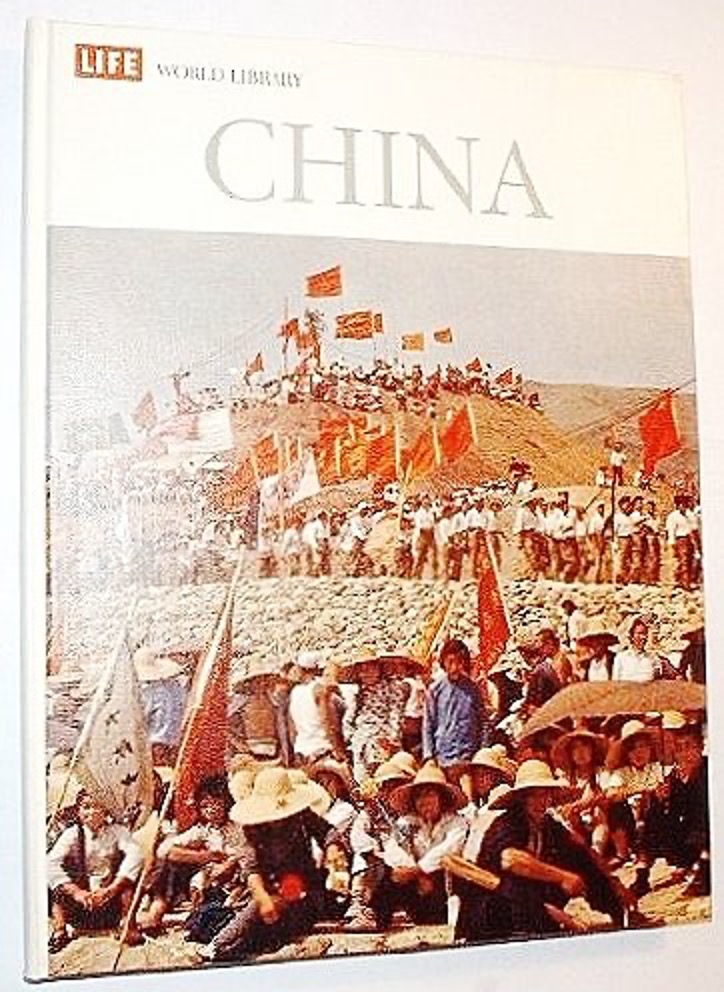
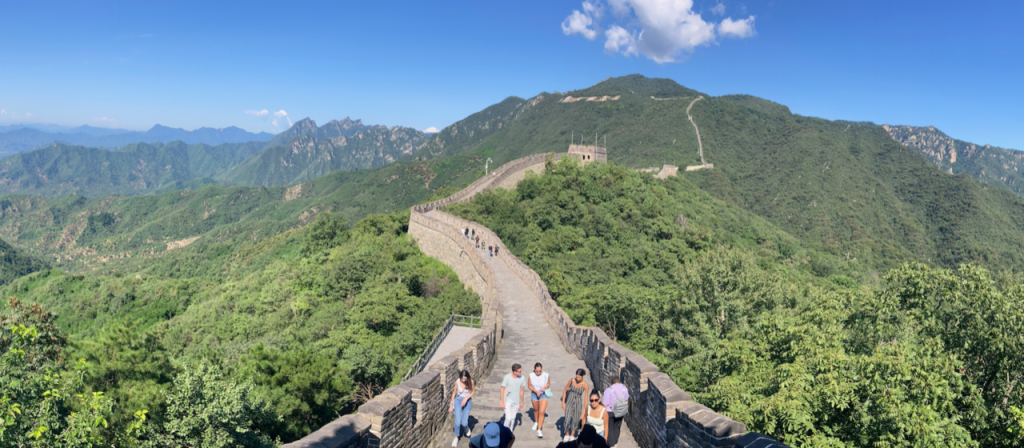



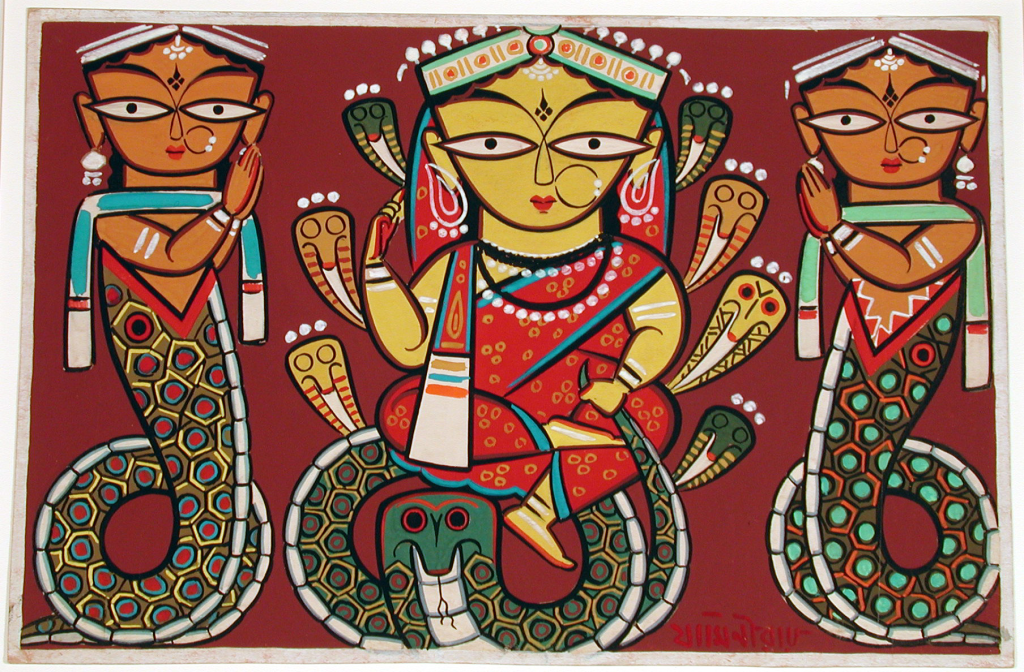
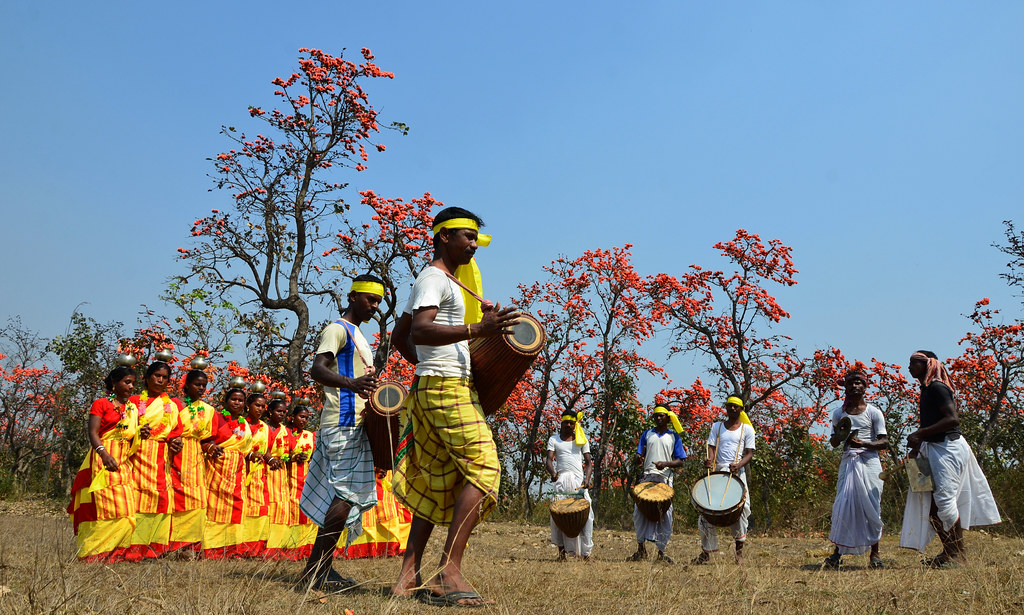

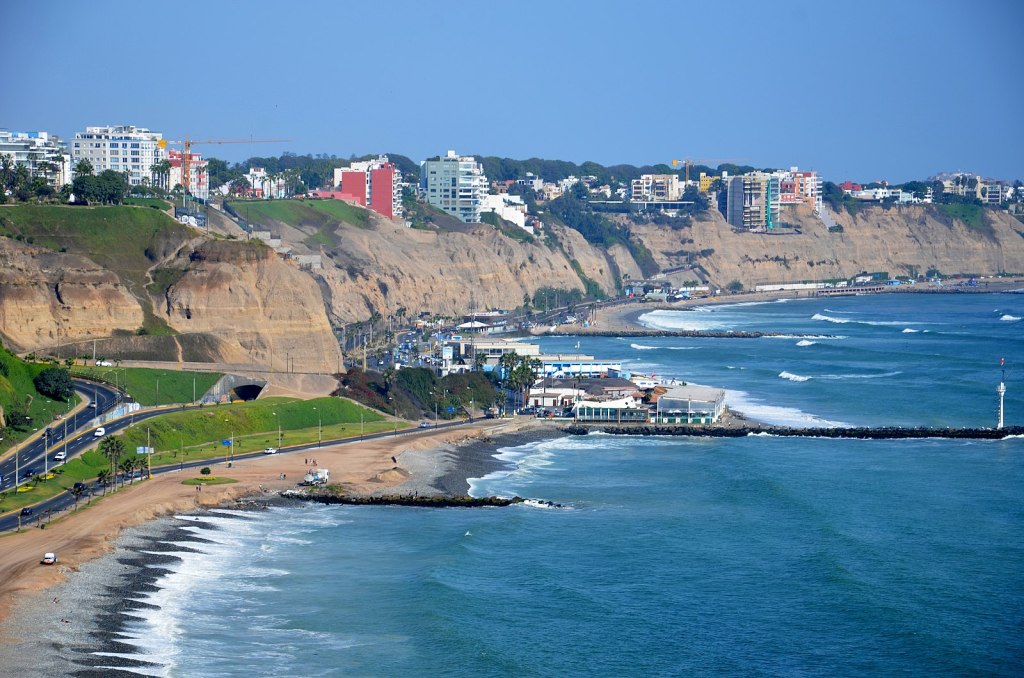
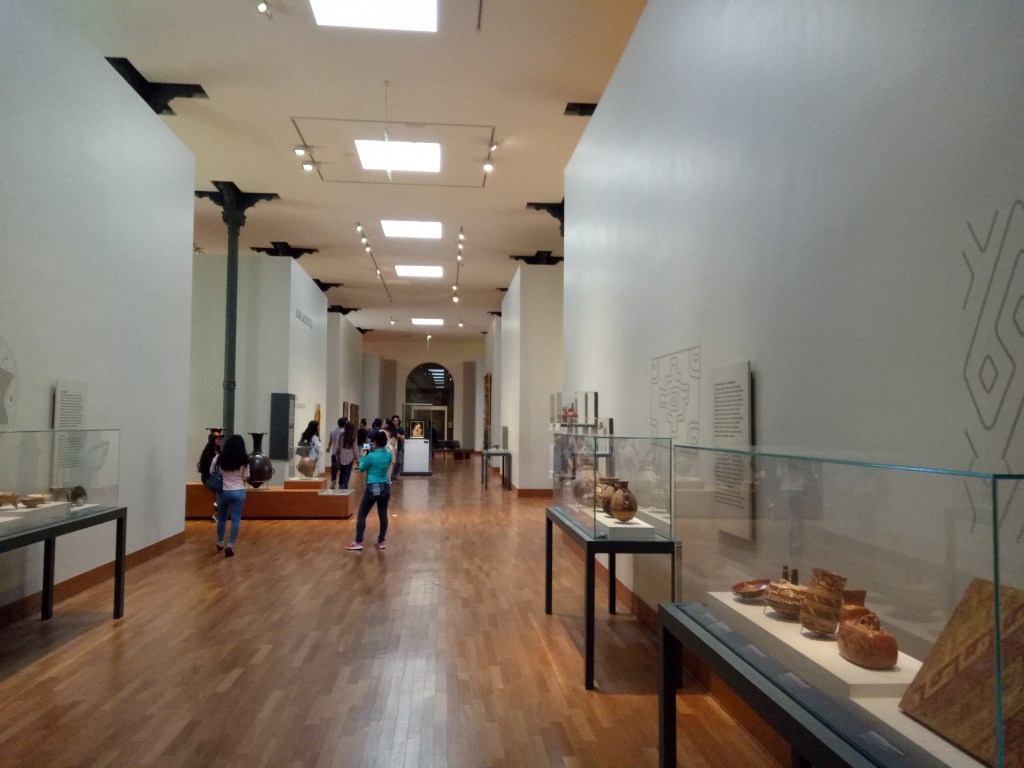

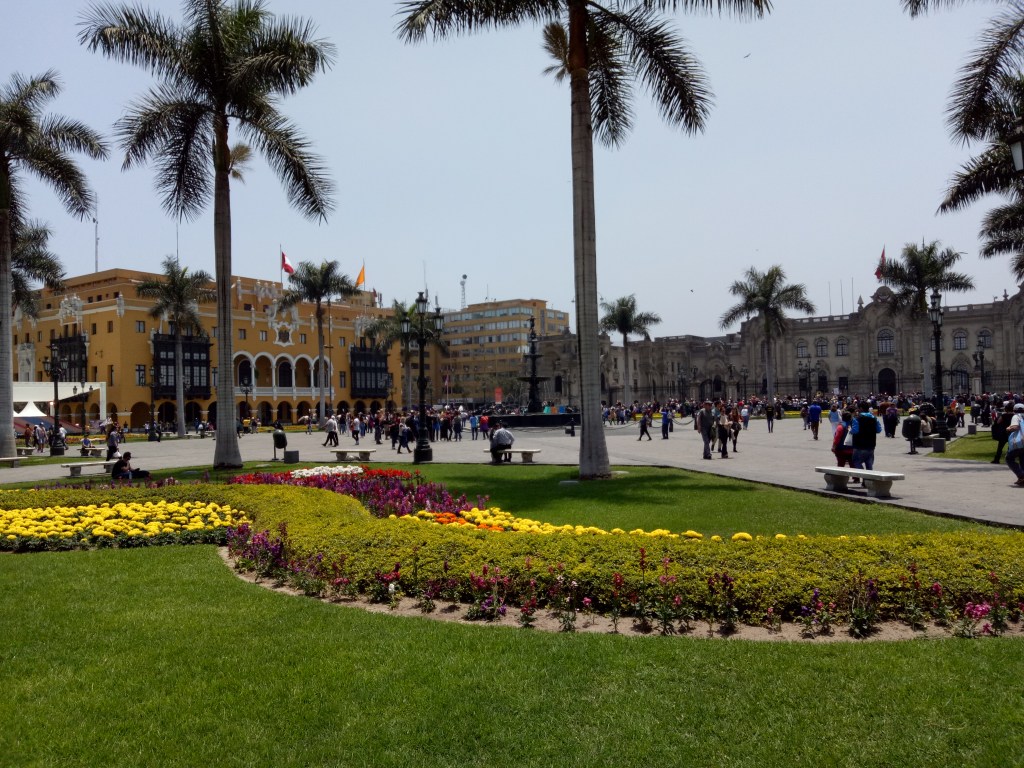

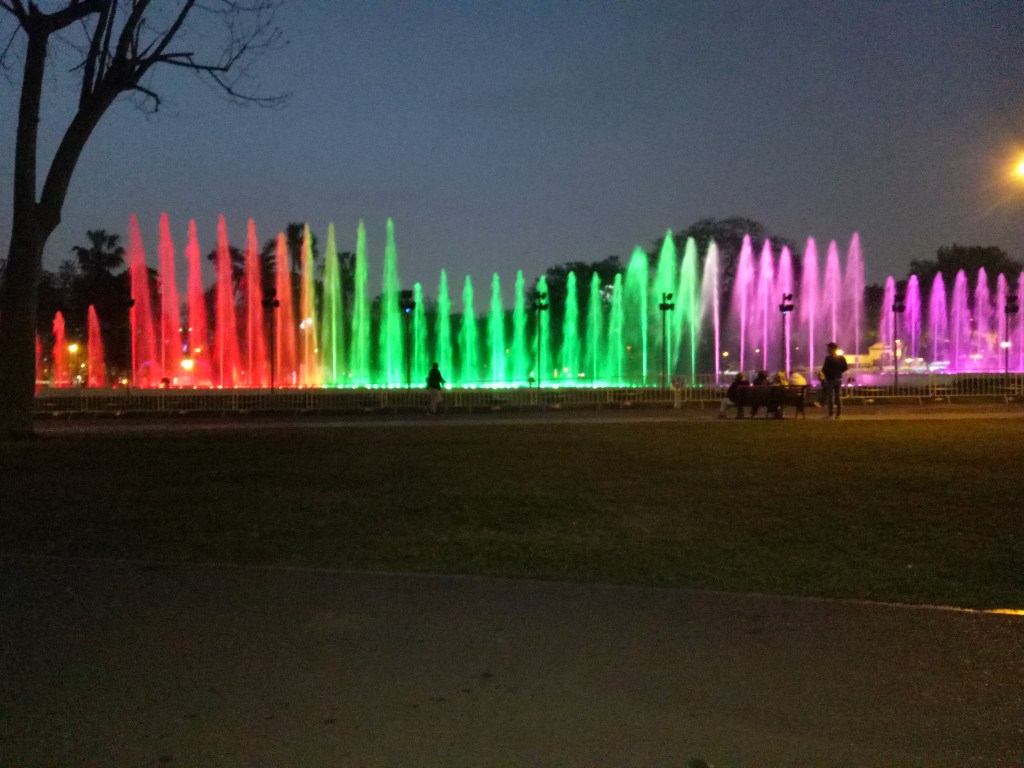
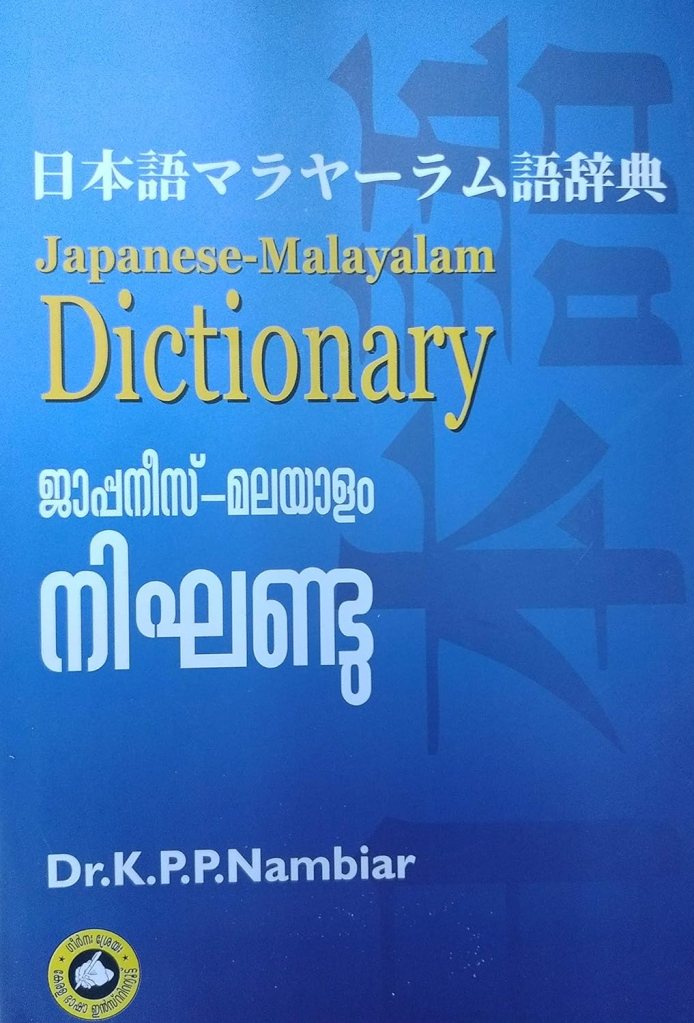








 Borderless