Unlike the rowdy reveling in my native US, the New Year’s holiday in Japan is usually a solemn and sedate affair, spent quietly with family. Usually, schools and businesses allow a holiday of a few days.
My adult children had returned home from Kyoto and Tokyo, and we enjoyed an American holiday meal complete with roast chicken, mashed potatoes, lemon-flavored squash, and cranberry sauce. The next day, New Year’s Eve, we started in on the o-sechi ryori, the food traditionally eaten on January 1, and the following days. In the past, the woman of the house spent days preparing these special foods, each with a particular meaning. For example, fish eggs are meant to encourage fertility, and sweetened black beans signify good health. The food is beautifully arranged in lacquer boxes.
In our family, my Japanese husband has been in charge of the New Year’s cooking in recent years, sometimes with help from our children. This year, however, we opted to buy already-made o-sechi ryori. We gathered at the table and sampled the various delicacies, then watched a music competition show on TV — another traditional Japanese activity. All across Japan, many other families were doing the same.
According to the Chinese zodiac, 2024 is the year of the wood dragon. In dragon years, it is said that people can harness the creature’s powers to unleash creativity, passion, courage and confidence. It is thought to be the ideal time to achieve one’s dreams, a time of hope and opportunity.
The aftermath of Noto Peninsula Earthquake in Japan that struck on 1st January 2024
My family and I awoke on January 1st, feeling renewed and refreshed, ready to continue pursuing our dreams. However, our moods changed when an earthquake occurred that afternoon in Ishikawa Prefecture. TV broadcasts were interrupted by frantic voices telling those in the affected area to evacuate immediately and to take cover. All across Japan, we were reminded of the devastating earthquake and tsunami of the Great East Japan Earthquake on March 11, 2011 which claimed nearly 20,000 souls (with many more remaining missing). I remembered, as well, being shaken awake in our fifth-floor apartment by the Great Hanshin Earthquake of January 17, 1995, during which 6,434 people were killed.
Although the loss of life in Ishikawa (still being tallied as I write this) has not been quite so severe, the devastation displayed on TV, in newspapers, and online is heartbreaking. We have heard of middle-aged parents who lost their two daughters who were home for the holidays, of thousands whose home were reduced to rubble, of hundreds of people in an evacuation center with only two toilets. The day after the initial earthquake, a Japan Airlines plane crashed into a smaller Coast Guard plane on the runway at Haneda airport. The latter was preparing to carry supplies to earthquake victims in Ishikawa. Again, my family was glued to the TV, unable to look away as the jet burned to the ground. We were relieved to learn that all crew and passengers escaped from the plane, but saddened by the deaths of five Coast Guard members who were seeking to help others.
Plane crash on January 2nd, 2024 in Tokyo
The foreign media often celebrates the resilience of the Japanese people: all those earthquakes and landslides and floods, and still they get on with their lives! However, Japan ranks only 54th on the 2022 Happiness Report, and suicide is the leading cause of death for men between the ages of 20-44 and women 15-34. The Japan Times reported in 2019 that according to a survey conducted by The Policy Institute and King’s College, London, only 24% of respondents in Japan agreed that “seeing a mental health professional is a sign of strength.”
Two of the first expressions that I learned when I first came to Japan were, “gaman wo suru” (“be patient”/ “endure”) and “shikata ga nai” (“it can’t be helped”). I came to understand that many Japanese have a sense of fatalism and helplessness, which might account for the general malaise in spite of Japan being a safe, peaceful, prosperous, orderly country with an excellent education system and exemplary healthcare.
During this past week, however, I have also been reflecting upon the changes wrought in response to disasters. After the 1995 earthquake in Kobe, schools stepped up their earthquake drills, and a disaster prevention center was established in our town. The school my daughter attended held a workshop on how to make dishes out of newspapers in the event of a disaster and began holding “disaster camps” simulating evacuation centers in the summer. Neighbourhood-wide disaster drills also increased, and signs were put up indicating sea levels and designated evacuation centers. Although it has been reported that evacuation centers in Ishikawa do not support those with disabilities, at least there is now an awareness of what needs to be changed.
Earthquakes and other natural disasters are unavoidable, but I admire the effort that the Japanese people put into mitigating their effects. My hope is that more and more people here will begin to understand that it is okay to cry, to mourn, to grieve, and to talk about our suffering. My wish for the Japanese people in the new year is happiness and the achievement of dreams.
Suzanne Kamatawas born and raised in Grand Haven, Michigan. She now lives in Japan with her husband and two children. Her short stories, essays, articles and book reviews have appeared in over 100 publications. Her work has been nominated for the Pushcart Prize five times, and received a Special Mention in 2006. She is also a two-time winner of the All Nippon Airways/Wingspan Fiction Contest, winner of the Paris Book Festival, and winner of a SCBWI Magazine Merit Award.
PLEASE NOTE: ARTICLES CAN ONLY BE REPRODUCED IN OTHER SITES WITH DUE ACKNOWLEDGEMENT TO BORDERLESS JOURNAL
Despite all odds, I will not sell Myself. I want to stand with everyone As a part of a queue. In the morning light, Shame should not sully me. May I be enlightened by the Permeating radiance. I will not sell, not sell Myself.
I will have a clear accord With the world. I will breathe in the breeze That flits in the open skies. My body will be purified by the Affectionate touch of the Earth. The trees will sway with the Delight I experience. I will be content with this Accord with the world.
I will care for others and feel happy In my heart. Let no discordant notes sound from the tunes of my bina*. Whatever I experience, give me the Strength to accept, let my Heart be filled with the joyousness Of the skies. May the wellbeing of others fill my heart With contentment.
A conversation with Gajra Kottary, focusing on her new short-story collection, Autumn Blossoms, published by Om Books International.
Gajra Kottary is an eminent screenplay writer on Indian television. She has had many awards and accolades for teleplays that ran into a few thousand episodes, including the very popular Astitva Ek Prem Kahani (Existence: A Love Story, 2002-2006). Trained as a journalist, she turned into a screenplay writer, and now, she opts to go back to writing books.
Her collection of fifty stories in Autumn Blossoms bloom through five hundred pages with an epigraphic verse at the start of each story summing up the intent of the narrative. The focus group of the content is mainly upper middle-class women in India—people who have studied in privileged schools and colleges, though there is a story about a tribal woman who “evolves” to be a leader. The language flows capturing the nuances of her characters, replete with their values, biases, and attitudes. The stories, like her tele series, bring to light not only societal issues but also the interactions between different economic and social strata within the country. They give a glimpse of the world she inhabits.
Forwarded by Anupam Kher, a well-known actor, director and producer, the narratives despite being women-centric are not feminist in intent. There is a story about a girl who while opposing the patriarchy of her married home, runs away to that of her guru only to discover he lives by even more stringent rules and has an extremely gifted wife who practically gave up her life to look after the needs and career of her husband. The turn of events is such that the protagonist returns home, changed in her outlook. The story in a way upends the current norms towards concepts like patriarchy and yet, it dwells on the strength that can be found among common women, women who are housewives and ostensibly live in the shadows of men. The character of the guru’s wife brings to mind Scarlett O Hara’s mother in Margaret Mitchell’s original novel, Gone with the Wind (1936).
The plots of the stories are involved. And each story takes you through a different world. It’s like you have lived the lives of umpteen women within the social constructs of India. You live through murders, weddings, divorces, parties, terrorist kidnappings and even revolutions! In the centre of it all, are the stories of all humanity with their varied moods and flavours, their loves, compassion, happiness, grief, disappointments, and achievements.
In her ‘Afterthought’ — what in common parlance would be afterword — Kottary tells us the name, Autumn Blossoms, is the “generic descriptions of the stories” in the collection. She contends she is “a firm believer in the fact that women, and for that matter men too, bloom and discover strength in the autumn of their lives. As do many protagonists in these stories, where autumn stands as much for the vagaries of age as for what they are experiencing in life which gives them a new perspective.”
There is a story behind the book told in the afterword… how all the stories were curated into this collection. Some of the stories from her earlier collections were redone by the writer to suite her current needs. As there were many stories, she tells us the editor, Shantanu Ray Chaudhuri, “suggested that we categorise them into three sections”. She further elucidates: “The first would be the section about women’s relationships with men. The second section would be women’s relationships with other women. The third would be about women’s relationships with themselves, by far the most complex of them all. Of course, there are bound to be overlaps – these categories have permeable boundaries, so that it is possible for one story in one category to resonate in another. That too provides a sort of unity to the entire collection – apart from the overarching commonality of women being at the centre of each narrative.”
We invite you here to read what the queen of screenplay has to share with us about her journey as a writer and also on her current book, Autumn Blossoms.
Since when have you been writing? Tell us about your writerly journey.
I have been writing ever since I learned to write – quite literally. Ironically as a kid, like many silly things kids do, it was about trying to connect thoughts and make them rhyme in poems. I went to a convent school but more than my English poetry, it was my Hindi writing that got noted. I edited the Hindi section of our school magazine and I always knew I would end up with some sort of career in writing. Then in college, I tried my hand at writing middles and short journalistic pieces for The Times of India, Hindustan Times and some evening papers and women’s magazines. I was emboldened when they got published. So I did the next best thing for those times. I enrolled for a journalism diploma at the Indian Institute of Mass Communications. The course was great, but when I got down to brass tacks, I didn’t enjoy myself at all – reporting and subbing were not my scene at all. I did it for a while, but then took a motherhood break since I had married by then. My break and the quietude it brought helped me to analyse where I was going, helped me find my true calling within writing … which was fiction.
Short stories, published in 2003Novel , published in 2014
Starting with two short-story collections, I soon moved to writing for film and television and it consumed me completely for more than a decade. Until I realised that I also needed to write purely for myself too. I wrote my first novel in 2011 and have written three more after that, simultaneously with my TV work. The former has no deadlines beyond the self-imposed, while TV is all about deadlines so it’s a great mix.
What gets your muse going?
Random thoughts triggered by happenings around … whether it’s in the news or through people’s conversations around. Basically the ‘what ifs’ part of any incident or happening is what triggers the chain of a story in my mind. There is a lovely term in Hindi called ‘udhed-boon’. By now my mind is attuned to churning the thoughts around the ‘what ifs’ to design it into a tale. One has learnt to also decide to design the idea around as a story for a TV show or a short story or a novel. For most of the time, the idea itself speaks in a manner that can be easily identified or slotted. For example, when I read about the phenomena of bride buying in Haryana, I knew I could write a whole TV show around it – so Molkkiwas born. Similarly the concept of age difference in marriages … it’s thematic and therefore lends itself to exploration of its myriad aspects and nuances through a long-format series like Astitva and Na Umr Ki Seema Hodid. Similarly, most of the short stories in Autumn Blossoms are short tales that can’t be stretched very long, or else they would lose their punch.
A soap that focussed on the hunt for a woman’s identity (2002-2006)A TV series centred around exploring Molkki, an Indian tradition that involves marrying off poor girls to a wealthy man in exchange for money (2020-2022)
Tell us briefly what made you opt towards moving back towards books when you are a well-known screenplay writer?
That’s my favourite question to answer. When you write for the screen you train to be collaborative. To cooperate, convince and compromise. Since the ownership of the final product is going to be shared, democracy is the need of the medium.
Published in 2011
But it is important for a writer to be in touch with their solo voice to know what it sounds like, apart from coping with the cacophony of many voices involved in screenwriting. In fact I don’t really understand why more scriptwriters don’t feel this urge to have their individual voices heard and write for print too. It is a most empowering and self-affirming thing to do, but maybe scriptwriting is so tiring that inertia creeps in.
As far as I am concerned, I desperately needed to hear my own voice after more than a decade of collaborative writing, although I started writing short fiction way before scriptwriting. So, I finally wrote my first novel in 2011. I really loved the process though it was an edgy and confusing one all through. Once I had written Broken Melodies and gauged for myself what it added to my skill set, I made a habit of periodically hearing my own voice, along with participating in the chorus of the songs of scriptwriting.
How is writing a book different from writing a screenplay?
I am not a ‘go with the flow’ writer and need to have my goal or destination in sight before I embark on writing a new story. In that sense the process is the same for me in both kinds of writing. But after having done that basic planning for structure, while writing a book, spontaneity takes over. While writing a screenplay one has to be so much more conscious of the craft and style, the judicious part of what ideas to keep and what to discard. In a book one looks at editing much later. Although every good story should have the three-act structure working quietly in the head of the writer, I find that a book or writing for television has most of its texture in the mid portion. The first and third acts are the bookends, the former is a diving board and the latter is a climb to the crescendo. If one can get the middle right, one is sorted. Writing a book is like taking a walk in the park or the open … there’s unpredictability, adventure, mystery, open skies, fresh air to breathe and sights to savour on the way. Scriptwriting is much like walking on a treadmill – you get the required exercise and benefit but it’s not like an entire life experience.
By what I gathered from your ‘Afterthought’, these are stories that have been written over a period of time. How old is the first story and how recent the latest story? What made you think of bringing them out as a collection now?
Yes, these are virtually all the stories in the category of short fiction that I have ever written, including audiobooks. My last published collection of short stories came out in 1996, which is therefore nearly thirty years ago. The audiobooks are fairly recent. Many were written more than a decade ago when I was in between full-time writing for TV. And the last two were written a few weeks before the book went to press, so that we could reach the magical number of 50!
About the reason of bringing them out as a collection. Well it’s every writer’s dream to have a lifetime collection out, I wasn’t actively working towards it.
This book has happened solely because of its editor Shantanu Ray Chaudhuri. He is also a columnist and was writing a piece on my writing journey. As part of his research I shared with him my published, slim volumes of short stories. After he had read them – at record speed at that – he asked if I had written any more that were as yet unpublished. One thing led to another and now we have this door stopper of a volume titled Autumn Blossoms. Both Shantanu and I believe in short fiction, which frankly is challenging to sell. But the challenge is what has driven us both to bring an entire compendium out. Frankly, logically there is no real reason why short fiction shouldn’t be selling even more than novels, in these days of shorter attention span.
Why did you feel the need to have epigraphic verses at the beginning of each story? Are these epigraphs your first attempt at writing poetry … you mention in your ‘Afterthought’ they got you in touch with the ‘closet poet’ in yourself?
The idea to have epigraphic verses at the beginning of the stories was again an innovative suggestion that came from Shantanu after he read some lyrics that I had written in Hindi, and a few in English. They had all been commissioned lyrics, for music albums and the odd theme song for my own shows on TV. Shantanu is quite a poet, having published his poetry too. For me, it was like going back to my early days as a writer who had tried out all genres before I settled for quintessential storytelling. Writing these quatrains was some work and a lot of fun too and discovering the closet poet in myself gave me something to look forward to doing as an option for the coming years. A retirement activity when I perhaps won’t get story ideas anymore. It also gave me a kind of perspective of the essence of each story that I might not have made the effort to analyse otherwise.
Is your writing impacted by any writer, art or music?
My father was a classical musician, though I never pursued music. I love to listen to his music, as well as soulful Hindi film music, and for me the lyrics are as important as the melody. I love Hrishikesh Mukherjee’s films and their music and my regret over the last few years is that I have not been reading as much as I should or would have liked to. I used to love Roald Dahl, Manto, Jane Austen, and most of all Tagore. In recent times I was bowled over by Elif Shafaq’s Forty Rules of Love. I suppose when one admires an art form or artiste, influences do seep in, in terms of both style and content, so all these people’s works have impacted my writing. And also, the aspiration to be as impactful as they have been, since they have been influential across art forms.
You are writing a novel too. Tell us a bit about the novel. Would they too have something to do with these short stories?
Published in 2017
I am almost ready with two novels. Both have male protagonists at the centre which is unusual for me. They are both very different stories from each other. One is a slice-of-life story that is light-hearted in its telling – quite a challenge for me actually – and is tentatively titled Sibling Revelry. The other is a thriller, also a social commentary. It’s tentatively titled Bonds and Bondage. Both the stories, like my earlier novel Girls Don’t Cry have their roots in stories from Autumn Blossoms, that tugged away at me to develop them more, which I eventually did. My forthcoming novels are broader versions of the stories titled ‘Hello, Goodbye’ and ‘Sugar and Spice and All Things…’ respectively.
I don’t know whether this happens with other writers, but this crossover writing does happen with me at times, as I write across media and genre. By now I have come to enjoy the process of finding more and more layers to my own story as I develop some of them from one medium to another.
There are yet some more stories in Autumn Blossoms that I didn’t see as possible novels when I wrote them. But in the process of revisiting them for the collection, I feel they merit a longer format … ‘Friends Indeed’ is a case in point.
What is your favourite genre as a writer?
Honestly, there is no favourite genre. They are all flavours of the season, and I don’t mean that in a disparaging way. Currently it is the short-fiction genre, but I know that it will be my new TV show next and when that hopefully settles, my novels will draw me to them. I guess this makes my imagination more agile, though when there is an unplanned overlap of projects, I get very tired and these days, I get anxious too as energy levels are not as high as they were a few years ago.
What can we expect from you in the near future – more books or serials or both?
God willing, there should be both, but I need to calibrate my involvement in both spheres. I am going to distance myself from the very tiring process of everyday series writing. Though of course, I will still be involved as I am experienced and can bring some wisdom to the table. I dream of writing books at a more leisurely pace; quite literally blossoming in the autumn of my life.
Thank you for the wonderful answers and your writings across the screen and in books
(The online interview has been conducted through emails and the review written by Mitali Chakravarty.)
PLEASE NOTE: ARTICLES CAN ONLY BE REPRODUCED IN OTHER SITES WITH DUE ACKNOWLEDGEMENT TO BORDERLESS JOURNAL.
Samya (Equality) by Nazrul, translated from Bengali by Niaz Zaman
I sing the song of equality –

Of a country where fresh joy blossoms in every heart

And new life springs in every face.

Friend, there is no king or subject here,

No differences of rich and poor.

Some do not feast on milk and cream here,

While others grovel for leftovers and broken grains.

No one bows before the feet of horses here,

Or before the wheels of motor cars.

Disgust does not arise in white men’s minds here

At the sight of black bodies.

Here, in this land of equality,

Black and white are not buried in separate graveyards;

Nor do black and white pray in separate rooms and churches.

In this land there are no footmen or guards,

No policemen to evoke fear.

There are no conflicting religions here,

No cacophony of conflicting scriptures.

The priest and the padre, the mullah and the monk

Drink water from the same glass here.

The Creator’s house of prayer

Is contained in the human body and mind here;

Here His throne of sorrow

Is formed by human suffering.

He responds readily here

To whatever name He might be called,

Just as a mother responds readily

To whatever name her child might call.

No one comes to blows here

Over the different apparel one wears –

Payjama, trousers or dhoti.

Clad though in soiled or dusty garb,

All are happy here.
Born in united Bengal, long before the Partition, Kazi Nazrul Islam(1899-1976) was known as the Bidrohi Kobi, or “rebel poet”. Nazrul is now regarded as the national poet of Bangladesh though he continues a revered name in the Indian subcontinent. In addition to his prose and poetry, Nazrul wrote about 4000 songs.
Niaz Zaman is an academic, writer and translator from Bangladesh. She has published a selection of Kazi Nazrul Islam’s work in the two-volume Kazi Nazrul Islam: Selections. In 2016, she received the Bangla Academy Award for Translation. This translation was first published in Kazi Nazrul Islam Selections 1, edited by the translator and published by writers.ink in 2020.
.
PLEASE NOTE: ARTICLES CAN ONLY BE REPRODUCED IN OTHER SITES WITH DUE ACKNOWLEDGEMENT TO BORDERLESS JOURNAL
Ratnottama Sengupta relives the fascination of Sukumar Ray’s legendary Abol Tabol, which has just completed its centenary
Sukumar Ray (1887-1923)Abol Tabol
Sukumar Ray, the creator of Abol Tabol[1], came into my life long before Upendra Kishore Roy Chowdhury, the author of Goopy Gyne Bagha Byne. Pather Panchali, the timeless novel, cast its spell when I outgrew the ghost stories penned by the father for kishore-kishoris, the young adults of Bengal. And Satyajit Ray, Sukumar’s son, became an icon only after I got my primary lessons in film viewing.
But, to go back to the beginning: I was a pravasi toddler growing up in Bombay when I would lisp, Baburam Sapure, kotha jaas bapu re/ Where are you off to, snake-charmer Baburam! And I’d recite, Ramgarurer chhana, haanste taader maana[2]! No no no no, we shall not laugh, I’d say, trying to choke my own laughter at the thought of forbidding laughter. For, by now, I would also fondly spout, Maasi go maasi, pachhe haansi – Neem gaache tey hocche seem… Aunt dear Aunt, I’m rolling in laughter that broad beans are growing on the neem tree! The mushroom wants to be an umbrella for the elephant, and a crow’s hatching the egg of a stork! Yes, I would laugh too as I recited these lines. For I had learnt that contradictions are funny.
RamgarurHunko Mukho HyanglaIllustration made by Sukumar Ray in Abol Tabol
There were other poems that I learnt by rote without knowing they were limericks, not mere rhymes. Some, I later realised, told stories; some were satires aimed at Sukumar’s own Banga samaj – the Bengali society – and some were oblique critiques of the Imperialists then Lording over his land. Hunko mukho hyangla, bari taar Bangla, do you know his dour-faced compatriot? And have you encountered the three pigs maathay jaader neiko tupi? The three pigs wearing no hat!
But most of all, his critique of his compatriots comes through in Sat Patra, A Suitable Boy. I won prizes for reciting it, long before I understood the critique of a Bengali father’s keenness to marry off his daughter to a ‘suitable boy’ – even if the proposed groom is dark or deaf, drunkard or devil…
It took years of growing up, in the literary family of Nabendu and Kanak Ghosh, to realise that some of the lines I heard every day were not abol tabol katha, mumbo jumbo words spewed out perfunctorily. So, my mother never took ‘No’ for an answer: “Utsahey ki na hoy, ki na hoy chestaay?” She’d quote Haaturey to say, “what can not be achieved by enthusiasm and effort?” And if I screamed to protest, she’d simply smile and ‘admire’ like the he-owl, “Khasa tor chechani, how sensationally you scream!” While Baba, come winter, would keep repeating, “Kintu sabar chaitey bhalo, powruti aar jhola gur[3]!” Who would have thought of clubbing the daily bread of the rulers with the winter delicacy of the ruled rustics!
When I visited Kolkata, I often heard the phrases “Narad! Narad! (let the fight begin)”, “Gechho Dada (here now, off again now)”, and “Nyara beltala jaay ka baar (how often does a bald-pated man walk under the wood-apple tree).” And I wondered, did Sukumar Ray weave poems around the phrases, or did they become part of our colloquialism, thanks to Abol Tabol?
It was Baba who brought me alive to the literary merits of the verses sans sense. And even as I studied Edward Lear as a student of literature, I recognised that Sukumar Ray pulled off the harnessing of contradictions with as much ease as he surprised us with his endings. Ei dekho notebook, pencil e haatey,/ Ei dekho bhara sab Kil bil lekhatey[4]. Yes, Ray’s Kheror Khaata – handmade rough red cotton cloth wrapped scroll book — was overflowing with thoughts, words and illustrations. If he was talking of the lack of coherence in God’s own country, Shib thakurer aapan deshe, he was also making fun of Ekushey Aiin, The Law of 21, whereby Karur jodi gof gajaay, a man would have to pay a hefty tax for even the natural occurrence of whiskers! And Abaak Kando! How strange that he ate with his hand, se naaki roj haat diye bhaat maakhey!
Like Satyajit Ray’s reading of his granddad’s Goopy Gyne Bagha Byne,Larai Khyapa has nuggets hidden in the lines to protest the war mongering of nations. So, Saat German, Jagai eka, tabuo Jagai larey! And Paanch byata ke khatam karey Jagai Dada molo! Jagai, a homegrown brawny, alone takes on seven strapping Germans! And breathes his last only when the last of them is dead!
To conclude, I will quote Bujhiye Bola [5]and say, Ki bolchhili, esab sudhu abol tabol bakuni? Bujhtey holey magaj laagey, bolechhilam takhuni![6]
Didn’t I tell you, you need to read and re-read Sukumar Ray, to understand the truth lining his nonsense poems?
*
Khuror KolGonf ChuriDrawings of Sukumar Ray from Abol tabol
“Sukumar Ray’s drawings are a unique part of our art tradition. And Swapan Maity has dared to give sculptural forms to those two-dimensional line drawings.” It is tough to put in words the significance of these miniatures in terracotta, of those humour-induced fun-filled drawings of the quirky protagonists of Abol Tabol, said Partha Pratim Deb. The former Dean, Faculty of Visual Art at Rabindra Bharati University, Kolkata was speaking at the inauguration of ‘Ajab Kumar’, a weeklong exhibition of reliefs and miniatures in terracotta along with portraits of Sukumar, his father Upendra Kishore, his son Satyajit Ray, and grandson Sandip – each of them a legend in their own right. What made the portraits so special was that they were all done in a single stroke of one unbroken line.
Sukumar Ray – born October 30, 1887; died September 10, 1923 — is easily identified as a pioneer in Bengal’s literary art. His father was not only a writer, he played the violin, he painted, he dabbled in composing music, he was an amateur astronomer, and he was an entrepreneur in printing technology. Upendra Kishore Ray studied block-making, conducted experiments and set up a business in making blocks. His sister, Mrinalini, was married to Hemen Bose, elder brother of pioneer scientist Jagadish Bose, who was an entrepreneur of renown.
Sukumar too grew up to be an expert in Printing Technology. To master that, he travelled to London on a scholarship to train in Photography and Printing Technology at the School of Photo Engraving and Lithography. On his return, he worked to further the family firm, M/s U Ray and Sons, where he was involved with his brothers, Subinay and Subimal. And his sisters, Sukhalata Rao and Punyalata, too were involved in the magazine published by Upendra Kishore Ray, Sandesh[7], which carved a distinct place in the realm of children’s literature in Bengali.
Sandesh covers. The Journal was started in 1913
Born at the peak of the renaissance in Bengal when literature to art, religion to fashion, were all experiencing a regeneration after coming in contact with European lifestyle and industrial revolution, Sukumar had among his friends the literary genius Rabindranath Tagore, the scientists Jagadish Chandra Bose and Prafulla Chandra Ray, composer Atul Prasad Sen. Multitalented like his father, Sukumar was adept at photography and had joined the Royal Photographic Society. And apart from limericks, he wrote the stories of Pagla Dashu[8], technical essays on the new methods he had developed in halftone block-making in journals like the Penrose Annual, plays like Abaak Jalpan (The Curious Thirst), a wealth of literature for young readers in Khai Khai[9]. And within days of his passing was published Abol Tabol – mumbo jumbo that etched his name in the mind and heart of every child born to the language spoken by Tagore and Bankim, Nazrul and Sarat Chandra.
Pagla DashuKhai Khai
*
The year was 1993. Swapan Maity, thirty years ago, was a student in the Visual Art Department of Rabindra Bharati University on the campus housed in the ancestral residence of the Tagores at Jorasanko. When his other batchmates spent time singing, playing, painting or simply leg pulling their friends, Maity would tirelessly bury himself in crafting figurines in clay. Some of these figures had naturally different tint – pink or red earth – determined by their source, Ganga in Kolkata or the clay of Rangamati near his hometown Midnapore.
Once satisfied with the finish, the learner would lay them out in the long corridors of the heritage architecture to let them dry in the sun. Even his friends who teased him over his ceaseless devotion to sculpture were left speechless when they recognised the life-like recreation in lifeless mud of the snake charmer, Baburam Sapure; of Uncle’s Contraption, Khuror Kal; of Kumro Potash, the Pumpkin Prince; of the Theft of the Whiskers in Gonf Churi.
Kumro PotashBaburam SapureArt of Sukumar Ray in Abol Tabol
The expressive miniatures have added volume to the body of illustrations imaged by the genius of Sukumar Ray. The miniatures, unique then, are still a marvel. Reviewed in the popular magazine Desh[10]of April 9, 1994, they were exhibited in the closing month of 2023 – at Kolkata’s celebrated Academy of Fine Arts – to mark the completion of a hundred years of their creation in a Bengal – nay, an India that was ruled by the imperialist government in the name of King George V of Britain.
Along with the miniatures Maity – whose statue of Don Bosco is a landmark of Kolkata’s busy Park Circus area – had added a few relief sculptures to encapsulate the entire range of the satire robed in rhymes that amazingly continue to be repeated decade after decade by generation after generation, and still are so pertinent.
The Expressive miniatures of Sukumar Ray’s world by Swapan Maity in ‘Ajab Kumar’, a weeklong exhibition of reliefs and miniatures in terracotta. Photos provided by Ratnottama Sengupta
[1] Literal translation from Bengali: Mumbo Jumbo. First published on 19th September 1923
[2] Literal translation from Bengali: Ramgarur’s children, they are not allowed to laugh
[3] Bengali literal translation: But the most supreme food is bread with liquid molasses…
[4] Bengali literal translation: See the notebook, pencil in hand,/ See it filled with all squiggly writing
Ratnottama Sengupta, formerly Arts Editor of The Times of India, teaches mass communication and film appreciation, curates film festivals and art exhibitions, and translates and write books. She has been a member of CBFC, served on the National Film Awards jury and has herself won a National Award.
.
PLEASE NOTE: ARTICLES CAN ONLY BE REPRODUCED IN OTHER SITES WITH DUE ACKNOWLEDGEMENT TO BORDERLESS JOURNAL
At the end of December
in the year 2023
I wrote this poem about a bee
who held a key
in his little legs, delicately.
He flew to a door in a big tree
and turned the lock
in the trunk
with a dramatic clunk
and I’ll remember
for quite a while
how slender was his smile.
Behind the door
was a cup of tea
brewed especially for me
in a clean teapot
but strained afterwards through
a smelly old sock.
Plus a ginger biscuit like the moon
that took up most
of the room in the gloom
of the tree’s interior,
and I was grateful for these gifts.
“Thankee kindly,” I said to the bee
as I dunked and drunk
from the porcelain cup.
Then unexpectedly he said to me:
“Nothing is free
in this material world. That’ll be
six hundred rupees.
I will take a cheque, pay up now
or by heck there’ll be a mighty row
and you will never
see tomorrow.”
That, to my sorrow, is a true tale
and now I avoid tea
offered to me by bees in a forest.
And it is why
I only accept
cautiously at best
black coffee brewed by butterflies.
LOST LOVE
We parted near the marble fountain
in the twilight of a magic year,
she was a scientist at the university
and said I was too simple for her.
She also said I was far too small
to make the affair feel quite right,
that our love was just a game but I
was an intriguing specimen all the same.
Although I have not seen her since
and indeed I have now lost all hope,
I suspect she nonetheless is watching me
through an electron microscope.
Rhys Hughes has lived in many countries. He graduated as an engineer but currently works as a tutor of mathematics. Since his first book was published in 1995 he has had fifty other books published and his work has been translated into ten languages.
.
PLEASE NOTE: ARTICLES CAN ONLY BE REPRODUCED IN OTHER SITES WITH DUE ACKNOWLEDGEMENT TO BORDERLESS JOURNAL
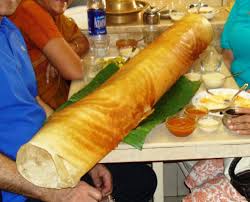
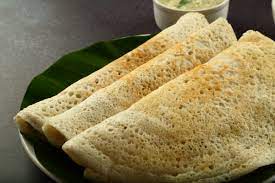
I went to Sri Lanka before I travelled to India. I wanted to travel to India but it turned out to be easier to go to Sri Lanka first. I supposed the countries would be similar, and in many ways they are, but there are significant differences too. Obviously, I only learned about the differences after I departed Sri Lanka and reached India. The first difference I noted is that dosas are better in India, or to be more accurate they are better in South India. I have no idea what dosas are like in the northern parts of the subcontinent. But in Sri Lanka I didn’t care for them very much. They were spongy, soggy and filled with cold mashed potato, almost as if the very notion of ‘crisp’ had been expunged from the minds of the cooks who made it. In India, conversely, I found the magnificent ‘paper dosa’, so crispy I only had to glance at it to make it crackle. Thick green chutney and filter coffee and paradise is near at hand.
In Sri Lanka the tuk-tuks are called tuk-tuks, as they are in Africa, but in India they are called autos, which is short for auto rickshaw. I don’t suppose it’s much of a difference, really. When I was in Sri Lanka I was told that drivers in India never stop for pedestrians who are crossing the road but deliberately try to run them over, so that they will be reincarnated as higher beings. In Sri Lanka, drivers are willing to wait for Nature to take its course. No point being reborn as an elephant or dolphin prematurely. What I actually found was traffic chaos on the highways of both countries, but India being much bigger has more chaos, of course. Nobody tried to deliberately run me over in either country, at least not to any noticeable degree, but I won’t make light of the dangers of walking along a road without a pavement. It is harrowing.
Autos in IndiaTuktuks in Sri Lanka
At least for me it is. I have always taken pavements for granted. I wonder if they have taken me for granted in return? Never again. Whenever I happen to catch sight of a pavement now, I feel like I am greeting a long-lost friend. “My dear flattened sir! Where have you been? And where are you going? Would you object to me walking with you for a spell, perhaps as far as the bookshop or the restaurant or the metro station? My, but you are looking well. And how are your little potholes? Off to college soon, no doubt! Ah, they grow fast. It seems only a week ago they were tiny cracks in the concrete and already they are yawning chasms. Good heavens, what is this? Motorcycles appear to believe you are an extension of the highway. How improper!”
Pavements are like paper dosas, they shatter at a glance. But this is true in both countries equally, India and Sri Lanka, and doesn’t constitute a difference. I am on the lookout for differences, not overlaps. Monitor lizards. Now that’s a thing! In Sri Lanka there are monitor lizards and although there may be monitor lizards in India too, in Sri Lanka, I saw them by the hundreds and none in India so far. Saree styles too. I don’t mean that monitor lizards wear sarees differently in these countries but that women do. I only know this because I was told it. To my untrained eye, they looked exactly the same, lengths of cloth wound around the body, somewhat complicated, like an ancient toga but more colourful. The existence of ginger biscuits is another difference. They are plentiful in Sri Lanka, but I haven’t located a single packet in India. Ginger biscuits shatter like paper dosas on pavements, so crispy are they.
Sarees worn the Srilankan waySarees worn the Indian way
India won its independence in 1947, Sri Lanka in 1948, which means that for about six months Sri Lanka was a part of the British Empire when India was free. Could those six strange months have had any lasting impact? Probably not but how can I be sure? Sri Lanka has squarish electrical socket holes, India has roundish ones. Sri Lanka has roundish ginger biscuits, India has none, probably because they don’t constitute a ‘square meal’. In India, ‘milk’ is a liquid that is derived from a cow, in Sri Lanka it comes from a coconut. A cow is a mammal, a coconut is not. However, milk was created by Mother Nature to feed infants. Cow’s milk was originally intended for calves while coconut milk was intended for baby coconuts. In India there are many festivals, in Sri Lanka fewer. In fact, there are so many festivals in India that I own a calendar which marks the days of the year that aren’t festivals. It’s easier.
Bookshops. There are many great Sri Lankan writers and I have been told that there are many bookshops on the island, but I didn’t see one. I searched for them in vain. Not a single bookshop anywhere! I must have been looking in the wrong places, but all the same it seemed mighty strange. I did find shops calling themselves bookshops that turned out to sell bottle openers or corkscrews, but I never found a place selling those flippable cuboids filled with words that one is pleased to read in the evenings. In India the opposite situation prevailed. There are so many bookshops that it is difficult to find anywhere selling corkscrews or bottle openers. There are shops that claim to sell corkscrews and bottle openers but in fact they sold books, highbrow literature mostly, none of it doubling up as a tool to uncork wine or give access to beer.
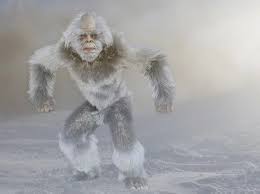
The final difference I wish to mention is one that is somewhat unfair to the phenomenon known as ‘temperature’. Let me explain. In Sri Lanka I boiled, it was hot all day, every day, and even at night it was very warm. The ceiling fans kept me comfortable and without them I should have turned into a human kettle with steam coming out of my nose and ears. In India I found the climate perfect, warm but not hot, and the ceiling fans were allowed to take the day off. Yet the reason for this marvellously cool India is simply that I was based in Bangalore, which lies at a fairly high altitude. Altitude makes all the difference, a truth that I learned in many countries along the equator. Roast on the coast, cool off in the hills. Go up, keep going, and you will eventually have snow on your brow, no matter your latitude. This is the philosophy of Yetis. And if anyone thinks I am obsessed with Yetis, I will admit it. Yes, I am.
YetiMonitor lizard, Sri Lanka
Rhys Hughes has lived in many countries. He graduated as an engineer but currently works as a tutor of mathematics. Since his first book was published in 1995 he has had fifty other books published and his work has been translated into ten languages.
.
PLEASE NOTE: ARTICLES CAN ONLY BE REPRODUCED IN OTHER SITES WITH DUE ACKNOWLEDGEMENT TO BORDERLESS JOURNAL
My wife watches flowers grow,
while I gaze at a cloudy sky.
She sees beauty.
I see darkness closing
like a lizard’s eye.
Soon it will snow.
She’s rooted in the earth
like an oak tree.
I’m always drifting
into outer space.
She says a rose has grace.
I tell her the moon
has a nasty face.
When I say tomorrow
Won’t be fair,
She isn’t listening.
She’s busy
trimming my unruly hair.
SEPTEMBER IN EARLY MORNING
Flowers have dropped their petals
like a child loses its toys.
Leaves are dry and wrinkled,
like an old woman’s eyes.
Summer has come and gone,
and birds which nested in my trees,
have left on their flight south.
My wife is in the ground.
This morning even her nagging
would be a welcome sound.
I don’t drink wine.
Drunken memories are unkind.
I drink a cup of bitter tea.
I have suddenly grown old.
I feel neither love nor pity.
I watch the moon slowly die,
but I can hardly see it.
It barely lights the sky.
George Freek’s poetry has recently appeared in The Ottawa Arts Review, Acumen, The Lake, The Whimsical Poet, Triggerfish and Torrid Literature.
PLEASE NOTE: ARTICLES CAN ONLY BE REPRODUCED IN OTHER SITES WITH DUE ACKNOWLEDGEMENT TO BORDERLESS JOURNAL
Reading stories of investors with the foresight to invest in the right kind of stocks that created wealth for them is truly motivational as it showcases their bravery. Without much technical data to support their decision-making decades ago, it is rather difficult to believe the sound fundamental homework they conducted before tossing their hard-earned money into the choppy seas of equity markets.
The sight of a charging bull on the road is certainly a fearful sight, but the bullish run on the bourses warms the cockles of the heart when you read your money has fetched four-fold, multi-bagger returns in just a few months and you wish to plough back the profits and stake the capital on another dark horse that only you know can pull off a major rally that takes all financial experts for a ride. You really wish God to whisper the name of the stock that can make you a billionaire and save you from the struggles and uncertainties of a writer’s life.
Not all writers churn out best-sellers to get hefty paychecks from publishers and there aren’t too many maharanis or dowagers left to sponsor an indulgent lifestyle in exchange of literary companionship.
Stock market, despite all the risks, offers a window of opportunity for writers to build a retirement corpus. There needs to be a smart sense of investing to get a rocking portfolio that draws envy from experts who wonder how this non-financial wizard operates. If profit is indeed imagination, writers are also entitled to imagine it in abundance.
Optimism and positive outlook is important as the stock market is similar to life in many ways. You have to be patient and stay invested for long term as those who saw their wealth perish during the recession of 2008 without suffering a heart attack were able to bounce back with double their earnings in just a decade. This is the most recent story of stock market success that is read out as a template to every investor who thinks it is the place to gamble away all you are left with.
The story of recovery is supported by facts and the financial experts give credible example of a modest investment of how a few thousands has given over fifty times in certain stocks and this makes you determined to try your luck when the EMI[1] lifestyle fails to leave behind much for you. Driven by the greed to grow wealth manifold, middle-class families now talk of mutual funds, IPOs, and shares. Homemakers and students also invest some amount in blue-chip shares to fund their lifestyle needs. With the share market giving handsome returns consistently, hopes are high that 2024 will repeat the successful rally seen in the previous year.
With elections lined up, the aspect of volatility is a concern. With nations going to war like having a tournament, nobody knows how this year is going to pan out. But the strong fundamentals of the economy and a robust banking system fuel hopes that even if it is a slower than expected, it would still be a good year for the stock market indices. The fear of another recession does not intimidate the small investor or the big player as diversification mitigates the risks involved. He continues to park his funds in the leading sectors promising double-digit returns.
For a salaried middle-class householder, the stock market makes it easy to meet the growing demands of his family without stress. Greed is no longer a bad word and a better option than trying out foul means to fund big dreams. This paradigm shift in the mindset is the biggest achievement in a decade.
Now you hear parents proudly declare they have bought blue chip shares of the best companies and leading banks to ensure higher education and marriage of their kids. With stocks entering the life of the new generation, the older generation is also forced to do a rethink. The liberalised economy with a huge market size is not going to make the banks fail. With retail banking turning out to be more attractive than corporate banking, with housing and car loans growing, it is most unlikely they will crash. The instances of recent bail-out by the government further cements the faith of investors.
Buy business class tickets with stock market gains and go for a holiday trip abroad. Relish the experience of five-star exotic dining with family and friends. Everything is possible if you scoop up a big chunk of profit by selling your shares. You do not mind spending it as the windfall gain came sparkling just like your Diwali bonus to sponsor your fancy outings. The ‘live for the day’ mantra makes people free from guilt as they know they have not wasted their hard-earned money but sponsored the treat with the profit earned from the stock market. Some divine force collaborates and delivers lucrative returns to make life a roller-coaster ride for you!
When it comes buying consumer durables, a similar mindset prevails. The stock option is the best way to bring home a smart LED or a side-by-side refrigerator by utilising the profit from the shares to avoid the pocket pinch. Meeting the rising aspirations, ranging from branded apparel to gadgets and luxury watches to durables, in the times of inflationary market trends without banking on a salary hike is quite within the realm of possibility.
Exercising prudence and displaying the tendency to create wealth for the long term, even if the shares do not deliver positive returns in the short term, there is always the scope to deny you have put it in the wrong basket and keep boasting that the fundamentals are strong and your research analysis says the chosen stock would soar twenty times after a decade of staying investing to deliver windfall gains. It is most comforting to forget the investment and continue with the journey to buy profitable stocks instead of mourning over the lost opportunity. Such is the philosophy of life that matches with the snakes and ladders kind of movement of stock indices. One has to move ahead in life and look forward to better times instead of mulling over the wrong choices and decisions made in the past.
When you see your driver or the housemaid trading in shares and offering you tips regarding the best picks for the day, it is time to realise you are a late entrant in a market that has already broken the class barriers with commendable success.
Devraj Singh Kalsiworks as a senior copywriter in Kolkata. His short stories and essays have been published in Deccan Herald, Tehelka, Kitaab, Earthen Lamp Journal, Assam Tribune, and The Statesman. Pal Motors is his first novel.
PLEASE NOTE: ARTICLES CAN ONLY BE REPRODUCED IN OTHER SITES WITH DUE ACKNOWLEDGEMENT TO BORDERLESS JOURNAL
Imagine a situation,

where Earth instructs the gravitational force

to stop wasting its energy

holding together earthlings…

Earth is not God,

yet it speaks against God’s own subjects.

The earthlings comprised of us --

we always come as primary --

then the animals, the flora

-- the trees, plants the shrubs --

and the pale green cloud of fungus,

the water, the seas, the oceans,

the rivers, the lakes with or without bunds,

dams, reservoirs, dead tree-trunks sprouting from under,

the loose sand, the tight sand, the clay, the quartz, rocks

tnd the angry embryo of core --

the magma, anything in that or any other order.


Imagine a situation,

where the gravitational force decides

to stop wasting energy…

We would all be flying -- away from one another,

trying to wrest air in our lungs, those of us living beings,

try and find happiness for the left-over period of our life --

which is the primary purpose of everything,

of being alive, of breathing and of being. In that short time,


we delight in listing our achievements,

listing them as pinnacles to the sun,

to the moon and to that God, who has no ear for trivia,

and to God’s keeper of records,

who watches earthlings disintegrate. Some atone, atone and atone--

atoning for everything, in no particular order,

for the fear of truth behind some halfwits propounding

that death would place us at the crossroad,

between hell and paradise in which we no longer have a say.
Saranyan BV is poet and short-story writer, now based out of Bangalore. He came into the realm of literature by mistake, but he loves being there. His works have been published in many Indian and Asian journals. He loves the works of Raymond Carver.
.
PLEASE NOTE: ARTICLES CAN ONLY BE REPRODUCED IN OTHER SITES WITH DUE ACKNOWLEDGEMENT TO BORDERLESS JOURNAL








 Borderless