Signing in the Air, Malashri Lal’s second poetry collection, announces itself as a meditative, non-linear poetic journey from the very outset. A poet, academic and critic, Lal explains in her preface, there is “no linearity in such a theme,” and the poems move instead through cycles of time, memory, myth, and lived experience. The seventy-six poems converse with each other and portray her meticulous craftsmanship.
The collection draws deeply from the Indian concept ofritu — the six seasons — while simultaneously acknowledging the disruptions of climate change and modern dislocation. Nature in Lal’s poetry is neither sentimental nor static; it is capable of both “ravage and rejuvenation,” a duality that becomes central to the collection’s philosophical stance.
The poet’s voice resists fixity. The lyrical “I” is deliberately “timeless, generic author, reader, witness,” allowing the poems to transcend individual autobiography and become collective meditations on human and feminine destinies. This makes the book not merely confessional but contemplative, situating personal memory within wider cultural and ecological continuums.
The five sections of the book do not function as isolated compartments but intricately connected that speak to one another.
‘Whispers of the Earth’ foregrounds the elemental: trees, rain, seasons, and landscapes, yet avoids pastoral nostalgia. Lal speaks to nature rather than about it, creating an intimacy that acknowledges environmental fragility without moralising.
‘Installations’ shift attention to material culture and memory. Objects, such as, old books, domestic utensils, inherited artefacts become repositories of time. Lal’s reflection on ancestral possessions, such as the hamam or the dol[1] for washing clothes, raises radical questions: have women’s destinies changed as technology has advanced, or have only the tools evolved while labour and inequality persist?
‘Echo of Myths’ is one of the most resonant sections, reworking mythological figures like Lakshmi, Sita, and Radha not as static icons but as evolving subjects. Lal’s engagement with myth is neither reverential nor iconoclastic; it is dialogic. Myth becomes a living language through which contemporary women’s struggles, endurance, and resilience are articulated.
‘Meditative Missives’ carries a distinctly philosophical tone. Time dissolves into moments of stillness, and poetry itself becomes an act of contemplation. Lal explicitly frames the volume as possessing “a meditative streak weaving through it,” where mind and body interact to create “kaleidoscopic images” that search for form and vocabulary.
‘Women Who Wander’ brings the collection into the socio-political present. Drawing upon the idea of the flâneuse, Lal reimagines wandering as a gendered act—women moving through cities, histories, and emotional terrains. These poems reclaim mobility as agency and witness.
Lal’s language is marked by clarity rather than excess. Her metaphors are precise, often luminous, and grounded in lived experience. The imagery functions kaleidoscopically: fragments turning to reveal new patterns rather than fixed meanings. Light, shadow, seasons, and movement recur as motifs, reinforcing the book’s concern with impermanence and continuity.
A powerful example of Lal’s ethical and spiritual engagement appears in the opening poem, ‘Invocation: Devi Stuti – The Divine Feminine’. Here, the feminine divine is portrayed as both creator and destroyer, compassionate yet fearsome:
She, the feminine power creates as well as destroys…
Evil seems to flourish and goodness struggles
but She knows whom to vanquish
in the final reckoning.”
The poem moves beyond ritual praise to a contemporary plea, invoking divine protection against “violence, brutality, torture of the everyday woman”. This invocation sets the moral and emotional tone of the entire collection, anchoring the personal within the cosmic.
A recurring concern in Signing in the Air is hybridity of place, language, identity, and time. Lal reflects on her own transitions between Jaipur, Bengal, and Delhi, embracing what critics have described as her ability to be “at home in her multiple worlds, and an outsider looking in”. This tension enriches the poems, allowing them to speak across geographies and generations.
Memory functions not as nostalgia but as ethical inheritance. The poet’s recollection of her grandmother—an early graduate of the University of Calcutta—foregrounds women’s intellectual legacies often erased from public history.
The book cover is understated yet evocative. The image of a silhouetted tree against a luminous sky visually echoes the book’s thematic preoccupations: imprint and erasure, presence and absence, rootedness and transcendence. The title Signing in the Air is aptly suggestive, writing that leaves no permanent mark yet insists on meaning.
In terms of physical quality, the book is finely produced. The paper and layout are reader-friendly, lending dignity to the text without distraction. The careful structuring of sections and the inclusion of preface, acknowledgements, and critical blurbs enhance the book’s scholarly and aesthetic value.
Signing in the Air is a mature, reflective, and deeply humane collection. Malashri Lal writes with quiet authority, weaving together ecology, myth, memory, spirituality, and women’s lived realities. The poems resist closure, inviting readers into an ongoing conversation, one that unfolds across seasons, histories, and inner landscapes.
Ultimately, this is a book that does not shout but resonates. It affirms poetry as an act of witness, meditation, and ethical imagination: truly, as Lal suggests, a way of “scribbling in the empty air where intimations of spirituality and social truth coexist without definable boundaries.”
By Hamiruddin Middya: Translated from Bengali by V. Ramaswamy
Babu, I am merely a poor Santhal. Please don’t take offence at anything I say. After all, we people who belong to the forest have always been losing. We are day labourers. We neither have nice houses nor do we possess any cultivable land.
Rangakul, Kusumkanali, Nabindanga and Mohulboni were all small Adivasi villages in the forest. Nearby were farmers, and people of the Ghosh, Mahato and Sinha communities. All the land belongs to them. We gaze at the sky in the hope of rain and cultivate a single crop. Some people have taken up the timber business and become rich and arrogant overnight. Why would they care about farming! It’s us who want to farm the land. A one-third share to the landlord, or else a monetary arrangement. We are poor folk, where will we get so much money! So, we cultivate the land on a crop sharing crop basis. But can one survive the whole year with that? The moment there’s no more rice for the cooking pot, we queue up beside the metalled road, wave out to any bus going eastward and get on board. After all, there’s no shortage of jobs there. With water from the canal available there, the fields yield golden paddy twice a year. By the grace of Marang Buru, all we want is to work our bodies so that we can feed our bellies.
When water is scarce at the edge of the forest where we live, famine looms. What’s new about that!
Singh babu is the big warehouse keeper here. He’s in the timber business. His house is at the fringe of the forest, across the railway line. It’s not a house but a fortress. He has done well in business with the help of his sons. Our men and women carry dry wood gathered from the forest to the babu’s warehouse across the railway bridge. He weighs our bundles and buys them. Even if the price is higher in the marketplace, who wants to go there if you have someone close by!
I cultivate a bigha-and-a-half of the babu’s land. It’s his warehouse that Lokha’s Ma carries wood to. There was a terrible drought this year. Fields, pastures and ponds were all parched, gasping for water. The paddy harvest was not good. The stalks were not tall. Just like a mother’s milk dries up if she is unable to eat, it’s the same with the ears of paddy. What will we eat the whole year? An unpared bamboo in the arse! How will I go to the babu and tell him?
I got the opportunity. Lokha set a trap somewhere and caught a waterhen. I told him, “Give me the bird, son. Let me give it to the babu.”
But Lokha did not want to part with it. “Why should I give it just like that?”
I said, “It’s not just like that, son. I have to make the babu happy, he’s very fond of bird meat. After all, we survive by cultivating his land.”
Who knows what Lokha thought but he did not argue any more.
I went with the bird at dusk. Singh babu was sitting with his son on a platform under the mango tree in front of the warehouse, he was doing some calculations. As soon as he saw me, he exclaimed, “Arey[1] it’s Hansda! What’s that in your hand?”
I went close to the babu. The babu studied the bird and exclaimed, “Wow! You’ve brought a waterhen!”
The babu never called me Sanatan Hansda, only Hansda. I could see that he was very happy to get the waterhen. His middle son, Haru, took the bird from me and left. Their house, surrounded by walls, was just behind the warehouse. I sat down below the platform.
The babu asked, “Has the paddy been threshed?”
“Babu, that’s what I came to tell you about. All the paddy has been destroyed in the drought! After threshing the remaining stalks, I could only get six sacks of paddy.”
The babu’s face turned grave. He blurted out angrily, “What the hell are you saying, bastard! Six sacks? I went to the field and saw for myself, it was full of swaying stalks.”
“Yes, babu, it was like that then. But there was no rain in Magh[2]. The plants began to droop after that!” I pleaded with the babu.
“Enough of your nonsense! Haru will go tomorrow and see how it’s only six sacks. Don’t try to be cunning!”
“Sure, send him then, babu. I am not telling you lies.”
Haru didn’t come. The next day, Singh babu himself arrived in haste. He came in the middle of our festivities. I was anxious wondering where I would ask him to sit, and what I would feed him. All of us, men and women, drink hanriya [3]and dance. Ours is a small village. We can’t afford to buy a dhamsa or a madol. We had everything earlier, but they broke long ago. When the boys and girls of the village grow up and it’s time for them to get married, we get those drums on rent. During our festivals, the boys in the youth club play music on the mic. We dance to that. Seeing our song and dance, Singh babu later whispered to me, “Give me a glass of hanriya too. Let me try it. But mind it, don’t tell Haru!”
“Oh no, babu. Don’t worry about that. Have as much as you want.” I thought it was funny. The father drinks out of his son’s sight. After all, we have none of all that. Father and son drink together to their heart’s content.
Why were Singh babu’s eyes so bloodshot today? I was scared. I said to him, “Come, come babu. Come inside and sit comfortably.”
The babu said angrily, “I haven’t come to sit, Hansda. Show me the paddy quickly.”
So, I showed the babu the paddy. He looked at me sternly and asked, “You haven’t hidden it somewhere, have you?”
“No, no babu. I would never do something like that in my life,” I said, holding my ears with my hands. “Why don’t you ask someone?”
“Chandmani and Gona Murmu got a good harvest. What kind of farming are you doing?”
“They got a pump-set from somewhere and irrigated their fields twice. There’s a shallow tubewell in the field there.”
The babu was about to leave with a sullen face. I said to him, “Let us keep the crop this time, babu. It’s a meagre harvest. My family can survive for a few days with that. I’ll repay you next time.”
The babu came to a halt with a start. He lowered his voice, and said, “Why should you go without food – am I not there! You have a young wife at home. Send her to the warehouse in the evening. After all, you can’t send her when people are around!” And saying so, the babu left. There was a strange smile on his face. Seeing that smile, my chest heaved. What on earth did the babu say before he left! How could I send Lokha’s Ma to the warehouse with wood now?
2
There was a fair in the nearby village of Mohulbani. As the Shalui festival is not celebrated with much fanfare in our village, it’s to the fair in Mohulbani that everyone dresses up and goes. There’s a cockfight every year during this time. This year, I too was a hauchi. Someone who participates in a cockfight is called a hauchi. I had never put a cock to fight. But the idea of doing that during this year’s festival caught my fancy.
Lokha’s Ma had brought the rooster as a tiny chick from her father’s house. I saved it so many times from the jaws of wretched mongooses and civets. It was big now, and sparkling red in colour. It crowed, konk konkkor konk, in the semi-darkness of dawn. Hearing its crow, the birds on the trees then began chirping. It hovered around every hen in the village, all by itself. It walked with its chest puffed out, as if it was the king of the forest. If such a rooster could not fight, then why on earth was it born?
Lokha tugged at my lungi and demanded, “I’ll go too, Baba. Take me along with you to see the fair.”
Lokha’s Ma said, “Take him along. He’s my little boy. On a festival day, he’ll go to see the fair, he’ll eat jilapi[4], but no – what kind of a father are you!”
“All right. Come along then.”
Mustard flowers were in bloom in the fields. It was yellow everywhere, both on the lowlands and the uplands. After all, it was a festival of flowers now. Men and women, old and young, were walking to the fair along the narrow boundary ridge. Some raced along on bicycles on the red laterite road, ringing their bells, kring kring. Close to the forest was the field known as Bhangatila Maath, which was where the fair took place. Shops with captivating wares, flutes for children, toy drums. Such a variety of food items, telebhaja[5], jilapi. Earthen pots and utensils were selling somewhere under a tree canopy. Rows of bicycles and pick-up vans were elsewhere. An old Santhal man was going around selling bamboo flutes. He himself was rapt in the melody he was playing. There was a cloud of red dust. Girls and young men were walking around holding hands, disregarding the dust. The crowd at the fair was made up of people from all the nearby villages.
Was it only Santhals? No, babu folk too had come to have fun. Everyone was dressed in new clothes, looking their best. Girls had applied mahua oil on their hair and parted their hair, with wildflowers adorning their coiffure.
Hidden away from the fair, in a clearing inside the forest, there was a crowd of people. That’s where the cockfights took place. It used to take place in the fair ground itself earlier. But a few times, police vans had arrived and pulled down everything. It has moved its venue into the forest ever since. I went there with Lokha. Sal-wood poles had been planted, and the spot had been encircled with a rope. Everyone was standing around the rope, Some of them were hauchis, with roosters in their hands. Others had come only to watch.
I asked Lokha to stand under a tendu tree, and told him, “Don’t go anywhere, son. Just stand here and watch the cockfights. I have to find us an opponent.”
I was going around with my rooster, looking for an opponent, when a suited and booted babu with a camera on his shoulder pushed his way through the crowd. Everyone gaped at the man.
A few kaatkaars, those who tied blades to the roosters’ feet, had gone into the enclosure through the boundary rope. Seeing the babu, they said, “Hey babu, what business do you have here? You want to publicise the cockfight? Stop taking pictures, we warn you!”
The babu put his camera into his bag following the threat.
As I went around searching, who should I encounterbut Singh babu — a pleasure-seeking man indeed! He frequently participated in cockfights to indulge his fancy. From time to time, he also wagered money on the days of the weekly market. There was a spirited rooster in the babu’s hands. Seeing me, he said, “What’s up, Hansda, have you brought one too?”
I nodded my head, and said, “Yes, babu. I did it for fun.”
“But you’re in bad times! So how come you’re indulging your fancy?”
Seeing the rooster in my hand, the babu’s rooster stretched its neck, fluffed the feathers on its neck, and glared agitatedly. When I had told the babu about the six sacks of paddy, the babu had glared at me in the same way. My rooster’s eyes too emitted fire. They were a fine pair, but how could I tell the babu that! He was a well-known man, why would he agree to a cockfight with me?
The kaatkar Hiralal, from Panchal was nearby, tying blades toa rooster’stoes. Seeing our two roosters, he burst out, “The two make a fine pair! Why don’t you get them to fight?”
Had Hiralal lost his head or what! What’s this he was saying! Would someone like Singh babu agree to a cockfight with my rooster! I was a poor Santhal. I survived by farming the babu’s land. But I was astonished to hear the babu’s response.
“Hey Hansda! Are you willing?”
I replied hesitantly, “Whatever you wish, babu.”
Hiralal began tying blades to the two roosters’ toes. We didn’t call them blades. The blades were known as heter. Kaatkars had arrived to tie the heter to the toes of all the fighting roosters. After all, there were so many roosters for the cockfight! If there had been only one kaatkaar, it would be night by the time the contests were over.
The rooster belonging to Budhon Ghosh, the ration-dealer from Harindanga village, was fighting now with the one belonging to Fatik Ghosh from Panchal. There was a circle made with lime powder within the roped-in enclosure. The two roosters were made to face each other within the circle. The roosters in the hands of other cockfighters in the crowd raised their necks and crowed. The cockfight was going to be a lively one.
Man playing the DhamsaMan playing the MadolFrom Public Domain
Meanwhile, the beats of the dhamsa and madol came wafting from the fairground. Intoxicated with mahua[6]and hanriya, our young men and women were dancing in a circle, hand in hand. A tide of joy washed over the hills. The whole forest was in a state of intoxication with the drim drima drim beat.
Budhon Ghosh won the cockfight. The spectators clapped and whistled to congratulate him. Fatik’s defeated rooster was his now.
It was our turn next. Singh babu and I entered the roped enclosure. We held the tails of the two roosters and stood them face to face in the middle of the lime circle. Singh babu and I too were face to face. These weren’t roosters! They were like magnets drawn to iron. They could not be restrained, they kept pulling forward. As soon as the whistle blew, fweeeet, we released the roosters. The fight began. They flapped their wings, torn feathers flew into the air. Neither of them spared the other.
When the babu’s rooster was overcoming mine, the spectators applauded, and cried out, “Singh babu! Singh babu!” Again, when my rooster was beating the babu’s rooster, a few spectators behind me excitedly burst out, “Hansda! Hansda!”
I was witnessing another battle. After all, the two roosters weren’t roosters. They were Singh babu and me. We were down on our hands and knees, both of us had become roosters. We were in an unflinching face-off. Behind me were rows and rows of Santhal men and women, mothers, brothers and sisters, standing with bows and arrows, battle axes, and spears in their hands. And behind the babu were row upon row of diku, as outsiders were known.
I suddenly heard the Santhals cry out excitedly, ‘Sanatan! Sanatan!’ I realised I had lost my concentration. I saw that my brave rooster had pierced his blade into the breast of the babu’s rooster and felled it. I had won!
I rushed and picked up the babu’s rooster. It was mine according to the regulations. The kaatkaar too had to be paid for fixing the blades. There was no end to Lokha’s joy! The next fight had already begun.
Lokha’s Ma had forbidden me again and again. “Hey, what if this fully grown rooster loses? How about indulging yourself with food only at the festival instead?” But I paid her no heed. How happy Lokha’s Ma would be now!
But as soon as I glanced at Singh babu, I had a strange feeling. Why had his face turned so ashen? After all it was merely a battle between two roosters…
I felt no joy despite having won. What had I done, oh dear! I had beaten the babu. How could I take his rooster home and eat it?
I said to Lokha, “Go, my son. Go and give the rooster to the babu.”
Lokha asked me, “Are you very angry? We won! So why should I give it?”
What was Lokha saying! That we won? After all, we had never been able to win! We had been beaten time and again, my dear! Ever since some distant time. What had I done now, oh dear, by beating the babu! My eyes turned moist. I went with the rooster to the babu.
The babu did not say a single word to me.
I said, “Hey babu! Take this. Let your boys have a feast. I have one already!”
The babu said, “No, Hansda. I won’t take a beaten rooster home.”
Hearing that, I shook my head. The babu patted my shoulder and said, “Let’s see what happens next year.”
Hamiruddin Middya was born in 1997 in Ruppal, a remote village in Bankura district in West Bengal. Born in a marginal farmer’s family, he has been in agricultural fields and farming from his childhood. His passion for writing started from his school days. He has worked as a domestic helper, a migrant construction mason, and travelled to rural fairs to sell wares. Hamiruddin’s first story was published in the magazine Lagnausha in 2016. Since then, three collections of his short stories have been published, Azraeler Daak (2019), Mathrakha (2022), and Ponchisti Golpo (2025). The story collection, Mathrakha, received the Yuva Puraskar for 2023 from the Sahitya Akademi, India.
V. Ramaswamy took up translation following two decades of engagement in social activism for the rights of the labouring poor of Kolkata. Beginning with the iconic and experimental writer Subimal Misra, he then devoted himself to translating “voices from the margins”, both in fiction and nonfiction. Besides translating four volumes of Misra’s short fiction, Ramaswamy has translated Manoranjan Byapari, Adhir Biswas, Swati Guha, Mashiul Alam, Shahidul Zahir, Shahaduz Zaman and Ismail Darbesh, among others.
PLEASE NOTE: ARTICLES CAN ONLY BE REPRODUCED IN OTHER SITES WITH DUE ACKNOWLEDGEMENT TO BORDERLESS JOURNAL
A real life narrative by Sumona (pseudonym), translated from Hindustani by Grace M Sukanya
Songs of Freedom bring stories from women — certainly not victims, not even survivors but fighters against the patriarchal status quo with support from the organisation Shaktishalini.[1]
–Sanjay Kumar (1961-2025), founder of pandies’
What I Don’t Know
If I had to choose a moment that changed everything, it would be when the police rang the bell at Nakul’s house. Or perhaps, when I found out that I was pregnant. But both happened within a few hours of each other so… maybe it was that whole day.
Or maybe it was when I was finally rid of the brothels? I am so glad to be out of it and it was Nakul who helped me do that, no matter what he did otherwise. I am grateful for that.
Or maybe when I found out that Sanjay was married. I didn’t believe it for the longest time. And I lost the only family that had ever cared about me because of that…
The First Mystery: Maybe sometimes it can be an accident?
My older brother was sick. They said someone gave him drugs, mixed in with some chicken, and he became an addict. The drugs ate away at him.
Even when I was a child – he was very sick. And he was the most important person to me in the world; my mother had died, my stepmother drank, and my father did bad things to me at night. (I don’t know whether he did it on purpose or accidentally… maybe he didn’t know what he was doing because he used to be quite drunk too?)
So, I had to save my brother somehow… I asked a pastor in my village to help me find work. He knew a couple in Sikkim, he said, who needed help taking care of their two children. I decided to go.
I was very young then. I hadn’t even started my periods. For the first couple of years, things were okay. I even came back home at the end of those two years, to meet my brother. He was still unwell and my employers had told me they’d send my earnings home as soon as I went back to work.
But when I did go back — the man started abusing me. And not like my father – he knew what he was doing because he told me to keep quiet about it or he’d kill me.
I used to believe him too. Of course, he could me kill me – and no one would know. Or even care. Even if I told anyone, who would believe me? His wife would obviously be on his side. And the pastor would scold me. I was ashamed, and I was scared. So, I kept quiet.
I also needed the money. I asked him to send it to my parents, so my brother could get treated. After a few days he said he had done it. Therefore, I kept quiet.
He used to do things to me so frequently that I was not able to complete my chores. His wife started getting annoyed with me. She started burning me with things. Once she did it with a hot pressure cooker. The burn festered and became large and infected.
It was he who took care of me then… He scolded her on my behalf, told her if something happened to me, they would be held responsible. And I don’t know how but he got the wound to heal faster somehow.
I escaped back to my village soon after that.
I came back and found out that my brother was still sick, despite the Rs. 12,000 [2] my employers had sent to my home for the two years of work I had done in their house. I went and asked the doctor why he had not been treated yet. He told me he had never received any payment for the treatment. Then I found out from others that my step mother had used the money to buy alcohol. I had to look for work again…
I finally told the pastor the truth about the couple. He was angry with them, and at first, I was relieved. But then he decided to call and confront the family, and tell them off. The lady told him that they were on their way to speak to me, and that I should not say anything to anyone else until they met with me.
Sikkim was 3 hours away from my village by car (there were no buses plying on this route) and I was terrified of meeting them.
I ran away from home a second time.
The Second Mystery: Can I have a home in city I don’t know?
There was a girl called Rekha in my village, my age, or maybe slightly older than me. She worked in Delhi and earned fairly well. I asked her if she would help me find work in the city too. I told her I had experience working as a maid and a nanny. She said that I could go to Delhi with her.
So when the pastor told me that my former employers from Sikkim were on their way, I hightailed it out of the village with her.
We reached Delhi around 11 am in the morning. Rekha took me to a building that had a lot of small, independent rooms on a floor. In one room were some young men who did some work with computers. One room had a family with some children. And in one room were some young girls just like us. I thought I was to live with the girls and look after the family.
Within 5-10 minutes of reaching, Rekha told me that we had to go shopping. She took me to a large bazaar — it was bigger than any village market I had been to. There, she bought me a bunch of clothes: a lot of short dresses and skirts, the kind I had never worn before. I was happy to be starting this new phase of my life, and I couldn’t believe someone was buying clothes for me. It made me very happy.
We went back to The Home That Wasn’t. Rekha told me to get ready. As I was tired, I asked her why I was getting ready in the evening? Why could I not start working next morning? She told me I had to get ready right then in the new clothes I’d bought. I didn’t understand then what was about to happen.
I got “ready” in my new clothes, and Rekha took me to a hotel. Some men joined us, drinks were passed around, and then I was sent off with one of them to a room.
I was shocked. I didn’t know what to think or even feel about it. I said nothing.
The next morning, Rekha took me back to The House That Wasn’t and told me to pack my bags. I put all my new clothes in a bag and walked out of there. This time she took me to a tall, narrow building in a congested, crowded street. On the 4th floor of The Tower was a very small, very dirty room, not big enough for even a bed. I was told to get in.
I still didn’t understand what was happening.
There was a man there, Nishant. Rekha spoke to him for some time, then left. When I asked what was happening, he told me that she had left me there to work for him. I still didn’t know what to think (I was 11).
Soon after, an old man came to my room. He was as old as my father. He started forcing me to do things, taking advantage of me. This is when I first had the thought that maybe what was happening to me was wrong…
But it was too late. I was never let out of that room. The door was always locked. There was some space between the bottom of the door and the floor – it was used to slide in food. I don’t know how many years I spent in that room.
I used to dream of the things I would do once I got out. I kept trying to figure out how to get out. But I knew nothing at all – I didn’t know this city, or where I was located, or even the language. How would I ever get out?
Soon, they started sending me out to men’s places. The men were supposed to come pick me up and then drop me back. I didn’t know how to run away and they knew that: my captivity was complete.
The Third Mystery: If my work pays someone else, what am I?
There were always other people who got the money I earned.
After a few years in the city, I was sometimes allowed to visit The Home That Wasn’t. Nishant knew that it was the only place I “knew” (except for the The Tower). If I was sent to work from there, Meera got the money. If I was sent to work from The Tower then Nishant got the money. Rekha I never heard from again (she ran away with all the commission she had earned on my work in The Tower, while I was still locked up in the small dirty room).
One day, I was feeling unwell so I went to The Home That Wasn’t.
They had a frequent customer, Nakul. All the girls there had already been to his place. He insisted on someone “new”. So Meera sent me to him.
He was young, maybe about 25 or 26 years old. He was in the police, I don’t know what post. He was married, he told me, but it had been against his will so he was unhappy and therefore sleeping with other women.
That first day he met me, he asked me whether I was doing this out of my own free will or whether I was being coerced. I told him the truth. He said he would help me. I didn’t trust his offer of help – men often asked me whether I was being coerced, and then offered their help; but no one ever actually did anything to help me.
Nevertheless, I was hurt when Nakul proceeded to take advantage of me – I kept telling him no but he did bad things to me anyway. I was hurt that I had told him the truth about my life and he still treated me badly, like everyone else had.
One day he called his friends over and introduced me to them. They were all drinking and encouraged me to have a cold drink too. But they’d put something in it, and I passed out. When I came to, I knew that his friends had done things to me– and I knew it had been planned and he was in on it. I hated that but I didn’t say anything because he had also promised to save me.
Meera and Nishant called him about 2-3 days after he took me to his place, asking when he’d be bringing me back. I told him to say that I had run away and was no longer with him. They threatened to report him to the police. But he was fearless – he told her that he would them report them for forcing me into prostitution. They backed off after that.
And that is how I became free. Nakul helped me get free. So, I started living with him.
The Fourth Mystery: If my “friend” stands between the whole world and me, am I free?
About a week into staying at his place, he bought me an enormous bundle of clothes and so many shoes!
The shoes were all the wrong size though… he said he would go back and exchange them for the right size.
Two days later, he took me out on a drive at night with three other men, two of whom I knew.
We stopped after some time, and everyone was asked to put their phones in a small polybag. I didn’t understand what was happening. At this point, another man was called to the car. All the four men I had arrived with started beating this man up. Gunshots rang out. I don’t know who fired them. A crowd had gathered. We heard the police siren. Nakul shouted at me to get into the trunk of the car. I jumped in, and I saw him get into the car as well. I could see everything from a crack in the cover.
The police chased us through many streets. The car was being driven very fast and recklessly to lose them. I was starting to feel sick and suffocated; I kept banging around inside the trunk and I was hurt. Eventually, after several hours, the car stopped. I was asked to get out. Only one man was left – the one I didn’t know. He asked me to get into the front seat. He’d managed to lose the police.
I finally felt like I could breathe again. We drove some distance. Dawn was breaking. The man stopped the car and started trying to do things to me. But I had had enough. I felt sick and angry. I did everything I could to stop him. Finally, when I had scratched his face, he stopped and agreed to send me to Nakul’s.
Luckily, we also found Nakul’s phone in the car, maybe he had dropped it by mistake. My phone had disappeared with the polybag. I identified Nakul’s friends’ numbers by their profile pictures on Whatsapp. The man tried these numbers one by one and finally got through to Nakul. He took the address down and booked me a cab home.
I arrived back at Nakul’s place around 7 am. The two other men who had been in the car with us were there, as was a woman I didn’t know.
I shouted at Nakul then about what he had put me through. I knew he didn’t treat me well; I knew he slept with other women; I knew he pimped me out – but I also felt like I had a right over him, that I could shout at him and he would listen to him. Not that he gave me any explanations… I still don’t know what exactly happened that night.
Eventually, the two men left for their homes. Nakul also left with the woman, saying he had to drop her off. By 11:30 am, I was alone in the house.
My brain wasn’t working. I had shouted at Nakul. But I had failed to process anything anybody had said that morning. I felt like I kept swimming in and out of consciousness – not literally… but I couldn’t hear people, I couldn’t process what I was hearing… I felt like my brain had shut down.
That was the state I was in when the bell rang at 11:30 pm that night. I was still alone at home. When I went to open the door, it was the police along with the two men who had been there at the house that morning. No sign of Nakul.
The Fifth Mystery: It is my decision
The police took me to the thana[3] with them and questioned me till about 2-3 am that night. Eventually they understood that I had no idea about what these men had been up to. And also, that I had been taken advantage of. Early in the morning they took me to a hospital. I was tested and I (along with everyone else) found out I was pregnant.
At this, my brain shut down even further. I was taken to court. As a minor, I was put under the protection of the state and assigned a hostel. The police asked me if I wanted an abortion – they even urged me to get one. They told me I was still a child, I would not be able to take care of a baby of my own, that I would find it difficult to lead a life of my own, or move on from everything that had happened if I were to become a mother, that it would be best for my future if I aborted the foetus… But there were also people who told me that the baby had a life too, that if I aborted, I would be killing a life and did I want to be a murderer?
For a long time, I could not think for myself at all. But the police did tell me they’d support whatever decision I made… To be honest, I found them very helpful. It took me over a month to come to a decision. I thought about all the things I would be able to do if I didn’t have a child – get educated, get a job, earn money, maybe fall in love again and get married.
I also thought about what life with my kid would be like and all the things I would do for him / her that weren’t done for me. These dreams also made me happy – but I realised I had no means to fulfill them. How would I feed the kid without a job? How would I educate him / her? Some people kept telling me I could give my child up for adoption but that thought filled me with sadness too… So finally, I decided to get an abortion.
The police, as promised, helped me get it done. It was done at a state hospital. I was four months pregnant. The whole thing took almost a month. Then I needed two more months to recover. I wasn’t getting proper food at the hostel I was in, so at my request, my case supervisor had me transferred to another hostel. And this is where a new life began for me.
The Sixth Mystery: How unconditional is the love of a “family”?
I was sent to another hostel in Delhi NCR, which was quite large.
Sometime after the move, my stepmother turned up at the gates and asked me to leave the facility to spend some time with her. Since I was still under state protection, the hostel had to take clearance from them. When they were called, a woman at the institution told them not to let me out at any cost as my life was in danger: Nakul had managed to break out of prison and would try to kill me to stop me from testifying against him. So, I wasn’t let out to see my stepmother.
Years later, when I asked her how she had found the money to come all the way to Delhi to see me, she admitted that some man had bribed her to lure me out of the hostel…
In the 3 years I was there, my father and older brother passed away. My father was an old drunk so it wasn’t a shock. But my brother – he died terribly. By the end, he had TB, cancer, paralyses. He couldn’t move. And with both of them gone, I had no home to go back to anymore…
The hostel warden and other staff had become my new family. Here, I finally felt accepted and taken care of. After I turned 18, they even made me floor-in-charge for one of the floors of the hostel (since I could not be a resident anymore). They were the only people I felt I could depend on.
Until I fell in love with the wrong man.
Sanjay was significantly older than me – perhaps, by about 15 years, definitely more than 10. He was a shopkeeper near the hostel. I used to go to his shop sometimes to buy some groceries. I never noticed him but he started flirting with me one day.
I didn’t respond to it for some time but he was relentless. Every day, he would propose that we start up with something. Eventually I started talking to him. We exchanged numbers. We started talking all day. I’d even write letters to him.
The hostel people found out and they didn’t approve of the age difference. But I said I was in love with Sanjay and that I intended to marry him. I convinced them that I was serious about it and so was he. Therefore, they went off to talk to his family about the relationship.
They came back and told me something I never expected to hear: it turned out that the man I was in love with had been married for three years; he had one child, and another one was on the way.
I couldn’t believe this. For a long time, I didn’t believe it. Then one day, his wife called me. She had found one of my letters to him. She screamed at me a lot on the phone. And then I could no longer deny the truth of the situation…
All this turned my new family against me. I was asked to leave, and that is how I ended up here at Shakti Shalini. Or maybe it was because you can’t stay in the hostel past the age of 19… But they no longer speak to me.
If I could change one thing in life, it would be this. I wish they’d talk to me once again. I miss them all very much.
The Seventh Mystery: The First Revelation: This is Me
I don’t know why I still find it difficult to let go of the feelings I have for Sanjay when I know that everything he ever said to me was a lie…Or why I always love like it’s a drug… Maybe it’s about finally feeling like I belong somewhere. With Sanjay, I had imagined a whole life together. It’s very painful to accept that this’ll never happen.
And there’s so much more I have learnt about myself in all this time…
I know I can take care of myself. I know I can stand up for myself. I know now when someone’s touch feels wrong. For a long time, I didn’t know how to feel or think about these things… I used to be so shut down. I had no control over what I would eat or drink… I could not make any decisions at all.
But now I can fight for myself and others.
I am grateful I am out of the brothel. I am grateful Nakul got me out of it even if he tried to kill me later. I am grateful I got to experience care at the hostel, even if they don’t speak to me anymore.
And I know now what makes me happy:
Making fried rice and momos for myself and everyone else
Travelling to new places — I went to Jim Corbett with the hostel people and loved it!
Meeting new people, making new friends — like at my new workplace!
Earning my own money — I hope to buy myself a phone soon.
Wearing nice clothes and accessorising how I please — I love matching clothes to jewellery.
Listening to songs – this always makes me smile, and I love the feeling.
Dancing – I dance quite well, and I like learning new steps and choreography.
The way my life keeps changing and moving, no matter what happens; people leave, yes, but new people also keep arriving and isn’t that the best part?
From Public Domain
Sumona (pseudonym) is 19 years old and hails from Darjeeling in West Bengal. Currently she working as a Child Caregiver with a family based out of Delhi. Sumona loves her piping hot momos with spicy chutney and finds peace and solace when she spends time with children.
[1] “pandies and Shaktishalini – different in terms of the work they do but firmly aligned in terms of ideological beliefs and where they stand and speak from. It goes back to 1996 when members of the theatre group went to the Shaktishalini office to research on (Dayan Hatya) witch burning for a production and got the chance to learn from the iconic leaders of Shaktishalini, Apa Shahjahan and Satya Rani Chadha. And collaborative theatre and theatre therapy goes back there. It is a mutual learning space that has survived over 25 years. Collaborative and interactive, this space creates anti-patriarchal and anti-communal street and proscenium performances and provides engaging workshop theatre with survivors of domestic and societal patriarchal violence. Many times we have sat together till late night, in small or large groups debating what constitutes violence? Or what would be gender equality in practical, real terms? These and many such questions will be raised in the stories that follow.” — Sanjay Kumar
Grace M Sukanya, the translator, has facilitated workshops with Shaktishalini through 2020 and 2025, and been associated with pandies’ theatre since 2020 in various capacities.
.
PLEASE NOTE: ARTICLES CAN ONLY BE REPRODUCED IN OTHER SITES WITH DUE ACKNOWLEDGEMENT TO BORDERLESS JOURNAL
Aruna Chakravarti writes of the Bauls (wandering minstrels) of Bengal and the impact their syncretic thought, music and life had on Tagore
Bauls by Jamini RoyBaul Singer by Jamini Roy Paintings by Jamini Roy (1887-1972). From Public Domain
Religious movements such as Bhakti and Sufi have spanned time and territory and entered Bengal, in successive waves, creating a syncretic culture in which music and poetry are amalgamated. One of the forms in which these movements find creative expression is Baul Gaan —the singing of itinerant minstrels.
Universally recognised as foremost among the oralities of Bengal, the Baul Sampradai is a community for whom singing is synonymous with worship. The Baul expounds a philosophy of humanism which rejects religious orthodoxies and stresses human equality irrespective of caste, class, religion and gender. The Baul sets himself on a spiritual journey, lasting a lifetime, towards discovering his moner manush (man within the heart) thereby alienating the notion of seeking the Divine in external forms such as mosques, temples, images and sculptures. Since God is believed to reside within man, the human body is viewed as the site of the ultimate truth –that which encompasses the entire universe. This tenet of Baul philosophy is known as deha tatwabad—the belief that the soul being pure the body that houses it, together with all its functions, is pure and holy.
Concentrated mostly in Kushthia, Shilaidaha and Sajadpur in East Bengal (now Bangladesh) and Murshidabad and Birbhum in West Bengal, the Baul tradition, though drawing elements from Tantra, Shakta and Sahajiya[1], stems from two main sources — Muslim Sufi and Hindu Vaishnav. Hence the simultaneous presence of Hindu and Muslim bauls in the villages of Bengal and great composers from both streams—Lalon Fakir, Duddu Shah, Madan Baul, Gagan Harkara and Fakirchand. Rejecting religious codes such as Shariat and Shastras, caste differences, social conventions and taboos, which they see as barriers to a true union with God, they sing of harmony between man and man. “Temples and mosques obstruct my path,” the Baul sings, “and I can’t hear your voice when teachers and priests crowd around me.”
Refusing to conform to the conventions of religion and caste ridden Bengali society, Bauls (the word is sourced from the middle eastern bawal meaning mad or possessed) are wandering minstrels who sing and dance on their way to an inner vision. Essentially nomadic in nature walking, for them, is a way of life. “No baul should live under the same tree for more than three days” — the saying seems to stem from the Sufi doctrine of walking an endless path (manzil) in quest of the land where the Beloved (the Divine) might be glimpsed. Bauls live on alms which people give readily. In return the Baul sings strumming his ektara[2] with dancing movements. The songs are rich with symbolism, on the one hand, and full of ready wit and rustic humour on the other. The Baul rails against the hypocrisy of religion and caste and takes sharp digs at the clergy but totally without rancour.
Many of the composite forms found in an older culture of Bengal have become sadly obscured in the present scenario of identity politics. But the one that has not only survived but is gaining in recognition day by day, is the Baul tradition. This is, in no small measure, owing to the intervention and interest taken by Rabindranath Tagore. In his Religion of Man Rabindranath tells us that, being the son of the founder of the Adi Brahmo Samaj, he had followed a monotheistic ideal from childhood but, on gaining maturity, had sensed within himself a disconnect from the organised belief he had inherited. Gradually the feeling that he was using a mask to hide the fact that he had mentally severed his connection with the Brahmo Samaj began tormenting him. And while in this frame of mind, travelling through the family estates in rural Bengal, he heard a Baul sing. The singer was a postal runner by the name of Gagan Harkara and the song was “Ami kothai paabo tare/ amaar moner manush je re[3].”
“What struck me in this simple song,” Rabindranath goes on to say, “was a religious expression that was neither grossly concrete, full of crude details, nor metaphysical in its rarefied transcendentalism… Since then, I’ve often tried to meet these people and sought to understand them through their songs which are their only form of worship.” In his Preface to Haramoni[4], Rabindranath makes another reference to this song. Quoting some lines from the Upanishads— Know him whom you need to know/ else suffer the pangs of death— he goes on to say, “What I heard from the mouth of a peasant in rustic language and a primary tune was the same. I heard, in his voice, the loss and bewilderment of a child separated from its mother. The Upanishads speak of the one who dwells deep within the heart antartama hridayatma[5]and the Baul sings of the moner manush. They seem to me to be one and the same and the thought fills me with wonder.”
A Portrait of Lalon Fakir sketched by Jyotindranath Tagore(1849-1925)
Lalon Fakir’s commune was located in the village of Chheurhia which fell within Rabindranath’s father’s estates. Though there is no authentic record of a meeting between the two, it is a fact that the poet was the first to recognise Lalon’s merit which had the quality of a rough diamond. His inspiration was powerful and spontaneous but, lacking in clarity of expression, lay buried in obscurity till Rabindranath brought it out into the open. Publishing some of the songs in some of the major journals of the time, Rabindranath took them to the doors of the educated elite. Not only that. They gained in popularity from the fact that he, himself, often used Baul thought and melody in his own work. “In some songs,” he tells us in his Manush er Dharma[6], “the primary tunes got mixed up with other raags – raaginis which prove that the Baul idiom entered my sub conscious fairly early in life. The man of my heart, moner manush, is the true Devata[7]. To the extent that I’m honest and true to my knowledge, action and thought — to that extent will I find the man of my heart. When there is distortion within, I lose sight of him. Man’s tendency is to look two ways — within and without. When we seek him without — in wealth, fame and self- gratification — we lose him within.”
But it wasn’t only in his compositions that Rabindranath disseminated Baul ideology. It went deeper than that. The primitive simplicity and freedom of Baul thought and living charmed him so completely that he started imbibing them in his own lifestyle. He grew his hair long, kept a flowing beard and wore loose robes. He created Baul like characters in his plays and dance dramas and enacted the roles himself. And, as he grew older, a restlessness; an inability to stay in one place took hold of him. Leaving the ancestral mansion of Jorasanko he relocated to Santiniketan but even there he could not stay in the same house for more than two months. In the last two and half decades of his life, a tremendous wanderlust seized him. He travelled extensively both within the country and without, earning for himself the sobriquet of ‘roving ambassador for India’.
Perhaps, the most powerful testimony of the evolution of Rabindranath from a princely scion of the Tagores of Jorasanko to the man he finally became is found in Abanindranath’s portrait of his uncle. It depicts an old man with flowing white locks and beard, wearing a loose robe and holding an ektara high above his head. The limbs are fluid in an ecstatic dance movement. It is a significant fact that the painting is titled Robi Baul.
Robi Baul (1916): Painting by Abanindranath Tagore (1871-1951). From Public Domain
[1] Different schools of philosophy and religion. The Sahajiya is a philosophy that embrace nature and the natural way of life.
[3] Translates from Bengali to: “Where will I find Him — He who dwells within my heart”
[4] The Haramoni (Lost Jewels) is 13-volume collection of Baul songs compiled by Mansooruddin to which Tagore wrote the preface for the first volume published in 1931
[5] Translates to ‘innermost part of the heart and soul’
[6] Collection of Lectures by Tagore in Bengali, published in 1932
Aruna Chakravarti has been the principal of a prestigious women’s college of Delhi University for ten years. She is also a well-known academic, creative writer and translator. Her novels, Jorasanko, Daughters of Jorasanko, The Inheritors, Suralakshmi Villa and The Mendicant Prince have sold widely and received rave reviews. She has two collections of short stories and many translations, the latest being Rising from the Dust. She has also received awards such as the Vaitalik Award, Sahitya Akademi Award and Sarat Puraskar for her translations.
.
PLEASE NOTE: ARTICLES CAN ONLY BE REPRODUCED IN OTHER SITES WITH DUE ACKNOWLEDGEMENT TO BORDERLESS JOURNAL
Angshuman Kar has translated some of his shorter Bengali poems to English
Angshuman Kar
RULE

A river wants
pebbles on its bosom.
Only then the water will get a jolt,
the current will be visible.

The wind wants
a few trees to stand against it.
Only then it will whiz,
the speed will become visible.

A word also wants a few antonyms
in opposition.
Only then can it sparkle like a jewel!

Nature wants opposition

A boss slavery…


GROUP PHOTO

Father is gone. Uncle is gone.
Grandma is gone. Tikla is gone.
I am still here. Tukai is here.
Looking at a forty-year-old group photo,
it becomes clear that people take pictures together
only to realise, someday,
that in a cruel world made of black stone,
they are alone.

UMBRELLA

A broken rib.
The plastic handle is partly cracked.
It holds back the drizzle,
but when the rain pours hard,
it gives up.
From head to toe, I get drenched.

And so, the monsoon comes, the monsoon goes.

Looking at the umbrella, sometimes
it seems,
it is my father from the distant past.

Always hesitant.


ONE HUNDRED YEARS OF SOLITUDE

One can immediately identify the other
the moment the two meet.

One understands the other.
Understands the pain, the suffering, their causes–
everything.

The two drink coffee together.
Gossip. Quarrel.
Together they watch the young couples
pass by.

Boarding the same bus, then,
they go back home together.

One solitary man, still,
can never become the friend of
another.


LOVE

The wind is blowing gently
and the leaves of a tree
are shivering.
It seems
a deaf and dumb boy
has fallen in love
with a girl, deaf and dumb.


 THE WIND

 Those who think you are a friend
 are fools.
 You just touch and pass–
A foreigner in every land.
Angshuman Kar, a Bengali poet and novelist, is Professor of English at University of Burdwan, West Bengal. He was also the Secretary of Sahitya Akademi, Eastern Region. Kar is the recipient of several prestigious awards including Paschim Banga Bangla Akademi Puraskar, Krittibas Award, Bangiya Sahitya Parishad Puroskar and Shakti Chattopadhyay Samman. He has read his poems in Scotland, Germany, America and Bangladesh. Wound Is the Shelter is a collection of his poems translated to English.
.
PLEASE NOTE: ARTICLES CAN ONLY BE REPRODUCED IN OTHER SITES WITH DUE ACKNOWLEDGEMENT TO BORDERLESS JOURNAL
Title: Epidemic Narratives: The Cultural Construction of Infectious Disease Outbreaks in India
Author: Dilip K. Das
Publisher: Orient BlackSwan
After the major outbreak of COVID-19 pandemic in 2020, there has been a plethora of studies about epidemic narratives in different kinds of literary and visual forms. Not that the issue had not been dealt with earlier, but somehow it increased manifold times and contends with a reality that is now increasingly becoming our way of life as new infectious diseases break out and older ones resurface almost every year. Drawing from the humanities, medicine and social sciences, and using the approach of interdisciplinary studies, this non-fiction examines stories of epidemic outbreaks in India, from the late-nineteenth century to the present, in the form of fiction, film, memoir, blogs, media reports and epidemiological accounts, to show how epidemics have been represented in social understanding.
Epidemics signify a crisis in society on multiple levels. The author, who specialises in medical humanities and has been meticulously studying and teaching courses in this area for several years, realised that very little is readily available in the nature of theoretical and analytical scholarship of epidemic narratives in general and on Indian narratives in particular and so he decided to write this book.
Divided into ten chapters, the study attempts a close textual analysis and focuses on the subjective experience of people affected by the outbreak. This ranges from the emotional impact of the suffering it causes to socio-political conflicts that it brings to the fore as a collective crisis. It poses two questions: what kind of plot do they employ, and what significances do they attribute to outbreaks as complex human events?
In the first chapter, the author discusses the social understanding of epidemics using a theoretical framework drawing on Charles Rosenberg and several other theorists to show how this understanding both derives from and adds to the biomedical view of disease. It examines how, in pluralistic societies, epidemic reality is constructed through both biomedical and cosmological paradigms, leading to contrary ways of responding to it. Thus, worshipping goddesses like Sitala Mata or Corona Devi and ritualising the event in shows of solidarity exists along with scientific perspectives.
The second chapter is about the impact of pandemic on the nation as a community that imagines itself as healthy yet is vulnerable to the threat posed by pathogens and pathogenic outsiders. The COVID-19 pandemic has made it clear that the future of public health in a rapidly globalizing context depends on how nationalism and internationalism balance mutual interests. Chapters three to ten deal with specific outbreaks. The third chapter discusses two intertextual narratives of the plague outbreak Pune in 1897 which culminated in the assassination of the Plague Commissioner Walter Charles Rand. The first is the autobiography of Damodar Hari Chapekar, who was convicted and hanged for the assassination. It shows how the outbreak was constructed and framed as a political event, marking the emergence of militant nationalism and anticipating the freedom struggle. The second narrative is 22 July 1897, a film made on the same incident by Nachiket and Jayoo Patwardhan.
U. R. Ananthamurthy’s novel Samskara1is usually studied as a text that deals with the themes of caste and religious orthodoxy, the role of tradition in a modernising society, and the tension between allegory and realism. In the next chapter, Das argues that plague not only provides the inspiration for the novel and its point of departure but also serves the function of a focaliser. Samskara is about the question of social order, how a particular code of conduct becomes rigid. In this context the plague outbreak serves as a metaphor for larger social and ethical crises.
Chapter five is about Spanish flu, which broke out in Bombay in June 1918 and was rapidly carried to the rest of the country by soldiers returning from the First World War. It begins with two official reports on the flu by the assistant health officer of Bombay municipality and the sanitary commissioner of India. The author examines newspaper accounts of the outbreak and two literary narratives to show how the outbreak was variously framed as a lapse of colonial public health, a personal tragedy and a cosmological crisis. The final section of the chapter discusses the memory of the Spanish flu a hundred years later with the outbreak of COVID-19.
Chapter six deals with an outbreak of viral hepatitis, a disease that is largely endemic but has occurred intermittently in epidemic form in India in the last hundred years. The author analyses Satyajit Ray’s 1990 film Ganashatru, an adaptation of Henrick Ibsen’s An Enemy of the People, which is about an outbreak of infectious hepatitis in a pilgrimage town in West Bengal. Taking the main theme of asserting commitment to ethics as against manipulation of truth for personal gain, Ray changes the plot, characterisation and context of Ibsen’s story to criticise religious dogma which contradicts rationality and places at risk the health of people.
The next chapter analyses narratives of the HIV/AIDS epidemic which broke out in India in 1986. It examines a range of media articles, literary and cinematic texts and an AIDS awareness video to track changes in the social understanding of the disease and those affected by it. From the stigmatising accounts of risk groups and HIV-positive individuals that was characteristic of the early decades of the epidemic in India, the focus shifted at the turn of the century to empathy for them. The author discusses in details the first commercially released Hindi film on AIDS, Naya Zaher (New Poison,1991) directed by Jyoti Sarup, mentions two human interest stories like Ritu Sarin’s ‘The Outcast’ (1990) and Subhash Mishra’s ‘Damned to Death’ (2000), analyzes a film like Ek Alag Mausam ( A Different Season, 2003) directed by K. P. Sasi, Negar Akhavi’s anthology AIDS Sutra (2008), and Kalpana Jain’s Positive Lives (2002) where the author journeys more than 15,000 kilometers in four months in order to get an idea of the epidemic’ s scale. He also analyses movies like Phir Milenge ( We’ll meet again, 2004) directed by Revathy and Onir’s My Brother…Nikhil(2005) and examines the dialectical relation between social understanding and narrative in bringing about this change.
Aashique Abu’s Malayalam film, Virus, is a fictional reconstruction of the outbreak of the Nipah virus disease in Kerala in the summer of 2018 and deals with biomedical explanations as well as accounts of personal suffering. The eighth chapter therefore shows how the film constructs the event as the disintegration and renewal of community and as a sign of the vulnerability of human life. It also shows how the ending denies any assurance that the crisis is over and will not recur.
The recent outbreak of COVID-19 in India that resulted in a nationwide lockdown in 2020 forms the subject of the next chapter. It discusses stories of the pandemic and the lockdown in terms of the suffering they caused, the loneliness, disruption of everyday life, time-space disorientation, loss of life and livelihood, the lack of institutional support, and the precariousness that resulted from all of these. It focuses on two kinds of stories, those of personal suffering like the video Infected 2030 and the Times of India blog ‘My Covid Story’, and those of collective suffering like Vinod Kapri’s documentary 1232 KMS and the book that followed from it, 1232 km: The Long Journey Home. The lockdown following the COVID outbreak in India disproportionately affected migrant workers who lost livelihoods and were prevented by the police and the local administration from returning to the safety of their villages. The author clearly analyses how the governments were unable to deal effectively with so complex a crisis.
The last chapter attempts to explain why narrative is the genre best suited to represent the experience of epidemic, and why epidemic in turn calls forth narrative as its most suitable mode of representation. We make sense of an outbreak in two ways, as an objective event and as subjective human experience. Narratives bring out both these dimensions, by emphasising emotional responses to disease, death and suffering as well as making cognitive sense of it. The book also contains an interesting epilogue by S. Mukundan who examines a narrative poem Plague Sindhu (1924) by Anthony Pillai recording the outbreak of plague in his home district of Theni in Madras Presidency. The poem is an apt example of how an outbreak of infectious disease comes to be socially constructed in terms of both modern scientific ideas of disease-causation and traditional ideas of disease as divine punishment for wrongdoing.
As mentioned earlier Epidemic Narratives takes as its main theme Charles Rosenberg’s argument that the social reality of disease is constituted in the frames of explanation provided by biomedical, political, cultural and social ideals and practices. Das mentions that the book is about “human suffering and compassion” and it will be of interest to researchers and students of literature, cultural studies, the history of medicine and public health policy.
.
Translates to ‘A Rite for a Dead Man’, a Kannada novel written in 1965 ↩︎
Somdatta Mandal, critic and translator, is a former Professor of English at Visva Bharati, Santiniketan.
PLEASE NOTE: ARTICLES CAN ONLY BE REPRODUCED IN OTHER SITES WITH DUE ACKNOWLEDGEMENT TO BORDERLESS JOURNAL
Sukanta Bhattacharya (15th August 1926-31st May 1947): Called “Young Nazrul” and Kishore Bidrohi Kobi[1], Sukanta Bhattacharya died at the tender age of twenty of tuberculosis. He, like Nazrul, wrote poetry to protest the colonial atrocities. His poems describe the suffering of common people and looked forward to a world free of exploitation. His writings were anthologised in Sukanta Samagra (Complete Works of Sukanta, 1967), published posthumously, simultaneously in East Pakistan and West Bengal.
The once-paved paths
 are now vitiated.
    How can I endure
       the trauma without
         divine intervention?

Death, death, everywhere...

Life's earnings
   must be renounced.
    When the means
      become futile,
       they are best discarded like tattered rags
[1] Youthful Rebel Poet: Nazrul was called the rebel poet of Bengal. He wrote a poem called Bidrohi or Rebel and his poetry had been that of rebellion like Sukanta Bhattacharya’s.
Kiriti Sengupta has had his poetry featured in various publications, including The Common, The Florida Review Online, Headway Quarterly, The Lake, Amethyst Review, Dreich, Otoliths, Outlook, and Madras Courier. He has authored fourteen books of poetry and prose, published two translation volumes, and edited nine anthologies. Sengupta serves as the chief editor of Ethos Literary Journal and leads the English division at Hawakal Publishers Private Limited, one of the top independent presses established by Bitan Chakraborty. He resides in New Delhi. Further information is available at www.kiritisengupta.com.
.
PLEASE NOTE: ARTICLES CAN ONLY BE REPRODUCED IN OTHER SITES WITH DUE ACKNOWLEDGEMENT TO BORDERLESS JOURNAL
A discussion with Bhaksar Parichha, author of Cyclones in Odisha, Landfall, Wreckage and Resilience, published by Pen in Books.
While wars respect manmade borders, cyclones do not. They rip across countries, borders, seas and land — destroying not just trees, forests and fields but also human constructs, countries, economies and homes. They ravage and rage bringing floods, landslides and contamination in their wake. Discussing these, Bhaskar Parichha, a senior journalist, has written a book called Cyclones in Odisha, Landfall, Wreckage and Resilience. He has concluded interestingly that climate change will increase the frequency of such weather events, and the recovery has to be dealt by with regional support from NGOs.
Perhaps, this conclusion has been borne of the experience in Odisha, one of the most vulnerable, disaster prone states of India, where he stays and a place which he feels passionately about. Centring his narrative initially around the Super Cyclone of 1999, he has shown how as a region, Odisha arranged its own recovery process. During the Super Cyclone, the central government allocated only Rs 8 crore where Rs 500 crore had been requested and set up a task force to help. They distributed vaccines and necessary relief but solving the problem at a national level seemed a far cry. Parichha writes: “As a result, the relief efforts were temporarily limited. To accommodate the displaced individuals, schools that remained intact after the cyclone were repurposed as temporary shelters.
“The aftermath of the cyclone also led to a significant number of animal carcasses, prompting the Government of India to offer a compensation of 250 rupees for each carcass burned, which was higher than the minimum wage. However, this decision faced criticism, leading the government to fly in 200 castaways from New Delhi and 500 from Odisha to carry out the removal of the carcasses.”
He goes on to tell us: “The international community came together to provide much-needed support to the recovery efforts in India following the devastating cyclone. The Canadian International Development Agency, European Commission, British Department for International Development, Swiss Humanitarian Aid Unit, and Australian Government all made significant contributions to various relief organisations on the ground. These donations helped to provide essential aid such as food, shelter, and medical assistance to those affected by the disaster. The generosity and solidarity shown by these countries underscored the importance of global cooperation in times of crisis.” They had to take aid from organisations like Oxfam, Indian Red Cross and more organisations based out of US and other countries. Concerted international effort was necessary to heal back.
He gives us the details of the subsequent cyclones, the statistics and the action taken. He tells us while the Bay of Bengal has always been prone to cyclones, from 1773 to 1999, over more than two centuries, ten cyclones were listed. Whereas from 1999 to 2021, a little over two decades, there have been nine cyclones. Have the frequency of cyclones gone up due to climate change? A question that has been repeatedly discussed with ongoing research mentioned in this book. Given the scenario that the whole world is impacted by climate disasters — including forest fires that continue to rage through the LA region in USA — Parichha’s suggestion we build resilience comes at a very timely juncture. He has spoken of resilience eloquently:
“Resilience refers to the ability to recover and bounce back from challenging situations. It encompasses the capacity of individuals, communities, or systems to withstand, adapt, and overcome adversity, trauma, or significant obstacles. Resilience involves not only psychological and emotional strength but also physical resilience to navigate through hardships, setbacks, or crises.
“Resilience is the remarkable capacity of individuals to recover, adapt and thrive in the face of adversity, challenges, or significant life changes. It is the ability to bounce back from setbacks, disappointments, or failures, and to maintain a positive outlook and sense of well-being despite difficult circumstances.
“Resilience is not about avoiding or denying the existence of hardships, but rather about facing them head-on and finding ways to overcome them. It involves developing a set of skills, attitudes, and strategies that enable individuals to navigate through difficult times and emerge stronger and more capable.”
He has hit the nail on the head with his accurate description of where we need to be if we want our progeny to have a good life hundred years from now. We need this effort and the ability to find ways to solve and survive major events like climate change. Parichha argues Odisha has built its resilience at a regional level, then why can’t we? This conversation focusses on Parichha’s book in context of the current climate scenario.
Bhaskar Parichha
What prompted you to write this book?
Odisha possesses an unfavorable history of cyclones with some of the most catastrophic storms. People suffered. My motivation stemmed from documenting this history, emphasising previous occurrences and their effects on communities, infrastructure, and the environment.
What kind of research went into this book? How long did it take you to have the book ready?
The idea for the book originated more than a year ago. It was intended for release to commemorate the twenty-fifth anniversary of the 1999 Super Cyclone and the cyclones that followed. Having witnessed the disaster first-hand and having been involved in the audio-visual documentation of the relief and rehabilitation initiatives in and around Paradip Port after the Super Cyclone, I gained a comprehensive understanding of the topic. The research was largely based on a thorough examination of the available literature, which included numerous documents and reports.
Promptly after you launched your book, we had Cyclone Dana in October 2024. Can you tell us how it was tackled in Odisha? Did you need help from the central government or other countries?
Cyclone Dana made landfall on the eastern coast on the morning of October 25, unleashing heavy rainfall and strong winds that uprooted trees and power poles, resulting in considerable damage to infrastructure and agriculture across 14 districts in Odisha. Approximately 4.5 million individuals were affected. West Bengal also experienced the effects of Cyclone Dana. After effectively addressing the cyclone’s impact with a goal of zero casualties, the Odisha government shifted its focus to restoration efforts, addressing the extensive damage to crops, thatched homes, and public infrastructure. The government managed the aftermath of the cyclone utilizing its financial resources.
Tell us how climate change impacts such weather events.
Climate change significantly influences weather events in a variety of ways, leading to more frequent and intense occurrences of extreme weather phenomena. As global temperatures rise due to increased greenhouse gas emissions, the atmosphere can hold more moisture, which can result in heavier rainfall and more severe storms. This can lead to flooding in some regions while causing droughts in others, as altered precipitation patterns disrupt the natural balance of ecosystems.
What made people in Odisha think of starting their own NGOs and state-level groups to work with cyclones?
The impetus for establishing non-governmental organisations and state-level entities in Odisha is fundamentally linked to the region’s historical encounters with cyclones, which have highlighted the necessity for improved community readiness. Through the promotion of cooperation between governmental agencies and civil society organisations, Odisha has developed a robust framework that is adept at responding to natural disasters while simultaneously empowering local communities.
What are the steps you take to build this resilience to withstand the destruction caused by cyclones? Where should other regions start? And would they get support from Odisha to help build their resilience?
Building resilience to withstand the destruction caused by cyclones involves a multi-faceted approach that encompasses infrastructure development, community engagement, and effective disaster management systems. Odisha has established a robust model that other regions can learn from. Odisha’s experience positions it as a potential leader in sharing knowledge and best practices with other regions. The state has demonstrated its commitment to enhancing disaster resilience through partnerships with international organisations and by sharing its model of disaster preparedness with other states facing similar challenges. Odisha can offer training programs and workshops based on its successful strategies, guide in implementing early warning systems, building resilient infrastructure and also collaborating with NGOs and international agencies to secure funding for resilience-building initiatives in vulnerable regions.
You have shown that these cyclones rage across states, countries and borders in the region, impacting even Bangladesh and Myanmar. They do not really respect borders drawn by politics, religion or even nature. If your state is prepared, do the other regions impacted by the storm continue to suffer…? Or does your support extend to the whole region?
Odisha is diligently assisting its impacted regions through comprehensive evacuation and relief initiatives, while adjacent areas such as West Bengal are also feeling the effects of the cyclone. The collaborative response seeks to reduce damage and safeguard the well-being of residents in both states. Odisha’s approach to cyclone response has garnered international acclaim.
Can we have complete immunity from such weather events by building our resilience? I remember in Star Wars — of course this is a stretch — in Kamino they had a fortress against bad weather which seemed to rage endlessly and in Asimov’s novels, humanity moved underground, abandoning the surface. Would you think humanity would ever have to resort to such extreme measures?
The idea of humanity seeking refuge underground, as illustrated in the writings of Isaac Asimov, alongside the perpetual storms on Kamino from the Star Wars franchise, provokes thought-provoking inquiries regarding the future of human settlement in light of environmental adversities. Although these scenarios may appear to be exaggerated, they underscore an increasing awareness of the necessity for adaptability when confronted with ecological challenges. The stories from both Kamino and Asimov’s literature act as cautionary narratives, encouraging reflection on potential strategies for human resilience in the future.
With the world torn by political battles, and human-made divisions of various kinds, how do you think we can get their attention to focus on issues like climate change, which could threaten our very survival?
A comprehensive strategy is crucial for effectively highlighting climate change in the context of persistent political conflicts and societal rifts. Various methods can be utilised to enhance public awareness, galvanise grassroots initiatives, promote political advocacy, emphasise economic prospects, frame climate change as a security concern, and encourage international collaboration.
Can the victims of weather events go back to their annihilated homes? If not, how would you suggest we deal with climate refugees? Has Odisha found ways to relocate the people affected by the storms?
Individuals affected by severe weather events frequently encounter considerable difficulties in returning to their residences, particularly when those residences have been destroyed or made uninhabitable. In numerous instances, entire communities may require relocation due to the devastation inflicted by natural disasters, especially in areas susceptible to extreme weather conditions. Odisha’s proactive stance on disaster management and community involvement has greatly improved its ability to address challenges related to cyclones. The state’s initiatives not only prioritise immediate evacuation but also emphasize long-term resettlement plans to safeguard its inhabitants against future cyclonic events. For instance, residents from regions such as Satabhaya in Kendrapara district are being moved to safer locations like Bagapatia, where they are provided with land and support to construct new homes. This programme seeks to reduce future risks linked to coastal erosion and flooding.
Thanks for your book and your time.
(This review and online interview is by Mitali Chakravarty.)
The sun often shone brightly in the small, quiet town of Uttarpara,[1] illuminating the newly laid asphalt-lined streets and vibrant gardens in front of most houses. But for Gowri, an elderly woman of seventy-eight, the light had dimmed to a dull flicker. Outside her window, life bustled, yet she felt it was happening on a different planet.
Once she had been the mover in her community—a fierce advocate for women’s empowerment, engaging them in revenue-earning activities, through pottery, painting, cooking, and weaving, supported by her husband Shekhar, a well-known and respected member of the society.
After her husband’s untimely death, the warmth in her home began to fade. She sought the warmth from her artist friends. This did not sit well with her children. They objected to her carrying on with the social activities she was involved with. Well-meaning yet misguided, they insisted it was for her safety. They believed that the world had grown too dangerous for someone of her age. So, they began the process of isolating her, one layer at a time.
At first, it was simple. “Mom, why don’t you let us help with the groceries? We’ll just do a quick online order,” they suggested. That meant not going out. Gowri, though reluctant, acquiesced. Next came the visits that grew fewer and further apart, their busy lives seeming to expand while her own contracted.
Then, her virtual connections crumbled. “We think it’s best if you take a break from social media, and all online activities” her daughter said, her voice filled with concern. “It’s so easy to get duped. There are scammers out to make a quick buck. We will handle all your banking activities, and promise to call more often.” Once the financial control was in their hands, the calls dwindled as the months rolled by, replaced by a suffocating silence.
Gowri found herself trapped in a house that felt like a cage. The once vibrant laughter of her friends at the local art complex, housed in a garage, was replaced by echoes of memories. The absence of touch—of a hand on her shoulder, the embrace of a friend—left her feeling ghostlike, a shadow of her former self. She missed visits to the Sunday haat [2] where her line of pottery drew large crowds, crafted from mud collected from the Hooghly River.
As weeks turned into months, the isolation seeped into her mind, entwining itself with her thoughts. She felt as if she were part of a macabre dance, orchestrated by her family’s misguided affection. Each step in this dance led her further from the world, pulling her deeper into a solitude that echoed with the whispers of the past.
One night, Gowri stood by the window, gazing at the moonlit street. She could see the neighbours laughing, children playing, and couples walking hand in hand…a replay of vignettes from her life when she was younger strolling with her husband behind their skipping kids. She felt punched in the belly wrapped in insufferable loneliness that old age had brought on.
She was unprepared for the awakening that followed. The local community centre hosted an art exhibition, and for the first time in months, Gowri felt a flicker of hope. She longed to see her friends, to share in their laughter and creativity. Summoning her courage, she decided to venture out, despite the concerns of her family. They would have no inkling of her movements being so far removed from her home in Uttarpara.
With a look of determination, she stepped outside, dressed in her favourite cream with red border jamdani [3] saree, which Shekhar had bought from Dhaka on one of his official visits.
When she entered, the warmth enveloped her like a long-lost embrace. Friends turned, eyes widening in shock and delight. “Gowri!” they exclaimed, rushing to her side, their voices filling the air with the vibrant hues of life. At that moment, the dance of death that had surrounded her began to unravel, replaced by a lively rhythm of connection and joy. The spark in her eyes returned as she mingled with them, admiring the work put up for the exhibition. Her last painting rested on the easel occupying centre stage. This gesture made her feel she was never truly alone. A feeling of empowerment suffused her being.
Gowri realised that old age should not be a reason for isolation. It should not mean living in a cocoon, separated from the vibrant life that pulsed just beyond her door.
As she lay in bed, a smile crept across her face. The initiation into the dance of death had not claimed her; instead, she had stepped back into the dance of life, refusing to let anyone dictate the music. In the embrace of her memories and her friends, Gowri found a spark of defiance, a whisper of hope that would guide her forward.
The dance of death was only one story; the dance of life was hers to write anew.
.
[1] City in West Bengal
[2] farmer’s market
[3] saree woven in Dhaka (Bangladesh)
.
Snigdha Agrawal (nee Banerjee) is a published author of four books and a regular contributor to anthologies published in India and overseas. A septuagenarian, she writes in all genres of poetry, prose, short stories and travelogues.
.
PLEASE NOTE: ARTICLES CAN ONLY BE REPRODUCED IN OTHER SITES WITH DUE ACKNOWLEDGEMENT TO BORDERLESS JOURNAL
Title: The Collected Short Stories of Kazi Nazrul Islam
Editors: Syed Manzoorul Islam and Kaustav Chakraborty
Publisher: Orient Blackswan
He dons many mantles. Kazi Nazrul Islam (1899 – 1976), the national poet of Bangladesh, was a prolific Bengali poet, revolutionary, essayist, journalist, editor, activist and composer of songs. The very mention of his name conjures up the figure of a fiery iconoclast who fought against the structures of oppression and orthodoxy in society to bring about progress and change. In fact, his self-styled image as the volatile bidrohior ‘rebel poet’ overshadows his other literary achievements and that is how ordinary people still remember him.
This unique volume presents all twenty of Kazi Nazrul Islam’s short stories for the first time in English translation. Done by different hands, they feature rich imagery, evocative landscapes, references to music, classical poetry, folktales and more. The prominent characteristics of these stories are simplicity, vivacity and emotionality. They have been sourced from different anthologies. The first six stories are from the collection Harvest of Sorrow1. The opening story of the collection titled “Harvest of Sorrow”, is a collage of tales narrated by the three characters: Dara, Bedoura and Saiful Mulk. Dara, located in Iran’s Golestan, narrates his tale of love, separation and devotion to his motherland through a series of reminiscences. After that, we hear the same set of events narrated from Bedoura’s perspective. Then follows the account narrated by Saiful Mulk, portrayed as a sinner who tempted Bedoura into losing her virginity. Overcome by guilt, he joins the freedom struggle where he encounters Dara. What follows is a tale of redemption loss and transcendence of physical love to a more spiritual kind of love. “Hena”, the second story of the collection, is narrated by Sohrab, and its theme is also love and war – both internal and external battle. “In the Relentless Rain” is basically a story of love between strangers. The author doesn’t provide us the names of the lovers – rather both are addressed as dark-skinned. The next story, “Half Asleep”, is divided into two parts: Azhar’s story and Pari’s story. Azhar’s story is mainly about his sacrifices and why he favours detachment from the sensuousness. His renunciation of carnal pleasures towards attaining greater contentment ends his relationship with Pari, whose marriage he arranges with one of his friends. He ensures that Pari remains confined within the household structure. By making Pari assert that she will not betray her role as a loving wife without pretending to erase the love that she has for her former lover, Nazrul offers a critique of the conventional notion of ‘loyalty’ of wives to serve their husbands. The first-person narrator of “Insatiate Desire” soliloquizes on a saga of disunited love where the narrator falls in love with his childhood friend, feigns disinterest in her when her marriage is arranged to another man, and characterises his own actions as stemming from the most noble impulses. The final piece of the volume, “Letter from a Political Prisoner”, is an epistolary story of a political prisoner who has also been diagnosed with fatal tuberculosis. The story is addressed to the lady of his dreams, Manashi, who does not seem to have reciprocated his love.
The title story of the next section is from an anthology of the same name, The Agony of the Destitute2. The story centres around the glorification of war but in the process, it also raises questions related to war and gender. In sharp contrast to the narrator-protagonist of this narrative who detaches himself from domesticity to join the war, the protagonist of the very next story, “Autobiography of a Vagabond” suffers a tragic end to his domestic life and thereafter joins the army and eventually dies while fighting in Baghdad. “Meher Negar”, the third story of this section, is another tale of war and conflicts in love. Yusuf Khan, the protagonist, is a Pathan from the mountains of Waziristan who meets Meher Negar (whose actual name is Gulshan) after reaching a distant land to learn music. Later he joins the War of Independence for Afghanistan. Unable to forget her, he visits Meher Negar one last time only to discover that she is no more. As an allegorical piece of writing, “Evening Star” is about a man’s love for a distant beloved that is ultimately futile because of the probable demise of the beloved.
“Rakshasi” is written in the language spoken by the Bagdi community of the Birbhum district in West Bengal in which the speaker Bindi is a woman who complains to her friend about how society has stigmatized her as a demoness because she has killed her husband to save him from abandoning her and getting remarried to a notorious girl.“Salek” is a short moral story where, through a series of events, a dervish (later revealed to be Hafiz) shows an arrogant Kazi the path to salvation; the former becomes the latter’s salek or the one who shows the way. In “The Widow”, Begum, the narrator, speaks of her sorrowful youth, her happy married life and the miseries of her widowhood to her friend Salima. The story challenge multiple stereotypes that are often associated with the women of South Asia. The concluding tale of this volume is titled “The Restless Traveller” which is an impressionistic story centered round the urge towards finding freedom by restless youth.
The four stories that comprise the third volume of Nazrul’s stories and the next section, called The Shiuli Mala3, speak about Nazrul’s ecological sensitivity. The opening story “The Lotus-Cobras” is about Zohra and her human and non-human intimacies. As the editors rightly point out, “In the portrayal of Zohra’s attachment with her serpent sons, Nazrul seems to be very close to the essence of posthumanism where radical posthuman subjectivity is understood on the basis of an intersectional ethics of plurality”. “The King of the Djinns” is a tragicomic story about how Alla-Rakha, the protagonist, resorts to a series of tricks to get married to Chan Bhanu, the woman he desires. “The Volcano” deals with the disaster that is caused by the sudden eruption of repressed anger and egotistic pride in Sabur, the humble, helpful and uncomplaining protagonist of the story. It is a study of the anxiety of manliness. “The Shiuli Mala”, the concluding story of this section, is a testimony to Nazrul’s love for the trope of separated lovers or unrequited love. Set in Shillong, it primarily deals with a platonic and disunited love between Azhar, a well-known chess player, and Shiuli, the daughter of another brilliant chess player, Professor Chowdhury. Structured as a flashback, Azhar narrates the story to his friends who are part of a regular chess adda.
Two unanthologised stories end the collection. “Letter from a Lost Boy” is an epistolary account of a boy who writes to his mother about some incidents in his life that have occurred since he had left her until the time of his return. The story is a critique of child marriage and the consequent early widowhood that brings never-ending misery in the life of a woman. “The Hawk-Cuckoo from the Woods” tells the story of a marital discord between Dushasan Mitra and his wife Romola. Their friction widens after Romola becomes too attached to an injured hawk-cuckoo and her husband feels agitated by her gradual disconnect from their conjugal life. The story ends with Romola flaying her husband for throwing the bird away, finding and hugging the dying bird to her heart and plunging into the waters of the Padma.
All these twenty stories invite the reader to re-evaluate the ‘rebel poet’ as an empathetic humanitarian who also excelled in human relationships. Nazrul is essentially multilingual – he uses Hindi, Urdu, Arabic and Persian words along with Bangla. This book is the outcome of a project sponsored by the Nazrul Centre for Social and Cultural Studies, Kazi Nazrul University, Asansol, West Bengal. The volume is a transnational, collaborative labour of love bringing together the editors and translators from Bangladesh and India. Most of them are academics and have taken up the challenge to translate the stories, which in their infinite variety, is indeed a difficult task. The stories are accompanied by a timeline of Nazrul’s life and a detailed critical introduction that not only provides foundational context for the stories, but also highlights Nazrul’s attempt to counter majoritarianism and various hegemonies by dismantling hierarchies and celebrating intimate pluralities. In fact, at the end of their introduction, the editors Syed Manzoorul Islam and Kaustav Chakraborty ask two very pertinent questions. “In which category can we place Nazrul? Is there a need to formulate a different category altogether in order to position him?” The answers of course lie with the readers of the translated stories to decide. All said and done, this volume of short stories is strongly recommended for all classes of readers who are keen to discover the multi-faceted genius of Kazi Nazrul Islam and who could not earlier savour their uniqueness because they were only written in Bangla.
Byathar Daan (Harvest of Sorrows) published in March 1922 ↩︎
Rikter Bedon (Agony of the Destitute) published in January 1925 ↩︎
Shiuli Mala (Garland of Jasmines) published in October 1931 ↩︎
Somdatta Mandal, critic, academic and translator, is a former Professor of English at Visva-Bharati University, Santiniketan, India.
PLEASE NOTE: ARTICLES CAN ONLY BE REPRODUCED IN OTHER SITES WITH DUE ACKNOWLEDGEMENT TO BORDERLESS JOURNAL

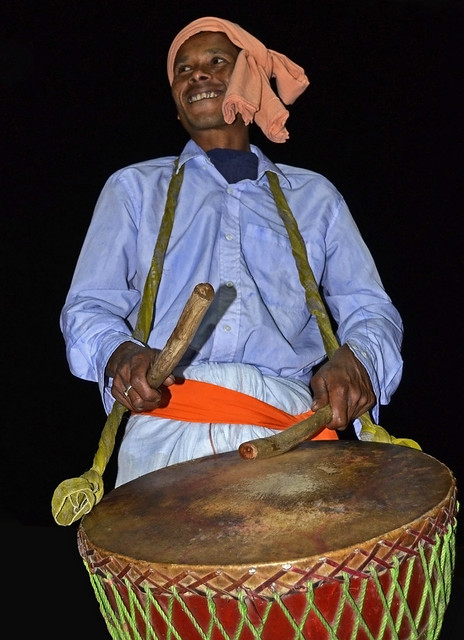
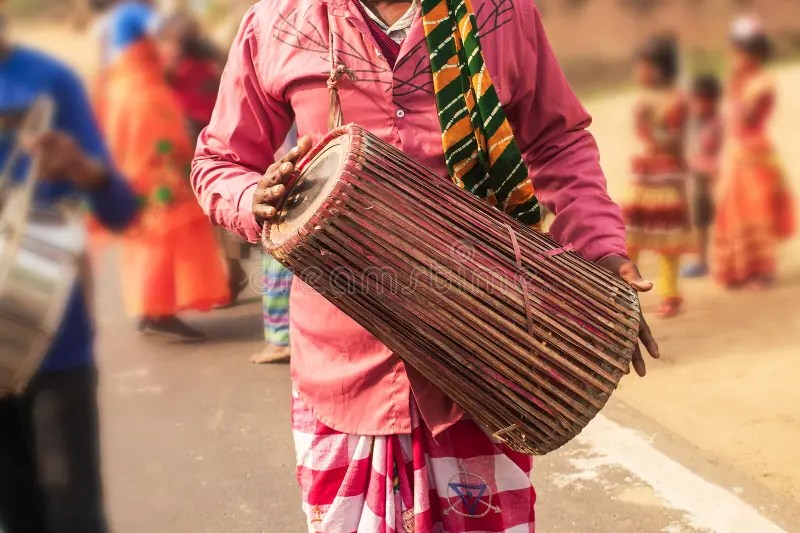

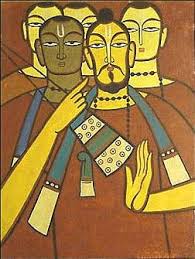
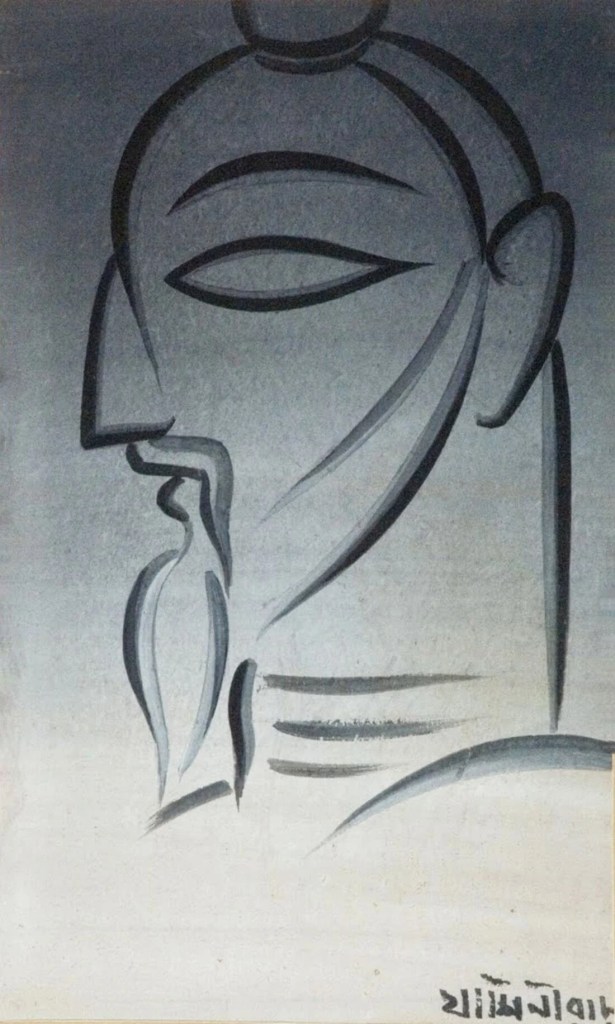
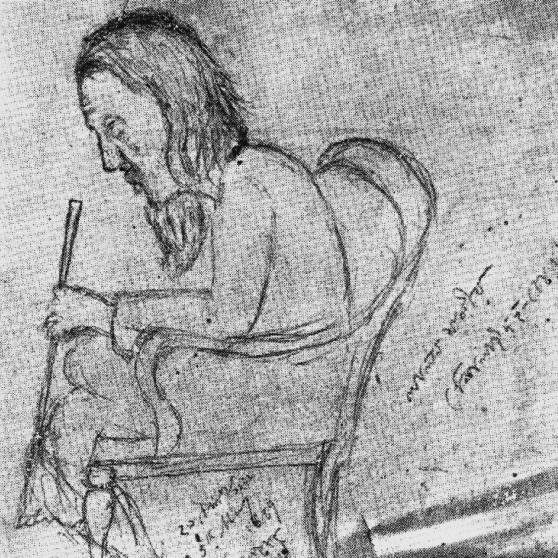



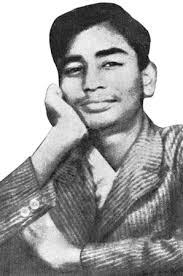
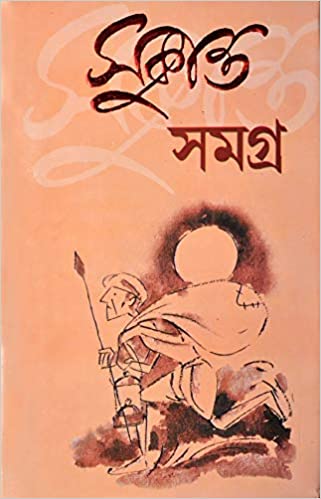
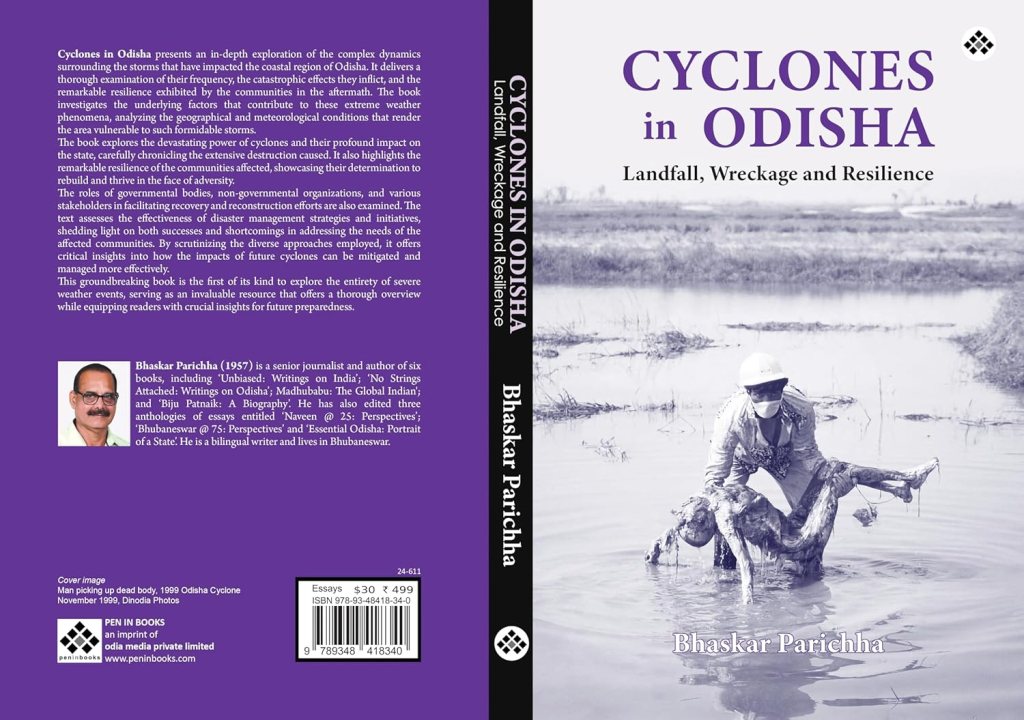


 Borderless