Categories
Stories

The Beaten Rooster

By Hamiruddin Middya: Translated from Bengali by V. Ramaswamy

Babu, I am merely a poor Santhal. Please don’t take offence at anything I say. After all, we people who belong to the forest have always been losing. We are day labourers. We neither have nice houses nor do we possess any cultivable land.

Rangakul, Kusumkanali, Nabindanga and Mohulboni were all small Adivasi villages in the forest. Nearby were farmers, and people of the Ghosh, Mahato and Sinha communities. All the land belongs to them. We gaze at the sky in the hope of rain and cultivate a single crop. Some people have taken up the timber business and become rich and arrogant overnight. Why would they care about farming! It’s us who want to farm the land. A one-third share to the landlord, or else a monetary arrangement. We are poor folk, where will we get so much money! So, we cultivate the land on a crop sharing crop basis. But can one survive the whole year with that? The moment there’s no more rice for the cooking pot, we queue up beside the metalled road, wave out to any bus going eastward and get on board. After all, there’s no shortage of jobs there. With water from the canal available there, the fields yield golden paddy twice a year. By the grace of Marang Buru, all we want is to work our bodies so that we can feed our bellies.

When water is scarce at the edge of the forest where we live, famine looms. What’s new about that!

Singh babu is the big warehouse keeper here. He’s in the timber business. His house is at the fringe of the forest, across the railway line. It’s not a house but a fortress. He has done well in business with the help of his sons. Our men and women carry dry wood gathered from the forest to the babu’s warehouse across the railway bridge. He weighs our bundles and buys them. Even if the price is higher in the marketplace, who wants to go there if you have someone close by!

I cultivate a bigha-and-a-half of the babu’s land. It’s his warehouse that Lokha’s Ma carries wood to. There was a terrible drought this year. Fields, pastures and ponds were all parched, gasping for water. The paddy harvest was not good. The stalks were not tall. Just like a mother’s milk dries up if she is unable to eat, it’s the same with the ears of paddy. What will we eat the whole year? An unpared bamboo in the arse! How will I go to the babu and tell him?

I got the opportunity. Lokha set a trap somewhere and caught a waterhen. I told him, “Give me the bird, son. Let me give it to the babu.”

But Lokha did not want to part with it. “Why should I give it just like that?”

I said, “It’s not just like that, son. I have to make the babu happy, he’s very fond of bird meat. After all, we survive by cultivating his land.”

Who knows what Lokha thought but he did not argue any more.

I went with the bird at dusk. Singh babu was sitting with his son on a platform under the mango tree in front of the warehouse, he was doing some calculations. As soon as he saw me, he exclaimed, “Arey[1] it’s Hansda! What’s that in your hand?”

I went close to the babu. The babu studied the bird and exclaimed, “Wow! You’ve brought a waterhen!”

The babu never called me Sanatan Hansda, only Hansda. I could see that he was very happy to get the waterhen. His middle son, Haru, took the bird from me and left. Their house, surrounded by walls, was just behind the warehouse. I sat down below the platform.

The babu asked, “Has the paddy been threshed?”

“Babu, that’s what I came to tell you about. All the paddy has been destroyed in the drought! After threshing the remaining stalks, I could only get six sacks of paddy.”

The babu’s face turned grave. He blurted out angrily, “What the hell are you saying, bastard! Six sacks? I went to the field and saw for myself, it was full of swaying stalks.”

“Yes, babu, it was like that then. But there was no rain in Magh[2]. The plants began to droop after that!” I pleaded with the babu.

“Enough of your nonsense! Haru will go tomorrow and see how it’s only six sacks. Don’t try to be cunning!”

“Sure, send him then, babu. I am not telling you lies.”

Haru didn’t come. The next day, Singh babu himself arrived in haste. He came in the middle of our festivities. I was anxious wondering where I would ask him to sit, and what I would feed him. All of us, men and women, drink hanriya [3]and dance. Ours is a small village. We can’t afford to buy a dhamsa or a madol. We had everything earlier, but they broke long ago. When the boys and girls of the village grow up and it’s time for them to get married, we get those drums on rent. During our festivals, the boys in the youth club play music on the mic. We dance to that. Seeing our song and dance, Singh babu later whispered to me, “Give me a glass of hanriya too. Let me try it. But mind it, don’t tell Haru!”

“Oh no, babu. Don’t worry about that. Have as much as you want.” I thought it was funny. The father drinks out of his son’s sight. After all, we have none of all that. Father and son drink together to their heart’s content.

Why were Singh babu’s eyes so bloodshot today? I was scared. I said to him, “Come, come babu. Come inside and sit comfortably.”

The babu said angrily, “I haven’t come to sit, Hansda. Show me the paddy quickly.”

So, I showed the babu the paddy. He looked at me sternly and asked, “You haven’t hidden it somewhere, have you?”

“No, no babu. I would never do something like that in my life,” I said, holding my ears with my hands. “Why don’t you ask someone?”

“Chandmani and Gona Murmu got a good harvest. What kind of farming are you doing?”

“They got a pump-set from somewhere and irrigated their fields twice. There’s a shallow tubewell in the field there.”

The babu was about to leave with a sullen face. I said to him, “Let us keep the crop this time, babu. It’s a meagre harvest. My family can survive for a few days with that. I’ll repay you next time.”

The babu came to a halt with a start. He lowered his voice, and said, “Why should you go without food – am I not there! You have a young wife at home. Send her to the warehouse in the evening. After all, you can’t send her when people are around!” And saying so, the babu left. There was a strange smile on his face. Seeing that smile, my chest heaved. What on earth did the babu say before he left! How could I send Lokha’s Ma to the warehouse with wood now?

2

There was a fair in the nearby village of Mohulbani. As the Shalui festival is not celebrated with much fanfare in our village, it’s to the fair in Mohulbani that everyone dresses up and goes. There’s a cockfight every year during this time. This year, I too was a hauchi. Someone who participates in a cockfight is called a hauchi. I had never put a cock to fight. But the idea of doing that during this year’s festival caught my fancy.

Lokha’s Ma had brought the rooster as a tiny chick from her father’s house. I saved it so many times from the jaws of wretched mongooses and civets. It was big now, and sparkling red in colour. It crowed, konk konkkor konk, in the semi-darkness of dawn. Hearing its crow, the birds on the trees then began chirping. It hovered around every hen in the village, all by itself. It walked with its chest puffed out, as if it was the king of the forest. If such a rooster could not fight, then why on earth was it born?

Lokha tugged at my lungi and demanded, “I’ll go too, Baba. Take me along with you to see the fair.”

Lokha’s Ma said, “Take him along. He’s my little boy. On a festival day, he’ll go to see the fair, he’ll eat jilapi[4], but no – what kind of a father are you!”

“All right. Come along then.”

Mustard flowers were in bloom in the fields. It was yellow everywhere, both on the lowlands and the uplands. After all, it was a festival of flowers now. Men and women, old and young, were walking to the fair along the narrow boundary ridge. Some raced along on bicycles on the red laterite road, ringing their bells, kring kring. Close to the forest was the field known as Bhangatila Maath, which was where the fair took place. Shops with captivating wares, flutes for children, toy drums. Such a variety of food items, telebhaja[5], jilapi. Earthen pots and utensils were selling somewhere under a tree canopy. Rows of bicycles and pick-up vans were elsewhere. An old Santhal man was going around selling bamboo flutes. He himself was rapt in the melody he was playing. There was a cloud of red dust. Girls and young men were walking around holding hands, disregarding the dust. The crowd at the fair was made up of people from all the nearby villages.

Was it only Santhals? No, babu folk too had come to have fun. Everyone was dressed in new clothes, looking their best. Girls had applied mahua oil on their hair and parted their hair, with wildflowers adorning their coiffure.

Hidden away from the fair, in a clearing inside the forest, there was a crowd of people. That’s where the cockfights took place. It used to take place in the fair ground itself earlier. But a few times, police vans had arrived and pulled down everything. It has moved its venue into the forest ever since. I went there with Lokha. Sal-wood poles had been planted, and the spot had been encircled with a rope. Everyone was standing around the rope, Some of them were hauchis, with roosters in their hands. Others had come only to watch.

I asked Lokha to stand under a tendu tree, and told him, “Don’t go anywhere, son. Just stand here and watch the cockfights. I have to find us an opponent.”

I was going around with my rooster, looking for an opponent, when a suited and booted babu with a camera on his shoulder pushed his way through the crowd. Everyone gaped at the man.

A few kaatkaars, those who tied blades to the roosters’ feet, had gone into the enclosure through the boundary rope. Seeing the babu, they said, “Hey babu, what business do you have here? You want to publicise the cockfight? Stop taking pictures, we warn you!”

The babu put his camera into his bag following the threat.

As I went around searching, who should I encounterbut Singh babu — a pleasure-seeking man indeed! He frequently participated in cockfights to indulge his fancy. From time to time, he also wagered money on the days of the weekly market. There was a spirited rooster in the babu’s hands. Seeing me, he said, “What’s up, Hansda, have you brought one too?”

I nodded my head, and said, “Yes, babu. I did it for fun.”

“But you’re in bad times! So how come you’re indulging your fancy?”

Seeing the rooster in my hand, the babu’s rooster stretched its neck, fluffed the feathers on its neck, and glared agitatedly. When I had told the babu about the six sacks of paddy, the babu had glared at me in the same way. My rooster’s eyes too emitted fire. They were a fine pair, but how could I tell the babu that! He was a well-known man, why would he agree to a cockfight with me?

The kaatkar Hiralal, from Panchal was nearby, tying blades toa rooster’stoes. Seeing our two roosters, he burst out, “The two make a fine pair! Why don’t you get them to fight?”

Had Hiralal lost his head or what! What’s this he was saying! Would someone like Singh babu agree to a cockfight with my rooster! I was a poor Santhal. I survived by farming the babu’s land. But I was astonished to hear the babu’s response.

“Hey Hansda! Are you willing?”

I replied hesitantly, “Whatever you wish, babu.”

Hiralal began tying blades to the two roosters’ toes. We didn’t call them blades. The blades were known as heter. Kaatkars had arrived to tie the heter to the toes of all the fighting roosters. After all, there were so many roosters for the cockfight! If there had been only one kaatkaar, it would be night by the time the contests were over.

The rooster belonging to Budhon Ghosh, the ration-dealer from Harindanga village, was fighting now with the one belonging to Fatik Ghosh from Panchal. There was a circle made with lime powder within the roped-in enclosure. The two roosters were made to face each other within the circle. The roosters in the hands of other cockfighters in the crowd raised their necks and crowed. The cockfight was going to be a lively one.
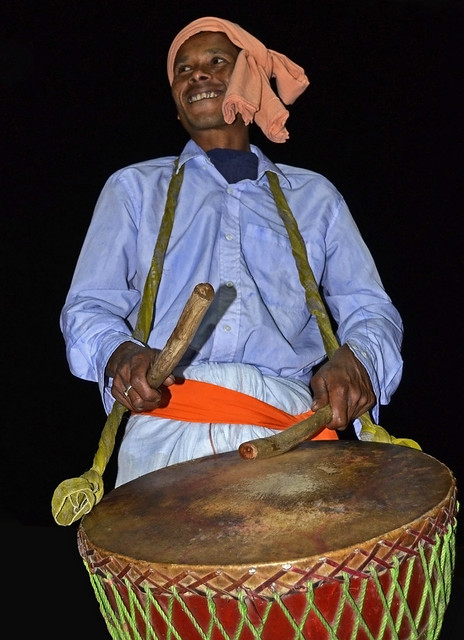
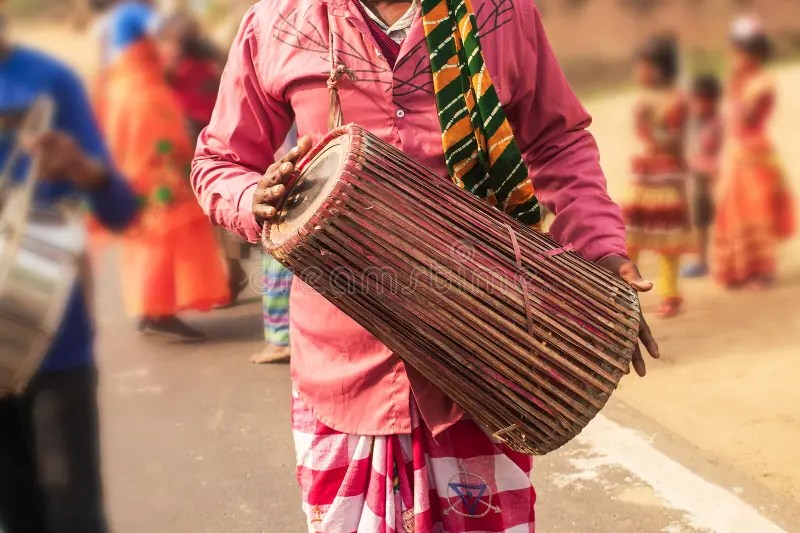
Meanwhile, the beats of the dhamsa and madol came wafting from the fairground. Intoxicated with mahua [6]and hanriya, our young men and women were dancing in a circle, hand in hand. A tide of joy washed over the hills. The whole forest was in a state of intoxication with the drim drima drim beat.

Budhon Ghosh won the cockfight. The spectators clapped and whistled to congratulate him. Fatik’s defeated rooster was his now.

It was our turn next. Singh babu and I entered the roped enclosure. We held the tails of the two roosters and stood them face to face in the middle of the lime circle. Singh babu and I too were face to face. These weren’t roosters! They were like magnets drawn to iron. They could not be restrained, they kept pulling forward. As soon as the whistle blew, fweeeet, we released the roosters. The fight began. They flapped their wings, torn feathers flew into the air. Neither of them spared the other.

When the babu’s rooster was overcoming mine, the spectators applauded, and cried out, “Singh babu! Singh babu!” Again, when my rooster was beating the babu’s rooster, a few spectators behind me excitedly burst out, “Hansda! Hansda!”

I was witnessing another battle. After all, the two roosters weren’t roosters. They were Singh babu and me. We were down on our hands and knees, both of us had become roosters. We were in an unflinching face-off. Behind me were rows and rows of Santhal men and women, mothers, brothers and sisters, standing with bows and arrows, battle axes, and spears in their hands. And behind the babu were row upon row of diku, as outsiders were known.

I suddenly heard the Santhals cry out excitedly, ‘Sanatan! Sanatan!’ I realised I had lost my concentration. I saw that my brave rooster had pierced his blade into the breast of the babu’s rooster and felled it. I had won!

I rushed and picked up the babu’s rooster. It was mine according to the regulations. The kaatkaar too had to be paid for fixing the blades. There was no end to Lokha’s joy! The next fight had already begun.

Lokha’s Ma had forbidden me again and again. “Hey, what if this fully grown rooster loses? How about indulging yourself with food only at the festival instead?” But I paid her no heed. How happy Lokha’s Ma would be now!

But as soon as I glanced at Singh babu, I had a strange feeling. Why had his face turned so ashen? After all it was merely a battle between two roosters…

I felt no joy despite having won. What had I done, oh dear! I had beaten the babu. How could I take his rooster home and eat it?

I said to Lokha, “Go, my son. Go and give the rooster to the babu.”

Lokha asked me, “Are you very angry? We won! So why should I give it?”

What was Lokha saying! That we won? After all, we had never been able to win! We had been beaten time and again, my dear! Ever since some distant time. What had I done now, oh dear, by beating the babu! My eyes turned moist. I went with the rooster to the babu.

The babu did not say a single word to me.

I said, “Hey babu! Take this. Let your boys have a feast. I have one already!”

The babu said, “No, Hansda. I won’t take a beaten rooster home.”

Hearing that, I shook my head. The babu patted my shoulder and said, “Let’s see what happens next year.”

[1] Oh!

[2]  Bengali month starting mid-January and ending mid-February

[3] Local liquor

[4] A fried sweet

[5] Deep fried snacks

[6] Local liquor
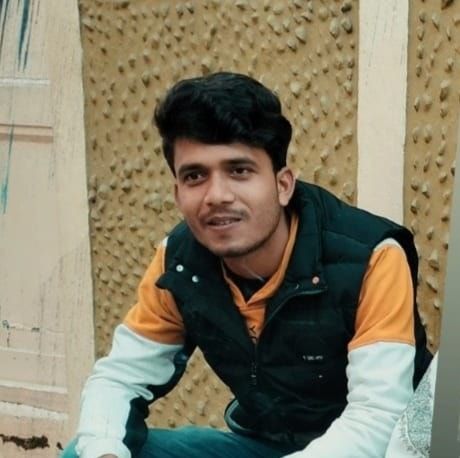
Hamiruddin Middya was born in 1997 in Ruppal, a remote village in Bankura district in West Bengal. Born in a marginal farmer’s family, he has been in agricultural fields and farming from his childhood. His passion for writing started from his school days. He has worked as a domestic helper, a migrant construction mason, and travelled to rural fairs to sell wares. Hamiruddin’s first story was published in the magazine Lagnausha in 2016. Since then, three collections of his short stories have been published, Azraeler Daak (2019), Mathrakha (2022), and Ponchisti Golpo (2025). The story collection, Mathrakha, received the Yuva Puraskar for 2023 from the Sahitya Akademi, India.

V. Ramaswamy took up translation following two decades of engagement in social activism for the rights of the labouring poor of Kolkata. Beginning with the iconic and experimental writer Subimal Misra, he then devoted himself to translating “voices from the margins”, both in fiction and nonfiction. Besides translating four volumes of Misra’s short fiction, Ramaswamy has translated Manoranjan Byapari, Adhir Biswas, Swati Guha, Mashiul Alam, Shahidul Zahir, Shahaduz Zaman and Ismail Darbesh, among others.

PLEASE NOTE: ARTICLES CAN ONLY BE REPRODUCED IN OTHER SITES WITH DUE ACKNOWLEDGEMENT TO BORDERLESS JOURNAL

Click here to access the Borderless anthology, Monalisa No Longer Smiles

Click here to access Monalisa No Longer Smiles on Amazon International
Categories
Contents

Borderless, January 2026

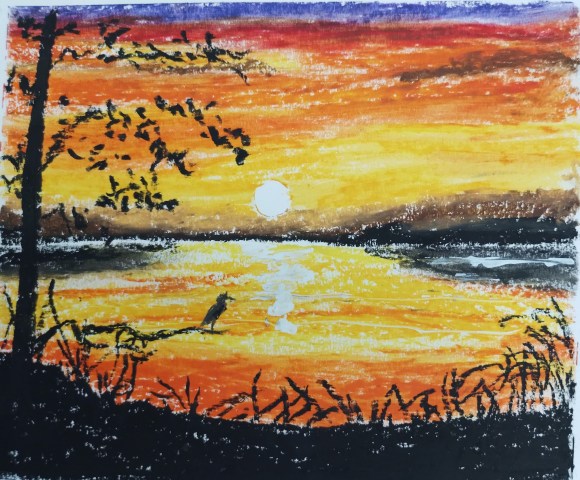
Art by Sohana Manzoor

Editorial

Sense and Nonsense: Atonal, Imperfect, Incomplete… Click here to read.

Translations

Akashe Aaj Choriye Delam Priyo(I sprinkle in the sky) by Nazrul has been translated from Bengali by Professor Fakrul Alam. Click here to read.

Four of his own Malay poems have been translated by Isa Kamari. Click here to read.

Six Fragments by Sayad Hashumi have been translated from Balochi by Fazal Baloch. Click here to read.

Five poems by Pravasini Mahakuda have been translated to English from Odia by Snehaprava Das. Click here to read.

A Poet in Exile by Dmitry Blizniuk has been translated from Ukranian by Sergey Gerasimov. Click here to read.

Kalponik or Imagined by Tagore has been translated from Bengali by Mitali Chakravarty. Click here to read.

Pandies Corner

Songs of Freedom: The Seven Mysteries of Sumona’s Life is an autobiographical narrative by Sumona (pseudonym), translated from Hindustani by Grace M Sukanya. These stories highlight the ongoing struggle against debilitating rigid boundaries drawn by societal norms, with the support from organisations like Shaktishalini and Pandies. Click here to read.

Poetry

Click on the names to read the poems

Ryan Quinn Flanagan, Ron Pickett, Snehaprava Das, Stephen Druce, Phil Wood, Akintoye Akinsola, Michael Lauchlan, Pritika Rao, SR Inciardi, Rich Murphy, Jim Murdoch, Pramod Rastogi, Joy Anne O’Donnell, Andrew Leggett, Ananya Sarkar, Annette Gagliardi, Rhys Hughes

Poets, Poetry & Rhys Hughes

In What is a Prose Poem?, Rhys Hughes tells us what he understands about the genre and shares four of his. Click here to read.

Musings/Slices from Life

Duties For Those Left Behind

Keith Lyons muses on a missing friend in Bali. Click here to read.

That Time of Year

Rick Bailey muses about the passage of years. Click here to read.

All So Messi!

Farouk Gulsara takes a look at events in India and Malaysia and muses. Click here to read.

How Twins Revive Spiritual Heritage Throbbing Syncretism

Prithvijeet Sinha takes us to the Lucknow of 1800s. Click here to read.

Recycling New Jersey

Karen Beatty gives a glimpse of her life. Click here to read.

Musings of a Copywriter

In ‘All Creatures Great and Small’, Devraj Singh Kalsi writes of animal interactions. Click here to read.

Notes from Japan

In The Cat Stationmaster of Kishi, Suzanne Kamata visits a small town where cats are cherished. Click here to read.

Essays

The Untold Stories of a Wooden Suitcase

Larry S. Su recounts his past in China and weaves a narrative of resilience. Click here to read.

A Place to Remember

Randriamamonjisoa Sylvie Valencia dwells on her favourite haunt. Click here to read.

Christmas that Almost Disappeared

Farouk Gulsara writes of Charles Dickens’ hand in reviving the Christmas spirit. Click here to read.

The Last of the Barbers: How the Saloon Became the Salon (and Where the Gossip Went)

Charudutta Panigrahi writes an essay steeped in nostalgia and yet weaving in the present. Click here to read.

Aeons of Art

In Art is Alive, Ratnottama Sengupta introduces the antiquity of Indian art. Click here to read.

Stories

Old Harry’s Game

Ross Salvage tells a poignant story about friendship with an old tramp. Click here to read.

Mrs. Thompson’s Package

Mary Ellen Campagna explores the macabre in a short fiction. Click here to read.

Hold on to What You Let Go

Rajendra Kumar Roul relates a story of compassion and expectations. Click here to read.

Used Steinways

Jonathan B. Ferrini shares a story about pianos and people set in Los Angeles. Click here to read.

The Rose’s Wish

Naramsetti Umamaheswararao relates a fable involving flowers and bees. Click here to read.

Discussion

A brief discusion of Whereabouts of the Anonymous: Exploration of the Invisible by Rajorshi Patranabis with an exclusive interview with the author on his supernatural leanings. Click here to read.

Book Excerpts

An excerpt from Showkat Ali’s The Struggle: A Novel, translated from Bengali by V. Ramaswamy and Mohiuddin Jahangir. Click here to read.

An excerpt from Anuradha Marwah’s The Higher Education of Geetika Mehendiratta. Click here to read.

Book Reviews

Somdatta Mandal reviews Showkat Ali’s The Struggle: A Novel, translated from Bengali by V. Ramaswamy and Mohiuddin Jahangir. Click here to read.

Meenakshi Malhotra reviews Anuradha Marwah’s The Higher Education of Geetika Mehendiratta. Click here to read.

Udita Banerjee reviews The Lost Pendant, translated (from Bengali) Partition poetry edited by Angshuman Kar. Click here to read.

Bhaskar Parichha reviews Rakesh Dwivedi’s Colonization Crusade and Freedom of India: A Saga of Monstrous British Barbarianism around the Globe. Click here to read.

.

Click here to access the Borderless anthology, Monalisa No Longer Smiles

Click here to access Monalisa No Longer Smiles on Amazon International
Categories
Review

Vignettes from Pre-partition Bengal

Book Review by Somdatta Mandal

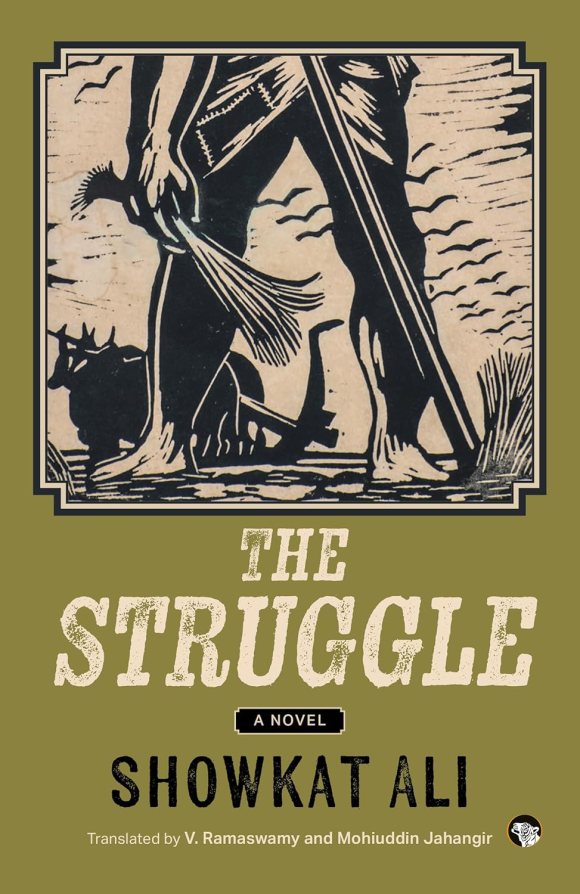
Title: The Struggle: A Novel

Author: Showkat Ali

Translators: V. Ramaswamy & Mohiuddin Jahangir

Publisher: Speaking Tiger Books

Showkat Ali (1936 – 2018) was a renowned Bangladeshi novelist, short story writer and journalist whose work explored history, class and identity in Bengali society.  In 1989, he published a novel called Narai (translated from Bengali as The Struggle) which is set in a remote village in the Dinajpur region of undivided Bengal during the mid-1940s.

The novel is broadly divided into three sections. In the first section entitled ‘A Ploughing Household,’ the author gives us detailed description of an agrarian society where poor Muslim farmers as well as some other lower classes of untouchable Hindus eked out their living primarily through farming as well as other low-paying jobs. The feudal setup of the society is complete with threatening and wily landlords (often Hindus) who are always on the lookout for cheating the sharecroppers of their legitimate dues.

The story begins with a poor farmer called Ahedali who, unable to procure a second bullock to till his field, bore one side of the yoke himself, and soon fell ill and succumbed to death leaving his young wife Phulmoti and a ten-year-old son Abedali behind. The real problem for this widow begins when she is left alone to fend for herself along with a few ducks, chickens and goats. Her fragile world is shattered. People in the village start advising her to get married once again and she gradually finds it very difficult to survive from the ogling eyes and salacious offers from different men in the community. Her son can offer little defense against the men now circling her—neighbours, relatives, even the local cleric—drawn by desire and the lure of her small property. Malek, a kindly bookseller at the local market, too, proves not to be what he seems. It is Malek’s hired hand, Qutubali, who finds himself drawn into her struggles, standing by her in ways that others do not.

The second section of the novel ‘Home and Family’ describes in detail how Qutubali, the simple-minded outsider whose unexpected kindness and fierce loyalty turns into Phulmoti’s unlikely ally. Apparently, he was a senseless and stupid man who provided her benefaction again and again. Much younger to her, he was totally ignorant of standard man-woman relationships and though he often stayed back at Phulmoti’s house, he didn’t express any sort of physical desire for the young widow. He tended to the animals, helped in sowing seeds and worked relentlessly to bring some comfort and peace in the household.

This entire section gives us details of how they come close to each other. Finding no other alternative to live a decent and harmonious life, they go to a mosque where a saint called Darbesh Chacha, who had brought up the orphan Qutubali earlier, gets them married in order that both can live their lives peacefully hereafter. Since then, things gradually changed. If a young widow found a husband, or brought home a ‘ghor jamai’[1], that was definitely news, especially if the man in question was from another village. But people gradually accepted it. Of course, the widow’s suitors fumed with resentment, though even that fire cooled eventually.  Qutubali also gradually started learning the tricks of the trade – he had their own land and along with the yield of the sharecropped land, he knew he could become a full-fledged farmer soon. He was sure the days of his misfortune were over. At the end of this section, when Phulmoti announces to the simple-minded Qutubali that she was pregnant, the reader feels that the rest of the story would follow suit in domestic harmony and bliss. The family had a happy air about them. But that was not to be.

The third section of the novel aptly titled ‘We Must Fight!’ begins amid the upheavals of a precarious feudal order and the stirrings of a nation on the verge of independence. Qutubali did not have the time to stay at home. He was never clear about where he went and what he did. When asked, he replied in monosyllables. He started attending sermons. The headmaster of the village school started indoctrinating him and the village folk with the idea of swadeshi.

The politics of the Congress and the Muslim League started to hover on the margins of village life, far removed from their daily battles. But when the tebhaga[2] struggle broke out in Bengal—with sharecroppers demanding two-thirds of the harvest from landlords as their rightful due—Phulmoti and Qutubali stand to lose what little of their lives they had pieced back together.

By that time, she no longer saw Qutubali as a callow youth. He had become a regular, responsible, labouring man but his gradual involvement in the politics could not be avoided. He got involved in the activities of the peasants’ union. The novel remains open-ended with Phulmoti keeping on waiting for her husband to come back from wherever he was even after a decade is over.

Before concluding, a note must be added about the excellent quality of translation. Both V. Ramaswamy and Mohiuddin Jahangir have done a wonderful job in translating this social realist novel from one of the most celebrated novelists of Bangladesh for the benefit of a wider audience to remember a very detailed study of rural Bengal from both social and political angles from the 1940s — a very significant time when amidst the prevailing feudal order of the agrarian society in rural Bengal, the stirrings of a nation on the verge of independence as well as outside forces were gradually creeping in.

[1] In the usual Bengali tradition, a wife moves on to live in her husband’s house after marriage. The situation is reverse when the married man comes to live in his wife’s or in-law’s house and is then called a ‘ghor jamai.’

[2] The Tebhaga movement was significant peasant agitation, initiated in Bengal in the late 1940s by the All India Kisan Sabha of peasant front of the Communist Party of India. It aimed to reduce the share of crops that tenants had to give to landlords.

Click here to read an excerpt from The Struggle

Somdatta Mandal, critic and translator, is a former Professor of English at Visva-Bharati University, Santiniketan, India.

.

PLEASE NOTE: ARTICLES CAN ONLY BE REPRODUCED IN OTHER SITES WITH DUE ACKNOWLEDGEMENT TO BORDERLESS JOURNAL

Click here to access the Borderless anthology, Monalisa No Longer Smiles

Click here to access Monalisa No Longer Smiles on Amazon International

Categories
Excerpt

The Struggle by Showkat Ali

Title: The Struggle: A Novel

Author: Showkat Ali

Translators: V. Ramaswamy and Mohiuddin Jahangir

Publisher: Speaking Tiger Books

It was being said that the landlords were terribly angry, and that apparently they would not let the sharecroppers harvest the paddy. The paddy would be cut by people brought from outside. If there was a conflict over the matter, only Allah knew what would happen. Phulmoti did not know any prayers or Quranic verses; ‘Allah’ and ‘Bismillahe Rahamanur Rahim’ were the only sacred words she knew. She inwardly uttered those whenever the fear overwhelmed her.

One morning, Qutubali suddenly spotted someone in the distance, running along the boundary ridge towards their house. The person appeared familiar. So, he kept looking, trying to make out who it was. And why on earth was he running like that?

He recognized the man soon enough. ‘Aare, it is Mahindar!’ Qutubali advanced. Gasping for breath, Mahindar informed him that he had been to Ranisankoil to meet the peasants’ union there. He said he saw many men from Bihar at Pirganj station. They had long-moustachioed faces, and were hefty of build, and they were all carrying long lathis with a brass grip. He had heard that they were going to the house of the landlord Mitra Babu of Ranisankoil to guard the paddy fields. Apparently, thieves were cutting the paddy and taking it away and so the paddy on his field had to be guarded.

Qutubali grew anxious when he heard the news. Both of them rushed to the market, discussing the matter as they went. If the landlords in their locality too brought in Bihari watchmen from the west and made them guard the paddy fields, what would the peasants do? Would the watchmen let the sharecroppers cut the paddy? And what if they did not? Would the sharecropping peasants sit idly by with folded hands? The plough and the bullocks belonged to the sharecropper; he was the one who toiled, and it was he who raised the crop. Would he have no claim over that crop now? Would they not permit him to even enter the crop field? What nonsense was this? Hired musclemen from Bihar to guard ripe paddy in the fields was simply unacceptable!

Both of them were in agreement. No, the sharecroppers would cut the paddy. If there was resistance, then a fight would break out, and if indeed it did, then they must fight.

‘There’s no option but to fight,’ Mahindar said. ‘Let anyone say what they want, but we must fight.’

When they reached the union office, they saw that Baram Horo was already there, puffing on a beedi. He was surprised to see the two of them.

‘You people? Where’s Mondol? And Dinesh?’

Qutubali and Mahindar were startled. ‘Why, was Delbar Mondol supposed to come here?’

‘Yes,’ Baram said. ‘Dinesh asked Mondol to come. He needs to be here.’

‘Why? What happened?’

The news wasn’t good, Baram informed them. ‘Instructions have been received in all the police stations that since the paddy in the landlords’ fields might be looted, the police must guard the paddy with rifles until the harvest is over. I think they won’t let the sharecropping peasants cut the paddy.’

They didn’t realize how quickly the day passed—it was already afternoon. A lot of people had joined them by now. All were sharecropping peasants, except for Dr Abhimanyu Sen. There were discussions and information was shared. No one could say what the district-level leaders had decided.

‘They will decide what they think is appropriate,’ Doctor Babu said, ‘but will we sit twiddling our thumbs because of that? The landlords are bringing musclemen. We can’t bring guns, but we too have to pick up lathis. This isn’t anything new; the peasant earlier carried a cattle-prod, now he’ll carry a six-foot-long lathi of seasoned bamboo. Go, brothers, go and cut lathis from bamboo clumps…’

Dinesh Murmu kept shaking his head, growling, ‘What rubbish is this! Saala, the government, police and political parties are all on the side of the landlords. No one is on our side.’

The stalks full of ears of ripe paddy stood all over the floodplain with their heads bowed, waiting for the festival of harvest to begin! But the festive moment never arrived.

Qutubali was unable to sleep. Countless millions of stars shed dew smeared with blue light as the night advanced towards the next horizon. From many faraway fields could be heard the cries of ‘Hoshiyar…jaagte raho—o—o… Beware, stay awake!’ He had seen with his own eyes that Ghosh Babu too had brought a hired band of Bihari guards from Purnea district. He had no idea whose counsel the Mistress had followed in taking this step. Was she planning on getting the paddy cutting done by someone else? What about the task of husking the paddy? That too?

His wife was asleep next to him, as was his son, but he remained awake.

At some point during those still hours, Doctor Babu arrived at their house on a bicycle. He gave clear instructions: Delbar Mondol and Mahindar Burman were not to remain at home at night, nor were they to set foot in the nearby town or the marketplace in the market town. If they did, they might be arrested by the police and sent to jail. Doctor Babu also conveyed the news that the police had gone to arrest Dinesh and Baram, but fortunately, they couldn’t. Having got the news, the two had gone into hiding.

‘We are not going to start fighting just now…that’s right… but that doesn’t mean that we will let the police catch us,’ Doctor Babu said. ‘We will be careful and keep ourselves safe. And we will cut the paddy and bring it home—we must keep that in mind.’

No cutting of the paddy, no ploughing of the soil for the next crop, just sitting and waiting! If the ears dried up, would the paddy be fit to cut? All the stalks would drop off their ears.

Extracted from The Struggle: A Novel by Showkat Ali, translated by V. Ramaswamy and Mohiuddin Jahangir. Published by Speaking Tiger Books, 2025.

ABOUT THE BOOK

Set in a remote village in the Dinajpur region of undivided Bengal during the mid-1940s, The Struggle tells the intertwined story of Phulmoti—a young widow fighting to hold on to her land, her dignity and her child—and Qutubali, a simple-minded outsider whose unexpected kindness and fierce loyalty make him her unlikely ally amid the upheavals of a precarious feudal order and the stirrings of a nation on the verge of independence.

The death of Phulmoti’s husband shatters her fragile world. Her ten-year-old, Abed, can offer little defence against the men now circling her—neighbours, relatives, even the local cleric—drawn by desire and the lure of her small property. Malek, a kindly bookseller at the local market, too, proves not to be what he seems. It is Malek’s hired hand, Qutubali, who finds himself drawn into her struggles, standing by her in ways that others do not. The politics of the Congress and the Muslim League hover on the margins of village life, far removed from their daily battles. But when the tebhaga struggle breaks out in Bengal—with sharecroppers demanding two-thirds of the harvest from landlords as their rightful due—Phulmoti and Qutubali stand to lose what little of their lives they have pieced back together.

First published in 1989 as Narai, this novel is not only a vivid portrayal of endurance in the face of isolation and rural exploitation, but also a sharp indictment of the social and political systems that deny justice to the poor. This sensitive translation introduces to a wider audience a forgotten classic of Bengali literature—politically clear-eyed and deeply moving.

ABOUT THE AUTHOR

Showkat Ali (1936–2018) was a renowned Bangladeshi novelist, short story writer and journalist whose work explored history, class and identity in Bengali society. His most celebrated novel, Prodoshe Prakritojon (1984), is considered a landmark in Bangladeshi literature.

ABOUT THE TRANSLATORS

Mohiuddin Jahangir is currently Assistant Professor in Khabashpur Adarsa University College, Bangladesh. His articles on literature, history and heritage have been published in scholarly journals, and he is the author of seven books.

V. Ramaswamy has translated many well-known Benglai authors. He was awarded the Translation Fellowship by the New India Foundation, and the English PEN Presents award in 2022.

Click here to read the review of the novel

.

PLEASE NOTE: ARTICLES CAN ONLY BE REPRODUCED IN OTHER SITES WITH DUE ACKNOWLEDGEMENT TO BORDERLESS JOURNAL