In conversation with Isa Kamari, a celebrated writer from Singapore, with focus on his latest book, Maladies of the Soul. Click here to read.
Translations
A Hunger for Stories, a poem by Quazi Johirul Islam, has been translated by Professor Fakrul Alam. Click here to read.
A Hand Mill, a story by Ammina Srinivasaraju, has been translated from Telugu by Johny Takkedasila. Click here to read.
Kiyya and Sadu, a part of this long ballad on the legendary lovers from Balochistan, has been translated from Balochi by Fazal Baloch. Click hereto read.
In Tintin in India, Rhys Hughes traces the allusions to India in these iconic creations of Hergé while commenting on Tintin’s popularity in the subcontinent. Click hereto read.
Meredith Stephens shares the response of some of the Californian community to healing after the 2020 forest fires with a narrative and photographs. Click hereto read.
No, they whisper. You own nothing.
You were a visitor, time after time
climbing the hill, planting the flag, proclaiming.
We never belonged to you.
You never found us.
It was always the other way round.

‘Moment’ by Margaret Atwood
With an unmanned mission reaching the moon — that moon that was chipped off the Earth’s surface when Theia bashed into the newly evolving planet — many feel mankind is en route to finding alternate biomes and perhaps, a solution to its housing needs. Will we also call moon our ‘Homeland’ and plant flags on it as we do on Earth? Does the Earth — or the moon — really belong to our species. Do we have proprietary rights on these because of lines drawn by powerbrokers who say that the land belongs to them?
These are questions Margaret Atwood addresses in her writings which often fall into a genre called cli-fi. This is gaining in popularity as climate has become uncertain now with changes that are wringing fear in our hearts. Not all fear it. Some refuse to acknowledge it. While this is not a phenomenon that is fully understood by all of us, it’s impact is being experienced by majority of the world — harsh stormy weather, typhoons, warmer temperatures which scorch life and rising water levels that will eventually swallow lands that some regard as their homeland. Despite all these prognostications, wars continue to pollute the air as much as do human practices, including conflicts using weapons. Did ‘climbing a hill’ and ‘planting the flag’ as Atwood suggests, ever give us the rights over land, nature or climate? Do we have a right to pollute it with our lifestyle, trade or wars — all three being human constructs?
In a recent essay, Tom Engelhardt, a writer and an editor, contended, “Vladimir Putin’s greatest crime wasn’t simply against the Ukrainians, but against humanity. It was another way to ensure that the global war of terror would grow fiercer and that the Lahainas of the future would burn more intensely.” And that is true of any war… Chemical and biological weapons impacted the environment in Europe and parts of Afghanistan. Atom bombs polluted not only the cities they were dropped in, but they also wreaked such havoc so that the second generation’s well-being continues impacted by events that took place more than seven decades ago. Yet another nuclear war would destroy the Earth, our planet that is already reeling under the impact of human-induced climate change. Flooding, forest fires and global warming are just the first indications that tell us not only do we need to adapt to living in changed times but also, we need to change our lifestyles, perhaps even turn pacifist to survive in a world evolving into an altered one.
Critiquing the darker trends in our species which leads to disasters is a book by an eminent Singaporean writer, Isa Kamari, called Maladies of the Soul. He too looks for panacea in a world where the basic needs of humans have been satiated and they have moved on towards overindulgence that can lead to redundancy. In a conversation, he tells us how he hopes his writings can help towards making a more hopeful future.
This hope is echoed in the palliative poems of Sanket Mhatre from his book, A City full of Sirens, excerpted and reviewed by Basudhara Roy. Bhaskar Parichha’s review of Samragngi Roy’s The Wizard of Festival Lighting: The Incredible Story of Srid, is a tribute also from a granddaughter to her grandfather celebrating human achievements. Somdatta Mandal’s discussion of fiction based on history, Begum Hazrat Mahal: Warrior Queen of Awadhby Malathi Ramachandran not only reflects the tenacity of a woman’s courage but also explores the historicity of the events. Exploring bits of history and the past with a soupcon of humour is our book excerpt from Syed Mujtaba Ali’s Tales of a Voyager (Joley Dangay[1]), translated from Bengali by Nazes Afroz. Though the narrative of the translation is set about ninety years ago, a little after the times of Hazrat Mahal (1820 –1879), the excerpt is an brilliant introduction to the persona of Tagore’s student, Syed Mujtaba Ali (1904-1974), by a translator who describes him almost with the maestro’s unique style. Perhaps, Afroz’s writing bears these traces as he had earlier translated a legendary work by the same writer, In a Land Far from Home: A Bengali in Afghanistan. Afroz starts with a startling question: “What will you call someone who puts down his profession as ‘quitting job regularly’ while applying for his passport?”
In non-fiction, we have Devraj Singh Kalsi’s funny retelling of his adventures with a barber while Hughes‘ essay on the hugely popular Tintin makes us smile. The patriarchal past is reflected in an essay by G Venkatesh, whereas Suzanne Kamata from Japan talks of women attempting to move out of invisibility. Meredith Stephens and Candice Louisa Daquin both carry on the conversation on climate change. Stephens explores the impact of Californian forest fires with photographs and first-hand narrative. Vela Noble draws solace and strength from nature in Kangaroo Island and shares a beautiful painting with us. Madhulika Vajjhala and Saumya Dwivedi discuss concepts of home.
Two touching tributes along with a poem to recently deceased poet, Jayanta Mahapatra, add to the richness of our oeuvre. Dikshya Samantrai, a researcher on the poet, has bid a touching adieu to him stating, “his legacy will continue to inspire and resonate and Jayanta Mahapatra’s name will forever remain etched in the annals of literature, a testament to the enduring power of the poet’s voice.”
Our translations this time reflect a diverse collection of mainly poetry with one short story by Telugu writer, Ammina Srinivasaraju, translated by Johny Takkedasila. Professor Fakrul Alam has introduced us to an upcoming voice in Bengali poetry, Quazi Johirul Islam. Ihlwha Choi has translated his own poetry from Korean and brought to us a fragment of his own culture. Fazal Baloch has familiarised us with a Balochi ballad based on a love story that is well known in his region, Kiyya and Sadu. Our Tagore translation has attempted to bring to you the poet’s description of early autumn or Sharat in Bengal, a season that starts in September. Sohana Manzoor has painted the scene depicted by Tagore for all of us to visualise. Huge thanks to her for her wonderful artwork, which invariably livens our journal.
Profound thanks to the whole team at Borderless for their support and especially to Hughes and Parichha for helping us source wonderful writings… some of which have not been mentioned here. Pause by our content’s page to savour all of it. And we remain forever beholden to our wonderful contributors without who the journal would not exist and our loyal readers who make our existence relevant. Thank you all.
An Indian newspaper published an article about adults who still read Tintin and I realised that although I would have liked to be interviewed for that article, my qualifications were inadequate, for there is no ‘still’ in my particular case. I only began reading the comic when I was grown up. In fact, I only read it properly in the past few years, and I am more than half a century old. True, I did read one or two of his adventures when I was young, but I read them half-heartedly, I don’t know why, instead of with unalloyed delight, as they ought to be read. Possibly they were too elaborate for me back then.
Yes, Tintin is elaborate, but this doesn’t mean it isn’t simple. Yet it has the kind of simplicity that seems complex to the very young reader. There are plots and subplots, conspiracies and clues, and all of this is perhaps a bit much for the mind of a child more familiar with the primitive antics of Dennis the Menace or The Bash Street Kids from The Beano. Each of Tintin’s exploits seemed beyond reasonable length to me, too adult and requiring a heavy investment of my time and intelligence. I speak, naturally enough, only from a personal perspective. In some households, Tintin was read by minds younger than mine, understood and enjoyed too. I was clearly a late developer.
Thanks to a remarkable bookshop in Bangalore, I have been able to obtain the comic books in omnibus editions and catch up with what I missed out on. It intrigued me to learn that the elements I had regarded as impossibly modern in my youth are now quaintly dated. Tintin’s adventures are not hugely dissimilar in tone and setting to the adventure stories of John Buchan1 and they even put me in mind of Somerset Maugham2 at his most sensational, with their heavy reliance on seaplanes and tramp steamers and open-topped automobiles. The pacing is as fast as The Thirty-Nine Steps or Greenmantle, the atmosphere as exotic-colonial as The Moon and Sixpence or The Narrow Corner. There are differences too, of course, but the differences are less surprising.
The pacing is incredibly fast and Tintin blunders his way into scrapes and pickles almost as if destiny has chosen him for the role of spanner in the cogs of the workings of villains, which in a way it has (if we regard Hergé as Fate). He is highly competent most of the time, but can also be inefficient and even inept, often hampered as well as helped by his dog, Snowy. But no quantity or quality of hampering can keep him down for long, he is deft at seizing the opportunities of coincidence that extreme contrivance throws his way. He is fully the equal of any ancient hero from legend or mythology.
And he is mentally strong: no amount of trauma, no near-death incidents or hair-breadth escapes affect him psychologically. He falls out of an aeroplane, an assassination attempt by a dastardly pilot, and his parachute malfunctions. A flat character on a flat page is about to be flattened on the flat ground, but no, he has the singular good fortune to land in a hayrick being transported on a cart. There are no broken bones and no gasping for breath. He picks himself up, dusts off a few straws, resumes his mission with perfect aplomb. One might even say he is inhuman in his attitude to danger. A touch of psychopathy, perhaps? But he is a friend of goodness, an enemy of criminality.
He is also weirdly tolerant of the pompous ineffectiveness of all the sundry supporting characters who populate his existence. Thomson and Thompson, the detectives who never get it right but always take credit for cases solved in their vicinity, provide comic relief, which justifies itself, but even a cursory analysis of their deeds raises a few awkward questions. How on earth are they entrusted continually with missions requiring the utmost delicacy, tact and cunning? They are negative factors in the field of detection, hindrances rather than boons, a pair of slim buffoons (we normally regard buffoons as portly) with a strange sartorial taste and peculiar speech patterns, dramatically underperforming sleuths who are prone to take what they are told at face value. They are worse than useless; they are beneficial to the continuance of evil.
It was a long time before I was able to tell them apart but now, I know they are doubles rather than twins, and that the one with the drooping moustache is Thompson and the one with the flaring moustache is Thomson. In the original French, they were Dupont and Dupond, which is a little less confusing but not much. Tintin ought to have nothing to do with them, but he is always delighted to see them and treats them as highly competent and valuable colleagues. This is a symptom of his own occasional incompetence. But this has nothing to do with India and so we must regretfully forget them.
Tintin travels to India on several occasions. In Egypt, he daringly escapes a firing squad, requisitions an aeroplane, a 1929 de Hallivand DH-80 Puss Moth, one of the highest performing aircraft of its time, with a 130 hp (97 kW) Gipsy Major engine (this aircraft is also notable for being the first to cross the Atlantic from east to west, in 1932) and he courageously, some might say foolishly, sets off for India. Unlike the pilot Nevill Vintcent3, who flew the exact same aircraft from Britain to Sri Lanka (Ceylon, as it once was) without crashing, Tintin runs out of fuel and comes down in the jungle.
Although extremely absurd, the idea of piloting such a plane so far isn’t as implausible as it might appear. We should remember Maurice Wilson4, that very noble but eccentric mystic who planned to climb Mount Everest solo in 1934, forty-six years before Reinhold Messner5 managed the feat, and of course it was inevitable that he would fail, for all the odds were against him. Despite his lack of flying experience, he purchased a de Havilland DH.60 Moth, a more rickety aircraft than the one Tintin used, and flew it from Britain to India in a series of hops. It was a lunatic thing to attempt and yet he succeeded. His failure was on the mountainside, not in the air. Therefore, we have established that Tintin really could have flown to India from Egypt.
Tintin, after his crash landing, meets elephants in the jungle and he wishes to solicit their aid but he doesn’t know their language. He decides to learn it and improvises a trumpet in order to do so, carving the instrument from a block of wood with a penknife, an amazing feat of carpentry (but in Land of the Soviets he creates a new propeller in a similar manner). Now he can fluently talk to all elephants in their own tongue, for elephants apparently speak in a kind of jazz. It is good to have such magnificent animals on your side. One elephant is worth a dozen human friends when it comes to strength and endurance. And they will never forget a service rendered. That, as far as I’m aware, was Tintin’s first visit to India, but he had another a little later.
Tintin in Tibet, often regarded as his finest adventure, finds Tintin visiting Delhi in the company of Captain Haddock, that boisterous, drunken, bumbling, loquacious master mariner who frequently makes matters worse rather than better. They admire the Qutab Minar, as I did, awestruck, when I was in Delhi. I have since learned that the Qutab Minar was based on a tower in Afghanistan, the Minaret of Jam, which must be the most marvellous name ever devised for a tower. I imagine it is made from apricots and strawberries and I lick my lips as I contemplate it. But this has nothing to do with Tintin, who after leaving Delhi travels to Kathmandu and then overland into the mountains. He meets a Yeti and scares it off with the flash of his camera.
The Tintin comics always had a very substantial fanbase in India and letters from Indian readers often were mailed to Hergé. It is therefore unfortunate that a Tintin adventure set entirely in India doesn’t exist. Personally, I would be happy to see one set in Goa. In the 1990s, a nameless artist designed a series of t-shirts bearing images that are parodies of the Tintin book covers with the title “Tintin in Goa” on them. They show the intrepid reporter doing nothing intrepid at all, simply lounging about the beach or going for a joy ride on a motorcycle. Even a comic character as psychologically resolute as Tintin needs a holiday once in a while. What better place for a relaxing stay?
John Buchan ((1875–1940), Scottish peer, writer and editor ↩︎
Neville Vintcent (!902-1942), South African aviator ↩︎
Maurice Wilson (1898-1934), British soldier, mystic and aviator, who died trying to climb Mt Everest solo ↩︎
First mountaineer to ascend Mt Everest solo, without oxygen in 1970 ↩︎
Rhys Hughes has lived in many countries. He graduated as an engineer but currently works as a tutor of mathematics. Since his first book was published in 1995 he has had fifty other books published and his work has been translated into ten languages.
.
PLEASE NOTE: ARTICLES CAN ONLY BE REPRODUCED IN OTHER SITES WITH DUE ACKNOWLEDGEMENT TO BORDERLESS JOURNAL
It was a typical day in the marketplace by the river. The streets were overflowing with people of all sorts; from small pedlars to petty thieves. Small shops lined the streets of the marketplace. The shops were filled to the brim with your typical day to day goods, such as vegetables, the very finest cuts of meats, and most importantly, llamas. After all, llamas are an essential part of a human’s existence. It simply would not be possible to go a day without a llama. They are man’s constant companions, their primary source of joy. Being a Llama myself (one of the finest by the way), I can confirm that my owner would have trouble managing his life without me. Unfortunately, all good things come to an end. My owner had the bright idea of selling me. I do pity him for making that decision. But I went along with it because he had become rather boring to live with over the years.
“We stock the finest llamas in town!” shouted my owner. “We guarantee their breath won’t stink and — ”
“HE’S A FILTHY LIAR! HIS LLAMAS ALWAYS STINK OF ROTTING FISH!” bellowed a hoarse voice from the left. “GOD KNOWS HE WHAT HE FEEDS THEM — BUY MY LLAMAS INSTEAD!”
That was awfully rude! Did this man not realise that a llama was standing right in front of him? Following this insensitive statement, I spat, showering the man’s own unclean face, as the llama did to Captain Haddock in one of the Tintin comics (yes, I can read, llamas are smarter than you think). In fact, Hergé (the guy who wrote Tintin) based that particular incident on something his llama did. That llama happened to be my cousin. Anyway, I was certain that I smelt better than a sack of rotting fish. I do put on the finest National Llama Association (NLA) approved llama cologne every day. Or rather, my owner, who was now trying to sell me, does. Unfortunately, the other stall owner was absolutely livid. He was drenched. He thrashed around on the street, like a fish out of water, letting out all sorts of expletives, that I do not wish to include in this account. This seemed to attract a large crowd.
“MY DEAR SIR, I SHALL HAVE YOU KNOW THAT MY LLAMA WAS PERFECTLY JUSTIFIED IN SPRAYING YOU WITH WATER FOR THE SLANDER YOU SPEAK! AND I SHALL HAVE YOU KNOW THAT I FEED MY LLAMAS THE HIGHEST QUALITY, NLA APPROVED, LLAMA FOOD!” roared my owner, in an attempt to drown the other’s screaming.
Humans never seem to grow up, do they? They make the biggest issues out of the smallest of problems. I mean, I gave the other man a free shower! He ought to be grateful when I come to think of it. How pathetic is it to fight over a llama? The argument went on, and soon enough, the two men threw punches at each other. I watched along with everyone else, as my owner and the other man were rolling around on the floor, throwing punches at each other. It was quite entertaining to watch two fat men rolling around and punching each other. You see, this is why we stick around humans. They provide us with constant entertainment, and they stuff us silly with fantastic food (well the nicer ones do).
As the sky turned dark, the men began to tire, and the crowd began to thin. By moonrise, the two men were bloody, bruised, and covered in the centuries of filth from the streets.
“You won’t — You won’t… get— get away… tomorrow you will see…” panted my drained owner, as he collapsed and fell into a deep sleep.
The other man let out a sigh of exhaustion and slowly limped away. I’d imagine he went home.
The next morning, the two men were at it again; Trading punches only stopping occasionally to insult each other. As of then, they had yet to achieve anything. Unfortunately, I began to get terribly bored, as did the other man’s llamas. While the men were fighting, I quietly walked away from the men, toward the riverbank, and the other llamas followed suit. The river had the shimmering look of a great vat of mercury. And it was probably as toxic as mercury, given the amount of waste floating in the river. It was beautiful yet revolting. Just like my owner (and my cousin Llamius, who never seems to brush his teeth, though he has a great personality). Silvery fish could be seen floating on the water, upside down. The two men, in the marketplace, were still fighting over a petty topic, and yet, they took no heed of the destruction occurring just a few hundred metres away. Perhaps I ought to distance myself from him, as I cannot possibly knock wisdom into him, by being near him. My great-great-great-great grandfather Llilius (who happened to be one of the greatest llamas to live) failed to knock sense into Mozart. Shortly after Lilius did what he thought would knock wisdom into him, Mozart proceeded to write a six-part canon about faeces.
After a great deal of thought, I made my decision, and walked away, into the sunrise and the other llamas followed… Perhaps it was cruel to strip two men of their livelihoods, but it was the only way they could learn.
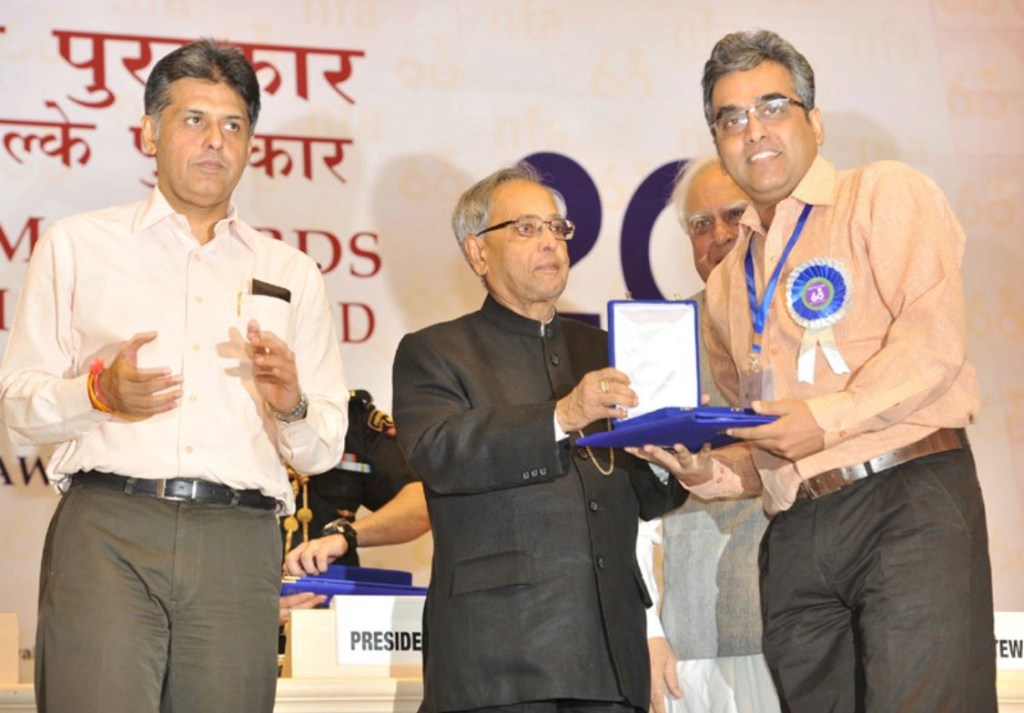
Indian President Pranab Mukherjee presents the Swarna Kamal Award to Shantanu Ray Chaudhuri at the 60th National Film Awards ceremony in New Delhi in 2013. Photo provided by Shantanu Ray Chaudhuri
Sandman, the mythical dream maker from Scandinavia, is said to sprinkle magical sand on sleeping children’s eyes to inspire beautiful dreams. What could Sandman have in common with a much-fêted editor who has worked with many celluloid stars and writers?
They both vend dreams – one makes dreams for children and the other is tries to fulfil dreams of writers attempting to create a beautiful book. Meet one such seeker of serendipity Shantanu Ray Chaudhuri, an eminent award-winning editor, who has brought out books on and by film personalities of India as well as assisted less-known writers find a footing in the tough world of traditional publishing. His magical sand is impeccable editing and an open outlook that stretches beyond the superficial glitter of fame and delves deep to look for that hidden well from which he draws out the best in a writer.
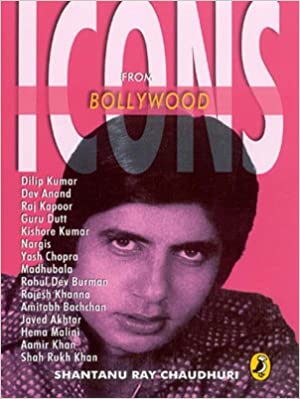
Books commissioned and edited by him have won the National Award for Best Book on Cinema twice and the inaugural MAMI (Mumbai Academy of Moving Images) Award for Best Writing on Cinema. In 2017, he was named Editor of the Year by the apex publishing body, Publishing Next. He has worked with famed writers like Gulzar and Arun Shourie as well as Bollywood stars like Rishi Kapoor and with the prestigious Satyajit Ray Archives. He has a book called Icons from Bollywood (2005) with Penguin on films, a set of fifteen essays. And he writes wonderful pieces on films for various sites like Cinemaazi, an archival film website,and Free Press Journal regularly.
But, Ray Chaudhuri is not just a film buff as he tells the world. He has a well-kept secret like ABBA’s ‘Nina Pretty Ballerina’, who would wear dancing shoes after work and turn into a phenomenon. He emotes beautiful poetry but hesitates to publish…He does have a book of verses though called Whims brought out by the Writers’ Workshop. In this exclusive, Ray Chaudhuri, who has worked in Penguin and Harper Collins and now is the Editor-in-Chief of Om Books International, tells us how he turned from a dry accountant to a seeker of serendipity and what it takes to publish with traditional publishers.
Please tell us what started you out on your journey as an editor and writer.
I have always loved the word serendipity. It accounts for whatever good I have experienced. I loved reading of course but went on to become an accidental editor. I started very early – loved books. Went through the age-specific lists – Hardy Boys, Alfred Hitchcock and The Three Investigators, and Tintin (which I love still), then slowly to Conan Doyle and Agatha Christie and P.G. Wodehouse, Satyajit Ray, Feluda and Shonku, Somerset Maugham, Camus and others.
In fact, I remember, during summer vacations, my mashis [aunts] would often ask to pluck grey hair from their heads and would pay me at Re 1 per hair. So, if I managed 25, I would have money to buy a Tintin. Or novels that were sold in second-hand shops at Rs 10-15. I wanted to study literature and humanities but at the time the stream was looked down upon. People whose opinions we respected kept saying, ‘Will you be a schoolteacher after studying humanities?’ I wish I had said yes at the time.
Anyway… Science I was sure I wouldn’t take. And humanities I wasn’t allowed to. So, I took up commerce, graduated, did my M.Com, studied for chartered accountancy and cost accountancy. Then for years worked in accounts and finance. And hated it. I would leave jobs and go off quite regularly.
Meanwhile, I had started writing poems and on films (as a means of escaping the drudgery of accounts and finance). These were published in magazines regularly. In fact, I won the Filmfare Best Review Award that they had every month a few times. Then, Writers Workshop published my first book of poems. And by this time, nearing thirty, I had had enough of accounts. I realised that any creativity in accounts would lead to jail! And I was damned if I could put up with another day of matching debits and credits. I enrolled for a mass communication course at XIC Mumbai, then started a magazine on cinema on my own, and subsequently moved to publishing and editorial.
What pushed you into publishing others over writing yourself for we can see you are an excellent writer too?
I have often asked myself: do I have anything to say that will make a difference to someone reading? Can I ever write an opening sentence as eloquent as Camus’s The Outsider? Or create a character like Larry Darrel in Maugham’s Razor’s Edge? Or one line like Rilke’s ‘For the Sake of a Single Poem’. Or, in fact, a draft of an unpublished novel a young friend of mine, Ramona Sen, asked me to read recently to comment on editorially – it is so good … could well be the next big thing in publishing. And the answer has always been ‘no’.
I look at what goes for writing today. It dismays me that books have become all about posting your picture with the cover and getting likes – it has to be more than getting FB likes, more than announcing your book as bestseller on social media. I would be mortified about unleashing anything as mediocre as these on anyone.
And then there’s also the question of what being a ‘writer’ means for you as an individual. Some of these authors and poets I meet are so conceited … I have doubts about myself as a person … you know, as Matthew 16:26 says: For what will it profit a man if he gains the whole world and forfeits his soul? These doubts about whether my writing amounts to anything, whether it says anything about me as a person have kept me from writing and more importantly publishing my writing – barring of course my columns and features on cinema.
Editing and publishing other people’s work is more impersonal – I can keep myself out of the equation. Though when you really like a book, you do tend to get emotionally involved.
You have authored a book of poems, Whims, and IconsfromBollywood. Tell us about these.
I guess both came off just like that – I wonder if there was a case of wanting to show off at the time I had published them. Today, I would think twice. The book of poems, Whims, was published by Writers Workshop, and I was rather proud at one time that Professor Lal deemed it worthy of being published. I often told myself that some of the best Indian poets began with Writers Workshop. I just sent it off to him on a whim.
Iconsfrom Bollywood was a more organised affair. I was working at Penguin at the time. Its children division was doing a series of books on icons – the arts, science, music, etc. Since everyone knew my interest in cinema, I had even met a few of the icons, the publisher, Sayoni Basu, asked me and I agreed. Eventually as no two people could agree on the ten names for the book – all the books in the series had ten icons – this ended up having fifteen names, the only book in the series with fifteen essays. It did rather well, got some good reviews in Dawn and Guardian and a few others.
Is authoring a book more challenging than editing and publishing for another? Or is it the other way? Please elucidate.
Of course, writing a book is more challenging. When you edit, you are working on adding some value to what a writer has already put down. You are not creating the world. At best, you help the author develop his work. It is challenging because often you are the first reader outside the author’s circle and your opinion also shapes the book. But writing is way more difficult. You are literally creating something out of nothing. Even writing a single line of good poetry is tougher than editing.
Tell us what moves your muse for poetry and prose?
That’s tough. It could be anything. For instance, in my college days DTC buses used to have a single passenger seat right at the front. I would often look at it and imagine how lonely it might feel. I eventually wrote a poem on that. Or when my folks narrated the story of Gulzar’s film Lekin to me, I was moved enough to write a poem. The sight of a battered old man, dead-drunk, lying by the roadside led to a story – what if that man had a past when there was hope and love in his life. Being in love has been a muse: I once wrote 21 poems for a beloved friend’s twenty-first birthday. The sight of my son’s sleeping face, his soft breathing, when I wake up at night and look at him. Even hate inspires you. The sense of disillusionment I felt about a ‘great’ poet’s pettiness and hypocrisy led to one of my best poems. My own frailties. The light at dusk, a tired day going to sleep. Lost friends … lost ideals. A good film. A bad film. Anything really.
We have read a lot of film pieces by you. When did your interest in writing for cinema start and how did it take off? Did it ever stray to film industries in other countries?
I think the love for cinema developed once I started studying commerce. The subjects bored me. Films offered me an escape. It helped that there were 4-5 cinema halls within walking distance of both my home and my college. I would often get away from college and make my way to a theatre. In the three years of graduation, I watched 169 films in halls. I watched the first-day-first-show, 12-3, and then would make my way to the evening one 6-9. I used to make a list and write down synopsis of what I felt. This was the 1980s, theatres were in awful shape, a really bad time for films and so most of what I watched were utter crap. But that was a lesson in itself. And I really enjoyed the escape to another world, even if a trashy one.
Slowly, with the coming of cable TV, there were more options. The VCR had come in and with that a few more options. Pirated prints from Palika Bazar. I had meanwhile written a few reviews for Filmfare and won a series of best review awards. That boosted my confidence in both my writing and my understanding of cinema. I also did a course in film and TV from the XIC, Mumbai. I started contributing to journals. I ran and wrote for the journal I started in Bombay, Lights Camera Action. But things took off after I started writing on Bengali cinema for Film Companion. And then with my association with Cinemaazi. I must thank Anupama Chopra and Sumant Batra for this. Couldn’t have happened without them.
I publish primarily on Bengali and Hindi cinema but write on a lot of international films for my own self. It’s tough finding time to watch, write, while keeping to the demands of a regular job and other freelancing assignments that one needs to do to keep the home fires burning. I envy the people who have money to spare, don’t have to worry about a job, and can keep churning out books.
Please tell us a bit about Cinemaazi – is it a website founded by you? It seems to be an archive, there is mention of an encyclopaedia?
Cinemaazi is the kind of serendipity I have been looking for as editor and film lover. It’s an initiative to document the history of Indian cinema across languages under the umbrella project Indian Cinema Heritage Foundation, a public charitable trust. The Foundation is also creating a freely accessible digital archive and encyclopaedia of Indian cinema and its people. No, I am not the founder. It’s entirely the brainchild and vision of Sumant and Asha Batra. Sumant is the kind of collector you can only be in awe of. I met him first at the Kumaon Lit Fest that he runs. And we shared a common love of cinema. In 2019, he started talking of a site to document the history of Hindi films, using his huge collection of film memorabilia. My only contribution, if you could call it that, was suggesting we make it a site on pan-Indian cinema, not just Hindi. He agreed and I worked on getting some material on Bengali and some other languages. Also kept contributing to it with articles and some video essays – we did a six-hour-long oral history project with Dhritiman Chatterjee. Cinemaazi got off to a very good start in January 2020. But by March 2020 we were all locking down. And it affected an endeavour taking its first steps. But it kept on working thanks to a small dedicated team. And now it’s poised to take off in a big way. I would have been very happy to engage in a bigger way with Cinemaazi, but as Sumant says, ‘he can’t afford me’, whatever that might mean. Sigh! I guess one ceases to be useful after a time. I am happy to have been a part of it in a small way in its first years.
You have worked with many icons of the Indian film industry like Rishi Kapoor, Satyajit Ray, Gulzar. Please share with us a few of your more interesting experiences.
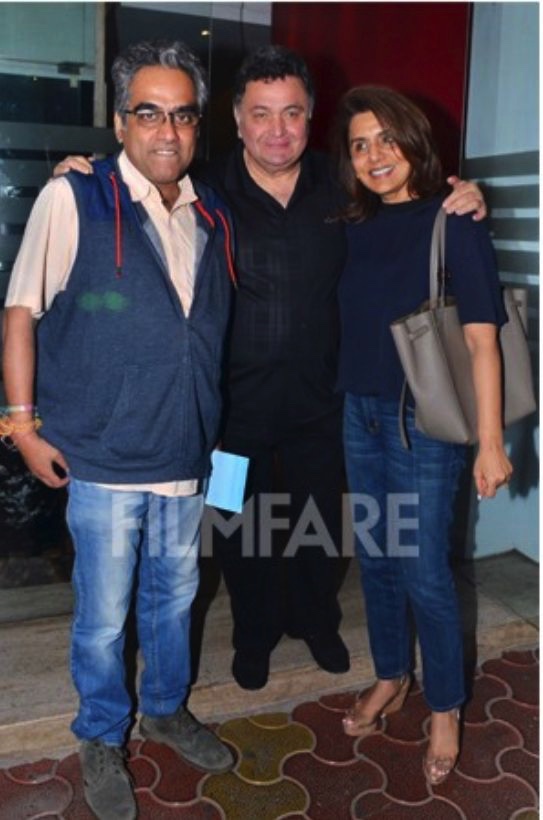
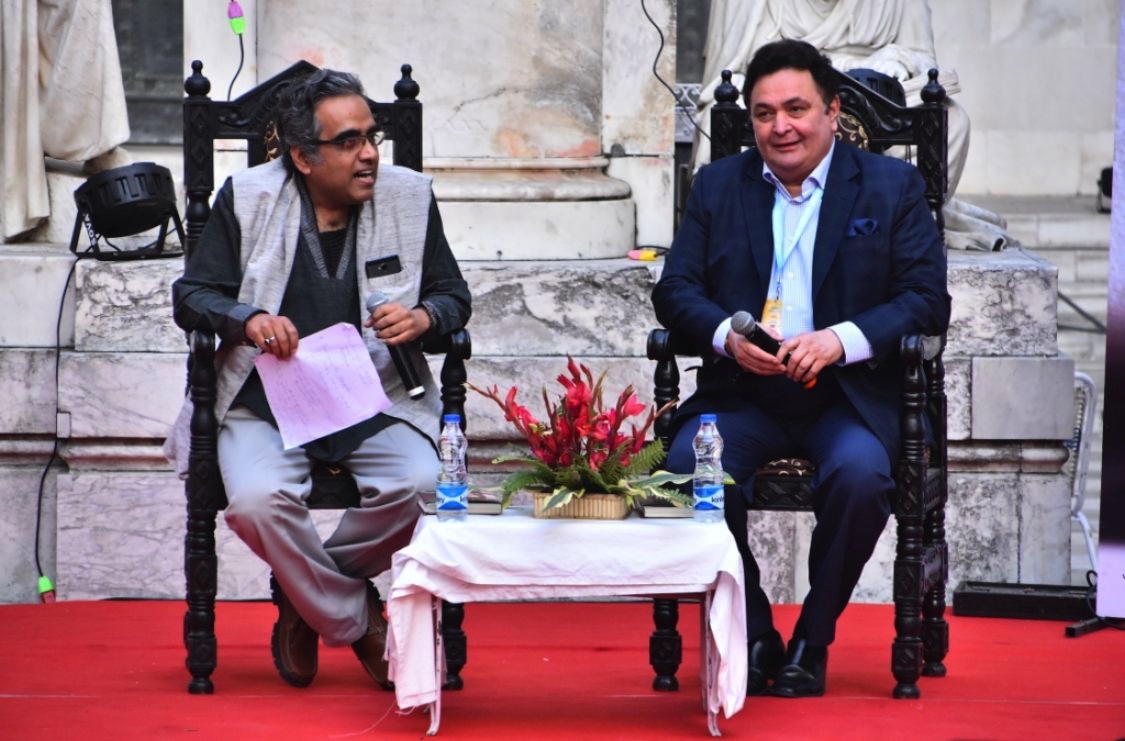
Shantanu with film star Rishi Kapoor and his wife Neetu SinghShantanu And Rishi Kapoor Photos provided by Shantanu Ray Chaudhuri
The big names I worked with like Gulzar and Rishi Kapoor and Arun Shourie were like perks of the job. Yes, they were FB like/share moments except that I seldom shared those days. I miss Rishi-ji a lot … and often go through the WhatsApp messages he sent me… With Gulzar-ji, it was all about poetry and translations. Never worked on a book of films with him, though I did commission a series of monographs on three of his films that came out after I had left the publishing house.
Shantanu Ray Chaudhuri in conversation with Gulzar and Meghna (Gulzar’s daughter) in Jaipur Literary Festival
The Satyajit Ray association was immensely satisfying. We ended up publishing five very rare books that I think not many editors would have dared to – imagine doing a book on Satyajit Ray’s unmade film on Ravi Shankar! The ones I really enjoyed were the first-time authors I was privileged to publish, people like Balaji Vittal, Anirudh Bhattacharya, Akshay Manwani, Rakesh Bakshi, Parthajit Baruah … and so many. They had no reason to trust me as editor and publisher. I have never been a big-name editor. But to have had them trust me with their books, books that did well, was quite humbling.
I was privileged to have someone like Vishal Bhardwaj trust me with his first book of poems in English. And through Vishal, I came to know Rekha and worked on a series of festival appearances with her – she has so many stories that she should do a book. With Sharmila Tagore, I worked on a book on Mansur Pataudi that did very well. Authors like Krishna Shastri, Sathya Saran and Gajra Kottary became close friends. Rakhshanda Jalil … whom I love and admire – she did a wonderful book on Shahryar with me and a couple of other translations of Gulzar and Kaifi Azmi. There was Nasreen Munni Kabir and her book on Zakir Hussain…
The more interesting encounters are the ones that ended badly. An author, who again published first with me and went on to publish 4 more, turned on me because I took on his rabid right-wing wife on the CAA and their obnoxious reference to ‘urban naxals’ … I was abused and received a lot of threatening messages and calls … I lost a friend and an author, but I am glad I could take a stand on a matter on which many of our ‘liberal’ friends and authors remain silent. Another ‘great’ poet, someone I considered God, turned out to have feet of clay and whose behaviour I find traumatic even today. But those are for my memoir! They taught me a better lesson than anything else could.
You have worked with big multinational names like Penguin and HarperCollins and even brought out collection of books on films. And now you have moved to working with one of the oldest and most iconic publishers from India. Is the experience any different?
Well, the best thing about not being with an MNC is that one is not part of the toxic environment they breed. It was killing after a point. And often they wouldn’t take on an idea just to spite you, even though some of the books that got commissioned were unbelievably bad, had me scratching my head, wondering what I had missed. And they can be very demeaning to authors. And short-sighted too. I remember signing up Rahul Rawail’s memoir of Raj Kapoor. And the publishing house actually reneged on its commitment after sending him an offer. It put me in such a bad place with him. Thankfully, I could get him another MNC publisher. And the book is now getting such rave reviews.
Yes, it’s challenging working in a smaller space. You have nothing going for marketing – not that the biggies do anything much on this either, unless you are already a big name which makes it easy to market. Then you don’t have budgets for advances and for marketing. So, immediately your commissioning acquires a different take. But that also makes you look for good young talent. I am glad I have found quite a few, thanks to agents like Suhail Mathur and some goodwill I might have built up in the last few years. Authors I am sure I wouldn’t have been allowed to publish in the MNCs. Now, whether they sell and work in the market is a gamble.
Writers find it challenging to use traditional publishing. In an attempt to make their writing visible, many are turning to self-publishing and publishing with independent small publishers. What do you think of this trend?
I think it does take a little more time in going the traditional publishing route. Self-publishing is quicker. But then authors also need to be patient. Traditional publishing can give them benefits of a good editor. Give them more time to polish their text. However, it seems more and more authors are in too much of a rush to publish. Getting FB likes and shares is more important than working on your text. Authors don’t feel like they need good editorial intervention. Publishing is all that matters, whatever be the quality of writing.
Unfortunately, traditional publishing too has failed to give good editorial inputs. Some of the stuff I read by the MNC publishers are atrocious. I think everyone wants a book out too quick. When I started out as an editor, we had months to work on a book. These days, authors tend to ask for a marketing plan even before they have completed the first draft of the text. And publishers are only too willing to get on the treadmill. And the post-publication efforts of MNCs also operate on the 90-10 principle: 90 per cent of marketing budget is spent on 10 per cent of the biggies. So, I guess self-publishing works. Some of the most successful mass-market writers we have today started with vanity or self-publishing, then were picked up by the traditional publishers. And the writing continues to be as bad.
Can you tell us as a publisher, what do you look for when you accept or reject a piece of writing?
I don’t think any publisher has figured out what makes a book work. Most of them go by herd mentality: mythologicals are selling, let’s do them, in trilogies, since it’s fashionable these days. Short stories don’t work. Fitness/self-help, yes, let’s do.
Basically, one looks for (i) is the content engaging (ii) is the writing interesting. Take, Akshay’s book on Sahir … I found the content wonderful. And so well done. Or Balaji-Anirudh’s book on RD Burman … the research was impeccable. And though people were sceptical, saying these people had been dead for decades, one felt that these books had that special something. Or more recently, the anthology on motherhood that Om is publishing. I was immediately interested in the theme and the variety of essays on offer – to have Kamala Das and Mannu Bhandari, Shashi Deshpande and Shabana Azmi between the same covers is…. There’s a collection of essays on the pandemic that I have commissioned, coming out soon – again, from Shashi Tharoor and Vidya Balan to an anonymous gravedigger and migrant worker – the range is incredible. The book that we are doing with Borderless Journal, for example. What a wide variety of international writing! Or the book on cybersecurity. Or for that matter, Suman Ghosh’s Soumitra Chatterjee book, which gave some fascinating insights to the director-actor relationship. I knew people would think it niche, but what if we could make it big? It has the potential.
Thank you for that. What is your vision as a publisher and writer of the future of publishing and writing?
I am too small fry to talk of the future of publishing. It’s a tough time for publishers. At the end of the day, all those 500 likes on FB won’t help if those liking don’t buy books. Social media reach is no guarantee of either good writing or good sales.
The way Westland folded says a lot about how untenable big advances are. Authors must realise that. While publishers must make efforts to sell more of the books they publish so that even if advances are small, the royalty on sales works out.
I think there’s also a lot of snobbery around English-language publishing in India. On the part of publishers, authors, translators, agents, literary festivals. I know an agent, one of India’s most successful, who doesn’t deign to pitch books to me because I am not with the top MNC publishers. Though apart from a hefty advance, there is nothing I cannot deliver that the biggies can. One of the most popular cover designers, who worked closely with me when I was at Penguin and Harper, just put me out to dry when I approached him for a cover on the Soumitra Chatterjee book. He couldn’t be bothered even to respond given that I was with a smaller publisher now. The most popular translator won’t give me time of day, though I edited his/her first book. There’s this author couple I published after both their individual books had been rejected at other publishers. But once they realised that prosperity lay in ingratiating themselves with what they perceived were other more popular and powerful editors … though none of their books have worked in terms of sales so far in the last ten years.
Most editors I have come across give off vibes like they are god’s gift to the language. I mean, not even two per cent of the population engages with the work you do. What are we so uppity about? The local cobbler attends to more people than what your average book gets as readers.
And this snobbery impacts the kind of publishing we do. We are suckers for big names, big advances. We have to move out of that. And out of this herd mentality of publishing. Give new writers, new themes a chance. At the same time, new young authors need to reflect on their work and not rush into becoming a ‘published’ author. It’s not instant noodles or coffee. Books and authors take time to develop. We need to give books that time.
Thank you for giving us your time and also taking on our anthology.
With Sandip Ray &Sharmila TagoreWith Soumitra ChatterjeeWith Amitabh BachchanShantanu at various launches and events with Indian films’ glitterati. Photos provided by Shantanu Ray Chaudhuri






 Borderless