Categories
Contents

Borderless, January 2026

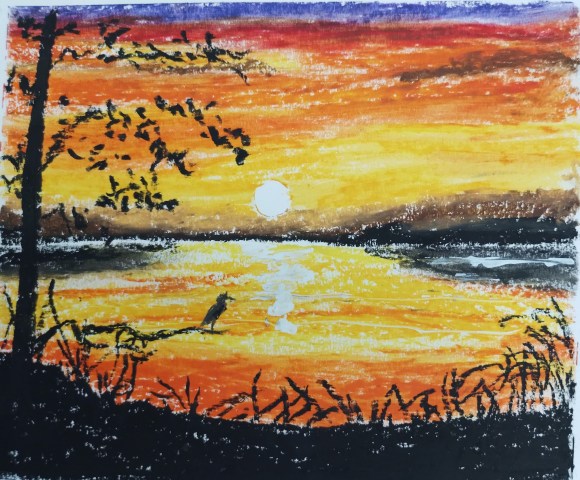
Art by Sohana Manzoor

Editorial

Sense and Nonsense: Atonal, Imperfect, Incomplete… Click here to read.

Translations

Akashe Aaj Choriye Delam Priyo(I sprinkle in the sky) by Nazrul has been translated from Bengali by Professor Fakrul Alam. Click here to read.

Four of his own Malay poems have been translated by Isa Kamari. Click here to read.

Six Fragments by Sayad Hashumi have been translated from Balochi by Fazal Baloch. Click here to read.

Five poems by Pravasini Mahakuda have been translated to English from Odia by Snehaprava Das. Click here to read.

A Poet in Exile by Dmitry Blizniuk has been translated from Ukranian by Sergey Gerasimov. Click here to read.

Kalponik or Imagined by Tagore has been translated from Bengali by Mitali Chakravarty. Click here to read.

Pandies Corner

Songs of Freedom: The Seven Mysteries of Sumona’s Life is an autobiographical narrative by Sumona (pseudonym), translated from Hindustani by Grace M Sukanya. These stories highlight the ongoing struggle against debilitating rigid boundaries drawn by societal norms, with the support from organisations like Shaktishalini and Pandies. Click here to read.

Poetry

Click on the names to read the poems

Ryan Quinn Flanagan, Ron Pickett, Snehaprava Das, Stephen Druce, Phil Wood, Akintoye Akinsola, Michael Lauchlan, Pritika Rao, SR Inciardi, Richard Murphy, Jim Murdoch, Pramod Rastogi, Joy Anne O’Donnell, Andrew Leggett, Ananya Sarkar, Annette Gagliardi, Rhys Hughes

Poets, Poetry & Rhys Hughes

In What is a Prose Poem?, Rhys Hughes tells us what he understands about the genre and shares four of his. Click here to read.

Musings/Slices from Life

Duties For Those Left Behind

Keith Lyons muses on a missing friend in Bali. Click here to read.

That Time of Year

Rick Bailey muses about the passage of years. Click here to read.

All So Messi!

Farouk Gulsara takes a look at events in India and Malaysia and muses. Click here to read.

How Twins Revive Spiritual Heritage Throbbing Syncretism

Prithvijeet Sinha takes us to the Lucknow of 1800s. Click here to read.

Recycling New Jersey

Karen Beatty gives a glimpse of her life. Click here to read.

Musings of a Copywriter

In ‘All Creatures Great and Small’, Devraj Singh Kalsi writes of animal interactions. Click here to read.

Notes from Japan

In The Cat Stationmaster of Kishi, Suzanne Kamata visits a small town where cats are cherished. Click here to read.

Essays

The Untold Stories of a Wooden Suitcase

Larry S. Su recounts his past in China and weaves a narrative of resilience. Click here to read.

A Place to Remember

Randriamamonjisoa Sylvie Valencia dwells on her favourite haunt. Click here to read.

Christmas that Almost Disappeared

Farouk Gulsara writes of Charles Dickens’ hand in reviving the Christmas spirit. Click here to read.

The Last of the Barbers: How the Saloon Became the Salon (and Where the Gossip Went)

Charudutta Panigrahi writes an essay steeped in nostalgia and yet weaving in the present. Click here to read.

Aeons of Art

In Art is Alive, Ratnottama Sengupta introduces the antiquity of Indian art. Click here to read.

Stories

Old Harry’s Game

Ross Salvage tells a poignant story about friendship with an old tramp. Click here to read.

Mrs. Thompson’s Package

Mary Ellen Campagna explores the macabre in a short fiction. Click here to read.

Hold on to What You Let Go

Rajendra Kumar Roul relates a story of compassion and expectations. Click here to read.

Used Steinways

Jonathan B. Ferrini shares a story about pianos and people set in Los Angeles. Click here to read.

The Rose’s Wish

Naramsetti Umamaheswararao relates a fable involving flowers and bees. Click here to read.

Discussion

A brief discusion of Whereabouts of the Anonymous: Exploration of the Invisible by Rajorshi Patranabis with an exclusive interview with the author on his supernatural leanings. Click here to read.

Book Excerpts

An excerpt from Showkat Ali’s The Struggle: A Novel, translated from Bengali by V. Ramaswamy and Mohiuddin Jahangir. Clickhere to read.

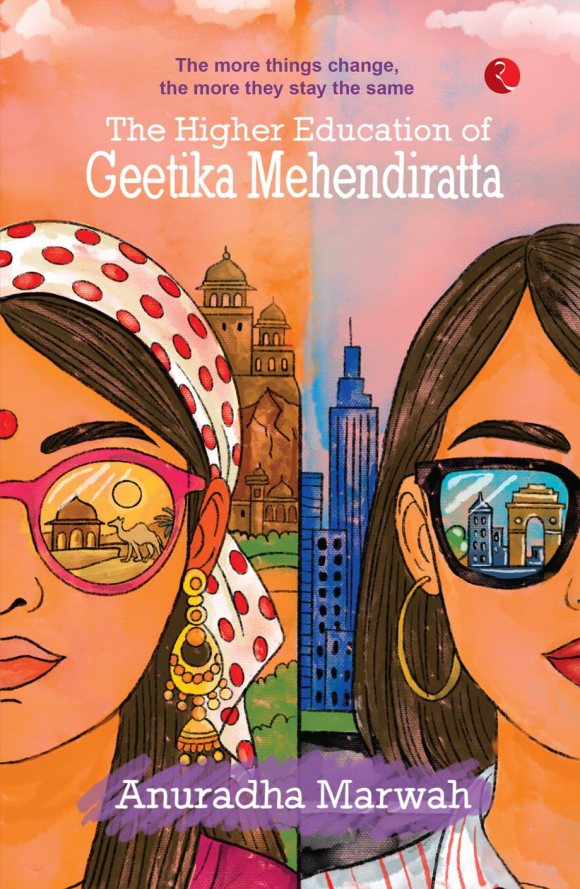
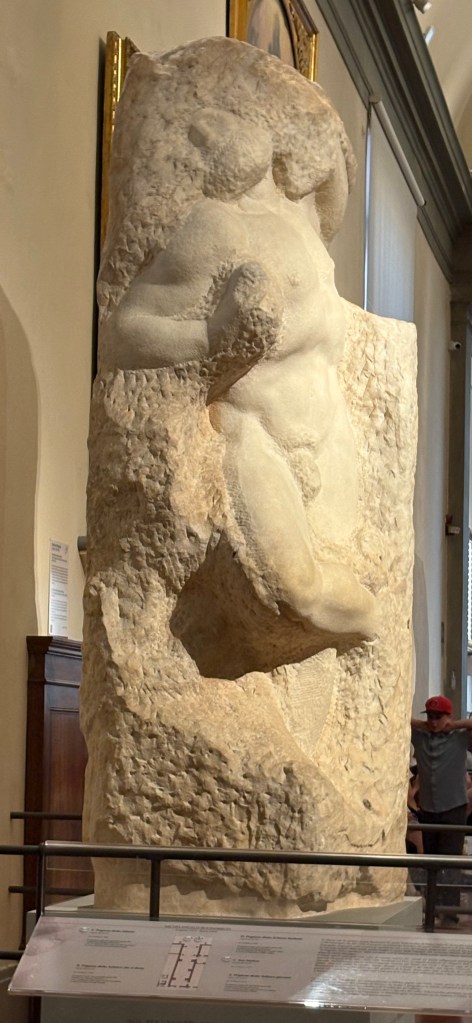
An excerpt from Anuradha Marwah’s The Higher Education of Geetika Mehendiratta. Click here to read.

Book Reviews

Somdatta Mandal reviews Showkat Ali’s The Struggle: A Novel, translated from Bengali by V. Ramaswamy and Mohiuddin Jahangir. Click here to read.

Meenakshi Malhotra reviews Anuradha Marwah’s The Higher Education of Geetika Mehendiratta. Click here to read.

Udita Banerjee reviews The Lost Pendant, translated (from Bengali) Partition poetry edited by Angshuman Kar. Click here to read.

Bhaskar Parichha reviews Rakesh Dwivedi’s Colonization Crusade and Freedom of India: A Saga of Monstrous British Barbarianism around the Globe. Click here to read.

.

Click here to access the Borderless anthology, Monalisa No Longer Smiles

Click here to access Monalisa No Longer Smiles on Amazon International
Categories
Editorial

Sense and Nonsense: Atonal, Imperfect, Incomplete

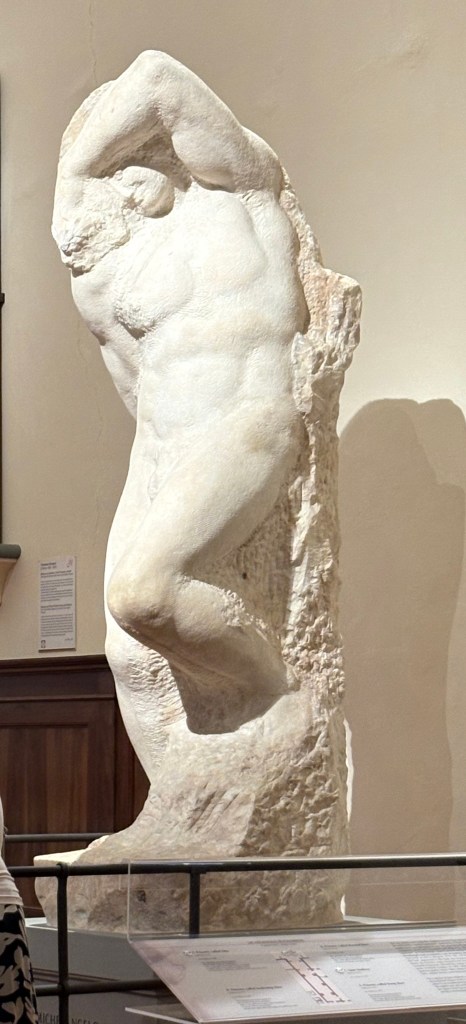
In the Accademia Gallery, Florence, are housed incomplete statues by Michelangelo that were supposed to accompany his sculpture of Moses on the grand tomb of Pope Julius II. The sculptures despite being unfinished, incomplete and therefore imperfect, evoke a sense of power. They seem to be wresting forcefully with the uncarved marble to free their own forms — much like humanity struggling to lead their own lives. Life now is comparable to atonal notes of modern compositions that refuse to fall in line with more formal, conventional melodies. The new year continues with residues of unending wars, violence, hate and chaos. Yet amidst all this darkness, we still live, laugh and enjoy small successes. The smaller things in our imperfect existence bring us hope, the necessary ingredient that helps us survive under all circumstances.

Imperfections, like Michelangelo’s Non-finito statues in Florence, or modern atonal notes, go on to create vibrant, relatable art. There is also a belief that when suffering is greatest, arts flourish. Beauty and hope are born of pain. Will great art or literature rise out of the chaos we are living in now?  One wonders if ancient art too was born of humanity’s struggle to survive in a comparatively younger world where they did not understand natural forces and whose history we try to piece together with objects from posterity. Starting on a journey of bringing ancient art from her part of the world, Ratnottama Sengupta shares a new column with us from this January.

Drenched in struggles of the past is also Showkat Ali’s The Struggle: A Novel, translated from Bengali by V. Ramaswamy and Mohiuddin Jahangir. It has been reviewed by Somdatta Mandal who sees it a socio-economic presentation of the times. We also carry an excerpt from the book as we do for Anuradha Marwah’s The Higher Education of Geetika Mehendiratta. Marwha’s novel has been reviewed by Meenakshi Malhotra who sees it as a bildungsroman and a daring book. Bhaskar Parichha has brought to us a discussion on colonial history about Rakesh Dwivedi’s Colonization Crusade and Freedom of India: A Saga of Monstrous British Barbarianism around the Globe. Udita Banerjee has also delved into history with her exploration of Angshuman Kar’s The Lost Pendant, a collection of poems written by poets who lived through the horrors of Partition and translated from Bengali by multiple poets. One of the translators, Rajorshi Patranabis, has also discussed his own book of supernatural encounters, Whereabouts of the Anonymous: Exploration of the Invisible. A Wiccan by choice, Patranbis claims to have met with residual energies or what we in common parlance call ghosts and spoken to many of them. He not only clicked these ethereal beings — and has kindly shared his photos in this feature — but also has written a whole book about his encounters, including with the malevolent spirits of India’s most haunted monument, the Bhangarh Fort.

Bringing us an essay on a book that had spooky encounters is Farouk Gulsara, showing how Dickens’ A Christmas Carol revived a festival that might have got written off. We have a narrative revoking the past from Larry Su, who writes of his childhood in the China of the 1970s and beyond. He dwells on resilience — one of the themes we love in Borderless Journal. Karen Beatty also invokes ghosts from her past while sharing her memoir. Rick Bailey brings in a feeling of mortality in his musing while Keith Lyons, writes in quest of his friend who mysteriously went missing in Bali. Let’s hope he finds out more about him.

Charudutta Panigrahi writes a lighthearted piece on barbers of yore, some of whom can still be found plying their trade under trees in India. Randriamamonjisoa Sylvie Valencia dwells on her favourite place which continues to rejuvenate and excite while Prithvijeet Sinha writes about haunts he is passionate about, the ancient monuments of Lucknow. Gulsara has woven contemporary lores into his satirical piece, involving Messi, the footballer. Bringing compassionate humour with his animal interactions is Devraj Singh Kalsi, who is visited daily by not just a bovine visitor, but cats, monkeys, birds and more — and he feeds them all. Suzanne Kamata takes us to Kishi, brought to us by both her narrative and pictures, including one of a feline stationmaster!

Rhys Hughes has discussed prose poems and shared a few of his own along with three separate tongue-in-cheek verses on meteorological romances. In poetry, we have a vibrant selection from across the globe with poems by Ryan Quinn Flanagan, Ron Pickett, Snehaprava Das, Stephen Druce, Phil Wood, Akintoye Akinsola, Michael Lauchlan, Pritika Rao, SR Inciardi, Jim Murdoch, Pramod Rastogi, Joy Anne O’Donnell, Andrew Leggett, Ananya Sarkar and Annette Gagliardi. Richard Murphy has poignant poems about refugees while Dmitry Bliznik of Ukraine, has written a first-hand account of how he fared in his war-torn world in his poignant poem, ‘A Poet in Exile’, translated from Ukranian by Sergey Gerasimov —

We've run away from the simmering house
like milk that is boiling over. Now I'm single again.
The sun hangs behind a ruffled up shed,
like a bloody yolk on a cold frying pan
until the nightfall dumps it in the garbage…

('A Poet in Exile', by Dmitry Blizniuk, translated from Ukranian by Sergey Gerasimov)

In translations, we have Professor Fakrul Alam’s rendition of Nazrul’s mellifluous lyrics from Bengali. Isa Kamari has shared four more of his Malay poems in English bringing us flavours of his culture. Snehaparava Das has similarly given us flavours of Odisha with her translation of Pravasini Mahakuda’s Odia poetry. A taste of Balochistan comes to us from Fazal Baloch’s rendition of Sayad Hashumi’s Balochi quatrains in English. Tagore’s poem ‘Kalponik’ (Imagined) has been rendered in English. This was a poem that was set to music by his niece, Sarala Devi.

After a long hiatus, we are delighted to finally revive Pandies Corner with a story by Sumona translated from Hindustani by Grace M Sukanya. Her story highlights the ongoing struggle against debilitating rigid boundaries drawn by societal norms. Sumana has assumed a pen name as her story is true and could be a security risk for her. She is eager to narrate her story — do pause by and take a look.

In fiction, we have a poignant narrative about befriending a tramp by Ross Salvage, and macabre and dark one by Mary Ellen Campagna, written with a light touch. It almost makes one think of Eugene Ionesco. Jonathan B. Ferrini shares a heartfelt story about used Steinway pianos and growing up in Latino Los Angeles. Rajendra Kumar Roul weaves a narrative around compassion and expectations. Naramsetti Umamaheswararao gives a beautiful fable around roses and bees.

With that, we come to the end of a bumper issue with more than fifty peices. Huge thanks to all our fabulous contributors, some of whom have not just written but shared photographs to illustrate the content. Do pause by our contents page and take a look. My heartfelt thanks to our fabulous team for their output and support, especially Sohana Manzoor who does our cover art. And most of all huge thanks to readers whose numbers keep growing, making it worth our while to offer our fare. Thank you all.

Here’s wishing all of you better prospects for the newborn year and may we move towards peace and sanity in a world that seems to have gone amuck!

Happy Reading!

Mitali Chakravarty

borderlessjournal.com

CLICK HERE TO ACCESS THE CONTENTS FOR THE JANUARY 2026 ISSUE.

.

READ THE LATEST UPDATES ON THE FIRST BORDERLESS ANTHOLOGY, MONALISA NO LONGER SMILES, BY CLICKING ON THIS LINK.

Categories
Review

Geetika Mehendiratta Comes of Age!

Book Review by Meenakshi Malhotra

Title: The Higher Education of Geetika Mehendiratta

Author: Anuradha Marwah

Publisher: Rupa Publications

Anuradha Marwah’s debut novel, The Higher Education of Geetika Mehendiratta, republished by more than thirty years after its original publication, is a delightful read. It is a trailblazer and a pioneer in more ways than one-an Indian campus novel before the campus novel became identified as a genre; and a frank exploration of female sexuality without the usual  humbug  and euphemisms associated with the treatment of sex in many 20th century novels.

It scores in other respects as well-its recreation of small-town ennui before the internet took over our lives, in the middle of a hot summer is a feeling  we recognise well. Time moved slowly, people still read books and families still conversed with each other, albeit in the most cliched terms. However, the novel’s tone is not nostalgic, and does not “invite readers into a sepia-tinted past.” (Authors Note)

When the novel opens, we see Geetika whose outlook and  family context is quite at variance with the majority of people around her. We cannot imagine her settling into middle-class bourgeois domesticity with her ‘boyfriend’  or otherwise. The slow pace of life and limited options available in Desertwadi make it a claustrophobic trap for someone like Geetika, who is ready to embark on her adventures, both intellectual and sexual. Her experiments in both directions is a sort of liminal phase before she embarks upon the next stage of her life.

The author has hit the right mixture of irony, tongue-in-cheek humour and social satire. Her social satire pierces particularly deep, albeit at the risk of occasionally falling back on stereotypes. This is strongest in the case of the typical small-town aunty, Andy’s mother. Andy, her son, who is attempting to court Geetika, can barely get anything said (or done!) without  his mother butting into the conversation or walking into his room. Dalpat Singh is another such character, a corrupt small town sports official who has considerable clout and fully exploits his position in whatever way possible. Geetika realises that “Dalpatji was a reality I could not accept. He did not care if the Indian team won or lost; he only cared about the requisite number of scotch bottles that had to be presented to a journalist in order to get good coverage in the papers.”

Drawing on an undertow of real events like the mega sports hosted by India, ASIAD in 1982, the novel stays moored to recognisable places and times. Sometimes, it almost seems like a ‘roman a clef,’ a novel where real events and people appear with fictitious and invented names. The author has explored the nooks and crannies of the two cities, Delhi (Lutyenabad) and Ajmer (Desertwadi) in intimate detail, the claustrophobia of small town existence and the fraught ‘freedoms’ of the big city which breeds its own threats and insecurities. Double standards of morality and the double binds of gender are both in evidence in the novel. Geeti’s friend, Vinita, gets married to a NRI who while being sexually experienced himself, wants  a ‘pure’ Indian wife. Vinita is comfortable with her new husband’s sexual exploits before marriage: she did not mind as it was “all before marriage and men will be men-if girls were game, one couldn’t expect them to be saints.” The double bind of gender is evident in Geetika’s careworn mother. A working woman who is also engaged in social work, Geetika also observes how she has to do the heavy lifting when the domestic help is on leave.  

Many aspects this coming of age story seems particularly prescient for a novel that  was first published in 1993. Its primary concerns —  the stifling and limited choices of life particularly for girls in small-town India, its frank and unabashed exploration of sexuality, narrated in a sassy and unapologetic way make it seem like a fitting story of twenty-first century India.   The book accurately captures the inner conflicts of a young woman caught between a society where even progressive parents are limited by the paucity of available options and the narrowness of societal expectations.   Geetika inhabits a society that veers between conservatism and a kind  of  progressive  hypocrisy. On a quest to expand the contours of her world, she learns that there are no easy choices and the seemingly viable options of settling into bourgeois domesticity, albeit self-chosen, would clip her wings and disable her from self-realisation. This realisation hits her when she is already into the relationship. Some of the fault lines in the relationship between Geetika and her boyfriend, Ratish, are evident from the beginning. From his conservative perspective, feminism is a problematic term. On being asked about his mother, he declares that she is not a hysterical feminist. For him, a woman’s primary duty is to make herself available and agreeable and  be a good mother and wife, and any other aspiration is dismissed as a feminist excess.  

 Geetika realises that her curiosity and quest for freedom have led her up a slippery slope and this book is about the incremental costs of chasing one’s dreams.  The book ends on a somewhat sombre notes with Geetika giving up on dreams of middle class marriage  which would severely limit  her choices. The unconventional and difficult choices she makes also demonstrate the influence of feminist staff rooms where many  women– colleagues and associates — have made difficult and  unconventional choices.  In their company, Geetika realises that she has let herself drift into a relationship which would negate any exercise of agency on her part. It is in part, her recovery of her intellectual freedom to think and write authentically that constitutes her higher education.

The novel also offers us a social satire of ‘higher education’ in the premier institutions of Lutyenabad, replete with references to Capital University and Jana University. This is an insider joke with barely veiled references to actual universities in Delhi. Further, the academic pretensions of many academics who unleash fancy theories, which they have barely grasp themselves, on their hapless research students,  are called out. Literary references pepper the text where Roland Barthes’s   essay “Striptease”, a masterpiece of structuralist criticism, actually refers to a stripping of Geetika’s professor of her pretensions of having been at Sorbonne .   

The Higher Education of Geetika Mehendiratta is a sharp, accurate, searing and witty coming of age story, a bildungsroman, which is unabashed in its honesty about an ambitious  young woman’s journey to self-realisation. To quote from the Author’s Note, “Geetika, my outspoken protagonist, questioned and challenged, and the issues she grappled with are by no means resolved till date.” She continues, “Young people continue to face similar dilemmas: career or family, feminism or femininity, love or rebellion.” Geetika’s story is still relevant and contemporaneous,  ”adding the heft of history to present-day conversations on marriage and partnership.” It’s a coming of age story that resonates far and wide into the twenty-first century.  

Click here to read an excerpt of the novel.

Meenakshi Malhotra is Professor of English Literature at Hansraj College, University of Delhi, and has been involved in teaching and curriculum development in several universities. She has edited two books on Women and Lifewriting, Representing the Self and Claiming the I, in addition  to numerous published articles on gender, literature and feminist theory.  Her most recent publication is The Gendered Body: Negotiation, Resistance, Struggle.

.

PLEASE NOTE: ARTICLES CAN ONLY BE REPRODUCED IN OTHER SITES WITH DUE ACKNOWLEDGEMENT TO BORDERLESS JOURNAL

Click here to access the Borderless anthology, Monalisa No Longer Smiles

Click here to access Monalisa No Longer Smiles on Amazon International
Categories
Excerpt

The Higher Education of Geetika Mehendiratta

Title: The Higher Education of Geetika Mehendiratta

Author: Anuradha Marwah

Publisher: Rupa Publications

Boyfriend

There is communication because there is no communication, thundered the supervisor in a sudden spurt of lucidity.

Three dark heads bent obediently over the notebook to glean these pearls of wisdom.

‘When I say cat, you may think of a black cat, a white cat, a fat cat, a thin cat…’

I wondered where to put this in. I was going to write a dissertation on A House for Mr Biswas by V.S. Naipaul, I had decided last night. At what point should I bring in the feline? This brand new structuralist approach… For the past twenty minutes, this impressive lady from Sorbonne had only spoken about the difficulty in identifying cats. I had even drawn one in my notebook. Structuralism had spread far and wide, she had told us; it had reached Cornell, where a professor had simplified it at once for the simple non-European brain. Only Americans are capable of such simplifications, she had added laughingly.

Cornell, America… Vinita.

Vinita had changed so much. She now had a baby girl. She did all the household chores herself, she had told me. She had become plump. Her breasts had lost their upright quality; she had even started applying a lot of make-up—bright lipstick, mascara and eyeshadow.

She wouldn’t know about American universities though—that wasn’t the America she had gone to. She had gone to drudgery and loneliness… No servants to chat with all day long.

In Ratish’s house, there were servants… Lakshmi said Ratish was far too predictable. She said I was predictable too. That I would get married in a hotel, watched by a whole lot of people I didn’t know; that I would have two easy deliveries and be pleasantly miserable all my life. She even predicted I would get fat.

When I told her I wasn’t predictable and would make her sit up one day, she began singing ‘Girls Just Want to Have Fun’.

Every discourse has a mediatory role as an instrument of change.

Who would mediate between my estranged parents and me?

Which discourse—the discourse of commitment or the discourse of tradition? Lakshmi or Ratish?

Ratish had come to Desertvadi to say that he loved me. Mummy had said it was absolutely dreadful the way I could never make up my mind about boys. She had cried. Andy had cried too; Papa was the only one who hadn’t. And then, suddenly, there had been a letter from the university saying I had cleared the written exams for the MPhil programme, would I appear for an interview?

I was where I wanted to be, for the first time in life, although the umbilical cord of parental expectations was yet to be cut… Ratish said he valued family and respected my parents, and that I should be gentle with them… Cruel to be kind, kind to the potential children in my womb. What if there weren’t any? What if I couldn’t have any? So much of our planning would go haywire, Ratish. I would have been cruel for nothing.

There would be nothing to do except cry or make a phone call to your office… No patter of little feet. What would I do with you then?

Tonight, we are going for a party, I will ask you then.

Words are either arbitrary or associational.

Is that a word, ‘associational’, or was it coined in Sorbonne this very summer? Lakshmi says it would be better to check the professor’s antecedents; perhaps she is not from Sorbonne at all.

Lakshmi looks down on our department anyway.

Economics people have this strange nose-in-the-air attitude towards languages. Our department was housed in the School of Languages, so everybody thought it was a Linguistics department… But we were doing literature, three of us. One was from Utkal University, Orissa; another from Ramakrishna Mission, Pondicherry; and I, from Rajasthan University.

I was disappointed that there was nobody from Lutyenabad in our course. All Lutyenabad students went to the Capital University because all the jobs were there. I had heard that there was a danger of never landing a job in Lutyenabad after doing an MPhil from Jana University.

So Andy, your curse may yet materialize—if I don’t have children and I don’t get a job. You had said as much, hadn’t you?

‘You will never be happy, Geetika, never… Don’t think you can find happiness by wrecking mine.’

But what could I do, Andy?

‘Geeti, my mother wants us to marry,’ you had said.

‘But Andy, my parents do not want me to marry yet.’

‘Look, the situation is getting very difficult for me. My parents are rather worried about the fact that your parents have not made any overtures to them.’

‘Why don’t you explain to them—’

‘I have done enough explaining. Your brother got married without even calling his parents for the wedding…’

‘What does Bhaiya have to do with this?’

‘Geeti, I can understand my parents… They didn’t question my decision to marry you. Surely, they are entitled to some sort of say in my affairs.’

‘I am not saying they are not…but Andy, what am I to do?’

You could never answer that one, could you, Andy? It just went on and on—your duty towards your parents, the obduracy of mine. I was tempted, sorely tempted, to just tell my parents that I was marrying you that very day but Ratish’s card saved me.

It came by the evening post the day you left Desertvadi after extracting a promise from me that I would speak to my parents. It was a lovely card; it said: ‘I can’t forget you, little one’.

It became easier to write that letter to you, dear Andy… It became easier to tell you, when you came running after receiving that letter, that it won’t work… But it wasn’t easy dealing with the lava of your frustrated anger as it burnt down my unsuspecting ears whenever I picked up the phone for months after that.

‘You bitch, you found somebody else at the Sportsaid, didn’t you? Don’t think you can ever be happy with him…’

Discourse becomes necessary because of the ambiguity inherent in the nature of language.

But I understood even what you didn’t say… I knew that I had wronged you, Andy. I did not cry as much as you did; I would have to make up for it. I had always appeased the gods by crying… This time, I slipped up…

About the Book: Desertvadi, Rajasthan, is a retirees’ paradise, but for a young girl like Geetika it is a claustrophobic trap. Academically gifted and sexually curious, she feels suffocated by small-town mediocrity and dreams of faraway lands and liberated lives – the kind that fill the pages of her beloved novels.

So, when an opportunity to study in the big, bustling Lutyenabad presents itself, Geetika leaps at it, eager to get away from her parents and the miasma of chronic boredom that envelops Desertvadi. Soon cosmopolitan life begins to feel like a snug fit especially when her new boyfriend, a famously fine catch, offers her the many luxuries of a conventional marriage.

But life in a metro impacts her in ways she never expected. Her aspirations inflate, her tastes evolve, and her ambitions solidify.  As her boundaries expand uncontrollably and the daydreams she was escaping to inevitably shatter, Geetika is compelled to face some tough questions.

Published in 1993, The Higher Education of Geetika Mehendiratta was one of India’s earliest campus novels. Republished for a new generation, this is a bold and intimate coming-of-age tale – unafraid of its hunger and unashamed of its heat.

About the Author: Anuradha Marwah is a professor, playwright, and novelist. Her wide-ranging publications also include poems, essays, articles and reviews. Aunties of Vasant Kunj, her fourth novel was published in 2024 to immense acclaim. Anuradha lives in Vasant Kunj, surrounded by a community of trees and cats.

Click here to read the review of the novel

.

PLEASE NOTE: ARTICLES CAN ONLY BE REPRODUCED IN OTHER SITES WITH DUE ACKNOWLEDGEMENT TO BORDERLESS JOURNAL

Click here to access the Borderless anthology, Monalisa No Longer Smiles

Click here to access Monalisa No Longer Smiles on Kindle Amazon International