It was the year 2020. When most of the world was lacking connection and normalcy, I had the privilege of being in Sri Lanka, an island that I had referred to as ‘home’ but hadn’t truly been my home since I left at the age of eighteen. Being here gave me connection with a sugary coat of ‘normalcy’. I had my affectionate family, who made lockdowns entertaining with the purchase of a ping pong table, the nightly binge of true crime documentaries and the occasional games night, including a terrible decision to play ‘Cards Against Humanity’. I had a relationship with my boyfriend in all the physical sense of the word after two years of long-distance phone calls. I had my friends who were all a 15-minute drive away. I had a flexible job where I could interact with smart and passionate coworkers, something I ignorantly thought I wouldn’t find in Sri Lanka. Add to that, countless long weekends and public holidays, mostly spent in the beach towns down south, a region brimming with excellent food options, tasty cocktail bars and magnificent sea swims – truly this was an island that brought comfort, safety and security.
But I wanted more.
This romanticised version of the pandemic years spent in Sri Lanka, while all true, evoked such strong feelings of being lost, purposeless, and devoid of self-worth. This most comfortable of comfort zones made me feel completely out of sorts and yearning for something different. Long, sleepless nights of overthinking, questioning and wondering, “What on earth am I doing here?” Did I spend four years in an exceedingly difficult academic environment and four years working in the most ambitious, individualistic, enlightening city to land up here? Did my parents really spend thousands of dollars on American college tuition for me to end up back home feeling like a failure?
The initial move back home in May 2020 was going to be temporary. I was placed on furlough from my job in London and I believed it was best to wait it out back home. I thought that once the pandemic was all well and done, which would obviously be in a few months, I’d return to London, like nothing had changed.
As I fell in deeper with the aesthetically pleasing confines of beautiful beaches in Trincomalee, the delicious home-cooked meals, the hugs from my parents, the kisses from my boyfriend, the cuddles with my little nieces and nephews, and the long weekend trips with friends, it would be an outright lie to say I wasn’t relieved when the furlough continued and ultimately, ended with the expiration of my work visa. That seemed to seal the decision. I had no way back to the United Kingdom. Sri Lanka was to be my home now.
Looking back at that time, it was like being given this Trojan horse of a cozy, tender, warm embrace, disguising claws that pierced slowly, leaking poison and disillusionment. The surrounding Indian Ocean was as confining as it was endless, as isolating as it was welcoming, as suffocating as it was refreshing.
*
Scrolling through social media, I compared myself to others. And no, it wasn’t the mindless glazing-of-the-eyes watching Tik Tok or Reels but the reading-every-post-with-anxiety on LinkedIn. I compared myself to my friends in New York City, progressively moving up the ladder with impressive promotions and new six figure salaries. I compared myself to my best friends, living their lives independently, powering through their work passionately. I compared myself to peers in my graduating class who seemed to be smashing it in whatever life path they were on. And I felt thoroughly sorry for myself.
While pleased to be working with smart individuals at my WFH startup job in Sri Lanka, the lack of growth and opportunity for professional development made me itch. There were too many moments in the middle of workdays, where I laid sprawled across my bed, staring up at the fan and berating myself down a black hole. I switched between two toxic mindsets, one telling myself that I was no longer worthy of doing exciting, cutting-edge, fulfilling work and the other questioning why I couldn’t be content with all the positives that I had around me? Why did I always want more? Why did I always have this “grass will be greener” frame of mind? Why couldn’t I just ‘be’? This second mindset would set in when I heard my mum’s call to come for her home-cooked lunch of rice and curry. Wasn’t I begging for all these luxuries when I was living abroad?
While work was a huge factor contributing to my discontent, lifestyle was a secondary, significant reason. Disclaimer, disclaimer, disclaimer that everyone has different priorities and are in different stages of life and I spent a lot of time (over)thinking about my priorities. I wanted new experiences. I wanted to be pushed outside my comfort zone to do things that terrified my introverted self. I wanted to work remotely from a Greek island. I wanted to pick up Spanish again and stay in Barcelona for the summer. I wanted to take a creative writing course in Paris. I wanted to hop on a flight and visit my best friend in Munich, where she was living on a farm. I wanted the luxury of having a multiple-year multiple-entry Schengen visa which would be stamped every few months. I wanted a different passport. I wanted to go for an innumerable amount of plays, whether they were in small, 30-seater spaces with no set design or in beautiful, historic theatres where the lead actor is naked almost the entire run time (for artistic purposes apparently). I wanted to watch Jodie Comer in Prima Facie. I wanted to laugh hysterically at a live interview with the legendary Phoebe Waller-Bridge. I wanted to listen to the beautiful minds of Konkona Sen Sharma, Nandita Das and Aparna Sen discussing the perils of censorship in their films in India; watch a match at Wimbledon; find a way to go to the Berlinnale Film Festival. Enjoy the Edinburgh Fringe Festival.
I wanted to do so many things.
Could I find these things while living in Sri Lanka? I convinced myself that I couldn’t.
*
Recently, at my one-year work anniversary in my current job, my manager thoughtfully said, “Thank you for always striving for excellence.” While very kind words, they made me understand something I perhaps always knew about myself, without ever being explicitly told. Always striving for excellence even as a type-A young person, pushing for excellent grades, in order to go to an excellent college in the United States, and ultimately, secure an excellent job. (I’m exhausted just typing out this sentence.) And after being extremely fortunate to work with intelligent and supportive people and have challenging, exciting projects, my own benchmark for excellence kept rising.
I wanted to really enjoy my work but also be challenged by it. I wanted to learn from diverse, brilliant colleagues. I wanted to learn new technical skills. I wanted to have workshops with Product teams on developing new AI functionalities and how best to position them in the marketplace. I wanted to brainstorm with the Content team on how to best partner with a certain Tamil British-Indian actress and not feel like the token voice of diversity. I wanted the promotion and the salary bump and the senior title and the recognition and the reputation. And if not now, then it was in the five-year plan. I can say that this is what New York City does to you, but that would be a lie. It’s me. Hi. I’m the problem, it’s me.
All this ambition drove me straight into a brick wall, dissolving my confidence in my own capabilities. I blamed Sri Lanka. I blamed a whole country for making me feel like this.
Soon, the island was facing its worst economic crisis since independence and to watch the destruction of possibility, willpower and any minute form of political stability in real time was heartbreaking. I won’t even attempt to put into words the plight of Sri Lankans who lost almost everything, unable to access the most basic essentials of fuel, electricity, cooking oil, milk powder and medicines. By early 2022, ‘home’, an island that had nurtured me, that gave me the most special roots, that offered me safety and security, was broken. In my siloed social bubble of international school kids, foreign-educated graduates and Colombo’s upper-middle class families, I desperately wanted to get out. And so did thousands of others who did not want to waste their potential in a nation that was falling apart at the seams.
After years of only regarding Sri Lanka with fondness, I found that bitterness, resentment, and animosity towards my island nation magnified to a point where I couldn’t even hold a conversation with friends who could leave but were choosing to stay. Give me a work permit, give me a Western passport, give me a student visa, give me anything that will allow me to leave this place.
A family meeting was called when my black mood permeated through the home, along with wine, cheese, and a whiteboard to discuss my future plans — the pleasures of coming from a business family — efficient but with alcohol. My family, the ever-loving, supportive, encouraging guiding lights in my life, told me point-black, “You need to leave.” In an atypical South Asian, fashion, they said, “Do what makes you happy. Get a job or do your Masters. Travel everywhere.” My sweet parents, knowing that they would once again be empty nesters with my brother and me elsewhere, knowing that they fully enjoyed having the house full again, also recognised that their kids would be their happiest selves outside of Sri Lanka.
To have diametrically opposing emotions about the right path forward is confusing to say the very least. If I chose to remain in Sri Lanka, it would have been because three people lived there. My parents were not getting any younger and more substantially, we treasured each other. My partner and I were finally living in the same city after years of distance and savouring every moment of togetherness. And to have all three people only having words of encouragement further deepened the guilt.
But I wanted to be selfish. I didn’t want to stay because I’m a patriotic citizen contributing to the brain drain. I didn’t want to stay because I’m a good daughter or girlfriend. I wanted to leverage my resources, my experiences and most importantly, my LinkedIn, to do the impossible. A broken island meant I had to put together the pieces. For myself.
To leave or not to leave? And to which part of the world? To return back to the country where I have the privilege of residency but do I want to live in the land of mass shootings and a work-till-you-die mentality? Or to pursue an entry into the U.K. through a student visa by doing an unwanted MBA? Or to strive for the most idealistic, unrealistic scenario — a job in London?
But in that snug, tightly wrapped, a-little-too-hot Anokhi[1] blanket of a comfort zone, the decision was always clear. Maybe one day, I’ll make my peace with my ‘home’. Maybe one day, my blood won’t boil with frustration when I’m on Sri Lankan soil for more than a fortnight. Maybe one day, I will feel the affection again. Maybe one day.
Fast forward two years to the present day, sitting in my cozy flat in London, having just spent a few electrifying weeks in Greece, riding on a high from a successful partnership with a certain tech juggernaut, and preparing for next week’s launch of a new AI product, I appreciate my new ‘home’. It might not be the island I once thought I would spend the rest of my life in, and it’s a little colder and gloomier than the tropics. But the possibilities are endless once again, my dreams are daring once again, and life is feeling full once again
Nitya Amalean is an emerging writer and storyteller. She was born and nurtured in Sri Lanka, college-educated in the United States and currently, lives in London where she works for an audio media company.
.
PLEASE NOTE: ARTICLES CAN ONLY BE REPRODUCED IN OTHER SITES WITH DUE ACKNOWLEDGEMENT TO BORDERLESS JOURNAL.
When my twenty-three-year-old daughter Lilia, who is deaf, sent me a text saying that she wanted to attend the Osaka Comic Convention, I messaged back “Go ahead!” I figured she would want to go with her friends, fellow manga and anime and Marvel movie enthusiasts. I am more of a literary-novel-type person, unfamiliar with the DC universe. My idea of a good time is reading a book of poetry with a cat on my lap. However, a week or so later, she repeated her desire, along with a GIF of a crying cat, fountains of tears gushing from its eyes. This was followed by three attempted video phone calls while I was at work.
“Do you want me to go with you?” I texted.
“Yes,” she replied.
Well, I could do this for her. On our mother-daughter trip to Paris several years back, she had put up with my dragging her (okay, pushing; she is a wheelchair user) to the Orsay Museum, even though she would have rather gone to the Concierge to look at a lock of Marie Antoinette’s hair. She had made concessions for me, so I could make some for her. Besides, I had never been to a comic convention before. It might be fun. At the very least, I could write about it.
I put her in charge of buying the tickets from the Japanese website. She sent me a screen shot: 25,000 per ticket. What? “That’s really expensive,” I texted her. “I’ll pay for it,” she texted back.
I later found out that admission was only 3,610 yen. The extravagant fees were for a photo opportunity with one of the celebrities who would be headlining the event. One of them played the role of Lilia’s favourite character in her favourite TV series. She had watched all ten episodes of all thirteen seasons, and regularly posted related fan art on her Instagram feed. She had purchased the chance to be in close proximity to the actor.
Sure, it was expensive, but research has shown that experiences are often ultimately more satisfying than things. I know that to be true myself. In Paris, we had a never-to-be-forgotten dinner at the top of the Eiffel Tower. When we went to Hawaii, on our last trip together pre-pandemic, we had gone on an open-door helicopter ride. For Lilia, having her photo taken with the celebrity would probably be just as thrilling. She had also bought a ticket for me.
I didn’t know much about the celebrity. In fact, I knew nothing. I had glimpsed him onscreen, occasionally, when Lilia was bingeing episodes of the show on our widescreen TV. I looked him up on Wikipedia. He had an impressive background. He’d started out in politics, had probably met President Obama, and then transitioned into entertainment. He had kids, whom he was concerned about feeding well. His wife was a university professor, like me, and he’d published a book of poetry, which I immediately ordered.
I started thinking about how I could make the most of this opportunity. As the author of several novels published by small presses, I was always looking for ways to promote my books. I knew that a celebrity endorsement – or even having a famous person be photographed while holding one’s novel – could bring attention to a book. Maybe I could get the celebrity to hold my book during the photo-op, and then I could post it on Instagram.
But then I went to the website for the Comic Con. I came across a notice that one of the celebrities who had been scheduled to appear in Tokyo in 2022, would not be coming after all. The message read, “Due to a last-minute personal issue,” the celebrity “is unable to travel and had to postpone his appearance at this year’s Tokyo Comic Con. He was looking forward to coming back to Japan and seeing everyone. He is deeply sorry and looks forward to coming back to Japan next year.” But the actor was not attending this year either. He had been run over by a snow plow a few months before and was still in recovery. (This was not mentioned on the website.)
Elsewhere on the website, I came across a list of exhibitors, food vendors, celebrity guests (seven men, one woman), and rules regarding the autograph and photo sessions. So many rules! We would not be allowed to hug the celebrities or touch them at all. We would not be allowed to take selfies or other photos with our own smartphones, or bring props (like a book?), or wear masks, or give gifts to the celebrities. Okay, so maybe I wouldn’t be able to ask the TV star to hold my book.
Since the Comic Convention started relatively early, Lilia and I stayed overnight at a nice hotel in Osaka. The next morning, I put on make-up and a pretty dress. I helped Lilia with her hair. We went down to the dining room for a gorgeous buffet breakfast – made-to-order omelettes, tiny French pastries, a big bowl of fresh lychee fruits, and other delights. Although I had splurged on accommodations, I thought that we would take public transportation to the convention site to save money. But that morning, on the third day of the event, the day of our scheduled photo op, rain poured down. We had forgotten to bring waterproof ponchos and umbrellas. I decided we’d go by taxi.
We hopped into a cab at the hotel. The driver was surprised when I mentioned the destination. “We’ll have to go by highway,” he said. That would mean toll fees. But at least we would get there on time, and we would be relatively dry.
The venue, Intex Osaka, was over a bridge on a small island with lots of boxy warehouses. At first, I was amazed by the lack of cars. And people. Were we even in the right place? I didn’t have enough cash on me for a taxi ride back to Osaka Station, and this driver didn’t appear to take credit cards. At last, we reached the huge convention center.
“This is it!” the driver said. Still, no people. He continued to drive around the building, rain spattering his windshield, until, to my relief, we came across some men in uniform waving orange batons, and then to the front, where a long stream of young people holding umbrellas flowed toward the entrance.
Once inside, Lilia flashed our tickets. After a cursory bag check, red paper Comic Con bracelets were fastened to our wrists. I grabbed a map, and tried to get my bearings, but Lilia whipped out her tablet, wrote something on it in Japanese, and showed it to one of the many attendants, a young man wearing a white surgical mask. She’d asked, “Where do we go for the celebrity photos?”
“I’ll show you,” the attendant said. “Follow me.” We scurried past cosplayers dressed up like Spiderman and the Joker and one woman dressed in green carrying a huge candy cane. Some people, not in costume were slurping noodles at a table near a food booth.
Cosplayers. Courtesy: Suzanne Kamata
The attendant indicated an area at the back of the building. We still had a couple of hours before our photo session. “So, we just come here at one fifteen?” I asked. We had an appointment, after all.
“You should get here early,” he said. “At least an hour before.”
I nodded. “Now, where is the Celebrity Stage?”
According to the program, another actor, famous to this crowd, at least, for his role in a movie based on an American comic book, would be participating in a Q and A session onstage in another twenty minutes. I figured we had plenty of time to find a good spot, but when we entered the enormous hall, I saw that all of the seats were filled. We were late.
“This way,” another attendant said, lifting the chain to the wheelchair-accessible area, just to the left of the stage.
We had a good view, but I couldn’t help thinking that at such an event in my native country, the United States, there would probably be a sign language interpreter. In Japan, there was almost never one, unless it was requested in advance. I did my best to interpret for my daughter.
In the program, the celebrity was pictured as bald and sleek. With his dark glasses, he appeared to be the epitome of cool. The man who ambled onto the stage, however, looked a bit scruffy, as off-duty actors often do. He had a beard, glasses, and a leather newsboy cap over his frizzy grey hair. One of his teeth was missing. He greeted the crowd in Japanese and was met with applause.
The emcee tried to engage him in conversation, but he was hard to pin down. He wandered around the stage, joking around. When asked a fan’s earnest question, “What special thing did you have to do to prepare for your role in the film?” he replied, “Nothing.” Later, he was asked if he would appear in another superhero movie. He rubbed his fingers together to indicate it would depend on how much money he was offered, and then, to demonstrate how little most actors actually earn, he took out a one-thousand-yen bill and ripped a tiny corner off. I imagined the horror of all of the frugal, hard-working people in the audience who would never do such a thing. The emcee gently admonished him for tearing money.
Finally, in true Japanese fashion, the emcee asked him to deliver a “special message” to his fans. The celebrity avoided responding to the request, at first, hopping off the stage, and peering into the camera, pretending to check his teeth. Again, “A message for your fans, please?” He got back onstage and adjusted the interpreter’s mic, before, at last, delivering his “message,” one Japanese word: “Hai.”
In this country where everyone was always so orderly and polite, I couldn’t help but be a bit embarrassed by his behaviour. I mean, I wouldn’t have shown up to a writer’s festival or an academic conference without thinking about what I would say. Then again, maybe his performance – and he was performing – was better than him sitting calmly in the chair, giving straight answers. Maybe the unpredictability of this mad genius was entertaining. Maybe just seeing this man who had brought beloved characters to life onscreen, live and in-person, and to be able to pay homage to him, was enough for his fans.
At about 12:10, after we had checked out the exhibitors’ tables and a display of manga posters, I suggested that we get in line for the photo session. Lilia eagerly rolled herself back to the spot we’d been shown to upon arrival. This time, we were early. Not only that, we were first in line. As we waited, Lilia composed a message to the celebrity on her smartphone. I figured that since she was deaf, the convention organisers would allow her to use her phone as a communication device.
A young woman in an orange kimono filed in behind us. More and more people followed. There were other cordoned-off rows for the other celebrities who would be signing autographs and posing for photos, including a Norwegian actor who was known for his role as a cannibal.
When we got closer to the appointment time, an attendant led us to another room, cordoned off like the immigration area of an international airport. Because my daughter uses a wheelchair, we got to take a shortcut. We were still at the head of the line. We were told to put all of our possessions into baskets – again, like the security line at the airport.
“My daughter is deaf,” I explained. “Is it okay if she hangs on to her phone? She just wants to show a few words to the celebrity.”
The attendant shook his head. “Talking to the celebrity is NG.” No good. Prohibited.
Regretfully, I explained what he’d said to my daughter. Lilia, who had also read all the rules on the website, was nonplussed. She put her phone away without complaint.
We stood there, waiting. Although I had the addict’s urge to check my email and scroll through social media, I left my phone in my bag. But I did reach for a notebook and pen.
“What are you doing?” my daughter asked.
“I’m just going to make a few notes,” I told her. “I might write an essay about this.”
“No, you can’t write an essay.” She made an “X” with her arms. No selfies, no touching the celebrity, no talking to the celebrity, and probably no writing about the celebrity.
“I think it’s okay to write an essay,” I said. I scribbled a few words then put the notebook and pen back into my bag.
I asked the attendant where the nearest subway or train station was, already thinking about how we would get home. My daughter asked me what we were talking about and then became irritated. I understood that she wanted me to focus on the celebrity, to think only about him, and what would happen when he arrived. I tried.
More and more people, mostly Japanese women, lined up behind us. I began to realise why the organisers didn’t allow conversation. If the celebrity had to engage in small talk with a hundred or more people, he would become exhausted. As it was, he’d have to smile non-stop for an hour or so. His cheeks would ache. But he would probably make a lot of money from doing this. I wondered how much of a cut he would actually get from the photo-op fees. I thought about all the times I had sat at a table in a bookstore or at a book festival, hoping to sell my novels, and no one had come. Yes, I envied the celebrity.
We waited and waited. The celebrity was late to the photo op. He was probably still signing autographs. Finally, we were led, just a few of us, including the young woman in the orange kimono, into a tented area with a backdrop. A photographer and team stood at the ready. My daughter began to tremble. She indicated that her heart was pounding: doki doki. I thought she was going to hyperventilate. We waited some more.
I wondered if this guy would be scruffy and irreverent like the actor onstage. I hoped not, for my daughter’s sake. We had been planning to have our photo taken together, the three of us, but at the last minute, Lilia changed her mind. She wanted to be in the photo alone with the celebrity. Fine with me.
“He’s coming soon,” someone said. “Please be patient.”
And then…at last…he entered the tent. He was dressed nicely in a blue collared shirt and black pants, a bit of stubble peppering his handsome, now familiar face, his hair neatly groomed.
Lilia’s hands flew to her flaming cheeks. She let out a squeal. The celebrity, and everyone else, were amused by her extreme excitement. He smiled at her as she pulled up next to him in her wheelchair. A piece of tape served as a divider: fan on one side, celebrity on the other. He stood there towering over her, with his aura of fame.
And then, Lilia’s favourite actor, the man who brought her most beloved fictional character to life, crouched down so that their heads were at the same level. He put his arm firmly around her shoulders. The woman behind me, no doubt as aware of the “no touching” rule as I was, gasped. The photographer clicked the shutter, and just like that, it was over. Lilia wheeled out of the way.
Next was my turn. I stepped up to the screen. The celebrity put his arm around me, and I smiled for the camera. “Thank you,” I said in a low voice and exited the tent.
By the time we gathered our belongings, the photos were already printed and ready to be picked up. In the first one, Lilia and the celebrity grinned widely. She held both thumbs up. His body leaned toward hers. They both looked cute. In the second photo, my hands hung down, my posture was stiff, the celebrity’s smile was a tad dimmer, and…my eyes were closed.
But it was okay. The celebrity would probably never see this unflattering, awkward version of me, or the hundreds of other photos taken at this and other Comic Cons. And at least I got an essay out of it. For my daughter, though, this has been the thrill of a lifetime — expensive, yes, but more precious than gold!
A cosplayer holding Suzanne Kamata’s TheBaseball Widow. Courtesy: Suzanne Kamata
Suzanne Kamatawas born and raised in Grand Haven, Michigan. She now lives in Japan with her husband and two children. Her short stories, essays, articles and book reviews have appeared in over 100 publications. Her work has been nominated for the Pushcart Prize five times, and received a Special Mention in 2006. She is also a two-time winner of the All Nippon Airways/Wingspan Fiction Contest, winner of the Paris Book Festival, and winner of a SCBWI Magazine Merit Award.
PLEASE NOTE: ARTICLES CAN ONLY BE REPRODUCED IN OTHER SITES WITH DUE ACKNOWLEDGEMENT TO BORDERLESS JOURNAL
First published in the collection titled Baethar Daan (Offerings of Pain, 1922), Kazi Nazrul Islam’s short story, Hena, is set against the backdrop of the First World War where the writer himself had fought as a young soldier (1917-1919). It has been translated by Sohana Manzoorand brought out to commemorate Nazrul’s 124th Birth Anniversary.
Nazrul in British Army uniformBaethar Daan or Offerings of Pain book cover
A trench in Verdun,France
This must be what they call rain of fire! And the sounds! The roaring sound of the artillery! Not a speck of blue sky can be seen– as if the whole sky has been set on fire. The thick rain of fire that pours down from the exploding cannonballs and bombs is so intense that if those were real raindrops trickling out of the blue eyes of the sky, the entire world would have been flooded just in a day. And if these sounds that were louder and more intense than any thunderstorm, would continue like this, people’s eardrums would split, turning them deaf. Today, we the soldiers could only recall the song that is sung during Holi celebrations:
“We will play holi with swords today,
All the soldiers of the world are gathered here
Shields playing the trumpets, cannon balls the squirt pumps
Ammunitions are colourful, the battle is intense.”
It is very true that the ammunition has caused the sky and ground to turn completely red. The reddest are the congealed blood on the bayonetted chests of the unfortunate ones! No other colour but red! As soldiers fall one by one, each one a martyr, they lie on the ground, dressed in red like bridegrooms!
Agh! The worst of all is the smoky smell. It is enough to turn your stomach. Are not human beings the best of all creations? Then why have them killed in such ugly and terrifying ways? When the inanimate lead bullets, hit someone’s bones, they explode with a horrid force and tear through the flesh.
If human beings used their intelligence in more productive ways, they could have claimed a place close to the angels. Oh, and this heart-rending thirst! The friend lying next to you, his rifle slipping from his hand, cannot be awakened even if a thousand cannons roar by his ear. No general can ever make him obey his orders. After fighting for seven days at a stretch in this muddy trench he has finally fallen asleep. He is finally at peace! A rare touch of soothing contentment lingers on his cold and dry lips.
But I feel so thirsty. Let me take the water-bottle from his waist and take a sip! I haven’t had a drop since yesterday. No one cared to offer me a drink. Aah…! This one sip feels so sweet! My Lewis gun doesn’t work anymore. It grew tired after days of continuous shooting. I will take the gun of my deceased friend then. If his mother, sister or wife were present here, they would surely have taken his broken skull on their laps and cry their hearts out! Well, I guess, in a few minutes, a heavy shell will land in front of the trench and bury the two of us! It won’t be too bad actually!
It is really funny as I think of the women crying. All of us will die one day, what is there to weep? Death is an eternal truth — why should one grieve over something that is so normal and inevitable?
I am going through so much pain, after receiving so many wounds, but my heart is filled with a demonic joy! I cannot sketch this feeling with this wooden pencil! There is often a joy that lies asleep at the heart of extreme pain which we can’t really feel! And is this habit of writing something bad? I have been swimming in fire, with scores of dead bodies under my feet and bombs dropped from aircraft bursting over my head, artillery shells are exploding and rifle and machinegun bullets are zooming past, still, deep inside, I feel restless because I couldn’t write down my innermost thoughts in the past seven days! But today, I feel relieved that I could start writing again!
Let me rest for a while, leaning against my dead friend. Ah, it feels so good!…
An unknown young girl of this distant land across the sea gave me some pickles and two slices of bread with butter which I haven’t had time to eat… The women of this country look at us with affection and pity! . . . . Ha ha ha, look at the bread here—these are dry and seem roasted! Let’s see if the bread is tougher than my teeth. I have no other option but to eat these — I am so hungry. The pickle is still quite fresh though!
That girl who was thirteen or fourteen (in our country, she would be wedded by now, if not already a mother), put her hands around my neck and kissed me. She said, “Brother, you must drive the enemy out with full force.” I broke into a pure, sad smile.
Ah! I can finally see the sky. A strip of blue sky can be seen behind the mass of heavy clouds. It is so beautiful– like a pair of blue eyes filled with tears! Anyway, I will write down my other thoughts later. The spirit of my dead friend must be mad at me by now. What, my friend, you want a drop of water? See, how he is staring at me! No, my friend, I tell you your beloved is waiting for you with a glass of lemonade in the other world. I would not want to disappoint her, would I?
Ah, I seem to remember so many things today. But no! There’s nothing to remember! These are all lies. Let me pick up the Lewis gun and start shooting. I see some of those who are helping me have stolen a nap!
But there, I can hear the sound of footsteps. They are all marching– left-right-left. That sound is so melodious! Are they coming to relieve us from duty?
Ouch! A moment of distraction has allowed a bullet to bruise my arm! Let me dress it. I hate those nurses. If a woman cares for me without loving me, why should I accept it? Ah! A war shows how killing others can be addictive.
The man who has fallen beside me is far stronger and healthier than me! But I have also seen how one’s mind has more strength than one’s body.
This Lewis gun is shooting about six to seven hundred rounds per minute. If only I could know how many I have killed! But the two Lewis guns here are keeping the enemies confined to their position. You can hear the loud groans of the enemies as they die in droves! The beauty of such youthful deaths is boundless!
A tent at the river Seine, France
I slept for all forty-eight hours of the last two days. And now I have to get dressed for battle and go out to destroy God’s creatures once again. The killing game is the right kind of activity for stone-hearted person like me.
Today that kind girl took me to visit her house… How clean and pretty are the houses here! The girl has clearly fallen in love with me. And I, too, have begun to love her… In our country, people would have said that the girl has gone bad… They would not have liked to see a young girl going out with a young man of twenty or twenty-one.
People look at love in such ugly ways these days! Are these human beings, or vultures? There is so much sin in the world! How did the people become so petty? The sky above is so vast and blue, but beneath the same sky human beings are so mean and narrow-minded!
Fire, you keep raining down! Let the curse of God float downward like frozen chunks of ice… Oh the horn of Israfil[1]! Do blow and immobilize the world! Oh, the thunder of destruction, strike inside the human brains, like the bombs and the artillery shells. And let the entire sky fall on the heads of those people who slander love, and blight the flowers…
If I could dress up one of my countrymen the way I am dressed now, and pushed him down, I am sure he wouldn’t be able to get up, no matter how hard he tried. I am highly amused at my bulky and sluggish appearance.
A ‘wicked’ friend once commented “What pleasing looks!” What a weird adjective! And another one is supposed have said, “The bullock looks like a katla fish!”
A thick forest near Paris, France
All on a sudden, we were sent to this dense forest yesterday. I have no clue why we had to fall back. This is the beauty of military life—an order is given and you are told “Get it done!” You can never ask “Why do I have to do this,” or ask for an explanation. It’s an order –that’s all!”
If I say, “I am going to die,” a stern voice will reply, “As long as you breathe, keep on doing what you are doing, if you fall dead on your right foot while you are marching, let your left foot keep up the pace!”
There is a strange beauty in obeying orders with blind obedience! What tenderness it is that lies at the heart of a thunder! If the entire world could come under one (and only) such military regime, then it would turn out so beautiful that even calling it a heaven on earth would not be enough.
The British nation is so great now because of the discipline they exercise on everything they do. They walk so tall that we can never see the crown of their heads no matter how hard we crane our necks — and let our headgears fall off while doing that! To speak frankly, their empire is like a huge clock that is always correct and faultless. Its two hands run in precision. The clock is oiled every day so there is no speck of rust anywhere.
We were the ones who chased the Germans to the Hindenburg Line and then we had to retreat so far! Only the maker of the clock knows which hand has to move at what pace, but the hands don’t know anything about it. But the hands have to keep ticking because these are continuously driven by a spring from the rear.
We badly need a disciplined, clockwork system like this. This reckless nation of ours really needs to be tied up and disciplined; otherwise, there is no hope of it rising anytime in future! If everybody wants to be the leader, who will do the work?
Oh, the artillery shells raining on us even at this distance! This is really uncanny… The war is being fought so far away but cannon-balls are dropping on us in the forest!
Well, an elephant might think that it is the biggest animal in the world. But even a mosquito can cause it enough trouble through a single bite in its head.
It’s cool in this shady darkness here. How my heart had been yearning for this solace in darkness.
Alas! Darkness seems to trigger in my mind so many fond memories! But, no, let me just climb up the tree and see if any enemy is hiding nearby.
How charming that distant ice-covered river looks from the tree! But there are also some big houses around which shells have torn through, leaving ugly gaping holes! This game of destruction reminds me of my childhood when we used to build clay doll’s houses. After we were done with our play, we used to crush them with our feet and sing:
“We made them gleefully with our hands
We broke them gleefully with our feet!”
The cannon-balls are flying through the air and dropping on distant planes, and from my vantage point, they look like falling stars.
And the sound these fighter planes are making! Oh! The way they are climbing and diving– it looks as if an expert kite flier is maneuvering his fighter-kite to hurtle through the sky in search of a rival. That plane is ours! The German zeppelins look from a distant more like big, flying caterpillars.
Anyway, let me get a bit of pickle out of my haversack. That foreign girl is so far away from me today but the pickle seems to retain her touch! Hell! What am I doing? Why do I keep on thinking of all this gibberish? I don’t need the pain that arises from nowhere and tortures me!
Well, well! What do I see there? A friend of mine is trying to take a nap on that tree. See, he has tied himself with his belt to a branch quite tightly. If he somehow falls in the water below, it will be quite a hassle for him! But then why not? Oh God, let him fall!
Should I shoot a bullet past his ear? Ah, no! Poor thing! Let him sleep awhile. Nobody except me has such hapless eyes that sleep never touches, or a blasted mind like mine which gets sick thinking about the goings on in the world. It’s night – quite deep into the night, I guess! I will have to stay here in this crouching position till dawn…. Perhaps when I am old (if I live that long), the trials I am going through will turn into sweet memories.
The light of the moon, which will turn into a full moon tomorrow night, is creating patterns of light and shadow in the forest below, which make the forest look like a giant cheetah! The heavy, dark clouds over my head are slowly drifting towards some unknown destination. A few drops of cool water fall on my head. Ah, how sad these drops feel! Ah!
The moon is now hidden by a cloud, and now it shoots out and hides behind another cloud! It seems like a game of peekaboo played by beauties living in the glass palace of a king. Who is running in the sky now? The clouds or the moon? I would say the clouds but a simple child might say the moon. Who is right? Aha! How lovely is the play of light and shadow!
What’s that bird cooing in the distance? The delicate tones of the bird songs of this country seem to evoke a sweet laziness… I find them intoxicating.
In this light and shadow, I remember so many things! But the memory is so full of pain.
I recall telling her, “I love you so much, Hena.”
Hena shook her raven black silky hair and replied, “But Sohrab, I haven’t been able to love you.”
That day, the bright saffron flowers seemed to be playing a game to welcome the new day in the garden of Balochistan. Unmindfully, I broke a branch of walnut and collected some flowers from the deodar tree and threw them at her feet.
A few drops of tears trickled down her dark eyes lined with Istanbul kohl! Her face turned redder than her henna dyed hands!
I picked up a bunch of raw plums and threw them at the nightingale sitting in bush of screw pine flowers. The birds stopped singing and few away.
What Human beings think is the closest turns out to be the farthest from them! This is indeed a profound mystery! Hena! Oh Hena! There’s just so much regret…!
Hindenburg Line
Oh! What is this place? I cannot believe that this is an underground land of fairies and monsters! Can a trench built during the wartimes be really as huge as a city full of houses? Who could have imagined this? What a gigantic venture so deep down underground! This is indeed another wonder of the world! One can live as luxuriously as the Nabobs of Bengal in this place!
But I did not come here for the peace it offers! I did not ask for comfort. I only wanted pain and suffering. I am not made for enjoyment and comfort! I would have to seek out another path then. It seems like I found a house under the tamarind tree in trying to escape from tasting sour things.
No, I need to be active. I want to drown myself in work. But this life of comfort here is embarrassing!
I heard that iron turns into steel when it burns in fire. What about human beings? Only ‘baptised’?
Being freed of restraints, my mind has fled again to that room full of grapes and pomegranates! I recall those days again!
“Hena, I’m about to jump into the fire that burns in a free country. I am burning inside, so let my body burn too! Maybe, I will never return. But what means do I have? How do I find travel expenses? How will I live in the foreign land?”
Hena’s henna-dyed fingers trembled like young shoots in my hands. She replied in a clear voice, “But that’s not how your life becomes meaningful, Sohrab! This is only the hot-headed youthfulness! You’re clinging to a lie! There is still time for you to get the message!… See I’ve not been able to love you yet.”
All is empty. Nothing remains. A gusty wind blew through the thick tamarisk trees and cried, “Ah!… Ah!… Ah! When the first battalion of our Baloch Regiment 127 started off for this country from Quetta, one of my friends, a young Bengali doctor, sang while sitting under a pear tree:
“How will you make him return
The one you bade farewell in tears.
In this languid air
At night in the garden
Have you recalled him under the bakul tree?
How will you make him return!
The honeymoon of the full moon
Returns from time to time,
But the one who has gone, does not come back!
Now how will you make him return?”
How weak I am! No wonder I did not want to come to this place. What would I do in this palatial life? Fellows of my regiment think there is no one as carefree and happy as I am. It’s because I laugh a lot. Does anybody know how much blood is hidden in the heart of the henna leaves?
I played “Home sweet home” on the piano and sang along so beautifully that the French were amazed! It was as if we are not human beings and so we cannot do anything as well as them! We have to break such preconceived notions.
Hindenburg Line
What else can I do if there’s no work? I have to find something to do. So last night I crawled for about a couple of miles and cut through much of their wires. Nobody seemed to notice.
My commanding officer said, “You’ll be rewarded for this.”
So, I became a corporal today.
The other day, I met that foreign girl too. She has grown much prettier in these two years! She told me directly that if I had no objection, she would like to have me as her partner! I told her, “That’s impossible!”
I said to myself, “A blind man loses his staff only once. Again? No way. I have had enough.”
The way her blue eyes filled with tears and her bosom heaved made a stone-hearted person like me cry!
She controlled herself and said, “But you’ll allow me to love you? Like a brother at least…?”
I am just a god forsaken wayfarer. So, I showed a lot of interest and replied, “Of course.” Then she left bidding me adieu. She never came back! I can only recall that line, “But the one who has gone does not come back.” Oh!
Anyway, the day was well-spent with the Gurkhas. These Gurkhas were really like big babies. I would not have believed that grown men could be so naive and innocent. These Gurkhas and their brothers-in-law, the Garwhals– both turn into killing machines in the battle field! Each of them turns into a tiger, a “Sher-e-Babbar.” Even the Germans throw away their rifles and run off at the sight of their kukri knives. If these two fighter groups did not exist, we would never be able to achieve this much. Only a handful of them are still alive. Entire regiments of them have perished. Yet, the few of them that are still alive are so full of life, as if nothing has happened!
Nobody can make them understand what great feat they have achieved. And those tall and sturdy Sikhs—what betrayers they have turned out to be! Some shot themselves in the arm and ended up at the hospital.
Look there! There is a battalion ‘march’ going on in the trench. We are marching at the beat of a French band! Left- right-left. A thousand people are all marching at the same pace– all at once. How amazing!
Balochistan
My cottage in Quetta
In the grapevine garden
What happened? I am trying to find out an answer to the question, sitting in this walnut and pear garden. All our Indian soldiers have returned home, and so have I. But how happily did those two years pass by!
I am looking at the blue sky washed by rain, which reminds me of the wide blue eyes of the young French woman. Looking at the mountain-yaks I remember her silky curly hair. And those ripe grapes– aren’t they exactly like the sparkling tears of her eyes?
After becoming an ‘officer’ I also received the title “Sardar Bahadur.” My boss would not let go of me. How could I make him understand that I was not there to form a permanent bond? I did not cross the seas with any high ideals. I only went to purify myself in fire — to hide myself too.
And I never thought I would return here of all places. But I had to– it seems I am tied to this land!
I have no one, I have nothing. And yet I feel, everything is here. Who am I trying to comfort?
I have not hurt anybody; nobody hurt me. Then why was I reluctant to come here? But that’s a matter of unspeakable agony. I can’t articulate it well enough. Hena! Oh! There’s nobody around, still the wind carries the broken echo “na…na”. “No” it is then!
The brook still flows through the hill; only the girl Hena, whose footprints are still etched on the stone-steps, is no longer there. There are so many things lying around that remind me of her soft touch.
Hena! Hena! Hena! Again that echo! Na –Na- Na!
***
I have found her! She is — here. Hena! My Hena! I saw you here today, here in Peshawar! Why do you keep hiding the truth behind those lies? She watched me from a distance and cried. She did not utter a word; she only looked at me and shed tears.
In such meetings, tears are the most articulate language of the heart. She told me again that she could not bring herself to love me. The moment she uttered the word “no” she cried so dejectedly that even the morning air became mournful!
The biggest puzzle in this world is the mind of a woman!
Kabul
Dakka camp
When I heard that the great man Ameer Habibullah Khan had been martyred, I felt that the top of the Hindukush had collapsed! And Suleiman Mountain must have been torn out of its base!
And I wondered what I should do. For ten days, I kept on thinking. It was no easy task!
I decided that I would fight for Ameer. Why? Well, there’s no answer to that question. But let me say candidly that I do not consider the British as my enemy. I have always thought of them as my best friends. But even if I say the reason for my joining the war this time was to protect the weak, even if it meant sacrificing my life, it won’t be quite the right answer. Even I do not understand my own whims!
That morning, someone seemed to have set fire to the pomegranates. They looked bright red! That was perhaps the blood from the hearts of many like me!
The vast sky had just paused after crying incessantly. Its eyes are still misty, so it would start crying again. A broken-hearted cuckoo had also been weeping somewhere, turning its eyes red and its voice rang through the damp winds of the autumnal morning. Someone on the other side of the dried river was playing the Asawari raga[2]on the shehnai. Its notes echoed the doleful cries of a lonely heart. I felt the sadness more than anyone else. The strong smell of henna flowers intoxicated me.
I said, “Hena, I am going to war again, to fight for the Ameer. I won’t come back. Even if I live, I won’t come back.”
Hena buried herself in my chest and cried, “Sohrab, my love! Yes, go wherever you will. Now is the time to tell you how much I love you. I won’t hide the truth anymore. I won’t cause my love further pain….”
I understood. She was a warrior-woman, a daughter of the Afghans. Even though being an Afghan myself I have spent my entire life fighting, she had wanted me to sacrifice my life at the feet of our country. She wanted me to sacrifice my life for our land.
O, the heart of a woman! How could you hide yourself like this? What perseverance! How could such a soft-hearted woman be so tough at the same time?
Kabul
My body has taken five bullets. But until the moment I lost consciousness, I had defended my soldiers with all my strength!
O my God! If protecting my country with my blood makes me a martyr, then I am a martyr.
I came back. Hena followed me like a shadow. How could she hold back so much love that flowed like a rapid tumbling uncontrollably down the mountain with her fragile ribcage!
The Ameer has given me a place in his court. I am one of the commanders of his army.
And Hena? There is Hena, sleeping by my side, clinging to my chest…. Her heart is still fluttering with some unknown fear. Her sighs are still pervading the winds with some dissatisfaction.
The poor girl has also been badly wounded like me! Let her sleep. No, we’ll sleep together. O God — don’t give us any more pain by waking us up from this pleasurable sleep! Hena! Hena! –na—na—Ah!
.
[1] The angel who blows the trumpet on the day of judgement in Islam.
[2] A morning raga or melodic composition in the Hindustani classical tradition.
.
Kazi Nazrul Islam(1899-1976) was born in united Bengal, long before the Partition. Known as the Bidrohi Kobi, or “rebel poet”. Nazrul is now regarded as the national poet of Bangladesh though he continues a revered name in the Indian subcontinent. In addition to his prose and poetry, Nazrul wrote about 4000 songs.
Sohana Manzoor is an Associate Professor at the Department of English and Humanities at ULAB, a short story writer, a translator, an essayist and an artist.
PLEASE NOTE: ARTICLES CAN ONLY BE REPRODUCED IN OTHER SITES WITH DUE ACKNOWLEDGEMENT TO BORDERLESS JOURNAL
Adamov led an introverted life. Perhaps because everyone, both friends and foes, thought he was ugly. In fact, he himself, when looking in the mirror that hung lopsided on his peeling wallpaper drew the same conclusion. An ugliness that drove him deeper into his own world, and which would lead him to become the foremost collector of books in the Kalmak region of the Caucasian mountains, and even beyond … This intense activity, which began at a very early age until his violent, and I may add, mysterious death in a dingy New York City hotel room, took him to the four corners of the earth, buying, bartering, stealing manuscripts, first published books, political pamphlets, rare essays. He even possessed, heaven knows how, an incunabulum[1]: a Lutheran Bible! Adamov also acquired, as a picturesque pastime, miniatures of Mughal, Kangra and Rajput stamps, Tibetan thankas, Buddhist prayer masks, mediaeval Chinese scroll paintings. It was said that he amassed more than 25,000 books at the humble two-storey lodging of his home village in the mountains of Daghestan ! But this, I will not confirm …
In short, books became his very existence, his raison d’être. His trusty companions and faithful, consoling friends in his many moments of maniac depression. His book-hunting transformed Amadov into a detective, snooping out the scent of an affair, flaring the odour of yellowing pages, crispy to the touch, invigorating to the smell, pleasing to the eye.
For Adamov, it was not just a question of tracking down a book like a hunter hunting his prey, but of locating the author’s place of residence, his or her favourite haunts. He would spend weeks, months in cities and towns, even after having procured his book, following the daily footfalls of those illustrious or obscure writers. If the writer happened to be alive, he would trail him or her from his or her home to a restaurant, a hotel, a library or book-shop, but never like a sleuth. If caught red-handed, this might have caused him some embarrassment. Adamov was afraid of direct confrontation, especially if it involved the law. To tell the truth, Adamov had no real intention of meeting an author, however famous. He reckoned that authors never measure up to their books, so why waste time actually meeting them? What would they talk about anyway: the birds and the bees? The weather?
It was during those moments of utter dolefulness on the road that Adamov recalled his childhood with a faint smile: He recollected rummaging through the dilapidated homes of his village in search of maps, pamphlets, books, picture cards or any scribblings that caught his eye, classing them in files either by theme or by date of their finding. For example, in 1960 he found 345 miscellaneous documents; in 1961, only 127. He had such a wonderful childhood, in spite of the periodic bombings from above, parental scoldings or beatings, visits from the neighbouring village militia that demanded money, food or young blood for the ’cause’ … A ’cause’ which he never adhered to, nor was ever recruited for, given his frail body and nervous disposition …
Finally he left his home village in search of bigger game, although he promised his parents that he would always keep in contact with them by his book trade; that is, every book purchased, after having read it, would be sent to their two-storey home … A home which became legally his after their deaths in the 1970s …
In 1974 we find our book-hunter in Amsterdam, lodged at the Van Acker Hotel, Jan Willem Brouuersstaat 14, just opposite the Concertgebouw, the famous concert hall, where he had been listening to Beethovan’s symphonies during that delightful month of May. It was in that hotel, in his room, that he arranged an appointment with a Dutch book dealer, a pasty-faced, unscrupulous dwarf, who negotiated hard for his wares. He clutched in his chubby, wrinkled arms an XVIIIth century first edition of Dom Bedos’ L’Art du Facteur d’Orgue[2], that Adamov had been tracking down for years. And finally, there it lay in the hands of that despicable dwarf who wanted more than 7,000 guilders for it! Adamov knew this was an illegal purchase, being classed as patrimonial property, probably having been stolen from the National Library by this slimy sod, but he had to possess it ! They haggled over the price for hours and hours well into the night. Following a rather violent squabble, the dwarf suddenly clutched at his chest, gurgled a few irrelevant syllables, and fell stone dead at Adamov’s shoeless feet. He wretched the priceless treasure from the still clutching arms of the dwarf, slipped on his shoes, checked the street from his window, then the corridor from the door, noiselessly. Adamov quickly packed his meagre belongings (he always travelled light), locked the door behind him and silently crept out into the soothing blackness of the street. In his flight, he threw the hotel door key in a rubbish bin, then made a bee-line for the bus station, where at six o’clock in the morning he was already headed for Berlin, and without wasting a moment, on a train for Istanbul where he was expected by an Armenian seller (or reseller ?) who possessed several Armenian illuminated manuscripts of mediaeval stamp, costly indeed, but since he paid nothing for Dom Bedos’ invaluable treasure, after an hour or two of desperate haggling, bought two manuscripts. The Armenian threw in two or three miniatures from Herat and Tabriz in the hope that his client would return for the other four illuminated manuscripts … Adamov never did: He was murdered sixteen years later …
Now the incident in Amsterdam caused our book-hunter much discomfiture; not any pangs of conscience mind you; Adamov felt no grief over the sudden death of that dwarf. He feared rather police enquiries about the death, and the overt fact that he fled from his hotel without assistance to him, and without paying the bill to boot! The police might accuse him of the dwarf’s death … As to the manuscript, that posed no particular problem since the dwarf had undoubtedly had it stolen or had stolen it himself. Wherever he went now, the hunter would have to look over his shoulder, staying at the grottiest hotels imaginable to avoid the police or their hired henchmen, travelling on night-buses or trains or on cargo ships when crossing oceans or seas.
The Amsterdam incident happened three years ago. Since, Adamov had eluded local police and Interpol not by any Arsène Lupin[3] tactics or strategies, but perhaps by some lucky star or a guardian angel, if the readers are inclined to believe in these wardens of the wanton. But still our book-hunter remained on the qui-vive[4]! Since that unfortunate (or fortunate?) incident, Adamov had been seen in Georgia, Armenia, Iran and Uzbekestan, where he spent over a year, illegally (his visa having expired after three months!), in Bukhara haggling over a XIVth century publication of Hoca Ahmet Yesevi’s Hikmets (Strophes of Wisdom)in the original Chagatai language, a language that he learned to read in three months.
How he slipped out of Uzbekistan is anyone’s guess. He probably bribed the custom officials. In any case, we find traces of him in the Yunnan, at Lijiang, southern China, bargaining hard for three colourful Naxi pictographic manuscripts from a Dongba priest, manuscripts which the Chinese government absolutely forbade to be taken out of the country, but whose exorbitant estimated price on the black market, a cheery sum of 25,000 yuan, persuaded the wily priests to take the risk. Besides, the priest could always imitate the three XVIth century manuscripts : it was all a question of time and patience … And he had both! Who would ever know? Adamov sensed the abysmal greed of his vender, and promised him 10,000 yuan more if he would relinquish two more of the forbidden scriptures, but payable in two days since he would have to wire back to Daghestan for the money. The plucky priest, all agog, smiling a wicked smile, handed the two booklets over to him without hesitation. Adamov never returned. He disappeared, travelling quickly through Nepal to the Himalayas via Sikkim, Ladakh and Zanskar, where, at last, at the Phuktal monastery he sojourned for five months, reading a first edition of James Hilton’s LostHorizons whilst ploughing through the Hungarian philologist and Tibetologist, Alexander Csoma’s Tibetan-English Dictionary. Before he bid farewell to his kind and generous hosts, he had filched six illuminated prayer books in Tibetan, two festival masks and a thangka[5]. By the time the good monks noticed the theft, the incorrigible thief had trekked to Kaylong, bussed it to Manali, finally arriving in Karachi, where he boarded a cargo ship for Japan, then on to Oakland, California.
Aboard the cargo the thief had time to mediate upon his book-hunting existence. He admitted it wasn’t particularly glamorous — abandoned parents, a dead dwarf, stolen patrimonial property, false passports and bribery of officials. Nevertheless, these unsavoury moments of his hunting never dampened his enthusiasm. His lust for sweet-smelling tomes, his craving to possess, at any cost, more and more of them. To tell the truth, Adamov had become completely obsessed by his collection. Oddly enough, the more he accumulated the uglier he became ! In fact, he not only became uglier, he became fatter … Adamov had no qualms about this ponderous load; indeed, it enveloped him with a sort of pompous aura, whose fleshy freight he swaggered about the decks of the ship like some august, stately sultan. It added to the mystery of his past, present … and future. A future that had little cheer and much disquiet. He was running out of money, for he refused to sell what he bought. Even the many stolen books he dreaded to forswear. How many times had he asked himself why he hoarded such a vast treasure without really capitalising on his assets, without developing a trading-network throughout Asia, without, at least, rereading his precious volumes two or three times, sniffing their illuminated contents, inhaling the strange forms of their letters and signs, touching ever so lightly, again and again, the brittle paper of their pages or the calfskin vellum of their covers … To these questions he had no clear answer. He felt trapped in a conundrum, out of whose meshes Adamov, the hunter, gradually fancied himself the hunted!
But by who? The few passengers aboard hardly looked at him, much less spoke to him. He ate his meals with two or three burly fellows, perhaps Koreans, who beyond a good morning, afternoon or night, never pronounced a word to him, nor amongst themselves for that matter.
So he churned these thoughts over and over in his head as the days went by on the never-ending Pacific Ocean. What he needed was a project. Yes, a project that would offer him a meaning to his collecting … to his cherished collection. He resolved to go to New York City once disembarking at Oakland. Why New York City? Because Adamov had read about a Jewish New Yorker, named Louis Wolfson, who spoke many languages and wrote in French because he hated his mother speaking English to him. An odd chap indeed, but this is what he read. The idea fascinated him. The fact that Wolfson was still alive, in spite of the many sojourns in psychiatric wards and clinics. It was his book : Le Schizo et la Langue[6]that he would find and read. This posed no real problem, having been edited and re-edited since 1970. Yes, this book would put him on the trail of something enormous … Something worthwhile. Adamov looking out to sea gazed complacently into his future. A piercing crimson glow hollowed out a widening hole amidst the thick, grey clouds … He spun on his heels. The hunter sensed a pair of eyes bearing down on him. Yet, when he searched out the deck and the bridge high above him there was not a soul in sight. He sighed, padded his paunch, and casually shuffled off to his cabin as the swells lifted the ship high into the crests of the grey sky, only to drop with tremendous speed into the black, oceanic valleys below …
Six months later, Adamov had reached New York City on a greyhound bus from Atlanta, Georgia. He took up his lodgings at a sleezy hotel on the Lower East Side, Water Street, number 9. It wasn’t long before Adamov, weaving in and out of the 8 million New Yorkers day after day, night after night, had purchased a cheap 1970 edition of the aforesaid book by Louis Wolfson, with a preface by Gilles Deleuze, a French philosopher of some renown in Europe. He pored over this odd book as if he himself had written it. His fascination over such a contemporary edition unnerved him. This Wolfson grew on him like a drug-addiction — not for his writing, which indeed proved rather drab, but to the singularity of his method to achieve a written work through strenuous exercises of self-neglect and utter detachment from maternal infringement. The schizophrenic maniac had managed to create his own sphere of reality through the myriad experiences of listening to such diverse languages as Yiddish, French, Russian and German on his make-shift Walkman whilst strutting through the streets, sitting in parks, at the table when eating with his obnoxious mother, ensconced in the public library as he read or wrote in all the languages he knew … except English, that accursed language that his mother tortured him with like a sadist would when ripping out fingernails! That language which he hated as much as he hated his mother …
Adamov bought a Walkman and had recorded Persian, Arabic and Mongolian on it, which he listened to as he strolled about the same streets that Wolfson had strolled. Or, he sat in the same New York Public Library where Wolfson had sat for hours and hours until closing time. He couldn’t give a biscuit where Wolfson was now living, probably locked up in some clinic for the alienated in a straitjacket. He had nothing personal against English. However, these dippings into ‘alien tongues’ hour after hour, day after day, lifted him out of the ‘New World’ into one of his own making … his own created polyphonic world. His excitement grew as he shifted from Wolfson’s book to the many languages that he repeated over and over again …
It was more or less at this time that I penetrated Adamov’s world. I, too, had my grotty lodgings at the same hotel, a room right next to his. At night I heard his wild, inflamed exclamations about things I hardly deciphered. However, one day we met in the low-lit, begrimed corridor as he dawdled to his room. He had shaved his head and let grow a beard down to his chest. He wore a skullcap of pure white. Adamov’s black, beady eyed bore into mine with some suspicion at first, but my soft spoken, causal demeanour put him immediately at ease. I introduced myself, and he invited me into his room for an evening chat …
It was the first and last discussion I had with this odd fellow, and it lasted well into the night. The oddness lay not so much in the subjects that we touched upon, but the dream-like atmosphere that Adamov somehow created. There he sat enthroned behind his reading and writing table near the unclean window like Genghis Khan himself, stroking his beard, turning the pages of Wolfson’s book that lay before him, his pudgy fingers smearing coffee grinds on page 40, heavily marked with pencilled notes ! He would address me in English, then after several minutes switch to Spanish and Italian with the utmost ease, an ease that I echoed since I was well versed in those languages. My host appeared to be pleased by this hollow echo in the night. After a drink or two of some cheap red wine, Adamov would burst into a soliloquy in Turkish, afterwards slipping into Russian, German, Dutch and French, attempting to throw me off the chase, to deviate my beating. And in this, I must confess, he thoroughly succeeded. Oftentimes the sly polyglot began a sentence in Russian and finished it in Chinese or Tamil, a feature that linguists call ‘code-switching’. I was flabbergasted …
But what really stupefied me was this strange man’s ability to alter his speech patterns and accents. Now he would impersonate, linguistically, an American from the deep South, now one from New York City. Now a Frenchman from Paris, now from Marseilles! When he fell into speaking Spanish, he conversed ever so casually with a Mexican ‘gaucho’[7] accent, only to follow up with a ‘caballero’[8] one from Barcelona or Madrid … All these inflections and modulations left me swooning, to say the least. At length, at four in the morning, I rose and retired to my room, having learnt absolutely nothing of importance about this amazing creature. In short, I felt more ignorant of this man than before I ever laid eyes on him …
Everyday Adamov spent over ten hours at the public library. It was there that his great project suddenly took form, looming larger and larger in his excited mind. Why not write stories myself ? Why not write stories in many languages and not just read or listen to them ? Yes, different stories written in different languages, signed by invented names! Twelve stories – fiction, each bearing a style of its own, a flavour and texture of its own, yet signed by twelve different writers. Adamov grew more and more agitated, fidgeting in his chair much to the annoyance of two elderly readers opposite him, poring over a William F. Buckley essay and Eric Lux’s 1991 edition: WoodyAllen: A Biography.
But what languages could he choose? French, Spanish, English, Turkish, Italian and German … Any. How about Russian and Chinese? That would make eight. “I can get on all right with Tamil and Persian … and Armenian?” Adamov paused, collecting his thoughts. What would be the twelfth language ? His own ? Never. It was his mother’s tongue, and besides who would ever read it? But was being read all that important, vital to his existence? No. This project was beyond a reading public … beyond mankind’s expectations of what writing and literature meant to him.
By this time, Adamov’s eyes seemed to pop out of their sockets. The two elderly readers rose from their chairs and left with many a smirk and sneer. What did he care? Still, he needed one last language: “I got it, I’ll invent a language from all the languages I know! That will be my twelfth story; a story to end all stories …”
He mapped out his plan of action mentally. Our future short-story writer shot out of his chair and made a bee-line for his hotel. He would put his plan into action that very night … He set to work at his reading and writing table, having decided to begin the Twelve with English, the language that Wolfson loathed! He cringed under that delicious stroke of inspiration. Let the bugger loathe all he might! Adamov could love his book, but he harboured no devotion towards its writer. Besides, he was residing in an English-speaking country and there he wanted to write in English. He would write French in France or Belgium, Spanish in Spain or in Latin America, Turkish in Turkey, and so on.
Hours went by as Adamov pressed on and on, burning oil of the midnight lamps, filling sheets of cheap notebook paper as quickly as his imagination spiralled out. Coffee after coffee kept pace with his hand, à la Balzac, amidst the screaming police sirens, the bickering of pimps and their whores below his window, rubbish bin cans crashing on pavements as stray cats or vagrants rummaged through their contents. Through the thin walls of his room he heard coughing, sneezing, cursing, snoring and sleep-talking.
As the sun broke through the thick, colourless skies of a New York City morning, Adamov, thoroughly exhausted, threw down his mighty writing tool. He had finished the first of the Twelve: The Gardenof Enchantment, signed Hilarius Eremita …
Just at that triumphant moment a sudden hammering at his door rocked him out of his reverie. He rose sluggishly and shuffled to the unlocked door. As he grasped the knob the door burst open in one forceful thrust. Two hooded men seized Adamov by the throat, pinned him against the wall and strangled him with their bare hands. The ponderous writer slid limply to the floor, mouth ajar, eyes open in tragic astoundment. The hooded men fled, vanishing into thin air, as the expression goes …
Hearing hurried footsteps, I waited until they had died down, then tip-toed to his room. For some unknown reason his premeditated murder, for premeditated murder it undeniably was, did not surprise nor move me. I swiftly, however, rushed to the writing table : Nothing had been touched ! I gathered all his papers then returned briskly to my room …
And this was how I was able to salvage from the malevolent hands of Adamov, or Hilarius Eremita, the story called, The Garden of Enchantment …
When I think back on this whole affair there is no shadow of a doubt that the hunter had become the hunted for reasons that we shall never really know. In light of that, I departed from New York City the day after the murder on a flight to Buenos Aires, then on to Madrid …
.
[1] A book printed on a Gutenburg Press before 1500.
[3] Famous French ‘gentleman’ robber who steals from the rich to give to the poor, and in doing so, always outsmarts the police, but without ever shedding any blood. Arsène’s adventures were written by Maurice Leblanc (1864-1941).
Paul Mirabile is a retired professor of philology now living in France. He has published mostly academic works centred on philology, history, pedagogy and religion. He has also published stories of his travels throughout Asia, where he spent thirty years.
.
PLEASE NOTE: ARTICLES CAN ONLY BE REPRODUCED IN OTHER SITES WITH DUE ACKNOWLEDGEMENT TO BORDERLESS JOURNAL
Poet, creative writer and teacher Adam Aitken talks about cross-cultural identity, and the challenges of travel, writing, and belonging with Keith Lyons.
Adam Aitken
Adam Aitken is a London-born teacher and writer with a PhD in creative writing. He migrated to Sydney after spending his early childhood in Thailand and Malaysia. His poetry and prose have been widely anthologized. He has published poetry, chapbooks, essays on Asian Australian literature, book reviews, and was co-editor of Contemporary Asian Australian Poets. The story of his mixed heritage is featured in his creative non-fiction work One Hundred Letters Home. In this exclusive, he shares about the challenges of writing, identity and place.
You were born in the UK and have spent most of your adult life in Australia but tell us about your early childhood in Thailand and Malaysia.
It was a very happy childhood, and I was spoilt by everyone, except my mother, who was chronically anxious every time my father appeared. I was unaware of it at the time, but they were not happy together. I remember my fourth birthday in Birkenhead Liverpool. Then we moved to Southeast Asia. In Thailand, my father was almost always absent. I had good schooling in Kuala Lumpur, at a Catholic pre-school run by the Good Shepherd order. I remember my first day, I was illiterate in prayers and scared of the large carving of Jesus crucified and bleeding from his crown of thorns. Around seven, I went to an international school in Bangkok, which was great except for the bullying I received from an American kid. After he hit me on the head with his sneaker, I reported him, and he was publicly shamed. There are few worse things you can do than insult someone with your shoe, especially by touching the head.
What was your experience like moving to Australia when you were still young? How did your sense of identity or ‘home’ develop?
Worse, the racism in Perth was total, violent, totalitarian. Teachers were complicit. Nothing was done about it. My brother and I were once howled out of the school as we went home. I am afraid that when I talk about the worst aspects of ‘Whiteness’, I remember that time. My father was again absent, unable to get a job he liked and implicated in a civil adultery case involving another couple. We left for Sydney after a year. My poem ‘The Far East’, is an attempt to record that kind of trauma.
When did you first discover that you liked writing creatively, and in particular, writing poetry?
About aged 14, after six years living in Sydney, I started to enjoy my English classes. I had a fabulous teacher Rick Lunn, who I think became a successful sci-fi writer. I will never forget the magic of listening to ‘The Rime of the Ancient Mariner‘. After that I had access to David Malouf’s library in Sydney, when we stayed at his flat for a few months. I discovered the alternative reality that books provide. I bought a typewriter and enjoyed the process of typing on paper. A few years later I attended a poetry reading at Exiles Bookshop in Sydney and was enchanted by the strange glamour and seriousness of the writers. Martin Johnson, John Forbes, Gig Ryan, John Tranter were all there.
What early recognition or encouragement meant you saw being a writer as a career option?
At my primary school, I wrote a poem about a forest walk we did, and on seeing a sea eagle, and that was read to the whole class. At high school in Sydney, a poem or two made it into the school magazine. I think the English Master also recognised me and encouraged me. I was lucky to grow up in a time when creative writing was still valued but not necessarily seen as a vocation for which tertiary qualifications were essential, but at Sydney University, I enjoyed lunchtime poetry workshops when there were no creative writing courses to do at all. I met practising writers in a very informal atmosphere and so ‘being a poet’ seemed a comfortable choice. My mentors were real writers but there was no pressure of assessment. The goal was to get poems into magazines. This happened when I was in 3rd year. I had great lecturers who loved poetry. I was published in Southerly. I featured in an issue of Chris Mansell’s Compass. It was a thrill to have a few pages in a well printed and produced ‘zine. I also read at what was then the largest reading in Sydney, The Harold Park Hotel. Probably Sydney’s most dynamic place at the time, and since.
How did you develop your mastery of the craft, own voice and style?
I baulk at this question as I am not sure how I can define my voice or style. Certainly, early imitation of other poets, practice and attention to poetic technique (metaphor, simile etc.) helped me develop the craft. Listening to poetry out loud helps. Revising and trying out new versions. It’s like writing music. I also have a very good ear for languages so pick up stylistic and prosodic patterns quite quickly. I listened to early advice about metrics and line endings and spent a lot of time reading traditional verse and learning the metres and forms (ie. sonnets), even though I don’t apply them much these days. Writing ‘in the style of’ is an enjoyable exercise and imitating others is fun, even though it can be unoriginal. I tend to allow a line or sentence to suggest its own metrics, then use that to write a draft. I am very much more into allowing content to dictate form.
What do you think is unique about your work, that makes it distinctly yours?
In terms of the questions of form and craft, I don’t think there are many Asian Australian poets who had a traditional training in English Lit, augmented by Modern American literary influences (like the Imagists, Ezra Pound, and the New York School). I was there in the early days of postmodern theory. I was starting out during the ‘Poetry Wars’ in the ‘seventies. I also studied linguistics and became an English language teacher. I was there in the heady days of the Sydney early ’80s. I think this gives me a kind of technical awareness of language and grammar, form and genre. I am probably one of most well know of migrant poets for having been recognised since then. I was fortunate to not have to work so much and so I had plenty of time to develop my craft. On a personal level I don’t know many other Australian poets who have had my parents who were literary enthusiasts, and both culturally eclectic. Of course, Thai heritage has given me a lot. Few Asian Australian writers have had a childhood like mine, or possibly the eclectic experience of reading as I have had. I don’t know of any Asian Australian writer who has explored their cross-cultural heritage as I exhaustively as I have in both poetry and memoir.
How do you communicate through poetry something very personal, to an audience that is on the outside?
I received a ‘New Critical’ dogma about the poem being an impersonal object, but it did not stop me reading Sylvia Plath or Frank O’Hara. I begin by thinking about how the personal could be interesting to someone I don’t know. Attend to the particulars and details of the personal, and to avoid sentimentality. Be as brave as possible as to the trauma of an experience and celebrate the positive. My own preference is to avoid histrionic outbursts, something a learned writing my memoir. Again, the particulars and exactitude of description work better than bare statements. I do still hold to the dictum of showing, not telling.
One of the characteristics of your work is attention to detail. Does that start with being observant and taking notes? How do you then find the most poignant moments or parts?
I often know I have a poignant subject, but often writing leads you to it. The previous answer is relevant here also. I don’t do a lot of notes, but I do a lot of drafts that grow into larger structures. What seems poignant early may pale into insignificance later, so I do a lot of revisiting of old notes and drafts. I often take note of dreams and reflect on what they might mean. I have always been interested in painting, photography, and films, (which I studied at Uni) so I do spend a lot of time thinking about what is ‘in the scene’, what the detail is, how close ups and panning work, what a montage is. As a child I liked to look through microscopes at insects. As far as grammar in concerned, I am fascinated by how grammars work in other languages, and in the etymology of words.
How do you go about writing a poem?
Again, often I start with a fragment, a line, a phrase, and go from there. Sometimes, I set out trying to describe a scene, a photo, a painting, an experience of looking, whether that be looking at a film or a view. Interior monologue or talking to myself and putting thought onto a page helps. I occasionally address a theme, most often at the instigation of a journal issue callout. I also have a long running series of satiric poems written in the character of an avatar, though I sometimes doubt that these amount to anything lasting.
Is poetry about finding meaning and making sense, or looking at something from different perspectives?
The Cubist method has a lot going for it, and I don’t really make the distinction between making sense and the various means we use to perceive of something. I do struggle with the fragmented poem that does not seem to find meaning, that I can’t find the sense in, or that lacks context, a heritage, a precedent in a more powerful text. But that is part of the job, to struggle towards meaning, using what is at hand.
How different is it writing an essay or review, does it use a different part of your brain or a different process?
Well, audience and purpose are more important in an essay, though not as important as I often thought. A review should help a reader decide whether to go and read the text, and I am pragmatic about this. I find writing essays almost impossible now, because I don’t have the patience and attention span needed. Essays and reviews (arguably) have strong generic patterns to follow, whereas I write poetry without constraining myself too strictly to generic considerations. Long forms are exhausting, and my eyesight is deteriorating and so long sessions at the computer are unpleasant.
If the financial rewards from writing aren’t great, does being a writer mean you have to hold a ‘day job’ or other income streams (teaching) to enable you to write?
I have always earned most of my income from teaching English as a Foreign Language, but since COVID, I live on savings. In the space of my career, grants and prizes have only amounted to about a year or two of an average income salary. I admire my peers who are full time creative writing academics but still manage to produce books in between the admin and marking. I’ll be taking up a Visiting Writer job in Singapore in 2024, and I am very much looking forward to that.
How useful have awards, being shortlisted for prizes, and residencies been to your progression as a writer? What specific things have been springboards into new worlds?
Apart from allowing me to take time off from the day job, residencies and grants have helped me to keep going and to believe in myself and has added some motivation for many in the community of like-minded poets where I live now. It is interesting to follow up on what writers have written after a stint in Rome for example.
Residencies help you reside for a longer time than average in places that you can explore. The most difficult residency I have had was probably the Paris Studio, even though I found writing time. I was overwhelmed by ‘Paris’ as a grand subject and theme and had to learn to look for the personal relevance and the original detail again. My stint as Visiting Writer in Hawai’i was powerful, as I had to rethink my use of English and my relationship with the local scene. Working with creative writing students there taught me a lot and brought me into a new way of writing that was alive to vernacular American and local patois.
Certainly, winning a postgraduate award to do a doctorate in creative writing cemented my self-belief while giving me four years of income and time to write my memoir and a thesis on hybridity and cross-cultural desire as a theme in Australian writing. My most productive period was funded by an Australia Council grant that allowed me to live and write for a year in Cambodia. While time and freedom to read and write is unarguably valuable, it allows writers to defamiliarise their surroundings. I was challenged to really question my own privilege as a w\Westerner, and as a relatively wealthy Asian Australian living in a poor country. I was already familiar with the history of the region, but the time there allowed me to have encounters with the real actors (and their descendants) in that history.
How has travel in Asia reinforced/challenged your sense of self and personal/national identity? Do you feel like an Australian, or more of a global citizen?
Travel always brings up questions of where you come from, and where you are headed, but most importantly you begin to situate your identity across a range of places. I am talking about Thailand and France, which have personal family ties. I have spent a lot of time learning French and Thai, in order to be able to feel more at home with people in these places. I feel more intimate with these regions, but not at all with places like the UK, where I was born. Obviously, Sydney is my home, and Sydney is not Cairns or Melbourne, places with which I have a lot less intimacy. I think Sydney was once more of a community, but almost none of my closest university friends live here, and a lot of writers I know have moved elsewhere.
I don’t believe that I personally can embody the concept of a Global Citizen, which is a fiction unless you are rich enough to be able to go where-ever you like and whenever you like and can afford to live anywhere.
I recently flew back from Bali, and the crowd at Denpasar airport were for the most part Australians — somewhat diverse, but also unfamiliar to me, people who would probably not want to hang out with me!
In your memoir One Hundred Letters Home what did you learn about your parents and yourself?
I learned that having intended to explore my mother as the leading agent in our lives, I became drawn into my relationship with my father. He took over the book as a subject, and I learned how complex he was. I learned also that there was a whole stretch of his life that were off limits to me, and I didn’t know enough to write about them. I learned that writing about parents can be a frustrating way to get to learn about yourself. I did learn a lot about my own attempts at identity transformation, I mean the attempt to ‘become a Thai man’. The book is self-analysis, though I did not intend it to be limited by that theme. I think I learned more about intergenerational trauma that is specific to Australian men who were born last century, and of course, more about ways of writing about the father-son relationship that move beyond Freud.
I also learned a lot about my father’s ancestry, that he was descended from an Army family, even though he had been an anti-Vietnam war Moratorium activist. I learned how his branch of the family had been rich, but that a lot of the wealth had never come done to him. I learned that I am the descendant of the founder of Victoria Brewery, or VB. I also learned that my great-grandfather was a survivor of Gallipoli and the Western Front. My father never told me any of this. I also learned that my maternal great-grandfather had been a Protestant Minister of the Australian church, and that he was a pacifist and a teetotaller.
How does writing challenge the status quo/ colonialism/ stereotypes? Was your first poetry collection seeking to challenge Marco Polo’s narrative?
Writing should, in some aesthetic way ‘contaminate’ the status quo, while calling out the conditions of oppression. Naming the invader, and resisting is the intention. Methods can vary from diction and descriptions of outright violence to underhand subversion. Poison the invader’s food, dress as them, but turn it to your advantage. My first book Letter to Marco Polo was a way of putting together poems about foreign travel, as I had spent a year in Thailand and the title of the book seemed obvious after I had written the poem that goes by that title. I liked the casual postcard style of address, – ‘Dear such-and-such the natives do this and that…’ Then it was easy to parody the renaissance ‘travel’ genre (which is a fantasy genre for sure), and it felt like a duty to write my own questions of travel, and to add ‘reality’ to the encounter by re-casting the traveller’s gaze as that of a lost son returning to his ancestral home. My encounters with my mother’s family were life-changing and Letter to Marco Polo was a snapshot into that encounter.
John Kinsella has commented on how my recent poems enact the colonial voice in order to undermine it, which seems paradoxical. He refers to these lines in Revenants (2022):
I read my father’s letter on Hong Kong,
how he loved it:
the heat, the beer in bottles, the tailoring, the freedom.
I imagine him reading Somerset Maugham
with the temperature at 105. Waited on by one silent Chinese boy (sic)
who lights his cigarettes.
Eastern food, and chopsticks. If you can’t use them you can’t eat!
Dense traffic and ceaseless din.
John Kinsella saw me draw attention to colonialism through citing Maugham, and quoting his and my father’s language, only to undermine it, which is a form of irony. John explains it better than I can:
“He contests the language of bigotry (always seeking to ‘centralise’ itself) through the ‘borrowed’ or ‘quoted’ language, as he does through the evocation of a bigoted colonialist and lauded British writer such as Maugham. A colonial positioning takes place and then is undone. The aligning of ‘tailoring’ and ‘freedom’, and the lighting of the cigarettes in the arrangement of master and mastered is painful and unaugmented. It is what it is. The chopsticks line is configured against the Western cliché of density and noise. This weaving of the marginal into the central dialogue of colonial behaviour and colonial imposition is polysituated into the fact of inheriting the array of experiences and impositions, and acting and enacting out of conflicting experiences. Aitken’s poems de-centre racist discourse. They break the binaries. That is not to say that Aitken is aligning his voices as either ‘subaltern’ or ‘master’, but rather attempting to deconstruct the language of such experience without owning that experience.”
It makes some sense to think of this approach as a tactic of mimicry and soft parody, I suppose, rather than a didactic approach.
What’s your process for bringing together work created in different places — such as in Revenants — to create something that is linked and unified?
I had originally intended to put together poems only situated in France, but then I found I wanted the poems situated in other places. Early drafts did not achieve much linking and unification, but Giramondo’s editor Lisa Gorton and I worked through drafts to find something more or less unified. What were unifying tropes were linked to how my father’s travel and my own were comparable: we had both travelled to Asia. We were both foreigners in alien territory and I wanted the book to work on one level as an elegiac dialogue with my father who died in 2017. Memory and the return and siting/sightings of the spirit, of the revenant, were emplaced, embodied and situated, and every place in Revenants has some allusion to the idea of a return of the past. In a way I am mining a post-romantic pantheism. Or perhaps, it’s the spirit, or mana, or the Dreaming (though I am wary of appropriation here!)One can return to a place and feel the past come back through that place, just as one can read a poem and it evokes their presence by quite simply addressing the dead. I speak to the tombstones; I tell my monsters to go away; I speak to my father as if he were listening etc. Of course, in the end the book is tonally and stylistically consistent despite the intertextuality. The unity has to do with editing, the order of the poems, and compression of the lines themselves. I use quoted material economically, but there is quite clearly a ‘lyrical’ pulse to the whole collection.
What are you working on next?
There are the dramatic monologues I have collected over the last 11 years, but also more poems that did not fit into Revenants, but still seem to have legs. I have just returned from three months travel in Thailand, Malaysia and Bali, and I haven’t really written anything related to that yet. I spent time in around 35 hotels, so this suggests a framing device and maybe a new title.
For aspiring writers, what’s your advice?
I have often felt like giving up, but I remind myself that not writing is like death. Persistence but also having a supportive network, especially if you are putting together a book. It’s very important to have trusted readers who are also critical. I don’t react so much to unhelpful reviews these days, though I asked ChatGPT what adverse criticism my poetry has generated and it listed ‘overly experimental’, obscure’ and ‘difficult’. I have always fretted about not connecting with readers, but there are readers for all kinds of poetry these days. My advice is read a lot.
Keith Lyons (keithlyons.net) is an award-winning writer, author and creative writing mentor, who gave up learning to play bagpipes in a Scottish pipe band to focus on after-dark tabs of dark chocolate, early morning slow-lane swimming, and the perfect cup of masala chai tea. Find him@KeithLyonsNZor blogging at Wandering in the World (http://wanderingintheworld.com).
.
PLEASE NOTE: ARTICLES CAN ONLY BE REPRODUCED IN OTHER SITES WITH DUE ACKNOWLEDGEMENT TO BORDERLESS JOURNAL.
Twenty-one months later, Rai[1] arrives in Paris. It is spring and she is here on a pilgrimage of memory. It is not her first time in this city, she has visited it before through the eyes of another: a city bathed in the mellow yellow of an exceptional limestone, chestnut trees abloom beside the Seine, a river green as malachite, the white sleek pleasure boats and the chuffing barges passing under the grave arches of thirty-seven bridges, each distinct from the last, a differently shaped shadow rippling below, connecting over and again the opposites of what divides the city, a people who know the art of touch all too well. Yes, the sights, the smells, all familiar. The spring air smells of her beloved; an enormous peace descends upon her.
Ever since she stepped on the train from the suburbs where she has taken her rooms, she finds herself scanning every face in the metropolitan crowd, every face looking elsewhere, somewhere, lost outside the present of their almost mechanical movements, perhaps like her, seeking another face. Strangely, this feels like home, like the city she left behind many months ago, ostensibly to travel. For all it takes from its inhabitants, a great city gifts them an anonymity that is sacred to the human heart. Therein remains its primary seduction for diversity. Your face becomes a mask of itself. You live, unapologetic, learning to make room for yourself where none exists. Every great city has this air of elsewhere, she concludes. I can already see Rai could live here; it is reminiscent of where she grew up. Yet, today, more than ever before, she is homesick, for the soil, the faces, the lives she tore herself away from.
You wonder how I glance into her heart with such ease. Let me lead you to the answer.
She has your address, half-a name, a few photos. What does it matter? One cannot create what one did not destroy first. She is obeying the laws of physics you joked about nineteen months ago, the laws that would inevitably bring you nearer and nearer. Here she is, touching you almost, a ghost walking beside her, pointing out every other piece of beauty in this city which does not lack of them. You stood here once, your feet touched this pavement, oh god, you stood here! This is where you clicked the photograph you sent her saying, “Remember me.” But she isn’t speaking to you, not yet.
Insecure, naïve, scared, stuck she had been, but mostly scared…terrified… of losing you, the last thread of sanity in a world collapsing around her, screaming into her ears with a deathly consistency, inevitability. You had been her escape, god, how she had escaped… Looking back, she thinks… no, there is no looking back. I almost lost my mind when you left, she would like to say, but… almost, that word… I was living with monsters tearing each other apart. To you, I showed only what I hid from others, and hid from you all that offal the monsters would leave behind at the end of each meal. They knew how to devour a girl of nineteen. The result is her face, at twenty-one, that of an old woman.
But that is an advantage, especially in big cities.
Her poet knows she remembers every place you promised to show her. It is the city of forgotten promises. She has read every book you ever recommended, watched every movie you spoke of, revisited two languages for you, painted you, cursed you, pleaded with you, desired you, hated you, shattered the boundaries of her known world for you; for the rest of her life, she will celebrate the nineteenth of July as the birthday of her heart; and yet, you are only a ghost who she cannot talk to. But she will, now that she has reached your city. Tomorrow she will talk to you. Tonight, she will write for the first time in twenty-one months. Through the dim lights of the small window of the suburban apartment, you will see her typing away. She will write again.
The painting earlier this morning made her think of God. This is not unusual, merely the first impact of a Monet painting on one who has only seen photographs all her life. Remember the poems she would translate for you? She reads them sometimes now, searching for mistakes. Her innocence makes me laugh, her capacity for love is adorable. It is what she will write about.
Why did you introduce all those new words in her mind? That was a mistake. Didn’t you know words are a writer’s biggest fear? Well, you can see the result for yourself, aren’t you happy? That she forgot how to write, that she mixes up alphabets of three different scripts every time she picks up the pen, trying to find a language that will make you answer. But you tricksters play on…
This city is a mausoleum of your memory. This is the first line she writes. The rest of the night is spent weeping between fits of sleep. You watch on, right outside the window. I watch you watch.
It is still very dark when Rai finds herself irretrievably awake. A faint fragrance of some spring blossom is wafting in through the half-open window. It is light by the time she reaches the small station; the air is crisp as the ticket in her hand, the cold from the river making her button up her coat. Today she will walk beside the Seine.
Many have said that the soul of Paris flows in the green waters of the Seine. Obviously, those fools know nothing about souls. Souls do not flow away, they haunt.
The yellow aura of the buildings is enhanced in the pale morning light, the river dappled in the golden, the empty promenade inviting. Later in the day the tourists and hawkers will crowd this part of the city, but it is yet hers, all hers. A few joggers and some sleepless ones as her claim the early hours.
She starts walking from the tower towards Musée d’Orsay along the river. You walk behind her, slightly unsure. On this morning you realise this city entwined itself in her personal history long before you arrived. It wounds your pride, shakes your confidence in her fidelity. The artworks hanging in that building yonder have been the pursuit of her fascination for almost a decade now. You knew it, if fact, that is where you met, in a shared longing of elsewhere, of nostalgia for a world you were never a part of.
In senior school math, they taught that for an equation to have real solutions, one must apply constraints. But within the parentheses of those limits exist an infinity of choice. Remembrance is a choice. Her math tutor from school, the old man with the twinkling eyes, would insist mathematics is the purest form of poetry. How long has it been since she remembered him? What is the pollen in this air that brings back the past so lovingly?
The path Rai traces, to a viewer like me, appears most comical. But I’ve been around here long enough to know lunacy is the mother of imagination, it afflicts the seekers more often than you would think. Sometimes she walks beside the river, sometimes climb the stairs to cross a bridge that fancies her, then strolls again along the other bank, as if her wandering steps cannot have enough of the novelty of a river joined with such frequency, such care. In her culture, the poets have sung for centuries of the two banks of a river as lovers separated in togetherness, together in separation. This far from home, the metaphor revisits her.
My memory is again in the way of your history2. A city with a history of over two millennia, glorious in this spring, what does it care of your unrequited love, foolish girl? Yet she would repeat under her breath these lines from her favourite poet. He spoke of war, of a heritage blown to bits overnight, over years, preserved in the memory of its refugees; how interchangeable is it with the torn love she carries with such grace? Foolish as she is, I think I am getting quite fond of her stubbornness.
And you! I almost forgot your apparition there, caught in watching her too. What are you sulking about? Quick, she is walking towards the Pont des Arts. Wicked rogue, won’t you play her once on the love lock bridge of clichés? She is standing at the centre now, spread before her the split halves of tremendous urban life, speeding fast in the midday heat; on either side, decades of forgotten promises caught in iron, rusted, locked away. She bends to inspect the locks. Even as you rush ahead to play your game, you turn back and shout at me, “You are wrong, it is a cliché only if you win in love.” Through the strong breeze on the bridge, I try to make myself heard: “So much for your words, go close enough if you dare and she will speak to you.” I think you heard me. The plan works. On one of these locks, Rai discovers her own name, a single name, a word, perhaps echoed in rust from decades of a solitary namesake on the same bridge, but that staunch heart knows what it wants to believe. Who will save her? You are close enough to touch her now, and she senses you. When you have spied on people’s secret lives for as long as I have, you tend to expect melodrama. But Rai, travelled across twenty-one months of quiet longing, is not surprised. You have appeared before her on fretful nights, sweat-stained afternoons, rainy mornings, in songs, in tears, in sudden joy, in sunshine, in broken shadows of grief, in the citadel she has built for you, how can she not expect you? She is narrating a story now, the story of what her name, written on that lock, means.
It was the one of the first fables of love ever fabricated in her part of the world. Centuries old. The story of a woman who falls in love to the music of a cowboy she has never laid her eyes on. Their illicit love-making becomes the whisper of the land. With the passing years, the musician in the boy slowly succumbs to the warrior in the man, who eventually gets crowned in a country far away. Rai is left waiting; music is not so easily forgotten. Like all classics, this too is of unrequited love.
The lazy warmth of the afternoon has brought out many on the promenade. Sunning away, relaxing with beers, some sitting alone, some in picnics; in the little island of Île de la Cité, a band of young jazz enthusiasts blow into their trumpets; the flowers compliment the myriad soft colours on all dresses: the Seine is the frame of happiness. I watch the two of you stroll, a happy couple, woman and ghost, breathing in the Spring you promised her not so long ago. Grief is the kindest of opiates, it dissolves in its own fantasia. Tonight, with all the walking, she will need some wine. The cheap wine of this tired evening will put her to sleep. You do not have to sing lullabies, but pray, lie down beside her. Let her hold in her palm the ghost of your erect manhood, rest her head against the illusion of your chest. In you, she desires sleep so in her sleep she may desire you, consummate a mirage. Do not stay outside.
It is night yet when she leaves. “The Frog & British Library” glows in its ironic neon, the streetlights halo in the clear blue hour. The Pont de Tolbiac stoops groggily over the ultramarine blue of the water pregnant with shimmering reflections: the illumined buildings, the barges anchored at the edge, the symmetrical reflections from the arch of the next bridge, perhaps (she fancies), the last of the stars too. The beauty of this night stings her eyes with an almost physical pain. She is thinking of you, of what remains of what you were.
I’m everything you lost. You won’t forgive me.
My memory keeps getting in the way of your history.
There is nothing to forgive. You won’t forgive me.2
Her poet is speaking again. Yes, she is here to ask for your forgiveness. She has left everything behind, for nothing ahead, in this long, long solitary journey only to ask for your forgiveness. Forgiveness for naïveté, for insensitivity, for distance, for loving with more sincerity than a heart bears without protest. The little crystal she wears around her neck on a string, she believes it has a beauty she does not deserve, like you, who loved her more for the magnanimous reflection in your kindness than her own small artless self. Your absence fills the air above the deep blue Seine like a forgotten god of this city that is yours. The semi-circle of these lanterns shiver beneath her like a pantheon of answers. Hope costs nothing, you told her once, and that is how she dared. To cross an ocean for you. The boatmen of this world speak of riches on the opposite bank, her voyage was merely to free the emptiness of her claustrophobic heart, restless, restless, oh, ever so restless. Perhaps, and I speak only as the outsider who inhabits you both, you should forgive her now.
Years ago, on summer nights, her grandmother would tell her the story of the boy who dived into the bottomless pond in the middle of the desert to salvage the pink pearl. The next morning, the villagers found a banyan tree at the centre of the pond, its roots vanishing into the fathomless. Legend says every full moon night, the heart of the boy cries for the pearl, and in the morning, a new column is added to the mass of hanging roots, a stream of condensed tears feeding the pond. Thus grew the desert city of Ehsaan around an oasis of endless fertility.
The blue is beginning to fade, a turquoise haze envelopes the bridge, the barge, the lamps, her; from the horizon, a faint blush rises, spreading softly over the sky. It is still night, the crescent moon still in bloom, but the last scattered stars are evasive now.
Suddenly, the streetlights go off. In this instant, dawn has arrived. The sky transits less hastily. The city of her beloved is waking up. A bus awaits to take her where she came from, through fields of uniformly shaven colour- yellow, green, brown, waves of symmetry upon a calm earth. A piece of this calm resides in her now, the river has doused the fire scourging her insides. Something has healed.
She will return. I, the Seine, rushing past a million lives, over a hundred thousand springs heartbreakingly beautiful, have promised to save the pink pearl in my bosom until then.
[1] Another name of Radha, the beloved of the divine cowherd Krishna
I am still confused as to how many continents there are. Is Oceania the same as Australasia? Do North and South America count as two or just one? Is Antarctica a proper continent and not just a frozen phoney? What about the subcontinent of India? Does that count as half, quarter, or some other fraction? What continent does Greenland belong to? And the islands of the mid Atlantic, what about them?
When I was younger the issue was simpler. There were six continents, Africa, America, Asia, Australasia, Europe and Great Britain. There was absolutely no doubt that Britain was separate from Europe geographically and spiritually. In fact, the mainland of Europe was the continent and things that came from it were ‘continental’ and mostly malodorous, quilts and kisses on the hand being exceptions.
In Europe people did peculiar things; they spread chocolate on bread for breakfast and melted cheese in communal pots in the evenings. Or so it was said. Europe was a place of mystery, a patchwork of suspense, and crossing its multifarious internal borders wasn’t likely to be easy. If you had to travel there, a large vulcanite suitcase that could be plastered with triangular destination labels was the minimum requirement. Better not to go at all! The greasy food, cooked in nasty olive oil, was certain to upset your stomach. And there were yodellers.
My great childish dream back then was to build a raft and paddle it to France. There were enough fallen trees in the forest near my home to provide wood for the construction. France seemed an incredibly exotic destination and my enthusiasm was increased rather than diminished when I was told that dinosaurs existed there. They had become extinct everywhere else but still flourished in France. Thus, I couldn’t wait to drag my raft ashore and encounter my first stegosaurus. Other lies that adults told me about France included the assertion that the Eiffel Tower was something that horses jumped over in the Grand National. Having no idea what a ‘Grand National’ was I felt only a vague sense of awe. It was many years before I learned that it is a horse race famous for being dangerous to horses and for the ludicrous hats worn by upper class drunken women who watch it and chortle.
Adults in those days told outrageous untruths as a matter of course. It was an accepted part of life. I grew up in an environment where no one said anything sensible but instead would make the most absurd statements with a straight face. It was an uncle who claimed that France was jammed with dinosaurs. He also informed me that we were living in Australia, not Britain, but that everyone else would try to trick me into thinking it was Britain and that they were all in the joke together and I shouldn’t believe them. The truth of the matter, he added, was that Britain was a fiction, it didn’t exist, or it had sunk beneath the sea, it was a joke or a memory and nothing more. This was Australia and when he was my age, he had made a raft, from twigs, and sailed it around the world and started a successful property business with a gorilla in a jungle.
And he told me that he once pulled the plug out of the bath while he was still in it and got sucked down the hole and ended up at the bottom of the sea where he lived in a gigantic air bubble with a dolphin who taught him dolphin language and how to make crêpes. None of this was said in a joking manner but in a tone of utter seriousness. Everyone was like this. The postman once told me that he lived in a marshmallow house and was terrified of lightning strikes because the heat would alter the flavour of his roof and that people were taxed on the flavours of their roofs, so for him it was a major concern that his tiles weren’t toasted.
One of my favourite absurdities concerned the International Date Line. Because Australia was so many hours in the future, people who lived there (like ourselves) could phone relatives in Europe with the results of football matches, horse races and boxing competitions that hadn’t yet happened, enabling those relatives to make a big profit at the betting shop. These European relatives could then phone America to pass on the same information, enabling friends over there to also make money through betting. However, because of the Date Line it wasn’t possible for America to do any such favours for any countries west of them. In other words, America took but didn’t give, and as a consequence, was building up a large debt to the rest of the world.
One day all the other nations of the world, all those living in a future time relative to America, would form an alliance and invade America and loot all its treasures in retaliation. I am fairly sure it was one of my schoolteachers who told me all this. Even supposedly ‘responsible’ adults liked to be ridiculous in a blasé manner and play jokes on children. I remember one outing to a pond in a park as part of a nature class. We were required to sketch any animals that we might encounter, and, in my mind, I can still see the teacher crouching over a child’s sketch pad and pointing to a duck that was paddling slowly on the water.
“What it that, boy?”
“A duck, sir.”
“No, boy, it’s a fish.”
“But it has a beak and wings, sir!”
“Yes, but it has a tail too. Can’t you see the tail? Fish have tails, don’t they? That means it’s a fish. Draw it exactly as you see it and write the word ‘fish’ under the drawing and tomorrow I will hand your work to the headmaster so he can form a judgment of your educational progress and I am sure the result will interest him.”
That’s how life was in Britain when I was younger. Practical jokes and getting other people into trouble for the purposes of comedy was standard behaviour. If you didn’t tell amusing fabrications then you were regarded as rather odd, dubious even, a spoilsport and also, perhaps, a saboteur or foreigner. I would look at adults in the street and wonder if any of them were French and on familiar terms with dinosaurs.
Then everything changed and the countries and cultures of Europe became much more accessible. Going to Paris, Madrid or Lisbon for a weekend took no more effort than visiting Weymouth, Blackpool or Margate. In fact, it usually took less effort. I began to genuinely feel like a European citizen, something generally considered not feasible for a British fellow, but I am Welsh, not English, and the Welsh, who are the original Britons, are hardly British. To feel European required only my desire and acquiescence, and I had that desire and yes, I was willing to acquiesce. Feeling European wasn’t an option denied to me at that time and I never thought it would be, at least not until plate tectonics reformed the continents and Europe ceased to physically exist.
It sounds ludicrously obvious, but it still apparently needs to be said. Britain isn’t a continent by itself. That was just a childhood myth, similar to the story that if you swallow an apple pip a tree will grow inside you, and in fact I once deliberately swallowed many pips in order to have an orchard in my stomach and never grow hungry. I would only have to jump up and down at mealtimes for the fruit to fall from the branches. Because the fruit was already in my stomach, actually eating it would be unnecessary. It seemed such a wonderful solution that I couldn’t work out why everyone didn’t do it. I supposed that maybe adults didn’t really like convenience. But no, we can’t have trees growing inside us. And sadly, dolphins don’t know how to make crêpes.
Politely we call such things myths. They are deceits, of course. But the world seems to have gone back in time. Travelling abroad is truly difficult again, impossible in many instances. I spend my days bewailing the reversal. I have started wondering if my old plan of building a raft might be my best option of leaving these shores and visiting other lands. There might be dangerous dinosaurs off the coast of France, those long-necked plesiosaurs, but I will take a big detour around them. I will steer by the light of the stars and satisfy my hunger by eating the walls of my marshmallow cabin. Everything will work out fine.
Rhys Hughes has lived in many countries. He graduated as an engineer but currently works as a tutor of mathematics. Since his first book was published in 1995 he has had fifty other books published and his work has been translated into ten languages.
.
PLEASE NOTE: ARTICLES CAN ONLY BE REPRODUCED IN OTHER SITES WITH DUE ACKNOWLEDGEMENT TO BORDERLESS JOURNAL
Gustave Caillebotte. Paris Street, Rainy Day, 1877.
I
Modern Paris was discovered by Baudelaire in his avatar as the flaneur. And Walter Benjamin made this figure intellectually respectful as a field of study.
In a recent visit to Paris, I hovered between two allied states of being a flaneur and a gawking tourist. I had come as a sightseer from Mumbai, India, allured by the tales and well-crafted image of a mythic Paris, drinking in the street flavours on those May days, passively registering the wide monuments and boulevards and palaces and towers in one clean and clear sweep — almost like a wide-angle shot in a Stanley Kubrick film. Spring had set in and the Paris of May 2014 was full of eager tourists from nations as wide apart as China and the USA; Africa and Middle East and Latin America. A bouquet of the ethnicities strung together.
Then, I became a flaneur, making a neat switch, in a single instant.
I became Baudelaire.
Different terms can make you look differently at a similar set of things or a common setting.
Of course, I did not have the urge to write a new millennium version of The Flowers of Evil. At best, you can parody a sacred text but you cannot re-write it, howsoever Borges-like you might be.
I am neither of the two.
Like Mallarme and Verlaine, you can carry forward an idea by expanding it further but cannot imitate with complete fidelity to the original.
So, not in a mood for a cheap replication of a master praised by Proust so profusely, I took on the stance of a flaneur and became a connoisseur of the street-life.
Was it possible?
Assuming the role of a figure long dead or supposed to be dead? Replaced by a tourist? Solo or in a group?
Armed with a camera or a cell phone, in casuals, the modern tourist — guided by brochures and online information and a city map — looks at the urban skyline vicariously familiarized by prior research. Or, could it be at a professional polyglot guide spewing bits and pieces of history like a typical street performer or an amateur actor? A mass tourist consuming the city, architecture, culture, food, arts and clothes — public life — in a predictable way and sequence largely decided by the tourist industry. A few breaks are possible in that routine.
But to resurrect the role and agency of the classic flaneur, you have to take on a different position and way of seeing.
And what was that?
I could not become a dandy—detached, arrogant, inheritor of a small fortune, an idler walking a tortoise on a Paris street of the nineteenth century. Even if I had the means, I could get arrested for an act of animal cruelty!
Those were different times!
So what can be done?
The clues lie in The Flowers of Evil, perhaps.
Will this title be acceptable today? With changing definitions of evil? With life becoming more liberal and open?
Baudelaire was a dandy and a cultivated flaneur—the painter of modern life; a gentleman stroller of the city streets. Part of, yet apart from, the crowds.
But then, not every dandy is a flaneur and every flaneur, a dandy?
Again, dandy is a historical invention, a social-engineering, manufacturing of a social type for a particular age.
Perhaps, a metro-sexual male, now no longer fashionable.
Is he a voyeur?
Perhaps, we all are, given the nature of our society.
Or, a keen participant, an acute observer, a chronicler?
For me, the answer lies in the personality of Charles Baudelaire who in turn was influenced by Edgar Allan Poe. But that would be complicating things further.
Let us stick to our central figure Baudelaire. His genius lies in radicalizing the trope of the French flaneur. A theme that fascinated Walter Benjamin who, in the twentieth century, tried to essay the same role performed so well by Baudelaire in the industrialized Paris of the nineteenth century. The former could not capture the underlying passion of Baudelaire in this unfinished project.
In fact, by the late 1990s and start of the 21st century, author-flaneur proved an impossible figure.
Market forces, on global level, have incorporated author as a producer of kitsch or dystopia. Dissidents were slowly and subtly disenfranchised.
We are all sellers!
Baudelaire resisted this initial process in Paris. Beckett was next. Sartre and Camus too tried.
Then the flow stopped.
The Flowers of Evil mounts a challenge to the order and morality of the Second Republic.
The poems challenge the bourgeois morality and conception of order and beauty and aesthetics in a radical way. The book talks of evil and implies that the source of evil lies in its origins — capitalism.
In that simple gesture of observing, participating, recording of street life, Baudelaire liberates himself from his historical position and becomes a true artist. By talking of prostitutes and vampires, the poet shows the underbelly of capitalism. His creations provide the material basis for highlighting these themes and give credence to outcasts from the system that feed on the blood of the innocent and the gullible.
The Flowers of Evil is the greatest indictment of the French bourgeoisie by a person deeply embedded in it as a bourgeois but a radical one that unveils the brutal face of a system that once talked of revolutionary slogan of liberty, equality, fraternity!
An evil society can produce evil flowers!
Vampires are for real!
II
That Baudelaire had not died in 2014 was proven on a street near the Eiffel Tower on that memorable trip.
A Roma girl, bold and audacious, stole my son’s cell phone from his shirt pocket. She returned it after a cop intervened.
I could smell evil in the air. The disenfranchised and the ethnic Roma are still the threat — like the prostitute and the vampire, the perpetual outsiders.
The Paris of Baudelaire is not safe.
The shoot-out at the Charlie Hebdo proves that.
The vampires are out.
This time round, Baudelaire the flaneur has disappeared. There is no one to warn us of these sinister presences.
.
Sunil Sharma, an academic administrator and author-critic-poet–freelance journalist, is from suburban Mumbai, India. He has published 22 books so far, some solo and some joint, on prose, poetry and criticism. He edits the monthly, bilingual Setu: http://www.setumag.com/p/setu-home.html For more details of publications, please visit the link below: http://www.drsunilsharma.blogspot.in/. This story was first published in Scarlet Leaf Review.
.
PLEASE NOTE: ARTICLES CAN ONLY BE REPRODUCED IN OTHER SITES WITH DUE ACKNOWLEDGEMENT TO BORDERLESS JOURNAL.


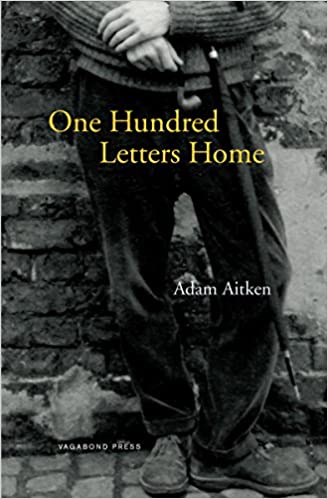



 Borderless