Title: Maya Nagari: Bombay-Mumbai A City in Stories
Editors: Shanta Gokhale, Jerry Pinto
Publisher:Speaking Tiger Books
The very mention of the name Mumbai (or Bombay) brings to our minds a great city in India where the thriving metropolis grows at a rapid speed because people not only flock here from different parts of the country to make quick bucks and survive against all odds, but also because the film industry of Bollywood has also established it as a city of dreams, one that never sleeps and instead creates a mirage-of-sorts — an illusion, rightly labelled by the editors of this anthology as ‘Maya Nagari’. Edited by Shanta Gokhale and Jerry Pinto, this book, comprising twenty-one short stories about Mumbai takes the road less taken to create a non-uniform image of the metropolis. In tune with its multicultural and multilingual nature, we have stories about the city that is a sea of people and speaks at least a dozen languages. There are stories translated from Marathi, Urdu, Gujarati, Tamil, Hindi, Kannada, Malayalam, and stories written originally in English. Among the writers are legends and new voices—Baburao Bagul, Ismat Chughtai, Pu La Deshpande, Ambai,Urmila Pawar, Mohan Rakesh, Saadat Hasan Manto, Ambai, Jayant Kaikini, Bhupen Khakhar,Shripad Narayan Pendse, Manasi, Krishan Chander, Udayan Thakker, Cyrus Mistry, Vilas Sarang, Jayant Pawar, Tejaswini Apte-Rahm and Anuradha Kumar.
As Jerry Pinto clearly states in the introduction, the stories can be read as we like, we can begin with the first story or the last, or any story in between. The observant reader might notice that he and the other editor Shanta Gokhale have deliberately chosen not to organise the material according to chronology, or geography. This is partly because they believe that the city lives in several time zones and spaces at once, as does India, but also because there is something essentially chaotic about its nature. So, he says, “the stories echo and bounce off each other, they do not collide, but there is a Brownian motion to these patterns” and he hopes to let the readers find it. Here, Mumbai is stripped of its twinkle; it is deglamourised to reveal how it’s the quotidian that lends the city its character—warmth and hostility alike and as inhabitants of the city the editors call ‘home,’ they hope a narrative will emerge.
In the twenty-one stories of this collection, there is the city that labours in the mills and streets, and the city that sips and nibbles in five-star lounges, the city of Ganapati, Haji Malang and the Virgin Mary. What binds the stories together is ‘human muscle’ – the desperate attempts of men and women of all classes and castes to survive in this heartless city amid all odds.
The stories are of different lengths and written in different narrative styles. Of the five or six stories translated by Shanta Gokhale herself from Marathi, one is struck by the excessive length of the so called ‘short’ stories. The very first one “Oh! The Joy of Devotion” by Jayant Pawar, forty-five pages in length, narrates in detail about the Ganapati festival and how it is related to the fate of the local people. Pu La Deshpande’s story “A Cultural Moment is Born”, set in the 1940s, tells stories of people living in chawls [slums] and how they spend their cultural days. Another very long story translated by Gokhale called “The Ramsharan Story” tells us about the rise and fall of a bus conductor by the name of Ramsharan who turns out to become a union leader. Baburao Bagul’s “Woman of the Street”, written originally in Marathi and translated by Gokhale again, tells the story of Girija, a sex-worker trying to collect money to cure her son in the village. The story ends on a disturbing note, as it reaffirms the relativity of success.
Once again, Krishan Chander’s story “The Children of Dadar Bridge” translated from Hindustani by Jerry Pinto is so long that it qualifies to be called a sort of novella. In this powerful story God comes to earth to a chawl and offers food to the first-person narrator. Then, impersonating as a small and innocent child, and along with the child narrator, he moves around different places in the city to witness its activities firsthand — we get to know about behind the scene affairs that take place in the film studios, about satta[1] dens, about bribery, local dons who arm-twist every new hawker to carry on their business after receiving their weekly cut money and more. In “Civic Duty and Physics Practicals”, Malayalam writer Manasi reveals the different experiences one comes across living in a society defined by power equations. Issues of hooliganism, superstition, illegal colonies, corruption, intimidation and violence are explored in a single story where the narrator is struggling, for days, with blaring speakers at a wedding nearby, even as her son tries hard to prepare for his upcoming exams. The story soon takes a dark turn where power trumps over consideration for fellow human beings.
A very powerful story written by Ambai in Tamil called “Kala Ghora Chowk” deals with issues of Marxist ideology, trade unions and the fate of a raped woman called Rosa. Anuradha Kumar’s “Neera Joshi’s Unfinished Book” tells us the life story of one woman who “made the city” and the perennial problems of displaced mill workers when the closed mills give way to high-rise buildings. Some of the stories are of course written in a lighter vein, though they also depict different problems related to city life. As the title of Vilas Sarang’s story “An Afternoon Among the Rocks” suggests, it narrates the plight of a couple trying to make love in the deserted seashore and how they get hijacked by a smuggler! In “The Flat on the Fifth Floor”, Mohan Rakesh writes about two sisters who meet the narrator after one failed love affair. A moving picture of the closing down of cinema halls in Mumbai comes out very beautifully in the Kannada story “Opera House” by Jayant Kaikini, especially narrating the plight of one of the sweepers working there when the declaration of permanent closure is pasted everywhere. Tejaswini Apte-Rahm’s “Mili” tells the story of a man who meets his ex-girlfriend after five years.
Though it is not possible to give the details of each and every story included in this anthology in this review, one must mention some of the stories that were originally written in English. Cyrus Mistry’s “Percy” about a young and lonely Parsi boy is so compelling that it was even made into a Gujarati motion-picture. “House Cleaning” by Jerry Pinto tells the story of a woman cleaner and his son, who talks about the reality of street dwellers. Eunice de Souza’s “Rina of Queen’s Diamonds” is not a straightforward narration at all but offers a collage of different vignettes of life in Bombay.
Though most of the stories portray the seamier side of life and in some ways de-glamourise Mumbai, at the same time they also portray how human resilience can combat all sorts of odds, and the city can be revealed only through shared experiences. Thus, each of the twenty-one stories in this collection tells a different tale of Mumbai, Bombay, Momoi, Bambai, Manbai and many others. As the editors have rightly pointed out at the beginning of their introduction, “You cannot catch a city in words. You cannot catch a city at all.” They felt that “it is not meant to be caught…this city resists even more because it was not designed at all; it just happened and it keeps on happening.” Thus, the four-hundred plus pages of this anthology Maya-Nagari remains a book to be treasured and read now at leisure and also at any time in the future.
Baraf Pora (Snowfall) by Rabindranath Tagore,gives a glimpse of his first experience of snowfall in Brighton and published in the Tagore family journal, Balak (Children), has been translated from Bengali by Somdatta Mandal. Clickhere to read.
Himalaya Jatra( A trip to Himalayas) by Tagore, has been translated from his Jibon Smriti (1911, Reminiscenses) by Somdatta Mandal from Bengali. Click here to read.
Bhumika (Introduction) by Tagore has been translated from Bengali by Ratnottama Sengupta. Click here to read.
The Fire-grinding Quern by Manzur Bismil has been translated from Balochi by Fazal Baloch. Clickhere to read.
The Tobacco Lover by Ihlwha Choi has been translated from Korean by the poet himself. Clickhere to read.
Pochishe Boisakh(25th of Baisakh) by Tagore(1922), has been translated from Bengali by Mitali Chakravarty. Click here to read.
Pandies Corner
Songs of Freedom: Dear Me… is an autobiographical narrative by Ilma Khan, translated from Hindustani by Janees. These narrations highlight the ongoing struggle against debilitating rigid boundaries drawn by societal norms, with the support from organisations like Shaktishalini and pandies’. Click here to read.
Paul Mirabile gives a gripping tale about a young pyromaniac. Click hereto read.
Conversation
Ratnottama Sengupta in conversation about Kitareba, a contemporary dance performance on immigrants, with Sudarshan Chakravorty, a choreographer, and founder of the Sapphire Dance Company. Click here to read.
The studio room was ill ventilated. The bright lights were making things hotter! We were at a photo studio in Bhandup, Mumbai, trying to take a family photograph. The photographer was trying his best to arrange us in a pleasing and photogenic composition. The process was however, taking longer than expected and my youngest brother was getting scared. He was beginning to cry and soon was bawling his head off. My mother has a knack of soothing and calming crying children, but this time even her efforts were not successful.
I was reminiscing on this episode recently and was thinking on how easy it has now become to capture photographs and video. For a long time, you had to use film to capture photographs. Photography was an expensive proposition then. Initially, you only had black and white films. Later colour films became widely available. The cost of films, of processing and printing photographs all added up.
Films were also only invented in only 1889, but they were highly flammable. ‘Safety films’ were introduces only in the last century in 1908. Before 1889, photographers had to lug around heavy glass photographic plates. The process of capturing images on film also took a long time. When taking portraits people had to stay still for minutes at a time. The older generation of cameras were bulky and heavy and difficult to carry around. Photography was a significant advance in human history. Before 1802, we had to depend on painters and portraitures to depict everyday scenes and special occasions.
The Eastman Kodak company invented flexible film to capture photographs and for several decades the company was a world leader in photography. Unfortunately, they were not able to fully adapt to the change to a digital format and after filing for bankruptcy the company is now back with commercial printing, film stills and movie production. The Japanese were the world leaders in cameras for several decades. Yashica, Minolta, Nikon, Canon, Pentax, Olympus are legendary names. For a long time during my student days and early medical career photography was an expensive hobby to indulge in. My first purchase was an Olympus. A small and compact camera that captured great images. The camera came with a remote and a timer. Olympus made great cameras and usually the lens was integrated into the body and could not be removed and changed.
My good friend, Sanjay Mhatre in Mumbai, is an architect with wide-ranging interests. He was the one who informed me about large format cameras and the Hasselblad series. Large format is especially important in architecture. Another major German brand was Leica. These were very expensive. Dr Unnikrishnan PS was my batch mate and hostel mate during the MBBS course. He had a keen interest in painting and has now switched to photography. Recently he has opened a museum dedicated to photography, Photomuse (https://photomuse.in/) in Thrissur district in Kerala. This is India’s first museum dedicated to photography.
My first single lens reflex (SLR) camera was a Pentax. I had purchased this from New Road in Kathmandu in 2000. A SLR is a camera that has a mirror in front of the film and when the shutter is clicked the mirror moves up and the film is exposed. The mirror otherwise helps photographers see what they are about to click through the view finder. The view finder was very important as you did not have screens that showed you what you were about to click. These came much later. With the advent of screens showing the scene in front of you, view finders began becoming less common.
Himalayas — shot using the Pentax, Photo courtesy: Ravi Shankar
Kathmandu is a very photogenic city with ancient monuments and temples, and I tested out my new buy under a variety of conditions. I had to wait to get the film developed before I could see how my photos turned out. One had to be creative and resourceful as immediate feedback was lacking. I also invested in a polarizing filter, and this was very useful in highlighting the contrast between the snow-clad mountains and the deep blue sky.
The camera was heavy and weighed around 1.2 kg but came with its own bag making it easier to carry. The camera accompanied me on most of my treks in Nepal. I was able to capture great images of the spectacular country. While hiking the hills, you had to stop, take the camera out of the bag, focus it, adjust the polarizer, compose the scene, and then click. Someone said that photography provided the sahibs with an excuse to rest and catch their breath during steep hikes. Karna Shakya is a famous Nepalese traveller and photographer who later he founded the Kathmandu Guest House in Thamel, Kathmandu. He has written about photography during his treks (in his books and articles) and the difficulty he faced while looking for colour films and developing the same in the 1970s in Kathmandu.
The cameras on mobile phones started becoming better from 2010 onwards. I had a Samsung mobile phone with me in Aruba that took good pictures. Aruba is a picturesque place with nice beaches and turquoise blue waters.
Aruba Coastline — shot using a Samsung Mobile. Photo courtesy: Ravi Shankar
I eventually graduated to an Oppo smart phone with a better camera. This smart phone accompanied me on my travels in Peru. In late 2019, Realme introduced a new smart phone with a 64 Megapixel sensor.
Cusco Peru – Shot using an Oppo. Photo courtesy: Ravi Shankar
Mobile phone manufacturers are constantly upgrading their cameras. The mobile camera war is hotting up. The image sensors started getting larger and cheaper. Samsung and Sony started investing in sensor research and development. Some mobile manufacturers collaborated with camera makers like Hasselblad and Leica to bring these cameras to mobiles. Around late 2023, I was looking to upgrade my smart phone and wanted a more powerful camera. There was a wide choice available. 200 MP sensors were available on some phones while others had 120 and 100 MP cameras. I did some research and found that most phones only shoot images of around 32 MP at the maximum. Usual photos are taken at a much lower resolution.
I eventually purchased an Honor phone with a 100 MP camera. I have used this widely during my travels and gives excellent results especially in good lighting conditions. Mobile phones are lighter and less obtrusive compared to a SLR. Most SLRs have also now shifted to digital sensors rather than film. With a mobile phone it may be easier to capture people in their natural situations. The trend today is to have one device that can do it all. Play videos, check emails, make online bookings, call, chat, capture images and video.
Capturing video has also become easier and many phones have image stabilisation and allow you to shoot in HD and 4K formats. There are a variety of software that integrate images from different sources and can edit and polish a video. Taking a photograph is no longer regarded as something special. Taking a video and posting it on social media is also very common. Many people earn their livelihoods through creating and posting videos on platforms like YouTube and TikTok. We have come a long way from dressing up in our best formals and going to a studio to get our photographs taken to capturing images, selfies and videos using our mobile phones. Only a very brave person can predict what the next hundred years will bring!
Dr. P Ravi Shankar is a faculty member at the IMU Centre for Education (ICE), International Medical University, Kuala Lumpur, Malaysia. He enjoys traveling and is a creative writer and photographer.
.
PLEASE NOTE: ARTICLES CAN ONLY BE REPRODUCED IN OTHER SITES WITH DUE ACKNOWLEDGEMENT TO BORDERLESS JOURNAL
There is a large grey wave painted in the middle of the canvas. It is falling over a large group of people standing on the edge of a seashore. Many men wear skullcaps. The women have black burkas. The group has widened eyes and open mouths. Some have turned their backs to flee. Others have raised their arms and clenched their fists, as if they are about to break into a run.
At the bottom of the canvas, on the left, there is another group of people. They are also standing on another seashore, with windswept hair. There is a woman with a large sindoor in the middle parting of her hair. A young man, in jeans, has a necklace with a gold crucifix. A boy stands with a placard showing a dove with a leaf in its beak. The words, ‘Let’s all live in peace,’ are written in bold, red letters. Others raise placards with slogans like ‘Say No to communalism’, ‘Syncretism is in our DNA’, and ‘We are all brothers and sisters in this great nation’.
Painter Ashraf Mahmood steps back and stares at the image. A slight smile plays on his lips. He had woken up that morning and this image had come floating into his mental screen. Ashraf kept staring at it, eyes closed, lying on his back. His wife had got up and gone to the kitchen. Alia liked to make her tea using Tata Gold. He preferred Brooke Bond Red Label. So they made separate cups.
When he entered his studio on Mira Road, in Mumbai, at 9 am, he got down to work, using an easel and grey paint.
He worked steadily. It was silent inside. But Ashraf did register the outside sounds of a typical Mumbai street. The horns blowing. Tendrils of smoke from exhaust pipes floated in through the window. His nose twitched as he noticed a foul smell. It seemed as if somebody had thrown garbage on the street. Ashraf closed his nose with the tip of his fingers for a few seconds. “The crazy smells of Mumbai,” he thought.
He grew up near Mandvi Beach in Ratnagiri (343 kms from Mumbai). The air was fresh, and the wind blew constantly. The only sound was the roar of the waves and the beautiful sight of seagulls making circles as they flew above the sea. Ashraf’s father, Mohammed, was a government school teacher. His mother was a homemaker. He had two elder brothers and three sisters. Ashraf was the youngest. He displayed artistic talent from his school days.
Unlike most fathers, Mohammed encouraged his son. His father took him to an art teacher, who taught him how to draw and paint. Ashraf’s major breakthrough happened when he got admitted to the JJ School of Art in Mumbai. After that, there was no looking back…
It was evening when he finished the work. His soles ached. Ashraf had been standing for hours.
This image reflected all that he felt. The grey resembled the growing intolerance towards Muslims. This seemed to be overwhelming especially in places like Uttar Pradesh and Madhya Pradesh. There was the rise of majoritarianism. And the fracturing of relations between people of different communities. And yet, Ashraf felt that the DNA of the people over centuries was syncretic. A ready acceptance of people of all faiths.
It was only the hate campaigns, through speeches, social media, and songs, that had swayed the people. He was sure the fever would die one day. Syncretism would rise again. “After all,” he thought, “throughout human history, love always conquered hate. But it took time.”
Ashraf wanted to tell the viewers of his work not to lose hope. And hence the pigeon and the symbol of peace. For the title, he used a quote by the Greek philosopher, Aristotle, “Hope is the dream of a waking man.”
Ashraf rubbed his chin a few times and walked to a table on one side. A packet of fresh buns lay on the table. Ashraf opened a fridge. He took out a container which contained butter and a bottle of strawberry jam. He sliced the bun into half with a stainless steel knife, placed butter and jam in between, and began eating it. These were fresh buns from a nearby bakery. Ashraf had bought them when he had stepped out for lunch. He made tea on the gas stove. Then he sat on a stool near the table and sipped it.
This was his 35th year as a painter. Now, at 55, he could look back with reasonable pride. He took part in regular exhibitions and won a few awards and grants. Profiles of him appeared in the newspapers and on social media. His paintings sold, thanks to his realistic and simple style. An art sensibility was only gradually building up among the people. Ashraf knew that images drawn from his unconscious mind had a pulling power. Why this was so, he did not know. He remembered how one art critic described a David Hockney painting as having a ‘psychological charge’. Hockney was a renowned English painter. Ashraf realised that art needed to have a psychological charge if it had to have an impact.
But Alia had already made an impact on him. He met her when she came to view his exhibition one day at the Jehangir Art Gallery. She was slim and tall, with curves that were accentuated by the chiffon saree she wore. Like Ashraf, she came from a small town. Through grit and perseverance, she passed competitive exams and got a government job. They went for dates. Ashraf was smitten. Within a year, he proposed and they got married.
Alia was a superintendent in the sales tax department. She would earn a pension once her career got over. She had another ten years to go. Their two daughters had married and settled down in Aligarh and Delhi. Both had two children each, a boy and a girl.
Alia wanted Ashraf to earn more money. But he was not a hustler or a man who liked to build a network. If a buyer came and offered a decent price, he sold it. Most of the time, he remained isolated. Sometimes, he met other artists at exhibitions and art seminars. He would chat with them. But that was all.
He was not keen on extramarital flings or experimenting with drugs or drinking too much. Ashraf led a steady life. In many ways, he was happy with the way his life had turned out.
He washed the cup and the pans. Ashraf placed the cup on a hook which hung on a wall. He had yet to finish the bun.
He made his way back to the painting. It was 5.30 p.m. In half an hour, he would close his studio and walk back to his house, fifteen minutes away. The couple owned their apartment. Alia, with help from Ashraf, had cleared the bank loan over 15 years.
At this moment, he heard a murmur of voices from outside the door. Ashraf wondered what it was. The sound arose. “Was there an emergency?” he thought. “Is the building on fire?”
He came to the door. Ashraf saw that the lock was coming under strain. It seemed to be bulging backwards towards him. Somebody gave a violent kick and the door sprang open. Ashraf moved to one side.
A group of young men rushed in. Some wore red bandanas. Many were in T-shirts and trousers. Some had thick, muscular arms. They were shouting. It seemed like slogans. In his shocked state, Ashraf could not register the words. They rushed to the canvas on the easel. One man, using a long knife, sliced the canvas into two. He pushed the easel. It fell with a clattering sound to the floor.
There were a bunch of finished canvases placed on one side. Ashraf had been doing work to showcase in an upcoming solo exhibition. The group spotted it. They rushed there, pushed the canvases to the floor, and began ripping them one by one with their knives. Within a few minutes, the work of several months lay ripped out. Ashraf remained by the side of the door. He had not moved.
“Hey you Muslim kutta (dog),” one of them said. “We will come again if you carry on working. No art for Muslims. Clean the sewers. That’s the only job you are good at.”
Ashraf half-expected one of them to stab him. But they didn’t. They left as quickly as they came.
Ashraf felt as if a large, round ball had settled at the base of his throat. He could not swallow it nor could he spit it out.
He blinked many times. Ashraf wasn’t sure whether this event had actually happened. It took place so fast. But there was no doubt about the ripped canvases lying all over the floor.
He felt a pain in his heart. Ashraf rubbed the area. “I hope I am not having a heart attack,” he thought to himself, as he took in lungfuls of air to calm himself down. Employees from other offices on the same floor came to the door. They entered. Most had goggle-eyes.
“Sir, what happened?” one young man said.
Ashraf shook his head.
“I don’t know,” he said.
“Who were these people?” a woman said.
“No idea,” Ashraf said, as he surveyed the damage.
“Sir, you will have to call the police,” another man said.
“Yes, I will,” said Ashraf.
A couple of men shook his hand.
All of them surveyed the damage silently. Work was calling them. “All chained to their desks,” thought Ashraf. “At least, that way, I am free. No boss on top of me. No attendance marking every day. No targets to meet. No one shouting at me. But then, no steady income. And no camaraderie. Large amounts of time spent alone.”
Then he returned to the stool, returned to the present, and placed his head in his hands.
‘What’s happening to this country?’ he thought. ‘‘There seems to be a collective madness. Indians attacking Indians. And these young people were ruining their lives by working for political leaders. They will be used and discarded.”
He had not seen them before in the locality. They might have come from some other area. Was it a deliberate ploy to send a shock wave through him and the community? Who knew how they thought?
What should he do now?
Ashraf realised he had to think rationally. He stood up and went to the door. He realised immediately, he could not do anything immediately. A carpenter would have to be called tomorrow.
He called Alia and informed her about what had happened. She said she would come directly to the studio from the office. Ashraf called up his media contacts, both in the print and visual media. They said they would arrive with their photographers and cameramen. Ashraf took several photos and videos on his mobile phone, documenting the damage.
He would have to report the attack at the police station and file an FIR.
Ashraf realised his work had been ruined, but he would recreate it. He had photos of all the canvases.
To prove to himself, he had returned to normality, he went back to the table and finished the rest of the bun. He put the butter and the jam back into the fridge. He washed the plate and the knife.
Fifteen minutes later, Alia arrived.
In silence, she stared at the canvases lying on the floor. Ashraf saw her press her hand against her open mouth. He realised it was a silent scream.
In the end, she came up to Ashraf and said, “They have tried to violate your dignity as an artist and a person.”
The couple hugged.
After a while they broke away.
“Don’t keep the canvases here anymore,” she said.
Ashraf rubbed his chin with his fingers.
Finally, he nodded.
“There was something strange about the attack,” he said. “They didn’t overturn the table or the fridge. And for some reason, they did not assault me. It seemed to me they had to leave in a hurry. So I got saved.”
Alia said, “They are keeping a watch on everybody.”
“Yes, I read online there is a pervasive deep state,” said Ashraf. “In every neighbourhood there are spies who report about all that is happening.”
“What is the next step?” she said.
“I am waiting for the media to come. After that, I will file the FIR,” he said.
At that moment, a few print and TV journalists arrived.
Ashraf spoke to the reporters. The photographers and cameramen began recording all that had happened.
They left after half an hour.
The couple then shut the door, as best as they could. But there was a small gap at one side. They went to the police station. The police allowed an FIR to be filed against ‘unknown persons’. He faced no hindrances because, as Ashraf surmised, the police were aware of his reputation as an artist.
The couple took an autorickshaw and returned to their apartment.
Alia changed into a nightgown. She washed her face, and informed their daughters about what had happened on her mobile phone.
Ashraf changed into a T-shirt and shorts. He made a glass of whisky mixed with water for himself. Every night he had one peg.
As he sat on the sofa, nursing his drink and staring at the TV screen, he felt the pain arise in him. It was an ache in the middle of the chest. To see his work treated in such a callous manner was a calamity. He wondered whether he would ever overcome this fear that had come into him. Work on a piece the whole day and in the evening, somebody could come in and rip it up.
Closed doors did not offer any protection. It was a time of lawlessness. People with criminal behaviour could operate with impunity. Leaders wanted to instil fear in people.
And would he be able to recreate these ripped-up paintings with the same intensity? He was not sure.
On the screen, some leader was having his say. His eyes enlarged, he made violent movements with his hand, and spoke with a loud voice. “Horrific,” thought Ashraf. “How do you create art in this environment?”
Yes, indeed, how do you?
But it did not take long for him to tell himself, “But we must, whatever be the cost. Art is the candle that brings light to the darkness.”
.
Shevlin Sebastian has worked for magazines like Sportsworld, belonging to the Ananda Bazar Patrika Group in Kolkata, The Week, belonging to the Malayala Manorama Group, in Kochi, the Hindustan Times in Mumbai, and the New Indian Express in Kochi. He has also briefly worked in DC Books at Kottayam. He has published about 4500 articles on subjects as varied as films, crime, humour, art, human interest, psychology, literature, politics, sports and personalities. Shevlin has also published four novels for children.
.
PLEASE NOTE: ARTICLES CAN ONLY BE REPRODUCED IN OTHER SITES WITH DUE ACKNOWLEDGEMENT TO BORDERLESS JOURNAL.
Ratnottama Sengupta has known Ruchira Gupta for more than 40 years. But reading I Kick and I Fly has made her see in a new light the young journalist who has become a force of change in the global fight against human trafficking.
Ruchira Gupta
Kiddy. Ruchi. Journalist. Documentary filmmaker. Emmy Award winner. Founder President, Apne Aap[1]Women Worldwide. Social activist. Agent of changes to international laws. Sera Bangali[2]. Ekta[3]Award winner. Professor, NYU. Cancer survivor. Essayist. Exhibited artist. Published novelist…
“What next?” I could have asked Ruchira Gupta. And without waiting for her to reply I could add, “Member of Rajya Sabha? The first step to even higher offices on the world stage.” Because? This kid born to Rajni and Vidya Sagar Gupta has dedicated her life-breath to ensure that not a single child is either sold or bought for sexual gratification in exchange of a few rupees.
Hardly surprising that when she picked up her pen while recovering from Covid in her family home in Forbesganj, she penned a novel like I Kick and I Fly. “A book that is a MUST READ for one and all who are interested in fighting, tackling, and – not or – ending sex trafficking,” as Anjani Kumar Singh, Director, Bihar Museum said at the launch in Patna. Because? It is a story of optimism as Heera the protagonist, overcomes unimaginable obstacles to emerge a path breaker in the Nat community who believed it was the fate of its girls to sell their body at puberty, or even earlier, for the welfare of their family.
Inspirational. And in the most absorbing way. Read this excerpt from the novel to understand how a message becomes engrossing read.
"My name is Heera. I am from a town named Forbesganj, in a state called Bihar, in northern India, very close to Nepal,” I begin. My voice is shaking along with the rest of me. But I go on. “My brother and I are the first people in our family to ever go to school, and I have grown up believing that being sold for prostitution is my Destiny. That there are few doors open to me as a child of an oppressed-caste family. Our people used to be wrestlers and performers. But overnight we were told we could not do those things anymore, that our entire way of life was illegal.”

My voice is shaking less now and I manage to look at people in front of me. “How do people survive when they are not allowed to do the work they know and love? For my family of nomads, it meant asking people for a place to live, and then doing just about any job they told us we could do. One of these jobs was having sex with people for money.

“These children and women had no choice but to sell their bodies in exchange for a place to live. For food to eat. And for their husbands to be given work. And though people say that times have changed, they must not have changed everywhere, because I have been told since I was a little girl that selling my body was what I had to do to support myself and my family. And I believed it. Many in my family believed it too.

“Finally early this year it was my turn to be put up for sale. My family was in a tight spot, in debt to the wrong man. I grew up in a red-light area, so I knew what it involved. There are no secrets kept from kids where I come from. So, I said No, and we tried to get around it.

“My mother paid back our loan, but the traffickers came for me anyhow. The first time I got away. The second time they got me, but I was rescued by my brother and teacher.

“When I was stuck in a tiny room with my traffickers outside the door, I asked myself why had they kept coming for me even when they had no claim, no right? And that’s when I fully realized that they believed my body belonged to them, and I knew for certain it did not. It was kung fu that helped me understand this. Because it is through kung fu that I learnt, my body would do what I told it to. That my body listened to me – and only me.”

I take a breath. “There is power in my body. My body connects me to my cousin, my aunt, my grandmother who were all sold for prostitution. But kung fu also connects my body to my ancestors, who were champion wrestlers. If both these things lived within me, could I choose which course I wanted to take?”

I look up now, realizing that I have memorized the final words on the page. “For most of my life, the answer to that was NO. But suddenly I felt that maybe there was another possibility. I didn't do it on my own: I needed my family to stand with me, and most importantly, a cheerleader who made me believe that safety could be mine. Rini Di taught me kung fu and opened the doors of the world to me. And that is how I have come to stand before you now.”
Heera stands before her teachers and her friends, other survivors of trafficking as an example who not only fights, successfully, the might of traffickers but who actually saves another trafficked girl. Who, even more importantly, instils faith, and courage, and dream… In her brother, her mother, and her father. Her brother Salman who always stood by her even as he studied for a better future. Her Mai who broke stones for a livelihood and gathered enough courage to take a loan to put in place a roof over their head. Her Baba who stands as a loser but accepts change and even starts to nurse a dream — for his daughter as much as for his son.
And so, when the Martial Arts Foundation awards Heera and her co-fighter friend, Connie, a scholarship to train for one full year in New York, along with admission to a local school, Heera too starts dreaming. Of a future, perhaps only twelve months down, when her family would be dwelling in a pink-bricked three roomed house. When Salman would study in a residential school in Siliguri. When Mai would have a betel shop. When Baba would be a porter at the railway platform. When her cousin Mira Di would be a seamstress with a tailoring shop of her own in the very backroom where she was forced to service men. When the corrupt policeman, Suraj Sharma, and the trafficker, Ravi Lala, would be in jail, no longer on the prowl in Girls Bazaar.
“It’s not a dream,” says Ruchira , reiterating the clinching line of I Kick and I Fly. “I have seen this transformation actually take place in Forbesganj. “There were 72 home-based brothels in the lane when Apne Aap started. Today there are two. Girls no longer sit outside waiting for customers. The two sisters who were locked up in the hut have finished school. One is a chef, the other is a teacher. The girl who was kidnapped is a karate trainer. Someone like Mai really has a betel paan leaf shop and someone like Mira Di is a seamstress. The cattle fair is no longer allowed to bring dance or orchestra groups.”
This was the perfect time to strike a conversation with Ruchira Gupta, I reckoned. And so I decided to shoot…
Me:How – rather, why – did you start writing I Kick and I Fly?
Ruchi: I started writing this story when a fourteen-year-old girl just like Heera won a gold medal in a karate championship in Forbesganj. She was being groomed for prostitution with other girls in her lane. A lane just like Girls Bazaar.
Her journey was not easy, it was heroic. I saw how she and her friends overcame hunger, fought off their fear and stood up to traffickers with grace and gusto. An annual cattle fair used to claim girls from that lane every year. When my NGO, Apne Aap, opened a community centre and a hostel there, we were constantly attacked by men like Gainul and Ravi Lala. They would stalk the mothers, the daughters, and me. They hurled abuses, threw stones, stole from our office and even kidnapped girls. We built higher walls around the hostel to prevent traffickers from jumping over. I posted guards outside my home, hired lawyers, filed police complaints and cases in court. Just like Mai, some mothers in the lane disobeyed their husbands even though they were beaten up. Their daughters were the first batch of girls in our hostel.
Me:Are all the characters real? Is the hope real? Do people in real life change the way Baba does?
Ruchi: Most of the events in the book are inspired by real people, places, events. To give you one example: A trafficking survivor from Indonesia told me how she was locked up and how she escaped from a brothel in Queens, New York, by disguising herself in a burqa. She is now a global leader in the struggle against trafficking. In my novel, Heera uses the same device to rescue Rosy.
Baba, Heera’s father, is also based on real-life fathers in the Nat community of Forbesganj. They would actually auction off their daughters to the highest bidder when the mela came to town! But as I began working in the red-light area I saw that they were not black and white criminals but human beings desensitised through decades and generations of oppression. Of course, there was no excuse that they did not try to fight back. I did see some fathers change when they saw their daughters succeed. Until then the possibility of a different future had not even occurred to them.
When hope unfurls in a downtrodden human being, it is like a tendril. I saw it in the eyes and actions of some fathers in the red-light area of Forbesganj when their daughters won gold medals in karate.
Me:You have not learnt kung fu. Why did you project Rini Di – clearly your alter ego – as a kung fu teacher? It is a physical art of self-defence. How precisely does that connect with, or help, girls who are in the river of flesh?
Ruchi: I still remember, it was early morning when a boy came to my home with his mother to seek help. His sister and cousin were locked up by traffickers to stop them from coming to the hostel. We had to mobilise the police to get them out. I noticed then that the girls were badly bruised while the traffickers were unscathed. I wished that the girls were able to fight back.
Our Apne Aap women’s group met that afternoon at the centre. Everyone was afraid that we would be beaten in retaliation for the police raid. That’s when I suggested martial arts classes. The women loved the idea. I used to see a couple teach karate teacher near the rice fields to boys in a private school. We hired them and the classes began. Soon the bullying in schools stopped.
As the girls started to win competitions, something changed. The very townspeople who had agitated to urge the principal to expel our red light children began to respect them. And the fathers in the community began to see value in their daughters. The biggest change was in the girls themselves. They began to own their bodies and value themselves. As they gained self-esteem, they began to do better in class. Soon more mothers began to stand up to the traffickers and even to their husbands in the lane, saying they would send their daughters to school.
Me: How did Apne Aap help change the picture at the ground level?
Ruchi: Today Apne Aap has educated more than 3,000 girls from red-light areas through school and college and is still continuing to do so. They are in jobs as animation artists, teachers, doctors, lawyers, chefs, managers of pizza parlours and of gas stations too.
Our NGO’s community has become a safe space to hold meetings, share stories, get food, do homework, and plot against traffickers. Women, very much like Mai and Mira Di, meet regularly in the centre to solve their problems. They fill out forms with the help of Apne Aap workers to access government entitlements like low cost housing, ration and loans. They go collectively to talk to the authorities when there are delays.
The Apne Aap legal team helps victims to file police complaints, testify in court and get traffickers convicted. The real Gainul and the real Ravi Lala are in jail. In 2013, Apne Aap survivor leaders and I testified in Parliament for the passage of section 370 IPC, a law that punishes traffickers and allocates budgets for services to the prostituted and the vulnerable.
Before these could happen, I had shown my documentary and testified to the UN and to the US senate for laws that would decriminalise the victims; increase choices for vulnerable and trafficked girls and women; and punish the traffickers and sex buyers. I can proudly say that my testimony and inputs contributed in the passage of the UN Protocol to end Trafficking in Persons and the UN Trafficking Fund for survivors as well as the passage of US Trafficking Victim Protection Act.
Me: Ruchi you come from an established, politically aware, well connected and much respected family. You grew up in the metros and now live an international life, mostly abroad. You won a coveted award for The Selling of Innocents. You helped in the making of Love, Sonia. Why did you not continue to make films? In short, what compelled you to start Apne Aap Women Worldwide?
Ruchi: As you know, I started as a journalist right after graduation. I learnt to ask questions, and I listened. The question that changed my life was: Where are the girls?
I was researching a story in the hills of Nepal when I came across rows of villages with missing girls. I had asked this to the men playing cards in the villages in Nepal. I followed the trail and found that a smooth supply chain existed from these remote hamlets to the brothels of India. Little girls, perhaps only twelve, were locked up in cages in Kolkata, Delhi and Mumbai for years and sold for a few cents night after night.
All the girls were from poor farming families. Many, like Heera, were from nomadic indigenous communities or marginalised castes. Like her, they were either not sent to school, or bullied until they dropped out, or pulled out by their fathers and sold into prostitution.
I was sad, then angry, and finally determined to do something about it. That’s how I ended up exposing the horror in my documentary. When I was on the stage in Broadway receiving the Emmy in 2013, all I could see beyond the glittering lights were the eyes of the mothers who had broken their silence to save their daughters. I decided in that instant to use my Emmy not to build a career in journalism but to make a difference.
I did two things. I dubbed it in six languages and I travelled across the world with it. I screened it in villages to show parents what the brothels were like. I showed it to the UN and the US Senate when I testified against the crime that is human trafficking. It contributed to a global push by activists that led to a new UN protocol to end trafficking and the first US anti-trafficking law, the Trafficking Victims Protection Act (TVPA).
Me: What was your magic wand?
Ruchi: I had no magic wand. I didn’t even have experience to stop the kidnapping of girls, or knowledge about how to put traffickers in jail. I was an English literature student from Kolkata’s Loreto College who joined The Telegraph while pursuing my honours degree graduation. But as a journalist, I saw the reality and invented ways to move forward.
Something had happened while I was filming the documentary. A pimp had stuck a knife to my throat. I was in a small room. There was nowhere to run. Suddenly, I was encircled by the 22 women I was interviewing. They told the pimp that he would have to kill them first. He knew it would be too much trouble to kill so many women, so he slunk away. I was saved. That moment changed my life.
The Emmy award money helped me start Apne Aap Women Worldwide with the women who had bravely spoken up in my film. I listened to the women who said they had four dreams: Education for their children; a room of their own; an office job; and punishment for those who bought and sold them. That became my NGO’s business plan.
I learnt that the best solutions came from those who experience the problem. The idea of the hostel, the idea of food in the community centre, and even the idea of karate came when we sat in a circle in the mud hut that is our community centre. It evolved into a grassroots approach which we call asset-based community development – ABCD or the 10 Asset model. Every woman or girl who becomes an Apne Aap member gains ten assets – both tangible and intangible. These are: a safe space, education, self-confidence, the ability to speak to authorities, government IDs and documents, low-cost food and housing, savings and loans, livelihood linkages, legal knowledge and support, and a circle of at least nine friends.
Each of these assets is a building block in an unfolding story of personal and community change. I wrote this novel to share with you that change is possible.
Me:Ruchi you had come up with the art-documentation, The Place Where I Live is Called Red Light Area. You got the girls to make a series of videos about different aspects of their life. You supported a documentary on the scheduled tribes. What inspired you to shun Art For Art’s Sake and pursue Art as Activism?
Ruchi: I learned in a very practical way the power of women’s collective action and the importance of sticking by one another. I promised myself I would never give up on those women’s dream. As a result, today thousands of girls have exited the prostitution systems from brothels across the country. There is more awareness about sex trafficking globally. And there are better laws and services for victims like Mira Di in over 160 countries.
Me:But we still have miles to go before we sleep…?
Ruchi: Yes, because the truth is that there isn’t one but many, many more Heeras. Girls Bazaar still exists in many parts of the world, including the USA. The brothel in Queens is real. The International Labour Organisation estimates there are more than 40 million victims of human trafficking globally with hundreds of thousands of victims in the US alone. Human trafficking is the second largest organised crime in the world, involving billions of dollars, according to the United Nations Office for Drugs and Crime (UNODC).
Me:So, what more actions would you suggest to tackle the issue? Through IKAIF, an upbeat tale of an underdog’s rise to victory, you have shown that ‘lost girls’ earmarked for ‘the oldest profession’ can erase their ‘destiny’ through education, and reliance on their own inner strength. What other positive actions would you suggest?
Ruchi: Heera’s is a story of hope in spite of great odds. It’s about our bodies — who they belong to, the command they can give us. It is about friends who make changes you want in your life. It is about a community that resolves to make change contagious, and succeeds.
You too can ‘Join The Movement’ to create a world in which no child is bought or sold. You can do that in so many ways. You can 1) Sign the freedom pledge on my website Ruchiragupta.com.
2) Learn more about the issue by reading I Kick and I Fly, and by watching The Selling of Innocents on my website.
3) Create further awareness by sharing the book, the movie and the pledge on your social media handles.
4) Volunteer and intern with Apne Aap or a local NGO in your town.
And you can Sponsor a girl like Heera on apneaap.org!
[2] The Best Bengali – An award given by the Ananda Bazaar Patrika group
[3] Unity: The Ekta Award is a National Award from India
Ratnottama Sengupta, formerly Arts Editor of The Times of India, teaches mass communication and film appreciation, curates film festivals and art exhibitions, and translates and write books. She has been a member of CBFC, served on the National Film Awards jury and has herself won a National Award.
.
PLEASE NOTE: ARTICLES CAN ONLY BE REPRODUCED IN OTHER SITES WITH DUE ACKNOWLEDGEMENT TO BORDERLESS JOURNAL
In the heart of a bustling metropolis, where neon signs battled the stars for supremacy, stood a high-rise that pierced the sky. On the 42nd floor, amidst the hum of advanced technology and the glow of omnipresent screens, lived Michael and Apollonia. Their apartment, a futuristic enclave, was filled with gadgets and gizmos that spoke of an age where technology reigned supreme.
Michael and Apollonia, once a couple whose love story could have inspired poets, now found their bond fraying in the unrelenting embrace of the digital world. Their home was an altar to the modern age, with walls adorned with the latest ultra-thin screens, surfaces cluttered with virtual reality gear, and AI assistants that responded to their every whim.
Michael, a software engineer with a passion for gaming, spent his days and nights in alternate realities. His VR headset was more a part of him than his own limbs. In these digital realms, he was a hero, a conqueror, a legend. Apollonia, a digital marketing strategist, found her solace in the lives of others through her social media feeds. Her world was one of perfectly curated images, witty captions, and vicarious living through the adventures of influencers.
Their apartment, high above the city’s ceaseless rhythm, had become a silent bubble. Conversations, once filled with laughter and shared dreams, were now a series of emotionless texts and emojis, even when they lounged on the same sofa. Dinners were silent, save for the soft tapping of their devices; their eyes rarely met, each lost in a personal digital labyrinth.
.
Michael’s world was one of fantastical landscapes and impossible quests. His laughter, once a melody that Apollonia adored, was now a rare sound, often drowned out by the synthetic scores of his games. Apollonia, whose zest for life and storytelling had captivated Michael, now channeled her creativity into crafting an enviable online persona, her real emotions hidden behind a filter of digital perfection.
Their home was a stark reminder of a past filled with genuine connection. Framed photographs of their early adventures — hiking trips, impromptu road trips, and lazy Sundays in the park — were now just relics of a bygone era. Michael’s guitar, once a source of serenity, lay in a forgotten corner, its strings still. Apollonia’s collection of travel books, which had fueled her wanderlust, now served as mere decorative trivia, untouched and gathering dust.
.
It was on a stormy evening, as the city beneath them was a spectacle of rain-drenched lights, that their worlds momentarily collided again. Michael, his VR adventure paused due to a rare glitch, noticed Apollonia. She sat curled on the couch, her face illuminated by the soft light of her tablet, scrolling endlessly. For a fleeting moment, he saw not the Apollonia lost in the digital world, but the woman he had fallen in love with.
Moved by a surge of nostalgia, Michael reached out and gently touched her shoulder. Apollonia looked up, her eyes wide with surprise, as if seeing Michael for the first time in ages. Their eyes locked, and for a brief moment, the digital fog lifted, revealing the raw, vulnerable humans beneath. A torrent of memories flooded back — their first date, the late-night talks, the tender moments.
But the magic of the moment was fleeting. Apollonia’s gaze shifted back to her screen, the ghost of a smile fading as she immersed herself once again in the digital stream. Michael, a wistful sigh escaping his lips, re-entered his virtual world. The screens that had grown between them were too strong, their digital habits too ingrained.
Their night did not end in a dramatic confrontation or a tearful goodbye. Rather, it faded, like the last bars of a forgotten melody. They continued to share their high-rise haven, yet their worlds were galaxies apart. Their love, once vibrant and tangible, had dissolved into the ether of cyberspace. Around them, the city throbbed with life, but in their high-rise sanctuary, they existed in a state of digital solitude, side by side yet worlds apart. As the city lights flickered and danced below, they sat together in their digital cocoon, a testament to a world where hearts beat in sync with bytes, and love stories are written in the code of a bygone era.
Apurba Biswas is a Ph.D. scholar at the School of Humanities and Social Sciences, National Institute of Science Education and Research Bhubaneswar (An Autonomous institute under the Department of Atomic Energy, Govt. of India), and an OCC of Homi Bhabha National Institute, Mumbai. Apurba Biswas specialises in bridging gaps between science and humanities.
.
PLEASE NOTE: ARTICLES CAN ONLY BE REPRODUCED IN OTHER SITES WITH DUE ACKNOWLEDGEMENT TO BORDERLESS JOURNAL
An introduction to Ratna Magotra’sWhispers of the Heart: Not Just a Surgeon (Konark Publishers) and a conversation with the doctor who took cardiac care to the underprivileged.
“I slept and dreamt that life was joy. I awoke and saw that life was service. I acted and behold, service was joy?”— Tagore, Whispers of the Heart: Not Just a Surgeonby Ratna Magotra
“There are at least five estimates of the number of poor people in India, which put the number of poor in India between 34 million (equivalent to the population to Kerala) to 373 million (more than four times the population of West Bengal). This puts the number of the poor between 2.5% of the population to 29.5%, based on different estimates between 2014 and 2022.”
How are the healthcare needs of the poverty stricken met in a country with a vast number who are unable to foot their daily food, housing, and potable water needs? This has been a question that confronts every doctor in cities where labourers who build housing for the middle class are themselves homeless just like the street side immigrants who beg. Even dwellers of shanties that spring up around colonies of the well-to-do to provide informal labour to the affluent are hardly any better off. Few in the medical profession move towards finding solutions to bridge this gap.
Dr Ratna Magotra, who moved from Jammu to find a career in healthcare in Mumbai, is one such person. Recently, she wrote an autobiography which has consolidated the work being done by cardiologists to bridge this gap. In her book, Whispers of the Heart: Not Just a Surgeon, while identifying this divide, she writes: “Poverty, inequality, deficient primary healthcare, unequal access, and the escalating commercialisation of medical care were causing an angst that I found difficult to make peace with. As medical practitioners, our expertise lies in providing treatment, but we often overlook the broader social factors underlying ill health. It might escape the attention of a surgeon performing intricate heart surgery that a child who survived a complex heart surgery could succumb to diarrhoea due to the lack of access to clean drinking water. Issues like malnutrition, skin infections, superstitious beliefs, and poverty may be the harsh realities in the patient’s actual living conditions beyond the confines of sanitised medical environment. /Medical training, regrettably, seldom includes the connection between poverty and disease.”
The land reforms laws that followed post-Partition[1] led to her family losing their wealth. But Magotra bears no ill-will or scars that have crippled her ability to contribute to a world that needs to heal — of taking healthcare to those who can’t afford it. She starts her biography with vignettes from her childhood: “I recall that the agricultural land we owned in our village in Jammu was considered very fertile with the best Basmati rice grown there. Though I was very young, I have faint memories of the house amidst lush paddy fields and a small stream that we had to cross to enter the village. It was very close to the international border between India and Pakistan. The way my mother was respected reflected the high esteem that villagers had for my father. Though their tenant status had changed to that of being landowners, the villagers visited the house as they did before and received generous gifts from her. /They would indulge us children with home-made sweets made of peanuts, jaggery and spices. Rolling in heaps of post-harvest grains piled up in open fields was great fun.”
She lost all that and her father. But with supportive family and friends, drawn to healthcare, she became a doctor in times when women doctors were rare. If they at all specialised, it was mainly in gynaecology. She chose cardiac surgery trained in UK and US. She made friends where she went and with a singular dedication, found solutions to access the underprivileged. She elaborates: “The quantum leap in India’s healthcare sector occurred during the 1990s following the economic reforms and the liberalisation of the economy. The end of the licence raj system facilitated the imports of advanced technology and medical equipment. Specialists, who had long settled abroad, began contemplating a return to India.”
While she attended an International Course in Cardiac Surgery at Sicily to update her skills, she tells us: “During our interactions, some German surgeons raised questions about the rationale behind a developing country like India engaging in an expensive speciality like cardiac surgery. I realised how biased opinions can be formed and spread, though rooted in ignorance. /By this point, however, I had grown accustomed to explaining the paradox — why it was essential for India to advance in specialised care alongside its priorities in basic healthcare and poverty alleviation.”
She cites multiple instances of cases that she dealt with from the needy rural population, for who to pay prohibitive costs would mean an end to their family’s meals. Magotra writes, “I had seen numerous poor heart patients who suffered not only from the ailment itself but also from financial burden of the treatment. The medical expenses incurred for a single family member affected the well-being of entire household, depleting their limited resources and savings. Unfortunately, medical education does not include health economics as a subject. As a result, doctors, especially specialists, trained in a reductionist approach to diseases tend to move away from a holistic perspective. They readily embrace new technological advances, often neglecting proven and cost-effective treatment options. This, in turn, drives up healthcare costs and makes it unaffordable for the common man.”
Living through a series of historical upheavals, she brings to light some interesting observations. She came in contact with Jinnah’s personal physician while looking for a placement in Mumbai. There she mentions that many wondered if the Partition of India could have been averted if this doctor had shared the information that Jinnah had limited life expectancy as he had advanced tuberculosis. She has lived through floods in Mumbai and riots and wondered: “I was staring at the blood on my clothes, which had come from multiple patients. In that quiet moment, I couldn’t help but wonder if there was a ‘test’ to distinguish between a Hindu blood and a Muslim blood.” She joined the anti-corruption movement started by Anna Hazare and fasted! She has travelled and watched and collected her stories and she jotted these down during the pandemic to share her world and her concerns with all of us. In the process, recording changes in health care systems over the years… the historic passing of an era that documents the undocumented people’s needs.
Dr Ratna Magotra
An award-winning doctor for the efforts she has made to connect with people across all borders and use her experience, she talks to us in this interview about her journey and beliefs.
What made you write this book? Who were the readers you wanted to reach out to?
I had asked myself the same questions before I started and even while I was writing: Why and for whom?
Some younger friends and family members would find the anecdotes and stories, I would relate to them from time to time, interesting. They would often prod me to write about these. People, situations, my travels to places — not the usual popular tourist destinations, invoked further curiosity in them to know more about my life. As such I like to write my thoughts (usually for myself) and have been contributing small articles to newspapers, magazines, and Bhavan’s Journal for their special Issues. The pandemic provided me an opportunity to contemplate further when I seriously considered about writing an autobiographical narrative.
As I progressed with my account, I envisaged a wider readership outside the medical community as multiple facets emerged about places, people and events of varying interests.
What were the hurdles you faced while training as a doctor — in terms of gender and attitudes of others?
Fortunately, I can’t recall any specific hurdle or adverse experience because of my being a woman. Studying for MBBS degree at Lady Hardinge Medical College (LHMC), made it a normal affair as LHMC was an all-women medical college.
The struggle that I faced in getting PG admission in Bombay also had nothing to do with gender. The problem was being an outsider in Bombay when number of seats were limited. Students from local medical colleges and rest of Maharashtra had first preference for selection to PG courses. Anyone in my place would have had to go through a similar grind as I did.
Once PG admission was secured, it was smooth sailing through training and working alongside male colleagues! I asked for no concessions being a woman and worked as hard as they did or may be little more. We had a very close and harmonious working relationship with healthy mutual respect leading to lasting friendships.
What made you choose cardiac surgery over other areas of specialisation?
The decision to become a doctor and a surgeon was firmed very early in life. Interest in Cardiac surgery was acquired much later when I started working with Dr Dastur in Bombay. Seeing and touching a beating heart was fascinating and at the same time very challenging at that time. I was tempted to take it up for further specialisation. And yes, it was a very glamorous specialty at that time with names like Denton Cooley[2] and Christiaan Barnard [3]making waves in mainstream conversations!
Cardiac surgery was perceived by some as the forte of the rich, but you have shown how many villagers also had the need for the same specialised care. So, what was it that made you realise that? What could be seen as the incident that made you move towards closing social gaps in your horizon?
Heart disease affects the rich as also the poor. In fact, in earlier times when lifestyle diseases were not as common, it was the poor who suffered more from many afflictions including heart disease. Rheumatic heart disease was the bane of the underprivileged, living in overcrowded spaces with repeated streptococcal throat infections that eventually ravaged their heart valves. Congenital heart disease was common though not diagnosed as often. While the rich and affluent could afford to travel abroad to get treatment, in turn costing precious foreign exchange to the nation, others had to make do with whatever was available. Indian surgeons stretched their resources, skills and imagination to fill the gaps in the infrastructure.
Working in teaching hospitals, I saw the suffering and helplessness of the poor from very close. Inadequacies in healthcare stared at us every day. Moreover, those days cardiac surgery was being performed only in 4-5 teaching hospitals in the country.
I tried looking beyond the patient, connecting their illness with the social and economic environment they came from. Their personal courage, resilience and faith in overcoming difficult moments of life stirred something inside me. One such incidence involved a patient, Ahir Rao, from interiors of Maharashtra. His surgery at KEM and my subsequent visit to his home opens the chapter on ‘Reaching the Unreached’ in my book.
Ironically flip side of development and changing economic status, is that lifestyle diseases like hypertension, diabetes and heart disease are affecting less affluent even more. Lack of awareness about diet, and rapidly adopting urban fads have changed the rural-urban spectrum of heart disease.
The prejudices and biases of the developed countries influenced many in the country also to question a developing country like India from investing in super-specialty like cardiac surgery instead of focussing on providing basic amenities to the people.
It was amusing to see the BBC presenters asking the chronic questions as recently as the landing of Chandrayaan on moon in August 2023 — whether India should have space missions? Persistence of same mind set exposed their ignorance about the benefits the technology and the science bring to common man as also reluctance to accept the progress India has made!
How did your travels to other countries impact your own work and perspectives?
Traveling is a great education to broaden one’s horizon. My travels in India and to different countries contributed towards my personal growth by helping me connect to the geography, nature as also the people belonging to different cultures and sensibilities. Different foods, attires or attitudes but with one common underlying bond of humanity with similar aspirations.
Professionally, going to advanced centres exposed me to a work culture that was very different from ‘chalta hai’[4] attitude back home. Staying ahead with the best research, better working conditions, new technology were just the stimulants I needed in doing better for our patients.
There were many people you have mentioned who impacted you and your work. Who would you see as the persons/organisations who most inspired and led you to realise your goals?
I owe so much to so many people, whom I met at different stages of my life and who influenced my thinking, values and my work. It is difficult to pick one or two, however, if asked to narrow down to three or four most important individuals, these would be my mother and Prof Rameshwar in early years, and Dr K. N Dastur in my professional choice and career. However, biggest influence in my later life has been my Guru, Swami Ranganathananda — who imparted the wisdom of practical vedanta giving ultimate message of oneness and freedom of thought and action for universal good as propagated by Swami Vivekananda.
Why did you join Anna Hazare and his organisation? How did it impact you? What were your conclusions about such trysts?
I had heard of Anna Hazare as an anti-corruption crusader and had met him once at his village while accompanying Dr Antia. It was very admirable the way he had motivated the village people to participate voluntarily in the economic and social development making Ralegaon Siddhi a model village. This simple rustic person could stand up to the high and mighty and often made news in local newspapers; the politicians took his protests seriously at least in Maharashtra. When India Against Corruption (IAC) came into existence in 2011, I didn’t think twice before joining the unique coming together of civil society to fight corruption in the highest corridors of power. I was personally convinced that corruption had eroded and marred the dream of India keeping the common people poor and backward even as the corrupt flourished. As an individual, one could not do much beyond complaining and paying a price for a principled life. It required the civil society to stand up collectively to oppose the corrupt who were (are) actually very powerful!
There was nothing personal to gain by joining the protest but only lend my voice to the common objective of checking, if not eradicating, the menace of corruption.
The experience, highs and lows of the movement form a chapter in my book. The movement becoming political and losing the momentum of a countrywide movement was a big disappointment.
What would be the best way of closing the divides in healthcare?
There has been some forward movement in healthcare at grass root levels in last two decades or so. These gains need to be streamlined as at present we have islands of excellence with vast areas of dismal healthcare — the imbalance needs correction.
Increased spending by the State for healthcare, forward looking national health policy keeping in mind the diverse needs of such a vast country, rural urban realities are the way forward. Investment in medical and nursing education, primary health care, paramedics, rational use of appropriate technologies — all these need to be considered in totality and not in isolation.
Lot of the healthcare work is bridged by NGOS as per your book. Do you think a governmental intervention is necessary to bring healthcare to all its citizens?
My narrative belongs to the eighties and nineties when NGOs were vital in taking basic medical services to remote places where none existed. These organisations did a herculean task and several continue to be a significant provider even as the governments, both at the Centre and State level, have initiated many schemes that include healthcare besides general rural development. I personally think that the NGOs too need to retune their earlier approach of being stand-alone providers seeking funding from government and foreign donors to remain relevant. NGOs, though a vital link between the governments and the communities, have traditionally taken adversarial position to the governments. While keeping their independence of work, maybe they should strive to avoid duplication of services; provide authentic data, and create awareness. These along with constructive criticism and cooperation would benefit the communities and the stakeholders alike. Health education, women empowerment, strengthening the delivery of healthcare integrated with holistic rural development are best done by NGOs working at ground level.
What reform from the government would most help bridge these gaps and can these reforms be made a reality?
The question has been partially answered as above. Increase in budgetary allocation and intent are the prime requirement with focus on nutrition, clean drinking water, sanitation (end of open defecation, provision of toilets, is a major reform) and clean cooking fuel impact public health at grassroots substantially, especially that of women and children. These alone should reduce the load of common diseases and prevent 70 to 80 percent of maladies in a community. This is similar to what Dr Antia used to advocate — “People’s health in People’s hands”. No medical specialists are required, and community health workers would be fully capable of taking care of routine illness. The gains would need to be evaluated periodically to see the impact by way of reduced infant mortality, maternal health, reduction in school dropouts and increase in rural household incomes. Use of technology is an important tool to connect the masses with healthcare centres for more advanced care.
More thought is necessary for specialist oriented medical care. I am aware that we have some very wise and thinking people at the top deciding on national medical policy that should actually map the number of specialised centres and the doctors in each specialty and super specialities (SS) required over say next 10 years. The number of training programmes should be tailored accordingly. It is saddening to know that so many seats for post-doctoral training continue to remain vacant. It is specially so in surgical SS like cardiovascular, pediatric, and neurosurgery that are seeing less demand with interventional treatment making roads in treatment.
The change in the attitudes of administration as also the medical community is important. The benefits should be harvested with honest appraisals for course correction where needed for better planning in consultations with doctors, civil society, and the NGOs working in the rural areas.
Another idea close to my heart has been to motivate or even incentivise the senior medical practitioners to serve the rural areas for 2-3 years prior to their retirement from active service. They would carry experience and wisdom to manage medical needs even with limited resources as compared to enforced bonds for fresh graduates who are short of practical experience, anxious about their future and that of the families. Seniors on the other hand have fulfilled their responsibilities and may be really looking forward to satisfaction of giving back to the society. Having secured their future and relatively in good health, can be very useful human resource for the governments and the communities. This should be entirely out of volition and not under any pressure from the authorities.
Now that you have retired, what are your future plans?
Life is unpredictable at my age. I would, however, wish to remain in reasonable health to be able to be a useful citizen. I have no firm plans and will go where the life takes me like I have done so far.
I am aware that the age would no longer allow me to continue with specialised and highly technical profession I am trained for. Modern communication has narrowed the distances and made it possible to stay connected. I should be satisfied if I can provide any meaningful inputs, retain the attitude of service and remain contended in my personal being.
We all know that Christmas Day, the night that Jesus came to earth, bringing with him peace and love for all humanity, is celebrated by Christians all around the world with great enthusiasm and merriment. Interestingly, for a multicultural country like India, Christmas is equally celebrated — not only as a religious festival but also as a cultural one. For a country where less than three percent of the population is Christian, the central celebration is the birth of a child, but it takes on new meaning in different Indian homes. Known in local parlance also as “Burradin”[big day] Indians from all classes and communities look forward to this day when they can at least buy a cake from the local market, shower their children with stars, toys, red Santa caps and other decorative items, and go for a family picnic for lunch, dine at a fancy restaurant or visit the nearby church. This syncretic cult makes this festival unique, and for Jerry Pinto and Madhulika Liddle editing this very interesting anthology comprising of different genres of Indian writing on the topic – essays, images, poems and hymns, both in English and also translated from India’s other languages is indeed unique.
Mary and Jesus’ a painting by Sister Marie Claire. (Picture courtesy: SMMI Provincialate, Bengalaru) ‘Adivasi Madonna’, a painting by Jyoti SahiImages from Indian Christmas: Essays, Memories, Hymns
In his introduction which he titles “Unto All of Us a Child is Born,” Jerry Pinto reminisces how he was surprised when he saw his first live Santa Claus. He was a figure in red that Akbarally’s, Bombay’s first department store, wheeled out around Christmas week. “He was a thin man, not very convincingly padded… seemed to be from my part of the world, someone who would climb up our narrow Mahim stairs and leave something at the door for us at three or four a.m., then take the local back to his regular job as a postman or seller of second-hand comics. The man in the cards and storybooks preferred London and New York. And a lot of snow. … Today, it is almost a cliché to say that Christmas, like every other festival, is hostage to the market.”
The other editor, Madhulika Liddle in her introduction “Christmas in Many Flavours” states, “According to the annals of the Mambally Royal Biscuit Factory bakery in Thalassery, Kerala, its founder Mambally Bapu baked the first Christmas cake in India”. It was way back in 1883, at the instance of an East India Company spice planter he set about trying to create a Christmas cake. Liddle wondered what that first Christmas cake tasted like; how close it was to the many thousands of cakes still baked and consumed at Christmas in Kerala? She also writes about the situation in India, where instead of wholesale and mindless importing of Christmas ideas, the people have been discerning enough to amalgamate all our favourite (and familiar) ideas of what a celebration should be and fit them into a fiesta of our own.
Images from Indian Christmas: Essays, Memories, Hymns: dressed up as Santa Claus leave for school in Punjab. (Picture courtesy: Ecocabs,Fazilka).
There are several other aspects of Christmas celebrations too. The Christmas bazaars are now increasingly fashionable in bigger cities. The choral Christmas concerts and Christmas parties are big community affairs, with dancing, community feasts, Christmas songs, and general bonhomie. Across the Chhota Nagpur area, tribal Christians celebrate with a community picnic lunch, while many coastal villages in Kerala have a tradition of partying on beaches, with the partying spilling over into catamarans going out into the surf. In Kolkata’s predominantly Anglo-Indian enclave of Bow Bazar, Santa Claus traditionally comes to the party in a rickshaw, and in much of northeast India, the entire community may indulge in a pot-luck community feast at Christmas time. Thus Liddle states:
“Missionaries to Indian shores, whether St Thomas or later evangelists from Portugal, France, Britain, or wherever brought us the religion; we adopted the faith, but reserved for ourselves the right to decide how we’d celebrate its festivals.”
Apart from their separate introductions, the editors have collated twenty-seven entries of different kinds, each one more interesting than the other, that showcase the richness and variety of Christmas celebrations across the country. Though Christianity may have come to much of India by way of missionaries from Europe or America, it does not mean that the religion remained a Western construct. Indians adopted Christianity but made it their own. They translated the Bible into different Indian languages, translated their hymns, and composed many of their own. They built churches which they at times decorated in their own much-loved ways. Their feasts comprised of food that was often like the ones consumed during Holi or Diwali.
Thus, Christmas in India turned to a great Indian festival that highlighted the syncretism of our culture. Damodar Mauzo, Nilima Das, Vivek Menezes, Easterine Kire, Hansda Sowvendra Shekhar, Nazes Afroz, Elizabeth Kuruvilla, Jane Borges and Mary Sushma Kindo, among others, write about Christmas in Goa, Nagaland, Kerala, Jharkhand, Delhi, Kolkata, Mumbai, Shillong and Saharanpur. Arul Cellatturai writes tender poems in the Pillaitamil tradition to the moon about Baby Jesus, and Punjabi singers compose tappe-boliyan about Mary and her infant. There are Mughal miniatures depicting the birth of Jesus, paintings by Jyoti Sahi and Sister Claire inspired by folk art, and pictures of Christmas celebrations in Aizawl, Bengaluru, Chennai and Kochi and these visual demonstrations enrich the text further.
Seventeenth-century painting depicting Mary and Joseph travelling to Bethlehem. From a Mir’at al-quds of Father Jerome, 2005, Cleveland Museum of Art. (Wikimedia Commons) ‘Mother Mary and Child Christ’. Mid-eighteenth century, late Mughal, Muhammad Shah period. National Museum of India, New Delhi (Wikimedia Commons)Images from Indian Christmas: Essays, Memories, Hymns
Interestingly, the very first entry of this anthology is an excerpt from the final two sections of one of Rabindranath Tagore’s finest long poems, inspired by the life of Jesus Christ. Tagore wrote the poem “The Child” in 1930, first in English and translated it himself into Bengali the following year, titling it “Sishutirtha.” But many years even before that, every Christmas in Santiniketan, Tagore would give a talk about Christ’s life and message. Speaking on 25 December 1910, he said:
“The Christians call Jesus Man of Sorrow, for he has taken great suffering on himself. And by this he has made human beings great, has shown that the human beings stand above suffering.”
India celebrates Christmas with its own regional flair, its own flavour. Some elements are the same almost everywhere; others differ widely. What binds them together is that they are all, in their way, a celebration of the most exuberant festival in the Christian calendar.
Apart from the solemnity of the Church services, there is a lot of merrymaking that includes the food and drink, the song and dance. The songs often span everything from the stirring ‘Hallulujah Chorus’ to vibrant paeans sung in every language from Punjabi to Tamil, Hindi to Munda, Khariya and Mizo tawng.
Among the more secular aspects of Christmas celebrations are the decorations, and this is where things get even more eclectic. Whereas cities and towns abound in a good deal of mass decorating, with streets and public places being prettied up weeks in advance, rural India has its own norms, its own traditions. Wreaths and decorated conifers are unknown, for instance, in the villages of the Chhota Nagpur region; instead, mango leaves, marigolds and paper streamers may be used, and the tree to be decorated may well be a sal or a mango tree. Nirupama Dutt tells us how since her city had no firs and pines, she got her brother’s colleague to fetch a small kikar tree as kikars grew aplenty in the wild empty plots all over Chandigarh. In many entries we read about how Christmas decorations were rarely purchased but were cleverly constructed at home.
A very integral part of the Christmas celebrations of course is music. In many Goan Catholic neighbourhoods, Jim Reeves continued to haunt the listeners in his smooth baritone: “I’ll have a blue Christmas without you/ I’ll be so blue thinking about you/ Decorations of red on a green Christmas tree/ Won’t mean a thing, dear, if you’re not here with me.” Simultaneously, the words and music of “A Christmas Prayer” by Alfred J D’Souza are as follows: “Play on your flute/ Bhaiyya, Bhaiyya/ Jesus the saviour has come./ Put on your ghungroos/ Sister, Sister/ Dance to the beat of the drums!/ Light up a deepam in your window/ Doorstep, don with rangoli/ Strings of jasmine, scent your household/ Burn the sandalwood and ghee,/ Call your neighbour in, smear vermillion/ Write on his forehead to show/ A sign that we are one/ Through God’s eternal Son/ In friendship and in love ever more!/ Ah! Ah!” But the most popular Christmas song was of course “Jingle bells, jingle bells, jingle all the way….”
In “Christmas Boots and Carols in Shillong”, Patricia Mukhim tells us how the word ‘Christmas’ triggers a whole host of activities in Meghalaya and other Northeastern states that have a predominantly Christian population. Apart from cleaning and painting the houses, everything looks like fairyland during Christmas, a day for which they have been waiting for an entire year. She particularly mentions the camaraderie that prevails during this time:
“Christmas is a time when invitations are not needed. Friends can land up at each others’ homes any time on Christmas Eve to celebrate. Most friends drop by with a bottle of wine and others pool in the snacks and the party continues until the wee hours of morning. It’s one day in the year when the state laws that noise should end at 10 p.m. is violated with gay abandon. …Shillong [is] a very special place on Planet Earth. Everyone from the chief minister down can strum the guitar and has a voice that could put lesser mortals to shame. And Christmas is also a day when all VIPism and formalities are set aside. You can land up at anyone’s home and be welcomed in. It does not matter whether someone is the chief minister, a top cop, or the terrifying headmistress of your school.”
One very significant common theme in all the multifarious entries is the detail descriptions provided on food, especially the makeshift way Christmas cakes are baked in every home and the Indian way meat and other specialties are being prepared on the special day. There are several entries that give us details about the particular food that was prepared and consumed at the time along with actual recipes about baking cakes. “Christmas Pakwan[1]” by Jaya Bhattcharji Rose, “The Spirit of Christmas Cake” by Priti David, and “Armenian Christmas Food in Calcutta” by Mohona Kanjilal need special mention in this context. Liddle in her introduction wrote:
“Our Christmas cakes are a reflection of how India celebrates Christmas: with its own religious flair, its own flavour. Some elements are the same almost everywhere; others differ widely. What binds them together is that they are all, in their way, a celebration of the most exuberant festival in the Christian calendar.”
Later in her article “Cake Ki Roti at Dua ka Ghar[2],” the house where they lived in Saharanpur, Uttar Pradesh, she wrote how her parents told her that ‘bajre ki tikiyas’, thin patties made of pearl millet flour sweetened with jaggery, used to be a staple at Christmas teatime at Dua ka Ghar[3], though she has no recollection of those. She of course vividly recalls the ‘cake ki roti’. This indigenisation of Christmas is something that’s most vividly seen in the feasting that accompanies Christmas celebrations across the country. While hotels and restaurants in big cities lay out spreads of roast turkey (or chicken, more often), roast potatoes and Christmas puddings, the average Indian Christian household may have a Christmas feast that comprises largely of markedly regional dishes.
In Kerala, for instance, duck curry with appams is likely to be the piece de resistance. In Nagaland, pork curries rich in chillies and bamboo shoots are popular, and a whole roast suckling pig (with spicy chutneys to accompany it) may hold centre stage. A sausage pulao, sorpotel and xacuti would be part of the spread in Goa, and all across a wide swathe of north India, biriyanis, curries, and shami kababs are de rigueur at Christmas.
This beautifully done book, along with several coloured pictures, endorses the idea of religious syncretism that prevails in India. As a coiner of words, Nilima Das came up with the idea that ‘Christianism’ in our churches is after all, a kind of ‘Hinduanity’ (“Made in India and All of That”). This reviewer feels guilty of not being able to mention each of the unique entries separately that this anthology contains, so it is suggested that this is a unique book to enjoy reading, to possess, as well as to gift anyone during the ensuing Christmas season.
Keith Lyons converses with globe trotter Tomaž Serafi, who lives in Ljubljana. Click here to read.
Translations
Barnes and Nobles by Quazi Johirul Islam has been translated from Bengali by Professor Fakrul Alam. Clickhereto read.
Cast Away the Gun by Mubarak Qazi has been translated from Balochi by Fazal Baloch. Click here to read.
One Jujubehas been written and translated from Korean by Ihlwha Choi. Clickhere to read.
A Hymnto an Autumnal Goddess by Rabindranath Tagore, AmraBeddhechhi Kaasher Guchho ( We have Tied Bunches of Kaash), has been translated by Mitali Chakravarty. Click hereto read.
Dr. KPP Nambiar takes us through his journey of making a Japanese-Malyalam dictionary, which started nearly fifty years ago, while linking ties between the cultures dating back to the sixteenth century. Click hereto read.
The street lay wet and shimmering after the afternoon rains. I stood at the window sipping tea, enjoying the cool breeze for a moment entranced by the glitter of the raindrops falling off the potted plants, on window sills and ledges, down electric poles and wires by the street crossings where crows and pigeons preened and shivered like musical notes. In the sudden burst of sun warmed air, the rainbow hued petrol drips trembled in the puddles. It was a single moment of evanescence and peace, as in Robert Browning’s poem,‘Pippa Passes’ in ‘God’s in his Heaven/All’s right with the world!’
The mood gave way when I suddenly noticed the gait of a woman on the street. She turned into the street bent down with the weight of the bags on her shoulders and trudged slowly with the open black umbrella even though the rains had stopped. I could not see her face but I recognised her.
Staring at her, my heart thumped with sudden anxiety as I turned away and tried to quell the panic inside me. I knew her. I had seen her since my childhood following the same set routine as a young woman. Now as an old lady without changing her daily habit for more than fifty years, she continued doing the same thing, a creature of habit.
I felt the need to sit down. On the way to the sofa the ornamental mirror on the wall caught my reflection.
I could not stop staring at it in fear and fascination. That person was me now. Where had I gone? Alone with myself ! Age! Time! The sinuous whisper of crawling fear made me tremble. Age is just a number! I am as young as I feel — love is ageless.
All those self-assertions were hopeless. I could feel the sweat break out of my pores.
I sat down and gripped the poetry book I had been reading. He had insisted I read it when he gave it as a surprise gift — a good friend and colleague who had kept in touch. Why did he still remain kind and nice. Was he like or unlike others with whom I had been on good terms? Did he expect anything from me. Have I missed the signals all my life?
I was now a middle-aged single woman and fear gripped me as the thought that sprung to my mind was, I would also end up like her. My calm was tattered to pieces, fluttering away in confusion. I was caught in a whirl of emotions and thoughts. Why did she disturb me so much?
I had definitely traversed a very different path from her. There were no parallels in our lives. But now at this moment, suddenly when I was enjoying my ‘me’ time, the splintering truth struck out of the blue. I am alone. The sprawling apartment spoke of comfort, care and luxury with a live-in maid, with all the gizmos and art and cultural ambience of a successful life and career, a single woman could achieve; I suddenly felt like a cipher. Raw, exposed and empty. Why did I feel like that?
The demon called loneliness mocked my aloneness. It had no shape or size or smell. It was like a vapour, like air that sometimes crept silently or jumped up terrorising my very breath. Those moments of sheer emptiness and choking sensations that I had thought were over, seized me again.
Who are you.? What have you achieved. Have you made any one happy? Does anyone wait for you, ask about you ? Such were the dark numbing thoughts that gathered inside me and gave way to spontaneous outflow of tears. My sighs cradled unknown sorrows I could not fathom. Melancholy and depressed, moody and restless all the shine was tarnished and lost meaning. I thought I was beyond it and a very stable person. But I knew now that I was deluding myself.
My eyes fell on the page I had been reading, Andrew Marvell’s poem ‘To His Coy Mistress’.
Had we but world enough and time,
This coyness, lady, were no crime.
We would sit down, and think which way
To walk, and pass our long love’s day.
Thou by the Indian Ganges’ side
Shouldst rubies find; I by the tide
Of Humber would complain. I would
Love you ten years before the flood,
And you should, if you please, refuse
Till the conversion of the Jews.
My vegetable love should grow
Vaster than empires and more slow;
An hundred years should go to praise
Thine eyes, and on thy forehead gaze;
Two hundred to adore each breast,
But thirty thousand to the rest;
An age at least to every part,
And the last age should show your heart.
Am I lonely? Am I old ? Why am I still single? The looping thoughts suffocated me in its coils.
The naked bulbs of truth has a harsh way to call attention in the most make-believe moment of tranquillity. The mirror held me in its snare but it did not crack my image — vanity, pride, self-delusions shatter inside me.
I look at the degrees framed on the wall; the decorative pieces brought from the different countries during my world-wide travels, and wander into a mental fog .
What use are these papers to me now? In my loneliness, do I crave aloneness? However high I go, I must come down to earth among people, to get applause; hear it, share it to have meaning.
My mind was filled with her image. I knew without looking she would stop under the old banyan tree, pause for breath and turn into the narrow lane where the cluster of chawls[1] with the rows of common toilets and bathrooms existed since I could remember. They were all built more than eighty years ago and opened into the central courtyard. The multi-storied building and high-end gated communities I occupied came later and had gates, gardens and lifts with bathrooms and toilets inside our homes.
Her name was Kokilaben. All knew her as she was well known in the locality called Gaiwadi, for singing and dancing during the nine day garba festival[2] during Navaratri. She would decorate others homes with beautiful rangoli designs if requested. Whether it was her nickname or her real one, whether her dark complexion contributed to her remaining single, no one knew and no one confirmed. Since I could remember, she was a slim young woman who wore her saree in the traditional Gujarati style, taught in the primary Muncipal school and looked after her ailing mother after her father passed away.
I remember the ladies in our old building talking about her in whispers sometimes, and at other times, praise her spirit and dedication to her mother for taking care of her.
Growing up, the difference I perceived in my teenage mind, was that she was single, unmarried and had a job unlike the married women who looked after their husbands, children and ran a budgeted households. They cooked, cleaned, argued with the vegetable and fruit vendors, hung clothes and gossiped across their balconies and windows . They fought with other women for water and at the ration shop, women who looked dishevelled and pulled up their sarees tight, and knotted its end as if ready to fight and take on the world. After 4 O’clock they became ladies and dressed up in the evening to await their husbands return.
Kokilaben was a permanent subject of gossip ; no one spoke to her but about her. Her immediate neighbours kept watch on who visited her. They watched out to see if she spoke to men of the locality – whether strange men visited her. They wondered why she showed no interest in marriage.
Everyone kept an eye on her while they gossiped about the new couples, which boy made eyes at which girl. Inquisitiveness and curiosity was a virtue here. They spoke of not giving dowries and cursed the burden of daughters, but secretly took it for their sons on the pretext of marrying their daughters. They gossiped about , mothers-in-law, sisters-in-law and good husbands, saintly husbands and philandering ones, of shame and cruelty and all that happened in their lives, but the worst was kept for the working single girl and she was suspected of committing the worst crimes. They praised their children, told lied about them too. Behind the closed doors, they beat them and abused them and took out their frustrations in secret silence. All wore masks.
One common topic for a long time I remember was the marriage of Kokilaben, as she was the one who chose to live alone after her mother passed away. She used to go missing for a week every three months and no one knew where she went . After some years, she did not disappear. Once her hair turned grey she ceased to exist.
Realisation struck me when I passed my civil service exams, from the security of my loving family how she must have craved the sense of freedom after carrying the burden of a home and her parents. I understood she was a rarity in the conservative middle class of 1960s.
Now I too stay alone. Kokilaben had no one and she had still lived the way she wanted. People spread stories about her. She was a transgender. She was a witch. She brought bad luck if you met her on the way. She ate children. She was not the pleasing friendly auntie but did not disturb any one and gave money for the annual Holi, Ganesh Chathurthi, and Navaratri festivals when the colony held mass celebrations. She lived quietly and asked no body’s help as she grew old. She paid her bills and fed the street dogs during the monsoons. She gave shelter in her chawl verandah to dogs during downpours and then drove them away when the rains ceased.
So today why was my calm broken by this familiar figure.?
She had not existed in my daily frame. She had merged with my memories even though she was alive like part of the furniture in the background. Living a full animated, varied life, only the present and exciting future mattered. On a certain day called retirement, all that ceased with the strike of a government rule. We all had to retire at the age of sixty. I suddenly became a senior, a retired officer, a suffix, a past tense, a marginalised peripheral person brought down from the tabletop, kept in a corner sometimes consulted. My importance diminished. I was an afterthought, with no fresh shoots , only roots.
It was not loss or failure in love; A spinster missed the bus for not making efforts to find a mate. It was not a voluntary decision to be single. It was not even a decision to be self-sufficient and complete. It was not out of vanity waiting for the best catch or being rejected. I had security, love, care and many relatives and friends looking out for me .
Still I stayed unmarried. I did not have an affair or secret liaisons. I felt I was not ready. I did not know how to handle that particular relationship while I could handle anything else. I feared domination or giving in to being used or abused, being beholden to someone, losing independence, feared not sharing common values and ideas on what I cared or despaired about, feared of the other not being empathetic or sympathetic with me on all issues. Would I be mentally free without commitments?
In my case, it was because of a personality trait of fear, anxiety or disorder as you may call it. Externally, I seemed like a perfect apple but the insides was not perfect. It was flawed with delusional mental problems and phobias. Seeing the woman today, the realisation was stunning. There was no difference between me and her. Both lived but at the end of day, I was alone and lonely and she was not. She lived within herself content with her difficulties.
I lived in my mental cocoon, a moth, and did not struggle to come out as a butterfly. She did emerge out of her pupa. I hid all the broken glass pieces of my mind well and succeeded by external calibration to become a versatile achievement-oriented woman. Kokilaben lived and lives while I now search for the shades and shadows with regret. I fooled myself for I never learnt to depend on myself for my happiness.
Why did he give this book to me, I wondered? The suspicions started gathering like thundered clouds before a storm. The old pain of not believing in my own capacity and struggling to get appreciation and achieve heights of fame and praise imploded inside me. I could not form a trusty relationship; commitment phobic for the fear of failure as anxiety eroded my fragile feelings and left me feeling numb. I was convinced that it was safer to hide behind my own self, not sharing my life with anyone.
But at my back I always hear
Time’s wingèd chariot hurrying near;
And yonder all before us lie
Deserts of vast eternity.
Thy beauty shall no more be found;
Nor, in thy marble vault, shall sound
My echoing song; then worms shall try
That long-preserved virginity,
And your quaint honour turn to dust,
And into ashes all my lust;
The grave’s a fine and private place,
But none, I think, do there embrace.

(Andrew Marvell’s poem ‘To His Coy Mistress’, published posthumously in 1681)
My single hood was surely inferior to Kokilaben’s life. I took the cup to wash in the sink and did not know where the detergent and wipe was kept. I had to wait for the maid to return from the market. I felt my illusions of grandeur turn to mundane sniggers of self-pity.
Kokilaben opened up my deep seated fears and the truth sprang punching my face.
Life is for living. I dreamt my life away. Yes, with luck and some help I slid through life, but at some point or moment, like now my face smashed on that reflection on the mirror. I will taste the salt of blood and tears of reality, feel the self-demeaning regret and pain of not having experienced the love, the hurts and happiness of having a partner.
Kokilaben had self-respect I did not , for I lived in others words and mind .
Why did he still remain my friend or was he trying to say something? Was it too late? I must call him. Talk to him now! Can I live a life time in the time I have? Time was dripping drop by drop, but now I felt life gushing by in my tears .
The panic attack when it came was bad. I struggled up panting to swallow the tablet that was kept handy as an ‘sos’ , but at that moment the telephone rang and I trembled as I took the call, in hope, in fear, in desperation.
Now therefore, while the youthful hue
Sits on thy skin like morning dew,
And while thy willing soul transpires
At every pore with instant fires,
Now let us sport us while we may,
And now, like amorous birds of prey,
Rather at once our time devour
Than languish in his slow-chapped power.
Let us roll all our strength and all
Our sweetness up into one ball,
And tear our pleasures with rough strife
Through the iron gates of life:
Thus, though we cannot make our sun
Stand still, yet we will make him run.

(Andrew Marvell’s poem ‘To His Coy Mistress’, published posthumously in 1681)
[2] Traditionally, garba is performed during the nine-day Indian festival, Navarātrī, that is held around September-October.
Nirmala Pillai is a writer, painter, and an Ex-Civil Service Officer, who has published three collections of poems and one of short stories. Her published works have appeared in PEN, The Asian Age, Indian Literature, Bare Root review from Minnesota University, Poetry Can, UK [Poetry Southwest], The Telegraph, The Little Magazine, Cha; An Asian literary journal.
PLEASE NOTE: ARTICLES CAN ONLY BE REPRODUCED IN OTHER SITES WITH DUE ACKNOWLEDGEMENT TO BORDERLESS JOURNAL
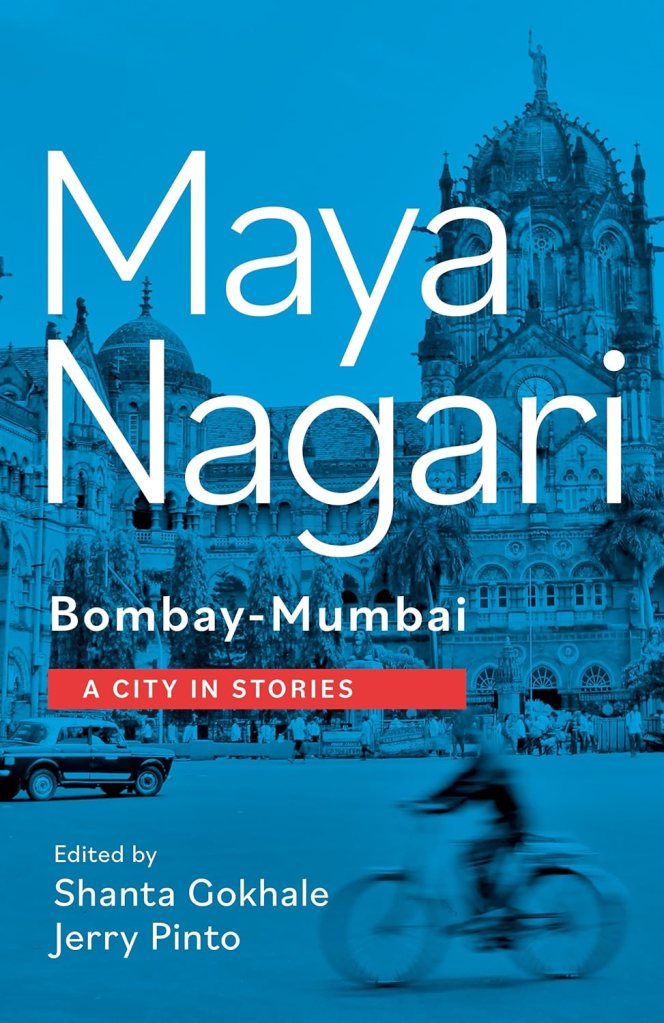


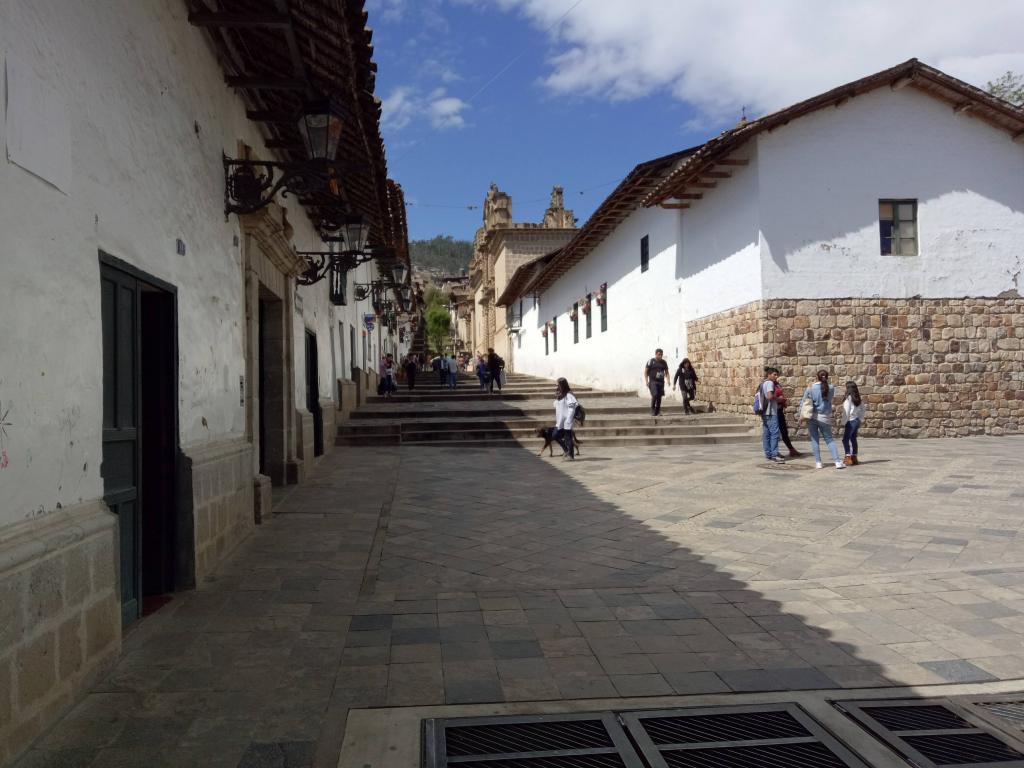
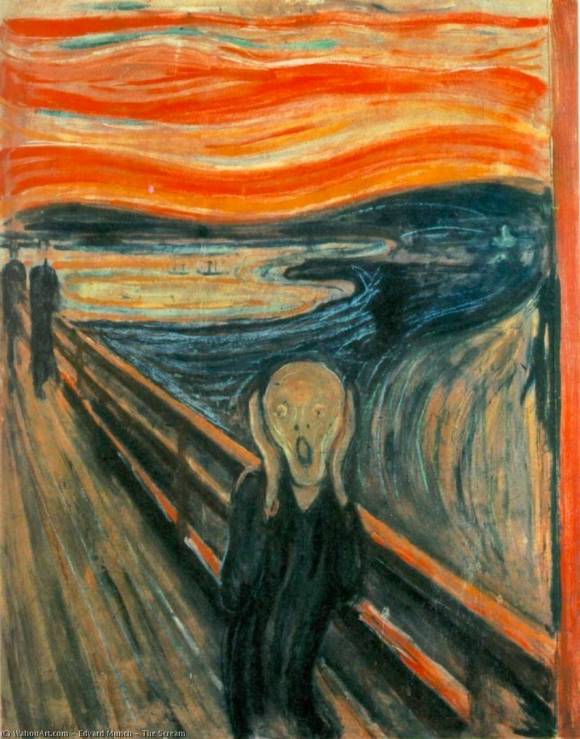

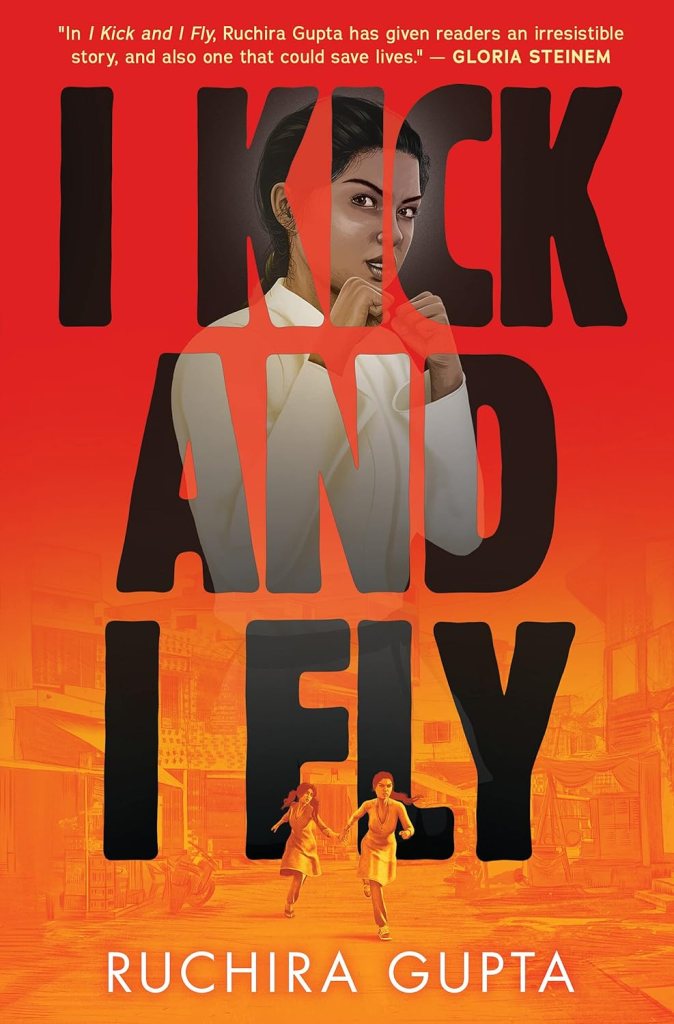



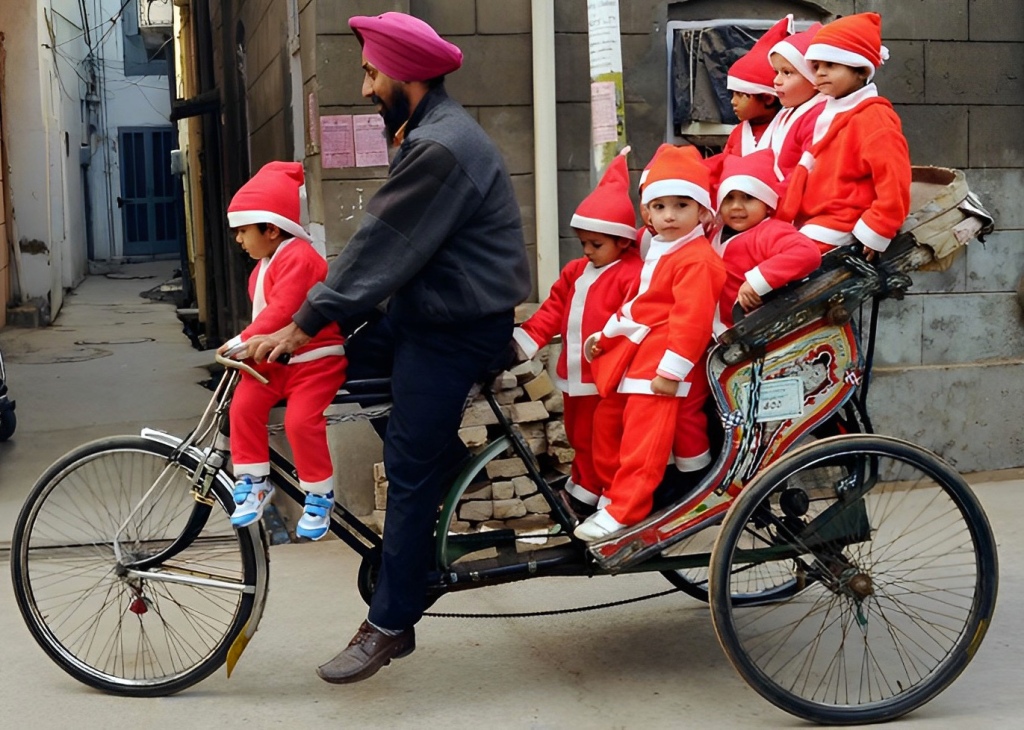
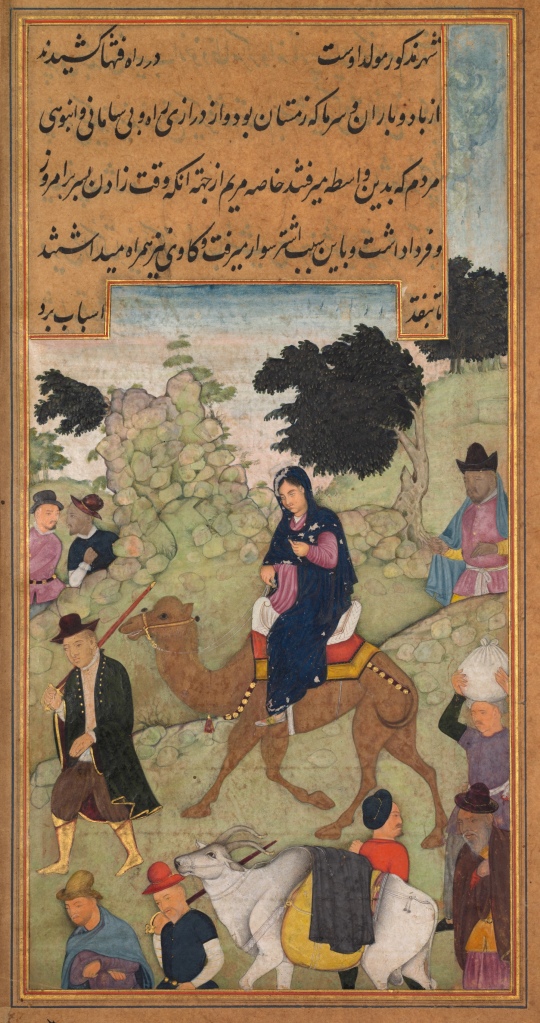


 Borderless