Categories
Editorial

Seasons in the Sun?

April is a month full of celebrations around the world. Asia hosts a spray of New Year festivities. Then there are festivals like Qing Ming Jie, Good Friday and Easter. All these are in a way reminders of our past. And yet, we critique things as old fashioned! So, where does tradition end and ‘outdated’ or ‘outmoded’ start? Meanwhile we continue to celebrate these festivals with joy but what happens to those who have lost their home, family and their living due to war or climate disasters? Can they too join in with the joie de vivre? Can we take our celebrations to them to give solace in some way?

In our April issue, we have stories from climate and conflict-ridden parts of the world. From Bangkok, Amy Sawitta Lefevre gives an eyewitness account of the March 28th Earthquake that originated in Myanmar. While in her city, the disaster was managed, she writes: “I’m also thinking of all the children in Myanmar who are sleeping in the open, who lost loved ones, who are feeling scared and alone, with no one to reassure them.” As news reels tell us, in Myanmar there have been thousands of casualties from the earthquake as well as shootings by the army.

From another troubled region, Pakistan, Zeeshan Nasir gives a heartrending narrative about climate change, which also dwells on the human suffering, including increase in underage marriages.

Human suffering can be generated by rituals and customs too. For instance, if festivals dwell on exclusivity, they can hurt those who are left out of the celebrations. Odbayar Dorje muses along those lines on Mongolian traditions and calls for inclusivity and the need to change norms. On the other hand, Devraj Singh Kalsi hums with humour as he reflects on social norms and niceties and hints at the need for change in a light-hearted manner. Farouk Gulsara makes us laugh with the antics of his spoilt pet cat. And Suzanne Kamata dwells on her animal sightings in Kruger National Park with her words and camera while Meredith Stephens takes us sailing on stormy seas… that too at night.

Art is brought into focus by Ratnottama Sengupta who introduces artist Haren Thakur with his adaptation of tribal styles that has been compared to that of Paul Klee (1879-1940). She also converses with filmmaker Leslie Carvalho, known for his film The Outhouse, and his new novel, Smoke on the Backwaters. Both of these have a focus on the Anglo-Indian community in India. Also writing on Indian film trends of the 1970s is Tamara Raza. Bhaskar Parichha pays tribute to the late Ramakanta Rath (1934-2025), whose powerful and touching poetry, translated from Odia by the poet himself, can be found in our translations section.

We have an excerpt from Professor Fakrul Alam’s unpublished translation of Tagore’s Red Oleanders. It’s a long play and truly relevant for our times. Somdatta Mandal shares with us her translation of Tagore’s essay called ‘The Classification in Society’, an essay where the writer dwells on the need for change in mindsets of individuals that make up a community to move forward. A transcreation of a poem by Tagore for his birthday in 1935 reflects the darkness he overcame in his own life. Two poems expressive of longings by Jibananada Das have been translated from Bengali by Professor Alam aswell. From Balochistan, we have an excerpt from the first Balochi novel, Nazuk, written by the late Syad Zahoor Shah Hashmi and rendered into English by Fazal Baloch. Among contemporaries, we have a short story by Bitan Chakraborty translated from Bengali by Kiriti Sengupta, a poignant story that reflects on gaps in our society. And a Korean poem by Ihlwha Choi rendered to English by the poet himself.

Our poetry section celebrates nature with poetry by Lizzie Packer. Many of the poems draw from nature like that of George Freek and Luis Cuauhtémoc Berriozábal. Some talk of the relationship between man and nature as does Stuart McFarlane. We have a variety of themes addressed in poems by Thompson Emate, Meetu Mishra, Saranyan BV, Paul Mirabile, Pramod Rastogi, Ryan Quinn Flanagan and many more. Rhys Hughes brings in both humour and social commentary of sorts with his poem. And in his column, Hughes has shared three gothic poems which he claims are horrible but there is that twinge of fable and lightness similar to the ghosts of Ebenezer Scrooge’s world[1]— colourful and symbolic.

Stories sprinkle humour of different shades with Snigdha Agrawal’s narrative about mendicants and AI and Mitra Samal’s strange tale about childhood pranks. Naramsetti Umamaheswararao takes us back to schooldays with his narrative. We have a fun book excerpt from Agrawal’s Fragments of Time (Memoirs), almost in tone with some of her stories and musings.

An extract from Anuradha Kumar’s latest non-fiction making bridges across time and geographies. Called Wanderers, Adventurers, Missionaries: Early Americans in India, the book is an intriguing read. We have a review by Professor Mandal of Sheela Rohekar’s Miss Samuel: A Jewish Indian Saga, translated by Madhu Singh. Highlighting syncretic folk traditions, Gracy Samjetsabam has discussed the late Tony K Stewart’s translation of oral folklore in Needle at the Bottom of the Sea: Classic Bengali Tales from the Sundarbans. Parichha has written about a high-profile book that also hopes to draw bridges across the world, Raisina Chronicles: India’s Global Public Square, by S. Jaishankar and Samir Saran.

This issue has been made possible because of support from all of you. Huge thanks to the team, all our contributors and readers. Thanks to Sohana Manzoor for her fabulous artwork. Do pause by our contents page as all the content could not be covered here.

Perhaps, world events leave a sense of pensiveness in all of us and an aura of insecurity. But, as Scarlett O’ Hara of Gone with the Wind[2] fame says, “After all, tomorrow is another day.” 

Looking forward to a new day with hope, let’s dream of happier times filled with sunshine and change.

Enjoy the reads!

Mitali Chakravarty

borderlessjournal.com

[1] A Christmas Carol by Charles Dickens, 1843

[2] Gone With the Wind, a novel by Margaret Mitchell, published in 1936

Click here to access the contents page for the April 2025 Issue

READ THE LATEST UPDATES ON THE FIRST BORDERLESS ANTHOLOGY, MONALISA NO LONGER SMILES, BY CLICKING ON THIS LINK.

Categories
Interview Review

The Storyteller of Singapore: Suchen Christine Lim

Singapore moved from being a little island to a trading port to an affluent glamorous city that bridges the East and the West. Spanning the spirit of the wide expanse of this movement within a century are some iconic writers. One of them is Suchen Christine Lim, an award-winning author who writes narratives embedded in history, lined with hope and love — two values that need to be nurtured in today’s war-torn world.

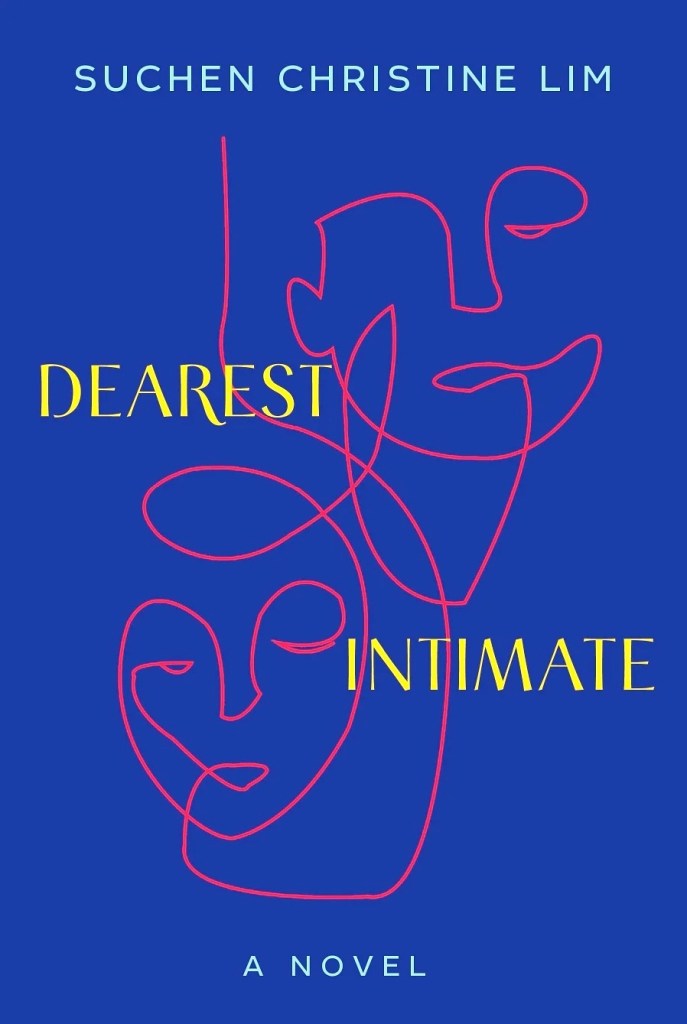
Dearest Intimate is her most recent novel that shuttles against the backdrop of Japanese invasion of not just China but of what was then Malaya and modern-day Singapore. The story revolves between the worlds of Chan Kam Foong and her granddaughter, Xiu Yin. A passion for Cantonese opera that spans across generations weaves all the threads together into a single multi-layered rich tapestry of life. That life is never about a single strand or a single facet is brought into play by her intricate craftsmanship.

Suchen has taken seven years to complete this novel creating a story that immerses the reader in different time periods. The time periods are congealed with a variety of techniques of narration. Both, the first-person narrative — the voice of Xiu Yin — and the third person — the diary which unravels her grandmother’s story — are seamlessly knit into a whole. Though to me, the diary is perhaps more compelling with its historic setting and its interludes of amazing passionate poetry, like these lines:

“Though hills and mountains, rivers and plains separate us,
nothing can separate our thoughts and dreams.
Though a thousand li separate our bodies, no mountains nor
rivers, not even the Four Mighty Oceans can separate our heart.”

As the book progresses, it unfolds Xiu Yin’s journey towards rediscovering her strength and love. She rises from the ashes of an abusive marriage which is in sharp contrast to the marriage of her grandmother, Kam Foong, arranged by the family in a traditional Chinese village in the early part of the twentieth century. That victimisation and abuse see no borders of education and can be born of a sense of frustration and an over-competitive outlook is skilfully reflected in the marriage of Xiu Yin, whose husband is from an educated Westernised Catholic background. She had been brought up on traditional lores among Chinese opera artists. Interesting observations on gender issues and local concerns — like the housing policies in Singapore — are wound into the narrative.

To me, one of the most enduring qualities of Suchen’s novels are that they deal with the common man against a historical backdrop. In an earlier interview, she had said: “I wanted to see the past from the perspective of coolies, the illiterate, who have largely been left out of history books. And yet without them, who would pick up the nightsoil?” In this novel too, she has dealt with the common man — farmers and opera singers only the historic setting and their responses have changes because of changed circumstances. We live, feel, emote with the common people before, during and after the second World War to the modern twenty first century Singapore. The author’s skilful characterisation enlivens her creations. The cruelty of Japanese invaders during 1940s is highlighted in the suffering of the people and their abuse. Published around the same time as Sumantra Bose’s Netaji Subhas Chandra Bose’s Life, Struggle and Politics, which shows how the Indian leader thrown out of Congress took support from the Axis powers (German and Japanese), it gives a contrasting perspective. Though this is fiction, Singapore history does corroborate that the Japanese invaders were extremely brutal in their outlook, even among the colonials.  Suchen’s reiteration of their cruelty is heart rending.

She has through her characters reiterated on the need of art not just to express but to make people laugh, give them hope and cheer them in dark times. This is an interesting theme which in itself makes one wonder if it is a comment on the perspectives of writers depicting unmitigated darkness. We find this strand of hope in great fiction from the last century — like JRR Tolkien’s Lord of the Rings series or Margaret Mitchell’s Gone with the Wind. They all end with hope as do Suchen’s works.

Suchen’s oeuvre very often encompasses the story of migrants as it has done here. And the interesting progression in this novel is the migrants’ complete acceptance of their new homelands — Singapore and Malaysia. In an earlier interview, Suchen had said, “A man can rise and go beyond borders but the land that he leaves will always be in his bones and heart.” And some of her protagonists had headed back to China. But in this novel, one is left wondering if the characters from China have not transcended their national frontiers to embrace the Cantonese opera, declared an intangible cultural heritage, like Durga Puja, by UNESCO.  Art and love have overridden all kinds of borders — and perhaps, that is why the name of the novel Dearest Intimate, which is used by Kam Foong for her love and for Xiu Yin by her beloved justifies the title. At the end, it is a heartfelt love story between humans and even between humanity and an art form that evolved to embrace the common man. Like all good books — it touches hearts across all borders with its message of love and acceptance as do Suchen’s other novels. To discuss, her world view and her novel, we had a brief conversation with Suchen —

What made you write this novel, Dearest Intimate? What led you to it?

I had a strange dream while I was on the Writers Immersion and Cultural Exchange (WrICE) residency in the ancient city of Hoi An in Vietnam. I dreamt of a pale orange pillow embroidered with two mandarin ducks and two rows of Chinese characters. When I woke up, I wrote down the two sentences in English, which eventually became the opening paragraph of this novel. So, you can say it was an unexpected gift from the universe that led me to write this novel.

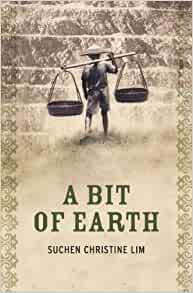
In your earlier novels like A Bit of Earth the protagonist always felt for part of their homelands. However, in Dearest Intimate, the protagonists dwelt on the theme of love and Cantonese opera, not so much on homeland. Has your world view changed since your first novel? How and why?

Well, I don’t think there is a quick easy answer to the how and why of change in worldview. The time gap between the publication of my first novel, Rice Bowl, and the latest, Dearest Intimate, is more than 30 years. Over that span of time my novels had examined issues of political /historical import, race and identity, moving from the past to the contemporaneous. Over the course of 30 years, it is natural for an author’s ideas and obsessions to change.  I would be very worried if I do not change, or my characters and themes do not change. For example, my sudden interest in the pipa led to the writing of The River’s Song, which in turn led me to Chinese music and Hong Kong Cantonese opera and the learning of Cantonese.

Tell us about why you took up the Cantonese opera in a major way in this novel?

It was the strange gift of a dream of two mandarin ducks embroidered on a pillowcase, which reminded me of the Cantonese operas I used to watch as a child with my grandmother and mother. Such pillowcases with embroidered mandarin ducks were symbols of love and fidelity and were sewn by young women in love in Chinese operas. Cantonese opera was a part of my childhood that was largely forgotten till this dream. Looking back, I think in writing Dearest Intimate I was reclaiming that forgotten part of my childhood.

Why did the novel take seven years to write? What kind of research went into the novel?

Partly because the research was such fun. I wasn’t concerned about deadlines. I had already flung away deadlines the moment I resigned from the Ministry of Education years ago. And I must admit I was fortunate that I didn’t have to write to fill my rice bowl. My research obsession began after I had watched a Hong Kong Cantonese opera troupe perform at the Kreta Ayer People’s Theatre, and later, other operas at the Esplanade during Moon Festival. Curious about the actors’ training, I went to the National Archives and listened to the many interviews with old opera actors and actresses of local Chinese opera troupes. Every year, I flew to Hong Kong to watch one or two Cantonese operas, and once I even met Chan Poh Chee and Bak Suet Xin, the icons of Hong Kong’s Cantonese opera. When I started writing the novel I would watch one Cantonese opera on YouTube every afternoon, even re-watching a few favourites. Unhappy that I could not understand the literary Cantonese used in the operas I joined a Cantonese class in Chinatown to deepen my understanding of Cantonese.

Why did the novel take seven years to write?  Well, one of the reasons is my troublesome health. I had several health issues to deal with. Very boring chronic issues which, naturally, gobbled up my time and distracted my attention. The most serious of these troublesomes was a minor stroke that affected my movement and speech for some months.

You have written many children’s stories, a play, short stories, non-fictions and novels. What is your favourite form of storytelling and why?

The novel. It is humanity’s greatest literary invention. Within the novel, raw messy lived experience is transformed into coherent narrative.

All your novels have a sense of hope and seem to reach out with the message of love and acceptance. Why is it you feel reiterating this is important?

I am glad you think my novels have a sense of hope. Hope is often the reason we live another day. Hope is what helps us to endure, to wait. To write, to make art is an act of hope.

What in your opinion is the purpose of art? You have repeatedly mentioned in your novel that people will respond better to hope or laughter in opera in dark times. Would you say this also applies to writing? Do you think people in dark times prefer books that give hope? Please elaborate.

I will quote Master Wu in the novel: “Play our music! Tell our stories! Sing our songs! Write our histories! Preserve our humanity! That is what the arts are for. Never, never for one moment forget who we are …”  in the age of robotics, story-generating AI and Twittering twitterati. 

Do you have any advice or message for budding writers?

Suffering is good for the writer. It will deepen lived experience and expand the heart’s empathy. 

Thank you for your wonderful answers and for giving us the time.

(The book has been reviewed and the interview conducted online by emails by Mitali Chakravarty)

Click here to access the Borderless anthology, Monalisa No Longer Smiles

PLEASE NOTE: ARTICLES CAN ONLY BE REPRODUCED IN OTHER SITES WITH DUE ACKNOWLEDGEMENT TO BORDERLESS JOURNAL