Categories
Stories

The Buyback

By Devraj Singh Kalsi

Ten years after selling the ancestral house, Anoop returned to his roots – to the small town he was eager to leave, to grow big and flourish where a plethora of opportunities lived. Finding a new building constructed on what was once his inherited land, he stood outside the entrance in awe, pulled out a postcard-size photograph from his shirt pocket, and tried to match the similarities between the past and the present. 

Gazing intently to observe the elements that stood firm despite the ravages of time and circumstances, the heavy iron-gate that guarded the grand entrance to the bungalow was the solitary link to his forgotten past. With a fresh coat of paint of a different shade, it looked ready to embrace visitors with the same warmth that it exuded earlier. As he pushed it gently to enter the premises, the creaking noise that used to irritate him was music to his ears now, capable of bringing a wistful smile to his face that conveyed a lot about his changed mindset.

Trudging along the cobbled path leading to the porch, Anoop decided to thank Girish, the present owner of the property, for showing the rare spirit of preservation. There were several similarities adding up, carving the image of a liberal owner who did not exercise the freedom to overhaul everything for a complete makeover. The jackfruit tree close to the boundary wall and the alcove with the tulsi plant stood green and abundant as it did in the past, offering ample evidence that he maintained a fine balance between legacy and modernity. 

Anoop was sequencing the thoughts he would share as soon as he was welcomed in. A dilemma prevailed over whether he should take time to unfold his actual purpose or quickly get to the agenda that had ferried him here. The tension was palpable as he pressed the doorbell with the arrogance of a feudal landlord who was still not ready to wake up and accept the new reality. 

His roller-coaster journey was a classic example of the story of an unexpected downfall, followed by a meteoric rise in no time. He felt it was his responsibility to erase the era of his decline because the lost ground was recovered. He made it a mission to acquire everything he had lost during the lean phase. With confidence in divine support, he knew a miracle was waiting to happen, to turn the tide in his favour and bestow upon him the status of ownership of this property once again. 

Not quite confident of an enthusiastic welcome, Anoop had come alone to strike a deal that did not carry the support or consent of his family though they shadowed him wherever he went. This would be the first occasion he would get full credit from his wife and son if he achieved success in what appeared to be a challenging task: buying back the house he had sold. 

The question that remained unanswered was whether Girish would agree to sell. Anoop was aware that such a proposal had rarely been made and was unlikely to be accepted. Even though the odds were high, Anoop was prepared to make it lucrative. As a businessman, he believed deals are sealed only when they are attractive and the greed for more money envelopes the wisest. 

Guests and visitors turning up without a prior appointment were fobbed off. The big bang of his arrival was met with a louder response as the afternoon siesta was disturbed. A mumbling, grumbling Girish opened the teakwood door and recognised Anoop standing at the threshold with folded hands. His expression of annoyance changed to a warm, receptive tenor, inviting him in with a quick shower of queries related to the absence of his family. Anoop was accorded the deferential treatment he deserved as a former owner of the property.

“Seems my arrival at an odd hour has impacted your rest,” Anoop apologised after making himself comfortable on the leather sofa.  

“Not at all, brother, I was about to go out for a stroll in the garden before having my evening tea. Now I will have your company,” Girish sounded courteous as he sat opposite Anoop who looked around to admire the aesthetic beauty of the interiors and could not resist asking him whether his spouse had done it all. 

“She is an artist, and whatever you see here is her choice or creation,” Girish attributed the pervasive beauty to his beautiful wife Amla who was waiting to be introduced with a glowing compliment. She emerged from the bedroom in her casual dress and flip-flops, flashing a radiant smile, and reached out to Anoop for a warm handshake. Anoop stood up to greet her while Girish sat cross-legged and kept his fingers crossed while watching their handshake that stretched unduly long. The connection was instant as Amla had a preference for well-dressed men wearing good perfume. His body language suggested he was far superior to the host in every possible way including mannerisms. 

Amla sat on the other side of the couch where Girish spread himself, adjusting her curls and waiting for Anoop to throw a question at her. Before he could ask for anything, Girish ordered Amla to bring tea and snacks for the guest. 

Anoop seized the moment with an offer that compelled Amla to remain seated. Employing sharp, concise language to outline his decent proposal, Anoop opened his briefcase and took out the cheque book. The couple, unable to guess what he was up to, looked at each other with curiosity that was settled once Anoop offered Girish a blank cheque and clarified, “Actually, I am here to buy this property. At the price you quote.”  

Having dropped a bombshell, Anoop waited for some time to see how they reacted. He put on his dark shades to prevent them from reading his mind, reposing full faith in the power of money to deliver the best deal in his favour. The swiftness of the episode was making it difficult for Girish to internalize it. But the reality of a blank cheque was nothing less than winning a lottery. It was a tough contest between the greed of ownership and the greed of wealth – the seller had to resist the temptation of growing richer and the buyer had to get the property at any cost. Anoop did not want to engage local heavyweights to apply pressure tactics on Girish, to compel him to sell. He chose to come to the suburban town to ink the deal with the most lucrative offer Girish could ever get during his lifetime. 

“Other than the price factor, there are aspects you must realise. For example, my willingness matters first. What made you think I was going to sell it in the first place? Did I buy this property from you with the condition of selling it to you after a decade? Even if you shell out the highest price, I will not sell it,” Girish made his decision categorically clear and looked eager to show him the exit door. 

Unwilling to lose the opportunity, Anoop tried to soften his stance with an emotional pitch, citing a bright future in the autumn years. “Stop being a fool. I am paying you as much as you want. Do you have any idea of how much this property means? I did not spend the money to buy in Mumbai or Dubai. This piece of land is of greater value to me. You can take the amount you want and buy a fancy penthouse in any posh project. Wake up and grab it,” Anoop rallied forth like an aggressive dealer. 

“I am well-settled here. My wife and kids are happy. Why should I sell it? Just because you are paying an exorbitant amount? Or simply because you need it now? It appears your memories buried here have become more important after you turned rich. If you did not have excess wealth, I’m sure you would not have bothered to come here again,” Girish went ahead with much greater conviction and candour. 

The abundance of wealth made Anoop keen to get back in touch with his past. Girish was accurate in his analysis and chose to defend his right to refuse the lucrative offer.  

“Let me be honest since you have put it right. I am here because the house, more than a century old, belonged to an illustrious family that had migrated from the Punjab during the British Raj and built an empire. Four generations lived here. Eleven members died here. Fourteen were born here. I am the last survivor with two kids with the burden to preserve the heritage. Something I cannot explain, and you cannot understand. You cannot rationalise a blank cheque for this property that was sold for peanuts to you because the circumstances were different then. You gained because of my misfortune, and you paid much below the market price but I am offering you many times more than the current market price. It is not just another piece of land for me,” Anoop put it bluntly, to make his position clear. 

Girish was a first-generation entrepreneur introduced to wealth in recent years. He rose from a middle-class family background and slogged hard to garner success. He was pricked by what Anoop said to make his accomplishments look tame.  

“You have come unannounced and thrown a blank cheque, with no regard for the thing called consent. This is undemocratic even if you offer the best price, thinking I will not have the choose to refuse because you offer the highest price possible. Remember, you were in debt when you sold this property. You accuse me of paying less than the market price but it was the highest price you got. Exploiting people in trouble is nothing new. We all do it to build our fortune. Before you add another word related to the memory of your ancestors here, just think that my kids are growing up and creating memories for themselves. Tell me, are the memories of the dead more important than the memories of those alive? No compulsion prevails in my life as my circumstances are skewed in my favour. Forget the idea of buyback. Scout for something else. You are possessed by the idea of fixing the past. But this property is not up for grabs,” Girish gave his final two cents.

The conversation was losing mutual respect, with a distinct possibility of unilateral withdrawal. Girish was not sure how long he would be able to essay the role of a good host despite being insulted and lured by the guest who had the singular agenda of securing possession of the property. Amla had been a patient listener throughout the exchange, without interrupting the flow with her opinion. Before Girish asked Anoop to leave the house, Amla chose to engage with Anoop without her husband’s consent. 

Sensing this as a god-gifted opportunity, Anoop took interest in her words. Unlike Girish, she wowed the offer and was glad to get it. Showing her hand to stop Girish from interfering at this point, Amla silenced him and took center stage. “I am his better half, and I must think better. He has grown attached to this house in just a decade and you are naturally attached to this property as you have spent almost your entire life. You have a valid argument in this regard. This is our first property as we lived on rent earlier. But I do not mind selling it since your offer is fabulous. So, let’s do like this. You can issue two cheques – in the name of the husband, and in the name of the wife. You can split the amount equally – 25 crores[1] for each.”

Anoop could not believe this deal would click with her intervention. He did not have to try coercion or anything like that. Amla co-operated and took complete charge while the argumentative Girish was now a meek lamb, unable to utter a word against her decision.  

Anoop wrote the cheques as he was asked to write by Amla. Girish was still unable to comprehend why she accepted the deal with Anoop. He knew Anoop was paying far more than the market price and Amla facilitated it without his consent. Girish had every right to ask her why she did so, but the aspect of marital turbulence weighed heavy on his mind.

“So, you got the property quite unexpectedly. It is a small price for something precious like the Kohinoor. Girish wouldn’t have agreed to sell. It is profit and gains for both parties. We should celebrate it,” Amla proposed, with absolute disregard for her husband who could not recover from the shock of his wife’s unilateral decision. He regretted making his wife the co-owner of the property. 

It would take a month to complete the formalities of transfer and the ownership would return to Anoop. He was eagerly looking forward to the day when he would become its legal owner once again. He had no changes in mind except the installation of the marble statues of his father and mother. He felt this would be the best honour as he thought the only child would make the lineage proud, thanks to the solid principles inculcated during his childhood years. To safeguard the future of the property from his own son, Anoop created a trust to maintain the ancestral property and deprived his son of the right to inherit it. Besides, the price he had paid for its buyback would never become the market price, even in the next hundred years.   

The entire town got to know about the buyback, and how Anoop had returned to strike a deal. Usually, the old gives way to the new but this was an odd case where the new paved the way for the return of the old. The revival of the past caught the imagination of the young and the old. He wanted to be ready with a convincing narrative for those who were interested to hear the story of his turnaround although there would be some skeptics who would never buy the idea of a vision that propelled him to rebuild his life.

The burden of guilt was off his chest and Anoop thanked Amla for making it possible. Trapped in a loveless marriage, she wanted to look at the world with new hope through a firmly supportive financial window. Her reaching out to Anoop helped her fund her dream venture and begin life anew while he got back the property without facing a struggle. The divorce from Girish would happen without a long-drawn legal battle as she would not have to claim alimony from him. Amla realised this was the best opportunity and encashed it. 

In her subsequent exchanges with Anoop, Amla mentioned she had moved to the West to pursue her dreams at forty. Anoop gave full credit for this buyback to Amla who wanted wealth and freedom at the same time. At times Anoop felt bad for Girish who lost his house and wife around the same time, but Amla assured him that Girish was not the kind of person worth shedding tears for as he had hurt many people in his life without a tinge of remorse.

.

[1] Rs 250,000,000 – Crore is an Indian unit for ten million

Devraj Singh Kalsi works as a senior copywriter in Kolkata. His short stories and essays have been published in Deccan Herald, Tehelka, Kitaab, Earthen Lamp Journal, Assam Tribune, and The Statesman. Pal Motors is his first novel.  


PLEASE NOTE: ARTICLES CAN ONLY BE REPRODUCED IN OTHER SITES WITH DUE ACKNOWLEDGEMENT TO BORDERLESS JOURNAL

Click here to access the Borderless anthology, Monalisa No Longer Smiles

Click here to access Monalisa No Longer Smiles on Kindle Amazon International

.

Categories
Review

The Blight and Seven Short Stories

Book Review by Ajanta Paul

Title: The Blight and Seven Short Stories

Author: Bitan Chakraborty

Translator: Malati Mukherjee

Publisher: Shambhabi Imprint

Bitan Chakraborty’s The Blight and Seven Short Stories, translated by Malati Mukherjee from Bengali, heralds the arrival of a major talent in the sphere of short fiction, characterised as it is by an evolved narrative technique that raises the art of storytelling to a new pitch of intensity and subtlety. 

The image of blight in the first and titular story is a metaphor that pervades the entire collection. Blight, as one knows, is an agricultural phenomenon, a term for a type of disease that affects crops and ruins harvests. In Bitan Chakraborty’s superb collection of stories, it symbolises the rot that has set in everywhere, the moral corruption that is eating away at the innards of society. 

Characters such as Asesh, Neeladri, Karmakar and others are shown to have no conscience or scruples. They have little faith in the system and, therefore, have taken the law into their own hands, forging unholy alliances, negotiating shortcuts and demonstrating scant respect for traditional decencies. They are men in a hurry, eager to get rich quickly. Part of the local land-grabbing mafia and real estate “syndicate”, they are members of what Partha Chatterjee has described in his writings as a “political society.” 

 An evocative use of symbol and irony imparts a rhetorical depth to the conflicts enumerated. In the titular story, ‘The Blight’, for instance, the all-devouring, predatory and carnivorous instincts of Asesh are set against his father Moni’s ethics of integrity. Moni’s investigative methods intensify in the course of the story as he compulsively enquires about the prices of potato and potato products in a bid to assess the extent of Asesh’s deceitful dealings, his acts eventually spiralling into the surreal tableau at the end when father and son are locked in a physical struggle. Asesh’s relishing of his mutton just prior to this incident is an analogical and allegorical master stroke pointing to his material gluttony, insatiable appetite and ruthless self-gratification. 

In the story. ‘The Site’, Neeladri, the son and Nalinaksh, the father are counterparts of Asesh and Moni, undergoing the same conflicts and revealing similar differences of opinion and values.  Nalinaksh, however, is not untainted like Moni, neither is he impervious to the good life. It’s just that he cannot brook the scale of corruption indulged in by Neeladri. Is his end foreshadowed and pre-planned as seems to be suggested by the funeral card dropped surreptitiously in Hari’s bag? 

In the short story ‘Reflection’, Ahan the Bengali protagonist, who is a vocal protester against habitual acts of indiscipline and injustice on trains, unwittingly indulges in the same, displaying disproportionate anger at an errant co-passenger for a minor infringement. The figure he is confronted by at the end of the story points to the ambiguity of his very being. Is this figure a self-reflection, an alter ego, or a doppelganger?

In ‘A Day’s Work’ and ‘The Mask’, it is Mahadeb, the debt-ridden and exploited daily wager, and Puntu, the suburban mask-seller who are manipulated by Karmakar, the jeweller-turned-moneylender and Shubho, the stage manager turned middleman respectively. In the latter story, the mask becomes a potent symbol of disguise used by perpetrators to conceal their wrongdoings. Shubho hides his questionable dealings in props as a theatre manager even as Neel conceals his affair with his office secretary. 

In the story ‘Landmark’, Tapan goes to Delhi for work and decides to visit his friend Jashar in Ghaziabad. He sets out on the journey but fails to reach his destination because the landmark known to him has disappeared. His aborted journey becomes a symbol of the frustrated quest of modern man who fails to progress despite registering movement. One is reminded of the hapless souls trapped in the different circles of hell in Dante’s Inferno, even as shades of Joyce’s Dubliners are evident in the circling of Lenehan within the city of Dublin in the short story ‘Two Gallants’. 

The landmark in question, namely two adjacent butcher’s shops at the mouth of a lane, had fallen prey to fundamentalist ire over the meat-eating habits of certain communities. The story has not so much a climax as an anticlimax in the revelation of the convenience store owner who enlightened Tapan about the fate of the owners of all such establishments in the area — they had been chopped into mincemeat and fed to unsuspecting patty consumers. This is gallows humour of the most effective kind and is directed at Tapan whose mouth is filled with the particular savoury at that moment. 

In ‘Spectacles’, Siddharth has been wearing the wrong pair of spectacles and consequently not seeing things clearly. The trope of a skewed perspective is evident in his youthful misjudgment of Sameerda to have been a man of ideals. In ‘The Site’, Nalinaksh cannot understand what the beggar down below on the street is telling him so urgently just moments before his fall from the balcony and subsequent death, symbolizing a lack of communication. 

Historically, ‘blight’ was a sociological term applied to urban decay in the first half of the twentieth century. Usually associated with overcrowded, dilapidated and ill-maintained areas affecting built structures and civic spaces, the term has this palpable air of dereliction which, translates into a pall of moral disrepair that dooms the situations in the mentioned stories with an inevitability, reinforcing the significance of the title in its varied connotations. 

In an epical sense, the conflict in the stories is between the forces of good and evil. It is also between social classes, and Moni comes across as the tired torchbearer of a jaded idealism whose dedication to his cause is regarded by some as whimsicality, so ingrained and ubiquitous is the sense of blight. The moral protesters in Moni, Nalinaksh, Ahan, Subal and others, for all their integrity, are shown to be largely ineffectual in their opposition to venality. Nevertheless, they are entirely credible within the ambit of their operations. 

Immoral and illegal activities, found in almost every story in the collection, yield a cumulative effect in the final story, ‘Land’, where an entire village, having fallen prey to unscrupulous land appropriation, lies desolate and ghostly. The poignant reality of dispossession is brought home most vividly in the isolation of the young bride-turned-widow, Manasa, who, by the end of the story, spends her days gazing at her husband’s burial site from her window. 

Real estate is not only a veritable canker but almost a narrative device in its variations and applications in this clairvoyant cluster of stories. It is one’s native soil and eventual resting place (‘Land’); dream or fantasy (Mukto’s in ‘The Blight’); make-believe space of the theatre in ‘The Mask’ and the rough and tumble of property dealings in ‘The Site’, ‘Spectacles’ and of course, the titular story. 

The modernistic slant of the collection is expressed with objectivity without authorial interventions and, consequently, the lack of any judgemental attitude.  Yet, Chakraborty successfully suggests there is no law and order, justice or tolerance in contemporary society, only a wide chasm between the haves and the have-nots which is aggravated with every passing day as he repeatedly portrays ordinary people as having no rights, voice or means to fight the corrupt. 

He does this with postmodern techniques of flux, erasure and revision. Nothing is permanent, and the provisional truth of the moment is glimpsed through opposites, overlaps, continuities and breaks. A case in point would be the friction between different kinds of betrayal as in ‘Spectacles’ — Sameer-da’s wife had discovered an indifferent and unhelpful side to Siddharth’s nature even as the latter believed Sameer-da to have been what he was actually not.

In ‘The Blight’, the space between the contesting narratives of deliverance and deviance, the first pertaining to Monì and the second to Asesh holds the developing interest of the story within its escalating spiral. Between realism and surrealism, in the same story lies the flitting apprehension of the truth of Asesh’s character as he tears into the flesh of an animal while enjoying his Sunday lunch of mutton and rice. 

The meanings of Chakraborty’s stories cohere in the consequences of both commission and omission. In ‘Land’, for instance, momentous developments such as the death of Subal are scarcely mentioned, modernistically enacting the crisis through structure and style. The piece seems to be caught in a curious aesthetic apathy in which gaps and ellipses in the mode of narration express the emptiness at the heart of Manasa’s life and those of others like her.

The translation helps through the fluid grace with which it transliterates, transcribes and transcreates the stories from one language to another, all the while trying to retain the nuances of the root culture. This same culture is sought to be portrayed through two languages with very different socio-cultural associations, the first being the original Bengali in which it was composed and the second a colonial legacy notably indigenised. Malati Mukherjee has a keen ear for voice, accent and dialect, which aids her in effecting an authentic idiomatic equivalence, at once elucidating and engaging.

Two passages stand out for the haunting beauty of their description. One is the spectacular reference to the world’s oceans and forests contained in the aquarium and the balcony garden in ‘The Blight’, and the other is the luminous lambency of the moon in ‘Land’ as it broods over the melancholy landscape. Bitan Chakraborty’s stories in this collection are rare blooms depicting a moral topography in torpor where character, setting and style intersect to create points of extraordinary insight.

Dr Ajanta Paul is a poet, short story writer and literary critic. She is currently the Principal at Women’s Christian College, Kolkata. Her publications include a book of poetic plays — The Journey Eternal; a collection of short stories — The Elixir Maker and Other Stories; a book of literary criticism — American Poetry: Colonial to Contemporary; three books of poems — From the Singing Bowl of the Soul: Fifty Poems, Beached Driftwood and Earth Elegies.

.

PLEASE NOTE: ARTICLES CAN ONLY BE REPRODUCED IN OTHER SITES WITH DUE ACKNOWLEDGEMENT TO BORDERLESS JOURNAL

Click here to access the Borderless anthology, Monalisa No Longer Smiles

Click here to access Monalisa No Longer Smiles on Kindle Amazon International

Categories
Conversation

Rings on Her Fingers and Bells on Her Toes…

Ratnottama Sengupta in conversation with Sohini Roychowdhury, who uses dancing to build bridges across cultures

“Meet my daughter Sohini,” Uma Di was introducing the dancer who then lived in Madrid. And my first response was, “Why isn’t she in the movies?!”

Sohini Roy Chowdhury. Courtesy: Sohini Roy Chowdhury

Tall, fair, lissome, agile, Sohini Roychowdhury is the stuff beauty queens and show stoppers are made of. That wasn’t surprising: after all, Uma Roychowdhury herself is the picture of perfection in aesthetics.

It didn’t take me long to realise that, much like the well regarded sculptor’s bronzes, her daughter too was made of enduring stuff. One day she was teaching Bharatanatyam to French, Spanish, and Italian enthusiasts. The next day she was lecturing on mythology in New York. One day she was dancing to ‘Jai Ho![1]’ for the director of the Oscar winning Hollywood movie[2]. Another day she was delineating Durga in an Anthropology Museum…

None of these saw her run out of breath. Nor does she, ever, run out of time. When she’s not holding her fingers in a dance mudra, she is holding a metaphoric pen. This month she unveiled her second book, Dance of Goddess Kali. Yes, she has rings on her fingers and bells on her toes — and wherever she goes, there’s dance on the cards!

Here is what she had to say when I spoke to her:

The Dance of Kali follows Dancing with the Gods. How are the two books different?

Dancing With the Gods and The Dance of Kali are two distinct works, each focusing on different aspects of my artistic and spiritual journey. 

Dancing With the Gods is a pictorial, coffee-table book stemming from my journey as a classical Indian dancer with a multinational dance troupe. Its vivid visuals showcase my onstage performances and behind-the-scenes moments. These are highlights of my career as a dancer, both solo and with Sohinimoksha World Dance and Communications[3]

This visually captivating book focuses on imagery and aesthetics. It offers glimpses into my artistic expression through dance, celebrates my journey around the world, and highlights my life-mantra of connecting civilisations through my craft. This tracing of Sohinimoksha’s journey is for a broader audience: Indian dance enthusiasts, art lovers, and individuals interested in my achievements. The aim is to inspire through visually compelling storytelling.

In contrast, The Dance of Kali is a treatise on the ethos of Goddess Kali and Shaktism. It delves into the deeper spiritual and philosophical aspects associated with the goddess, exploring Kali’s symbolism, mythology, and significance within the context of Shaktism, a Hindu tradition of worshiping the divine feminine energy. The tone of this work is contemplative, as it delves into the profound symbolism and the spiritual aspects associated with the Goddess. It incorporates scholarly research, analysis, and interpretations from various perspectives. Hopefully it offers readers a deeper understanding of Kali’s significance in Hindu spirituality.

May I point out here that The Dance of Kali is not a religious book. It is for readers with a specific interest in Hindu mythology, spirituality, or the myths and legends around the resident Goddess of Kolkata. Those seeking a deeper understanding of Kali’s symbolism and philosophical underpinnings within the context of Shaktism, will find this book dispels disrespectful misrepresentations and unfounded Western misconceptions  surrounding the images of Kali as a demonic goddess. 

To sum up: both the books reflect different facets of my artistic and spiritual journey. However, they differ significantly in their subject matter, focus, tone, and intended audience. One celebrates my achievements as a dancer through captivating visuals. The other is an academic tome exploring the profound symbolism and spirituality associated with Goddess Kali.

What prompted you, an international dancer, to pick such a rooted in mythology subject?

I have always had a personal affinity with or inclination towards Goddess Kali. Many artistes draw inspiration from their own beliefs, experiences, and cultural backgrounds when choosing subjects for their work. I am no different. For me the depiction of the Goddess is an opportunity for artistic exploration. Kali, with her complex symbolism and multifaceted persona, offers rich material for creative interpretation through the arts, be it dance, literature or visual arts. 

This book also celebrates India’s rich mythological heritage and the way it connects to other ancient cultures, in Mesopotamia, Egypt, Spain and France. Kali, with her global soul sisters Ishtar or Sara La Kali, holds significant cultural and religious importance, not just in Hinduism, but other cultures as well, particularly within the contexts of worshipping Mother Goddesses. I delve into Kali’s mythology and symbolism to honour this aspect of Indian life, and its universal resonance. 

Yes, Goddess Kali is rooted in Indian mythology. But the themes she embodies — feminine power, transformation, and liberation —transcend cultural boundaries. I hope this book will serve to explore universal themes of empowerment and spirituality. It also aims to provide a deeper understanding of Hindu mythology, and the symbolism associated with the Dark Goddess. Effectively I seek to promote intercultural dialogue and foster greater appreciation for diverse religious traditions. Most significantly, I hope to dispel the uneducated interpretations of Kali as a horrific, savage, demonic goddess. How often she is typecast as a symbol of evil — in popular Western films, books and even as Halloween costumes for disrespectful celebrities like Heidi Klum

I have witnessed your performance as Durga in an anthropology museum in Madrid. I have noted your commitment to meaningful, even profound themes in your endeavours. What has been your grooming in dance?

I started dancing at a young age under  renowned Bharatanatyam Guru, Thankamany Kutty. Later I learnt from Kalamandalam Venkitt in Kolkata. I received rigorous training in Bharatanatyam, the dance  that originated in the temples of Tamil Nadu. My dedication to classical art led me to delve deep into its nuances. I mastered intricate footwork, expressions, and storytelling techniques. Over the years, I refined my technique and expression through consistent practice and performance and came to embody the essence of Bharatanatyam.

Your father was a renowned sitarist living in Germany. Your mother is a reputed sculptor of Kolkata. Why did you, an only child, not take to any of these streams of creative expression?

Indeed I was born into a family of accomplished artists. My father, Pandit Subroto Roychowdhury was a renowned sitarist, and my mother, Uma Roychowdhury, is a reputed sculptor. But I chose a different path for myself. 

As an only child, I was exposed to various forms of creative expression. But my passion for dance was ignited after watching a riveting performance by Yamini Krishnamurthy when I was about four years old. While I deeply respect my family’s artistic legacy, I followed my own calling and embarked on a journey to carve my niche in the world of dance.

What are the values you have imbibed from them individually?

My father’s sitar schools in Germany have produced hundreds of students — including distinguished sitar players. From him I imbibed a profound appreciation for music and rhythm. I learned discipline, dedication, and the importance of perseverance in mastering an art form. From my sculptor mother I inherited a keen love for aesthetics and eye for details. I learned the importance of expressing emotions and stories through visual and performing arts. 

Together these values have steered me towards excellence and innovation in my journey as a dancer and communicator.

Mixed genre performance by Sohini Roychowdhury. Courtesy: Sohini Roy Chowdhury

You have lived in Moscow and Madrid. You are guest professor in far-flung Universities, in America and Columbia. You have danced Bharatanatyam and you have danced to Jai ho! at the premiere of Slumdog Millionaire. What have you gained through your international exposure?

My international exposure has enriched me both personally and professionally. Living in cultural environments as diverse as Moscow and Madrid have broadened my perspectives and deepened my understanding of global arts and communication. 

More than 2000 students have ‘graduated’ through my two dance schools in Spain — Casa Asia and Sohinimoksha Artes de la India. In Moscow, more than 80 Russian students performed with me on stage at the Embassy of India and Nehru Centre at the end of their course. As a guest professor in universities across Europe, USA and Latin America, teaching dance, Natyashastra [theory of dance] and Indology, I have not only shared my expertise — I have learnt from students, artistes and scholars from different backgrounds. 

Through my performances of Bharatanatyam, and collaborations with international artists, have bridged cultural divides. My dancing to Jai Ho! at the European premiere of Slumdog Millionaire showcased the universal appeal of Indian dance and music. It  highlighted its ability to connect with people across borders. Today I can confidently claim to have promoted cross-cultural exchange globally.

Coming from an aristocratic, old Calcutta background, what merit do you see in Bollywood dancing?

Despite coming from an aristocratic background rooted in old Calcutta, I recognise the merit in Bollywood dancing which has become a global phenomenon. Not surprising. For, characterised by vibrant energy, expressive movements, and fusion of multiple dance styles — from Salsa to Tango, Twist to ChaChaCha – Bollywood dancing holds mass appeal. It serves as a platform for artists to showcase their talents to diverse audiences and has contributed to the popularization of Indian culture worldwide. It is rooted in traditional Indian dance forms, yet embraces modern influences. And it reflects the evolving tastes of contemporary audiences. 

Since the 1960s, Bollywood has drawn inspiration from various musical traditions across the world. This imparted its films a rich tapestry of global influences. This fusion of world music and dance enriched the aesthetic of Bollywood — and in turn contributed to its cultural significance and global appeal.

In the 1960s, Indian cinema underwent a transformation with the emergence of filmmakers like Guru Dutt and Raj Kapoor, who infused their films with elements of Western music and dance. The most iconic example of this is seen in the song Mera joota hai Japani [my shoes are Japanese] from Shree 420 (1955): here Raj Kapoor’s character sings about wearing Japanese shoes, English pantaloons, and Russian caps — all of which symbolised the growing influence of the West in post-colonial India. And yet, as the song stresses, at core these films are Hindustani — Indian.

Throughout the ’60s, ’70s and ’80s, the industry witnessed the rise of dance and music directors who played a pivotal role in incorporating world music and dance forms into Hindi cinema. Composers like OP Nayyar, Shankar Jaikishan, SD Burman, C Ramachandran, Kalyanji Anandji, RD Burman, Laxmikant-Pyarelal, and Bappi Lahiri experimented with disparate musical styles. These ranged from rock-n-roll, rumba, flamenco to disco, reggae and jazz. This infused their compositions with international flavours. 

Similarly, choreographers Sohanlal,  PL Raj, Herman Benjamin, Suresh Bhatt, Saroj Khan, Chinni and Rekha Prakash, Shiamak Davar, Farah Khan, Remo D’Souza, Terence Lewis, Vaibhavi Merchant, and Prabhu Deva have blended Indian classical dance with Western styles. This has created the unique dance style that is now identified as Bollywood dancing. It has homogenised movements from hip-hop to salsa and contemporary dance.

Soon stars like Shammi Kapoor, Helen, Asha Parekh, Hema Malini, Rishi Kapoor, Mithun Chakraborty, Jeetendra, Govinda, Hrithik Roshan, Madhuri Dixit, and Sridevi became synonymous with Bollywood’s larger-than-life dance numbers. For, it showcased their versatility and flair for different dance steps. Embracing the twist and turn era of the ’60s to the disco craze of ’70s and the hip-hop-inspired moves of the 2000s, Bollywood stars captivated audiences with their energy and charisma.

Along with Western influences, Bollywood also drew from traditional Indian dances. Its choreography incorporated elements of Bharatanatyam, Kathak, and Odissi. Dance sequences like Dola Re Dola from Devdas (2002) and Pinga from Bajirao Mastani (2015) exemplify the fusion of classical and contemporary dances, blending intricate footwork with dynamic movements and expressions.

In recent years, Bollywood has continued to evolve, reflecting the changing tastes and preferences of global audiences. Directors, like Sanjay Leela Bhansali and Farah Khan, have pushed the boundaries of traditional filmmaking, creating visually stunning spectacles that showcase the diversity of world music and dance. Stars like Priyanka Chopra, Deepika Padukone, and Ranveer Singh have embraced this eclectic mix of styles, bringing their own unique interpretations to the screen.

Spanish, Bulgarian and other European dancers from my own troupe, Sohinimoksha World Dance, have performed specially choreographed fusion dance items set to popular Bollywood tracks. Kristina Veselinova danced to Mere Dholna from Bhool Bhulaiya; Violeta Perez and Lola Martin to Senorita! from Zindagi Na Milegi Dobara and Maria Sanz on Padmavat’s Ghoomer on stages across India and the world. So I readily acknowledge the significance of Bollywood dance in preserving India’s cultural heritage while adapting to changing times.

Would you say our films are taking our dance traditions to votaries abroad? Just as Indian musicians of the 1960s had taken our ragas to the West?

In the 1960s, Ravi Shankar, Ali Akbar Khan and other maestros played a crucial role in initiating the West in the rich notes of Indian classical music — and that had enriched the global cultural landscape. My own father, Pandit Subroto Roychowdhury, spent more than 40 years in Germany and other European countries, spreading and popularising Indian classical music through concerts and classes. Today Indian films, particularly Bollywood, are carrying forward this legacy. They are showcasing the wealth that is Indian dance — often fused with world dance influences. Just as our musicians shared the wealth of ragas with the West, Bollywood films are spreading the infectious exuberance of Indian dance to enthusiasts around the globe. This is fostering cultural exchange on an international scale. Small wonder that Bollywood is now acknowledged as India’s most potent soft power. 

What, in your opinion, is needed to make GenNext learn from our past traditions?

If we want GenNext to learn from our past traditions, we must provide them with comprehensive exposure to our rich cultural heritage. For this, we must integrate our arts and cultural practices into educational curricula. We must foster appreciation through interactive experiences — workshops, performances, cultural events. Additionally we must leverage modern technologies and platforms to disseminate information. Let’s make traditional arts more accessible and engaging for the young. Let’s cultivate mentorship programs and intergenerational exchanges. For, we must bridge the gap between past traditions and contemporary lifestyles, to ensure their relevance and continuity for the generations to come.

Sohini I have seen you at close quarters, as a mother, wife, daughter, and daughter-in-law even as you criss-cross the world for your dance. How do you still find time to write, which is such a demanding, reflective expression?

I am fortunate to be able to balance my roles as a mother, wife, daughter, daughter-in-law, and a performing artiste. My experience as much as my dedication to my craft honed my time-management skills. Despite crisscrossing the world for performances, lecture tours, and other professional commitments, I carve out time to write, for I recognise its significance as a reflective form of expression. 

To effectively manage my time, I set priorities, create schedules, and maximize productivity during the available windows of time. I designate specific periods for writing, be it early mornings, late evenings, or during travel downtime. I try to integrate writing into my daily routine, seizing moments of inspiration and reflection to jot down ideas or draft passages.

My passion for writing is a driving force — it motivates me to make time for it amidst my busy schedule. Writing provides a creative outlet for introspection, and intellectual exploration. It complements my artistic endeavours and enriches my personal and professional growth.

I am grateful for the support I receive from the network of my family, friends, and collaborators. They play a crucial role in facilitating my writing pursuits. My latest book, The Dance of Kali, was co-written with my son Rishi Dasgupta, an Economics MSc from the University of St Andrews, UK. 

However, at the end of the day, that I find time to write amidst my multifaceted life, reflects my passion for engaging in reflective expression. Because? It contributes to my holistic development as an artist and an individual.

[1] A song from the 2008 Bollywood movie, Slumdog Millionaire

[2] Danny Boyle

[3] A dance troop started by Sohini Roychowdhury with presence in Madrid, Berlin and Kolkata

.

Ratnottama Sengupta, formerly Arts Editor of The Times of India, teaches mass communication and film appreciation, curates film festivals and art exhibitions, and translates and write books. She has been a member of CBFC, served on the National Film Awards jury and has herself won a National Award. 

.

PLEASE NOTE: ARTICLES CAN ONLY BE REPRODUCED IN OTHER SITES WITH DUE ACKNOWLEDGEMENT TO BORDERLESS JOURNAL

Click here to access the Borderless anthology, Monalisa No Longer Smiles

Click here to access Monalisa No Longer Smiles on Amazon International

Categories
A Special Tribute

 Reminiscing on Tagore… 

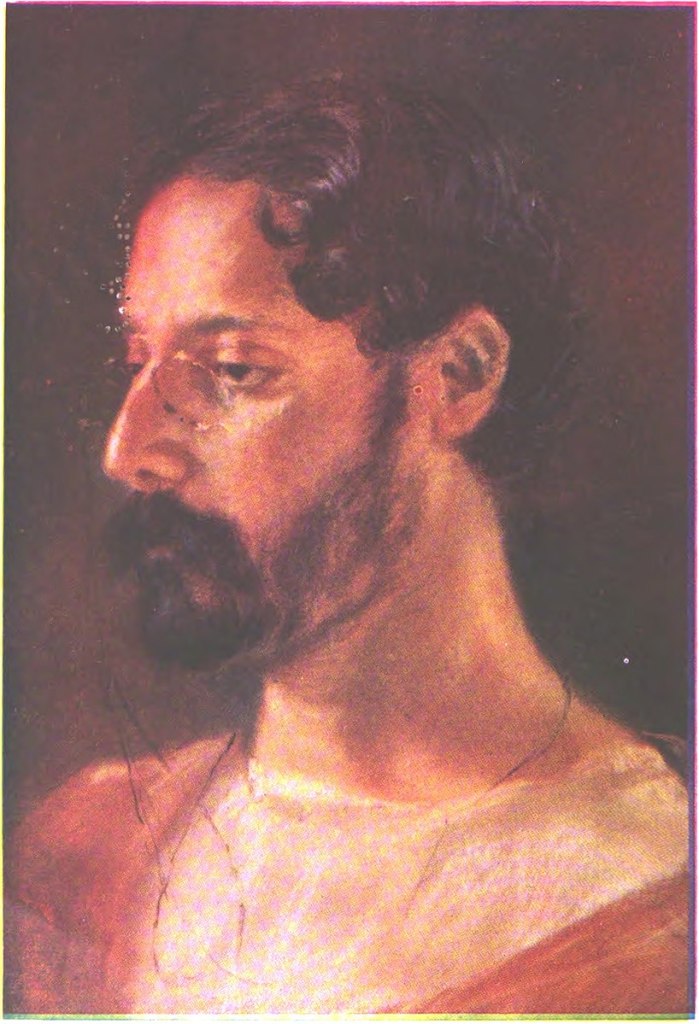
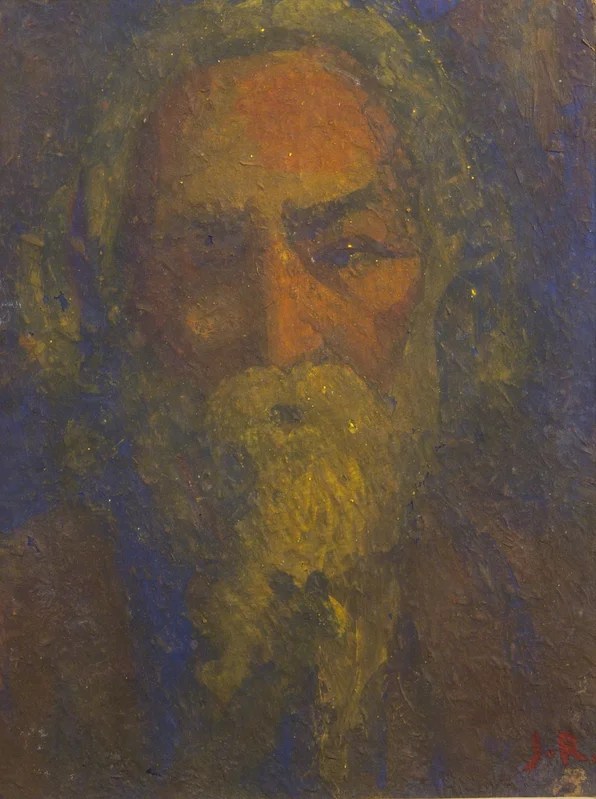
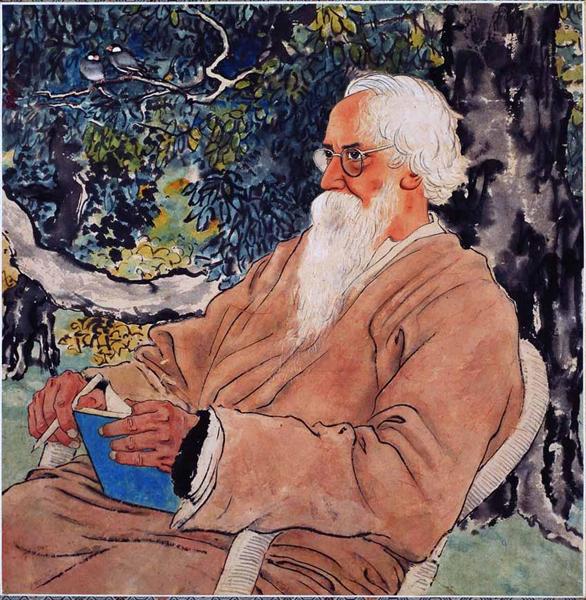
Rabindranath Tagore (1861-1941) has a unique place in many lives. His works continue to impact us. His songs continue to feel relevant. It is not easy to grasp him in totality, to comprehend how he towered over divisive constructs created by humans with his work at Sriniketan and Santiniketan, funded eventually by his Nobel Prize money that poured in with his writings. We all unite not just under the umbrella of his writings and wisdom, but also seek solutions from his life and times — a period of dynamic changes, a renaissance. Can we find these answers? Is it to be found in the breeze that wafts across boundaries at war… or in an eternity where he continues to touch hearts… 

For many of us who have not grown up listening to Tagore songs and know of him as a distant figure, here is an attempt to bring his life to you starting with the naming of the infant Rabindranath —  reimagined by Aruna Chakravarti, to his first trip out of his cloistered home in Jorsanko and his first experience of snow as he went to study in England — both translated from his writings by Somdatta Mandal. We have a transcreation of a poem he wrote celebrating his birthday on pochishhe boisakh where he shares the joy of his birth with all of us. We wind up translations with Ratnottama Sengupta’s rendition of a song where he offers his lyrics to all those who are willing to listen. 

Showcasing the current relevance of Tagore is a brief musing from Sengupta. To relate the wonder of Tagore’s lyrics, we have writings from professor Fakrul Alam and Asad Latif, who contend how Tagore continues evergreen… 

Birth

The Naming of Rabindranath: Aruna Chakravarti shares how he chanced upon the name Rabindranath in this excerpt from Jorasanko. Click here to read. 

Joys of Living 

Himalaya Jatra ( A trip to Himalayas) by Tagore, has been translated from his Jibon Smriti (1911, Reminiscenses) by Somdatta Mandal from Bengali. This records his first trip out of Jorasanko as a teenager. Click here to read.

Baraf Pora (Snowfall) by Rabindranath Tagore, gives a glimpse of his first experience of snowfall in Brighton and published in the Tagore family journal, Balak (Children), has been translated from Bengali by Somdatta Mandal. Click here to read.

Pochishe Boisakh (25th of Baisakh), a birthday poem by Tagore(1922), has been translated from Bengali by Mitali Chakravarty. Click here to read.

Bhumika (Introduction) by Tagore has been translated from Bengali by Ratnottama Sengupta. Click here to read.

Rhapsodies 

Heatwave & Tagore

Ratnottama Sengupta relates songs of Tagore to the recent heatwave scorching Kolkata. Click here to read.

The Older I get, the More Youthful Feels Tagore

Asad Latif gives a paean in prose to the evergreen lyrics of Tagore. Click here to read.

Discovering Rabindranath and My Own Self

Professor Fakrul Alam muses on the impact of Tagore in his life. Click here to read.

Celebrate Tagore’s legacy not only with translations but with a unique discussion on Tagore between Aruna Chakravarty and the late Sunil Gangopadhyay (1934-2012). The discussion took place under the auspices of Sahitya Akademi during the celebration of 150 years of Tagore. The book is available online on Amazon, in Om and more bookstores in India and in Bookworm, Bangladesh.

Categories
Musings of a Copywriter

Witches and Crafts: A Spook’s Tale

By Devraj Singh Kalsi

Getting the opportunity to interact with witches in real life is a bigger privilege than meeting celebrities from the world of fashion and entertainment. The paranormal world remains full of mysteries to unravel and the element of human interest in spooky affairs never dips.

I must say I have known and heard a lot about their cauldron – pot, potions, and potency – ever since the school days when I read Shakespearean plays. From Macbeth came the supreme knowledge that fair is foul, and foul is fair as they hover through the fog and filthy air. While there remains the possibility of classifying them as good or evil, my template was I would prefer not to label them without having a first-hand encounter.

Their culinary delights are unsavoury for most of us as the menu list, as mentioned in Macbeth, includes blood, carcass and animal parts considered unfit for human consumption in the civilised society. While these items are possibly sources of good nutrition for them, we feel like puking whenever there is a mention of these being cooked.

Frankly speaking, I did not have a whit of an idea that witches would make such a swift entry and grand entry into my life that would leave me rattled and throw me into a dizzy state of disarray. Like a gentle knock on the door announces the likelihood of a visitor, they should have first tried the sleep, dream route instead of barging into the dilapidated house to lay siege and hold me hostage.

I confess not being a casual or avid reader of eerie, ghostly tales. I do not have the voracious appetite to watch horror flicks even if they are the sophisticated types without blood dripping through the corner of the mouth like saliva or through the eyes like tears. So, this rules out of the possibility of my sending across any signal or invitation to visit my abode.

That the evil forces were living with me was brought to my notice by a tarot-reading relative during her visit this winter. Probably, they had tagged along with her, but she specified that the spirit was a single, permanent resident living in my home for several years. It was surprising that I had never had any alarming encounter in the past during the phase of co-existence. I asked her particular questions about eviction but she refused to answer them except clarifying that the spirit was living in the rear portion of the house. Since I do not often venture to that side, probably I missed bumping into the evil power that had turned benevolent inside the house, influenced by my benevolent company that must have reformed her even if she had arrived with malicious intent.

My probing mind concluded that the spooky, invisible witch’s visit must be an act of mischief by the relative who lived in a matchbox-size apartment while I have an old, dilapidated but sprawling house with branches sprouting from parapets. To draw my attention to the possibility of the residence being a haunted one, she appeared to have concocted a weird potpourri to seek retribution of sorts. That she enjoyed the stay and only at the time of departure chose to reveal the big secret made me suspect that it was something to be taken with a pinch of salt. The presence of evil spirits was confirmed by the senior lady guest who also added a twist by saying this could be the handiwork of an envious neighbour who performed some black magic and despatched a witch to my place to cause harm. Almost immediately I was ready with a roster of queries that seemed to put her in a fix. The wide-open spaces were dubbed as haunted, but no clue was provided so I suspected she wanted to scare me and make me join her by living in a flat next to her complex and this was an effective strategy to attain that goal.

Since this information had been registered in my brain, the fear of a sudden encounter with the spirit of the witch inside the house has unnerved me and compelled me to sleep with lights on. The slightest sound woke me up with a jolt. I had no idea how the witch sneaked in, through which open or closed door or window or ventilator. I had no idea how the witch found me a suitable resident without focusing on my bad habits. Assuming for a moment that there was indeed a vampire shaking my empire, with a special fixation for sucking blood, I decided to buy a one litre of lamb’s blood from the nearby butcher’s shop and keep it in a bowl in a desolate corner where the witch could quench her thirst without any disturbance. I decided to wear proper clothes at home all the time so that my attire never appeared offensive or inviting to the resident witch for a seductive encounter. I had no idea about her age but I visualised her to be an eternal, graceful beauty with an effervescent smile.

Coming back to facts, the bowl of blood remained in place even after a week. It meant that the witch preferred other drinks. When I checked my refrigerator, I found juice cans missing and a rose sherbet bottle almost empty. This confirmed there was indeed a witch who enjoyed the stuff in the fridge and never complained or agitated because the diet was healthy and nutritious even though completely vegetarian, non-alcoholic, and milk-based.

Still not fully convinced that my haemoglobin was not gobbled up by a goblin during my sleep hours using a straw pipe penetrated through the nostrils or ears, I decided to undergo a blood test to confirm the level had not plummeted to an anemic level. To remain on the safer side, I asked the doctor to pump more blood in my body through transfusion and clear my confusion. He had a hearty laugh when he heard the reason. I invited him to my place to have an experience of sorts, which he declined with a grin. His scientific temperament did not revolt, and he did not prescribe anything for my safety but suggested I use this material to write more fanciful stories.   

Perhaps he spread this news to other retired folks in the locality, who visited his clinic for regular check-ups. They landed up at my entrance gate with curiosity and suggested a fresh coat of lime wash on the building to ward off evil spirits as it looked haunted to them. The logic that freshly painted homes do not attract witches was anything but convincing.  

In terms of palpable changes, my urge to write was at an all-time high as I felt I could finish off a novel within a fortnight. My writing picked up pace and clarity and I began to think the witch was probably a literary heavyweight trying to express her ideas through my pen. This comforting thought buoyed me and I felt assured that it was sending cosmic powers to support my fledgling writing career.  Perhaps the witch had a failed literary past and did not want another aspirant to hit the nadir.

The witch had improved my craft as my writing began to be livelier. I wanted to entertain more through incredible stories. I must share the credit for this transformation with the appealing witch working secretly in my favour and acknowledge the contribution in the foreword of my next novel. 

Waking up in the middle of the night after hearing weird noises sent a shiver down the spine – as if the spirit was dining in the hall, with the sound of cutlery and mastication. When the pastry or ice-cream tub went missing from the fridge, I did not remember if I had polished it off but suspected the witch had a sweet tooth. Despite all negativity evil powers bring in wherever they go, this one ushered in a splash of positive vibes. During the prayer session, I could hear some other person mumbling. The act of worship liberates and cleanses spirits as well and brings more goodness to their invisible lives. I do not worry much now as I find the witch to have a cordial rapport with me – more generous than what wily relatives have with me.

Several months had passed and the earlier fear has subsided a lot, replaced by a strange friendly feeling towards the witch even though I have not seen her. I look around for signs of any spooky activity to add spice to life, but I find none. Empty beer cans lying scattered in the backyard do not belong to the witch but the bachelors living in the next apartment, who throw these including cigarette and contraceptive packs in my compound.

To bring this matter to a close and ensure my sanity, I was advised to consult a magician with rich occult experience. Driven by the urge to see how he managed to unfold the truth and the strategy he chalked out to exterminate the spirit from my premises, I opted for a budget-friendly professional wearing black robes.

He came and sniffed and some stray dogs standing on the boundary wall started barking loudly. He silenced them all with a finger on the lips like a school headmaster. The obedient dogs surprised me with their submissive behaviour though he was a stranger in the locality. He explained that dogs and cats have innate powers to feel the presence of spirits around if a magician can generate those in canine creatures though I had only read about sniffer dogs trained to track gangsters and detect hidden explosives.

He picked up some ash mixed with talcum powder from the staircase and suggested the spirit was living there. He walked ahead of me while I followed him with a torch and stick. When he reached the landing area and the loft beside it, he stopped in his tracks as he said there was a struggle and heckling going on which I could not witness with my naked eyes. He was being stopped to climb further so he opened his tool box and read out some mumbo jumbo and gave a stern warning in English that surprised me. He explained to me the witch was not of Indian origin but someone from abroad who came in search of her sailor lover from the Orient, travelling thousands of miles and finally found the right address.

I said I was no sailor. But the professional occultist said the previous owner of the house from whom I had purchased this old, haunted house at a cheap price was her lover. Since his family died here, the witch from Scotland also chose to follow the Indian tradition of true love and united with her lover here. He said she was communicating with him in the house and their love affair was still ongoing.

So where did I fit in here? And what was I supposed to do? Was there any risk of her falling in love with me? These questions rushed to my mind, but instead of answering me, he asked her when she would leave this house and she grumbled and replied she would never leave this place. I told the magician to remind her that true love is never fulfilled, never fully reciprocated but the witch was in no mood to listen to his command. I said the backlog of love stories, failed and unrequited, was heavy in India and there was no hope of quick clearance for some more centuries at least.  

The occult practitioner said the witch would definitely leave the house if I was ready to pay extra for some special rituals.  When he quoted the premium price, I felt the pinch in the pocket. As the witch had not caused any harm to me, I gave in to her continuing in the house and I retrieved a framed photograph of her sailor lover from the storeroom and placed it on the staircase wall for emotional comfort. The occult expert tried to scare me by saying she might change her mind or accidentally bite you out of love, and the oozing blood from my arterial nerve in the neck could suspend blood supply to my brain and cause sudden death. I said I was confident she would not prove to be a treacherous lover, unlike the ones today and remain loyal to the dead sailor lover smiling in the portrait.  

Sometimes, books in the library could be found open those days. Most of them were British classics. I was proud of an avid reader of classic literature residing in the house of another writer who was yet to finish reading those books. Her literary thirst was quenched in the house full of books and that is why there was no sucking up of blood. Maybe, she was a writer herself and she wrote novels, poems, and stories. So I asked the magician to disclose her name during the session. I was ready to continue the live-in relationship with a bewitching witch even though I had not seen her. I asked the magician to give me an idea of how she looked and he said she was nothing less than a film heroine in terms of complexion and looks.

Now, I am living in a different city and the haunted house remains locked. I strongly believe the witch still remains there. But while I am crafting this tale, I hear a flush in the pan and the digestive biscuits have gone missing from the glass jar along with the bottle of mixed pickle, making me suspect the witch has joined me here or my hyperactive brain is conjuring up images to feed a nutritious diet to my imagination. Or perhaps, I want to derive consolation by thinking that I have finally succeeded in driving a wedge between those lovers and made her fall madly in love with me now!

Devraj Singh Kalsi works as a senior copywriter in Kolkata. His short stories and essays have been published in Deccan Herald, Tehelka, Kitaab, Earthen Lamp Journal, Assam Tribune, and The Statesman. Pal Motors is his first novel.  


PLEASE NOTE: ARTICLES CAN ONLY BE REPRODUCED IN OTHER SITES WITH DUE ACKNOWLEDGEMENT TO BORDERLESS JOURNAL

Click here to access the Borderless anthology, Monalisa No Longer Smiles

Click here to access Monalisa No Longer Smiles on Kindle Amazon International

Categories
Musings of a Copywriter

A Conversation with God

By Devraj Singh Kalsi

Although I have always believed that God keeps his plans hidden and reveals them only at the right time, a recent episode where someone conveyed through a reliable source that my end was close, has not shaken but awakened me to a new realisation — the obvious truth that life is indeed momentary and nothing more than a dream. However, the breach of the confidentiality clause and the choice of an inappropriate messenger made me seek an audience with God for further clarity. Just like question papers get leaked, perhaps some divinely gifted human beings also have access to exclusive, insider information from none other than God. 

Before the prediction of my passing away could bloom into a reality, the man who turned it simpler than making a weather forecast had to attend the funeral of his sister-in-law. He was unprepared for the funeral. Focused on me and obsessed with my premature exit, he could not employ his special powers to correctly identify the first person in the queue, awaiting despatch. I wondered in case he had got this spot on, his reputation as a misfortune-teller would have received a tremendous boost, just like pollsters get a huge appreciation if their survey comes closest to the result.  

His grand plans to throw a lavish party to celebrate my popping-off remain in suspension until a sudden cardiac arrest or an accident terminates my worldly journey, enriching his life and giving him more solace than what my soul deserves. Although he goes around building the image of being a blessed soul, his predictions have a slimmer chance of coming true than the revival of a moribund political party. 

Conquering the fear of death has been attempted to be made easy with divine prayers over the years, but the potential of fear to enter through locked rooms has never been questioned. This forewarning made me expedite my plans to complete my next novel without wasting a single day as the projection was for the hasty, untimely expiration of my lease of life. Before death came knocking, I decided to knock once more with my manuscript at the glass doors of publishers and hope the letters of rejection arrive before I say goodbye. 

Not a keen devotee who spends quality time in divine remembrance, I thought I should seek clarity from the remitter. Had God really chosen an emissary to convey his secret about my untimely demise? In my prayers, I urged him to grant an audience and respond to my query in brief if he did not like to talk much about it. Hence it was a big surprise when God not only appeared in my dream to address my grievances but also allowed me the opportunity to seal a profitable deal.  

 I was direct, sharp, and swift in my approach. I asked him the truth about death being imminent in my case. Seeking confirmation of what floated in the air, I raised the question of shady characters getting cherry-picked to spell doom. Cutting me short, he said I had accumulated a lot of bad karma in life, and I could not escape the punishment for it. 

I remembered I had ditched many true lovers in the past and their curses were pending. He expressed worry that I was not leading my life according to his plan. He disclosed one example in this regard – I was supposed to die due to alcohol excess, but I had not shown the urge to drink even one peg. He had expected me to guzzle alcohol to destroy my health like several writers had done earlier. 

God said, He never changed his plans to rewrite destiny, but my recent set of good deeds was a big surprise even though I was not supposed to perform such impossible tasks. Hence, it was a foregone conclusion that I would last longer than expected, as the battery life was charged up and still in good working condition. Despite my earlier backlog of bad karma, my current inclusion of good deeds in the basket had earned me brownie points. I asked him if he could specify the date or year, but he said it was decades. The plural meant another twenty years at least. This gave me the confidence to challenge the man who made a wrong prediction and scare him by saying I knew when he was supposed to say adieu after a conversation with God even though I had no idea about it. 

Since God was in a jovial mood, I decided to try the art of negotiation. Making a quick list of the priorities, I kept quiet as he was supposed to know what was going on in my mind. To offer clarity, I chose to specify but he looked quite unfazed to hear the sober litany of demands. He construed it as materialistic – just another example of greed for worldly possessions. I said when everything in this world is temporary –and he would take it back after my death – then he should not hesitate to give it to me for a temporary period. 

As I writer, I felt I should have added the blessing to churn out best-sellers like many other writers. I often wonder what makes potboilers possible. He understood I was nowhere close to being a great writer so the best option to avail was the opportunity to become a successful novelist. I made it categorically clear that great writers get memorials and tributes whereas I was interested in a mansion and royalty cheques with a loyal reader base so long as I wrote.  

After mentioning this desire, I thought God would perhaps vanish from the scene, like a genie. I told him that I was aware that people talk about failure as the pillar of success. I told him many such pillars were ready, so he should proceed to build the roof of success. He liked my sense of humour and urged me to make good use of it as humour alone would unlock many doors for me. It was a clear indication that I should focus on writing comedies. 

My dream was about to reach its end as it was past daybreak. The sunlight was filtering in through the window. Everything in this conversation was delightful including the prediction of my end due to alcohol. When heartbreak and other setbacks did not convert me into an alcoholic, I wondered what kind of intense tragedy could compel me to hit the bottle. As I began to imagine possibilities, I thought maybe while returning from a blockbuster film party, some drunken fellow would ram his car into mine on the highway or my tipsy driver would lose control and hit the lamppost, leading to my death due to an accident caused by alcohol and drunken driving!

Devraj Singh Kalsi works as a senior copywriter in Kolkata. His short stories and essays have been published in Deccan Herald, Tehelka, Kitaab, Earthen Lamp Journal, Assam Tribune, and The Statesman. Pal Motors is his first novel.  


PLEASE NOTE: ARTICLES CAN ONLY BE REPRODUCED IN OTHER SITES WITH DUE ACKNOWLEDGEMENT TO BORDERLESS JOURNAL

Click here to access the Borderless anthology, Monalisa No Longer Smiles

Click here to access Monalisa No Longer Smiles on Kindle Amazon International

Categories
Stories

Monsoon Arc


By K. S. Subramanian

There was a time when monsoon was known to be either parsimonious to Chennai or simply indifferent. 

In the sixties and seventies, water scarcity was a byword in every household.  The city evolved from independent houses to matchbox apartments extending its periphery to suburbs and beyond in the name of burgeoning real estate, but water scarcity continued a mole on the elbow.

Like in all commercial activity where promises mean more than performance, real estate developers too promised enough water supply to ensure bookings and until the housing was handed over. Few years after the handing over, the old complaints returned and the problem revolved around deepening or digging more bore wells manipulating the cross currents of water flow…….in the process digging their own grave.

In due course bore wells became economical with water, not costs.

They were not to be blamed strictly either because it was in the nature of demand and supply. Essentially it meant, rather sounded the missive, that planning was all fine on paper but when it came to reality, commercial exigencies and lobbies took over.  It became then a case of passing the buck.

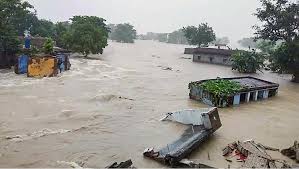
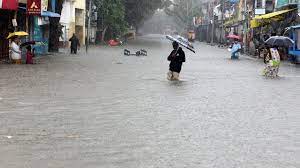
The city had long since graduated from the parsimony of monsoon. Now it was regular, buoyant and often uncomfortably bounteous. So much so that parked cars in the stilt space of apartments went for a swim in roaring waters that stretched to a height of 5 to 10 ft in some places.

One of the inmates from her window of the first-floor apartment saw her car transported to God knows where and screamed knowing full well she was helpless……could not get down into the vast sheet of water that left no sign of anything — let alone the road. And she hoped to find her car when the water level receded.

Just the night before, Ganesan, a young software engineer holding a senior position in a prestigious IT firm, had boarded the train to Srivaikuntam, a holy town close to Tirunelveli where Lord Vishnu held court. A devout believer and practitioner of sacraments that drilled into him the belief that men could succeed and achieve on the merits of brain and diligence but there was always a pervading force that guided him, he had prayed before boarding the train to Tiruchendur.

Four days back, the forecast of a formidable downpour had unnerved him but he wanted to see his parents after a gap of two years. They looked forward to it as much as he did. He was loath to cancel or put off the trip on the prevarications of nature. It could be sunny if the low depression changed its course at the last minute and veered away…not that he wished ill for his brethren in the neighbourhood.

So he took a chance, went ahead with the trip and saw the Tiruchendur Express chug slowly out of Chennai Egmore.

The weather was murky, stubbornly ominous.  He shrugged his shoulders, smiled.

“It’s all in the game. Let us leave it to the on High!”

*

On the way the starless sky got darker still. Dark clouds raged viciously to pour with the chilling owl-like howl of the wind. It was December and the cold wind hitting the windowpane of the train chugging in a monotony of extreme caution, made Ganesan’s arms shudder. He could see nothing in the dark and barely could imagine the procession of dense vegetation and fields obviously drenched in the downpour.

He put on his sweater, but it proved to be no protective cloak and so he had to put on more. “God! It’s frightening… hope I reach my place in one piece.” His thoughts were as intimidating as the weather outside.

Thankfully the lights were on. All the shutters were down in the coach except his, where the glass pane was tightly secured. The biting cold penetrated the inside of the coach though there was balancing warmth due to radiation of body heat.

An elderly man, in his early sixties, was travelling with his wife. There were several families busy chatting about their kin or the functions to attend in Tiruchendur, including the celebrated Murugan temple, though inwardly their minds were filled with queasy churnings.

“Where are you bound, sir?” asked the elderly man with hesitation. Ganesan smiled though he could smell the palpable concern in his voice.

“Vaikuntam sir….to be with parents. I am visiting them after two years.”

The old man returned the smile. “I am a resident of Tiruchendur, have got land and a rice mill there. My daughter is in Chennai. We came on a holiday to be with our granddaughter.”

There were two families in front in the three tier AC[1] coach. Both the families had taken their dinner early in the evening as they were too wary of railway catering. The elderly man, who introduced himself as Muthuraman, was not finicky enough to insist on home made food and shun rail service and had, therefore, ordered. So did Ganesan.

As they dug into the dinner, Muthuraman broke the silence, aware that the inclement weather could make anyone off colour. Silence made it worse, of course.

“Sir!  You must be in touch with parents. They would be worried. The cyclone had hit close to the Chennai coast a few weeks back but now it is pure monsoon fury. The earlier one affected Chennai badly and a lot of them are yet to come out of the trauma. I am worried about the open drains, small dams and culverts and lakes in southern part of the state which are all vulnerable.”

Ganesan, listening to him in rapt attention, said, “I know. A place like Vaikuntam cannot face up to persistent rain for a few hours, let alone the whole day or days. We own land very close to our home and the paddy will be submerged. My father told me just now he is bracing up to some severe loss of crop and money this year.  We have been facing it regularly.  A curse in what is otherwise a holy and fertile belt….”

Muthuraman’s wife nodded with lines of worry in her face. “What else could we do other than pray to Perumal?”

Muthuraman spat out in disillusionment.  “In cities, they lay roads which cannot stand a day’s rain, metro rail and residential skyscrapers where a guy in the balcony is no proof against a bust of breeze. I know of a lady who lived on the 14th floor and wanted to enjoy the scene. She opened the door and stood close to it when the gust of wind, slammed the door on her face knocking her over. She fell into coma and died soon after. I mean…a city is unable to cope with the pressures of money and commercial lobbies which have their way. So, the less said about a rural town the better.”

“God! It is horrible to hear. Such occurrences are hard to believe,” said Ganesan. “Migration in search of a job across the country is inevitable and it adds to the pressure. You need to have a footing somewhere and if all things go well settle down there. You need to build a roof unless you are lucky enough to get back to where you belong.”

Just then, the train had halted at Villupuram for more than 45 minutes before easing into motion. The passengers were blissfully unaware of it, having been preoccupied in their own uncertain world.

“We didn’t even know we were tagged here for this long,” said an exasperated Muthuraman. Ganesan, who was equally chagrined, didn’t reply.

*

Most of the stations en route wore a deserted look except for the idle tea stalls, The passengers too, especially senior citizens, didn’t venture out even for a hot sip of tea apprehending wet and possibly slippery platforms. Inevitably the train ran late by an hour considering possible presence of water or even flooding of the track. Thankfully, signals were in place though the menacing purr of the dark outside continued with the trundle of the train. 

“Are we closer to Kumbakonam?” enquired Muthuraman.

“We are, possibly will reach in a few minutes,” said Ganesan. “But the persisting rain worries me, sir. In some places ahead of us the track would be flooded, and it could delay us longer.”

“If the train drops us at our destinations, I will be more than happy, in fact thank God for it. It will be a blessing,” said one of the members of a family in front.

None of them however had any assurance that they would be blessed in some way.

*

Ganesan slept fitfully as he was accustomed to during train travel at night. “Cool, undisturbed sleep is a luxury,” he thought. Most of the passengers in the coach appeared to have slept well perhaps as a relief from the ordeal of the weather.

He looked at his watch and saw it as 6.30 a.m. He pulled up the shutters to see how the weather was and it was dull, wet and pouring. The train had stopped and he had no way of knowing the duration of the halt. He knew the train should have reached Srivaikundam by now but the stretching flooded farm fields on either side with sparse houses indicated that it was off schedule. There was no evidence of roads or pathways — had there been any.

“Srivaikundam is just a km away sir,” said a passenger who was bound for Tiruchendur.  “The train got an alert and has halted. Seems the ballasts are off. I hope it will start moving again.”

Ganesan gave a sigh of near relief though he was not sure whether the train would move. He could see a sheet of water submerging the fields though the track appeared to be navigable. He could not help blurting out his concern though.

“The scene is scary sir. We can neither get down nor remain in the train.”

Muthuraman, who had got up, was slightly sullen, looking clearly unwell. “Mr. Ganesan, I am glad you are close to your destination….we are still 30 km away.” His wife looked crestfallen, at the end of her tether.

“He is a heart patient. I am only concerned about him.” To Ganesan’s relief the train creaked, began to move. It trundled at a snail’s pace and reached Srivaikundam.

But his relief was only palpable and short lived as the message came through that any further movement was risk bound and foolhardy. One of the railway staffers came to the coach to inform them that the train might remain there for some time before the weather eased or the flooded tracks were restored to usable.

The train had already been delayed by more than 90 minutes. Ganesan was embraced by his father who had managed to come to the railway station in his car driving through flooded roads in the town in meditative hermitlike composure and caution.

Ganesan found someone tugging at his shirt and turned back to find Muthuraman”s wife apprehensive and scared.

“Son! He seems to have symptoms of cardiac attack. I don’t know what to do….”

Ganesan’s father rushed into the coach while Ganesan ran into the railway staff room to look for instant health care.

A stretcher was brought to take Muthuraman and rush him to the nearest hospital. Thankfully Ganesan knew of a specialist hospital close to the station and took him there, having forgotten to even speak to his fretful mother about what had held him and his father back. He knew his mother would continue to worry but there was no time to even ring her up.

“We must know first this man is all right or is recovering,” he muttered. His father took care to let his mother know that an emergency (not related to their family) had occurred and it had held them up at the station.

Ganesan also came to know that the train would not proceed further and that the passengers were holed up there.

A crisis had come home to roost.    

*

All the passengers shackled to Srivaikuntam for no fault of their own put it to a matter of a few hours but it seemed to stretch before the shadows of the night crept in. There was no let up in the rain and the southern belt was not equipped to handle nature’s unmitigated fury.

Thankfully the cafeteria run by a local rose to their needs and gave them breakfast but the railway catering service was not prepared for this eventuality. About 500 odd passengers, including the geriatric, needed round the clock vigil and sustenance though some were near breakdown amid symptoms of vomiting and diarrhea.  

Ganesan and his father were faced with a task not of their own choosing and of the magnitude of a mountain to climb. They could not let it go either. The roads in the town were clogged with knee-deep or waist level sheet of water, hindering their drive to do their best.

“It is a test of our nerve, my boy! We have not spent all our lives to creep back into our shell and watch them suffer, possibly die. It was your good fortune you reached along with others but the rest of them are braving it out. We have to show we are not heartless, nor do we rely on external agencies for help. There is no time for it. Rather we help ourselves.”

Ganesan, who had learnt forbearance in his stint in IT firm and not given to wasteful emotions, nodded and raised his thumb to his father.

His father used his decades old connections in the town, comprising hoteliers, vegetable and fruit vendors, nursing staff to help the distraught. 

The message from the railways was distressful and alarmingly ominous. “Sorry ladies and gentlemen. It will take a day or two. The track restoration is on in full blast and the signal system is in place. Please, please bear with us.”

*

The railway station was abuzz for the next prolonged hours with supplies of food, medicines and equipment being rushed to the respective coaches where the need was greater. It pertained to those who had symptoms of sudden dehydration, stomach disturbance, diarrhea and fatigue and stress related syndromes.

Ganesan and his father were on their feet all the time coordinating whatever they could with local connections of suppliers who rose to the occassion. Commerce took the back seat relatively to an extent.

Muthuraman showed signs of recovery a few hours later in the evening having gone through a CPR and defibrillation by the railway staff as was done in the event of unforeseen emergencies. His wife spoke to her daughter in Chennai who was almost ill with perplexity and worry since they left the city.

The news that the train had halted at Srivaikuntam and might not leave for a couple of days was less painful than one of father’s cardiac arrest which left the family in tatters. She could only hope her worst fears would not come true.  

Muthuraman opened his eyes, took note of his wife’s presence before locking his hands in gratitude with Ganesan.

“No sir…this is no time for thanking me and my father. You must thank all the locals who rose as an army to support and bring relief to so many who are stranded in the train still because they are unable to move out. We have arranged a big hall where most of them could be fed in turns. I am amazed sir… unable to believe it. But I have learnt a world of things from this experience. That alone matters sir.”

His father laid a reassuring hand on Muthuraman’s shoulder. “They are still at work. Possibly the train may leave tomorrow morning. I hear the track has been restored. If you wish you can return in the train itself or you can have somebody from Tiruchendur to take you in a car.”

Muthuraman’s wife said “It will take three days as per medical opinion to discharge him. We will ask our cousin to take us home in a car.”

“We will take care of you till you leave for home,” smiled Ganesan.

He took leave of the couple as one of the hotelier’s employees came up to him. “Sir! We have the next consignment of water cans ready for the station. Care to join us?”

“Of course,” said Ganesan and hopped into the front seat of the van.

A cool breeze blew across the vast fields from a distance. The weather had improved beyond expectation two days after the train came to a halt at the station, looking sunny, soothingly warm and reassuring after the terrible onslaught of the monsoon the day they left Chennai.

Suddenly, nature seemed to have recovered from its surge of fury and had become benign and benevolent. But anything could have happened in the passing hours when the fury was in full swing and the aftermath would have been horrible to imagine, much less experience.

But what gave him succor and regeneration was the unstinted display of human kindness and concern in times of adversity. The whole village worked as an army to guard, nurse and redeem the afflicted from the depths of despondency.

“There is always a light in the tunnel” thought Ganesan with a smile. “If I had any cynicism about the milk of human kindness it is gone.”

[1] Airconditioned

K.S.Subramanian, a retired Senior Asst. Editor from The Hindu, has published two volumes of poetry titled Ragpickers and Treading on Gnarled Sand through the Writers Workshop, Kolkata, India.   His poem “Dreams” won the cash award in Asian Age, a daily published from New Delhi. His essays and blogs can be found under his name in http://www.boloji.com.

.

PLEASE NOTE: ARTICLES CAN ONLY BE REPRODUCED IN OTHER SITES WITH DUE ACKNOWLEDGEMENT TO BORDERLESS JOURNAL

Click here to access the Borderless anthology, Monalisa No Longer Smiles

Click here to access Monalisa No Longer Smiles on Kindle Amazon International

Categories
Stories

The Temple-going Snake

By Devraj Singh Kalsi

Every morning, around 9 a.m., the brown snake emerged from its cosy pit, slithered across the lush green grass, and found its way out of the bungalow through the lower rungs of the iron-grille door. Every evening, before sunset, around 6 p.m., the snake took the same path to return to its pit.

Adarsh followed the same routine without knowing that the resident snake was a keen follower of his schedule. One day, while taking the car out of the garage, he noticed the snake as it was moving out of the gate. He took his car out of the gate and looked around to trace the snake. But it was impossible to locate where it had gone. 

While driving his car, Adarsh was worried that the snake would bite several people, regretting that he should have made some more efforts to find out where it had vanished. When he reached his office and took the elevator, he shed his skin and transformed into a toxic agency head smitten by the urge to lord over the subordinates. Despite the heavy workload, he could not clear his mind as the snake kept his slithering into his thoughts. He decided to find out whether it was just a one-off incident or whether the presence of the snake in his compound signified the growth of enemies and unrecognised threats. 

Being curious to know more about the snake, he was ready to leave the house around the same time. The snake was also punctual and gave Adarsh had another encounter. This time, he was ready with the motorbike as he was prepared to follow the snake more closely and avoid getting stuck in a traffic jam. 

As the snake slipped out of the premises and took the main road, Adarsh geared up his bike and tracked the snake moving at its leisurely pace. When he came close to the canal bridge, he saw the snake crossing it along with pedestrians, keeping to the concrete edge. So many people were walking but they were unaware of the snake taking the same route.

When he crossed the bridge, he looked around for a while, unable to see where it had slipped. Then he stood near the milk booth and asked the shopkeeper whether he had seen a snake. Before he could get any response, Adarsh spotted the snake moving up the stairs of the temple across the road. His curiosity doubled up now and he parked his bike right in front of the milk booth and rushed to the temple. 

It had been several years since he had entered a temple. The pursuit of a snake had brought him close to the divine abode. He was eager to know why the snake frequented the temple – almost taking it up as an assignment to get to the bottom of the mystery. He hastened up the stairs to ensure he did not lose sight of the snake. For a few minutes, he pondered whether it was right for him to enter the temple atall as he was a man who, he felt, due to his profession had become poisonous, negative, and toxic. He wondered whether it was befitting for an evil guy to enter the pure, sublime space. Drawing solace from the fact that if a snake could enter the temple despite carrying venom in its body, he could also do the same without harbouring any guilt as the sac of poison resided in his mind.

Instead of folding his hands for prayer, he rang the bell and looked around for the snake. Considering it prudent to alert the priest, he said, “Pandit ji, I saw one long snake entering the temple so I came inside to inform you of the danger.”

“Oh! A snake has brought you here, Shriman[1],” the priest sprinkled holy water on his bald head and offered him flowers. He cupped those flowers in his palms, went ahead to bow down before the deity and offered the floral obeisance. Although he felt awkward doing this exercise, he did not know that this would bring him closer to the snake relaxing inside the sanctum area. Scared to find himself so close to the snake for the first time in his entire life, he gave a loud cry and made a quick attempt to rush out of its reach.

The priest was observing his nervous reaction. When he came out and stood in front of him, he was able to gather his composure. 

“So, you finally met the snake you came looking for after a long search?” the priest poked him.

Adarsh did not know how to respond to this question. This question raised many other questions. But he touched the feet of the priest and sought his blessings. This act of surrender made the priest answer the most probable questions in his mind. 

 “You wanted to know what the poisonous snake was here for. Before I answer that for you, can you answer what you do the whole day? Hiss, sting, bite, bare fangs, to get work done or worse perhaps…” 

Adarsh was silent for a while. His silence confirmed that the guess was correct. His job profile listed such toxic activities daily and there was nothing noble to mention with a glint of pride. It appeared that the priest was reading his dark mind and focusing on what had died within him over the years. He felt like running away to escape this examination. It would be equivalent to running away from the truth. His curiosity made him look for the snake, but the priest said it was the wish of the Lord that he came after a snake because the Lord wanted him to reform. Such a hard-hitting interpretation of a simple act of curiosity was as unacceptable to Adarsh as the will of God. 

The priest continued despite Adarsh showing no interest, hoping that this information would make him rethink. “You wanted to save people from a poisonous snake and you wanted to know where it goes. You are not a bad human being at all, only driven by circumstances and environment to commit sins. Look at this truth now. The snake sits inside the whole day and when the temple doors close, it goes to the place where it comes from, without disturbing a single person along the way, without biting a single person despite carrying so much poison. Take it as an inspiring lesson that though there is poison in the mind, one can still keep it under control and ensure no harm is caused to fellow human beings. Perhaps the snake is in good company and has reformed its nature. Read it from this angle. You should also come to the temple every day and spend time here. The Lord will be happy to see you. He gives more blessings to those who are most unlikely to come.” 

Without answering the priest, without promising anything to the priest, Adarsh turned around with folded hands and retraced his steps. While coming down the stairs, he remembered his recent misdeeds. He went home and dwelled on the priest’s words in his mind. The next evening, he left his office early and visited the temple. He met the priest, and the snake. There were many devotees singing bhajans and taking prasad. He sat alone in a corner for some time. The ambience seemed to have a transformative impact on him. For an hour, he discovered a new self – shed his old skin and found himself in a happy frame. 

Inside the office, Adarsh was a reformed person as he became polite and respectful. His juniors and peers were surprised to find a new boss in just a week. Adarsh continued with his daily trips to the temple and he was close to achieving a month of decent behaviour at the workplace. He followed the path shown by the snake and felt lighter inside. However, he did not know whether he could retain this new avatar without divine intervention daily, fearing he would return to his previous self if he stopped visiting the temple. He imitated the habit of the temple-going snake. 

After a few months, he asked the priest some hard-hitting questions during one such visit: “I did nothing wrong since I started coming here. But how long does it take to change one’s nature? I am a practical-minded person, and today, despite coming to the temple, I ended up sacking an employee I did not like to work with, on a very flimsy ground. I knew I was doing it wrong, but I could not stop myself from doing it. The evil had returned to me. I don’t want to nurture guilt, but I think I have failed the test I don’t know why the stupid snake keeps coming here. It should go and bite people, enjoy its toxic life, and keep sending people to hell instead of trying to change its basic character. I’m sure we all are not here to do good. Being good is so boring.”

Without waiting for the priest to answer, he stepped out of the temple premises. As he was coming down the stairs, he received a phone call from his office, and he was shocked to hear the urgent message. He slipped and fell, rolled down the stairs, landing in the hospital bed where he was declared to have suffered a severe spinal injury. Being wheelchair-bound, he sat in the blooming garden and observed the snake slithering out of the lush green cover to visit the temple, envying its luck every day. A poisonous life had turned pious whereas a life supposed to be pious had turned poisonous. The steps of the temple Adarsh was eager to climb down now became the steps he was eager to climb up once he got back on his feet again.  

[1] Mister

Devraj Singh Kalsi works as a senior copywriter in Kolkata. His short stories and essays have been published in Deccan Herald, Tehelka, Kitaab, Earthen Lamp Journal, Assam Tribune, and The Statesman. Pal Motors is his first novel.  


PLEASE NOTE: ARTICLES CAN ONLY BE REPRODUCED IN OTHER SITES WITH DUE ACKNOWLEDGEMENT TO BORDERLESS JOURNAL

Click here to access the Borderless anthology, Monalisa No Longer Smiles

Click here to access Monalisa No Longer Smiles on Kindle Amazon International

Categories
Poetry

Rumbling Echoes

By Samina Tahreem

I found a clock in the creek. It’s broken with all its hands missing. It was ghastly. I loved it the moment I saw it.

I found other things in the creek too. There was a prink pride cap, a broken nail paint bottle, a backpack, some utensils and a ruddy old tire. I heard an echoing rumble while skipping back home. I have been hearing echoing rumbles all the time these days, I wonder why. My Aunt said that the water rumbles before it fills the creek. Is the water coming?

I wonder why it rumbles.

Is it hungry?

My Uncle says that the Water is hungry all the time. He told me She ate the whole earth once when people lived on boats. That sounds desperate and sickly, doesn’t it?

I don’t get along with Water too well. I don’t like boats either; they make me seasick. I don’t think I’ll survive if the water gets very hungry again.

What does she do with so much hunger? It must be so scary being driven by one emotion, one desire...

My mother says that if we do not feed the hungry, they steal and that’s sad because hunger is not greed, it is our right.

Maybe the Water believes we are stealing from her and that’s why she gets so ragefull.

“Why are we taking away what’s rightfully hers, Mother?”

Does the Water feel the silence, too? I wonder if silence makes her angry, the way it makes me angry.

My Dad says I wonder too much. He was feeding me cake as he said that; it left me confused.

I have never told anyone this; I am telling you now, please keep it a secret, can you?

I have heard the broken clock whisper to the tune of the Banjo, the water in the creek ripples when it begins to whisper.

Is it whispering the tune of the Water? Is She coming?

But the Water dances when the Banjo plays and the air and the earth stops trembling. Maybe it calms the Water’s nerves. Maybe it puts her to sleep or maybe the clock is convincing the Water to give us more time.

The Water listens to the clock. Maybe they are friends.

They Water rumbles; The clock sings; It’s a nice harmony.

Samina Tahreem is a young poet from Kolkata. 

PLEASE NOTE: ARTICLES CAN ONLY BE REPRODUCED IN OTHER SITES WITH DUE ACKNOWLEDGEMENT TO BORDERLESS JOURNAL

Click here to access the Borderless anthology, Monalisa No Longer Smiles

Click here to access Monalisa No Longer Smiles on Amazon International

Categories
Interview Review

I Kick and I Fly: Ratnottama Sengupta Converses with Ruchira Gupta

Ratnottama Sengupta has known Ruchira Gupta for more than 40 years. But reading I Kick and I Fly has made her see in a new light the young journalist who has become a force of change in the global fight against human trafficking.

Kiddy. Ruchi. Journalist. Documentary filmmaker. Emmy Award winner. Founder President, Apne Aap[1]Women Worldwide. Social activist. Agent of changes to international laws. Sera Bangali[2]. Ekta[3] Award winner. Professor, NYU. Cancer survivor. Essayist. Exhibited artist. Published novelist…

“What next?” I could have asked Ruchira Gupta. And without waiting for her to reply I could add, “Member of Rajya Sabha? The first step to even higher offices on the world stage.” Because? This kid born to Rajni and Vidya Sagar Gupta has dedicated her life-breath to ensure that not a single child is either sold or bought for sexual gratification in exchange of a few rupees.

Hardly surprising that when she picked up her pen while recovering from Covid in her family home in Forbesganj, she penned a novel like I Kick and I Fly. “A book that is a MUST READ for one and all who are interested in fighting, tackling, and – not or – ending sex trafficking,” as Anjani Kumar Singh, Director, Bihar Museum said at the launch in Patna. Because? It is a story of optimism as Heera the protagonist, overcomes unimaginable obstacles to emerge a path breaker in the Nat community who believed it was the fate of its girls to sell their body at puberty, or even earlier, for the welfare of their family.

Inspirational. And in the most absorbing way. Read this excerpt from the novel to understand how a message becomes engrossing read.

"My name is Heera. I am from a town named Forbesganj, in a state called Bihar, in northern India, very close to Nepal,” I begin. My voice is shaking along with the rest of me. But I go on. “My brother and I are the first people in our family to ever go to school, and I have grown up believing that being sold for prostitution is my Destiny. That there are few doors open to me as a child of an oppressed-caste family. Our people used to be wrestlers and performers. But overnight we were told we could not do those things anymore, that our entire way of life was illegal.”

My voice is shaking less now and I manage to look at people in front of me. “How do people survive when they are not allowed to do the work they know and love? For my family of nomads, it meant asking people for a place to live, and then doing just about any job they told us we could do. One of these jobs was having sex with people for money.

“These children and women had no choice but to sell their bodies in exchange for a place to live. For food to eat. And for their husbands to be given work. And though people say that times have changed, they must not have changed everywhere, because I have been told since I was a little girl that selling my body was what I had to do to support myself and my family. And I believed it. Many in my family believed it too.

“Finally early this year it was my turn to be put up for sale. My family was in a tight spot, in debt to the wrong man. I grew up in a red-light area, so I knew what it involved. There are no secrets kept from kids where I come from. So, I said No, and we tried to get around it.

“My mother paid back our loan, but the traffickers came for me anyhow. The first time I got away. The second time they got me, but I was rescued by my brother and teacher.

“When I was stuck in a tiny room with my traffickers outside the door, I asked myself why had they kept coming for me even when they had no claim, no right? And that’s when I fully realized that they believed my body belonged to them, and I knew for certain it did not. It was kung fu that helped me understand this. Because it is through kung fu that I learnt, my body would do what I told it to. That my body listened to me – and only me.”

I take a breath. “There is power in my body. My body connects me to my cousin, my aunt, my grandmother who were all sold for prostitution. But kung fu also connects my body to my ancestors, who were champion wrestlers. If both these things lived within me, could I choose which course I wanted to take?”

I look up now, realizing that I have memorized the final words on the page. “For most of my life, the answer to that was NO. But suddenly I felt that maybe there was another possibility. I didn't do it on my own: I needed my family to stand with me, and most importantly, a cheerleader who made me believe that safety could be mine. Rini Di taught me kung fu and opened the doors of the world to me. And that is how I have come to stand before you now.”

Heera stands before her teachers and her friends, other survivors of trafficking as an example who not only fights, successfully, the might of traffickers but who actually saves another trafficked girl.  Who, even more importantly, instils faith, and courage, and dream… In her brother, her mother, and her father. Her brother Salman who always stood by her even as he studied for a better future. Her Mai who broke stones for a livelihood and gathered enough courage to take a loan to put in place a roof over their head. Her Baba who stands as a loser but accepts change and even starts to nurse a dream — for his daughter as much as for his son.

And so, when the Martial Arts Foundation awards Heera and her co-fighter friend, Connie, a scholarship to train for one full year in New York, along with admission to a local school, Heera too starts dreaming. Of a future, perhaps only twelve months down, when her family would be dwelling in a pink-bricked three roomed house. When Salman would study in a residential school in Siliguri. When Mai would have a betel shop. When Baba would be a porter at the railway platform. When her cousin Mira Di would be a seamstress with a tailoring shop of her own in the very backroom where she was forced to service men. When the corrupt policeman, Suraj Sharma, and the trafficker, Ravi Lala, would be in jail, no longer on the prowl in Girls Bazaar.

“It’s not a dream,” says Ruchira , reiterating the clinching line of I Kick and I Fly. “I have seen this transformation actually take place in Forbesganj. “There were 72 home-based brothels in the lane when Apne Aap started. Today there are two. Girls no longer sit outside waiting for customers. The two sisters who were locked up in the hut have finished school. One is a chef, the other is a teacher. The girl who was kidnapped is a karate trainer. Someone like Mai really has a betel paan leaf shop and someone like Mira Di is a seamstress. The cattle fair is no longer allowed to bring dance or orchestra groups.”

This was the perfect time to strike a conversation with Ruchira Gupta, I reckoned. And so I decided to shoot…

Me: How – rather, why – did you start writing I Kick and I Fly?

Ruchi: I started writing this story when a fourteen-year-old girl just like Heera won a gold medal in a karate championship in Forbesganj. She was being groomed for prostitution with other girls in her lane. A lane just like Girls Bazaar.

Her journey was not easy, it was heroic. I saw how she and her friends overcame hunger, fought off their fear and stood up to traffickers with grace and gusto. An annual cattle fair used to claim girls from that lane every year. When my NGO, Apne Aap, opened a community centre and a hostel there, we were constantly attacked by men like Gainul and Ravi Lala. They would stalk the mothers, the daughters, and me. They hurled abuses, threw stones, stole from our office and even kidnapped girls. We built higher walls around the hostel to prevent traffickers from jumping over. I posted guards outside my home, hired lawyers, filed police complaints and cases in court. Just like Mai, some mothers in the lane disobeyed their husbands even though they were beaten up. Their daughters were the first batch of girls in our hostel.

Me: Are all the characters real? Is the hope real? Do people in real life change the way Baba does?

Ruchi: Most of the events in the book are inspired by real people, places, events. To give you one example: A trafficking survivor from Indonesia told me how she was locked up and how she escaped from a brothel in Queens, New York, by disguising herself in a burqa. She is now a global leader in the struggle against trafficking. In my novel, Heera uses the same device to rescue Rosy.

Baba, Heera’s father, is also based on real-life fathers in the Nat community of Forbesganj. They would actually auction off their daughters to the highest bidder when the mela came to town! But as I began working in the red-light area I saw that they were not black and white criminals but human beings desensitised through decades and generations of oppression. Of course, there was no excuse that they did not try to fight back. I did see some fathers change when they saw their daughters succeed. Until then the possibility of a different future had not even occurred to them.

When hope unfurls in a downtrodden human being, it is like a tendril. I saw it in the eyes and actions of some fathers in the red-light area of Forbesganj when their daughters won gold medals in karate.

Me: You have not learnt kung fu. Why did you project Rini Di – clearly your alter ego – as a kung fu teacher? It is a physical art of self-defence. How precisely does that connect with, or help, girls who are in the river of flesh?

Ruchi: I still remember, it was early morning when a boy came to my home with his mother to seek help. His sister and cousin were locked up by traffickers to stop them from coming to the hostel. We had to mobilise the police to get them out. I noticed then that the girls were badly bruised while the traffickers were unscathed. I wished that the girls were able to fight back.

Our Apne Aap women’s group met that afternoon at the centre. Everyone was afraid that we would be beaten in retaliation for the police raid. That’s when I suggested martial arts classes. The women loved the idea. I used to see a couple teach karate teacher near the rice fields to boys in a private school. We hired them and the classes began. Soon the bullying in schools stopped.

As the girls started to win competitions, something changed. The very townspeople who had agitated to urge the principal to expel our red light children began to respect them. And the fathers in the community began to see value in their daughters. The biggest change was in the girls themselves. They began to own their bodies and value themselves. As they gained self-esteem, they began to do better in class. Soon more mothers began to stand up to the traffickers and even to their husbands in the lane, saying they would send their daughters to school.

Me: How did Apne Aap help change the picture at the ground level?

Ruchi: Today Apne Aap has educated more than 3,000 girls from red-light areas through school and college and is still continuing to do so. They are in jobs as animation artists, teachers, doctors, lawyers, chefs, managers of pizza parlours and of gas stations too.

Our NGO’s community has become a safe space to hold meetings, share stories, get food, do homework, and plot against traffickers. Women, very much like Mai and Mira Di, meet regularly in the centre to solve their problems. They fill out forms with the help of Apne Aap workers to access government entitlements like low cost housing, ration and loans. They go collectively to talk to the authorities when there are delays.

The Apne Aap legal team helps victims to file police complaints, testify in court and get traffickers convicted. The real Gainul and the real Ravi Lala are in jail. In 2013, Apne Aap survivor leaders and I testified in Parliament for the passage of section 370 IPC, a law that punishes traffickers and allocates budgets for services to the prostituted and the vulnerable.

Before these could happen, I had shown my documentary and testified to the UN and to the US senate for laws that would decriminalise the victims; increase choices for vulnerable and trafficked girls and women; and punish the traffickers and sex buyers. I can proudly say that my testimony and inputs contributed in the passage of the UN Protocol to end Trafficking in Persons and the UN Trafficking Fund for survivors as well as the passage of US Trafficking Victim Protection Act.

Me: Ruchi you come from an established, politically aware, well connected and much respected family. You grew up in the metros and now live an international life, mostly abroad. You won a coveted award for The Selling of Innocents. You helped in the making of Love, Sonia. Why did you not continue to make films? In short, what compelled you to start Apne Aap Women Worldwide?

Ruchi: As you know, I started as a journalist right after graduation. I learnt to ask questions, and I listened. The question that changed my life was: Where are the girls?

I was researching a story in the hills of Nepal when I came across rows of villages with missing girls. I had asked this to the men playing cards in the villages in Nepal. I followed the trail and found that a smooth supply chain existed from these remote hamlets to the brothels of India. Little girls, perhaps only twelve, were locked up in cages in Kolkata, Delhi and Mumbai for years and sold for a few cents night after night.

All the girls were from poor farming families. Many, like Heera, were from nomadic indigenous communities or marginalised castes. Like her, they were either not sent to school, or bullied until they dropped out, or pulled out by their fathers and sold into prostitution.

I was sad, then angry, and finally determined to do something about it. That’s how I ended up exposing the horror in my documentary. When I was on the stage in Broadway receiving the Emmy in 2013, all I could see beyond the glittering lights were the eyes of the mothers who had broken their silence to save their daughters. I decided in that instant to use my Emmy not to build a career in journalism but to make a difference.

I did two things. I dubbed it in six languages and I travelled across the world with it. I screened it in villages to show parents what the brothels were like. I showed it to the UN and the US Senate when I testified against the crime that is human trafficking. It contributed to a global push by activists that led to a new UN protocol to end trafficking and the first US anti-trafficking law, the Trafficking Victims Protection Act (TVPA).

Me: What was your magic wand?

Ruchi: I had no magic wand. I didn’t even have experience to stop the kidnapping of girls, or knowledge about how to put traffickers in jail. I was an English literature student from Kolkata’s Loreto College who joined The Telegraph while pursuing my honours degree graduation. But as a journalist, I saw the reality and invented ways to move forward.

Something had happened while I was filming the documentary. A pimp had stuck a knife to my throat. I was in a small room. There was nowhere to run. Suddenly, I was encircled by the 22 women I was interviewing. They told the pimp that he would have to kill them first. He knew it would be too much trouble to kill so many women, so he slunk away. I was saved. That moment changed my life.

The Emmy award money helped me start Apne Aap Women Worldwide with the women who had bravely spoken up in my film. I listened to the women who said they had four dreams: Education for their children; a room of their own; an office job; and punishment for those who bought and sold them. That became my NGO’s business plan.

I learnt that the best solutions came from those who experience the problem. The idea of the hostel, the idea of food in the community centre, and even the idea of karate came when we sat in a circle in the mud hut that is our community centre. It evolved into a grassroots approach which we call asset-based community development – ABCD or the 10 Asset model. Every woman or girl who becomes an Apne Aap member gains ten assets – both tangible and intangible. These are: a safe space, education, self-confidence, the ability to speak to authorities, government IDs and documents, low-cost food and housing, savings and loans, livelihood linkages, legal knowledge and support, and a circle of at least nine friends.

Each of these assets is a building block in an unfolding story of personal and community change. I wrote this novel to share with you that change is possible.

Me: Ruchi you had come up with the art-documentation, The Place Where I Live is Called Red Light Area. You got the girls to make a series of videos about different aspects of their life. You supported a documentary on the scheduled tribes. What inspired you to shun Art For Art’s Sake and pursue Art as Activism?

Ruchi: I learned in a very practical way the power of women’s collective action and the importance of sticking by one another. I promised myself I would never give up on those women’s dream. As a result, today thousands of girls have exited the prostitution systems from brothels across the country. There is more awareness about sex trafficking globally. And there are better laws and services for victims like Mira Di in over 160 countries.

Me: But we still have miles to go before we sleep…? 

Ruchi: Yes, because the truth is that there isn’t one but many, many more Heeras. Girls Bazaar still exists in many parts of the world, including the USA. The brothel in Queens is real. The International Labour Organisation estimates there are more than 40 million victims of human trafficking globally with hundreds of thousands of victims in the US alone. Human trafficking is the second largest organised crime in the world, involving billions of dollars, according to the United Nations Office for Drugs and Crime (UNODC).

Me: So, what more actions would you suggest to tackle the issue? Through IKAIF, an upbeat tale of an underdog’s rise to victory, you have shown that ‘lost girls’ earmarked for ‘the oldest profession’ can erase their ‘destiny’ through education, and reliance on their own inner strength. What other positive actions would you suggest?

Ruchi: Heera’s is a story of hope in spite of great odds. It’s about our bodies — who they belong to, the command they can give us. It is about friends who make changes you want in your life. It is about a community that resolves to make change contagious, and succeeds.

You too can ‘Join The Movement’ to create a world in which no child is bought or sold. You can do that in so many ways. You can 1) Sign the freedom pledge on my website Ruchiragupta.com. 

2) Learn more about the issue by reading I Kick and I Fly, and by watching The Selling of Innocents on my website.

3) Create further awareness by sharing the book, the movie and the pledge on your social media handles.

4) Volunteer and intern with Apne Aap or a local NGO in your town.

And you can Sponsor a girl like Heera on apneaap.org!

.

[1] Oneself

[2] The Best Bengali – An award given by the Ananda Bazaar Patrika group

[3] Unity: The Ekta Award is a National Award from India

Ratnottama Sengupta, formerly Arts Editor of The Times of India, teaches mass communication and film appreciation, curates film festivals and art exhibitions, and translates and write books. She has been a member of CBFC, served on the National Film Awards jury and has herself won a National Award. 

.

PLEASE NOTE: ARTICLES CAN ONLY BE REPRODUCED IN OTHER SITES WITH DUE ACKNOWLEDGEMENT TO BORDERLESS JOURNAL

Click here to access the Borderless anthology, Monalisa No Longer Smiles

Click here to access Monalisa No Longer Smiles on Amazon International