I don't need your devotion -- your attention -- or to listen, connect with my emotions -- or to tell me I'm forgiven,
I don't need your affection or to feel your tender touch, I don't need your protection -- your support -- to be my crutch,
I don't need adoration -- all your compliments and thanking, your true appreciation -- all your patience -- understanding,
I don't need all the accolades -- your gratitude -- respect, your sympathy -- your serenades -- your charming intellect,
I don't need all your lavish gifts and all your good advice, don't save me in a snowdrift - I don't need your sacrifice,
I don't need your agreement or to see my point of view, just be good to me on Sunday -- and be good to me on Monday too.
Stephen Philip Druce is a poet and surrealist from Shrewsbury in the UK. He is published in the USA, Hungary, India, Canada, Ireland, the UK and South Africa. Stephen has also written for London theatre plays and BBC Radio 4 extra.
PLEASE NOTE: ARTICLES CAN ONLY BE REPRODUCED IN OTHER SITES WITH DUE ACKNOWLEDGEMENT TO BORDERLESS JOURNAL
On the sidewalk of his existence,
he signs a lease for his coming days.
He earns a license of freedom
that puts him above the king of kings.

He’s a drifter waiting for the tide to turn
but happy if it never does
cause what he feels is the envy of people,
what he does not have is their fear.
On the surface, they pity him.
In the depths of their soul, they envy him.

Their expectation leads to disappointment.
Their defeat sounds like confinement.
His truth smells like liberation
and his liberation provides him with freedom.

Fortunate are those who have very little,
for they may not know that they own the world.
Poor are those who have a lot,
for they may not know that they own nothing.

He sits on the sidewalk
lays back on his blanket,
his pillow is deeper than the ocean.
He watches the stars,
wishes the kings could share his view,
and wonders if the tide will ever turn.
Ramzi Albert Rihani is a Lebanese-American poet who resides in Maryland, USA. His poems have been published in the US, Canada, UK, and Ireland. He received the 2024 Polk Street Review first-place poetry award.
PLEASE NOTE: ARTICLES CAN ONLY BE REPRODUCED IN OTHER SITES WITH DUE ACKNOWLEDGEMENT TO BORDERLESS JOURNAL
The wind is an old friend.
We meet on Wednesday afternoons
to catch up over a coffee.

Some days she’s late, held up
by work in the Gulf Coast
or Ireland, somewhere more interesting
than the corn-plained fields of southern Michigan.

I never mind
because her stories about
broken quartz shattered
into a thousand stars
against limestone cliffs
remind me that even
destruction can be beautiful.

This week, I tell her
over the hushed babble of
other café-goers
about my cat’s death.
She promises to scatter its ashes
over ancient pine forests in the
upper peninsula. She pays

for my coffee. She offers two
kisses on each cheek
and a sincere ciao before
returning to the world. It’d be nice

to be able to do the same.
Dustin P Brown is a US-born, Spain-based author of poetry, prose, and the occasional drama. His work has appeared in other journals like Lit Shark and Bacopa Literary Review.
.
PLEASE NOTE: ARTICLES CAN ONLY BE REPRODUCED IN OTHER SITES WITH DUE ACKNOWLEDGEMENT TO BORDERLESS JOURNAL
Jonathan Harper was startled out of sleep by an impatient ringing at the door bell. He rolled out of bed, tip-toed to the sitting-room and peeked through the curtains covering the bay windows. In the dim, moonlit night he perceived a slender, young man dressed in some sort of long robe. He was completely bald. Again the bell rang and rang under the young man’s relentless ringing. Jonathan hastened to the hearth, picked up the poker out of its andiron then quietly moved towards the door. With a quick jerk he unlocked it so as to take the knocker by surprise. The knocker looked stonily at Jonathan’s sleepy, pale face and at the poker.
“Whatever are you doing with that mighty weapon, father?” was that knocker’s first remark. Jonathan stared in astonishment, mouth agape. “Yes, father it’s me, your son Francis. Have you forgotten me ?”
And that was how Francis Harper, the fugitive Buddhist monk, and his father Jonathan, completely thunderstruck, were reunited …
“Quick, come in … come in … At this hour of the night, Francis. And look at you, dressed like a beggar monk. So thin. I hardly recognised you.” Jonathan was in a state of great excitement. Francis sailed in, closed the door and settled on the familiar canopy. He scanned the sitting-room: Nothing had changed.
“You gave me a scare, Francis,” Jonathan resumed, still standing.
“Well, who would be ringing at this hour of the night?” Francis returned in a flat voice. His father hadn’t quite understood the question. He seemed half asleep. “Where’s mum?”
“Who?”
“Mummy … your beloved wife?” Francis pressed ironically. Jonathan stared emptily at him. “Well, is she here, or has she gone to see her boring sister Hazel ? Perhaps she’s out with her lover?” Jonathan winced.
“Don’t be vulgar, Francis, please.”
“Come on, I’m only having you on. Where is she?”
Jonathan stepped forward: “I thought she was with you! She went to find you in Laos a year ago, and I’ve never had any word from her since.”
Francis looked blankly at this father then jumped up. “She’s mad ! Why did you let her go, damn it?”
“I didn’t let her go, Francis; she woke up one morning and off she went leaving me a note.”
“What note? Do you still have it?”
“The note … Yes …” Jonathan shuffled to his bedroom to procure Heather’s note that she had left for him on the chimney-mantle. He handed it to his son. It seemed that it had been wrinkled up into a ball then roughly flattened out.
“Bloody hell! Why did she do that?” Francis gritted his teeth. “It’s such a dangerous place to be for mummy. She has no clue of the dangers : the jungles are infested with disease and wild animals. Food and water are dodgy. It’s another world.”
The son glared at his father then threw himself down onto the canopy, burying his face in his hands.
“I’ve put the police on to it but nothing has come up,” Jonathan defended himself, yet in a contrite tone of voice. “She believed that only she could bring you back to us. But … how did you come back here?”
The question struck Francis oddly. He looked at his father who still stood: “Do put down that poker, you cut such a ridiculous figure.” Indeed, Jonathan hadn’t noticed that he still clenched the poker tightly. He tossed it into the cold hearth. Francis sighed: “Me ? Do you really want to know, father?”
“Of course I want to know, then we can both set out to find mother.”
“No we cannot just set out to find mother. I am a wanted criminal in Thailand and in England. Have you forgotten?”
“Rubbish! How then did you manage to get home if you are wanted by the police?” Jonathan persisted, trotting back and forth from the sitting-room to the kitchen to make coffee and toast muffins.
“That’s a long story,” Francis lamented, crumbling up the letter and dropping it to the carpeted floor.
“Well, we have the whole night, so please, I must know the truth. It’s been a nightmare for me in this house all alone. You know that Andy pops in almost every day to rub salt into my wounds, drinking my brandy and wheeling that mordant wit of his.”
“You mean that you’ve been pissing it up with that halfwit?” Francis snapped.
“No … no, of course not. But he invites himself over and never knows when to leave. How many times have I put up with his drunken effrontery.”
“Well, if I ever see him here …”
“No ! He must not see you; if he does all Stevenage will know and that means the police, too. No. We must find a way to hide you, to keep you safe from the law until this rotty mess is straightened out.”
“Straightened out?” Francis sneered. He eyed his father coldly. ‘Forced’ solitude had wrinkled the old man’s ashen face, had given him the appearance of Gandalf straight out of TheHobbit, all he needed was a grey cloak, staff and floppy hat to complete the portrait instead of his thirty-year old pyjamas. The flesh on his neck had gone flabby and his eyes, colourless, like his thinning, flaky hair. Jonathan finished his coffee: “Please tell me how you left Laos and managed to reach England,” he said in a weak voice, practically beseeching his son.
Francis took a gulp of coffee, he made a wry face: “I haven’t drunk coffee for over twelve years.” Setting the cup down on the settee, he began his tale. And as Francis fumbled to find his words Jonathan observed the metamorphosis of his appearance.
Francis’ face, laboured by years of privations, illness and fasts, had the appearance of rough, sandy stone. His eyes were set deep in their orbits whilst the furrows of his crow’s eyes twitched at every slight movement or sound in the sitting-room. The callousness of his face darkened all its former freshness of youth – that youth he had abandoned in southeast Asia. He swayed slightly in the canopy, nibbling at his muffin, apathetically. Jonathan made some more coffee and toasted more muffins for his enfeebled son. He opened slightly the bay window curtains then finally settled down in his wicker chair.
Francis began lethargically, rubbing his hairless head: “I had been living from monastery to monastery in northern Laos, constantly ill because of the food and water until one day I decided that I had no future in those remote places of worship. Mind you, the religious services captivated me as did the jungle and the snaking, mystical Mekong. The monks were jovial chaps, very respectful and reserved. They offered a soothing solace to my inner and outer sufferings. But I had to leave and return to England. My mind and body ached for familiarity… for mother and for the English language …”
“And your father?” interposed Jonathan, biting his quavering lower lip. Francis looked sadly at his aging father. “I know I haven’t been the best of fathers to you, Francis,” Jonathan conceded, his cheeks flushing red with shame. “But you will acknowledge that I did encourage you to travel to Asia to earn your livelihood. You know, I did not choose my solitude. It was imposed on me.”
“Did we then impose it, me and mummy?” came Francis’ laconic retort.
Jonathan looked dismal, a bit jarred by the remark. He stared at his son through sleepy, spent eyes. Francis laughed: “Of course I’ve returned for you too!” He pursued: “Thanks to my Lao passport procured for me by the Venerable Father, I travelled to visa-free countries. First, I boated it down to Vientiane, then took a cheap flight to Moscow. From there to Cairo, where I renewed my British passport at the embassy wihout any questions asked, although it had expired over six years. Anyway, with my British passport I entered Italy by boat, and from there on used my British passport since European border officials hardly looked at it. To avoid the usual big entries into England I hitched up to the Hook of Holland and took the ferry to Harwich.”
“But hadn’t the border officials suspected anything … your dress?”
“I changed dress in Italy but wore my robe when crossing into England.”
“But your photo?”
“My face has undergone a drastic change, father — haven’t you noticed?” Jonathan had but said nothing. “Anyway, what could they say to a tonsured-headed Englishman who had become a Buddhist?” Jonathan paused, as if reflecting.
“And the money to pay for all these flights, boats and trains?”
“I had my Cook’s travellers’ cheques safely in my money belt.”
Jonathan sighed. “Look Francis, we must not dilly-dally, Interpol may be on your trail at this very moment. No dawdling about, I have to find a place to hide you.”
“Don’t exaggerate, father, please.”
Jonathan sized up his gaunt, emaciated son: “I hope you’re not thinking of turning yourself over to the police.” Jonathan wrung his hands fearfully.
“No, no, I’ve paid for my selfishness and stupidity. Every day and night for twelve years that horrible scene still floods my mind.”
Here it seemed to Jonathan that Francis began to weep quietly. What to do ? What to do ? Comfort him with a fatherly hand on the shoulder ? A paternal embrace ? Or simply a kind, appeasing word ? Jonathan, whilst he observed his son, realised that he had never been a fatherly towards his son. Heather had been right — he thought as he looked on helplessly at his son’s bony, trembling shoulders.
The grandfather clock struck six.
“My God, it’s morning!” Jonathan cried, going to the bay window. “People will be milling about.”
“So what, people always mill about in the morning,” came Francis’ sardonic reply.
“Someone may see you.”
“Through the window? Who will see me father if I stay in the house?”
“Right you are, Francis.”
“And mother?” Francis retorted, a glare of reproach in his cloudy eyes.
“Mother? Why hasn’t she ever written to me? Did you not have any news of her in Laos?”
“Some monks did speak about an old lady with grey hair seen in different boats on the Mekong. That’s about all. It could have been anyone … “
“Anyone? An old, grey-haired lady traipsing up and down the Mekong,” Jonathan cut in savagely. He fell back into his wicker chair. “I have to get you out of England before I tend to your mother. I will act quickly and decisively for you and her.”
Francis stared at his wizen-faced father, and for the first time in his life the young man felt a pang of pride towards him. Yes, a pang of pride because Francis had always believed his father to be a moral coward, a skulker who purposely disavowed, even mocked all his childhood projects, which had gradually raised an emotional tension between them. The clock struck half-past six. The first rosy rays of the sun trickled into the sitting-room with the warm, gay light. At that stroke of the clock Francis truly felt that their generational tension had been somehow lightened.
Francis stood. Jonathan stood. They gazed at each other and an instant later broke out into howls of laughter, laughing like two little boys. They laughed and laughed as they had never laughed before.
Jonathan strode over to Francis and slapped him paternally on the back: “Let’s have a real British breakfast.” Which they did — bacon and eggs, kipper and fresh orange juice which Jonathan squeezed himself.
The doorbell rang. Jonathan jumped out of his chair. Francis hastened to the bay window. It was Andy. “Blast! Into your room Francis and don’t make a sound. I’ll send that bugger packing. How dare he come bothering me at this hour of the morning.”
As Jonathan shuffled to the door, Francis made a bee-line for his bedroom. Jonathan threw it open.
“Well old man, up bright and early, hey?” began Andy in his usual strident, exasperating tone. “How about a little excursion to St Albans this morning ? They have an excellent pub where the food is the best in Hertfordshire.” Andy struck his customary ill-bred pose.
“No thanks, not today Andy, I’m terribly busy …”
“You, busy, Johnny old boy? Come on, mate, we’ll take your car.”
“That goes without saying since you haven’t one,” Jonathan rejoined peevishly. “No, today I must finish some work. You go and tell me how the food is. We’ll see about tomorrow.” He corrected himself. “No … next week ; I shall be popping over to visit my cousin-in-law.”
Andy sensed that Jonathan was lying.
“I see,” and a grotesque smile stretched over his red-spotted, pasty face. “What’s good for the goose is good for the gander, hey?”
“What are you insinuating?”
“Oh nothing … nothing, old boy. Have a good time and let me know how things work out.” He gave Jonathan an equivocal wink. Jonathan slammed the door in his face.
“Bloody idiot!” he growled. Jonathan stopped in his tracks. “My cousin-in-law … that’s it ! I’ll send Francis to Mary in Ireland. No one will ever think of searching for him in Ireland.”
Jonathan was all agog. He had found a solution to Francis’ dilemma thanks to Andy’s unexpected visit. He called to Francis who opened the door of his room carefully.
“No bother, the blighter’s gone, and I have a smashing idea, Francis. I have half a mind to drive you to Ireland where the British police will never hunt you down. My cousin-in-law, Mary O’Casey, lives in Waterville. Once we’re there and you’ve met her, I’ll drive back to England, get a flight to Laos and bring mother back home.”
Francis had never seen his father so animated. His shrivelled features seemed to rejuvenate, new blood infuse that puffy, pasty, unshaven Gandalf face. Francis, however, stood at the door of his room, a strange, alien gleam in his eyes. He turned to his father: “You’ve left everything as it was,” he pronounced softly. “Malraux’s La Voie Royale, Maugham’s TheGentleman in the Parlour. My desk … Everything as it was … exactly … “
“Yes, your mother wished it so. Nothing has been touched. The room has been waiting for your return. Unfortunately the circumstances require desperate action that I would never have imagined. We must buckle up, my boy.”
“Ireland?” wondered Francis sceptically.
“Ireland,” Jonathan echoed. “I shall get you there tonight and we’ll be on the Birkenhead ferry for Dublin tomorrow morning. Dress like an average Englishman and use your British passport.”
“What do you mean by an average Englishman, father?” Francis enquired.
“Well … Put a cap on your bald head and dress in English clothes. You’re not thinking of getting into Ireland with your monk’s robe, are you?”
Francis chuckled: “Don’t worry, my days of impersonating a Buddhist monk are over.”
“Were you then not sincere about your conversion?” his father asked rather puzzled.
Francis shrugged his shoulders: “I don’t know. I don’t know who I really am. I seem to have lost all identity of myself by impersonating or embracing so many identities. Now I’m off to Ireland. Will I become an Irishman?” A melancholic smile stretched his bloodless lips.
“Whatever you become Francis you will always be my son.” Francis nodded, albeit the resigned gesture seemed to embarrass his father who eyed his son with genuine sympathy.
“Mary will have you working in the gardens, and you know she has lodgers there all year round. You could help her out in her home. She lost her husband many years ago. A fine woman, she is.”
Francis nodded again and stepped back into his room. He closed the door silently and lay on his bed, his blood-shot eyes fixed on all his books nicely arranged on the shelves. He smiled. Then those sleepless eyes fell on a photo of his beloved Irish setter, Patty. He closed them and thought of nothing … nothing at all. He began to murmur a prayer of contrition in the name of the Enlightened One …
Meanwhile in the sitting-room Jonathan set to work without delay. He had already contacted his cousin-in-law by phone, explaining Francis’ predicament. He related everything to her without any feelings of guilt or mawkish sentimentality. Mary despised sentimentality. She would welcome Francis like her own child — a child she had never herself had.
Francis had fallen asleep. His father woke him at five in the afternoon. They had a large dinner, after which, under the cover of darkness, Jonathan packed Francis’ belongings in the boot — two shirts and trousers, a pair of walking boots and woollen socks, and his favourite books, Malraux’s La VoieRoyale, Maugham’s Collected Short Stories, three of Richard Burton’s travel books and T.E. Lawrence’s Seven Pillars of Wisdom.
They reached Birkenhead in the morning two hours before the first ferry to Ireland. The bored border official hardly looked at their passports. An hour and a half later they were in Dublin. There the Irish waved them through after having taken a cursory glance at their passports. Two hours later they arrived at Mary O’Casey’s homestead near Hog’s Head. They were both exhausted but relieved to have accomplished their mission.
Mary welcomed them with a hearty lunch. She hadn’t seen Jonathan for over twenty-five years. As to Francis, she had seen him once at the age of five or six. Jonathan stayed on several nights. Mary had no lodgers at that time so she was happy to sit at the welcoming hearth, drink her evening brandy and chat with her distant family-in-law. She read about Heather in the tabloids and wished Jonathan all the luck to bring her back home. If the British bobbies couldn’t do it, well, Jonathan would! He nodded, weakly. Francis remained silent.
Three days later Jonathan bid farewell to Mary and his son. It was time to put into action his plan to retrieve Heather from the jungles of Laos. He would obtain his visa for Laos in London, then buy his flight ticket. He promised to keep Francis informed of any developments.
“Good or bad!” said Francis, with a serious face. Jonathan’s cheeks reddened. He didn’t answer, casting a covert glance at Mary. Instead he strode over to his son, kissed him on both cheeks, something he had not done since he was a baby, kissed Mary on the forehead and hastened out to the car. He was gone in a few minutes.
“I hope you’ll tell me some good stories of your travels, Francis,” Mary chirped cheerfully, taking Francis by the arm. “You know, I like a good story round the hearth. I’ll have you know that you’re in the land of leprechauns, banshees and sidhes.” Her greenish eyes twinkled with impishness.
“What are banshees and sidhes?” Francis asked sheepishly.
“Ah! The spirits of the dead, lad. The unquiet dead. But you needn’t bother about them, I chase minions away with my broom.” And Mary broke into peels of good-natured laughter.
Francis worked daily in Mary’s lovely flower and vegetable gardens, and when lodgers arrived he cooked them breakfast and dinner whenever she was at Waterville on an errand. Oftentimes, he accompanied the guests on the loop road where he could again and again admire the blanket bogs. Mary warned him on several occasions, waving a minatory finger at him, never to step foot in the lime-covered homestead. He never did, not because he was afraid of ghosts — his upriver experiences in Laos had hardened him on all fear of supernatural beings — but because he hadn’t the heart to disobey his father’s cousin-in-law, a cousin-in-law, by the way, that he never quite came to comprehend the genealogical connexion. No matter. He felt at home with this charming woman and with her lively lodgers.
Four quiet months elapsed. One late misty Autumn morning Mary handed Francis a letter from his father. It was posted from Luang Prabang, Laos. Francis quickly opened it. As he scanned the almost unreadable scribble of his father’s handwriting his now bearded face contracted and hardened into a stony expression of restrained grief.
“What is it, my lad?” Mary strolled over to him, frightened.
The young man set the letter down gently on the table: “Mummy’s dead, Mary. She died of illness in northern Laos six months ago. Father is bringing her back home for burial.” Mary placed a motherly hand on Francis’ shoulder and spoke a few words of real warmth. Francis stared vacantly through the open front door into the greyish autumn sky.
The first lodger of the morning thumped slowly down the wooden stairway for breakfast.
From Public Domain
.
Paul Mirabile is a retired professor of philology now living in France. He has published mostly academic works centred on philology, history, pedagogy and religion. He has also published stories of his travels throughout Asia, where he spent thirty years.
.
PLEASE NOTE: ARTICLES CAN ONLY BE REPRODUCED IN OTHER SITES WITH DUE ACKNOWLEDGEMENT TO BORDERLESS JOURNAL
Ratnottama Sengupta muses on acts of terror and translates a Bengali poem by Tarik Sujat which had come as a reaction to an act of terror. Click here to read.
Renee Melchert Thorpe recounts her mother’s migration story, hopping multiple countries, starting with colonial Calcutta and Darjeeling. Click here to read.
Paul Mirabile wanders into the realm of the supernatural dating back to the Potato Famine of Ireland in the 1800s. Clickhere to read.
Conversations
In conversation with eminent Singaporean poet and academic, Kirpal Singh, about how his family migrated to Malaya and subsequently Singapore more than 120 years ago. Click hereto read.
I had gone on a five-week walking tour of western Ireland when a very perplexing and unsettling event took place. I am not one to believe in the supernatural or in anything more ‘alien’ than, let us say, a snowstorm in May. Nevertheless, what I experienced at Hog’s Head[1] in 1973 shattered all those former positivistic convictions …
My Irish jaunts led me through the Ghaeltacht areas of western Ireland where the majority of the Irish population speak Gaelic. Armed with my trusty walking stick, I tramped over sheep-and horse-dotted meadows, espying every now and then a fleeing fox; trekked near the massive cliffs that plunged into the Atlantic, alive to the thunderous roar of the puffing holes[2]. I pointed my stick at the numerous sea-caves — home to the black-headed gull and the common tern, and above these arched bulky flying buttresses with brilliant sheen.
One particular morning while lodging at a farm near Hog’s Head, I set out very early on the famed loop road all around which spread a series of blanket bogs[3]. The excellent hostess of the farm, a spirited gaunt-faced middle-aged widow with a florid complexion, advised me to stay on the road, the bogs reputed to be dangerous, especially when the fog lay low and thick upon them. As the sun rose, and the fog with it, I pressed forward breathing the clean air of Ghaeltacht Ireland, lands so enchanting both to the eye and the ear. At times my ears caught the echoes of ancient harps, strumming bardic ranns[4] of dead warriors and poets. My Irish was getting better thanks to the communicative people and my constant reading of Irish poetry and children’s stories written in simplified Irish. So delighted was I that particular morning that I broke into an impromptu tune!
I reached a sharp bend in the road which led me around to the other side of a long, grassy hillock. There, at the foot of the hillock, through the recalcitrant wisps of mist, my eyes fell upon the ruins of a homestead. The stone walls remained more or less intact, but its roof had caved in. What astonished me most were the layers of lime that covered the ruins, mantled them like a blanket of soft snow. The lime aroused my curiosity more than the remoteness of the ruins themselves, so far from hamlet or village. I thought of inspecting them but the advisory from the hostess of the house caused me to baulk … I carried on round the bend reaching the farm towards late afternoon.
That night after supper, the hostess, my co-lodger– a young, taciturn man from Devonshire — and I sat comfortably near the sizzling, glowing fire of the hearth in the sitting-room. Aligned like a row of sentinels on guard duty stood a dozen alcohol bottles on the chimney-piece, in between which were snugged two framed photographs of her late husband, a good-looking man with steel-blue eyes. For five evenings now it had been our wont to take our after-supper brandy near the welcoming hearth, listening to the crackling of the logs, inhaling the perfumed scent of resin mixed with the hostess’s excellent brandy.
No longer able to contain my curiosity, I asked the good woman about those ruins and the layers of lime. She turned her eyes from the fire and gave a piercing glance in my direction! I involuntarily fell back into my armchair. She placed her glass on the three-legged table adjacent to her armchair stared at me.
“Did you go into them, lad?” she asked sternly.
“No … no … the bogs.” I stammered.
“Don’t you be going into them,” she followed up, lowering he voice. “Don’t you ever be going into them.” She pulled up her wicket chair closer to us, eyes aflame, face wan.
“Why not?” enquired the other lodger. The young man appeared a bit put out by the change of atmosphere from the usual casual and flippant ambiance. She answered him in a sort of fey chant: “Ruined stone walls, roofless. Former homestead of the famine-stricken. Mournful black tombs never to be laid low.” An eerie silence followed. She took a quick glance out the big bay window as if expecting someone … or something! The logs crackled. The fire glowed. I felt the hour was ripe for story-telling. Had she captured my thoughts? A broad smile spread across her taunt face, one that invited listeners to ready themselves as the curtain slowly rises on a stage already set.
“So I see that both of you would like to know why …”
“Yes. Why?” the other lodger sputtered, taking up his brandy glass.
“Yes, why. Why the lime? Why do those ruins need to be left intact?” I added.
The setting had now been perfectly set; I imagined a reincarnated Mary Wollstonecraft Shelley[5] about to embark on a most disquieting tale. And so she did …
“I need not comment on the terrible Potato Famine that swept over Ireland in the 18th century[6], which caused a million deaths mostly because Irish farmers were forced to produce wheat and corn for export instead of potatoes to feed their families.” The hostess of the house looked sharply at the young man. He, slowly sank into his seat.
The Potato Blight (1847), painting by Daniel Macdonald (1821-1853)
“Do you lads know that one acre of potatoes can feed a family of four for a year?” We shook our ignorant heads. “Anyway, during that famine the Brits ladled out free soup only to those of us who agreed to Anglicise their Irish family names. No change, no soup! Many who refused, emigrated. The others died of starvation. Well, the parents of that poor family refused to Anglicise their names or emigrate. A family of six, three boys and one girl, all under ten years’ old, managed to scrape up some potatoes, but soon were eating the peels of them before they gave up their souls. First their dog, then the children, finally the parents (Here she made the sign of the cross). No one dared offer them food lest the Brits punish them either by a whipping or stopping their soup rations.
“My great grandfather wasn’t afraid of the Brits. One day he went by to help the family with his horse-drawn cart full of flour, corn and some vegetables. He thought to feed them, then ride them from their out-of-the-way homestead over to his farm near Waterville. He found the whole family lying on the only bed of the house, on their backs, the whole lot of them holding each other’s hands, eyes bulging out of their sockets staring into the void of death. Then it happened …”
“Happened?” I spurted out in spite of myself, taking a gulp of brandy.
“IT happened,” she repeated frigidly. “First he heard the horrible yowling of their dog, yet couldn’t really see the animal. The poor beast yowled and whined so much that he covered his ears. Then before his eyes they all rose from their death bed, all of them I say. They rose and floated up, and down on to the bare floor with outstretched hands and open, toothless mouths. They shuffled towards him, all of them huddled together, whining and crying, their cries rising above those of the dog’s! My great grandpa screamed and ran to the bedroom door, then ran for his life across the bogs to the cart. He jumped up to the seat, took up the reins but when he looked back at the homestead there was no one … No one!”
“No one?” squeaked the young man who had been swallowing liberal amounts of the hostess’s brandy.
“No one. It was their ghosts that rose up before my great grandpa’s eyes…what we call in western Ireland appearances or the unquiet dead. You know, they dwell in the invisible world and will emerge at the presence of the living. The living must never disturb the sorrowful slumber of the unquiet dead. They gave up their ghost, their spirit, and if the intruder to their slumber looks upon them, it is their mortal coil that we see (and again the hostess made the sign of the cross), although they be only spirits or ghosts of themselves. That’s why we say they are no longer ‘living’, but do retain ‘life’ in them.”
“Life?” I echoed.
“Yes, life. Because those poor souls have to be saved and not lose themselves in the throes of limbo or Hell … “ And her eyes were ablaze like the blazing flames of the hearth. She went on in fiery tones: “They have been freed from the misery of the living; and because their souls have so suffered we spread lime over their famine-stricken corpses and doomed home so that nothing would trouble their soundless sleep. Nothing! So that no one dares trespass on their earthly hardship and misfortune. Their home has been preserved like a memorial for everyone to see and feel the tragedy of that period. So I’m telling you lads, let them rest wherever they be. You can see it from the roadside but don’t you be going in there.” She paused, lowering her head. “My poor great grandfather; I’m sure those hapless souls were pleading for salvation or heavenly mercy from the only person who dared venture into their damned dwelling.”
By that time I was sitting on the edge of my chair. I managed to state emphatically: “But ghosts don’t exist.”
Her eyes grew fiery: “No ghosts, my lad ? No ghosts you say ? Let me warn you never to set a foot in those ruins; that homestead has been doomed. Don’t go in I say. The shock may turn your wavy blond hair grey in an instant.” She made the sign of the cross, threw a cursory glance out of the bay window then stared at me as if lost in thought. “You know lads I’ve seen them meself.”
Her story was growing thicker like the dense flames rising in the hearth …We sat still in anticipation.
“Yes, meself. I was too stupid or curious after listening to all the tales told about that wretched family. Told again and again by my family and neighbours …”
The young man asked abruptly: “You haven’t told us their name.”
Why he wished to know the name of that family was beyond me. The woman sighed, clearly annoyed at this interruption, and answered with overt irritation: “The Donnellans if that is so important to you, lad. A good Irish name if there ever was one.”
“And what is your good name?” I ventured with a faint smile, attempting to quell the compressed atmosphere of the sitting-room.
“O’Casey, if that makes you happy to know,” she responded, now quite ruffled by our ‘irrelevant’ questions. “Now lads, may I proceed or is there something else that you both would like to know ?” There was not.
“Good! Now, I must have been about twelve or thirteen at the time when one day I gathered courage enough to enter the house of the dead. The smell of lime almost put me off, but I wanted to see for meself ! And see I did: There they lay on the death bed, covered in a smooth blanket of lime, holding hands. I imagine that the lime conserved their bodies. As I stared down at them, little by little my head throbbed and my ears went mute. Everything became so estranged in the world that surrounded me, so blurry, as if I were caught up in a morning mist. Then as God be my witness, voices rose from the death-bed like soft flakes of falling snow. Then they slowly rose from the bed and floated upwards, then downwards to the broken limed boards of the room, slipping out of their bleached mortal coils. The soft voices and the shrivelled bodies all drifted in the air huddled up to one another, drifting closer to me, those skeleton-like hands outstretched, tiny, toothless mouths wide open, chests sunken. Closer and closer they approached in mid-air. I cried out backing away to the doorless bedroom then ran out across the bogs to the road crying sidhes[7], banshees[8]until I got home, my clothes covered with mud. When my father found out about my whereabouts he gave me a proper whipping.”
The hostess collected her thoughts. “Don’t do anything foolish. Stay away from the dead. The dead are the dead, the living, the living.” She stood up and bid us a good night.
Was she being ironic? A good night after that tale? I glanced at my fellow lodger. His face was as white as a ghost’s, if I may say so. We both sat in silence, listening to the crackling of the fire slowly dying into soft glowing embers.
As I trudged up the creaking wooden steps to my room, I will say that her story really spooked me. My pragmatic education had taken quite a few blows, knocked off its pedestal of pedantry. Needless to say my sleep was hounded by queer, saturnine scenes difficult to decipher much less interpret.
It goes without saying that the next morning I felt as if I were in some sort of trance. Ambiguous thoughts wrestled within my confused mind. Our hostess had left for the day to Waterville, and the other lodger had not as yet been down for breakfast.
I remember that it was a rather chilly morning. The fog undulated in rhythmic wavelets over the bogs. I bent my direction towards the homestead walking briskly. As the mist gradually lifted, the ruins rose to my left. The mist, for some odd reason, lay stationary upon the forsaken stones like a shroud upon its corpse. Suddenly I heard the barking and whining of a dog whose echoes filled the misty bogs with rueful omens. I had never heard them on my previous promenades along the loop road. I stole a glance behind me: no one …
Whatever impelled me to cross those bogs to the ruins God only knows! But there I found myself at the threshold of the baneful interdiction. I stepped in, tip-toed towards the bedroom, the thick lime sticking to my walking boots. I tried to chip it off with my stick. Shards of roof tiles and chimney bricks lay scattered under a layer of foul-smelling lime. At that instant the wailings of the dog grew closer. They almost brought tears to my eyes. I felt a sudden helplessness due to this odious intrusion into their mirthless home.
My ears began to drum, pulsating and pulsating an uneven tempo, benumbing my senses, deadening my limbs. A terrible fatigue overwhelmed me. The whining and barking of the dog somewhere out over the bogs aroused such a sadness in me, an uncontrollable desire to cry. The poor beast whimpered and wailed like a baby. I eventually reached the master bedroom: there they lay, the six of them, hands locked together. Sound asleep ? No, their eyes stared up into the now descending mist; eyes without pupils, only the rims of the orbits, blackened by starvation. And as the mist descended soundlessly like falling snow upon the prostrate corpses, the little girl turned her head towards me, lethargically, mechanically like a toy doll, an arched smile spread across her bleached face, widening her bloodless lips. Patches of caked lime clung limply to her tattered clothes as she rose out of the bed like a feather, stood up and began to limp towards me, her tiny, dirty hands outstretched, her eyes … no … no eyes, only empty sockets peered steadily at me, approaching … approaching. I couldn’t move. I screamed but heard nothing. Screaming … screaming my voice summoned no echo, no one flew to my aid. She approached, that horrible smile now an ugly sneer deforming a fleshless face.
How I reached the bogs and over them I’ve never been able to recall. I saw myself running and running, my screams now pounding the misty morning. I splashed through the bogs like a maniac, wallowing in the low, dirty waters, my clothes and long, blond hair mud-splattered. My only salvation was the loop road, which I finally gained, panting like a tracked animal. I remember hearing the voice of the young man calling out to me, his long, lanky figure looming out of the mist like a phantom’s! He caught me in his arms as I screamed a terrible scream. He struggled to get me to my feet and whisked me away as best he could. I looked behind. There was no one.
And still, as the courageous fellow dragged me over the salutary road, I carried on screaming much to his dismay. He tried to calm me down as I tried to explain … No explanation was needed: He understood, frowned, and soon had me hustled off to the farm. It was only late in the evening that I began to regain my senses thanks to the steadfast care of my fellow lodger who plied me successively with tea, brandy and spurts of lively conversation whilst I lay prostrate on my bed.
Luckily the hostess had not as yet returned; she surely would have sensed something amiss and if she did find out about my misadventure would have certainly broken out into a storm of abuse. Contrary to what I expected, however, I slept like a top, waking quite fresh at six in the morning, although I had sensed someone slipping into my room twice or trice that night, most probably my fellow lodger checking on me.
The next morning at breakfast, I said nothing. Our hostess was much too busy to ply me with questions of my whereabouts yesterday, and the Englishman, sipping his tea gloomily, uttered not a word. He departed an hour after breakfast, peering at me from under a pair of reproachful brows which, I suppose, meant to upbraid me for my irresponsible actions in the realms of the supernatural. Before closing the door, though, he gave me a conspiratorial wink and an uneasy smile. I myself took leave of the good woman and her wonderful hospitality en route for Sligo, thanking her warmly for such insights into Irish lore. She looked at me funnily and wished me all the best of Irish luck.
Sauntering towards Waterville, my stick beating out a well-paced rhythm, I suddenly stopped dead in my tracks realising that I never found out the names of my fellow lodger or the hostess. Ah well, no one would hold it against me. Off I went on my wary way in the opposite direction of the accursed homestead not quite avid as last week for any new ‘adventure’ …
Here I now write, back in my cozy house-boat in Amsterdam, somewhat recoverred from that shocking encounter. Although my hair has not turned grey and the ghostly vision of that little girl from the homestead still haunts my sleep every now and then, a gruesome vision that I find impossible to come to grips with. Was it real or a figment of my imagination ? Dangling, wispy threads of the Irish hostess’s eerie yarn ? I’ll probably never seize the reality of that horrible moment
One day as I strolled along the canals on my way to the Stedelijk Museum and the Rembrandt House Museum, my usual haunts, and recently, havens to calm my overtaxed nerves, a book caught my interest in the window of the Scheltema book shop: Visions and Beliefs[9] in the West of Ireland by Lady Gregory[10]. I bought the 1970 Coole edition. Since that purchase, I have read five to ten pages every night, rereading them until the effects of those gleaned encounters with the supernatural banalise mine! A curious woman this Lady Gregory — she learnt Irish and orally collected the stories of banshees, sidhes and ghosts from the inhabitants of the Gaeltacht regions before writing them down and publishing them. She might be acclaimed the Jacob Grimm[11] of Ireland ! So inspiring are her accounts that I am also reading her Poets and Dreams and A Book of Saints andWonders[12].
This being said, in spite of the many months that have passed since my encounter with the unquiet dead, and my readings of Lady Gregory, the image of that little girl has for ever left its indelible imprint on my mind and heart. Mind you, it no longer terrifies me, but I remain wary, none the less.
.
[1] A hamlet located in Kerry County of western Ireland.
[2] Large circular holes located above sea-caves out of which water ‘puffs up’ when the ocean waters rush into the caves.
[3] Wild areas that cover the lowlands of western Ireland made up of decomposed plants.
[4] A stanza of Celtic poetry. It is of Irish origin.
[5] Mary Wollstonecraft (1797-1851) author of the Frankenstein story told before the hearth to her husband, Percy Byshe Shelley and to Lord Byron one stormy night.
[10] Lady Gregory (1852-1932). A remarkable woman who was one of the foremost literary founders of the Irish Republic by her stage works and translations.
[11] Jacob Grimm (1785-1863) A German philologist who collected folk tales from German peasants orally, then had them published, retaining their orthographic and dialectal traits.
Paul Mirabile is a retired professor of philology now living in France. He has published mostly academic works centred on philology, history, pedagogy and religion. He has also published stories of his travels throughout Asia, where he spent thirty years.
.
PLEASE NOTE: ARTICLES CAN ONLY BE REPRODUCED IN OTHER SITES WITH DUE ACKNOWLEDGEMENT TO BORDERLESS JOURNAL
PAINT STRIPPER

This corrosion, for better bearing, ended,
stench of solvent above the flower box
flavours distended, unwatered, to demise.

I once feared being pounced on,.
people doing other than eating.
Minding their business, chatting to content.

Esoteric art hangs on the wall.
Selling for an orchestra, singing well,
enjoying the radio mumbling overhead.

Looking out on the cycle path, saying prayers
against the river's deluge, a fractured coursing
still only in one direction, catching fire.

The sun dances on various monuments,
sinking drinks al fresco, eating ad nauseum,
memoirs of the stony dead staying regardless.

Sweet wild flowers inhabit the tables,
scent bred out for better bearing
allergens eaten to hold for dear life.

A portmanteau life, an ersatz existence,
eat and somehow leave, bereft of information
imparted, sightseeing for dear life.
Patricia Walsh was born and raised in the parish of Mourneabbey, Co Cork, Ireland. To date, she has published one novel, titled The Quest for Lost Eire, in 2014, and has published one collection of poetry, titled Continuity Errors, with Lapwing Publications in 2010. She has since been published in a variety of print and online journals across Ireland, The UK, USA, and Canada. She has also published another novel, In The Days of Ford Cortina, in August 2021.
PLEASE NOTE: ARTICLES CAN ONLY BE REPRODUCED IN OTHER SITES WITH DUE ACKNOWLEDGEMENT TO BORDERLESS JOURNAL
Title:The Wizard of Festival Lighting – The Incredible Story of Srid
Author: Samragngi Roy
Publisher: Speaking Tiger Books
There are two things that make this book interesting. Firstly, it is the story of a man who decorated lights during festivals and got worldwide fame for what he did. Secondly, the author of the biography is a young writer. The Wizard of Festival Lighting: The Incredible Story of Srid is written by the protagonist’s granddaughter, Samragngi Roy, who published her debut novel, a young adult fiction in 2017.
Nevertheless, what makes this book stand out most is its unconventional theme. History is presented innovatively in this 352-page book, and folklore is at the center. Just like Durga puja can’t be mentioned without Kolkata, Jagatdhatri puja can’t be mentioned without lighting. This isn’t just West Bengal’s festival history, but India’s. Here’s how one man conquered the world through his vision. Documents like this are historical.
The blurb reads: “Eleven year old Sridhar was fascinated by light. Growing up among a dozen siblings in a mud cottage in Chandannagar in West Bengal, he longed to create something beautiful. A school dropout who never studied beyond Class Eight, he taught himself about lights and electricity by doing odd jobs at an electrician’s shop—an act that earned him a severe beating from his father. In spite of his family’s opposition, he grew up to become a celebrated light artist and inventor, setting new standards for festival lighting and pioneering new techniques.”
Recalls Sridhar “In 1968, when I was hired by the Bidyalankar Puja Committee for the purpose of providing street lighting, I had volunteered to additionally decorate the banks of our old pond too for three primary reasons. Number one, I had grown up next to it. Number two, it had been the source of some of our most sumptuous meals in childhood. And number three, it had been the setting for several of my childish shenanigans.
“However, when the lights glowed around the pond after sundown, the space enclosed by the banks of the pond looked extremely empty. But of course, I couldn’t have done anything about it because the enclosed space contained nothing but neck-deep water. That’s when I first contemplated the possibility of making lights glow under water and laughed at myself for being so impractical.”
The narrative continues: “So, I closed my eyes, muttered a quick prayer and used my stick to smash a glowing lamp. Then I waited for the impact. There was none that I could feel. My muscles, which had been tense and stiff all along, slowly relaxed. Parashuram and I looked at each other, and my gentle nod was met with a happy little jig that he performed on the steps of the ghat, bursting with excitement. But then the idea stuck with me for a while and what had seemed impossible in the evening had started to seem like an idea worth giving a shot by the night. I wasn’t even sure if the idea was feasible since it was unprecedented.”
Sridhar Das’s work received great acclaim throughout the world. His work has been exhibited in the Festival of India in Russia, Ireland, Los Angeles and Malaysia. The cover of the book is based on his exhibit in the Thames Festival in London — his famous illuminated peacock boat in three dimensions.
As a result of his fame and commitment to work, Sridhar, along with those closest to him, suffered from a variety of issues. His wife had to combat illness and loneliness to care for the family, leaving her husband free to forge his own path. His daughter grew up with her famous father largely absent. The telling encapsulates the true story of his meteoric rise, as well as his family with an unflinching exploration of what his meteoric rise cost him.
The story, poignantly related by his granddaughter, is both a subtle portrait of a complex individual and an affectionate tribute to a grandfather loved by his grandchildren. It takes readers back to vanished times, and introduces them to a man who pursued his dreams and created his own field through sheer determination.
.
Bhaskar Parichha is a journalist and author of Unbiased, No Strings Attached: Writings on Odisha and Biju Patnaik – A Political Biography. He lives in Bhubaneswar and writes bilingually. Besides writing for newspapers, he also reviews books on various media platforms.
.
PLEASE NOTE: ARTICLES CAN ONLY BE REPRODUCED IN OTHER SITES WITH DUE ACKNOWLEDGEMENT TO BORDERLESS JOURNAL
Islands belong to oceans and seas and lakes. They are born within the deepest depths of the marine underworld like infants in the depths of their mothers’ wombs. Born often from surging volcanic eruptions, the molten lava hardens into rock. The rock is smoothed by ocean-swept sands that turn fecund over time. They are gradually populated by migrating birds who rest their weary wings and deposit seeds from which sprout rich and luxuriant vegetation. To these shingled or sandy shores, little by little, pirates, buccaneers, conquistadors, renegades, the exiled or self-exiled, slaves, missionaries and migrant workers come to explore and eventually settle.
They all come flocking to this primordial land floating in the waters of the world, birds and humans, animals too follow. Bees buzz their contentment, donkeys hee-haw, goats baa and mosquitoes whine. And yet the islands do not belong to any one of these creatures. They belong to the oceans and seas and lakes — their creators and benefactors.
Ah! The birth of an island! The centre of which rises high above those shingled or sandy shores, the dense jungles or arid scrub, where Vulcan in rampant rage had spat out smouldering rock and tongues of lava. There they now waft as if levitating from their aqueous-bed, home to a new Humanity …
Since my childhood, whenever I poured over maps my eyes would invariably fall on the islands that dotted the oceans or seas or lakes of our world. They held a more significant, a more imaginative, a stronger attraction for me, ones with which I could empathise. For Sicily was my genealogical point of attachment on those maps, a legacy of thirteen civilisations or so which had landed, settled or departed, leaving their immemorial traces both on the land, in the architecture, in our very mixed genes. Sicily is a perfect ‘officina‘[1] which I translate as the ‘melding of Humanity’ !
I day-dreamed while pouring over those frazzled maps and islands, whilst reading Jules Vernes’ MysteriousIsland and Daniel Defoe’s Robinson Crusoe. Actually, I don’t believe that I love islands because of those novels (or any other), but they did arouse in me a sense of friendship, affection and human compassion towards islands because of the extraordinary diversity of their errant or settled communities, their many languages and customs, their manifold landscapes. Languages that have forged the hybrid compositions of Creole, forged inter-marriages, forged populations whose quotidian merges into the hybrid species of fauna and flora.
I read and read again and again the fabulous tale of Hayy Ibn Yaqzān[2] who lived on his uninhabited island amongst the plants, trees and animals, all alone in wondrous solitude, learning from them: his human qualities, his religion, his love of humanity and sympathy for every quintessential being or object that came into contact with him — be it mineral, vegetal, animal or eventually human …
Islands are bursting with nature and nature is a friend of humanity, thus islands are bursting with friendship — bursting with hybrid species … like their ethnicities and their languages. Even when Nature can become an enemy, this enmity offers islanders the possibility of strength and force through trial and error. When storms arise, they build sturdier homes. When dangerous interlopers reach their shores, they offer hospitality and eventual integration. Perilous sea creatures and beating waves against boulders demand of islanders to muster their ingenuity and imagination. To cultivate friendship, virtue ; to draw closer to one another ; to be able to live only in a way that conforms to Nature … to an island’s generous and bountiful treasures ; to befriend Nature and Humanity, for they are equal in diversity and disinterestedness.
I suddenly stopped dreaming of islands as they pinched with patriotism, narrow nationalism, circumscribed communitarianism. I stopped dreaming of islands and with my fingers touched Sicily, Cuba, Cyprus, Malta, Madeira, and the Princess Islands stringing out in the Marmara Sea. I slid them upon the island of Olkhon on Lake Baikal in Russia, the oldest and deepest in the world; an island where Shamanism, the oldest religion of the world, and Orthodox Christianity vie in relative peacefulness. There my fingers brushed against layers of civilisation, of ethnic blending, of howling winds and raging white-crested waves off boulders and high cliffs and laughing seagulls on the wing. There I heard a myriad of languages spoken by the communities of Humanity both in the public and the private domains: Greek, Turkish, Sicilian, Spanish, Italian, Maltese, Russian, Arabic, Jewish-Spanish, Norman, Armenian and so on. There swelled dark secrets of mythical creatures, of legendary figures whose wild wisdom infused a shroud of enigma that piqued my curiosity towards the universal sympathy that exudes from those aforesaid islands: the fragrance of bougainvillaea, wisteria, honeysuckle and jasmine, of ossified forests laden with the ice of deep winter, of the briny sea spray of stoic rocks, of cries of fishermen at the docks and those of traders at the markets. When I lift my finger that sacred moment, that spell which has been cast upon me vanishes from my waking state …
To Sicily, Cuba, Malta, Madeira Cyprus, Olkhon and to the Princess Islands I weighed anchor and set sail on various shaped vessels — ships that cleaved the high seas or navigated the coasts. At dawn upon disembarking, the colours of the skies drip from violet to orange to red to blue. The fishermen at the harbours or docks always asked me: “How do you like it ?”
“What, the island ?”
“Yes.”
“There is no point on Earth that rivals an island,” I would always repeat in sympathetic earnest.
On shore, wherever that shore be, we would drink coffee or tea in one of the wooden cooperatives for fishermen, traders and sailors. Chickens cackled, dogs barked, seagulls laughed whilst glasses and conversation chimed out the tunes of the islanders’ community spirit: tunes chanted in many tongues, gesticulated in many forms. I broke bread and filled my glass, observing the leathern faces of these hard-working tradesmen mending their nets, fitting their poles, scraping or painting their sea vessels … accomplishing their livelihood together as a whole.
“The wind is blowing from the southeast,” a rough-looking chap declared for all to ponder upon.
“That’s rain !” shouted another with a slight nod of his head.
And then I fell asleep in my bungalow and dreamt of dancing boats and throngs of fishermen talking about their fortunes or misfortunes. Villagers living near the rising waves filled my sleep with their colourful robes or coiffeurs, their daily gestures of sympathy to both nature and humanity.
Pouring over maps filled my childhood. Fingering the points that we call islands submerged me in oceanic rhapsody. Entire archipelagos coiling from North to South and West to East pervaded my soul with the rhythmic cadence of their tides. And as the tides beat out cosmological tunes, my dreams ended. I woke and embarked on many an island adventure in Sicily, Madeira, Cuba, Cyprus, Olkhon, Malta and on the Princess Islands. Points on the map became the unchartered lands of my great middle age sympathetic adventure. I had returned to the lands of my ancestors ! Ships had bore me to those points of human sympathy, exploring fantastic landscapes, communicating in innumerable tongues. There I breathed the air of island sovereignty, simplicity, silence and solitude.
I lived happily on all those islands. And in spite of certain prejudices and intolerances, I rejoiced living with the islanders who are good, heroic, honest and fair in their daily commerce. Who earn their daily living by the sweat of their brow and by the devotion to one another, whoever be that one or other. Inside the cafés faces furrowed by wind and sun concentrated on their drink or their cards or dominoes, whilst outside, hands hardened by generations of toil and moil, mended nets, built boats, cut fish, rowed boats. I rejoiced at all those acts of universal friendship.
I lived happily, intermingling with the melded species of plants, birds and humanity — not only as a spectator, but as an actor: the spectator who observes himself acting, and the actor who perceives his observations. Like in a dream … day and night !
It seemed to me like paradise. Paradise, a word derived from the Old Persian ‘pairidaëza‘ which meant ‘enclosure, a place walled in’: walled in or enclosed by its creator — the water ! But its meaning shifted when read by the Hebrews and became ‘pardēs‘ ‘a garden’. The Garden of Eden ? Yes, a garden so pristine and divine, yet possessing that infamous apple tree of the forbidden fruit. All paradises can descend into the bowels of Hell if tempted by a slithering, sly, snaky and insidious interloper … As we shall soon see !
At present the tides of time have consumed my youth, so I have decided to write a humble meditation about my mingling amongst the islanders of so many islands, of so many archipelagoes. I see them all from the porch of my bungalow, stretching out like a necklace of pearls. A pearly necklace cast in its oceanic casket. So I write and wander upon the silent, deserted roads of the many islands that I have treaded; that I have seen, touched, smelt and tasted. The time has hence come to render homage to those islands, to the nature of those islands, to the nature of those populations.
At this point, I expect readers will retort and point out that not all islands should benefit from such a distinguished homage: How about Cyprus, and the Turkish-Greek conflict ? And Sri Lanka and the terrible war that raged between 1983 and 2010 ? Japan and England, too, big islands indeed but islands, nevertheless. Was the subjugation of Welsh, Scot and Irish not enough? No, those English islanders set out on the high seas to subjugate other ethnic communities … other islands! The first being Ireland, invaded in the XIVth century and conquered uninterruptedly by Henry the Eighth and Oliver Cromwell. The ‘de-Irelandising’ of the island, or more appropriately formulated, the genocidal ‘civilising mission’ produced exile, persecution, misery and death until the founding of the Irish Free State in 1921 and finally the Republic of Ireland in 1949![3]
Were the Japanese not content to eliminate any foreign intrusion on their precious island ? No, they set out to decimate and enslave the ethnic communities that thrived on the islands of the Pacific: Guam, Wake Island, the Philippines, the Solomon Islands, the Aleutian Islands, etc. Japan’s violent and bloody imperialism during WW II, and England’s century’s long brutal colonisation have marked all our History books and memories of their so called ‘civilising missions’. Be it the imperialistic brutality in the lands of the rising sun or that of the setting, as the French say: c’est bonnet blanc et blanc bonnet ![4]
Yes, these counter examples are, alas, historically documented. Are they then accidents of history or sorrowful exceptions? I will answer that in the case of Cyprus, the Cypriots, a fine blend of Greek and Turkish ethnic commingling since the Middle Ages, with a sprinkling of English since King Richard the Lion Heart (1191), became the unfortunate victim of Britain’s ‘civilising mission’. One needs only to read Lawrence Durrell’s Bitter Lemons of Cyprus[5]to understand the sad and tragic events that erupted in the 1950s and their never-ending aftermath and continuity. Cyprus belongs neither to Greece nor to Turkey (and certainly not to Great Britain), but to the Cypriot Greek and Turk, who in turn know perfectly well that their grand island for centuries has always belonged and will always belong to the brilliant whiteness of the Mediterranean Sea! The tragedy that befell this island sprang from the combined effort of British cynicism, Greek nationalism and Turkish overweening military reaction.
As to Sri Lanka, Sinhalese and Tamils had been living together since the twelfth century, assuredly not under the most perfect idyllic neighbourly conduct, yet the intermingling populations, be they Hindu, Christian or Budddhist, carried out their daily lives without too many eruptive disturbances. It was only with the full British conquest in 1815, and their fancied game of pitting one community against another, there, favouring the Tamil populations of the island, that a slow but steady bitterness, rancour and animosity grew within the Sinhalese population. The pent-up enmity exploded as soon as the British abandoned their ‘mission’, leaving both communities in a sort of political vacuum: Who was to govern? Who was to replace the ‘civilisers’ once they decamped without preparing Sinhalese and Tamil for self-rule, as the British had always done in the benignity and magnanimity of their decolonisation? The vacant legacy they left behind was rapidly filled with ethnic rivalry, exposed to Sinhalese vindictiveness and Tamil claims to share power and land in spite of their minority status. Each community claimed their rights as the deprived community at the expense of one another, a situation so similar to the void left behind by the British in Cyprus. The dramatic events that followed became the final act in the history of Britain’s ‘civilising mission’ performance …
In these two cases, the two communities, forsaken victims of the British colonial mindset, instead of achieving ethnic unity, wallowed in the abysmal chasm of oblivion. Islands that could be paradises plunged into the throes of Hell !
To conclude, an island belongs to the vast waters that enshrine it, as its etymology translates: a ‘land’ in ‘water’. Islands do not belong to imperialists or colonialist powers ; they belong to the oceans or seas or lakes that give birth to them, to the nature that stretches its silken carpet over them, to the ethnic groups or communities that gradually settle upon them, intermingling, trading, marrying, creating together a hybrid or Creole culture worthy of any ‘continental’ civilisation. For this very reason, there should not be any dominate power on an island, or official boundaries which sever communities from one another save the natural one that has nurtured and provided for its very existence: the surging billows and silent tides of their eternal creator …
.
[1]‘Factory’ or ‘workshop’ of production. It is of Latin origin
[2] An allegory written by Alī Ibn Sinā or Avicenna (950-1037) Hayy Iby Yazqān, the Bird Salāmān and Absāl interpreted and adapted by Ibn Tufayl with the same title, born in Muslim Spain in the XIIth century. See Lenn Evan Goodman, Ibn Tufayl’s Hayy Ibn Yaqzān, gee tee bee, Los Angelos, CA, 2003.
[3]The slaughter of all Irish aristocrats, the prohibition of inter-marriage between Anglo-Normand and Irish and the prohibition of the Gaelic written language in 1592 were part of the English ‘civilising mission’ in Ireland.
[4]‘It all amounts to the same thing’ or ‘It’s six of one and half a dozen of the other’.
[5] Lawrence Durrell, Bitter Lemons of Cyprus, 1957.
Paul Mirabile is a retired professor of philology now living in France. He has published mostly academic works centred on philology, history, pedagogy and religion. He has also published stories of his travels throughout Asia, where he spent thirty years.
.
PLEASE NOTE: ARTICLES CAN ONLY BE REPRODUCED IN OTHER SITES WITH DUE ACKNOWLEDGEMENT TO BORDERLESS JOURNAL
When New Zealand author Heidi North won an international Irish Poetry Prize in 2007, and was told by the Nobel Laureate, Seamus Heaney, to keep writing, it made her realise that not everyone wrote the way she did. Further recognition and confirmation of her own unique voice came just before Covid hit, when the band U2 used one of her poems in their Joshua Tree Tour on a gigantic screen before audiences of thousands. The writer of poems and fiction has been published in anthologies, journals and magazines around the world, but underlying her writing is a fascination with the human condition and how out of grief we make parcels of light.
When did you first start writing?
I’ve always been writing. I think I thought everyone just wrote poems and stories the way I did, when I was a kid. But as to when I started taking writing more seriously, that was when I won an Irish poetry prize in 2007 (The Feile Filiochta International Poetry), that’s when I realised that perhaps not everyone wrote quite the way I did.
What cultivated your love of words and storytelling?
My mother was a great storyteller and she often told me stories, especially family stories, growing up. In fact, a lot of those have made their way into an essay collection that I’m currently working on, a few decades later. My dad was an architect and artist, and my step mum is an artist, too so I grew up surrounded by creative people and books and a feeling that creativity was valued.
What do you enjoy about the process of writing?
It can be a frustrating one at times, there’s the gap between what you want things to be and where they are and finding the way to work from that point to another can be a challenge. But the great joy comes from the flow state, when you’re in that state, time and space are nothing, there is just you and the page and it’s joyful. You have to hold onto that as a writer, because a lot of the time is spent berating yourself for not actually writing, feeling deep despair about your work, and the process of editing, which can be joyful and painful too.
What differences are there between writing poetry and writing short stories/novels? Do you have to put a different ‘hat’ on to create?
For me, it’s sort of instinctual, I just know when what form things I want to explore will take. I was a poet first, so I did have to go through a process of really learning to write fiction. John Cranna from The Creative Hub (Auckland, New Zealand) really taught me how to bolt my fiction writing down. I feel like fiction adheres to the rules of gravity whereas poetry doesn’t have to. But writing both has made each form stronger, my poetry has become more narrative and my fiction benefits from the stripping back you do in poetry.
I wrote my second poetry collection, We are tiny beneath the light, as a sort of side project while I was working on my bigger project for my Masters. And it’s more a narrative than my first collection, Possibility of flight, which I published in 2015, for that reason.
How do you go about your writing? With planning, spontaneous, inspiration or contemplation?
These days, between work and kids and the obligations of adulthood, the writing has to be planned and I have to give myself deadlines and hold myself accountable to them. But in terms of what I want to write, that still is fairly spontaneous. I have never felt like I choose what I write about, things just tug at me until I make something out of them.
Does being a writer make you more observant, mindful or aware, or does noticing details and recording them make you a writer?
What a chicken and egg! My dad always says I was fascinated by why people did things, so I think writing perhaps helps me make sense of the world.
What did you gain from studying creative writing at university?
Every time I’ve done any writing study, there have been two great gifts of it; one, it ringfences writing time and gives me deadlines, and a place to play with writing, to read and to really think hard about both. But the second, and perhaps the greater gift, is the cohort. I finished my Master of Creative Writing at Auckland University in 2017, and that cohort of writers, and our lecturer, Paula Morris, have been so valuable to me since. Plus, I still keep in contact with, and champion writers from other courses I’ve taken along the way. I’ve taken several short courses at the IIML at Victoria University of Wellington and those always gave me new inspiration and introduced me to new writers, many of whom have stayed friends.
What was your experience in China/Shanghai like?
Being in Shanghai for the International Writers Program in 2016 was just such a wonderful, stimulating creative time. I’d lived in China, in Huizhou, 12 years earlier for a year teaching English at a language school there, so I had a bit of an idea of what China was like, so while in some ways I was prepared, it was also so different. I loved spending two months there. I loved having the time dedicated to writing and to being in a different culture and to be being part of a group of 10 writers from around the world and to spend time with Chinese writers and particulate in many literary events. I feel so very lucky and thankful to the Michael King Centre in New Zealand for the exchange.
It was also hard and challenging and bizarre to be away from home. I had a small daughter at home and my marriage had recently broken up. So it was many things, all at once.
How do you go about getting published?
Just sending things out and keep sending things out. Hopefully, you send things out that people like and they get published. I’ve had a lot of rejection letters, and I’ve also learnt that some people will love your work and some people won’t. It’s true what they say that everything is subjective. I’ve had work rejected by someplace that ends up winning a prize somewhere else.
How do you think writing can address difficult subjects, such as your ‘We are tiny beneath the light’?
Your hope as a writer, when you write about difficult subjects, such as I did in, ‘We are tiny beneath the light’, which is about the breakdown of my marriage and the process of rebuilding myself after that, is that it illuminates something for someone else. Maybe someone else going through a hard time reads my poems and it gives them a foothold into their own life, or a way to express their grief, or offers a sliver of hope. I go to hard writing in hard times, and it gives me great comfort.
Does writing from your own experience mean being vulnerable on the page? If so, how do you live with that?
It would be easier to step back from your work and say it’s not you, and in ‘We are tiny beneath the light’, I could no longer do that. Was I scared of being vulnerable? Yes, I was terrified. My publisher and editor Mary McCallum was invaluable through that process and trusting in her careful guidance helped me get to the heart of the story I was telling.
The other thing is, that writing anything truthful always contains poetic license, and even if it’s not about you people will make assumptions anyway, so that’s freeing in a way. And you have to get past what you think people might think of you if you’re a writer, or you’ll never write anything.
Being vulnerable is something I find quite difficult, and yet, both of the projects I’m currently working on have memoir elements, so demand a level of vulnerability. In the end, I think all good writing is an act of vulnerability of some kind, and when I’m scaring myself that’s when I know I’m going in the right direction.
How do you make a bridge with the reader for them to get into your writing?
I think it’s vulnerability. You don’t have to agree with me or like me, but you have to know I’m telling some kind of truth – which is widely subjective, but that’s what the reader is here for, to see the writer tell the truth they have in the best way they can.
How useful are deadlines, goals, and writing groups to writing and improving your work?
They cannot be underestimated! It’s not an understatement that the process of getting to the desk is extraordinary hard. It would be such a relief not to want to write, because it’s so fraught just getting to the page. You have to really want to write to overcome that dread. It makes absolutely no sense that something you love is so intensely hard to do. This is where deadlines and writing groups, that come with deadlines come in. And it’s great to be able to talk about the craft with people who care about it as much as you do.
How rewarding does it feel seeing your work and name in print?
Holding the copy of your book in your hands for the first time is such a wonderful feeling. And when you get accepted for any kind of publication there is just this instant bubble of joy. And you have to hold onto that, because the slog is hard, and the rejections keep coming. It can be hard to savour the feeling of reward that comes with seeing your work published, but it is why we continue writing, so that someone will read it.
How has your writing ended up being shared to the wider world? Is it true that U2 used your poem ‘Piha Beach, two years on’ in its New Zealand concert screen images?
Yes! Isn’t that just wild? Having my poem picked up and used by U2 is one of the most unexpected and wonderful things that being a writer has led to. I wrote about it — the surreal joy of having my poem selected to play on the largest screen I’ve ever seen – may ever see – in my life, to a crowd of thousands here: When one of the biggest bands in the world bought my tiny poem
If you can’t make a living from writing poetry, what other benefits are there from publishing poetry?
You don’t write poetry or short stories in New Zealand for the money, but being a writer has lead me to some extraordinary experiences, like an all-expenses-paid trip to Bali when I won the Asia New Zealand Foundation Short Story Competition, going to the Shanghai Writers Programme and all the wonderful experiences I had there, meeting Seamus Heaney and having him tell 26-year-old me sternly to keep writing when I picked up the Feile Filiochta poetry award in Ireland, and spending the evening in the Friends and Family lounge before the U2 concert in Auckland.
So, it’s not bought me great monetary riches, but it’s bought me great dinner party stories.
How important is winning awards, and getting feedback from readers in keeping your writing?
Really, really important. I’d like to say I don’t care what people think, but I do. I don’t mean in the way it stops me from writing hard things, but in the way that if I’d never had any positive feedback at all the doubt would have gotten the better of me and I would have stopped writing long ago.
How do you use your writing skills in your day job?
I work in strategic communications and engagement, which is all about how to communicate the bigger story and connect with people. It’s fulfilling to tell stories in different capacities.
How do you juggle your life and other responsibilities with making time to write?
I’ve learnt to write in snatches, when kids are playing noisily around me, when I don’t want to, when I’m too tired, when I’m feeling flat. There’s always something writing or writing-adjacent you can do, even when you may not be at your best and that way you keep a toe in the water. I do everything I can just to keep a toe in the water, and then sometimes that leads to full body immersion, but with kids and a job and a house there isn’t much glorious uninterrupted time these days.
What are you currently working on?
I always have multiple things on the go at the same time, so one project I’m working on is a personal essay collection about childhood, family politics, parenting and love. And the other is my Shanghai project, a hybrid novel memoir about a runaway bride who finds herself hiding in Shanghai – the last place she remembers being happy, and it’s also about me, on the Shanghai writers programme grappling with where I was in my life post-separation.
What’s your advice for aspiring writers?
Read, read, read. Do interesting things. Find your own voice. Allow yourself to write things without expectations or limits. Write into the things that make you scared. Then go deeper. Keep going.
What advice would you give to your younger self?
Don’t agonise so much, and just keep going.
How does writing make you a global citizen better connected to the world?
Participating in literary events and publications and exchanges creates so much connection and empathy with different cultures and ideas. It’s so important.
New Zealand writer Heidi North has won awards for both her poems and short stories, including an international Irish Poetry Prize, and has been published in anthologies and magazines around the world. Heidi was the New Zealand fellow in the Shanghai International Writers Programme in 2016. The same year she was awarded the Hachette/ NZSA mentorship to work on her first novel. Heidi has a Masters in Creative Writing from the University of Auckland and lives in Auckland with her family. Her first poetry collection, Possibility of flight was published by Makaro Press in 2015. Her second collection, We are Tiny Beneath the light (The Cuba Press 2019), was launched by U2 when they used one of her poems from the collection in their 2019 Joshua Tree Tour.
‘Piha Beach, two years on’ by Heidi North

My feet punch bruises in the black sand
and I am back in the burn of childhood summers

the circle of sentinel gulls
their grey wings tipped to catch the light

warn me back
but I go down to the white foam edge

bluebottles bloated with their pretty poison
yield to the sharp edge of my stick

I go down to the place
where the wind kicks holes through my heart

and there is a child down there
too close to the ribbony horizon line

holding his blue kite
towards the updraft

still smiling as it lurches
against the wide white blaze of sky –

and I smile and laugh and I run with him because how can I tell him
all the brutal things are yet to come

(‘We are tiny beneath the light’ has been published with permission from The Cuba Press)
Keith Lyons (keithlyons.net) is an award-winning writer, author and creative writing mentor, who gave up learning to play bagpipes in a Scottish pipe band to focus on after-dark tabs of dark chocolate, early morning slow-lane swimming, and the perfect cup of masala chai tea. Find him@KeithLyonsNZor blogging at Wandering in the World (http://wanderingintheworld.com).
PLEASE NOTE: ARTICLES CAN ONLY BE REPRODUCED IN OTHER SITES WITH DUE ACKNOWLEDGEMENT TO BORDERLESS JOURNAL




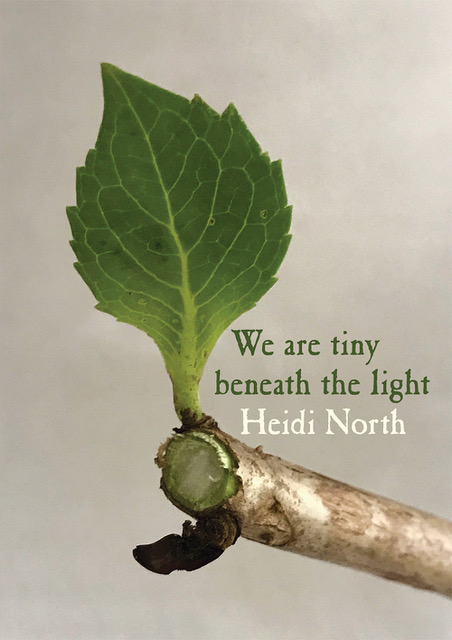
 Borderless