I stretched the boat hook as far as I could towards the mooring buoy, but it slid beneath the bow.
“Go back!” I shouted to Alex back at the helm, but my voice was carried away in the wind.
I pointed at the buoy under the net, and Alex reversed. The waves were dancing in front of me and the buoy would not stay in place long enough for me to reach it. On the second attempt, I forced all of my attention on the rope attached to the buoy, and tried to pull it aboard. It was much too heavy so I screamed for Alex to come, and he raced from behind, pulled the buoy up and secured it to the bow.
How would I alight into the dinghy in these waves? Alex lowered it into the water and it lunged towards the stern and back in succession. I doubted I would be able to board in these conditions.
“How about if I move the dinghy to the side of the boat and you enter via a ladder?”
“Worth a try!” I answered.
Alex brought the dinghy to the side of the boat and slung a ladder made of strong fabric overboard. I gingerly stepped down but once I glanced at the water raging beneath me, I lost confidence and gave up.
“I think I had better hop in from the stern after all,” I told Alex.
He moved the dinghy back to the stern. As I walked towards it, I slipped and fell on my thigh. There was no time to feel sorry for myself, so I picked myself up and continued heading for the dinghy. It lunged back and forth in the waves.
“Now!” commanded Alex.
I placed one foot in the centre of the dinghy to centre myself and then sat down on the bench. As hard as it was for me it was not hard for Haru, my border collie. I called her in and tapped the dinghy behind me because I knew she was hard of hearing. She leapt behind me with alacrity. It was so much easier for her to board the dinghy, not least because of her four legs.
Alex was locking the door back on the boat. The dinghy kept lunging toward the stern, and I was scared of getting knocked off when it hit the stern. I screamed as hard as I could.
“Okay!” replied Alex and hopped in behind me. Then he turned on the engine and headed for the shore, except that the shore was unrecognisable. Instead of a sandy beach, there were rocks.
Alex headed for the most promising spot. “Hop out!” commanded Alex, and I disembarked one leg after the other and headed to climb over the rocks. As usual, Haru leapt out and ran ashore.
I thought I was clear of the rocks and the menacing water, when Alex called out to me.
“Take my backpack! The laptops are in here. They can’t get wet. I realised then that we should have put them into the dry bag.”
I walked over the slippery rocks and strained to grasp the shoulder straps of the backpack. Once they were in my hands I returned to shore over the rocks, ready for the trek up to the holiday house.
I was so longing for the warmth of the fireplace and the view of the setting sun over the bay. I walked effortlessly up the hill, with Haru trotting happily beside me. The shelter and glow of the house was just as I had imagined. It was worth the hardship of getting there.
That night the winds continued to build, but it was pleasurable to hear them passing over the house as we enjoyed the safety and warmth of being inside.
Around one in the morning, the whole house shuddered when hit by a particularly strong gust, which was violent enough to briefly wake Alex.
No sooner was it light that I heard Alex enter the room. He must have been out before the wee hours.
“The boat has drifted to shore. I had a bad feeling and got up early to check the position of the boat. From the cliffs I could see that the mast was too close to the shore. Then my fears were confirmed when I saw that it had been blown ashore.”
Dragged moorings. Photo Courtesy: Alan Noble
“Didn’t the mooring hold?” I asked.
“Evidently not. I’m going to check it out now. Want to come?”
I agreed, and we drove out to the cliff with Haru in the back seat. Once at the cliff, I remained in the car because I couldn’t face the gale-force winds that were now gusting to forty knots. Meanwhile, Alex, in his wetsuit, walked down the dirt road towards the beach, entered the water, and pulled himself aboard. I kept my eyes focused on him until I saw his figure exit the boat, swim ashore, and walk up the track back toward me.
“It’s finished. There’s nothing we can do, beyond salvage.”
Alex’s boat of sixteen years and our home away from home for the last five years was no more. In years past, we had circumnavigated Tasmania, sailed to New Caledonia and back, and across the Great Australian Bight to sail north on the Indian Ocean. Exiting a marina and heading towards the waves was a symbol of leaving our troubles behind and anticipation of adventure. I could no longer take this adventure for granted.
Alex reached out to Thompson’s Marine Salvage, and they arrived at the bay within two hours. The plan was to attach one end of a heavy rope to a tractor at the top of the cliff, and the other end to the boat, and drag it onto the sand to save it from smashing on the rocks.
Alex again donned his wetsuit, descended the cliffs, and swam to the boat. I sheltered from the wind in the car at the top of the cliffs with Haru. Then I thought that I should walk towards the boat in case there was anything I could do. Just as I reached the shore, a young man in a wetsuit approached me.
Haru observing from inside the car. Photo Courtesy: Meredith Stephens
“Watch out for the rope. We’re ready to begin!”
It was too late. The operation had started, and the rope was heading towards me, as the tractor started to try and haul the boat to the shore.
“Jump!” the young man urged.
I’m glad the young man thought this was a possibility, but I haven’t jumped for years. My days of jumping are decades behind me. Unable to jump, I met the full force of the rope and was knocked on my back. My head hit some rocks. I uttered an expletive “sh..!” which I reserve for extreme situations. I lay there for seconds before slowly getting back to my feet. My head was aching from the blow and my whole being was in shock. I gave up on rendering assistance and walked slowly back to the car. There I sheltered from the wind until Alex eventually returned to the boat.
“The operation has failed. The boat is still stuck on the rocks,” he explained.
Late in the day, a twenty-ton excavator arrived on the scene. I spent the day bent over holding a rubbish bag, picking up rubble from the boat. Haru trotted around me enjoying being freed from the confines of the house. The excavator approached the boat like a giant menacing dinosaur. I grabbed Haru by the collar and removed myself to a distant spot on the other side of the boat. I could not face another industrial accident. The hand of the excavator grappled the mast and moved it to a safe spot on the rocks. I watched the dinosaur make its retreat back to the road while I maintained a hold on Haru’s collar.
The following day a second twenty-ton excavator descended onto the beach. The first excavator lifted the stern while the second lifted the bow. Slowly, the airborne boat was moved off the rocks and onto land. I was invited to view it, but I couldn’t face seeing the destruction of our home. That evening, I ventured out to the paddock where the boat now rested high and dry, like a beached whale. Amongst the devastation, I retrieved the remains of my dressing gown, which had somehow become entangled in the bow.
Over the next few days, I continued to return to the beach to extract boat rubble from the shore and pull up items of clothing and bedding from the sand. Alex drove down to the beach in his off-road vehicle, and we loaded up the tray with bags of rubble. Different items washed ashore each day.
Salvaged shoes. Photo Courtesy: Alan Nobel
The bump on my head continued to heal, only feeling pain when touched. The bruises on my legs changed colour as they too healed. And eventually the bay would heal too. We continued daily beach clean-ups. Seven odd shoes were salvaged, an odd snorkel fin, and odd gloves. Two months later the other fin washed up, but none of the missing shoes ever made an appearance. We continued to fill our off-road vehicle, and rubbish bags, with debris. Our beloved nautical home sat out of place in a paddock awaiting salvage. We came away with a renewed appreciation and respect for the destructive power of the ever-changing sea, but it would take more than a broken boat to diminish our desire to sail again. For now, our sailing adventures were on hold, but once we had the opportunity, we would again return to the sea. This would not be our final voyage.
.
Meredith Stephens is an applied linguist from South Australia. Her recent work has appeared in Syncopation Literary Journal, Continue the Voice, Micking Owl Roost blog, The Font – A Literary Journal for Language Teachers, and Mind, Brain & Education Think Tank. In 2024, her story Safari was chosen as the Editor’s Choice for the June edition of All Your Stories.
PLEASE NOTE: ARTICLES CAN ONLY BE REPRODUCED IN OTHER SITES WITH DUE ACKNOWLEDGEMENT TO BORDERLESS JOURNAL
Neeman Sobhan, born in the West Pakistan of Pre-1971, continues a citizen of both her cultural home, Bangladesh, and her adopted home, Italy. Her journey took her to US for five years but the majority of times she has lived in Italy – from 1978. What does that make her?
She writes of her compatriots by culture – Bangladeshis — but living often in foreign locales. Her non-fiction, An Abiding City, gives us glimpses of Rome. These musings were written for Daily Star and then made into a book in 2002. Her short stories talk often of the conflicting cultures and the commonality of human emotions that stretch across borders. And yet after living in Rome for 47 years – the longest she has lived in any country – her dilemma as she tells us in this interview – is that she doesn’t know where she belongs, though her heart tugs her towards Bangladesh as she grows older. In this candid interview, Neeman Sobhan shares her life, her dreams and her aspirations.
Where were you born? And where did you grow up?
I was born in Pakistan, rather in the undivided Pakistan of pre-1971: the strange land we had inherited from our grandparents’ and parents’ generation when British colonial India was partitioned in 1947 down the Radcliffe line, creating an entity of two wings positioned a thousand miles apart on either side of India! The eastern wing, or East Pakistan was formerly East Bengal, and my cultural roots are in this part of the region because I come from a Bengali Muslim family. But I was born not there but in West Pakistan, which is culturally and linguistically distinct from Bengal, comprising the regions of Western Punjab, Sindh, Baluchistan and the NWFP (North-West Frontier Provinces, bordering Afghanistan), where the official language is Urdu.
So, my birthplace was the cantonment town of Bannu in the NWFP, (now KPK or Khyber Pakhtunkhwa).
Perhaps my life as the eternal migrant, living outside expected geographical boundaries started right there, at birth.
My father’s government job meant being posted in both wings of Pakistan. So, I grew up all over West Pakistan, and in Dhaka, whenever he was posted back to East Pakistan. Much of my childhood and girlhood were spent in Karachi (Sindh), Multan and Kharian (Punjab) and Quetta (Balochistan).
How many years did you spend in Pakistan?
The total number of years I spent in undivided Pakistan (West Pakistan, now Pakistan, and East Pakistan, now Bangladesh) is about two decades, or one year short of twenty years. From my birth in 1954, my growing years, till I left the newly independent Bangladesh in 1973 when I got married and came to the US at the age of nineteen.
What are your memories about your childhood in West Pakistan? I have read your piece where you mention your interactions with fruit pickers in Quetta. Tell us some more about your childhood back there.
I have wonderful memories of growing up in West Pakistan, in Karachi, Multan and Kharian of the late 50’s and early 60’s (despite the era of Martial Law under Field Marshall Ayub Khan, and later his military-controlled civilian government). However, the political environment is invisible and irrelevant to a child’s memories that center around family, school and playmates, till he reaches the teen years and becomes aware of the world of adults. Since, my father’ job entailed us going back and forth between West and East Pakistan, by the time we arrived in Quetta in late 1967, it ended up being my father’s last posting, because by then Ayub Khan’s regime was tottering under protests in both wings of Pakistan; and by the time (I should say in the nick of time) we left for Dhaka, it was already the turbulent year of 1970, which turned Pakistan upside down with General Yahya Khan becoming the new Marshall Law administrator. When we returned to Dhaka, it was the beginning of the end for Pakistan, with preparations for the first democratic general elections, and the blood soaked nine months war of independence for Bangladesh about to be staged.
But as a child, growing up in a Pakistan that was till then my own country, what remains in my treasure trove of memories are only the joys of everyday life, and the friendships (with those whom I never saw again, except one school friend from Quetta with whom I reunited in our middle age in Toronto, Canada!)
Also precious are the road trips with my five siblings and our adventurous mother, as we always accompanied our father on his official tours, across the length and breadth of West Pakistan.
But if I start to recount all my precious memories, I will need to write a thick memoir. And that is exactly what I have been doing over the years: jotting down my recollections of my past in Pakistan, for my book, a novel that is a cross between fact and fiction. The happy parts are all true, but the sad ones relating to the war that my generation underwent in 1971 as teenagers is best dealt with from the distance of fiction.
What I can offer is a kaleidoscopic view of some random memories: the red colonial brick residence of my family in the 60’s in Multan, one of the hottest cities of Punjab, known for its aandhi — dust storms — that would suddenly blow into the courtyard of the inner garden in the middle of the night as my sister and I slept on charpoys laid out in the cool lawn under a starlit sky, and being bundled up in our parents’ arms and rushed indoors; tasting the sweetest plums left to chill in bowls of ice; being cycled to school by the turbaned chowkidar weaving us through colourful bazars to the Parsi run ‘Madam Chahla’s Kindergarten School’ or on horse drawn tanga (carriages); learning to write Urdu calligraphic letters on the wooden takhta (board) with weed Qalam(pens) and a freshly mixed ink from dawaat (ink pots); and to balance this, my mother helping us to write letters in Bengali to grandparents back in East Pakistan on sky-blue letter pads, our tongues lolling as pencils tried to control the Brahmic alphabet-spiders from escaping the page.
In Karachi, returning home on foot from school with friends under a darkening sky that turned out to be swarms of locusts. Learning later that these grain eating insects were harmful only to crops not humans (and Sindhis actually eat them like fried chicken wings) does not take away the thrill of our adventure filled with exaggerated, bloodcurdling shrieks to vie with the screen victims of Hitchcock’s The Birds, viewed later as adults in some US campus. Picnics and camel rides on the seabeaches of Clifton, Sandspit, or Paradise Point. Near our home, standing along Drigh Road (the colonial name later changed to Shahrah-e-Faisal after King Faisal of Arabia, I later heard) waving at the motorcade of Queen Elizabeth II passing by with Ayub Khan beside her in a convertible with its roof down. That was in the 60’s. Later in 1970, embarking with my family on the elegant HMV Shams passenger ship at Karachi port for our memorable week long journey back to Dhaka across the Arabian Sea and the Indian Ocean, with a port of call at Colombo in what was still Ceylon, to disembark at Chittagong port, not knowing then that we were waving goodbye not just to the Karachi of our childhood but a part of our own country that would soon become the ‘enemy’ through its marauding army.
But I reset my memories and bring back the beauty and innocence of childhood with images of my family’s first sight of snowfall in Quetta, the garden silently filling with pristine layers of snowflakes piling into a cloudy kingdom under the freshly tufted pine trees, as we sipped hot sweet ‘kahwa’ tea, and cracked piles of the best chilgoza pine-nuts and dried fruits from Kabul. And since Quetta was our last home in Pakistan, I leave my reminiscences here.
In Front of their home With full family in the snow In Quetta: Photos provided by Neeman Sobhan
There are so many ways to enter the past. Photographs in albums discolor after a time, but words keep our lived lives protected and intact to be accessible to the next generation. I hope my novel-memoir will provide this.
How many countries have you lived in? Where do you feel you belong — Bangladesh, Pakistan, US or Italy — since you have lived in all four countries? Do you see yourself a migrant to one country or do you see yourself torn between many?
I have indeed lived in four countries, for varying lengths of time. In the sense of belonging, each country and stage of my life has left its unique impact. But I have still not figured out where I belong.
Although I lived in Pakistan and Bangladesh from birth till I was nineteen, these were the formative years of my life, and I feel they have coloured who I am fundamentally. The culture and languages of the subcontinent is fundamental to me as a human being. Also, having shared my parent’s experience of being almost foreigners and expats in their own country, trying to speak Urdu to create a Bengali lifestyle at home in a culturally diverse world of Punjabis, Sindhis, Baluchis or Pathans, I know it made them (and us as a family), different from our compatriots in East Pakistan who never left their region and had only superficial understanding of the West Pakistanis. My introduction to a migrant’s life and its homesickness started there, observing my parents’ life.
When I moved to the US after my marriage in 1973, it was to follow my husband Iqbal, to the Washington-Maryland area, where he had moved earlier as a PhD student after giving up, in 1971, his position in the Pakistani central government where he was an officer of the CSP (Civil Service of Pakistan) cadre. These were the days of being newly married and setting up our first home, albeit in a tiny student’s apartment, because more than as a home maker, I spent 5 years attending the University of Maryland as an undergraduate and then a graduate student. We thought our future might be here in the US, he working as an economist for a UN agency, and I teaching at a university. A classic version of the upwardly mobile American immigrant life.
But before we settled down, we decided to pursue a short adventure, and Iqbal and I came to Italy in 1978, from the US, on a short-term assignment with FAO, a Rome based agency of the UN. The mutual decision was to move here, temporarily! We would keep our options open for returning to the US if we did not like our life in Italy.
Well, that never happened! And given the fact that since then, we have spent the last 47 years in Italy, the Italian phase of my life is the longest period I have ever spent in any country in the last 71 years!
Meanwhile, we slowly disengaged ourselves from the US and it was clear that if we had to choose between two countries as our final homes, it would be between Bangladesh, our original home country, and Italy our adopted home.
Still, living away from ones’ original land, whether as an expatriate or an immigrant, is never easy. Immigrants from the subcontinent to anglophone countries like the US, UK, Canada, Australia etc, do not face the hurdles that migrants to Italy do in mastering the Italian language. I am still constantly trying to improve my language skills. Plus, there is the daily struggle to create a new identity of cultural fusion within the dominant and pervasive culture of a foreign land
So, in all these years, though I love Italy and my Roman home, I do not feel completely Italian even if my lifestyle incorporates much of the Italian way of life. For example, after a week of eating too much pasta and Mediterranean cuisine my husband and I yearn for and indulge in our Bengali comfort food. Although I enjoy the freedom and casual elegance of Italian clothes, I look forward to occasions to drape a sari, feeling my personality transform subtly, softly.
Yet, I cannot conceive of choosing one lifestyle over the other. The liberty to veer between different ways to live one’s life is the gift of living between two or more worlds.
The only incurable malaise, though, is the chronic nostalgia, especially during festivals and special occasions. For example, when Eid falls on a weekday, and one has to organise the celebration a few days later over a weekend, it takes away the spontaneous joy of connecting with one’s community, forcing one instead to spend the actual day as if it were an ordinary one. I miss breaking my fasts during the month of Ramadan with friends and family over the elaborate Iftar parties with special food back in Dhaka or celebrating Pohela Boishakh (Bengali new year) or Ekushey February (21st February, mother language day) in an Italian world that carries on with its everyday business, unaware of your homesickness for your Bengali world. Over the years, when my sons were in school, I made extra efforts for. But you know you cannot celebrate in authentic ways.
Of course, these are minor matters. And I am aware that by virtue of the fact that I have dual nationality (I’m both an Italian citizen, and a Bangladeshi), I cannot consider myself a true and brave immigrant — someone who leaves his familiar world and migrates to another land because he has no other options nor the means to return; rather, I feel lucky to be an ex-patriate and a circumstantial migrant — someone who chooses to make a foreign country her home, with the luxury of being able to revisit her original land, and, perhaps, move back one day.
Meanwhile, I feel equally at home in Italy and in Bangladesh because we are lucky to be able to make annual trips to Dhaka in winter.
Whether I am considered by others to be an Italo-Bangladeshi or a Bangladeshi-Italian, I consider myself to be a writer without borders, a global citizen. I feel, I belong everywhere. My home is wherever I am, wherever my husband and my family are. My roots are not in any soil, but in relationships.
I often quote a line by the Mexican poet Octavio Paz. “Words became my dwelling place.” It resonates with me because for me often, it is neither a tract of land, nor even people, but language, literature and my own writings that are my true sanctuary, my homeland. I feel blessed to have the gift of expressing myself in words and shaping my world through language. My home is etched on the written or printed page. My books are my country. It’s a safe world without borders and limits.
Maybe it’s the conceit of a writer and a migrant, nomadic soul, but I think our inner worlds are more substantial than our external ones.
When I read your writing, I find a world where differences do not seem to exist among people in terms of nationality, economic classes, race or religion. Is it not far removed from the realities of the world we see around us? How do you reconcile the different worlds?
I believe and trust in our common humanity, not the narrowness of nationality, race or religion. Nationality particularly is limiting, dependent on land, and boundaries that can shift due to physical or political exigencies. Nationality by conferring membership also necessarily excludes on the basis of manmade criteria, while humanity is boundless, all encompassing, and inclusive, based on shared natural, biological, and spiritual traits.
In my case, I consider the whole world my family. I say this not just as idealistic hyperbole and wishful thinking, but from the fact that I have a multi-cultural, multi-racial family. Only my husband and I are a homogenous unit being Bengali Muslims by origin, but both my sons are married outside our culture, race and religion. One of my daughters in law is Chinese, the other has an English-French father and a Thai mother. So, through my grandchildren, who are a veritable cocktail, yet my flesh and blood, I am related to so many races. How can I bear malice to any people on the globe? The whole world is my tribe, my backyard, where we share festivals and food and rituals and languages. We celebrate unity in diversity.
Kindness and caring for others are values I hold dear in myself and others. I believe in sharing my good fortune with others, and in peaceful co-existence with my neighbours, wherever I live. I believe in living with responsibility as a good citizen wherever I find myself. And so far, the world that I see around me, perhaps narrow, is peopled with those who invariably reflect my own sense of fraternity. Maybe I am foolish, but I believe in the essential goodness of humanity, and I have rarely been disappointed. Of course, there are exceptions and negative encounters, but then something else happens that restores ones faith.
Love is more powerful than hate and generates goodness and cooperation. Change can happen at the micro level if more people spread awareness where needed. Peace can snowball and conquer violence. The human will is a potent spiritual tool. As is the power of the word, of language.
Literature is about connections, communications, bridges. It can bring the experiences and worlds of others from the margins of silence and unspoken, unexpressed thoughts and emotions into the centre of our attention. It brings people who live in the periphery within our compassionate gaze. Language is one of the most effective tools for healing and building trust. Responsible writers can persuasively break down barriers and make the world a safe home and haven for everyone, every creature.
You have a book of essays on Rome, short stories and poems set in Rome. Yet you call yourself a Bangladeshi writer. You have in my perception written more of Rome than Bangladesh. So which place moves your muse?
Any place on God’s beautiful earth can move my muse. Still, the perception is not completely accurate that I have written more of Rome than Bangladesh. It is true that many of my columns, short fiction or poems are set in Rome, but they are not necessarily just about Italy and Italians. In fact, my columns and poems were written from the perspective of a global citizen, who celebrates whichever place she finds herself in.
Poetry, in any case, is never just about any place or thing, but a point of departure. It always goes beyond the visual and the immediate and transcends the particular to the philosophical. The sight of a Roman ruin may jumpstart the poem, but what lifts it into the stratosphere of meaningful poetry is the universal, the human. For example, even when my poem speaks of a certain balcony in Verona, the protagonist is not a girl called Juliet but the innocence of first love, in any city, in any era.
My book of short stories, even when located in Rome, actually concern characters that are mostly Bangladeshi. In fact, it is my fiction that makes me a Bangladeshi writer, because my stories are ways for me to preserve my memories of the Bengali world of my past and an ephemeral present. I write to root myself. I often feel that I should write more about the new Italians, the Bangladeshi immigrants generation, rather than the expats of my generation, but my writing stubbornly follows its own compass.
Regarding my book of essays, my original columns for the Daily Star were written about many other cities I travelled to, including Dhaka and places in Bangladesh, and encounters with people in various countries not just Italy. Constrained to select columns from two decades of weekly writing, for a slim volume to be published, I narrowed the field of topics to Italy and Rome. But I had many essays and travel pieces concerning China, Russia, Vietnam, Egypt, Brazil, Spain, Netherlands and many other European cities and Asian capitals. In the end, a handful of columns about Italy became my book An Abiding City: Ruminations from Rome.
However, in the preface I said: “I must remind that the scope of the book, as suggested in the title, is ‘Ruminations FROM Rome’ not ‘Ruminations ON Rome’ with a tacit emphasis on ‘from’ because the writing relates to matters not just concerning ROME but also encompasses reflections of a more general kind. This is a collection of writings from a columnist who, within her journey through the Eternal City, also attempts to share with her readers her passage through life. I wish my fellow travellers a smoothsojourn into my abiding city, the one WITHIN and WITHOUT.”
I know that had I not lived in Rome but, say, Timbuctoo, I would find something to inspire me to write about. Of course, I am privileged to have lived in Rome and Italy, but nature is beautiful everywhere, in its own way, and there are other civilisations with rich cultures, histories, arts, cuisines, poetry and philosophy that can inspire the sensitive observer and writer.
My elder son lives in Jakarta, my younger son in Bangkok and in all the years of visiting them, I am blown away by the culture and beauty of the Indonesian and Thai worlds, and I have a notebook full of unwritten essays. And there is still so much of the world I have not seen, yet every part of this wondrous earth including my backyard is a chapter in the book of human knowledge. So, had I never left Bangladesh I would still have written. Perhaps “Doodlings from Dhaka!”
What inspires you to write?
Many things. A face at a window, a whiff of a familiar perfume, an overheard conversation, a memory, a sublime view…. anything can set the creative machine running. Plus, if I’m angry or sad or joyous or confused, I write. It could become a poem, fiction, or a column.
The writer in me is my inner twin that defines my essential self. I am a contented wife of 52 years of marriage, a mother of two sons, and a grandmother of four grandsons (aged 8-7-6-5). These roles give me joy and help me grow as a human being. But my writer-self continues on its solitary journey of self-actualisation.
Yet, I write not just for myself, I write to communicate with others. I write to transmit the nuances of my Bengali culture and its complex history to my non-Bengali and foreign readers and students, but more importantly to my own sons, born and brought up in Italy, and my grandchildren, whose mothers (my daughters-in-law) are from multi-cultural backgrounds, one a Chinese, and the other a combination of English, French and Thai. I write also for the younger generation of Bengalis, born or raised abroad, who understand and even speak Bangla, but often cannot read the language, yet are curious about their parents’ world and their own cultural heritage.
What started you on your writerly journey? When did you start writing?
I have always written. As an adolescent, I wrote mostly poetry, and also kept a journal, which I enjoyed reading later. It created out of my own life a story, in which I was a character enacting my every day. It clarified my life for me. Interpreted my emotions, explained my fears and joys, reinforced my hopes and desires. Writing about myself helped me grow.
My columnist avatar is connected to this kind of self-referral writing, but in real life it emerged by accident when I was invited to write by the editor of the Daily Star. The act of producing a weekly column was a learning experience, teaching me creative discipline and the ability to marshal my life experiences for an audience. I learnt to sift the relevant from the irrelevant and to edit reality. What better training for fiction writing? For almost two decades my experience as a columnist was invaluable to my writer’s identity.
Soon I concentrated on fiction, especially short stories that were published in various anthologies edited by others in Bangladesh, Pakistan and India. I now realised that while column writing was about my life in the present tense and about the daily world around me, my fiction could finally involve the past. The result was my collection of short stories: Piazza Bangladesh.
Ironically, it was my book of poems, Calligraphy of Wet Leaves that was the last to be published.
Your short stories were recently translated to Italian. Have you found acceptance in Rome as a writer? Or do you have a stronger reader base in Bangladesh? Please elaborate.
Without a doubt, as an anglophone writer, my reader base is better not just in Bangladesh, but wherever there is an English readership. However, books today are sold not in bookshops but online, so these days readers live not in particular cities or countries but in cyberspace.
But living in Italy as a writer of English has not been easy. The problem in Italy is that English is still a foreign and not a global language, so very few people read books in the original English. Every important or best-selling writer is read in translation. This is unlike the Indian subcontinent where most educated people, apart from reading in their mother tongues, read books, magazines and newspapers in English as well.
This is why I was thrilled to finally have at least one of my books translated into Italian, and published by the well-known publishing house, Armando Curcio, who have made my book available at all the important Italian bookstore chains, like Mondadori or Feltrinelli. Also, through reviews and social media promotion by agents and friends, and exposure through book events and literary festivals in Rome, including a well-known book festival in Lucca, it has gained a fair readership.
That’s all I wish for all my books, for all my writing, that they be read. For me, writing or being published is not about earning money or fame but about reaching readers. In that sense, I am so happy that now finally, most of my Italian friends and colleagues understand this important aspect of my life.
You were teaching too in Rome? Tell us a bit about your experience. Have you taught elsewhere. Are the cultures similar or different in the academic circles of different countries?
I taught Bengali and English for almost a decade at the Institute of Oriental Studies of the University of Rome, La Sapienza., till I retired, and it was an enriching experience.
I studied for a year at the University of Dhaka before I got married and came to the US in 1973, where I continued my studies at the University of Maryland, earning my B.A in Comparative Literature and M.A in English Literature. I mention this because these experiences gave me the basis to compare the academic cultures in the Bangladeshi, American and Italian contexts.
I discovered more in common between the Bangladeshi and Italian academic worlds, especially regarding the deferential attitudes of students towards their teachers. In Italy, a teacher is always an object of reverence. In contrast, I recall my shock at the casual relationships in the American context, with students smoking in front of their teachers, or stretching their leg over the desk, shoes facing the professor. Of course, there was positivity in the informality and camaraderie too, between student and teacher. But with our eastern upbringing we cannot disregard our traditional veneration of the Guru and Master by the pupil.
In Italy it was rewarding for me to have received respect as a ‘Professoressa’ while teaching, and even now whenever I meet my old students. However, some of the negative aspects of the academic world in Italy linked to the political policies that affect the way old institutions are run, cause students to take longer to graduate than at universities in the UK or US for example.
Are you planning more books? What’s on the card next?
I have a novel in the pipeline, a fusion of fiction and memoir, that has been in gestation for more than a decade. Provisionally titled ‘The Hidden Names of Things’, it’s about Bangladesh, an interweaving of personal and national history. It’s almost done, and I hope to be looking for a publisher for it soon. Perhaps, it has taken so long to write it because over the years while the human story did not change much, the political history of the country, which is still evolving through political crises kept shifting its goal posts, impacting the plot.
Most of my writings illustrate, consciously or inadvertently, my belief that as against political history our shared humanity provides the most satisfying themes for literature.
To share my stories with a readership beyond the anglophone one, my collection of stories ‘Piazza Bangladesh’ was translated into Italian and published recently in Italy, as ‘Cuore a Metà’ (A Heart in Half) which underlines the dilemma of modern-day global citizens pulled between two worlds, or multiple homes.
Meanwhile, my short stories, poems and columns will be translated into Bengali to be published in Dhaka, hopefully, in time for the famous book fair in February, Ekushey Boimela. Then my journey as an itinerant Italian-Bangladeshi writer will come full circle and return home.
Ruby Seadragon, Albany Silo Art by Yok & Sheryo. Photo Courtesy: Alan Noble
“Will the passenger who borrowed my mobile phone please return it?” came the announcement in an American accent from the bus driver. I had never heard a bus driver with an American accent before, which was all the more surprising on a bus in regional Western Australia. The woman next to me rose from her seat and walked up the aisle to the driver to return his phone.
I was catching the bus from Albany to Perth at the conclusion of my Indian Ocean sailing adventure with Alex. I had enjoyed sailing in the Indian Ocean despite the sensation of being inside a washing machine on the odd occasion. However, I couldn’t face a succession of nights at sea on the next leg in the lonely and capricious Southern Ocean. Nor did I have the confidence to perform adequately as crew if I had to rescue a man overboard. Instead, Alex enlisted a qualified sailor to join him for the eastward crossing of the Great Australian Bight, and I decided to return to South Australia by bus and plane.
The woman passenger turned to me.
“I had to leave my twelve-year-old son alone at the bus stop,” she explained. “His father had not yet arrived to pick him up and I had to catch this bus. It only runs once a day so I couldn’t wait. I tried to call my son to see if his Dad had arrived, but his battery had run out. I couldn’t call his father either because he has blocked me. That’s why I borrowed the phone from the driver. When I reached my ex on the bus driver’s phone, he reassured me that he had picked up our son.”
I could sense she felt embarrassed at being called up to return the phone to the bus driver. I also sensed that she needed to share her anguish with someone, and that person happened to be me because I was sitting next to her.
“I understand the feeling of feeling worried about your children,” I confided in her. “My children have grown up now, but I still worry about them every day.”
It was true. Sailing for months along the coast of Western Australia, exploring uninhabited islands, and heading ashore on the paddleboard to visit coastal towns had been an unparalleled adventure, but this didn’t stop me from worrying about my daughters back in Adelaide. I would ring them daily from the boat. If they were busy, I would tell them that I just needed to hear their voice and then I would let them go. I could understand this mother’s anguish at having left her young son at the bus stop not knowing when his father would arrive to pick him up.
“Worrying about your children is lifelong,” I continued. “But if we don’t worry about them no-one else will as much as we do. There’s a reason for it.”
She murmured agreement.
I stared ahead of me rather than returning to my book, not knowing whether she wanted to continue with the conversation. It felt rude to turn away from her in her distress, nor did I want to distract her with details of my own life story. I glanced outside and the sun pierced into my eyes. After a period of companionable silence, I returned to my book.
Several hours later we arrived at the town of Popanyinning. She rose from her seat and turned to fix her eyes on me.
“Have a wonderful Easter! All the best to you!”
I had forgotten Easter was coming up but knew that her farewell had nothing to do with Easter. It was an appreciation for our conversation in her moments of distress.
“Take care. I hope it all works out,” was all I could manage in the short time we had as she moved up the aisle of the bus. Our paths will never cross again, but her story lingers in my mind.
Meredith Stephens is an applied linguist from South Australia. Her recent work has appeared in Syncopation Literary Journal, Continue the Voice, Micking Owl Roost blog, The Font – A Literary Journal for Language Teachers, and Mind, Brain & Education Think Tank. In 2024, her story Safari was chosen as the Editor’s Choice for the June edition of All Your Stories.
PLEASE NOTE: ARTICLES CAN ONLY BE REPRODUCED IN OTHER SITES WITH DUE ACKNOWLEDGEMENT TO BORDERLESS JOURNAL
I looked out at the waters beyond the stern. The black waves danced in the moonlight. The swell pushed the boat in all directions, slapping against the water. I was unable to move around the boat without planning every movement. Thankfully, all the edges were rounded so even if I bumped into something I would not get hurt. I had remained in my pyjamas all day because I was unable to stay still enough to open drawers, retrieve clothing, and get dressed. I was unable to comb my hair because walking to the cupboard and retrieving my comb was too hard given all the bumps. Our bags had all fallen to the floor.
“I’m not scared,” replied Alex.
He looked at me straight in the eye. Suddenly I knew that it was not dangerous. If not dangerous, it was uncomfortable, but as far as Alex was concerned, we were not in danger.
We had left False Entrance off the mid-west coast of Western Australia at 4 am. There was an easterly wind predicted at this time. At 3 am, the anchor alarm had sounded. Alex rose and confirmed that this was because of the wind change. He spent thirty minutes trying to raise the anchor because the windless was malfunctioning. I could hear the anchor chain churning above the cabin where I was lying. Alex had to raise it by hand.
“At least I’ve done my morning workout!” he quipped.
Then I heard the motor turn on, and before long we left the safety of False Entrance for the swell of the Indian Ocean. The easterly blew for several hours pushing us south but then changed direction. This required us to head away from shore towards the Abrolhos Islands. Once the wind shifted Alex had to turn the motor on, and we thumped across the swell. Because of the high cliffs lining the mainland coast there would be no bay to shelter in for twenty-four hours. This wild stretch of coastline had claimed dozens of ships since Dutch vessels first arrived in the 1600s.
“What’s our latest estimated time of arrival?” I asked.
“The forecast was off, so we won’t be at Port Gregory until 3 am.”
We continued riding across the slapping swell. All I could complain about was the discomfort. I knew from Alex’s tone that we were not in danger, and we need not worry. He remained at the helm until we were safely at Port Gregory, while I rested in the cabin and braced myself for every slap against a wave. I put two pillows under my head to cushion myself.
I heard the familiar dropping of the anchor and realised we must be in Port Gregory. Alex spent the next ten minutes making everything ship-shape before going to bed. I looked at my phone. It was 2.57 am. Our voyage had taken almost 23 hours.
“It was tedious,” was his only complaint the next morning. Not scary, uncomfortable, or exhausting. Just tedious, in his typical understated way.
We gratefully slept until the sun forced its way through the cabin hatches at 8 am, and then, we roused ourselves for a comfortable breakfast at anchor. The skies were blue, and the waters calm.
“The wind is in the right direction. We’ll get to Geraldon in five or six hours. We should be able to sail the whole way, without motoring.”
How could the wind change so suddenly? How was it possible to have capricious winds one day and friendly ones the next? Alex raised the sails, and for the next six hours the wind ushered us on our way. Instead of erratic slapping, the keels produced a regular whooshing sound. The bucking bronco[1] had turned into a docile, ageing Clydesdale[2]. The first sign of the approaching Port of Geraldton was bulk carriers anchored out at sea, waiting their turn to load grains for export. As we entered the bay we had to make our way through the massive channel markers and dodge the lobster pot buoys. Once in the bay, we were greeted by live music from the amphitheatre on the shorefront lawns. We heard the sound of children playing in the water, on the beach, and on the playgrounds.
Alex anchored and by this time the windless had stopped malfunctioning. We then lowered the paddleboard. Alex knelt at the rear and I at the front, relieved to dismount our steed of the seas. I held myself steady as he paddled firmly behind me to the shore. We alighted at the sand, pulled the paddleboard to a safe height, and washed the sand off our flip-flops under a tap. A wall of hot air from the land accosted us, and the ground continued to gently canter beneath us as our bodies recalibrated to being on terra firma. Our discreet entry on the paddleboard had attracted no attention. We walked past children playing in the foreshore fountain, found a place to sit on the lawn alongside other family groups, and tuned in to savour the comforting 1970s pop music being performed by the live band.
Meredith Stephens is an applied linguist from South Australia. Her recent work has appeared in Syncopation Literary Journal, Continue the Voice, Micking Owl Roost blog, The Font – A Literary Journal for Language Teachers, and Mind, Brain & Education Think Tank. In 2024, her story Safari was chosen as the Editor’s Choice for the June edition of All Your Stories.
PLEASE NOTE: ARTICLES CAN ONLY BE REPRODUCED IN OTHER SITES WITH DUE ACKNOWLEDGEMENT TO BORDERLESS JOURNAL
Sri Lanka can be savoured best via its street food stalls; the aroma of the spices that emanates from the flurry of dishes left drying in the hot sun is supposed to hold the flavour of the country in its entirety.
Quite appropriately, I step out of the airport in Colombo just as dark clouds assemble overhead for an impromptu November gathering. The path to the bus terminal is waylaid in the melee, and the eventual taxi that comes around is met with immense gratitude for the warmth it emanates from within.
Meanwhile, the clouds have picked up pace and lambasted in full strength upon my flimsy raincoat. As the taxi — a Tata Nano — pulls out of the airport, I read a sign that tells me, rather ominously, ‘Welcome to Sri Lanka!’
.
But have I arrived? The drizzle accompanies me all day even as I try to venture out northwest from my dorm near the Galle Face Green towards Independence Square and Viharamahadevi Park. The park has a tinge of tenderness that makes me long for home barely six hours after I have left.
The soldier who has been entrusted to protect the monument of Gautama in the centre of the park slights me at first by asking me to put my camera away, but something about my nationality sparks enough curiousity and reverence in him to apologise and show me around its premises.
Named after the mother of the great Sri Lankan king Dutugemunu [161-137 BCE], who united the island under his banner after generations of oppression from Indian invaders, the park is tranquil in a manner that only the moneyed can afford to be. To be welcomed here by a member of the Lankan military seems ironic to me. Quite intrinsically, I discover that the affluent neighbourhood of Cinnamon Gardens is merely a stone’s throw away.
.
The sunset at Galle Face Green is where I lay my eyes upon the Indian Ocean for the first time; the gentle disappearance of the disk of fire in its graceful attire with lakhs of denizens of the city in attendance is not an event to be forgotten in a hurry.
It strikes me in the bouts of consciousness I still have with me on the start-stop train to Anuradhapura the next morning, which miraculously manages to reach the ancient capital of the island only moments after its scheduled time of arrival despite having spent about fifteen stoppages in the rough-hewn greenery of north-central Lanka.
The Isurumuni Royal Temple, Anuradhapura.
The Vanni, which separates the north from Anuradhapura, begins here, and I do not think I have gathered enough courage to bypass it just yet.
The Maha Sri Jaya Bodhi — a sapling of the Bodhi Tree under which the ascetic Sakyamuni had sat all night in meditation in the fifth century BCE and attained Enlightenment in Gaya — transposes much of the tranquillity one must have felt had Gautama himself been around; instead, hundreds of his lay followers deify his idol and consecrate his ideals with flowers and oaths of incorruptibility.
The compound where the Maha Bodhi stands allows one the permission to whisk the mind away from its constant whirl of thought and towards action based on feeling; its way, as Gautama’s, holds that offering the grant of ‘self-realisation’ to one’s fellow man is far more sumptuous a gift than an endowment of land or capital can ever accomplish.
Novice monks at the Ruwanwella Dagoba in Anuradhapura.
The Ruwanwella Dagoba, which the great Dutugemunu had painstakingly built, offers the refuge that the Maha Bodhi implores one to seek by going inwards. Two quarts of the Buddha’s relics are enshrined here, and the inflow of visitors ensures that the joyful policemen on duty are hard put to shred their visages of quietude, which one would have moments ago thought to be beyond them.
The next morning, with a German fellow traveller — whom I met at dinner while watching India decimate New Zealand on television in the semifinal of the cricket World Cup — I excavate whatever innards of peace and serenity I could from the Isurumuni Royal Temple.
My new friend from Germany tells me of of his experiences while travelling in Japan. He explains how he had made good use of the public parks (greens) at night as the locals did not use them after dark. He did not have money to sleep in hostels/ hotels and used benches in the public parks instead!
I offer him freshly plucked oranges from the gardens abutting the temple, where princes and princesses of an earlier age used to amble while seeking matches.
I get so drawn into the ethics that Gautama’s teachings must have instilled among the laypeople of the island that I almost forget to notice when my landlord — from whom I had also borrowed a bicycle — casually doubles the rate of his homestay when I check out. I learn — only much later — that he is no believer in the path Sakyamuni trod and speaks Tamil.
The Sigiriya rock fortress from afar.
Sigiriya seems much hotter than Anuradhapura1 was, and I write this even as the sun goes down and I climb up to a hidden rock far from the one which gives the town its name. The sun sets farther still from the Sigiriya Galla, and along with a bunch of British fellow travellers, I enjoy the last beads of light seeping past the horizon.
My evening is considerably brightened when our guide Vasu points me towards a green-looking hillock supposed to be the one Hanuman brought from the Himalayas as he sought for the life restoring ‘sanjeevani’ herb. While descending, a girl from Cornwall shrieks in considerable awe of the girth of the trunk of the first elephant she has ever seen.
The hike up Kasyapa’s fortress2 takes little effort, and the sparse crowd makes it feel worthwhile all the more. My newfound British friends — devoid of the SAARC3 protection of a reduced entry ticket to the top — climb the eastward facing Pidurangala instead. They tell me much later that they found the visage of Sigiriya quite appealing from the top of the latter; in a picture they show me, I cannot help but speculate that the black spot on the top of the rock was my shadow.
A dip in a hidden lake authorised by the owner of the backpacker’s hostel we are in is sprinkled liberally with views of the fortress in the backdrop; even the arrival of a slimy water snake that nibbles at my friend Jackson Price — a former telecommunications manager from Bristol — is not enough to shatter our sense of innate wellbeing.
.
There is just about enough time to catch the temple near the centre of Dambulla town unawares before Rapahel Nuding — a mechanical engineer from Stuttgart — and I take the bus south to Kandy. The carvings on the rocks inspire us both differently; me to poetry and him to decode how it could possibly have been done without the help of modern-age machinery.
Kandy is damp and misty when we arrive; the flecks of raindrops prance around nicely as neither of us wants to close the window shades of the rusty old bus we are travelling in. The lake can be sensed before we can see it; within an hour, we are back in the area to witness the ceremony at the Temple of the Tooth Relic where the dante dhatu, or the tooth relic, is displayed to laypeople.
Temple of the Tooth Relic
I help Raphael tuck into his — and my first this trip — masala dosa in the hordes of Tamil restaurants near the temple; I wonder if he asks for a second helping of the mango lassi to cool his inflamed tongue down or merely because he has liked the sensation the frozen — and possibly preserved — fruit. He stays back for a day, but I sling my bag to get on the morning train to Nuwara Eliya, having had enough of the cultural capital of Lanka already.
.
The bitter cold that greets me in Nuwara Eliya is only slightly lessened by the endless cups of tea that keep rolling through the night at the Laughing Leopards backpackers’ hostel. I struggle to explain to Helen Brinkmann, a post-graduate student from Dortmund, why I shall go to bed in tears having watched Australia demolish India in the final of the World Cup; the memories keep plaguing me a few days later in Ella when I sit down to get a grip upon myself and form an understanding of the ill-fated event.
Of the twin haunts of Nuwara Eliya and Ella, it is the journey that fascinates me the most; the rickety old contraption that passes off as a train is as old as I am in spirit and wanders only slightly off the gorgeous trails that have to perforce be left behind. Quite like the train, I am too enamoured by the countryside to trade it for the capital a week later.
The hills of Uva, as seen from Ella.
The hills that rise from the extensive green wildernesses filled with shrubs of undefinable assortment catch my eye in Ella, and it is some time before I can catch a grip of my sentiments and force myself to sit down. The bats and monkeys that gather in numbers at the Ravana Ella — or Ravana’s cave — scare me out of my wits before I can even put my foot into the mouth of the opening. Outside, the sun shines generously on a creek drifting past the hills in a muted whirr that only the sapient can perceive.
.
It speaks highly of the natural largesse that Sri Lanka possesses. Within hours of leaving the cool climes and peaks of Ella, I arrive at sea level, and the Indian Ocean peeks in patches to the left when the bus turns right from Matara, the southernmost tip of the isle. Indeed, I have breakfast in the hills and lunch on the coast.
Sunset at the beach in Mirissa
Mirissa, where I am headed next, brags of pristine beaches uninjured by the droves of tourists that fill it during the season. On arrival that evening, I find a rock to the west that garnishes a panorama that is stunning. My first encounter with kottu roti is astride a charitable helping of coconut sambal which my tongue finds excitable, and I tell myself that I am finally in the south.
.
Excursions are made to the beaches that litter the southern Lankan coast without rhyme or reason, or even distinction to one’s name or creed. Weligama, Midigama, Ahangama, the air force base at Koggala, Habaraduwa and Unawatuna all become names interchangeable with rapture perpetuated by the lack of inaccessibility. From another country, people struggle to reach me on my cell, and their needs stay blissfully away from my purview.
The sun shines on the coast much like it had done when I was in the west; the north and central parts of the country are barraged by untimely rains and I am glad to have left them behind.
The harbour as seen from Galle Fort.
Galle, where I am to stay for a night before heading back to Colombo, charms me out of my wits and looks askance as I walk away evincing a wry smile from the preposterous shindig that one might as well call a fort. The cricket ground stirs a longing for a home I have no rush to return to; on account of the goodwill and record I enjoy, I am allowed into the members’ stand for a gracious helping of a local under-19 match.
The entrapments that the Portuguese, the Dutch and the British had all in turn instituted — that now passes off as a spectacle of great pleasure — protect the town of Galle from outsiders, and also, it seems to me, from itself. Inward-looking to a fault, the Sinhalese of Galle have been known to open their hearts and hearths to all but those who have boasted of a skin tone less plentiful than white.
Upon being given to understand the intricacies of such delights and lodging in a palatial mansion owned by a Lankan Muslim family, I exult in the first serious gelato I have had in my life; an egg roti earlier in the day had barely served the purpose it was intended for.
.
Return to Colombo. I see the capital with eyes that I had not been endowed with when I first landed on these shores; it seems to be a lifetime ago now. The polished highway outside the President’s House, which abut the Chinese-funded port and end up at the imperial inheritance of the Galle Face Green purport me to a world I thought I had left behind in the countryside.
I put it down to my lack of vision but the night creeps up on me unannounced even as I try to trudge out of the humongous man-eating machine they call the One Galle Face shopping mall. It is not without some discomfort that I take flight, aware that it may not be for the last time.
Built during the reign of King Kasyapa [477-495 CE] ↩︎
South Asian Association for Regional Cooperation ↩︎
Mohul Bhowmick is a national-level cricketer, poet, sports journalist, essayist and travel writer from Hyderabad, India. He has published four collections of poems and one travelogue so far. More of his work can be discovered on his website: www.mohulbhowmick.com.
PLEASE NOTE: ARTICLES CAN ONLY BE REPRODUCED IN OTHER SITES WITH DUE ACKNOWLEDGEMENT TO BORDERLESS JOURNAL.
It was the year 2020. When most of the world was lacking connection and normalcy, I had the privilege of being in Sri Lanka, an island that I had referred to as ‘home’ but hadn’t truly been my home since I left at the age of eighteen. Being here gave me connection with a sugary coat of ‘normalcy’. I had my affectionate family, who made lockdowns entertaining with the purchase of a ping pong table, the nightly binge of true crime documentaries and the occasional games night, including a terrible decision to play ‘Cards Against Humanity’. I had a relationship with my boyfriend in all the physical sense of the word after two years of long-distance phone calls. I had my friends who were all a 15-minute drive away. I had a flexible job where I could interact with smart and passionate coworkers, something I ignorantly thought I wouldn’t find in Sri Lanka. Add to that, countless long weekends and public holidays, mostly spent in the beach towns down south, a region brimming with excellent food options, tasty cocktail bars and magnificent sea swims – truly this was an island that brought comfort, safety and security.
But I wanted more.
This romanticised version of the pandemic years spent in Sri Lanka, while all true, evoked such strong feelings of being lost, purposeless, and devoid of self-worth. This most comfortable of comfort zones made me feel completely out of sorts and yearning for something different. Long, sleepless nights of overthinking, questioning and wondering, “What on earth am I doing here?” Did I spend four years in an exceedingly difficult academic environment and four years working in the most ambitious, individualistic, enlightening city to land up here? Did my parents really spend thousands of dollars on American college tuition for me to end up back home feeling like a failure?
The initial move back home in May 2020 was going to be temporary. I was placed on furlough from my job in London and I believed it was best to wait it out back home. I thought that once the pandemic was all well and done, which would obviously be in a few months, I’d return to London, like nothing had changed.
As I fell in deeper with the aesthetically pleasing confines of beautiful beaches in Trincomalee, the delicious home-cooked meals, the hugs from my parents, the kisses from my boyfriend, the cuddles with my little nieces and nephews, and the long weekend trips with friends, it would be an outright lie to say I wasn’t relieved when the furlough continued and ultimately, ended with the expiration of my work visa. That seemed to seal the decision. I had no way back to the United Kingdom. Sri Lanka was to be my home now.
Looking back at that time, it was like being given this Trojan horse of a cozy, tender, warm embrace, disguising claws that pierced slowly, leaking poison and disillusionment. The surrounding Indian Ocean was as confining as it was endless, as isolating as it was welcoming, as suffocating as it was refreshing.
*
Scrolling through social media, I compared myself to others. And no, it wasn’t the mindless glazing-of-the-eyes watching Tik Tok or Reels but the reading-every-post-with-anxiety on LinkedIn. I compared myself to my friends in New York City, progressively moving up the ladder with impressive promotions and new six figure salaries. I compared myself to my best friends, living their lives independently, powering through their work passionately. I compared myself to peers in my graduating class who seemed to be smashing it in whatever life path they were on. And I felt thoroughly sorry for myself.
While pleased to be working with smart individuals at my WFH startup job in Sri Lanka, the lack of growth and opportunity for professional development made me itch. There were too many moments in the middle of workdays, where I laid sprawled across my bed, staring up at the fan and berating myself down a black hole. I switched between two toxic mindsets, one telling myself that I was no longer worthy of doing exciting, cutting-edge, fulfilling work and the other questioning why I couldn’t be content with all the positives that I had around me? Why did I always want more? Why did I always have this “grass will be greener” frame of mind? Why couldn’t I just ‘be’? This second mindset would set in when I heard my mum’s call to come for her home-cooked lunch of rice and curry. Wasn’t I begging for all these luxuries when I was living abroad?
While work was a huge factor contributing to my discontent, lifestyle was a secondary, significant reason. Disclaimer, disclaimer, disclaimer that everyone has different priorities and are in different stages of life and I spent a lot of time (over)thinking about my priorities. I wanted new experiences. I wanted to be pushed outside my comfort zone to do things that terrified my introverted self. I wanted to work remotely from a Greek island. I wanted to pick up Spanish again and stay in Barcelona for the summer. I wanted to take a creative writing course in Paris. I wanted to hop on a flight and visit my best friend in Munich, where she was living on a farm. I wanted the luxury of having a multiple-year multiple-entry Schengen visa which would be stamped every few months. I wanted a different passport. I wanted to go for an innumerable amount of plays, whether they were in small, 30-seater spaces with no set design or in beautiful, historic theatres where the lead actor is naked almost the entire run time (for artistic purposes apparently). I wanted to watch Jodie Comer in Prima Facie. I wanted to laugh hysterically at a live interview with the legendary Phoebe Waller-Bridge. I wanted to listen to the beautiful minds of Konkona Sen Sharma, Nandita Das and Aparna Sen discussing the perils of censorship in their films in India; watch a match at Wimbledon; find a way to go to the Berlinnale Film Festival. Enjoy the Edinburgh Fringe Festival.
I wanted to do so many things.
Could I find these things while living in Sri Lanka? I convinced myself that I couldn’t.
*
Recently, at my one-year work anniversary in my current job, my manager thoughtfully said, “Thank you for always striving for excellence.” While very kind words, they made me understand something I perhaps always knew about myself, without ever being explicitly told. Always striving for excellence even as a type-A young person, pushing for excellent grades, in order to go to an excellent college in the United States, and ultimately, secure an excellent job. (I’m exhausted just typing out this sentence.) And after being extremely fortunate to work with intelligent and supportive people and have challenging, exciting projects, my own benchmark for excellence kept rising.
I wanted to really enjoy my work but also be challenged by it. I wanted to learn from diverse, brilliant colleagues. I wanted to learn new technical skills. I wanted to have workshops with Product teams on developing new AI functionalities and how best to position them in the marketplace. I wanted to brainstorm with the Content team on how to best partner with a certain Tamil British-Indian actress and not feel like the token voice of diversity. I wanted the promotion and the salary bump and the senior title and the recognition and the reputation. And if not now, then it was in the five-year plan. I can say that this is what New York City does to you, but that would be a lie. It’s me. Hi. I’m the problem, it’s me.
All this ambition drove me straight into a brick wall, dissolving my confidence in my own capabilities. I blamed Sri Lanka. I blamed a whole country for making me feel like this.
Soon, the island was facing its worst economic crisis since independence and to watch the destruction of possibility, willpower and any minute form of political stability in real time was heartbreaking. I won’t even attempt to put into words the plight of Sri Lankans who lost almost everything, unable to access the most basic essentials of fuel, electricity, cooking oil, milk powder and medicines. By early 2022, ‘home’, an island that had nurtured me, that gave me the most special roots, that offered me safety and security, was broken. In my siloed social bubble of international school kids, foreign-educated graduates and Colombo’s upper-middle class families, I desperately wanted to get out. And so did thousands of others who did not want to waste their potential in a nation that was falling apart at the seams.
After years of only regarding Sri Lanka with fondness, I found that bitterness, resentment, and animosity towards my island nation magnified to a point where I couldn’t even hold a conversation with friends who could leave but were choosing to stay. Give me a work permit, give me a Western passport, give me a student visa, give me anything that will allow me to leave this place.
A family meeting was called when my black mood permeated through the home, along with wine, cheese, and a whiteboard to discuss my future plans — the pleasures of coming from a business family — efficient but with alcohol. My family, the ever-loving, supportive, encouraging guiding lights in my life, told me point-black, “You need to leave.” In an atypical South Asian, fashion, they said, “Do what makes you happy. Get a job or do your Masters. Travel everywhere.” My sweet parents, knowing that they would once again be empty nesters with my brother and me elsewhere, knowing that they fully enjoyed having the house full again, also recognised that their kids would be their happiest selves outside of Sri Lanka.
To have diametrically opposing emotions about the right path forward is confusing to say the very least. If I chose to remain in Sri Lanka, it would have been because three people lived there. My parents were not getting any younger and more substantially, we treasured each other. My partner and I were finally living in the same city after years of distance and savouring every moment of togetherness. And to have all three people only having words of encouragement further deepened the guilt.
But I wanted to be selfish. I didn’t want to stay because I’m a patriotic citizen contributing to the brain drain. I didn’t want to stay because I’m a good daughter or girlfriend. I wanted to leverage my resources, my experiences and most importantly, my LinkedIn, to do the impossible. A broken island meant I had to put together the pieces. For myself.
To leave or not to leave? And to which part of the world? To return back to the country where I have the privilege of residency but do I want to live in the land of mass shootings and a work-till-you-die mentality? Or to pursue an entry into the U.K. through a student visa by doing an unwanted MBA? Or to strive for the most idealistic, unrealistic scenario — a job in London?
But in that snug, tightly wrapped, a-little-too-hot Anokhi[1] blanket of a comfort zone, the decision was always clear. Maybe one day, I’ll make my peace with my ‘home’. Maybe one day, my blood won’t boil with frustration when I’m on Sri Lankan soil for more than a fortnight. Maybe one day, I will feel the affection again. Maybe one day.
Fast forward two years to the present day, sitting in my cozy flat in London, having just spent a few electrifying weeks in Greece, riding on a high from a successful partnership with a certain tech juggernaut, and preparing for next week’s launch of a new AI product, I appreciate my new ‘home’. It might not be the island I once thought I would spend the rest of my life in, and it’s a little colder and gloomier than the tropics. But the possibilities are endless once again, my dreams are daring once again, and life is feeling full once again
Nitya Amalean is an emerging writer and storyteller. She was born and nurtured in Sri Lanka, college-educated in the United States and currently, lives in London where she works for an audio media company.
.
PLEASE NOTE: ARTICLES CAN ONLY BE REPRODUCED IN OTHER SITES WITH DUE ACKNOWLEDGEMENT TO BORDERLESS JOURNAL.
Mr Richards, employed by the British Council, had been teaching English at a posh, private preparatory school in Thailand for more than four years in the Province of Prachuap Khira Khan in a coastal town named Mawdaung. His first and sixth form pupils enjoyed his humour much more than his tedious grammatical explanations, and Mr Richards had no qualms about this.
Mr Richards taught twelve hours a week which offered him ample time to learn Thai, travel extensively throughout the country, especially up North in the dusk-filled jungles and along the Mekong River shores exploring villages and temples.
The one-storey school, perched high up on the brow of a hill, overlooked the turquoise-tainted Indian Ocean. The large windows of his class afforded pupil and professor much visual pleasure when grammar became too much of a bore, and Mr Richards too weary or hot to break the boredom.
“Now, instead of casting cursory glances out of the windows,” shouted a nettled Mr Richards, one very grey, windy day, “who can tell me what function the word ‘chewing’ plays in the composed word ‘chewing-gum’ ?” All the smiling faces and darting eyes happily translated their perfect ignorance of the answer. However, a minute later, a very pretty girl, one of the brightest in his class, excitedly cried out, “A verb, sir !” Mr Richards gave her a benign smile and shook his head.
“No, no. It is not because it ends in -ing that it is a verb,” he lectured in a paternal tone, so overtly exercised by Mr Richards, and so perfunctorily accepted by the pupils. He scanned the eager heads of the others ; alas none had the desire to crack the enigma. He checked his watch : “Oh well, I’ll let them out ten minutes or so before the bell rings. I have to catch that bus to Bangkok,” he sighed, still waiting for an answer that never came.
“No bother. Tonight think about it and tomorrow morning let me know, right ?” He stood up. “Go on now … down the hill … off to the beach, I’ll give you a treat this afternoon.”
Before he had even finished the word ‘afternoon’ the whole class, besides two girls, grabbed their books and scrambled for the door. Out they stormed, racing downhill towards the shingled beach of the crescent-shaped bay. Mr Richards observed them from the large windows. Their delightful screams made him a bit queasy: he had been told never to allow the pupils out before the bell. He, nevertheless, had done so on several occasions. He shrugged his shoulders, picked up his books and papers from the wooden desk and was about to make for the door when a terrible thundering or roaring sound froze him in his footfalls. He swivelled on his heels and gasped in horror as rolls and rolls of water smashed against the plate glass of the window panes. The violence of the impact threw the two girls to the floor screaming, but besides a few chinks through which spouts of water gushed in, the windows had miraculously withstood the brunt of the tidal wave. For a tidal wave it was, and a tremendous one! The two girls remained lying on the floor, crying but unhurt.
Mr Richards ran to the windows. The waves had receded, but what he espied below on the crescent-shaped seascape, or what had been a crescent-shaped seascape, caused him to fall back and scream involuntarily : “Dear God! There’s nothing left!” Indeed nothing remained: no palm trees, no vendors’ shacks along the shore, no boulders. No shore ! Only a vast ocean that lay several metres below the school, now churning a glaucous thickness under grey, sultry skies, upon which floated a myriad bobbing flotsam: uprooted palm-trees, lifeless cows and dogs, shoals of bloated fish, roofs of straw, pots and pans, planks, bright coloured robes with or without their proprietors’ bodies inside them !
“Bodies !” he cried covering his mouth. “My pupils … Have they all …” He dared not finish his sentence. The two girls stared at him, mouths agape, eyes deorbited. “The boys and girls floating in the water … Dear God they’ve all drowned !” He wept and wailed, stamping his feet, grabbing at his hair. The girls too began to weep and wail.
In an instant he came to himself. “Their deaths are my fault,” he mused. “I let them out too soon … against all school regulations. Blast ! Why did I do that … just today ?” He soon realised that the headmaster would be on to him soon enough; he feared his starched character. And the parents ? They would accuse him of manslaughter. He would be arrested and put in prison, even hanged for involuntary homicide ! He had every call to be frightened …
Taking hold of himself, Mr Richards knew he had to flee very quickly from Thailand before the headmaster and the parents learned about his unpardonable blunder. And they would learn about it soon enough when the panic and hysteria had died down.
He leapt over the still supine girls and rushed out the door. Once outside he noted that the town near the school had hardly been damaged. But below, he caught glimpses of undulating corpses being poled out of the waters by villagers and policemen in pirogues, rowboats or catamarans. The tidal wave had been gigantic. He turned his attention away from the catastrophe and fled home …
He jogged up to his bungalow further up the grassy hill at the edge of town. Speedily he gathered what he could, for the alert would be out for him at any moment … Or, so he believed. A change of clothes, one or two books and his official documents he stuffed into a small backpack, and without locking his door quickly made a bee-line for the bus station, where luckily he managed to jump on a bus for Bangkok. Apparently no one recognised him, nor followed him. He paid the fare, settled into one of the many empty seats and stared stony-eyed out of the window. His red, puffy eyes filled with tears. What a blithering fool he had been ! And now, what had he become ? A fugitive … no, worse, a murderer ! “Dead ! All dead !” rose a ghastly whisper in his ear. He had to get away as far as possible as the scenes of the bloated pupils danced before his bloodshot eyes.
Once in Bangkok he wasted no time. Further North he travelled by bus into the Province of Chiang Rai. There, in a village whose name he hardly recalled, he spent two nights pondering his dilemma, assuaging his jaded nerves, chary of leaving any sign or evidence of his frantic intinerary, thinking only of a plan to save his neck. He couldn’t possibly stay in Thailand, the police surely were now on his trail, or would be very soon. Neither could he return to England: the bobbies would be waiting for him at the airport, ready to handcuff the murderer of over a dozen innocent children !
Then in the middle of a hot, sleepless night it suddenly occurred to him: he would shave his head and eyebrows, don a monk’s robe, change his expensive Russell and Bramley shoes for sandals and set out for Laos. He had travelled widely in Laos and could even speak a smattering of Kra-dai. He had taught in Luang Prabang for three years and had many friends amongst his former pupils, two of whom had entered monkhood in Pak Beng at the Wat or temple Jin Jong Jaeng. “I shall escape naked from the shipwreck of mundane life,” he murmured, smiling inwardly at his little metaphor which he recollected from his childhood upbringing. But would he ?.. Mr Richards sunk into his lumpy bed: the figure of an outlaw, a pariah, a self-exile stood before him like a shadow … a double of himself: -swollen little bodies drift like flotsam in waters,darkly … that fey voice droned above a tumult of incongruous thoughts.
Mr Richards shook his head and said aloud, “To Pak Beng. There I’ll join the sangha[1] of the Theravada monks. There I shall seek spiritual solace, rid my mind and spirit of those drifting bodies of cheerful boys and girls, swept away from the joys of life because I had a bus to catch!” So he hoped.
Yet the obstacles of reaching the temple caused him concern. The Laotian government frowned upon Western spiritual-seekers cluttering their monasteries and temples. He needed a visa. Where would he find a consulate in the North of Thailand ? And would they issue one to a ‘Western monk’ ?
He jumped up from the bed, and as he did his mind cleared of all that tumultuous tossing. He had befriended many of his pupils’ parents whilst working in Luang Prabang, and he knew, by correspondence, and his frequent voyages to Laos, that one of them, Mr Inthavong, had been appointed consul in one of the North Thailand consulates. He rushed down to the reception and asked at the desk where the nearest Laotian consulate could be found.
“You must travel by bus to Wiang Kaen near the Mekong River, sir.”
“Are there any other consulates ?”
“Not that I know of, sir.”
Mr Richards heart skipped a beat; Mr Inthavong must be working there. He had to take the chance.
The next morning the ‘Western monk’ got on a bus for Wiang Kaen, carrying only a small bag for his passport, photos and a bit of lunch. All along the tedious journey to the North-Eastern town Mr Richards prayed that Mr Inthavong would be there; it was his only chance to obtain a visa for Laos.
He reached Wiang Kaen by nightfall, found accommodations at a temple guest house and spent a horribly sleepless night, tormented now by the thought of the failure of his plan, now by the screeching rats and buzzing mosquitoes.
At nine o’clock sharp he was at the front gate of the bright new consulate, a lovely two-storey bungalow-like edifice enshrined by lush gardens carpeted with the most perfume-scented fruit trees and flowers. He rang. The security guard strolled out and sized him up. Mr Richards politely mentioned his friend’s name. The unshaven security guard raised two quizzical eyebrows, but took his passport and photo and left him to ruminate the events that were about to unfold behind that iron barrier, inside the lovely bungalow. It all seemed hours to him as that voice repeated “irresponsible murderer !” Suddenly the security guard stood before him, together with a small, portly man dressed in a suit and tie.
“Can that be you Mr Richards? A bonze? A monk? What have you done? Where is all your beautiful black hair ?” All this was said in imperious tones much to the delight of the monk who sighed in relief: his pupil’s father had recognised him! He wiped the perspiration off his furrowed brow. “Step in, please … out of the heat,” the consul pleaded. So they both strolled into the air-conditioned consulate, Mr Inthavong wearing Russell and Bramley shoes, recently polished, Mr Richards, a pair of worn-out sandals.
Inside the monk was served tea and a bowl of rice in Mr Inthavong’s office, he himself abstaining from joining him since he had already breakfasted. “I’m so happy to see you Mr Richards,” began the enthusiastic consul. “What brings you here, and dressed like that ? Are you really a monk now ?” Mr Richards broke into a tapestry of lies that, as time went by, he himself began to believe: Living so long in Asia had infused his soul with the compassionate virtues of Buddhism, and in Laos, he hoped to pursue his path deeper in the compassionate depths of Buddhahood in order to glean its treasures. The consul smiled like a child does when listening to his or her favourite nursery rhyme.
Mr Richards then got down to business: his visa ! Mr Inthavong nodded, examining his passport and two photos. “You shall have it in three days. Meanwhile, you are to be my guest here, upstairs with my wife and two children.”
And so the first snag had been circumvented. For those three days, Mr Richards, plied with food, drink and homely conversation, had all but forgotten the wave, the floating bodies and merciless whisper … the abominable figure of a self-exiled …
On the morning of the fourth day, armed with a three-month visa, the Western monk set out to cross the Mekong River to Ban Houei Sai on a Nam Ou boat with six other passengers. It had been so long since he had been on the Mother of all Rivers. He inhaled the tropical river air in silent jubilation. As they navigated slowly downstream, his thoughts interlaced with the flecks of foam, wandered back to his days spent on the Mekong at Guan Lei on the Chinese border, where having been temporarily stranded, he finally was welcomed aboard a small six-cabin dai, a Chinese boat, heading for Thailand.
What a voyage! They had anchored by the soundless jungles at night, machetted through them in the evenings in search of mangoes, navigated by bathing rosy water buffalows and by tiny golden stupa-tipped isles. What an adventure! The crew had left him off in a small Laotian village where he made his way to Luang Prabang on one of those blue, wooden box-boats, gliding by stilt-home villages under whose piles lounged or snorted huge black pigs, scenes so reminiscent of Alix Aymé’s paintings[2] housed at the Luang Prabang Royal Palace. Then the real adventure began, upstream on the Nam Ou in a frail six-seater river boat, slowly weaving between treacherous snags and swift cross-currents. He passed the Park Ou caves, Nong Khiaw and Muang Khwa, sleeping in bungalows and eating rice with thick pieces of pork in the pristine territories of the Hmong tribal peoples. Alas, his grand voyage to Hatsa ended in Sop Pong near the Vietnamese border, the authorities refusing him an entry visa to cross Vietnam then back into Laos where he wished to continue on his river voyage to Chao Dan Tra at the Chinese border.
Ah yes, those were the days of freedom … of existential sovereignty. And now ? A fugitive … a prisoner to his own wretched egoism, Mr Richards suddenly felt overwhelmed by a deep loneliness. His mixed recollections were suddenly interrupted by shouts from the shore : they had reached Ban Houei Sai.
Once the formalities were completed, Mr Richards managed to hop on a collective taxi which sped him towards Pak Beng on a smooth road. He reached the town before nightfall, and to his joy he spotted his two former pupils seated on the temple steps. Were they waiting for him ? Indeed they were, thanks to a letter sent by Mr Inthavong who had explained in great detail to the Satu or Venerable Father of the temple-sangha Mr Richards’ religious fervour and enthusiastic intentions to enter monkhood. The consul had added that nothing should be said to the police or to other state authorities of his entry into Buddhahood.
His former pupils, who had grown into full manhood, heads shaven and bare foot, happily led him to meet the Satu Father. To tell the truth, Mr Richards hardly recognised them. But that made no difference. As expected, he deposited a large donation (all the cash he had on him which amounted to some six hundred pounds), then was given three bright new ochre-coloured robes of pure cotton, shown to his splayed window cell, through which he had a slight view of the inner temple gardens, and was told the daily procedures of his initiation as a pha or a novice: collective prayers in the Prayer Hall, breakfast, Sutra readings until lunch, discussion, rest period, an hour or two of manual labour such as gardening, restoring frescoes or termite-riddled woodwork, personal perpetual moving meditations, yoga exercises, then a light meal before the final collective prayer and sleep until the sound of the gong at four o’clock in the morning.
When the two monks had left him, Mr Richards lay back on the straw mat on the earthen floor that served as a bed. He had been given immaculately clean sheets and a pillow. A mosquito net had been nailed to the splayed window. The walls bore no images nor any other colour than a light beige. Putting his hands behind his head he followed the slowly turning ceiling fan with his eyes: yes, his plan had succeeded. No one would ever find him here. Yet he had no reason to rejoice. He would never again see his aging parents seated at the hearth reading or conversing in low voices, his trusty Irish Setter … his friends at the pub. A sharp pain of remorse, or better put, compunction stabbed at his chest. “Dead!Drowned ! All dead !” the whispers hammered at his temple. Would that relentless voice ever grant him respite ? Would anyone ever forgive him ? Only penance. Only the fires of tribulation could scrape away the rust of vice that had corroded his being. A life of contrition would be the most appropriate path for him, the most responsible. Tears again began to well up in his eyes. He fell asleep and awakened to the cascading sound of two or three vibrating gongs.
So began Mr Richards’ initiation into Therevada monkhood. He had to learn the akkara alphabet in order to read the sutras, the Buddhist acriptures. His practice of many languages enabled him to accomplish this in two months. What he enjoyed most was the tham nong or the musical rhythm method which empowers the monks to memorise the hundreds of sutras of the Sacred Books ; it formed part of the didactic games that the bonzes played every morning and afternoon. These didactic games also included dancing and chanting sessions. The ‘western bonze’ adapted quite rapidly to his new lifestyle … his new home … No doubt his last …
As time passed, the rigours of the monastic code, the kindness of all the monks towards him, his slow but steady immersion into the Kra-Dai language and the marvels of the modality of Buddhist life attenuated, to a certain extent, the mortifying effects his spirit and body had suffered since that horrendous wave. Images of the drowned bodies did wake him up in the middle of certain nights, heaving and panting in one sweaty mass of anguish. However, the whispered voice had long since been silenced. His prayers and ruminations served as a watershed for those waves of guilt, an oceanic ointment for his slowly healing wounds. He was so glad to do service at the temple, run errands for the personnel who worked in the kitchen, wash and hang to dry the three robes of all twenty or so monks.
Gradually he succumbed to the beauties of Buddhahood, of attaining inner peace, his mind having all but vacated that remorseful past. His wide struggles between jubilation and despondency, gaiety and sorrow, ecstasy and debasement dwindled to a few chinks of dread. In short, he enjoyed his laborious leisure …
It was his seventh year at the temple. In spite of his three-month visa having expired, the Satu Father allowed him to take up his begging bowl and go into town to beg for donations, and even have a bite to eat at one of the roadside stands if he so desired. Mr Richards beamed with joy. In all those seven years he had hardly stepped out of the temple. He knew nothing of Pak Bent besides several photos that had been left behind by some tourists on the bench of the veranda of the main Prayer Hall.
He strolled about the crowded streets of the main arteries admiring the colourful markets and smelling the cooked food that had once given him pleasure, especially the pork and prawns. He went from shop to shop, his bowl filling with dented coins and frazzled bills. He was about to order himself a vegetarian meal in one of the market eateries when a group of well-dressed men addressed him in broken English. He shrugged his shoulders, prudently. They then spoke in Thai which he feigned to understand a bit. They appeared to be part of a large tourist group. One man placed a five-dollar bill in the monk’s bowl. They spoke very politely to him, and even invited the good monk to their hotel for a bite to eat … vegetarian of course ! The monk hesitated at first, but finally agreed. Who knows, perhaps these good men, quite wealthy-looking, would donate a fine sum to the temple-sangha.
They hailed two taxis and soon stood outside the palacial Le Grand Pakbeng, a sumptious five-star hotel. The finest in Pak Beng. In the lift that shot them up to the Presidentielle Suite, he looked at himself in the lift mirror ; he hadn’t seen his face for over seven years (the temple-sangha had no mirrors) and noted that the corners of his eyes had shrivelled into crow’s eyes. He winced.
ThePresidentielle Suite was fabulously fitted out with an outdoor spa and living area. The majestic terrace looked out upon the rolling Mekong which snaked through the rich greens of the mountainous forests.
The door was slammed shut and locked behind him …
And that was the last time anyone ever saw the monk from the Wat Jin Jong Jaeng, alias Mr Richards.
An investigating detective, sent by the Richards’ family, after a year or two of intense enquiry, believed that their son had been abducted by the group of Thai tourists who had checked into Le Grand Pakbeng. The detective, once learning their names, discovered that three or four of them were the parents of the pupils who had drowned in the terrible tidal wave that struck southern Thailand some nine or ten years back. Alas nothing could be proven against them. What proved very odd was the fact that Mr Richards’ parents had no idea their son had been the cause of the drowned children in Thailand, and even ignored his entry into monkhood, having received no letter from him for over seven years ! The detective had nothing to say about this silence. Nor did he wish to say anything.
The detective concluded in his report to the grief-stricken parents, rather sententiously, that no human being has ever disappeared completely, however altered his or her appearance. This trite remark hardly brought a ray of solace to them.
[2] (1894-1989) French painter. She discovered the use of lacquer in her landscape paintings of Southeast Asia.
.
Paul Mirabile is a retired professor of philology now living in France. He has published mostly academic works centred on philology, history, pedagogy and religion. He has also published stories of his travels throughout Asia, where he spent thirty years.
.
PLEASE NOTE: ARTICLES CAN ONLY BE REPRODUCED IN OTHER SITES WITH DUE ACKNOWLEDGEMENT TO BORDERLESS JOURNAL
Title: Smoke and Ashes: A Writer’s Journey Through Opium’s Hidden Histories
Author: Amitav Ghosh
Publisher: HarperCollins India
Amitav Ghosh has been traversing the boundaries between fiction, non-fiction, history, anthropology with ease for a long time. After the publication of his Ibis Trilogy [Sea of Poppies (2008), River of Smoke (2011) and Flood of Fire (2012)] more than a decade earlier, he has been primarily focusing on issues related to environment, global warming and ecology in his later novels like Gun Island (2019), The Nutmeg’s Curse: Parables for a Planet in Crisis (2021), a non-fiction like The Great Derangement (2016), and two slim volumes of fables, Jungle Nama (2021) and The Living Mountain (2022). Now in his latest book Smoke and Ashes: A Writer’s Journey Through Opium’s Hidden Histories (2023), he blends travelogue, memoir, and historical tract into a multi-textured narrative that tells us about how ‘opium is a historical force in its own right’ and ‘must be approached with due attention to the ways in which it has interacted with humans over time.’ When he began his research for the Ibis Trilogy, he was startled to find how the lives of the nineteenth-century sailors and soldiers he wrote of were dictated not only by the currents of the Indian Ocean, but also by a precious commodity carried in enormous quantities on those currents: opium. Through both economic and cultural history, Ghosh traces the transformative effect the opium trade had on Britain, India and China; the trade and its revenues were essential to the Empire’s survival.
Of the eighteen chapters of the book, the first two enlighten the reader about little knowledge of China and the way tea (cha or chai) became an inevitable part of living both in the West and in India. It was after Ghosh’s first trip to Guangzhou (anglicized later to Canton) that the epiphany occurred about the very subtle influence of China and how the British actually stole the technology of tea plantation to make it flourish in the colonies. Thus ‘tea came to India as a corollary of a sustained contest – economic, social and military – between the West and China.’
From the third chapter onwards Ghosh gives us the history of the opium poppy and how social conventions that had developed through centuries of exposure to opium may have helped to protect some parts of Eurasia from highly addictive forms of opioid use and also how the drug was instrumental in the creation of a certain kind of colonial modernity. We get to know how it was the Dutch who led the way in enmeshing opium with colonialism, and in creating the first imperial narco-state, heavily dependent on drug revenues. But in India, the model of the colonial narco-state was perfected by the British. In the entire region of Purvanchal, the British created a system that was coercive to its core. The growth and cultivation of opium poppy was entirely controlled by them and the drug was mass produced in the two largest factories in Patna and Ghazipur. Though the dangers of opium were certainly no secret to the British government, yet they did not bat an eyelid in exporting the drug to China, knowing fully well it was a criminal enterprise utterly indefensible by the standards of its own time as well as ours.
Ghosh then gives details of the poppy cultivation in Malwa and the western provinces of India. By thwarting the British efforts to impose a monopoly on the trade, Malwa opium sustained Bombay and left a large share of the profits to remain in indigenous hands. Throughout the colonial era therefore, Calcutta and Bombay defined the two opposite poles of India’s political economy; the way in which business was conducted in the two cities were completely different and soon the Parsis turned out to be the maximum number of the non-western merchants who were present in Guangzhou in the years before the First Opium War. Thus, Bombay and its hinterlands benefited from Malwa’s opium in multiple ways. From Mumbai’s Parsis we go to the horticulturists and weavers, potters and painters of China, especially of the great city of Guangzhou. The intricacies of the Parsi Gara saris are traced back to weavers of Guangzhou, and so are the origins of an artistic ferment in Bombay when Jamsetji Tata, the founder of the Taj Mahal Hotel in Mumbai, brought back many paintings to India from China. The idea for an art school in Bombay came to Jamstjee Jejeebhoy after his Guangzhou visits, and the JJ School of Art came about.
Ghosh describes how opium money seeped so deeply into nineteenth century Britain that it essentially became invisible through ubiquity. After Britain, the country that benefited the most from the China trade and therefore, the global traffic in opium, was none other than the United States and the beneficiaries included many of the prominent families, institutions, and individuals in the land. By 1818 Americans were smuggling as much as a third of all the opium consumed in China thereby posing a major challenge to the East India Company’s domination of the market. Known as the Boston Concern, all the rich families from Boston, Massachusetts and the fortunate Americans were a series of names from the Northeastern upper crust — Astor, Cabot, Peabody, and so on. The young returnees from China ploughed their opium money into every sector of the rapidly expanding American economy. Even the opium money used in the railroad industry also came from China. “Opium was really a way that America was able to transfer China’s economic power to America’s industrial revolution”. In the United States the connection between opium and philanthropy has endured till the present day. It also left a distinct stamp on American architectural styles, modes of consumption, interior décor, philanthropy, and forms of recreation. Interestingly, Ghosh’s narrative keeps circling back to the present, when in the US as well in many countries around the world including India, the opioid crisis has reached epic proportions and the American government is bullish about its “War on Drugs”. Ghosh candidly states, “The ideology of Free Trade capitalism sanctioned entirely new levels of depravity in the pursuit of profit and the demons that were engendered as a result that have now so viscerally taken hold of the world that they can probably never be exorcised.”
Ghosh reiterates through the book that binary narratives about countries and culture — like, China is evil — that is entrenched in popular perception is misleading and takes away the historical context of trade relations among nations. “The staggering reality is that many of the cities that are now pillars of the modern globalised economy — Mumbai, Singapore, Hong Kong and Shanghai — were initially sustained by opium.”
There are many places in the book where Ghosh skilfully refers to his actual borrowing of historical details in his Ibis trilogy and these interjections add flavour to the non-fiction narration. Chapter Eight again is a memoir of Ghosh’s own lineage and how that has connections with the opium trade. Moving away from their ancestral home in East Bengal, it was the opium industry that took his ancestors to Chhapra in Bihar and kept them there. Like the millions of people that opium trading affected, uprooted, and dehumanised, his father told him stories of growing up in Chhapra and seeing opium ruin as well as make lives. These digressions add zing to the often-monotonous narration of facts and figures of the opium trade.
Ghosh goes on to devote pages to the nature of grassroots psychoactive substances and how opium was different in this class of psychoactive because it became a mainstay among pharmaceuticals too: “The reality is that all other efforts at curbing the spread of opioids have failed: the opium poppy has always found a way of circumventing them.” Towards the end of the book, after Ghosh finds that the wealthy and powerful people of the world to be suicidally indifferent to the prospect of a global catastrophe vis-s-vis the drug scenario, he asks a seminal question: “In such a world does it serve any purpose to recount this bleak and unedifying story?” Apparently, this question had haunted him since he first started working on the book, many years ago. It was the reason why, at a certain point, he felt he could not go on, even though he had already accumulated an enormous amount of material. It seemed to him then that Tagore had got it exactly right when he wrote: ‘in the Indo-China opium traffic, human nature itself sinks down to such a depth of despicable meanness, that is hateful even to follow the story to its conclusion.’ So persuaded was he of this that he decided to abandon the project: he cancelled the contracts he had signed and returned the advances he had been paid by his publishers.
Now we are happy that the story of the opium poppy had its cathartic effect upon Ghosh and in retrospect, after a period of more than a decade, he could give us the story from multiple perspectives today. Like his other books, this text is also accompanied by voluminous end notes which will deter the layman reader from enjoying the book. The amount of material and the different issues that Ghosh mentions is fit for at least four books but it is to his credit that he manages to present to us this world-roving tale in his signature method of weaving diverse narrative strands together into this book. How Ghosh establishes the interconnectedness of economic agency with geopolitics, a plant with human flourishing and wreckage and produces a narrative as luxuriant as it is painstaking in detail and density is his mastery as a prose writer and thinker.
.
Somdatta Mandal, author, academic and translator is former Professor of English at Visva-Bharati, Santiniketan, India.
PLEASE NOTE: ARTICLES CAN ONLY BE REPRODUCED IN OTHER SITES WITH DUE ACKNOWLEDGEMENT TO BORDERLESS JOURNAL
I had always looked forward to visiting Kanyakumari. The idea of standing at the southernmost tip of India and gazing at the vastness of the Indian ocean was irresistible. There is no major land mass till you reach the southern continent of Antarctica. The union of the waters of the Arabian Sea, the Indian Ocean, and the Bay of Bengal make this area, referred to as Triveni[1]Sea, unique.
We wanted to visit the Southern most part – the Vivekananda rock, where Swami Vivekananda meditated before going to Chicago in 1893. However, the gate slammed shut as we rushed to the ferry terminal. It was past four in the afternoon, the hour when the last ferry departs for the rock that was at a point peaceful and calm. With it evaporated our hopes of visiting the Vivekananda rock memorial at Kanyakumari.
We were not deterred by having failed in our endeavour. We decide to continue our exploration on the mainland to see as much as we could. Huge crowds were everywhere. It was school holiday season, and everyone seemed to be travelling. Chaotic was the word that would best describe the situation. As my travel companion, Subhish, and I moved around, we noticed nearly every house in Kanyakumari seemed to have been converted into a restaurant and a homestay though waste management was poor and the toilets – especially in the tourist spots — were unsanitary and unusable.
We went to the Gandhi Mandapam by the Triveni Sea from where the Vivekananda Rock could be viewed. You can get an excellent view of the Vivekananda memorial and the statue from the top floor. In February 1948, Mahatma Gandhi’s ashes were immersed at this intersection. The memorial building houses several old photographs relating to Gandhi’s life but the museum needs maintenance and cleaning.
Kanyakumari houses ancient history. Our journey had started at the Sree Adi Kesava Perumal Temple, a temple dedicated to Vishnu, a major Hindu God, had been built in the Dravidian style and dates back at least to the seventh century. The stone and wood carvings speak of the deep devotion of the craftsmen.
The Adi Kesava Perumal TempleStone Pillars
Kanyakumari district had been part of the erstwhile kingdom of Travancore. King Marthanda Verma, who lived in the eighteenth century, is regarded as the founder of the Kingdom of Travancore. He had defeated the Dutch East India Company. A staunch devotee of Vishnu, he would pray before all his campaigns. Kanyakumari district had been the granary of the Travancore kingdom and was handed over to Tamil Nadu during the re-organisation of India along linguistic lines in 1956. Subish mentioned how his parents had told him about the fear and violence that existed for several years after the handover. Some of the monuments in the district are still maintained by the Kerala government under a 99-year lease.
Padmanabhan Palace groundsDelicate wood carvings
Just before lunch, we had visited the Padmanabhapuram palace, the capital of the Travancore kings which was rebuilt on an earlier structure from in the sixteenth century. King Marthanda Verma dedicated his kingdom to Lord Padmanabha, a manifestation of Lord Vishnu. The King and his successors saw themselves as Padmanabha dasa or subjects of the lord. The palace was vast and sprawling and situated in a four-kilometre-long fortress. Made entirely of wood, it had exquisite carvings. Though in some places, only the frames remain to suggest a story. There seemed to be massive halls where up to a thousand people could be fed at one time. They suggest a testament to the generosity of the kings. The palace unfortunately does not provide a glimpse into the life of its royal inhabitants. Having visited several museums and palaces elsewhere, I believe serious thought and action may be required on how to present this cultural gem better to visitors.
Pechiparai Reservoir
The Pechiparai Reservoir, where we stopped, has an interesting history. The dam was built across the Pechai River by a British engineer, Mr. Minchin working in the Travancore irrigation department. The site is peaceful, away from the hustle and bustle, and surrounded by green hills. In the 1880s when the dam was being built this would have been a remote location. Mr. Minchin’s grave has a home here – far from his own homeland in Britain.
Mathoor Aqueduct
We also visited structures closer to our times — the Mathoor Aqueduct, built in 1965. This is among the longest aqueducts in India. I was reminded of the Roman aqueducts. The view of the surrounding valley and hills from the aqueduct was spectacular. A rich agricultural area, you can walk along the aqueduct, come down and walk through the garden and playgrounds and then climb back to the starting point.
We drove to Sunset Point to watch the sun dip into the ocean after a hard day’s work. The sunset was spectacular. The few clouds had disappeared. The circular orb slowly sank into the silver sea.
Sunset Point
As dusk set in we started to drive back to Eraniel, Subhish’s hometown where we were staying. Subhish worked in Dubai and was on holiday like me. We stopped at Kilometre Zero on the national highway. The Indian politician, Rahul Gandhi had started his Bharat Jodho yatra[2]here a few months ago. ‘Kashmir to Kanyakumari’ is a popular slogan in India and this spot is a popular starting or ending point for political and other such marches.
Kanyakumari has red bananas everywhere. They grow well in this soil. I am partial to this variety and enjoy them whenever and wherever I can. The district has several ancient Hindu temples. We were now returning from Kanyakumari. Dusk had settled in and there was a huge line of cars going back to Nagarkovil (Nagercoil in English). We were searching for the nongu fruit also known as ice apple, palmyra palm, and by several other names. We eventually located one at a roadside stall. Eating nongu was one of the best experiences of my life. An absolute delight.
Nongu FruitsThe edible part of nongu fruitCourtesy: Creative Commons
Kanyakumari district has seen great progress over the last few decades. People from all over India have settled here. There are several water bodies scattered throughout the land and several wind farms. Tamil Nadu is among the wind energy giants in India. The climate here is less harsh compared to other parts of Tamil Nadu. Indians now have a good disposable income and are eager to explore their vast country. Will the tourism authorities pick up the gauntlet and cater to this population or will they continue along the old self-centred ways? Only time will tell!
[1] Translates to where three sacred rivers – in this case oceans — meet
[2] Unite India March carried out in 2022 by the Congress Party
*Photos by P Ravi Shankar and Subhish, where unacknowledged
.
Dr. P Ravi Shankar is a faculty member at the IMU Centre for Education (ICE), International Medical University, Kuala Lumpur, Malaysia. He enjoys traveling and is a creative writer and photographer.
.
PLEASE NOTE: ARTICLES CAN ONLY BE REPRODUCED IN OTHER SITES WITH DUE ACKNOWLEDGEMENT TO BORDERLESS JOURNAL
Monsoon is a poem of love and longing that follows the path of monsoon which originates near Madagascar and traverses the Indian Ocean to reach the Himalavas and back to Madagascar. As monsoon travels, the rich sights and sounds, languages and traditions, costumes and cuisine, flora and fauna, festivals and monuments, and the beauty and splendour of the Indian Ocean islands and the Western Ghats, East and North India, Bhutan, Nepal and Tibet are invoked. The poem weaves the Indian Ocean Islands and the Indian Subcontinent into one poetic thread connected by monsoon, offering an umparalleled sensuous experience through strikingly fresh verses which have the immense power to transport the readers to a magical world.
About the Author
Abhay K is the author of nine postry colfections including The Magic of Madagascar (1’Harmattan Paris, 202 I), The Alphabets of Latin America (Bloomsbury India, 2020), and the editor of The Book of Bihari Literature (Harper Collins, 2022), The Bloomsbury Anthology of Great Indian Poems, CAPITALS, New Brazilian Rems and The Bloomsbury Book of Great Indian Love Poems. His poems have appeared in over 100 literary journals. His “Earth Anthem” has been translated into over 150 languages. He received SAARC Literary Award 2013 and was invited to record his poems at the Library of Congress, Washington, D.C. in 2018. His translations of Kalidasa’s Meghaduta (Bloomsbury India, 2021) and Ritusamhara (Bloomsbury India, 2021) from Sanskrit have won KLF Poetry Book of the Year Award 2020-21.
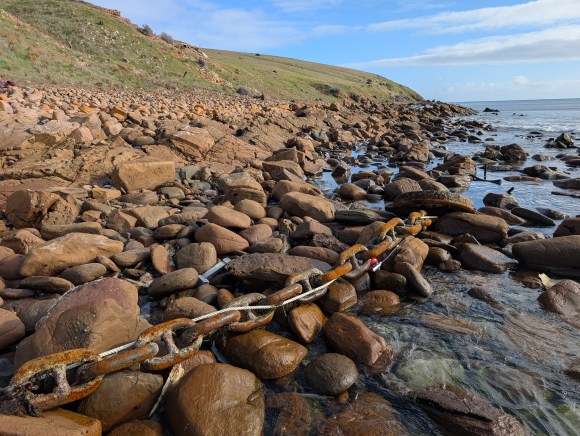
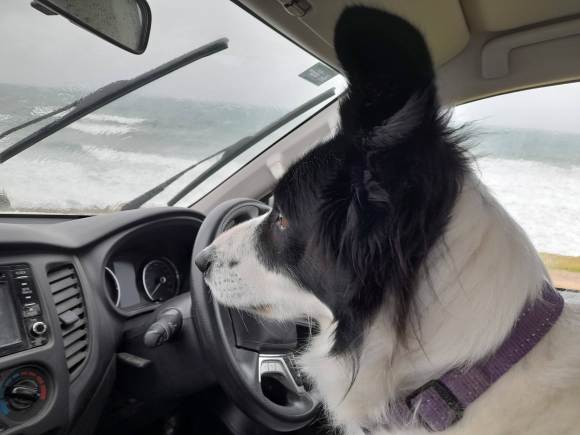
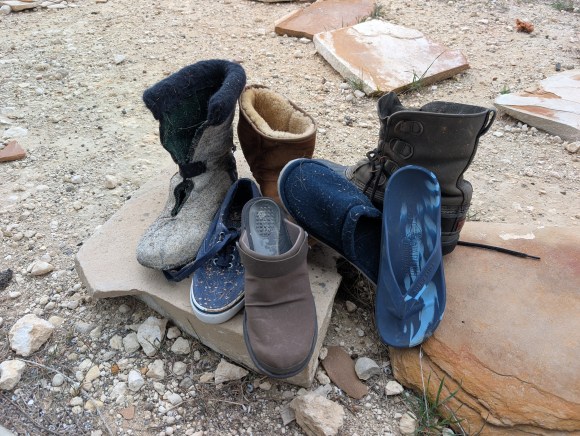
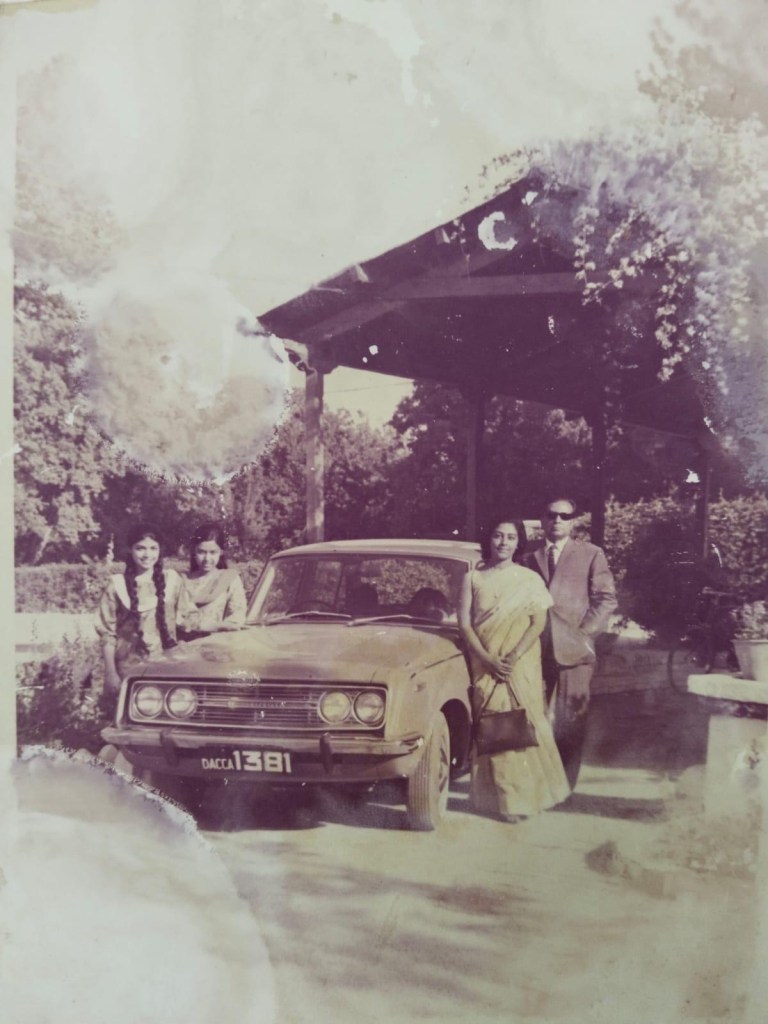
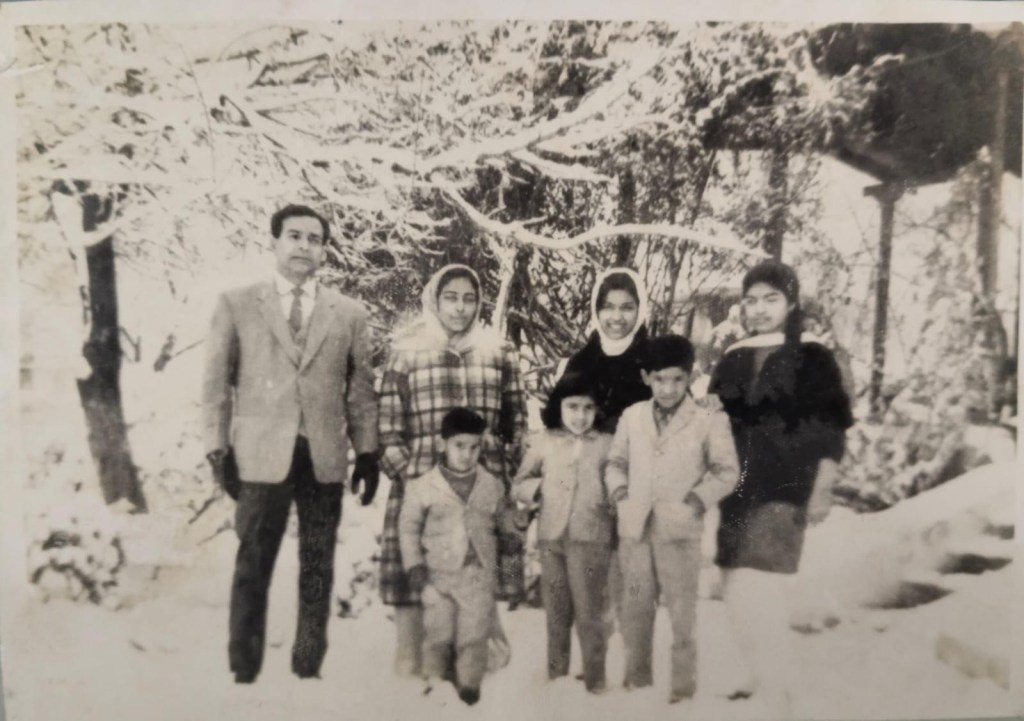
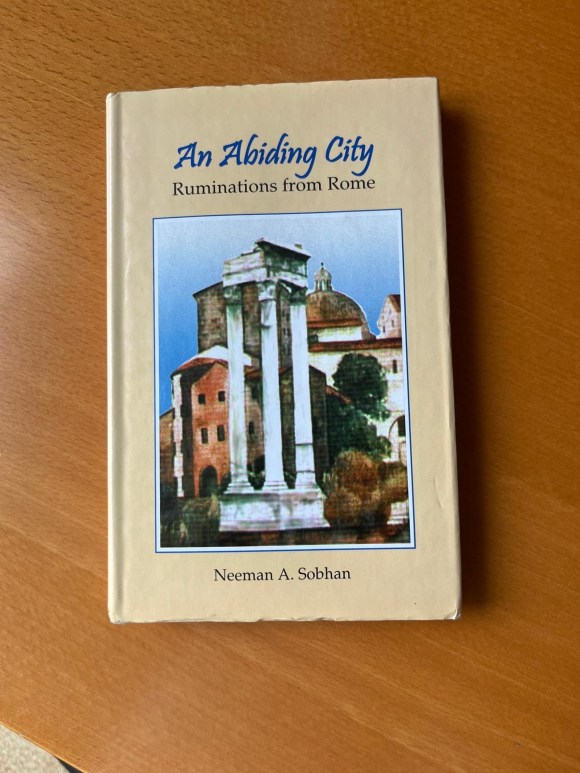

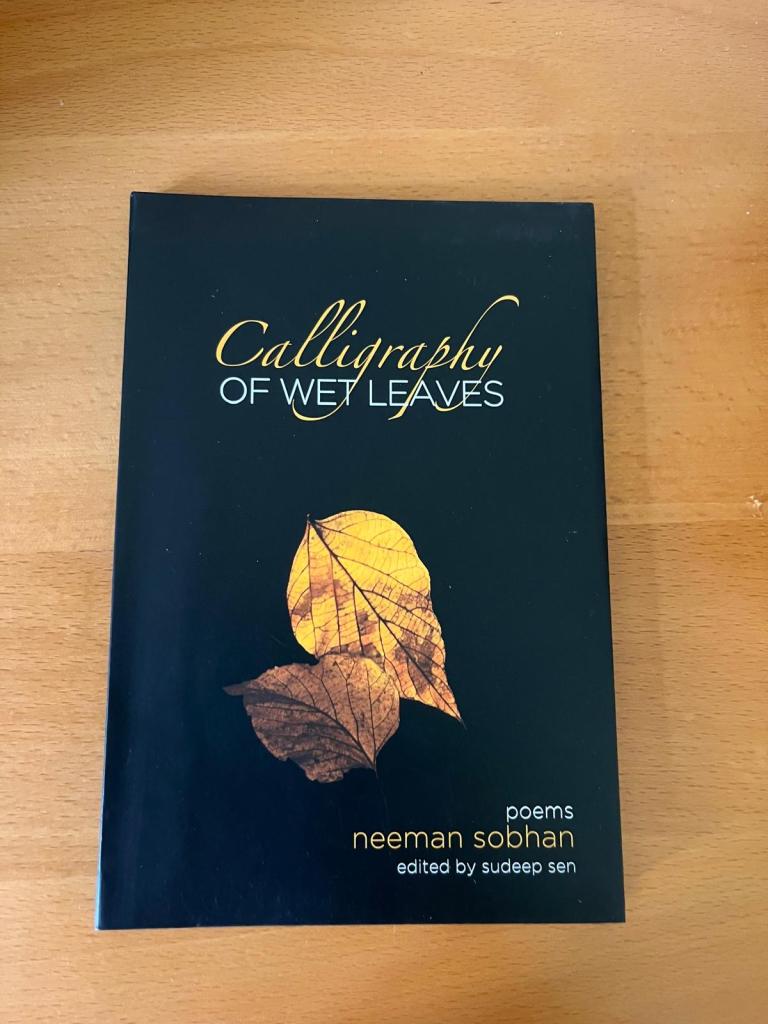

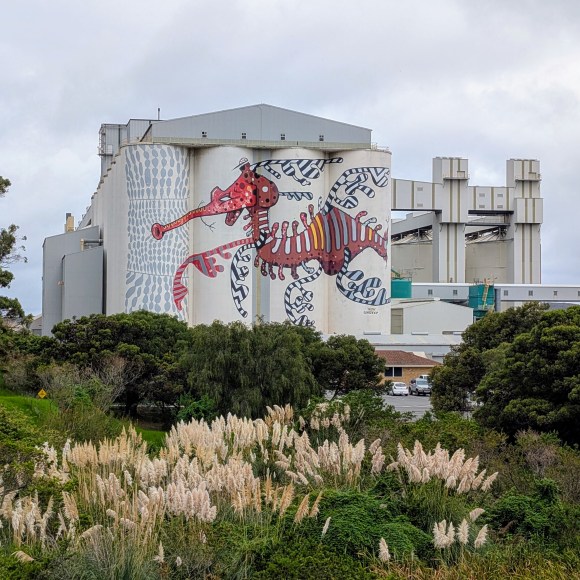
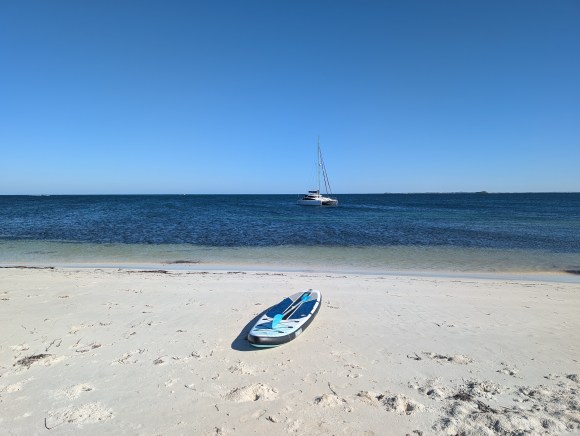



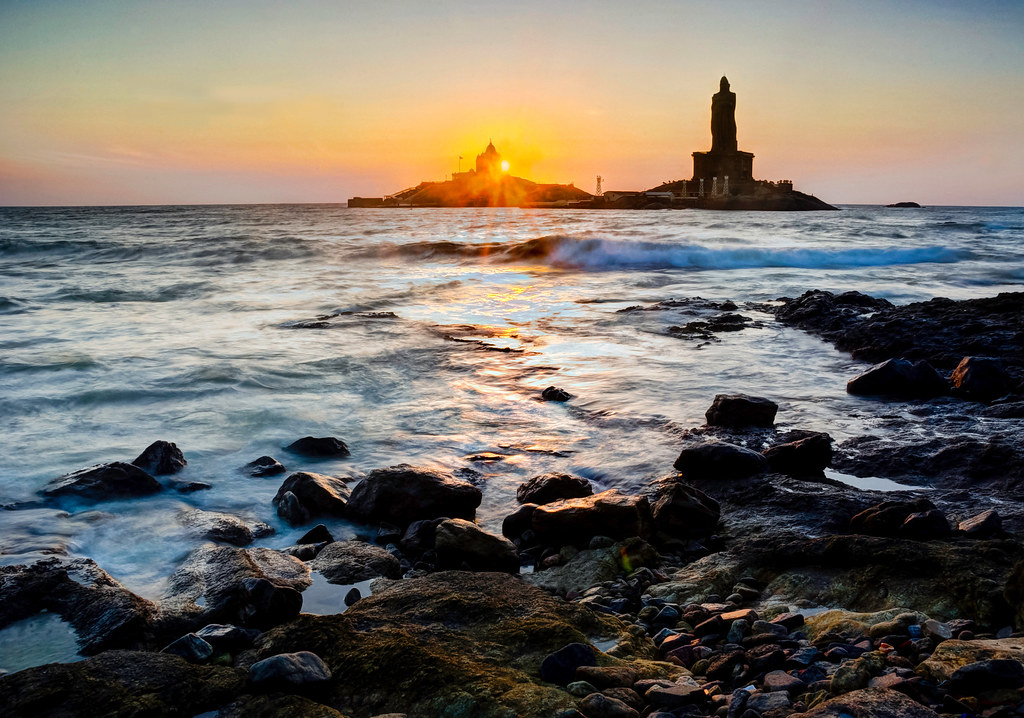

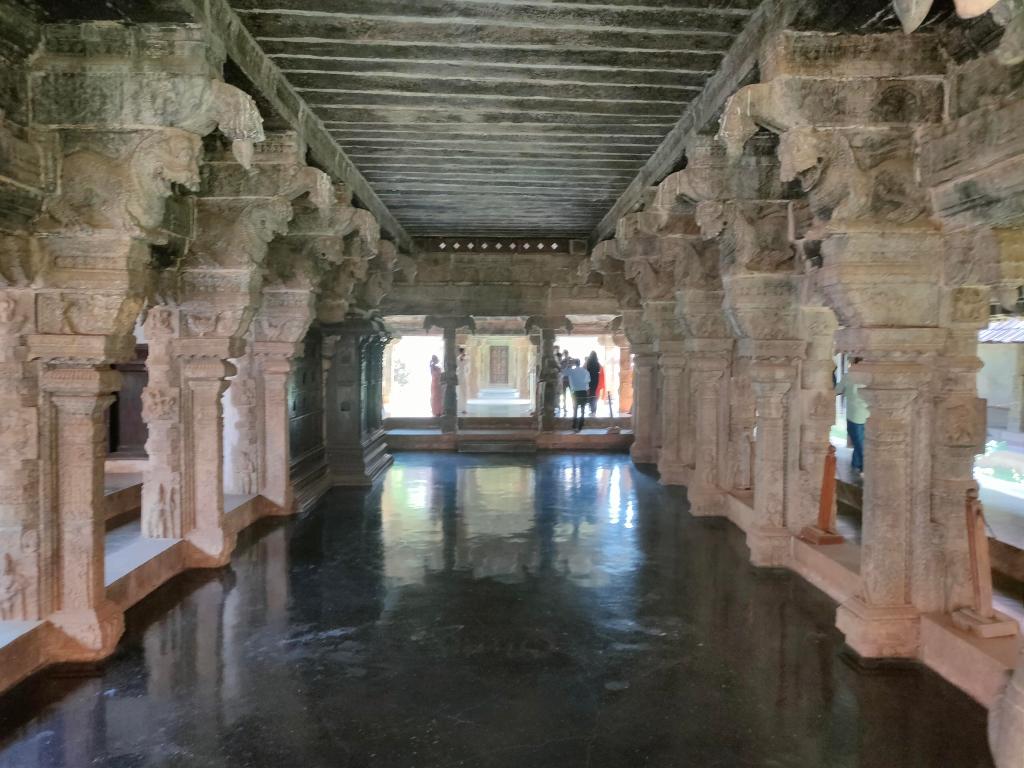


 Borderless