Categories
Essay

From Bombay to Kolkata — the Dhaaks of Durga 

Ratnottama Sengupta travels through time and space to explore a UNESCO-declared ‘Intangible Cultural Heritage of Humanity‘, a festival called, Durga Puja

Dhaakis (Drummers) playing dhaaks (drums) at Durga Puja. From Public Domain

It was Saptami, the second day of the five-day Durga Puja that had been inaugurated the previous day. I had new dresses lined up for all five days. But the dawn of Saptami brought us news of disaster. A short circuit had razed the entire pavilion along with the clay icons of Durga, her brood comprising Ganesh, Kartik, Lakshmi, Saraswati and their vahanas — the lion, owl, swan peacock and mouse. Gone was the chaalchitra, the halo-like backdrop presided over by Lord Shiva and depicting the story of the goddess who fought the demons Chanda Munda, Shumbha, Nishumbha, Madhu Kaitav, Raktabeej Mahishasur…

We were mourning all through the Pujas that particular year. No new dresses worn, no new shoes on our feet, no ‘Dussehra Greetings’ nor any sweets on ‘Bijoya’. We felt sad not because of  the effort my father, Nabendu Ghosh, had put in as the President of the Puja conducted by the Udayan Club, but because of the belief that “Durga comes home to her parents during this period.”

*

My father’s ancestral home was in East Bengal. My grandfather, Nabadwip Chandra Ghosh, was an Advocate who relocated to Patna in 1920. Every autumn after that the family would travel back to Dhaka for a month. Because the Durga Puja in their family home was the lone puja of Kalatiya, the village which is now a suburb of Dhaka. Everyone there would flock to ‘Ukil Babur Bari’[1]for the puja and prasad in the afternoon and the cultural programmes in the evening. Jatra, theatre, Pala Gaan, Naam Sankirtan — the itinerant groups of performers comprised of singers, actors, the narrator or the sutradhar, and the adhikari or the manager. It was at one such performance that Baba[2], then all of seven, fell in love with a ‘lady’ who had played Draupadi. Imagine his disappointment when the departing ‘lady’ turned out to be a clean shaven youth!

The next year at that very Puja Mukul [3]— the pet name of Nabendu Bhushan — first ‘acted’ as a Sakhi[4]! At eight his ‘manhood was offended at the thought of playing a handmaiden. But when he stood on the stage with three other boys, all dressed in finery and wigs, all praying ‘Madhav rakho charaney[5]!’ he was transported to Lord Krisha’s court in ancient Dwarka. That was his first experience of Rasa[6] — and unaware even to himself he had set on a lifetime’s journey with the arts.

When life took him to Bombay in 1951, there were few Pujas and no possibility of publishing anything in Bengali. Pragati Club of Andheri started a Puja in Mohan Studios that had Bimal Roy as the President and Nabendu Ghosh as the Secretary. That Puja continues to this day — and to this day these two names figure in the brochure the club publishes annually. Pragati[7] used to bring out a handwritten magazine back then. PraBas — meaning, migrant life, was an acronym for Prabasi Bangla Samaj.[8] Edited by Nabendu Ghosh, it boasted hand-painted covers by renowned artist Chitto Prasad.

Pragati, Kallol, Udayan, Natun Palli, Shivaji Park, Chembur — all the major Pujas of Mumbai continue to publish a brochure for the Pujas as a souvenir of the festival and also  to raise funds through ads by the sponsors.

*

All through my school life, which I spent travelling to the Bengali Education Society’s English High School at Dadar, I would necessarily spend one evening rolling into late night at the Shivaji Park puja pandal. Long in advance I would plan which dress to wear. The latest Bengali movie would be screened. The Puja Specials would have already come home — in the pavilion we would pick up some new publication of Sunil Gangopadhyay or Shirshendu Mukherjee. The Puja songs would keep playing while we, a bunch of batch-mates from all over Mumbai, would endlessly snack on fancy food and chat.

My university years saw a shift of ‘allegiance’ to Notunpalli, the Puja started by Shakti Samanta at Bandra in 1972 as did all the major Bengali biggies of Bollywood, from Salil Chowdhury, Basu Chatterjee, RD Burman to Jaya Bhaduri and Amitabh Bachchan, who would earlier visit the Puja at Ramakrishna Mission at Khar. Now I would flock to the stalls of handloom saris, salwar suits, fashion dresses — some of which were set up by my cousins or friends. Rupa, Aloka-Tulika-Lipika, Mina Kakima and Latika Kakima — wives of actor Tarun Bose and playback artiste Talat Mehmood, sons and daughters of Dhruv Chatterjee and Asit Sen, seasoned CEOs and young bankers — the stimulating adda[9] here ranged from cinema to career choices, economics to politics.

*

Talking of Ramakrishna Mission, I am reminded of Manobina Roy, wife of Bimal Roy. Jethima[10] and my mother Kanaklata would set up a stall where they would sell papad and vadi, narkel and til naru, muri moa and kucho nimki[11]. These sesame, coconut or lentil balls were all made at home by Didimas[12], Kakimas and Mashimas[13]who lived in Rana Cottage near our house in Malad. If the Kumari Pujo[14]and Sandhi Puja[15]rituals were special for these seniors, Bijoya was super special for me and my friends. This post-immersion round of socialising to greet friends spelt many visits, to Bandra and Khar, Santa Cruz and Andheri, Goregaon and Borivali. And visiting the family of our parents’ friends meant not only naru-nimki, it could also mean chops, cutlets, cakes, sandwiches — goodies that were not so common in Bengali households 65 years ago, when sandesh and rosogolla, sweets made from cottage cheese, were also sold door-to-door, by men who brought them to our houses in aluminium trays tied in cloth!

*

That’s a faraway reality from what obtained in Kolkata where I spent some Puja holidays at my aunt’s (Ranjita Mashi’s) place on Motilal Nehru Road. It was opposite Deshpriya Park, where we children would report every morning of the five days, to help distribute the floral offering for pushpanjali and the prasad[16] in sal leaf bowls. Pandal hopping was a must, primarily on foot, as the pavilions designed with cloth themselves were works to admire. And on Dashami[17] evening, Haabu, Dipu, Reena, Minu and I would stand near the Rash Behari post office opposite Priya Cinema and watch the idols, sculpted with the signature of traditional idolmakers of Chitpore, being taken for immersion in the Ganga. What joy it was as we could watch all the Goddesses we’d heard of but not visited — even from Krishna Glass or Teish Palli! A much glamourised and glorified version is now held on Red Road, the main artery of the city, with the Chief Minister presiding over the Carnival of Immersion.

Twenty years ago when I returned to make my home in Kolkata, Deshpriya Park was still home to a Sarbojanin Durgotsav[18]. But it hit the headlines in October 2015 when mayhem broke loose crushing surging crowds who had assembled to view the 88-foot “Biggest Durga Ever.” Effectively the community celebration had become a cause for corporate branding and competition. Sponsors, in some cases, outnumbered the – neighbourhood — ‘parar‘ — volunteers. Reason? Perhaps because television was trying to grab eyeballs in every home. Even Kumari Pujo at Ramakrishna Mission was being watched on screens across the oceans. And as the Arts Editor of The Times of India, I was planning celebrity visits and artistic trophies for our Pujo Barir Shera Pujo [19]competition in high rise buildings and gated communities.

*

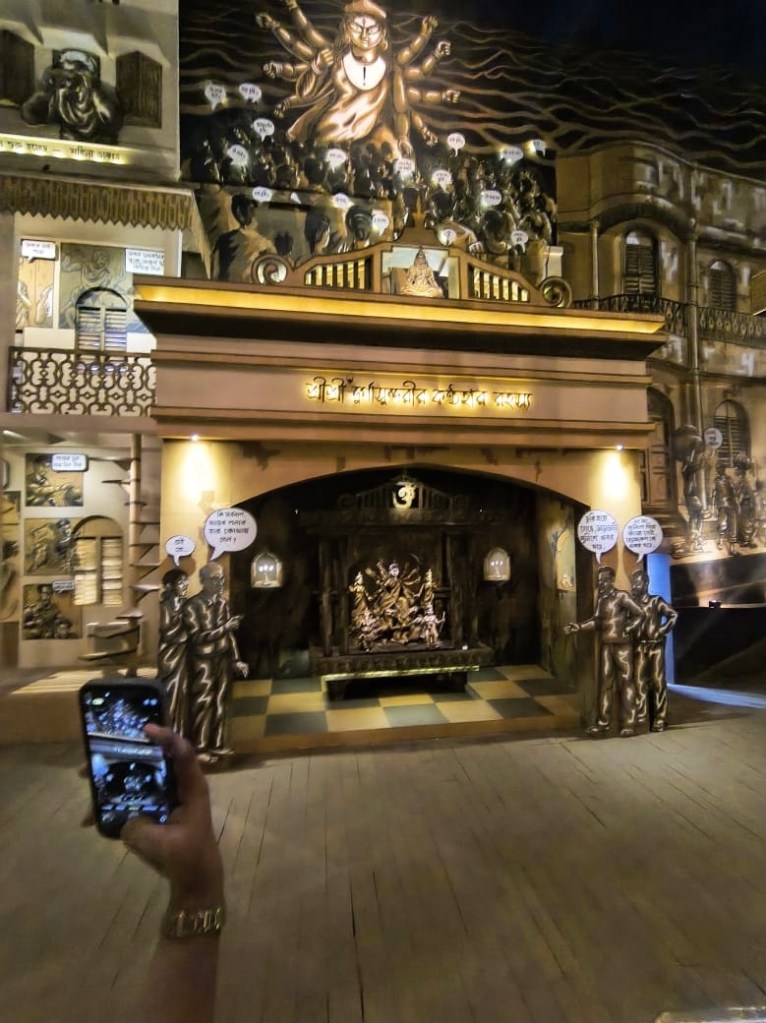
But what was the biggest change in observing Sarbojanin Durgotsav in Bengal? These public worship grounds had transformed into vast galleries where artists were staging the icons as installation art. These concept-driven pujas took leaves out of mythology but interpreted the goddess in the light of contemporary and universal concerns. Some were highlighting Her as a feminist force. Some as an embodiment of Nature. For some, She denotes the cosmic universe. Elsewhere crafts and looms got prominence. Family bonding was not forgotten. From the icons to the pavilions, from the chaalchitra to the fairy-light decoration — there was a unity of thought and execution. In the process, knowledge about practices in distant corners of our country, or of lifestyles several countries away from ours became accessible to the average person on the street. 
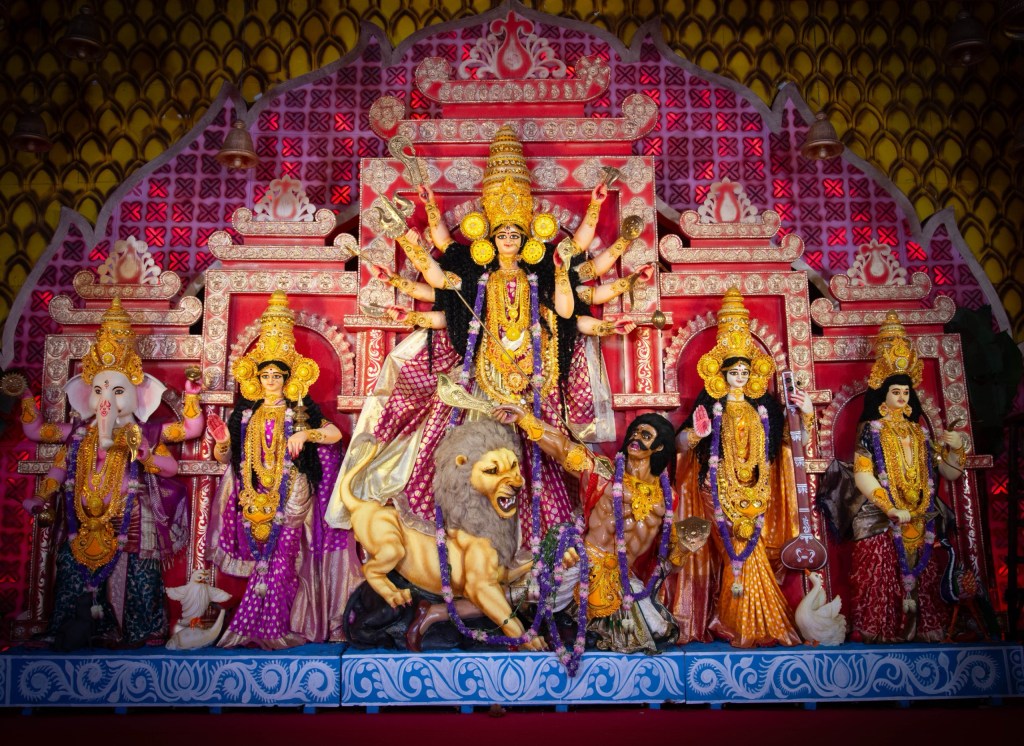
There has been another interesting development. For years, the divas of Indian screen, from Bengal to Bombay, have inspired the Pals[20] of Chitpore. Sometimes she resembled Hema Malini, sometimes Madhuri Dixit. The demon too has been modelled after the politicians who are seen as foes.

At Arjunpur near Dumdum airport, the Third Eye of Durga is the nib of a fountain pen – as is the pointed middle of the three-pronged trident, trishul: “The pen represents wisdom and thought, and it is also the contemporary weapon to protest and fight,” explained Shampa Bhattacharjee. The artist from Delhi had designed the icon while her husband, physicist, created the atmosphere with rotating lights and floating balls – al in luminous steel.

*

Durga as a feminist force is perhaps the most natural interpretation of the goddess who was construed as a Goddess because evil demons had sought immunity against all other forms of power save a woman. Durga was conceived as Durgati Nashini — Destroyer of Misfortunes. The mace, the trident, the circular Sudarshan, the bow and arrow, the sword – every single weapon that empowered her was gifted by a God, be it Vishnu, Brahma, Shiva or Agni, Vayu, Varun, or even Yama. Read, the masculine forces. Perhaps that is why, the jagirdars and zamindars, under the nawabs and the British Raj worshipped Shakti, the icon of empowerment. The Raj families of the City of Palaces, the Debs of Shovabazar, the Chowdhurys of Behala, the Roys and Duttas of Kalutola and Nimtala, the Mullicks of Marble Palace or Rais of Andul – they still pay their obeisance to the Image of Shakti. And the celebration in the ancestral homes of these bonedi – once aristocratic – families are a tourist attraction.

Ironic that, during the struggle for Independence from the imperialists, She became the embodiment of motherland. Abanindranath Tagore’s iconic painting of her as the embodiment of sacrifice stays etched in our hearts and our souls to this day. 

And when I stand before any invocation, in any form, in any corner of the subcontinent, these words of my father ring in my ears. “Imagine the map of India as you stand before Maa Durga. To her right are Lakshmi and Ganesha — the two realisations of Prosperity and Success — who are worshipped in Rajasthan, Gujarat, Maharashtra, Karnataka. On her left are Saraswati and Kartik — representing Learning and Wisdom and Craft — worshipped in Assam, Bengal, Orissa, and the Deccan. At her feet is the Mahishasur, also depicted in our epic as the Dusht Ravan who ruled Lanka. And above her, reigning from the chaalchitra is Mahadev Shiva, identified with the Himalayas. Asamudra Himachal, from the mountain to the ocean, it is our motherland — Bharat Tirtha[21].”

*

The crux of it? Durga Puja is not merely the worshipping of a Hindu god. What started as a religious phenomenon in the households of the rich or powerful is no longer merely ritualistic. In this millennium, it is a vibrant celebration involving, at every step, the Indian thought and creativity, mind and heart, economy and management. It knits the masses in more ways than one. The castes and classes, the highs and lows of society — no one is left out of the festivity. It is a sociocultural happening. Year after year after year it is, in the truest sense of the term, Sarbojanin.

Small wonder the largest public art festival of the subcontinent has been recognised by UNESCO as an Intangible Cultural Heritage!

[1] Lawyer’s house

[2] Father

[3] Bud

[4] A woman actor

[5] Krishna, give us a place at your feet

[6] Flavour or essence

[7] Publisher, name means progress

[8] Bengali Immigrant Society

[9] Chit chat

[10] Paternal aunt

[11] Sweet and savoury snacks

[12] Grandmothers

[13] Paternal and maternal aunts

[14] Worship of girl child

[15] Evening prayers

[16] Snacks given out as blessings

[17] Last day of Durga Puja

[18] Community Durga Puja

[19] The Best Durga Puja Display

[20] The statue makers

[21] Pilgrimage of India

Ratnottama Sengupta, formerly Arts Editor of  The Times of India, teaches mass communication and film appreciation, curates film festivals and art exhibitions, and translates and writes books. She has been a member of CBFC, served on the National Film Awards jury and has herself won a National Award. 

.

PLEASE NOTE: ARTICLES CAN ONLY BE REPRODUCED IN OTHER SITES WITH DUE ACKNOWLEDGEMENT TO BORDERLESS JOURNAL

Click here to access the Borderless anthology, Monalisa No Longer Smiles

Click here to access Monalisa No Longer Smiles on Amazon International
Categories
Conversation

From Outhouse to Backwaters

Ratnottama Sengupta tracks the journey of Leslie Carvalho over a quarter century

It seems like only the other day. The International Film Festival of India, IFFI, 1998 was on. Along with a colleague, I was seated on the steps outside Siri Fort I auditorium connected to a long corridor going to Siri 2. Someone introduced Leslie Carvalho. “Aha! The young filmmaker from Mangalore?”  I responded. “There’s a write up on you in The Times of India today. It says there’s a lot of expectation from The Outhouse.”

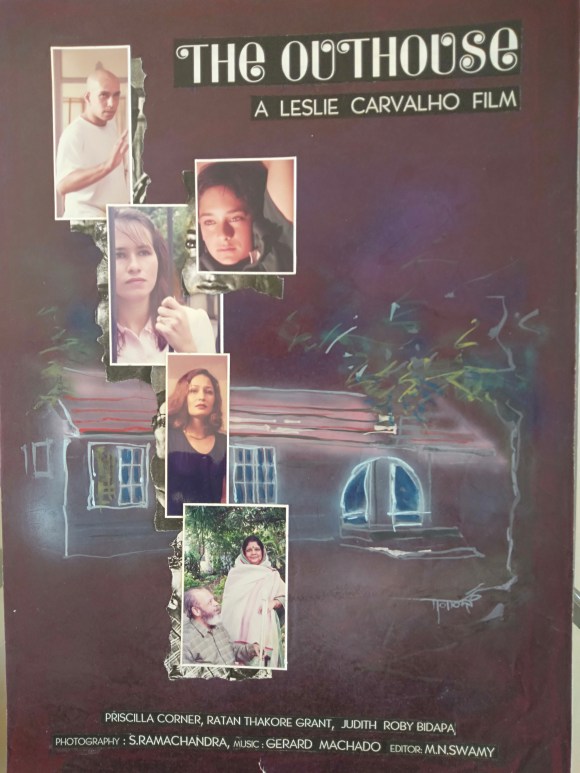
The “delightfully sweet” film had lived up to the expectation of the critics. It was bestowed the Aravindan Puraskaram, presented by the Kerala Chalachitra Film Society to commemorate the iconic Malayalam director, and the first Gollapudi Srinivas award, another national level award to recognise filmmakers marking their debut in Indian cinema. So I was not surprised to meet him next as a co-member of the jury for the National Film Awards 2000.

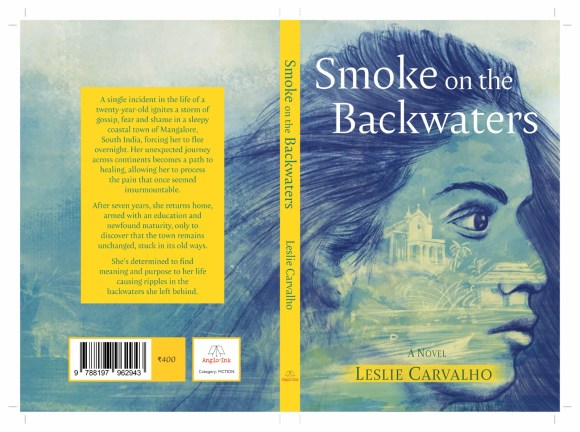
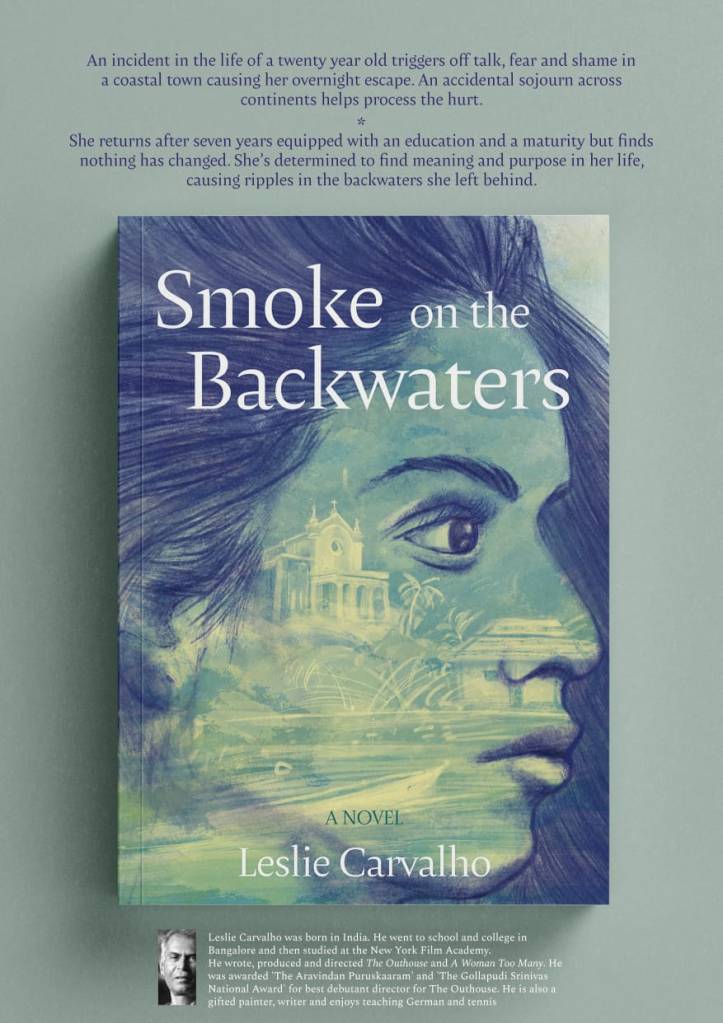
The Tennis coach who is also a German language teacher with a passion for painting has now published his first novel, Smoke on the Backwaters. It centres on Rosa, a twenty-year-old from Mangalore, who is forced to flee overnight because of the storm of gossip, fear and shame unleashed by a single incident in her life. Her unexpected journey across continents becomes a path of healing. Seven years later, armed with education and maturity, she returns home, determined to pursue her purpose in life. But how much had the town she left altered from its old ways?

RS: Leslie, before we talk Backwaters, can we briefly revisit The Outhouse? From where did you derive its content? And what was your compulsion for choosing that subject?

Provided by Ratnottama Sengupta

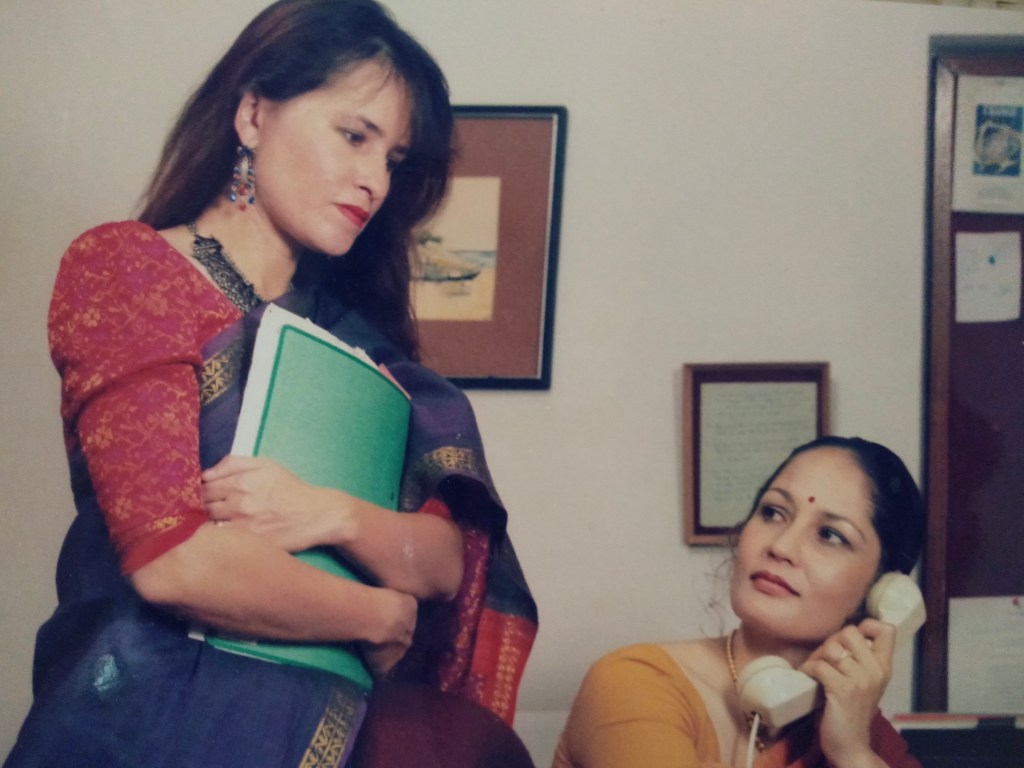
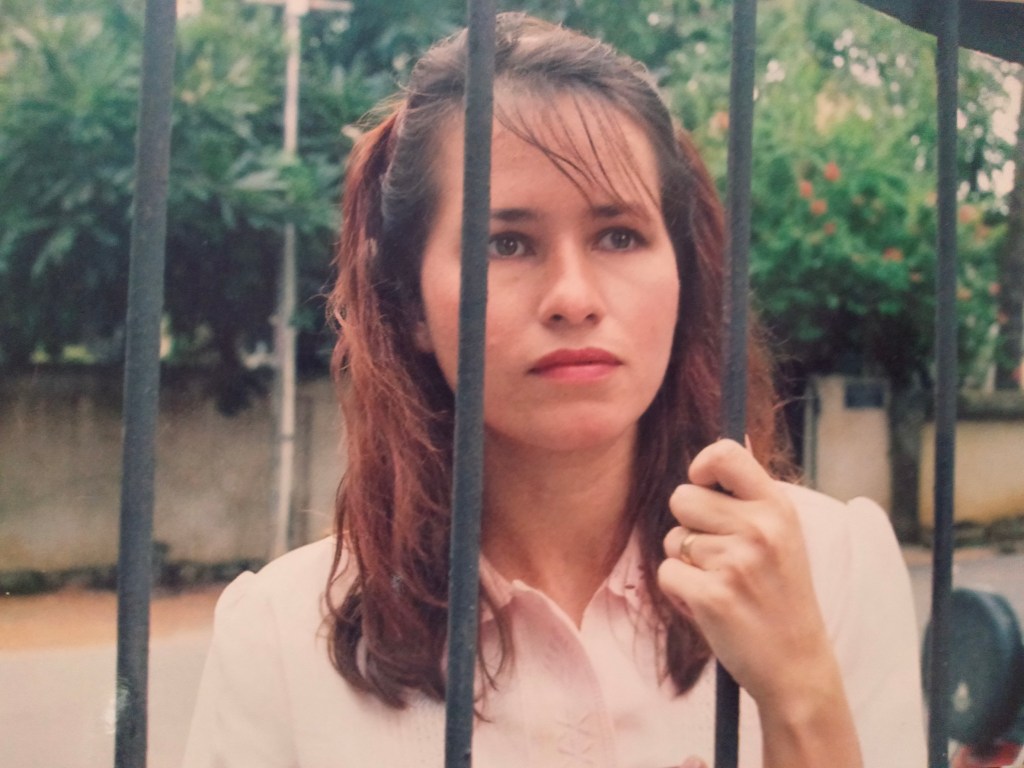
LC: The Outhouse was a simple, linear narrative about moving on in life despite the odds. A young mother’s need to gain economic independence to supplement the family income; the help she received from her financially independent sister; a kind hearted Bengali landlady’s generosity which causes stress and violence in the Anglo-Indian couple’s day to day life, and how it affects the two children growing up.

RS: Why did you choose this subject as your debut vehicle? If you were to travel in a time machine, would you choose a ‘mainstream’ subject?

LC: I chose this subject as my debut vehicle as I had seen quite a bit of violence in the Anglo- Indian community in the Lingarajapuram area of Bangalore I grew up in.

I was itching to make a movie after my six-month course at the New York Film Academy. As I was working on a very tight budget, I just stuck to what was taught — to keep it simple, straightforward and just tell a story using the various tools of cinema — in short, to make it cinematic.

If I were to go back in time, I don’t think I would have chosen a ‘mainstream subject’. I derived immense satisfaction along with the cast and crew as we felt we were working on something we were passionate about. We all felt drawn towards the characters, the story and the theme of the film.

RS: How did you get interested in cinema? And what were the problems you faced while filming The Outhouse – in terms of funding, casting, shooting location, distribution?

LC: I grew up watching Tamil, Kannada, Hindi, a couple of Konkani and lots of Hollywood films. My mother tailored clothes at home, and she taught a whole lot of women stitching. They were fans of Tamil cinema, especially of Sivaji Ganesan, MGR, and the heroes of Kannada cinema, Dr. Rajkumar and Vishnuvardhan. She also enjoyed the Hindi films of Rajesh Khanna, Dharmendra, Hema Malini, Amitabh Bachchan, Sanjeev Kumar, Jaya Bhaduri and Rekha — that is the popular cinema.

And my father, being an Army person, took us to see English films, like The Ten Commandments, The Bible, Hatari, To Sir, With Love[1]. Also, St. Germain’s School where I studied, screened English films every Friday afternoon in the Hall, from spools off a projector that made a jarring sound. It was an amazing experience — black and white Charlie Chaplin, Laurel & Hardy films and also Patton with all the bad words. Later, when in college, we would bunk classes to watch most of the popular Hindi and English movies.

At the New York Film Academy, I was exposed to an entire range of the world’s best in cinema. Satyajit Ray, Akira Kurosawa, Ingmar Bergman, Antonioni, John Ford, William Wyler, Fellini, Jean Renoir… And I watched a whole lot of films on the American Movie Chain (AMC). There I discovered all of Spencer Tracy’s films and fell in love with his sense of timing and under playing. It was also a time when I discovered Guru Dutt and marveled at his brand of filmmaking from Pyaasa, Kaagaz Ke Phool, Chaudhvin Ka Chand, Sahib Biwi Aur Ghulam to Aar Paar and Mr & Mrs 55[2].

It is hard to believe I began the shoot for The Outhouse on September 18, 1996, and completed it in 14 days – on October 1. After we went through the rushes, we required two more shots to link the gaps. Since I was on a shoestring budget of a few lakh rupees, I had rehearsals with the cast for close to three months. I doff my hat to them in gratitude as 90% of the film was canned on first takes. I could not afford retakes, and I worked with a brilliant cameraman, S Ramachandra, who was very supportive and encouraging. He shot most of B V Karanth, Girish Karnad, and Girish Kasaravalli films as well as the popular tele-serial Malgudi Days[3]. A number of first-time directors like myself, had benefitted immensely by his generosity and patience.

Since it was an independent film, whatever little finance I had, I sunk into the film. And then it took me a year to complete post-production for lack of finance.

I was particular about the casting. I wanted the Anglo-Indian look, feel, mannerisms, costume, interiors to be authentic. I met each cast member and spoke to them at length about the vision I had for my film. Almost all of them were from the Bangalore English Theatre, and all of them were cooperative. Moreover, Cooke Town is a quaint little place with many English bungalows and outhouses. After some struggle, I found one on Milton Street which suited my story perfectly.

After The Outhouse was selected for the Indian Panorama in IFFI ’98 and received the two national awards, I just walked into Plaza Theatre on MG Road in Bangalore and met the owner, Mr Ananthanarayan. He had heard about the film and asked me to meet the distributor, Nitin Shah of Hansa Pictures in Gandhi Nagar, the biggest distributor of English films. He put it on for a noon show for three weeks while Fire was on for the matinee and evening shows. The distributor then put it in Mangalore and Udupi for a week. And when I received the Gollapudi Srinivas National Award in Chennai, Aparna Sen was one of the honoured guests. She saw a small portion of the film and said that she would speak to Mr Ansu Sur to screen it at Nandan in Kolkata — founded by Satyajit Ray to help screen small independent films. A theatre owner in Kolkata recommended a person who took the film to the North East. It was also screened in parts of Kerala.

Coincidentally, this April 30th, The Outhouse will be screened in the leafy neighbourhood of Cooke Town next to the outhouse where the film was shot.

RS: In the last 50 years we have seen films by directors like Aparna Sen, Ajay Kar, Anjan Dutt. Even before these, Ray had touched upon Anglo Indians in Mahanagar. These are all films made in Kolkata. Is it because this is the erstwhile capital of the Raj?

LC: Many of the films on Anglo-Indians were based in Calcutta. It was the influence of the British Raj and its culture that was so much a part of their long history of ruling there. Of course their influence was in other parts of the country as well like Madras, Hyderabad, Bangalore, Whitefield and Kolar Gold Fields, the railway colonies all over the country, the hill stations, and many other cities which has pockets of Anglo-Indians.

RS: I remember one Hindi film, Julie that had an Anglo-Indian protagonist. How has the community been projected in popular culture? Was it lopsided or biased?

LC: Throughout our film history Anglo-Indians have played bit roles here and there. Some significant roles came their way in Bhowani Junction, the teleserial Queenie, 36 Chowrighee Lane, Bow Barracks Forever, Bada Din, Cotton Mary, The Outhouse, Saptapadi, Mahanagar, Julie, and Calcutta I’m Sorry[4].

Some of the characterisations have been quite biased; some not well fleshed out; some in passing fleeting moments of drunkenness, prostitution. The song and dance sequences have not helped the community, sadly.

RS: What led you to writing? The screenplay for The Outhouse?

LC: I wrote the screenplay of The Outhouse on plain A4 sheets of paper, on both sides. This is not done but I did it to save on cost. I gave the screenplay to my cinematographer S. Ramachandra, and in his generosity he understood my purpose. I went by what was taught at the New York Film Academy. Of course, I had to combine all the elements to make it whole. The idea of the screenplay came to me while I was at the film school in 1995.

RS: What was the trigger for writing Smoke in the Backwaters?

LC: As an artist, filmmaker, and writer, I have tried to combine all the elements of story-telling – fact and fiction — keeping in mind the flow of ideas, pace and momentum to engage and interest my audience and readers.

I remember beginning to write the novel two decades ago when my mother — who studied in Kannada medium — said, “I hope you will write it in simple English so I can read it too.”

And I wanted it to be reader friendly with regard to the font size, the brightness of the paper, the spacing, the clarity and the size of the book. I was lucky my publisher ‘Anglo-Ink’ was supportive and combined well to find that centre.

Provided by Ratnottama Sengupta

RS: How are you marketing the book? Through Litfests? Bookstore readings? Airport bookstalls? A H Wheelers?

LC: Since Anglo-Ink is a small-time publisher, we’ve had a dream launch in my hometown Bangalore at the Catholic Club. My book seller is Bookworm on Church Street in the heart of Bangalore and for people in Cooke Town it is in The Lightroom’ library.

We are looking at launches in various cities as well, through book readings, LitFests, Airport book stalls, AH Wheelers, readings at schools and colleges.

Since a major portion of the novel is set in Germany, we are looking at translating it into German. I hope to get it translated in a few Indian languages as well.

RS: Since the sunset decade of 1900s, Anglo Indians have been migrating to Australia and Canada. What triggered this migration? Economics or politics?

LC: The migration of Anglo-Indians was inevitable. It was bound to happen for reasons more than one, be it political, economic or social. First under the ‘Whites Only’ policy, many fair skinned Anglo-Indians migrated — the brown and dark skinned were left behind. Slowly they opened up and even they left. Some felt they would adapt better to a western culture, and have adopted their new country as their homeland.

RS: You were a big support for me when my son joined NLSUI in 2000. Again, when I curated Anadi, the exhibition of paintings by Contemporary and indigenous artists from MP and Chhattisgarh. Bangalore has since become an international megalopolis. How has life changed for the locals?

LC: Bangalore has changed dramatically and drastically. The change was bound to happen because of its growing prominence of an International City. The IT industry brought jobs, slowly other industries, started picking up from real estate, fashion, digital technology and social media platforms, start-ups, academics, sports, games, recreational and tourism.

The moderate climate was a huge bonus that attracted people from all over. Bangalore has always been cordial, encouraging and accommodative of people from all over through their mild manners, hospitality and gentleness.

Today Bangalore is unrecognisable. Still, some pockets retain that old world charm of neat, clean and green Bengaluru from the old Pensioners Paradise of Bangalore.

.

[1] The Ten Commandments (1956), The Bible (1966), Hatari (1962), To Sir, with Love (1967)

[2] Pyaasa (Thirsty, 1957), Kaagaz Ke Phool (Paper flowers, 1959), Chaudhvin Ka Chand (The Full Moon, 1960), Sahib Biwi Aur Ghulam (The Master, the Wife and the Slave, 1962), Aar Paar (This shore or that, 1954), Mr &Mrs 55 (1955).

[3] From 1986 to 2006.

[4] Bhowani Junction (1956), TV miniseries Queenie (1987), 36 Chowrighee Lane (1981), Bow Barracks Forever (2004), Bada Din (1998), Cotton Mary (1999), Saptapadi (Seven Steps, 1981), Mahanagar (The Big City, 1963), Julie (1975), and Calcutta I’m Sorry (2019)

Ratnottama Sengupta, formerly Arts Editor of  The Times of India, teaches mass communication and film appreciation, curates film festivals and art exhibitions, and translates and write books. She has been a member of CBFC, served on the National Film Awards jury and has herself won a National Award. 

.

PLEASE NOTE: ARTICLES CAN ONLY BE REPRODUCED IN OTHER SITES WITH DUE ACKNOWLEDGEMENT TO BORDERLESS JOURNAL

Click here to access the Borderless anthology, Monalisa No Longer Smiles

Click here to access Monalisa No Longer Smiles on Amazon International
Categories
Conversation

Rings on Her Fingers and Bells on Her Toes…

Ratnottama Sengupta in conversation with Sohini Roychowdhury, who uses dancing to build bridges across cultures

“Meet my daughter Sohini,” Uma Di was introducing the dancer who then lived in Madrid. And my first response was, “Why isn’t she in the movies?!”

Sohini Roy Chowdhury. Courtesy: Sohini Roy Chowdhury

Tall, fair, lissome, agile, Sohini Roychowdhury is the stuff beauty queens and show stoppers are made of. That wasn’t surprising: after all, Uma Roychowdhury herself is the picture of perfection in aesthetics.

It didn’t take me long to realise that, much like the well regarded sculptor’s bronzes, her daughter too was made of enduring stuff. One day she was teaching Bharatanatyam to French, Spanish, and Italian enthusiasts. The next day she was lecturing on mythology in New York. One day she was dancing to ‘Jai Ho![1]’ for the director of the Oscar winning Hollywood movie[2]. Another day she was delineating Durga in an Anthropology Museum…

None of these saw her run out of breath. Nor does she, ever, run out of time. When she’s not holding her fingers in a dance mudra, she is holding a metaphoric pen. This month she unveiled her second book, Dance of Goddess Kali. Yes, she has rings on her fingers and bells on her toes — and wherever she goes, there’s dance on the cards!

Here is what she had to say when I spoke to her:

The Dance of Kali follows Dancing with the Gods. How are the two books different?

Dancing With the Gods and The Dance of Kali are two distinct works, each focusing on different aspects of my artistic and spiritual journey. 

Dancing With the Gods is a pictorial, coffee-table book stemming from my journey as a classical Indian dancer with a multinational dance troupe. Its vivid visuals showcase my onstage performances and behind-the-scenes moments. These are highlights of my career as a dancer, both solo and with Sohinimoksha World Dance and Communications[3]

This visually captivating book focuses on imagery and aesthetics. It offers glimpses into my artistic expression through dance, celebrates my journey around the world, and highlights my life-mantra of connecting civilisations through my craft. This tracing of Sohinimoksha’s journey is for a broader audience: Indian dance enthusiasts, art lovers, and individuals interested in my achievements. The aim is to inspire through visually compelling storytelling.

In contrast, The Dance of Kali is a treatise on the ethos of Goddess Kali and Shaktism. It delves into the deeper spiritual and philosophical aspects associated with the goddess, exploring Kali’s symbolism, mythology, and significance within the context of Shaktism, a Hindu tradition of worshiping the divine feminine energy. The tone of this work is contemplative, as it delves into the profound symbolism and the spiritual aspects associated with the Goddess. It incorporates scholarly research, analysis, and interpretations from various perspectives. Hopefully it offers readers a deeper understanding of Kali’s significance in Hindu spirituality.

May I point out here that The Dance of Kali is not a religious book. It is for readers with a specific interest in Hindu mythology, spirituality, or the myths and legends around the resident Goddess of Kolkata. Those seeking a deeper understanding of Kali’s symbolism and philosophical underpinnings within the context of Shaktism, will find this book dispels disrespectful misrepresentations and unfounded Western misconceptions  surrounding the images of Kali as a demonic goddess. 

To sum up: both the books reflect different facets of my artistic and spiritual journey. However, they differ significantly in their subject matter, focus, tone, and intended audience. One celebrates my achievements as a dancer through captivating visuals. The other is an academic tome exploring the profound symbolism and spirituality associated with Goddess Kali.

What prompted you, an international dancer, to pick such a rooted in mythology subject?

I have always had a personal affinity with or inclination towards Goddess Kali. Many artistes draw inspiration from their own beliefs, experiences, and cultural backgrounds when choosing subjects for their work. I am no different. For me the depiction of the Goddess is an opportunity for artistic exploration. Kali, with her complex symbolism and multifaceted persona, offers rich material for creative interpretation through the arts, be it dance, literature or visual arts. 

This book also celebrates India’s rich mythological heritage and the way it connects to other ancient cultures, in Mesopotamia, Egypt, Spain and France. Kali, with her global soul sisters Ishtar or Sara La Kali, holds significant cultural and religious importance, not just in Hinduism, but other cultures as well, particularly within the contexts of worshipping Mother Goddesses. I delve into Kali’s mythology and symbolism to honour this aspect of Indian life, and its universal resonance. 

Yes, Goddess Kali is rooted in Indian mythology. But the themes she embodies — feminine power, transformation, and liberation —transcend cultural boundaries. I hope this book will serve to explore universal themes of empowerment and spirituality. It also aims to provide a deeper understanding of Hindu mythology, and the symbolism associated with the Dark Goddess. Effectively I seek to promote intercultural dialogue and foster greater appreciation for diverse religious traditions. Most significantly, I hope to dispel the uneducated interpretations of Kali as a horrific, savage, demonic goddess. How often she is typecast as a symbol of evil — in popular Western films, books and even as Halloween costumes for disrespectful celebrities like Heidi Klum

I have witnessed your performance as Durga in an anthropology museum in Madrid. I have noted your commitment to meaningful, even profound themes in your endeavours. What has been your grooming in dance?

I started dancing at a young age under  renowned Bharatanatyam Guru, Thankamany Kutty. Later I learnt from Kalamandalam Venkitt in Kolkata. I received rigorous training in Bharatanatyam, the dance  that originated in the temples of Tamil Nadu. My dedication to classical art led me to delve deep into its nuances. I mastered intricate footwork, expressions, and storytelling techniques. Over the years, I refined my technique and expression through consistent practice and performance and came to embody the essence of Bharatanatyam.

Your father was a renowned sitarist living in Germany. Your mother is a reputed sculptor of Kolkata. Why did you, an only child, not take to any of these streams of creative expression?

Indeed I was born into a family of accomplished artists. My father, Pandit Subroto Roychowdhury was a renowned sitarist, and my mother, Uma Roychowdhury, is a reputed sculptor. But I chose a different path for myself. 

As an only child, I was exposed to various forms of creative expression. But my passion for dance was ignited after watching a riveting performance by Yamini Krishnamurthy when I was about four years old. While I deeply respect my family’s artistic legacy, I followed my own calling and embarked on a journey to carve my niche in the world of dance.

What are the values you have imbibed from them individually?

My father’s sitar schools in Germany have produced hundreds of students — including distinguished sitar players. From him I imbibed a profound appreciation for music and rhythm. I learned discipline, dedication, and the importance of perseverance in mastering an art form. From my sculptor mother I inherited a keen love for aesthetics and eye for details. I learned the importance of expressing emotions and stories through visual and performing arts. 

Together these values have steered me towards excellence and innovation in my journey as a dancer and communicator.

Mixed genre performance by Sohini Roychowdhury. Courtesy: Sohini Roy Chowdhury

You have lived in Moscow and Madrid. You are guest professor in far-flung Universities, in America and Columbia. You have danced Bharatanatyam and you have danced to Jai ho! at the premiere of Slumdog Millionaire. What have you gained through your international exposure?

My international exposure has enriched me both personally and professionally. Living in cultural environments as diverse as Moscow and Madrid have broadened my perspectives and deepened my understanding of global arts and communication. 

More than 2000 students have ‘graduated’ through my two dance schools in Spain — Casa Asia and Sohinimoksha Artes de la India. In Moscow, more than 80 Russian students performed with me on stage at the Embassy of India and Nehru Centre at the end of their course. As a guest professor in universities across Europe, USA and Latin America, teaching dance, Natyashastra [theory of dance] and Indology, I have not only shared my expertise — I have learnt from students, artistes and scholars from different backgrounds. 

Through my performances of Bharatanatyam, and collaborations with international artists, have bridged cultural divides. My dancing to Jai Ho! at the European premiere of Slumdog Millionaire showcased the universal appeal of Indian dance and music. It  highlighted its ability to connect with people across borders. Today I can confidently claim to have promoted cross-cultural exchange globally.

Coming from an aristocratic, old Calcutta background, what merit do you see in Bollywood dancing?

Despite coming from an aristocratic background rooted in old Calcutta, I recognise the merit in Bollywood dancing which has become a global phenomenon. Not surprising. For, characterised by vibrant energy, expressive movements, and fusion of multiple dance styles — from Salsa to Tango, Twist to ChaChaCha – Bollywood dancing holds mass appeal. It serves as a platform for artists to showcase their talents to diverse audiences and has contributed to the popularization of Indian culture worldwide. It is rooted in traditional Indian dance forms, yet embraces modern influences. And it reflects the evolving tastes of contemporary audiences. 

Since the 1960s, Bollywood has drawn inspiration from various musical traditions across the world. This imparted its films a rich tapestry of global influences. This fusion of world music and dance enriched the aesthetic of Bollywood — and in turn contributed to its cultural significance and global appeal.

In the 1960s, Indian cinema underwent a transformation with the emergence of filmmakers like Guru Dutt and Raj Kapoor, who infused their films with elements of Western music and dance. The most iconic example of this is seen in the song Mera joota hai Japani [my shoes are Japanese] from Shree 420 (1955): here Raj Kapoor’s character sings about wearing Japanese shoes, English pantaloons, and Russian caps — all of which symbolised the growing influence of the West in post-colonial India. And yet, as the song stresses, at core these films are Hindustani — Indian.

Throughout the ’60s, ’70s and ’80s, the industry witnessed the rise of dance and music directors who played a pivotal role in incorporating world music and dance forms into Hindi cinema. Composers like OP Nayyar, Shankar Jaikishan, SD Burman, C Ramachandran, Kalyanji Anandji, RD Burman, Laxmikant-Pyarelal, and Bappi Lahiri experimented with disparate musical styles. These ranged from rock-n-roll, rumba, flamenco to disco, reggae and jazz. This infused their compositions with international flavours. 

Similarly, choreographers Sohanlal,  PL Raj, Herman Benjamin, Suresh Bhatt, Saroj Khan, Chinni and Rekha Prakash, Shiamak Davar, Farah Khan, Remo D’Souza, Terence Lewis, Vaibhavi Merchant, and Prabhu Deva have blended Indian classical dance with Western styles. This has created the unique dance style that is now identified as Bollywood dancing. It has homogenised movements from hip-hop to salsa and contemporary dance.

Soon stars like Shammi Kapoor, Helen, Asha Parekh, Hema Malini, Rishi Kapoor, Mithun Chakraborty, Jeetendra, Govinda, Hrithik Roshan, Madhuri Dixit, and Sridevi became synonymous with Bollywood’s larger-than-life dance numbers. For, it showcased their versatility and flair for different dance steps. Embracing the twist and turn era of the ’60s to the disco craze of ’70s and the hip-hop-inspired moves of the 2000s, Bollywood stars captivated audiences with their energy and charisma.

Along with Western influences, Bollywood also drew from traditional Indian dances. Its choreography incorporated elements of Bharatanatyam, Kathak, and Odissi. Dance sequences like Dola Re Dola from Devdas (2002) and Pinga from Bajirao Mastani (2015) exemplify the fusion of classical and contemporary dances, blending intricate footwork with dynamic movements and expressions.

In recent years, Bollywood has continued to evolve, reflecting the changing tastes and preferences of global audiences. Directors, like Sanjay Leela Bhansali and Farah Khan, have pushed the boundaries of traditional filmmaking, creating visually stunning spectacles that showcase the diversity of world music and dance. Stars like Priyanka Chopra, Deepika Padukone, and Ranveer Singh have embraced this eclectic mix of styles, bringing their own unique interpretations to the screen.

Spanish, Bulgarian and other European dancers from my own troupe, Sohinimoksha World Dance, have performed specially choreographed fusion dance items set to popular Bollywood tracks. Kristina Veselinova danced to Mere Dholna from Bhool Bhulaiya; Violeta Perez and Lola Martin to Senorita! from Zindagi Na Milegi Dobara and Maria Sanz on Padmavat’s Ghoomer on stages across India and the world. So I readily acknowledge the significance of Bollywood dance in preserving India’s cultural heritage while adapting to changing times.

Would you say our films are taking our dance traditions to votaries abroad? Just as Indian musicians of the 1960s had taken our ragas to the West?

In the 1960s, Ravi Shankar, Ali Akbar Khan and other maestros played a crucial role in initiating the West in the rich notes of Indian classical music — and that had enriched the global cultural landscape. My own father, Pandit Subroto Roychowdhury, spent more than 40 years in Germany and other European countries, spreading and popularising Indian classical music through concerts and classes. Today Indian films, particularly Bollywood, are carrying forward this legacy. They are showcasing the wealth that is Indian dance — often fused with world dance influences. Just as our musicians shared the wealth of ragas with the West, Bollywood films are spreading the infectious exuberance of Indian dance to enthusiasts around the globe. This is fostering cultural exchange on an international scale. Small wonder that Bollywood is now acknowledged as India’s most potent soft power. 

What, in your opinion, is needed to make GenNext learn from our past traditions?

If we want GenNext to learn from our past traditions, we must provide them with comprehensive exposure to our rich cultural heritage. For this, we must integrate our arts and cultural practices into educational curricula. We must foster appreciation through interactive experiences — workshops, performances, cultural events. Additionally we must leverage modern technologies and platforms to disseminate information. Let’s make traditional arts more accessible and engaging for the young. Let’s cultivate mentorship programs and intergenerational exchanges. For, we must bridge the gap between past traditions and contemporary lifestyles, to ensure their relevance and continuity for the generations to come.

Sohini I have seen you at close quarters, as a mother, wife, daughter, and daughter-in-law even as you criss-cross the world for your dance. How do you still find time to write, which is such a demanding, reflective expression?

I am fortunate to be able to balance my roles as a mother, wife, daughter, daughter-in-law, and a performing artiste. My experience as much as my dedication to my craft honed my time-management skills. Despite crisscrossing the world for performances, lecture tours, and other professional commitments, I carve out time to write, for I recognise its significance as a reflective form of expression. 

To effectively manage my time, I set priorities, create schedules, and maximize productivity during the available windows of time. I designate specific periods for writing, be it early mornings, late evenings, or during travel downtime. I try to integrate writing into my daily routine, seizing moments of inspiration and reflection to jot down ideas or draft passages.

My passion for writing is a driving force — it motivates me to make time for it amidst my busy schedule. Writing provides a creative outlet for introspection, and intellectual exploration. It complements my artistic endeavours and enriches my personal and professional growth.

I am grateful for the support I receive from the network of my family, friends, and collaborators. They play a crucial role in facilitating my writing pursuits. My latest book, The Dance of Kali, was co-written with my son Rishi Dasgupta, an Economics MSc from the University of St Andrews, UK. 

However, at the end of the day, that I find time to write amidst my multifaceted life, reflects my passion for engaging in reflective expression. Because? It contributes to my holistic development as an artist and an individual.

[1] A song from the 2008 Bollywood movie, Slumdog Millionaire

[2] Danny Boyle

[3] A dance troop started by Sohini Roychowdhury with presence in Madrid, Berlin and Kolkata

.

Ratnottama Sengupta, formerly Arts Editor of The Times of India, teaches mass communication and film appreciation, curates film festivals and art exhibitions, and translates and write books. She has been a member of CBFC, served on the National Film Awards jury and has herself won a National Award. 

.

PLEASE NOTE: ARTICLES CAN ONLY BE REPRODUCED IN OTHER SITES WITH DUE ACKNOWLEDGEMENT TO BORDERLESS JOURNAL

Click here to access the Borderless anthology, Monalisa No Longer Smiles

Click here to access Monalisa No Longer Smiles on Amazon International