Categories
Essay

From Srinagar to Ladakh: A Cyclist’s Diary

Farouk Gulsara on a cycling adventure through battleworn Kashmir

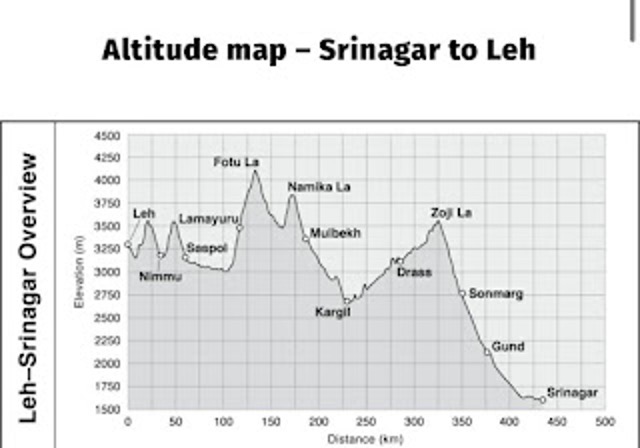
They say to go forth and explore, to go to the planet’s edge to increase the depth of your knowledge. Learning about a country is best done doing the things the local populace does, travelling with them, amongst them, not in a touristy way, in a manicured fashion in a tourist’s van but on leg-powered machines called bicycles. Itching to go somewhere after our memorable escapade in South Korea, cycling from Seoul to Busan, as the borders opened up after the pandemic, somebody threw in the idea of cycling from Kashmir to Ladakh. Long story short, there we were, living our dream. The plan was to cycle the 473km journey, climbing 7378m ascent in 8 days, between 6th July 2024 and 12th July 2024. 

Our expedition started with us landing in Amritsar after a 5.5-hour flight from Kuala Lumpur. From there, it was another flight to Srinagar, where the crunch began.

Day 1. Amritsar
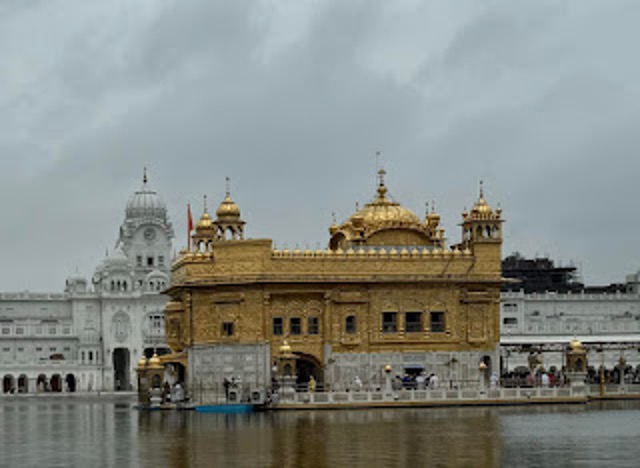
Amritsar Golden Temple. Photo Courtesy: Farouk Gulsara

After a good night’s sleep, everyone was game for a quick, well-spread breakfast and a leisurely stroll to the Harmandir, the Sikh Golden Temple. Much later, I realised the offering was 100% vegetarian and did not miss any non-vegetarian food. As a mark of respect, the vicinity around the temple complex served only vegetarian food, including a McDonald’s there. Imagine a McDonald’s without the good old quarter pounder! Hey, image is essential.

The usual showing of gratitude to the Almighty was marred by the unruly behaviour of the Little Napoleons, the Royal Guards. New orders were out, it seems, according to one guard with a chrome-plated spear and a steely sheathed dagger at his hip—no photography allowed. Then, on the other end of the Golden Pool, it was okay to photograph but only with a salutary (namaste) posture, with hands clasped on the chest. On the other side, it was alright. One can pose as he pleases. The guards were more relaxed there. 

That is the problem when rules are intertwined with religion. People make their own goal post and shift it as they please. When little men are given power to enforce God’s decree on Earth, they go overboard. They feel it is their God-given raison d’etre and the purpose of existence. Since nothing is cast in stone and everyone in mankind is on a learning curve, what is appropriate today may be blasphemous tomorrow and vice versa. We distinctly remember snapping loads of pictures of the full glory of Harmandir day and night during our last visit, preCovid. 

We all know what happened in the Stanford experiment when students were given powers to enforce order. It becomes ugly very quickly. Next, the flight to Srinagar. 

Boat House Dal Lake, Srinagar
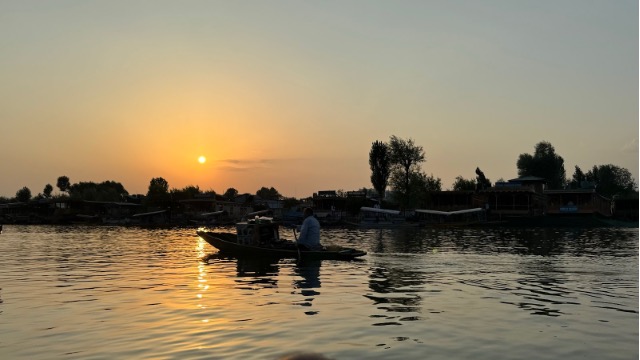
Srinagar. Photo Courtesy: Farouk Gulsara

My impression differed from when Raj Kapoor and Vyajanthimala were seen spending their honeymoon boating around the lake in the 1964 mega-blockbuster Hindi movie Sangam. Then, it had appeared insanely cold, with mists enveloping the lake’s surface. Serenity was the order of the day. What I saw in the height of summer with a temperature hovering around 30C, was anything but peaceful. Even across the lake, the constant blaring of car horns was enough to make anyone go slightly mad. 

The lake is a godsend for dwellers around it. Many depend on the lake to transport tourists and sell memorabilia and other merchandise on their boats. The rows of boat houses are also popular sites for honeymooners and tourists to hire. Privacy may be an issue here. Imagine small-time Kashmiri silk vendors just landing at the boat house and showing produce to the occupants. They may want you to sample their kahwa, a traditional spiced-up, invigorating, aromatic, exotic green tea.

Day 2. Boat House, Dal Lake, Srinagar
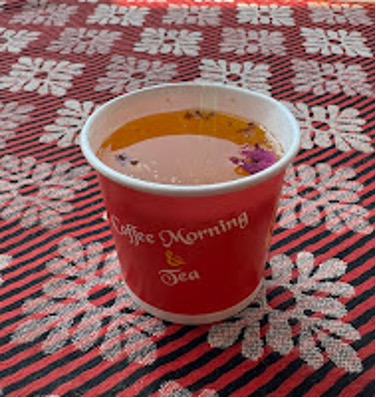
Kashmiri Kahwa, a spiced tea. Photo Courtesy: Farouk Gulsara

Early morning starts with peaceful silence until the honking and murmur of the crowd start slowly creeping in. It was a leisurely morning meant to acclimatise ourselves to the high altitude (~1500m) before we began to climb daily till we hit the highest point of ~5400m. This would — aided by prophylactic acetazolamide –hopefully do the trick to keep altitude sickness at bay. 

The morning tête á tête amongst the generally older crowd was basically about justifying our trip ahead. The frequent question encountered by these older cyclists was, ‘Why were they doing it?’ The standard answer was similar to what George Mallory told his detractors when he expressed his desire to climb the peak that became Everest.

“Why? Because it is there!” Mallory had said. 

The cyclists told their concerned naysayers, “Because we can!”

Yeah, the general consensus was sobering. Time was running out, and so many things needed to be done before the big eye shut. There were so many places and so little time!
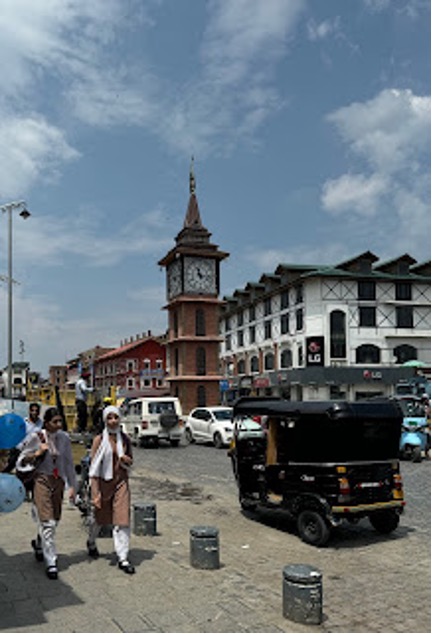
Lal Chowk. Photo Courtesy: Farouk Gulsara

Continuing the easy-peasy stance before the crunch, a trip to town was due. Backed with the symphony of the blaring of honks, we made a trip to the town square, Lal Chawk. After checking out how regular people got along with life, we realised the heavy presence of armed army personnel at almost every nook and corner of the town. Perhaps it was because it was Friday and prayers were in progress.

The return trip to our boat house was a trip down memory lane. After spending most of our adult lives in air-conditioned cars, the trip back on a cramped Srinagar town bus brought us back to our childhood, when rushing to get a place in the bus and squeezing through shoulder to shoulder in a sardine-packed bus was a daily challenge. That, too, was in the tropical heat minus the air conditioning. 

By noon, temperatures had soared to a roasting 30C. So much for cool Kashmir!

Our trip coincided with the Amarnath Yatra, an annual pilgrimage for Shiva worshippers who pay obeisance to Holy Ice Lingam. 
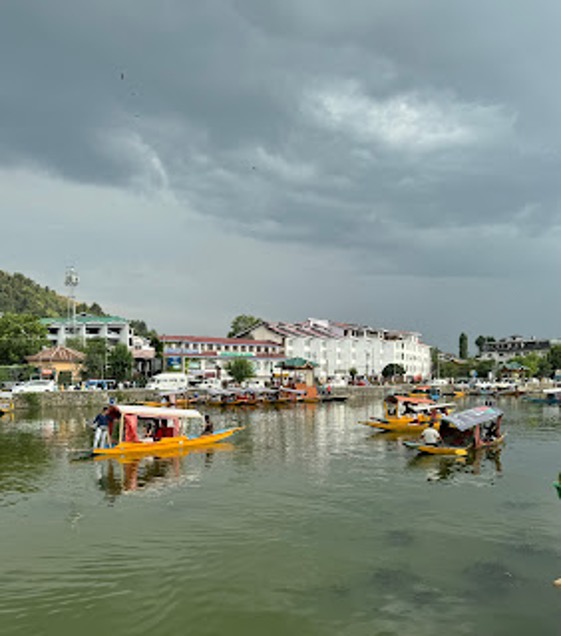
Dal Lake. Photo Courtesy: Farouk Gulsara

The evening was the time to familiarise ourselves with our machines, which involved a ride around the city. It was a nightmare of an experience where we had to simultaneously see our fronts, back, and sides. It was jungle fare. Nobody knew from which direction vehicles were going to barge at us. We survived somehow, if ever we were born in India, our most probable cause of death would be death by road traffic accident. 

The ride brought us to the affluent part of Srinagar, which changed our perception of Kashmir as a war-torn zone. What we saw were nicely manicured lawns and neatly painted buildings. The only hint of disturbances is the apparent presence of armed army personnel nearby. It is said that the one single sign of peace is to see people hanging around lakes and esplanades. We did see this on this ride. Young families were strolling along the promenade to a string of shops selling potpourri of delicacies. Kashmir appeared peaceful. 


Day 3. Srinagar…move it, move it…
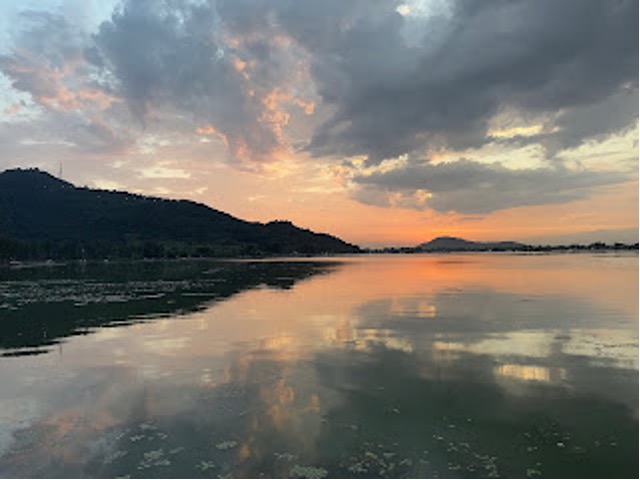
Sunset at Dal Lake. Photo Courtesy: Farouk Gulsara

It was 4am in Kashmir, and all through the night, it had been raining with occasional threats of thunder in the distance. The plan was to start riding as soon as the day broke with the first ray of the sun. That could be 5am or later. And it has probably nothing to do with Indian timing. Today’s ride would be a 90km challenging ride with an ascent of 4.5%. 

All the cyclists survived the ordeal. Starting around 6am, after checking the machines and last-minute briefings, we were good to go.

We did not know that Lake Dal was so huge. The first 20km was all about going around the lake. The first stop was at Mani Gam, a picturesque countryside with a massive tributary of the Sindh River, for an early breakfast of hot milk coffee. 

As expected, the traffic was heavy because of the Amarnath Yatra. But one would expect attendees of a divine voyage like this to want to exhibit tolerance, patience, and softness. Unfortunately, the ugly side of drivers was in full glory. If the rest of the world would blare their honk with all their might just before a head-on collision, here, the same action is synonymous with informing another fellow road user that he is around. 

To be fair, many pilgrims were in chartered vans, and the drivers were quite aggressive, overtaking in blind corners and swerving to the edge of the roads. All in the name of making more trips and making money for the family. 
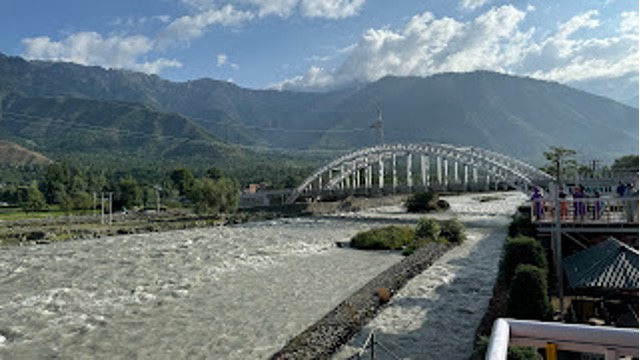
Sind River at Ganderbal. Photo Courtesy: Farouk Gulsara

They say with greater powers comes great responsibility. Apparently, the lorry drivers here missed the memo. Locally, they are known as the King of the Road, with multi-octaved ear drums rupturing high-decibel honks, sometimes to the tune of Bollywood numbers. 

The cyclists continued grinding despite side disturbances that can push any person raving mad; the steady climb was unforgiving. Just when they thought that was the end of the climb, they were fooled for another just after the bend. The most gruelling part was the end of the day’s trip. We rode more than 85 km, climbed a total elevation of 2692 m, and still lived to tell. 

Hotel Thajwass Glacier, Sonamarg 
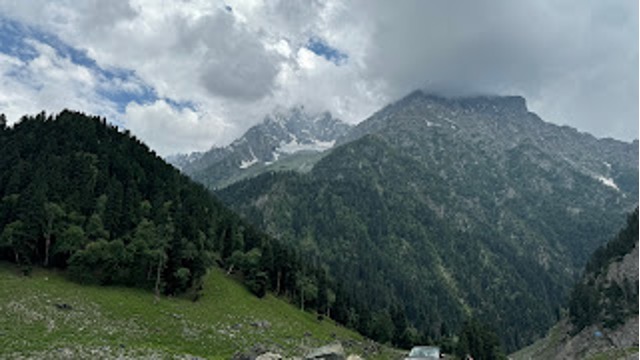
Along Srinagar…Ladakh Highway. Photo Courtesy: Farouk Gulsara

Dinner was entirely vegetarian as a mark of respect to the hotel’s occupants who were there to fulfil their pilgrimage at Amarnath temple. The brouhaha that struck a chord amongst many occupants was the cancellation of helicopter services to the pilgrimage site. The pilgrims were given the choice of either walking a 15 or 22-km track to fulfil their vows or they could pre-book a helicopter ticket to go there. The trouble with the helicopter services is that their feasibility depended on the weather. Weather is controlled by God, the logical explanation would be that God was not too keen to give audience to the so-and-so who were scheduled on flight.

After the light chat with fellow hotel dwellers and answering their curious questions about why able bodies would want to torture themselves, it was time to hit the sack. We could have asked them why fly when they could walk, but we did not.

Day 4. Sonamarg
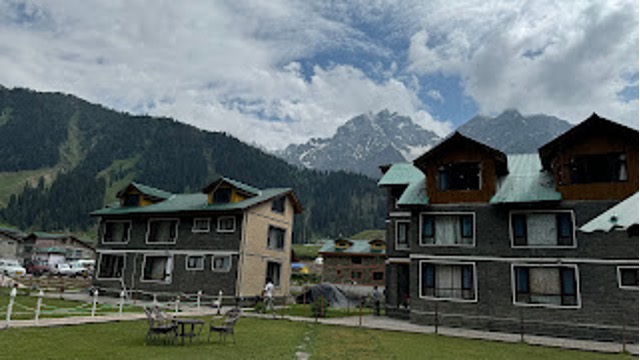
Sonamarg. Photo Courtesy: Farouk Gulsara

We decided to make it a day of light and easy. Everyone was left to their own devices after the spirit-sapping grind the day before. Most took a rain check on the initial hike but went for a long walk instead. 

So, we took a stroll in the Kashmiri Valley, admiring the result of Nature’s choice of colours in His palette: the symphony of rushing cool mountain water and the refreshing cool breeze. 

We met a couple from Chennai at the breakfast table with a sad tale. They had recently lost their only child who was born with cerebral palsy. They had to part from her after caring for their child for many years. They suddenly found plenty of free time on their hands. They decided to spend the rest of their remaining post-retirement lives doing short gigs, earning enough money to tour around and help out other families undergoing the same predicament as they did with their special child. 

When we think we do not have nice shoes, we should not forget about those with no feet. No matter how big our problems seemed, others could have had it worse. 

Sonamarg can be classified as a tourist town with rows of hotels on either side of the road, occasionally laced with souvenir shops and restaurants. The township appears to have been newly built, with freshly tarred roads, loose pebbles on the road shoulder, and unfinished touch-ups. 

Day 5. Off to Drass
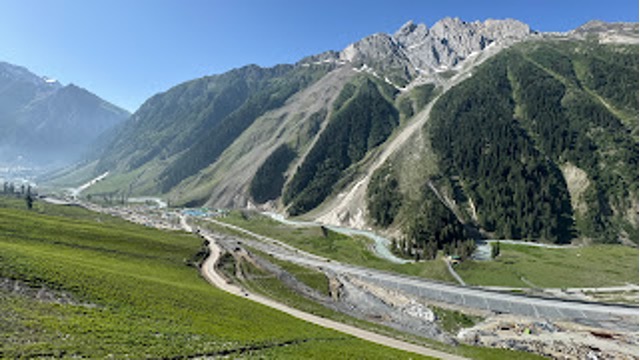
On the way… Photo Courtesy: Farouk Gulsara

We were off to Drass, the coldest inhabited place in India in winter. A quick read and one might read it as Dr-Ass, rather fitting of a name as one could use an examination of one’s derrière after a climb that was upon us. We will see you in hell. But wait, hell is supposed to be hot, is it not? Or hath hell frozen over?

At one point in the 1947-48, Drass was invaded and captured by Pakistan. Soon later, India recaptured Drass. We were only 12km from the line of control (LOC).

Hotel D’Meadow Drass

As expected, it was a gruelling ride. The first 21km were excruciatingly torturous, with narrow roads that had to be shared with the notorious motorists who thought that without the honk, one could not drive. We had to test our trail biking skills later as quite a bit of the stretch was undone or probably collapsed as a result of downpours. We were left with a sand tract and later fabricated stone tracks, which gave good knocking on our posterior ends. Remember our appointment with Dr Ass?
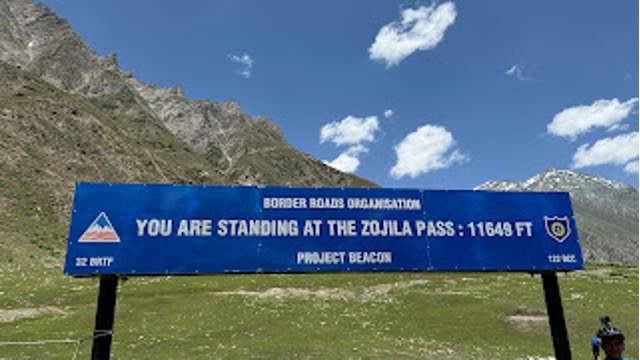
Zojila Pass. Photo Courtesy: Farouk Gulsara

After the 21 km mark, it was generally downhill, but our guide told us to unlock the mountain bike suspension for more comfort due to the violent bumping. The road improved as we entered Ladakh but was interspersed with occasional potholes that shook the machine.

After a short lunch break at a remote restaurant (referred to as a hotel), we were good to go and finally reached Drass at about 3 pm.


We had gone through the gruelling Zojila Pass. A tunnel is currently being built to connect Sonamarg and Drass. It would cut down travel from 4h to 1.5h. 

Point to note: this Pass lives up to its name. When Japan was attacked by many post-nuclear attack monsters, the biggest one was referred to as Gojira. Hollywood decided to christian Gojira as Godzilla, giving rise to the meaning of gigantic as in Mozilla and Godzilla’s appetite. Zojila Gojira, what’s the difference? Both were scary.

Day 6. Drass to Kargil 

Leaving the ‘Gateway to Ladakh’ and the ‘Coldest place in India’, we headed toward Kargil, which had been immortalised in annal of history when Pakistan and India fought a war in 1999. 

Today’s cycling routine was less enduring compared to our previous rides. Most of the route was a downhill trend lined by dry, stony mountains on one side and the gushing blue waters of a tributary of the Indus on the other. The road condition was pretty good, with recently tarred roads, barring some stretches being tarred and resurfaced in various states. 

After completing the close 60km trip to Kargil, we were told we were the fastest group the organiser had ridden with. Eh, not bad for a bunch of sixty-something madmen! Maybe they were just words of encouragement.

I was surprised to see Kargil as a bustling town with many business activities. Construction is happening here and there. Vendors were spreading their produce. Touters were busy looking for clientele. Hyundais, Marutis, and motorcycles thronged the streets, which were obviously not built to handle such tremendous volumes. Everyone was in a hurry. That is a sign of development. 

We were housed in the tallest building around here. It was a four-story, four-star hotel with a restaurant and 24-hour hot water services. In most places we stayed, hot water was only supplied at short, predetermined intervals. 

Day 7. Kargil to Budkharbu

The day started at about 6:45 am, with temperatures around 9C. This leg was expected to be tough. Two-thirds of our journey would be climbs, and there’d be more. It is expected to be sunny throughout, so we could expect a lot of huffing and puffing. 

Today’s ride was easily the toughest one. Straddling on our saddles for 7.5 hours was no easy feat by any means. The climbs went on and on. The steepest and most prolonged ascent came after 39 km. It was a sustained climb for the next 10 km, hovering between 4% and 12% ascent. 
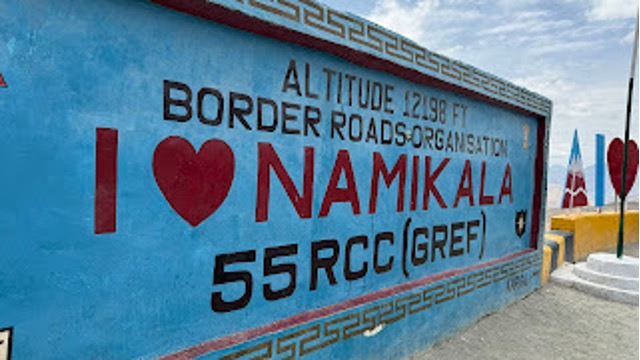
Photo Courtesy: Farouk Gulsara

Nevertheless, we were feasted with some of the most mesmerising views of barren, arid landscapes, as though someone had painted them with hues in the brown range, occasionally speckled with malachite green and a top of sky blue. It was a feeling as if we were at the edge of heaven. 

We pass through a small town called Malbech, which appears to be a Buddhist town with many temples and chanting over its public address system. I guess no one wants to keep their sacred words of God to themselves. They had a compelling desire to broadcast it to the world. 

Many Shiva temples and mosques lined the road of our ride, all showing their presence with specific flags, colours and banners claiming those areas. 

We finally reached Budhkharbu at 2 pm in the heat of summer Ladakh. The temperature was about 22C. The total biking time was 5h 43m. Everyone was shrivelled, depleted of glycogen and energy.  

Budhkharbu is so far from civilisation that the occupants do not feel the need for digital connectivity. Only we, the town folks, were having withdrawal symptoms for not being able to upload our Strava data to earn instant gratification. Foreigners were not allowed to purchase SIM cards, so we were essentially crippled for a day.

Day 8. Padma Numbu Guest House, Budhkhorbu to Nurla
Photo Courtesy: Farouk Gulsara

Rise and shine. Rinse and repeat. Breakfast at the Guest House to a vegetarian, sorry, no eggs too, accompanied by the aroma of incense and the tune of ‘Om Jaya Jagatheeswara Hare1‘, we were good to go. I suspect the owners of this guest house were ardent BJP supporters. The keyholder to our rooms carried a lotus symbol. And the BJP mission office was their neighbour. 

We were up on the saddle and ready to move by 7:15 am. The sun was already bright and shiny by then, and we were all enticed by the 26kms steep decline.

After 9 kms, we did not mind the initial steep climb traversing the unforgiving Fotula Pass. At one point, we almost reached 4,200m above sea level. Other than the occasional passerby and military barracks, there wasn’t a single inkling of life there. It was just barren, arid land for miles and miles. 

64 km later, we arrived at our destination, Nurla. Nurla is a no man’s land and is not featured for first-time visitors to Ladakh. Nearby is a self-forming statue of the Sleeping Buddha and a giant statue of Maitreya Buddha. Here, the seed of the Namgyal Dynasty started. It is famous for Tibetan paintings. As temporary sojourners, we just learned and moved along. 

By now, we had learnt how the honking system worked. Even the brotherly advice from BRO (Border Road Organisation) advises using vehicle horns, especially at blind corners and overtaking another vehicle. At a telepathic level, the driver seems to converse with the other, ‘I can take charge of my vehicle as I overtake you. Now, don’t you make any sudden moves, can you?’ The melodious tone of honks, especially of lorries and buses, is just to liven up the monotonous journey, as do music (and movies).

Day 9. Travellers Lodge, Nurla to Leh

We were told today’s leg would be challenging, with 85 km to cover and a steep one. Hence, we had to be up on our saddles by 5 am. 

In essence, today’s outing was the toughest by far. We climbed two hills, and just when we thought everything was done and dusted, another climb to our hotel came. Overall, we covered 85km and 1672m elevation in 7h 2m. 

We saw two essential tourist attractions as we approached Leh: Magnetic Hill and gurudwara. Magnetic Hill is believed to create an optical illusion of a hill in the area and surrounding slopes. The cars may be going uphill when they are, in fact, going downhill. 
Sourced by Farouk Gulsara

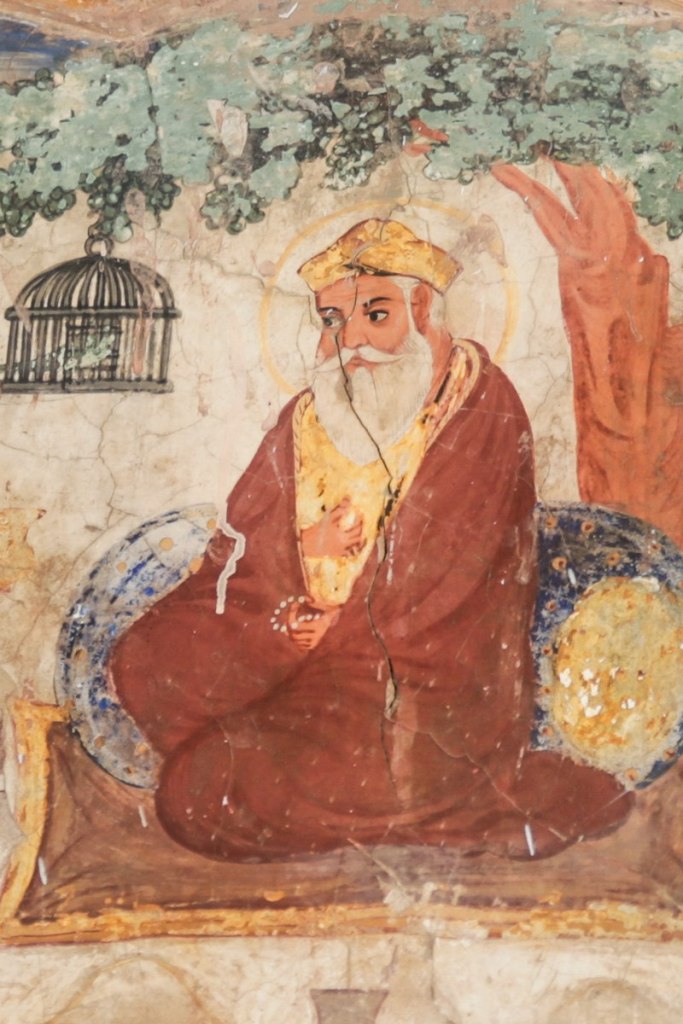
The Guru Pathan Gurudwara is another curious worship site in the middle of nowhere. Legend has it that Guru Nanak stopped at this place, coming from Tibet and towards Kashmir. It was a Buddhist enclave. While meditating, an evil demon tried to crush him by rolling down a boulder. Hold behold, the stone turned waxy soft and did not injure the Guru. 

An indestructible piece of rock was encountered while constructing this stretch of the highway. The Buddhist monks told the authorities of the legend, and the Gurudwara was erected. The Buddhists revered Guru Nanak and treated him as a great teacher. 

The journey ended with a brutal, unrelenting climb to our final destination, Hotel Panorama in Leh. 

The next journey the following day to Khardungla was optional. Only the young at heart opted for it. A 37 km journey with an inclination of 8% constantly with possible extreme subzero temperatures was too much to ask from my gentle heart. I opted out.  

Thus ended our little cycling escapade from Srinagar to Leh, Ladakh. Few will attempt this journey with SUVs or superbikes; only madmen will do it with mountain bikes. 

P.S. I want to thank Sheen, Adnan, Basil, and Samir of MTB Kashmir for their immaculate planning and supervision of the rides. 

  1. A holy chant extolling the lord of the Universe ↩︎

Farouk Gulsara is a daytime healer and a writer by night. After developing his left side of his brain almost half his lifetime, this johnny-come-lately decided to stimulate the non-dominant part of his remaining half. An author of two non-fiction books, Inside the twisted mind of Rifle Range Boy and Real Lessons from Reel Life, he writes regularly in his blogRifle Range Boy.

.

PLEASE NOTE: ARTICLES CAN ONLY BE REPRODUCED IN OTHER SITES WITH DUE ACKNOWLEDGEMENT TO BORDERLESS JOURNAL

Click here to access the Borderless anthology, Monalisa No Longer Smiles

Click here to access Monalisa No Longer Smiles on Kindle Amazon International
Categories
Review

A Tribute to the Human Spirit

Book Review by Somdatta Mandal

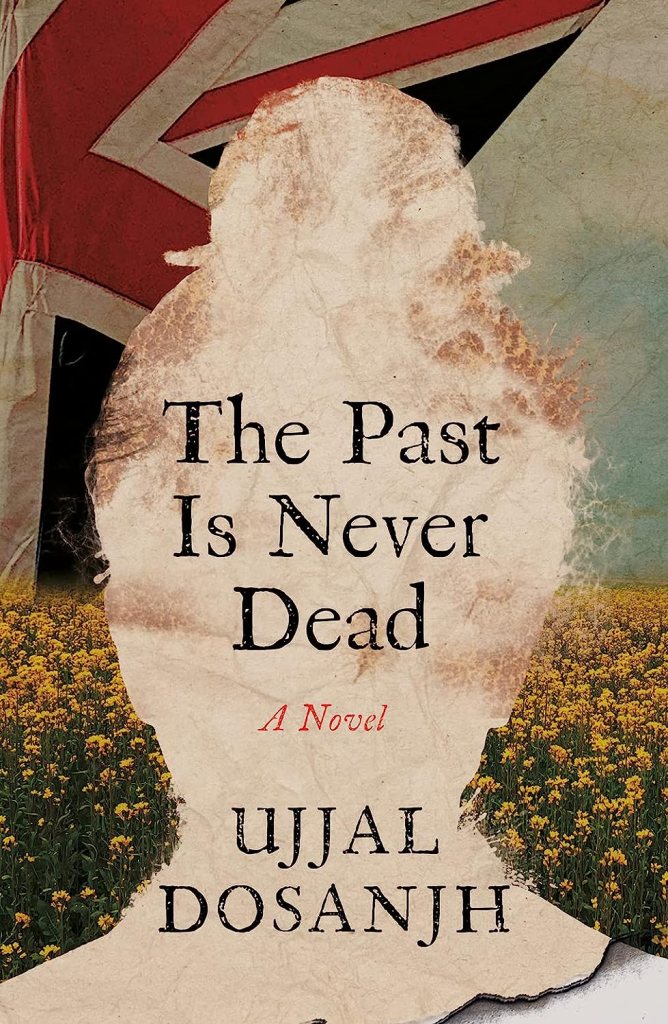
Title: The Past is Never Dead: A Novel

Author: Ujjal Dosanjh

Publisher: Speaking Tiger

Ujjal Dosanjh’s latest novel, The Past is Never Dead, sheds light on the stranglehold of caste on Punjabi Sikh immigrants in the UK – a unique perspective of caste violence in a faith outside of Hinduism, one that was born out of the noble teaching by Guru Nanak and his followers that every human being is equal in the eyes of God. Borrowing the prologue from William Faulkner’s famous statement, “The past is never dead. It is not even past,” Dosanjh makes it his project to challenge this idea about Sikhism, as he writes about a poor family that migrates to England soon after India’s independence in the hope of escaping the indignities of caste back home – only to be confronted by it again, and in the most horrifying ways possible, in a western foreign land, where caste is supposed to be an insignificant marker of identity.

In the year 1952, Kalu escaped Banjhan Kalan in Punjab’s Hoshiarpur for Bedford in the British Midlands, hoping to find a life of dignity that he had been denied because of his untouchable caste. He was in his late teens and had grown up believing in Sikhism’s tenet of equality preached by Guru Nanak and Ravidas, a principle the villagers never sincerely practised. They had maimed his father, accusing him of stealing a zamindar’s ox; they had thrown father and son out of a Quit India rally; they had mercilessly thrashed young Kalu himself for daring to enter a temple. He had never been allowed to forget—even by his schoolmates—that he was a Chamar, destined to skin dead cattle like his ancestors. His father Udho was determined to get his son out of this life of indignity and had said, “Son, I don’t want you to grow up a Chamar. You will never do what made my hands and feet like this.” Soon Udho borrowed money from a kind merchant, bribed the officials, got a passport and left for Britain.

England promised a new life of respect and opportunity. Udho laboured hard to give his son a college education and his wife a decent life that was denied to them back in India. The way Kalu and his mother ultimately bribed their way onto an earlier flight to escape from the powerful connections his propertied travel agents had, and who could create obstacles in their journey to Britain, speaks a lot about the plight of scores of rural people in the Punjabi villages who dreamt of building a new life in the West. But freedom was illusory. Kalu’s fellow expatriates had brought caste along when they came to that country, and he would be forced to adhere to its degrading rules just as he was in Banjhan.

Apart from the story of a rural Punjabi family’s search for better life, the novel is also a powerful depiction of the stranglehold of caste over Sikh immigrants in Britain. We have read about honour killings of Sikh women during the riots that took place after the Partition of India when family patriarchs forced their wives and daughters to jump into the well or commit suicide to avoid being kidnapped by the Muslims, but the horror behind the story of honour killing within the Sikh community in England based on caste differences is something terrifying. The construction of different gurdwaras in the same locality according to caste affiliations including local politics, enmity, and gruesome killings by the Jats, who considered themselves racially superior to the other Sikhs, expose the horror and obstinacy of caste even in the middle of the twentieth century, and is just unimaginable. Determined not to bend—as he had refused to do back home—Kalu fights back as he could not suffer indignity silently, but his resoluteness in the struggle puts him and his family at serious risk.

With many turns and twists in the storyline, including the abduction and death of his doctor wife, Kalu’s hair was shaved by his caste-hate-obsessed kidnappers as revenge for what they considered his audacity in describing a Jat’s daughter as mini bell unsuited to be married to his Jat friend. Eventually, he discards his hair; the act acknowledges the impotence of religion and religious symbols in the struggle for equality and against caste. In the end, through his indomitable will force, we find how Kalu manages to overcome all odds and contest for a MP seat in the Parliament as a Labour Party candidate under the name of Dr. Kalha Chamar — “He was done fleeing, escaping or dressing up caste in surnames, unshorn hair or turban.” The concluding paragraph of the novel which gives a positive message of hope for the future is worth quoting here:

“Angad made chai. Between the sips of chai, the humpbacked Banti, the limping Udho, the hairless Kalu and the adolescent Angad danced. When Robert, Janice and Gurbat knocked on the door to congratulate him, Udho Chamar and his son, Kalu Chamar MP, were standing with raised glasses, about to down neat double Johnnie Walkers.”

Though the story of Dosanjjh’s own life and the timeframe of the novel bear a lot of similarities with the incidents narrated in the story, he does not mention it to be an autobiography. Instead, he fills the novel with various other racist perspectives that the Sikhs in Britain still cannot steer clear of. So, he safely adds other issues and titles it “A Novel.” But how far some of the incidents narrated in the novel have moved him becomes clear when we read in an interview given to scroll.in where he states:

“It was emotionally quite exacting to write The Past Is Never Dead. The toll of the issues I wrote about has been a lifelong companion. Age has rendered me shameless enough for me to confess that I often cried as I wrote many parts of the novel…. The human incapacity to learn from the past astounds me. It aids us in veiling the past from ourselves and abets our continuing cruelty in the name of dumb tradition and comatose culture.”

The novel is surely worth reading and is strongly recommended as it pays tribute to the courage and tenacity of the human spirit and its capacity for hope despite all odds.

.

Somdatta Mandal, academic, critic and translator is a former Professor of English at Visva-Bharati, Santiniketan, India.

PLEASE NOTE: ARTICLES CAN ONLY BE REPRODUCED IN OTHER SITES WITH DUE ACKNOWLEDGEMENT TO BORDERLESS JOURNAL

Click here to access the Borderless anthology, Monalisa No Longer Smiles

Click here to access Monalisa No Longer Smiles on Kindle Amazon International
Categories
Stories

Among Our People 

By Devraj Singh Kalsi

Sardar Dayal Singh had lived all his life in a predominantly Punjabi neighbourhood. The cluster of Sikh families provided a feeling of warmth, making him feel safe even when the threat to life and property assumed horrific proportions. In 1984, the entire colony was converted into an impenetrable fortress, with the men and boys ready with a stockpile of soda bottles and swords, prepared to put up a brave fight against the pillaging mob. Fortunately, the area remained safe from any such orchestrated communal attack. Despite the presence of over a hundred Sikh families, it was a mystery why Kishanganj was not looted when the entire city witnessed sporadic incidents of violence against the minority community in those three days. The most plausible reason that surfaced was its distant location on the outskirts of the city. 

The Sikhs of Kishanganj gave asylum to persecuted Sardars who fled from other localities and stayed with them for several weeks before returning to their burnt homes to salvage what remained, to collect the debris, and make a fresh beginning. For Sardar Dayal Singh, it was mentally less agonising as he realised how being together with people of the same community ensured safety when the entire city was up in communal flames. 

Three decades later, after retirement from his job, Sardar Dayal Singh was not the same man who basked in the warmth of his community. A series of incidents had shaken him. All he wanted was to sell the ancestral house in Kishanganj and move into a gated community, a mixed society where he would feel safe. With the young generation relocating to foreign countries in search of a better future, those left behind in Kishanganj were small traders and pensioners.  

With rising intolerance against the minorities, the high-rise complex was the safest place for Sardar Dayal Singh who did not want to flaunt his nameplate on the door. The flat number was a safe identity on the letterbox or the initials of his name on the main door of his apartment. The upper floor apartment in a high-rise building would keep him closer to God all the time and also provide him with safety from an irate mob. He did not expect any frenzied outsider, armed with a weapon, to climb the fifteenth floor to reach his flat and hack him into pieces. 

Sardar Dayal Singh and his spouse, Charan Kaur moved into a spacious luxury apartment, equipped with Jacuzzi and Spa, with an extra-wide balcony to enjoy the sunset and a glass of whiskey. His Canada-based son was glad to hear that he had sold his ancestral house and bought a three-bedroom flat where the old couple would now get trained to accept a cosmopolitan daughter-in-law.  

Charan Kaur, fondly called Charno by her friends and relatives, did not find the new life exciting. She missed her Punjabi friends in Kishanganj. Within a few months of moving to the apartment, Charno started feeling lonely — as if she was living in a foreign country. She had to mingle with neighbours who spoke other languages she was not fluent in. While Sardar Dayal Singh was happy to adapt, Charno often complained that the gurudwara was located far away from the residential complex. She had not found a single Sardar family in the entire building with who she could interact. This was the place where she felt she was living in a minority environment but in Kishanganj, with scores of Punjabi families around, she never felt she belonged to a minority community.   

To stay connected to her roots, Charan Kaur began to listen to Punjabi music and watched Punjabi channels. Even if others spoke in Hindi or English, she replied in Punjabi, as if it was her duty to keep the language alive and in circulation inside the residential complex. When she spoke to the housemaid, the liftman, or the security guard, she used Punjabi all the time without bothering to know if they understood it or not. 

Sardar Dayal Singh noted the emergence of a communal streak in his wife. He hoped the people would not take the old lady seriously. His advice to become liberal and speak in other languages was ignored by her. She started organising a small together every weekend and invited her Punjabi friends from Kishanganj, to make her new neighbours understand that she had a robust social network of Punjabi women who would rally behind her if the situation demanded. Charan Kaur was happy to spend time with them and sometimes she went to Kishanganj to revive old memories. 

During her last visit, Charan Kaur stood in front of their ancestral house that was demolished. A new building was yet to come up, but the old mango tree stood tall in the vacant land. She told her close friends she was not happy with the decision to sell such a big house and live in a flat. She blamed Sardar Dayal Singh for the reckless decision and wiped her tears. 

On the eve of their fiftieth marriage anniversary, she invited the entire Sardar community from Kishanganj to her flat. Sardar Dayal Singh used this opportunity to influence some other retirees to move into this residential complex by selling their properties in Kishanganj, but Charan Kaur fiercely opposed his suggestion, “Never sell your house. Guru would protect all in Kishanganj even if the younger generation is away.” Turning to Sardar Dayal Singh, she asked, “Is there a place or an address where death does not come, Sardarji?” He could not reply to her in front of the guests who supported Charan Kaur on this issue.   

Gathering the courage to explain his point of view in the hope that he would not be misunderstood by his people, Sardar Dayal Singh said, “Cluster living was dangerous for a small community these days. We did not have the option of apartments then, but now with so many complexes coming up we should mix and spread everywhere, to avoid detection based on religion. Mobs do not come looking for one or two heads – they need hundreds to loot and plunder and a Sikh locality is a prime target.”

His views were diametrically opposite now and there were no supporters. His old-time friend, Sardar Jasbir Singh finally spoke his mind, “Dayal, only the fear of death does not keep us together. We are together in Kishanganj because we love to be together, for culture and bonding. It is good for mental wellbeing and mutual help. You live in a flat now, but I am sure you miss the manji (charpoy) sessions in the courtyard where we sat together and drank and discussed everything under the sun.”

 The core point Sardar Dayal Singh was making was that the safety of Sikhs was high in residential complexes. He defended his stance: “Nobody knows a Sardar family is living here. I am safe from mad mobs, but you are still facing the same threat we survived in 1984. When you have a chance now, why not spread here and there? We can still keep meeting wherever we want and keep our social connections strong.” 

Sardar Jasbir Singh responded with greater conviction, “One crazy man is enough to kill a dozen. Such mad people are there in these residential complexes as well. If something untoward happens, if Sikhs hog the headlines for the wrong reasons anywhere in the world, imagine the possibility of the liftman stabbing you in the elevator to seek revenge. Have you given this a thought?”

Sardar Dayal Singh was hit hard, and he could deny this possibility. There were many such incidents of men going berserk and opening fire, those racial attacks of stabbing and firing at point black range. 

The next morning, Sardar Dayal Singh was wary of the liftman who glared at him. There was a case of sacrilege in Punjab and a youth had been lynched. The liftman charged him while he was coming out of the lift. “Sardarji, do you think what happened in Amritsar yesterday was right? All Sikhs come together and beat a young man to death. Is this Sikh justice?”

When the security guard also joined the liftman, Sardar Dayal Singh tendered an apology and condemned the incident. The tobacco-chewing security guard sought updates from the liftman who checked his smartphone for the latest feed on this issue.  

Sardar Dayal Singh came home from the market and sought a candid opinion from his wife, “How likely is that the liftman goes mad and stabs me in the lift?”

Charan Kaur gauged something was not right but maintained her calm demeanour. Handing him a glass of water, she replied, “It is very much possible. You are wrong to think the people inside this complex will not turn into a crazy mob and attack us if the situation worsens. If a riot breaks out in the city, maybe a big mob does not get in here but two crazy people like the liftman or the gardener can open fire at us. Even if they do not kill us, they can threaten us, abuse us, make barbed comments, or torture us. Such repeated attacks will hurt sentiments and disturb our mental peace.”

Sardar Dayal Singh kept observing their behaviour in the coming days. He found nothing worth complaining to the committee. But there were undercurrents he could feel. Such behaviour or reaction based on stray incidents in a far-off place was really strange and he was not supposed to answer anything. He thought if he complained and the liftman lost his job, he could become violent and seek revenge.   

Sardar Dayal Singh reduced his daily trips downstairs. He tried to placate the liftman with smiles whenever he met him. He followed the same strategy with the security guard who made a weird statement one evening: “We thought Sardarjis are good.” Sardar Dayal singh avoided answering it but his reticence seemed to annoy the guard who waited for a reply while he stepped out of the main gate. 

Sardar Dayal Singh spoke about the simmering discontent with his son on the telephone and he advised him to keep some emergency helpline numbers ready. 

When the farmer protests started, Sardar Dayal Singh sensed a fresh series of verbal attacks. He desperately wanted Sikhs to remain out of the headlines. Just keep the culture beat alive with Bhangra and Balle-Balle and keep making sacrifices at the border to keep the nation convinced of patriotic fervour. 

Whenever the Khalistan issue was raised abroad, the domestic atmosphere got vitiated. What happened on Republic Day was indeed shameful and he felt the Sikhs were inviting trouble for no reason. Those extremist-minded groups wanted to destabilise the state by demanding a separate homeland. He felt ashamed and wrote fiery letters to the editors. He felt it was important to assert his national identity to stay safe.   

Charan Kaur wanted to visit Kartarpur in Pakistan, but Sardar Dayal could not decide. On the one side, he also wanted to visit the place where Guru Nanak lived for so many years and on the other side, he was fearful of the consequences of visiting that country.   

“If you don’t dare to go, I will go there with my friends from Kishanganj,” Charan Kaur clarified. Finding her determined, Sardar Dayal Singh agreed to join her and Kishanganj friends on this pilgrimage trip. 

After returning from Kartarpur, Sardar Dayal Singh warned his wife to keep it a secret. He urged her not to reveal where they had been to, not to any neighbour or even the housemaid. But within a couple of days, he was surprised to hear the liftman say with a grin, “Pakistan settle ka plan, Sardarji?”  

Sardar Dayal Singh was numbed to hear that. He found almost the entire complex had come to know of their visit to Pakistan. So, there was no point denying and creating further discord. To be called a spy at this age would be really humiliating for the elderly couple. 

Sardar Dayal Singh remembered that the small reaction he gave to a national TV channel reporter at the border was a blunder. Neighbours started to isolate themselves and their gnawing silence was felt by Sardar Dayal Singh and his wife. There was nothing to explain but they thought he was a Pakistan sympathiser at heart. He had just gone to pay respects to Guru Nanak. Was this modern nation not going to allow him that?

His car parked in the covered parking zone was likely to be attacked. IK Onkar sticker on the windshield was immediately removed to avoid identification. But the security guard knew it was Sardarji’s car. Sardar Dayal Singh was reminded to be careful by the liftman whenever he met him. He felt the old couple could get killed in the flat by crazy people any day.  

Charan Kaur decided to move to Kishanganj, and Sardarji supported her decision. He rented his flat to a company instead of an individual and went to stay in a rented house in Kishanganj. Although Sardar Dayal Singh faced no direct threat, he lived under the gaze of threat all the time. A lot had changed in one year. The farm laws were repealed, and the farmers returned home after several incidents of violence.  

In Kishanganj, some TV reporters came to report the reaction of the Sikhs. They were bursting crackers to celebrate victory when the reporters arrived with guns in a black SUV emblazoned with a press sticker. “You Sardars still depend on Kirpan, have some AK-47, and stay secure.” 

Sardar Dayal Singh stood in front and urged them to go back with their guns. The local Sikhs chased them away and gathered their swords and soda bottles. They did not want to launch an attack but were prepared to defend themselves. The video of Sardars with swords on the rooftops went viral and they were projected as bloodthirsty goons. While no offensive was launched, it was a clever move to lure them with guns and get their reaction. The identity of those reporters who came with guns remained unknown. It was certainly an act of mischief, and the Sikhs were trapped.  

As Republic Day was approaching, Sardar Dayal Singh wanted the community to hoist the national flag, shoot a video and post it online. They wanted Kishanganj Sikhs to be seen as patriotic and nation lovers. 

While addressing the mixed crowd of Sikhs spanning three generations, Sardar Dayal Singh thundered: “Sikhs have to stop talking of past sacrifices. They have to make new sacrifices and avoid taking credit for what their earlier generations did. With new sacrifices, we become known as real patriots and assert our love for the country…We should be the first to hoist the flag early in the morning and conduct celebratory events the whole day. The blood donation camp is the best event planned for Republic Day tomorrow. Sikhs must give their blood to save the nation and save human lives. If health permits, all Sikhs must donate blood. Instead of spilling it on the roads due to mob attack, we should donate blood.”

Sardar Jasbir Singh raised a query at this point: “Should we call it Sikh Blood Donation Camp? Or Blood Donation Camp?”  

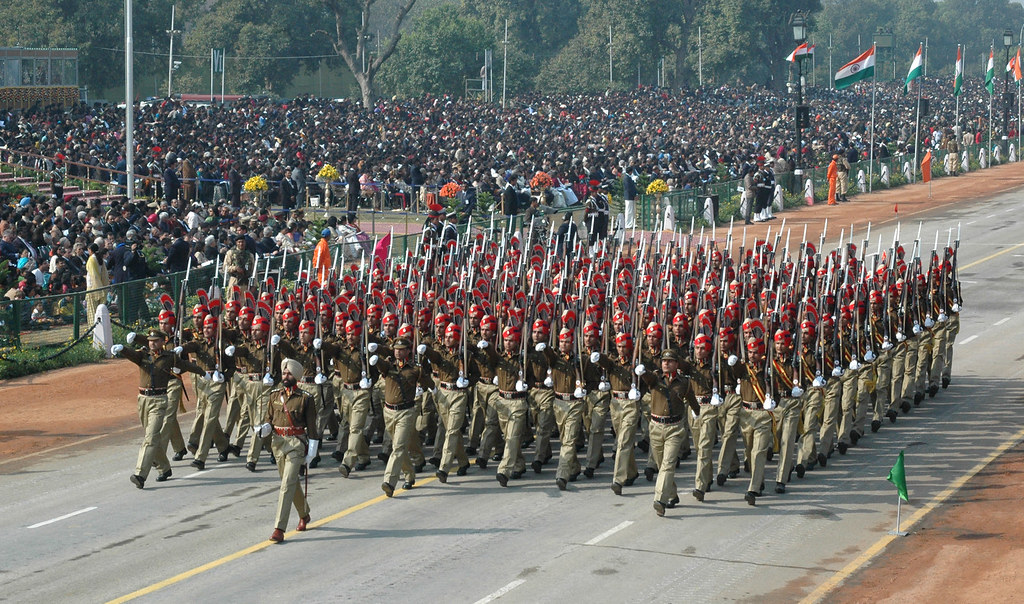
India Republic Day parade. Courtesy: Creative Commons

Notes:

1984: Riots between Hindus & Sikhs after the assassination of PM Indira Gandhi.

‘Pakistan settle ka plan’ — You plan to settle in Pakistan, Sardarji?

.

Devraj Singh Kalsi works as a senior copywriter in Kolkata. His short stories and essays have been published in Deccan Herald, Tehelka, Kitaab, Earthen Lamp Journal, Assam Tribune, and The Statesman. Pal Motors is his first novel.  


PLEASE NOTE: ARTICLES CAN ONLY BE REPRODUCED IN OTHER SITES WITH DUE ACKNOWLEDGEMENT TO BORDERLESS JOURNAL. 

Categories
Editorial

Restless Stirrings

As we stand on the threshold of a new normal that will eternally rewrite the history of social interactions, of movements across the globe, of new world orders that will have to be more inclusive and more transparent to world view, we will, perhaps, feel the need to redefine business laws so that even countries with lesser wealth are able to access vaccinations and peace. We are now looking  up to leaderships which seem to be in crises themselves. Sitting securely on a tiny island that is well governed, an island where affluence and well-being set it adrift from the turmoils of countries around it, I wonder thirty years from now, what will mankind be like…  Will we be forever marred by the current events of the world? Globalisation has ensured that none of us can be secure on any secret island. There can be no land of lotus eaters hidden from the rest of mankind and accessed by only a few anymore. Even if one region is affected by the virus in any corner of the world, can the rest of the world be pandemic free? Perhaps, a question that those who peddle in vaccines and human well-being can address.

These issues have not only been highlighted by the news media but have also found echoes in some of our content this time. Keith Lyons’s essay talks of his last stay in India, when a tourist carried the  the pandemic  unwittingly into Kerala in February 2020 and subsequent repercussions. More stories and poems that dwell on the spread of the virus this year cry out for compassion. One hopes young poet Ruchi Acharya’s verses are born true.

One day the roses of hope will grow
Meeting the horizon,
Roses that, even plucked, will not die
But will bloom and bloom
Every single day that passes by.

We have young writers on the virulence of the virus and mature pens like that of globe-trotting academic Wendy Jones Nakanishi, who maps the pandemic from UK. Perhaps, we will find a new direction eventually.

There have been calls for uniting above divides as a single unit called mankind earlier too, from greats like Tagore and Nazrul. This time we carry translations of both — Nazrul’s translated poem calls for uniting against artificial divides drawn by man-made constructs and Tagore’s translation talks of redefining through self-reflection. An essay on Tagore by academic Parineet Jaggi talks of the impact of the teachings of Guru Nanak, the founder of Sikhism, on Tagore.

We have essays on writers and icons from around the globe. A photo-essay on the bald eagle, heralding the American Independence Day on the 4th of July, gives a humorous anecdote on how the eagle was chosen above the turkey. We have more variety by Candice Louisa Daquin, an immigrant in US, who shows how important human movement across man-made borders is to the development of a country. Michael Burch has given us beautiful poetry reflecting the history of America and American dreams, one of them with the voice of the legendary Mohammed Ali. These verses add substance to the concerns raised by Daquin. Jared Carter brings to us the colours of life with his poetry.

We have humour in verses from Rhys Hughes and even from a young poet, Sutputra Radheye. Limericks from Michael Burch and Penny Wilkes photo-poetry on ‘Changing Seasons’ puts us in a more cheerful mood.  More poetry from multiple writers across the world, including Nepal, Macedonia and Korea, have found their way into our journal.

Hughes has also given us a comprehensive and interesting essay on a twentieth century poet called Ivor Cutler, who said much as he sang his poetry and was encouraged by Paul McCartney of the Beatles. The brilliant poetry of Akbar Barakzai continues translated on our pages by Fazal Baloch and one must give many thanks to the translator for his indefatigable energy and for bringing us wonderful fare from Balochistan. An excerpt translated by eminent journalist Ratnottama Sengupta from Nabendu Ghosh’s autobiography ends with Satyajit Ray’s starting his famed career with Apu’s triology (based on Pather Panchali, a novel by Bibhuti Bhushan Bandopadhyay). These three films have become iconic in cinema history.

We were fortunate to have Professor Fakrul Alam agree to an interview. An eminent translator, critic and academic who has lived through the inception of Bangladesh from East Bengal, Alam has translated not just the three greats of Bengal (Tagore, Nazrul, Jibanananda) but also multiple political leaders like Mujibur Rahman. In this exclusive, he has taken us through the annals of history, reflecting on less-known perspectives of the Partition. Also, in conversation with Borderless, is Arindam Roy, a journalist with forty years’ experience and the founder of Different Truths who started his writing career, much in the tradition of Cyrano de Bergerac on a humorous note.

This time our backpacking granny, Sybil Pretious, gives us a glimpse of her wisdom, wit and compassion while visiting Philippines and talks of an ancient death ritual, volcanoes and strange mud baths. Devraj Singh Kalsi explores young romance in his tongue-in-cheek fashion. We also have more semi-humorous musings from young writers across borders. While Sunil Sharma has explored facets of the impact of terrorism, the other stories are told in a lighter vein.

Our book excerpt from Feisal Alkazi’s Enter Stage Right has a picture of the young artiste in a discotheque dancing in abandon — check it out. It made me smile. Rakhi Dalal has reviewed Jnanpith Award winner Shrilal Shukla’s Fragments of Happiness translated by Niyati Bafna. The book review by Meenakshi Malhotra of Neelima Dalmia Adhar’s The Secret Diary of Kasturba brings out an interesting facet on Gandhi and women in the Independence movement. It makes one notice the contrasts in the perspectives of Gandhi and Tagore, who created women like he saw around him in fiction. Kasturba’s life also contrasts with the independence found in the life of the avant-garde artist, Amrita Sher-Gil, who lived around the same time. In an essay, Bhaskar Parichha has shown how Sher-Gil lived out her dreams, blending the best of the East and West, while Malhotra writes, that though “Gandhi called women to join the national movement … he was not seeking to emancipate, but more to call forth their capacity for self-abnegation and self-sacrifice.”

Parichha has also introduced us to the need for changes in the banking sector in India while reviewing Transformational Leadership in Banking edited by Anil K. Khandelwal. Perhaps these will be part of the changes that will ultimately lead to a revision of old systems and the start of new ones. Changes, though not always welcomed or convenient, hopefully will lead to progress that can mould our future into a happier one. Restless stirrings transformed mankind from cave dwellers to an intelligent race that can assimilate nature and technology to survive and dream of a future, living among stars.

As Borderless reaches out to unite mankind transcending artificial constructs, its attempts can bear fruit only with support from each and every one of you. I would like to thank all our editorial team for their wonderful support, contributors for being the backbone of our content, and all our readers for continuing to patronise us.

Do take a look at our current issue for the writers who remain unmentioned here but create phenomenal bridges towards a borderless world.

Best wishes,

Mitali Chakravarty

Categories
Essay

Tagore and Guru Nanak’s Vision

By Parneet Jaggi

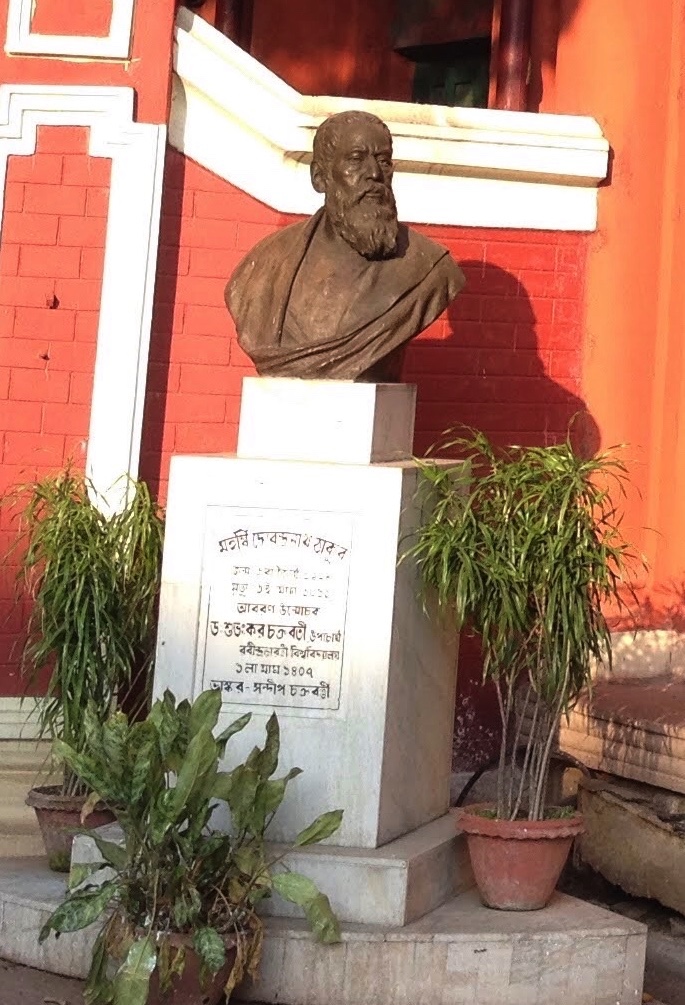
Debendranath Tagore frequently visited Amritsar to pay obeisance at Shri Harimandir Sahib and also while on his way to Dalhousie hills for a summer retreat. He even spent a couple of months to learn Gurmukhi from the qualified teachers (Granthis) so that he could read and recite Gurbani (or the hymns of Guru) in original. Sikhism, being a monotheistic faith induced eagerness in him to gain the insights gifted by the ten Gurus.

Rabindranath Tagore accompanied his father, Debendranath, to Amritsar in 1872. This impacted his later writings. In his Jibansmriti, he mentions having a deep impact that the recitation of verses of Guru Granth Sahib (Sikh religious scripture) had on his mind. These recitations are said to have impacted the practice of recitation of Brahmo religious texts and the singing of Brahmo Sangeet at Shantiniketan.  As he witnessed the internal contradictions within the Indian society in his mature years, he turned more towards concepts of universal love, equality and unity preached by the poet saints, who had been allotted a revered place in Guru Granth Sahib. Many of his lectures like Seattle lectures (1916), Hibbert Lectures (1930), Kamla lectures (1933) mentioned Guru Nanak and Kabir for their words of unifying the nation by eradicating the ills of the caste-driven society.

Tagore believed that Guru Nanak’s vision envisioned a casteless, discrimination free society, which was a perfect model for carving out a new nation in India. His father encouraged him to read, understand and gain wisdom from gurbani. Rabindranath translated a few hymns from Gurmukhi to Bengali. As a teenager, he rendered into Bengali, several hymns (pauris) from the Japji, part of Guru Granth Sahib, some of which would then be sung at the Sunday prayer of Brahmo Samaj. One of the more famous translations is that of the Arti, a hymn that is part of the Sohila baani or Sikh bedtime prayers. It can be found in the fourth volume of the birth-centenary edition of Rabindrarachanavali.

 “Gagan mein thaal rav chand dipak bane, tarika mandal janak moti,

 The sky is puja thaal (platter used for the artis), in which sun and moon are the diyas (lamps), the stars in the constellations are the   jewels

dhoop malyanlo pavan chavro kare sagal banraye phulant joti,

The wind, laden with sandal-wood fragrance, is the celestial   fan/

 kaisi arti  hoye bhav khandna teri arti.”    (Guru Granth Sahib)

All the flowering fields, forests are radiance! What wonderful worship this is, oh! Destroyer of fear, this is your arti (prayer)!

Many other writings of Tagore substantiate his urge for a moral regeneration by following the wisdom of these saints. He read Janamsakhis that contained stories about the lives of the Sikh Gurus and the historical accounts of their lifetimes, and he wrote these stories in Bengali in the youth magazine Balak. The first of these was published in 1885 as ‘Kajer Lok ke’ (Bengali , meaning ‘For the Man who Works’) on the life of Guru Nanak. It unravelled the faqir in the temperament of Guru Nanak in contrast to the businessman-like character of his father who gave him some money to do a sacha sauda (a fair trade). Guru Nanak spent the whole amount on feeding hungry sadhus or mendicants and discussing the mysteries of the universe with them. He further narrates Nanak’s experiences at Sultanpur Lodhi and his travels and extensive tours to distant places like Haridwar, Mecca, Ceylon (Sri Lanka) and some more which he could access by walking to spread his message. Guru Nanak settled at Kartarpur in the later years of his life, living the life of a farmer. Tagore’s views coincided with this role model of Nanak who pursued his mystical goals while leading the life of a householder as he himself found his image of mangal (well- being of all) and kalyan (universal good) in universal love and doing good to all.  

His next engagement was with the lives of Sikh martyrs and significantly with Guru Gobind Singh, the tenth Guru. But he initiated his contribution to Bengali literature for children and youth in Balak  with a marked influence of Guru Nanak, his life and writings. Tagore realized that Guru Nanak’s disapproval of idolatory and his monotheism had stirred the elders of the Brahmo Samaj but that idealism would not touch children’s hearts. They would respond to a more lucid account in informal language. 

In the last paragraph of ‘Kajer Lok ke’, he tells his young readers: “The Sikhs whom you see around you today, men of sturdy built, handsome countenance, tough strength and unflinching courage, are the sishyas (disciples) of Baba Nanak.   There were no   Sikhs before Nanak. It was   his noble personality   and sublime spirituality    that brought   this race into existence. It   is through   his teachings that their   temper is fearless, they keep their heads erect, and their character and countenance are brightened with magnanimity” (Rabindra Rachanabali, vol.XV, trans. Amalendu Bose).

Today in times of uncertainty, proliferation of data-knowledge that lacks practical and spiritual wisdom, and the deadly pandemic, the world needs this vision of oneness of Guru Nanak and the inclusiveness of Tagore, who embraced everything that would work for the well-being of the individual and the nation, irrespective of any disparities and anomalies. The readiness to accept, imbibe and disseminate the best has been the quintessential attribute of Tagore.

Parneet Jaggi is Associate Professor of English, poet, critic, author of the historical fiction (co-authored) The Call of the Citadel.  She was declared ‘Poet of the Year 2019’ and ‘Critic of the Year 2019’ by Destinypoets, UK. 

.

PLEASE NOTE: ARTICLES CAN ONLY BE REPRODUCED IN OTHER SITES WITH DUE ACKNOWLEDGEMENT TO BORDERLESS JOURNAL